World

Shanghai lockdowns threaten China's auto output while port congestion worsens

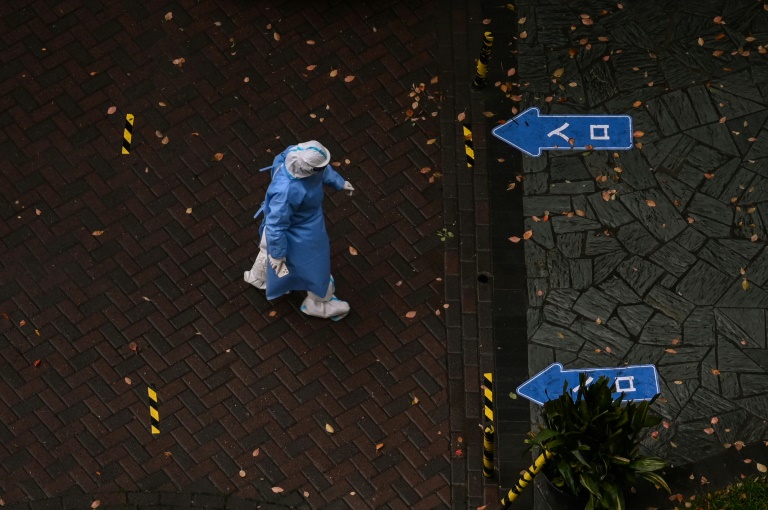
Chinese automakers warned they may have to put the brakes on production if Covid-19 lockdowns in Shanghai persist, with a top Huawei executive also sounding the alarm Friday about snarled supply chains.

The restrictions have kept Shanghai’s 25 million residents mostly at home for weeks, forcing manufacturers to halt operations and making China’s GDP growth target of around 5.5 percent look increasingly difficult to achieve.

Shipping giants also warned that Shanghai’s lockdown was snarling up the world’s busiest container port.

Covid outbreaks across the country and the associated reductions in economic activity have already hit the auto industry hard, with car sales dropping 10.5 percent in March.

“If supply chain companies in Shanghai and its surrounding areas cannot find a way to dynamically resume work and production, all original equipment manufacturers may have to stop production in May,” XPeng chief He Xiaopeng said Thursday on social media.

XPeng has been touted as a Chinese challenger to US electric car giant Tesla, and its chief said that businesses were hoping for more support from the authorities to navigate the Covid closures.

A top executive at Chinese tech giant Huawei — which has started to work with domestic auto manufacturers in the intelligent vehicle sector — echoed the comments on Friday and warned the clock was ticking.

“If Shanghai continues being unable to resume work and production, from May, all tech and industrial players involving the Shanghai supply chain will completely shut down, especially the auto industry!” Richard Yu, head of Huawei’s consumer and auto segment, said on the social media platform WeChat.

Huawei sold its first 3,000 electric vehicles with the company’s HarmonyOS operating system in March.

The group has been working with automakers to provide intelligent auto components, but does not make cars on its own.

– Global brands affected –

The Covid curbs have affected global brands as well, with Volkswagen saying it has been “severely hit by Covid-19 outbreaks in Changchun and Shanghai”, where the German titan’s Chinese joint ventures are located.

The firm is “temporarily unable to meet high customer demand,” said Volkswagen Group China CEO Stephan Wollenstein Thursday.

China’s zero-Covid policy has been increasingly strained as the country battles its highest number of infections since the start of the pandemic.

Volkswagen said around 20 percent of its dealers were forced to temporarily close in March alone as a result of lockdowns.

And Tesla’s multi-billion-dollar “gigafactory” in Shanghai — which the company calls its main export hub — has also been reportedly shut.

Chinese electric vehicle maker Nio said last weekend that it had suspended vehicle production, as business partners in virus-hit areas such as Jilin and Shanghai halted operations.

Containers have been piling up at the port of Shanghai as the city faces limited trucking capacity, and shipping giant Maersk said in a statement Thursday it would stop taking new bookings for refrigerated containers and hazardous cargo into the city.

It cited “yard congestion in Shanghai terminals” for the move.

Another shipping company, Ocean Network Express, said that plug slots for keeping refrigerated containers cool were “highly stressed”.
Russia to step up Kyiv missile strikes after Moskva sinks

Moscow warned Friday it would step up missile attacks on Kyiv in response to what it said were sorties across the border, the day after its Black Sea naval flagship sank.

Russian long-range missiles targeted a military factory near the Ukrainian capital that may have been where the Neptune missiles that Kyiv says were used against the Moskva warship were manufactured.

The Moskva missile cruiser had been leading Russia’s naval effort in the seven-week conflict, and the circumstances around its sinking and the fate of its crew remain murky.

Russia’s defence ministry said a blast on the vessel was the result of exploding ammunition and that the resulting damage had caused it to “lose its balance” as it was being towed to port.

The fleet has been blockading the besieged southern port city of Mariupol, where Russian officials say they are in full control.

Moscow, which invaded Ukraine partly because of deepening ties between Kyiv and NATO, on Friday warned of unspecified “consequences” should Finland and Sweden join the US-led defence alliance.

The two countries are considering joining NATO in light of Russia’s devastating invasion of neighbouring Ukraine.

“The choice is up to the authorities of Sweden and Finland,” Russian foreign ministry spokeswoman Maria Zakharova said in a statement.

– ‘Consequences’ –

“But they should understand the consequences of such a step for our bilateral relations and for the architecture of European security as a whole,” she said.

“They will automatically find themselves on the NATO frontline,” Zakharova said.

Russian forces last month started withdrawing from around the Ukrainian capital as they are redeployed to focus on territory in the east of the country, but the city remains vulnerable to missile strikes.

“The number and scale of missile strikes against targets in Kyiv will increase in response to any terrorist attacks or sabotage committed by the Kyiv nationalist regime on Russian territory,” the defence ministry said. 

“As a result of the strike on the Zhulyansky machine-building plant ‘Vizar’, the workshops for the production and repair of long-range and medium-range anti-aircraft missile systems, as well as anti-ship missiles, were destroyed,” the ministry said. 

Seizing the eastern Donbas region, where Russian-backed separatists control the Donetsk and Lugansk areas, would allow Moscow to create a southern corridor to the occupied Crimean peninsula.

Ukraine said that Russian strikes had killed five people in the area, after President Volodymyr Zelensky said Moscow’s forces were aiming to “destroy” the region.

– Donbas is ‘main target’ –

In a report issued by the presidency, Kyiv said two people had been killed and two more wounded in the eastern Lugansk region while another three had been killed and seven wounded in the neighbouring Donetsk region.

The presidency said “fighting was continuing along the entire front line” in Donetsk.

In a late-night address Thursday, Zelensky said that “Donbas is the main target for Russia.” 

“It’s Donbas that Russia wants to destroy. It is the Lugansk and Donetsk regions that Russian troops are destroying so that only stones remain and so there are no people left at all”.

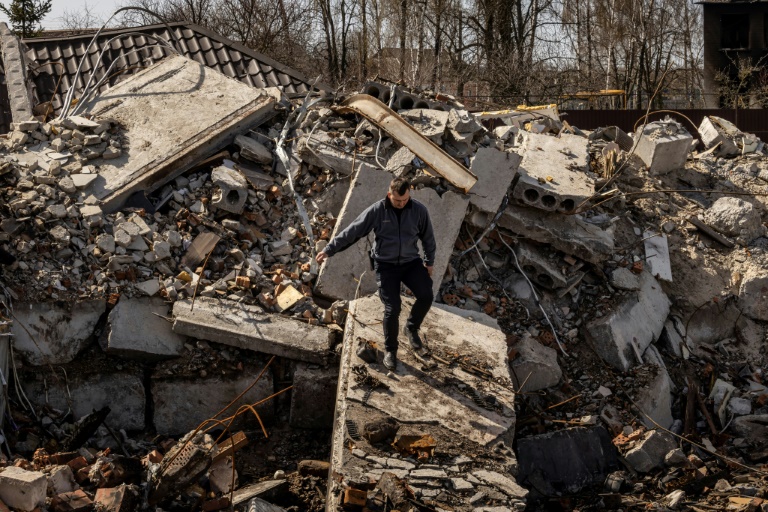
Strategic port city Mariupol is in ruins 50 days into Russia’s so-called “special military operation” in Ukraine.

Thousands of civilians are believed to have died in the besieged city, many of their bodies still trapped in apartment buildings.

The fighting has subsided and Mariupol’s residents have started coming outside in search of food, water and an escape route from the city.

“I know that we experienced horror and we don’t know what will happen next. We live like we’re on top of a volcano,” said 59-year-old Tatyana, a municipal employee waiting for humanitarian aid.

“There’s fear, fear! What else is there to say? A lot of people are suffering,” said Tatyana, who didn’t give her last name. 

Moscow on Thursday accused Ukraine of sending helicopters to bomb a village in Russia’s Bryansk region — not far from the border with Ukraine — injuring eight people. 

Later the same day, the head of Russia’s Belgorod region said a village close to the border was shelled by Ukraine, while residents from this and a nearby village had been evacuated as a precaution.

Kyiv has denied the helicopter attack, instead accusing Russia of staging the incidents to stir up “anti-Ukrainian hysteria” in the country.

Separately, the Russian defence ministry said Friday its strategic rocket forces “eliminated up to 30 Polish mercenaries” in a strike on the village of Izyumskoe, not far from the city of Kharkiv in northeastern Ukraine. 

– Prisoner swap –

In the south of the country, where Moscow’s invading forces have solidified their greatest gains, Ukraine said it had swapped several captured soldiers with Russia.

“After tense negotiations, we managed to reach agreements on a prisoner exchange near the village of Posad-Pokrovskoye, where four Russian military personnel were exchanged for our five,” Ukraine’s defence ministry said.

Russian troops have captured the city of Kherson, which is the administrative capital of the eponymous region where the declared swap took place on Friday.

Zelensky this week offered to swap pro-Kremlin tycoon Viktor Medvedchuk, one of the richest people in Ukraine and who was arrested by Kyiv after escaping house arrest, for Ukrainians captured by Russia.

S.African rescuers in desperate search for dozens missing in floods

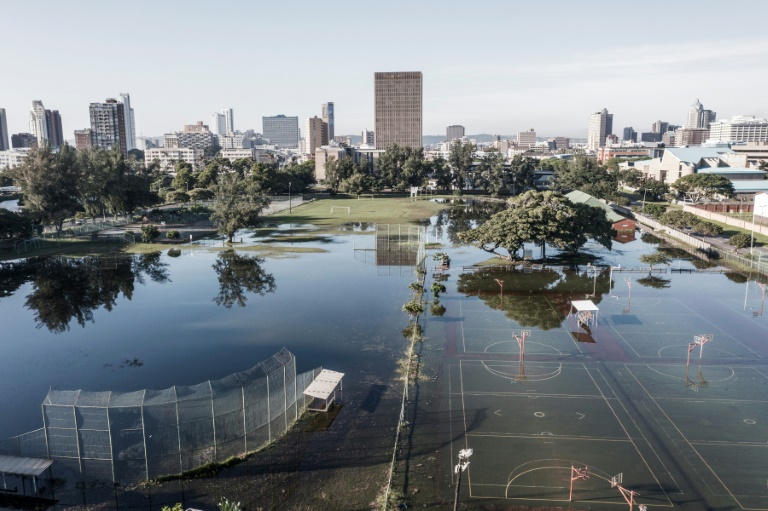
Police, army and volunteer rescuers on Friday widened the search for dozens still missing five days after more than 340 people died in the deadliest storm to strike South Africa’s coastal city of Durban in living memory.

The “unprecedented” floods, which affected nearly 41,000, left a trail of destruction and at least 341 people dead.

With the government  coordinating the search-and-rescue operation, the official number of people missing in KwaZulu-Natal province stood at 55.

A fleet of cars and helicopters carrying police experts set out early Friday to comb through a valley in Marianhill suburb, west of Durban, to look for 12 people reported missing in the floods, AFP correspondents said.

It is an increasingly desperate search for survivors.

Travis Trower, a director for the volunteer-run organisation Rescue South Africa, said his teams had found only corpses after following up 85 calls on Thursday.

“It’s unfortunate, but we do the best we can for as many people as we can,” he told AFP at a small airport north of Durban, one of the rescue hubs

Thousands of survivors, left homeless after their houses were destroyed, are being housed in shelters scattered across the city, sleeping on cardboard sheets and mattresses laid on floors .

Meanwhile volunteers, with hand gloves and trash bags, fanned across the city’s beaches to pick up debris left by the massive storms ahead of an expected surge of Easter weekend holidaymakers.

– ‘Absolute devastation, horrendeous sight’ –

Software manager Morne Mustard, 35, was among the scores of volunteers, who included children, picking up debris and  broken reeds from Durban’s famous Umhlanga beach.

“This is my local beach where I bring my kids, and this is where we spend our weekend, so this is for our community,”.

He roped in workmates, families and friends to help clean up as beach restaurants offered free breakfast for the volunteers.

Recalling the day the rain fell, Mustard said, “It didnt feel real, absolute devastation, a horrendous sight, stuff spilling out on the beach must have come from someone’s house… brooms and mops, household utensils, it was such a heart sore to see.”

Some of Durban’s poorest residents lined up on Thursday to collect water from burst pipes and dug through layers of mud to retrieve their scant possessions.

President Cyril Ramaphosa declared the region a state of disaster to unlock relief funds.

Weather forecasters said apocalyptic levels of rain were dumped on the region over several days.

Some areas received more than 450 millimetres (18 inches) over 48 hours, or nearly half of Durban’s annual rainfall, the national weather service said.

The South African Weather Service has issued an Easter weekend warning of thunderstorms and localised flooding in KwaZulu-Natal and neighbouring Free State and Eastern Cape provinces.

The country is still struggling to recover from the two-year-old Covid pandemic and deadly riots last year that killed more than 350 people.

Philippines' Duterte blocks bill to register social media users

Philippine President Rodrigo Duterte has rejected a proposed law requiring social media users to register their real names and phone numbers, citing threats to free speech and privacy, his spokesman said Friday. 

The legislation, designed to combat fake news, online abuse, text scams and militant bombings, also required mobile phone users to provide their personal details when buying SIM cards.

It was approved by both houses of Congress in February, but critics said it was a form of state surveillance.

While supporting efforts to tackle cybercrime and other online offences, Duterte said he opposed the inclusion of social media user registration in the bill.

He called for “a more thorough study” of the provision, citing concerns it could lead to “dangerous state intrusion and surveillance threatening many constitutionally protected rights” such as individual privacy and free speech, presidential spokesman Martin Andanar said in a statement.

Filipinos rank among the world’s heaviest users of social media, and the country has become a key battleground for misleading or fake news.

Renato Reyes, secretary-general of leftist alliance Bayan, welcomed the veto, saying SIM card and social media registration created a “chilling effect” for users and would “not deter crime”.

“A big part of the problem is government itself, as it benefits directly and indirectly from nefarious online activities,” Reyes said in a statement. 

“We should start with demanding the government stop weaponizing social media and attacking people online.”

Duterte’s election victory in 2016 was underpinned by social media campaigning at a time when online misinformation was on the rise.

Critics accused the Duterte camp of employing online trolls to praise him while attacking dissenters — even issuing death threats. Duterte has denied the allegations.

Since taking power, the authoritarian firebrand has been accused of harassing or even jailing opponents and shutting down media outlets critical of his policies.

Duterte’s decision to block the bill comes as a torrent of misinformation floods Facebook, YouTube, TikTok and Twitter ahead of the May 9 national elections.

Ferdinand Marcos Junior is leading the race for the presidency, while his running mate and first daughter Sara Duterte is the top contender for vice president.

Senate president and vice presidential candidate Vicente Sotto, who had supported the legislation, responded sarcastically to the veto.

“Great! Bombings and blackmail and scams will continue using prepaid sims,” Sotto tweeted.

Many mobile phone users in the Philippines use pre-paid SIM cards that they buy over the counter without giving their names and addresses to providers.

Militant groups fighting the government in the country’s south are known to favour the use of mobile phones to remotely detonate improvised explosive devices, leaving police with one less way to track the perpetrators.

The proposed measure can still become law if legislators can muster a two-thirds vote in each chamber to override the presidential veto, but that is unlikely to happen before the polls.

North Korea celebrates founding leader's birthday

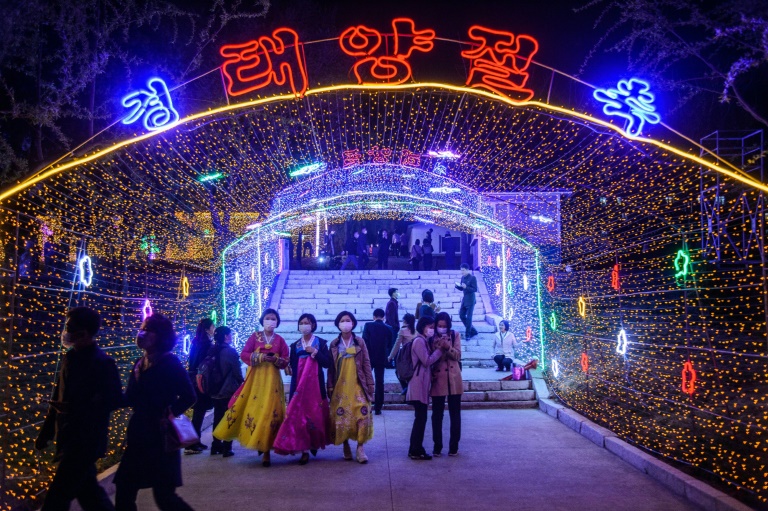
North Korea celebrated the birthday of its founding leader on Friday, state media reported, but mystery surrounded when a military parade — at which the regime may unveil new weapons — might happen.

Known as the Day of the Sun in the nuclear-armed North, the April 15 birthday of the late Kim Il Sung — grandfather of current leader Kim Jong Un — is one of the most important dates in Pyongyang’s political calendar.

There has been a steady drumbeat of celebratory coverage in state media leading up to the day, including commemorative stamps, light festivals, dance parties and floral tributes.

“I came to see the lighting festival with my daughter. Looking at it today, it’s really cool. The most impressive thing in particular is this one that says ‘self-reliance’,” Ri Bom Chol, a 40-year-old doctor, told an AFP reporter in Pyongyang.

The anniversary celebrations come three weeks after North Korea staged its largest intercontinental ballistic missile test ever — the first time Kim’s most powerful weapons had been fired at full range since 2017.

That test was the culmination of a record-breaking blitz of sanctions-busting launches this year and signalled an end to a self-imposed moratorium on long-range and nuclear tests.

Analysts along with South Korean and US officials had widely expected Pyongyang to mark April 15 with a military parade to unveil new weaponry, or even a test of the country’s banned nuclear weapons.

But there was no mention Friday in state media of any such event. The official KCTV reported only that there would be a “grand performance” Friday evening, followed by fireworks.

Seoul-based specialist site NK News said its sources in the North heard helicopters and jets flying low over Pyongyang very early Friday, hinting at a military parade.

But an analysis of satellite imagery later Friday suggested no parade had taken place, the site added.

– ‘Love is forever’ –

Another expert said it now seemed likely Pyongyang’s main military parade would be held on April 25 — the anniversary of the founding of the North Korean army.

“Since the two anniversaries are just 10 days apart, it seems a bit difficult to hold a parade on both occasions,” Yang Moo-jin, a professor at the University of North Korean Studies, told AFP.

On previous anniversaries, Pyongyang has broadcast footage of military parades on state TV many hours after the events were held, and not flagged them in advance in official newspapers.

Seoul military officials said they had no immediate information to share on a possible parade in Pyongyang, but the unification ministry said it was “closely monitoring” the situation.

Kim Il Sung died in 1994 but is the country’s “eternal president”, and his preserved body lies in state in a red-lit chamber at the Kumsusan Palace of the Sun on the outskirts of the capital.

North Koreans are taught from birth to revere Kim Il Sung and his son Kim Jong Il, and all adults wear badges depicting one or both men.

“As the days go by the yearning for the great leader is growing,” Ri Gwang Hyok, 33, told an AFP reporter in Pyongyang as they visited statues of Kim Il Sung and Kim Jong Il. 

“Love is forever,” Ri said.

Uber suspends services in Tanzania over new fare rules

US ride-hailing giant Uber has suspended its services in Tanzania, saying government legislation that raises fares and cuts its commission made it difficult for it to operate.

Uber said it made the “difficult decision to pause operations” in the East African country from Thursday.

“The pricing order proposed by the Land Transport Regulatory Authority (LATRA) makes it challenging for platforms like Uber to continue to operate,” Uber said in a statement on Thursday.

Under the new regulations which come into effect this month, fares doubled to 900 Tanzanian shillings ($0.4, 0.3 euros) per kilometre. 

Meanwhile, maximum commission for the ride-hailing companies was set at 15 percent from the previous 33 percent.  

The transport regulator said the changes were aimed at maintaining competition and ensuring affordable taxis. 

It defended the rules late Thursday, saying all providers save for Uber had conformed to the new regulations. 

“We remind all the ride-hailing companies to abide by the rules and regulations of doing business in order to boost the economy,” LATRA director general Gilliard Ngewe said in a statement. 

Uber — founded in 2009 — arrived in Tanzania in 2016 and has capitalised in the country’s low levels of personal car ownership and a lack of efficient mass transport system.

The San Francisco-based company said it remained committed to resuming operations in the long-term if the pricing tussle was resolved. 

“We remain available to work with regulators on building a framework for technology to thrive, so that we can re-launch and provide a service loved by so many.”

Shanghai residents scuffle with police over virus policy

Shanghai residents scuffled with hazmat-suited police ordering them to surrender their homes to Covid-19 patients, videos on social media showed, providing a rare glimpse into rising discontent in the megacity over China’s inflexible virus response.

The city of 25 million and China’s economic engine room has become the heart of the country’s biggest outbreak since the peak of the first virus wave in Wuhan over two years ago, rattling the strict zero-Covid policy.

Authorities are rushing to construct tens of thousands of beds to house Covid-19 patients as daily infections top 20,000 — small compared with parts of the world getting used to living with the virus.

Some stuck in Shanghai, locked down since early April, have flooded social media with complaints of food shortages and of over-zealous officialdom forcing them into state quarantine, challenging China’s ‘Great Firewall’ of censorship which wipes dissenting views from the internet almost as soon as they appear. 

Late Thursday, videos circulated showing residents outside a compound shouting at ranks of officials holding shields labelled “police”, as the officers tried to break through their line.

In one clip, police appear to make several arrests as the residents accuse them of “hitting people.”

The incident began after authorities ordered 39 households to move out of their homes to house virus patients in the development, according to Zhangjiang Group, the developer of the housing complex. 

It has provided a rare window into public anger in China, where Communist authorities brook little dissent and censors routinely scrub information relating to protests from the internet. 

In one live-streamed video, a woman can be heard weeping and asking “why are they taking an old person away?” as officials appeared to put someone into a car. 

Zhangjiang Group said it had compensated the tenants and moved them into other units in the same compound.

The group recognised that videos of the compound that had “appeared on the internet” on Thursday and said “the situation had now settled down” after “some tenants obstructed the construction” of a quarantine fence.

Search results for the name of the apartment complex disappeared from China’s Twitter-like Weibo by Friday morning.

– Growing desperation –

Some Shanghai residents have poured their anger at the handling of the virus onto the internet.

They have ripped into authorities for allowing food shortages as well as heavy-handed controls, including the killing of a pet corgi by a health worker and a now-softened policy of separating infected children from their virus-free parents.

Other videos and audio clips have indicated increasing desperation among city inhabitants, including some showing residents bursting through barricades demanding food.

In one unverified viral video, a drone flying through a residential area broadcast a message urging residents to “control your soul’s desire for freedom”.

The vast majority of virus cases detected each day are in people with no symptoms — and there have been no deaths officially reported in the city since this outbreak.

Shanghai health official Wu Qianyu said on Thursday that there were only nine severe cases, mostly older patients with underlying health conditions.

Yet authorities have vowed the city “would not relax in the slightest”, preparing over a hundred new quarantine facilities to receive every person who tests positive.

Pressure on the city to bring its outbreak under control is mounting from above, with President Xi Jinping warning on Wednesday that strict virus measures “cannot be relaxed” and proclaiming that “persistence is victory,” in a speech published by state media.

Asian markets drop after Wall Street retreat

Asian markets dipped Friday after a negative lead from Wall Street, with investors around the world worried about surging inflation.

Central banks in several major economies including the United States, Canada and Britain have already started raising interest rates to contain prices, but the European Central Bank on Thursday kept its stimulus plans and rates unchanged.

That sent the euro plunging to a near two-year low, but eurozone stocks were boosted while Wall Street retreated ahead of the Easter holidays.

The mood was subdued in Asia too, where only a handful of markets were open on Good Friday.

The Nikkei 225 closed 0.3 percent lower with Wall Street’s woes depressing sentiment.

Analysts had expected China’s central bank to cut interest rates on Friday to provide support to the Covid-stricken economy.

But the People’s Bank of China left them unchanged.

“That’s somewhat surprising given the sharp economic downturn and recent calls from China’s leadership for monetary support,” Julian Evans-Pritchard of Capital Economics said in a note.

“It underscores the reluctance of the central bank to aggressively ease policy. But we think it will have little choice but to do more before long.”

Shanghai was down 0.5 percent at the close.

Russia’s invasion of Ukraine has added to the uncertainty about the global economic recovery from the Covid-19 pandemic.

This was reflected in statements from major banking executives in the United States, who described the American economy as solid but warned about the impact of the Ukraine conflict and the measures central banks such as the US Federal Reserve will take to control inflation.

“We don’t think there’s going to be a recession,” Julian Emanuel, chief equity strategist at Evercore ISI, told Bloomberg television.

“We don’t think the Fed is going to break the glass. But the problem is investors aren’t in that mindset quite yet.”

European and US markets are closed on Friday.

– Energy, food shocks –

Russia is a major global oil and gas supplier, and — along with Ukraine — is also a key player in the grain sector.

The conflict has shaken markets for these commodities, and the impact has been felt from the Middle East to South America.

In Yemen, there are fears of food shortages with the war-ravaged nation already on the edge of famine.

In Argentina, a strike by grain transporters has paralysed farming exports — haulers are unhappy with the rates they are paid, pointing to the spike in fuel prices because of the Ukraine crisis.

The war has sent oil prices soaring, with reports swirling about further energy sanctions on Russia.

Both main contracts have hovered above the $100 per barrel mark in recent days.

“There are no surprises here as oil continues to march higher, with global supply shortage outweighing concerns about slower demand in China,” Stephen Innes of SPI Asset Management said in a note.

– Key figures around 0745 GMT –

Tokyo – Nikkei 225: DOWN 0.3 percent at 27,093.19 (close)

Shanghai – Composite: DOWN 0.5 percent at 3,211.24 (close)

Hong Kong – Hang Seng Index: Closed for a holiday

Euro/dollar: DOWN at $1.0808 from $1.0832 at 2100 GMT Thursday

Pound/dollar: DOWN at $1.3068 from $1.3076

Euro/pound: DOWN at 82.70 pence from 82.77 pence

Dollar/yen: UP at 126.46 from 125.87

Brent North Sea crude: UP 2.7 percent at $111.70 per barrel at 2100 GMT Thursday

West Texas Intermediate: UP 2.6 percent at $106.95 per barrel at 2100 GMT Thursday

New York – Dow: DOWN 0.3 percent at 34,451.23 (close)

London – FTSE 100: UP 0.5 percent at 7,616.38 (close)

— Bloomberg News contributed to this story —

Religious whipping marks Good Friday in the Philippines

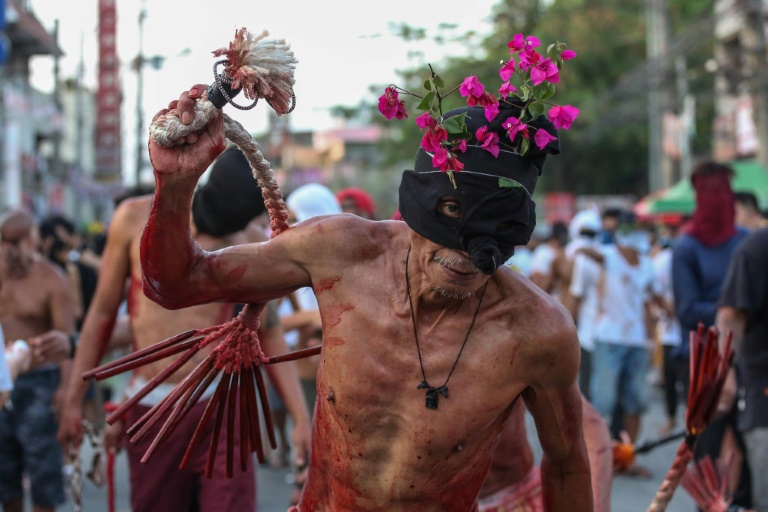
Catholic zealots in the Philippines whipped their backs bloody and raw on Good Friday, as the fervently religious country marked Easter with gruesome displays of faith.

Scores of men — their faces covered — walked barefoot as they flogged themselves with bamboo whips under a blazing sun near the capital Manila, while others carried wooden crosses as they were beaten, in a ritual frowned upon by the Church.

Roy Balatbat, his skin still bearing fresh wounds from a public flailing on Thursday, walked for about a kilometre, striking himself and stopping to prostrate in prayer on the hot ground. 

“It’s punishing but if you have a wish, you will endure the pain,” Balatbat, 49, told AFP in Hagonoy municipality, Bulacan province. 

“I have been doing this for 30 years since I was a young man. My devotion is that I will only stop when I can’t do it anymore.”

While most devotees in the mainly Catholic nation spend Good Friday at church or with family, others go to these extreme lengths to atone for sins or seek divine intervention.

Before the grisly flogging begins, the men’s bare backs are deliberately punctured to make them bleed.

Veterans of the gory spectacle display scars of previous whippings, while others endure the punishing act for the first time.

“I inflict the wound to the penitents, if there’s not much blood coming out, they’ll ask for another one so their sins would be forgiven,” Reynaldo Tolentino, 51, explained. 

“They won’t feel the pain when they’re doing the penitence as long as they are sincere in doing it.”

Good Friday is also usually marked by crucifixion reenactments in a city north of Manila, but the event was cancelled for the third year in a row due to Covid-19.

About a dozen Catholics regularly have themselves nailed to wooden crosses as penance for their sins. The event attracts thousands of tourists.

“We do not encourage acts of self flagellations and crucifixions,” said Father Jerome Secillano, executive secretary of the Catholic Bishops Conference of the Philippines’ public affairs committee. 

“The suffering and crucifixion of Christ is already enough to save humanity,” he told AFP, adding devotees should instead “confess their sins”.

The Philippines has lifted most Covid-19 restrictions after a sharp fall in infections and rising vaccination rates.

But the health department warned Thursday of a possible surge in cases as Filipinos dropped their guard and mingled more freely. 

More than 100 hurt in Jerusalem clashes as religious festivals overlap

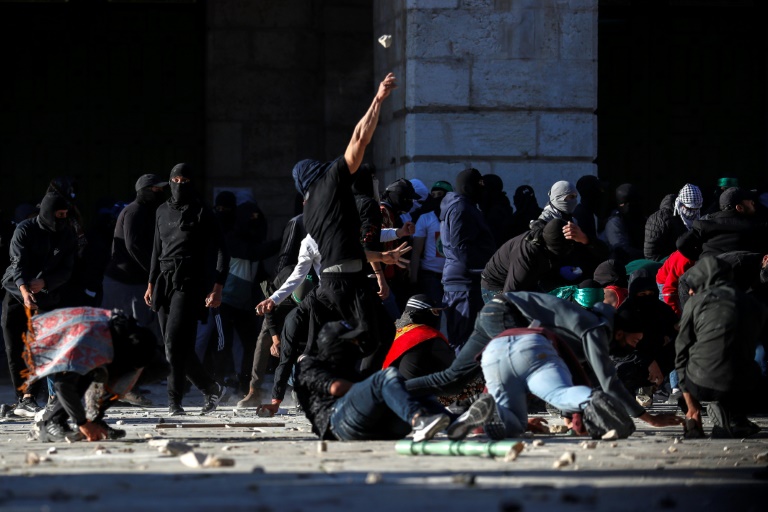
More than 100 people were wounded Friday in clashes between Palestinian demonstrators and Israeli police at Jerusalem’s Al-Aqsa mosque compound, in fresh violence as Jewish and Christian festivals overlap with Ramadan.

Israeli police said that before dawn “dozens of masked men” marched into Al-Aqsa chanting and setting off fireworks before crowds hurled stones towards the Western Wall — considered the holiest site where Jews can pray.

A Palestinian Red Crescent official said 117 people were rushed to hospitals and “dozens of other injuries” were treated at the scene. Israeli police said three officers were hurt.

The latest clashes come after three tense weeks of deadly violence in Israel and the occupied West Bank, and as the Jewish festival of Passover and Christian Easter overlap with the Muslim holy month of Ramadan.

Al-Aqsa is Islam’s third-holiest site. Jews refer to it as the Temple Mount, referencing two temples said to have stood there in antiquity.

Witnesses said Palestinian protesters threw stones at Israeli security forces, who fired rubber-coated bullets and sound grenades towards some of them.

An AFP photographer said more than 100 Palestinians were seen hurling projectiles towards the Israeli security forces.

– ‘Violent riot’ –

Last year during the Muslim month of fasting, clashes that flared in Jerusalem, including between Israeli forces and Palestinians visiting Al-Aqsa, led to 11 days of devastating conflict between Israel and the Gaza Strip’s Islamist rulers Hamas.

The mosque compound is at the heart of the Israeli-Palestinian conflict, falling within Israeli-annexed east Jerusalem.

Israeli police said that on Friday, dozens of masked men “marched into Al-Aqsa mosque at 04:00… chanting inciting messages and setting off fireworks” and collecting “stones, wooden planks and large objects, which were then used in a violent riot”.

“Despite these actions, police forces waited until the prayer was over,” a statement said.

“Crowds then began to hurl rocks in the direction of the Western Wall… and as the violence surged, police were forced to enter the grounds surrounding the Mosque,” it said, adding police “did not enter the mosque.”

The violence subsided later in the morning, AFP correspondents said.

“We have no interest in the Temple Mount becoming a centre of violence, which will harm both the Muslim worshippers there and the Jewish worshippers at the Western Wall,” Israeli Public Security Minister Omer Bar-Lev said on Twitter.

Before Ramadan began this month, Israel and Jordan stepped up talks in an effort to avoid a repeat of last year’s violence.

Jordan serves as custodian of the mosque compound, while Israel controls access.

– Spiralling violence –

Israel has poured additional forces into the West Bank and is reinforcing its wall and fence barrier with the occupied territory after four deadly attacks in the Jewish state that have mostly killed civilians in the past three weeks.

A total of 14 people have been killed in the attacks since March 22, including a shooting spree in Bnei Brak, an Orthodox Jewish city in greater Tel Aviv, carried out by a Palestinian attacker from Jenin.

Twenty-one Palestinians have been killed in that time, including assailants who targeted Israelis, according to an AFP tally.

On Thursday Israel announced it would block crossings from the West Bank and Gaza Strip into Israel from Friday afternoon through Saturday, the first two nights of the week-long Passover festival, and potentially keep the crossings closed for the rest of the holiday.

Prime Minister Naftali Bennett has given Israeli forces a free hand to “defeat terror” in the territory which Israel has occupied since the 1967 Six-Day War, warning that there would “not be limits” for the campaign.

Some of the attacks in Israel were carried out by Arab citizens of Israel linked to or inspired by the Islamic State group, others by Palestinians, and cheered by militant groups including Hamas and Islamic Jihad.

Three Palestinians died Thursday as Israeli forces launched fresh raids into the West Bank flashpoint district of Jenin, a week after the Bnei Brak attack.

Close Bitnami banner
Bitnami