World

Jerusalem's Christian churches resist Israeli settlers

Churches in Jerusalem are up in arms against Jewish “radicals” who are settling in the Christian Quarter and threatening a fragile religious balance in the ancient Holy City.

“We have a major problem here,” said Greek Orthodox Patriarch Theophilus III in Jerusalem’s Old City, which is split into historic Jewish, Muslim, Christian and Armenian quarters.

“Jerusalem also has her Christian character, and that is what is threatened,” he told AFP, as Christian worshippers readied for Easter celebrations.

The patriarch charged that hardline Jewish settlers, known for a push to take over properties of Palestinian families, are also waging a campaign for control of Christian-owned lands.

“Those radicals are driven by their ideology,” Theophilus III said. “Their ideology is the syndrome of messianism, when they claim ‘we want to redeem the Holy Land from the profanes’.”

The nationalist settler group Ateret Cohanim has worked to “Judaise” east Jerusalem — a Palestinian sector illegally annexed by Israel according to the UN — by purchasing real estate through front companies and then moving Jewish settlers in.

Since 2005, the group and the Orthodox church have been engaged in a complex legal wrangle over ownership of an Old City hostel at the Jaffa Gate entrance to the Christian Quarter.

The dispute took a fresh turn on March 27, when settlers took over part of the Petra Hotel by “breaking and entering”, according to the Greek Orthodox Church.

Theophilus III said the Israeli government “promised us that they will try their best to deal with this issue, and put pressure on those radical groups to get out”.

But, after more than two weeks, the settlers are still there, he said.

“It seems that the state doesn’t have the power or the will to (put pressure) on those people,” he added.

– ‘Big, big drama’ –

Hagit Ofran, of the Israeli anti-settler group Peace Now, said the dispute is “a big, big drama, because it’s such a strategic place at the entrance to the Christian Quarter, a huge compound where they can bring hundreds of settlers.”

Ofran warned that “if they succeed, this is changing the whole character of the Old City — and of course of the Christian Quarter.”

About 300 Jewish settlers already live in the Christian Quarter. 

The churches have voiced alarm about the trend, as well as acts of vandalism and anti-Christian aggression, arguing the problem extends beyond the ancient heart of Jerusalem.

On the outskirts of the Old City, on the Mount of Olives where several prominent churches stand, Israel plans to expand a park that will encroach on land belonging to Christian institutions.

The three communities concerned — Greek Orthodox, Armenian and Franciscan — sent a strongly worded letter to the authorities in February.

“In recent years, we cannot help but feel that various entities are seeking to minimise, not to say eliminate, any non-Jewish characteristics of the Holy City by attempting to alter the status quo on the holy mountain,” they wrote.

The letter charged that “after their attempts failed, they resorted to statutory powers, by advancing a plan to declare vast parts of the mountain as a national park”.

The government temporarily withdrew the project from its agenda.

In December, Israel was angered by comments made by the Archbishop of Canterbury, Justin Welby, head of the Anglican Church, who charged that an increase in attacks and vandalism of holy places was a “concerted attempt” to drive Christians away.

Israel’s foreign ministry said the accusations were “baseless and distort the reality of the Christian community in Israel”. 

– ‘Anti-Christian hate crime’ –

Ofran, the Peace Now activist, said the government was only doing the bare minimum — and even “protecting the settlers” with its police force, which has failed to dislodge them.

She said Israel — which considers the whole of Jerusalem its indivisible capital — “is not going to kick out the churches themselves, but they want … it to be a Jewish environment with Christian enclaves,” a challenge similar to that faced by Muslims.

Father Nikodemus Schnabel, of the Benedictine community on Mount Zion, adjacent to the Old City, said that “this is really a concern, that Israel has turned a blind eye”.

His Abbey of the Dormition has been the target of acts of vandalism blamed on settlers which have multiplied in recent months.

He said he sees “a lack of will” by the authorities to tackle the phenomenon of “anti-Christian hate crime”.

Schnabel argued that Jerusalem is unique because of its religious diversity, highlighted this year as the Muslim fasting month of Ramadan, Jewish Passover and Easter overlap.

“How boring would Jerusalem be if it were only Jewish, only Christian or only Muslim?” he said.
Asian markets rise but inflation, Ukraine fears linger

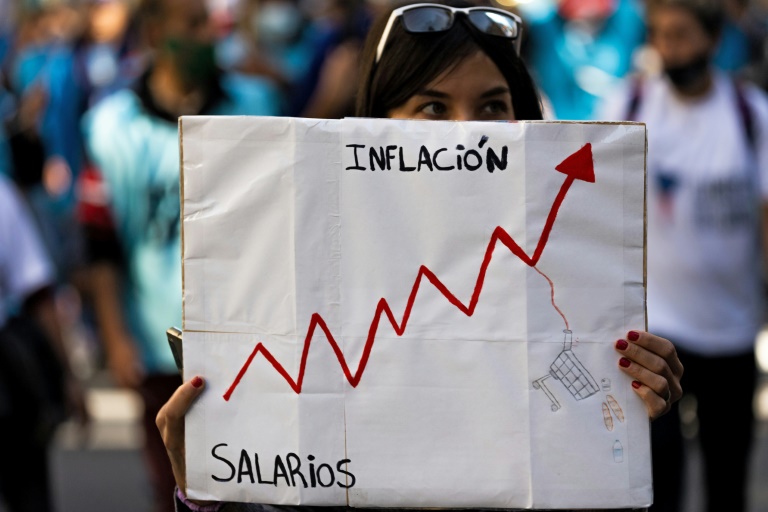
Asian stock markets mostly rose in early trade Thursday after a recovery on Wall Street, but investors remained cautious about the ongoing impact of skyrocketing inflation and the war in Ukraine.

Prices were already soaring in major economies when Russia’s invasion of Ukraine sent shockwaves through the global energy, food and commodity markets.

Despite lingering concerns about the US Federal Reserve’s next moves to contain prices, Wall Street enjoyed a buoyant session — especially the tech-rich Nasdaq, which surged 2.0 percent.

Asia was in a similar mood Thursday as Tokyo soared 1.3 percent and Hong Kong put on 0.8 percent. Sydney, Shanghai and Taipei were also in positive territory, but Seoul dipped.

South Korea’s central bank on Thursday raised its key interest rate to the highest level since August 2019 to tame rising inflation.

Analysts warned overnight that the uncertainty is far from over.

“With a thicker fog of war starting to roll in and engulf the global markets again, it is another worrying setup amid the widespread bearish sentiment out there,” Stephen Innes of SPI Asset Management said in a note.

Data this week from the United States — the world’s biggest economy — and Britain showed inflation at levels not seen in decades.

Analysts said, however, that markets had welcomed an indication that US inflation may be approaching its peak.

– ‘Countervailing forces’ –

The grim outlook was reflected in the latest earnings report from JP Morgan Chase, the largest American bank by assets.

“There’s this very strong underlying economy,” its chief executive Jamie Dimon said.

But he pointed to “countervailing forces”, including rising interest rates, inflation and the war in Ukraine.

“And those things are going to collide at one point, probably sometime next year,” he said in a conference call with reporters.

“I’m not predicting a recession… But is it possible? Absolutely.”

Both main oil contracts hovered above the $100 per barrel mark, with fears swirling about global supply constraints over the invasion of Ukraine by Russia — a major producer of oil and gas.

“The oil complex is heavily fixated on the short-term,” Vandana Hari of Singapore-based Vanda Insights told Bloomberg News.

“The prospect of an EU ban on Russian oil will keep the market on edge as long as Ukraine festers.”

– Key figures around 0230 GMT –

Tokyo – Nikkei 225: UP 1.3 percent at 27,182.50

Hong Kong – Hang Seng: UP 0.8 percent at 21,535.37

Shanghai – Composite: UP 0.6 percent at 3,203.94

Euro/dollar: DOWN at 1.0888 from $1.0894 at 2100 GMT

Pound/dollar: UP at $1.3117 from $1.3109

Euro/pound: DOWN at 83.01 pence from 83.03 pence

Dollar/yen: UP at 125.62 from 125.59

Oil – Brent: DOWN 0.7 percent at 108.05 per barrel

Oil – WTI: DOWN 0.8 percent at 103.41 per barrel

New York – Dow: UP 1.0 percent at 34,564.59 (close)

London – FTSE 100: UP 0.1 percent at 7,580.80 (close)

— Bloomberg News contributed to this story —

Thai… caviar? Farm produces delicacy in tropical climate

At his upmarket Bangkok restaurant, Michelin-starred chef Thitid “Ton” Tassanakajohn spoons black caviar onto a plate, adding the newly affordable Thailand-made delicacy to his reinterpreted traditional family recipes.

The luxury food, better associated with chilly northern nations, is breaking into the Southeast Asian country’s fine-dining scene, with the 37-year-old celebrity cook able to economically serve the roe thanks to an innovative farm outside the capital.

Using high-tech harvesting methods, a Thai-Russian partnership is offering a more ethical and affordable product, sparing the endangered fish that provide the delicacy from their usual fate of death.

“The price is… more affordable, I would say, compared to the ones that we imported,” Ton explained, as he sprinkled caviar over Thai dip “Lhon Pu” at his restaurant Lahnyai Nusara.

Using caviar also helps challenge perceptions that Thai cuisine must always be spicy with strong flavours, he added.

“I think it’s opened many doors for many chefs to use it as well,” he said.

– Cool fish –

Roughly 200 kilometres away at the popular seaside resort town of Hua Hin, it is time to harvest “black gold” at the Thai Sturgeon Farm, which supplies local distributor Caviar House.

Hundreds of the giant fish swim in tanks kept at a balmy 21 degrees Celsius (70 Fahrenheit) — a world away from the chilly Caspian Sea where the species live in the wild.

“No one else has this kind of farm in a tropical climate,” the farm’s co-owner Alexey Tyutin told AFP.

The fish — considered living dinosaurs — can survive for up to 100 years and are typically up to four metres long.

Traditionally caviar producers kill the female fish to extract the eggs, but Tyutin’s farm “milks” the sturgeon.

Using the fish for as long as possible helps make the venture sustainable and profitable, the 55-year-old said.

During harvesting, fish are moved to the “winter room”, initially set at six degrees Celsius and increased to 15, before their eggs are extracted.

“Let’s say if the fish weighs 25 kilograms, we usually expect about 2.6 to 2.7 kilograms of caviar,” Tyutin said, adding that the farm estimates it may produce up to two tonnes this year.

Breeding sturgeons in a simulated environment requires vast amounts of energy — despite the use of solar panels, the monthly electricity bill is almost $9,000.

“We are chilling down the water because the water temperature outside is 31 degrees. These fish can’t tolerate it and they will die immediately,” Tyutin said.

But Thailand’s tropical climate has given the business a competitive advantage as the higher water temperature helps sturgeons mature at six years old compared to 11 in Russia.

– Thai pride –

While Caviar House is only selling domestically at the moment — with a tin of the delicacy retailing for between $230 and $832 — they hope to expand to exporting in the future.

Recent European Union sanctions against Moscow over the Ukraine invasion have targeted caviar, but the restrictions are largely symbolic as Russia is only a small exporter.

Instead, competition comes from China, which has become the market giant, producing 84 percent of the world’s sturgeons, according to a European Commission report.

The industry suffered during the pandemic with high-end restaurants, airlines and cruise ships battered by travel curbs, although some fine-dining establishments adapted by decreasing portions and incorporating them into takeaway meals.

But the international caviar market is expected to record a compound annual growth rate of seven percent between 2020 and 2025, according to a 2021 report by Technavio Research.

France, Germany, China, Spain, the United States, Japan and Russia are major markets but demand is fast growing in other parts of the Asia-Pacific region.

Well-heeled Thai foodies and chefs are recognising the benefits of caviar, rich in vitamins, minerals, and omega-3 fatty acids.

“It took only a few days for Thai chefs to start ordering after we sent samples for them to try,” farm co-owner Noppadon Khamsai, 43, told AFP.

“They say this is a good product and the importance is it’s made in Thailand, and they’re really proud to be presenting this Thai product.”

Grave injustice: Not even the dead rest easy in Pakistan megacity

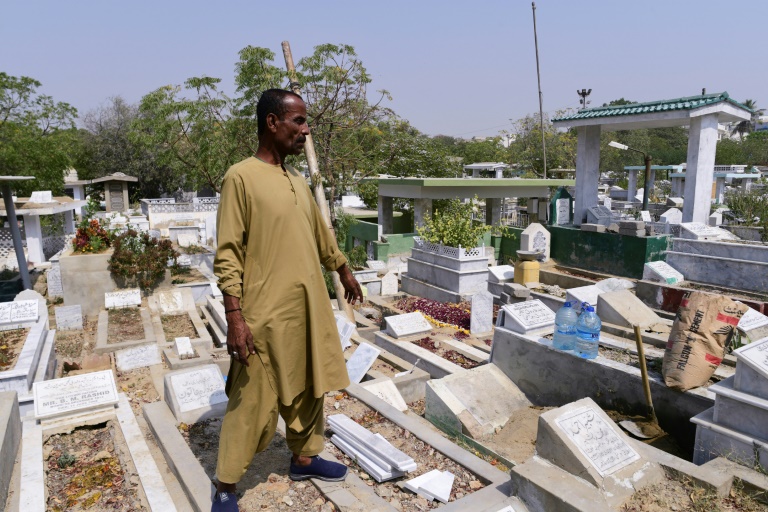
In the teeming metropolis of Karachi, Pakistan’s biggest city, graveyards are filling up and the dead are running out of space to rest. 

But for the right price to the right person, a plot can be “found” for the body of a loved one by shady crews who demolish old graves to make room for the new.

In the coastal megacity — a crush of 20 million people — the Pakistan Employees Cooperative Housing Society (PECHS) cemetery has been officially full for five years.

The necropolis is choc-full. Tombs big and small are slotted like Tetris into every nook — some pitted deep in the ground, others raised high on petal-strewn plinths.

Still, new tombs appear all the time, erected on smashed or scooped-out graves by men charging outsized fees.

AFP witnessed one team hacking at stonework and furtively carrying away baskets of dirt until they had carved out a fresh opening in the cramped earth.

“There’s no space in the whole of Karachi — none of the graveyards has space for fresh burials,” said digger Khalil Ahmed. 

“We have to destroy old graves if we want to create new ones.”

The government burial fee in this district is 7,900 rupees ($44) but two locals reported paying 55,000 and 175,000 to lay a loved one to rest in the PECHS graveyard last year.

Ahmed said the fees are split between 40 men and teens who, when not working, spend their time lolling on day beds in the shade.

– Gravedigger mafia –

Ahmed and his colleagues are part of what politicians and the media call the “gravedigger mafia” — a typically flamboyant term in the parlance of Pakistan social affairs.

Officials rail against the “milk mafia” watering their wares, the “sugar mafia” driving up prices and the “land mafia” annexing space.

But the freelance gravediggers are profiting on Pakistan’s changing population dynamic.

Pakistan is the world’s fifth most-populous nation with 220 million citizens and more than four million added every year.

As the population grows, so does the migration of people from the countryside to the cities, looking for work to escape rural poverty.

Muhammad Aslam has witnessed the gravedigger mafia flourish as Karachi’s population boomed.

The 72-year-old said the PECHS graveyard was a “deserted place” when he moved next door in 1953 but “space shrank fast” as burial prices rose for 14 family members interred over the years.

In 1967 Aslam’s family paid 50 rupees to bury his grandfather but a relative buried at the hands of the mafia in 2020 cost 33,000.

“The basic issue is that infrastructure is insufficient,” said Ali Hassan Sajid, a spokesman for the Karachi Metropolitan Corporation (KMC).

The KMC manages 39 of around 250 graveyards citywide — including PECHS Six are closed, while the rest are “almost full”.

“In some parts of the city the infrastructure is the same that existed when Pakistan was founded,” Sajid admitted.

He openly acknowledged the existence of gravedigger mafias conducting burials at closed sites — and claimed efforts to evict them are underway.

The gangs are also reported to be flourishing in the cities of Rawalpindi, Peshawar and Lahore.

– A missing memorial –

Fault for the gravedigger mafia — and even whether they represent a problem — depends on who you ask.

Sajid said families eager to bury relatives alongside previous generations in full yards offer high prices that “lure the gravedigger so he falls prey to his greed”.

Ahmed the gravedigger says he provides an essential service in a city unable to administer itself, scratching out a meagre living in return.

And while some locals view the practice as part of the faulty fabric of life in a teeming city, for others it is a source of angst.

Muhammad Abdullah Saif’s father was buried in the PECHS graveyard decades ago. 

Today the faded green tomb is surrounded by empty sacks of cement and the shattered cusps of tombstones –the mafias generally pick untended graves for demolition.

“We have to come and visit regularly or the grave will be knocked down,” said the 32-year-old.

Muzammil Asif, meanwhile, must clamber over a carpet of ankle-twisting hazards to reach the grave of his teenage sister, buried here last summer.

“Graves are desecrated when one walks over them,” the 21-year-old complains.

And in the nearby Korangi graveyard Muhammad Munir has experienced the saddest loss.

Every year he comes to offer prayers in the cemetry where his father was buried — an amphitheatre of tumbledown tombstones fringed by ragged flags.

But the grave is long gone, demolished more than 20 years ago and replaced by another. That replacement is gone too, swapped out for a new one.

Some years when Munir visits he finds a fresh crop of tombstones bearing unfamiliar names, erected in smeared cement.

Now he’s unsure of exactly where his father lies in rest.

“It’s painful,” he said. “The grave was the last sign of him.”

Grave injustice: Not even the dead rest easy in Pakistan megacity

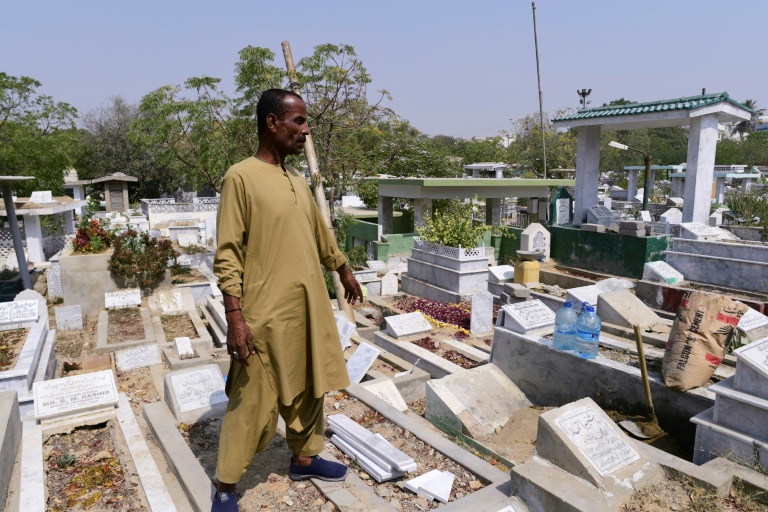
In the teeming metropolis of Karachi, Pakistan’s biggest city, graveyards are filling up and the dead are running out of space to rest. 

But for the right price to the right person, a plot can be “found” for the body of a loved one by shady crews who demolish old graves to make room for the new.

In the coastal megacity — a crush of 20 million people — the Pakistan Employees Cooperative Housing Society (PECHS) cemetery has been officially full for five years.

The necropolis is choc-full. Tombs big and small are slotted like Tetris into every nook — some pitted deep in the ground, others raised high on petal-strewn plinths.

Still, new tombs appear all the time, erected on smashed or scooped-out graves by men charging outsized fees.

AFP witnessed one team hacking at stonework and furtively carrying away baskets of dirt until they had carved out a fresh opening in the cramped earth.

“There’s no space in the whole of Karachi — none of the graveyards has space for fresh burials,” said digger Khalil Ahmed. 

“We have to destroy old graves if we want to create new ones.”

The government burial fee in this district is 7,900 rupees ($44) but two locals reported paying 55,000 and 175,000 to lay a loved one to rest in the PECHS graveyard last year.

Ahmed said the fees are split between 40 men and teens who, when not working, spend their time lolling on day beds in the shade.

– Gravedigger mafia –

Ahmed and his colleagues are part of what politicians and the media call the “gravedigger mafia” — a typically flamboyant term in the parlance of Pakistan social affairs.

Officials rail against the “milk mafia” watering their wares, the “sugar mafia” driving up prices and the “land mafia” annexing space.

But the freelance gravediggers are profiting on Pakistan’s changing population dynamic.

Pakistan is the world’s fifth most-populous nation with 220 million citizens and more than four million added every year.

As the population grows, so does the migration of people from the countryside to the cities, looking for work to escape rural poverty.

Muhammad Aslam has witnessed the gravedigger mafia flourish as Karachi’s population boomed.

The 72-year-old said the PECHS graveyard was a “deserted place” when he moved next door in 1953 but “space shrank fast” as burial prices rose for 14 family members interred over the years.

In 1967 Aslam’s family paid 50 rupees to bury his grandfather but a relative buried at the hands of the mafia in 2020 cost 33,000.

“The basic issue is that infrastructure is insufficient,” said Ali Hassan Sajid, a spokesman for the Karachi Metropolitan Corporation (KMC).

The KMC manages 39 of around 250 graveyards citywide — including PECHS Six are closed, while the rest are “almost full”.

“In some parts of the city the infrastructure is the same that existed when Pakistan was founded,” Sajid admitted.

He openly acknowledged the existence of gravedigger mafias conducting burials at closed sites — and claimed efforts to evict them are underway.

The gangs are also reported to be flourishing in the cities of Rawalpindi, Peshawar and Lahore.

– A missing memorial –

Fault for the gravedigger mafia — and even whether they represent a problem — depends on who you ask.

Sajid said families eager to bury relatives alongside previous generations in full yards offer high prices that “lure the gravedigger so he falls prey to his greed”.

Ahmed the gravedigger says he provides an essential service in a city unable to administer itself, scratching out a meagre living in return.

And while some locals view the practice as part of the faulty fabric of life in a teeming city, for others it is a source of angst.

Muhammad Abdullah Saif’s father was buried in the PECHS graveyard decades ago. 

Today the faded green tomb is surrounded by empty sacks of cement and the shattered cusps of tombstones –the mafias generally pick untended graves for demolition.

“We have to come and visit regularly or the grave will be knocked down,” said the 32-year-old.

Muzammil Asif, meanwhile, must clamber over a carpet of ankle-twisting hazards to reach the grave of his teenage sister, buried here last summer.

“Graves are desecrated when one walks over them,” the 21-year-old complains.

And in the nearby Korangi graveyard Muhammad Munir has experienced the saddest loss.

Every year he comes to offer prayers in the cemetry where his father was buried — an amphitheatre of tumbledown tombstones fringed by ragged flags.

But the grave is long gone, demolished more than 20 years ago and replaced by another. That replacement is gone too, swapped out for a new one.

Some years when Munir visits he finds a fresh crop of tombstones bearing unfamiliar names, erected in smeared cement.

Now he’s unsure of exactly where his father lies in rest.

“It’s painful,” he said. “The grave was the last sign of him.”

Biden's biofuel: Cheaper at the pump, but high environmental cost

In an effort to ease Americans’ pain at the gas pump, President Joe Biden has announced his administration will ease restrictions on the sale of E15 — gasoline that includes 15 percent ethanol — and new investments in biofuels as a whole.

But the decision hasn’t pleased scientists who study the environmental impact of ethanol.

– What is ethanol? –

Fuel ethanol is based on the same type of alcohol used in beverages, but with “denaturant” additives that make it unsuitable for drinking.

Blending ethanol with gasoline eases reliance on crude oil. 

Most gas now sold in the United States is E10. American ethanol is generally produced by fermenting sugar from corn starch. Other countries such as Brazil rely on sugar from sugar cane.

In 2011, the US Environmental Protection Agency approved the use of E15 following research on its pollution impact.

But it is currently offered at just 2,300 gas stations in the country, according to officials.

– What has Biden announced? –

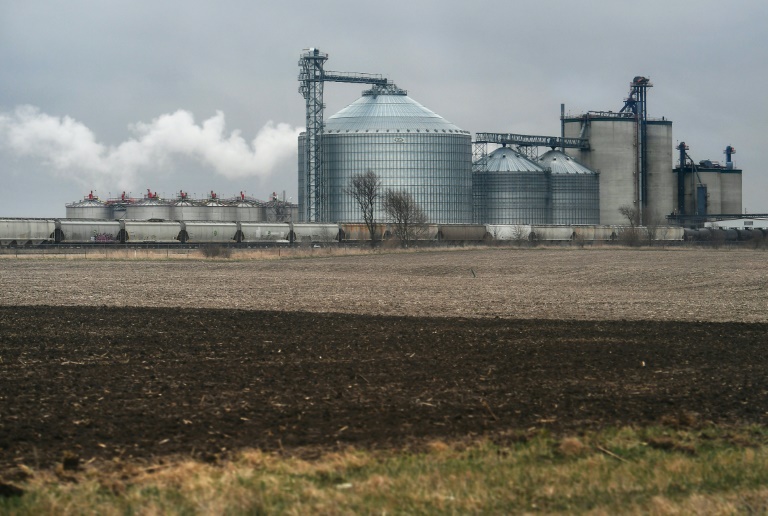
Speaking at a bioethanol production plant in the Midwestern state of Iowa, Biden said Tuesday that the EPA would lift a restriction prohibiting the sale of E15 between June 1 and September 15 — a constraint that was imposed to limit air pollution.

That’s because ethanol evaporates more easily and turns more readily into smog, which is particularly problematic in the high heat and sunlight of summer.

In 2018, then president Donald Trump also wanted to lift this restriction, as a concession to farmers in the midst of a trade war with China.

But a court decision eventually overturned Trump’s decision. 

According to the White House, at today’s prices, E15 can save an average of 10 cents per gallon of gasoline (4.5 liters).


– Environmental consequences –

Though biofuels have been touted for their ability to reduce greenhouse gas emissions, assessing the environmental impact of bioethanol requires including greenhouse gas emissions related to the crops needed for its production.

And “the carbon balance of ethanol relative to gasoline isn’t as good as it was originally anticipated,” Tyler Lark, a scientist at the University of Wisconsin-Madison told AFP.

In 2005, Congress passed a “Renewable Fuel Standard,” which required transportation fuel to include a volume of biofuel that increased over time. 

The law was further expanded in 2007. As a result, 2.8 million additional hectares of corn were grown between 2008 and 2016, according to a study published in February in the Proceedings of the National Academy of Sciences (PNAS). 

Lark. the first author of the PNAS study, said the consequences of converting land to corn cultivation were underestimated at the time.

“When you do that, you plow up other types of land that may have been sequestering carbon and you apply extra nitrogen fertilizer to grow that corn,” he said.

In addition, some of the fertilizer used to grow corn emits nitrous oxide (N2O), a very powerful greenhouse gas. 

Thus, greenhouse gas emissions related to gasoline or ethanol are ultimately comparable, concludes the study. 

There are other harmful consequences, too — including leaching of fertilizers into ground water, and the destruction of wildlife habitats to make way for corn fields.

– Health dangers –

Once in the tank, bioethanol emits less CO2 per liter than traditional fuels, but there’s less energy per volume and so more is needed.

In addition, “it produces acetaldehyde which is a carcinogen, formaldehyde, which is a carcinogen and both of those are two of the five most potent ozone producers in photochemical smog,” explained Mark Jacobson, a professor of environmental engineering at Stanford University.

Ground-level ozone represents a major health hazard, causing numerous respiratory problems including asthma. For Jacobson, both gasoline and biofuels are “horrible.”

“It’s bad for both climate and air pollution, and spending money on it is taking money away from real solutions” such as electric vehicles, he concluded.

Brazil indigenous influencers take their fight online

Clutching an iPhone in each hand, and sporting a feather headdress and traditional indigenous garb, Brazilian influencer Samela Awia, a member of the Amazon rainforest’s Satere-Mawe people, checks out her latest video, then posts it online.

“Good stuff,” says the 25-year-old after uploading the video, a recap of news from a tent city near the seat of government in Brasilia, where she and thousands of other indigenous Brazilians have been camped out since last week protesting far-right President Jair Bolsonaro’s policies.

“Hi, this is Samela, coming to you from the indigenous camp,” she tells her 54,000 followers in the mini-report, decked out in a coconut shell-and-crochet bustier, colorful beads and blue flower armbands.

“Come with me, I’ll show you what’s going on,” says the self-described artisan and digital activist from Manaus, the city known as the “capital of the Amazon.”

The indigenous camp, an annual event, has focused this year on mobilizing public opinion against a series of Bolsonaro initiatives that critics say would be disastrous for native peoples and the environment, including bills that would sharply limit the creation of new indigenous reservations and open existing ones to mining.

But in addition to the camp, young and tech-savvy indigenous influencers are increasingly taking their cause online.

“Indigenous leaders before us had other tools, other weapons to fight. Our generation has a new form of resistance, the internet and social networks, and it’s making a big difference,” Awia told AFP.

– ‘iPhone Indians’ –

Brazil is home to around 900,000 indigenous people.

They make up 0.5 percent of the population, but play an outsize role in protecting the environment: experts say creating and safeguarding indigenous reservations is one of the best ways to preserve the world’s forests, key resources in the race to curb climate change.

Victims of mass killings and horrific abuses throughout the nation’s history, indigenous Brazilians still often face violence, discrimination and rights violations today.

Indigenous influencers see part of their role as combatting the prejudice their people face.

Tukuma Pataxo, 22, recently posted a video taking on a question he says he gets constantly: “Aren’t you too modern to be indigenous?”

“Are we supposed to be stuck in time?” he asks in the accompanying message, hitting out at the derogatory phrase sometimes applied to people like him: “iPhone Indians.”

With 172,000 followers, Pataxo, who comes from the ethnic group of the same name in the northeastern state of Bahia, is a celebrity at the protest camp, where fellow demonstrators constantly stop him and ask to take a picture.

“Young people are super important in the (indigenous) struggle. Our elders started coming to Brasilia years ago as a way to fight for their land. They didn’t even know where they were going or how to get here, but they came,” says Pataxo.

“Now, we have a whole new platform with technology on our side, which lets us bring our fight to the entire world.”

Russian warship 'seriously damaged' in ammunition explosion: state media

The Russian navy’s Black Sea flagship has been “seriously damaged” by an ammunition explosion, Russian state media said Thursday.

“As a result of a fire, ammunition detonated on the Moskva missile cruiser. The ship was seriously damaged,” the Russian defence ministry was quoted as saying, adding that the cause of the fire was being determined and that the crew had been evacuated.  

Earlier, the governor of Odessa said that Ukrainian forces had hit the Moskva with missile strikes. 

“Neptune missiles guarding the Black Sea caused very serious damage to the Russian ship. Glory to Ukraine!” governor Maksym Marchenko wrote on Telegram. 

Ukrainian presidential advisor Oleksiy Arestovych said that “a surprise happened” with the Moskva.

“It burns strongly. Right now. And with this stormy sea, it is unknown whether they will be able to receive help,” he said in a YouTube broadcast. 

“We don’t understand what happened.”

The Moskva was originally built in the Soviet era in Ukraine’s Mykolaiv, and entered service in the early 1980s, according to Russian media.

With a crew of 510, it was previously deployed in the Syria conflict where it served as naval protection for the Russian forces’ Hmeimim airbase. 

The missile cruiser carries 16 P-1000 Vulkan anti-ship missiles as well as an array of anti-submarine and mine-torpedo weapons, the reports said. 

The Moskva gained notoriety early in the war when it called on Ukrainian border troops defending the strategic Snake Island to surrender, only to be defiantly refused. 

The troops in question were initially believed to have been killed, but in fact were taken captive. 

They were released as part of a prisoner exchange with Russia in late March, according to the Ukrainian Parliament. 

Ukraine’s human rights ombudswoman Lyudmyla Denisova said the soldiers had described being taken to an unknown location where they were held in freezing conditions and suffered frostbite.

Death toll from Philippines landslides, floods rises to 80

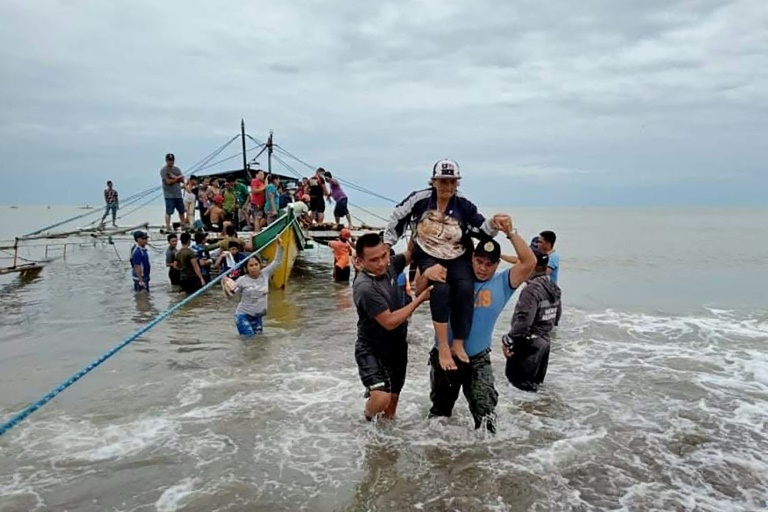
The death toll from landslides and floods in the Philippines rose to 80 on Wednesday with scores missing and feared dead, officials said, as rescuers dug up more bodies with bare hands and backhoes in crushed villages.

Most of the deaths from tropical storm Megi — the strongest to hit the archipelago this year — were in the central province of Leyte, where a series of landslides devastated communities.

Twenty-six people died and around 150 were missing in the coastal village of Pilar, which is part of Abuyog municipality, after a torrent of mud and earth on Tuesday pushed houses into the sea and buried most of the settlement, authorities said.

“I have to be honest, we are no longer expecting survivors,” Abuyog Mayor Lemuel Traya told AFP, adding that emergency personnel were now focused on the difficult task of retrieving bodies.

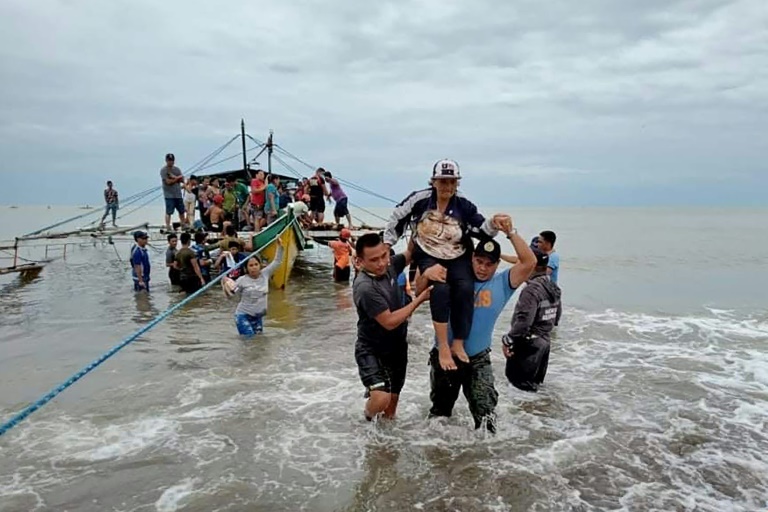
About 250 people were in evacuation centres after being rescued by boat after roads were cut by landslides, he said. 

A number of villagers were also in hospital.

A rumbling sound like “a helicopter” alerted Ara Mae Canuto, 22, to the landslide hurtling towards her family’s home in Pilar. 

She said she tried to outrun it, but was swept into the water and nearly drowned. 

“I swallowed dirt, and my ears and nose are full of mud,” Canuto told AFP by telephone from her hospital bed. Her father died, and her mother has not been found.

The disaster-prone region is regularly ravaged by storms — including a direct hit from Super Typhoon Haiyan in 2013 — with scientists warning they are becoming more powerful as the world gets warmer because of human-driven climate change.

Baybay City is also reeling after waves of sodden soil smashed into farming settlements over the weekend, killing at least 48 people and injuring more than 100, local authorities said. Twenty-seven are still missing, they added. 

Aerial photos showed a wide stretch of mud that had swept down a hill of coconut trees and engulfed Bunga village, where only a few rooftops poked through the now-transformed landscape.

“We were told to be on alert because a storm was coming, but they did not directly tell us we needed to evacuate,” said Bunga farmworker Loderica Portarcos, 47, who lost 17 relatives and a friend in the landslide.

Portarcos braved heat and humidity as she advised a backhoe operator where to dig for three bodies still embedded in the soft soil, which had started to smell of rotting flesh.

“Our dead relatives are all in the morgue, but there will be no time for a wake to mourn them because the mayor told us they smell bad,” she said.

– ‘Many of us died’ – 

Three people were also killed in the central province of Negros Oriental and three on the main southern island of Mindanao, according to the national disaster agency.

The death toll from Megi is expected to rise as rescue operations switch to recovering bodies. 

Black body bags containing 26 victims from Pilar were laid out on sand in Abuyog for relatives to identify on Wednesday. 

Abuyog police chief Captain James Mark Ruiz said more boats were needed, but getting access to the shore was difficult.

Photos posted by the Bureau of Fire Protection on Facebook showed buildings crushed or turned over by the force of the landslide and debris in the water.

“We’re using fiberglass boats, and there are steel bars exposed in the sea, so it’s very difficult,” Abuyog Mayor Traya said, adding that the ground was unstable and “very risky”.

While Pilar survivor Canuto counts herself lucky to be alive, she said “many of us died and a lot are missing, too”.

Pope Francis, having been informed of the storm’s destruction, expressed solidarity with the victims, the Vatican said in a statement.

“He also offers the assurance of prayers for the dead, injured and displaced as well as those engaged in recovery efforts,” the statement said.

“His Holiness willingly invokes upon all the Filipino people God’s blessings.”

Whipping up seas, Megi forced dozens of ports to temporarily suspend operations, stranding thousands of people at the start of Holy Week, one of the busiest travel periods of the year in the Philippines.

It came four months after super typhoon Rai devastated swathes of the country, killing more than 400 and leaving hundreds of thousands homeless.

The Philippines — ranked among the most vulnerable nations to the impacts of climate change — is hit by an average of 20 storms every year.

Death toll from Philippines landslides, floods rises to 80

The death toll from landslides and floods in the Philippines rose to 80 on Wednesday with scores missing and feared dead, officials said, as rescuers dug up more bodies with bare hands and backhoes in crushed villages.

Most of the deaths from tropical storm Megi — the strongest to hit the archipelago this year — were in the central province of Leyte, where a series of landslides devastated communities.

Twenty-six people died and around 150 were missing in the coastal village of Pilar, which is part of Abuyog municipality, after a torrent of mud and earth on Tuesday pushed houses into the sea and buried most of the settlement, authorities said.

“I have to be honest, we are no longer expecting survivors,” Abuyog Mayor Lemuel Traya told AFP, adding that emergency personnel were now focused on the difficult task of retrieving bodies.

About 250 people were in evacuation centres after being rescued by boat after roads were cut by landslides, he said. 

A number of villagers were also in hospital.

A rumbling sound like “a helicopter” alerted Ara Mae Canuto, 22, to the landslide hurtling towards her family’s home in Pilar. 

She said she tried to outrun it, but was swept into the water and nearly drowned. 

“I swallowed dirt, and my ears and nose are full of mud,” Canuto told AFP by telephone from her hospital bed. Her father died, and her mother has not been found.

The disaster-prone region is regularly ravaged by storms — including a direct hit from Super Typhoon Haiyan in 2013 — with scientists warning they are becoming more powerful as the world gets warmer because of human-driven climate change.

Baybay City is also reeling after waves of sodden soil smashed into farming settlements over the weekend, killing at least 48 people and injuring more than 100, local authorities said. Twenty-seven are still missing, they added. 

Aerial photos showed a wide stretch of mud that had swept down a hill of coconut trees and engulfed Bunga village, where only a few rooftops poked through the now-transformed landscape.

“We were told to be on alert because a storm was coming, but they did not directly tell us we needed to evacuate,” said Bunga farmworker Loderica Portarcos, 47, who lost 17 relatives and a friend in the landslide.

Portarcos braved heat and humidity as she advised a backhoe operator where to dig for three bodies still embedded in the soft soil, which had started to smell of rotting flesh.

“Our dead relatives are all in the morgue, but there will be no time for a wake to mourn them because the mayor told us they smell bad,” she said.

– ‘Many of us died’ – 

Three people were also killed in the central province of Negros Oriental and three on the main southern island of Mindanao, according to the national disaster agency.

The death toll from Megi is expected to rise as rescue operations switch to recovering bodies. 

Black body bags containing 26 victims from Pilar were laid out on sand in Abuyog for relatives to identify on Wednesday. 

Abuyog police chief Captain James Mark Ruiz said more boats were needed, but getting access to the shore was difficult.

Photos posted by the Bureau of Fire Protection on Facebook showed buildings crushed or turned over by the force of the landslide and debris in the water.

“We’re using fiberglass boats, and there are steel bars exposed in the sea, so it’s very difficult,” Abuyog Mayor Traya said, adding that the ground was unstable and “very risky”.

While Pilar survivor Canuto counts herself lucky to be alive, she said “many of us died and a lot are missing, too”.

Pope Francis, having been informed of the storm’s destruction, expressed solidarity with the victims, the Vatican said in a statement.

“He also offers the assurance of prayers for the dead, injured and displaced as well as those engaged in recovery efforts,” the statement said.

“His Holiness willingly invokes upon all the Filipino people God’s blessings.”

Whipping up seas, Megi forced dozens of ports to temporarily suspend operations, stranding thousands of people at the start of Holy Week, one of the busiest travel periods of the year in the Philippines.

It came four months after super typhoon Rai devastated swathes of the country, killing more than 400 and leaving hundreds of thousands homeless.

The Philippines — ranked among the most vulnerable nations to the impacts of climate change — is hit by an average of 20 storms every year.

Close Bitnami banner
Bitnami