World

Last residents of east Ukraine ghost city brave Russian bombs

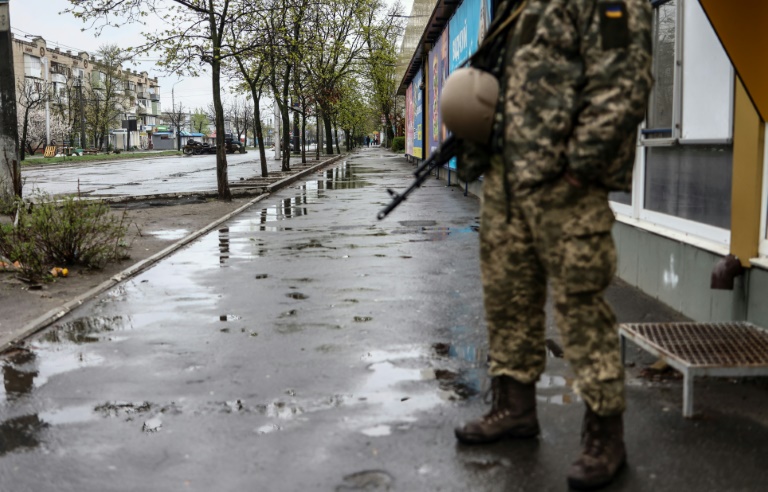
Maria hugged her six-year-old son Maxim close as the sound of shelling echoed nearby Wednesday in the under fire eastern Ukrainian city of Severodonetsk. 

She did not want to flee her home even though the bombing from Russian forces has meant most residents have left.

“There’s no electricity, no water,” said the young woman, who lives with her husband and mother-in-law. 

“But I prefer to stay here, at home. If we leave, where will we go?”

Severodonetsk is the most easterly city still held by Ukrainian forces and has become a deserted shell of its former self as Russia’s invading troops have made it a key target. 

“The bombings? It’s like this all the time,” Maria said, after another explosion.

The frontline is very close. The city, with more than 100,000 inhabitants before the war, is almost empty. 

About 400 civilians have been buried there since the war began, according to the Ukrainian governor of the Lugansk region Sergiy Gaiday.

– Calls to evacuate –

The weather was miserable on Wednesday as cold rain poured from the grey sky and filled potholes in the roads.

The conditions were not favourable for a feared major offensive that Ukraine believes Moscow’s forces are massing for as they look to claim the whole of the Donbas region for two separatist areas.

The frontline positions have not moved for a few days as both sides rely on their artillery.

A handful of people braved the search for supplies on a broad street leading from the city centre to a wood, beyond which the Russians are camped. 

As strikes sounded they hurried along crouching down close to the walls. 

An AFP team passed an elderly man walking next to a woman. 

“I’m looking for something to drink. This woman wants bread. But they don’t sell it,” Yury said. 

“I am afraid, very afraid, but I am 70 years old, so I don’t show it,” he said. 

He needs medicine for his aching joints and leg but “there are no doctors, no nurses, and all the pharmacies are closed”. 

The governor has called on people to evacuate the government-held Lugansk region, of which Severodonetsk is the capital. 

A small yellow bus was parked in front of the cultural centre, the meeting place for people wanting to be evacuated.

Tamara Yakovenko, 61, came with her 83-year-old mother. 

Four other people waited with them at the pick-up point.

“We have to leave…. Here we have to stay in the basement. It’s horrible. Every 10 or 15 minutes there are bombings,” Tamara said. 

“We used to receive humanitarian aid, but now nobody remembers us. Some people try to cook outside on a fire… And boom, boom… everyone has to run back to the basement. All night until morning, there is no rest.”

– Ukrainian troops –

At the checkpoints at the entrance to the city, the Ukrainian troops had put on their raincoats. 

There were few soldiers in the city. At the corner of one building stood a light armoured vehicle, covered with camouflage netting. 

On the road heading West to the military hub of Kramatorsk there was little sign of troop movements. 

Only a few empty army lorries and fuel trucks headed towards the front.

According to the regional governor, the Russians are concentrating their forces near Rubizhne, less than 10 km (6 miles) north of Severodonetsk. 

Last night, Rubizhne was the target of shelling throughout the night, according to a resident, whose house looks out over the two localities.
JPMorgan Chase says US economy still solid, but risks rising

JPMorgan Chase said the US economy remains on solid footing in the short term, but warned of heightened longer-term risks due to inflation and the Ukraine war as it reported lower quarterly profits.

Executives from the giant bank said households and businesses generally remained in good shape amid a tightening labor market.

But higher consumer prices, the Ukraine war and the shifts in Federal Reserve policy have together slightly raised the recession risk, which led the bank to set aside $902 million in additional reserves as a buffer against possible bad loans.

“There’s this very strong underlying economy,” Chief Executive Jamie Dimon said, noting that many consumers are flush with cash and businesses are in “good shape” for the most part.

But he pointed to “countervailing forces,” including rising interest rates and inflation, and the war in Ukraine. 

“And those things are going to collide at one point, probably sometime next year,” he said.

“I’m not predicting a recession,” Dimon added in a conference call with reporters. “But is it possible? Absolutely.”

– ‘Wars are unpredictable’ –

The biggest US bank by assets, JPMorgan reported $8.3 billion in first-quarter profits, down 42 percent from the same three months of the prior year. Revenues dipped five percent to $30.7 billion. 

JPMorgan scored higher net interest income, reflecting a boost to lending fees because of higher lending rates. 

Profits fell in investment banking on lower equity and debt underwriting fees. The division also suffered a $120 million hit tied to upheaval in the nickel market in March that pressured some commodity brokerages, company officials said.

The results contrasted sharply from a year ago, when JPMorgan saw surging profits after it unlocked $5.2 billion in funds it had set aside early in the pandemic against potential defaults, but didn’t need because of the surprisingly solid condition of clients.

In the latest quarter, JPMorgan set aside $902 million for bad loans, citing “downside risks” including the Ukraine war and surging inflation.

About $300 million of that amount is connected to Russia-related exposures, with the remaining funds reflecting broader economic risks, executives said.

Charge offs for the first quarter came in at a relatively modest $582 million, another sign of the healthy condition of consumers.

In terms of customer trends, Dimon cited an uptick in credit card spending on dining and travel, but said higher mortgage rates had dented home lending originations, while limited vehicle availability crimped car loan originations.

Dimon highlighted the Ukraine situation as a wildcard, warning that “wars are unpredictable” and the oil market could “change dramatically.”

“The oil markets are precarious,” he said, adding that “clouds are on the horizon.”

The CEO also predicted elevated volatility throughout financial markets given the scale of the Fed’s asset unwind.

“We’ve never been through a (quantitative tightening) like this,” Dimon said. 

“So this is a new thing for the world and I think is more substantially important than other people think, because the huge change of flows of funds is going to create as people change their investment portfolio.”

Briefing.com called the earnings report a “red flag” for the banking industry. 

While far from disastrous, the JPMorgan results “shows that some cracks are forming, particularly in consumer lending (home and auto), adding to growth concerns for banks and the economy,” Briefing.com said.

JPMorgan’s shares fell 3.2 percent to $127.30.

Other large banks, including Goldman Sachs, Citigroup and Bank of America, will report results in coming days.

Cuba Gooding Jr admits forcible kiss on waitress

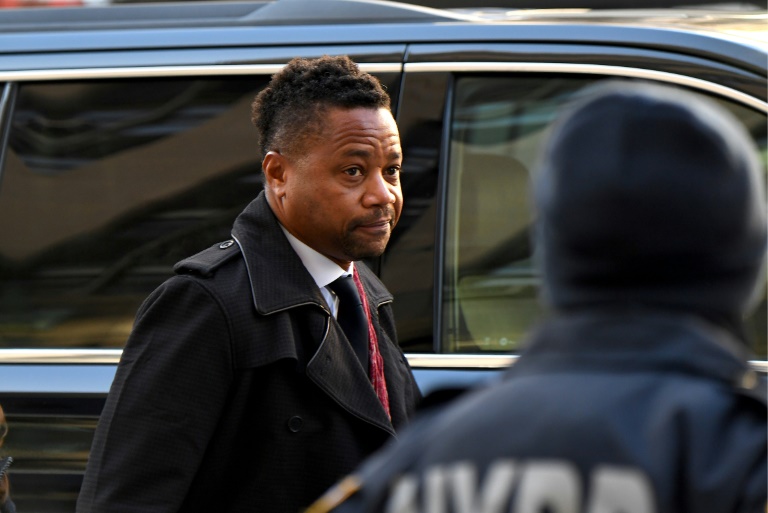
Oscar-winning actor Cuba Gooding Jr admitted forcibly kissing a waitress, his lawyer said Wednesday, in a New York court plea that will see other criminal complaints against him dropped.

The “Jerry Maguire” star had been accused by more than 20 women of groping and unwanted touching over decades, and had faced criminal charges stemming from complaints by three of them.

Gooding’s lawyer, Frank Rothman, told AFP his client had entered a guilty plea on one misdemeanor count.

“He admitted to one charge that he kissed a waitress without her consent,” Rothman said, adding “all the other charges have been dismissed.”

“In six months, if he stays out of trouble, that charge will be withdrawn, and he will have no criminal record at the end of this.”

Gloria Allred, who is representing the unnamed woman in a civil suit, said applications for other alleged victims to be able to testify in the case — on the basis that they were subject to similar conduct — were denied by the judge.

“My law firm and New York attorney, Casey Wolnowski, will continue to litigate our civil case against Cuba Gooding, Jr. in Federal court in New York on behalf of our brave client who alleges in her lawsuit that Cuba Gooding, Jr. committed an act of gender violence against her,” Allred said.

“We look forward to achieving a just result in this lawsuit.”

Gooding, 54, shot to fame for his role in the 1991 film “Boyz n the Hood,” and cemented his reputation with an Oscar win for best supporting actor in American football movie “Jerry Maguire,” opposite Tom Cruise.

Gooding is the latest entertainment figure to face a public reckoning over unwanted sexual advances in the #MeToo wave, which began with producer Harvey Weinstein being brought to justice for decades of abuse.

Suspect faces terror charge over New York subway shooting

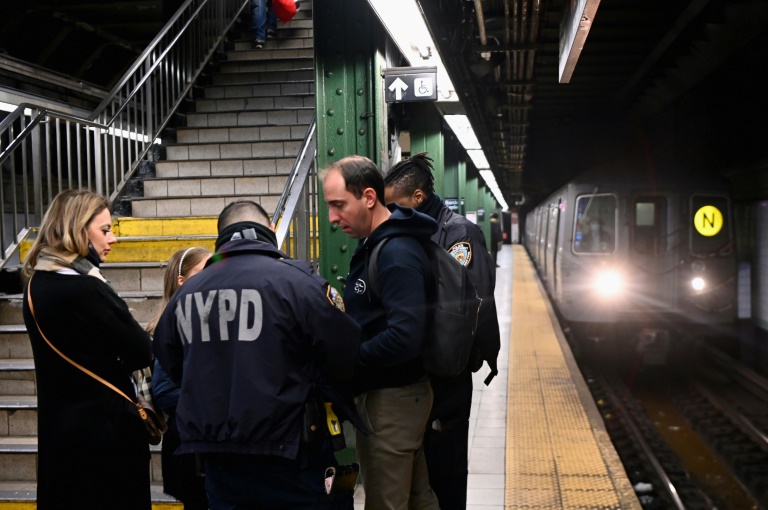
A 62-year-old man accused of shooting 10 people on the New York subway was taken into custody Wednesday and faces a federal terror charge, following a day-long manhunt in a city set on edge by the attack.

Frank James — who is suspected of detonating two smoke canisters on the train as it pulled into a Brooklyn station, before firing into the crowd — was stopped by officers on a Manhattan street and arrested without incident.

“My fellow New Yorkers: we got him,” Mayor Eric Adams told a news conference.

“There was nowhere left for him to run,” added New York Police Department commissioner Keechant Sewell, whose officers made the arrest acting on a tip.

Announcing the charges against James, US District Attorney Breon Peace said he could face a life sentence if convicted of violating a federal prohibition on “terrorist and other violent attacks against mass transportation systems.”

Michael J. Driscoll, the assistant director in charge of the FBI’s New York office, also characterized the shooting as “a terrorist attack on mass transit.”

No one was killed in Tuesday’s attack, which left 13 others injured in the scramble to get out of the station, or by smoke inhalation. The motive of the attack remains unknown.

James has nine prior arrests in New York, from 1992 to 1998, including possession of burglary tools and a criminal sex act, and was also arrested three times in nearby New Jersey for trespass, larceny and disorderly conduct, according to NYPD Chief of Detectives James Essig.

Police recovered a Glock 17 nine-millimeter handgun, three additional ammunition magazines and a hatchet from the scene of the attack, as well as James’ credit card and keys to a van he had rented. Officials said James bought the gun legally in Ohio. 

He will be arraigned in a Brooklyn courthouse Thursday.

James had posted several videos of himself on YouTube delivering long, sometimes aggressive political tirades, as well as criticizing New York’s mayor. His page was taken down following the attack for violating YouTube’s guidelines.

But James’ sister, Catherine James Robinson, told The New York Times that she was “surprised” to see him named as a suspect, adding: “I don’t think he would do anything like that.”

She said she had had little contact with her brother for years, according to the newspaper.

The 36th Street station in Brooklyn, where the attack took place, was heavily patrolled by police on Wednesday.

“Today I was so reluctant, I actually tried to get a cab for like nearly maybe 20 minutes. I couldn’t find any and Uber was like $60 bucks, and so I was like ‘It’s okay, I’ll try my chance on the subway today,'” 38-year-old commuter Zeina Awedikian told AFP. 

Others were more defiant. “No one is going to drive me away from the subway. The subway is in my DNA,” said 56-year-old Dennis Sughrue.

– ‘Shot in the back of knee’ –

According to the account given by police, James put on a gas mask just as the train was arriving at the station during the Tuesday rush hour, then opened the smoke canisters and fired 33 shots at the commuters packed on board.

“All you see is like a smoke, black smoke bomb going off, and then… people bum rushing to the back,” one of the gunshot victims, Hourari Benkada, told CNN, referring to a charge by passengers towards the door at the end of the car.

Benkada, speaking from his hospital bed, said he had boarded the first car at 59th Street and sat next to the gunman — but with his headphones on did not notice anything until smoke began filling the car.

He said he did not understand that there were shots at first, and that he was trying to comfort a pregnant woman next to him. 

“I got pushed and that’s when I got shot in the back of my knee,” he said.

Benkada said the shooting lasted for perhaps a minute. 

The bullet went through his knee, leaving a hole “the size of a quarter,” he said. “I lost so much blood.”

Shootings in New York have risen this year, and the uptick in violent gun crime has been a central focus for Adams since he took office in January. Through April 3, shooting incidents rose to 296 from 260 during the same period last year, according to police statistics.

Lax gun laws and a constitutionally guaranteed right to bear arms have repeatedly stymied attempts to clamp down on the number of weapons in circulation in the United States, despite a majority of Americans backing greater controls.

Ecuador expands oil extraction from Amazon reserve

Ecuador said Wednesday it had begun pumping oil from a third field located partly on a protected nature reserve in the Amazon rainforest.

Extraction of 3,600 barrels per day started in the Ishpingo oil field which together with the nearby fields of Tiputini and Tambococha form the so-called ITT block, which holds more than 40 percent of the South American country’s proven crude reserves.

The three fields together hold over 1.0 billion of former OPEC member Ecuador’s four billion barrels of proven oil reserves.

Extraction at Tiputini and Tambococha started in 2016 after years of fraught debate over whether to drill inside the Yasuni national park.

Then president Rafael Correa had tried to persuade the international community to pay Ecuador $3.6 billion not to exploit the ITT block — an ultimately failed initiative to protect the Amazon and help curb climate change.

With his government strapped for cash amid a plunge in global oil prices, the leftist leader in the end asked Congress to give the go-ahead to drill.

Current rightwing President Guillermo Lasso has plans to double Ecuador’s oil production in spite of opposition from indigenous communities and environmentalists.

“If this well (at Ishpingo) maintains the current production trend of 3,600 barrels per day… about $60 million will be generated annually, which will be invested in improvements to the education, health and safety system,” a government statement said Wednesday.

In 2021, the country produced over half-a-million barrels per day, mostly by state-owned Petroecuador, according to the Central Bank. 

It is envisaged that another 36 wells will be sunk in the Ishpingo field, operated by China’s CNPC Chuanqing Drilling Engineering Company Limited.

Besides being among the most biodiverse areas on Earth, the million-hectare (2.5-million acre) Yasuni park is home to some of the world’s last uncontacted indigenous populations.

Ecuador expands oil extraction from Amazon reserve

Ecuador said Wednesday it had begun pumping oil from a third field located partly on a protected nature reserve in the Amazon rainforest.

Extraction of 3,600 barrels per day started in the Ishpingo oil field which together with the nearby fields of Tiputini and Tambococha form the so-called ITT block, which holds more than 40 percent of the South American country’s proven crude reserves.

The three fields together hold over 1.0 billion of former OPEC member Ecuador’s four billion barrels of proven oil reserves.

Extraction at Tiputini and Tambococha started in 2016 after years of fraught debate over whether to drill inside the Yasuni national park.

Then president Rafael Correa had tried to persuade the international community to pay Ecuador $3.6 billion not to exploit the ITT block — an ultimately failed initiative to protect the Amazon and help curb climate change.

With his government strapped for cash amid a plunge in global oil prices, the leftist leader in the end asked Congress to give the go-ahead to drill.

Current rightwing President Guillermo Lasso has plans to double Ecuador’s oil production in spite of opposition from indigenous communities and environmentalists.

“If this well (at Ishpingo) maintains the current production trend of 3,600 barrels per day… about $60 million will be generated annually, which will be invested in improvements to the education, health and safety system,” a government statement said Wednesday.

In 2021, the country produced over half-a-million barrels per day, mostly by state-owned Petroecuador, according to the Central Bank. 

It is envisaged that another 36 wells will be sunk in the Ishpingo field, operated by China’s CNPC Chuanqing Drilling Engineering Company Limited.

Besides being among the most biodiverse areas on Earth, the million-hectare (2.5-million acre) Yasuni park is home to some of the world’s last uncontacted indigenous populations.

Islamic State 'Beatle' case goes to the jury in Virginia

A jury began deliberations Wednesday in the trial of El Shafee Elsheikh, a former British national who went to Syria to join the Islamic State and allegedly became a member of the notorious kidnap-and-murder cell known as the “Beatles.”

Wrapping up the government’s case, prosecutor Raj Parekh said it had been proven “beyond any shadow of a doubt” that Elsheikh was one of the hostage-takers dubbed the “Beatles” by their captives because of their British accents.

Defense attorney Nina Ginsberg countered that while the 33-year-old Elsheikh may indeed have been an IS fighter, prosecutors had not proved he actually was a “Beatle.”

Elsheikh, who was stripped of his citizenship by Britain, is charged with the murders of American journalists James Foley and Steven Sotloff and relief workers Kayla Mueller and Peter Kassig.

He and the other “Beatles” are suspected of involvement in the kidnapping in Syria of some 20 other journalists and relief workers from Europe, Russia and Japan.

The question of identification hung heavy over Elsheikh’s two-week trial in a US District Court in Alexandria, Virginia.

“There is no forensic evidence linking Mr Elsheikh to any of the locations where the hostages were held,” Ginsberg said.

She noted that none of the 10 former European and Syrian hostages who testified about their harrowing treatment was asked to identify the defendant in court.

“Mr Elsheikh was not identified in this courtroom by any of the former hostages,” Ginsberg said. “What people would probably call the white elephant in this room.”

She said the “Beatles” were responsible for “brutal” and “loathsome” acts but insisted Elsheikh was not one of them.

“You may find him guilty of providing material support to a terrorist organization,” Ginsberg said, one of the charges Elsheikh is facing.

“But for the other counts you must find that he was a member of the ‘Beatles,'” she said. “We submit you can’t.”

– ‘Brazenly’ –

Parekh, the assistant US attorney, said that on the contrary, the government had “proved beyond any shadow of a doubt that Elsheikh is one of the IS ‘Beatles.'”

“He brazenly told you so himself,” Parekh said in a reference to media interviews played for the 12-person jury during which Elsheikh described his interactions with the hostages.

The interviews with Western media outlets were conducted after Elsheikh and another former British national, Alexanda Amon Kotey, were captured by a Kurdish militia in Syria in January 2018.

They were handed over to US forces in Iraq and flown to the United States in 2020 to face charges of hostage-taking, conspiracy to murder US citizens and supporting a terrorist organization.

Kotey pleaded guilty in September 2021 and is facing life in prison.

In the interviews, Elsheikh made admissions about taking email addresses and proof of life questions from the hostages and to even physically beating them.

Ginsberg said Elsheikh was a “broken man” at that time and only did so to avoid being sent to Iraq, where he would have faced a summary trial and execution.

He wanted to be sent to Britain or the United States “where he could get a fair trial,” she said.

– ‘Brutal legacy’ –

Foley, Sotloff and Kassig were  beheaded by Mohamed Emwazi, known as “Jihadi John,” and videos of their deaths were released by IS for propaganda purposes.

Mueller was initially held by the “Beatles” but then was turned over to IS leader Abu Bakr al-Baghdadi, who reportedly raped her repeatedly.

IS announced Mueller’s death in February 2015 and said she was killed in a Jordanian airstrike, a claim that was disputed by US authorities.

Baghdadi died during a US special forces raid in 2019. Emwazi was killed by a US drone in Syria in 2015.

In his closing argument, Parekh told the jury the government had proved that Elsheikh, Kotey and Emwazi “grew up together, radicalized together, fought as high-ranking IS fighters together and tortured and terrorized hostages together.”

“What these horrific crimes left behind is a legacy of brutal killings and shattered families,” he said, asking the jury to deliver a verdict of guilty on all counts.

Death toll from Philippines landslides, floods rises to 80

The death toll from landslides and floods in the Philippines rose to 80 on Wednesday with scores missing and feared dead, officials said, as rescuers dug up more bodies with bare hands and backhoes in crushed villages.

Most of the deaths from tropical storm Megi — the strongest to hit the archipelago this year — were in the central province of Leyte, where a series of landslides devastated communities.

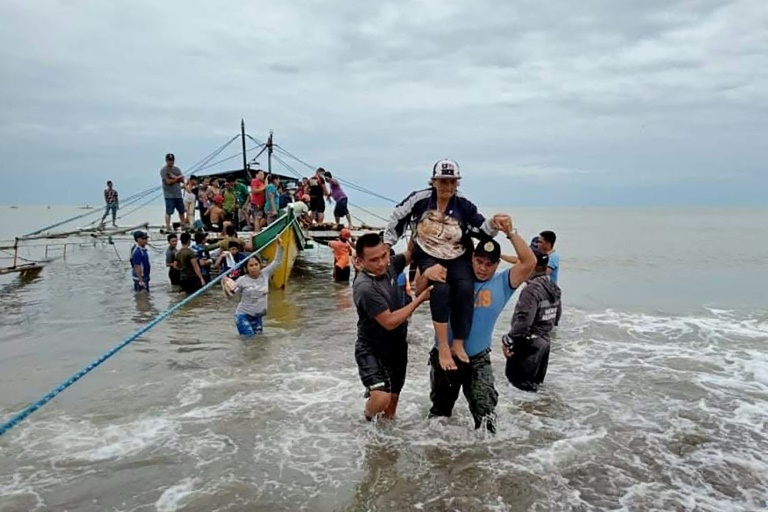
Twenty-six people died and around 150 were missing in the coastal village of Pilar, which is part of Abuyog municipality, after a torrent of mud and earth on Tuesday pushed houses into the sea and buried most of the settlement, authorities said.

“I have to be honest, we are no longer expecting survivors,” Abuyog Mayor Lemuel Traya told AFP, adding that emergency personnel were now focused on the difficult task of retrieving bodies.

About 250 people were in evacuation centres after being rescued by boat after roads were cut by landslides, he said. 

A number of villagers were also in hospital.

A rumbling sound like “a helicopter” alerted Ara Mae Canuto, 22, to the landslide hurtling towards her family’s home in Pilar. 

She said she tried to outrun it, but was swept into the water and nearly drowned. 

“I swallowed dirt, and my ears and nose are full of mud,” Canuto told AFP by telephone from her hospital bed. Her father died, and her mother has not been found.

The disaster-prone region is regularly ravaged by storms — including a direct hit from Super Typhoon Haiyan in 2013 — with scientists warning they are becoming more powerful as the world gets warmer because of human-driven climate change.

Baybay City is also reeling after waves of sodden soil smashed into farming settlements over the weekend, killing at least 48 people and injuring more than 100, local authorities said. Twenty-seven are still missing, they added. 

Aerial photos showed a wide stretch of mud that had swept down a hill of coconut trees and engulfed Bunga village, where only a few rooftops poked through the now-transformed landscape.

“We were told to be on alert because a storm was coming, but they did not directly tell us we needed to evacuate,” said Bunga farmworker Loderica Portarcos, 47, who lost 17 relatives and a friend in the landslide.

Portarcos braved heat and humidity as she advised a backhoe operator where to dig for three bodies still embedded in the soft soil, which had started to smell of rotting flesh.

“Our dead relatives are all in the morgue, but there will be no time for a wake to mourn them because the mayor told us they smell bad,” she said.

– ‘Many of us died’ – 

Three people were also killed in the central province of Negros Oriental and three on the main southern island of Mindanao, according to the national disaster agency.

The death toll from Megi is expected to rise as rescue operations switch to recovering bodies. 

Black body bags containing 26 victims from Pilar were laid out on sand in Abuyog for relatives to identify on Wednesday. 

Abuyog police chief Captain James Mark Ruiz said more boats were needed, but getting access to the shore was difficult.

Photos posted by the Bureau of Fire Protection on Facebook showed buildings crushed or turned over by the force of the landslide and debris in the water.

“We’re using fiberglass boats, and there are steel bars exposed in the sea, so it’s very difficult,” Abuyog Mayor Traya said, adding that the ground was unstable and “very risky”.

While Pilar survivor Canuto counts herself lucky to be alive, she said “many of us died and a lot are missing, too”.

Pope Francis, having been informed of the storm’s destruction, expressed solidarity with the victims, the Vatican said in a statement.

“He also offers the assurance of prayers for the dead, injured and displaced as well as those engaged in recovery efforts,” the statement said.

“His Holiness willingly invokes upon all the Filipino people God’s blessings.”

Whipping up seas, Megi forced dozens of ports to temporarily suspend operations, stranding thousands of people at the start of Holy Week, one of the busiest travel periods of the year in the Philippines.

It came four months after super typhoon Rai devastated swathes of the country, killing more than 400 and leaving hundreds of thousands homeless.

The Philippines — ranked among the most vulnerable nations to the impacts of climate change — is hit by an average of 20 storms every year.

Argentines march for jobs, food, amid rampant inflation

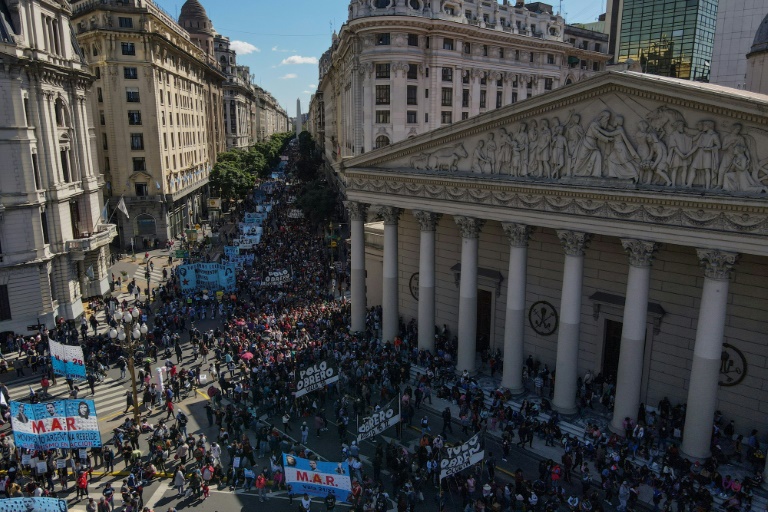
Thousands of Argentines marched Wednesday for jobs, food, and more social aid as rampant inflation undermines government efforts to raise living standards.

Protests were held countrywide but centered on the capital Buenos Aires as the government announced the latest inflation figures — 6.7 percent for the month of March — more than even the most pessimistic projections.

This brought the cumulative total for the first quarter to 16.1 percent and set the country on course for annual inflation of about 60 percent for the year, according to analysts.

Year-on-year, the March figure came to 55.1 percent — one of the highest in the world.

Demonstrators gathered on the historic Plaza de Mayo square that houses the presidency with banners demanding “real work” and increased support for soup kitchens, among other assistance.

“Things are looking bad, the economy is getting out of hand with this government,” Mario Almada, a 60-year-old bricklayer and social aid beneficiary, told AFP.

He said his monthly earnings and government subsidy put together was “not enough to buy food.”

Prices, he added, “increase every four or five days. The noose is tightening.”

The country’s economy is rebooting with GDP growth of 10.3 percent in 2021 after three years of recession.

– 37 percent poverty rate –

Unemployment fell to seven percent in the final quarter of 2021 — the lowest rate in six years.

But inflation continues to rise and the poverty rate is at 37 percent.

Braking inflation and the fiscal deficit were key conditions for the IMF agreeing to refinance a $45 billion loan.

The government’s job is being hampered by spiralling inflation worldwide, fueled by the war in Ukraine.

The Indec statistics institute said Wednesday that food prices alone rose 7.2 percent in March.

For education the increase was more than 23 percent, for clothing and shoes 10.9 percent, and for housing, water, electricity and gas, 7.7 percent.

For 2021, the rate was 50.9 percent and the government had targeted limiting inflation to no more than 48 percent in 2022.

In February, the government boosted by 50 percent the aid given to about 2.4 million Argentines in food stamps, now about $50 per person per month.

This week, it expanded price limits on some 1,700 consumer products, and set up a fund to stabilize the domestic price of wheat flour. 

For Wednesday’s protesters, it is not enough.

“Let them explain to me who can live with that,” said Lucas, another subsidy beneficiary.

Last week, several thousand took to the streets and hundreds camped out on the capital’s largest boulevard pressing the same demands.

Detained tycoon Viktor Medvedchuk: Putin's man in Ukraine

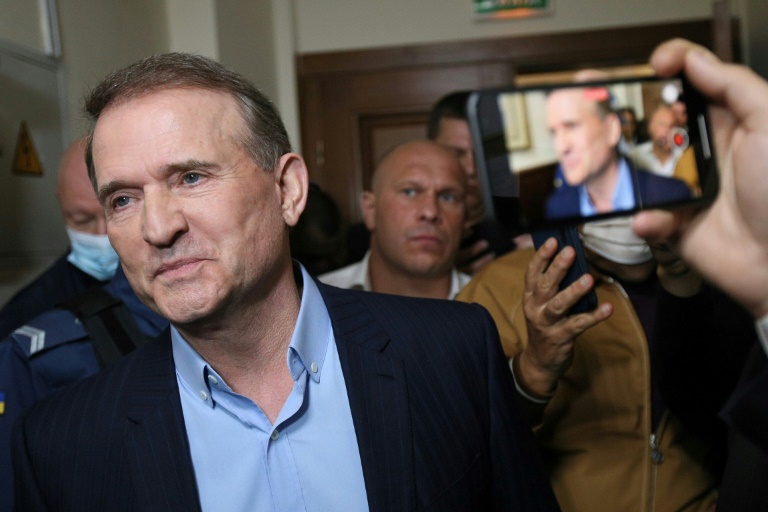
Ukrainian tycoon Viktor Medvedchuk, captured by the country’s special services after fleeing home arrest when Russia invaded, is seen as President Vladimir Putin’s top ally in Kyiv who has been defending the Kremlin’s interests for years. 

In a picture posted online Tuesday by Ukraine’s President Volodymyr Zelensky hailing the arrest, the lawmaker appeared a shadow of the super-rich powerbroker once dubbed the “dark prince” of Ukrainian politics.

Looking dishevelled with a messy mop of grey hair, the 67-year-old stared meekly into the camera with his hands in cuffs and wearing a rumpled Ukrainian army uniform.

News of the capture of Medvedchuk — listed by Forbes last year as Ukraine’s 12th richest person — immediately sparked a celebratory outburst among Ukrainians online as they revelled in the comeuppance of man widely reviled for his close links to the Kremlin.

“It is a symbolic event, like capturing Goebbels, a great success from a moral and political point of view,” said Sergiy Leshchenko, an advisor to Ukraine’s presidency, referring to the Nazi propaganda chief.  

“This is the man who was receiving direct instructions and resources from Putin to prepare the terrain for the invasion,” he alleged. 

Medvedchuk and the Kremlin deny that he has been pulling the strings for the Kremlin in Kyiv, but the businessman makes no secret of his proximity to Putin. 

The ties between the two men date back to the early 2000s and Medvedchuk says the Russian leader is godfather to his youngest daughter Darya.

Medvedchuk and Putin were regularly photographed together at lavish events including the Formula 1 race in Sochi. 

“We have a great relationship. It has been built over many years,” he said in an interview with AFP back in 2019. 

The authorities in Kyiv certainly believe that Medvedchuk remains a key Kremlin asset. 

Security chief Ivan Bakanov said Wednesday that Russia’s FSB intelligence agency was looking to spirit him out of Ukraine.

And Zelensky suggested swapping Medvedchuk for captured Ukrainian soldiers — although the idea was dismissed by Moscow. 

– Putin’s ‘eyes and ears’ –

Medvedchuk, a former lawyer, was long at the centre of Ukraine’s murky nexus between money and politics.

Chief of staff to the country’s second president Leonid Kuchma, he was accused of playing a key role in attempts to rig a 2004 vote in favour of pro-Russian candidate Viktor Yanukovych. 

That election sparked a first uprising known as the Orange Revolution that foreshadowed the later Maidan revolution that shifted Ukraine towards the West in 2014 and ousted Yanukovych from power.

Medvedchuk continued to operate from the shadows during the turbulence rocking his homeland as Moscow responded by seizing the Crimea peninsula and igniting a war in eastern Ukraine.

He was sanctioned by the US for undermining the government and was involved in peace talks and negotiations for prisoner exchanges as a go-between.

Eventually, he bounced back to the centre of the political stage. 

At 2019 parliamentary elections he headed the Moscow-backed Opposition Platform-For Life party as it came second behind Zelensky’s bloc. 

But Medvedchuk’s fortunes began to deteriorate in February 2021.

Zelensky banned three pro-Russian television channels he was tied to and the authorities then seized his family’s assets including a pipeline transporting Russian oil to Europe.

In May of that year he was charged with “high treason” over accusations of attempting to steal assets from Russia-annexed Crimea and later also for trying to buy coal from separatist-held regions.

He denied the allegations but was placed under house arrest.

Putin denounced the crackdown against him as a “political” purge and vowed to “respond”. 

“Medvedchuk was Putin’s deputy, his most trusted man, his eyes and ears in Ukraine, who broadcast messages from Moscow” through his media, Leshchenko said. 

As fears mounted of a Russian invasion, the US in January accused Medvedchuk of involvement in efforts by Russian intelligence services to prepare friendly Ukrainian politicians to take control of the country with the backing of occupying forces.

A few days after Russian troops rolled across the border, Ukrainian police announced Medvedchuk was missing after officers failed to find him during a check of his lavish home near Kyiv.  

In the wake of his escape, Ukrainian media discovered on land at his residence a large train carriage decorated with gold and velvet and the Russian coat of arms, apparently a birthday present from his wife, TV presenter Oksana Marchenko, who fled to Russia.

neo-ant/del/har

Close Bitnami banner
Bitnami