World

Paris attacks suspect says he changed his mind at last moment

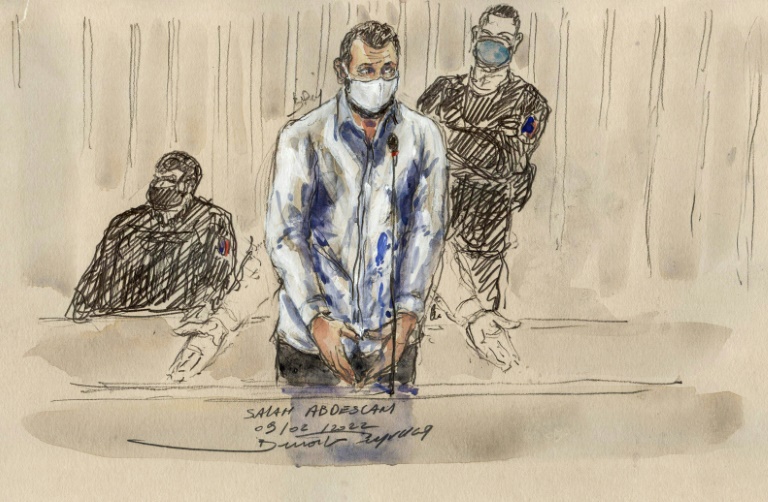
The last surviving suspected assailant in the deadly 2015 Paris attacks told a court Wednesday that he changed his mind about going through with the killings at the last moment.

“The objective I was given was to go to a cafe in the 18th” district in northern Paris, Salah Abdeslam told the special Paris court hearing the case.

“I’m going into the cafe, I’m ordering a drink, I’m looking at the people around me — and I said to myself: ‘No, I’m not going to do it’,” he added.

For the plaintiffs in the case, including the loved ones of victims of the November 2015 attacks that killed 130 people, this was testimony they had been waiting months to hear.

Abdeslam, 32, said he was told about plans for the attack in Paris on November 11, two days before they were carried out.

That happened at a meeting in Charleroi, in Belgium, with Abdelhamid Abaaoud, who is accused of having masterminded the attacks.

Until then, said Abdeslam, he thought he was going to be sent to Syria. Instead, he was told he had been chosen to carry out an attack using an explosive belt.

– ‘A shock for me’ –

“It was a shock for me, but he ended up by convincing me,” he added.

“I ended up accepting and saying, ‘Okay, I’ll go ahead with it’.”

But at that meeting, he was given no details about the targets for the attack.

When he ultimately did not go through with the attack, he told the court how he took his car and drove around Paris at random until it broke down.

Then he got out and walked, he said, saying his memories of that period were “confused”.

Pressed by the president of the court Jean-Louis Peries, he said only that he knew what he had been supposed to do.

“My brother, he had a belt, a Kalashnikov, I know he’s going to open fire, I know he’s going to blow himself up, but I didn’t know the targets.”

The attackers killed 130 people in suicide bombings and shootings at the Stade de France stadium, the Bataclan concert hall and on street terraces of bars and restaurants on November 13, 2015, in France’s worst peacetime atrocity.

Abdeslam’s older brother Brahim opened fire on a cafe terrace before blowing himself up.

Earlier in court another defendant, Mohamed Abrini, said Abdeslam simply had not had the nerve to go through with the attack.

Abrini, who is accused of having provided weapons and logistical support to the attackers, said he had seen Abdeslam when he turned up at a safe house a day after the attacks.

“He was exhausted, tired, he looked pale,” said Abrini.

One of the organisers of the attacks had yelled at him for not having blown himself up.

“I think he told them that his belt hadn’t worked,” said Abrini.

Abdeslam told the court last month that in fact he had been lying about the malfunction.

After surviving the attack, Abdeslam fled to the Molenbeek district of Brussels where he grew up. He was captured in March 2016.

Alongside Abdeslam, co-defendants are answering charges ranging from providing logistical support to planning the attacks, as well as supplying weapons.
Suspect arrested in New York subway shooting

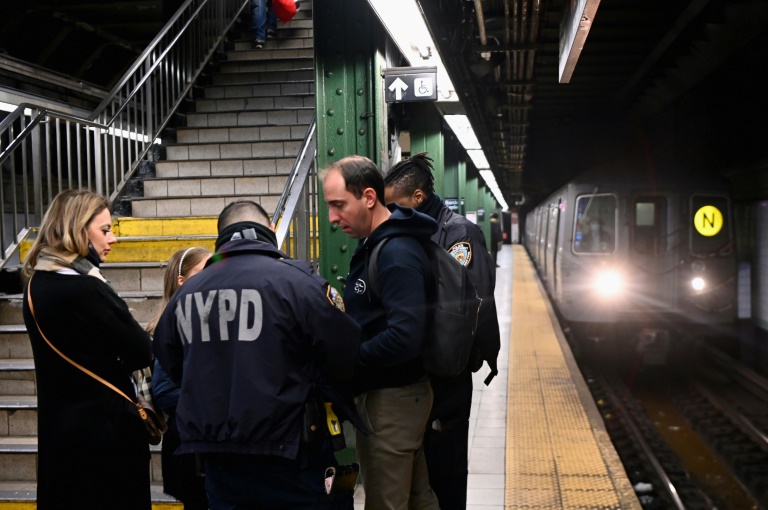
New York police have arrested a suspect accused of shooting 10 people on a packed subway car, authorities said Wednesday, following a day-long manhunt for the fugitive gunman.

Police had identified 62-year-old Frank James as the suspected gunman who detonated two smoke canisters as the train was pulling into a Brooklyn station, before firing 33 shots into the crowd.

“My fellow New Yorkers: we got him,” Mayor Eric Adams told a news conference announcing the arrest.

James was spotted by officers on a Manhattan street, and arrested, said New York Police Department commissioner Keechant Sewell. He was taken into custody without incident and will be charged over Tuesday’s attack, she added.

Video footage circulating on social media showed a man resembling James handcuffed and being placed into a police car.  

No one was killed in the attack, which also left 13 others injured as they scrambled to get out of the station or suffered smoke inhalation. None of the victims suffered life-threatening injuries.

James had posted several videos on YouTube of himself delivering long, sometimes aggressive political tirades. His page was taken down later Wednesday for “violating YouTube’s Community Guidelines.”

In his videos he also criticized New York’s mayor.

James’ sister, Catherine James Robinson, told The New York Times that she was “surprised” to see him named as a suspect, adding: “I don’t think he would do anything like that.”

She said she had had little contact with her brother for years, according to the newspaper, and she contradicted one detail given by police: they had said the shooter was around five feet five inches, but she said James was over six feet tall.

The 36th Street station in Brooklyn, where the train arrived as the attack was being carried out, was heavily patrolled by police on Wednesday as travelers waited for their trains.

“Today I was so reluctant, I actually tried to get a cab for like nearly maybe 20 minutes. I couldn’t find any and Uber was like $60 bucks, and so I was like ‘It’s okay, I’ll try my chance on the subway today,'” 38-year-old commuter Zeina Awedikian told AFP. 

Others were more defiant. “No one is going to drive me away from the subway. The subway is in my DNA,” said 56-year-old Dennis Sughrue.

– ‘Shot in the back of knee’ –

The gunman put on a gas mask just as the train was arriving at the station, then opened the smoke canisters and opened fire, police said.

“All you see is like a smoke, black smoke bomb going off, and then… people bum rushing to the back,” one of the gunshot victims, Hourari Benkada, told CNN, referring to a charge by passengers towards the door at the end of the car.

Benkada, speaking from his hospital bed, said he had boarded the first car at 59th Street and sat next to the gunman — but with his headphones on he did not notice anything until smoke began filling the car.

He said he did not understand that there were shots at first, and that he was trying to comfort a pregnant woman next to him. 

“I got pushed and that’s when I got shot in the back of my knee,” he said.

Benkada said the shooting lasted for perhaps a minute, and that he heard about 10 shots. 

The bullet went through his knee, leaving a hole “the size of a quarter,” he said. “I lost so much blood.”

Police later recovered a Glock 17 nine-millimeter handgun, three additional ammunition magazines and a hatchet from the scene. US media reported that James’ credit card and keys to a van he had rented were also found.

Shootings in New York have risen this year, and the uptick in violent gun crime has been a central focus for Adams since he took office in January. Through April 3, shooting incidents rose to 296 from 260 during the same period last year, according to police statistics.

Lax gun laws and a constitutionally guaranteed right to bear arms have repeatedly stymied attempts to clamp down on the number of weapons in circulation in the United States, despite a majority of Americans backing greater controls.

War in Ukraine: Latest developments

Here are the latest developments in the war in Ukraine:

– Ukraine a ‘crime scene’ –

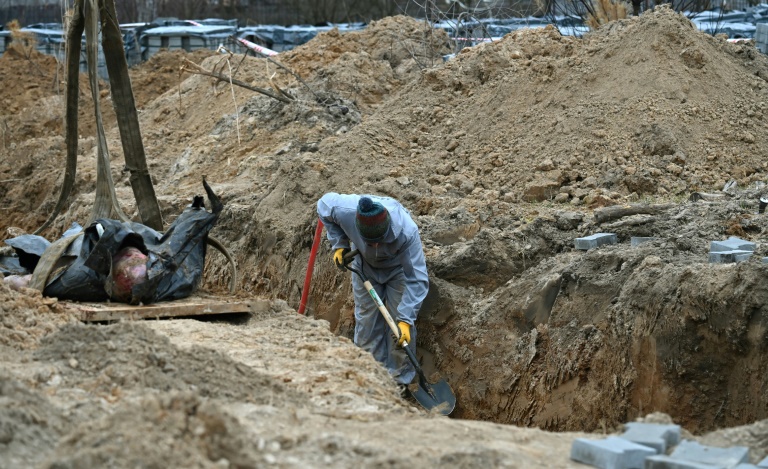
“Ukraine is a crime scene,” the International Criminal Court’s chief prosecutor says on a visit to the town of Bucha west of Kyiv, one of several towns where Russia is accused of massacring civilians.

Prosecutor Karim Khan says there are “reasonable grounds to believe that crimes within the jurisdiction of the court are being committed”. The ICC investigates allegations of war crimes, crimes against humanity, genocide and aggression.

– Russia committing ‘genocide’: Biden –

US President Joe Biden accuses Russian forces for the first time of committing genocide in Ukraine.

“It’s become clearer and clearer that (President Vladimir) Putin is just trying to wipe out the idea of even being able to be a Ukrainian,” he tells reporters.

– Biden assures Zelensky of support –

President Joe Biden has called Ukrainian counterpart Volodomyr Zelensky to assure him of “ongoing US support” for Kyiv, the White House said.

Zelensky has tweeted they discussed an “additional package of defensive and possible macro-financial aid” worth hundreds of millions of dollars.

– Russia threatens Kyiv –

The Russian military has threatened to strike Ukraine’s command centres in Kyiv as “we are seeing Ukrainian troops’ attempts to carry out sabotage and strike Russian territory,” Moscow’s defence ministry said.

“If such cases continue, the Russian armed forces will strike decision-making centres, including in Kyiv,” the ministry stated.

– Le Pen for NATO-Moscow rapprochement –

French far-right leader Marine Le Pen says she will back closer ties between NATO and Russia and pull Paris out of the alliance’s military command if elected president in an April 24 runoff with Emmanuel Macron.

Amid accusations she is too close to Vladimir Putin Le Pen said a “strategic rapprochement” is needed and questions need to be asked about the role of the alliance after the end of the Warsaw Pact.

– Mariupol troops surrender: Moscow –  

Russia says more than 1,000 Ukrainian soldiers have surrendered in the besieged southeastern city of Mariupol after a ferocious six-week battle for the strategic port.

Ukraine has yet to confirm the report.

– Ceasefire seems impossible: UN –

UN Secretary-General Antonio Guterres says a “global ceasefire doesn’t seem possible,” indicating the UN is still waiting for answers from Russia to concrete proposals for evacuating civilians and delivering aid.

“That was our appeal for humanitarian reasons but it doesn’t seem possible,” said Guterres.

– Polish, Baltic leaders to Kyiv –

The leaders of Poland, Estonia, Latvia and Lithuania travel to Kyiv together by train to show support for Ukrainian President Volodymyr Zelensky.

German President Frank-Walter Steinmeier says he had planned to join them but was told by Kyiv he was “not wanted”, with a top aide to Zelensky saying Kyiv wants German Chancellor Olaf Scholz to visit instead.

– Separatists sanctioned –

Britain says it and the European Union plan to impose sanctions on 178 pro-Russian separatists in eastern Ukraine. 

Separatist forces have been fronting the fight against Ukrainian marines in Mariupol.

– US warns China –

US Treasury Secretary Janet Yellen warns that China’s stance towards Russia and its invasion of Ukraine could affect countries’ willingness to collaborate and trade with Beijing.

– 1,500 Russian soldiers in morgues – 

An official in the central Ukrainian city of Dnipro says the remains of more than 1,500 Russian soldiers are being kept in its morgues.

Dnipro deputy mayor Mikhail Lysenko tells reporters he hopes “Russian mothers will be able to come and pick up their sons”.

– Finnish NATO decision ‘within weeks’ –

Finland’s Prime Minister Sanna Marin says the country, which has been non-aligned since the end of the Cold War, will decide whether to apply for NATO membership “within weeks”.

Russia’s invasion of Ukraine has also relaunched a debate over NATO membership in neighbouring Sweden.

World treats crises affecting black, white lives unequally: WHO chief

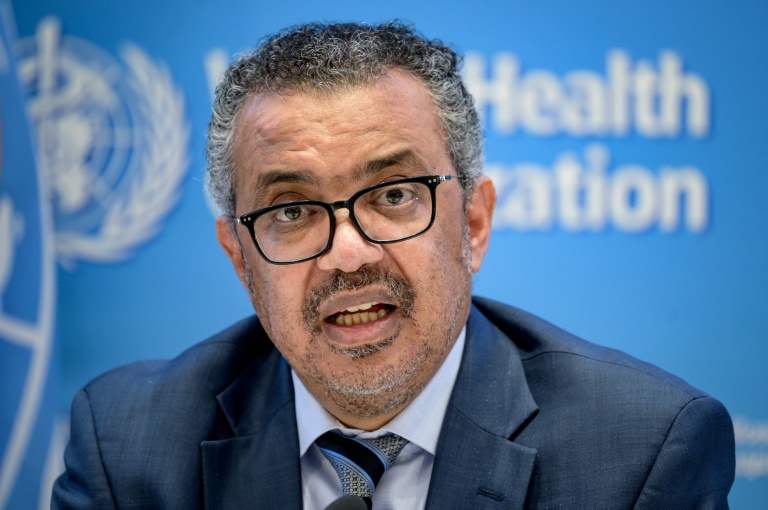
The WHO chief said Wednesday that the world was treating humanitarian crises affecting black and white lives unequally, with only a “fraction” of the attention on Ukraine given elsewhere.

World Health Organization’s director-general Tedros Adhanom Ghebreyesus said the emergencies happening in other parts of the world were not being taken as seriously and hoped the international community “comes back to its senses”.

“I don’t know if the world really gives equal attention to black and white lives,” Tedros told a news conference.

“The whole attention to Ukraine is very important of course, because it impacts the whole world.

“But even a fraction of it is not being given to Tigray, Yemen, Afghanistan and Syria and the rest. A fraction.

“I need to be blunt and honest that the world is not treating the human race the same way. Some are more equal than others. And when I say this, it pains me. Because I see it. Very difficult to accept but it’s happening.”

– Tigray siege –

Tedros, who is himself from Tigray, said the United Nations had determined that 100 trucks per day of life-saving humanitarian supplies needed to be going into the besieged northern region of Ethiopia.

The country’s former health and foreign minister said that since a truce was declared, at least 2,000 trucks should have gone in, but only 20 have done so thus far.

Tedros said he was worried that the 20 trucks going in could be just a “diplomatic manoeuvre” on the part of the government in Addis Ababa.

“In effect, the siege by the Ethiopian and Eritrean forces continues,” he said.

“To avert the humanitarian calamity and hundreds of thousands more people from dying, we need unfettered humanitarian access from those reinforcing the siege.”

But Tedros said global attention was simply not being placed on such humanitarian crises.

“I hope the world comes back to its senses and treats all human life equally,” he said.

“What is happening in Ethiopia is a tragic situation. People are being burned alive… because of their ethnicity…. Without any crime.

“So we need to balance. We need to take every life seriously because every life is precious.”

– World crises –

The UN says hundreds of thousands of people are at risk of starvation in Tigray, where people have for months also faced fuel shortages and a lack of basic services such as electricity, telecommunications, internet and banking.

Across northern Ethiopia, the 17-month conflict has driven more than two million people from their homes, according to the UN, and left more than nine million people in need of food aid.

Thursday marks 50 days since Russia invaded Ukraine. More than a quarter of the Ukrainian population has been forced from their homes.

Moscow — already accused by the West of widespread atrocities against civilians — appears to be readying a massive offensive across Ukraine’s eastern Donbas region.

The UN calls Yemen the world’s worst humanitarian crisis.

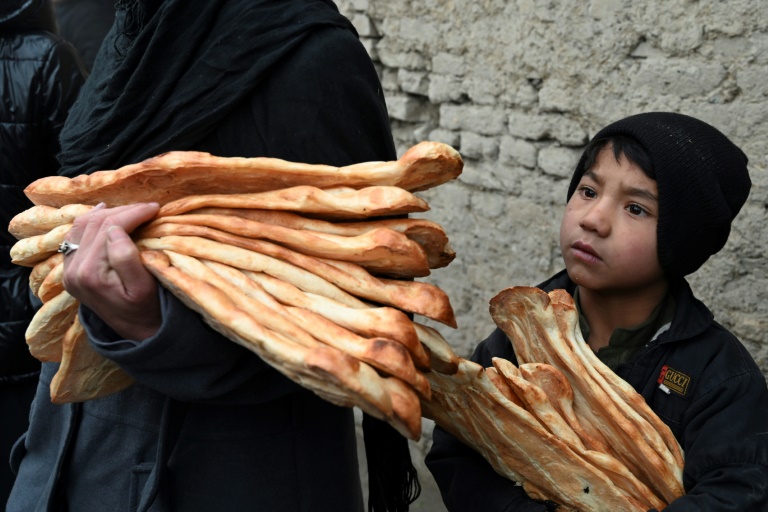
The UN is also seeking its biggest-ever single-country appeal for funds for Afghanistan, which is on the brink of economic collapse, with more than 24 million people needing humanitarian assistance to survive.

Civil war erupted in Syria in 2011 after the violent repression of protests demanding regime change.

Around half a million people have been killed and millions have been displaced in the conflict, which has battered the country’s economy.

'Green cities' focus of largest Dutch garden expo

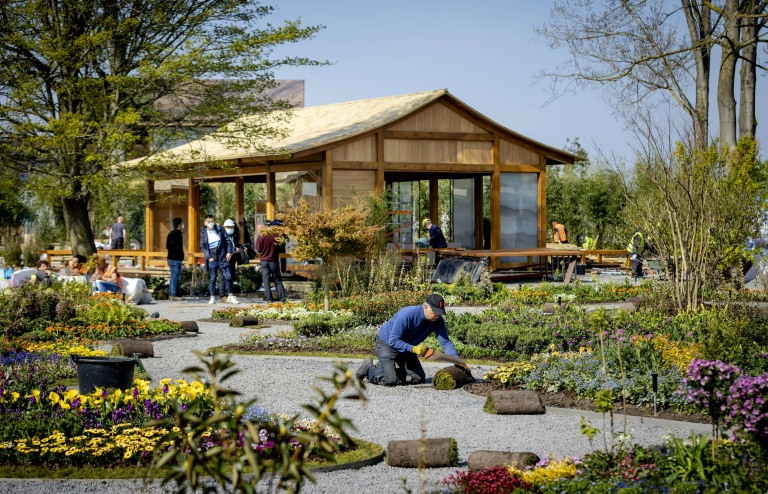
Dutch King Willem-Alexander on Wednesday opened the gates to one of Europe’s largest gardening fairs, a once-in-a-decade show focusing this year on how to make cities greener.

But critics have denounced the show, which features displays by 200 participants from 25 countries, as a “money pit” that has massively over-run its budget.

The Floriade 2022 exposition, which runs until early October, is expected to draw more than two million enthusiasts to the central city of Almere.

The Floriade 2022 shows “what a green city could be like in the future… what kind of materials could be used for this and what role the horticultural sector could play in it”, said its curator, Annemarie Jorritsma, a former mayor of the city.

“On top of that, when the show is finished it will be a fantastic residential area,” she told AFP.

Each decade, a different Dutch city gets to host the gardening extravaganza. Almere, the latest, is a city that was itself created by the Dutch by draining part of the former Zuiderzee bay to reclaim land.

As well as being a showcase for Dutch horticulture, each participating country has its own pavilion.

China’s is showing “new ways of using bamboo”, said Jorritsma. Italy is focusing on permaculture, while France shows how metallic imitations of trees can be used to cool cities.

The German pavilion is decorated with plants including garden plants, trees, food crops and wildflowers to form a “living ecosystem whose appearance would change throughout the exhibition”, organisers said.

“The Floriade is the best place to show what countries have to change their cities,” Detlef Wintzen, one of the exhibitors at the German pavilion, told AFP.

– Cost controversy –

The event has however been criticised for budget overruns that threatened its very existence.

Dutch media have reported that Almere has significantly over-run its 10-million-euro budget ($10.8 million) for the project.

Financial daily Financieele Dagblad estimated that costs could be as high as 200 million euros — with losses of up to 100 million — but said there was a “thick fog” hanging over the official costs.

First held in Rotterdam in 1960, the organisers of the last three Floriades — 1992, 2002 and 2012 — have all been criticised for losses totalling millions of euros.

And some media reports have even suggested that this could be the last-ever edition of the show.

Almere — the country’s youngest city — plans to have a “green residential area by the water” after the end of the Floriade designed by Dutch architect Winy Maas.

Some 660 homes will be built in the “Hortus” district, many of them made from durable materials such as moss and mushrooms.

An imposing colourful building in the middle of the exhibition will eventually serve as social housing, and “floating homes” are also planned.

Members of the public can visit the Floriade from Thursday onwards.

'Green cities' focus of largest Dutch garden expo

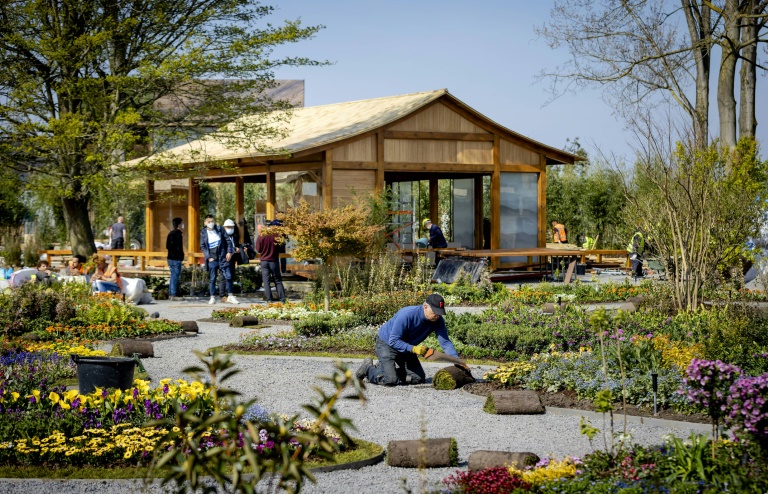
Dutch King Willem-Alexander on Wednesday opened the gates to one of Europe’s largest gardening fairs, a once-in-a-decade show focusing this year on how to make cities greener.

But critics have denounced the show, which features displays by 200 participants from 25 countries, as a “money pit” that has massively over-run its budget.

The Floriade 2022 exposition, which runs until early October, is expected to draw more than two million enthusiasts to the central city of Almere.

The Floriade 2022 shows “what a green city could be like in the future… what kind of materials could be used for this and what role the horticultural sector could play in it”, said its curator, Annemarie Jorritsma, a former mayor of the city.

“On top of that, when the show is finished it will be a fantastic residential area,” she told AFP.

Each decade, a different Dutch city gets to host the gardening extravaganza. Almere, the latest, is a city that was itself created by the Dutch by draining part of the former Zuiderzee bay to reclaim land.

As well as being a showcase for Dutch horticulture, each participating country has its own pavilion.

China’s is showing “new ways of using bamboo”, said Jorritsma. Italy is focusing on permaculture, while France shows how metallic imitations of trees can be used to cool cities.

The German pavilion is decorated with plants including garden plants, trees, food crops and wildflowers to form a “living ecosystem whose appearance would change throughout the exhibition”, organisers said.

“The Floriade is the best place to show what countries have to change their cities,” Detlef Wintzen, one of the exhibitors at the German pavilion, told AFP.

– Cost controversy –

The event has however been criticised for budget overruns that threatened its very existence.

Dutch media have reported that Almere has significantly over-run its 10-million-euro budget ($10.8 million) for the project.

Financial daily Financieele Dagblad estimated that costs could be as high as 200 million euros — with losses of up to 100 million — but said there was a “thick fog” hanging over the official costs.

First held in Rotterdam in 1960, the organisers of the last three Floriades — 1992, 2002 and 2012 — have all been criticised for losses totalling millions of euros.

And some media reports have even suggested that this could be the last-ever edition of the show.

Almere — the country’s youngest city — plans to have a “green residential area by the water” after the end of the Floriade designed by Dutch architect Winy Maas.

Some 660 homes will be built in the “Hortus” district, many of them made from durable materials such as moss and mushrooms.

An imposing colourful building in the middle of the exhibition will eventually serve as social housing, and “floating homes” are also planned.

Members of the public can visit the Floriade from Thursday onwards.

Iran says preliminary deal reached on frozen funds abroad

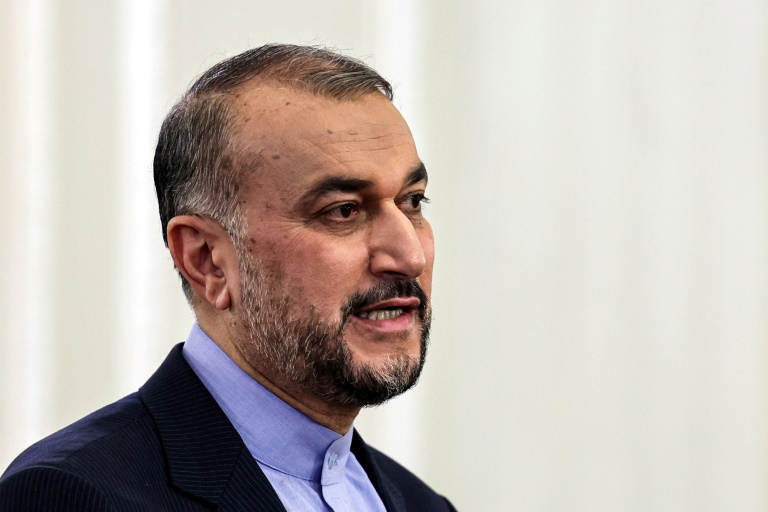
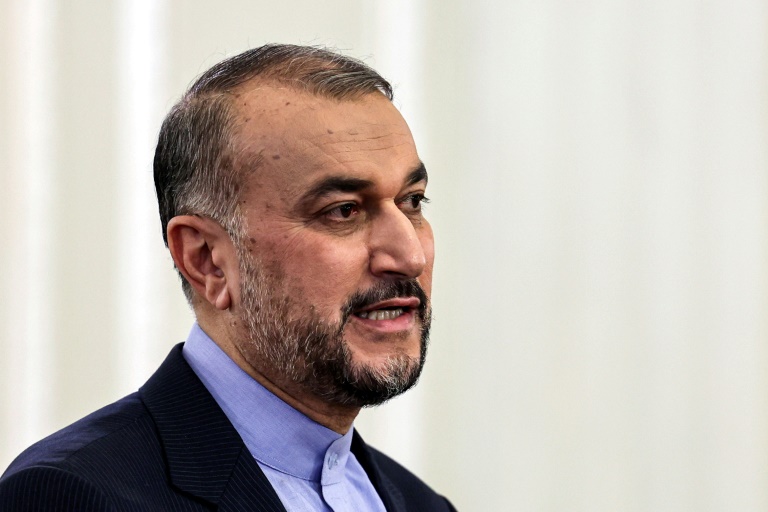
Iran’s foreign minister said Wednesday that a preliminary deal had been reached with a foreign bank over frozen funds belonging to the Islamic republic.

“An accord was concluded with a foreign bank to release a part of our financial claims,” Hossein Amir-Abdollahian said at a news conference.

“This is a preliminary agreement on when and how to release the funds,” he added.

Tens of billions of dollars in Iranian money were blocked in a number of countries, including China, South Korea and Japan, after the United States reimposed sanctions on the Islamic republic in 2018.

A 2015 nuclear deal had granted Tehran much-needed sanctions relief but the US unilaterally pulled out and reimposed punishing sanctions under then-president Donald Trump.

Until then, Iran had been one of South Korea’s main suppliers of crude.

According to Tasnim news agency, the deal announced on Wednesday aims to find a solution for frozen Iranian assets valued at more than $7 billion.

Last year Tehran threatened legal action unless Seoul released frozen funds for oil shipments, worth that same amount.

In early January, Iran had urged South Korea to unlock the funds and not to await the outcome of Vienna talks aiming to revive the nuclear agreement.

Amir-Abdollahian said a delegation from the concerned country, which he did not identify, had visited Tehran on Tuesday to follow up on the implementation of the deal with the foreign bank.

The delegation met officials from the Iranian central bank and the foreign ministry, he added.

Iran has been engaged for a year in talks with France, Germany, Britain, Russia and China directly, and the United States indirectly, to revive the nuclear deal, known formally as the Joint Comprehensive Plan of Action (JCPOA).

The talks have been paused since March 11, having progressed most of the way towards reviving the deal, but pending issues are still unresolved.

Iran says preliminary deal reached on frozen funds abroad

Iran’s foreign minister said Wednesday that a preliminary deal had been reached with a foreign bank over frozen funds belonging to the Islamic republic.

“An accord was concluded with a foreign bank to release a part of our financial claims,” Hossein Amir-Abdollahian said at a news conference.

“This is a preliminary agreement on when and how to release the funds,” he added.

Tens of billions of dollars in Iranian money were blocked in a number of countries, including China, South Korea and Japan, after the United States reimposed sanctions on the Islamic republic in 2018.

A 2015 nuclear deal had granted Tehran much-needed sanctions relief but the US unilaterally pulled out and reimposed punishing sanctions under then-president Donald Trump.

Until then, Iran had been one of South Korea’s main suppliers of crude.

According to Tasnim news agency, the deal announced on Wednesday aims to find a solution for frozen Iranian assets valued at more than $7 billion.

Last year Tehran threatened legal action unless Seoul released frozen funds for oil shipments, worth that same amount.

In early January, Iran had urged South Korea to unlock the funds and not to await the outcome of Vienna talks aiming to revive the nuclear agreement.

Amir-Abdollahian said a delegation from the concerned country, which he did not identify, had visited Tehran on Tuesday to follow up on the implementation of the deal with the foreign bank.

The delegation met officials from the Iranian central bank and the foreign ministry, he added.

Iran has been engaged for a year in talks with France, Germany, Britain, Russia and China directly, and the United States indirectly, to revive the nuclear deal, known formally as the Joint Comprehensive Plan of Action (JCPOA).

The talks have been paused since March 11, having progressed most of the way towards reviving the deal, but pending issues are still unresolved.

International agencies call for urgent aid to address food insecurity

Major international organizations issued an appeal Wednesday for urgent measures to deal with rising food insecurity in poor countries, including financing to support farmers and increase food supplies.

The Russian invasion of Ukraine, and Western sanctions on Moscow, have sent energy and food prices soaring in recent weeks, while rising natural gas prices also have impacted fertilizer production, which in turn hurts farmers.

“It is critical to quickly provide support for food insecure countries in a coordinated manner,” the heads of the IMF, World Bank, World Trade Organization and UN World Food Program said in a joint statement.

Protests have erupted in some countries over high prices, and the statement said, “The increase in food prices and supply shocks can fuel social tensions in many of the affected countries, especially those that are already fragile or affected by conflict.”

The organizations called on the international community to provide financing for emergency food supplies, a safety net for poor families and farmers, and to increase agricultural production.

They also called for “open trade” that avoids export restrictions or “humanitarian food purchases.”

While the poor nations are most vulnerable to the crisis, middle income countries increasingly are at risk, the statement said.

“Surging fertilizer prices along with significant cuts in global supplies have important implications for food production in most countries, including major producers and exporters, who rely heavily on fertilizer imports,” they said.

IMF chief Kristalina Georgieva, World Bank President David Malpass, WTO head Ngozi Okonjo-Iweala and WFP director David Beasley issued the statement before next week’s meeting of the IMF and World Bank.

– ‘Increased fragility’ –

The war in Ukraine came as the global economy was trying to right itself following the Covid-19 pandemic, while navigating supply chain snarls that created shortages and a surge in inflation.

New lockdowns in China have added further uncertainty to the recovery.

Ukraine is a key source of grain while Russia is a major producer of energy and fertilizer needed for agriculture.

Protestors in Peru have taken to the streets to demand government action, as did people in Sri Lanka, where the government on Tuesday announced it was defaulting on its $51 billion in foreign debt.

Poverty rose sharply during the pandemic, and the World Bank warns that for each one percentage point increase in food prices, 10 million people are thrown into extreme poverty worldwide.

“Sharply higher prices for staples and supply shortages are increasing pressure on households worldwide and pushing millions more into poverty,” the officials said.

“Increased fragility and conflict pose persistent harm to people around the globe.”

UN envoy urges Yemen's warring parties to uphold truce

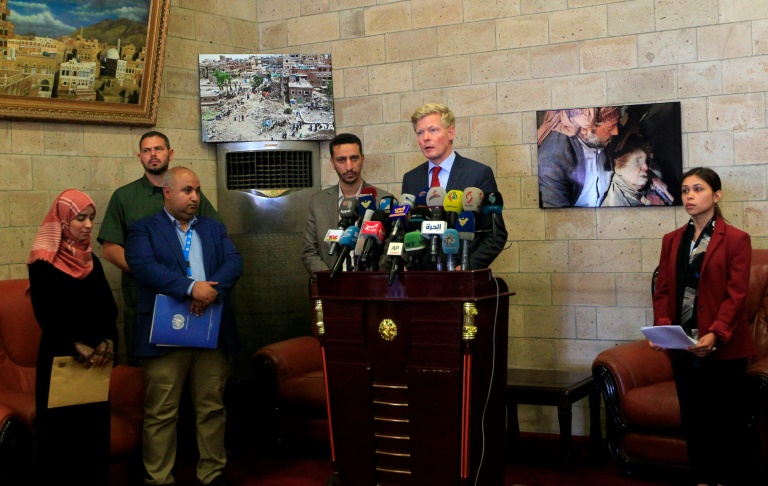
The UN envoy to Yemen called Wednesday for “serious engagement” to uphold the war-torn country’s truce, which has offered a rare respite from violence.

Hans Grundberg spoke at the end of his first visit to the rebel-held capital, where he held talks with Huthi rebel leaders.

The two-month ceasefire took effect 11 days ago.

“While we see that the truce is broadly holding, we need to be mindful of the challenges, too,” the Swedish diplomat warned at the end of his three-day visit.

“We are relying on the parties’ continued commitment and serious engagement in upholding the truce.”

The renewable ceasefire comes seven years after a Saudi-led coalition began its military intervention in Yemen, after the Iran-backed Huthis took control of swathes of the country including Sanaa in 2014.

Grundberg said oil tankers had begun arriving at the port of Hodeida, one of the terms of the truce intended to ease the “fuel crisis” in Sanaa and elsewhere.

“Intense work” is underway for Sanaa airport’s first commercial flight in six years, another feature of the pause in fighting, Grundberg said, while talks have started on reopening key roads in Taiz and other governorates.

“Despite reported violations that we are concerned about, we have seen a significant overall reduction in hostilities and no confirmed reports of air strikes or cross-border attacks,” Grundberg added.

In another hopeful sign, Yemen’s president last week handed his powers to a new leadership council tasked with holding peace talks with the rebels.

More than 150,000 people are estimated to have been directly killed and millions displaced by the fighting, triggering what the United Nations calls the world’s worst humanitarian crisis.

Close Bitnami banner
Bitnami