World

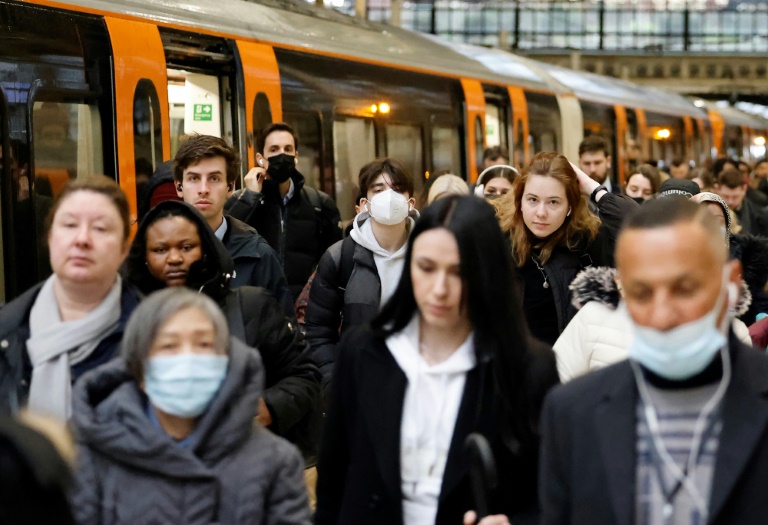
WHO experts insist Covid still a global emergency

The WHO’s emergency committee on Covid-19 on Wednesday unanimously affirmed that the virus remains a major public health danger and insisted that countries must stop dropping their guard.

With many nations relaxing public health and social measures, and drastically reducing testing for the virus, the World Health Organization’s group of experts said the pandemic was far from being at an end.

“Now is not the time to let our guard down — on the contrary, and this is an extremely strong recommendation,” committee chair Didier Houssin told a press conference.

“The situation is far from over with regard to the Covid-19 pandemic, the circulation of the virus is still very active, mortality remains high and the virus is evolving in an unpredictable way,” the French doctor warned.

“Now is not the time for relaxation on this virus, nor weakness in surveillance, testing and reporting, nor laxity in public and social health measures and no resignation when it comes to vaccination.”

The committee meets every three months to discuss the pandemic and reports to WHO chief Tedros Adhanom Ghebreyesus.

It concluded that the pandemic still constitutes a public health emergency of international concern (PHEIC) — the highest level of alert that the WHO can sound.

– ‘Middle’ phase of pandemic –

The committee declared the Covid-19 outbreak a PHEIC on January 30, 2020, when, outside of China, fewer than 100 cases and no deaths had been reported.

Though it is the internationally-agreed mechanism for triggering an international response to such outbreaks, it was only Tedros after describing the worsening situation as a pandemic on March 11 that many countries woke up to the danger.

“The committee unanimously agreed that the Covid-19 pandemic still constitutes an extraordinary event that continues to adversely affect the health of populations around the world, poses an ongoing risk of international spread,” it said in a statement Wednesday.

Globally, in the week to Sunday, the number of new Covid-19 cases and deaths continued to decline for a third consecutive week, with more than seven million cases and over 22,000 deaths reported.

This  was the lowest number of Covid deaths since the early days of the pandemic.

However, some countries are still witnessing serious spikes in cases, which is putting pressure on hospitals, said Tedros, adding that the world is “still in the middle of the pandemic”.

“This virus has over time become more transmissible and it remains deadly especially for the unprotected and unvaccinated that don’t have access to health care and antivirals,” he said.

Tedros urged people to get vaccinated and continue wearing masks, especially in crowded indoor spaces.

The WHO said the Omicron variant accounted for 99.2 percent of samples collected in the last 30 days that have been sequenced and uploaded to the GISAID global science initiative, with the previously-dominant Delta variant now less than 0.1 percent.

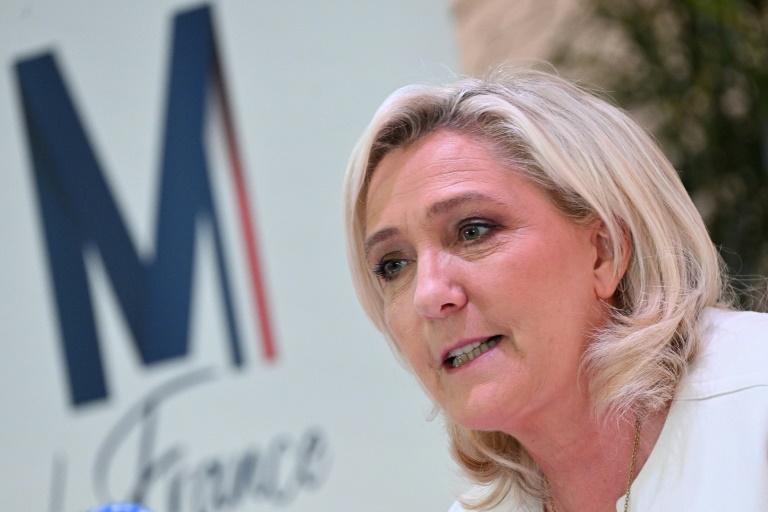
France's Le Pen wants NATO-Russia 'rapprochement'

French far-right leader Marine Le Pen on Wednesday said she would back closer ties between NATO and Russia and pull Paris out of the alliance’s military command, if she defeats Emmanuel Macron for the presidency.

Le Pen faces Macron on April 24 in a run-off vote after she came second in the April 10 first round, with the latest polls showing the president holding on to a solid but slim lead.

Foreign policy is set to play an important role in the vote after Russia’s invasion of Ukraine and also accusations from Macron that Le Pen is too close to President Vladimir Putin.

The far-right leader has sought to project a more moderate image in this campaign and held a news conference on foreign policy designed to present Le Pen as a credible figure on the global stage.

But tensions were exposed when her security tackled a female protester to the floor and then roughly dragged her out of the room by the arm.

The protester had stood up and brandished a picture — cut into a heart shape —  of Le Pen meeting Putin in Russia in 2017.

Le Pen said there should be a “strategic rapprochement” between NATO and Russia once the war launched by Moscow against Ukraine had ended.

“We must ask about the role of the alliance after the end of the Warsaw Pact,” the Moscow-led military alliance that grouped Soviet bloc nations, she told journalists.

– ‘In interest of France’ –

Le Pen emphasised that better ties with Russia would also prevent Moscow from becoming too close to China, noting that she was echoing an argument made by Macron in the past.

“This is in the interest of France and Europe but also I think the United States… which has no interest in seeing a close Sino-Russian relationship emerging,” Le Pen said.

She also reaffirmed her intention of repeating France’s 1966 move of leaving NATO’s integrated military command, while still adhering to its key article 5 on mutual protection.

France rejoined NATO’s military structure in 2009.

“I would place our troops neither under an integrated NATO command nor under a future European command,” she said, adding that she refused any “subjection to an American protectorate”.

On Europe, Le Pen made clear that any “Frexit” along the lines of Britain’s exit from the European Union was not on her agenda.

But she argued that French predictions that Brexit would prove “a cataclysm for the English” had not come true.

“The British got rid of the Brussels bureaucracy, which they could never bear, to move to an ambitious project of global Britain,” she said.

But she added: “This is not our project. We want to reform the EU from the inside.”

While Macron has returned to the traditional notion of the Franco-German motor driving Europe, Le Pen also made clear she would not put relations with Berlin at the heart of her foreign policy.

“Germany is the absolute opposite of France’s strategic identity,” said Le Pen, speaking of “irreconcilable strategic differences” between Paris and Berlin.

Le Pen has been under pressure over her party taking a loan from a Russian bank but she explained this by saying it could not get the loan either in France or in Europe.

– Macron ahead, but tight –

The latest polls showed Macron slightly extending a lead over Le Pen in the second round but also giving no indication that the president is in for an easy ride.

An Elabe poll showed Macron on 53.5 percent and Le Pen on 46.5, with the president inching up 1.5 percent since its last survey.

Meanwhile, Iposos showed Macron at 55 percent with Le Pen on 45.

Macron has repeatedly warned that the election is far from in the bag and analysts have said it will be crucial to win backing from supporters of hard-left candidate Jean Luc-Melenchon who finished third and narrowly missed out on the run-off. 

The president has taken a far more active role in the first three days of the final round campaign than he did for the most of the first round, where he appeared distracted by the war against Ukraine.

The opening salvoes of the campaign have been marked by bitter exchanges between the candidates, with Macron accusing Le Pen of “authoritarian tendencies” towards the media and his rival accusing the president of showing “febrility”. 

Ukraine is 'crime scene' says int'l criminal court as thousands flee

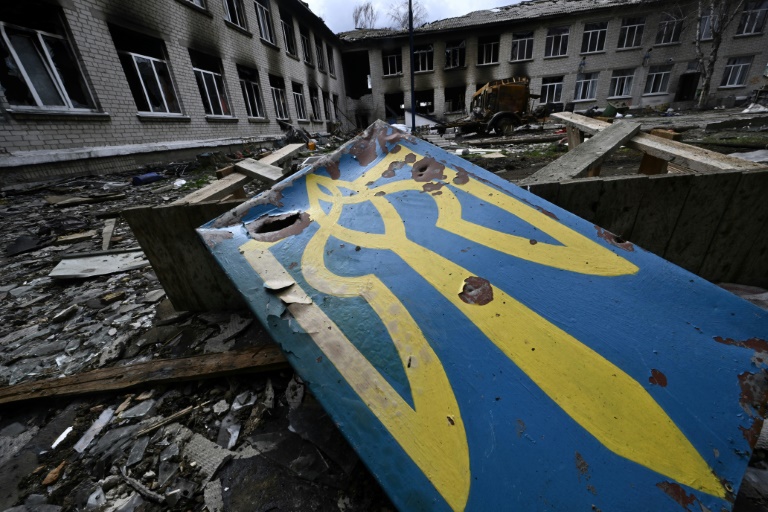
War crimes prosecutors visiting the site of civilian killings called Ukraine a “crime scene” Wednesday, as tens of thousands of Ukrainians fled their country in advance of a fresh assault to the east.  

The visit by the International Criminal Court’s chief prosecutor to Bucha — the Kyiv suburb now synonymous with scores of atrocities against civilians discovered in areas abandoned by Russian forces — came as the new front of the war shifts eastward, with new allegations of crimes inflicted on locals. 

“Ukraine is a crime scene,” the ICC’s chief prosecutor, Karim Khan, told reporters in Bucha. The Hague-based court investigates and prosecutes war crimes, crimes against humanity, and genocide.

“We’re here because we have reasonable grounds to believe that crimes within the jurisdiction of the court are being committed,” said Khan, promising to “follow the evidence” as forensic teams began their work. 

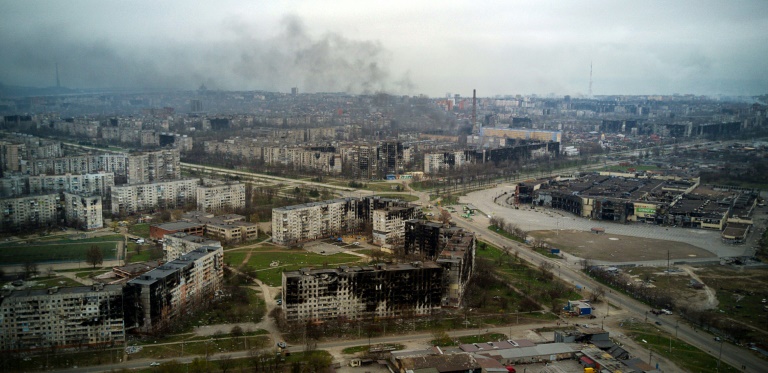
To the south, Ukrainian forces struggled to hold the key strategic port of Mariupol Wednesday as artillery pounded the battered and besieged city that has been cut off from the rest of the country since early March and where Ukrainian President Volodymyr Zelensky has estimated “tens of thousands” of civilian deaths.

Russia’s defence ministry said Wednesday that 1,026 Ukrainian soldiers from the 36th Marine Brigade had surrendered in Mariupol, including 162 officers. Ukraine has not confirmed the claim.

Following its pullback earlier this month from areas north of Ukraine’s capital, Kyiv, Russia is refocusing its efforts eastward, the new frontline of the nearly seven-week war. 

It appears aimed at capturing more territory in Donbas, where Russian-backed separatists control the Donetsk and Lugansk regions, to create a solid southern corridor — including the port of Mariupol — to occupied Crimea.

 – Permeated with pain –

As Zelensky warned “the whole of Eastern Europe” was at risk if Europe wasted time in stopping Moscow, the Polish and Baltic presidents visited Ukraine in a show of support, while Britain said it had slapped sanctions on Russian separatists in Eastern Ukraine and additional oligarchs.

“It is hard to believe that such war atrocities could be perpetrated in 21st-century Europe, but that is the reality,” said Lithuanian President Gitanas Nauseda during a visit to the town of Borodyanka outside Kyiv, calling the area “permeated with pain and suffering”. 

“Civilian Ukrainians were murdered and tortured here, and residential homes and other civilian infrastructure were bombed.”

Britain said it would sanction 178 Russian separatists, including the two “self-styled” leaders of the Russia-backed Donetsk and Luhansk People’s Republics, and six more oligarchs and their families. 

Meanwhile, the Organization for Security and Co-operation in Europe (OSCE) said Russia had engaged in “clear patterns of international humanitarian law violations” in Ukraine.

The report by the world’s largest security body covered the period from Russia’s February 24 invasion through April 1, before the discovery of hundreds of bodies in Bucha and elsewhere.

Those images spurred US President Joe Biden on Tuesday to level Washington’s strongest accusation yet, of genocide, against Putin’s actions in Ukraine, after having previously called the Russian president a “war criminal”.

“Putin is just trying to wipe out the idea of even being able to be a Ukrainian,” Biden said, defending his statement.

Kremlin spokesman Dmitry Peskov called Biden’s accusation “unacceptable” Wednesday, a day after Putin said Russia’s military campaign in Ukraine was going to plan while brushing off images of civilian deaths as “fakes”.

 – ‘Hiding crimes’ – 

In a desperate attempt to flee what Ukrainian authorities warn will be a bloody new clash in the east, more than 40,000 people fled the country in the past 24 hours, the United Nations said Wednesday, bringing to 4.6 million the number of people who have fled since the conflict began. 

But Kyiv halted humanitarian corridors in several parts of the country Wednesday, deeming them “too dangerous” for evacuations. 

Deputy Prime Minister Iryna Vereshchuk said Russian forces around Zaporizhzhia in the south were blocking buses transporting the evacuated, while shooting at fleeing civilians in Lugansk.

Underscoring the risk to civilians, Ukrainian prosecutors on Wednesday accused Russian troops of shooting six men and one woman the day before in a residential home in the occupied southern village of Pravdyne.

“After this, intending to hide their crime, the occupiers blew up the building with the bodies,” prosecutors said in a statement.

Meanwhile, seven civilians were killed by Russian shelling in the northeastern Kharkiv region in the past 24 hours, regional governor Oleg Synegubov said on social media.

 – Clean them out –

In Mariupol, air strikes continued, particularly on the port and the huge Azovstal iron and steel works, the Ukrainian army said on Telegram. 

The steel plant’s maze-like complex has been a focus of resistance in Mariupol, with fighters using a tunnel system below the vast industrial site to slow Russian forces down. 

“It’s a city within a city,” said Eduard Basurin, a representative for pro-Russian separatists in Donetsk, citing subterranean areas that cannot be bombed from above.

“You have to go underground to clean them out, and that will take time.”

US Secretary of State Antony Blinken said he could not confirm allegations that Russia had used chemical weapons in the area, but Washington had “credible information” Russia might use tear gas mixed with chemical agents in the besieged port.

 – Russians in morgue –


Suggesting a Russian buildup to the east, US private satellite firm Maxar Technologies published images Wednesday it said showed Russian ground forces moving towards the border with Ukraine. 

Other convoys in and near the Donbas region comprised around 200 vehicles including tanks, artillery and armoured personnel carriers, it said.

Even as the military focus shifted eastward, the grim work of accounting for the civilian dead continued in areas recently abandoned by Russia’s army.

North of Bucha in the town of Gostomel, locals exhumed the body of Mayor Yuriy Prylypko, who authorities said was shot while “handing out bread to the hungry and medicine to the sick” and hastily buried by a local priest. 

Up to 400 people are unaccounted for Gostomel, said regional prosecutor Andiy Tkach. AFP witnessed dozens of body bags filling a refrigerated lorry trailer, as two others awaited more corpses. 

“Our citizens are murdered and we must bury every person in the right way,” said Igor Karpishen, loading the truck.  

“I don’t have any words to express these feelings.”

Zelensky accused Russian forces in occupied towns of committing hundreds of rapes, including of young children and a baby. 

Bucha Mayor Anatoly Fedoruk said more than 400 people were found dead after Moscow’s forces withdrew, with 25 reported rapes.

Meanwhile, an official in the central Ukrainian city of Dnipro said Wednesday the remains of more than 1,500 Russian soldiers were being kept in its morgues. 

Half of US warehouse injuries in 2021 at Amazon: unions

Nearly half of all recorded injuries in US warehouses last year occurred at Amazon, according to a report released Tuesday by a coalition of unions.

The e-commerce giant has boomed during the pandemic with soaring home delivery demand, but has also faced criticism over workers’ conditions and its labor practices. 

“Amazon employed one-third of all warehouse workers in the US, but it was responsible for nearly one-half (49 percent) of all injuries in the warehouse industry,” according to the report by the Strategic Organizing Center (SOC).

The SOC report said US Amazon workers sustained more than 34,000 “serious injuries” on the job last year, a rate more than twice as high as that at warehouses not owned by the company.

Amazon acknowledged an increase in the number of injuries as tens of thousands of employees joined its workforce, but argued the rate at which its people got hurt had declined.

“Like other companies in the industry, we saw an increase in recordable injuries during this time from 2020 to 2021 as we trained so many new people,” the company said.

“However, when you compare 2021 to 2019, our recordable injury rate declined more than 13 percent year over year,” it added.

The coalition said it relies on data provided by Amazon to the US Occupational Safety and Health Administration — the federal agency responsible for preventing workplace injuries. 

“After relaxing some of its discipline systems in the first months of the Covid-19 pandemic, Amazon reimplemented its monitoring systems and production pressures in late 2020, and its injury rates rose substantially,” the SOC said. 

Hiring at Amazon has spiked during the pandemic.

In the United States, the company has gone from some 700 sites in 2020 to more than 900 in 2021, and from more than 200,000 employees in 2017 to over 560,000 in 2021, according to the report. 

In June 2021, Amazon changed working conditions, including longer breaks for its workers who prepare, ship and deliver packages. 

That decision came after a previous damning SOC report, and an attempt to unionize at an Amazon warehouse in Alabama. That failed, but the campaign exposed what many employees described as the company’s intense pace. 

“We need a better vision for our employees’ success,” wrote Amazon founder Jeff Bezos in an annual letter to shareholders in 2020. 

“We are going to be Earth’s Best Employer and Earth’s Safest Place to Work,” he promised. 

But “in stark contrast to Jeff Bezos’ recent pledge… the injury rate at Amazon facilities increased by 20 percent between 2020 and 2021,” the SOC said.

Amazon workers in New York have voted to launch the first US union at the e-commerce giant, an underdog upset against a company that has steadfastly opposed organized labor in its massive workforce.  

Police intensify manhunt for New York subway shooter

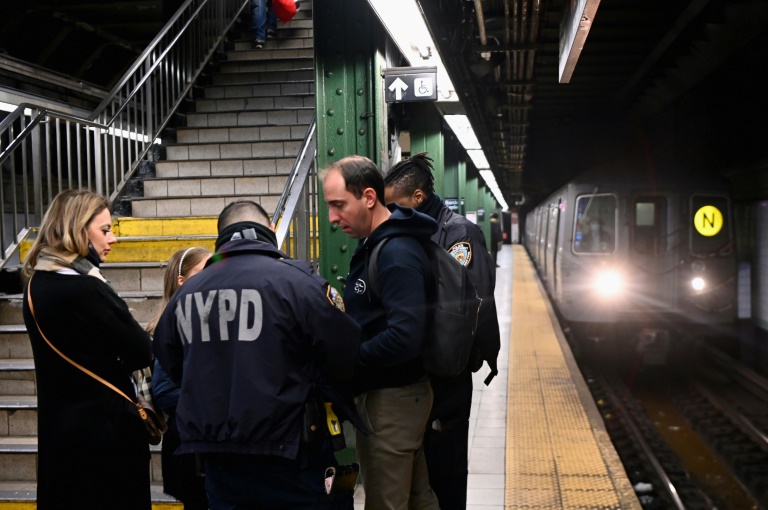
New York police intensified their hunt Wednesday for a fugitive gunman who shot 10 people in a subway car the day before, putting a city already rattled by rising gun violence further on edge.

Police have identified 62-year-old Frank James as a suspect in the attack, in which they say he detonated two smoke cannisters on board the train as it was pulling into a station in Brooklyn, then opened fire.

No one was killed in the attack, which also left 13 others injured as they scrambled to get out of the station or suffered smoke inhalation. None of the victims suffered life-threatening injuries.

James had posted several videos on YouTube of himself delivering long, sometimes aggressive political tirades. He also criticized New York mayor Eric Adams, who called on residents to be “vigilant” Wednesday. 

Adams, speaking on NBC’s Today show, said police had stepped up his security “out of an overabundance of caution” and that they were taking “the necessary steps” until the gunman was apprehended.

“You have a person that carried out a very sick action to harm innocent people in our system,” he said.

He told MSNBC that there was no sign James had had an accomplice.

Police later recovered a Glock 17 nine-millimeter handgun, three additional ammunition magazines and a hatchet from the scene. US media reported that James’ credit card and keys to a van he had rented were also found.

The 36th Street station in Brooklyn, where the train arrived as the attack was being carried out, was heavily patrolled by police on Wednesday as travellers waited for their trains.

Commuter Laura Swalm said she was “more alert” after the shooting. “Definitely looking around. And making sure, you know, it feels a little safe,” the 49-year-old from New Jersey told AFP.

Others were more defiant. “No one is going to drive me away from the subway. The subway is in my DNA,” said 56-year-old Dennis Sughrue.

– ‘Shot in the back of knee’ –

The gunman put on a gas mask just as the train was arriving at the station, then opened the smoke canisters and fire 33 times in total, police said.

“All you see is like a smoke, black smoke bomb going off, and then … people bum rushing to the back,” one of the gunshot victims, Hourari Benkada, told CNN, referring to a charge by passengers towards the door at the end of the car.

Benkada, speaking from his hospital bed, said he had boarded the first car at 59th Street and sat next to the gunman — but with his headphones on he did not notice anything until smoke began filling the car.

He said he did not understand that there were shots at first, and that he was trying to comfort a pregnant woman next to him. 

“I got pushed and that’s when I got shot in the back of my knee,” he said.

Benkada said the shooting lasted for perhaps a minute, and that he heard about 10 shots. 

The bullet went through the back of his knee and out the side, leaving a hole “the size of a quarter,” he said. “I lost so much blood.”

Shootings in New York have risen this year, and the uptick in violent gun crime has been a central focus for Adams since he took office in January. Through April 3, shooting incidents rose to 296 from 260 during the same period last year, according to police statistics.

Lax gun laws and a constitutionally guaranteed right to bear arms have repeatedly stymied attempts to clamp down on the number of weapons in circulation in the United States, despite a majority of Americans backing greater controls.

Stocks, oil rise as inflation soars

Stock markets mostly rose and oil prices climbed Wednesday as investors pored over data showing further spikes to inflation.

A day after data showed US annual consumer inflation hit a 40-year high in March, information showed wholesale price inflation hit a record annual rate of 11.2 percent over the same period.

Meanwhile in Britain, data showed that UK prices had jumped at the fastest pace in three decades in March. 

Global inflation, already rocketing on supply constraints as economies look to fully reopen following pandemic lockdowns, is rising further on fallout from the Ukraine war.

Analysts said markets had welcomed an indication that US inflation was approaching its peak, though it has raised expectations that the Federal Reserve will take more aggressive action to contain prices.

Wall Street stocks rose across the board, with the Dow rising 0.6 percent.

In Europe, London and Paris ended the day barely in positive territory, while Frankfurt dipped.

The gains on Wall Street also came despite a lacklustre start to the corporate earnings season, as JPMorgan Chase saw its first-quarter net profit plunge by 40 percent as it set $900 million aside to deal with potential losses due to the Ukraine conflict and inflation.

It already booked $524 million in losses as it sought to lower its exposure to soaring commodities prices and Russian counterparties.

Shares in JPMorgan Chase fell 2.5 percent.

Meanwhile, Delta Air Lines beat expectations even if it still lost money. It said it expected second-quarter revenue to come in at 97 percent of the pre-pandemic level in 2019.

Its shares rose 4.6 percent.

– Oil rises –

Elsewhere Wednesday, oil prices climbed further in a volatile trading week.

“Having rebounded strongly yesterday, oil prices are showing little sign of softening after Russian President Vladimir Putin said that peace talks with Ukraine were a ‘dead-end situation’,” said market analyst Michael Hewson at CMC Markets UK.

Russia is a major producer of oil and gas and the war has triggered fears of supply constraints.

“On the other hand, further gains in prices could be constrained after the IEA downgraded its global demand forecasts for this year due to the imposition of extended new lockdowns in China,” Hewson added.

The International Energy Agency also said that Russian oil supply is expected to continue to fall in April by 1.5 million barrels per day.

In currency trading Wednesday, the yen hit its lowest level against the dollar in two decades, extending recent falls as the gap widens between Japan’s ultra-loose monetary policy and Fed tightening.

Despite being traditionally considered a haven currency, uncertainty fuelled by the war in Ukraine has not caused the yen to strengthen.

Instead, the Fed’s move towards a more aggressive rate-tightening policy and the shock of rising oil prices in Japan — a major importer of fossil fuels — have pushed the currency lower, analysts said.

– Key figures around 1530 GMT –

New York – Dow: UP 0.6 percent at 34,408.95 points

EURO STOXX 50: DOWN 0.2 percent at 3,824.23

London – FTSE 100: UP less than 0.1 percent at 7,580.80 (close)

Paris – CAC 40: UP less than 0.1 percent at 6,542.14 (close)

Frankfurt – DAX: DOWN 0.3 percent at 14,076.44 (close)

Tokyo – Nikkei 225: UP 1.9 percent at 26,843.49 (close)

Hong Kong – Hang Seng Index: UP 0.3 percent at 21,374.37 (close)

Shanghai – Composite: DOWN 0.8 percent at 3,186.82 (close)

Brent North Sea crude: UP 2.6 percent at $107.32 per barrel

West Texas Intermediate: UP 2.2 percent at $102.85 per barrel

Euro/dollar: UP at $1.0854 from $1.0818

Pound/dollar: UP at $1.3050 from $1.2977

Euro/pound: DOWN at 83.22 pence from 83.36 pence

Dollar/yen: DOWN at 125.74 from 126.22 yen

burs-rl/jj

Delta shares fly as strong demand offsets jet fuel drag

Delta Air Lines offered an upbeat outlook for the summer travel season on Wednesday, saying strong demand is providing enough pricing power to make up for soaring fuel costs.

Shares jumped on the report and outlook, with Delta reporting a smaller than expected loss in the first quarter, even as it contended with a nearly 50 percent increase in jet fuel prices.

“Delta is well-positioned to capitalize on robust consumer demand and accelerating return of business and international travel,” said Delta President Glen Hauenstein in a press release. 

“In the June quarter, we are successfully recapturing higher fuel prices,” he said, adding that the company expects revenues equivalent to between 93 and 97 percent of the 2019 quarter. 

For the quarter ending March 31, Delta reported a loss $940 million, smaller than the year-ago loss. 

Revenues were $9.3 billion, more than double those from the 2021 quarter, but lower than the $10.5 billion in the pre-pandemic 2019 quarter.

Airlines are adjusting to a higher cost environment in general amid the tight labor market and supply chain problems. Jet fuel is typically the biggest cost for an airline, after labor.

Hauenstein said in March that the airline was targeting price increases of about $15 to $20 a ticket on a fare of $200 to make up for higher jet fuel costs.

On Wednesday, Delta executives declined to update those figures, but said brisk ticket sales meant higher prices on remaining available seats.

A July flight between Orlando and Los Angeles is currently priced at about $750 or more at most times.

“We haven’t seen a lot of resistance in the price points,” Hauenstein said. “My advice is to book early and be flexible if fare is your main attribute.” 

Executives said the heady market reflects pent-up consumer demand after two years of Covid-19 constraints.

“You’re seeing a pretty significant shift from goods to experiences,” said Delta Chief Executive Ed Bastian on a conference call with analysts.

“Consumers have not been traveling the last two years. So this is a category they have been prioritizing.”

Shares rose 4.3 percent to $40.26 in late-morning trading.

Paris climate targets feasible if nations keep vows

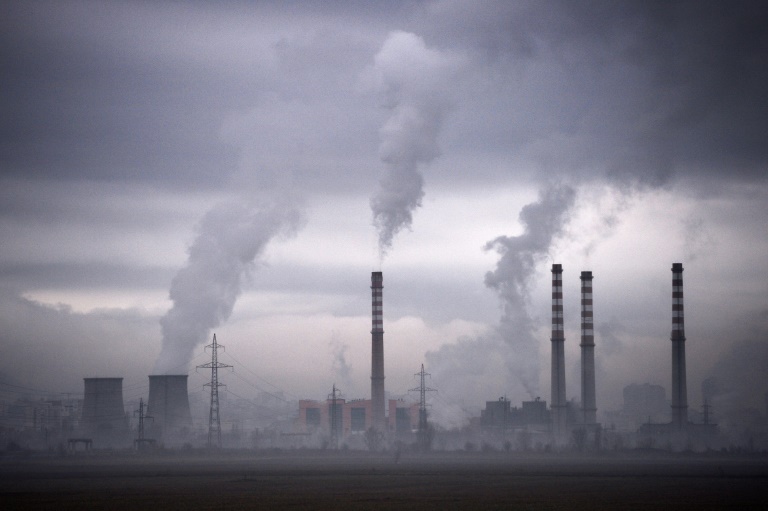
If all nations honour promises to reduce greenhouse gas emissions, there is a chance of capping the rise in global temperatures to under two degrees Celsius, the cornerstone target of the Paris Agreement, researchers said Wednesday.

But that is a very big “if”, they acknowledge in a peer-reviewed study, published in Nature.

The calculus includes not only carbon-cutting commitments officially registered under the 2015 treaty, but a raft of pledges made on the sidelines of last years COP26 UN climate summit in Glasgow — to curb deforestation and methane leaks, for example — that lack means for monitoring or verification.

They also include actions to lower emissions in developing countries that are contingent on financing, something wealthy nations have so far failed to deliver at agreed-upon levels.

The new estimates likewise fold in pledges to become carbon neutral by mid-century that do not detail how that will be achieved.

“Long-term targets should be treated with scepticism if they are not supported by short-term commitments to put countries on a pathway in the next decade to meet those targets,” Zeke Hausfather, a researcher at Berkeley Earth, said, commenting on the study.   

Most rich countries have announced they will be “net zero” by 2050, while China and India have vowed to reach that point by 2060 and 2070, respectively.

“Is our study a good news story?” lead author Malte Meinshausen, a professor at the University of Melbourne, asked in a briefing with journalists.

“Yes, because for the first time we can possibly keep warming below the symbolic 2C mark with promises on the table,” he continued.

– Curb your optimism –

“And no, because we show clearly that increased action this decade is necessary for us to have a chance of not shooting past 1.5C by a large margin.”

As deadly and costly climate impacts have increased, most nations have embraced the Paris deal’s more ambitious “aspirational” target of holding the rise in global temperatures to 1.5C above preindustrial levels.

The UN’s Intergovernmental Panel on Climate Change (IPCC) said in a landmark report earlier this month that carbon pollution must peak before 2025 and be cut in half by 2030 to have even a chance of reaching that goal.

Recent trends do not suggest the world is headed in the right direction: greenhouse gas emissions last year regained the record levels of 2019 after Covid lockdowns lowered them in 2020.

“Some government and business leaders are saying one thing –- but doing another,” UN chief Antonio Guterres said last week when the IPCC report was launched. “Simply put, they are lying.”

The new research analyses data from 196 countries from 2015 until the end of the COP26 meeting in mid-November 2021. 

It concludes that if all pledges are implemented in full and on time, warming can be limited to 1.9C to 2.0C.

Unless immediate steps are taken to drive down emissions even further, 1.5C will almost certainly remain out of reach, the authors said.

If no additional efforts are made beyond pledges — know as nationally determined contributions — submitted under the Paris Agreement, Earth’s surface will warm to a catastrophic 2.8C, the IPCC has said.

“Optimism should be curbed until promises to reduce emissions in the future are backed up with stronger short-term action,” Hausfather and Frances Moore, a scientist at the University of California, Davis said in a comment, also in Nature.

California start-up sends tiny robots on voyage into brains

Sending miniature robots deep inside the human skull to treat brain disorders has long been the stuff of science fiction — but it could soon become reality, according to a California start-up.

Bionaut Labs plans its first clinical trials on humans in just two years for its tiny injectable robots, which can be carefully guided through the brain using magnets.

“The idea of the micro robot came about way before I was born,” said co-founder and CEO Michael Shpigelmacher.

“One of the most famous examples is a book by Isaac Asimov and a film called ‘Fantastic Voyage,’ where a crew of scientists goes inside a miniaturized spaceship into the brain, to treat a blood clot.”

Just as cellphones now contain extremely powerful components that are smaller than a grain of rice, the tech behind micro-robots “that used to be science fiction in the 1950s and 60s” is now “science fact,” said Shpigelmacher. 

“We want to take that old idea and turn it into reality,” the 53-year-old scientist told AFP during a tour of his company’s Los Angeles research and development center.

Working with Germany’s prestigious Max Planck research institutes, Bionaut Labs settled on using magnetic energy to propel the robots — rather than optical or ultrasonic techniques — because it does not harm the human body.

Magnetic coils placed outside the patient’s skull are linked up to a computer that can remotely and delicately maneuver the micro-robot into the affected part of the brain, before removing it via the same route.

The entire apparatus is easily transportable, unlike an MRI, and uses 10 to 100 times less electricity.

– ‘You’re stuck’ –

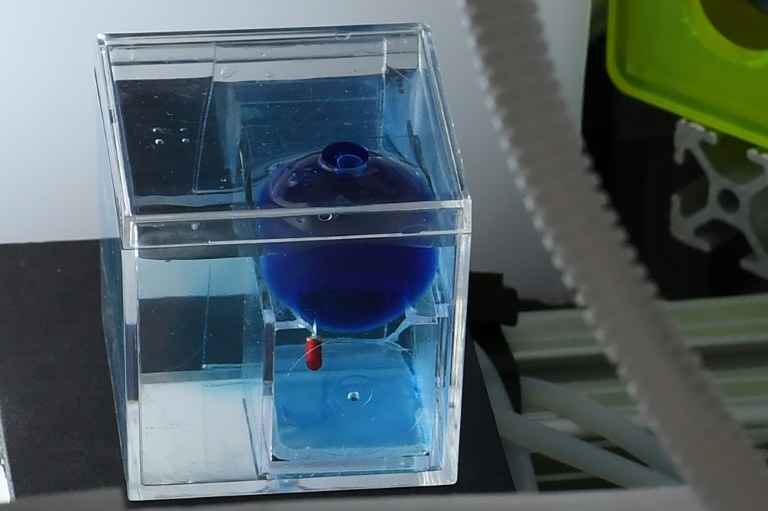
In a simulation watched by AFP, the robot — a metal cylinder just a few millimeters long, in the shape of a tiny bullet — slowly follows a pre-programed trajectory through a gel-filled container, which emulates the density of the human brain.

Once it nears a pouch filled with blue liquid, the robot is swiftly propelled like a rocket and pierces the sack with its pointed end, allowing liquid to flow out.

Inventors hope to use the robot to pierce fluid-filled cysts within the brain when clinical trials begin in two years.

If successful, the process could be used to treat Dandy-Walker Syndrome, a rare brain malformation affecting children.

Sufferers of the congenital ailment can experience cysts the size of a golf ball, which swell and increase pressure on the brain, triggering a host of dangerous neurological conditions.

Bionaut Labs has already tested its robots on large animals such as sheep and pigs, and “the data shows that the technology is safe for us” human beings, said Shpigelmacher.

If approved, the robots could offer key advantages over existing treatments for brain disorders.

“Today, most brain surgery and brain intervention is limited to straight lines — if you don’t have a straight line to the target, you’re stuck, you’re not going to get there,” said Shpigelmacher.

Micro-robotic tech “allows you to reach targets you were not able to reach, and reaching them repeatedly in the safest trajectory possible,” he added.

– ‘Heating up’ –

The US Food and Drug Administration (FDA) last year granted Bionaut Labs approvals that pave the way for clinical trials to treat Dandy-Walker Syndrome, as well as malignant gliomas — cancerous brain tumors often considered to be inoperable.

In the latter case, the micro-robots will be used to inject anti-cancer drugs directly into brain tumors in a “surgical strike.”

Existing treatment methods involve bombarding the whole body with drugs, leading to potential severe side effects and loss of effectiveness, said Shpigelmacher.

The micro-robots can also take measurements and collect tissue samples while inside the brain.

Bionaut Labs — which has around 30 employees — has held discussions with partners for the use of its tech to treat other conditions affecting the brain including Parkinson’s, epilepsy or strokes.

“To the best of my knowledge, we are the first commercial effort” to design a product of this type with “a clear path to the clinic trials,” said Shpigelmacher.

“But I don’t think that we will be the only one… This area is heating up.”

California start-up sends tiny robots on voyage into brains

Sending miniature robots deep inside the human skull to treat brain disorders has long been the stuff of science fiction — but it could soon become reality, according to a California start-up.

Bionaut Labs plans its first clinical trials on humans in just two years for its tiny injectable robots, which can be carefully guided through the brain using magnets.

“The idea of the micro robot came about way before I was born,” said co-founder and CEO Michael Shpigelmacher.

“One of the most famous examples is a book by Isaac Asimov and a film called ‘Fantastic Voyage,’ where a crew of scientists goes inside a miniaturized spaceship into the brain, to treat a blood clot.”

Just as cellphones now contain extremely powerful components that are smaller than a grain of rice, the tech behind micro-robots “that used to be science fiction in the 1950s and 60s” is now “science fact,” said Shpigelmacher. 

“We want to take that old idea and turn it into reality,” the 53-year-old scientist told AFP during a tour of his company’s Los Angeles research and development center.

Working with Germany’s prestigious Max Planck research institutes, Bionaut Labs settled on using magnetic energy to propel the robots — rather than optical or ultrasonic techniques — because it does not harm the human body.

Magnetic coils placed outside the patient’s skull are linked up to a computer that can remotely and delicately maneuver the micro-robot into the affected part of the brain, before removing it via the same route.

The entire apparatus is easily transportable, unlike an MRI, and uses 10 to 100 times less electricity.

– ‘You’re stuck’ –

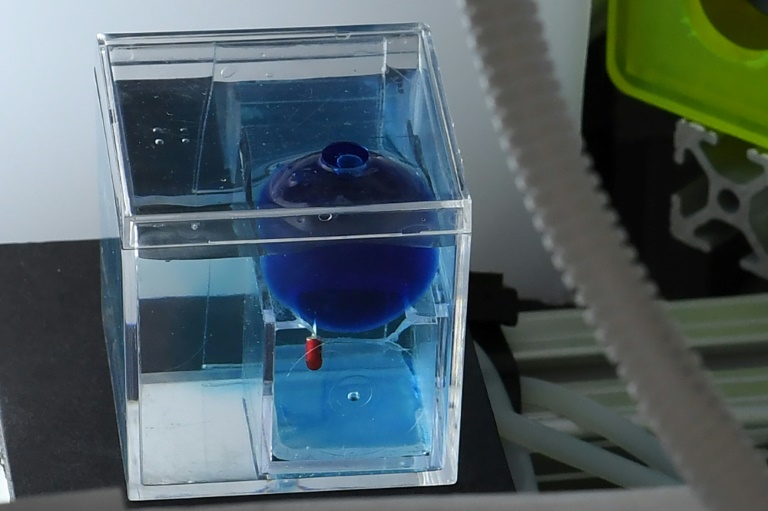
In a simulation watched by AFP, the robot — a metal cylinder just a few millimeters long, in the shape of a tiny bullet — slowly follows a pre-programed trajectory through a gel-filled container, which emulates the density of the human brain.

Once it nears a pouch filled with blue liquid, the robot is swiftly propelled like a rocket and pierces the sack with its pointed end, allowing liquid to flow out.

Inventors hope to use the robot to pierce fluid-filled cysts within the brain when clinical trials begin in two years.

If successful, the process could be used to treat Dandy-Walker Syndrome, a rare brain malformation affecting children.

Sufferers of the congenital ailment can experience cysts the size of a golf ball, which swell and increase pressure on the brain, triggering a host of dangerous neurological conditions.

Bionaut Labs has already tested its robots on large animals such as sheep and pigs, and “the data shows that the technology is safe for us” human beings, said Shpigelmacher.

If approved, the robots could offer key advantages over existing treatments for brain disorders.

“Today, most brain surgery and brain intervention is limited to straight lines — if you don’t have a straight line to the target, you’re stuck, you’re not going to get there,” said Shpigelmacher.

Micro-robotic tech “allows you to reach targets you were not able to reach, and reaching them repeatedly in the safest trajectory possible,” he added.

– ‘Heating up’ –

The US Food and Drug Administration (FDA) last year granted Bionaut Labs approvals that pave the way for clinical trials to treat Dandy-Walker Syndrome, as well as malignant gliomas — cancerous brain tumors often considered to be inoperable.

In the latter case, the micro-robots will be used to inject anti-cancer drugs directly into brain tumors in a “surgical strike.”

Existing treatment methods involve bombarding the whole body with drugs, leading to potential severe side effects and loss of effectiveness, said Shpigelmacher.

The micro-robots can also take measurements and collect tissue samples while inside the brain.

Bionaut Labs — which has around 30 employees — has held discussions with partners for the use of its tech to treat other conditions affecting the brain including Parkinson’s, epilepsy or strokes.

“To the best of my knowledge, we are the first commercial effort” to design a product of this type with “a clear path to the clinic trials,” said Shpigelmacher.

“But I don’t think that we will be the only one… This area is heating up.”

Close Bitnami banner
Bitnami