World

Palestinian rights lawyer killed in Israel West Bank clashes

A Palestinian lawyer was killed Wednesday, the fifth day of Israeli raids in the West Bank following deadly attacks in the Jewish state, amid heightened tensions after a flashpoint religious site was vandalised.

Israel has poured in additional forces and is reinforcing its wall and fence barrier with the occupied territory after four deadly attacks have claimed 14 lives in Israel, most of them civilians, in the past three weeks.

Violent clashes erupted in the West Bank city of Nablus where Israeli forces were escorting a work crew that came to repair Joseph’s Tomb, which is sacred to Jews and which was smashed in an act of vandalism last weekend.

Israeli troops racing through the city’s streets in an armoured convoy opened fire as a crowd pelted them with rocks and incendiary devices.

“Hundreds of Palestinians instigated a violent riot, burned tyres and hurled rocks and Molotov cocktails at the soldiers” who responded with “riot dispersal means and live ammunition,” the army said.

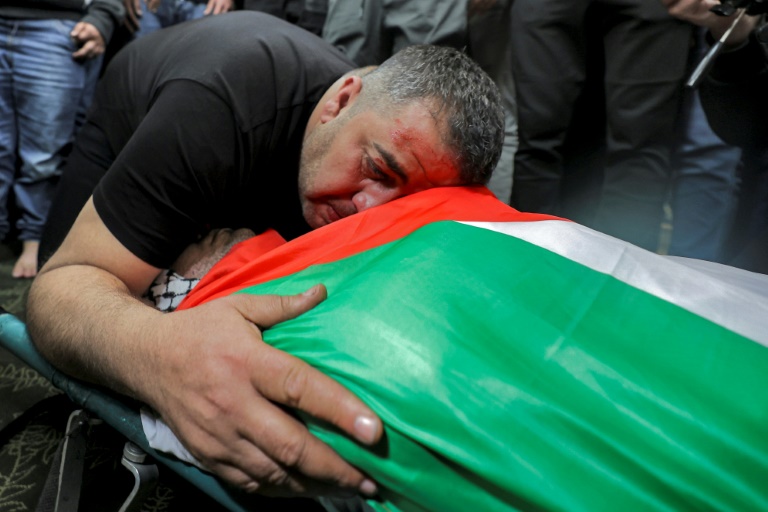
The Palestinian health ministry said human rights lawyer Muhammad Hassan Muhammad Assaf, 34, “died after being shot in the chest by the Israeli occupation army during the aggression on the city of Nablus”.

The Israeli army did not confirm its forces had shot the lawyer, whose death brought to 16 the number of Palestinian fatalities in the ongoing escalation.

– ‘On the offensive’ –

Witnesses told AFP Assaf was standing by the roadside, having just taken his nephews to school, when he was hit by a bullet as Israeli forces fired while pulling out of Nablus.

Assaf was mourned as a “fierce defender of his people” by his employer, the Colonisation and Wall Resistance Commission of the Ramallah-based Palestinian Authority. 

Palestinian prime minister Mohammad Shtayyeh charged that Israeli soldiers “murder for the sake of murder, with a license granted by the prime minister of the occupying state, Naftali Bennett, without the slightest regard for international law”.

Bennett has warned that Israel is now “on the offensive” and determined to arrest militant suspects.

The latest major attack Israel suffered was a shooting rampage last Thursday in Tel Aviv that claimed three lives and wounded over a dozen more. The gunman, from Jenin, died in a shootout with Israeli forces following an all-night manhunt. 

The Israeli army said Wednesday it also carried out “counterterrorist operations” in the Palestinian militant bastion of Jenin and other West Bank cities. 

In the city of Tulkarem, Israeli border police said they shot and wounded “a suspect in terrorist activity” who fled special forces trying to arrest him.

Violence flared near Joseph’s Tomb as Israeli forces escorted the Jewish settler construction crew sent in to repair the damaged site.

– ‘Restore the honour’ –

Bennett had vowed on Sunday that “we will not abide such an assault on a place that is holy to us — on the eve of Passover”, the Jewish festival.

The operation’s commander could be heard in a video telling his soldiers that “we get to restore the honour to this land and the people of Israel”, and that they would enter the site “as sons of kings”.

The Palestinian Red Crescent reported 31 people wounded around the Nablus site and a nearby village, including 10 hit by live rounds.

The holy site, where Jews say the Biblical patriarch Joseph is buried, is a frequent flashpoint between Israelis and Palestinians. It was partially destroyed in 2000 during a Palestinian uprising and also torched in 2015.

Palestinian authorities consider the wider site an Islamic archaeological monument where a revered cleric was buried two centuries ago.

The clashes have come during the Muslim holy month of Ramadan and ahead of the start of Passover Friday, an overlap that can heighten tensions around sacred sites in Jerusalem’s Old City. 

Last year Hamas, the Islamist group that runs the Gaza Strip, fired rockets toward Jerusalem following disturbances at the Al-Aqsa Mosque, the third holiest site in Islam, setting off a devastating 11-day war.
JPMorgan Chase says US economy still solid, but risks rising

JPMorgan Chase said the US economy remains on solid footing for the short-term, but warned of heightened longer-term risks due to inflation and the Ukraine war as its reported lower quarterly profits.

Executives from the giant bank said households and businesses generally remained in good shape, amid a tightening labor market.

But higher consumer prices, the Ukraine war and the shifts in Federal Reserve policy together have slightly raised the recession risk, which led the bank to set aside $902 million in additional reserves as a buffer against possible bad loans.

“There’s this very strong underlying economy,” said Chief Executive Jamie Dimon, noting that many consumers are flush with cash and businesses in “good shape” for the most part.

But he pointed to “countervailing forces,” including rising interest rates and inflation, and the war in Ukraine. 

“And those things are going to collide at one point, probably sometime next year,” he said.

“I’m not predicting a recession,” Dimon added in a conference call with reporters. “But is it possible? Absolutely.”

– ‘Wars are unpredictable’ –

The biggest US bank by assets, JPMorgan reported $8.3 billion in first-quarter profits, down 42 percent from the same three months of the prior year. Revenues dipped five percent to $30.7 billion. 

JPMorgan scored higher net interest income, reflecting a boost to lending fees because of higher interest rates. 

Profits fell in investment banking on lower equity and debt underwriting fees. The division also suffered a $120 million hit tied to upheaval in the nickel market in March that pressured some commodity brokerages, company officials said.

The results contrasted sharply from a year ago, when JPMorgan saw surging profits after it unlocked $5.2 billion in funds it had set aside early in the pandemic against potential defaults, but didn’t need because of the surprisingly solid condition of clients.

In the latest quarter, JPMorgan set aside $902 million for bad loans, citing “downside risks” including the Ukraine war and surging inflation.

About $300 million of that amount is connected to Russia-related exposures, with the remaining funds reflecting broader economic risks, executives said.

Charge offs for the first quarter came in at a relatively modest $582 million, another sign of the healthy condition of consumers.

In terms of customer trends, Dimon cited an uptick in credit card spending on dining and travel, but said higher mortgage rates had dented home lending originations, while limited vehicle availability crimped car loan originations.

Dimon highlighted the Ukraine situation as a wildcard, warning that “wars are unpredictable” and the oil market could “change dramatically.”

“The oil markets are precarious,” he said, adding that “clouds are on the horizon.”

JPMorgan’s shares fell 3.5 percent to $126.90 in early trading.

Other large banks, including Goldman Sachs, Citigroup and Bank of America, will report results in coming days.

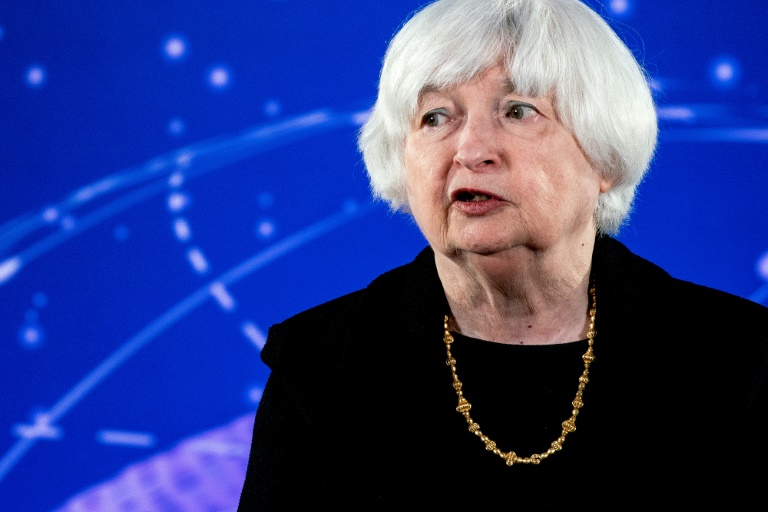
US Treasury Secretary warns China over its stance on Russia

US Treasury Secretary Janet Yellen warned China on Wednesday that its lack of participation in the Western sanctions campaign against Russia could affect countries’ willingness to work with Beijing.

Washington and its allies in Europe and elsewhere have responded with fury to Moscow’s attack on Ukraine, sanctioning Russia’s financial system, aviation sector and other major parts of its economy in a thus-far fruitless effort to get President Vladimir Putin to back down.

“China has recently affirmed a special relationship with Russia. I fervently hope that China will make something positive of this relationship and help to end this war,” Yellen told the Atlantic Council.

“The world’s attitude towards China and its willingness to embrace further economic integration may well be affected by China’s reaction to our call for resolute action on Russia.”

China as well as India are two major economies that have not taken part in the retaliatory measures, and Yellen said Beijing’s policy could have lasting implications for a country that is pursuing territorial disputes against its neighbors.

“China cannot expect the global community to respect its appeals to the principles of sovereignty and territorial integrity in the future if does not respect these principles now when it counts,” she said, in a reference to China’s claim over Taiwan.

– ‘On the fence’ –

Yellen also spoke to countries that “are currently sitting on the fence” when it comes to Moscow, “perhaps seeing an opportunity to gain by preserving their relationship with Russia and backfilling the void left by others.”

She warned that such policies “are short-sighted,” adding: “The future of our international order, both for peaceful security and economic prosperity, is at stake.”

“The unified coalition of sanctioning countries will not be indifferent to actions that undermine the sanctions we’ve put in place,” Yellen said.

With the World Bank and IMF set to begin their spring meetings next week, Yellen also called for reform to the two major economic institutions, saying the war in Ukraine proved the necessity of change.

“We will… need to modernize our existing institutions — the IMF and the multilateral development banks — so that they are fit for the 21st century, where challenges and risks are increasingly global,” she said.

“Some may say that now is not the right time to think big. Indeed, we are in the middle of Russia’s war in Ukraine,” Yellen said. “Yet, I see this as the right time to work to address the gaps in our international financial system that we are witnessing in real time.”

These measures should force the Kremlin “to choose between propping up its economy and funding the continuation of Putin’s brutal war,” she said.

She reflected on the massive economic collapse the Covid-19 pandemic caused in 2020, saying that while rich nations were able to spend to support their economies, efforts to help poor countries were less successful, causing “a divergence in global prospects.”

Yellen said the governance of the IMF should be considered “to ensure that it reflects both the current global economy and also members’ commitments to the (lender’s) underlying principles and objectives.”

India's Infosys to exit Russia business

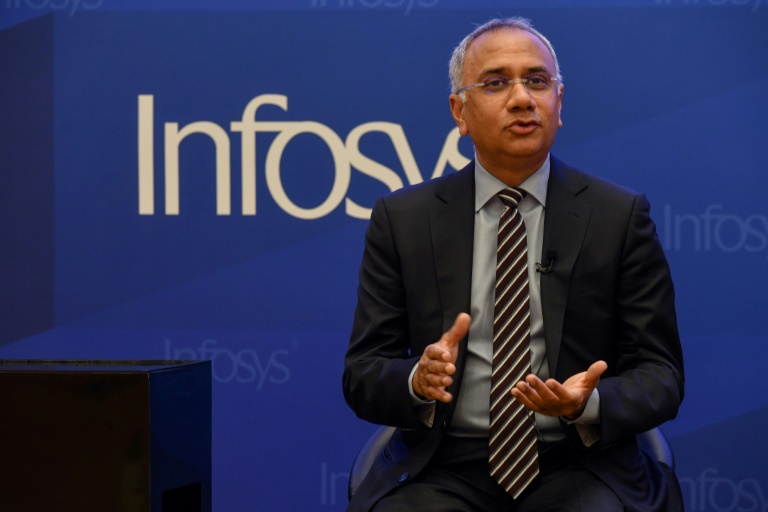
Indian software giant Infosys said Wednesday it was “transitioning” out of the Russian market following the Ukraine war and conflict of interest accusations levelled at Rishi Sunak, the British finance minister.

Sunak’s wife Akshata Murty holds a nearly $1 billion stake in the IT firm, which was founded by her father N.R. Narayana Murthy and established itself as a global outsourcing behemoth.

Critics have accused Sunak of financially benefiting from Infosys operations in Russia through his wife’s stake, even in the wake of stiff British sanctions against Moscow in response to the invasion of Ukraine.

“Given what is going on in the region, we have started to transition all of our work from our centres in Russia to our centres outside Russia,” chief executive and managing director Salil Parekh told a media briefing.

“We have no work with any Russian client today and we have no plans for any work with any Russian client going ahead,” he added.

Parekh said the company was “very concerned” about the situation in Ukraine and had committed $1 million in humanitarian aid.

But he declined to confirm if the company’s board has discussed recent criticism surrounding Murty’s stake in the company.

“We have no comments to make on any individual shareholder,” he said.

Infosys also announced quarterly earnings on Wednesday but fell short of analyst estimates despite strong growth on the back of sustained demand for digital services since the pandemic.

Net profit at the Bangalore-headquartered company rose 12 percent on-year to 56.86 billion rupees ($746 million) in the March quarter.

Revenues grew 22.7 percent to 322.76 billion rupees, and were up 19.7 percent on a full-year basis, the company’s fastest pace in 11 years. 

Revenue growth was forecast at 13-15 percent for the current financial year, after the company recorded an order book of $9.5 billion for the year to March 31.

Infosys was at the forefront of an outsourcing boom that saw India become a back office to the world as Western firms subcontracted work to a skilled English-speaking workforce.

More than 60 percent of its revenue comes from North American markets.

The company’s board approved a final dividend of 16 rupees per share. Its stock closed 0.41 percent higher in Mumbai ahead of the earnings announcement.

Ukrainian climber on Everest to call for global support

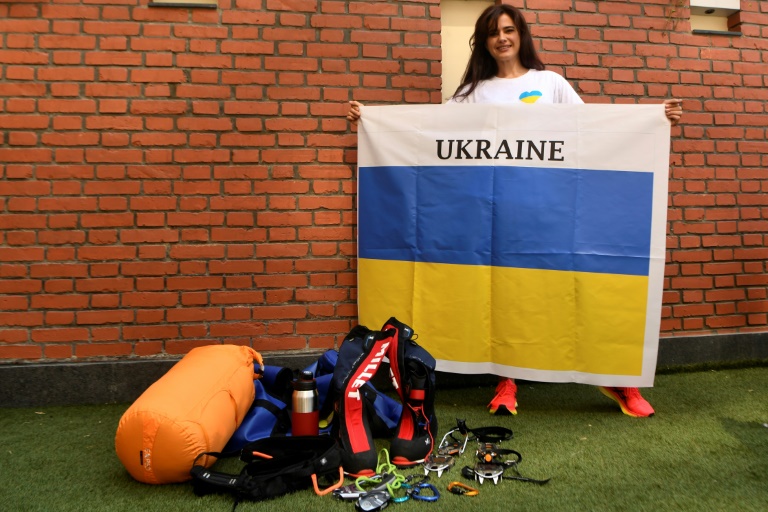
A Ukrainian climber said Wednesday she will summit Mount Everest carrying her national flag to rally global support for her country and boost morale among those fighting the Russian invasion. 

Antonina Samoilova will be the only climber from Ukraine attempting to summit a Himalayan peak this season, and the 33-year-old said her endeavour was the only way she knew how to draw attention to the suffering of her compatriots.

“I climb Everest to support all the people of Ukraine, to support every warrior, every volunteer and all the people who were affected by this cruel war and to give strength to fight until we win,” she told AFP in Kathmandu.

“I think that (it) would be great support for Ukrainian people to know that even in this hardest year… our Ukrainian flag will flying on the top of the world,” she added.

Samoilova is aiming to join the select club of climbers to scale the Seven Summits — the highest mountains on each continent — and has already completed Kilimanjaro in Africa, Europe’s Elbrus and Antarctica’s Mount Vinson.  

She was at the summit of Pico de Orizaba, Mexico’s highest mountain, when news of the Russian invasion reached her in February.

Her first updates on the war came from a Kyiv bomb shelter where her sister was hiding.

She said her father and brother were now fighting and she was “very proud of them”.

Irina Galay, the first Ukrainian woman to climb Everest, has called for Russian athletes to be banned from Himalayan mountains this year in retaliation for the invasion.

The issue was taken up by Ukraine’s government but no action has been taken by Nepal, with 17 Russians among the 607 climbers given permits for the current season. 

Samoilova will soon be at the tented city at Everest base camp with at least 225 other climbers, but said she is preoccupied with thoughts of home.

“I’m dreaming of coming back to Ukraine… and to hug all my family. And I hope it will come true,” she said. 

Diplomatic battle rages at UNESCO over Russia meeting

A dispute has erupted at the UN cultural agency over Russia’s hosting of its World Heritage Committee in just two months, which Western nations say they will boycott over the invasion of Ukraine.

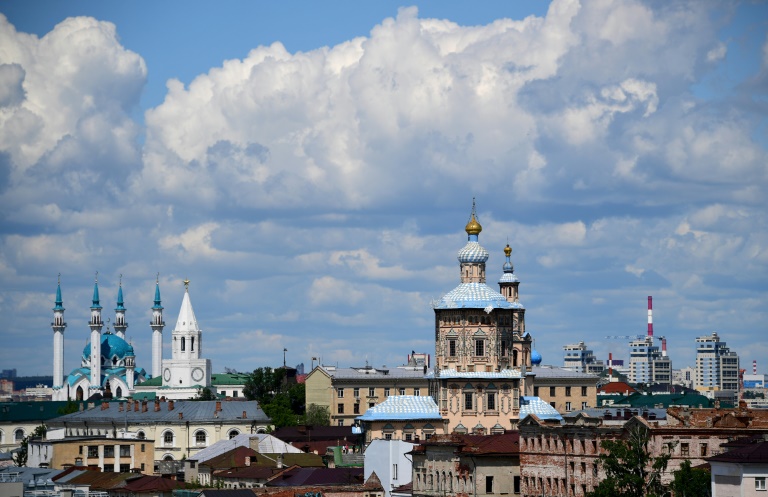
Russia is due to host the annual meeting of UNESCO’s World Heritage Committee in the city of Kazan in its Tatarstan region from June 19-30.

The meeting is notably tasked each year with deciding which sites and monuments will be given the organisation’s coveted World Heritage status — and which could be stripped of the label if countries have fallen short on looking after them.

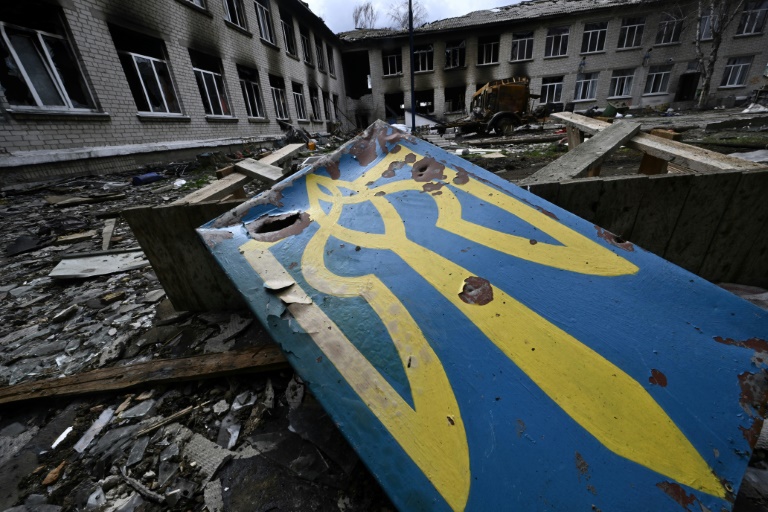
The meeting is one of the few international events that Russia is still scheduled to host after President Vladimir Putin’s invasion of Ukraine, which according to UNESCO has caused damage to almost 100 cultural sites.

But in a sign of the West’s difficulties in building a broad international coalition against Moscow, the campaign to strip Kazan of its right to host the event is proving an uphill battle.

Just a week before official invitations are set out, the mainly Western nations opposing Russia’s right to host the event are racing against the clock to try to convince the committee to find another venue and strip Russia of its presidency of the group.

“It’s complicated,” an ambassador of a Western nation who asked to remain anonymous told AFP in Paris, referring to the reluctance of some countries to isolate Russia at an institution that traditionally encourages dialogue in the face of crises. 

– ‘Inconceivable’ –

It was decided in July 2021 to award the meeting to Kazan, the cultural centre of Russia’s Turkic Tatar minority that has long billed itself as a meeting point between different cultures and religions.

British Culture Minister Nadine Dorries said in March that it was “inconceivable” Russia should host the meeting, and that Britain would not attend if it did.

Ukraine’s Culture Minister Oleksandr Tkachenko echoed her call, saying Russia’s goal is to “destroy Ukraine” and suggesting the session should be moved to the western Ukrainian city of Lviv.

On April 8, 46 states led by Britain wrote a letter to all members of the World Heritage Committee saying they “would not attend a meeting of the Committee either in Russia or under Russian presidency.”

It said such a meeting is “impossible” while Russia is destroying “outstanding universal value” in Ukraine.

UNESCO has said dozens of sites and monuments in Ukraine have been damaged in the Russian invasion.

“The credibility of UNESCO and the 1972 Convention concerning the Protection of the World’s Cultural and Natural Heritage is at stake,” said the letter, signed by Britain’s ambassador to UNESCO Laura Davies on behalf of the 46 countries.

Since then, intense behind the scenes discussions have been taking place to find an agreement.

“In non-Western countries, there is certainly disapproval of Russian aggression in Ukraine, but this disapproval does not amount to condemnation and even less a desire to break with Russia or isolate it,” said Michel Duclos, a former French ambassador to Syria and special advisor to the Institut Montaigne think-tank in Paris.

– Elusive consensus –

UNESCO is at pains to emphasise that the decision on the meeting is not taken by UNESCO’s leaders but by the members of the World Heritage Committee. 

The 21 countries that make up the World Heritage Committee and to whom the UK letter was addressed include Argentina, India and Saudi Arabia.

Two-thirds of the members must agree to hold an extraordinary meeting on the issue, where a decision on the Kazan meeting could be decided by consensus or majority vote.

But while London should have no problem in persuading the European members of the committee — Italy, Belgium, Bulgaria and Greece — to come on board, it is another matter for states like India.

“Several countries on the committee have already given us their support,” said a source close to the campaign, who asked not to be named, insisting on the “disastrous” image of a meeting in Kazan if it went ahead even while boycotted by a quarter of UNESCO members states.

In the absence of consensus, one option could be to postpone the session for several months –- a scenario excluded in the letter by the signatory countries –- or to host the meeting in a neutral place, such as the UNESCO headquarters in Paris.

Stocks diverge while oil gains tracking soaring inflation

Stock markets diverged Wednesday as investors pored over data showing further spikes to inflation, while oil prices extended gains.

US annual consumer inflation hit a 40-year high in March, the same month that UK prices jumped at the fastest pace in three decades. 

Global inflation, already rocketing on supply constraints as economies look to fully reopen following pandemic lockdowns, is rising further on fallout from the Ukraine war.

US wholesale price inflation hit a record annual rate of 11.2 percent in the year to March, according to data released Wednesday.

Analysts said markets welcomed an indication that US inflation was approaching its peak, though it has raised expectations that the Federal Reserve will take more aggressive action to contain prices.

“The steepest rises in a generation have unsettled financial markets, as investors digest the unsavoury prospect of tougher hikes in interest rates,” noted Susannah Streeter, senior investment and markets analyst at Hargreaves Lansdown.

Tokyo shrugged off the gloom, however, with the benchmark Nikkei 225 closing almost two percent higher following sharp losses at the start of the week.

In China, where a Covid-19 outbreak has caused mass lockdowns and snarled global trade arteries, the main stock market index lost close to one percent Wednesday.

That came as official data showed China’s imports shrank on-year in March for the first time in nearly two years, hit by the coronavirus and weakening consumer demand.

European stocks were solidly lower in afternoon trading while Wall Street opened little changed as the corporate reporting season got underway.

JPMorgan Chase saw its first quarter net profit plunge by 40 percent as it set $900 million aside to deal with potential losses due to the Ukraine conflict and inflation.

It already booked $524 million in losses as it sought to lower its exposure to soaring commodities prices and Russian counterparties.

Shares in JPMorgan Chase fell 2.8 percent at the open of trading. 

Meanwhile, Delta airlines beat expectations even if it still lost money and said it expects second quarter revenue to come in at 97 percent of the pre-pandemic level in 2019.

Its shares rose 3.8 percent.

– Oil rises –

Elsewhere Wednesday, oil prices climbed further in a volatile trading week.

“Oil seems to be the primary benefactor of (the) Ukraine vs Russia conflict dragging out longer,” noted Stephen Innes of SPI Asset Management.

Russia is a major producer of oil and gas and the war has triggered fears of supply constraints.

However, global oil demand will be slightly lower than forecast this year in the wake of strict Covid lockdowns in China, the world’s biggest importer of crude, the International Energy Agency said Wednesday.

Russian oil supply is expected to continue to fall in April by 1.5 million barrels per day, according to the IEA, which advises developed countries on their energy policies.

In currency trading Wednesday, the yen hit its lowest level against the dollar in two decades, extending recent falls as the gap widens between Japan’s ultra-loose monetary policy and Fed tightening.

Despite being traditionally considered a haven currency, uncertainty fuelled by the war in Ukraine has not caused the yen to strengthen.

Instead, the Fed’s move towards a more aggressive rate-tightening policy and the shock of rising oil prices in Japan — a major importer of fossil fuels — have pushed the currency lower, analysts said.

– Key figures around 1330 GMT –

London – FTSE 100: DOWN 0.2 percent at 7,561.85 points

Paris – CAC 40: DOWN 0.7 percent at 6,491.70

Frankfurt – DAX: DOWN 1.0 percent at 13,987.03

EURO STOXX 50: DOWN 0.9 percent at 3,795.76

New York – Dow: UP 0.1 percent at 34,260.43

Tokyo – Nikkei 225: UP 1.9 percent at 26,843.49 (close)

Hong Kong – Hang Seng Index: UP 0.3 percent at 21,374.37 (close)

Shanghai – Composite: DOWN 0.8 percent at 3,186.82 (close)

Brent North Sea crude: UP 2.1 percent at $106.84 per barrel

West Texas Intermediate: UP 1.9 percent at $102.46 per barrel

Euro/dollar: DOWN at $1.0815 from $1.0818

Pound/dollar: UP at $1.2996 from $1.2977

Euro/pound: DOWN at 83.21 pence from 83.36 pence

Dollar/yen: DOWN at 125.80 from 126.22 yen

burs-rl/lth

Finland to decide on NATO membership 'within weeks'

Rattled by Russia’s invasion of Ukraine, Finland’s prime minister said Wednesday the Nordic nation would decide whether to apply for NATO membership “within weeks”, despite the risk of infuriating Moscow.

Helsinki’s parliament will next week open a debate about joining the Western alliance after the Ukraine war sparked a dramatic U-turn in public and political opinion in Finland and neighbouring Sweden over long-held policies of military non-alignment.

Attempting to join NATO would almost certainly be seen as a provocation by Moscow, for whom NATO’s expansion on its borders has been a prime security grievance.

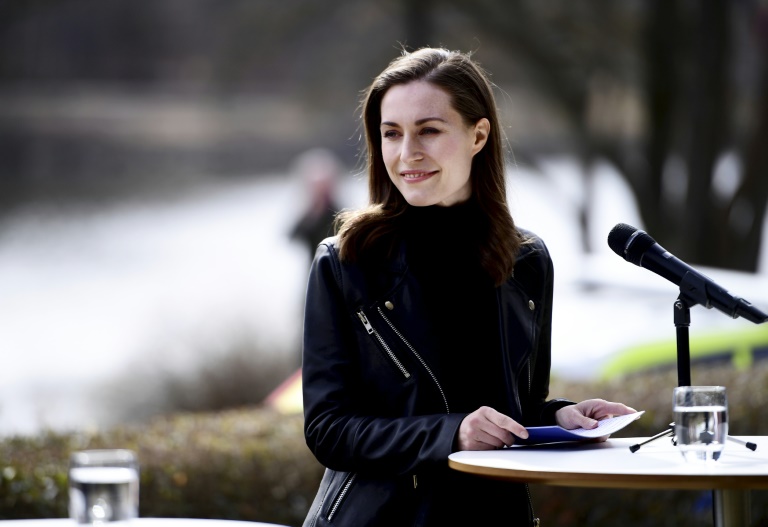
But Prime Minister Sanna Marin said Finland would now decide quickly on whether to apply for membership of the North Atlantic Treaty Organization.

“I think it will happen quite fast. Within weeks, not within months,” Marin told a Stockholm press conference with Swedish Prime Minister Magdalena Andersson. 

Sweden is also discussing NATO membership following Russia’s February 24 invasion.

– Guarantees –

A Finnish government-commissioned report released Wednesday examined the “fundamentally changed” security environment, according to the foreign ministry, and will make its way through parliament.

The report did not make recommendations but stressed, as did Marin in her speech, that without NATO membership Finland enjoys no security guarantees, despite being a partner to the alliance.

“There is no other way to have security guarantees than under NATO’s deterrence and common defence as guaranteed by NATO’s Article 5,” Marin said, referring to an attack on one member being considered an attack on all.

The “deterrent effect” on Finland’s defence would also be “considerably greater” inside the alliance, the report noted while adding it also carried obligations for Finland to assist other members. 

An opening parliamentary debate on membership is set for next Wednesday.

Former prime minister and long-time NATO advocate Alexander Stubb said he believes a membership application is “a foregone conclusion”.

Finland has a long history with Russia. In 1917 it declared independence after 150 years of Russian rule.

During World War II, its vastly outnumbered army fought off a Soviet invasion, before a peace deal saw it cede several border areas to Moscow.

During the Cold War, Finland remained neutral in exchange for guarantees from Moscow that it would not invade.

– Change of heart –

The turnaround in sentiment on NATO would have been unthinkable just a few months ago.

As recently as January, Prime Minister Marin had said membership was “very unlikely” during her term.

But after two decades of public support for membership remaining steady at 20-30 percent, the war caused a surge in those in favour to over 60 percent.

Public statements gathered by newspaper Helsingin Sanomat suggest half of Finland’s 200 MPs now support membership while only 12 oppose. 

Others say they will announce a position after detailed discussions.

The government said it hopes to build a parliamentary consensus over the coming weeks, with MPs due to hear from a number of security experts.

Many analysts predict Finland could submit a bid in time for a NATO summit in June.

Any membership bid must be accepted by all 30 NATO states, a process that could take four months to a year.

Finland has so far received public assurances from secretary general Jens Stoltenberg that NATO’s door remains open, and support from several members.

– ‘Like changing religion’ –

Unlike Finland, Sweden shares no land border with Russia and the two countries have not been at war for two centuries.

Nonetheless, pro-NATO sentiment is also rising among Swedes who “are realising that they might find themselves in the same position as Ukraine, a lot of sympathy but no military help”, said Robert Dalsjo, research director at the Swedish Defence Research Agency.

Many commentators expect Sweden and Finland will act in tandem on whether to join, but their leaders have stressed they may reach differing decisions.

Sweden’s ruling party this week announced a review of its long-held opposition to joining NATO.

“For the Social Democrats in Sweden to change opinion (on NATO) is like changing religion,” ex-PM  Stubb told AFP.

“And I’m not talking Protestant to Catholic, I’m talking Christian to Muslim.”

Kremlin spokesman Dmitry Peskov warned Russia would take measures to “rebalance the situation” if  Finland joined.

President Sauli Niinisto said Russia’s response could include airspace, territorial violations and hybrid attacks, which Finnish NATO proponents believe the country is well prepared to withstand.

Wednesday’s report  stated that even as a member, “Finland’s goal would be to maintain functioning relations with Russia.”

“Russia will most certainly huff and puff,” Dalsjo said, but added: “I don’t think they will do anything violent.

“However, in the mood that (Russian President Vladimir) Putin is right now, I wouldn’t rule it out entirely.”

Police intensify manhunt for New York subway shooter

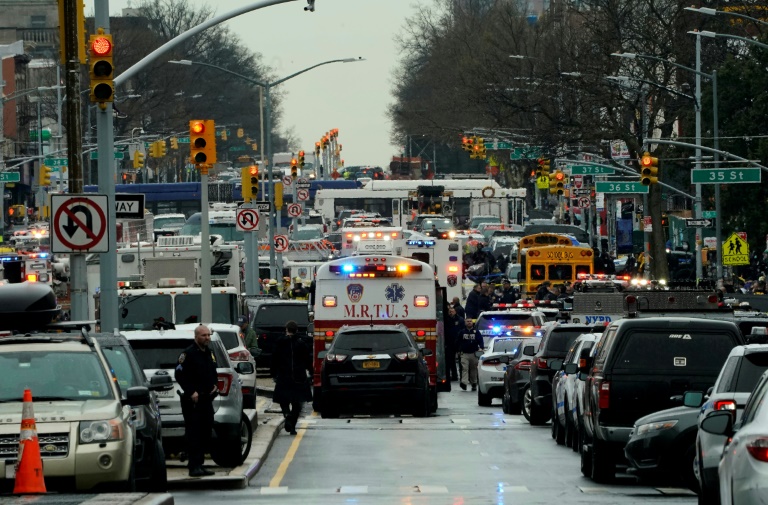
Nervous New York commuters crowded on to the subway Wednesday morning, as police on the streets above intensified their hunt for a fugitive gunman who shot 10 people in a train car the day before.

New York mayor Eric Adams called on residents to be “vigilant” but said there was no evidence the shooter had an accomplice, adding: “It appears he was acting alone.”

“We’re running full service on all of our lines after NYPD completed its investigation,” the New York City transit authority announced — with the “business as usual” message underscored by an announcement of signal delays a short time later.

Tuesday’s incident in Brooklyn — in which no one was killed — was not being investigated as an act of terrorism, and none of the injuries were considered life threatening.

Police have identified a “person of interest” in the attack, which also wounded 13 others as they scrambled to get out of the station or suffered smoke inhalation, offering a $50,000 reward for any information. 

The suspected gunman put on a gas mask just as the train was arriving at the station, then opened two smoke canisters and began shooting, police said.

“All you see is like a smoke, black smoke bomb going off, and then … people bum rushing to the back,” one of the gunshot victims, Hourari Benkada, told CNN, referring to a charge by passengers towards the door at the end of the car.

Benkada said he had boarded the first car at 59th Street and sat next to the gunman — but with his headphones on he did not notice anything until smoke began filling the car.

– ‘Person of interest’ –

He said he did not understand that there were shots at first, and that he was trying to comfort a pregnant woman next to him. 

“I got pushed and that’s when I got shot in the back of my knee,” he said.

NYPD chief James Essig said the gunman had fired 33 shots. Police later recovered a Glock 17 nine-millimeter handgun, three additional ammunition magazines and a hatchet from the scene.

Benkada said the shooting lasted for perhaps a minute, and that he heard about 10 shots. 

The bullet went through the back of his knee and out the side, leaving a hole “the size of a quarter,” he said. “I lost so much blood.”

Police have identified a 62-year-old man named Frank James as the “person of interest”, and published a photograph of him. US media reported that his credit card and keys to a van he had rented were found at the scene.

James had posted several videos on YouTube of himself delivering long, sometimes aggressive political tirades. He also criticized mayor Adams.

Shootings in New York have risen this year, and the uptick in violent gun crime has been a central focus for Adams since he took office in January. Through April 3, shooting incidents rose to 296 from 260 during the same period last year, according to police statistics.

Lax gun laws and a constitutionally guaranteed right to bear arms have repeatedly stymied attempts to clamp down on the number of weapons in circulation in the United States, despite a majority of Americans backing greater controls.

French prosecutors raid pizza plant after E.coli outbreak

Prosecutors on Wednesday searched a Buitoni frozen pizza factory in northern France, the suspected source of an E. coli outbreak that has left dozens of children sick, as well as the headquarters of its owner Nestle France, authorities told AFP.

An investigation into involuntary manslaughter and deceitful practices was opened on April 1 after authorities learned of more than 70 infections, which may have caused the deaths of a one-year-old and an 18-year-old.

The search at the Caudry factory operated by Buitoni, which is owned by the Swiss food conglomerate Nestle, was confirmed by a police source and the Paris prosecutor’s office, which is leading the investigation.

Nestle France, whose headquarters outside Paris were also raided, announced a recall of the affected Fraich’UP pizzas on March 18, and authorities ordered a halt of their production at Caudry after carrying out two hygiene inspections.

The inspections “revealed a deterioration of food hygiene controls”, the presence of “rodents” and insufficient measures to prevent pests from contaminating a food production site, authorities said in the shutdown order.

Escherichia coli bacteria can lead to severe and long-lasting health complications, including acute kidney failure. French authorities say the reports of possible infections began to occur in late February.

Recalls were also ordered in Belgium and Luxembourg, with the affected pizzas distributed in 20 other countries, including 15 in Africa, according to the EU’s Rapid Alert System for Food and Feed.

Buitoni has said it is cooperating with the investigation and promised to take “appropriate measures” in the wake of the outbreak.

The health scare comes after nine European countries reported a total of 150 salmonella cases thought to be linked to a Kinder chocolate factory in Belgium that has since been closed.

“Most cases are children under 10 years of age, with many being hospitalised,” the European Centre for Disease Prevention and Control and the European Food Safety Authority said in a statement Tuesday.

Kinder’s owner, the Italian confectionery giant Ferrero, has apologised for the outbreak at the height of the Easter holiday season.

Close Bitnami banner
Bitnami