World

War in Ukraine: Latest developments

Here are the latest developments in the war in Ukraine:

– Mariupol troops surrender: Moscow –  

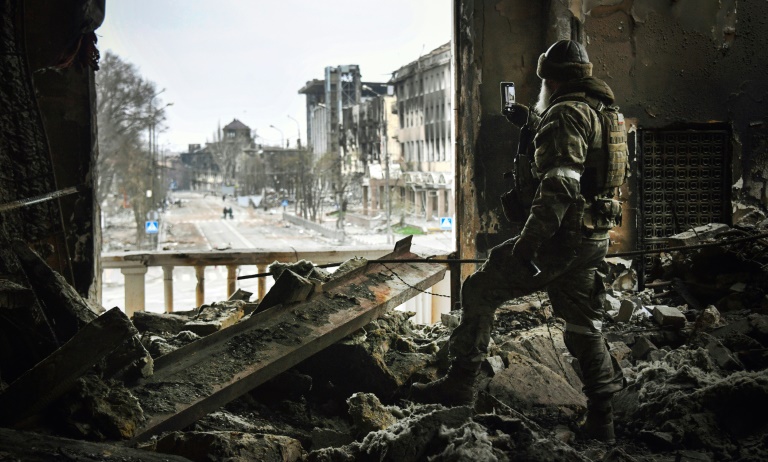
Russia says more than a thousand Ukrainian soldiers have surrendered in the besieged southeastern city of Mariupol after a ferocious six-week battle for the strategic port.

“In the city of Mariupol… 1,026 Ukrainian servicemen of the 36th Marine Brigade voluntarily laid down their arms and surrendered,” the Russian defence ministry says. Ukraine has yet to confirm the report.

– Ukraine a ‘crime scene’ –  

“Ukraine is a crime scene,” the International Criminal Court’s chief prosecutor says on a visit to the town of Bucha west of Kiev, one of several towns where Russia is accused of massacring civilians.

Prosecutor Karim Khan says there are “reasonable grounds to believe that crimes within the jurisdiction of the court are being committed”. The ICC investigates allegations of war crimes, crimes against humanity, genocide and aggression.

Bucha’s mayor says more than 400 people have been found dead so far and 25 women have reported being raped.

– Russia committing ‘genocide’: Biden –

US President Joe Biden accuses Russian forces for the first time of committing genocide in Ukraine.

“It’s become clearer and clearer that Putin is just trying to wipe out the idea of even being able to be a Ukrainian,” he tells reporters. 

Ukrainian President Volodymyr Zelensky, who has also accused Russia of genocide, hails Biden as a “true leader” but French President Emmanuel Macron warns against “verbal escalations”.

– ‘Credible’ chemical weapons claim –

US Secretary of State Antony Blinken says Washington has “credible information” that Russia “may use… chemical agents” in its offensive in Mariupol.

The world’s chemical weapons watchdog, the OPCW, says it is “concerned” over the reports.

– Polish, Baltic leaders to Kyiv –

The leaders of Poland, Estonia, Latvia and Lithuania travel to Kyiv together by train to show support for Zelensky.

German President Frank-Walter Steinmeier says he had planned to join them but was told by Kyiv he was “not wanted”. He has been criticised for his past advocacy of warmer ties with Russia. A top aide to Zelensky says Kyiv wants German Chancellor Olaf Scholz to visit instead.

– Attacks in south, east –

Ukraine accuses Russian troops of shooting six men and one woman in a home in the southern village of Pravdyne on Tuesday and then blowing up the building to hide the evidence.

The governor of Kharkiv says seven civilians have been killed by Russian shelling in the eastern region in the past 24 hours.

– Separatists sanctioned –

Britain says it and the European Union plan to impose sanctions on 178 pro-Russian separatists in eastern Ukraine. 

Separatist forces have been fronting the fight against Ukrainian marines in Mariupol.

– Finnish NATO decision ‘within weeks’ –

Finland’s Prime Minister Sanna Marin says the country, which has been non-aligned since the end of the Cold War, will decide whether to apply for NATO membership “within weeks”.

Russia’s invasion of Ukraine has also relaunched a debate over NATO membership in neighbouring Sweden.

– Russia seeks new buyers for oil, gas – 

Russian President Vladimir Putin says Moscow has “all the resources and opportunities” to quickly find new customers for its energy exports after being hit by Western sanctions.

The US has banned imports of Russian oil and gas while the EU and Japan have banned imports of Russian coal. 

– Tycoon swap offer –

Zelensky offers to swap pro-Kremlin tycoon Viktor Medvedchuk, who has been close to Putin for years and who was arrested after escaping from house arrest, for Ukrainians captured by Russia.

burs-cb/jmy/jj
UN warns of trafficking as 40,000 more flee Ukraine

More than 40,000 more Ukrainian refugees fled in 24 hours, the United Nations said Wednesday, as it warned of traffickers seeking to exploit vulnerable women and children on the move.

The UN refugee agency UNHCR said 4,656,509 Ukrainians had fled since Russia invaded on February 24 — a figure up 40,679 on Tuesday’s update.

Women and children account for 90 percent of those who have left Ukraine, with men aged 18 to 60 eligible for military call-up and unable to leave.

“The Ukrainian refugee crisis is a protection crisis for women and children,” said UNHCR assistant high commissioner Gillian Triggs.

Nearly two-thirds of all Ukrainian children have been forced from their homes, including those still inside the country.

“It is impossible to gauge how many Ukrainian refugee women and children might have been preyed upon by traffickers. So far, known cases are thankfully few,” said refugee protection chief Triggs.

“But we are on high alert and warning refugees on the risks of predators and criminal networks who may attempt to exploit their vulnerability or lure them with promises of free transport, accommodation, employment or other forms of assistance.

“While the generosity and solidarity towards Ukrainian refugees has been inspiring, states must prevent predatory individuals and criminal networks from exploiting the situation.”

The UN’s International Organization for Migration estimates  7.1 million people have fled their homes but are still in Ukraine.

The IOM says that in addition to Ukrainian refugees, more than 210,000 non-Ukrainians living, studying or working in the country have also left.

In total, more than a quarter of the population have been forced to flee their homes.

Before the invasion, Ukraine had a population of 37 million in the regions under government control, excluding Russia-annexed Crimea and the pro-Russian separatist regions in the east.

Here is a breakdown of how many Ukrainian refugees have fled to neighbouring countries, according to UNHCR:

– Poland –

Nearly six out of 10 Ukrainian refugees — 2,669,637 so far — have crossed into Poland, according to the UN.

Many people who go to Ukraine’s immediate western neighbours travel on to other states in Europe’s Schengen open-borders zone.

– Romania –

A total of 709,249 Ukrainians entered the EU member state, including a large number who crossed over from Moldova, wedged between Romania and Ukraine. 

The vast majority are thought to have gone on to other countries. 

– Hungary –

A total of 434,342 Ukrainians have entered Hungary.

– Russia –

Another 433,083 refugees have sought shelter in Russia.

In addition, 113,000 people crossed into Russia from the separatist-held pro-Russian regions of Donetsk and Lugansk in eastern Ukraine between February 21 and 23. 

– Moldova –

The Moldovan border is the closest to the major port city of Odessa. A total of 415,850 Ukrainians have crossed into the non-EU state, one of the poorest in Europe.

Most of those who have entered the former Soviet republic of 2.6 million people have moved on.

– Slovakia –

A total of 323,020 people crossed Ukraine’s shortest border into Slovakia.

– Belarus –

Another 21,852 refugees have made it north to Russia’s close ally Belarus.

Biden accuses Putin of Ukraine genocide as humanitarian corridors paused

US President Joe Biden accused Vladimir Putin of committing genocide against civilians in Ukraine, as Kyiv halted humanitarian corridors in several parts of the country Wednesday deemed “too dangerous” for evacuations. 

Biden’s accusation came as Moscow — already accused by the West of widespread atrocities against civilians — appears to be readying a massive offensive across Ukraine’s eastern Donbas region that Washington warned might involve chemical weapons.

In Mariupol, where strikes continued to pummel the battered city, more than 1,000 Ukrainian soldiers have surrendered, Russia’s defence ministry said Wednesday. Ukraine did not confirmed the claim.

Following its pullback from areas north of Ukraine’s capital, Kyiv, Russia is refocusing its efforts eastward, the new frontline of the nearly seven-week war. 

It appears aimed at capturing more territory in Donbas, where Russian-backed separatists control the Donetsk and Lugansk regions, to create a solid southern corridor to occupied Crimea.

Ukrainian authorities have been urging people to flee west in advance of the expected Russian offensive but on Wednesday, all humanitarian corridors were halted, Deputy Prime Minister Iryna Vereshchuk said.

“The situation along the routes is too dangerous,” Vereshchuk said, claiming Russian forces around Zaporizhzhia in the south were blocking buses transporting the evacuated, while shooting at fleeing civilians in Lugansk.

In the past 24 hours, seven civilians were killed by Russian shelling in the northeastern Kharkiv region, said regional governor Oleg Synegubov on social media. 

Biden’s charge of genocide was the strongest accusation yet from Washington against Putin, yet one that Ukrainian President Volodymyr Zelensky has repeatedly levelled. 

Biden previously called Putin a “war criminal” following the discovery of hundreds of civilians killed in Bucha and neighbouring Kyiv suburbs held by Russian forces that sparked global condemnation.

“Yes, I called it genocide,” said Biden, defending his use of the term Tuesday during a speech, while saying he’d let lawyers decide “whether or not it qualifies” as such. 

“It’s become clearer and clearer that Putin is just trying to wipe out the idea of even being able to be a Ukrainian.”

The International Criminal Court’s chief prosecutor Karim Khan said Wednesday that “Ukraine is a crime scene”, speaking on a visit to Bucha. 

“We’re here because we have reasonable grounds to believe that crimes within the jurisdiction of the court are being committed. We have to pierce the fog of war to get to the truth,” he told reporters.

– Clean them out –

The worst civilian toll is feared to be in Mariupol, where Zelensky accuses Russia of killing “tens of thousands”.

On Wednesday, the Ukrainian army said on Telegram that air strikes continued, particularly targeting its port and the huge Azovstal iron and steel works. 

The maze-like complex has been a focus of resistance in Mariupol, with fighters using a tunnel system below the vast industrial site to slow Russian forces down. 

“It’s a city within a city,” said Eduard Basurin, a representative for pro-Russian separatists in Donetsk, citing subterranean areas that cannot be bombed from above.

“You have to go underground to clean them out, and that will take time.”

US Secretary of State Antony Blinken said he could not confirm allegations that Russia had used chemical weapons in the area, but Washington had “credible information” Russia might use tear gas mixed with chemical agents in the besieged port.

 – ‘Devil incarnate’ –


On Wednesday, US private satellite firm Maxar Technologies published images it said showed ground forces moving towards Russia’s border with Ukraine on Monday, likely in preparation for an offensive. 

In the eastern city of Kramatorsk, the Ukrainian military’s main operations hub for the region, a steady stream of residents sought once again to leave by bus and train

The city’s train station was hit by a missile attack on Friday that killed 57 people.

“What is happening is inhuman, (Putin) is a fascist. I don’t know what to call him — a devil incarnate,” said Russian-born Valentina Oleynikova, 82, fleeing the city with her husband.

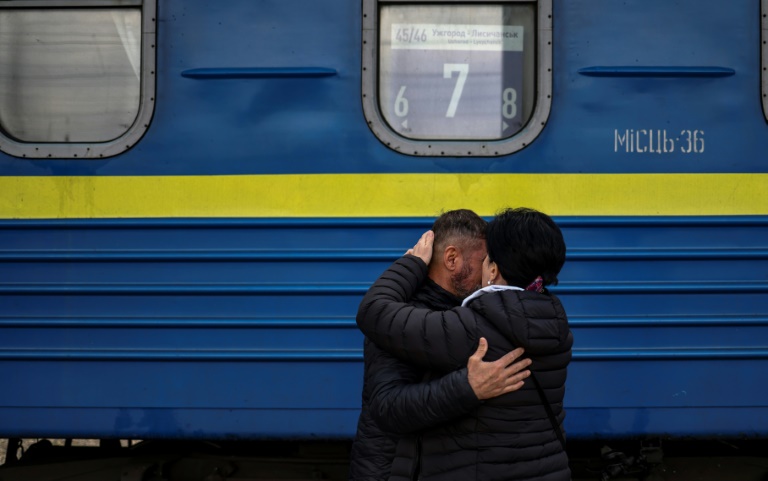
Another woman, 44-year-old Nadiya Zhizhunas, bid goodbye to her husband, holding him tightly for several minutes before boarding a train.

“I have no idea when we will be together again,” Zhizhunas said. “We have to survive first.”

– ‘No words’ –

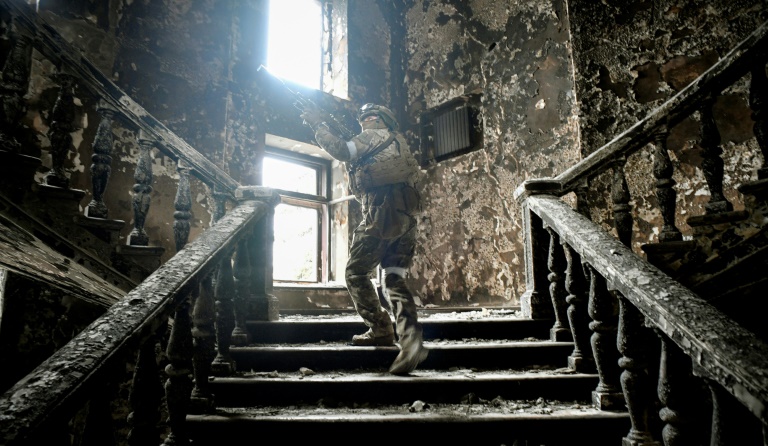
In areas recently abandoned by Russian forces, the grim work of accounting for the civilian dead continued. 

In the Kyiv commuter town of Gostomel, north of Bucha, locals exhumed the body of Mayor Yuriy Prylypko, whom authorities said was shot while “handing out bread to the hungry and medicine to the sick” and hastily buried by a local priest.

Up to 400 people are unaccounted for Gostomel, said regional prosecutor Andiy Tkach, as war crimes investigators began a probe. AFP witnessed dozens of body bags filling a refrigerated lorry trailer, as two others awaited more corpses. 

Loading the truck, Igor Karpishen said he had never before done such work.

“But our citizens are murdered and we must bury every person in the right way,” said Karpishen. 

“I don’t have any words to express these feelings.”

Zelensky sounded the alarm Tuesday about snowballing allegations of rape and sexual assault by Russian forces in previously held areas, saying hundreds of cases had been recorded, including of young children and a baby. 

Bucha Mayor Anatoly Fedoruk said more than 400 people were found dead after Moscow’s forces withdrew, with 25 reported rapes.

Putin dismissed reports of civilian atrocities as “fakes” Tuesday while saying the Russian offensive was proceeding according to plan.  

Meanwhile, an official in the central Ukrainian city of Dnipro said Wednesday that the remains of more than 1,500 Russian soldiers were being kept in its morgues.

– Tycoon swap –

The presidents of Poland, Estonia, Lithuania and Latvia headed for Kyiv in a show of support Wednesday, a day after Germany’s President Frank-Walter Steinmeier — who has long held a detente policy towards Moscow — said his offer to visit was rejected. 

In a separate development, Zelensky offered to swap a pro-Kremlin tycoon — arrested after escaping from house arrest — for captured Ukrainians.

Zelensky posted a picture of a handcuffed Viktor Medvedchuk — one of Ukraine’s richest people, who counts Putin among his personal friends — wearing a Ukrainian army uniform.

Medvedchuk, a hugely controversial figure in Ukraine, was under house arrest over accusations of attempting to steal natural resources from Russia-annexed Crimea and of handing Ukrainian military secrets to Moscow. 

JPMorgan Chase profits fall 42%; warns of hit from inflation, Ukraine

JPMorgan Chase reported Wednesday that quarterly earnings tumbled as the banking giant set aside $902 million for bad loans, citing “downside risks” including the Ukraine war and surging inflation.

The biggest US bank by assets, JPMorgan reported $8.3 billion in first-quarter profits, down 42 percent from the year-ago period. Revenues dipped five percent to $30.7 billion.

The results contrasted sharply with those from a year ago, when JPMorgan’s surging profits including $5.2 billion in funds that it had initially set aside early in the pandemic for potential defaults, but didn’t need because of the surprisingly solid condition of clients.

The bank’s charge offs for the quarter came in at a relatively modest $582 in the first quarter, but JPMorgan Chief Executive Jamie Dimon warned of factors that could lead that figure to rise.

“We remain optimistic on the economy, at least for the short term –- consumer and business balance sheets as well as consumer spending remain at healthy levels –- but see significant geopolitical and economic challenges ahead due to high inflation, supply chain issues and the war in Ukraine,” Dimon said.

In terms of customer trends, Dimon cited an uptick in credit card spending on dining and travel, but said higher mortgage rates had dented home lending originations, while limited vehicle availability crimped car loan originations.

JPMorgan scored higher net interest income, reflecting a boost to lending fees because of higher interest rates. Profits fell in investment banking on lower equity and debt underwriting fees.

Shares fell 1.2 percent to $129.97 in pre-market trading.

Death toll from Philippines landslides, floods rises to 80

The death toll from landslides and floods in the Philippines rose to 80 on Wednesday with scores missing and feared dead, officials said, as rescuers dug up more bodies with bare hands and backhoes in crushed villages.

Most of the deaths from tropical storm Megi — the strongest to hit the archipelago this year — were in the central province of Leyte, where a series of landslides devastated communities.

Twenty-six people died and around 150 were missing in the coastal village of Pilar, which is part of Abuyog municipality, after a torrent of mud and earth on Tuesday pushed houses into the sea and buried most of the settlement, authorities said.

“I have to be honest, we are no longer expecting survivors,” Abuyog Mayor Lemuel Traya told AFP, adding that emergency personnel were now focused on the difficult task of retrieving bodies.

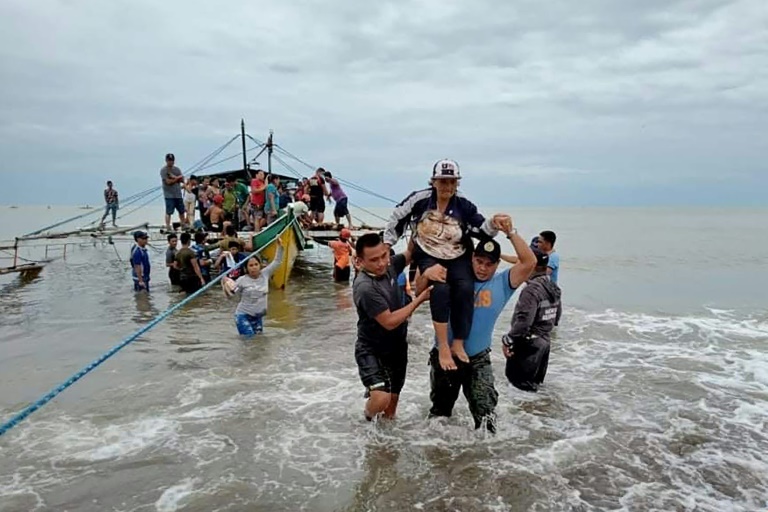
About 250 people were in evacuation centres after being rescued by boat after roads were cut by landslides, he said. 

A number of villagers were also in hospital.

A rumbling sound like “a helicopter” alerted Ara Mae Canuto, 22, to the landslide hurtling towards her family’s home in Pilar. 

She said she tried to outrun it, but was swept into the water and nearly drowned. 

“I swallowed dirt, and my ears and nose are full of mud,” Canuto told AFP by telephone from her hospital bed. Her father died and her mother has not been found.

The disaster-prone region is regularly ravaged by storms — including a direct hit from Super Typhoon Haiyan in 2013 — with scientists warning they are becoming more powerful as the world gets warmer because of human-driven climate change.

Baybay City is also reeling after waves of sodden soil smashed into farming settlements over the weekend, killing at least 48 people and injuring over 100, local authorities said. Twenty-seven are still missing, they added. 

Aerial photos showed a wide stretch of mud that had swept down a hill of coconut trees and engulfed Bunga village, where only a few rooftops poked through the now-transformed landscape.

“We were told to be on alert because a storm was coming, but they did not directly tell us we needed to evacuate,” said Bunga farmworker Loderica Portarcos, 47, who lost 17 relatives and a friend in the landslide.

Portarcos braved heat and humidity as she advised a backhoe operator where to dig for three bodies still embedded in the soft soil which had started to smell of rotting flesh.

“Our dead relatives are all in the morgue, but there will be no time for a wake to mourn them because the mayor told us they smell bad,” she said.

– ‘Many of us died’ – 

Three people were also killed in the central province of Negros Oriental and three on the main southern island of Mindanao, according to the national disaster agency.

The death toll from Megi is expected to rise as rescue operations switch to recovering bodies. 

Black body bags containing 26 victims from Pilar were laid out on sand in Abuyog for relatives to identify on Wednesday. 

Abuyog police chief Captain James Mark Ruiz said more boats were needed. But getting access to the shore was difficult.

Photos posted by the Bureau of Fire Protection on Facebook showed buildings crushed or turned over by the force of the landslide and debris in the water.

“We’re using fiber glass boats and there are steel bars exposed in the sea so it’s very difficult,” Abuyog Mayor Traya said, adding that the ground was unstable and “very risky”.

While Pilar survivor Canuto counts herself lucky to be alive, she said “many of us died and a lot are missing too”.

Whipping up seas, Megi forced dozens of ports to temporarily suspend operations, stranding thousands of people at the start of Holy Week, one of the busiest travel periods of the year in the Philippines.

It came four months after super typhoon Rai devastated swathes of the country, killing more than 400 and leaving hundreds of thousands homeless.

The Philippines — ranked among the most vulnerable nations to the impacts of climate change — is hit by an average of 20 storms every year.

Death toll from Philippines landslides, floods rises to 80

The death toll from landslides and floods in the Philippines rose to 80 on Wednesday with scores missing and feared dead, officials said, as rescuers dug up more bodies with bare hands and backhoes in crushed villages.

Most of the deaths from tropical storm Megi — the strongest to hit the archipelago this year — were in the central province of Leyte, where a series of landslides devastated communities.

Twenty-six people died and around 150 were missing in the coastal village of Pilar, which is part of Abuyog municipality, after a torrent of mud and earth on Tuesday pushed houses into the sea and buried most of the settlement, authorities said.

“I have to be honest, we are no longer expecting survivors,” Abuyog Mayor Lemuel Traya told AFP, adding that emergency personnel were now focused on the difficult task of retrieving bodies.

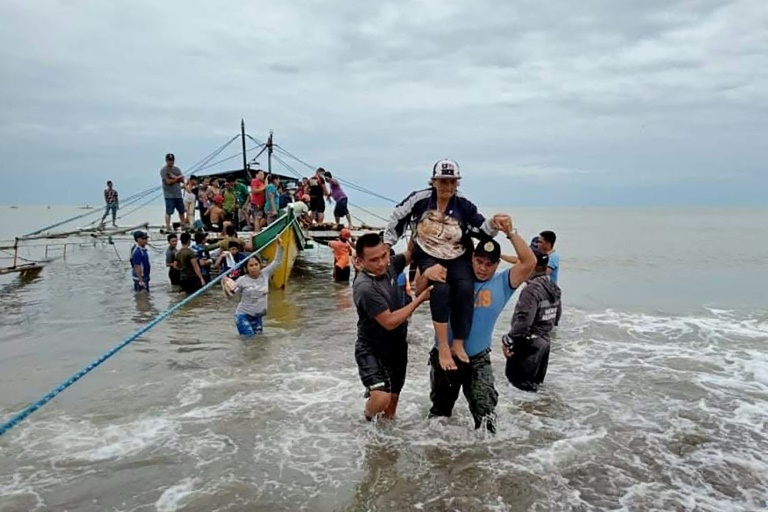
About 250 people were in evacuation centres after being rescued by boat after roads were cut by landslides, he said. 

A number of villagers were also in hospital.

A rumbling sound like “a helicopter” alerted Ara Mae Canuto, 22, to the landslide hurtling towards her family’s home in Pilar. 

She said she tried to outrun it, but was swept into the water and nearly drowned. 

“I swallowed dirt, and my ears and nose are full of mud,” Canuto told AFP by telephone from her hospital bed. Her father died and her mother has not been found.

The disaster-prone region is regularly ravaged by storms — including a direct hit from Super Typhoon Haiyan in 2013 — with scientists warning they are becoming more powerful as the world gets warmer because of human-driven climate change.

Baybay City is also reeling after waves of sodden soil smashed into farming settlements over the weekend, killing at least 48 people and injuring over 100, local authorities said. Twenty-seven are still missing, they added. 

Aerial photos showed a wide stretch of mud that had swept down a hill of coconut trees and engulfed Bunga village, where only a few rooftops poked through the now-transformed landscape.

“We were told to be on alert because a storm was coming, but they did not directly tell us we needed to evacuate,” said Bunga farmworker Loderica Portarcos, 47, who lost 17 relatives and a friend in the landslide.

Portarcos braved heat and humidity as she advised a backhoe operator where to dig for three bodies still embedded in the soft soil which had started to smell of rotting flesh.

“Our dead relatives are all in the morgue, but there will be no time for a wake to mourn them because the mayor told us they smell bad,” she said.

– ‘Many of us died’ – 

Three people were also killed in the central province of Negros Oriental and three on the main southern island of Mindanao, according to the national disaster agency.

The death toll from Megi is expected to rise as rescue operations switch to recovering bodies. 

Black body bags containing 26 victims from Pilar were laid out on sand in Abuyog for relatives to identify on Wednesday. 

Abuyog police chief Captain James Mark Ruiz said more boats were needed. But getting access to the shore was difficult.

Photos posted by the Bureau of Fire Protection on Facebook showed buildings crushed or turned over by the force of the landslide and debris in the water.

“We’re using fiber glass boats and there are steel bars exposed in the sea so it’s very difficult,” Abuyog Mayor Traya said, adding that the ground was unstable and “very risky”.

While Pilar survivor Canuto counts herself lucky to be alive, she said “many of us died and a lot are missing too”.

Whipping up seas, Megi forced dozens of ports to temporarily suspend operations, stranding thousands of people at the start of Holy Week, one of the busiest travel periods of the year in the Philippines.

It came four months after super typhoon Rai devastated swathes of the country, killing more than 400 and leaving hundreds of thousands homeless.

The Philippines — ranked among the most vulnerable nations to the impacts of climate change — is hit by an average of 20 storms every year.

Kyiv wants Scholz visit and German arms: Zelensky aide

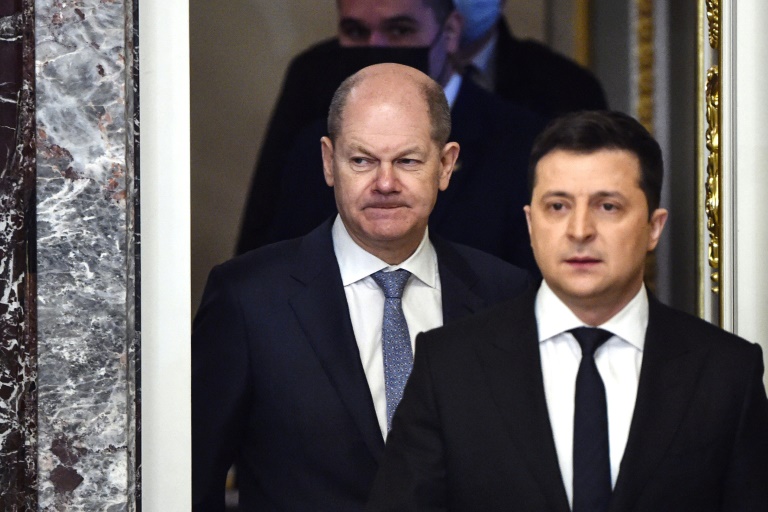
A top aide to Ukrainian President Volodymyr Zelensky on Wednesday said Kyiv wanted German Chancellor Olaf Scholz to visit and pledge more arms deliveries, explaining a snub to Berlin’s head of state.

German President Frank-Walter Steinmeier admitted on Tuesday he had offered to visit Ukraine with other EU leaders, but Kyiv had told him he was not welcome right now.

The move against Steinmeier — a former foreign minister who recently acknowledged “errors” in a too conciliatory stance toward Moscow in the past — was widely seen as a diplomatic affront in Germany.

Ukrainian presidential advisor Oleksiy Arestovych told German public television on Wednesday it had not been Zelensky’s intention to offend Berlin.

“I think the main argument was different — our president expects the chancellor, so that he (Scholz) can take direct practical decisions, including weapons deliveries,” he told broadcaster ZDF.

The German president has a largely ceremonial role while the chancellor heads the government.

Arestovych said the fate of the strategic port city of Mariupol and the civilian population of eastern Ukraine “depends on the German weapons we could get”, but that have not been promised.  

Time is of the essence because “every minute that a tank doesn’t arrive… it is our children who are dying, being raped, being killed”, Arestovych said. 

The German political class “has seen the terrible images” of the war which he said recalled the destruction of Berlin in 1945. What the Russian army is doing in Ukraine “isn’t any different”.

Scholz is facing growing pressure at home to step up support for Ukraine in the face of the seven-week-old Russian invasion which has cost the lives of thousands of civilians.

– Spiral of escalation –

The chancellor, like Steinmeier a Social Democrat, initially responded to the Russian onslaught by promising a dramatic about-face in German defence and foreign policy including a massive increase in military spending.

But he has thus far rejected calls to follow other EU leaders in visiting Kyiv and refused, primarily for historical reasons, to send heavy weapons to Ukraine.

Germany has until now sent defensive arms including anti-tank weapons, missile launchers and surface-to-air missiles in response to the conflict.

The stance has sharpened tensions within Scholz’s government, with ministers from the co-ruling Green party urging additional weapons deliveries.

“There is only one person who can point the way and that is Chancellor Olaf Scholz,” said Marie-Agnes Strack-Zimmermann, head of the defence committee in the lower house of parliament and a leading deputy from the Free Democrats, the third party in Scholz’s coalition.

However members of the Social Democrats indicated their strong opposition to stepping up arms supplies to Ukraine, warning of a spiral of escalation.

“We must not be gradually dragged into a war with Russia,” MP Joe Weingarten told daily Die Welt.

“If we deliver heavy weapons, then we quickly face the question whether German training teams or volunteers from Germany to run the weapons systems are necessary.”

Four sentenced to hang in Bangladesh over celebrated writer's murder

A Bangladesh court sentenced four extremists to hang Wednesday for their fatal machete attack on a celebrated writer, in a case that took nearly two decades to reach a verdict.

The men brutally maimed award-winning author and language professor Humayun Azad outside a book fair in 2004 — the first in a wave of violent attacks on free speech advocates in the Muslim-majority country. 

Images of a blood-soaked Azad after the attack shocked the country, and a legion of fans mourned when the 56-year-old died several months later while seeking treatment in Germany.

Two of the attackers are still at large, and a fifth member was shot dead by police in 2014 after reportedly attempting to flee a prison van.

“Four were handed down the death penalty over the murder including two who were sentenced to death in absentia,” Abdullah Abu, chief prosecutor in the capital Dhaka, told AFP. 

The perpetrators were members of Jamayetul Mujahideen Bangladesh (JMB), a banned Islamist outfit whose leader ordered Azad’s murder after the author penned a book that mocked and criticised fundamentalists. 

The organisation was also responsible for a series of deadly bomb blasts around the turn of the century, and several senior members were executed in 2007. 

Security outside the courtroom was tight, with dozens of officers standing guard.

Mizanur Rahman, one of the two men in custody over the murder, mocked reporters as he was led back into a prison van after the sentence. 

“Journalist friends, are you satisfied? Did you get your desired verdict?” he asked.

– ‘Long time to get justice’ –

The author’s daughter Mauli Azad welcomed the verdict and said authorities should chase down the two perpetrators still on the run. 

“Though it took a long time to get justice, we are still happy,” she said. 

“Now we want to see the execution as soon as possible.”

But other family members have expressed their dismay at the glacial pace of the trial.

“I’ve no interest in the verdict. What’s the point of a verdict after 18 years?” Azad’s brother Manjur Kabir told online news portal Bdnews24 Tuesday.

Azad’s widow “feels the same”, he added. 

Azad shot to fame in the 1980s as a regular columnist before branching out into novels and books of poetry.

He won the Bangla Academy Award, the country’s top literature prize, in 1986.  

The writer’s murder was followed years later by a series of fatal machete attacks on secular and atheist writers as well as gay rights activists by a JMB offshoot.

Eleven years to the day after the attack on Azad, US-based writer Avijit Roy was hacked to death as he was leaving the same book fair.

Bangladesh has since launched a nationwide crackdown on Islamist groups, killing more than 100 militants in raids across the country and arresting more than 1,000 suspected extremists.

iPhone, Macbook makers halt Shanghai production over Covid

Several electronics companies, including iPhone and Macbook makers, have halted production in the Chinese cities of Shanghai and Kunshan, adding to supply chain woes under Beijing’s strict zero-Covid measures.

The business hub of Shanghai has become the heart of China’s biggest Covid-19 outbreak since the virus surfaced more than two years ago.

The city of 25 million has remained almost entirely locked down since the start of the month, while other areas have rolled out less severe restrictions to stamp out Covid flare-ups.

“Local operation in Shanghai area has been temporarily suspended in response to Covid-19 prevention measures,” said Macbook maker Quanta Computer in a filing to the Taiwan Stock Exchange on Wednesday.

The Taiwan-based firm’s expected date of resumption will be advised by authorities later, the notice said.

This came a day after iPhone assembler Pegatron announced it had temporarily suspended work as well, and was “actively cooperating with local authorities” to resume operations soon.

The suspensions apply to two of its subsidiaries, in Shanghai and nearby Kunshan city, the Taiwanese company said.

Stay-at-home orders and stringent testing rules have strained supply chains in and around Shanghai, home to the world’s busiest container port and a critical gateway for foreign trade.

China reported nearly 28,000 local virus cases on Wednesday, the vast majority in Shanghai.

Many factories have been forced to halt operations as virus cases have surged, while some staff have been living in their workplaces as businesses struggle to operate.

– Logistics problems –

Pegatron and Quanta Computer’s suspensions are the latest blow to Apple, which has seen disruptions at other suppliers’ assembly lines in recent months as Chinese cities struggle to curb virus outbreaks.

In March, another major supplier Foxconn halted operations in the Chinese tech hub of Shenzhen.

Foxconn has “resumed fundamental operations” in Shenzhen as of late March, the company said.

Consultancy group Trendforce said in a recent report that manufacturers may have just a few more weeks worth of inventories as logistics problems grow over the imposed restrictions.

Chinese authorities have struggled to maintain the flow of goods across the country as tough virus controls slow movement.

A Transport Ministry circular issued late Tuesday barred the “blocking of road transportation” vehicles and personnel, ordering more efficient Covid-19 screening along transport routes.

Anxious about the spring farming season and food supplies, officials in virus-hit areas such as the northeastern province of Jilin have also issued travel passes to let agricultural workers return to farmland on chartered buses.

“The Chinese economy has been facing a rising risk of recession since mid-March”, Nomura analysts warned this week, citing severe disruptions to the delivery of exports, with coastal areas hit hard by controls to rein in the virus.

Russian gas stop promises 'sharp recession' for Germany

An immediate end to Russian energy imports would send Germany into “sharp recession” next year, the country’s leading economic institutes said in a forecast published Wednesday.

Persistently higher energy prices and geopolitical risks herald the beginning of a new era for Europe’s industrial powerhouse, they warned, one which not every company will survive.

“Not all business models that were profitable in Germany in the past will have a future,” Stefan Kooths, vice-president of the IfW Kiel institute, said at a Berlin press conference.

The government must keep this in mind when it considers support measures for struggling firms, he added.

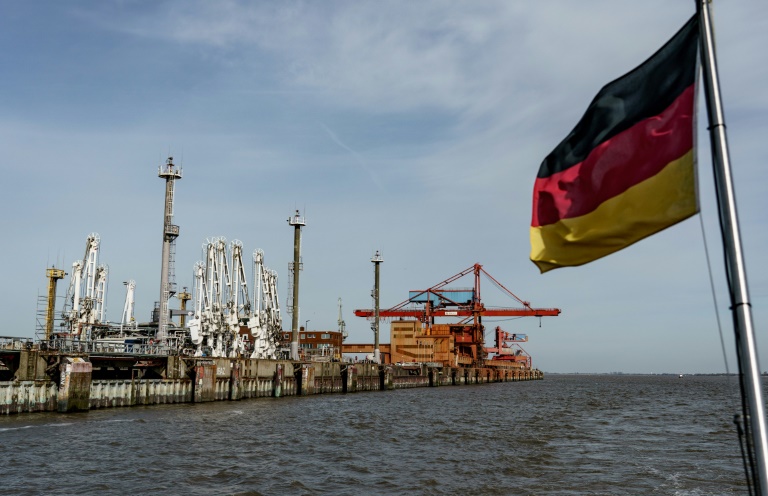
Germany, which is highly dependent on Russian gas for its energy needs, has so far resisted calls for a European boycott in response to the war in Ukraine.

Closing the taps in “mid-April” this year would limit growth to 1.9 percent in 2022 and push Germany into a recession in 2023, causing the economy to shrink by 2.2 percent, according to the forecast.

The impact of a boycott would “not be overcome” over the next two years, the institutes (DIW, Ifo, IfW Kiel, IWH and RWI) said in a joint statement.

Europe’s largest economy could yet suffer a “set back” at the end of 2023 into 2024, as demand for energy rises in the European winter, before “gradually” returning to growth.

Before Moscow began its war in Ukraine, a third of Germany’s oil imports, 45 percent of its coal purchases and 55 percent of gas imports came via pipelines from Russia.

The country has set about weaning itself off Russia energy imports, accelerating investments in renewables and building LNG (liquefied natural gas) terminals on the North Sea coast to import gas from further afield, though they would take years to come online.

Economy Minister Robert Habeck said at the end of March that it would likely take until mid-2024 for Europe’s largest economy to wean itself off Russian deliveries.

– Emergency plan –

German officials have already triggered an emergency plan in anticipation of a gas shortage, which could result in gas rationing among households and businesses.

The government has also prepared legislation that would allow it to expropriate gas suppliers “to assure security of supply”, according to a draft seen by AFP.

The law would make it difficult to close storage facilities without government approval as well.

Last week, Berlin took temporary control of Russian gas giant Gazprom’s German subsidiary, which holds several key pieces of infrastructure, after its parent company unexpectedly withdrew.

European partners, who have already agreed to stop buying coal from Russia, are currently in discussions about further sanctions against Moscow.

While a gas boycott with its serious economic consequences is seen as a last resort, the next target of EU sanctions could well be Russian oil.

– ‘Difficult waters’ –

Even without a gas boycott, the war in Ukraine is “slowing down” Germany’s recovery from the economic shock of the coronavirus pandemic, the institutes said.

The German economy was “navigating difficult waters” as the war and China’s zero-Covid policy added to supply chain disruptions that are hampering industry.

The group slashed their forecast for growth in 2022 to 2.7 percent, from their previous estimate of 4.8 percent made in October last year.

At the same time, they raised their forecast for growth in 2023 to 3.1 percent from 1.9 percent, in a scenario where energy deliveries continue.

Inflation, which has hit new highs as the price for energy has soared, would come out at 6.1 percent in 2022, before falling back to 2.8 percent in 2023, the think-tanks said.

Shutting off supplies from Russia would push the price even higher, taking inflation to 7.3 percent in 2022 and keeping it at five percent in 2023.

Close Bitnami banner
Bitnami