World

Stocks mixed as US inflation jumps to four-decade high

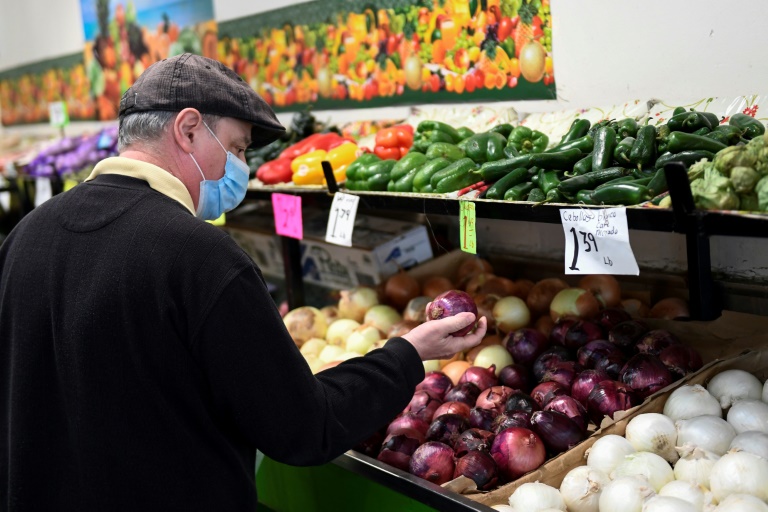
Stock markets diverged on Tuesday as investors digested official data showing US inflation hit a four-decade high in March, raising expectations the  Federal Reserve will act more aggressively to tame prices.

Oil prices, meanwhile, surged as Shanghai began to ease Covid restrictions and the OPEC group of crude-producing nations lowered its forecast for global demand this year, citing the Ukraine war’s impact on the world economy. 

Inflation had already been rising worldwide in recent months as economies emerge from Covid lockdowns, but Russia’s invasion of Ukraine and sanctions against Moscow have pushed energy and food prices even higher worldwide.

US inflation continued to surge in March, sending the consumer price index (CPI) up 8.5 percent over the past 12 months, its largest increase since 1981, according to the US Labor Department.

Wall Street stocks advanced nevertheless, with the Dow Jones Industrial Average rising 0.8 percent, the S&P 500 gaining 1.0 percent and the tech-heavy Nasdaq up 1.5 percent.

European markets fell, with London’s FTSE 100 ending the day down 0.6 percent. Frankfurt fell 0.5 percent and Paris shed 0.3 percent.

Analysts said investors may see the March inflation reading as a sign that the CPI had reached its peak.

“The latest US CPI numbers raised the hope that the surge in price pressures we’ve been seeing over the last 6 months might be starting to show signs of topping out,” said Michael Hewson at CMC Markets UK. 

The headline 8.5 percent figure was higher than expected, the core figure which excludes volatile energy prices, came in lower than expected at 6.5 percent. 

“There had been a widespread expectation that they could well have been a lot worse, and this has prompted some paring back in US yields, which in turn has supported a rebound in stock markets,” said Hewson.

The Fed last month raised interest rates by a quarter point in the first of a series of increases, and since then a chorus of officials — including Fed Chair Jerome Powell — have signalled their openness to half-point rate increases, a more aggressive measure.

– Oil prices surge –

On the oil market, meanwhile, the price of Brent North Sea crude, the international benchmark, surged 6.7 percent to $105.10 per barrel while US contract, WTI, jumped 6.9 percent to $100.77.

Prices had fallen on Monday on fears about the impact of Covid lockdowns in China, the world’s biggest crude consumer.

But they rebounded on Tuesday after OPEC said in a report lowered its demand forecast to 3.7 million barrels per day, a reduction of 500,000 barrels per day, as it said the Ukraine conflict would dent global economic growth.

Craig Erlam at OANDA said that in its report pushed back against calls by the West for it to utilise its spare capacity to replace Russian oil, saying it wasn’t possible. 

“While the EU is continuing to push for higher output which would enable it to consider sanctions on Russian oil without severe economic damage at home — with current prices already causing problems — it seems it’s not going to be aided by the group that remains Russia’s ally in the OPEC+ alliance,” he wrote in a note to clients.

“With that in mind, the brief flirtation with double-digit oil may already be at an end for now,” Erlam added.

– Key figures around 1530 GMT –

New York – Dow: UP 0.8 percent at 34,566.61 points

EURO STOXX 50: DOWN 0.2 percent at 3,831.62

London – FTSE 100: DOWN 0.6 percent at 7,576.66 (close)

Paris – CAC 40: DOWN 0.3 percent at 6,537.41 (close)

Frankfurt – DAX: DOWN 0.5 percent at 14,124.95 (close)

Tokyo – Nikkei 225: DOWN 1.81 percent at 26,334.98 (close)

Hong Kong – Hang Seng Index: UP 0.52 percent at 21,319.13 (close)

Shanghai – Composite: UP 1.46 percent at 3,213.33 (close)

Brent North Sea crude: UP 6.7 percent at $105.10 per barrel

West Texas Intermediate: UP 6.9 percent at $100.77

Euro/dollar: DOWN at $1.0863 from $1.0884 late Monday

Dollar/yen: DOWN at 125.16 yen from 125.37 yen

Pound/dollar: UP at $1.3037 from $1.3030

Euro/pound: DOWN at 83.32 pence from 83.53 pence

burs-rl/ach 
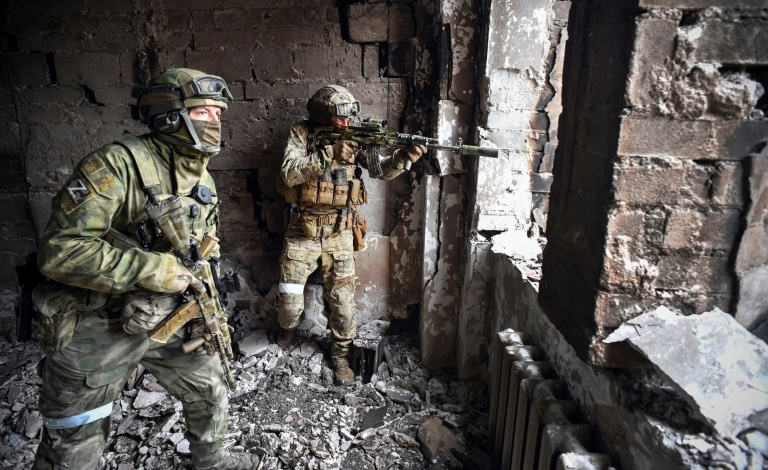
Russia closes in on Mariupol as Putin strikes defiant tone

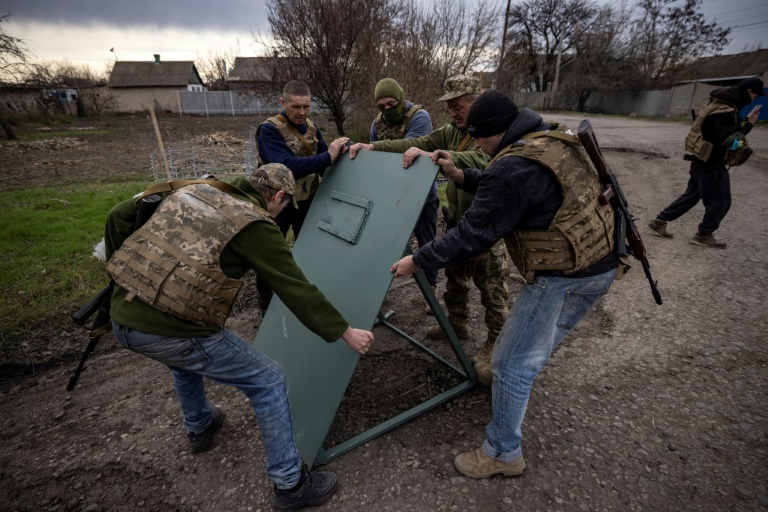
Russian troops on Tuesday intensified a campaign to take the port city of Mariupol, part of an anticipated massive onslaught across eastern Ukraine, as President Vladimir Putin made a defiant case for the war on Russia’s neighbour.

Moscow is believed to be trying to connect occupied Crimea with Russian-backed separatist territories Donetsk and Lugansk in Donbas, and has laid siege to the strategically located city, once home to more than 400,000 people.

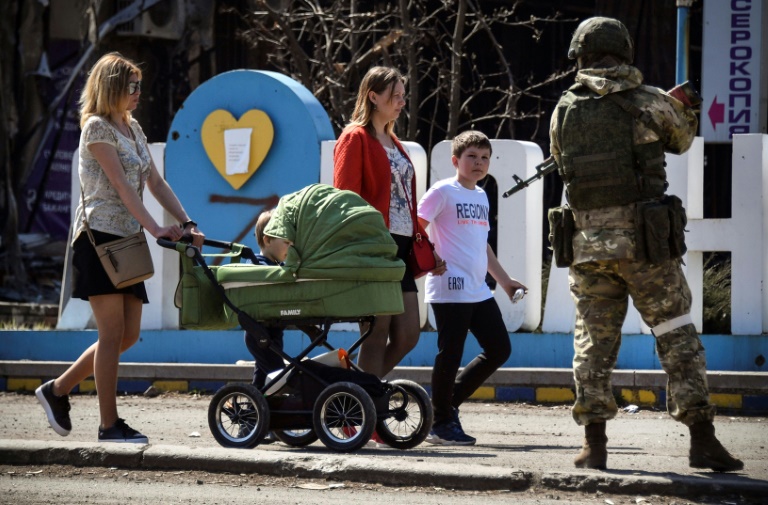
Civilians were struggling to flee targeted zones, with Ukrainian President Volodymyr Zelensky condemning alleged mass rapes in areas previously occupied by Russian troops, including sexual assaults of small children.

As the fighting dragged toward its seventh week, the Ukrainian army fought desperately to defend Mariupol against the Russian offensive.

“The connection with the units of the defence forces that heroically hold the city is stable and maintained,” the Land Forces of Ukraine wrote on Telegram.

However, the Russian defence ministry said its army had thwarted an attempt to break the siege with “airstrikes and artillery fire” at a factory in a northern district of the city.   

In his nightly address, Zelensky on Monday made another plea to his allies for more weapons to boost the defence of the city.

“We are not getting as much as we need to end this war sooner. To completely destroy the enemy on our land… in particular, to unblock Mariupol,” he said.

Zelensky has said he believes Russia has killed “at least tens of thousands of people” in the city.

With little hope of a quick end to fighting, Putin pledged Moscow would proceed on its own timetable with its military operation, rebuffing repeated international calls for a ceasefire.

“Our task is to fulfil and achieve all the goals set, minimising losses. And we will act rhythmically, calmly, according to the plan originally proposed by the General Staff,” Putin said during a televised press conference with Belarusian President Alexander Lukashenko.

He also dismissed as “fake” reports of the discovery of hundreds of dead bodies of civilians in the town of Bucha outside the Ukrainian capital Kyiv after the withdrawal of Moscow’s forces.

Images taken by journalists on the ground, including AFP reporters, of bodies littering the streets of Bucha sparked worldwide outrage and calls for an investigation into possible war crimes.

Bucha Mayor Anatoly Fedoruk said on Tuesday that more than 400 people had been found dead so far and 25 women reported being raped, as the town prepares for the return of residents who fled the fighting.

“What people will find in their homes is shocking, and they will remember the Russian occupiers for a very long time,” he said. 

Ukraine’s border force said Tuesday that more than 870,000 people who fled abroad since the start of the war had returned to the country, including a growing number of women and children. 

-‘Helping people’ –


However, heavy bombardment continued in the east as civilians were urged to flee ahead of an expected Russian troop surge in the region. 

Russian forces are reinforcing around the Donbas region, notably near the town of Izyum, but have not yet launched a full offensive, US Pentagon officials said Monday.

They reported a Russian convoy had been observed heading for Izyum, an hour’s drive north of Kramatorsk, saying it appeared to be a mix of personnel-carriers, armoured vehicles and possible artillery.

Putin insisted that Russia’s own security was at stake in Donbas.

“What we are doing is helping people — rescuing them on the one hand and on the other taking measures to assure Russia’s security,” he said. 

Putin accused Ukraine of “inconsistency on fundamental points” which he said was slowing down talks on ending the war.

Kyiv admitted that ongoing talks with Russia to end the war were “extremely difficult”.

“The Russian side adheres to its traditional tactics of public pressure on the negotiation process, including through certain public statements,” Ukrainian presidential adviser Mykhaylo Podolyak said in written comments to reporters.

Meanwhile, the toll on towns previously occupied by Russian forces during their month-long offensive to take Kyiv was still coming to light.

Ukrainian prosecutors said Tuesday that six people had been found shot dead in the basement of a building outside the capital, the latest discovery fuelling allegations of Russian atrocities.

AFP on Monday saw the bodies of three men in civilian clothes exhumed from gardens in Andriivka, 33 kilometres (20 miles) west of Kyiv as relatives gathered to learn the fate of their kin.

The UN Security Council — which on Monday held a session on the plight of women and children in Ukraine — will hold another meeting next week on the humanitarian situation there, in a bid to keep pressure on Russia despite its veto power over the body, diplomats said.

– ‘Rape and sexual violence’ –

Officials called for a probe into assaults against women during the conflict.

“We are increasingly hearing of rape and sexual violence,” Sima Bahous, director of the UN women’s agency, told the Council. “These allegations must be independently investigated to ensure justice and accountability.”

Zelensky on Tuesday voiced anger about the repeated accounts of sexual violence against Ukrainians.

“Hundreds of cases of rape have been recorded, including those of young girls and very young children. Even of a baby!” he told Lithuanian lawmakers via video link.

More than 4.6 million Ukrainian refugees have now fled their country, the United Nations refugee agency said — 90 percent of them women and children.

The war has displaced more than 10 million people overall. 

One of those was Tatyana Kaftan, just weeks away from giving birth to her first child, who spoke to AFP at an aid distribution point in the western city of Lviv.  

Her husband, who is waiting to be called up to the army, stood by her side.

“We left everything at home,” said the 35-year-old travel agent, who drove with her husband all the way from Mykolaiv to escape Russian shelling.  

“We have nothing.”

– Chemical weapons allegations –

Late Monday, Britain said it was trying to verify reports that Russia had also used chemical weapons in Mariupol.

Ukrainian lawmaker Ivanna Klympush said Russia had used an “unknown substance” and that people were suffering from respiratory failure.

But deputy defence minister Ganna Maliar said the purported chemical attack was more likely phosphorous munitions.

“Officials conclusions will be made later,” she told Ukrainian television.

As the war sent energy and food prices soaring, Oxfam warned that fallout from the conflict, growing inequality and Covid could force more than a quarter of a billion people into extreme poverty this year.

Apple chief Cook takes App Store battle to Washington

Apple head Tim Cook attacked moves to regulate his company’s App Store in a rare speech in Washington on Tuesday, arguing that new rules could threaten iPhone users’ privacy.

Cook put forth the Silicon Valley giant’s perspective as momentum gathered for legislation that could weaken Apple’s app market dominance, which critics have said amounts to a monopoly.

“We are deeply concerned about regulations that would undermine privacy and security in service of some other aim,” Cook told an International Association of Privacy Professionals gathering.

“Proponents of these regulations argue that no harm would be done by simply giving people a choice, but taking away a more secure option will leave users with less choice, not more,” he added.

At issue is efforts by policy makers in the United States and elsewhere to force Apple to let apps onto the iPhone from places other than the App Store, which is currently the only gateway onto the firm’s billions of devices in circulation.

Apple and Google hold a dominant position in the market, with their operating systems running on the overwhelming majority of the world’s smartphones.

Apple has clashed in court with Fortnite creator Epic Games, which has sought to break Apple’s grip on the App Store, accusing the iPhone maker of operating a monopoly in its shop for digital goods or services.

A federal judge in November ordered Apple to loosen control of its App Store payment options, but said Epic had failed to prove that antitrust violations had taken place.

Apple has also recently sparred with regulators in Europe.

Letting iPhone users “sideload” apps from digital shops other than the App Store would bypass Apple vetting for malicious code or data collecting features, Cook said.

“That means data hungry companies would be able to avoid our privacy rules, and once again track our users against their will,” Cook added.

Critics have countered that Apple uses the App Store to its advantage, taking a bite out of financial transactions and keeping app makers under its thumb.

“If we are forced to let unvetted apps on the iPhone, the unintended consequences will be profound,” Cook argued. “We will continue to make our voices heard on this issue.”

Bloody, uncertain struggle awaited for supremacy in east Ukraine

While Russia appears to have abandoned for now its aim of pushing deep into the heart of Ukraine, its new declared goal of taking control of much of the east of the country still risks a protracted and bloody conflict.

Analysts say Moscow will at least want to control the Donetsk and Lugansk regions that form the Donbas area of eastern Ukraine, to be able to claim some kind of military success when Russia marks World War II victory day on May 9.

But even the outcome of the struggle for the Donbas remains uncertain, with Russian forces hurt by morale and logistical problems after what analysts see as a botched attempt to take the capital Kyiv.

“I have clearly set out the aims. The main aim is to help people in the Donbas,” President Vladimir Putin said Tuesday. 

Ukrainian defence ministry spokesman Oleksander Motuzianik warned Monday that “the enemy has almost completed its preparation for an assault on the east. The attack will take place very soon.”

Russia may not even content itself with these regions but seek to push further west to control portions of Ukraine east of the Dnieper River.

– Donbas priority –

Pro-Russian separatists even before the war already controlled parts of the breakaway self-declared Donetsk and Lugansk regions after a 2014 conflict.

But they did not control the full extent of these regions as administrative entities within Ukraine, and a key Russian war aim was always seen as expanding their reach.

In addition, Russian forces also want control of the strategic coastal city of Mariupol on the Sea of Azov, which would help Russia seize a land corridor to the annexed peninsula of Crimea. 

“Russian forces are continuing to carry out limited attacks in Mariupol and northern Donbas while preparing to push more actively from Izyum towards the west of the Sloviansk-Kramatorsk stronghold,” close to current frontlines, said former French colonel Michel Goya on Twitter.

Despite a large number of casualties, resupply issues and talk of flagging morale, Russia still has the means to push further west from the Donbas.

This could mean Moscow has its eyes on taking Dnipro (formerly Dnipropetrovsk), an industrial centre on the Dnieper River southeast of Kyiv.

“This is a political target as well as a military one,” said Mick Ryan, a retired Australian army major general.

Russia’s tactic may be to “fix Ukrainian forces in the Donbas while also attempting to envelop them with the advance on Dnipro,” Ryan added, using a military term for a pincer movement that prevents retreat for an embattled force.

“Both will be bloody struggles,” he warned.

– Urban warfare and insurrection –

As seen in the initial weeks of the war, the fighting could quickly coalesce around urban targets and spark insurrections from residents backed by regular forces. Both situations could take heavy tolls on both sides.

The Russians “are going to have to enter cities in the Donbas, and it’s going to cost them,” a Western military source told AFP, estimating that some 60,000 Russian troops had arrived in the region from the northern fronts.

On the Ukrainian side, around 40,000 of the best-trained and experienced soldiers have been deployed.

“They’re gearing up for something that’s going to go on for a while. But we don’t know how long the Ukrainians are going to be able to hold out,” the source said. 

“And if they lose these men in this fierce theatre of operations, the Ukrainians won’t be able to put up long-term opposition.”

For James Dobbins, a former US crisis diplomat now at the RAND Corporation, Ukraine’s leaders are already gearing up for tactical urban fighting if Donbas cities find themselves behind enemy lines.

“They’ve created a website with advice directed to ordinary citizens looking to engage in resistance activities,” Dobbins said, suggesting that Ukraine’s leaders recognise the fight could be long.

– Uncertain outcome  –

Russia appears to have the upper hand after its redeployment to the eastern front. But Ukrainians have quasi-existential reasons that could spur them to hold out, bolstered by the deep patriotic groundswell encouraged by their charismatic President Volodymyr Zelensky.

“If Russian forces make a breakthrough in the east, or are able to advance to Dnipro, we could see a significant change in the war’s momentum,” Ryan said.

Behind its immediate aims in the run-up to the symbolic May 9 holiday, Moscow most likely has longer-term goals to secure before showing any willingness to negotiate a cease-fire.

But “experience shows that insurgent campaigns can last decades, that external assistance and an adjacent sanctuary are often critical to insurgent success, and that counterinsurgency campaigns can be very long and manpower-intensive,” Dobbins warned.

For Goya, “it’s hard to see how the Russians could create enough victorious contact points to finalise this spring offensive”.

But for Ukraine, “Western aid is obviously essential, whether in terms of intelligence, light modern equipment, or heavier material,” he said.

'Russia, our sacred state!': school reopens under Moscow control

In the playground of a school in the war-torn eastern Ukrainian town of Volnovakha, now under Moscow’s control, children listen to a recording of the Russian anthem, watched by armed soldiers.

Several dozen pupils have lined up outside for a formal “back to school” ceremony, a month after the town was taken by Russian troops and Moscow-backed separatists.

Volnovakha has no electricity or working telephone lines, AFP journalists found while taking part in a media trip organised by the Russian army. 

Widespread shelling has destroyed houses, shops and cafes, evidence of the fierce fighting for a town strategically located halfway between the main regional city of Donetsk and the port of Mariupol.

Russian troops have besieged Mariupol for a month and a half and the city on the Sea of Azov seems likely to fall shortly.

As Russia puts it, Volnovakha has been “liberated” from neo-Nazi Ukrainians.  

“It’s time to learn. Hurry up, children!” a small rosy-cheeked girl with white bows in her hair announces, speaking into a microphone.

Behind her, the school staff are standing next to a Russian flag and that of the separatist Donetsk People’s Republic (DNR).

Nearby a soldier in a cagoule and helmet — one of the troops accompanying the journalists — stands watching, holding a submachine gun.

As a sound system plays the DNR anthem and then the Russian anthem — which opens “Russia, our sacred state, Russia, our beloved country!” — staff and pupils stand silently, their faces impassive.

– ‘Lived through horror’ –

Russia’s conquest of Volnovakha on March 11 allowed its forces to encircle Mariupol from the north, having attacked the strategic Sea of Azov port from the east and west.

This came after Volnovakha and its Ukrainian defending troops were bombarded for two weeks.

Many houses, shops and public buildings are now semi-ruined, windowless or burnt-out.

Russia argues that such destruction here, and elsewhere in Ukraine, came about because Kyiv’s forces used the local population as human shields. 

After a month under Moscow’s control, there are still scenes of devastation all around. There is a huge hole in the facade of the hospital and trees nearby have been snapped in half.

Yellow-painted School Number 5, which is in the centre of the town, has also suffered from shelling, with gaping holes in place of several windows and shattered bricks. This is the only school to reopen so far.

“We lived through horror. There was terrible bombing,” says Lyudmila Khmara, the 52-year-old school administrator.

She says that she wants to stay in Volnovakha, all the same, because: “nowhere is as good as home”.

She says she hopes Volnovakha will become “part of Russia”, where no one will be forced to speak Ukrainian, while this part of Ukraine is overwhelmingly Russian-speaking.

Moscow justifies its military operation in Ukraine citing the need to protect the Russian-speaking population.

– In survival mode –

The army is leaving nothing to chance. Even with no sign of resistance, tanks and military vehicles decorated with the letter Z patrol the streets as local civilians walk around and cycle.

The municipal hospital continues to function as best it can, despite lacking electricity and suffering extensive bomb damage.

In the semi-darkness, a nurse, 46-year-old Natalya Nekrasova-Mukhina, says that most patients, from children to the elderly, come to be treated for shrapnel wounds.

Local residents are still living in survival mode.

“We have no gas, no water, no electricity and no phone line. We live like we’re in a hole,” says Lyudmila Dryga, 72, a retired crane operator.

Another local woman, Svetlana Shcherbakova, 59, recounts how she lost everything except ID documents when her house burned down.

“We received humanitarian aid just once, that was it,” says the former supermarket security manager, her voice trembling.

A 35-year-old railway mechanic, Anton Varusha, estimates that less than half of the people living on his street have returned to live in Volnovakha, which had around 20,000 inhabitants before the bombardment.

“I don’t know yet whether I’ll stay here. At the moment, I have my parents here, who are old and sick,” he says.

He says locals are struggling to get information on what is happening, with no electricity or internet.

“We try to listen to various radio stations, so we can somehow compare (accounts of) what is going on,” he says.

UK's Johnson, Sunak fined over illegal lockdown-busting parties

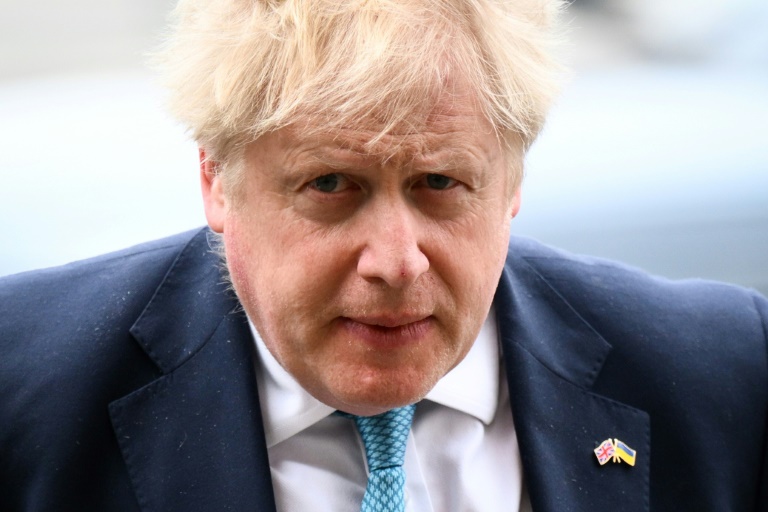
UK Prime Minister Boris Johnson and finance minister Rishi Sunak are to be fined for breaching Covid-19 lockdown laws in what has become known as the “Partygate” scandal, prompting calls on Tuesday for their resignation.

Johnson’s wife Carrie will also be fined, as the political storm following revelations of a swathe of lockdown-busting parties in and around Downing Street threatens to engulf Johnson once more.

“The prime minister and chancellor of the exchequer have today received notification that the Metropolitan Police intend to issue them with fixed penalty notices,” a Downing Street spokeswoman said on Tuesday.

The announcement came after London’s Metropolitan Police said they had issued more than 50 fines over the parties, without disclosing the number or identities of those being fined.

The leader of the opposition Labour Party, Keir Starmer, swiftly called for the two most senior members of the government to resign.

“Boris Johnson and Rishi Sunak have broken the law and repeatedly lied to the British public,” Starmer tweeted. 

“They must both resign. The Conservatives are totally unfit to govern. Britain deserves better.”

Johnson’s office said his fine was for attending a surprise birthday gathering in his honour on the afternoon of June 19, 2020 in the Cabinet Room at Number 10.

Carrie Johnson and Sunak were reportedly both also at the gathering but it was not immediately clear if their fines were for the same event.

Johnson was left fighting for his political survival earlier this year after several lawmakers from his ruling Conservative Party withdrew their support for his leadership over the affair.

– A ‘government in crisis’ –

An unknown number of Conservative MPs have submitted letters calling for a no-confidence vote in Johnson’s leadership.

If the Conservative Party’s 1922 Committee receives such letters from 54 of Johnson’s 360 MPs, it would spark a confidence vote.

The leader of the opposition Liberal Democrats, Ed Davey, called for parliament to be recalled from its Easter recess for a confidence vote.

“This is a government in crisis neglecting a country in crisis,” Davey tweeted.

Russia’s invasion of Ukraine had eased the political pressure on Johnson over the scandal. Conservative MP Roger Gale said on Tuesday that now was not the time to “unseat” the prime minister, as this would bolster President Vladimir Putin.

“It’s serious of course,” Gale said.

“But… I am not prepared to give Vladimir Putin the comfort of thinking that we are about to unseat the prime minister of the United Kingdom and destabilise the coalition against Putin.

“So any reaction to this is going to have to wait until we have dealt with the main crisis which is Ukraine and the Donbas,” he said, referring to the eastern Ukrainian region where Moscow is now concentrating its assault.

– Johnson ‘broke the law’ –

Bereaved families of victims of the Covid pandemic also called on Johnson to resign.

Lobby Akinnola, spokesman for Covid-19 Bereaved Families for Justice, said Johnson and Sunak “broke the law” and “took us all for mugs.

“There is simply no way either the prime minister or chancellor can continue… Their dishonesty has caused untold hurt to the bereaved,” he said.

“They have lost all credibility with the wider public, which could cost lives if new variants mean restrictions are needed in the future.”

London police are still investigating claims that Johnson and government officials organised and attended at least a dozen boozy events in 2020 and 2021 that violated Britain’s then-strict virus curbs.

Johnson has already apologised for the parties, which included Christmas celebrations and a drink-fuelled gathering the evening before Prince Philip’s funeral.

The prime minister initially denied any rule-breaking events had occurred in the complex where he lives and works, and he consistently rejected any suggestion of personal wrongdoing.

But his opponents accused him of having misled parliament by insisting the Downing Street events were work-related and within the rules.

Clashes rock W.Bank as Palestinian attacker killed in Israel

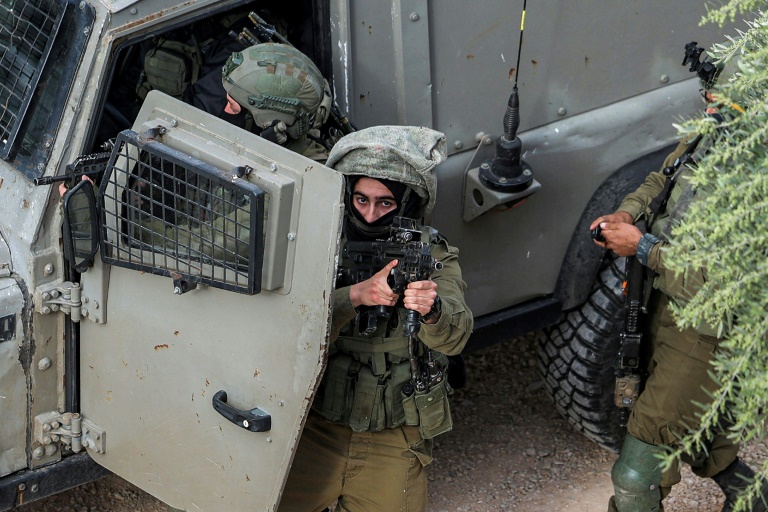
Fresh clashes between Israeli soldiers and Palestinian militants rocked the West Bank city of Jenin on Tuesday as a Palestinian was killed after stabbing an Israeli police officer, adding to a surging death toll.

Israeli troops launched a fourth day of military operations around Jenin after an assailant from the flashpoint district last week shot and killed three people in a Tel Aviv bar in the latest of a spate of attacks that have stunned the Jewish state.

Prime Minister Naftali Bennett — who warned in response that there would “not be limits for this war” — vowed during a visit to the Tel Aviv shooting scene overnight: “We will not let our enemy stop our lives. 

“We will fight where they are located, in their bases, at their source —- and, please God, we will win.”

In Tuesday’s battles, which raged for a fourth day, Israeli soldiers “fired live bullets, stun grenades and tear gas,” the official Palestinian news agency Wafa said. 

The Israeli army said its soldiers fired “live ammunition toward suspects who hurled explosive devices at them as well as toward armed suspects in the area”, and arrested 20 Palestinians.

A makeshift barricade of car tyres blocked a road to the Jenin refugee camp, where a wall poster hailed the Tel Aviv shooter, Raad Hazem, 28, who was killed after a massive all-night manhunt last Friday. 

The latest violence to rock Israel came in the Mediterranean port city of Ashkelon, where police said an officer was checking a Palestinian man in his 40s who then “pulled out a knife and attacked the officer”.

The policeman “fired and neutralised the suspect, whose death was declared on site”, police said, adding that the officer was hospitalised with light wounds from a kitchen knife.

Police said the man was from Hebron — a powder keg where around 1,000 Jewish settlers live under heavy military protection among 200,000 Palestinians.

Palestinian youth have also clashed elsewhere with Israeli security forces, including in Ramallah, where they threw rocks and were met with tear gas.

– ‘Cycle of violence’ –

The rise in violence comes during the Muslim fasting month of Ramadan and days before the Jewish festival of Passover and Christian Easter. 

Last year during Ramadan, tensions in Jerusalem flared into 11 days of war between Israel and the Hamas militant group ruling the Gaza Strip.

Israeli troops and police have stepped up operations over the past three weeks in which four shooting, stabbing and car-ramming attacks have left 14 people dead. 

Over the same period, Israeli forces have killed 15 Palestinians, including assailants, according to an AFP tally. 

Defence Minister Benny Gantz visited an area Tuesday where a barrier that runs roughly along the West Bank border is to be extended by 40 kilometres (25 miles) in coming months under a plan approved Sunday.

Israel started building the controversial, more than 500-kilometre barrier, part wall and part fence, 20 years ago after a spate of deadly Palestinian attacks.

The army said that, following the recent attacks in Israel, it would reinforce the barrier with additional troops.

Palestinians say the barrier’s construction grabbed nearly 10 percent of the West Bank, and the International Court of Justice ruled it illegal. 

Militant group Islamic Jihad, meanwhile, hailed the Palestinian response to Israel’s military incursions in Jenin and other cities.

“We salute our people who stand like an unyielding barricade in the face of the Zionist enemy’s terrorism,” it said.

UN Secretary-General Antonio Guterres followed “with deep concern the escalating violence in the Occupied Palestinian Territory and Israel,” said his spokesman Stephane Dujarric. 

“He is appalled by the increasingly high number of casualties, including women and children,” Dujarric added.

Palestinian presidency spokesman Nabil Abu Rudeineh charged that Israel’s actions “will lead to a dangerous and uncontrollable escalation” and cause a new “cycle of violence”.

bur-dac/fz/lg  

Last hostages free after long-running DR Congo mediation drama

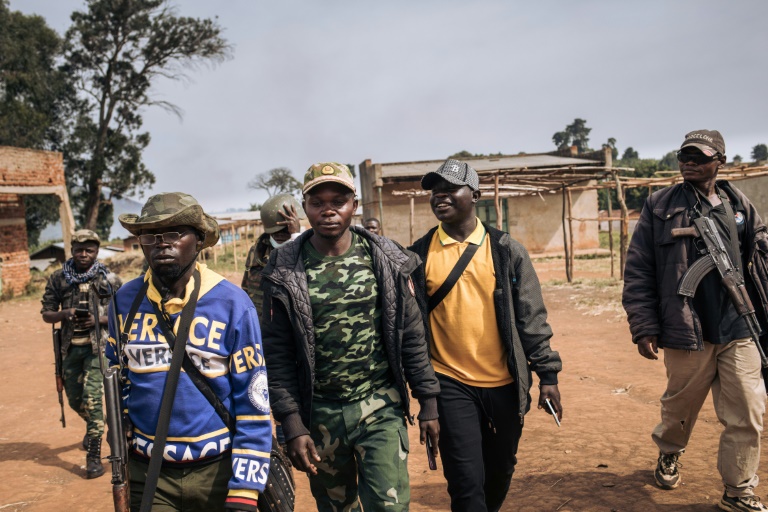
The last four members of a team that went to northeast DR Congo to mediate with an armed group who then took them hostage are now free, their spokesman said Tuesday.

The eight-member team had travelled to Ituri province in mid-February with the government’s blessing, seeking to persuade an armed group called CODECO to end a bloody campaign of ethnic violence.

But the mediators — including three former warlords — were themselves seized by CODECO, who accused the army of using the reconciliation trip as a cover to shell their positions.

One hostage was released on March 21 and three others, including the team’s driver, on April 4.

On Tuesday, Pitchout Mbodina Iribi, a spokesman for the mediators, said “all the remaining members of the delegation… have been released.”

But another source within his organisation, speaking on condition of anonymity, told AFP that the final four had “escaped” from their captors and had arrived in the provincial capital Bunia early Tuesday.

The team sent to meet CODECO included former warlords Thomas Lubanga, Germain Katanga and Floribert Ndjabu, with an escort that included Congolese army colonels.

Lubanga and Katanga respectively served 14- and 12-year prison sentences handed down by the International Criminal Court (ICC) for crimes committed in Ituri in the early 2000s.

Ndjabu was jailed for 15 years over the killing of nine UN peacekeepers.

– ‘Army intervened’ –

Lubanga and Ndjabu along with army colonels Justin and Desire Lobho were the last four to be freed.

“I am at a loss for words to thank and congratulate our army,” Lubanga said on his arrival in Bunia, in comments that seemed to back the idea of an army-led escape rather than a voluntary release by CODECO.

“Perfect coordination between our armed forces with the colonels who were with us led to (the kidnappers) being foiled,” he said.

Lubanga said “negotiations had taken place… (but) we had become a prize for our captors, enabling them to continue blackmailing for months.”

“We had no hope left… It was at that point that our army intervened,” the former warlord said.

The ill-fated mediation mission had been approved by President Felix Tshisekedi, who is struggling with a surge of violence by armed groups in Ituri and neighbouring North Kivu.

– Notorious group –

CODECO — the name for the Cooperative for the Development of the Congo — is a political-religious sect that claims to represent the interests of the Lendu ethnic group.

The Lendu and Hema communities have a long-standing feud that led to thousands of deaths between 1999 and 2003 before intervention by a European peacekeeping force.

Violence then resumed in 2017, blamed on the emergence of CODECO.

CODECO attacks since then have caused hundreds of deaths and prompted more than 1.5 million people to flee their homes, while half of the region’s population faces food insecurity, according to the Danish Refugee Council.

The group used the detention of the mediators to demand the release of CODECO fighters and members of the Lendu community who had been “arbitrarily arrested.”

They also called for an end to army operations against them and to a so-called state of siege declared in Ituri and North Kivu last May.

Civilian leaders in the two provinces have been replaced by military or police officers, with the declared aim of boosting a crackdown on armed groups. 

However, the measure has so far failed to bring peace to the region.

Ukraine war fuels 'overlapping crises': World Bank's Malpass

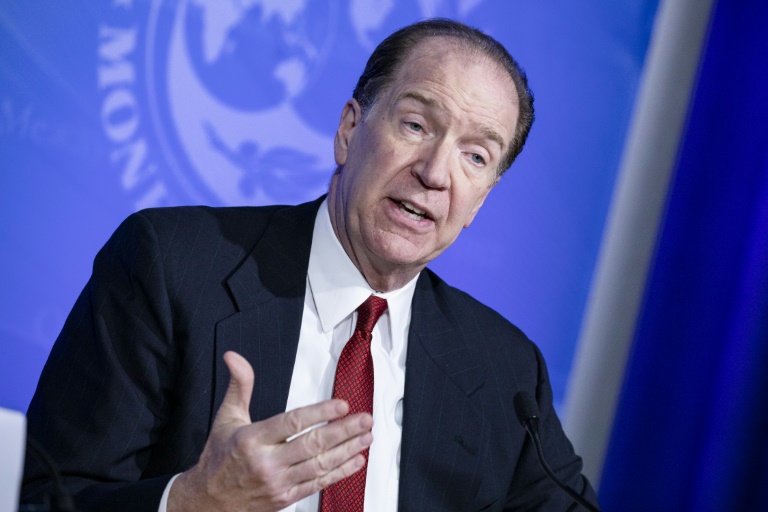
The Russian war on Ukraine has set off a chain reaction in the global economy, pushing energy and food prices higher, exacerbating debt concerns and potentially worsening poverty and hunger, World Bank President David Malpass said Tuesday.

Faced with these “overlapping crises,” the leader of the development lender urged advanced nations to keep markets open, removing trade barriers and reversing policies that concentrate wealth.

The war came as the global economy was trying to right itself following the Covid-19 pandemic, while navigating supply chain snarls that created shortages and a surge in inflation that has sparked unrest in some countries. 

New lockdowns in China have added further uncertainty to the recovery.

“Never have so many countries experienced a recession at once, suffering lost capital, jobs, and livelihoods. At the same time, inflation continues to accelerate,” Malpass said during an event at the Warsaw School of Economics.

Beyond the immediate humanitarian crisis caused by the war, “Supply constraints and disruptions have fueled price increases and worsened inequality around the globe.”

Ukraine is a key source of grain while Russia is a major producer of energy and fertilizer needed for agriculture, and the war is “creating sudden shortages of energy, fertilizer, and food, pitting people against each other and their governments,” Malpass said.

An “intense drought” in South America is making the food situation worse, he added.

“For every one percentage point increase in food prices, 10 million people are expected to fall into extreme poverty,” he said, noting, “Malnutrition is expected to grow.”

– Debt crisis –

The World Bank on Sunday issued a grim outlook for Ukraine, projecting the economy would collapse, with GDP dropping more than 45 percent this year, while Russia will see an 11.2 percent decline.

But Malpass said countries far beyond the region are feeling the conflict’s pain.

Protestors in Peru have taken to the streets to demand government action, as did people in Sri Lanka, where the government on Tuesday announced it was defaulting on its $51 billion in foreign debt.

Malpass has been sounding the warning about the growing debt burden in developing nations, and said the total “has risen sharply to a 50-year high.” 

“Most emerging market and developing economies are ill-prepared to face the coming debt shock,” he warned.

The World Bank chief called on advanced countries to keep their markets open to help those countries.

“Most of the trade barriers protect the privileged at the expense of the rest of society, worsening inequality,” he said.

Policies such as quotas on sugar imports, subsidies for corn production or domestic content requirements “cause asymmetrical damage to the poor.”

– Rebuilding Ukraine –

He also noted that “rapid addition of major new energy production in other parts of the world will be a necessary ingredient for global recovery and energy security in Europe.”

Speaking ahead of the World Bank and International Monetary Fund’s annual meetings next week, Malpass pledged to help Ukraine rebuild following the war.

The two global lenders have quickly rolled out aid for the country, and Malpass said the bank has secured donor support for $1 billion in funding under the concessional lending arm as part of a $3 billion package, as well as $100 million for Moldova, which the board will now consider.

That is part of facility to help Kyiv keep critical services running, including paying wages for hospital workers and pensions, he said.

Malpass also praised Poland for welcoming the flood of refugees that has driven four million fleeing into neighboring countries.

Search for survivors in Philippine villages hit by landslides

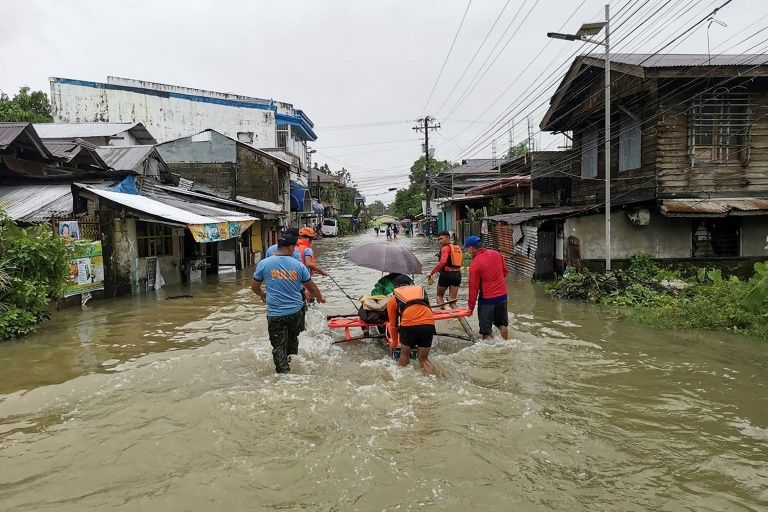
Rescuers hampered by mud and rain on Tuesday used their bare hands and shovels to search for survivors of landslides that smashed into villages in the central Philippines, as the death toll from tropical storm Megi rose to 42. 

Tens of thousands fled their homes as the storm pummelled the disaster-prone region in recent days, dumping heavy rain that flooded houses, severed roads and knocked out power.

At least 36 people died and 27 were missing after landslides slammed into multiple villages around Baybay City in Leyte province — the hardest hit by the storm — local authorities said. Just over 100 people were injured. 

Three people were also killed in the central province of Negros Oriental and three on the main southern island of Mindanao, according to the national disaster agency.

The death toll is expected to rise.

Rescue efforts continued under the cover of nightfall Tuesday in Leyte province’s Pilar village, after an avalanche of mud and earth pushed most of the houses of about 400 residents into the sea.

“The initial estimate is that 80 percent of the houses were washed out,” Reinz Corbeza, a civil defence official of Abuyog municipality — which includes Pilar — told AFP.

He added that about 50 people had survived or been rescued by boat after roads to Pilar were cut off by landslides.

Most of the confirmed deaths in Leyte were in the mountainous village of Mailhi, near Baybay City, where 14 bodies were found after a “mudflash” buried homes, Army Captain Kaharudin Cadil told AFP.

“It’s supposed to be the dry season but maybe climate change has upended that,” said Marissa Miguel Cano, public information officer for Baybay City.

Cano said the hilly region of corn, rice and coconut farms was prone to landslides, but they were usually small and not fatal. 

– ‘Mudflash’ burying homes –

Drone footage showed a wide stretch of mud that had swept down a hill of coconut trees and engulfed Bunga, another community devastated by the storm.

At least seven people had been killed and 21 villagers were missing in Bunga, which was reduced to a few rooftops poking through the mud. 

Apple Sheena Bayno was forced to flee after her house in Baybay City flooded. She told AFP her family was still recovering from a super typhoon in December. 

“We’re still fixing our house and yet it’s being hit again,” she said.

Rescue efforts were also focused on the nearby village of Kantagnos, which an official said had been hit by two landslides.

Kantagnos resident Daniel Racaza, 26, said he was asleep when a wave of mud and water swept over the riverside community.

He managed to escape with his boyfriend and 16 relatives, but an aunt was caught in the torrent. 

“I only managed to save my cellphone and we have nothing to go back to,” Racaza told AFP by telephone from a high school where they are sheltering.

Some other residents also fled in time or were pulled out of the mud alive, but four villagers have been confirmed dead and many are still feared trapped.

A Philippine Coast Guard video on Facebook showed six rescuers carrying a mud-caked woman on a stretcher, while other victims were piggybacked to safety.

“We’re looking for many people, there are 210 households there,” Baybay City Mayor Jose Carlos Cari told local broadcaster DZMM Teleradyo.  

– First major storm of 2022 –

The military has joined coast guard, police and fire protection personnel in the search and rescue efforts, which have been hampered by bad weather 

National disaster agency spokesman Mark Timbal said landslides around Baybay City had reached settlements “outside the danger zone”, catching many residents by surprise. 

Megi is the first major storm to hit the country this year.  

Whipping up seas, it forced dozens of ports to suspend operations and stranded more than 9,000 people at the start of Holy Week, one of the busiest travel periods of the year.

The storm comes four months after super typhoon Rai devastated swathes of the archipelago nation, killing more than 400 and leaving hundreds of thousands homeless.

Scientists have long warned typhoons are strengthening more rapidly as the world becomes warmer due to climate change.

The Philippines — ranked among the most vulnerable nations to its impacts — is hit by an average of 20 storms every year.

Close Bitnami banner
Bitnami