World

Ukraine crisis pushes US inflation to new four-decade high

Americans paid more for gasoline, food and other essentials last month amid an ongoing wave of record inflation that Russia’s invasion of Ukraine made worse, according to government data released Tuesday.

The Labor Department’s consumer price index (CPI) climbed 8.5 percent over the 12 months to March, a rate — not seen since December 1981 — that added pressure to President Joe Biden’s administration even as it looks for ways to punish Moscow for the attack on its neighbor.

Prices have surged across the world’s largest economy as it tries to recover from the Covid-19 pandemic, dragging Biden’s approval ratings lower, though the March data contained signs that the spike was rounding off.

“The Russia-Ukraine war has added further fuel to the blazing rate of inflation via higher energy, food, and commodity prices that are turbo charged by a worsening in supply chain problems,” Kathy Bostjancic of Oxford Economics said.

Compared to February, prices rose 1.2 percent, within analysts’ forecasts, but if there was good news to be found in the data, it was in “core” prices, which exclude the volatile food and energy sectors. These increased 0.3 percent last month, less than economists anticipated.

The data nonetheless underscored the potency of the price jumps and bolstered the case that the Federal Reserve will take aggressive action at its policy meeting next month, likely raising rates by half a percentage point as opposed to the quarter-point increase agreed to last month.

“With labor shortages pressuring firms to raise wages, we are in the midst of a wage-price inflation cycle that will require extreme action on the part of the Fed to rid the economy of the spreading inflation threat,” economist Joel Naroff said.

– Real pain –

While the US economy has bounced back strongly from the mass layoffs that marked the pandemic’s start, inflation began bedeviling the recovery last year, as businesses struggled to find enough workers and supplies, the Fed kept interest rates low, and Congress approved stimulus measures that drove up demand among American consumers.

Biden’s public support has dropped as prices have increased, leaving the White House scrambling to offer relief, including by releasing strategic oil supplies to lower prices at the pump and, before the data’s release on Tuesday, waiving a prohibition on selling a lower-price gasoline blend during the summer months.

But the most potent actor in Washington against inflation is the Fed, and their rate increases are indeed expected to lower prices in the months to come, though economists warn the tightening could also cause a recession.

Until then, the Labor Department data showed Americans are facing real financial pain when they go to purchase things they cannot avoid.

Gasoline prices rose 18.3 percent last month, accounting for half the overall increase in CPI. Prices for shelter, the category including rents, rose 0.5 percent.

Food prices rose one percent overall, while prices for groceries were up 1.5 percent in the month, and 10 percent over the past year — the largest such increase since March 1981, according to the data.

– Used cars reverse –

However prices for used cars, which were one of the first items to surge last year, declined 3.8 percent last month, pushing core CPI lower, while new car prices rose only 0.2 percent after seeing monthly gains of more than one percent in the latter months of 2021.

Dan Alpert of Westwood Capital said the data showed signs of deflation “in those things that went bonkers during 2020: transportation, electronics, recreation and leisure. Supply chains are reopened for the most part and demand is becoming sated.”

But considering how high prices have risen elsewhere in the data, Naroff said some on the Fed’s policy setting committee may advocate for an even more forceful 0.75 point rate increase next month — and that won’t necessarily bring prices down quickly.

“The ability of any Fed to sharply raise rates to slow extremely high inflation, while not driving the economy into a recession, is limited, especially given factors such as war that are out of its control,” he said in a note. 

“We are talking about art here, not science, and there is little history of this Fed painting pretty pictures.”
UK's Johnson, Sunak fined over 'Partygate'

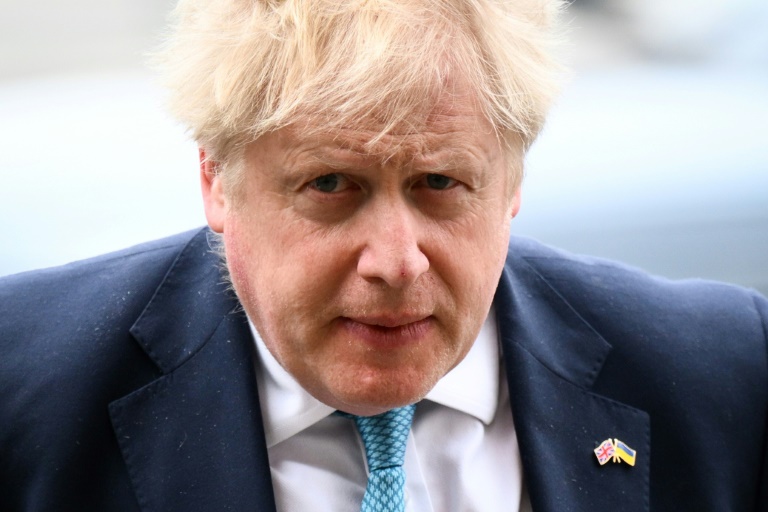
UK Prime Minister Boris Johnson and finance minister Rishi Sunak are to be fined for breaching Covid-19 lockdown laws in what has become known as the “Partygate” scandal, prompting calls on Tuesday for their resignation.

“The prime minister and chancellor of the exchequer have today received notification that the Metropolitan Police intend to issue them with fixed penalty notices,” a Downing Street spokeswoman said on Tuesday.

The announcement came after London’s Metropolitan Police said they had issued more than 50 fines over the parties, without disclosing the number or identities of those being fined.

The leader of the opposition Labour Party, Keir Starmer, swiftly called for the two most senior members of the government to resign.

“Boris Johnson and Rishi Sunak have broken the law and repeatedly lied to the British public,” Starmer tweeted. 

“They must both resign. The Conservatives are totally unfit to govern. Britain deserves better.”

The political storm following the revelations of a swathe of lockdown-busting parties in and around Downing Street now threatens to engulf Johnson once more.

He was left fighting for his political survival earlier this year after a number of lawmakers from his ruling Conservative Party withdrew their support for his leadership.

Bereaved families of victims of the Covid pandemic also called on Johnson to resign.

“It’s now indisputable that whilst bereaved families were unable to be at their loved ones’ sides in their last moments, or stood at their funerals alone, the people responsible for protecting us in Downing Street were partying and rule breaking en masse,” said Matt Fowler, co-founder of Covid-19 Bereaved Families for Justice.

“It’s plain as day that there was a culture of boozing and rule breaching at the highest level of government, whilst the British public was making unimaginable sacrifices to protect their loved ones and communities.”

London police are investigating claims that Johnson and government officials organised and attended at least a dozen boozy events in 2020 and 2021 that violated Britain’s then-strict virus curbs.

“The investigation into allegations of breaches of COVID-19 regulations in Whitehall and Downing Street continues to progress,” the Met said in a statement on Tuesday.

“We are making every effort to progress this investigation at speed. This includes continuing to assess significant amounts of investigative material,” it added.

Johnson has already apologised for the parties, which included Christmas celebrations and a drink-fuelled gathering the evening before Prince Philip’s funeral.

The prime minister, who initially denied any rule-breaking events had occurred in the complex where he lives and works, has consistently rejected personal wrongdoing.

But his opponents accused him of misleading parliament by insisting the Downing Street events were work-related and within the rules.

And the 57-year-old now faces renewed calls to explain why he attended social gatherings when his government was telling the public that they were illegal.

His office confirmed in February that Johnson had submitted his response to a police questionnaire on the matter but sources said he has not been interviewed in person by investigating officers.

Russia’s invasion of Ukraine had eased the political pressure on Johnson, with the international crisis replacing “Partygate” in the daily headlines.

Johnson has sought to play a prominent role in the West’s response to the war, hosting near-daily calls with Ukrainian President Volodymyr Zelensky and sending UK military aid to the eastern European country.

Space balloon company offers first look at luxury cabins

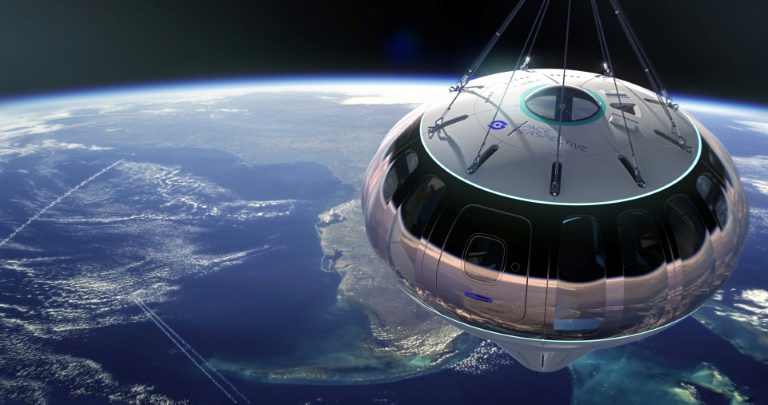
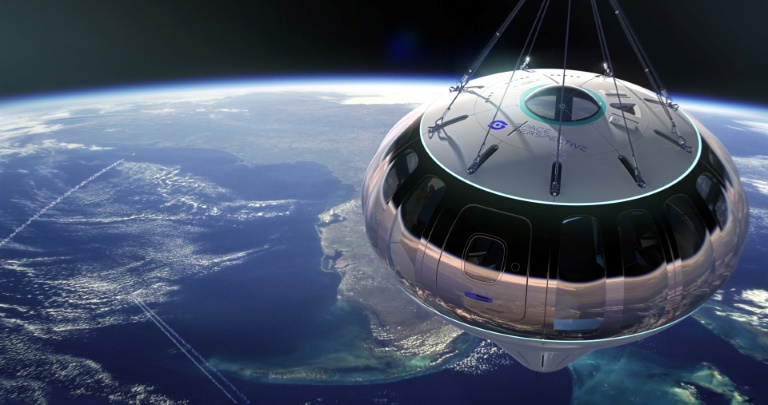
A new entrant in the space tourism market promises customers views of the Earth’s curvature from the comfort of a luxury cabin, lifted to the upper atmosphere with a giant balloon.

Space Perspective on Tuesday revealed illustrations of its swish cabins, which it hopes to start launching from the Kennedy Space Center in Florida from late 2024. More than 600 tickets have so far been sold, at $125,000 each.

With five-feet (1.5 meter) high windows, deep seats, dark, purple tones and subdued lighting, the atmosphere contrasts with the white and sanitized capsules of its competitors.

Wifi connectivity and a drinks bar round out the “Space Lounge” inside the company’s Neptune capsule.

Whether it really constitutes spaceflight is a matter of debate. 

The balloon reaches an altitude of 20 miles (30 kilometers), much lower than rivals Virgin Galactic, which goes just over 50 miles high, or Blue Origin, which breaches the Karman Line, 62 miles above sea level, the internationally-recognized space border.

SpaceX Crew Dragons fly even deeper into space.

But 20 miles is still far higher than commercial planes, which ascend around six miles high.

“We are above 99 percent of Earth’s atmosphere,” co-founder Jayne Poynter told AFP, meaning passengers will really see the inky black of space.

There’s no special training required. The balloon climbs at a serene 12 miles per hour (19 kilometers per hour), and the company pitches itself as a greener, zero-emissions alternative to rocket fuels.

They intend to get the hydrogen for the balloon from renewable sources, rather than extracting it from fossil fuels.

The price for the two-hour-up, two-hours-gliding, and two-hour-down voyage, which ends with an ocean splashdown, is significantly less than Virgin Galactic tickets that cost $450,000 for a ride on a spaceplane.

Blue Origin doesn’t disclose its prices but they are thought to be far more, while four entrepreneurs who flew to the International Space Station on a SpaceX ship paid a reported $55 million each to the company Axiom Space for the privilege.

“We wanted to find a way that really changed the way people think about spaceflight that makes it much more approachable and accessible,” said Poynter.

One thing the passengers won’t experience is feelings of weightlessness.

With Virgin’s spaceplane and Blue Origin’s rocket, passengers can unbuckle and float when the rocket engines are cut but the ship keeps coasting upwards for a few minutes, before gravity pulls it back down.

Passengers on SpaceX spaceships and those on the ISS likewise experience apparent weightlessness because the vessels are orbiting the Earth.

Space Perspective plans 25 flights in its first year, with all seats now booked.

Space balloon company offers first look at luxury cabins

A new entrant in the space tourism market promises customers views of the Earth’s curvature from the comfort of a luxury cabin, lifted to the upper atmosphere with a giant balloon.

Space Perspective on Tuesday revealed illustrations of its swish cabins, which it hopes to start launching from the Kennedy Space Center in Florida from late 2024. More than 600 tickets have so far been sold, at $125,000 each.

With five-feet (1.5 meter) high windows, deep seats, dark, purple tones and subdued lighting, the atmosphere contrasts with the white and sanitized capsules of its competitors.

Wifi connectivity and a drinks bar round out the “Space Lounge” inside the company’s Neptune capsule.

Whether it really constitutes spaceflight is a matter of debate. 

The balloon reaches an altitude of 20 miles (30 kilometers), much lower than rivals Virgin Galactic, which goes just over 50 miles high, or Blue Origin, which breaches the Karman Line, 62 miles above sea level, the internationally-recognized space border.

SpaceX Crew Dragons fly even deeper into space.

But 20 miles is still far higher than commercial planes, which ascend around six miles high.

“We are above 99 percent of Earth’s atmosphere,” co-founder Jayne Poynter told AFP, meaning passengers will really see the inky black of space.

There’s no special training required. The balloon climbs at a serene 12 miles per hour (19 kilometers per hour), and the company pitches itself as a greener, zero-emissions alternative to rocket fuels.

They intend to get the hydrogen for the balloon from renewable sources, rather than extracting it from fossil fuels.

The price for the two-hour-up, two-hours-gliding, and two-hour-down voyage, which ends with an ocean splashdown, is significantly less than Virgin Galactic tickets that cost $450,000 for a ride on a spaceplane.

Blue Origin doesn’t disclose its prices but they are thought to be far more, while four entrepreneurs who flew to the International Space Station on a SpaceX ship paid a reported $55 million each to the company Axiom Space for the privilege.

“We wanted to find a way that really changed the way people think about spaceflight that makes it much more approachable and accessible,” said Poynter.

One thing the passengers won’t experience is feelings of weightlessness.

With Virgin’s spaceplane and Blue Origin’s rocket, passengers can unbuckle and float when the rocket engines are cut but the ship keeps coasting upwards for a few minutes, before gravity pulls it back down.

Passengers on SpaceX spaceships and those on the ISS likewise experience apparent weightlessness because the vessels are orbiting the Earth.

Space Perspective plans 25 flights in its first year, with all seats now booked.

Somalia at risk of famine 'catastrophe': UN agencies

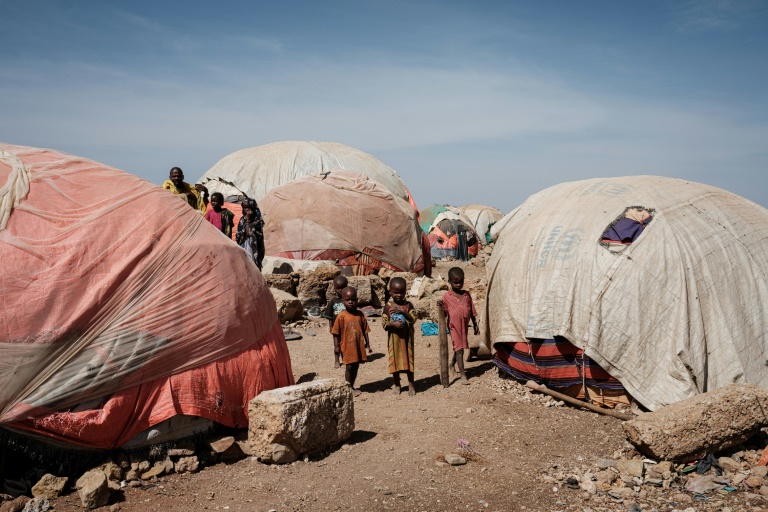
Millions of people in Somalia are at risk of famine, with young children the most vulnerable to the worsening drought, UN agencies said Tuesday, warning that the troubled nation is on the brink of a humanitarian catastrophe.

Many parts of Somalia are being ravaged by an extreme months-long drought that has also taken hold in other countries in the region including Ethiopia and Kenya, destroying crops and livestock and driving huge numbers of people from their homes.

“Somalia is facing famine conditions as a perfect storm of poor rain, skyrocketing food prices and huge funding shortfalls leaves almost 40 percent of Somalis on the brink,” the World Food Programme, Food and Agriculture Organization (FAO), humanitarian agency OCHA and the United Nations Children’s Fund said in a joint statement. 

“We are literally about to start taking food from the hungry to feed the starving,” WFP Somalia country director El-Khidir Daloum said in the statement, describing the nation as “on the cusp of a humanitarian catastrophe”.

Six million Somalis or 40 percent of the population are now facing extreme levels of food insecurity, according to a new report by the Integrated Food Security Phase Classification, almost a two-fold increase since the beginning of the year, the agencies said.

About 1.4 million children face acute malnutrition through the end of the year, with around one quarter facing severe acute malnutrition, they said.

Children under the age of five are the most vulnerable, with access to food and milk scarce because of rising commodity prices and livestock issues. 

– Must ‘act now’ –

Six areas have been identified as “at risk of famine, that are at risk of going down that route of 2011 if we don’t act now”, Lara Fossi, deputy country director for WFP Somalia, told a press conference in Geneva.

She was referring to Somalia’s devastating 2011 famine, which saw 260,000 people — half of them children under the age of six — die of hunger or hunger-related disorders.

Fossi said there were “huge surges” of people moving across the country in search of humanitarian assistance. 

The Norwegian Refugee Agency said 745,000 people had been forced from their homes because of the drought that followed three failed rainy seasons, citing figures from the UN refugee agency.

The UN statement said that together, humanitarian agencies had been able to reach almost two million people but warned of a “critical gap” in donor funding, with a 2022 plan seeking $1.5 billion reaching only 4.4 percent of the target.

Etienne Peterschmitt, the FAO representative in Somalia, said attention had been diverted by the war in Ukraine that has also driven up prices of food and fuel.

The NRC noted that almost all of Somalia’s wheat comes from Ukraine or Russia, with prices already spiking for wheat, sugar and oil in parts of the country.

Natural disasters — not conflict — have in recent years been the main drivers of displacement in Somalia, a war-torn nation that ranks among the world’s most vulnerable to climate change.

The country is also in the grip of a political crisis over long-delayed elections and has been battling an insurgency by the Al-Shabaab Islamist extremist group for more than a decade.

Dust storm covers Iraq for second time in a week

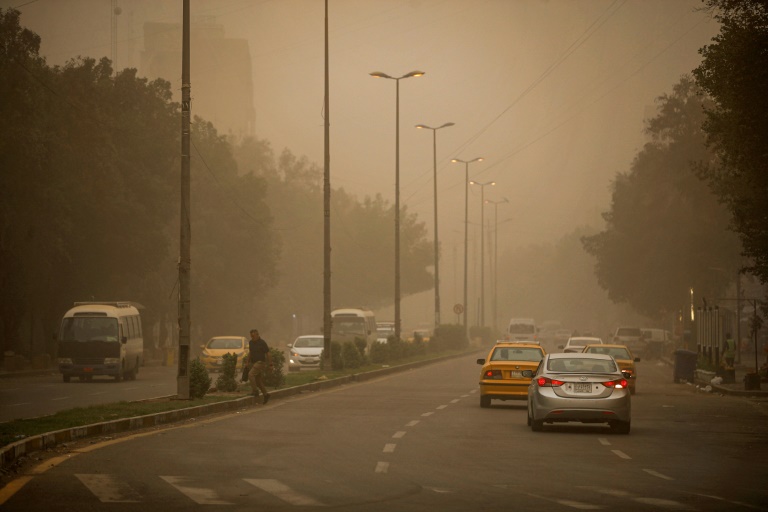
A dust storm blanketed Iraq again on Tuesday, sending people to hospital with breathing difficulties and leading airports to suspend flights.

It follows a similar storm that blew over the country late last week and left dozens hospitalised with respiratory problems.

The latest weather event cast an orange hue over the capital Baghdad, where it severely restricted visibility and coated buildings and cars in dust. 

Pedestrians wore disposable masks to avoid inhaling the particles, AFP journalists said. 

“People have been hospitalised with breathing difficulties, but most cases are minor,” health ministry spokesman Saif al-Badr told AFP. 

Dozens of flights were suspended in Baghdad and the Shiite holy city of Najaf during the morning, before flights resumed in the afternoon when conditions improved, airport sources said.

While sand and dust storms are not uncommon during the Iraqi spring, they are expected to become even more frequent “due to drought, desertification and declining rainfall”, said the director of Iraq’s meteorological office, Amer al-Jabri. 

Iraq is particularly vulnerable to climate change, with record low rainfall and high temperatures in recent years.

Experts have said these factors threaten social and economic disaster in the war-scarred country.

In November, the World Bank warned that Iraq could suffer a 20 percent drop in water resources by 2050 due to climate change.

Dust storm covers Iraq for second time in a week

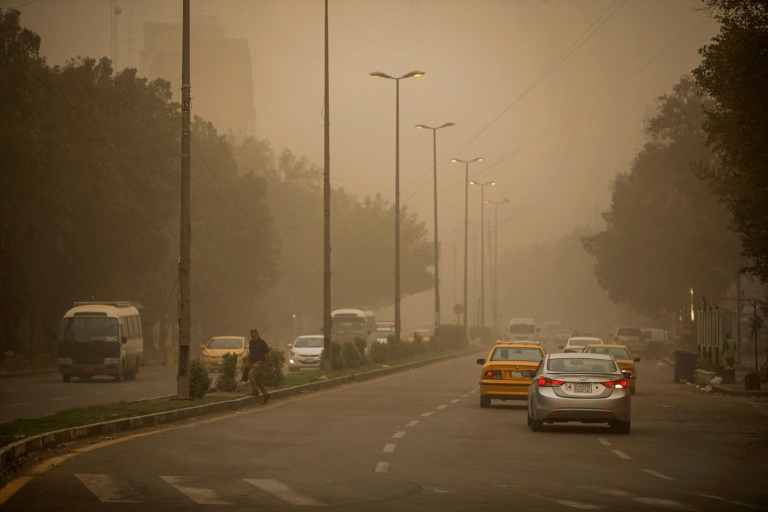
A dust storm blanketed Iraq again on Tuesday, sending people to hospital with breathing difficulties and leading airports to suspend flights.

It follows a similar storm that blew over the country late last week and left dozens hospitalised with respiratory problems.

The latest weather event cast an orange hue over the capital Baghdad, where it severely restricted visibility and coated buildings and cars in dust. 

Pedestrians wore disposable masks to avoid inhaling the particles, AFP journalists said. 

“People have been hospitalised with breathing difficulties, but most cases are minor,” health ministry spokesman Saif al-Badr told AFP. 

Dozens of flights were suspended in Baghdad and the Shiite holy city of Najaf during the morning, before flights resumed in the afternoon when conditions improved, airport sources said.

While sand and dust storms are not uncommon during the Iraqi spring, they are expected to become even more frequent “due to drought, desertification and declining rainfall”, said the director of Iraq’s meteorological office, Amer al-Jabri. 

Iraq is particularly vulnerable to climate change, with record low rainfall and high temperatures in recent years.

Experts have said these factors threaten social and economic disaster in the war-scarred country.

In November, the World Bank warned that Iraq could suffer a 20 percent drop in water resources by 2050 due to climate change.

War in Ukraine: Latest developments

Here are the latest developments in the war in Ukraine:

– Ukrainians ‘surrounded’ in Mariupol –

Ukrainian forces are “surrounded and blocked” in Mariupol as Russian forces push to take the southeastern port city, Myhaylo Podolyak, an official from President Volodymyr Zelensky’s office, tweets.

The Ukrainian army insists that “the defence of Mariupol continues”.

Zelensky says he believes “tens of thousands” of people in the city have been killed.

– Chemical weapons allegations –

Britain says it is trying to verify reports that Russia has used chemical weapons in Mariupol.

Ukrainian lawmaker Ivanna Klympush says Russia has used an “unknown substance” and that people are suffering from respiratory failure.

But an aide to the city’s mayor says that a chemical attack has not been confirmed.

– ‘All options on table’ –

Britain’s armed forces minister James Heappey tells Sky News that if evidence of chemical weapons use emerges, “all options are on the table” as a response.

“There are some things that are beyond the pale, and the use of chemical weapons will get a response,” he says.

– More bodies found –

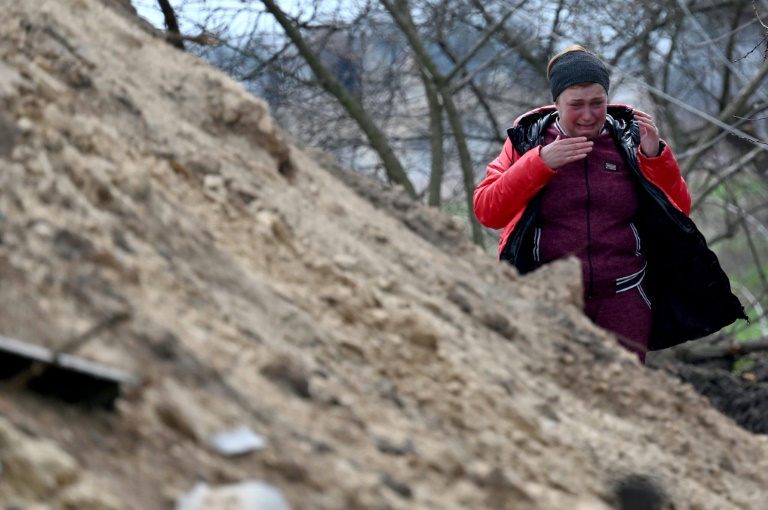
Ukrainian prosecutors say six people have been found shot dead in the basement of a building in Brovary east of Kyiv, the latest discovery fuelling allegations of Russian atrocities.

“New mass graves are found almost daily. Testimonials are being collected. Thousands and thousands of victims. Hundreds of cases of torture. Bodies continue to be found in drains and cellars,” Zelensky tells lawmakers in Lithuania.

– ‘Hundreds of rapes’ –

Zelensky says investigators have received reports of “hundreds of cases of rape” in areas previously occupied by Russian troops, including sexual assaults of small children.

“Hundreds of cases of rape have been recorded, including those of young girls and very young children,” he tells Lithuanian MPs, adding that the victims included a baby.

– Russians reinforce in Donbas –

The Pentagon says Russia is building up its forces in the eastern Donbas region, notably near the town of Izyum, as it switches its focus to the “liberation” of a region where pro-Russian rebels have been fighting Ukrainian forces since 2014.

Ukraine’s defence ministry says that Russian preparations are almost over and that it believes a major assault will happen soon. 

– Trade growth takes hit –

The war could almost halve world trade growth this year and drag down global GDP growth, according to the World Trade Organization, which sounds the alarm against the global economy dividing into rival blocs over the conflict.

– Nokia quits Russia –

Nokia becomes the latest Western company to pull out of the Russian market, meaning layoffs for the some 2,000 staff the Finnish mobile telecoms giant has in the country.

The announcement comes a day after rival Ericsson decided to suspend its activities in the country.

– Conflict increases poverty: Oxfam –

Fallout from the Ukraine conflict, growing inequality and Covid could force more than a quarter of a billion people into extreme poverty this year, Oxfam forecasts.

“New Oxfam estimates show that 263 million more people could be pushed into extreme poverty in 2022, due to the combined impact of Covid-19, inequality and food and energy price inflation — accelerated by the war in Ukraine,” Oxfam says in a new report.

– More than 4.6 million flee – 

More than 4.6 million Ukrainians have now fled their country, the United Nations says.

Crisis-hit Sri Lanka defaults on foreign debt

Sri Lanka announced a default on its $51 billion foreign debt Tuesday as the island nation grapples with its worst economic crisis in memory and escalating protests demanding the government’s resignation.

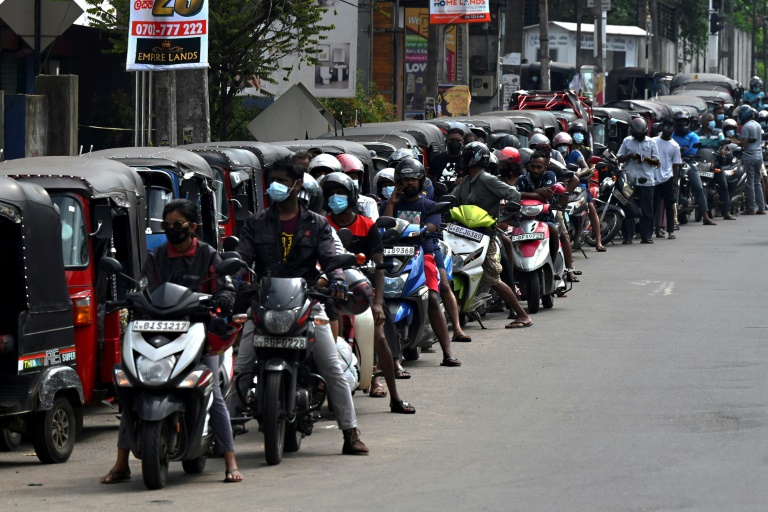
Acute food and fuel shortages, as well as long daily electricity blackouts, have brought widespread suffering to the country’s 22 million people in its most painful downturn since independence in 1948.

The government has struggled to service foreign loans and Tuesday’s decision comes ahead of negotiations for an International Monetary Fund bailout aimed at preventing a more catastrophic hard default that would see Sri Lanka completely repudiate its debts.

“We have lost the ability to repay foreign debt,” Sri Lanka’s Central Bank governor Nandalal Weerasinghe told reporters in Colombo.

“This is a pre-emptive negotiated default. We have announced (it) to the creditors.”

Officials say the move will free up foreign currency to finance desperately needed food, fuel and medicine imports after months of scarce supplies. 

Just under half of Sri Lanka’s debt is market borrowings through international sovereign bonds, including one worth $1 billion that was maturing on July 25. 

China is Sri Lanka’s largest bilateral lender and owns about 10 percent of the island’s foreign debt, followed by Japan and India.

The government has borrowed heavily from Beijing since 2005 for infrastructure projects, many of which became white elephants. 

Sri Lanka also leased its strategic Hambantota port to a Chinese company in 2017 after it became unable to service the $1.4 billion debt from Beijing used to build it.

This sparked concerns from Western countries and neighbour India that the strategically located South Asian nation was falling victim to a debt trap.

Chinese foreign ministry spokesman Zhao Lijian said Tuesday’s default would not stop Beijing from lending support to Sri Lanka’s beleaguered economy.

“China has always done its best in providing assistance to Sri Lanka’s economic and social development. We will continue to do so in the future,” he said.

– ‘Frightened of the future’ –

Sri Lanka’s snowballing economic crisis began to be felt after the coronavirus pandemic torpedoed vital revenue from tourism and remittances. 

The government imposed a wide import ban to conserve dwindling foreign currency reserves and use them to service the debts it has now defaulted on.

But the resulting shortages have stoked public anger. At least eight people have died while waiting in fuel queues since March 20, with two of the deaths reported on Monday.

“It’s been depressing to be so frightened of the future and where it’s going,” protester Vasi Samudra Devi told AFP at an anti-government rally in Colombo Monday.

“There are already people who are suffering… We are all here because we are being affected by the economic problems.”

Crowds have attempted to storm the homes of government leaders and security forces have dispersed protesters with tear gas and rubber bullets. 

Thousands of people were camped outside President Gotabaya Rajapaksa’s seafront office in the capital Colombo in the fourth straight day of protests calling for him to step down.

Economists say the crisis has been made worse by government mismanagement, years of accumulated borrowing and ill-advised tax cuts.

International rating agencies also downgraded Sri Lanka last year, effectively blocking the country from accessing foreign capital markets to raise new loans.

– ‘Last resort’ –

Sri Lanka’s finance ministry said Tuesday’s default was “a last resort in order to prevent further deterioration of the republic’s financial position”.

Creditors were free to capitalise any interest payments due to them or opt for payback in Sri Lankan rupees, the ministry added.

The government is seeking around $3 billion in IMF support over the next three years to revive the economy, finance minister Ali Sabry told parliament on Friday. 

Ministry officials told AFP last week the government was preparing a programme for sovereign bond holders and other creditors to take a haircut and avoid a hard default.

Sri Lanka had sought debt relief from India and China this year, but both countries instead offered more credit lines to buy commodities from them.

Estimates showed Sri Lanka needed $7 billion to service its debt load this year, against just $1.9 billion in reserves at the end of March.

AXA Investment Managers analyst Claire Dissaux told AFP that markets had already priced in an anticipated default, despite the government’s efforts to remain solvent.

“Sri Lanka has shown a willingness to pay right up to the last minute, even to the detriment, the expense of its people,” she said.

Ukraine war fuels 'overlapping crises': World Bank's Malpass

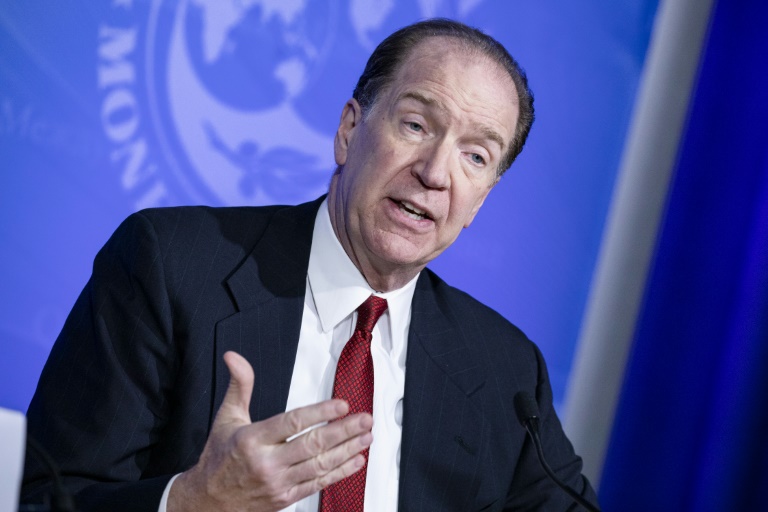
The Russian war on Ukraine has set off a chain reaction in the global economy with rising energy and food prices that will worsen poverty and hunger and exacerbate debt concerns, World Bank President David Malpass said Tuesday.

Faced with these “overlapping crises,” the leader of the development lender urged advanced nations to keep markets open, removing trade barriers and reversing policies that concentrate wealth.

The war came as the global economy was trying to right itself following the Covid-19 pandemic, even as new lockdowns in China create uncertainty about the recovery.

“Never have so many countries experienced a recession at once, suffering lost capital, jobs, and livelihoods. At the same time, inflation continues to accelerate,” Malpass said at an event in Warsaw.

Speaking ahead of annual meetings next week of the World Bank and International Monetary Fund, Malpass pledged to help Ukraine rebuild following the war.

The two global lenders have quickly rolled out aid for the country, and Malpass said the bank has secured donor support for $1 billion in funding under the concessional lending arm, as part of a $3 billion package, as well as $100 million for Moldova.

Beyond the immediate humanitarian crisis caused by the war that created a flood of refugees — four million fleeing into neighboring countries like Poland — “supply constraints and disruptions, have fueled price increases and worsened inequality around the globe.”

Ukraine is a key source of grain while Russia is a major producer of energy and fertilizer, and the war is “creating sudden shortages of energy, fertilizer, and food, pitting people against each other and their governments,” he said.

And an “intense drought” in South America is making the food situation worse.

“For every one percentage point increase in food prices, 10 million people are expected to fall into extreme poverty,” he said, adding “Malnutrition is expected to grow.”

Protestors in Peru have taken to the streets demand government action, as did people in Sri Lanka, where the government on Tuesday announced it was defaulting on its $51 billion in foreign debt.

Malpass has been sounding the warning about the growing debt burden in developing nations, and said the total “has risen sharply to a 50-year high.” 

“Most emerging market and developing economies are ill-prepared to face the coming debt shock,” he warned.

The World Bank chief called on advanced countries to keep their markets open.

“Most of the trade barriers protect the privileged at the expense of the rest of society, worsening inequality.”

Close Bitnami banner
Bitnami