World

More than 4.6 million flee war in Ukraine: UN

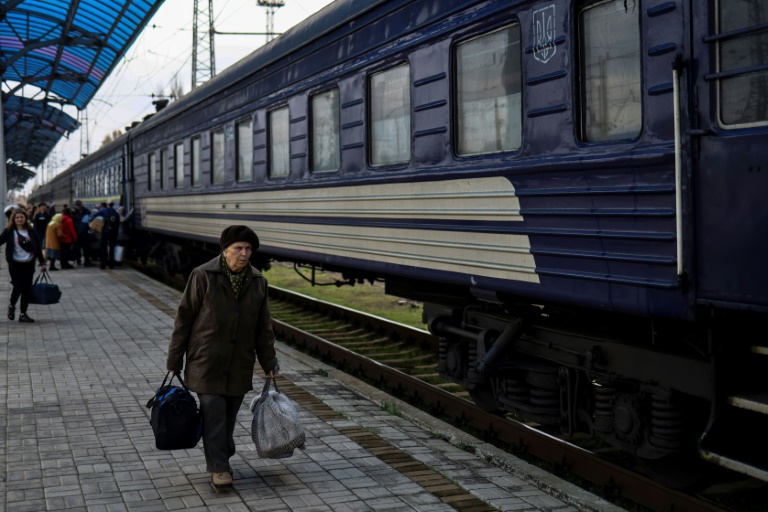
More than 4.6 million Ukrainians have now fled the war, the United Nations said Tuesday, though the smaller numbers of new refugees are arriving in a more vulnerable condition.

The UN refugee agency UNHCR said 4,615,830 Ukrainians had fled since Russia invaded on February 24 — a figure up 68,095 on Monday’s update.

“Even though the numbers of people crossing the borders has declined significantly, those who have been crossing we’ve noticed have been in a more vulnerable state, have had lesser means and have also had less of a plan as to where they might go,” UNHCR spokesman Matt Saltmarsh said in Geneva.

Women and children account for 90 percent of those who have left Ukraine, with men aged 18 to 60 eligible for military call-up and unable to leave.

The UN’s International Organization for Migration estimates that 7.1 million people have fled their homes but are still in Ukraine.

The IOM says that in addition to Ukrainian refugees, more than 210,000 non-Ukrainians living, studying or working in the country have also left.

In total, more than a quarter of the population have been forced to flee their homes.

“In just six weeks, nearly two-thirds of all Ukrainian children have been displaced. They have been forced to leave everything behind: their homes, their schools, and often, their family members,” UNICEF emergency programmes director Manuel Fontaine told a UN Security Council briefing.

“Of the 3.2 million children estimated to have remained in their homes, nearly half may be at risk of not having enough food.

“Fortunately, there has been an outpouring of support from neighbouring countries to welcome refugees.

“It is time to end this war. Ukraine’s children cannot afford to wait.”

Before the invasion, Ukraine had a population of 37 million in the regions under government control, excluding Russia-annexed Crimea and the pro-Russian separatist regions in the east.

Here is a breakdown of how many Ukrainian refugees have fled to neighbouring countries, according to UNHCR:

– Poland –

Nearly six out of 10 Ukrainian refugees — 2,645,877 so far — have crossed into Poland, according to the UN.

Many people who go to Ukraine’s immediate western neighbours travel on to other states in Europe’s Schengen open-borders zone.

– Romania –

A total of 701,741 Ukrainians entered the EU member state, including a large number who crossed over from Moldova, wedged between Romania and Ukraine. 

The vast majority are thought to have gone on to other countries. 

– Russia –

Another 433,083 refugees have sought shelter in Russia.

In addition, 113,000 people crossed into Russia from the separatist-held pro-Russian regions of Donetsk and Lugansk in eastern Ukraine between February 21 and 23. 

– Hungary –

A total of 428,954 Ukrainians have entered Hungary.

– Moldova –

The Moldovan border is the closest to the major port city of Odessa. A total of 413,374 Ukrainians have crossed into the non-EU state, one of the poorest in Europe.

Most of those who have entered the former Soviet republic of 2.6 million people have moved on.

– Slovakia –

A total of 320,246 people crossed Ukraine’s shortest border into Slovakia.

– Belarus –

Another 21,292 refugees have made it north to Russia’s close ally Belarus.

Dubai's DEWA shares soar in Gulf's biggest IPO since 2019

Shares in the Dubai Electricity and Water Authority rose nearly 16 percent on Tuesday in the Gulf region’s biggest initial public offering since Saudi oil giant Aramco in 2019.

DEWA shares soared 19 percent in the first minutes of trading before closing up 15.72 percent at 2.87 dirhams ($0.78), as the Dubai stock exchange was down 0.5 percent. 

The Dubai-owned utility last week said it had raised 22.3 billion dirhams ($6.1 billion) in the Gulf’s largest IPO since Aramco’s world-record flotation.

Some nine billion shares, an 18 percent stake, were listed, with the initial price set at 2.48 dirhams ($0.68). 

The deal, in which more than 65,000 institutional and retail investors participated, values the company at 124 billion dirhams ($33.9 billion), the company said. 

The record for the largest public listing in the Gulf, and in the world, is held by Aramco, which raised $29.4 billion by listing a 1.7 percent stake on the Saudi Stock Exchange in December 2019.

The emirate of Dubai, which lacks the large oil reserves boasted by some of its neighbours, has diversified its economy by focusing on finance, tourism and trade.

But it is facing increased competition in the region, notably from Saudi Arabia, which is also seeking to reduce its dependence on oil and gas. 

Search for survivors in Philippine villages hit by landslides

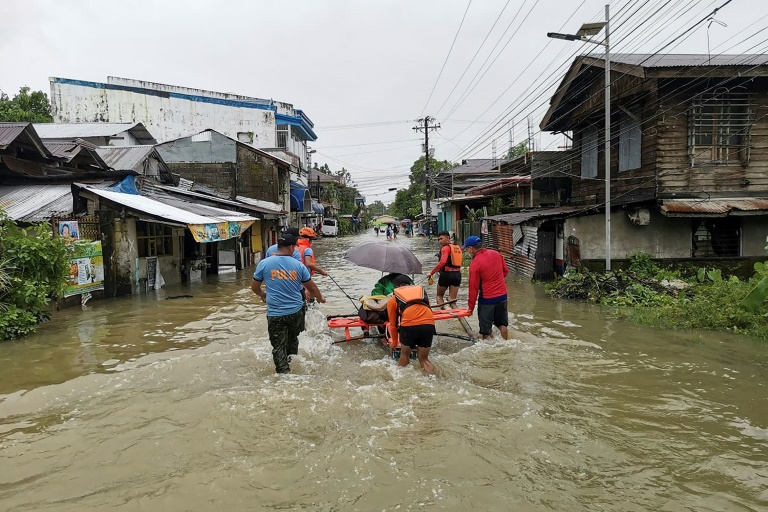
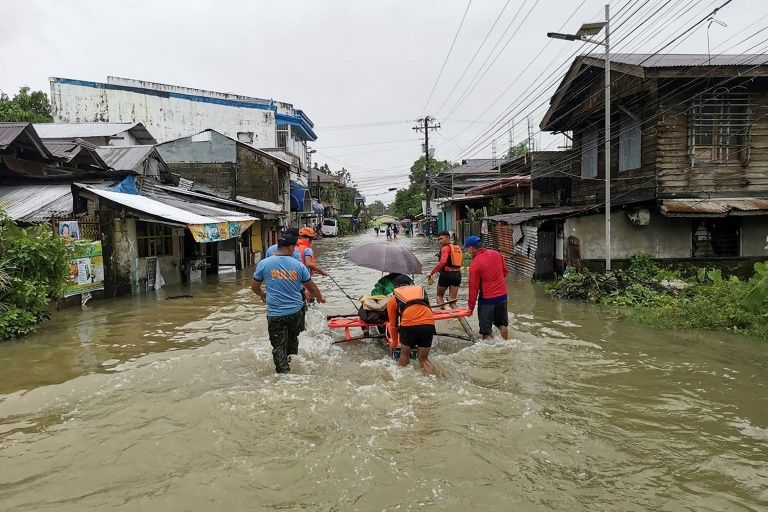
Rescuers hampered by mud and rain on Tuesday used their bare hands and shovels to search for survivors of landslides that smashed into villages in the central Philippines, as the death toll from tropical storm Megi rose to 42. 

Tens of thousands of people fled their homes as the storm pummelled the disaster-prone region in recent days, flooding houses, severing roads and knocking out power.

At least 36 people died and 26 were missing after landslides slammed into multiple villages around Baybay City in Leyte province — the hardest hit by the storm — local authorities said. Just over 100 people were injured. 

Three people were also killed in the central province of Negros Oriental and three on the main southern island of Mindanao, according to the national disaster agency.

Most of the deaths in Leyte were in the mountainous village of Mailhi where 14 bodies were found after a “mudflash” buried homes, Army Captain Kaharudin Cadil told AFP.

“We recovered most of the bodies embedded in the mud,” said Cadil, spokesman for the 802nd Infantry Brigade.

Drone footage showed a wide stretch of mud that had swept down a hill of coconut trees and engulfed Bunga, another community devastated by the storm.

At least seven people had been killed and 20 villagers were missing in Bunga, which was reduced to a few rooftops poking through the mud. 

“It’s supposed to be the dry season but maybe climate change has upended that,” said Marissa Miguel Cano, public information officer for Baybay City, where 10 villages have been affected by landslides.

Cano said the hilly region of corn, rice and coconut farms was prone to landslides, but they were usually small and not fatal. 

Apple Sheena Bayno was forced to flee after her house in Baybay City flooded. She said her family was still recovering from a super typhoon in December. 

“We’re still fixing our house and yet it’s being hit again so I was getting anxious,” she told AFP.

– ‘Nothing to go back to’ –

Rescue efforts were also focused on the nearby village of Kantagnos, which an official said had been hit by two landslides.

Kantagnos resident Daniel Racaza, 26, said he was asleep when an avalanche of mud and water swept over the riverside community.

He managed to escape with his boyfriend and 16 relatives, but an aunt was caught in the torrent. 

“I only managed to save my cellphone and we have nothing to go back to,” Racaza told AFP by telephone from a high school where they are sheltering.

Some other residents also fled in time or were pulled out of the mud alive, but four villagers have been confirmed dead and many are still feared trapped.

A Philippine Coast Guard video on Facebook showed six rescuers carrying a mud-caked woman on a stretcher, while other victims were piggybacked to safety.

“We’re looking for many people, there are 210 households there,” Baybay City Mayor Jose Carlos Cari told local broadcaster DZMM Teleradyo.  

– First major storm of 2022 –

The military has joined coast guard, police and fire protection personnel in the search and rescue efforts, which have been hampered by bad weather 

By late afternoon Tuesday, it was suspended due to losing light.

A state of calamity was declared in Baybay City, freeing up funds for relief efforts and giving local officials power to control prices.

National disaster agency spokesman Mark Timbal said landslides around Baybay City had reached settlements “outside the danger zone”, catching many residents by surprise. 

Tropical storm Megi — known in the Philippines by its local name Agaton — is the first major storm to hit the country this year.  

Whipping up seas, it forced dozens of ports to suspend operations and stranded more than 9,000 people at the start of Holy Week, one of the busiest travel periods of the year in the mostly Catholic country.

The storm comes four months after super typhoon Rai devastated swathes of the archipelago nation, killing more than 400 and leaving hundreds of thousands homeless.

Scientists have long warned typhoons are strengthening more rapidly as the world becomes warmer due to climate change.

The Philippines — ranked among the most vulnerable nations to its impacts — is hit by an average of 20 storms every year.

Search for survivors in Philippine villages hit by landslides

Rescuers hampered by mud and rain on Tuesday used their bare hands and shovels to search for survivors of landslides that smashed into villages in the central Philippines, as the death toll from tropical storm Megi rose to 42. 

Tens of thousands of people fled their homes as the storm pummelled the disaster-prone region in recent days, flooding houses, severing roads and knocking out power.

At least 36 people died and 26 were missing after landslides slammed into multiple villages around Baybay City in Leyte province — the hardest hit by the storm — local authorities said. Just over 100 people were injured. 

Three people were also killed in the central province of Negros Oriental and three on the main southern island of Mindanao, according to the national disaster agency.

Most of the deaths in Leyte were in the mountainous village of Mailhi where 14 bodies were found after a “mudflash” buried homes, Army Captain Kaharudin Cadil told AFP.

“We recovered most of the bodies embedded in the mud,” said Cadil, spokesman for the 802nd Infantry Brigade.

Drone footage showed a wide stretch of mud that had swept down a hill of coconut trees and engulfed Bunga, another community devastated by the storm.

At least seven people had been killed and 20 villagers were missing in Bunga, which was reduced to a few rooftops poking through the mud. 

“It’s supposed to be the dry season but maybe climate change has upended that,” said Marissa Miguel Cano, public information officer for Baybay City, where 10 villages have been affected by landslides.

Cano said the hilly region of corn, rice and coconut farms was prone to landslides, but they were usually small and not fatal. 

Apple Sheena Bayno was forced to flee after her house in Baybay City flooded. She said her family was still recovering from a super typhoon in December. 

“We’re still fixing our house and yet it’s being hit again so I was getting anxious,” she told AFP.

– ‘Nothing to go back to’ –

Rescue efforts were also focused on the nearby village of Kantagnos, which an official said had been hit by two landslides.

Kantagnos resident Daniel Racaza, 26, said he was asleep when an avalanche of mud and water swept over the riverside community.

He managed to escape with his boyfriend and 16 relatives, but an aunt was caught in the torrent. 

“I only managed to save my cellphone and we have nothing to go back to,” Racaza told AFP by telephone from a high school where they are sheltering.

Some other residents also fled in time or were pulled out of the mud alive, but four villagers have been confirmed dead and many are still feared trapped.

A Philippine Coast Guard video on Facebook showed six rescuers carrying a mud-caked woman on a stretcher, while other victims were piggybacked to safety.

“We’re looking for many people, there are 210 households there,” Baybay City Mayor Jose Carlos Cari told local broadcaster DZMM Teleradyo.  

– First major storm of 2022 –

The military has joined coast guard, police and fire protection personnel in the search and rescue efforts, which have been hampered by bad weather 

By late afternoon Tuesday, it was suspended due to losing light.

A state of calamity was declared in Baybay City, freeing up funds for relief efforts and giving local officials power to control prices.

National disaster agency spokesman Mark Timbal said landslides around Baybay City had reached settlements “outside the danger zone”, catching many residents by surprise. 

Tropical storm Megi — known in the Philippines by its local name Agaton — is the first major storm to hit the country this year.  

Whipping up seas, it forced dozens of ports to suspend operations and stranded more than 9,000 people at the start of Holy Week, one of the busiest travel periods of the year in the mostly Catholic country.

The storm comes four months after super typhoon Rai devastated swathes of the archipelago nation, killing more than 400 and leaving hundreds of thousands homeless.

Scientists have long warned typhoons are strengthening more rapidly as the world becomes warmer due to climate change.

The Philippines — ranked among the most vulnerable nations to its impacts — is hit by an average of 20 storms every year.

Afghans protest against Iranian 'cruelties' in Taliban-approved demo

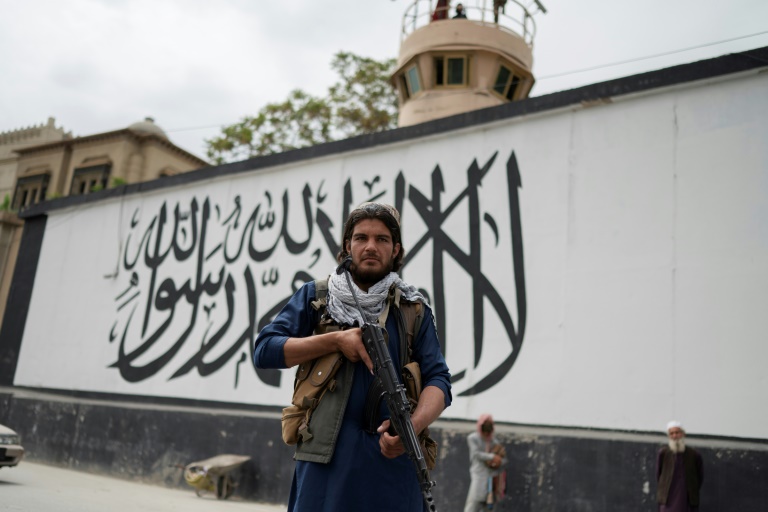
Dozens of Afghans protested Tuesday against Iranian “cruelties” after videos appearing to show refugees being beaten circulated widely over the weekend.

Tehran announced the closure until further notice of its Afghan missions “in order to obtain necessary assurances guaranteeing total security”, its foreign ministry said.

Iran has hosted millions of Afghan refugees for decades, but fresh waves have flooded the country since the Taliban returned to power in August, testing the patience of authorities and ordinary people.

On Tuesday around 200 Afghans gathered at a square in central Kabul, carrying posters reading “Iran should stop its cruelties” and “We want justice”.

Public demonstrations have been banned by the Taliban, but they allowed it to proceed with armed guards watching.

“The Iranian security forces and even common people there have been treating us badly these days,” said protester Manzoor Ahmad Farooqi, recently returned from Iran.

“When their police see us they pin us to the ground and beat us.”

Tuesday’s protest came after videos circulated at the weekend purporting to show Iranian border guards and civilians beating Afghans, although it was unclear when and where the images were filmed.

Iranian officials have dismissed the videos as “baseless and invalid”.

Protests first erupted Monday in Herat, the western city that serves as a launchpad for Afghans wanting to cross to Iran — officially and illegally.

Protesters set fire to an Iranian flag outside Tehran’s consulate in the city, and smashed CCTV cameras.

A statement on Iran’s foreign ministry website said the embassy in Kabul had also been targeted.

The statement, issued Tuesday, said the ministry summoned Afghanistan’s charge d’affaires in Tehran “to vigorously protest the attacks on the Iranian embassy in Kabul and the consulate general in Herat”.

Human trafficking is big business along their shared 900-kilometre (550-mile) border.

The two nations also have the Persian language in common — known as Farsi in Iran and Dari in Afghanistan — but a majority of Afghans are Sunni Muslims compared to their mostly Shiite neighbours.

Iran has long had testy relations with the Taliban, who raided Tehran’s consulate in the northern Afghan city of Mazar-i-Sharif in 1998 and murdered 10 diplomats and a journalist.

The Taliban said the raid was carried out by a renegade force acting against orders.

Stock markets retreat before US inflation data

European stocks sank Tuesday as investors awaited the latest reading on rampant US inflation.

Most Asian indices also fell after a weak overnight lead from Wall Street with all eyes on surging prices in the world’s biggest economy that have been fuelled by fallout from the Ukraine war.

Approaching the half-way stage, Frankfurt’s DAX index slid 1.0 percent, London shed 0.4 percent and Paris dropped 0.8 percent.

Oil prices rebounded from much of Monday’s sharp losses, as concerns subsided over weaker Chinese demand after Shanghai eased Covid restrictions.

The dollar remained elevated versus the yen, one day after hitting a 2015 high at 125.77 yen on expectations of tightening US monetary policy.

That was not far from the greenback’s two-decade peak of 125.86 yen.

– ‘Feeling the heat’ –

“Investors feel the heat before today’s inflation print,” said Swissquote analyst Ipek Ozkardeskaya.

Economists predict US inflation will soar in March to nearly 8.5 percent, which would be the highest since late 1981.

Inflation had already spiked to 7.9 percent over the 12 months to February, the biggest increase in 40 years.

A fresh inflation surge could spur the US Federal Reserve into aggressive interest rate hikes.

That would in turn weigh on investor sentiment and overall activity in the world’s biggest economy.

– ‘Hotter than hot’ –

“It’s not really about the level of inflation anymore, as it has been well broadcast that CPI is hotter than hot,” said Matt Simpson, senior market analyst at City Index.

“The big question is how long it takes to come back down and whether the Fed will tip the US into a recession in doing so.”

Elsewhere Tuesday, bitcoin crept back above $40,000 on strengthening demand for the world’s most popular virtual unit following recent heavy losses.

– Key figures around 1130 GMT –

London – FTSE 100: DOWN 0.4 percent at 7,586.40 points

Paris – CAC 40: DOWN 0.8 percent at 6,504.87

Frankfurt – DAX: DOWN 1.0 percent at 14,050.44

EURO STOXX 50: DOWN 0.7 percent at 3,813.76

Tokyo – Nikkei 225: DOWN 1.81 percent at 26,334.98 (close)

Hong Kong – Hang Seng Index: UP 0.52 percent at 21,319.13 (close)

Shanghai – Composite: UP 1.46 percent at 3,213.33 (close)

New York – Dow: DOWN 1.19 percent at 34,308.08 (close)

Brent North Sea crude: UP 3.4 percent at $101.81 per barrel

West Texas Intermediate: UP 3.3 percent at $97.43

Euro/dollar: DOWN at $1.0863 from $1.0884 late Monday

Dollar/yen: UP at 125.66 yen from 125.37 yen

Pound/dollar: DOWN at $1.2999 from $1.3030

Euro/pound: UP at 83.57 pence from 83.53 pence

burs-rfj/bcp/lth

Russia closes in on Mariupol as part of eastern Ukraine offensive

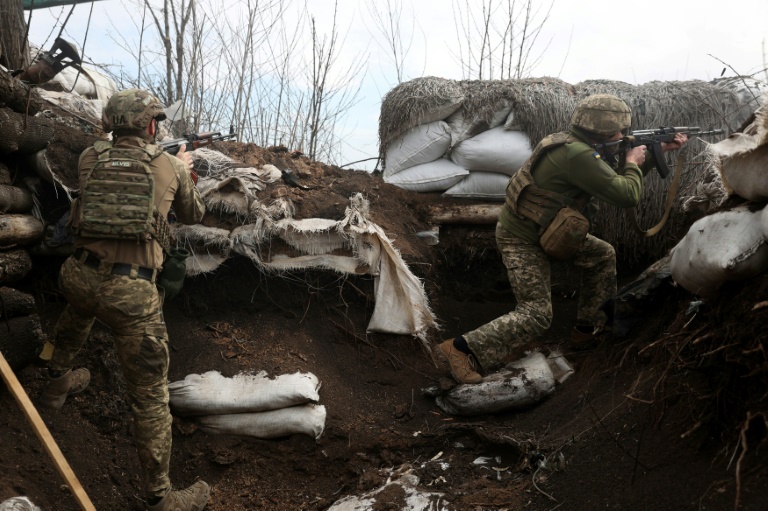
Russian troops aimed to take control of the city of Mariupol on Tuesday, part of an anticipated massive onslaught across eastern Ukraine, as defending forces tried desperately to hold them back.

Russia is believed to be trying to connect occupied Crimea with Moscow-backed separatist territories Donetsk and Lugansk in Donbas, and has laid siege to the strategically located city, once home to more than 400,000 people.

“It is likely that in the future the enemy will try to take control of the city of Mariupol, capture Popasna and launch an offensive in the direction of Kurakhove in order to reach the administrative borders of Donetsk region,” the General Staff of the Armed Forces of Ukraine said on Facebook.

The Russian defence ministry said it army had thwarted an attempt to break the siege with “airstrikes and artillery fire” at a factory in a northern district of the city.   

But the Ukrainian army insisted that “the defence of Mariupol continues”.

“The connection with the units of the defence forces that heroically hold the city is stable and maintained,” the Land Forces of Ukraine wrote on Telegram.

In his nightly address, President Volodymyr Zelensky made another plea to his allies for more weapons to boost the defence of the city.

“We are not getting as much as we need to end this war sooner. To completely destroy the enemy on our land… in particular, to unblock Mariupol,” he said. 

He made a similar appeal for military assistance to South Korea’s National Assembly earlier in the day, telling lawmakers Russia had “completely destroyed Mariupol and burned it to ashes” killing “at least tens of thousands of people”.

– Chemical weapons allegations –

Late Monday, Britain said it was trying to verify reports that Russia had also used chemical weapons in the city.

Western officials have previously expressed concerns that as the conflict drags into its seventh week, Russia could resort to such extreme measures.

Ukrainian lawmaker Ivanna Klympush said Russia had used an “unknown substance” and that people were suffering from respiratory failure.

But deputy defence minister Ganna Maliar said the purported chemical attack was more likely phosphorous munitions.

“Officials conclusions will be made later,” she told Ukrainian television.

Eduard Basurin, a senior official in the separatist area of Donetsk in eastern Ukraine, has spoken of the possibility of such arms being used in Mariupol but insisted on Tuesday that “no chemical weapons have been used” in the city.   

Elsewhere in the east, heavy bombardment continued as civilians were urged to flee ahead of an expected Russian troop surge in the region. 

Russian forces are reinforcing around the Donbas region, notably near the town of Izyum, but have not yet launched a full offensive, Pentagon officials said Monday.

They reported a Russian convoy had been observed heading for Izyum, an hour’s drive north of Kramatorsk, saying it appeared to be a mix of personnel-carriers, armoured vehicles and possible artillery.

President Vladimir Putin insisted that Russia’s own security was at stake in Donbas, after talks at the Russian spaceport in Vostochny with Belarusian President Alexander Lukashenko.

“What we are doing is helping people — rescuing them on the one hand and on the other taking measures to assure Russia’s security,” he said, according to Russian news agencies.

Ukraine’s defence ministry said it believed a major assault would happen soon. 

“We don’t know precisely when, but the preparation is almost over,” spokesman Oleksandr Motuzyanyk told a briefing on Monday.  

– ‘Logic of war’ – 

Such signs of a build-up in Donbas suggest hopes of an imminent diplomatic solution remain slim. 

After a meeting with Putin on Monday, Austrian Chancellor Karl Nehammer said he was “rather pessimistic” of such efforts succeeding as Putin had “massively entered into a logic of war”. 

Ukraine’s allies are trying instead to increase economic and diplomatic pressure on Moscow — but EU foreign ministers’ discussions on a sixth round of sanctions on Monday came up dry. 

“Nothing is off the table, including sanctions on oil and gas,” said Josep Borrell, the European Union’s top diplomat. “But today, no decision was taken.”

In an effort to shore up wider support for Kyiv, US President Joe Biden held virtual talks with Indian Prime Minister Narendra Modi just weeks after saying New Delhi had been “shaky” in its response to the invasion.

Meanwhile the toll on towns previously occupied by Russian forces during their month-long offensive to take Kyiv was still coming to light.

AFP saw the bodies of three men in civilian clothes exhumed from gardens in Andriivka, 33 kilometres (20 miles) west of the capital as relatives gathered to learn the fate of their kin.

The UN Security Council — which on Monday held a session on the plight of women and children in Ukraine — will hold another meeting next week on the humanitarian situation there, in a bid to keep pressure on Russia despite its veto power over the body, diplomats said.

– ‘Rape and sexual violence’ –

At Monday’s UNSC meeting, officials called for an investigation into violence against women during the conflict.

“This war must stop. Now,” Sima Bahous, director of the UN women’s agency, told the Council.

“We are increasingly hearing of rape and sexual violence. These allegations must be independently investigated to ensure justice and accountability.” 

More than 4.5 million Ukrainian refugees have now fled their country, the United Nations refugee agency said — 90 percent of them women and children.

The war has displaced more than 10 million people overall. 

One of those was Tatyana Kaftan, just weeks away from giving birth to her first child, who spoke to AFP at an aid distribution point in the western city of Lviv.  

Her husband, who is waiting to be called up to the army, stood by her side.

“We left everything at home,” said the 35-year-old travel agent, who drove with her husband all the way from Mykolaiv to escape Russian shelling.  

“We have nothing.” 

Crisis-hit Sri Lanka defaults on foreign debt

Sri Lanka announced a default on its $51 billion foreign debt Tuesday as the island nation grapples with its worst economic crisis in memory and escalating protests demanding the government’s resignation.

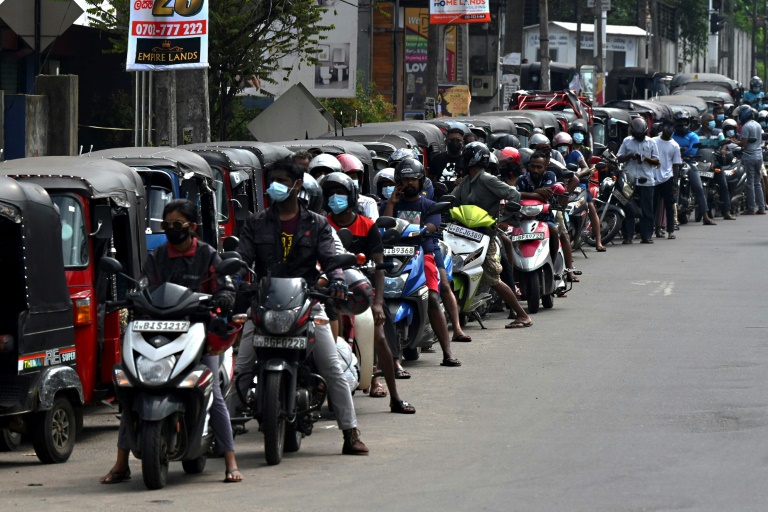
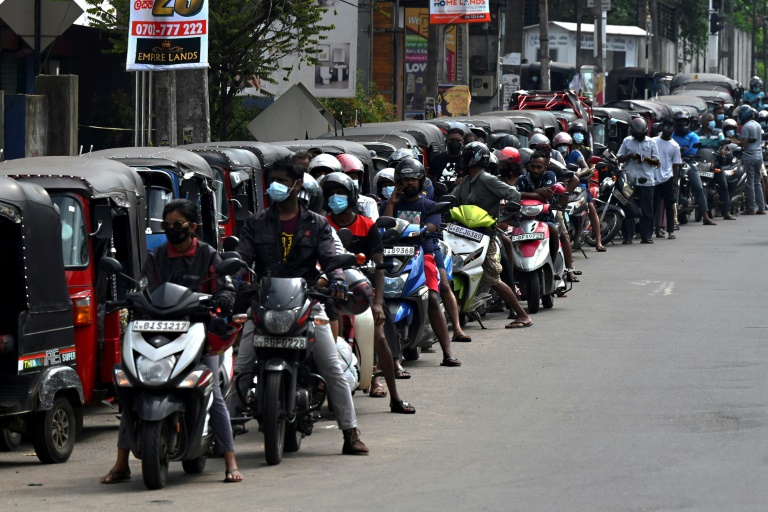
Acute food and fuel shortages, as well as long daily electricity blackouts, have brought widespread suffering to the country’s 22 million people in the most painful downturn since independence in 1948.

The government has struggled to service foreign loans and Tuesday’s decision comes ahead of negotiations for an International Monetary Fund bailout aimed at preventing a more catastrophic hard default that would see Sri Lanka completely repudiate its debts.

“We have lost the ability to repay foreign debt,” Sri Lanka’s Central Bank governor Nandalal Weerasinghe told reporters in Colombo.

“This is a pre-emptive negotiated default. We have announced (it) to the creditors.”

Officials say the move will free up foreign currency to finance desperately needed food, fuel and medicine imports after months of scarce supplies. 

Just under half of Sri Lanka’s debt is market borrowings through international sovereign bonds, including one worth $1 billion that was maturing on July 25. 

China is Sri Lanka’s largest bilateral lender and owns about 10 percent of the island’s foreign debt, followed by Japan and India.

The government has borrowed heavily from Beijing since 2005 for infrastructure projects, many of which became white elephants. 

Sri Lanka also leased its strategic Hambantota port to a Chinese company in 2017 after it became unable to service the $1.4 billion debt from Beijing used to build it.

This sparked concerns from Western countries and neighbour India that the strategically located South Asian nation was falling victim to a debt trap.

Chinese foreign ministry spokesman Zhao Lijian said Tuesday’s default would not stop Beijing from lending support to Sri Lanka’s beleaguered economy.

“China has always done its best in providing assistance to Sri Lanka’s economic and social development. We will continue to do so in the future,” he said.

– ‘Frightened of the future’ –

Sri Lanka’s snowballing economic crisis began to be felt after the coronavirus pandemic torpedoed vital revenue from tourism and remittances. 

The government imposed a wide import ban to conserve dwindling foreign currency reserves and use them to service the debts it has now defaulted on.

But the resulting shortages have stoked public anger. At least eight people have died while waiting in fuel queues since March 20 with two of the deaths reported on Monday.

“It’s been depressing to be so frightened of the future and where it’s going,” protester Vasi Samudra Devi told AFP at an anti-government rally in Colombo Monday.

“There are already people who are suffering… We are all here because we are being affected by the economic problems.”

Crowds have attempted to storm the homes of government leaders and security forces have dispersed protesters with tear gas and rubber bullets. 

Thousands of people were camped outside President Gotabaya Rajapaksa’s seafront office in the capital Colombo in the fourth straight day of protests calling for him to step down.

Economists say the crisis has been made worse by government mismanagement, years of accumulated borrowing and ill-advised tax cuts.

International rating agencies also downgraded Sri Lanka last year, effectively blocking the country from accessing foreign capital markets to raise new loans.

– ‘Last resort’ –

Sri Lanka’s finance ministry said Tuesday’s default was “a last resort in order to prevent further deterioration of the republic’s financial position”.

Creditors were free to capitalise any interest payments due to them or opt for payback in Sri Lankan rupees, the ministry added.

The government is seeking around $3 billion in IMF support over the next three years to revive the economy, finance minister Ali Sabry told parliament on Friday. 

Ministry officials told AFP last week the government was preparing a programme for sovereign bond holders and other creditors to take a haircut and avoid a hard default.

Sri Lanka had sought debt relief from India and China this year, but both countries instead offered more credit lines to buy commodities from them.

Estimates showed Sri Lanka needed $7 billion to service its debt load this year, against just $1.9 billion in reserves at the end of March. 

Crisis-hit Sri Lanka defaults on foreign debt

Sri Lanka announced a default on its $51 billion foreign debt Tuesday as the island nation grapples with its worst economic crisis in memory and escalating protests demanding the government’s resignation.

Acute food and fuel shortages, as well as long daily electricity blackouts, have brought widespread suffering to the country’s 22 million people in the most painful downturn since independence in 1948.

The government has struggled to service foreign loans and Tuesday’s decision comes ahead of negotiations for an International Monetary Fund bailout aimed at preventing a more catastrophic hard default that would see Sri Lanka completely repudiate its debts.

“We have lost the ability to repay foreign debt,” Sri Lanka’s Central Bank governor Nandalal Weerasinghe told reporters in Colombo.

“This is a pre-emptive negotiated default. We have announced (it) to the creditors.”

Officials say the move will free up foreign currency to finance desperately needed food, fuel and medicine imports after months of scarce supplies. 

Just under half of Sri Lanka’s debt is market borrowings through international sovereign bonds, including one worth $1 billion that was maturing on July 25. 

China is Sri Lanka’s largest bilateral lender and owns about 10 percent of the island’s foreign debt, followed by Japan and India.

The government has borrowed heavily from Beijing since 2005 for infrastructure projects, many of which became white elephants. 

Sri Lanka also leased its strategic Hambantota port to a Chinese company in 2017 after it became unable to service the $1.4 billion debt from Beijing used to build it.

This sparked concerns from Western countries and neighbour India that the strategically located South Asian nation was falling victim to a debt trap.

Chinese foreign ministry spokesman Zhao Lijian said Tuesday’s default would not stop Beijing from lending support to Sri Lanka’s beleaguered economy.

“China has always done its best in providing assistance to Sri Lanka’s economic and social development. We will continue to do so in the future,” he said.

– ‘Frightened of the future’ –

Sri Lanka’s snowballing economic crisis began to be felt after the coronavirus pandemic torpedoed vital revenue from tourism and remittances. 

The government imposed a wide import ban to conserve dwindling foreign currency reserves and use them to service the debts it has now defaulted on.

But the resulting shortages have stoked public anger. At least eight people have died while waiting in fuel queues since March 20 with two of the deaths reported on Monday.

“It’s been depressing to be so frightened of the future and where it’s going,” protester Vasi Samudra Devi told AFP at an anti-government rally in Colombo Monday.

“There are already people who are suffering… We are all here because we are being affected by the economic problems.”

Crowds have attempted to storm the homes of government leaders and security forces have dispersed protesters with tear gas and rubber bullets. 

Thousands of people were camped outside President Gotabaya Rajapaksa’s seafront office in the capital Colombo in the fourth straight day of protests calling for him to step down.

Economists say the crisis has been made worse by government mismanagement, years of accumulated borrowing and ill-advised tax cuts.

International rating agencies also downgraded Sri Lanka last year, effectively blocking the country from accessing foreign capital markets to raise new loans.

– ‘Last resort’ –

Sri Lanka’s finance ministry said Tuesday’s default was “a last resort in order to prevent further deterioration of the republic’s financial position”.

Creditors were free to capitalise any interest payments due to them or opt for payback in Sri Lankan rupees, the ministry added.

The government is seeking around $3 billion in IMF support over the next three years to revive the economy, finance minister Ali Sabry told parliament on Friday. 

Ministry officials told AFP last week the government was preparing a programme for sovereign bond holders and other creditors to take a haircut and avoid a hard default.

Sri Lanka had sought debt relief from India and China this year, but both countries instead offered more credit lines to buy commodities from them.

Estimates showed Sri Lanka needed $7 billion to service its debt load this year, against just $1.9 billion in reserves at the end of March. 

Clashes rock W.Bank as Palestinian attacker killed in Israel

Fresh clashes between Israeli soldiers and Palestinian militants rocked the West Bank city of Jenin on Tuesday as a Palestinian stabbed a police officer in Israel before being shot dead.

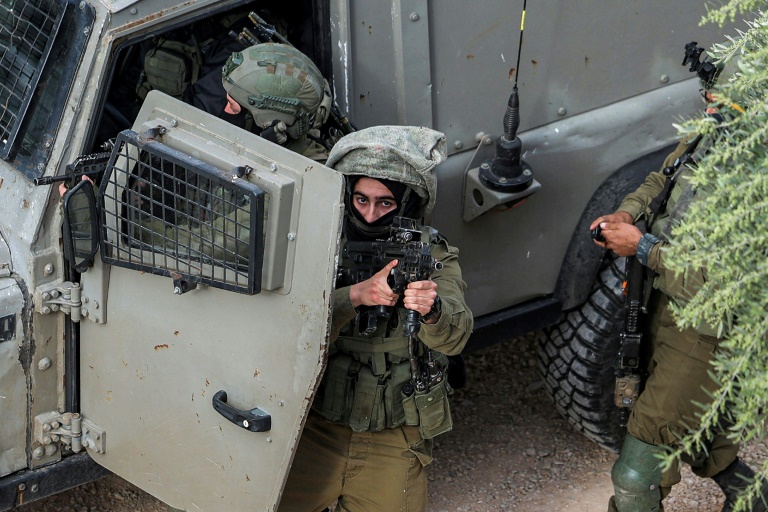
Israeli troops launched a fourth day of operations around Jenin after an assailant from the flashpoint district shot and killed three people in a Tel Aviv bar last week in the latest of a spate of attacks that have stunned the Jewish state.

Prime Minister Naftali Bennett — who warned in response that there would “not be limits for this war” — overnight visited the Tel Aviv shooting scene and vowed: “We will not let our enemy stop our lives.

“We will continue to live our lives and at the same time we will fight where they are located, in their bases, at their source —- and, please God, we will win.”

The Palestinian official news agency Wafa said “clashes erupted” for a fourth day between young Palestinian men and Israeli soldiers “who fired live bullets, stun grenades and tear gas at them”.

The Israeli army said its “soldiers responded with live ammunition toward suspects who hurled explosive devices at them, as well as toward armed suspects in the area”.

“Soldiers and other security forces apprehended 20 wanted terror suspects during the night and early morning.”

In Zeita, near the border with Israel, commandos found “weapons and arrested wanted persons suspected of aiding terrorist activities,” the army said. 

The latest violence to rock Israel came in the Mediterranean port city of Ashkelon, where police said an officer was checking a Palestinian man in his 40s who then “pulled out a knife and attacked the officer”.

The policeman “fired and neutralised the suspect, whose death was declared on site,” police said, adding that the officer was hospitalised with light wounds from the attack using a kitchen knife.

Police said the man hailed from Hebron — a powder keg where around 1,000 Jewish settlers live under heavy military protection among 200,000 Palestinians.

Ashkelon said it deployed extra police on motorcycles to patrol schools and commercial areas. 

– ‘Escalating violence’ –

Palestinian youth have also clashed elsewhere with Israeli security forces, including Ramallah where they threw rocks and were targeted with tear gas on Monday.

The rise in violence comes during the Muslim fasting month of Ramadan and days before the Jewish festival of Passover and Christian Easter. 

Last year during Ramadan, tensions in Jerusalem flared into 11 days of war between Israel and the Hamas militant group ruling the Gaza Strip.

Israeli troops and police have stepped up operations over the past three weeks in which four shooting, stabbing and car-ramming attacks have left 14 people dead. 

Over the same period, Israeli forces have killed 15 Palestinians, including assailants, according to an AFP tally. 

The Palestinian prime minister, Mohammad Shtayyeh, charged that Israeli actions were fuelling the escalation and accused Israel of a “shoot-to-kill policy”, speaking at a government meeting on Monday. 

He argued that the lack of a political horizon and double standards from the international community were “a serious warning that the situation is getting worse,” according to Wafa. 

Militant group Islamic Jihad hailed the response to Israel’s military incursions in Jenin and other cities.

“We salute our people who stand like an unyielding barricade in the face of the Zionist enemy’s terrorism, and who frustrate its plans to carry out the assault on the camp and city of Jenin and all the cities of the West Bank.”

UN Secretary General Antonio Guterres followed “with deep concern the escalating violence in the Occupied Palestinian Territory and Israel”, said his spokesman Stephane Dujarric. 

“He is appalled by the increasingly high number of casualties, including women and children,” Dujarric added.

bur-dac/fz/kir

Close Bitnami banner
Bitnami