World

Search for survivors in Philippine villages hit by landslides

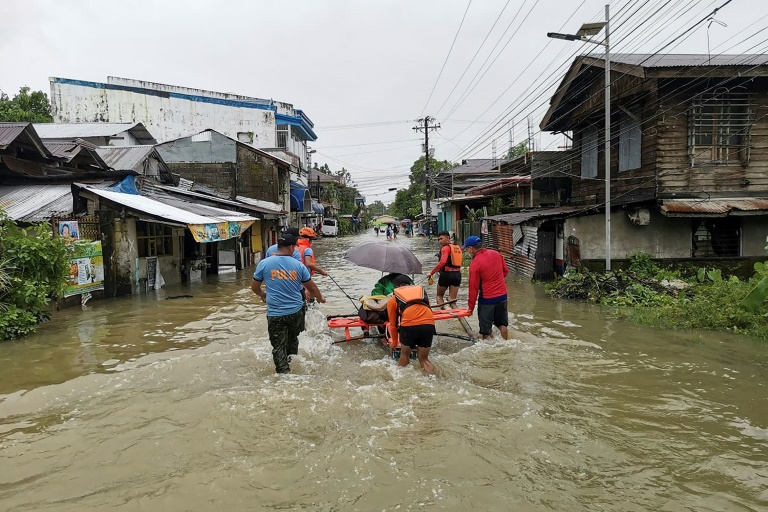
Rescuers hampered by mud and rain on Tuesday used their bare hands and shovels to search for survivors of landslides that smashed into villages in the central Philippines, as the death toll from tropical storm Megi rose to 42. 

More than 17,000 people fled their homes as the storm pummelled the disaster-prone region in recent days, flooding houses, severing roads and knocking out power.

At least 36 people died and 26 were missing after landslides slammed into multiple villages around Baybay City in Leyte province — the hardest hit by the storm — local authorities said. Just over 100 people were injured. 

Three people were also killed in the central province of Negros Oriental and three on the main southern island of Mindanao, according to the national disaster agency.

Most of the deaths in Leyte were in the mountainous village of Mailhi where 14 bodies were found, Army Captain Kaharudin Cadil told AFP.

“It was a mudflash that buried houses. We recovered most of the bodies embedded in the mud,” said Cadil, spokesman for the 802nd Infantry Brigade.

Drone footage showed a wide stretch of mud that had swept down a hill of coconut trees and engulfed Bunga, another community devastated by the storm.

At least seven people had been killed and 20 villagers were missing in Bunga, which was reduced to a few rooftops poking through the mud. 

“It’s supposed to be the dry season but maybe climate change has upended that,” said Marissa Miguel Cano, public information officer for Baybay City, where 10 villages have been affected by landslides.

Cano said the hilly region of corn, rice and coconut farms was prone to landslides, but they were usually small and not fatal. 

Apple Sheena Bayno was forced to flee after her house in Baybay City flooded. She said her family was still recovering from a super typhoon in December. 

“We’re still fixing our house and yet it’s being hit again so I was getting anxious,” she told AFP.

Rescue efforts were also focused on the nearby village of Kantagnos, which an official said had been hit by two landslides. 

“There was a small landslide and some people were able to run to safety, and then a big one followed which covered the entire village,” Baybay City Mayor Jose Carlos Cari told local broadcaster DZMM Teleradyo. 

Some residents managed to escape or were pulled out of the mud alive, but many are still feared trapped.

A Philippine Coast Guard video on Facebook showed six rescuers carrying a mud-caked woman on a stretcher. 

Other victims have been piggybacked to safety.  

Four people have been confirmed dead in Kantagnos, but it is not clear how many are still missing. 

“We’re looking for many people, there are 210 households there,” said the Baybay City mayor. 

– Direct hit on homes –

The military has joined coast guard, police and fire protection personnel in the search and rescue efforts. 

But bad weather has hampered the response. The search was suspended late in the afternoon as it was “too dangerous” to continue in the dark, Cano said.

National disaster agency spokesman Mark Timbal said landslides around Baybay City had reached settlements “outside the danger zone”, catching many residents by surprise. 

“There were people in their homes that were hit directly by the landslide,” Timbal told AFP.

Tropical storm Megi — known in the Philippines by its local name Agaton — is the first major storm to hit the country this year.  

Whipping up seas, it forced dozens of ports to suspend operations and stranded more than 9,000 people at the start of Holy Week, one of the busiest travel periods of the year in the mostly Catholic country.

The storm comes four months after super typhoon Rai devastated swathes of the archipelago nation, killing more than 400 people and leaving hundreds of thousands homeless.

Scientists have long warned typhoons are strengthening more rapidly as the world becomes warmer due to climate change.

The Philippines — ranked among the most vulnerable nations to its impacts — is hit by an average of 20 storms every year.
Search for survivors in Philippine villages hit by landslides

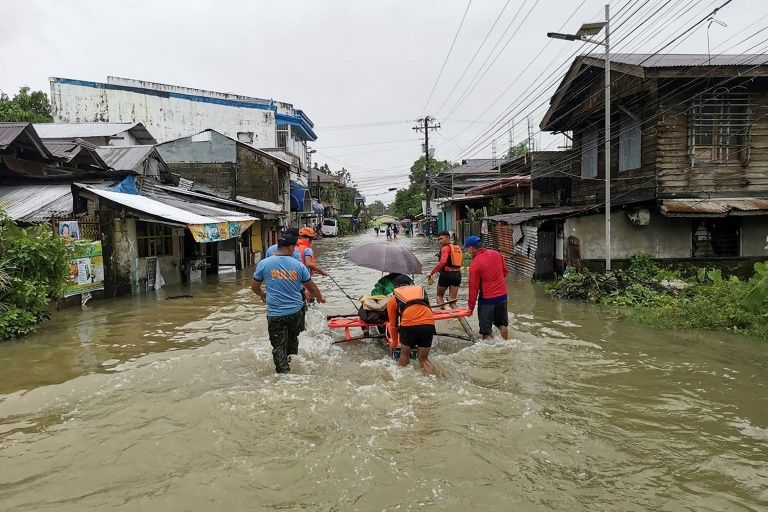
Rescuers hampered by mud and rain on Tuesday used their bare hands and shovels to search for survivors of landslides that smashed into villages in the central Philippines, as the death toll from tropical storm Megi rose to 42. 

More than 17,000 people fled their homes as the storm pummelled the disaster-prone region in recent days, flooding houses, severing roads and knocking out power.

At least 36 people died and 26 were missing after landslides slammed into multiple villages around Baybay City in Leyte province — the hardest hit by the storm — local authorities said. Just over 100 people were injured. 

Three people were also killed in the central province of Negros Oriental and three on the main southern island of Mindanao, according to the national disaster agency.

Most of the deaths in Leyte were in the mountainous village of Mailhi where 14 bodies were found, Army Captain Kaharudin Cadil told AFP.

“It was a mudflash that buried houses. We recovered most of the bodies embedded in the mud,” said Cadil, spokesman for the 802nd Infantry Brigade.

Drone footage showed a wide stretch of mud that had swept down a hill of coconut trees and engulfed Bunga, another community devastated by the storm.

At least seven people had been killed and 20 villagers were missing in Bunga, which was reduced to a few rooftops poking through the mud. 

“It’s supposed to be the dry season but maybe climate change has upended that,” said Marissa Miguel Cano, public information officer for Baybay City, where 10 villages have been affected by landslides.

Cano said the hilly region of corn, rice and coconut farms was prone to landslides, but they were usually small and not fatal. 

Apple Sheena Bayno was forced to flee after her house in Baybay City flooded. She said her family was still recovering from a super typhoon in December. 

“We’re still fixing our house and yet it’s being hit again so I was getting anxious,” she told AFP.

Rescue efforts were also focused on the nearby village of Kantagnos, which an official said had been hit by two landslides. 

“There was a small landslide and some people were able to run to safety, and then a big one followed which covered the entire village,” Baybay City Mayor Jose Carlos Cari told local broadcaster DZMM Teleradyo. 

Some residents managed to escape or were pulled out of the mud alive, but many are still feared trapped.

A Philippine Coast Guard video on Facebook showed six rescuers carrying a mud-caked woman on a stretcher. 

Other victims have been piggybacked to safety.  

Four people have been confirmed dead in Kantagnos, but it is not clear how many are still missing. 

“We’re looking for many people, there are 210 households there,” said the Baybay City mayor. 

– Direct hit on homes –

The military has joined coast guard, police and fire protection personnel in the search and rescue efforts. 

But bad weather has hampered the response. The search was suspended late in the afternoon as it was “too dangerous” to continue in the dark, Cano said.

National disaster agency spokesman Mark Timbal said landslides around Baybay City had reached settlements “outside the danger zone”, catching many residents by surprise. 

“There were people in their homes that were hit directly by the landslide,” Timbal told AFP.

Tropical storm Megi — known in the Philippines by its local name Agaton — is the first major storm to hit the country this year.  

Whipping up seas, it forced dozens of ports to suspend operations and stranded more than 9,000 people at the start of Holy Week, one of the busiest travel periods of the year in the mostly Catholic country.

The storm comes four months after super typhoon Rai devastated swathes of the archipelago nation, killing more than 400 people and leaving hundreds of thousands homeless.

Scientists have long warned typhoons are strengthening more rapidly as the world becomes warmer due to climate change.

The Philippines — ranked among the most vulnerable nations to its impacts — is hit by an average of 20 storms every year.
On the trail of the dead in a Ukrainian village

There is a rhythm to the way the bodies are collected in the Ukrainian village of Andriivka.

A yellow question mark is sprayed on a home. The police arrive with a crew to dig out the shallow grave. Then the relatives are confronted with the remains of their kin.

Some are stoic and resigned — the body is just the remnants and their loved one is long gone. Others dash to touch the corpse, as if trying to awake it from slumber.

On Monday, AFP saw the bodies of three men in civilian clothes exhumed from gardens in Andriivka, 33 kilometres (20 miles) west of the capital, Kyiv.

They were Ruslan Yaremchuk, 46, Leonid Bondarenko, 68, and Yuriy Kravchennia, 46, according to relatives, neighbours and ID documents.

A village official said three other bodies had already been excavated earlier in the day.

Andriivka — home to around 2,000 before the war — was occupied by invading Russian forces during their month-long northern offensive to take Kyiv.

All the men were buried by their fellow Ukrainians. But villagers say they were killed by Russians. 

– Ruslan Yaremchuk –

They buried Yaremchuk in a garden behind a modest white cottage, his head pointing towards a rusted wheelbarrow. 

Now the body, its arms spread high, is being pried from the earth again by a three-man team.

Yaremchuk’s final outfit was a blue cableknit jumper, jeans and grey hiking boots. On his right hand is a handsome silver ring.

Neighbour Viktor Haniuk knew his first name only — Ruslan — but he buried him in this patch of green with the help of another local.

As the exhumation continues, nearby police scribe a report in the margins of a diploma that reveals his surname. Yaremchuk studied electrical engineering at the Kyiv Polytechnic Institute, it seems.

On the doorstep of the cottage are three open ration packs. As Russians swept in, the packs were airdropped for troops.

“This man went to steal them,” says 42-year-old Haniuk. “Most likely he was shot for these rations.”

He said his neighbour was shot “behind the ear”. Yaremchuk is zipped inside a body bag and the police team continue their rounds.

– Leonid Bondarenko – 

Next is Bondarenko. He was buried by the spring bulbs in the front plot of a pink cottage. There is a floral-wreathed cross above the makeshift grave. It marks the date he died — March 6, 2022.

His body is parcelled in a patterned blue duvet. Three workers pull him out of the ground, revealing his blood-streaked head. 

His son Oleksandr, 39, loiters outside the gates of the house with resigned unease.

His father was killed in shelling and a neighbour buried him a few days later.

“I don’t know how we ordinary people are meant to respond to this. They destroyed the whole village,” Oleksandr says.

His father’s body is the fifth of the day so far and there are more still waiting to be tended.

“What am I supposed to feel when it’s civilians, not soliders, who were killed?” asks 25-year-old police officer Artem Yeliseyev.

“Today we saw a man who was 30 and a man who was almost 70,” he says.

“They are both murdered. It’s difficult for me to talk about my feelings.”

– Yuriy Kravchennia – 

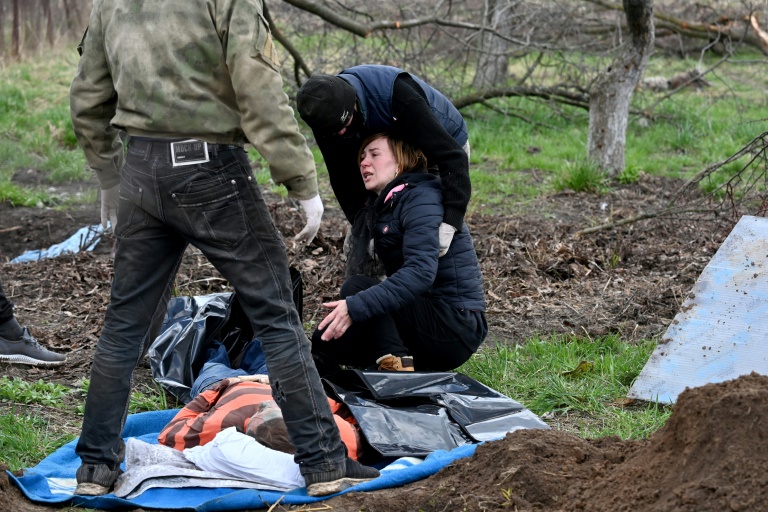
Kravchennia is in the ground past a wrecked home. As he is pulled from the earth, his wife Olesia howls with anguish from inside the ruins.

She peers over a garden fence and sees her husband — wearing an orange and brown striped sweater — tugged from the dirt, feet first.

His corpse has been covered by corrugated plastic and his face is an eerie pale green.

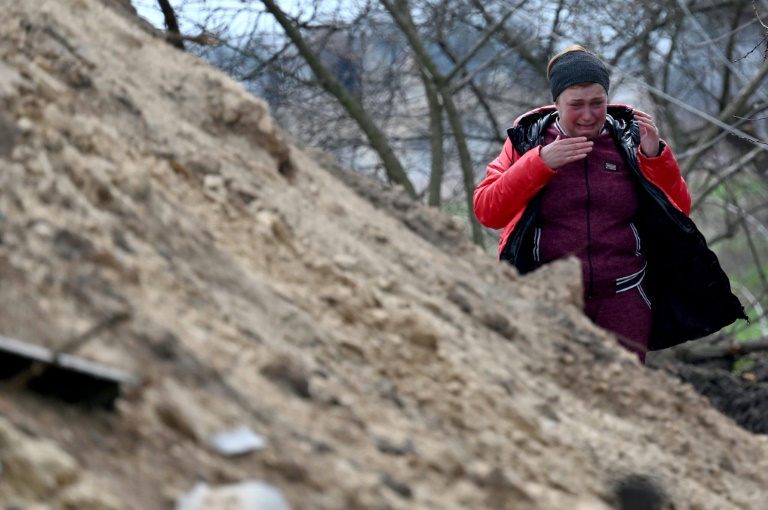
Olesia rushes to him but her legs give way and she is guided to a log. Yuriy was shot in the street with his hands up in surrender, she stammers through her grief.

“I’m hanging on. I’m hanging on. This is the 41st day he’s been gone and I am crying. I can’t go on without him.”

Neighbour Tetiana Yermakova, 53, comes to comfort her. 

She is also a widow. Her husband Igor, 54, is buried in the next-door garden. The women lean into each other in a prolonged embrace.

Igor was taken by Russian soldiers on March 2, his sister-in-law Ludmyla Oleksiyenko says. Two days later they found him out by the electrical pylons.

He had been messaging information about the Russian presence to other Ukrainians.

“They only said that there was somebody lying there. They said ‘Go and see for yourself if it’s yours’,” 63-year-old Oleksiyenko recalls.

“His hands were tied with a rope,” she says. “It was a thick rope. The hands were blue. Behind his back.”

“We pulled it with my sister across the road to the garden here. We pulled the body because we needed to bury it. We dug the pit by ourselves, the two of us. There are no words to express that.”

Now he is interred under an immense mound of mud in the back garden.

The Russians dumped the soil on the spot where he was buried when they dug a gaping trench, now littered with ammunition boxes.

His body will be the seventh of the day, if the villagers can find the strength to move the earth.

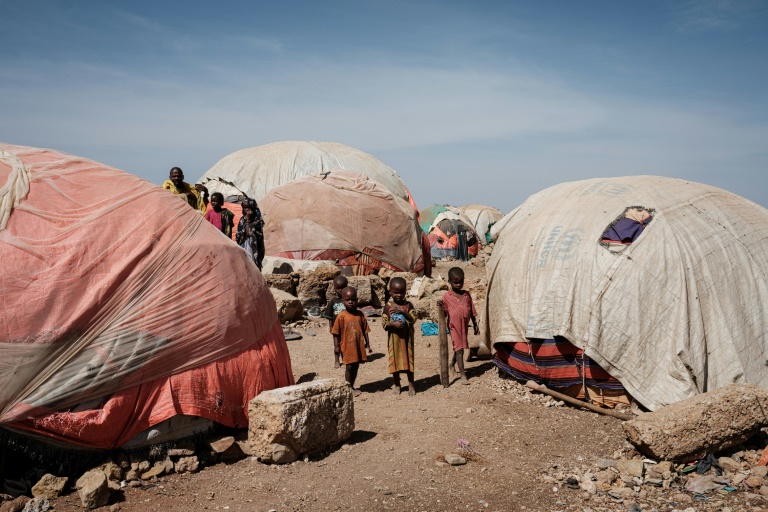
Millions of Somalis at risk of famine: UN agencies

Millions of people in Somalia are at risk of famine, with young children the most vulnerable to the worsening drought in the troubled Horn of Africa nation, UN agencies warned on Tuesday.

“Somalia is facing famine conditions as a perfect storm of poor rain, skyrocketing food prices and huge funding shortfalls leaves almost 40 percent of Somalis on the brink,” the agencies said in a statement.

Many parts of Somalia are being ravaged by drought that has also taken hold in other countries in the region including Ethiopia and Kenya, but the UN agencies warned of a major funding shortfall to address the crisis and avoid a repeat of the 2011 famine.

“We are literally about to start taking food from the hungry to feed the starving,” the UN World Food Programme’s Somalia representative El-Khidir Daloum said in a statement, describing the country as “on the cusp of a humanitarian catastrophe”.

Six million Somalis or 40 percent of the population are now facing extreme levels of food insecurity, according to a new report by the Integrated Food Security Phase Classification, almost a two-fold increase since the beginning of the year, the agencies said.

The joint statement by the WFP, the UN’s Food and Agriculture Organization (FAO), the humanitarian agency OCHA and the United Nations Children’s Fund said  “pockets of famine conditions” were likely in six areas of Somalia.

They said children under the age of five were the most vulnerable, with access to food and milk scarce because of rising commodity prices and livestock issues. 

About 1.4 million children face acute malnutrition through the end of the year, with around one quarter facing severe acute malnutriton, the statement said.

Together, humanitarian agencies had been able to supply aid to almost two million people but the UN warned of a “critical gap” in donor funding, with a 2022 plan seeking $1.5 billion reaching only 4.4 percent of the target.

In the 2011 famine, 260,000 people — half of them children under the age of six — died of hunger or hunger-related disorders.

Natural disasters — not conflict — have in recent years been the main drivers of displacement in Somalia, a war-torn nation that ranks among the world’s most vulnerable to climate change.

US orders non-essential consulate staff to leave Shanghai

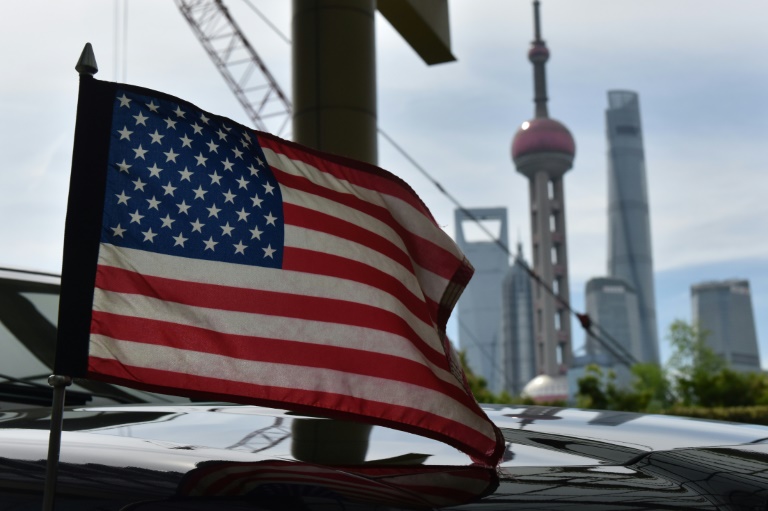
The United States said Tuesday it had ordered all non-essential employees at its Shanghai consulate to leave, voicing concerns for the safety of Americans in China as the government enforces hard lockdowns to contain Covid-19.

China has stuck to a policy of “zero Covid”, aiming to eliminate all infections through rigid shutdowns, mass testing and travel restrictions.

But the policy has come under strain since March, with more than 100,000 cases in Shanghai leading to a lockdown of the city’s 25 million inhabitants.

That has sparked widespread outcry over food shortages and an inflexible policy of sending anyone who tests positive to quarantine centres.

The US State Department ordered the departure “due to the ongoing Covid-19 outbreak”, a spokesperson from its Beijing embassy said in a statement.

American diplomats have also raised “concerns about the safety and welfare of US citizens with People’s Republic of China officials”, the statement added. 

“It is best for our employees and their families to be reduced in number and our operations to be scaled down as we deal with the changing circumstances on the ground,” it read. 

Shanghai reported more than 23,000 new infections on Tuesday, while dozens of cities across the country battled smaller outbreaks.

Some residents who live in neighbourhoods deemed a low virus risk have been allowed outside their homes this week, but unclear rules have left most in limbo.

One Shanghai resident named Dan said he “couldn’t really believe it” when he was permitted to leave his neighbourhood Monday after it was classified a lower-risk area.

But by Tuesday, they had been ordered to stay inside again.

“Several times now there have been promises of lifting the lockdown (that were) retracted at the last minute,” the weary American told AFP.

Criticism of China’s unrelenting approach to crushing outbreaks is mounting, more so as the rest of the world learns to live with the pandemic.

The European Union Chamber of Commerce has warned that China’s coronavirus strategy is “eroding foreign investors’ confidence”. 

In a letter seen by AFP, it urged Beijing to shift its approach by vaccinating the elderly — among whom inoculation rates are low — and allowing people with mild symptoms to quarantine at home.

Analysts at Nomura warned that China has been “facing a rising risk of recession”, calculating that 45 cities are currently under full or partial lockdown — accounting for 40 percent of China’s GDP and more than a quarter of its population.

– Public anger –

Beijing hit back against the State Department’s Shanghai decision on Tuesday, accusing Washington of using the epidemic to “engage in political manipulation”.

Shanghai authorities have vowed the city “would not relax in the slightest”, preparing tens of thousands of new beds to receive every person who tests positive — whether or not they show symptoms.

Residents have taken to social media to vent about food shortages and heavy-handed controls, including the killing of a pet corgi by a health worker and a now-softened policy of separating infected children from their virus-free parents.

On Tuesday, Shanghai residents were still deciphering the details of an announcement that allowed some people living in areas with relatively few cases to begin leaving their compounds.

The adjustment on Monday set three levels of controls depending on the caseload.

But freedom still appears far off for most in the city, with at least one southern district set at the lowest level only allowing residents out once a day to buy supplies.

Online discussions on the topic quickly racked up tens of millions of views, with many complaining they were in the lowest tier and still not allowed out.

“The neighbours woke up at six to see if the gate has been opened… (but instead) our completely negative compound has been locked down for another seven days,” one wrote in frustration.

Ukraine war set to push record US inflation even higher

US government data will on Tuesday likely confirm what many Americans already suspected: prices continued to rise at record rates last month, continuing a phenomenon that began last year but which has been exacerbated by Russia’s invasion of Ukraine.

The Labor Department’s consumer price index (CPI) report for March will be the first to fully encompass the shock caused by the war in Ukraine and the Western sanctions against Moscow, and is almost certain to show a spike in prices for gasoline and other petroleum products.

“Russia’s invasion of Ukraine has definitely added upside risks to US inflation through channels such as energy, food and also elevated risks of supply bottlenecks lingering for longer,” Pooja Sriram of Barclays said.

Americans have been weathering steadily accelerating price increases that hit 7.9 percent over the 12 months to February, a rate not seen in four decades.

But as the Federal Reserve raises interest rates, some economists believe the report will also mark the peak of the inflation wave that began last year as the economy recovered from Covid-19 — though it could be a while before consumers feel relief.

“The subsequent slowing may not be meaningful given all the supply restrictions on products from Russia and Ukraine as well as the growing supply chain bottlenecks on finished goods from China due to the Covid lockdowns there,” Karl Haeling of LBBW said.

The inflation wave has become a political liability for President Joe Biden, and before the data’s release, the White House temporarily waived a seasonal ban on sales of E15 gasoline, which is cheaper but usually not allowed to be sold during the summer.

But that won’t stop the Labor Department from reporting another sky-high year-on-year inflation number in March that analysts believe could hit somewhere around 8.5 percent.

– Nearing the peak? –

After years of muted price pressures, inflation began climbing as the economy recovered a year ago, driven by the Fed’s pandemic-era easy money policies, global shortages of components and delays in shipping, and government stimulus packages that fattened Americans’ wallets and drove up demand.

The consensus among economists is for CPI to accelerate by 1.2 percent in March compared to February, but for “core” CPI, which excludes volatile food and energy prices, to rise by 0.5 percent in March, the same as the month prior.

Ian Shepherdson of Pantheon Macroeconomics predicted “this will be the peak” of the annual increases — but only because future reports will be compared to months in 2021 when prices were already climbing.

Gasoline will play a big role in March’s price gains, Shepherdson said, adding 0.7 percent to the monthly figure overall. Food prices also rose in the month, he said, as did hotel prices and airfares, though prices for scarce used cars may decline after recent surges.

– Hitting demand –

While analysts are skeptical that the White House’s moves to cut pump prices will be effective, a recent decline in global oil prices may ultimately take some pressure off Americans.

Meanwhile, the Fed is moving to tighten lending conditions to stop inflation, though whether they can do so without causing a recession is an open question.

The central bank hiked interest rates a quarter-point higher from zero last month, and are widely expected to raise them by a half-point next month, and continue increasing throughout this year.

“There is no road map for what the Fed is trying to accomplish except in world (with) supply constraints,” Grant Thornton economist Diane Swonk warned on Twitter. 

The “Fed needs to hit demand. Hard. Very hard,” she wrote.

War in Ukraine: Latest developments

Here are the latest developments in the war in Ukraine:

– Ukrainians ‘surrounded’ in Mariupol –

Ukrainian forces are “surrounded and blocked” in Mariupol as Russian forces push to take the city, Myhaylo Podolyak, an official from President Volodymyr Zelensky’s office, tweets. 

The Ukrainian army insists that “the defence of Mariupol continues”.

Ukrainian President Volodymyr Zelensky says he believes “tens of thousands” of people in the city have been killed.

– Chemical weapons allegations –

Britain says it is trying to verify reports that Russia has used chemical weapons in Mariupol.

Ukrainian lawmaker Ivanna Klympush says Russia has used an “unknown substance” and that people are suffering from respiratory failure.

But an aide to the city’s mayor says that a chemical attack has not been confirmed and that they are “waiting for official information from the military”.

– ‘All options on table’ –

Britain’s armed forces minister James Heappey tells Sky News that if evidence of chemical weapons use emerges, “all options are on the table” as a response.

“There are some things that are beyond the pale, and the use of chemical weapons will get a response,” he says.

– Russians reinforce in Donbas –

Russian forces are reinforcing around the Donbas region, notably near the town of Izyum, but have not yet launched a full offensive, Pentagon officials say.

Ukraine’s defence ministry says that Russian preparations are almost over and that it believes a major assault will happen soon. 

– Violence against women –

At a United Nations Security Council meeting, officials call for an investigation into violence against women during the conflict.

“We are increasingly hearing of rape and sexual violence. These allegations must be independently investigated to ensure justice and accountability,” Sima Bahous, director of the UN women’s agency, says.  

– French police arrive in Ukraine –

French police officers and forensic doctors arrive in Ukraine to help investigate the discovery of scores of bodies in civilian clothing scattered in Bucha and other towns around Kyiv after Russia’s withdrawal from the region.

Ukraine says it has discovered 1,222 bodies in Bucha and other towns. 

– No EU consensus on sanctions –

EU foreign ministers launch discussions on a sixth round of sanctions, but fail to find a consensus, including on sanctions on oil and gas, Josep Borrell, the bloc’s top diplomat, says.

– Biden, Modi discuss Ukraine –

US President Joe Biden and Indian Prime Minister Narendra Modi have a “candid exchange of views” on the Ukraine crisis at a virtual summit, a senior administration official says, but there is no indication of significant progress toward a unified stance.

India has maintained a neutral stance on the invasion.

– Trade growth takes hit –

The war could almost halve world trade growth this year and drag down global GDP growth, according to the World Trade Organization.

– Ukraine still open to talks –

Ukraine’s Foreign Minister Dmytro Kuleba says he is still open to negotiating with Moscow.

“If sitting down with the Russians will help me to prevent at least one massacre like in Bucha, or at least another attack like in Kramatorsk, I have to take that opportunity,” he tells US broadcaster NBC.

– France expels six Russian diplomats –

France is expelling six Russians suspected of working as spies under diplomatic cover in Paris, after the French intelligence services uncovered a clandestine operation, the foreign ministry says.

– More than 4.5 million flee – 

More than 4.5 million Ukrainian refugees have now fled their country, the United Nations refugee agency says.

Ninety percent of those who have left are women and children.

Markets mostly down ahead of key US data

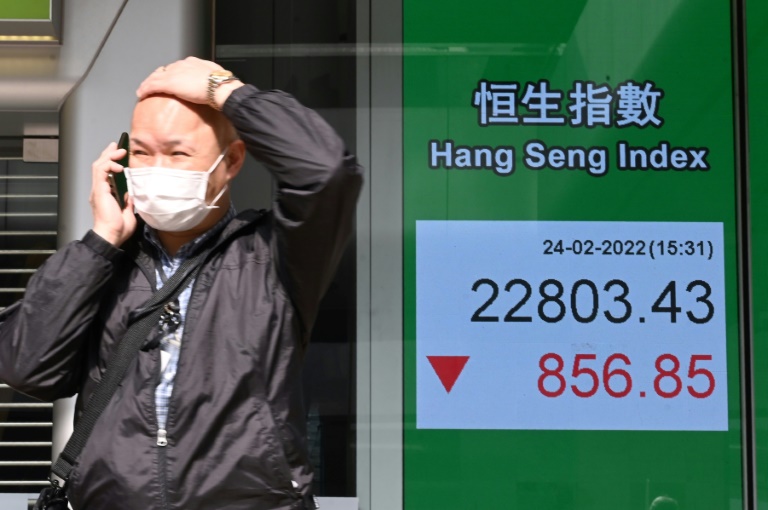
Most Asian and European markets were down Tuesday, after a weak lead from Wall Street and with all eyes on key US inflation data due later in the trading day.

Tokyo closed down by nearly two percent, though Hong Kong was up more than one percent by the end of trade.

Shanghai also posted gains, while Seoul, Taipei, Sydney and Singapore were all in the red. Jakarta eked out small gains.

In Europe, London dipped 0.8 percent at the open, while Paris and Frankfurt were both down by just under two percent.

This followed a weak Monday performance from Wall Street and Europe, with sentiment souring on flat UK economic growth and expectations for another strong US inflation report, which will likely bring aggressive interest rate hikes from the Federal Reserve.

The government is set to release the US consumer price index (CPI) for March on Tuesday, after inflation rose 7.9 percent over the 12 months to February, the biggest increase in 40 years.

Calling it the “Putin price hike” in reference to the economic ramifications of Russia’s invasion of Ukraine, White House Press Secretary Jen Psaki told reporters: “We expect March headline inflation to be extraordinarily elevated.”

Economists are expecting annual US inflation to spike to nearly 8.5 percent, which would be the highest since late 1981.

“It’s not really about the level of inflation anymore, as it has been well broadcast that CPI is hotter than hot,” said Matt Simpson, senior market analyst at City Index. “The big question is how long it takes to come back down and whether the Fed will tip the US into a recession in doing so.”

“What we’re faced with this year is stagflation,” Kathryn Rooney Vera, head of global macro research at Bulltick LLC, told Bloomberg Television. 

“It’s a very complicated environment that the Fed has found itself in”, and the market is pricing in potentially 50 basis points of hikes at each of the next two policy meetings, she added.

US Treasuries declined, taking the 10-year yield past 2.80 percent.

All those concerns were weighing on the Tokyo market, Okasan Online Securities said in a note.

“Investors will then likely refrain from making major moves ahead of the release of the March US consumer prices data later in the day. The market will likely lose a sense of clear direction” until the data’s release, the brokerage said.

“The Chinese government gave out its first online game approvals in months,” noted Jeffrey Halley, senior markets analyst at OANDA, in relation to the gains in Hong Kong and Shanghai.

The approvals were for the first batch of new video game licences since July, a step that could ease some of the worst concerns about Beijing’s gaming-sector curbs.

But “sentiment hasn’t been helped by the latest Covid extended lockdown measures being initiated by Chinese authorities in Shanghai in what is likely to be a fruitless attempt to stem the spread of the more contagious Omicron variant”, said Michael Hewson, chief market analyst at CMC Markets UK.

Oil steadied, with Brent crude back just over $100 a barrel, after a tumble that erased most of the commodity’s gains sparked by Russia’s war in Ukraine.

Stephen Innes of SPI Asset Management attributed the rise to a partial lifting of restrictions in Shanghai “easing concerns around Chinese oil demand”.

He added: “Sort of the light-at-the-end-of-the-tunnel trade, but oil bulls have fingers crossed that light isn’t a Chinese Covid freight train at the other end of the tunnel.”

– Key figures around 0810 GMT –

Tokyo – Nikkei 225: DOWN 1.81 percent at 26,334.98 (close)

Hong Kong – Hang Seng Index: UP 0.52 percent at 21,319.13 (close)

Shanghai – Composite: UP 1.46 percent at 3,213.33 (close)

London – FTSE 100: DOWN 0.81 percent at 7,556.88

Brent North Sea crude: UP 2.42 percent at $100.86 per barrel

West Texas Intermediate: UP 2.53 percent at $96.68 per barrel

Euro/dollar: DOWN at $1.0864 from $1.0871

Pound/dollar: DOWN at $1.3006 from $1.3021

Euro/pound: UP at 83.53 pence from 83.49 pence

Dollar/yen: UP at 125.61 yen from 125.40

New York – Dow: DOWN 1.19 percent at 34,308.08 (close)

— Bloomberg News contributed to this report —

As EU eyes stopping Russian gas imports, Israel sees an opening

As Europe aims to wean itself off Russian fossil fuel because of the Ukraine invasion, Israel hopes to help fill the gap with gas from its offshore reserves.

EU states remain divided on the time scale, but European Commission President Ursula von der Leyen has said the bloc hopes to phase out its dependency on Russian gas, oil and coal by 2027.

Israel could build one or more pipelines, potentially via Greece or Turkey, or increase the quantity of gas piped to Egypt to be liquified and shipped off, say officials and experts. 

Israeli Foreign Minister Yair Lapid said after a recent visit to Athens that “the war in Ukraine stands to change the structure of the European and Middle Eastern energy market”. 

“We are also examining additional economic cooperation, with an emphasis on the energy market.”

The Jewish state has worked for years to create gas export routes, with mixed results so far. 

Turkey, whose ties with Israel have recently thawed after over a decade of rupture, has expressed new interest in a pipeline, and its energy minister is expected in Israel in the coming weeks.

During the years of diplomatic alienation from Turkey, Israel signed an accord with Greece and Cyprus in 2020 aiming to build the EastMed pipeline through those two countries from Israel to Europe. 

Turkey opposed the project, and a senior US diplomat said last week it would be too expensive and take too long to build. 

Energy Minister Karine Elharrar also hailed the potential for gas sales to Europe, telling the French Association of Defence Journalists that “we have the ability and we will try to do as much as we can”.

– Regional alliances –

With both Greece and its regional rival Turkey vying to be the conduit for the gas, Israel would have to tread carefully amid the regional alliances it wishes to uphold and strengthen.

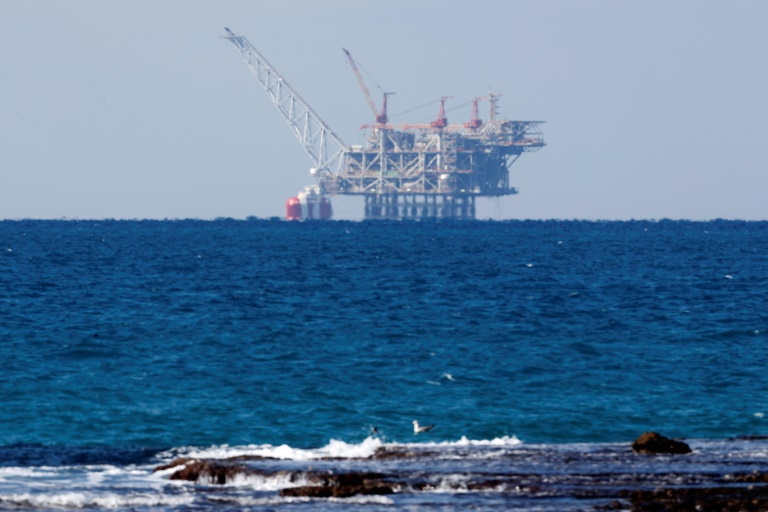
Major gas finds in the eastern Mediterranean — nearly 1,000 billion cubic meters (bcm) — have in the past decade turned Israel from a natural gas importer into an exporter.

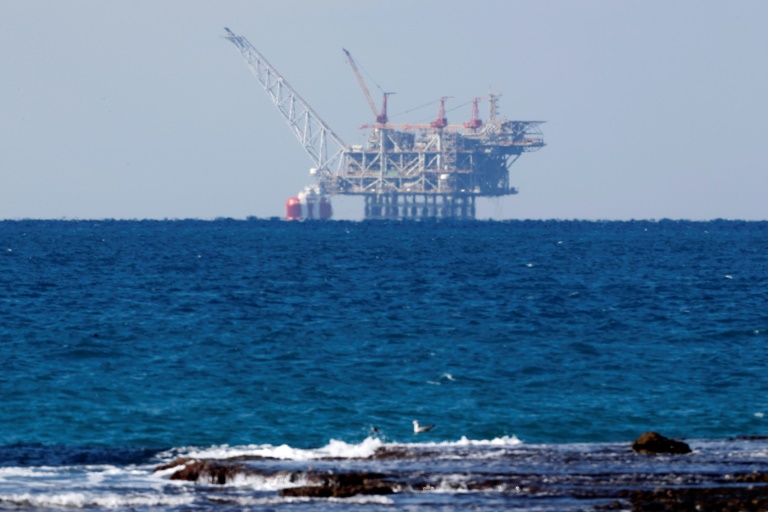
It now sells small quantities from its two major offshore fields, Leviathan and Tamar, to Egypt and Jordan. 

Israel’s domestic consumption over the next three decades would leave some 600 bcm available for export, said opposition lawmaker Yuval Steinitz, Israel’s energy minister until last year.

“In 2016 the pipeline to Turkey was examined, including with Turkey and commercial companies,” said Orit Ganor, director of natural gas international trade at Israel’s energy ministry. 

“The project didn’t reach fruition mainly due to economic reasons.”

Ganor said “the EastMed pipeline is still an option, and the company advancing it, Poseidon, is in the final stages of geophysical and geotechnical surveys of the pipe’s route in our waters and those of Greece and Cyprus”.

No financing has been secured for the project, which Steinitz said would cost about $6 billion and take around four years to complete.

He said there was also agreement with Cairo on a seabed pipeline from Leviathan to Egypt’s liquification plants that would allow for greater exports to Europe.

– ‘Catch-22’ –

Israel’s Leviathan field, which would be the source for European exports, is operated by an Israeli-American consortium including NewMed Energy and US major Chevron. 

NewMed Energy CEO Yossi Abu recently stated his ambition of “bringing Israeli gas to Europe and Asia”.

Experts say Israel’s current gas fields represent a third of potential reserves, but a means to sell future finds would be needed to encourage further exploration by private companies.

The state of Israel provides exploitation licenses and regulatory support, but does not drill for gas or build pipelines.

“There’s a ‘Catch-22’ here,” said Elai Rettig, a political scientist at Tel Aviv’s Bar-Ilan university.

“You need to find a customer that will agree to pay for this very, very expensive pipeline, and they won’t do it until you show them you’ve found enough gas to justify it.

“And you won’t find enough gas to justify it until you show that there’s someone to sell the gas to.”

Europe’s efforts to diversify gas imports began before the Ukraine war when it “experienced harsh weather and gas prices rose significantly,” said Ganor, the energy ministry official. 

Steinitz said a pipeline to Turkey would cost $1.5 billion and take two to three years to build.

Israel “could definitely be a serious factor in creating more independence and a wealth of energy sources for Europe,” he said.

He said Israel could even export via Greece, Turkey and Egypt at the same time because “we have enough gas to export through the three channels”.

Rettig stressed Israel’s need for “balance” between Turkey and Greece and to “continuously talk to both sides and to reassure them that one doesn’t come at the expense of the other”.

As EU eyes stopping Russian gas imports, Israel sees an opening

As Europe aims to wean itself off Russian fossil fuel because of the Ukraine invasion, Israel hopes to help fill the gap with gas from its offshore reserves.

EU states remain divided on the time scale, but European Commission President Ursula von der Leyen has said the bloc hopes to phase out its dependency on Russian gas, oil and coal by 2027.

Israel could build one or more pipelines, potentially via Greece or Turkey, or increase the quantity of gas piped to Egypt to be liquified and shipped off, say officials and experts. 

Israeli Foreign Minister Yair Lapid said after a recent visit to Athens that “the war in Ukraine stands to change the structure of the European and Middle Eastern energy market”. 

“We are also examining additional economic cooperation, with an emphasis on the energy market.”

The Jewish state has worked for years to create gas export routes, with mixed results so far. 

Turkey, whose ties with Israel have recently thawed after over a decade of rupture, has expressed new interest in a pipeline, and its energy minister is expected in Israel in the coming weeks.

During the years of diplomatic alienation from Turkey, Israel signed an accord with Greece and Cyprus in 2020 aiming to build the EastMed pipeline through those two countries from Israel to Europe. 

Turkey opposed the project, and a senior US diplomat said last week it would be too expensive and take too long to build. 

Energy Minister Karine Elharrar also hailed the potential for gas sales to Europe, telling the French Association of Defence Journalists that “we have the ability and we will try to do as much as we can”.

– Regional alliances –

With both Greece and its regional rival Turkey vying to be the conduit for the gas, Israel would have to tread carefully amid the regional alliances it wishes to uphold and strengthen.

Major gas finds in the eastern Mediterranean — nearly 1,000 billion cubic meters (bcm) — have in the past decade turned Israel from a natural gas importer into an exporter.

It now sells small quantities from its two major offshore fields, Leviathan and Tamar, to Egypt and Jordan. 

Israel’s domestic consumption over the next three decades would leave some 600 bcm available for export, said opposition lawmaker Yuval Steinitz, Israel’s energy minister until last year.

“In 2016 the pipeline to Turkey was examined, including with Turkey and commercial companies,” said Orit Ganor, director of natural gas international trade at Israel’s energy ministry. 

“The project didn’t reach fruition mainly due to economic reasons.”

Ganor said “the EastMed pipeline is still an option, and the company advancing it, Poseidon, is in the final stages of geophysical and geotechnical surveys of the pipe’s route in our waters and those of Greece and Cyprus”.

No financing has been secured for the project, which Steinitz said would cost about $6 billion and take around four years to complete.

He said there was also agreement with Cairo on a seabed pipeline from Leviathan to Egypt’s liquification plants that would allow for greater exports to Europe.

– ‘Catch-22’ –

Israel’s Leviathan field, which would be the source for European exports, is operated by an Israeli-American consortium including NewMed Energy and US major Chevron. 

NewMed Energy CEO Yossi Abu recently stated his ambition of “bringing Israeli gas to Europe and Asia”.

Experts say Israel’s current gas fields represent a third of potential reserves, but a means to sell future finds would be needed to encourage further exploration by private companies.

The state of Israel provides exploitation licenses and regulatory support, but does not drill for gas or build pipelines.

“There’s a ‘Catch-22’ here,” said Elai Rettig, a political scientist at Tel Aviv’s Bar-Ilan university.

“You need to find a customer that will agree to pay for this very, very expensive pipeline, and they won’t do it until you show them you’ve found enough gas to justify it.

“And you won’t find enough gas to justify it until you show that there’s someone to sell the gas to.”

Europe’s efforts to diversify gas imports began before the Ukraine war when it “experienced harsh weather and gas prices rose significantly,” said Ganor, the energy ministry official. 

Steinitz said a pipeline to Turkey would cost $1.5 billion and take two to three years to build.

Israel “could definitely be a serious factor in creating more independence and a wealth of energy sources for Europe,” he said.

He said Israel could even export via Greece, Turkey and Egypt at the same time because “we have enough gas to export through the three channels”.

Rettig stressed Israel’s need for “balance” between Turkey and Greece and to “continuously talk to both sides and to reassure them that one doesn’t come at the expense of the other”.

Close Bitnami banner
Bitnami