World

Taiwan issues wartime survival handbook

Taiwan’s military published a handbook on Tuesday advising civilians on how to prepare for a potential Chinese invasion, including where to find bomb shelters and how to stockpile emergency supplies.

China’s Communist Party has never controlled self-ruled Taiwan but it nonetheless views the island as part of its territory and has vowed to one day seize it, by force if necessary.

Those threats have turned more bellicose under Xi Jinping, China’s most authoritarian leader in a generation.

Russia’s recent invasion of Ukraine has also heightened fears that China might one day follow through on threats to annex its smaller neighbour.

The 28-page guide contains information which “the general public can use as an emergency response guideline in a military crisis or natural disaster,” defence ministry spokesman Sun Li-fang said during an introduction at an online press conference.

It is the first time Taiwan’s military has published such a handbook.

Drawn from similar guides by Sweden and Japan, it tells residents where to find bomb shelters via mobile phone apps and what to do in an emergency including how to distinguish air raid sirens.

“The guide is for the public to better prepare themselves before a war or disaster happens,” Liu Tai-yi, an official of the ministry’s All-Out Defense Mobilization Agency, said.

It includes information on basic survival skills for the public during air raids, massive fires, building collapses, power outages and natural disasters.

“We hope the public can familiarise themselves where the safety shelters are beforehand,” he added.

Beijing’s increased sabre-rattling has spurred diplomatic support for Taipei and visits from Western nations shaken by China’s more muscular tone.

Taiwan remains massively outgunned against China but the mountainous island would be a formidable challenge for any military to conquer.

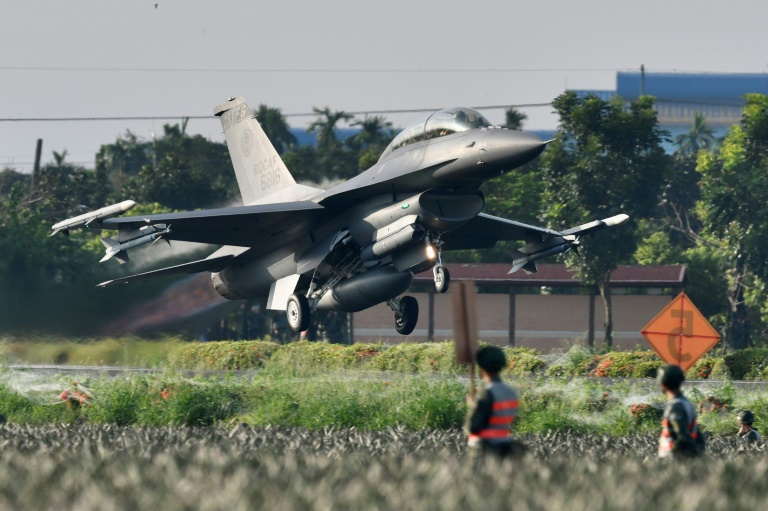
Taiwan last year stepped up its training regime for reservists and has increased purchases of military equipment such as jets and anti-ship missiles.

The island is also considering extending its compulsory military service to 12 months. Currently all eligible males have to undergo a four-month basic military training.

Unlike South Korea, the Philippines and Japan, Taiwan is not a treaty ally with the United States.

Washington remains Taiwan’s main arms supplier but it maintains a policy of “strategic ambiguity”, leaving China guessing as to whether an invasion would trigger a response.

Indonesia passes long-awaited sexual violence bill

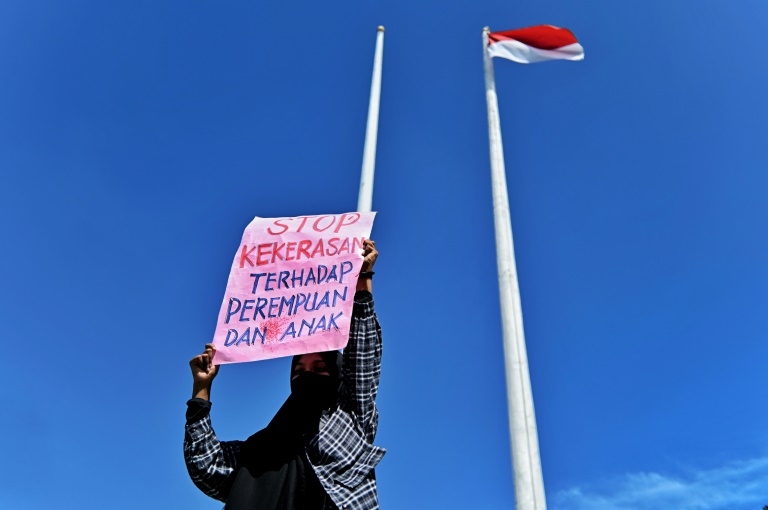
Indonesia’s parliament passed a long-awaited sexual violence bill on Tuesday, a landmark decision that raises hopes of justice for victims after the country recorded a spike in reported cases during the coronavirus pandemic.

Indonesian women’s rights activists have for years condemned the lack of avenues for victims of gender-based and sexual violence to seek justice in a country where abuse is often considered a private affair and victims are discouraged from filing a report.

Cheers and applause from women’s rights activists rang out after speaker of parliament Puan Maharani announced a majority of lawmakers had backed the bill at a plenary session.

“This law is a real manifestation of the country’s efforts to prevent any form of sexual violence and to care, protect and rehabilitate the victims as well as to enforce justice,” Bintang Puspayoga, minister of women empowerment and children protection, told the plenary session.

The bill, which seeks to combat sex crimes and provide a legal framework for victims including in cases of marital rape, was proposed a decade ago and drafted in 2016 but ran into delays.

Islamic groups said it promoted promiscuity and conservative lawmakers called for it to criminalise extramarital sex and LGBT relationships in the world’s largest Muslim-majority country.

The law focuses on the handling of sexual violence from prevention to victim recovery, ordering compensation for victims and allowing community-based organisations to provide counselling. 

Physical sexual abuse inside and outside marriage now carries a maximum 12-year prison sentence and forced marriage — including cases involving children — carries a maximum nine-year jail term.

Non-consensual distribution of sexual content is now punishable by a maximum prison sentence of four years.

President Joko Widodo in January called on parliament to accelerate the passing of the bill after years of roadblocks and following a high-profile case that sparked outrage last year of an Islamic boarding school teacher who raped 13 of his students.

Widodo’s order to his government came as the country witnessed a sharp increase in incidents of gender-based violence against women after the onset of the pandemic.

The National Commission on Violence Against Women (Komnas Perempuan) reported 338,496 such cases in 2021, a 50 percent rise from the previous year. 

Activists largely welcomed the law as a step forward for the country but said it could have been more far-reaching in the sex crimes it included.

The text does not include articles on rape and forced abortion. 

The government argued both of those crimes had been regulated in the country’s health law and will be included in later legislation.

Australia dispatches minister to Solomon Islands over China pact

Australia’s Minister for the Pacific was dispatched to the Solomon Islands on Tuesday over a controversial security pact Western allies fear will enable a Chinese military foothold in the South Pacific.

Minister Zed Seselja will travel to Honiara, his office confirmed, despite his political party in Australia being in the grips of a close-fought federal election campaign.

“My discussions will include the proposed Solomon Islands-China security agreement,” Seselja said in a statement.

A spokesperson for Solomon Islands Prime Minister Manasseh Sogavare told AFP the Pacific nation’s leader would “love to meet” with the Australian minister in Honiara.

A draft version of the security pact sent shockwaves across the region when it was leaked last month — particularly measures that would allow Chinese security and naval deployments to the Solomon Islands.

The United States and Australia have long been concerned about the potential for China to build a naval base in the South Pacific, allowing its navy to project power far beyond its borders.

Prime Minister Sogavare has said his government has “no intention whatsoever… to ask China to build a military base in the Solomon Islands”.

Last late month, officials from China and the Solomon Islands agreed on elements of the final security agreement, but the document has not been made public.

The leaked draft would allow for armed Chinese police to be deployed at the Solomon Islands’ request to maintain “social order”.

Without the written consent of the other party, neither would be allowed to disclose the missions publicly.

Seselja’s visit follows talks last week in Honiara between Australian intelligence chiefs and Solomon Islands officials over the security pact. 

Crisis-hit Sri Lanka defaults on all foreign debt

Sri Lanka defaulted on its $51 billion foreign debt Tuesday as the island nation grapples with its worst economic crisis in memory and widespread protests demanding the government’s resignation.

Acute food and fuel shortages, alongside long daily electricity blackouts, have brought widespread suffering to the country’s 22 million people in the most painful downturn since independence in 1948.

Public anger has flared in recent weeks with crowds attempting to storm the homes of government leaders and security forces dispersing protesters with tear gas and rubber bullets. 

Sri Lanka’s finance ministry said the country was defaulting on all external obligations, including loans from foreign governments, ahead of an International Monetary Fund bailout.

“The government is taking the emergency measure only as a last resort in order to prevent further deterioration of the republic’s financial position,” a statement from the ministry said.

Creditors were free to capitalise any interest payments due to them or opt for payback in Sri Lankan rupees, the ministry added.

Sri Lanka’s snowballing economic crisis began with an inability to import essential goods, after the coronavirus pandemic torpedoed vital revenue from tourism and remittances. 

The government imposed a wide import ban to conserve its foreign currency reserves and use them to service the debts it has now defaulted on.

Economists say the crisis has been made worse by government mismanagement, years of accumulated borrowing and ill-advised tax cuts.

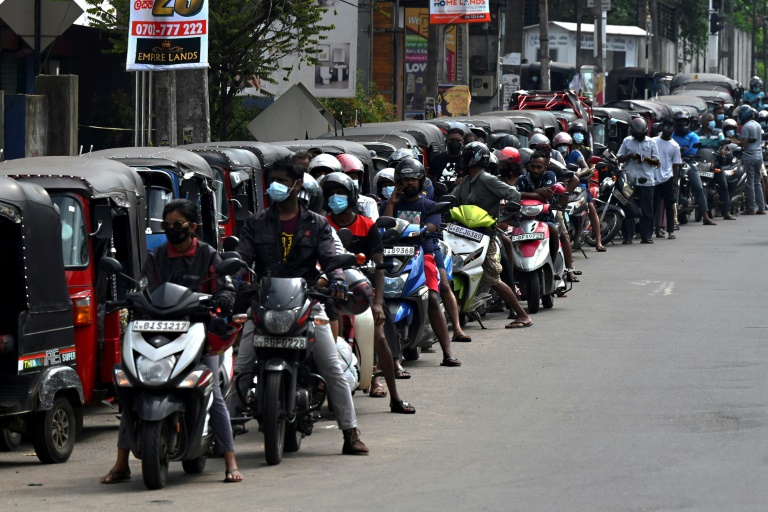
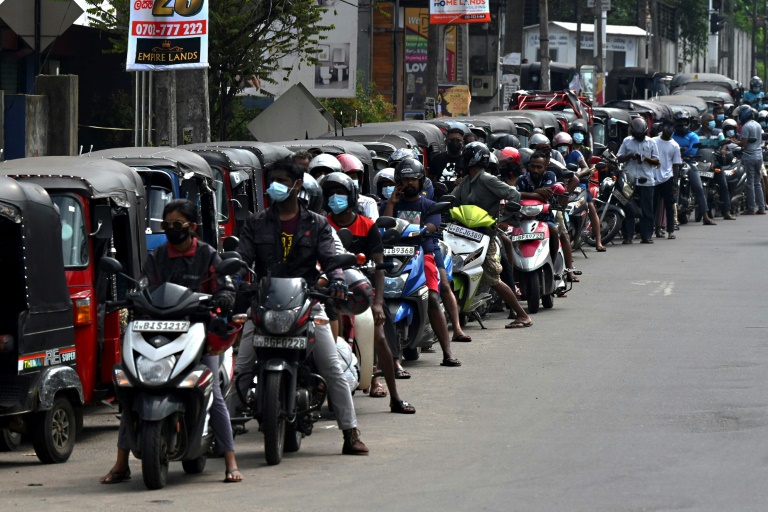
Public frustration with the government is widespread, with long queues around the island nation forming each day to buy scarce supplies of petrol, gas and kerosene for cooking stoves. 

Thousands of people were camped outside President Gotabaya Rajapaksa’s seafront office in the capital Colombo in the fourth straight day of protests calling for him to step down.

– Rating downgrade –

International rating agencies also downgraded Sri Lanka last year, effectively blocking the country from accessing foreign capital markets to raise new loans and meet demand for food and fuel.

Sri Lanka had sought debt relief from India and China, but both countries instead offered more credit lines to buy commodities from them.

Official figures show that China and Japan, two key bilateral sovereign creditors, hold about 10 percent each of Sri Lanka’s foreign debt while India’s share is under five percent.

Just under half of Sri Lanka’s debt is market borrowings through international sovereign bonds and other similar instruments.

Estimates showed Sri Lanka needed $7 billion to service its debt load this year, against just $1.9 billion in reserves at the end of March. 

Crisis-hit Sri Lanka defaults on all foreign debt

Sri Lanka defaulted on its $51 billion foreign debt Tuesday as the island nation grapples with its worst economic crisis in memory and widespread protests demanding the government’s resignation.

Acute food and fuel shortages, alongside long daily electricity blackouts, have brought widespread suffering to the country’s 22 million people in the most painful downturn since independence in 1948.

Public anger has flared in recent weeks with crowds attempting to storm the homes of government leaders and security forces dispersing protesters with tear gas and rubber bullets. 

Sri Lanka’s finance ministry said the country was defaulting on all external obligations, including loans from foreign governments, ahead of an International Monetary Fund bailout.

“The government is taking the emergency measure only as a last resort in order to prevent further deterioration of the republic’s financial position,” a statement from the ministry said.

Creditors were free to capitalise any interest payments due to them or opt for payback in Sri Lankan rupees, the ministry added.

Sri Lanka’s snowballing economic crisis began with an inability to import essential goods, after the coronavirus pandemic torpedoed vital revenue from tourism and remittances. 

The government imposed a wide import ban to conserve its foreign currency reserves and use them to service the debts it has now defaulted on.

Economists say the crisis has been made worse by government mismanagement, years of accumulated borrowing and ill-advised tax cuts.

Public frustration with the government is widespread, with long queues around the island nation forming each day to buy scarce supplies of petrol, gas and kerosene for cooking stoves. 

Thousands of people were camped outside President Gotabaya Rajapaksa’s seafront office in the capital Colombo in the fourth straight day of protests calling for him to step down.

– Rating downgrade –

International rating agencies also downgraded Sri Lanka last year, effectively blocking the country from accessing foreign capital markets to raise new loans and meet demand for food and fuel.

Sri Lanka had sought debt relief from India and China, but both countries instead offered more credit lines to buy commodities from them.

Official figures show that China and Japan, two key bilateral sovereign creditors, hold about 10 percent each of Sri Lanka’s foreign debt while India’s share is under five percent.

Just under half of Sri Lanka’s debt is market borrowings through international sovereign bonds and other similar instruments.

Estimates showed Sri Lanka needed $7 billion to service its debt load this year, against just $1.9 billion in reserves at the end of March. 

Asia markets mostly down ahead of key US data

Most Asian markets were down Tuesday afternoon, after a weak lead from Wall Street and with all eyes on key US inflation data due later in the day.

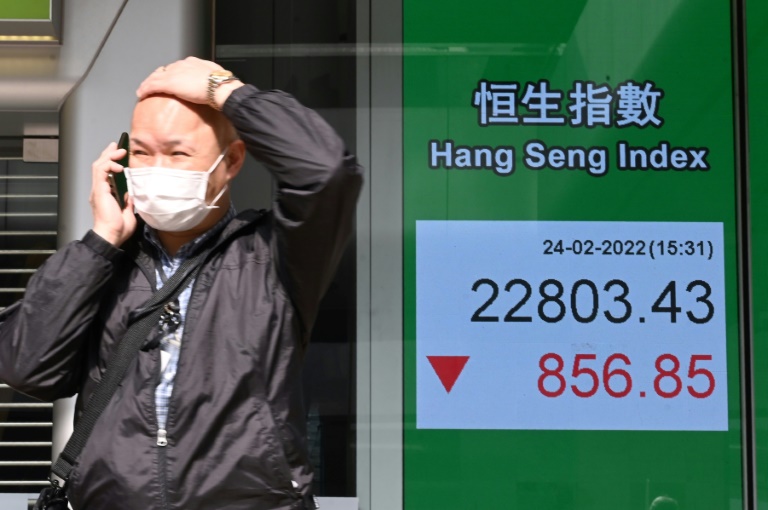
Tokyo closed down by nearly two percent, though Hong Kong was up more than one percent by the afternoon.

Shanghai also posted gains, while Seoul, Taipei, Sydney and Jakarta were all in the red.

This followed a weak Monday performance from Wall Street and Europe, with sentiment souring on flat UK economic growth and expectations for another strong US inflation report, which will likely bring aggressive interest rate hikes from the Federal Reserve.

The government is set to release the US consumer price index (CPI) for March on Tuesday, after inflation rose 7.9 percent over the 12 months to February, the biggest increase in 40 years.

Calling it the “Putin price hike” in reference to the economic ramifications of Russia’s invasion of Ukraine, White House Press Secretary Jen Psaki told reporters: “We expect March headline inflation to be extraordinarily elevated.”

Economists are expecting annual US inflation to spike to nearly 8.5 percent, which would be the highest since late 1981.

“It’s not really about the level of inflation anymore, as it has been well broadcast that CPI is hotter than hot,” said Matt Simpson, senior market analyst at City Index. “The big question is how long it takes to come back down and whether the Fed will tip the US into a recession in doing so.”

“What we’re faced with this year is stagflation,” Kathryn Rooney Vera, head of global macro research at Bulltick LLC, told Bloomberg Television. 

“It’s a very complicated environment that the Fed has found itself in”, and the market is pricing in potentially 50 basis points of hikes at each of the next two policy meetings, she added.

US Treasuries declined, taking the 10-year yield past 2.80 percent.

All those concerns were weighing on the Tokyo market, Okasan Online Securities said in a note.

“Investors will then likely refrain from making major moves ahead of the release of the March US consumer prices data later in the day. The market will likely lose a sense of clear direction” until the data’s release, the brokerage said.

“The Chinese government gave out its first online game approvals in months,” noted Jeffrey Halley, senior markets analyst at OANDA, in relation to the gains in Hong Kong and Shanghai.

The approvals were for the first batch of new video game licences since July, a step that could ease some of the worst concerns about Beijing’s gaming-sector curbs.

But “sentiment hasn’t been helped by the latest Covid extended lockdown measures being initiated by Chinese authorities in Shanghai in what is likely to be a fruitless attempt to stem the spread of the more contagious Omicron variant”, said Michael Hewson, chief market analyst at CMC Markets UK.

Oil steadied, with Brent crude back just over $100 a barrel, after a tumble that erased most of the commodity’s gains sparked by Russia’s war in Ukraine.

– Key figures around 0710 GMT –

Tokyo – Nikkei 225: DOWN 1.81 percent at 26,334.98 (close)

Hong Kong – Hang Seng Index: UP 1.09 percent at 21,440.35

Shanghai – Composite: UP 1.46 percent at 3,213.33

Brent North Sea crude: UP 3.15 percent at $101.58 per barrel

West Texas Intermediate: UP 3.21 percent at $97.32 per barrel

Euro/dollar: DOWN at $1.0857 from $1.0871

Pound/dollar: DOWN at $1.3005 from $1.3021

Euro/pound: FLAT at 83.49 pence

Dollar/yen: UP at 125.68 yen from 125.40

New York – Dow: DOWN 1.19 percent at 34,308.08 (close)

London – FTSE 100: DOWN 0.67 percent at 7,618.31 (close)

— Bloomberg News contributed to this report —

From Denmark to Portugal, Europe ups effort to quit Russian gas

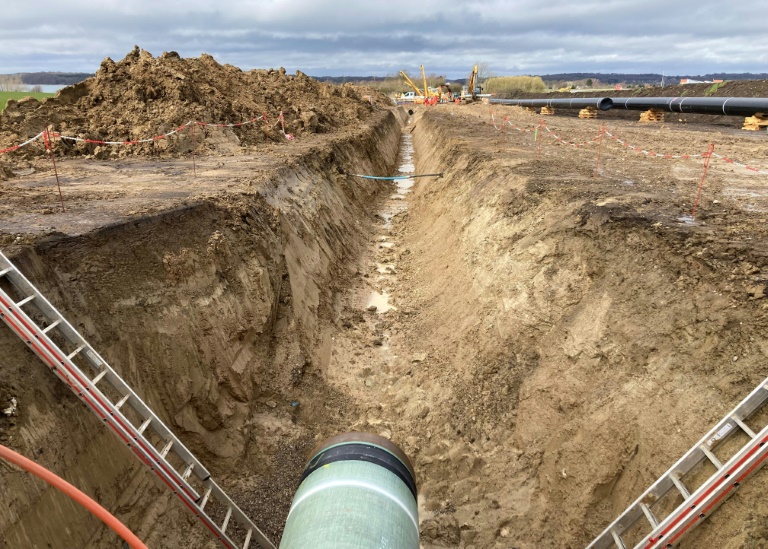
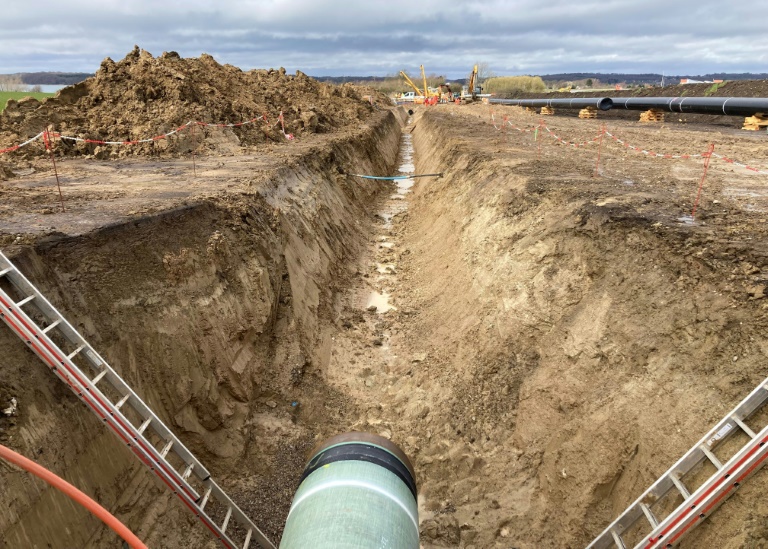
In Denmark, large black pipes are about to be buried in a muddy trench, as construction of a gas pipeline from Norway to Poland resumes following Russia’s invasion of Ukraine.

From plans for liquefied natural gas terminals in northern Germany, Finland and France to potential new routes through Spain and the Mediterranean, Europe is striving to rid itself of its dependence on Russian gas, though experts say the task will take years to complete.

In Middelfart in central Denmark, work resumed last month on the Baltic Pipe project, a planned 900-kilometre link, mainly intended to help Poland reduce its dependence on Russian natural gas.

“Of course it’s also to have the gas in the Danish system but mainly also to help our good neighbours’ gas systems and our Polish good friends,” Soren Juul Larsen, head of the project at Danish energy infrastructure operator Energinet, told AFP in English.

Just a week after the invasion of Ukraine, the Danish environmental authority — which had concerns about the project’s impact on local populations of mice and bats — granted a permit to continue construction, after a nine-month suspension.

“The pipeline was stopped because of a lack of permissions concerning the protection of nature and rare species,” Trine Villumsen Berling, a researcher at the Danish Institute for International Studies, told AFP.

“We were expecting it to soon be approved but of course the war made it a more pressing issue,” Villumsen said.

– Not enough for all –

Envisioned almost 20 years ago, construction of the partly submerged pipeline began in 2018. It is now expected to start operations in October, before becoming fully operational on January 1, 2023.

“We really have a good cooperation with all contractors to speed up (and) do whatever we can to protect the schedule,” Juul Larsen explained during a visit to the construction site.

With an annual transport capacity of 10 billion cubic metres of gas, the pipeline should cover around 50 percent of consumption by Poland, which announced three years ago it would end its contract with Russian giant Gazprom in 2022.

While this may be good news for Poland, it could spell trouble for other European countries seeking to free themselves of Russian gas.

Norway, Europe’s second-largest gas supplier after Russia, is delivering at full capacity, so more gas to Poland means less for the rest of the continent.

“This project would help out Poland but may lead to less Norwegian gas exports to the UK and Germany,” Zongqiang Luo, an expert at research firm Rystad Energy, told AFP.

In addition, many long-term contracts between Russia and European suppliers are valid for another 10 to 15 years, he noted.

While the European Union has resisted calls to ban Russian gas immediately, it has announced plans to slash imports by two thirds this year and eliminate them entirely before the end of the decade.

With Norway at full capacity, Dutch and UK fields in decline, and Russian gas declared undesirable, Europe is looking for gas from further away, including liquefied natural gas (LNG) transported by ship from the US, Qatar and Africa. 

But such imports require the construction of large LNG terminals to turn it back into gas or, at the very least, the purchase of so-called floating storage regasification units (FSRUs).

– Emancipation –

As the entry into service of the Nord Stream 2 gas pipeline from Russia has been suspended, Germany has urgently relaunched three LNG terminal projects previously considered to be of low priority.

One is expected to be completed in the winter of 2023-24 but the other two not before 2026.

Finland and Estonia last week announced a project to lease an import terminal ship. Estonia and the other two Baltic countries say they have stopped importing Russian gas since April 1.

In southern Europe, Spain and Portugal are strengthening an alternative supply route to help Europe wean itself off Russian gas.

To this end, the port of Sines, Portugal’s largest, plans to double the capacity of its gas terminal in under two years.

Spain, which is linked to Algeria via a pipeline and has vast LNG terminals, could provide another supply option for Europe but this would require major work to improve connections with the rest of the EU, notably via France. 

Another option under consideration is to connect Europe to the gas from the eastern Mediterranean, where large reserves have been discovered off Israel and Cyprus over the past 20 years.

From Denmark to Portugal, Europe ups effort to quit Russian gas

In Denmark, large black pipes are about to be buried in a muddy trench, as construction of a gas pipeline from Norway to Poland resumes following Russia’s invasion of Ukraine.

From plans for liquefied natural gas terminals in northern Germany, Finland and France to potential new routes through Spain and the Mediterranean, Europe is striving to rid itself of its dependence on Russian gas, though experts say the task will take years to complete.

In Middelfart in central Denmark, work resumed last month on the Baltic Pipe project, a planned 900-kilometre link, mainly intended to help Poland reduce its dependence on Russian natural gas.

“Of course it’s also to have the gas in the Danish system but mainly also to help our good neighbours’ gas systems and our Polish good friends,” Soren Juul Larsen, head of the project at Danish energy infrastructure operator Energinet, told AFP in English.

Just a week after the invasion of Ukraine, the Danish environmental authority — which had concerns about the project’s impact on local populations of mice and bats — granted a permit to continue construction, after a nine-month suspension.

“The pipeline was stopped because of a lack of permissions concerning the protection of nature and rare species,” Trine Villumsen Berling, a researcher at the Danish Institute for International Studies, told AFP.

“We were expecting it to soon be approved but of course the war made it a more pressing issue,” Villumsen said.

– Not enough for all –

Envisioned almost 20 years ago, construction of the partly submerged pipeline began in 2018. It is now expected to start operations in October, before becoming fully operational on January 1, 2023.

“We really have a good cooperation with all contractors to speed up (and) do whatever we can to protect the schedule,” Juul Larsen explained during a visit to the construction site.

With an annual transport capacity of 10 billion cubic metres of gas, the pipeline should cover around 50 percent of consumption by Poland, which announced three years ago it would end its contract with Russian giant Gazprom in 2022.

While this may be good news for Poland, it could spell trouble for other European countries seeking to free themselves of Russian gas.

Norway, Europe’s second-largest gas supplier after Russia, is delivering at full capacity, so more gas to Poland means less for the rest of the continent.

“This project would help out Poland but may lead to less Norwegian gas exports to the UK and Germany,” Zongqiang Luo, an expert at research firm Rystad Energy, told AFP.

In addition, many long-term contracts between Russia and European suppliers are valid for another 10 to 15 years, he noted.

While the European Union has resisted calls to ban Russian gas immediately, it has announced plans to slash imports by two thirds this year and eliminate them entirely before the end of the decade.

With Norway at full capacity, Dutch and UK fields in decline, and Russian gas declared undesirable, Europe is looking for gas from further away, including liquefied natural gas (LNG) transported by ship from the US, Qatar and Africa. 

But such imports require the construction of large LNG terminals to turn it back into gas or, at the very least, the purchase of so-called floating storage regasification units (FSRUs).

– Emancipation –

As the entry into service of the Nord Stream 2 gas pipeline from Russia has been suspended, Germany has urgently relaunched three LNG terminal projects previously considered to be of low priority.

One is expected to be completed in the winter of 2023-24 but the other two not before 2026.

Finland and Estonia last week announced a project to lease an import terminal ship. Estonia and the other two Baltic countries say they have stopped importing Russian gas since April 1.

In southern Europe, Spain and Portugal are strengthening an alternative supply route to help Europe wean itself off Russian gas.

To this end, the port of Sines, Portugal’s largest, plans to double the capacity of its gas terminal in under two years.

Spain, which is linked to Algeria via a pipeline and has vast LNG terminals, could provide another supply option for Europe but this would require major work to improve connections with the rest of the EU, notably via France. 

Another option under consideration is to connect Europe to the gas from the eastern Mediterranean, where large reserves have been discovered off Israel and Cyprus over the past 20 years.

Russia aims to take Mariupol as part of eastern Ukraine onslaught

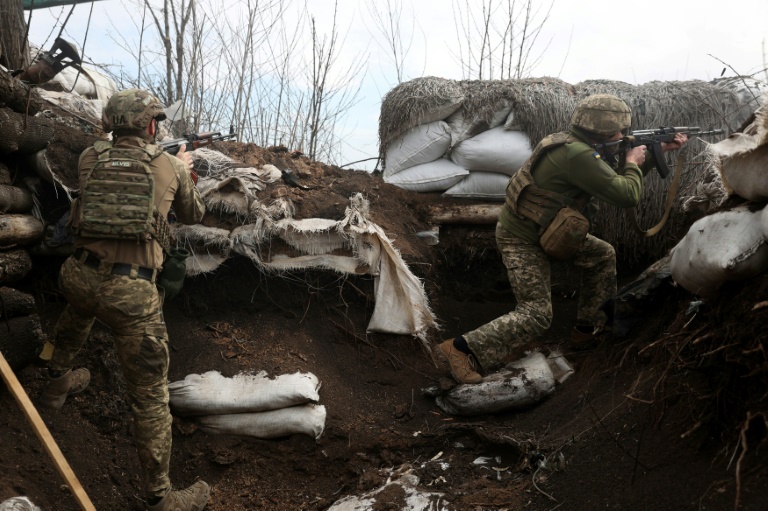
Russian troops were aiming to take control of the city of Mariupol on Tuesday, part of an anticipated massive onslaught across eastern Ukraine, as defending forces tried desperately to hold them back.

Russia is believed to be trying to connect occupied Crimea with Moscow-backed separatist territories Donetsk and Lugansk in Donbas, and has laid siege to the strategically located city, once home to more than 400,000 people.

“It is likely that in the future the enemy will try to take control of the city of Mariupol, capture Popasna and launch an offensive in the direction of Kurakhove in order to reach the administrative borders of Donetsk region,” the General Staff of the Armed Forces of Ukraine said on Facebook. 

In Mariupol itself, Ukrainian forces were “surrounded and blocked”, according to Myhaylo Podolyak, an official from President Volodymyr Zelensky’s office. 

But on Monday the army insisted that “the defence of Mariupol continues”. 

“The connection with the units of the defence forces that heroically hold the city is stable and maintained,” the Land Forces of Ukraine wrote on Telegram.

In his nightly address, Zelensky made another plea to his allies for more weapons to boost the defence of the city. 

“We are not getting as much as we need to end this war sooner. To completely destroy the enemy on our land… in particular, to unblock Mariupol,” he said. 

He made a similar appeal for military assistance to South Korea’s National Assembly earlier in the day, telling lawmakers Russia had “completely destroyed Mariupol and burned it to ashes”.

“At least tens of thousands of Mariupol citizens must have been killed,” he added.

– Chemical weapons allegations –

Late Monday, Britain said it was trying to verify reports that Russia had also used chemical weapons in the city.

Western officials have previously expressed concerns that as the conflict drags into its seventh week, Russia could resort to such extreme measures.

Ukrainian lawmaker Ivanna Klympush said Russia had used an “unknown substance” and that people were suffering from respiratory failure.

But on messaging app Telegram, Petro Andryushchenko, an aide to the city’s mayor, wrote that a chemical attack was not confirmed and that they were “waiting for official information from the military”. 

Elsewhere in the east, heavy bombardment continued as civilians were urged to flee ahead of an expected Russian troop surge in the region. 

Eight people were killed by shelling in the northeastern city of Kharkiv, the head of the regional state administration Oleg Synegubov said. 

Russian forces are reinforcing around the Donbas region, notably near the town of Izyum, but have not yet launched a full offensive, Pentagon officials said Monday.

They reported a Russian convoy had been observed heading for Izyum, an hour’s drive north of Kramatorsk, saying it appeared to be a mix of personnel-carriers, armoured vehicles and possible artillery.

Ukraine’s defence ministry said it believed a major assault would happen soon. 

“We don’t know precisely when, but the preparation is almost over,” spokesman Oleksandr Motuzyanyk told a briefing on Monday.  

– ‘Logic of war’ – 

Such signs of a build-up in Donbas suggest hopes of an imminent diplomatic solution remain slim. 

After a meeting with Russian President Vladimir Putin on Monday, Austrian Chancellor Karl Nehammer said he was “rather pessimistic” of such efforts succeeding as Putin had “massively entered into a logic of war”. 

Ukraine’s allies are trying instead to increase economic and diplomatic pressure on Moscow — but EU foreign ministers’ discussions on a sixth round of sanctions on Monday ended without a consensus. 

“Nothing is off the table, including sanctions on oil and gas,” Josep Borrell, the European Union’s top diplomat, told reporters after the meeting. “But today, no decision was taken.”

In an effort to shore up wider international support for Kyiv, US President Joe Biden held virtual talks with Indian Prime Minister Narendra Modi just weeks after saying New Delhi had been “shaky” in its response to the invasion.

And the UN Security Council — which on Monday held a session on the plight of women and children in Ukraine — will hold another meeting next week on the humanitarian situation there, in a bid to keep pressure on Russia despite its veto power over the body, diplomats said.

– ‘Rape and sexual violence’ –

At Monday’s UNSC meeting, officials called for an investigation into violence against women during the conflict.

“This war must stop. Now,” Sima Bahous, director of the UN women’s agency, told the Council.

“We are increasingly hearing of rape and sexual violence. These allegations must be independently investigated to ensure justice and accountability.” 

More than 4.5 million Ukrainian refugees have now fled their country, the United Nations refugee agency said — 90 percent of them women and children.

The war has displaced more than 10 million people overall. 

One of those was Tatyana Kaftan, just weeks away from giving birth to her first child, who spoke to AFP at an aid distribution point in the western city of Lviv.  

Her husband, who is waiting to be called up to the army, stood by her side.

“We left everything at home,” said the 35-year-old travel agent, who drove with her husband all the way from Mykolaiv to escape Russian shelling.  

“We have nothing.”

– ‘No words’ –

Russian troops have been accused of widespread atrocities across the country, particularly in areas around Kyiv from which they have now withdrawn, allegations Moscow categorically denies.

Ukraine says more than 1,200 bodies have been found around the capital.

Seven bodies were found Monday under the rubble of two multi-storey buildings in the town of Borodianka, the state emergency service said, bringing the total to 19.

Lithuania’s prime minister, who was touring the town, said she had “no words” to describe the devastation and accused Russia of war crimes. 

“The images  of the ruined Ukrainian towns and cities, and the testimonies of the survivors, reveal the real  face of Russia,” Ingrida Simonyte said. 

French investigators have arrived in Ukraine to help probe suspected war crimes, and the European Union has earmarked 2.5 million euros ($2.7 million) to the International Criminal Court for future Ukraine cases.

The global consequences of the war were evident Monday as the World Trade Organization projected world trade growth could almost halve this year. 

The WTO said the conflict was a “severe blow” to the world’s economy which in the longer term could even spark a disintegration of the global economy into separate blocs.

Russia was also blamed for an escalating global food crisis by the EU’s Borrell, because of its bombing of wheat stocks and preventing ships from carrying grain abroad.

Albania's former 'Stalin City' looks West with NATO airbase

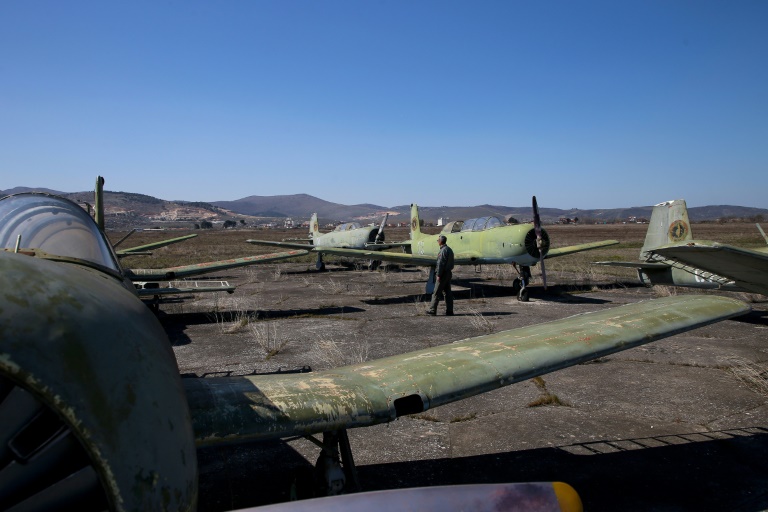
In an Albanian city once named for Soviet dictator Joseph Stalin, dozens of Soviet- and Chinese-made planes rust in the open air on a former communist airbase, some with flat tyres, others covered with dust.

The site in the central city now called Kucova is being transformed into a modern NATO airbase, a symbol of Albania’s westward shift — and a key military buffer in Europe as Russia wages war in Ukraine.

The renovation project was agreed in 2018 by the Balkan state and NATO, which has already committed $55 million (50.4 million euros) to the project, according to Albanian sources. 

Construction began at the beginning of the year, ahead of Russia’s February 24 invasion of Ukraine that has sparked fears of a spillover into NATO and EU member states.

Though the timing of the Kucova base redevelopment was a coincidence, for some it is a welcome one. 

“The changed global security environment has now created considerable impetus for the completion of the (base) renovation plan,” a NATO official in Brussels told AFP, speaking on condition of anonymity. 

The base, due to be completed in 2023, will give the “alliance an important strategic facility in the Western Balkans, within short reach of the Mediterranean, Middle East and the Black Sea region”, the NATO official said. 

– ‘Clear message’ – 

After decades of global isolation, Albania became a NATO member in 2009. 

It was shunned by much of the world under paranoid Communist dictator Enver Hoxha, who forged close ties with the Soviet Union and China before falling out with them over their apparent deviation from true Marxism. 

The country embraced the West after the fall of the communist regime in 1990, and today is eager to become an EU member. 

The defunct aircraft at the Kucova base are reminders of a chapter of Albania’s history many are happy to leave behind — and a signal to Russia which has sought to extend its influence in the region. 

“The construction of this base is a clear message to other players with bad intentions in the Western Balkans region,” Albania’s Defence Minister Niko Peleshi told AFP.

The construction is certain to irk Moscow, which strongly opposes any NATO expansion into eastern and central Europe — especially in the Balkans which has traditionally been torn between East and West. 

Today, Albania’s neighbours Croatia, Montenegro and Northern Macedonia are all part of NATO too. 

For Seit Putro, who has worked in the finance department at the base for more than 30 years, it’s a welcome confirmation of Albania’s political allegiances. 

“Once in the East, we are now in our place, next to the West, which is a good step forward for all,” he told AFP. 

– Job creation –

The 350-hectare (865-acre) site in the former ‘Stalin City’ was built in the 1950s under Hoxha with help from the Soviets, and completed later with a network of the same kind of underground tunnels that were dug across the country in case of nuclear attack.  

Once the NATO renovation is finished, it will function as a tactical operational base, kitted out with a refurbished runway more than two kilometres (1.2 miles) long, an updated control tower and new storage units.

It will have the capacity to host state-of-the-art military aircraft and can also be used for refuelling and ammunition storage.

Officials are also hoping the base, which once employed 700 people, will create new jobs in the poor region, 85 kilometres south of the capital Tirana. 

It will have a “very positive economic and social impact”, said deputy commander of the base, Major Leandro Syka. 

– ‘Natural alliance’ – 

The aircraft now languishing on the airbase mainly consist of Chinese and Soviet MiGs, Soviet-made Antonovs and Yak-18s. 

At the end of the Cold War, the base had about 200 planes and 40 helicopters, which were put out of commission as they were obsolete. 

About 75 remain today, and their fate remains uncertain.

The authorities have to yet to decide whether they will be auctioned, put in a museum or turned into scrap metal.

For some, they hold painful memories from past conflicts. 

Former pilot Niazi Nelaj remembers clearly his first flight aboard a Mig-15, which bore bullet marks from combat in distant Asian countries.

But the 85-year-old is happy to see the airbase aligned with NATO, and he believes Albania’s previous pivot toward the East was only an “accident of history”.

“Albania’s natural alliance has always been and will be with the West,” he said.

Close Bitnami banner
Bitnami