World

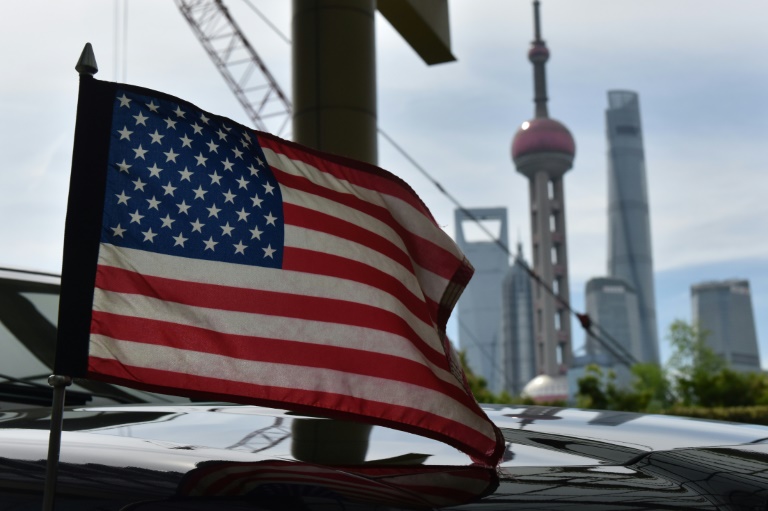
US orders non-essential consulate staff to leave Shanghai

The United States announced Tuesday it had ordered all non-essential employees at its Shanghai consulate to leave, while voicing concerns for the safety of Americans in China as the government enforces hard lockdowns to contain Covid-19.

China has stuck to a policy of “zero Covid”, aiming to eliminate infections through rigid lockdowns, mass testing and travel restrictions.

But the policy has come under strain since March as more than 100,000 cases in Shanghai have led to a lockdown of the city’s 25 million inhabitants, sparking widespread public outcry over food shortages and an inflexible policy of sending anyone who tests positive to quarantine centres.

The US State Department ordered the departure “due to the ongoing Covid-19 outbreak”, a spokesperson from its Beijing embassy said in a statement.

American diplomats have also raised “concerns about the safety and welfare of US citizens with People’s Republic of China officials,” the statement added. 

“It is best for our employees and their families to be reduced in number and our operations to be scaled down as we deal with the changing circumstances on the ground,” it read. 

China’s largest city reported more than 23,000 new coronavirus infections on Tuesday.

While some Shanghai residents who live in neighbourhoods deemed a low virus risk have been allowed outside their homes this week, unclear rules and the threat of re-entering lockdown if new cases are found has left most in limbo.

Criticism of China’s unrelenting approach to crushing outbreaks is mounting, more so as the rest of the world learns to live with the pandemic.

The European Union Chamber of Commerce has warned that China’s coronavirus strategy is “eroding foreign investors’ confidence”. 

In a letter seen by AFP, it urged the Chinese government to shift its approach by vaccinating the elderly — among whom inoculation rates are low — and allowing people with mild Covid to quarantine at home.

Beijing has hit back against the US complaints, with Chinese foreign ministry spokesman Zhao Lijian on Saturday slamming the United States’ “groundless accusations” and insisting that China’s policy was “scientific and effective”.

Shanghai authorities have vowed the city “would not relax in the slightest”, preparing tens of thousands of new beds to receive every person who tests positive for the virus — whether or not they show any symptoms.

Residents have taken to social media to vent about food shortages and heavy-handed controls, including the killing of a pet corgi by a health worker and a now-softened policy of separating infected children from their virus-free parents.

On Tuesday, Shanghai residents were still deciphering the precise details of an announcement that allowed some living in areas with relatively few virus cases to begin leaving their compounds. 

Monday’s adjustment set three levels of controls depending on the caseload.

But freedom still appears far off for most in the city, with at least one southern district at the lowest level only allowing residents out once a day to buy supplies.

Chinese social media was abuzz on Tuesday over a viral audio clip that appeared to show a Shanghai couple pleading with police not to send them to a quarantine facility after they were reportedly misdiagnosed as Covid cases.

Authorities later said the couple eventually agreed to cooperate with officials and that “no misjudgment had occurred”.
Search for survivors in Philippine villages hit by landslides

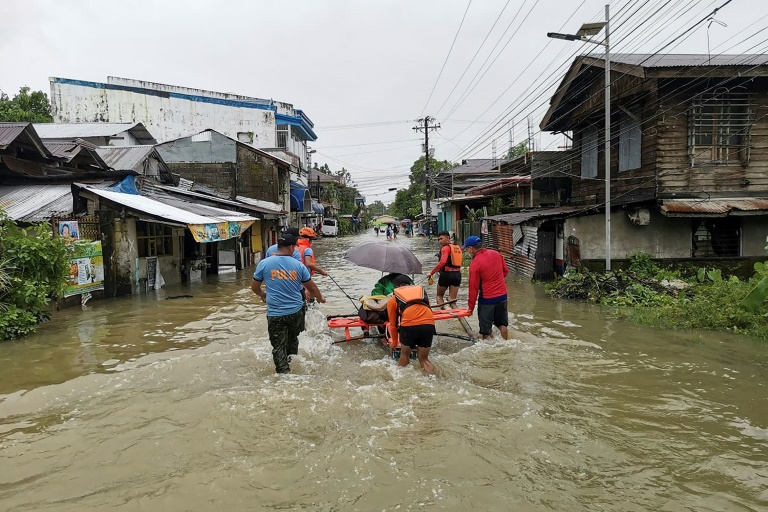
Rescuers hampered by mud and rain searched Tuesday for survivors of landslides that smashed into villages in the central Philippines, as the death toll from tropical storm Megi rose to 28. 

More than 17,000 people fled their homes as the storm pummelled the disaster-prone region in recent days, flooding houses, severing roads and knocking out power.

At least 22 people were dead and 27 missing after landslides slammed into multiple villages in Leyte province — one of the hardest hit by the storm — local authorities said. Just over 100 people were injured. 

Three people were also killed in the central province of Negros Oriental and three on the main southern island of Mindanao, according to the national disaster agency.

“It’s supposed to be the dry season but maybe climate change has upended that,” said Marissa Miguel Cano, public information officer for Leyte’s Baybay City, where many of the devastated villages are located.

Drone footage shared on Facebook and verified by AFP showed a wide stretch of mud that had swept down a hill of coconut trees and engulfed Bunga, one of the communities affected. 

At least one person had been killed and 21 people were missing in the devastated village, which had been reduced to a few rooftops poking through the mud. 

Cano said the hilly region of corn, rice and coconut farms was prone to landslides, but they were usually small and not fatal. 

Rescue efforts were also focused on the nearby village of Kantagnos, which an official said had been hit by two landslides. 

Some residents managed to escape or were pulled out of the mud alive, but many are still feared trapped.

Five people have been confirmed dead in Kantagnos, but it is not clear how many are still missing. 

A Philippine Coast Guard video shared on Facebook showed six rescuers carrying a mud-caked woman on a stretcher to safety.  

“There was a small landslide and some people were able to run to safety, and then a big one followed which covered the entire village,” Baybay City Mayor Jose Carlos Cari told local broadcaster DZMM Teleradyo. 

“We’re looking for many people, there are 210 households there.”

Cari said the bad weather was hampering rescue efforts. 

“We’re pushing, but we’re having a hard time because it’s dangerous,” he said.

“Equipment has been mobilised, everything is ready, but we’re unable to move because it’s still raining heavily and rivers are still swollen.”

– Direct hit on homes –

The military has joined coast guard, police and fire protection personnel in the search and rescue efforts. 

National disaster agency spokesman Mark Timbal said landslides around Baybay City had reached settlements “outside the danger zone”, catching many people by surprise. 

“There were people in their homes that were hit directly by the landslide,” Timbal told AFP.

Tropical storm Megi — known in the Philippines by its local name Agaton — is the first major storm to hit the country this year. 

Whipping up seas, it forced dozens of ports to suspend operations and stranded nearly 8,000 people at the start of Holy Week, one of the busiest travel periods of the year.

The Philippines reopened to fully vaccinated tourists from most countries in February after lifting practically all Covid-19 restrictions, and Easter is a popular holiday for domestic tourists.

The storm comes four months after a super typhoon devastated swathes of the archipelago nation, killing more than 400 people and leaving hundreds of thousands homeless.

Scientists have long warned typhoons are strengthening more rapidly as the world becomes warmer due to climate change.

The Philippines — ranked among the most vulnerable nations to its impacts — is hit by an average of 20 storms every year.

War in Ukraine: Latest developments

Here are the latest developments in the war in Ukraine:

– Ukrainians ‘surrounded’ in Mariupol –

Ukrainian forces are “surrounded and blocked” in Mariupol as Russian forces push to take the city, Myhaylo Podolyak, an official from President Volodymyr Zelensky’s office, tweets. 

The Ukrainian army insists that “the defence of Mariupol continues”.

Ukrainian President Volodymyr Zelensky says he believes “tens of thousands” of people in the city have been killed.

– Chemical weapons allegations –

Britain says it is trying to verify reports that Russia has used chemical weapons in Mariupol. 

Ukrainian lawmaker Ivanna Klympush says Russia has used an “unknown substance” and that people are suffering from respiratory failure.

But an aide to the city’s mayor says that a chemical attack has not been confirmed and that they are “waiting for official information from the military”. 

– Russians reinforce in Donbas –

Russian forces are reinforcing around the Donbas region, notably near the town of Izyum, but have not yet launched a full offensive, Pentagon officials say.

Ukraine’s defence ministry says that Russian preparations are almost over and that it believes a major assault will happen soon. 

– Austrian leader ‘pessimistic’ –

Austrian Chancellor Karl Nehammer says he is “rather pessimistic” about the prospects for diplomacy ending the Ukraine conflict after meeting with Russian President Vladimir Putin.

Describing Putin as having “massively entered into a logic of war”, Nehammer tells reporters “peace talks are always very time-intensive while military logic says: ‘Don’t spend too much time and go directly into battle'”.

– Violence against women –

At a United Nations Security Council meeting, officials call for an investigation into violence against women during the conflict.

“We are increasingly hearing of rape and sexual violence. These allegations must be independently investigated to ensure justice and accountability,” Sima Bahous, director of the UN women’s agency, says.  

– French police arrive in Ukraine –

French police officers and forensic doctors arrive in Ukraine to help investigate the discovery of scores of bodies in civilian clothing scattered in Bucha and other towns around Kyiv after Russia’s withdrawal from the region.

Ukraine says it has discovered 1,222 bodies in Bucha and other towns. 

– No EU consensus on sanctions –

EU foreign ministers launch discussions on a sixth round of sanctions, but fail to find a consensus, including on sanctions on oil and gas, Josep Borrell, the bloc’s top diplomat, says.

– Biden, Modi discuss Ukraine –

US President Joe Biden and Indian Prime Minister Narendra Modi have a “candid exchange of views” on the Ukraine crisis at a virtual summit, a senior administration official says, but there is no indication of significant progress toward a unified stance.

– Trade growth takes hit –

The war could almost halve world trade growth this year and drag down global GDP growth, according to the World Trade Organization.

– Ukraine still open to talks –

Ukraine’s Foreign Minister Dmytro Kuleba says he is still open to negotiating with Moscow.

“If sitting down with the Russians will help me to prevent at least one massacre like in Bucha, or at least another attack like in Kramatorsk, I have to take that opportunity,” he tells US broadcaster NBC.

– France expels six Russian diplomats –

France is expelling six Russians suspected of working as spies under diplomatic cover in Paris, after the French intelligence services uncovered a clandestine operation, the foreign ministry says.

– More than 4.5 million flee – 

More than 4.5 million Ukrainian refugees have now fled their country, the United Nations refugee agency says.

Ninety percent of those who have left are women and children.

Russia aims to take Mariupol as part of eastern Ukraine onslaught

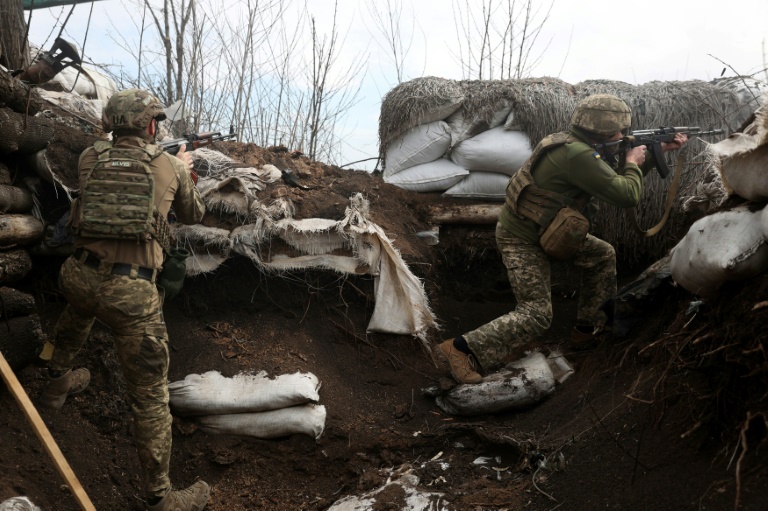
Russian troops were aiming to take control of the city of Mariupol on Tuesday, part of an anticipated massive onslaught across eastern Ukraine, as defending forces tried desperately to hold them back.

Russia is believed to be trying to connect occupied Crimea with Moscow-backed separatist territories Donetsk and Lugansk in Donbas, and has laid siege to the strategically located city, once home to more than 400,000 people.

Ukrainian forces were “surrounded and blocked”, tweeted Myhaylo Podolyak, an official from President Volodymyr Zelensky’s office. 

But on Monday the Ukrainian army insisted that “the defence of Mariupol continues”. 

“The connection with the units of the defence forces that heroically hold the city is stable and maintained,” the Land Forces of Ukraine wrote on Telegram.

In his nightly address, Zelensky made another plea to his allies for more weapons to boost the defence of the city. 

“We are not getting as much as we need to end this war sooner. To completely destroy the enemy on our land… in particular, to unblock Mariupol,” he said. 

He made a similar appeal for military assistance to South Korea’s National Assembly earlier in the day, telling lawmakers Russia had “completely destroyed Mariupol and burned it to ashes”.

“At least tens of thousands of Mariupol citizens must have been killed,” he added.

– Chemical weapons allegations –

Late Monday, Britain said it was trying to verify reports that Russia had also used chemical weapons in the city.

Western officials have previously expressed concerns that as the conflict drags into its seventh week, Russia could resort to such extreme measures.

Ukrainian lawmaker Ivanna Klympush said Russia had used an “unknown substance” and that people were suffering from respiratory failure.

But on messaging app Telegram, Petro Andryushchenko, an aide to the city’s mayor, wrote that a chemical attack was not confirmed and that they were “waiting for official information from the military”. 

Elsewhere in the east, heavy bombardment continued as civilians were urged to flee ahead of an expected Russian troop surge in the region. 

Eight people were killed by shelling in the northeastern city of Kharkiv, the head of the regional state administration Oleg Synegubov said. 

“Our Armed Forces firmly hold the defensive positions of Kharkiv and the region,” he wrote on his Telegram channel. 

“That is why the Russian enemy continues to ‘fight’ with the civilian population due to its powerlessness.”

Russian forces are reinforcing around the Donbas region, notably near the town of Izyum, but have not yet launched a full offensive, Pentagon officials said Monday.

They reported a Russian convoy had been observed heading for Izyum, an hour’s drive north of Kramatorsk, saying it appeared to be a mix of personnel-carriers, armored vehicles and possible artillery.

Ukraine’s defence ministry said it believed a major assault would happen soon. 

“We don’t know precisely when, but the preparation is almost over,” spokesman Oleksandr Motuzyanyk told a briefing on Monday.  

– ‘Logic of war’ – 

Such signs of a build-up in Donbas suggest hopes of an imminent diplomatic solution remain slim. 

After a meeting with Russian President Vladimir Putin on Monday, Austrian Chancellor Karl Nehammer said he was “rather pessimistic” of such efforts succeeding as Putin had “massively entered into a logic of war”. 

Ukraine’s allies are trying instead to increase economic and diplomatic pressure on Moscow — but EU foreign ministers’ discussions on a sixth round of sanctions on Monday ended without a consensus. 

“Nothing is off the table, including sanctions on oil and gas,” Josep Borrell, the European Union’s top diplomat, told reporters after the meeting. “But today, no decision was taken.”

The European police agency Europol, meanwhile, said Monday it had launched an operation targeting the assets of Russian individuals and companies sanctioned over the war. 

In an effort to shore up wider international support for Kyiv, US President Joe Biden held virtual talks with Indian Prime Minister Narendra Modi just weeks after saying New Delhi had been “shaky” in its response to the invasion.

“There were conversations about how to mitigate the destabilising impacts of Putin’s war, including on food supply, where India is in a position to assist,” a US official said.

And the UN Security Council — which on Monday held a session on the plight of women and children in Ukraine — will hold another meeting next week on the humanitarian situation there, in a bid to keep pressure on Russia despite its veto power over the body, diplomats said.

– ‘Rape and sexual violence’ –

At Monday’s UNSC meeting, officials called for an investigation into violence against women during the conflict.

“This war must stop. Now,” Sima Bahous, director of the UN women’s agency, told the meeting.

“We are increasingly hearing of rape and sexual violence. These allegations must be independently investigated to ensure justice and accountability.” 

More than 4.5 million Ukrainian refugees have now fled their country, the United Nations refugee agency said — 90 percent of them women and children.

Russian troops have been accused of widespread atrocities across the country, particularly in areas around Kyiv from which they have now withdrawn, allegations Moscow categorically denies.

Ukraine says more than 1,200 bodies have been found around the capital, with authorities pursuing “500 suspects” including Putin and other top Russian officials.

Seven bodies were found Monday under the rubble of two multi-storey buildings in the town of Borodianka, the state emergency service said, bringing the total to 19.

Lithuania’s prime minister, who was touring the town, said she had “no words” to describe the devastation and accused Russia of war crimes. 

“The images  of the ruined Ukrainian towns and cities, and the testimonies of the survivors, reveal the real  face of Russia,” Ingrida Simonyte said. 

French investigators have arrived in Ukraine to help probe suspected war crimes, and the European Union has earmarked 2.5 million euros ($2.7 million) to the International Criminal Court for future Ukraine cases.

The global consequences of the war were evident Monday as the World Trade Organization projected world trade growth could almost halve this year. 

The WTO said the conflict was a “severe blow” to the world’s economy which in the longer term could even spark a disintegration of the global economy into separate blocs.

Russia was also blamed for an escalating global food crisis by the EU’s Borrell, because of its bombing of wheat stocks and preventing ships from carrying grain abroad.

Search for survivors in Philippine villages hit by landslides

Rescuers hampered by mud and rain searched Tuesday for survivors of landslides that smashed into villages in the central Philippines, as the death toll from tropical storm Megi rose to 27. 

More than 17,000 people fled their homes as the storm pummelled the disaster-prone region in recent days, flooding houses, severing roads and knocking out power.

At least 21 people were dead after landslides slammed into several villages in Leyte province — one of the hardest hit by the storm — local authorities said. 

Three people were also killed in the central province of Negros Oriental and three on the main southern island of Mindanao, according to the national disaster agency. 

Photos showed the rooftops of several homes in Bunga, one of the Leyte communities affected, poking above a river of mud. 

Rescue efforts were focused on the nearby village of Kantagnos, which an official said had been hit by two landslides. 

Some residents managed to escape or were pulled out of the mud alive, but many are still feared trapped.

Five people have been confirmed dead in Kantagnos, but it is not clear how many are still missing. 

A Philippine Coast Guard video shared on Facebook showed six rescuers carrying a mud-caked woman on a stretcher to safety.  

“There was a small landslide and some people were able to run to safety, and then a big one followed which covered the entire village,” Jose Carlos Cari, mayor of Leyte’s Baybay City, told local broadcaster DZMM Teleradyo. 

“We’re looking for many people, there are 210 households there.”

Cari said the bad weather was hampering rescue efforts. 

“We’re pushing, but we’re having a hard time because it’s dangerous,” he said.

“Equipment has been mobilised, everything is ready, but we’re unable to move because it’s still raining heavily and rivers are still swollen.”

The military has joined coast guard, police and fire protection officers in the search and rescue efforts. 

National disaster agency spokesman Mark Timbal said landslides around Baybay City had reached settlements “outside the danger zone”, catching many people by surprise. 

“There were people in their homes that were hit directly by the landslide,” Timbal told AFP.

Tropical storm Megi — known in the Philippines by its local name Agaton — is the first major storm to hit the country this year. 

Whipping up seas, it forced dozens of ports to suspend operations and stranded nearly 8,000 people at the start of Holy Week, one of the busiest travel periods of the year.

The Philippines re-opened to fully vaccinated tourists from most countries in February after lifting practically all Covid-19 restrictions, and Easter is a popular holiday for domestic tourists.

The storm comes four months after a super typhoon devastated swathes of the archipelago nation, killing more than 400 people and leaving hundreds of thousands homeless.

Scientists have long warned typhoons are strengthening more rapidly as the world becomes warmer due to climate change.

The Philippines — ranked among the most vulnerable nations to its impacts — is hit by an average of 20 storms every year.

Film industry guns for fresh start at Cannes

The Cannes Film Festival will hope to relaunch the industry’s hopes with another star-packed line-up to be announced on Thursday. 

After a slow return to cinema-going after the Covid-19 pandemic, the film business will be hoping for a boost on the French Riviera when the 75th edition of the world’s leading cinema festival returns from May 17 to 28. 

Tom Cruise is already confirmed for the festival promoting the world premiere of “Top Gun: Maverick”, the sequel to his 1986 blockbuster. Also attending is Tom Hanks, who co-stars in “Elvis” as the rock’n’roll star’s manager, Colonel Tom Parker. 

The latter is the latest spectacle from Australian director Baz Luhrmann, who has previously lit up Cannes with “Moulin Rouge!” and “Gatsby”.  

The rest of the line-up will be announced on Thursday, including the 20-odd films competing for the top prize Palme d’Or.

The selection committee, who have been working their way through more than 2,000 entries in recent weeks, have a tough act to follow after last year’s vintage edition. 

Coming after the festival was cancelled by the pandemic in 2020, it launched several films that went on to global success, especially “Drive My Car”.

After picking up three awards at Cannes, it went on to win this year’s Oscar for best international feature film — and was the first Japanese film to be nominated in the best picture category.

– Big-name speculation –

Last year’s jury — led by US director Spike Lee — gave the Palme d’Or to Julia Ducournau’s body-horror “Titane” — ensuring the festival maintained its reputation for boosting bold and edgy filmmaking alongside starry entertainment. 

The organisers have left it late to announce who will chair the jury this year, but Penelope Cruz and Marion Cotillard are among the favourites according to industry insiders. 

Film experts have also been picking through the release schedules for ideas on who might be in competition. 

Many are hoping to see the return of David Cronenberg, whose upcoming sci-fi/horror cross-over stars Viggo Mortensen, Kristen Stewart and Lea Seydoux. 

Also hotly tipped is Australian George Miller, the man behind “Mad Max”, who takes a new direction with “Three Thousand Years of Longing” about a djinn (played by Idris Elba) offering three wishes to Tilda Swinton. 

Another possibility is Terrence Malick, who won previously for “Tree of Life” starring Brad Pitt. His new film follows the life of Jesus Christ and stars Mark Rylance as Satan.

Though women have been getting more of a presence on the festival circuit, they remain poorly represented.

One possible contender in competition at Cannes might be US director Kelly Reichardt, with her new film, “Showing Up”. Her lo-fi hit “First Cow” was on many critics’ end-of-year lists in 2021. 

– Shadow of war –

As with everything in the arts at the moment, the Russian invasion of Ukraine hangs over the selection. 

Possible names include exiled Russian filmmaker Kantemir Balagov, 30, whose film “Beanpole” won the directing award of the Un Certain Regard section in 2019. 

Or there may be the return of Kirill Serebrennikov, who was unable to attend Cannes last year for his Palme nominee “Petrov’s Flu”, after being banned from travelling due to a controversial court case.

One possible Ukrainian entry is a film about the Allied destruction of German cities at the end of World War II by director Sergei Loznitsa. 

Meanwhile, festival director Thierry Fremaux has been pushing for a change to the rule that bars streaming platforms from competing at Cannes. 

But French cinema distributors, who have a seat on the festival board, continue to block the move even as big-name directors such as Martin Scorcese and Jane Campion have turned to Netflix and other streamers for financial support.

In the short term, that means that the much-anticipated Marilyn Monroe biopic, “Blonde”, starring Ana de Armas, a Netflix film, cannot compete for Palme, although fans are still hoping it will get a premiere on the Cote d’Azur.

Film industry guns for fresh start at Cannes

The Cannes Film Festival will hope to relaunch the industry’s hopes with another star-packed line-up to be announced on Thursday. 

After a slow return to cinema-going after the Covid-19 pandemic, the film business will be hoping for a boost on the French Riviera when the 75th edition of the world’s leading cinema festival returns from May 17 to 28. 

Tom Cruise is already confirmed for the festival promoting the world premiere of “Top Gun: Maverick”, the sequel to his 1986 blockbuster. Also attending is Tom Hanks, who co-stars in “Elvis” as the rock’n’roll star’s manager, Colonel Tom Parker. 

The latter is the latest spectacle from Australian director Baz Luhrmann, who has previously lit up Cannes with “Moulin Rouge!” and “Gatsby”.  

The rest of the line-up will be announced on Thursday, including the 20-odd films competing for the top prize Palme d’Or.

The selection committee, who have been working their way through more than 2,000 entries in recent weeks, have a tough act to follow after last year’s vintage edition. 

Coming after the festival was cancelled by the pandemic in 2020, it launched several films that went on to global success, especially “Drive My Car”.

After picking up three awards at Cannes, it went on to win this year’s Oscar for best international feature film — and was the first Japanese film to be nominated in the best picture category.

– Big-name speculation –

Last year’s jury — led by US director Spike Lee — gave the Palme d’Or to Julia Ducournau’s body-horror “Titane” — ensuring the festival maintained its reputation for boosting bold and edgy filmmaking alongside starry entertainment. 

The organisers have left it late to announce who will chair the jury this year, but Penelope Cruz and Marion Cotillard are among the favourites according to industry insiders. 

Film experts have also been picking through the release schedules for ideas on who might be in competition. 

Many are hoping to see the return of David Cronenberg, whose upcoming sci-fi/horror cross-over stars Viggo Mortensen, Kristen Stewart and Lea Seydoux. 

Also hotly tipped is Australian George Miller, the man behind “Mad Max”, who takes a new direction with “Three Thousand Years of Longing” about a djinn (played by Idris Elba) offering three wishes to Tilda Swinton. 

Another possibility is Terrence Malick, who won previously for “Tree of Life” starring Brad Pitt. His new film follows the life of Jesus Christ and stars Mark Rylance as Satan.

Though women have been getting more of a presence on the festival circuit, they remain poorly represented.

One possible contender in competition at Cannes might be US director Kelly Reichardt, with her new film, “Showing Up”. Her lo-fi hit “First Cow” was on many critics’ end-of-year lists in 2021. 

– Shadow of war –

As with everything in the arts at the moment, the Russian invasion of Ukraine hangs over the selection. 

Possible names include exiled Russian filmmaker Kantemir Balagov, 30, whose film “Beanpole” won the directing award of the Un Certain Regard section in 2019. 

Or there may be the return of Kirill Serebrennikov, who was unable to attend Cannes last year for his Palme nominee “Petrov’s Flu”, after being banned from travelling due to a controversial court case.

One possible Ukrainian entry is a film about the Allied destruction of German cities at the end of World War II by director Sergei Loznitsa. 

Meanwhile, festival director Thierry Fremaux has been pushing for a change to the rule that bars streaming platforms from competing at Cannes. 

But French cinema distributors, who have a seat on the festival board, continue to block the move even as big-name directors such as Martin Scorcese and Jane Campion have turned to Netflix and other streamers for financial support.

In the short term, that means that the much-anticipated Marilyn Monroe biopic, “Blonde”, starring Ana de Armas, a Netflix film, cannot compete for Palme, although fans are still hoping it will get a premiere on the Cote d’Azur.

In new shake-up, French politics fragments into three blocs

France’s political landscape is now fragmented into three blocs — the centre, far-right and radical left — after the abysmal performance of traditional parties in the presidential election.

Power alternated for decades until the 2010s between the two main parties — the Socialists and Republicans — before Emmanuel Macron took power in 2017 with a centrist platform.

His meteoric emergence — and pillaging of key traditional right and left figures for his own centrist movement — pushed the political centre of gravity on the left and right to the extremes.

Now, the traditional parties struggle to get even five percent of the vote, a situation that creates not just political but also financial problems for them under the French system.

“The first round of this presidential election confirms the three-way split of the electorate and the creation of three blocs with pretty much equal weight,” said political scientist Gael Brustier.

It’s the “cornerstone of the new world of French politics”, he wrote in a Slate column.

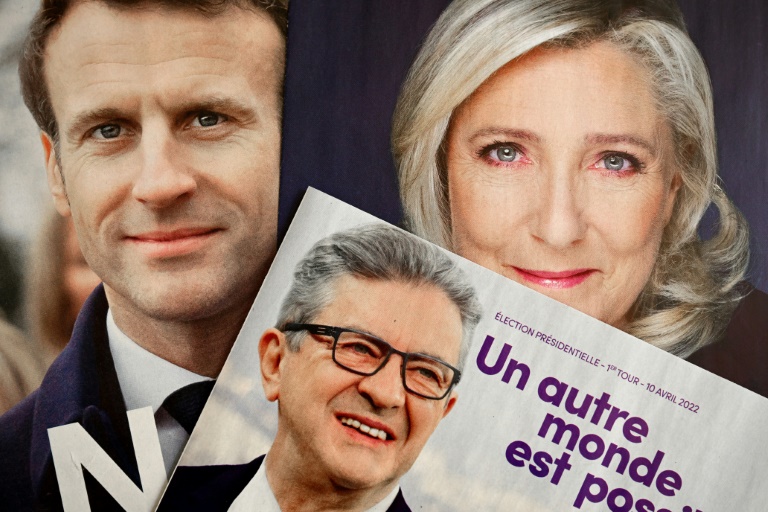
Marine Le Pen, who will go head-to-head with Macron on April 24 in the second round of the election, and her National Rally (RN) party embody the far-right bloc.

Macron represents the centre while Jean-Luc Melenchon and his France Unbowed (LFI) party are the focus of the far left, taking a strong third place in Sunday’s polls.

“The French political landscape has redefined itself around three political forces: a bloc which unites the centre-left and centre-right, embodied by Macron, the radical left, and far-right,” Bernard Poignant, a former Socialist mayor who now supports Macron, told the Ouest France newspaper.

– ‘Season 2’ –

Socialist Party candidate Anne Hidalgo and the Republicans hopeful Valerie Pecresse were crushed on Sunday, winning only 1.75 percent and 4.78 percent of the vote respectively.

They now find themselves in dire financial straits since they finished below the five percent threshold for having campaign spending largely reimbursed by the state.

Financial woes are familiar to the Socialists. The party was forced to sell its historical headquarters in late 2017 to try to salvage its finances.

And Pecresse has launched a humiliating appeal for donations to try to save the party as it faces a 7.0-million-euro ($7.6 million) hole in its finances.

“The breakdown and reshaping of French political life began in 2017 with the advent of Macronism and the collapse of the Socialist Party,” political scientist Jerome Fourquet told France Inter radio.

“And we watched season two yesterday (Sunday)…, the confirmation of the obliteration of the Socialists, the second historical pillar in the French political landscape, and the Republicans have been devastated as well,” Fourquet said.

The last Socialist president was Francois Hollande, a deeply unpopular leader who never ran for a second term.

“What is the Socialists’ reason for existing? What is the Republicans’ reason for existing in a political system where you have a radical left, a central bloc that goes from the centre left to the right, and a far-right bloc?” asked Brice Teinturier, head of Ipsos polling company, told AFP.

“It’s extremely difficult to find,” he said.

– ‘Elitist bloc?’ –

However, unity within the extreme blocs is more fragile because of their diverse social make-up, rendering them more difficult to structure.

“I reject the idea of three blocs, left, centre and right,” said pollster and political scientist Jerome Sainte-Marie at PollingVox. He sees a clash between an “elitist bloc” including the wealthy behind Macron, and a double “popular bloc”.

Sainte-Marie pointed to “an alignment of managers and the retired” supporting Macron in the elitist bloc that unites individuals from a higher social class.

The popular bloc is “more mixed”, with private-sector workers supporting Le Pen, while public sector workers and immigrant populations usually opt for Melenchon.

Melenchon benefitted from the support of other leftist formations, like the ecologists.

In addition to his base, he has “new reinforcements” with quite significant increases in… voters of immigrant origin”, political scientist Fourquet said, adding that Melenchon had captured “even more of the culturally left-wing, teachers, students”.

Biden, Modi in 'candid' Ukraine war talks as Indian stance frustrates US

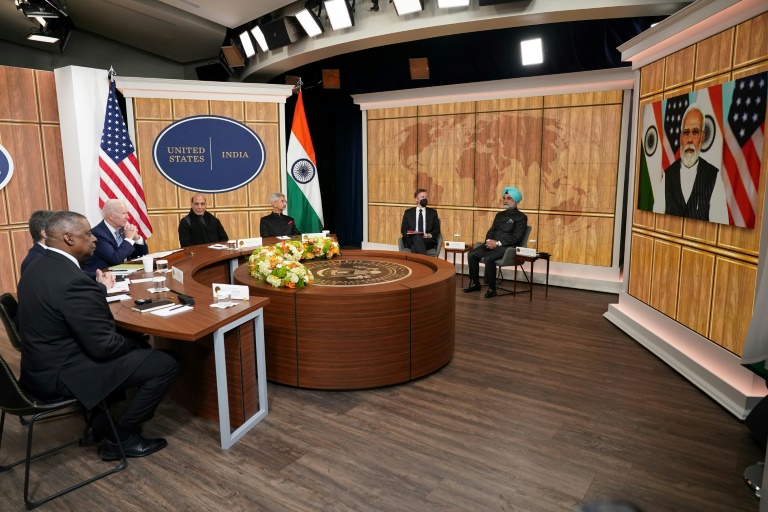
President Joe Biden and Indian Prime Minister Narendra Modi had a “candid exchange of views” on the Ukraine crisis at a virtual summit Monday, but the United States appeared to have made little progress in wooing India away from its neutral stance on Russia’s invasion.

“It is important that all countries, especially those with leverage, press Putin to end the war,” Secretary of State Antony Blinken told reporters after the virtual summit, which was followed by an in-person meeting with his Indian counterpart and the defense ministers from both countries.

“And it’s also important that democracies stand together and speak with one voice to defend the values that we share,” Blinken said after the talks, described by one US official as “warm and productive.” 

Biden made no major demands of India, a key strategic ally in US plans to contain growing Chinese power in the Asia-Pacific region, and there was no indication of significant progress toward a unified posture on the Ukraine conflict.

But White House spokeswoman Jen Psaki said Biden “made clear that he does not believe it’s in India’s interest to accelerate or increase imports of Russian energy and other commodities.”

– Tightrope –

Modi has tried to walk a tightrope between maintaining relations with the West and avoiding alienating Russia, but has raised concerns in Washington by continuing to buy Russian oil.

In his talks with Biden, he merely said the situation was “very worrying” and recalled his support for talks between Russia and Ukraine, which Washington views with skepticism. 

Indian Foreign Minister S. Jaishankar showed a hint of annoyance when he told reporters asking about Biden’s push for India to cut energy imports from Russia that “probably our total purchases for the month would be less than what Europe does in an afternoon.” 

Biden has been pressuring world leaders to take a hard line against Moscow, although a US official said there was no “concrete ask and concrete answer” on energy imports.

“India has to make its own decisions about how it approaches this challenge,” said Blinken, noting however that India “has made very strong statements … condemning the killing of civilians in Ukraine” and was “providing significant humanitarian assistance.”

Failing to win over such a key ally to its cause, Washington appears instead to be heaping on the pledges of friendship to prevent India from gradually slipping into the Russian camp, with Moscow actively courting it.

Biden began the meeting by saluting the “deep connection” between the two countries and said he wanted to continue their “close consultation” over the war. 

Biden and Modi failed to reach a joint condemnation of the Russian invasion when they last spoke in early March at a meeting of the so-called “Quad” alliance of the United States, India, Australia and Japan.

– India ‘shaky’ on Russia? –

And New Delhi abstained when the UN General Assembly voted last week to suspend Russia from its seat on the 47-member Human Rights Council over allegations that Russian soldiers in Ukraine engaged in war crimes.

The United States has already warned that any country that actively helps Russia to circumvent international sanctions will suffer “consequences.” 

Yet this has not deterred India from working with Russia on a rupee-ruble payment mechanism to circumvent banking sanctions, while taking advantage of discounted oil prices offered by Russian producers.

Meanwhile India has bought at least three million barrels of crude from Russia since the start of the invasion on February 24, despite an embargo by Western nations.

Biden said on March 21 that India was an exception among Washington’s allies with its “somewhat shaky” response to the Russian offensive.

In the Cold War, officially non-aligned India leaned towards the Soviet Union, in part due to US support for arch-rival Pakistan.

According to experts, Russia remains India’s biggest supplier of major arms and India is also Russia’s largest weapons buyer.

Russian Foreign Minister Sergei Lavrov, who met with Modi in New Delhi in early April, lauded India for its approach to the conflict, and in particular for judging “the situation in its entirety, not just in a one-sided way.”

Syrians aid Ukrainians in ties forged by war

Syrians are mobilising to support Ukrainians, sharing hard-earned knowledge gleaned from years of war involving Russian forces, such as surviving shelling, helping refugees and responding to chemical attacks.

With both Ukrainians and Syrians seeking accountability for the ravages inflicted by Russian forces in their countries, they feel a unique bond is growing between them.

Syrian President Bashar al-Assad’s grip on power had appeared to be hanging by a thread after the civil war erupted in 2011, until Russian forces stepped in four years later turning the conflict in the regime’s favour. 

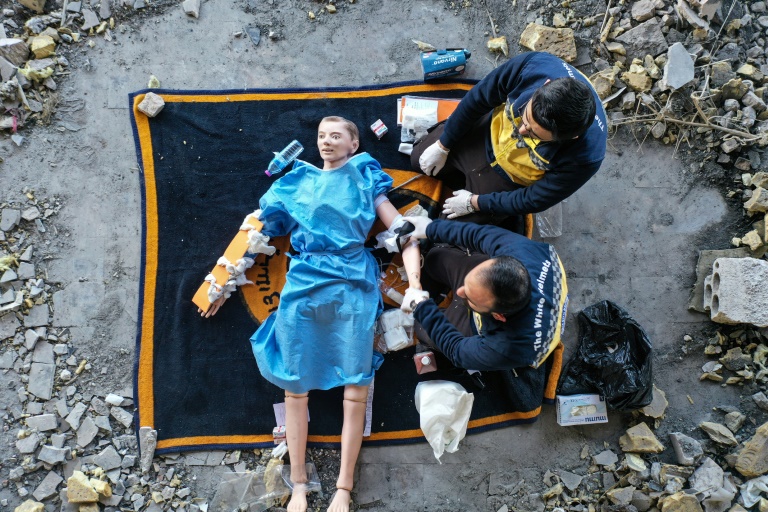
“From our experiences in Syria, we might be among those most able of understanding the pain of the people of Ukraine,” said Raed al-Saleh, head of the Syria Civil Defence force, known as the White Helmets.

“Syrians have lived the shelling, killing, and displacement brought on them by Russian forces.

“The time and place have changed, but the victim is the same — civilians — and the killer is the same — the Russian regime,” he told AFP.

During the fighting in Syria, which has claimed over 500,000 lives, the White Helmets have worked as first responders, rescuing thousands from under the rubble of homes shelled by Russian and regime forces in rebel-held areas of Syria.

The fate of Ukraine’s besieged southeastern port of Mariupol, the scene of some of Moscow’s fiercest assaults, has drawn comparisons with the eastern districts of Syria’s northwestern city of Aleppo. 

The former rebel stronghold was levelled by air strikes in 2016, during a months-long siege.

“Look at the city of Mariupol. This is exactly what we’ve seen in the city of Aleppo in Syria,” Ukrainian President Volodymyr Zelensky told an international forum last month.

He wanted to convey a message that “‘Russia was always a bad actor, Aleppo is proof of that and now it is our turn to suffer’,” Emile Hokayem, analyst at the London-based International Institute for Strategic Studies, told AFP.

– ‘We warned you’ –

This shared suffering has prompted a series of initiatives. 

A coalition of groups has launched the Syria Ukraine Network (SUN) that has helped Syrian doctors travel to Ukraine, said coordinator Olga Lautman, a Ukrainian living in Washington.

“We will be coordinating (with) Syrian experts on war crimes documentation and chemical attacks,” Lautman told AFP.

It came from “the desire of Syrians to use their expertise to help”, she said, describing the “bond” forming between the two peoples.

In northwestern Idlib, one of the last remaining rebel areas in Syria, doctors at the Academy of Health Sciences are training Ukrainian doctors and nurses online, its president Abdullah Abdulaziz Alhaji said. 

Ukrainians are mainly asking to learn about chemical attacks, he said. “They want to benefit from our experience.” 

Although no chemical weapons use has been confirmed in Ukraine, chlorine or sulphur gas attacks were recorded during the Syrian conflict, according to the Organisation for the Prohibition of Chemical Weapons. 

White Helmets rescuers are also filming tutorial videos for Ukrainians on treating casualties.

On the Ukrainian-Romanian border, Syrian Omar Alshakal, founder of Refugee4Refugees association, has been assisting Ukrainians fleeing war.

And Ukrainian and Syrian activists will Wednesday launch a “Freedom and Justice Convoy” from Paris to the Ukrainian-Polish border to show the “Syrian people’s solidarity”.

“Syrians are keen to embrace the cause of Ukraine because it helps revive fading international attention to their own tragedy and to tell Westerners: ‘We warned you but you preferred to look away’,” said Hokayem.

– ‘Accountability’ –

Charles Lister, from the Middle East Institute, noted Syrian activists have “sought to ride this wave of anti-Russian sentiment, to bolster the Syrian cause, but also to foster new, meaningful geopolitical relationships in Ukraine.”

Syrian opposition leaders had met Ukrainian leaders on the sidelines of international gatherings, and “their shared experiences have been clear cause for unity,” he told AFP.

The most important question for both is whether Moscow — and in Syria the Kremlin-backed President Assad — will ever be held accountable.

“If Putin was held accountable for his crimes in Ukraine, this means that he will be held accountable for his crimes in Syria as well. But if Putin gets away with it, then the next crime will only be a matter of time,” said the White Helmets’ Saleh.

Last month, Amnesty International’s Agnes Callamard noted the situation in Ukraine “is a repetition of what we have seen in Syria”.

Many have pointed to similarities in Russian tactics in Syria and Ukraine — from targeting infrastructure to establishing so-called safe corridors and truces aiming to empty cities.

Moscow had shown a “lack of moral principles … whether in its actions in Syria or Ukraine,” said Ivan Cherevychny, 71, a resident of the Ukrainian town of Zaporizhzhia. 

He also slammed “the irresponsible attitude of the United Nations and world leaders” faced with the two crises.

Others alleged that several commanders now playing leading roles in the Russian invasion had been involved in the Syrian war, naming among others Alexander Lapin and Alexander Dvornikov, commander of Russia’s forces in Syria in 2016.

“Russia used Syria as a training ground for testing the effectiveness of strikes against the residential, social, and economic infrastructure,” said a prominent Ukrainian lawyer-turned-fighter from Kyiv, who only wanted to be identified as Oleg.

Destroying the infrastructure makes the country “unsuitable for life,” he added.

Close Bitnami banner
Bitnami