World

24 dead in Philippines landslides, flooding

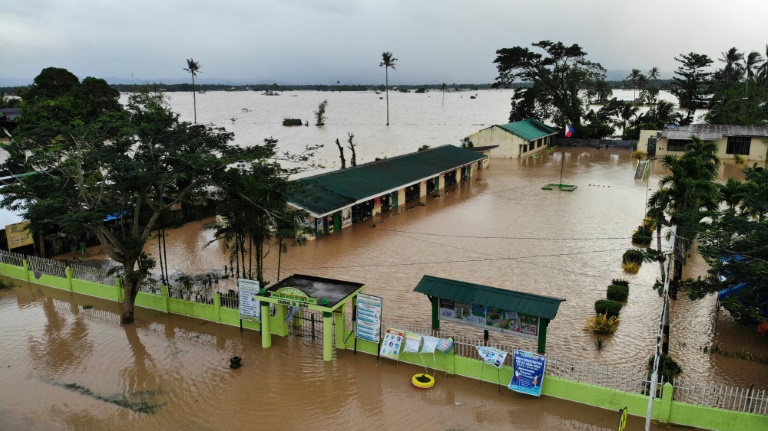
At least 24 people have been killed in landslides and flooding across central and southern Philippines, authorities said Monday, after tropical storm Megi dumped heavy rain and disrupted travel ahead of the Easter holidays.

More than 13,000 people fled to emergency shelters as the storm pounded the region Sunday, the national disaster agency said, flooding houses, inundating fields, cutting off roads and knocking out power.

The central province of Leyte was among the hardest hit, with landslides leaving 21 people dead in four villages, Baybay City disaster officer Rhyse Austero told AFP. 

Leyte’s death toll adds to another three people killed on the main southern island of Mindanao, the national disaster agency said. 

Photos posted on Facebook and verified by AFP show several houses buried in mud up to the rooftops in Bunga, one of the affected villages in Leyte.

“Yesterday the rain was so hard, it was non-stop for more than 24 hours,” resident Hannah Cala Vitangcol told AFP. 

The 26-year-old teacher fled with her family to a hotel Monday after waking to find nearby homes had been covered in an avalanche of mud.

“I was crying because I know the people buried there and I was also scared because there were mountains behind our house,” she said.

Baybay City council member Mark Unlu-cay posted photos on Facebook showing survivors from another village, Kantagnos, being treated in hospital.

“It seems like the entire community… was badly hit by the landslide and the riverflow,” he said.

Unlu-cay said he feared the death toll could rise after receiving reports that other villages had also been inundated by the waves of earth and mud.

Philippine Coast Guard and police personnel rescued people from their homes in the flooded town of Abuyog, carrying residents onto orange stretchers laid on floating boats. 

– First major storm in 2022 –

Tropical storm Megi — known in the Philippines by its local name Agaton — is the first major storm to hit the disaster-prone country this year. 

Whipping up seas, it forced dozens of ports to suspend operations and stranded nearly 6,000 people at the start of one of the busiest travel periods of the year.

The Philippines re-opened to fully vaccinated tourists from most countries in February after lifting most Covid-19 restrictions, and Easter is a popular holiday for domestic tourists.

The storm comes four months after a super typhoon devastated swathes of the archipelago nation, killing more than 400 people and leaving hundreds of thousands homeless.

Rai, the strongest typhoon to hit the Philippines last year, intensified faster than expected, officials said previously. 

Scientists have long warned that typhoons are strengthening more rapidly as the world becomes warmer because of human-driven climate change.

The Philippines — ranked among the most vulnerable nations to its impacts — is hit by an average of 20 storms every year.

In 2013, Typhoon Haiyan was the strongest storm ever to have made landfall, leaving over 7,300 people dead or missing. 
Ukraine braces for fall of Mariupol, Russian assault on east

Ukraine steeled itself on Monday for what could be the imminent fall of Mariupol to Russian troops as President Volodymyr Zelensky said he believed “tens of thousands” of people had been killed in Moscow’s assault on the strategic southern port city.

With the war grinding toward its seventh week, Ukrainian forces said they were also bolstering their positions in the east ahead of an anticipated massive Russian campaign. 

Austria’s chancellor meanwhile became the first European leader to visit Moscow since the Russian invasion, saying he would raise alleged war crimes in devastated areas around Kyiv that had been under Russian occupation.

Ukrainian authorities say over 1,200 bodies have been found in the area so far and that they are weighing cases against “500 suspects”, including President Vladimir Putin and other top Russian officials.

French investigators arrived in Ukraine to help probe suspected Russian atrocities in the area, as the European Union earmarked 2.5 million euros ($2.7 million) to the International Criminal Court for future Ukraine cases.

Russia is believed to be trying to link up occupied Crimea and Moscow-backed separatist territories Donetsk and Lugansk in Donbas and has laid siege to Mariupol, once a city of more than 400,000 people.

“Today will probably be the last battle, as the ammunition is running out,” the 36th marine brigade of the Ukrainian armed forces said on Facebook. 

“It’s death for some of us, and captivity for the rest,” it added, saying it had been “pushed back” and “surrounded” by the Russian army.

A pro-Russia rebel leader, Denis Pushilin, said separatist forces had already taken control of the city’s port, in comments reported by the RIA Novosti news agency.

Speaking to South Korea’s National Assembly by video link in an appeal for military assistance, Zelensky said Russia had “completely destroyed” the city and “burned it to ashes”.

“At least tens of thousands of Mariupol citizens must have been killed,” he said.

Russian forces are also turning their focus to the Donbas region in the east, where Zelensky said Russian troops were preparing “even larger operations”.

“They can use even more missiles against us… But we are preparing for their actions. We will answer,” Zelensky said.

Lugansk governor Sergiy Gaiday warned that the region could suffer as badly as Mariupol.

– ‘War on civilians’ –

Over the weekend, further strikes hampered evacuations in and around Kharkiv in the northeast, killing 11 people including a seven-year-old child, regional governor Oleg Synegubov said.

“The Russian army continues to wage war on civilians due to a lack of victories at the front,” he said on Telegram.

In Dnipro, an industrial city of around one million inhabitants, Russian missiles rained down on the local airport, nearly obliterating the facility, local authorities said.

Gaiday said a missile strike on a railway station in the city of Kramatorsk on Friday, which killed 57 people, had left many afraid to flee.

He again urged people to leave the region, with five humanitarian corridors agreed for Monday.

“You are alive because a Russian shell has not yet hit your house or basement — evacuate, buses are waiting, our military routes are as secure as possible,” he wrote on Telegram.

Russia has denied carrying out the strike.

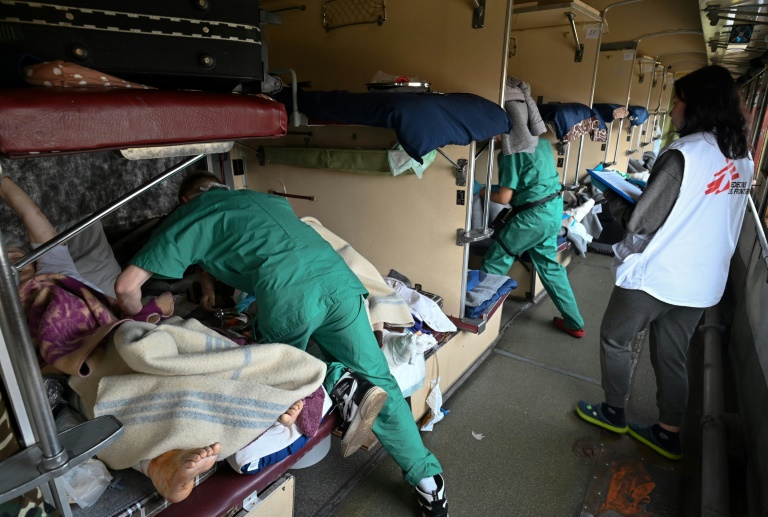
Over the weekend, nearly 50 wounded and elderly patients were transported from the east in a hospital train by medical charity Doctors Without Borders (MSF), the first such evacuation since the Kramatorsk attack.

Electrician Evhen Perepelytsia was rescued after he lost his leg in shelling in his hometown of Hirske.

“We hope that the worst is over — that after what I’ve been through, it will be better,” said the 30-year-old after arriving in the western city of Lviv.

– EU talks sanctions –

On the diplomatic front, EU foreign ministers were meeting Monday to discuss a sixth round of sanctions, with concerns that divisions over a ban on Russia gas and oil imports could blunt their impact.

Austria is an EU member, but does not belong to NATO, and Chancellor Karl Nehammer’s spokesman said Brussels, Berlin and Kyiv had been informed about the talks with Putin, held at the president’s residence in Moscow. 

Austrian Foreign Minister Alexander Schallenberg said earlier that Nehammer would tell Putin that he “is isolating Russia, that he will lose this war morally, and that he is doing everything wrong that can be done wrong”.

US President Joe Biden meanwhile will hold virtual talks on Monday with Indian Prime Minister Narendra Modi, just weeks after saying New Delhi had been “shaky” in its response to the invasion.

A US spokeswoman said the two leaders would consult on ways to offset the “destabilising impact (of the war) on global food supply and commodity markets”.

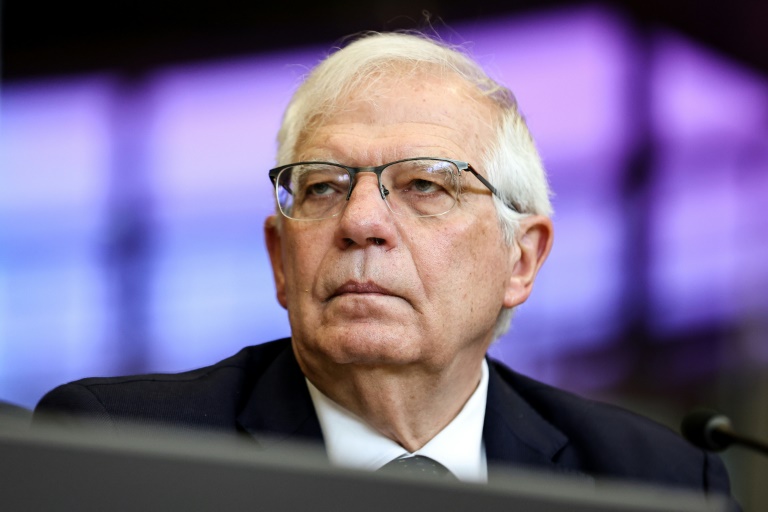
Russia was responsible for an escalating global food crisis because of its bombing of wheat stocks and preventing ships from carrying grain abroad, the EU’s top diplomat Josep Borrell said Monday.

The World Bank warned Sunday that Ukraine’s economy would collapse by 45 percent this year — far worse than it predicted even a month ago — while Russia would see an 11-percent decline in GDP.

– ‘Prevent one massacre’ –

Despite Kyiv’s allegations of Russian atrocities, Ukraine’s Foreign Minister Dmytro Kuleba on Sunday told NBC’s “Meet the Press” he was still open to negotiating with Moscow.

“If sitting down with the Russians will help me to prevent at least one massacre like in Bucha, or at least another attack like in Kramatorsk, I have to take that opportunity,” he said.

Bucha — where authorities say hundreds were killed, some with their hands bound — has become a byword for the brutality allegedly inflicted under Russian occupation. 

More than 4.5 million Ukrainian refugees have now fled their country, the United Nations refugee agency said — 90 percent of them women and children.

At least 183 children have died and 342 were injured in Ukraine in 46 days of the Russian invasion, the prosecutor general’s office said on Telegram.

burs-dlc/jj

Five takeaways from France's presidential election

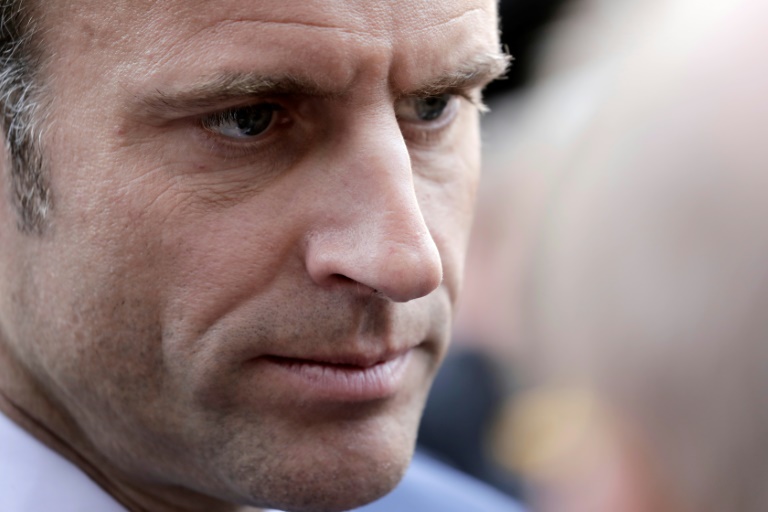
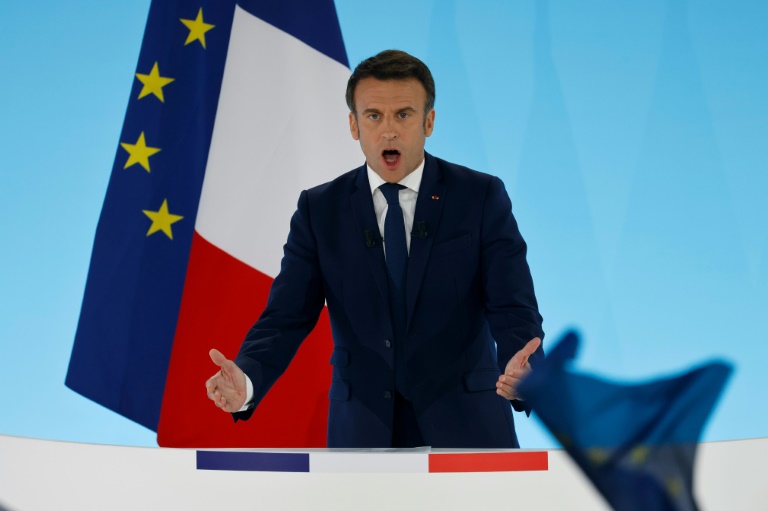
President Emmanuel Macron and far-right rival Marine Le Pen will battle for the presidency in a repeat of their 2017 run-off, but the results of the first round show changing dynamics in French politics and society.

AFP looks at five things we learnt from the election, which was a devastating disappointment for some of Macron’s rivals but also has uncomfortable aspects for the president despite polls giving him an edge for the second round on April 24.

– Young cool on Macron

For a president who is just 44-years-old and who came to office in 2017 as France’s youngest modern leader, it is striking that Macron lagged among young voters on Sunday.

Over a third — 34.8-36 percent — of people aged 18 to 24 voted for far-left third placed candidate Jean-Luc Melenchon in the first round, with just 21-24.3 percent backing Macron, according to surveys by Harris Interactive and Ifop.

Among the 25-34 age group, he fared even worse, with just 19.3-21 percent backing the incumbent, behind both Le Pen and Melenchon.

“It’s a generational phenomenon,” the head of Macron’s party in parliament, Christophe Castaner, told BFM television, adding that he hoped young people would be “mobilised” by environmental issues. 

However, surveys showed that amongst the oldest generations, Macron was by far the most popular candidate.

– Country split

The first-round electoral map of France shows glaring geographical splits, with Le Pen coming out on top in the industrial north of the country and on the Mediterranean coast, where the far right counts on support from many so-called “pied-noirs” born in Algeria under colonial rule and their families.

Macron by contrast came out on top in a swathe of territory in the relatively affluent west of France as well as the centre and eastern regions on the Swiss and German borders.

Melenchon was the leading candidate in several areas in Paris and its region, and in French overseas territories in the Caribbean.

In a nod to the need to find new reservoirs of support in the second round, Macron on Sunday visited Denain, a small town in France’s northern rust belt, where he came only third on Sunday behind Le Pen and Melenchon.

– Missed chance for left

Melenchon finished just over a percentage point behind Le Pen in the final reckoning, after a late surge in the final days of campaigning.

This prompted some to wonder what might have happened if the French left had rallied behind Melenchon as the most successful candidate, instead of having a plethora of other leftist candidates.

Socialist Anne Hidalgo, Green Yannick Jadot and Communist Fabien Roussel all won less than five percent on Sunday, but if thoses votes had gone instead to Melenchon, he might have reached the second round instead of Le Pen.

“We felt an expectation of a left-wing alliance but they could not, due to their egos or lack of forward thinking,” former Socialist presidential candidate Segolene Royal told BFM.

“If they had pulled out then Jean-Luc Melenchon would be in the third round,” she said.

– Calamity for the right

The Republicans party is the right-wing political faction that brought former presidents Jacques Chirac and Nicolas Sarkozy to power and dominated French politics for years.

However, its candidate Valerie Pecresse polled only 4.8 percent in a campaign shadowed by the refusal of Sarkozy to endorse her candidacy.

Adding insult to injury, the party now faces a financial crisis as only candidates who score above five percent have their expenses reimbursed by the state — Pecresse on Monday appealed for financial help from supporters.

“This is about the survival of the Republicans, and beyond this, the survival of a republican right-wing,” she said, adding that she was personally indebted to the tune of five million euros ($5.5 million).

– No Green sunrise

In neighbouring Germany, the Greens are part of the government, have long paid a central role in national politics and hold the posts of foreign minister and economy minister in the cabinet.

Success in local elections in France has seen the Greens holding major cities including Bordeaux, Lyon and Grenoble but this success has never been transferred to a national level.

These elections marked no breakthrough, with its candidate Yannick Jadot failing to break the five percent barrier and leaving his party mired in the same financial crisis as the Republicans.

“Ecology will be absent from the second round,” Jadot lamented after his defeat was confirmed. 

Sharif elected new Pakistan PM after Khan ouster

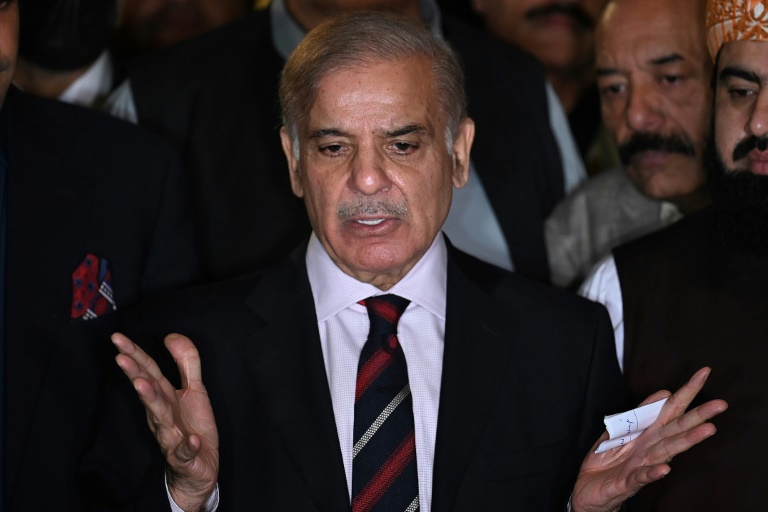
Pakistan lawmakers on Monday elected Shehbaz Sharif as the country’s new prime minister following the weekend ouster of Imran Khan, who resigned his national assembly seat — along with most of his party members — ahead of the vote.

Khan was dismissed Sunday after losing a no-confidence vote, paving the way for an unlikely alliance that faces the same issues which bedevilled the cricket star-turned-politician — a weak economy, rising militancy, and soured relations with the West.

Sharif immediately announced a raft of populist measures, including a new minimum wage of 25,000 rupees (around $135), pay rises for civil servants, and development projects in rural areas.

He also said he wanted better relations with neighbour India, but a solution needed to be found for Kashmir — the contested Himalayan territory at the heart of decades of their conflict. 

Sharif, leader of the centrist Pakistan Muslim League-N (PML-N), was the only candidate for premier after Khan loyalist Shah Mahmood Qureshi, the former foreign minister, withdrew his candidacy and resigned his seat.

“It’s a victory of righteousness, and evil has been defeated,” he said in his maiden speech as premier, suggesting no end to what has been a bitter political battle.

His first task will be to form a cabinet that will also draw heavily from the centre-left Pakistan Peoples Party (PPP), as well as find space for the smaller conservative Jamiat-ulema-e-Islam-F (JUI-F) group.

– Bitter rivals –

The PPP and PML-N are dynastic parties that have dominated Pakistani politics for decades — usually as bitter rivals — but their relations are sure to fray in the lead-up to the next election, which must be held by October 2023.

“History knows there is no ideological convergence among them,” Qureshi said before storming out.

They need to tackle soaring inflation, a feeble rupee and crippling debt, while militancy is also on the rise — with Pakistan’s Taliban emboldened by the return to power last year of the hardline Islamist group in neighbouring Afghanistan.

“The situation is very bad, but I am sure that we will change it with the blessing of Allah and with hard work,” said Sharif.

The new premier may also rethink Pakistan’s global alignment, which drifted away from Washington under Khan and closer to Russia and China — a vital economic partner.

“On the foreign policy front we have to face a lot of debacles. Our strategic partners left us,” he said.

Pakistan’s stock exchange gained over three percent Monday on the hope of more stability, while the rupee also strengthened.

Sharif is the younger brother of disgraced three-time prime minister Nawaz Sharif, and Pakistan media are already speculating the latter may soon return from exile in Britain.

The elder Sharif was dismissed in 2017 and later jailed for 10 years by an accountability court on graft charges after revelations from the Panama Papers, but was released to seek medical treatment abroad.

The younger Sharif is also mired in graft proceedings. In 2019, the National Accountability Bureau seized nearly two dozen properties belonging to him and his son Hamza, accusing them of money laundering.

He was arrested and detained in September 2020, but released six months later on bail for a trial which is still pending.

– Conspiracy theory –

Khan tried everything to stay in power after losing his majority in parliament — including dissolving the assembly and calling a fresh election.

But the Supreme Court deemed all his actions illegal and ordered them to reconvene and vote.

Khan insists he has been the victim of a “regime change” conspiracy involving Washington and his opponents, and has vowed to take his fight to the streets in the hope of forcing an early election.

Sharif promised an investigation into Khan’s allegations.

“If an iota of evidence is provided against us, I will immediately resign,” he told parliament.

The mass PTI resignations signal that Khan intends to make good a threat to disrupt the new administration and take his fight to the streets, and he called again for mass protests across the country.

“Whether his agitation ability has grown or shrunk in last few weeks remains to be seen,” said analyst Mosharaf Zaidi.

Indian software provider TCS sees strong earnings, record orders

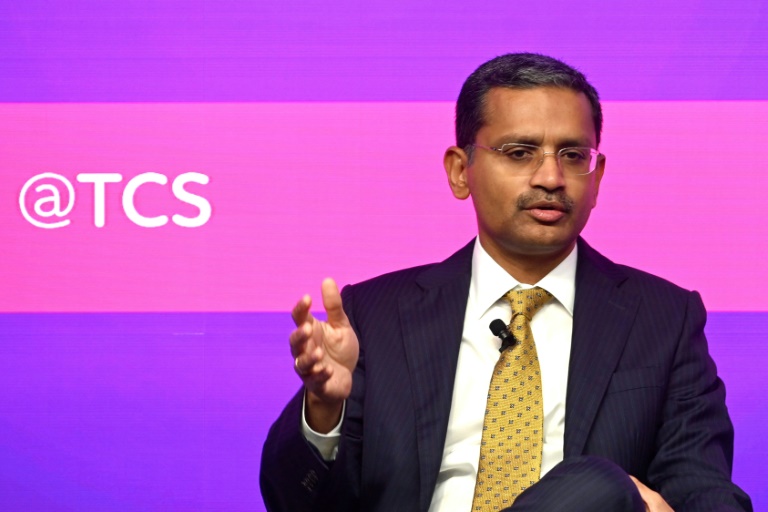
India’s largest software exporter Tata Consultancy Services reported strong quarterly earnings on Monday as demand for digital services brought in orders worth a record $11.3 billion.

Net profit at the IT giant rose to 99.26 billion rupees ($1.3 billion) in the three months ending March 31, which was 7.4 percent higher than in the same period last year.

Sustained demand across business segments pushed revenues 15.8 percent higher year-on-year to 505.91 billion rupees, crossing 500 billion for the first time.

“It’s been a very strong year and we are quite happy about the way we have executed this rebound post-pandemic,” chief executive and managing director Rajesh Gopinathan said in a media briefing.

“One of the biggest positives in this quarter has been the total volume of deals signed,” Gopinathan added.

The Mumbai-headquartered company said the value of its order book stood at $11.3 billion at the end of March, its highest ever.

This includes two large deals worth more than $1 billion each, Gopinathan told reporters.

The company — one of India’s largest private employers — hired more than 35,000 employees in the quarter to help meet demand and combat high attrition.

TCS was at the forefront of an IT boom that saw India become a back office to the world as firms in North America and Europe subcontracted work, taking advantage of a skilled English-speaking workforce.

The company earns more than 80 percent of its revenues from Western markets.

Its overseas growth in the quarter was led by North America, which contributed half of its business and saw revenue growth of 18.7 percent year-on-year.

“North America is the big story of the year,” Gopinathan said, adding that Britain, continental Europe and Latin America also clocked double-digit revenue growth.

TCS, India’s second-most valuable firm by market size, announced a final dividend of 22 rupees per share.

Shares in the firm closed 0.26 percent higher in Mumbai ahead of the release of the results.

French bank Societe Generale to sell Russia unit to oligarch

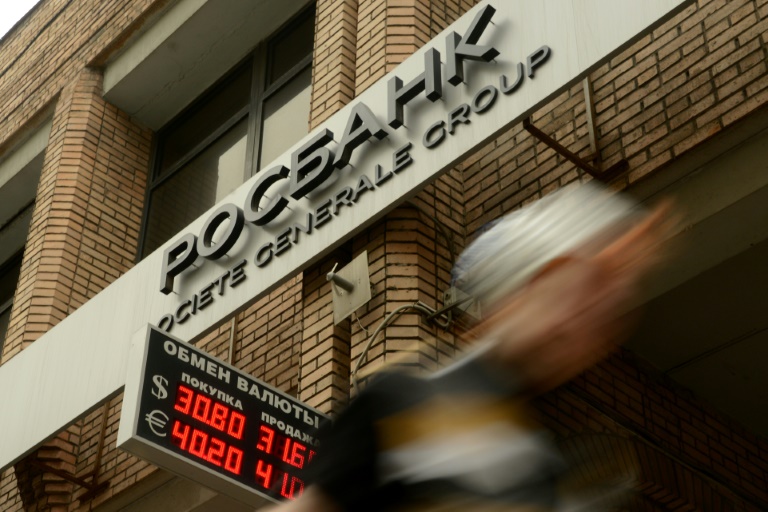
French banking group Societe Generale said Monday it was ceasing activities in Russia and selling its Rosbank unit to an investment firm founded by an oligarch close to the Kremlin.

The exit will cost the firm 3.1 billion euros ($3.4 billion).

Hundreds of foreign companies, ranging from financial firms to retailers and fast-food restaurants, have pulled out of Russia since the February 24 invasion.

But French firms, which are the biggest foreign employers in Russia, have been among the slowest to withdraw, prompting Ukrainian President Volodymyr Zelensky to urge them to leave during an address to the French parliament on March 23.

“Societe Generale ceases its banking and insurance activities in Russia,” the firm said in a statement.

It also announced “the signing of a sale and purchase agreement to sell its entire stake in Rosbank and the Group’s Russian insurance subsidiaries” to Interros Capital, an investment firm founded by one of Russia’s richest oligarchs, Vladimir Potanin.

Potanin, who is close to President Vladimir Putin, is also the co-owner of Russian mining giant Norilsk Nickel.

“With this agreement, concluded after several weeks of intensive work, the Group would exit in an effective and orderly manner from Russia, ensuring continuity for its employees and clients,” Societe Generale said.

The bank said it expects the deal to be completed in the coming weeks and that it was subject to approval from regulators.

Societe Generale shares fell following the announcement but bounced back later in the day. 

The bank said it would write off some two billion euros of the net book value of the divested activities and take a further 1.1-billion-euro non-cash hit.

– ‘Great resistance’ –

In a separate statement, Interros said that “the conditions for the deal have been approved by the government commission on control over foreign investment in the Russia Federation”.

“Interros intends to do the maximum efforts to develop Rosbank,” Potanin said in his company’s statement.

“The main objective is to maintain the stability of Rosbank, as well as create new opportunities for its clients and partners,” he said.

In a statement, Rosbank said it was “certain” that the firm would maintain its stability thanks to its “expertise” and reliance on “international expertise”.

The Russian bank said it built “great resistance” to economic turmoil due to its “well-thought-out risk policy” as well as its balanced loan portfolio and diversified liquidity base.

Meanwhile, Societe Generale’s auto leasing subsidiary, ALD, said it would not enter into new commercial transactions in Russia, Kazakhstan and Belarus.

Since Zelensky’s speech to the French parliament, auto giant Renault suspended operations at its Moscow factory and hinted that it might divest its majority stake in domestic car giant AvtoVAZ, while French sports retailer Decathlon halted sales at its stores in Russia.

Another major French company singled out by Zelensky, supermarket chain Auchan, has decided to stay, citing the “human” cost of leaving.

The Western exodus followed the invasion and a slew of Western sanctions on Russia, including the freezing of $300 billion of the country’s foreign currency reserves abroad.

Russia has since faced the risk of defaulting on its debt.

Paris stocks, euro gain on Macron vote result

The Paris stock market and the euro rose on Monday, with investors soothed by French President Emmanuel Macron’s election performance.

Frankfurt and London equities however followed Asian exchanges lower, with sentiment souring on flat UK economic growth.

Wall Street opened on the downside as traders looked ahead to inflation data due out on Tuesday, growth worries and the prospect of more aggressive US interest rate hikes.

Oil prices tumbled more than five percent at one point on Chinese demand fears arising from Covid lockdowns, and on dimming hope of a European embargo on Russian crude, dealers said.

“It is above all the bad news from China that is weighing on prices, as the number of Covid cases continues to surge,” said Commerzbank analyst Barbara Lambrecht.

Shanghai eased restrictions on some neighbourhoods on Monday after mounting outcry over China’s inflexible Covid-19 rules, which locked down 25 million people.

“The lockdowns that are slowing oil demand in the world’s second-largest consumer country threaten to persist for even longer,” added Lambrecht.

– ‘Solid result’ –

Macron topped France’s first-round presidential vote on Sunday, leading far-right rival Marine Le Pen by a larger-than-expected margin.

Emmanuel Macron won 27.85 percent of votes in the first round of France’s presidential election, while far-right leader Marine Le Pen scored 23.15 percent, according to final results.

“A solid result for incumbent Emmanuel Macron … has helped to allay fears of a Le Pen presidency,” said economist Jessica Hinds at research consultancy Capital Economics. 

“But the latest polls still point to a very tight race.”

Investors had fretted about the implications of a victory for Le Pen in the midst of the war in Ukraine, given her long-standing sympathies for Russia.

“All attention will now turn to the second round on April 24, and the big question for that will be where the supporters of the defeated first-round candidates go,” wrote Deutsche Bank analysts in a client note.

On the downside, London stocks slid on official data showing that the UK economy had ground to a near halt in February, growing by just 0.1 percent.

– Dollar eyes 2002 yen peak –

Elsewhere, the dollar hit a 2015 high at 125.77 yen on expectations of more US Federal Reserve interest rate hikes, in contrast with the Bank of Japan’s loose policy.

That was not far from the greenback’s two-decade peak of 125.86 yen.

The Fed has recently taken a hawkish tone as it embarks on an aggressive tightening path to counter runaway inflation.

In China, factory-gate inflation was higher than expected in March, official data showed, as Russia’s war on Ukraine pushes up oil prices while a domestic Covid-19 resurgence strains food supplies and consumer costs.

The producer price index — measuring the cost of goods at the factory gate — grew 8.3 percent on-year, National Bureau of Statistics (NBS) figures showed.

In Jakarta, Indonesia’s biggest tech firm GoTo soared on its debut after a billion-dollar IPO — the world’s fifth-biggest this year.

– Key figures at around 1330 GMT –

Paris – CAC 40: UP 0.3 percent at 6,568.02 points

London – FTSE 100: DOWN 0.5 percent at 7,630.80

Frankfurt – DAX: DOWN 0.8 percent at 14,173.79

EURO STOXX 50: UP 0.5 percent at 3,840.26

New York – Dow: DOWN 0.3 percent at 34,632.54

Tokyo – Nikkei 225: DOWN 0.61 percent at 26,821.52 (close)

Hong Kong – Hang Seng Index: DOWN 3.03 percent at 21,208.30 (close)

Shanghai – Composite: DOWN 2.61 percent at 3,167.13 (close)

Euro/dollar: UP at $1.0893 from $1.0877 late Friday

Pound/dollar: UP at $1.3032 from $1.3025

Euro/pound: UP at 83.59 pence from 83.51 pence

Dollar/yen: UP at 125.59 yen from 124.34 yen

Brent North Sea crude: DOWN 3.5 percent at $99.14 per barrel

West Texas Intermediate: DOWN 3.8 percent at $94.56 per barrel

burs-rl/gil

Israel army launches new raids around flashpoint W.Bank city

Israeli forces launched a third day of operations Monday around the flashpoint West Bank city of Jenin following heavy gun battles in recent days and overnight arrests, the army said.

Tensions have soared since a spree of attacks in Israel left 14 people dead in the past three weeks, with Prime Minister Naftali Bennett warning the Jewish state is now “on the offensive”.

The Israeli army said 14 Palestinians were arrested early Monday, a day after four Palestinians were killed in separate incidents in the occupied territory. 

An additional 13 army battalions were now operating in the West Bank, said a military source, speaking on condition of anonymity.

In Jenin, thousands of mourners flooded the streets, many carrying Palestinian flags or rifles, for the funeral of Mohamed Zakarneh, 17, who according to the Wafa news agency died of gunshot wounds overnight.

“The resistance is in direct confrontation with the occupation and any minute we must expect a total clash,” said Ziad al-Nakhala, secretary general of the militant Islamic Jihad movement, in a statement.

“Jenin must not be isolated, no matter the cost.”

The Israeli army said it operated nearby Monday, in Burqa and Qallil in the northern West Bank, as well as in Al-Aroub and Hebron in the south. 

“Violent riots were instigated by dozens of Palestinians” near Nablus, the army said, while the Palestine Red Crescent said 24 Palestinians were wounded in the Nablus area overnight. 

Jenin, as well as Bethlehem in the southern West Bank, declared general strikes, shuttering shops, offices and official institutions.

– Weeks of violence –

Tensions have surged during the Muslim holy month of Ramadan, nearly a year after violence flared in the Hamas-ruled Gaza Strip, leading to 11 days of war.

A total of 14 people in Israel have been killed in four attacks since March 22, including a shooting spree in Bnei Brak, an Orthodox Jewish city in greater Tel Aviv, carried out by a Palestinian from Jenin.

Over the same period, at least 14 Palestinians have been killed, including assailants, according to a count by AFP. 

Two of them were women shot dead on Sunday — one after stabbing and lightly wounding an officer in Hebron, the other when she failed to stop at a checkpoint near Bethlehem. 

The military source said 30 Palestinian suspects were apprehended in the past few days, and 16 attacks against Israeli targets foiled.

Islamic Jihad has been growing in strength and capability both in Gaza and the West Bank, and especially in Jenin, according to the Israeli military source. 

The source also said that Israeli forces are operating in Jenin partially because the Palestinian Authority — which has a security coordination agreement with Israel — has failed in conducting its own activities in the area.

– Wrong turn –

Israeli troops were targeting relatives of Raad Hazem, the 28-year-old Jenin man who last Thursday killed three Israeli civilians and wounded 12 at a Tel Aviv bar before he was shot dead following a manhunt.

The Israeli army demanded the father hand himself in, ahead of the planned demolition of the family home. It said it had engaged in an exchange of gunfire involving the assailant’s family members on Sunday — the clash in which 17-year-old Zakarneh was killed.

Another Palestinian from the Bethlehem area was shot dead Sunday after hurling a Molotov cocktail at an Israeli vehicle, the army told AFP.

In another incident overnight, two Israelis were shot and wounded after entering Nablus, where the previous night Joseph’s tomb, a religious site, had been vandalised by Palestinians.

“A group of Israeli civilians entered into the city after breaking through an unmanned military checkpoint,” said an army statement.

Shortly after, it said, the two Israeli men emerged at another checkpoint “with gunshot wounds”.

One of the men involved told public broadcaster Kan they had gone to inspect Joseph’s tomb.

“We were done and heading back to Jerusalem but then we took a wrong turn,” and were shot at by a “terrorist”, he said.

Sharif elected new Pakistan PM after Khan ouster

Pakistan lawmakers on Monday elected Shehbaz Sharif as the country’s new prime minister following the weekend ouster of Imran Khan, who resigned his national assembly seat — along with most of his party members — ahead of the vote.

Khan was dismissed Sunday after losing a no-confidence vote, paving the way for an unlikely alliance that faces the same issues which bedevilled the cricket star-turned-politician.

Sharif immediately announced a raft of populist measures, including a new minimum wage of 25,000 rupees (around $135), pay rises for civil servants, and development projects in rural areas.  

Sharif, leader of the centrist Pakistan Muslim League-N (PML-N), was the only candidate after Khan loyalist Shah Mahmood Qureshi, the former foreign minister, withdrew his candidacy and resigned his seat.

“It’s a victory of righteousness, and evil has been defeated,” Sharif said in his maiden speech as premier, to cheers from the remaining lawmakers.

Khan’s Pakistan Tehreek-e-Insaf (PTI) party had 155 members of the 342-seat chamber before the mass resignations, and Sharif was elected with 174 votes.

Once sworn in, Sharif’s first task will be to form a cabinet that will also draw heavily from the centre-left Pakistan Peoples Party (PPP), as well as find space for the smaller conservative Jamiat-ulema-e-Islam-F (JUI-F) group.

– Bitter rivals –

The PPP and PML-N are dynastic parties that have dominated Pakistani politics for decades — usually as bitter rivals — but their relations are sure to fray in the lead-up to the next election, which must be held by October 2023.

“History knows there is no ideological convergence among them,” Qureshi said before storming out.

They need to tackle soaring inflation, a feeble rupee and crippling debt, while militancy is also on the rise — with Pakistan’s Taliban emboldened by the return to power last year of the hardline Islamist group in neighbouring Afghanistan.

“The situation is very bad, but I am sure that we will change it with the blessing of Allah and with hard work,” said Sharif.

Sharif may also rethink Pakistan’s global alignment, which drifted away from Washington under Khan and closer to Russia and China — a vital economic partner.

“On the foreign policy front we have to face a lot of debacles. Our strategic partners left us,” he said.

Sharif is the younger brother of disgraced three-time prime minister Nawaz Sharif, and Pakistan media are already speculating the latter may soon return from exile in Britain.

The elder Sharif was dismissed in 2017 and later jailed for 10 years by an accountability court on graft charges after revelations from the Panama Papers, but was released to seek medical treatment abroad.

The younger Sharif is also mired in graft proceedings. In 2019, the National Accountability Bureau seized nearly two dozen properties belonging to him and his son Hamza, accusing them of money laundering.

He was arrested and detained in September 2020, but released six months later on bail for a trial which is still pending.

A seasoned politician in his own right, Sharif, 70, jointly inherited the family’s steel business as a young man and was first elected to provincial office in 1988.

He is known as a tough administrator, feared for his frequent “surprise visits” to government institutions, and has a penchant for quoting revolutionary poetry.

– Defeat not taken well –

No prime minister has ever served a full term in Pakistan, but Khan is the first to lose office via a vote of no-confidence — a defeat he has not taken well.

He tried everything to stay in power after losing his majority in parliament — including dissolving the assembly and calling a fresh election.

But the Supreme Court deemed all his actions illegal and ordered them to reconvene and vote.

Khan insists he has been the victim of a “regime change” conspiracy involving Washington and his opponents, and has vowed to take his fight to the streets in the hope of forcing an early election.

Sharif promised an investigation into Khan’s allegations.

“If an iota of evidence is provided against us, I will immediately resign,” he told parliament.

EU seeks unity amid calls for fresh sanctions on Russia

Horrified by the devastation wreaked by Russian troops in Ukraine, EU foreign ministers launched discussions Monday on a sixth round of sanctions but a consensus was proving increasingly difficult. 

“Discussing about Ukraine means certainly to discuss about the effectiveness of our sanctions,” Josep Borrell, the European Union’s top diplomat, told reporters in Luxembourg as he arrived for the foreign ministers’ meeting.

While five rounds of sanctions have already been implemented since Russia’s invasion of Ukraine on February 24 — the last just last Friday — “certainly ministers will discuss which are the further steps,” he said.

The European Union is now committed to what European Commission chief Ursula von der Leyen says are “rolling sanctions” on Russia. But it has so far held back from those which would hit Moscow’s coffers the hardest: a boycott of Russian oil and gas exports.

The fifth round of sanctions includes a ban on Russian coal imports into the EU — an important first step towards what could become a broader prohibition on energy supplies.

Many ministers arriving for Monday’s meeting were in favour of a maximalist approach that would entail banning Russian oil and gas.

But they also stressed the importance of maintaining EU consensus and unity.

One obstacle to widening energy sanctions is Hungarian Prime Minister Viktor Orban, an EU leader close with the Russian president who won re-election to a fourth term a week ago. 

Orban has refused to take them further. EU sanctions require unanimity from all 27 member states.

Another is the dependence on Russian hydrocarbons by Germany, Austria, Bulgaria, Italy and some other EU countries.

– Stop ‘financing of war’ –

Irish Foreign Minister Simon Coveney acknowledged that the discussions around cutting access to Russian oil was “very difficult for some member states.”

But, he told reporters, “the European Union is spending hundreds of millions of euros on importing oil from Russia that is certainly contributing to financing this war”.

“In our view, we need to cut off that financing of war, even though it creates huge challenges and problems.”

Since the start of the war in Ukraine on February 24, the Kremlin has pocketed more than 35 billion euros ($38 billion) in gas, oil and coal sales to the EU, according to Borrell.

German Foreign Minister Annalena Baerbock said Berlin was not opposed to expanding the sanctions, but stressed the need for EU unity to facilitate their adoption.

“We have already made clear as the German federal government that there will be a complete withdrawal from fossil energy, starting with coal, then oil and gas,” she told reporters.

“In order to implement this together in the European Union, we need a jointly agreed plan to phase out fossil energies completely in the European Union.”

– ‘Toughest sanctions’ –

Some ministers did little to conceal their frustration with such reserves.

“What needs to happen (for the) EU to have an embargo on oil and gas and other commodities?” asked Czech Foreign Minister Jan Lipavsky, adding that his country wanted to see the “toughest sanctions we can implement on Russia”.

His Lithuanian counterpart Gabrielius Landsbergis agreed.

“Go to Bucha and see for yourselves why do we need to impose sanctions,” he said, referring to the town near Kyiv where dozens of bodies were found strewn in the streets after the Russian forces withdrew.

Authorities say hundreds were killed, some with their hands bound, with the town becoming a symbol of the brutality allegedly inflicted under Russian occupation.

Landbergis meanwhile welcomed discussion around a sixth round of sanctions that, he said, included “oil options”.

“That means that the work has already begun on bringing the consensus together, and I hope that this time it works.”

The ministers were also expected Monday to agree to release an additional 500 million euros ($550 million) to finance fresh weapons deliveries to Kyiv.

Close Bitnami banner
Bitnami