World

Ukraine braces for 'important battles' as Pope urges Easter ceasefire

Ukraine is preparing for “important battles” against Moscow’s forces in the east of the country, the president said, as Pope Francis on Sunday called for an Easter truce to end the war.

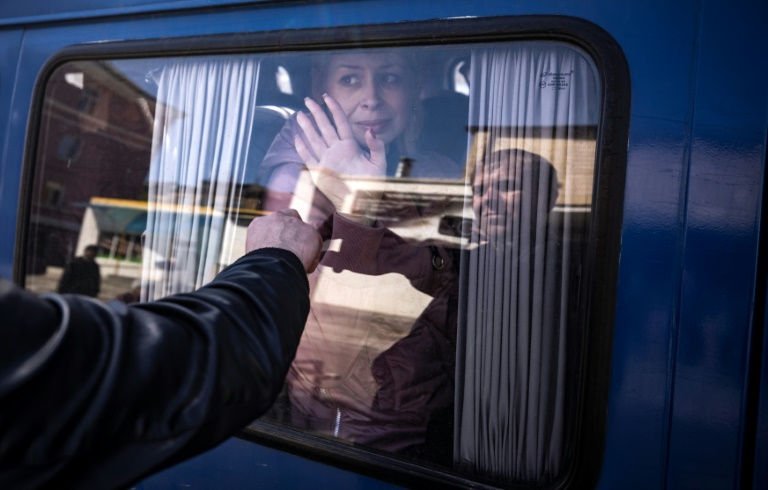
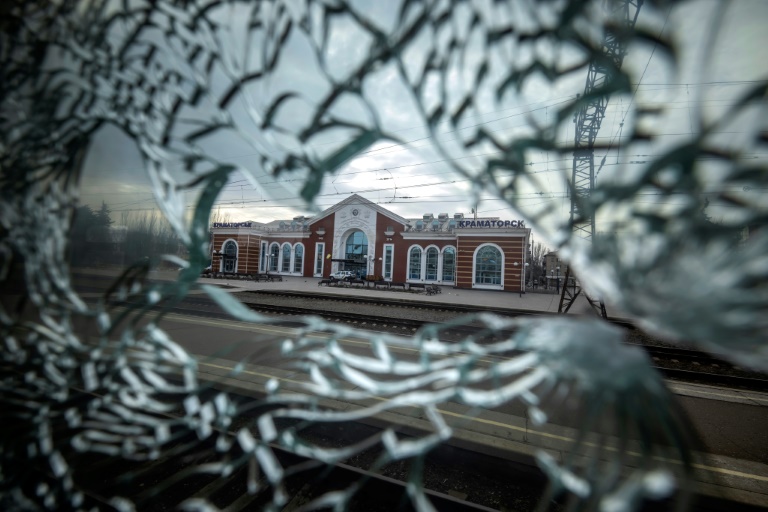
Evacuations continued from Kramatorsk, in eastern Ukraine, where a missile strike on Friday killed 57 people at a railway station, according to a revised toll. 

Meanwhile a strategic airport in the city of Dnipro was badly damaged in fresh shelling on Sunday.

President Volodymyr Zelensky again condemned atrocities against civilians, and after speaking with German Chancellor Olaf Scholz said they had agreed “that all perpetrators of war crimes must be identified and punished”.

Ukraine’s prosecutor general Iryna Venediktova said the country was examining the alleged culpability of 500 leading Russian officials for thousands of war crimes, including President Vladimir Putin.

And White House National Security Advisor Jake Sullivan pledged the US would “work with the international community to make sure there’s accountability” for what he called “mass atrocities”. 

Pope Francis called for an Easter ceasefire in Ukraine to pave the way for peace.

“Let the Easter truce begin. But not to provide more weapons and pick up the combat again — no! — a truce that will lead to peace, through real negotiation,” he told a mass at Saint Peter’s Square.

The pontiff denounced a war where “defenceless civilians” suffered “heinous massacres and atrocious cruelty”.

But Russia’s Orthodox Patriarch Kirill, a key Putin ally, issued his own appeal against Russia’s “enemies”.

“In this difficult period for our fatherland, may the Lord help each of us to unite, including around power,” he said.

“This is how true solidarity will emerge in our people, as well as an ability to push back external and internal enemies, and to build a life with more good, truth and love.”

– ‘Ready to fight’ –

The remarks came after Zelensky said Ukraine was readying for a new Russian onslaught.

“We see the preparations for important battles, some people say decisive ones, in the east,” he said on Saturday at a press conference with visiting Austrian Chancellor Karl Nehammer.

“We are ready to fight and to look in parallel to end this war through diplomacy.”

Launching his own diplomatic initiative, Nehammer said he would meet Putin on Monday in a move his spokesman insisted was coordinated with “Berlin, Brussels and… Zelensky”.

He will be the first European leader to visit the Kremlin since the invasion began on February 24. 

The UN on Sunday said 4,232 civilian casualties had been recorded in Ukraine to date, with 1,793 killed and 2,439 injured.

Pavlo Kyrylenko, the governor of Donetsk region, updated the death toll from Friday’s attack at the station in Kramatorsk from 52 to 57 in a post to Telegram.

Ukraine’s prosecutor Venediktova said 1,222 bodies had been found in the region around Kyiv alone so far.

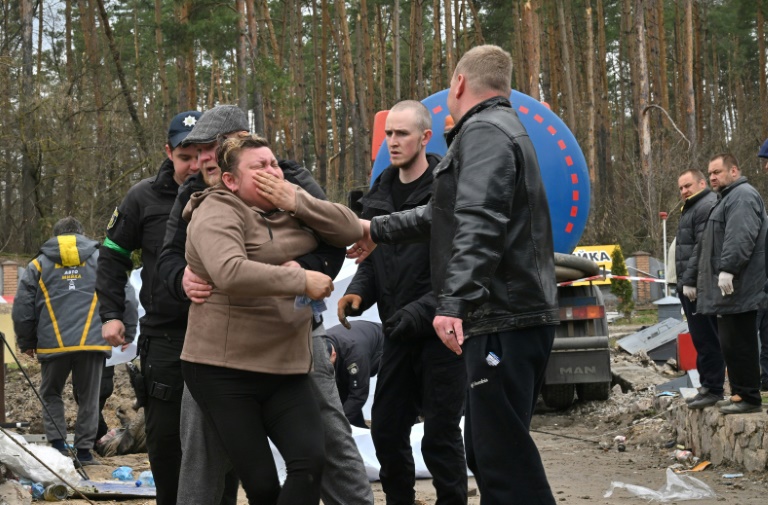
At least two corpses were found inside a manhole at a petrol station on a motorway outside Kyiv on Sunday, an AFP reporter saw.

The bodies appeared to be wearing a mix of civilian and military clothing.

A distraught woman appeared at the manhole and peered inside, before breaking down and clawing the earth.

She wailed “my son, my son”.

Ukraine said Kremlin propaganda had laid the groundwork for the bloody campaign, and that the Russian media had played its part.

“For many years, Russian political elites and propaganda have been inciting hatred, dehumanising Ukrainians, nurturing Russian superiority and laying ground for these atrocities,” Foreign Minister Dmytro Kuleba tweeted on Sunday.

– ‘Rockets keep flying’ –

The comments came on the heels of a surprise visit to Kyiv on Saturday by British Prime Minister Boris Johnson.

Hailing the country’s response to the Russian invasion, Johnson offered Ukraine armoured vehicles and anti-ship missiles, crucial to halting the Russian naval siege of Black Sea ports, to help ensure that the country will “never be invaded again”.

In a bid to shore up international resolve against Moscow, US President Joe Biden is to hold virtual talks on Monday with Indian Prime Minister Narendra Modi, just weeks after saying India had been “shaky” in its response to the invasion.

At the same time, EU foreign ministers are to meet to discuss a sixth round of sanctions, even as divisions over a ban on Russia gas and oil imports threatens to blunt their impact.

In further Russian strikes, the airport in Dnipro between central and eastern Ukraine, was hit hard.

“The airport itself and the infrastructure around it has been destroyed. Rockets keep flying and flying,” the head of the city’s military administration, Valentin Reznichenko, said on Telegram. 

An AFP reporter saw black smoke in the sky above the facility, but a plane also took off later on Sunday, suggesting its runway was still functioning.

– ‘New normal’ –

As Russian forces regroup in the east and south of Ukraine, local officials are urging residents to flee before it is too late.

Weekend bombardments in eastern Ukraine killed 10 civilians, including a child and wounded 11 others around Kharkiv, the region’s governor Oleg Synegubov posted on Telegram on Sunday.

Earlier, on Facebook, he had reported 66 strikes over 24 hours.

“The Russian army continues to wage war on civilians due to a lack of victories at the front,” he said.

Lugansk governor Sergiy Gaiday said in a new video that civilians were afraid to flee the region after the tragedy in Kramatorsk.

We evacuated “2,700-2,500 people per day, but now there are fewer and fewer,” he said. “Today, only 200 people have been evacuated.

“I’m sure that 20-25 percent” of the Lugansk region’s population are still there, he added.

“Unfortunately, sometimes we just beg (them) to come out of hiding because we know what comes next…”

Russian forces, he said, “will destroy everything in their path, so for the sake of people, for the sake of their survival, we beg them to go anyway”.

A Russian defence ministry statement meanwhile said the Kyiv authorities and their western allies continued to stage “monstrous and merciless” provocations and murder civilians in the self-proclaimed Lugansk People’s Republic.

burs-dlc/har/jj/raz
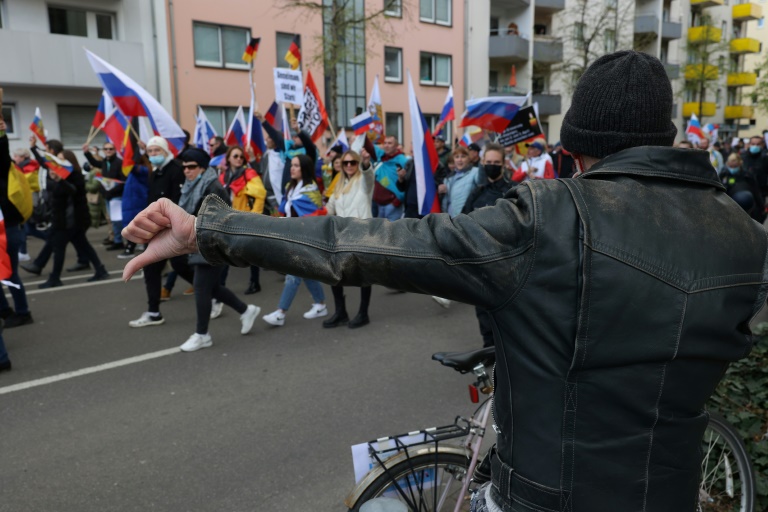
Pro-Russia protesters rally in Germany

Pro-Russia protesters rallied in Germany on Sunday, the country’s significant Russian-speaking population demanding an end to the discrimination it says it has suffered since war began in Ukraine.

Germany is home to 1.2 million people of Russian origin and 325,000 from Ukraine. Authorities fear the conflict could be imported into Germany and the protests used to promote Moscow’s war narrative.

Police have recorded 383 anti-Russian offences and 181 anti-Ukrainian offences since the Kremlin’s invasion started on February 24.

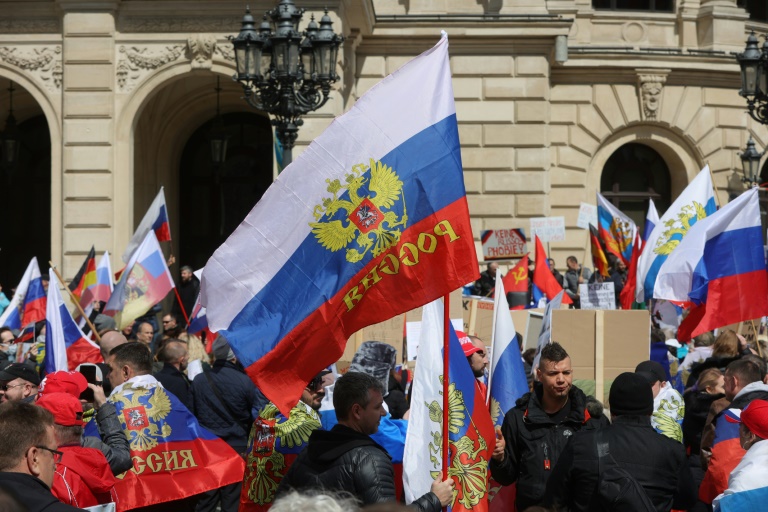
Around 800 people descended on financial hub Frankfurt Sunday, police said, amid a sea of Russian flags to protest “against hatred and harassment”, an AFP journalist saw. There was a heavy police presence.

The protesters were outnumbered by 2,500 people taking part in a counter-demonstration in support of Ukraine.

“I came here because I support peace,” Ozan Yilmaz, 24, told AFP. “Children are beaten at school because they speak Russian, that’s not acceptable.”

Sebastian, 25, was also in the pro-Russia crowd. “The war didn’t start this year,” he said.

“It has been going on since 2014 and so I find that speaking of an attack” against Ukraine by Russia is “not really appropriate”.

Police threw up a large cordon to separate the protesters — marching behind a banner that read “Truth and diversity of opinion over PROPAGANDA” — from a pro-Ukraine counter-demonstration near the city’s central banking district.

Ukraine’s ambassador to Germany, Andriy Melnyk, strongly opposed the green light given by German authorities to the protests, describing it as a “huge shame” for the country.

Melnyk also said it was a “declaration of failure” for the government’s policy, which he viewed as ambivalent towards Moscow.

Approximately 600 demonstrators staged a car convoy in the northern city of Hanover following an appeal by the Russian-speaking community, local police told AFP, while 200 people took part in a rally in Osnabruck, northwest Germany.

Police said they were closely monitoring the convoy. A counter-demonstration in the city under the banner “Support Ukraine!” attracted 3,500 people, according to police.

Similar protests were held on Saturday in Stuttgart and in the northern city of Lubeck, where around 150 people took part.

Lubeck police said they had stopped a convoy of around 60 vehicles because it broke the law by expressing support for “Russia’s war of aggression against Ukraine” and using “banned symbols”.

Brazil's first indigenous fashion show 'a form of resistance'

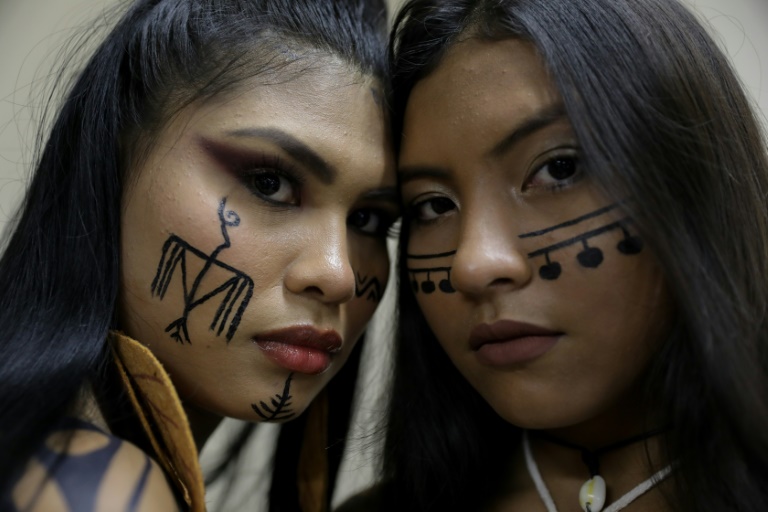
Proudly donning majestic feathered headdresses, models sing an ode to the rain while a makeup artist draws geometric patterns on their faces, arms and thighs in preparation for Brazil’s first-ever indigenous fashion show.

“It is a feeling of happiness and pride,” 19-year-old model Moan Munduruku told AFP ahead of his turn on the catwalk in Manaus in the Brazilian Amazon.

“We are very eager to show our talent, in sewing, in crafts. To show the world that indigenous people can also succeed” in fashion, he said.

Moan is one of 37 models — women and men — representing 15 indigenous groups of Brazil to take part in the month-long Intercultural Exhibition of Indigenous Fashion in the Brazilian Amazon’s largest city.

For the entire month of April, the catwalk is to host the creations of 29 indigenous designers.

“It’s a form of resistance, a way to overcome stereotypes,” event organizer Reby Ferreira, 27, told AFP. 

“Here in Manaus, unfortunately, many people are ashamed or even afraid to recognize that they have indigenous blood. Our goal is for everyone to feel included and to show our culture to everyone through these clothes.” 

The designers use natural elements in their creations, including the spearlike teeth of the peccary — an Amazonian boar — the red guarana fruit, acai seeds and coconut shells.

The same geometric patterns sported by the models are repeated in the fabrics that envelop them.

“My outfit evokes the (coming-of-age) ritual of the Ticuna girl,” said Kimpuramana, a 17-year-old model sporting a white dress adorned with black diagonal stripes.  

On the runway, a presenter announces the ethnicity of each model and explains the symbolism behind the clothes and accessories they wear.

Saturday’s show was hosted at the Rio Negro Palace, an early 20th century building that now serves as a cultural center.

“I feel privileged to have been able to attend such an event in this place. We are generally excluded from such sites. Today I can see my people telling their story through fashion,” said participant Bianca Mura, 24.

As the models walked down the catwalk to appreciative applause, thousands of indigenous Brazilians gathered in the capital Brasilia some 3,500 kilometers (2,175 miles) away, for an annual mass camping event called Terra Livre (Free Land).

The gathering is both a rally for indigenous rights and a protest against the government of far-right President Jair Bolsonaro, who is in favor of opening indigenous reserves — already hard hit by deforestation — to mining and farming companies. 

War in Ukraine: Latest developments

Here are the latest developments in the war in Ukraine:

– Kyiv readies for battles in east –

Ukraine is preparing for “important battles” against Moscow’s forces in the east of the country, officials in Kyiv say, as thousands of civilians flee in fear of an imminent Russian offensive.

Evacuations resumed from Kramatorsk in eastern Ukraine, where a missile strike killed 52 people at a railway station Friday.

– ‘Over 1,200 bodies found’ –

Ukraine’s prosecutor general Iryna Venediktova says 1,222 bodies have been found in the region around the capital Kyiv so far.

“We have actually now, only for this morning, 1,222 dead people only in Kyiv region,” Venediktova tells Britain’s Sky News in an interview.

– More than 4.5 million flee Ukraine war –

More than 4.5 million Ukrainian refugees have now fled their country since the Russian invasion on February 24, the United Nations refugee agency says.

Ninety percent of those who have fled Ukraine are women and children, as the Ukrainian authorities do not allow men of military age to leave. 

– Pro-Russia protesters rally in Germany –

Pro-Russia protesters rally in Germany, with the country’s significant Russian-speaking population demanding an end to the discrimination it says it has suffered since war began in Ukraine.

Germany is home to 1.2 million people of Russian origin and 325,000 from Ukraine. Authorities fear the conflict could be imported into Germany and the protests used to promote Moscow’s war narrative.

Police have recorded 383 anti-Russian offences and 181 anti-Ukrainian offences since the Kremlin’s invasion started on February 24.

– Pope calls for Easter ceasefire –

Pope Francis calls for an Easter truce in Ukraine to pave the way for peace through “real negotiation”.

“Let the Easter truce begin. But not to provide more weapons and pick up the combat again — no! — a truce that will lead to peace, through real negotiation,” the pontiff tells a public mass at Saint Peter’s Square.

– Dnipro airport destroyed –

The airport in the central Ukrainian city of Dnipro has been completely destroyed in fresh Russian shelling, a local official says. 

“There has been another attack on Dnipro airport. There is nothing left of it. The airport itself and the infrastructure around it has been destroyed. Rockets keep flying and flying,” the head of the city’s military administration, Valentin Reznichenko, says on Telegram. 

Authorities were seeking to clarify information about victims, he adds.

– Five killed in Russian shelling –

Russian shelling killed five civilians and wounded five others in two eastern Ukrainian cities Saturday, the Donetsk governor says.

Four of them died in the city of Vugledar, and one in the town of Novomikhaylovka, Pavlo Kyrylenko says in a Telegram post.

– Two bodies found in manhole –

At least two bodies have been discovered in a manhole at a petrol station west of Kyiv, an AFP reporter says.

The bodies appear to be clad in a mix of civilian and military clothing.

Ukraine says it has discovered a trail of civilian bodies in towns outside Kyiv from where the Russian army retreated, accusing Moscow of war crimes. 

-‘Ukraine probes Russian war crimes’ –

Ukraine is examining the alleged culpability of 500 Russian leaders for thousands of war crimes, including President Vladimir Putin, a top official says.

– Biden, Modi to meet over Ukraine –

US President Joe Biden will meet virtually Monday with Indian Prime Minister Narendra Modi, weeks after Biden said India has been “shaky” in its response to the invasion of Ukraine.

Biden will use the talks to continue “close consultations on the consequences of Russia’s brutal war against Ukraine and mitigating its destabilising impact on global food supply and commodity markets,” says his spokeswoman, Jen Psaki.

Meanwhile, Vienna says Austrian Chancellor Karl Nehammer will visit Putin in Moscow Monday, the first European leader to meet him since the invasion.

– EU to discuss new Russia sanctions –

EU foreign ministers are to discuss Monday a sixth round of sanctions on Moscow.

Although the sanctions that would hurt Russia the most — an EU boycott of its oil and gas exports — are not on the table formally, European Union diplomats do acknowledge there are discussions about them.

Ukrainian President Volodymyr Zelensky has repeatedly called for such EU embargoes, but the bloc remains divided over a ban on Russian gas and oil imports.

– ‘Russians stole from Chernobyl’ –

Russian forces who occupied the Chernobyl nuclear plant stole radioactive substances from research laboratories that could potentially kill them, Ukraine’s State Agency for Managing the Exclusion Zone says.

Russian soldiers pillaged two laboratories in the area, the agency says on Facebook.

French presidency: What are Macron and Le Pen promising?

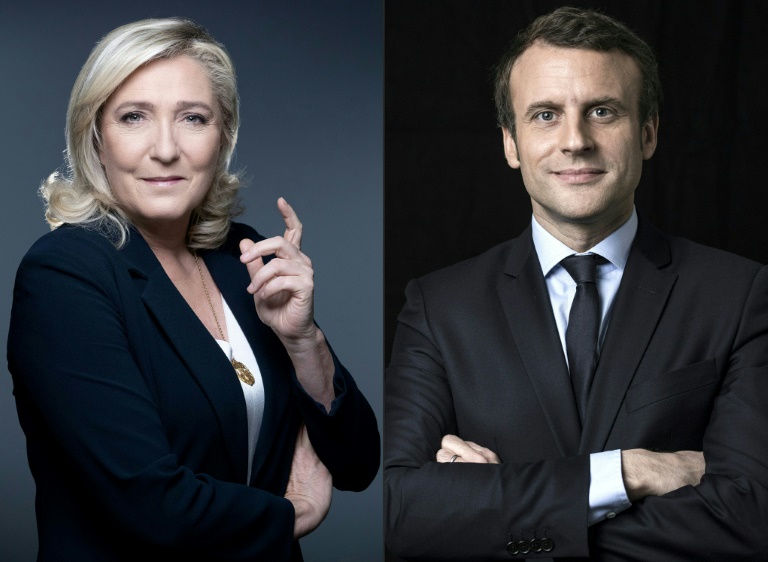
Centrist Emmanuel Macron and far-right veteran Marine Le Pen finished top in the first round of France’s presidential election Sunday.

They will face each other in a final round on April 24, when the candidate with more than 50 percent will be declared winner. 

Here is a summary of their programmes:

– Macron – 

After five years in power, Macron’s chief pitch to voters is continuity and steady leadership at a time of crises.

From rocketing inflation to Covid to the war in Ukraine, the 44-year-old is hoping his record in office will see him rewarded with a second term.

His programme is a further demonstration of his “neither left, nor right” political positioning that borrows from both sides of the traditional divide in politics. 

From the right wing, there are promises of more tax cuts for companies, thousands of new police officers and judges, and a rise in the retirement age to 65 from 62 in order to cut the pension system’s massive debt.

“I take responsibility for telling you that yes: we need to work longer,” he said at his first campaign rally last weekend.

From the left, he proposes raising the minimum level of pensions, new recruits for the health service, and a promise to make gender equality and tackling school harassment a priority. 

– Le Pen –

The far-right leader is offering her traditional hard line on immigration and French identity, but coupled with a programme aimed at helping struggling households.

She is promising to ban the Muslim headscarf in all public places and to hold a referendum on introducing strict controls on immigration, including a requirement that applications for residency can be made only outside France.

A principal of “national priority” would see housing and other social services given to French nationals ahead of foreigners, and she is also promising 25,000 new prison places and extra police.

But there are also policies for struggling household, including a cut in taxes on petrol and electricity to 5.5 percent from 20 percent, and rises in pension payouts.

“Our programme is a social one because it completely takes into account the questions of daily life, above all the cost of living,” she said in her last rally in Perpignan, southern France, on Thursday.

On foreign policy, Le Pen has distanced herself from Russian leader Vladimir Putin but proposes pulling out of NATO’s joint military command, in line with her promise to bolster French sovereignty. She has also proposed France-first changes that would challenge the foundations of the European Union. 

Ukraine braces for 'important battles' as Pope urges Easter ceasefire

Ukraine is preparing for “important battles” against Moscow’s forces in the east of the country, the president said, as Pope Francis on Sunday called for an Easter truce to end the war.

Evacuations continued from Kramatorsk, in eastern Ukraine, where a missile strike on Friday killed 52 people at a railway station, while a strategic airport in the city of Dnipro was badly damaged in fresh shelling Sunday. 

President Volodymyr Zelensky again condemned atrocities against civilians, and after speaking with German Chancellor Olaf Scholz said they agreed “that all perpetrators of war crimes must be identified and punished”.

Ukraine’s prosecutor general Iryna Venediktova said the country was examining the alleged culpability of 500 leading Russian officials for thousands of war crimes, including President Vladimir Putin.

And White House National Security Advisor Jake Sullivan pledged the US would “work with the international community to make sure there’s accountability” for what he called “mass atrocities”. 

Pope Francis called for an Easter ceasefire in Ukraine to pave the way for peace through “real negotiation”.

“Let the Easter truce begin. But not to provide more weapons and pick up the combat again — no! — a truce that will lead to peace, through real negotiation,” he told a public mass at Saint Peter’s Square.

The pontiff denounced a war where “defenceless civilians” suffered “heinous massacres and atrocious cruelty”.

But Russia’s Orthodox Patriarch Kirill, a key Putin ally, issued his own appeal against Russia’s “enemies”.

“In this difficult period for our fatherland, may the Lord help each of us to unite, including around power,” he said.

“This is how true solidarity will emerge in our people, as well as an ability to push back external and internal enemies, and to build a life with more good, truth and love.”

– ‘Ready to fight’ –

The remarks came after Zelensky said Ukraine was readying for a new Russian onslaught.

“We see the preparations for important battles, some people say decisive ones, in the east,” he said Saturday at a press conference with visiting Austrian Chancellor Karl Nehammer.

“We are ready to fight and to look in parallel to end this war through diplomacy.”

Launching his own diplomatic initiative, Nehammer said he would meet Putin on Monday in a move his spokesman insisted was coordinated with “Berlin, Brussels and… Zelensky”.

He will be the first European leader to visit the Kremlin since the invasion began on February 24. 

The UN on Sunday said 4,232 civilian casualties had been recorded in Ukraine to date, with 1,793 killed and 2,439 injured. 

Ukraine’s prosecutor Venediktova said 1,222 bodies have been found in the region around Kyiv alone so far.

At least two corpses were found inside a manhole at a petrol station on a motorway outside Kyiv on Sunday, an AFP reporter saw.

The bodies appeared to be wearing a mix of civilian and military clothing.

A distraught woman appeared at the manhole and peered inside, before breaking down and clawing the earth.

She wailed “my son, my son”.

Ukraine said Kremlin propaganda had laid the groundwork for the bloody campaign, accusing Russian media of long sowing aggression towards Ukrainians.

“For many years, Russian political elites and propaganda have been inciting hatred, dehumanising Ukrainians, nurturing Russian superiority and laying ground for these atrocities,” Foreign Minister Dmytro Kuleba said on Twitter Sunday.

– ‘Rockets keep flying’ –

The comments came on the heels of a surprise visit to Kyiv on Saturday by British Prime Minister Boris Johnson.

Hailing the country’s response to the Russian invasion, Johnson offered Ukraine armoured vehicles and anti-ship missiles, crucial to halting the Russian naval siege of Black Sea ports, to help ensure that the country will “never be invaded again”.

In a bid to shore up international resolve against Moscow, US President Joe Biden was to hold virtual talks Monday with Indian Prime Minister Narendra Modi, just weeks after saying India has been “shaky” in its response to the invasion.

At the same time, EU foreign ministers are to meet to discuss a sixth round of sanctions, even as divisions over a ban on Russia gas and oil imports threatened to blunt their impact.

In further Russian strikes, the airport in Dnipro between central and eastern Ukraine, was hit hard.

“The airport itself and the infrastructure around it has been destroyed. Rockets keep flying and flying,” the head of the city’s military administration, Valentin Reznichenko, said on Telegram. 

An AFP reporter saw black smoke in the sky above the facility but a plane also took off later on Sunday, suggesting its runway was still functioning.

– ‘New normal’ –

As Russian forces regroup in the east and south of Ukraine, local officials are urging residents to flee before it is too late.

At least two people were killed in bombardment of the northeastern city of Kharkiv and its surroundings, governor Oleg Sinegubov said on Facebook on Sunday, reporting 66 strikes in 24 hours.

“The Russian army continues to wage war on civilians due to a lack of victories at the front,” he said.

The mayor of eastern Lysychansk, Oleksandr Zaika, asked residents to evacuate as soon as possible due to constant shelling by the Russian army.

Speaking Saturday from Warsaw, European Commission President Ursula von der Leyen said a global pledging event for the more than 4.5 million refugees who have fled the country had raised 10.1 billion euros ($11 billion).

In another sign of Western solidarity, NATO Secretary General Jens Stoltenberg said the military alliance was drawing up plans for a permanent military force on its border to prevent further Russian aggression.

“What we see now is a new reality, a new normal for European security,” he told Britain’s Daily Telegraph.

burs-dlc/jv 

Israel 'on offensive' after attacks as two women killed in W.Bank

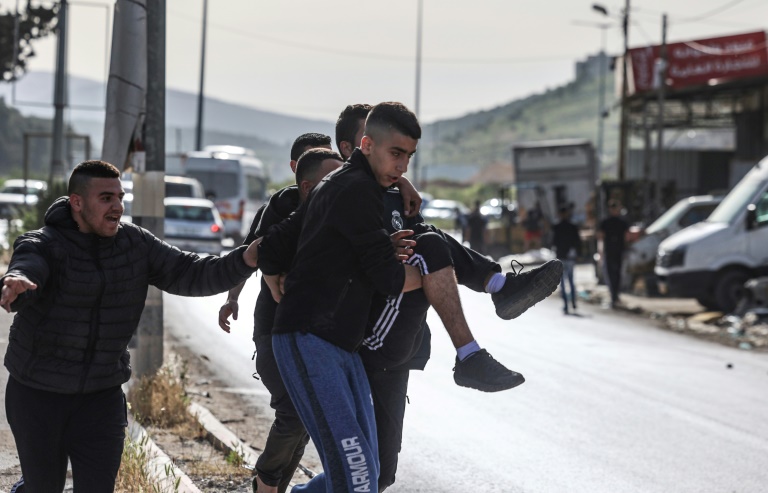
Israeli forces carried out fresh raids Sunday in the flashpoint West Bank district of Jenin, the home of gunmen who launched two recent deadly attacks, while two Palestinians were killed elsewhere in the occupied territory.

As Israel was laying to rest three of its recent shooting victims, gun battles rocked the Jenin area for a second day, with at least 10 Palestinians wounded in clashes with the army, according to the Palestinian health ministry.

“The State of Israel has gone on the offensive,” Prime Minister Naftali Bennett said after a cabinet meeting, vowing to “settle accounts with everyone who was linked, either directly or indirectly, to the attacks”.

Israeli troops detained 20 Palestinians in and around Jenin, a bastion of Palestinian militant groups, a military source said.

The operation came after a gunman from Jenin went on a shooting rampage in a Tel Aviv nightlife area Thursday, killing three Israelis and wounding more than a dozen others — the latest in a spate of bloody attacks in the Jewish state.

Militant groups Hamas and Islamic Jihad welcomed the Tel Aviv attack, which was condemned by Palestinian president Mahmud Abbas.

“This is a difficult day,” Bennett said, “the day on which the three people who were murdered in the Tel Aviv terrorist attack are brought to rest.”

– Knife attack –

Also on Sunday, Israeli troops shot dead a Palestinian woman who had approached them near the southern West Bank city of Bethlehem and failed to stop after they had fired warning shots, the military said. 

The woman — a widowed mother of six in her 40s named by the Palestinian news agency Wafa as Ghada Ibrahim Sabatien — died after suffering massive blood loss, the Palestinian health ministry said.

The Islamic Jihad movement condemned her killing as an “execution in broad daylight”.

And in the southern city of Hebron, a Palestinian woman stabbed and lightly wounded an Israeli border police officer before she was killed, Israeli police said.

But the centre of Sunday’s heightened tensions was the Jenin area where, the Israeli military source told AFP, Palestinian militants shot from passing vehicles at Israeli soldiers, who responded with live fire.

A total of 20 “wanted individuals” suspected of involvement in “terrorist activities” were apprehended, the source said, while the Palestinian Prisoners Club announced 24 arrests across the West Bank, which Israel has occupied since the 1967 Six-Day War.

The Israeli military source said forces had located stolen Israeli army ammunition and uniforms in the residence of one of the suspects, and an explosive device in another home. 

No Israeli forces were reported injured, while the Palestinian health ministry said at least 10 Palestinians were wounded in clashes in Jenin and nearby.

– ‘No limits’ –

Tensions have surged during Ramadan, after violence flared during the Muslim holy month last year leading to 11 days of devastating conflict between Israel and Palestinian militants in the Hamas-ruled Gaza Strip.

In recent weeks, Israel has been stunned by a string of attacks, some carried out by assailants linked to or inspired by the Islamic State group.

A total of 14 people have been killed in four attacks since March 22, including another shooting spree on March 29 in Bnei Brak, an Orthodox Jewish city near Tel Aviv, also carried out by a Palestinian attacker from Jenin.

Over the same period, at least 12 Palestinians have been killed, including assailants, according to a count by AFP.

Following Thursday’s attack in Tel Aviv, Bennett gave security agencies “full freedom” to end the deadly violence, warning that “there are not and will not be limits for this war”.

The Jenin refugee camp is a stronghold of armed factions, where three other Palestinians linked to an anti-Israeli attack were killed by the army last week. 

Thousands of Israelis meanwhile gathered Sunday to bury the victims of the Tel Aviv shootings.

In Kfar Saba, mourners wept for Tomer Morad, 27, as his girlfriend Ariel Weinblat spoke of her lost love. 

“You came to me yesterday in a dream and said it’s all a joke. I believed it. And then I woke up,” she said in her eulogy. “I love you so much my heart is bleeding.”

Eytam Magini, 27 and Barak Lufan, 35, were buried the same day.

As pandemic fades, Spain Easter traditions resurrected

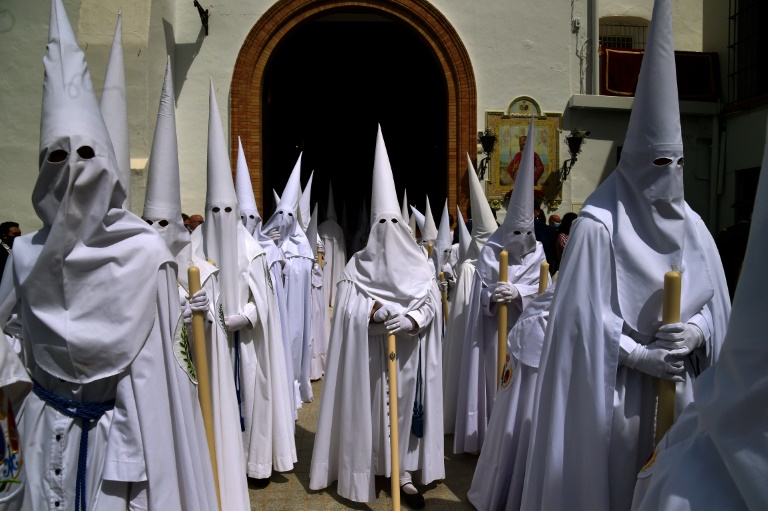
With Easter processions cancelled for the past two years due to the coronavirus pandemic, Spain’s colourful Holy Week marches made their eagerly awaited return to the streets on Sunday.

The holiday, which runs until Easter Day on April 17, is a time when huge crowds traditionally gather to watch the elaborate processions in this deeply Catholic country. 

Organised by brotherhoods, the parades feature dozens of people dressed in religious tunics and distinctive pointy hoods and elaborate floats topped with statues of Jesus and the Virgin Mary.

Some of the processions date back hundreds of years.

“We’re very excited after two years” of being unable to celebrate Holy Week, said Rafael Perez of the Work and Light Brotherhood that stages one of the processions in the southern city of Granada.

In Seville — whose 680,000-strong population doubles during Holy Week — people played traditional procession music over loudspeakers or sang mournful saetas from balconies, a capella ballads about the death of Jesus and the grief of his mother.

Everything was thrown up in the air in mid-March 2020 when the country went into lockdown as the virus took hold a month before Easter, hitting Spain badly as it spread like wildfire. 

In one of the world’s strictest lockdowns, Spain cancelled all religious celebrations, prompting some to improvise festivities at home on their balconies, mostly in the south where Easter processions have been held for centuries. 

The situation improved slightly last year, although with memories still fresh of the explosion of virus cases after Christmas the authorities imposed curfews and a ban on travel between regions that clouded the festivities.

The southern city of Seville’s impressive Holy Week parades, which had never been cancelled since 1933, were called off for a second year running in a move mirrored across Spain. 

– Return of the tourists –

This year, Spaniards want to make up for lost time and enjoy an Easter week as in times before the pandemic, when they made an average of seven million trips across the country to visit family or hit the beach, Statistica figures show. 

“Tourism and business prospects for Holy Week 2022, the first after two years of not being able to celebrate due to the pandemic, are close to 90 percent of the sales levels registered in 2019,” the Exceltur tourism association said on Thursday. 

In April 2019, a total of seven million foreign tourists visited Spain. Tourism Minister Reyes Maroto said she hoped to see 80 percent of that figure, which would bring much-needed relief to the country’s badly hit tourism sector. 

Before the pandemic, Spain was the world’s second most popular tourist destination after France. 

With more than 92 percent of its 47 million residents fully vaccinated, Spain last month embarked on a new strategy to treat the virus as an endemic illness like flu, dropping a requirement for people with mild cases of Covid-19 to self-isolate. 

In February it ended a rule requiring people to wear masks outdoors and on April 20, just after Easter, it will also drop an indoor mask mandate, except in hospitals and on public transport. 

Seville’s City Hall says it is expecting “a large turnout after two years without celebrations” with more than 70 brotherhoods ready to conduct their traditional marches through the city. 

With hundreds of thousands of visitors expected, Andalusia’s regional government has recommended all participants wear masks and that testing be carried out on the many teams carrying the huge religious floats bearing statues of the Virgin Mary and Christ. 

Pro-Russia protesters rally in Germany

Pro-Russia protesters rallied in Germany on Sunday, with the country’s significant Russian-speaking population demanding an end to the discrimination it says it has suffered since war began in Ukraine.

Germany is home to 1.2 million people of Russian origin and 325,000 from Ukraine. Authorities fear the conflict could be imported into Germany and the protests used to promote Moscow’s war narrative.

Police have recorded 383 anti-Russian offences and 181 anti-Ukrainian offences since the Kremlin’s invasion started on February 24.

Around 600 people descended on financial hub Frankfurt on Sunday amid a sea of Russian flags to protest “against hatred and harassment”, an AFP journalist saw, and there was a heavy police presence.

“I came here because I support peace, children are beaten at school because they speak Russian, that’s not acceptable,” Ozan Yilmaz, 24, told AFP.

“The war didn’t start this year, it has been going on since 2014 and so I find that speaking of an attack” against Ukraine by Russia is “not really appropriate”, said Sebastian, 25, who was in the crowd.

Police threw up a large cordon to separate the protesters — marching behind a banner that read “Truth and diversity of opinion over PROPAGANDA” — from a pro-Ukraine counter-demonstration of around 100 people near the city’s central banking district.

Approximately 600 demonstrators staged a car convoy in the northern city of Hanover following an appeal by the Russian-speaking community, local police told AFP.

Police said they were closely monitoring the convoy. A counter-demonstration in the city under the banner “Support Ukraine!” attracted 3,500 people, according to police.

Similar protests were held on Saturday in Stuttgart and in the northern city of Lubeck, where around 150 people took part.

Lubeck police said they stopped a convoy of around 60 vehicles because it broke the law by expressing support for “Russia’s war of aggression against Ukraine” and using “banned symbols”.

Pro-Russian vehicle convoys spark outrage in Germany

From shop fronts spattered with paint to insults thrown in the street, attacks on the Russian community in Germany have spiked since the start of the war in Ukraine.

As a result, some Russians have staged demonstrations “against Russophobia” in the form of vehicle convoys across the country, which has the largest Russian diaspora in the European Union.

But the demos have sparked a backlash, with many interpreting them as a show of support for Russia’s military aggression in Ukraine.

Christian Freier, 40, has been sent hundreds of death threats a day since helping to organise a 400-strong vehicle convoy in Berlin last weekend, along with images of burnt and mutilated corpses.

The website of his car repair shop was hacked and his online ratings have plummeted. 

“My life is hell,” said Freier, who has both Russian and German citizenship.

The demonstration was largely peaceful and apolitical, though one woman was arrested for displaying the letter “Z”, a symbol of support for the Russian army and now banned in Berlin.

“My aim was only to protest against the daily aggression suffered by Russians in Germany,” Freier said, declining to answer any questions about the conflict itself.

Since Russia invaded Ukraine in February, 383 anti-Russian and 181 anti-Ukrainian crimes have been officially reported to German police.

Germany is home to around 1.2 million Russians and 325,000 Ukrainians, plus more than 316,000 who have arrived as refugees since the start of the conflict.

– ‘Parade of shame’ –

“All war is awful and can never be justified,” said Rene Hermann, 50, who also helped to organise the Berlin convoy.

Hermann told AFP he has “no position” on the Ukraine conflict, but away from the scrutiny of journalists, he runs a blog on social network Tiktok with thousands of subscribers. 

His account was recently suspended after he repeatedly spread pro-Kremlin propaganda, including allegations that Kyiv had staged a massacre “to manipulate Western thinking”. 

“The motives for taking part in these demonstrations are very diverse,” said Jochen Toepfer, a sociologist at the Otto-von-Guericke University in Magdeburg and an expert on Russian society.

“They were organised as demonstrations against discrimination in Germany. But there were certainly also fans of (Russian President Vladimir) Putin, as well as people who don’t necessarily like Putin but don’t want to see their country discredited, despite the war,” he told AFP.

Though it was billed as apolitical, the Berlin demo provoked a wave of indignation in Germany, with the Bild daily calling it a “parade of shame”.

“For heaven’s sake, how could you allow this convoy of shame in the middle of Berlin?” the Ukrainian ambassador to Germany, Andrij Melnyk, asked of Berlin mayor Franziska Giffey.

Giffey replied that she understood his anger but could not penalise people for merely waving Russian flags. 

– Imported war? –

The security authorities are “closely monitoring the extent to which Russian, but also Ukrainian, citizens are at risk in Germany,” German Interior Minister Nancy Faeser said last week.

“We must be very careful that this war is not imported into our society,” she added.

That is unlikely to happen, according to Tobias Rupprecht, a postdoctoral researcher at the Free University of Berlin. 

“Most Russians here have a much more critical view of the conflict and tend to be much more Westernised than Russians in Russia,” he said.

However, “the longer the war goes on, the greater the risk that more crimes will be committed in this context in Germany”, according to Toepfer.

Several more pro-Russian demonstrations have been planned for Sunday in Germany, prompting condemnation from Russian organisations.

“We will not tolerate a few cases of discrimination being used as a cover for pro-Putin propaganda events,” warned the IDRH, a society for people of Russian origin in the state of Hesse.

Close Bitnami banner
Bitnami