World

Greece softens 'tough' migration policy for Ukrainians

For more than two years, Greece’s conservative government has prided itself on enforcing a “tough but fair” policy towards thousands of asylum seekers trying to cross the EU’s southeastern border.

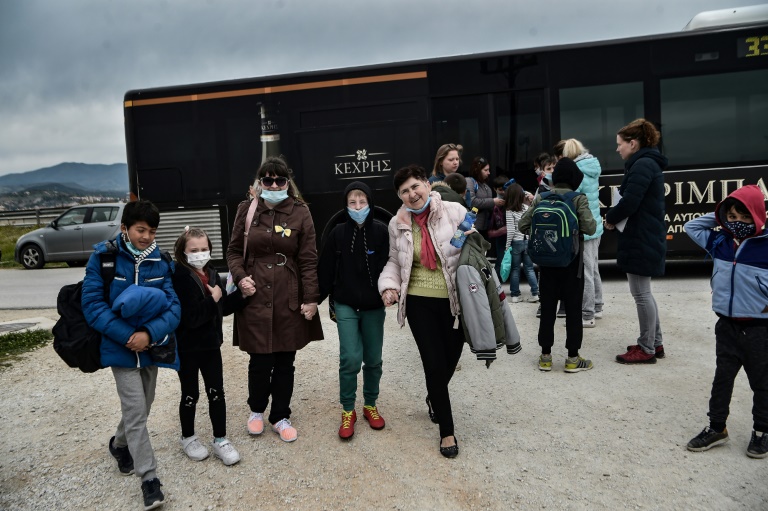
But towards Ukrainian refugees fleeing the Russian invasion, the reception has been starkly different — and long-term migrants have been the first to notice.

Shahran, 16, is among around 100 Afghans who were recently told to clear out of their lodgings in a camp in Serres, northern Greece, to make space for Ukrainian refugees.

“When the Ukrainians started coming, we were told to leave the house we were living in and they took us to another area of the camp, in a very dirty container. Why?” he told AFP.

Migration Minister Notis Mitarachi drew criticism last month after calling Ukrainians “real refugees”.

The conservative Greek government, in power since 2019, has strengthened patrols on the border with Turkey designed to crack down on asylum seekers.

It has slashed benefits available to recognised refugees from the Middle East, Africa and South Asia, many of whom have struggled to assimilate in Greece for years.

Closed camps have been created on Greek islands with EU funds, and aid groups assisting asylum seekers have been drastically regulated.

In contrast, within weeks of the conflict starting, Athens issued temporary residence permits to Ukrainian refugees, who will be able to stay and work in the country for one year. 

The government has also promised work, noting that there are more than 140,000 jobs available in the agriculture sector and some 50,000 in tourism.

More than 18,000 Ukrainians have fled to Greece so far, compared to 32,600 asylum-seekers staying in the country’s camps.

– ‘Clear separation’ –

“There is a clear separation between Ukrainian refugees and asylum seekers from other countries who have been there for several years, or who continue to arrive from neighbouring Turkey,” said Pepi Papadimitriou, head of education at the Ritsona camp near Athens, where mostly Afghan families live. 

As an example, dozens of children in Ritsona have not been to school since they arrived in Greece three and a half years ago, she notes.

Two camps in Serres have been set aside for Ukrainian refugees in the north, near their point of arrival at the border with Bulgaria.

In 2018 in the same area, dozens of parents boycotted a local school when it was reported that 11 Yezidi children would attend classes there. Protests against bringing in additional asylum seekers into camps have also been recorded in the north of the country.

And a third camp in Elefsina, near Athens, is being renovated for the same purpose, says camp manager Despina Baha.

Irene, a 39-year-old from Vinnytsia, has been living in one of the Serres camps with her two children for a fortnight. She is “impressed by the hospitality of the Greeks”, she said. 

“We are starting to have a normal life again. The children are going to school and already have friends,” she told AFP. 

Veronika Boholiubska left her city of Odessa in southwestern Ukraine with her daughter and grandchildren in early March. 

She had spent almost a month in a camp in Uzhhorod, on Ukraine’s border with Slovakia, before deciding to set off on her own to find a “safe country, like Greece” and prepare for the arrival of the rest of her family.

“We travelled for three days, in Romania and Bulgaria there were plenty of refugees, then I saw on Facebook that Greece was taking in refugees and that access was free,” says the 50-year-old, who arrived at the Elefsina camp with three small bags. 

– ‘Double standard’ –

For Stella Nanou, head of communications at the Greek section of the UNHCR, “the solidarity shown by the EU to Ukrainian refugees should serve as an example for all refugee crises” and show that the EU can “have an organised approach to asylum”. 

Human Rights Watch refugee and migrant rights director Bill Frelick this week contrasted Greece’s response to the Ukraine crisis with the country’s alleged practice of illegally expelling migrants at its borders. 

“At a time when Greece welcomes Ukrainians as ‘real refugees,’ it conducts cruel pushbacks on Afghans and others fleeing similar war and violence,” Frelick said in a group report. 

“The double standard makes a mockery of the purported shared European values of equality, rule of law, and human dignity.”

Greece has consistently denied that its security forces engage in illegal pushbacks. 

Last week, its national transparency authority said a four-month investigation initiated in November had found no evidence of such practices.
War in Ukraine: Latest developments

Here are the latest developments in the war in Ukraine:

– Third prisoner swap underway –

Kyiv says 26 Ukrainians are returning home following a prisoner exchange with Russia.

“On the order of President (Volodymyr) Zelensky, the third prisoner exchange took place today. Twelve of our servicemen are returning home, including one female officer,” deputy prime minister Iryna Vereshchuk says on Telegram.

Fourteen civilians including nine women were also on their way home, she added.

– Johnson offers more arms –

British Prime Minister Boris Johnson pays an unannounced visit to Kyiv and pledges armoured vehicles and anti-ship missiles to Ukraine.

“It is because of President Zelensky’s resolute leadership and the invincible heroism and courage of the Ukrainian people that (Russian President Vladimir) Putin’s monstrous aims are being thwarted,” Johnson says after meeting Zelensky, according to a Downing Street statement.

Zelensky in turn calls on the West to “follow the UK” in providing military aid to Ukraine and imposing sanctions on Russia.

– Ukraine ‘must win’ in east before talks –

Ukrainian presidential adviser Mykhaylo Podolyak says Ukraine must score a victory in the Donbass region before any potential meeting between Zelensky and Putin.

“Ukraine is ready for big battles. Ukraine must win them, including in the Donbass. And once that happens, Ukraine will have a more powerful negotiating position, which will allow it to dictate certain conditions,” he said on national television, as quoted by Interfax-Ukraine.

“After that the presidents will meet. It could take two weeks, three,” he added.

– Five killed in Russian shelling –

Russian shelling killed five civilians and wounded five others in two eastern Ukrainian cities Saturday, the Donetsk governor said.

Four of them died in the city of Vugledar, and one in the town of Novomikhaylovka, Pavlo Kyrylenko said in a Telegram post.

– Global event raises 10.1 bn euros –

A global pledging event for Ukrainian refugees called “Stand Up for Ukraine” has raised 10.1 billion euros ($11 billion), European Commission chief Ursula von der Leyen says in Warsaw. 

“The ‘Stand Up For Ukraine’ campaign has raised 9.1 billion euros for people fleeing bombs, inside and outside Ukraine, with an additional billion pledged by EBRD (the European Bank for Reconstruction and Development),” she says.

– Ukraine ‘still ready’ for talks –

Ukraine is “still ready” to continue negotiations with Moscow, which have stalled since the discovery of atrocities in Bucha and other areas near Kyiv, President Zelensky says.

“We are ready to fight and to look in parallel to end this war through diplomacy,” he says at a news conference with Austrian Chancellor Karl Nehammer, who was visiting the capital and Bucha.

– 4.4 million flee Ukraine war – 

More than 4.4 million Ukrainian refugees have fled their country since Putin ordered an invasion on February 24, the UN refugee agency says.

Ninety percent of those who have fled are women and children, as the Ukrainian authorities do not allow men of military age to leave.

– Evacuations from Kramatorsk resume –

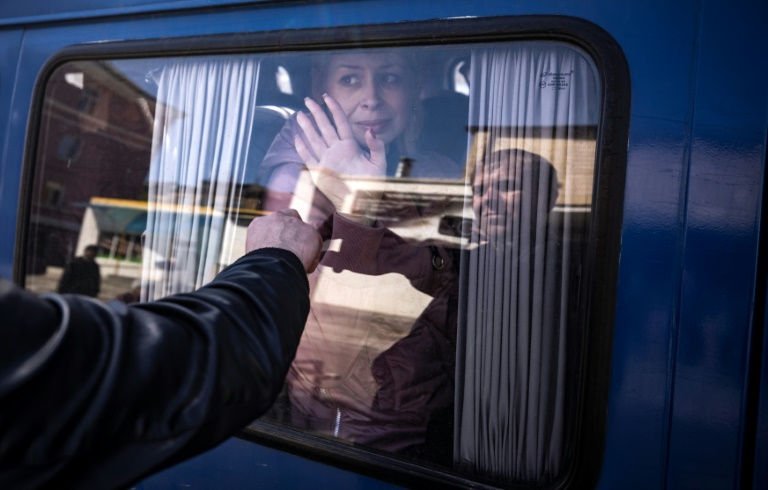
Evacuations resume from the town in eastern Ukraine where a missile strike killed 52 people at a railway station as civilians fled a feared Russian offensive.

Zelensky describes Russia as an “evil with no limits” after the attack and calls for a “firm global response”.

US President Joe Biden accuses Russia of being behind the attack, calling it a “horrific atrocity”, while French Foreign Minister Jean-Yves Le Drian deems it a “crime against humanity”.

Russia’s defence ministry accuses Kyiv of carrying out the attack, saying it wanted to use fleeing residents “as a ‘human shield’ to defend the positions of Ukraine’s Armed Forces”.

– Russia warns of YouTube reprisals –

Russian officials warn of reprisals after video hosting service YouTube blocks the channel of the lower house of parliament due to US sanctions.

Vyacheslav Volodin, speaker of the lower house of parliament, the State Duma, says Washington is breaching the rights of Russians.

– EU in talks with ICC prosecutor –

The European Union is to discuss its support for war crimes probes in Ukraine in meetings over the next two days with the International Criminal Court’s chief prosecutor, the European Commission says.

Karim Khan, of The Hague-based court, is to meet EU foreign policy chief Josep Borrell on Sunday in Luxembourg, then take part in a meeting of EU foreign ministers in the city on Monday.

– Odessa curfew –  

A curfew starts in Ukraine’s southern city of Odessa on Saturday evening to Monday evening over a “missile strike threat” from Russia, and after the shelling of the train station in Kramatorsk.

– Germany reaches ‘limit’ in arms to Ukraine –

Germany has almost exhausted its ability to supply Ukraine with weapons from its army reserves, but is working on direct deliveries from the arms industry, German Defence Minister Christine Lambrecht says. 

“For deliveries coming from the Bundeswehr’s stocks, I have to say honestly that we have reached a limit,” she tells German daily Augsburger Allgemeine. 

– Berlusconi ‘disappointed’ in friend Putin –

Former Italian Prime Minister Silvio Berlusconi tells a public meeting of his right-wing Forza Italia party he is “deeply disappointed and saddened” by the behaviour of his old friend Putin over the Ukraine invasion.

Finland gears up for historic NATO decision

Finland is preparing for a potentially historic decision “before midsummer” on whether to apply to join NATO as a deterrent against Russian aggression.

The Nordic nation of 5.5 million has traditionally been militarily non-aligned, in part to avoid provoking its eastern neighbour, with which it shares a 1,300 kilometre (830 mile) border.

But Russia’s invasion of Ukraine on February 24 saw public support for joining NATO double from 30 to 60 percent, according to a series of polls.

“Never underestimate the capacity of Finns to take rapid decisions when the world changes,” former Finnish prime minister Alexander Stubb told AFP.

Himself a long-time NATO advocate, Stubb now believes Finland making a membership application is “a foregone conclusion” as Finns re-evaluate their relationship with their neighbour. 

Next week a government-commissioned national security review will be delivered to parliament, the Eduskunta, to help Finnish MPs make up their own minds, before it is put to a vote. 

“We will have very careful discussions but not taking any more time than we have to,” Prime Minister Sanna Marin told a news conference on Friday.

“I think we will end the discussion before midsummer,” she added.

“My guess is that the application will be filed sometime during the month of May” in time for the June NATO summit in Madrid, Stubb said.

– Change of heart –

Finland declared independence in 1917 after 150 years of Russian rule, only for its vastly outnumbered army to fight off an attempted Soviet invasion during the Second World War inflicting heavy losses on the Red Army. 

Hostilities ended in a peace deal that saw Finland ceding several border areas to the Soviet Union.

Finnish leaders agreed to remain neutral during the Cold War in exchange for guarantees from Moscow that it would not invade.

The country’s forced neutrality to appease its stronger neighbour coined the term “Finlandization”.

Finland has remained outside the transatlantic military alliance, and despite some cuts after the Cold War it has focused on maintaining well-funded defence and preparedness capabilities.

“We’re able to mobilise 280,000 to 300,000 men and women within a matter of days,” Stubb said, adding that 900,000 reserves could also be called up. 

Last week Finland’s government agreed a 40-percent hike in defence spending by 2026, to further strengthen the country’s position.

“We have walked a long way when it comes to our security policies, and they have worked so far,” said Centre Party MP Joonas Kontta.

Like the majority of his parliamentary colleagues, the 32-year-old used to think that NATO membership was “something that we don’t need at the moment”.

But Russia’s invasion “changed something in Europe in a way that can’t be changed back”, he told AFP, and Kontta recently announced that he now believes it is time to seek to join the alliance.

A number of MPs have also recently announced similar changes of heart regarding Finland’s “NATO question” — although many more are keeping their positions to themselves awaiting more detailed discussions.

– Anti-NATO minority

Only six of Finland’s 200 MPs in a recent poll by public broadcaster Yle openly voiced anti-NATO views, including Markus Mustajarvi from the Left Alliance party

Finland and Sweden’s non-alignment “has brought stability to the whole of Northern Europe”, the Lapland MP told AFP.

Mustajarvi questions whether NATO’s Article 5 commitment to mutual defence would provide genuine protection in case of an attack. 

Instead he cites Finland’s own defence capabilities which are “so strong that they would force Russia to think what price it would pay for attacking”.

Despite receiving “all sorts of feedback” from the public and his fellow MPs over his stance, Mustajarvi insists he has “thought this through to the end and so far I don’t see a reason to change my position”.

– Grey zone –

Since Russia’s attack, Finland’s leadership has undertaken an intensive series of talks to canvass opinion from other NATO states about a possible membership bid.

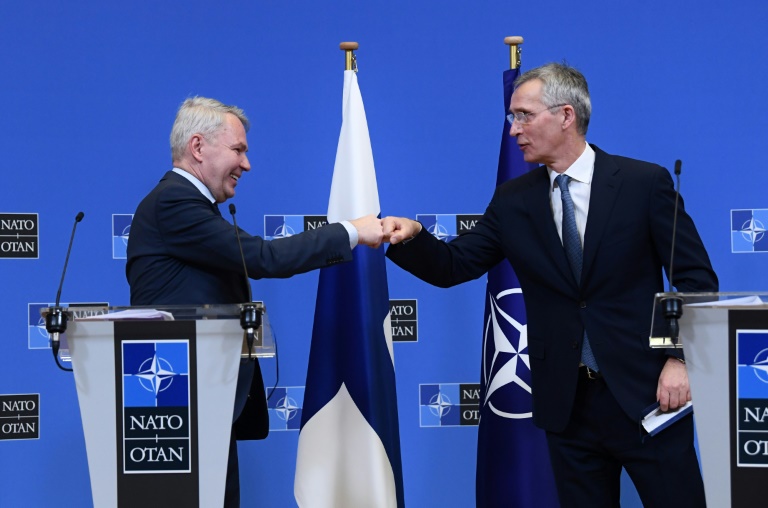
Along with neighbouring Sweden, Finland has received public assurances from secretary general Jens Stoltenberg that the alliance’s door remains open, as well as expressions of support from numerous members including the US, UK, Germany, France and Turkey.

But attempting to join NATO would likely be seen as a provocation by the Kremlin, for whom the expansion of the US-led alliance on its borders has been a prime security grievance.

Finland’s president Sauli Niinisto has warned that Russia’s response could be “on the brash side”, including airspace, territorial violations and hybrid attacks.

The Kremlin has pledged to “rebalance the situation” in the event of Finland joining NATO.

Meanwhile, Foreign Minister Pekka Haavisto has acknowledged that Russia could seek to destabilise a membership bid during the “grey zone” between an application and its ratification by all 30 NATO states, which could take four months to a year.

“Finland has always tried to stay away from the grey zone,” Stubb said, but he believes that Finland has the resilience to withstand potential Russian aggression or hybrid attacks.

Shehbaz Sharif steps out of the shadows to lead Pakistan

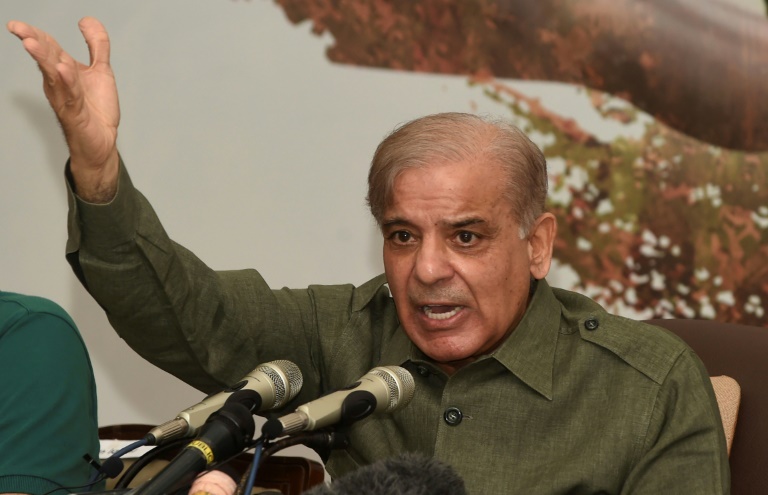
Shehbaz Sharif, expected to become Pakistan’s new prime minister Monday after leading the opposition alliance that ousted Imran Khan, is a tough administrator with a penchant for quoting revolutionary poetry.

Sharif is the younger brother of three-time prime minister Nawaz Sharif, who was dismissed then jailed on corruption charges in 2017 and is currently in Britain after being released from prison two years later for medical treatment.

He is a seasoned politician in his own right, however, having served for years as chief minister of Punjab province, the Sharif family’s power base, and also president of the Pakistan Muslim League-N (PML-N).

The 70-year-old jointly inherited the family’s steel business as a young man and was first elected to provincial office in 1988.

During his stints as chief minister in the years that followed, he presided over a series of big-ticket infrastructure projects, including Pakistan’s first metro bus service.

Officials were reportedly kept on their toes by workaholic Sharif’s habit of surprise visits to government offices, which he would inspect clad in a favoured safari suit and hat.

Still, critics say he did little to address the province’s core issues — including the need for civil service, health and agricultural reforms — and instead focused on vote-grabbing projects, such as distributing laptops to students or offering subsidised taxis to the jobless.

– Freed on bail –

Sharif has also been linked to graft and corruption — charges supporters say sprang from a political vendetta by Khan.

In December 2019, the National Accountability Bureau seized nearly two dozen properties belonging to Sharif and his son Hamza, accusing them of money laundering.

He was arrested and detained in September 2020, but released around six months later on bail for a trial which is still pending.

Unlike his elder brother — whose relations with the country’s powerful military and his opponents were strained — Sharif is seen as a more flexible dealmaker, capable of compromising even with his enemies.

Pakistan’s military is the country’s most powerful institution and has ruled the nation for nearly half its history — and pulls the strings even when not actually ruling.

“I have always remained a strong supporter of effective coordination between Islamabad and Rawalpindi,” Sharif said, referring to the administrative capital and the nearby military headquarters.

Sharif remains popular despite lurid tabloid headlines about multiple marriages and a property portfolio that includes luxury apartments in London and Dubai.

His current marriage, to author Tehmina Durrani, has largely ended the gossip.

Durrani, a feminist whose book “My Feudal Lord” earned her international acclaim, is also credited with improving Sharif’s respect for women. 

Tough economic and security challenges await Sharif as he inherits a stagnant economy and escalating violence from Pakistan’s Taliban and Balochistan separatists.

Civilians flee east Ukraine as Kyiv readies for 'big battles'

Ukraine is preparing for “big battles” against Moscow’s forces in the east of the country, officials in Kyiv said, as thousands of civilians flee in fear of an imminent Russian offensive.

Evacuations resumed on Saturday from Kramatorsk, in eastern Ukraine, where a missile strike killed 52 people at a railway station a day earlier, as British Prime Minister Boris Johnson became the latest Western leader to visit Kyiv.

Hailing the country’s response to the Russian invasion, Johnson offered Ukraine armoured vehicles and anti-ship missiles to help ensure, he said, that the country will “never be invaded again”.

His offer came after President Volodymyr Zelensky said Kyiv was readying for a Russian onslaught.

“Sadly, in parallel we see the preparations for important battles, some people say decisive ones, in the east,” he said Saturday at a press conference with visiting Austrian Chancellor Karl Nehammer.

“We are ready to fight and to look in parallel to end this war through diplomacy.”

Zelensky’s adviser Mykhaylo Podolyak said Ukraine must beat back Russia in the eastern Donbas region, where Moscow controls two separatist territories, before a meeting can take place between the Ukrainian leader and Russian President Vladimir Putin.

“Ukraine is ready for big battles. Ukraine must win them, including in the Donbas. And once that happens, Ukraine will have a more powerful negotiating position,” he said on national television, as quoted by the Interfax news agency.

“After that the presidents will meet. It could take two weeks, three.”

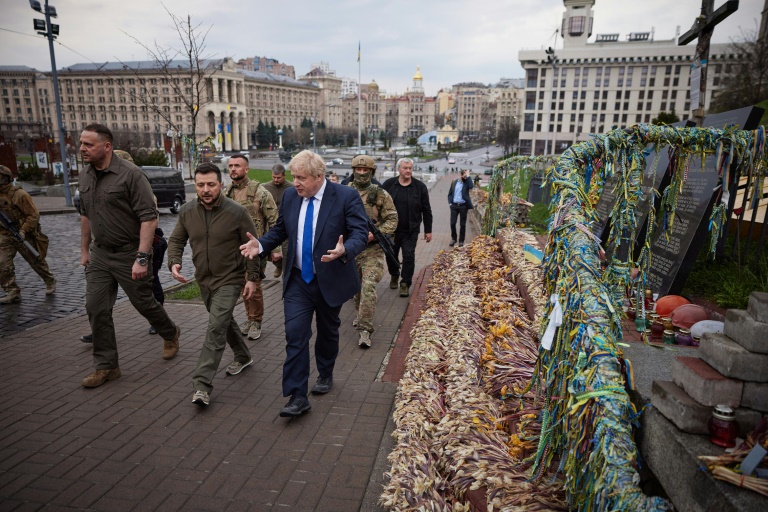
A video released by Zelensky’s office showed him and Johnson walking through largely empty city streets to Kyiv’s historic Maidan Square, as snipers kept watch.

The two men greeted passersby, and one visibly emotional man called out to Johnson: “We need you.”

Johnson said the discovery of scores of civilian bodies in Ukrainian towns had “permanently polluted” Putin’s reputation.

Six weeks into Russia’s invasion, Moscow has shifted its focus to eastern and southern Ukraine after stiff resistance thwarted plans to swiftly capture Kyiv.

With thousands killed in the fighting and more than 11 million fleeing their homes or the country, the Ukrainian president called on the West to follow Britain’s example on military aid.

“We need even more sanctions” against Russia, Zelensky said in a video address Saturday.

“We need more weapons for our state.”

– Plea to evacuate –

EU leaders were meeting with Zelensky in Kyiv on Friday as news emerged of the devastating attack on Kramatorsk’s station. The 52 victims included five children.

US President Joe Biden accused Russia of being behind a “horrific atrocity” in Kramatorsk, and France condemned the strike as a “crime against humanity”.

Moscow denied responsibility for the rocket attack, which also wounded 109 people, according to the latest official count.

As Russian forces regroup in the east and south of Ukraine, local officials are urging residents to flee before it is too late.

The mayor of eastern Lysychansk, Oleksandr Zaika, on Saturday asked residents to evacuate as soon as possible due to constant shelling by the Russian army.

“It has become very difficult in the city, enemy shells are already flying,” Zaika said in a video message.

While the city had stocks of humanitarian aid, he added, “that doesn’t mean it will save your life if an enemy shell arrives”.

And more Russian shells did arrive on Saturday, killing five people in the eastern cities of Vugledar and Novo Mikhaylovka, local governor Pavlo Kyrylenko said on Telegram.

Meanwhile, in Kramatorsk, minibuses assembled at a church to collect shaken evacuees. Almost 80 people, most of them elderly, sheltered in a building near the targeted station.

“There were around 300 to 400 people who rushed here after the strike,” Yevgeny, a member of the Protestant church, told AFP.

“They were traumatised. Half of them ran to shelter in the cellar, others wanted to leave as soon as possible. Some were evacuated by bus” on Friday.

The Kramatorsk station was serving as the main evacuation hub for refugees from parts of the eastern Donbas region still under Ukrainian control.

AFP reporters at the station saw the remains of a missile tagged in white paint with the words “for our children” in Russian — an expression used by pro-Russian separatists to invoke their own losses since fighting in Donbas began in 2014.

The governor of Donetsk claimed a missile with cluster munitions — banned by an international treaty — was used in the attack, according to remarks published by the Interfax news agency.

– NATO plans new force –

Speaking Saturday from Warsaw, European Commission President Ursula von der Leyen said a global pledging event for Ukrainian refugees has raised 10.1 billion euros ($11 billion).

In another sign of Western solidarity, NATO Secretary General Jens Stoltenberg said the military alliance was drawing up plans for a permanent military force on its border to prevent further Russian aggression.

“What we see now is a new reality, a new normal for European security. Therefore, we have now asked our military commanders to provide options for what we call a reset, a longer-term adaptation of NATO,” he said in an interview with Britain’s Daily Telegraph published Saturday.

He said the new force would be one of the “long-term consequences” of Putin’s invasion.

Russian troops appear intent on creating a long-sought land link between occupied Crimea and the Moscow-backed separatist territories of Donetsk and Lugansk in the Donbas region.

Growing evidence of atrocities has also galvanised Ukraine’s allies in the EU, which has approved an embargo on Russian coal, frozen billions in assets of sanctioned individuals and ordered the closure of its ports to Russian vessels.

Bucha — where authorities say hundreds were killed, some with their hands bound — has become a byword for the brutality allegedly inflicted under Russian occupation.

And Ukrainian officials say they are uncovering even greater devastation in nearby towns.

Fresh allegations also emerged from Obukhovychi, northwest of Kyiv, where villagers told AFP they were used as human shields.

Moscow has denied targeting civilians.

– Prisoner exchange –

Ukraine said Saturday it had completed a third prisoner exchange with Russia, bringing 12 soldiers and 14 civilians home.

But Moscow said Russian troops also fired on a Ukrainian vessel trying to evacuate commanders of the Azov battalion from the besieged southeastern city of Mariupol.

The Azov Special Operations Detachment has been fighting Russian forces in Mariupol — scene of some of the war’s most grievous civilian suffering — as it lies between Russia-occupied Crimea and the pro-Russian separatist regions in Ukraine’s east.

Fighting has become increasingly fierce in the region as Russia redirects its focus.

The governor of Donetsk said that Russian shelling had also killed five civilians and wounded five others in two eastern Ukrainian cities Saturday.

Four of them died in the city of Vugledar, and one in the town of Novomikhaylovka, Pavlo Kyrylenko said in a Telegram post.

The Ukrainian army announced on Facebook that it had “destroyed four tanks, eight armoured vehicles and seven enemy vehicles”, as well as “a plane, a helicopter” and drones.

burs-dlc-har/jj/bbk/md/jfx/qan

Macron seeks new term in tight French vote

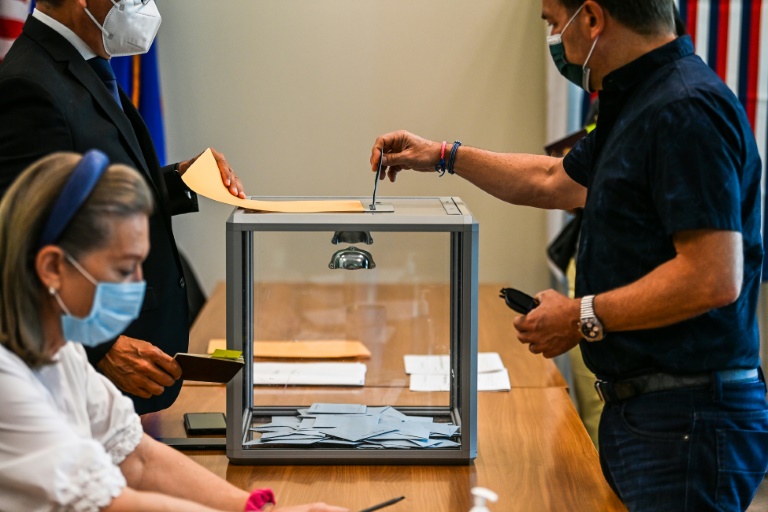
France on Sunday votes in the first round of presidential elections projected to produce a run-off rematch between incumbent Emmanuel Macron and far-right leader Marine Le Pen that will be far tighter than their duel five years ago. 

Polls open in mainland France at 0600 GMT after an unusual campaign overshadowed by Russia’s invasion of Ukraine that analysts warn could lead to unpredictable outcomes with turnout a major factor.

French overseas territories already voted Saturday to take account of the time difference, starting with the tiny island of Saint Pierre and Miquelon off the coast of Canada and then territories in the Caribbean followed by French Pacific islands.

Polls predict that Macron will lead Le Pen by a handful of percentage points in round one, with the top two going through to a second round vote on April 24. 

Far-left candidate Jean-Luc Melenchon is snapping at their heels in third and still fancies his chances of reaching the second round at the expense of Le Pen or even — in what would be an extraordinary upset — President Macron himself. 

Although her opponents accuse her of being an extremist bent on dividing society, Le Pen has with some success during the campaign sought to show a more moderate image and concern with voters’ daily worries such as rising prices. 

Macron by contrast has campaigned relatively little, by his own admission entering the election campaign later than he would have wished due to the war in Ukraine. 

French television channels will broadcast projections of the final results, which are generally highly accurate, as soon as polls close at 1800 GMT Sunday.

– ‘Uncertainty’ –

If Macron and Le Pen as forecast reach the second round, analysts predict that their clash will be far tighter than in 2017 when the current president thrashed his rival with 66 percent of the vote.

“There is an uncertainty ahead of the first round,” said French political scientist Pascal Perrineau, pointing to unprecedently high numbers of voters who were still undecided or who changed their minds during the campaign as well as absentee voters.

Analysts fear that the 2002 record of the numbers of French voters boycotting a first round of 28.4 percent risks being beaten, with the 2017 absentee rate of 22.2 percent almost sure to be exceeded. 

Some 48.7 million voters are registered across France to vote in this election. 

The stakes of the election are high for Macron, who came to power aged 39 as France’s youngest president with a pledge to shake up the country. 

He would be the first French president since Jacques Chirac in 2002 to win a second term and thus cement a place in the country’s history. 

If he wins he would have a five-year mandate to impose his vision of reform which would include a crack at reducing the pension age in defiance of union anger. 

He would also seek to consolidate his position as the undisputed number one in Europe after the departure of German chancellor Angela Merkel. 

A Le Pen victory would however be seen as a victory for right-wing populism and send shockwaves across Europe and markets. 

For his European supporters, Macron is a centrist bulwark against populism, especially after election victories last weekend by the right-wingers Hungarian premier Viktor Orban and Serbian leader Aleksandar Vucic, who both have cordial ties with Putin.

– Republican front? –

The candidates of France’s traditional parties, the right-wing Republicans and the Socialists on the left, are facing a debacle on election night, continuing a shake-up of French politics that began when Macron took power.

Greens candidate Yannick Jadot, the Republicans’ Valerie Pecresse and the flagging Socialist nominee Anne Hidalgo appear certain to be ejected in the first round. 

Far-right former TV pundit Eric Zemmour made a stunning entry into the campaign last year but lost ground, and analysts say he has aided Le Pen by making her appear more moderate. 

Even with the outcome of the first round still the subject of some uncertainty, attention is already turning to the second round and who the defeated first-round hopefuls will back. 

Analysts question whether Macron would enjoy the same support from a broad anti-far right “Republican front” coalition that helped him win in 2017 and allowed Jacques Chirac to demolish Marine Le Pen’s father Jean-Marie in 2002. 

“The Republican front hasn’t been what it used to be for a while,” the director of the Jean-Jaures Foundation, Gilles Finchelstein, told AFP. 

Finland gears up for historic NATO decision

Finland is preparing for a potentially historic decision “before midsummer” on whether to apply to join NATO as a deterrent against Russian aggression.

The Nordic nation of 5.5 million has traditionally been militarily non-aligned, in part to avoid provoking its eastern neighbour, with which it shares a 1,300 kilometre (830 mile) border.

But Russia’s invasion of Ukraine on February 24 saw public support for joining NATO double from 30 to 60 percent, according to a series of polls.

“Never underestimate the capacity of Finns to take rapid decisions when the world changes,” former Finnish prime minister Alexander Stubb told AFP.

Himself a long-time NATO advocate, Stubb now believes Finland making a membership application is “a foregone conclusion” as Finns re-evaluate their relationship with their neighbour. 

Next week a government-commissioned national security review will be delivered to parliament, the Eduskunta, to help Finnish MPs make up their own minds, before it is put to a vote. 

“We will have very careful discussions but not taking any more time than we have to,” Prime Minister Sanna Marin told a news conference on Friday.

“I think we will end the discussion before midsummer,” she added.

“My guess is that the application will be filed sometime during the month of May” in time for the June NATO summit in Madrid, Stubb said.

– Change of heart –

Finland declared independence in 1917 after 150 years of Russian rule, only for its vastly outnumbered army to fight off an attempted Soviet invasion during the Second World War inflicting heavy losses on the Red Army. 

Hostilities ended in a peace deal that saw Finland ceding several border areas to the Soviet Union.

Finnish leaders agreed to remain neutral during the Cold War in exchange for guarantees from Moscow that it would not invade.

The country’s forced neutrality to appease its stronger neighbour coined the term “Finlandization”.

Finland has remained outside the transatlantic military alliance, and despite some cuts after the Cold War it has focused on maintaining well-funded defence and preparedness capabilities.

“We’re able to mobilise 280,000 to 300,000 men and women within a matter of days,” Stubb said, adding that 900,000 reserves could also be called up. 

Last week Finland’s government agreed a 40-percent hike in defence spending by 2026, to further strengthen the country’s position.

“We have walked a long way when it comes to our security policies, and they have worked so far,” said Centre Party MP Joonas Kontta.

Like the majority of his parliamentary colleagues, the 32-year-old used to think that NATO membership was “something that we don’t need at the moment”.

But Russia’s invasion “changed something in Europe in a way that can’t be changed back”, he told AFP, and Kontta recently announced that he now believes it is time to seek to join the alliance.

A number of MPs have also recently announced similar changes of heart regarding Finland’s “NATO question” — although many more are keeping their positions to themselves awaiting more detailed discussions.

– Anti-NATO minority

Only six of Finland’s 200 MPs in a recent poll by public broadcaster Yle openly voiced anti-NATO views, including Markus Mustajarvi from the Left Alliance party

Finland and Sweden’s non-alignment “has brought stability to the whole of Northern Europe”, the Lapland MP told AFP.

Mustajarvi questions whether NATO’s Article 5 commitment to mutual defence would provide genuine protection in case of an attack. 

Instead he cites Finland’s own defence capabilities which are “so strong that they would force Russia to think what price it would pay for attacking”.

Despite receiving “all sorts of feedback” from the public and his fellow MPs over his stance, Mustajarvi insists he has “thought this through to the end and so far I don’t see a reason to change my position”.

– Grey zone –

Since Russia’s attack, Finland’s leadership has undertaken an intensive series of talks to canvass opinion from other NATO states about a possible membership bid.

Along with neighbouring Sweden, Finland has received public assurances from secretary general Jens Stoltenberg that the alliance’s door remains open, as well as expressions of support from numerous members including the US, UK, Germany, France and Turkey.

But attempting to join NATO would likely be seen as a provocation by the Kremlin, for whom the expansion of the US-led alliance on its borders has been a prime security grievance.

Finland’s president Sauli Niinisto has warned that Russia’s response could be “on the brash side”, including airspace, territorial violations and hybrid attacks.

The Kremlin has pledged to “rebalance the situation” in the event of Finland joining NATO.

Meanwhile, Foreign Minister Pekka Haavisto has acknowledged that Russia could seek to destabilise a membership bid during the “grey zone” between an application and its ratification by all 30 NATO states, which could take four months to a year.

“Finland has always tried to stay away from the grey zone,” Stubb said, but he believes that Finland has the resilience to withstand potential Russian aggression or hybrid attacks.

Iraqis clean up river as first green projects take root

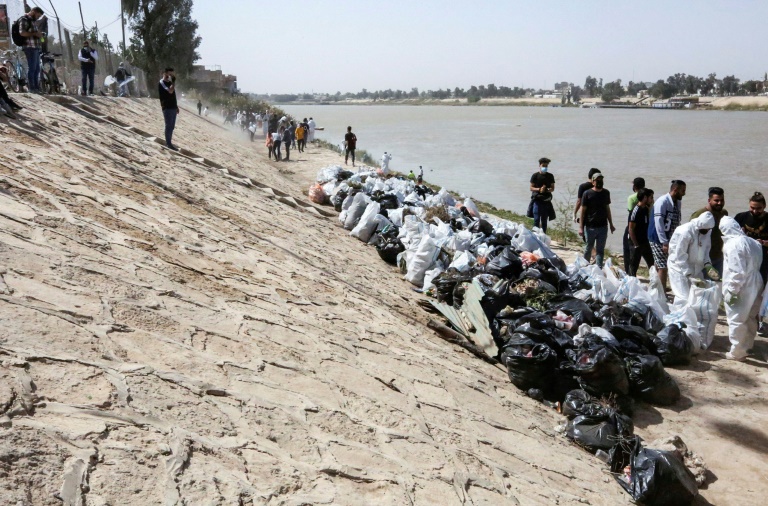
Garbage clogs the banks of Iraq’s Tigris River in Baghdad but an army of young volunteers is cleaning it, a rare environmental project in the war-battered country.

With boots and gloves, they pick up soggy trash, water bottles, aluminium cans and muddy styrofoam boxes, part of a green activist campaign called the Cleanup Ambassadors. 

“This is the first time this area has been cleaned since 2003,” shouts a passer-by about the years of conflict since a US-led invasion toppled dictator Saddam Hussein.

The war is over but Iraq faces another huge threat: a host of interrelated environmental problems from climate change and rampant pollution to dust storms and water scarcity.

The 200 volunteers at work in Baghdad want to be part of the solution, removing garbage from a stretch of one of the mighty rivers that gave birth to the ancient civilisations of Mesopotamia.

“It breaks my heart to see the banks of the Tigris in this state,” said one 19-year-old volunteer, who gave only her first name, Rassel, working under Baghdad’s Imams Bridge. 

“We want to change this reality. I want to make my city more beautiful.”

The task is Herculean in a country where it remains common for people to drop their trash on the ground.

The green banks of the Tigris, popular for picnics by families and groups of friends, are usually littered with waste, from single-use plastic bags to the disposable tips of hookah pipes, especially after public holidays.

– Rubbish chokes wildlife –

“There is a lot of plastic, nylon bags and corks,” said Ali, also 19 and an organiser of the cleanup event.

The group then handed their collected waste to the Baghdad City Council which took it away, bound for a landfill. 

More often the garbage ends up directly in the Tigris. It is one of Iraq’s two major waterways, along with the Euphrates, that face a host of environmental pressures.

The rivers or their tributaries are dammed upstream in Turkey and Iran, over-used along the way, and polluted with domestic, industrial and agricultural waste.

The trash that flows downriver clogs riverbanks and wetlands and poses a threat to wildlife, both terrestrial and aquatic.

When the water empties into the Gulf, plastic bags are often ingested by turtles and dolphins and block the airways and stomachs of many other species, says a United Nations paper. 

In Iraq — which has suffered four decades of conflict and years of political and economic turmoil — separating and recycling waste has yet to become a priority for most people.

The country also lacks proper infrastructure for waste collection and disposal, said Azzam Alwash, head of the non-governmental group Nature Iraq.

“There are no environmentally friendly landfills and plastic recycling is not economically viable,” he said. 

– Plumes of smoke –

Most garbage ends up in open dumps where it is burned, sending plumes of acrid smoke into the air.

This happens in Iraq’s southern Mesopotamian Marshes, one of the world’s largest inland deltas, which Saddam once had largely drained. They were named a UNESCO World Heritage site in 2016, both for their biodiversity and ancient history.

Today a round-the-clock fire outside the town of Souq al-Shuyukh, which is the gateway to the marshes, burns thousands of tonnes of garbage under the open sky, sending white smoke drifting many kilometres away. 

“Open burning of waste is a source of air pollution, and the real cost is the shortening of Iraqi lives,” said Alwash. “But the state has no money to build recycling facilities.”

Even worse is the air pollution caused by flaring — burning off the gas that escapes during oil extraction. 

This toxic cocktail has contributed to a rise in respiratory illnesses and greenhouse gas emissions, a phenomenon the UN’s climate experts have voiced alarm about. 

Environment Minister Jassem al-Falahi admitted in comments to the official news agency INA that waste incineration’s “toxic gases affect people’s lives and health”.

But so far there have been few government initiatives to tackle Iraq’s environmental woes, and so projects like the Tigris cleanup are leading the way for now.

Ali, the volunteer, hopes that their effort will have a more long-term effect by helping to change attitudes.

“Some people have stopped throwing their waste on the street,” he said, “and some have even joined us.”

Crypto-curious corporations struggle to find right recipe

Four years ago, fried-chicken chain KFC tweeted from its Canadian account that it would accept bitcoin as payment for its “buckets”.

The company told AFP its tongue-in-cheek campaign — “digital tender for chicken tenders” — sold out in an hour and the chain has not taken crypto payments since, but online articles regularly recycle the claim that KFC “accepts” bitcoin.

Many other companies have tried to harness crypto payments before abandoning their efforts, Tesla and Dell among them.

Bitcoin will almost certainly never be practical for everyday purchases because its value fluctuates wildly, and each transaction is expensive, energy-hungry and takes at least half an hour.

“No one’s going to walk into a KFC to buy a chicken burger and then have to wait 30 minutes for a payment,” South African developer and crypto expert Andre Cronje told AFP.

But there are now thousands of smaller cryptocurrencies with faster processing times and more stable prices.

Analysts say the total market value of cryptocurrencies has now topped $2 trillion, roughly half of which is bitcoin.

Companies are gagging to get in on the act and developers like Cronje are building the infrastructure to enable the virtual coins to be used to pay for everyday items.

But public buy-in is crucial, and corporations seem to be struggling to find the perfect formula.

– ‘Watch the jockeying’ –

Microsoft typifies the emerging pattern of big companies dabbling in crypto.

The first rule: keep it at arm’s length from the core business.

The tech giant has stressed that shareholders will not be exposed to the ups and downs of crypto prices.

PayPal and Apple, two other crypto-curious corporations, have made similar pledges to their shareholders.

To keep crypto off its balance sheet, Microsoft partnered with a firm called Bakkt that allows clients to convert crypto assets into products like gift cards for Xbox, or charge their Starbucks payment card.

Bakkt, which has received investments from Microsoft’s venture capital fund M12, went public last year and a flurry of big partnership announcements with the likes of Mastercard sent its share price soaring.

But then came the nose-dive as it reported widening losses and its business came under scrutiny.

The firm had said it expected to have nine million customers by the end of 2021, yet its executives gave a figure of 1.7 million transacting accounts late last year.

PayPal, meanwhile, garnered a lot of publicity for a “checkout with crypto” feature launched in the US and UK last year.

PayPal’s system converts users’ cryptoassets into money before passing on payment to the vendors.

But it is unclear how popular any of these services are — none of these companies responded to AFP requests for details of the uptake.

Market watchers say it is too early to tell how these forays into crypto will play out.

“My view is to not get too excited yet but just watch the jockeying,” said analyst John Freeman of CFRA research, accepting the hot air made it difficult to predict what would happen next.

– ‘When, not if’ –

The barriers to widespread adoption of direct crypto payments for everyday items are considerable — perhaps even unsurmountable.

Developer Cronje said he functioned largely without the need for regular cash or banks by using services like BitPay and BitRefill, which allow crypto to be spent anywhere from Amazon to Uber.

But he accepted his less tech-savvy friends “would be broke very quickly” if they tried to rely on the blockchain, the technology that underpins cryptocurrencies.

Instead, he envisages a future where people will continue to use credit cards and banks but back-end tasks will be largely automated on the blockchain.

“This is a technology that conservatively is going to save them between 20 percent and 25 percent of their overheads and their costs,” he said. 

“So it’s not a matter of if, it’s a matter of when.”

Meanwhile, non-financial businesses will continue to throw themselves into the crypto space, often to emerge slightly wiser but no richer.

The Pavilions hotel chain, for example, partnered with a payments firm last year to allow customers to use crypto but found it made little difference to its business.

“It turns out no one likes to spend their bitcoins, even on holidays!” Pavilions spokesman Tim Sargeant told AFP in an email.

“It has shown us that bitcoin is more an investment tool than something people wish to part with for payment.”

Favourable breezes boost Spain's wind power sector

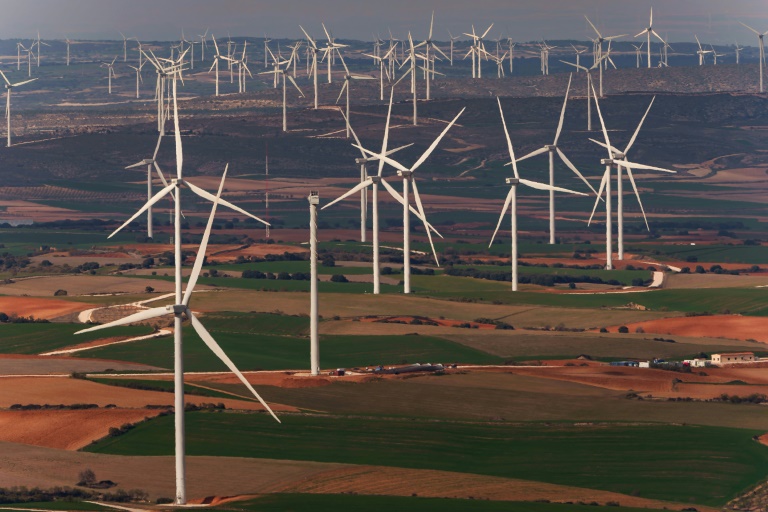
Buoyed by a surge in investment and new projects, wind power has become Spain’s main source of electricity generation just as Europe seeks to curb its energy imports from Russia.

“We are on suitable ground here,” said Joaquin Garcia Latorre, project director at Enel Green Power Espana, pointing to gigantic masts erected on the heights of the tiny northeastern village of Villar de los Navarros.

The Spanish-Italian firm picked this spot, which is well exposed to the wind, to set up a 180-megawatt wind farm, one of the country’s biggest.

Dubbed Tico Wind, its 43 wind turbines started producing power in November, said Latorre while workers around him tended to the turbines, which are over 100 metres (328 feet) high.

“There are between 2,500 and 3,000 hours of wind here per year,” he added.

The wind farm will be able to produce 471 gigawatt hours per year — enough to meet the demands of 148,000 households — after it becomes fully operational in a month.

These types of projects have popped up across Spain in recent years, making it Europe’s second-biggest wind power producer after Germany for installed capacity and the world’s fifth biggest.

Wind power became the main source of electricity production in Spain last year, accounting for 23 percent, ahead of nuclear (21 percent) and gas (17 percent), according to national grid operator REE.

The sector “benefits from a favourable situation” although “brakes” remain on its development, such as a dependency on government auctions, said Francisco Valverde Sanchez, renewables specialist at electricity consultants Menta Energia.

– Investor interest –

Following a boom in the 2000s thanks to generous public financial aid, the sector suffered a sudden halt when subsidies were slashed in 2013 during Spain’s economic crisis.

It has since charged ahead. Spain, which has a total of 1,265 wind farms, had an installed wind power capacity of 28.1 gigawatts in 2021, up from 23.4 gigawatts in 2018, according to industry group AEE.

With large swathes of sparsely populated land, a favourable legal framework and cutting edge wind turbine makers, Spain is one of the most “interesting” markets for wind power investors, said AEE director general Juan Virgilio Marquez.

Spain is home to several sector heavyweights such as Iberdrola and Naturgay, making it a top exporter of wind power equipment. “This explains the dynamism of the sector,” said Marquez.

Investor interest has even come from outside of the energy sector.

In November Spain’s Amancio Ortega, the founder of fast fashion giant Zara and one of the world’s richest men, injected 245 million euros ($268 million) in a wind farm in the northeastern region of Aragon.

– Energy ‘breadbasket’ –

Spain in 2020 pledged to generate 74 percent of its electricity from renewable sources by 2030, up from 47 percent.

To meet this target, Spain is counting on the development of offshore wind power, a sector that is in its infancy.

But since Spain has thousands of kilometres of coastline, offshore wind has lots of room to grow.

“This is an ambitious goal,” said Valverde Sanchez, arguing that government bureaucracy around wind farm projects must be reduced for it to be met.

Nearly 600 wind power projects are currently under study by the government, according to AEE.

As part of its plan to respond to the economic fallout from Russia’s invasion of Ukraine, Spain has pledged to speed up the approval of wind power projects of less than 75 megawatts.

“Our country had enough natural resources to become Europe’s leading producer and exporter of renewable energy,” Prime Minister Pedro Sanchez said Wednesday, adding this could be key to help the European Union meet its goal of “energy independence”.

Since Russia invaded Ukraine on February 24, Brussels has declared a mission to cut the EU’s Russian gas imports by two thirds this year and to end the use of Russian gas by 2027.

Spain “could become the energy ‘breadbasket’ of Europe,” said Virgilio Marquez.

Close Bitnami banner
Bitnami