World

Favourable breezes boost Spain's wind power sector

Buoyed by a surge in investment and new projects, wind power has become Spain’s main source of electricity generation just as Europe seeks to curb its energy imports from Russia.

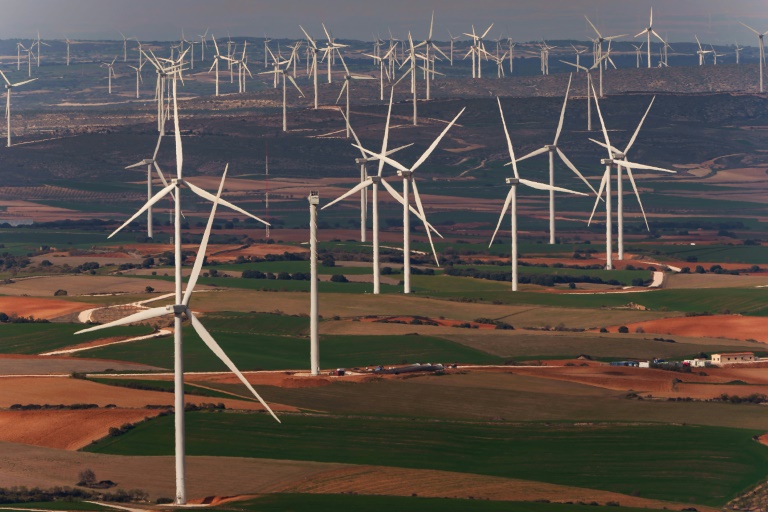
“We are on suitable ground here,” said Joaquin Garcia Latorre, project director at Enel Green Power Espana, pointing to gigantic masts erected on the heights of the tiny northeastern village of Villar de los Navarros.

The Spanish-Italian firm picked this spot, which is well exposed to the wind, to set up a 180-megawatt wind farm, one of the country’s biggest.

Dubbed Tico Wind, its 43 wind turbines started producing power in November, said Latorre while workers around him tended to the turbines, which are over 100 metres (328 feet) high.

“There are between 2,500 and 3,000 hours of wind here per year,” he added.

The wind farm will be able to produce 471 gigawatt hours per year — enough to meet the demands of 148,000 households — after it becomes fully operational in a month.

These types of projects have popped up across Spain in recent years, making it Europe’s second-biggest wind power producer after Germany for installed capacity and the world’s fifth biggest.

Wind power became the main source of electricity production in Spain last year, accounting for 23 percent, ahead of nuclear (21 percent) and gas (17 percent), according to national grid operator REE.

The sector “benefits from a favourable situation” although “brakes” remain on its development, such as a dependency on government auctions, said Francisco Valverde Sanchez, renewables specialist at electricity consultants Menta Energia.

– Investor interest –

Following a boom in the 2000s thanks to generous public financial aid, the sector suffered a sudden halt when subsidies were slashed in 2013 during Spain’s economic crisis.

It has since charged ahead. Spain, which has a total of 1,265 wind farms, had an installed wind power capacity of 28.1 gigawatts in 2021, up from 23.4 gigawatts in 2018, according to industry group AEE.

With large swathes of sparsely populated land, a favourable legal framework and cutting edge wind turbine makers, Spain is one of the most “interesting” markets for wind power investors, said AEE director general Juan Virgilio Marquez.

Spain is home to several sector heavyweights such as Iberdrola and Naturgay, making it a top exporter of wind power equipment. “This explains the dynamism of the sector,” said Marquez.

Investor interest has even come from outside of the energy sector.

In November Spain’s Amancio Ortega, the founder of fast fashion giant Zara and one of the world’s richest men, injected 245 million euros ($268 million) in a wind farm in the northeastern region of Aragon.

– Energy ‘breadbasket’ –

Spain in 2020 pledged to generate 74 percent of its electricity from renewable sources by 2030, up from 47 percent.

To meet this target, Spain is counting on the development of offshore wind power, a sector that is in its infancy.

But since Spain has thousands of kilometres of coastline, offshore wind has lots of room to grow.

“This is an ambitious goal,” said Valverde Sanchez, arguing that government bureaucracy around wind farm projects must be reduced for it to be met.

Nearly 600 wind power projects are currently under study by the government, according to AEE.

As part of its plan to respond to the economic fallout from Russia’s invasion of Ukraine, Spain has pledged to speed up the approval of wind power projects of less than 75 megawatts.

“Our country had enough natural resources to become Europe’s leading producer and exporter of renewable energy,” Prime Minister Pedro Sanchez said Wednesday, adding this could be key to help the European Union meet its goal of “energy independence”.

Since Russia invaded Ukraine on February 24, Brussels has declared a mission to cut the EU’s Russian gas imports by two thirds this year and to end the use of Russian gas by 2027.

Spain “could become the energy ‘breadbasket’ of Europe,” said Virgilio Marquez.
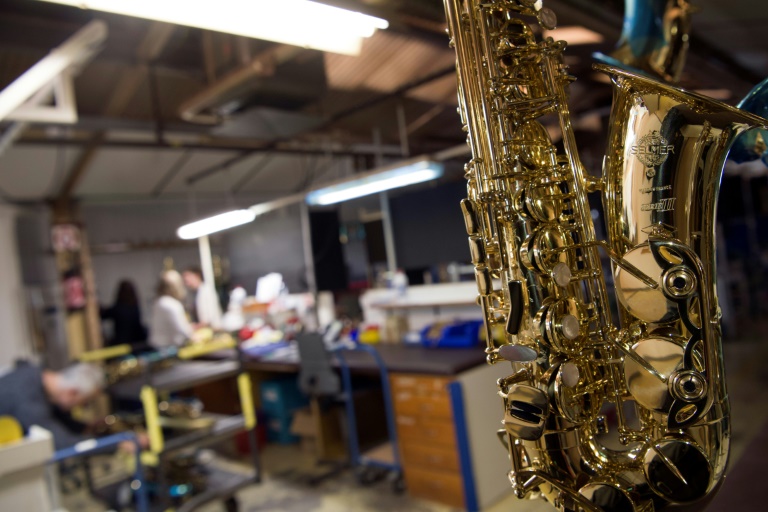
After Covid blues, French saxophone maker hits the right note

After the financial blues of the Covid pandemic, the French saxophone maker favoured by American jazz greats celebrates its 100th birthday looking to expand further in Asia and the United States.

Selmer experienced two difficult years after the pandemic began in 2020, the company’s executive chairman Thierry Oriez tells AFP.

“The Covid crisis affected us together with our customers” because “the world of music stopped”, whether that meant shows or conservatory classes.

But now Oriez looks to the future, with sales brimming once more.

“(I’m) convinced we could do more in the United States.”

Around 90 percent of sales are international, with China accounting for one-fifth of them ahead of Japan, South Korea and the United States. The company did not provide any sales figures.

While order books are full, Selmer, like many other companies, faces recruitment difficulties while Covid-19 continues to pose absenteeism problems.

The company was founded by clarinet player Henri Selmer in 1885 but produced its first saxophone in 1922.

Selmer’s instruments have been played by jazz legends including John Coltrane, Stan Getz and Sonny Rollins.

– ‘Musical evolution’ –

The family business was sold in 2018 by its heirs to European private equity group Argos Soditec. A delivery subsidiary for Asia was established in 2020.

Oriez took over the business in July from Jerome Selmer, a great-grandson of Henri Selmer.

The instruments are made at a factory in Mantes-La-Ville, just west of Paris. The company also owns a laboratory that works with musicians to develop new models.

Finishing touches and assembly of Selmer’s Axos series, a new collection less expensive than the company’s other instruments, are completed in China. An alto saxophone costs 3,150 euros ($3,430) while a tenor is worth 4,150 euros ($4,500).

Oriez says the new collection “allows us to be more aggressive in the Chinese market”.

While the Mantes-La-Ville factory has motorised precision machinery to craft some of the 700 pieces that make up each instrument, a large part of the work is still carried out by hand.

Artisans cut sheets of brass, use blowtorches to bend them into shape, mount the keys on the tube, polish the instrument and engrave Selmer’s logo on it.

Engraver Morgane Duhamel spots an imperfection and adds by hand “a small engraving that will be personalised and will offer the customer a unique instrument”.

Eric Bruel, who makes the saxophones’ horns by turning the brass tubes on a mandrel, said the search for new tones “has an influence on the treatment of the metal: the reheating temperature with the blowtorch, it will be more or less strong, more or less long”.

“Selmer has always walked the line between modernity regarding tools and the other slightly Amish side: we still do the forging, the welding and polishing by hand,” Bruel said.

“In almost 30 years at the company, I’ve seen many changes in tools, the families of instruments, the musical evolution with young saxophone players who do not necessarily have the same sounds as their elders,” he said.

Global ambitions drive Algerian tech start-up Yassir

It’s the Algerian start-up that made good: despite the country’s notoriously complex business climate, taxi and home-delivery firm Yassir has millions of users and is expanding across Africa.

“We made it our mission to create a model of success that was genuinely, 100-percent Algerian, to develop local talent and show that it’s possible to create added value in Algeria,” said co-founder Noureddine Tayebi.

Patience has been key as they navigate the country’s archaic bureaucracy, the bugbear of investors and one that creates particularly tough terrain for new entrants.

“Bureaucracy is one obstacle that we have to overcome. I can’t say it’s easy, but you have to deal with it and move forward,” Tayebi told AFP.

It’s a sign of changing times in Algeria, which in 2020 passed a law on start-ups and created a ministry to promote them.

Since he launched Yassir five years ago with fellow engineer Mehdi Yettou, the company has rolled out across the Maghreb region and beyond.

Late last year they raised some $30 million from American investors, cash they plan to pump into an ambitious expansion plan.

The firm has indirectly created more than 40,000 driver and delivery jobs and its revenue is skyrocketing at up to 40 percent a month.

Tayebi studied in Algiers before earning his doctorate in electronic engineering at the United States’s prestigious Stanford University.

That led to a job with chip manufacturer Intel — but after eight years in Silicon Valley, he decided to return home and set up Yassir along with Yettou.

– Expanding in Africa –

The name is a play on the words for “easy” and “drive” in Algerian Arabic.

The pair launched their taxi app in 2017 in Algiers, a capital with a population of four million and desperately lacking public transport.

The firm has since branched out into deliveries of fast food and groceries, with sister app Yassir Express.

Today Yassir has some four million subscribers in 25 cities across Algeria, neighbouring Morocco and Tunisia, as well as Canada and France.

Tayebi says he now has his sights set on West Africa — the app already works in Senegal — and other major markets on the continent such as South Africa, Nigeria and Egypt.

While its growth has been explosive, the business faces tough competition from Uber, Heetch and others.

To succeed, it will need to hire hundreds of highly skilled technicians.

It is already the biggest tech employer in the Maghreb region with some 600 engineers, a figure it wants to triple or even quadruple.

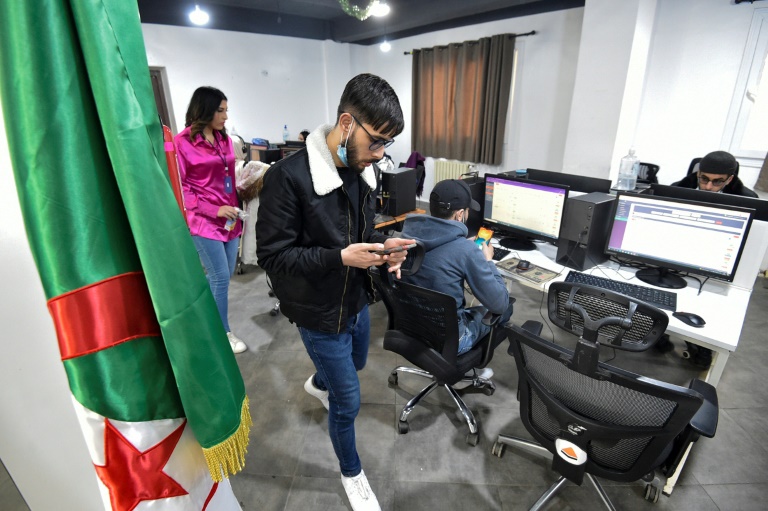
In Algiers, 30 or so young call centre operators are on hand to deal with around 6,000 orders a day.

“The average delivery time for meals is 30 minutes,” said Wissem, who runs the call centre.

– Big ambitions –

Tayebi also wants to provide an online payment system — a rarity in Algeria, where customers pay cash on delivery.

“Most of the population in Algeria and across Africa don’t have bank accounts — not because there’s no banking system, but because people don’t trust it,” Tayebi said.

He hopes to change that by capitalising on the trust the company has among its growing customer base.

“That’s the strength of our model and what sets us apart, particularly from Uber,” he said.

It also means the firm needs to keep a squeaky-clean image.

One Yassir taxi driver told AFP he had been given training in communication before being hired.

Tayebi said there was “a rigorous process for selecting drivers”. 

“We verify their police records, training and education. There’s even a psychological interview.”

It’s all part of a business for which he has set ambitious targets.

“The goal is to create the biggest tech company not just in Africa but in the world,” Tayebi said. 

“To get there, you need to be in lots of markets.”

War in Ukraine: Latest developments

Here are the latest developments in the war in Ukraine:

– Third prisoner swap underway –

Kyiv says 26 Ukrainians are returning home following a prisoner exchange with Russia.

“On the order of President (Volodymyr) Zelensky, the third prisoner exchange took place today. Twelve of our servicemen are returning home, including one female officer,” deputy prime minister Iryna Vereshchuk says on Telegram.

Fourteen civilians including nine women were also on their way home, she added.

– Johnson offers more arms –

British Prime Minister Boris Johnson pays an unannounced visit to Kyiv and pledges armoured vehicles and anti-ship missiles to Ukraine.

“It is because of President Zelensky’s resolute leadership and the invincible heroism and courage of the Ukrainian people that (Russian President Vladimir) Putin’s monstrous aims are being thwarted,” Johnson says after meeting Zelensky, according to a Downing Street statement.

Zelensky in turn calls on the West to “follow the UK” in providing military aid to Ukraine and imposing sanctions on Russia.

– Ukraine ‘must win’ in east before talks –

Ukrainian presidential adviser Mykhaylo Podolyak says Ukraine must score a victory in the Donbass region before any potential meeting between Zelensky and Putin.

“Ukraine is ready for big battles. Ukraine must win them, including in the Donbass. And once that happens, Ukraine will have a more powerful negotiating position, which will allow it to dictate certain conditions,” he said on national television, as quoted by Interfax-Ukraine.

“After that the presidents will meet. It could take two weeks, three,” he added.

– Five killed in Russian shelling –

Russian shelling killed five civilians and wounded five others in two eastern Ukrainian cities Saturday, the Donetsk governor said.

Four of them died in the city of Vugledar, and one in the town of Novomikhaylovka, Pavlo Kyrylenko said in a Telegram post.

– Global event raises 10.1 bn euros –

A global pledging event for Ukrainian refugees called “Stand Up for Ukraine” has raised 10.1 billion euros ($11 billion), European Commission chief Ursula von der Leyen says in Warsaw. 

“The ‘Stand Up For Ukraine’ campaign has raised 9.1 billion euros for people fleeing bombs, inside and outside Ukraine, with an additional billion pledged by EBRD (the European Bank for Reconstruction and Development),” she says.

– Ukraine ‘still ready’ for talks –

Ukraine is “still ready” to continue negotiations with Moscow, which have stalled since the discovery of atrocities in Bucha and other areas near Kyiv, President Zelensky says.

“We are ready to fight and to look in parallel to end this war through diplomacy,” he says at a news conference with Austrian Chancellor Karl Nehammer, who was visiting the capital and Bucha.

– 4.4 million flee Ukraine war – 

More than 4.4 million Ukrainian refugees have fled their country since Putin ordered an invasion on February 24, the UN refugee agency says.

Ninety percent of those who have fled are women and children, as the Ukrainian authorities do not allow men of military age to leave.

– Evacuations from Kramatorsk resume –

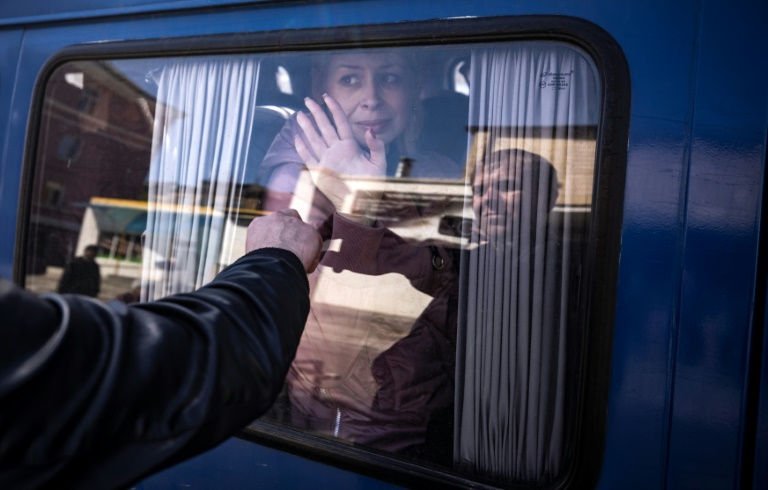
Evacuations resume from the town in eastern Ukraine where a missile strike killed 52 people at a railway station as civilians fled a feared Russian offensive.

Zelensky describes Russia as an “evil with no limits” after the attack and calls for a “firm global response”.

US President Joe Biden accuses Russia of being behind the attack, calling it a “horrific atrocity”, while French Foreign Minister Jean-Yves Le Drian deems it a “crime against humanity”.

Russia’s defence ministry accuses Kyiv of carrying out the attack, saying it wanted to use fleeing residents “as a ‘human shield’ to defend the positions of Ukraine’s Armed Forces”.

– Russia warns of YouTube reprisals –

Russian officials warn of reprisals after video hosting service YouTube blocks the channel of the lower house of parliament due to US sanctions.

Vyacheslav Volodin, speaker of the lower house of parliament, the State Duma, says Washington is breaching the rights of Russians.

– EU in talks with ICC prosecutor –

The European Union is to discuss its support for war crimes probes in Ukraine in meetings over the next two days with the International Criminal Court’s chief prosecutor, the European Commission says.

Karim Khan, of The Hague-based court, is to meet EU foreign policy chief Josep Borrell on Sunday in Luxembourg, then take part in a meeting of EU foreign ministers in the city on Monday.

– Odessa curfew –  

A curfew starts in Ukraine’s southern city of Odessa on Saturday evening to Monday evening over a “missile strike threat” from Russia, and after the shelling of the train station in Kramatorsk.

– Germany reaches ‘limit’ in arms to Ukraine –

Germany has almost exhausted its ability to supply Ukraine with weapons from its army reserves, but is working on direct deliveries from the arms industry, German Defence Minister Christine Lambrecht says. 

“For deliveries coming from the Bundeswehr’s stocks, I have to say honestly that we have reached a limit,” she tells German daily Augsburger Allgemeine. 

– Berlusconi ‘disappointed’ in friend Putin –

Former Italian Prime Minister Silvio Berlusconi tells a public meeting of his right-wing Forza Italia party he is “deeply disappointed and saddened” by the behaviour of his old friend Putin over the Ukraine invasion.

Mexicans vote whether president should stay or go

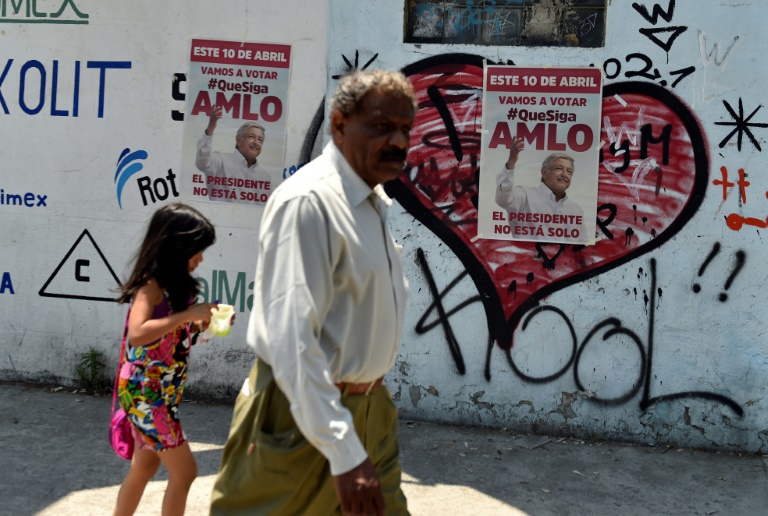
Mexicans will vote Sunday in a divisive national referendum championed by President Andres Manuel Lopez Obrador on whether he should step down or complete his six-year term.

While recall elections in other countries tend to be initiated by political opponents, Mexico’s vote is the brainchild of Lopez Obrador, who enjoys an approval rating of nearly 60 percent.

The 68-year-old president, who was elected in 2018, and other supporters of the referendum — the first of its kind in Mexico — say it is a way of increasing democratic accountability.

“Now we have the chance to change what’s not right. There have been presidents who, after being elected by the people, ended up serving other interests,” Benigno Gasca, a 57-year-old mathematician and musician, told AFP.

But critics see it as an expensive propaganda exercise and an unnecessary distraction from the many challenges facing the country, including drug-related violence, poverty and the rising cost of living.

“It’s a useless exercise — money thrown away,” said Laura Gonzalez, a 62-year-old retired teacher.

Experts say turnout is likely to be well below the 40-percent level needed for the vote to be legally binding.

Opposition parties have urged Mexicans to abstain from voting in what they call a “populist exercise.”

– Eyes on turnout –

Some 93 million voters will be able to participate in the midterm referendum, which was incorporated into Mexico’s constitution in 2019 at Lopez Obrador’s initiative.

Most of the signatures that were collected in order for the vote to happen came from his supporters.

Given the popularity of the anti-corruption austerity advocate, his presidency is not at risk “at all,” said political analyst Martha Anaya.

On the contrary, the referendum could give impetus to his policy agenda, such as controversial energy reforms, she said.

The president also has his eye on the 2024 elections and the prospects for his party and possible successors, including Mexico City Mayor Claudia Sheinbaum.

The Mexican constitution limits presidents to one term, and Lopez Obrador has vowed to retire in 2024, following accusations by opponents that the referendum is a step towards trying to stay in power.

Lopez Obrador enjoyed an approval rating of 58 percent in March, although that was far below a peak of 81 percent seen in February 2019, according to a poll of polls by the Oraculus firm.

The president accuses the National Electoral Institute of sabotaging the referendum in collusion with his political opponents.

The body, which unsuccessfully sought a larger budget, will set up around 57,500 polling stations, compared with 161,000 in a normal national election.

Voting will start at 1300 GMT and end at 2300 GMT in most of the country, with the result expected to be announced late Sunday.

Lopez Obrador has overseen a series of referendums since taking office on controversial issues including his “Maya Train” railroad project, and canceling a partially finished airport for Mexico City.

A public consultation held in August on whether to prosecute his predecessors for alleged corruption drew only a small fraction of voters to the polls.

Former hostages unmask Islamic State 'Beatle' at trial

Former hostages taking the witness stand at the trial of their alleged Islamic State group captor have described their brutal treatment in chilling detail.

Eight former IS hostages have testified so far at the trial of El Shafee Elsheikh, accused of being a member of the notorious kidnap-and-murder cell known as the “Beatles.”

But in a quirk of the case — none of the former IS captives has been asked so far to formally identify their alleged captor in court.

That’s because the 33-year-old Elsheikh and the other alleged “Beatles” — so-called because of their British accents — took pains to conceal their identities.

The former hostages said they were frequently blindfolded and their captors wore balaclavas at all times with only a slit for the eyes.

“They always tried to protect themselves,” said Edouard Elias, a French photographer held prisoner by IS from June 2013 to April 2014. 

“With other guards I could get some information, but not with them,” Elias said. “I just saw that one had a darker skin, that’s all.”

The kidnappers also had a “rule” whenever they entered the cells where the prisoners were held.

“We had to kneel down with our face toward the wall and never look them in the face,” said Federico Motka, an Italian aid worker who was held for 14 months, longer than any other hostage.

“We had to cover our face,” said Frida Saide, a former Doctors Without Borders (MSF) worker who was held for three months.

Nicolas Henin, a French journalist, told the court the hostage-takers apparently believed that “as long as they were masked they were protected from prosecution.”

“This was maybe a stupid idea,” Henin said.

– Use own words against him –

Despite the precautions taken, prosecutors are confident they can prove to the jury beyond a reasonable doubt that Elsheikh, a former British citizen, was one of the “Beatles.”

Elsheikh and another alleged “Beatle,” Alexanda Amon Kotey, were captured in January 2018 by a Kurdish militia in Syria while attempting to flee to Turkey.

They were turned over to US forces in Iraq and flown to the United States to face charges of hostage-taking, conspiracy to murder US citizens and supporting a foreign terrorist organization.

Elsheikh is charged with the murders of American freelance journalists James Foley and Steven Sotloff and aid workers Kayla Mueller and Peter Kassig and suspected of the kidnapping of nearly 20 other Westerners.

Kotey pleaded guilty in September 2021 and is facing life in prison.

Elsheikh, who pleaded not guilty, is not expected to testify at his trial but prosecutors have been using his own words against him.

After his capture, Elsheikh gave interviews to several media outlets and prosecutors have played excerpts from those interviews for the jury.

In the interviews, Elsheikh acknowledged interacting with the hostages but claimed he did no more than ask them for information — email addresses, for example — so the kidnappers could open ransom negotiations with their families.

Elsheikh also sought to deflect responsiblity on another member of the “Beatles,” Mohamed Emwazi, the IS executioner known as “Jihadi John” who was killed by a US drone in Syria in November 2015.

– ‘Like a team’ –

The former hostages tell a far different story — brutal beatings at the hands of all three “Beatles,” waterboarding, electric shocks and other forms of torture.

“George was into boxing. John kicked a lot. Ringo talked a lot about how he liked wrestling, putting people in headlocks,” Motka said.

“It was like a team,” Elias said.

Saide, the ex-MSF worker, said they were “friendly, comfortable around each other.”

“They seemed to be good friends,” she said.

The former hostages have testified that even if they could not see their faces they could easily recognize the “Beatles,” even from the individual ways they would knock on their cell doors.

Besides their distinctive British accents, the “Beatles” were also better equipped than the other guards with expensive pistols and walkie-talkies..

In court, Elsheikh resembles a college student wearing fashionable civilian clothes and oversized glasses. A long black beard protudes from beneath his black Covid mask.

During witness testimony, he appears to spend most of his time staring straight ahead of him.

Elsheikh’s lawyers have seized on the question of identification in mounting his defense.

In opening arguments, they acknowledged he was an IS jihadist but insisted he was not one of the “Beatles” and it was a case of “mistaken identity.”

Ukraine invasion places sharp new focus on calls for UN reform

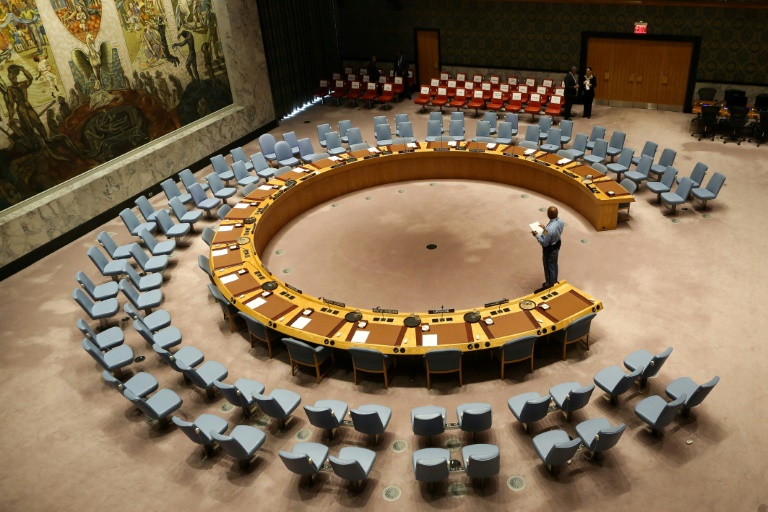
The long-simmering debate over UN reform — and particularly over the role of the Security Council, which does not represent today’s world and which failed to prevent Russia’s invasion of Ukraine — has suddenly become acute.

Recently Ukrainian President Volodymyr Zelensky, in a blistering call for the UN to exclude Russia from the Security Council, asked bluntly, “Are you ready to close the UN” and abandon international law. “If your answer is no, then you need to act immediately.”

And after the Security Council failed to prevent the brutal invasion of his country, he said in a separate address to Japanese lawmakers, “We have to develop a new tool” capable of doing so.

Created in 1945 with a vision of guaranteeing world peace and preventing a World War III, the United Nations conferred disproportionate power on the five permanent, veto-wielding members of the Security Council — the US, Russia, China, Britain and France — in a way that allows them to protect their own interests while keeping a heavy hand in world affairs.

Thus, since 2011, Moscow has exercised its Security Council veto some 15 times in votes regarding its ally Syria. 

But the veto power also guarantees that Moscow can never be removed from the Council, since the UN Charter’s Article 6 allows the General Assembly to exclude a member only … upon the recommendation of the Security Council.

In that vein, the US and Britain invaded Iraq in 2003 without UN approval — and without suffering any consequences for their permanent seats on the Security Council.

Beyond the veto question, and the lack of international balance among Security Council members — no African or Latin American country holds a permanent seat — the Council grants a near-monopoly on some issues to Washington, London and Paris.

The division of roles among the 15 Security Council members is uneven, according to the ambassador of one of the current 10 non-permanent members. The latter group, elected for two-year terms, is “given the bureaucratic jobs.”

“We don’t think it’s a fair division of labor,” the ambassador said, speaking on grounds of anonymity.  

The Council has been widely denounced for its current — and recurrent — paralysis, with even UN Secretary-General Antonio Guterres deploring its failures.  

“There’s a pretty fundamental problem there,” US Secretary of State Antony Blinken admitted, a day after Zelensky’s futile call for Russia to be expelled.

– ‘Like cholesterol’ –

To Bertrand Badie, a Paris-based international relations specialist, the United Nations is “like cholesterol”: “There is the good,” notably in the humanitarian aid the UN dispenses that saves lives around the world, and “there is the bad, with the Security Council.”

But the ambassador, while conceding that there has been “intense criticism” of the world body, added: “Where would we be if we had none of that?” — none of the “good” carried out by the UN.

Most proposals for reform call for the enlargement of the Security Council — adding both permanent and non-permanent members. 

But “positions are very polarized,” the ambassador said, as to which nations might be added and which would enjoy veto power. 

“The veto has to be a bit more disciplined,” the diplomat said, adding that the point of it should not be “to block progress” but to “force the five permanent members to sit down and arrive at a solution acceptable to all.” 

At an informal meeting Friday on UN reform that included the five permanent members, the veto issue was again raised. 

Among the ideas advanced: a French-Mexican proposal to limit its use in cases of “mass crimes,” and a suggestion from Liechtenstein that would require any nation casting a veto to explain it before the General Assembly.

On Thursday, South African President Cyril Ramaphosa, whose country hopes someday to join the permanent members of the Security Council, said that “the entire peace and security architecture of the United Nations needs to be overhauled.”

The Council, he said, needed to be “democratized” to allow the world body to “move beyond the paralysis brought about by a few member states.”

Other potential permanent members of the Council include major world players India, Japan, Brazil and Germany.

But several experts say the chances of reform will remain slim so long as the permanent members refuse to accept any dilution of their power.

Imran Khan dismissed as Pakistan PM after losing no-confidence vote

Imran Khan was dismissed Sunday as Pakistan’s prime minister after losing a no-confidence vote in parliament following weeks of political turmoil.

A new premier will be chosen Monday, with Pakistan Muslim League-N (PML-N) chief Shehbaz Sharif almost certain to be picked to lead the nuclear-armed nation of 220 million people.

No prime minister has ever served a full term in Pakistan, but Khan is the first to lose office this way.

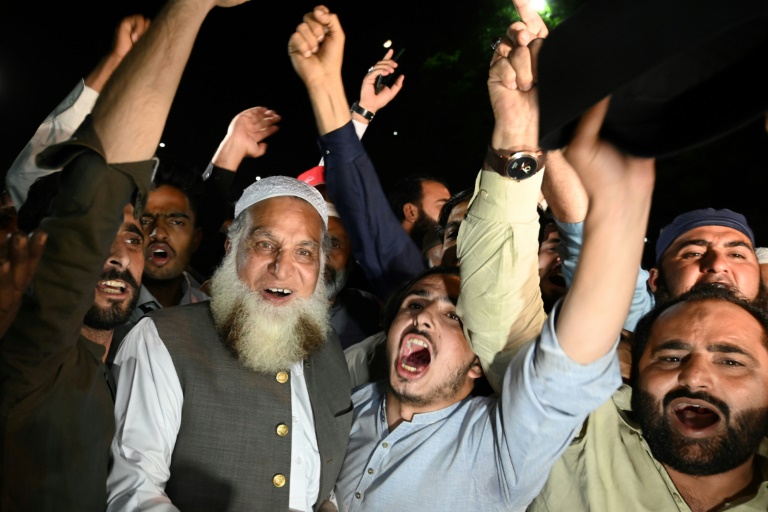
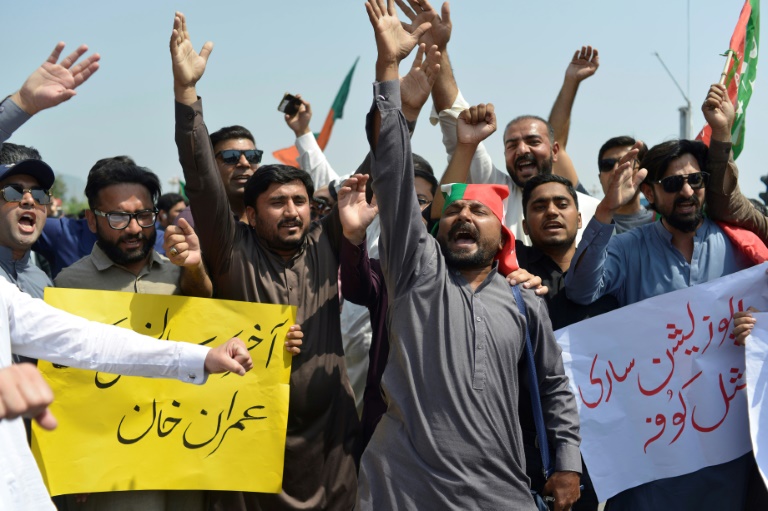
Opposition supporters took to the streets early Sunday, waving national and party flags from car windows as they raced through the streets.

There had been a massive security presence in the capital, but no incidents were reported.

Acting speaker Sardar Ayaz Sadiq said 174 lawmakers had voted in favour of the motion, “consequently the vote of no confidence has passed”.

Khan, 69, who was not present, lost his majority in the 342-seat assembly through defections by coalition partners and even members of his own party, and the opposition had needed just 172 votes to dismiss him.

He tried everything to stay in power — including dissolving parliament and calling a fresh election — but the Supreme Court deemed all his actions illegal last week, and ordered the assembly to reconvene and vote.

There was drama right until the midnight deadline ordered by the Supreme Court, with the speaker of the assembly — a Khan loyalist — resigning at the last minute. 

In the end, the session continued through to Sunday with a replacement.

“We will put a balm on the wounds of this nation,” Sharif said immediately after the result was announced.

– Militancy on the rise –

Whoever takes over will still have to deal with the issues that bedevilled Khan: soaring inflation, a feeble rupee and crippling debt.

Militancy is also on the rise, with Pakistan’s Taliban emboldened by the return to power last year of the hardline Islamist group in neighbouring Afghanistan.

Tempers rose in the assembly when Sharif insisted a vote be held immediately — as ordered by the Supreme Court on Thursday — but Khan loyalists demanded discussion first on their leader’s claims there had been foreign interference in the process.

Foreign Minister Shah Mehmood Qureshi accused the opposition of leading the country down a dangerous path.

“History will expose all those, who set the stage for this move to topple the government,” he said, to chants of “vote, vote” from the opposition.

Khan insists he has been the victim of a “regime change” conspiracy involving the United States.

He said the PML-N and the Pakistan Peoples Party (PPP) — two normally feuding dynastic groups who joined forces to oust him — had conspired with Washington to bring the no-confidence vote because of his opposition to US foreign policy, particularly in Muslim nations such as Iraq and Afghanistan.

He also accused the opposition of buying support in the assembly with “open horse-trading… selling of lawmakers like goats and sheep”.

How long the next government lasts is also a matter of speculation.

The opposition said previously they wanted an early election — which must be called by October next year — but taking power gives them the opportunity to set their own agenda and end a string of probes they said Khan launched vindictively against them.

Local media quoted an election commission official as saying it would take them at least seven months to prepare for a national vote.

Publicly, the military appears to be keeping out of the current fray, but there have been four coups since independence in 1947, and the country has spent more than three decades under army rule.

Saudi Arabia to allow one million hajj pilgrims this year

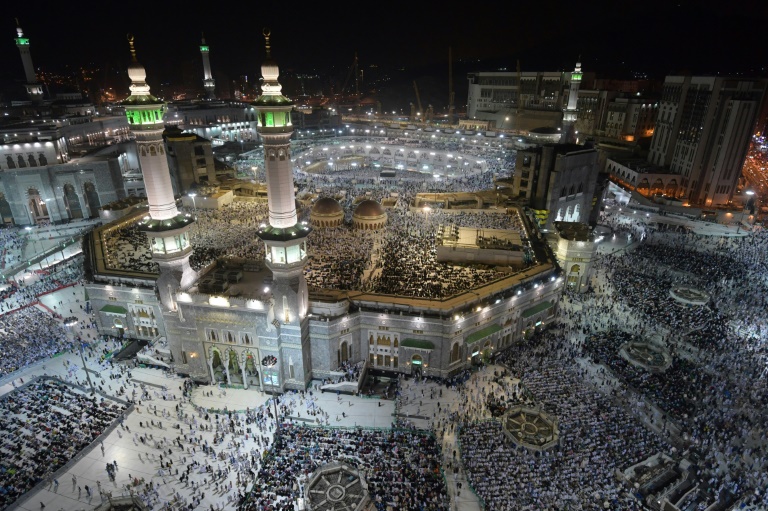
Saudi Arabia said Saturday it would permit one million Muslims from inside and outside the country to participate in this year’s hajj, a sharp increase after pandemic restrictions forced two years of drastically pared-down pilgrimages.

The move, while falling short of reinstating normal hajj conditions, offered hopeful news for many Muslims outside the kingdom who have been barred from making the trip since 2019.

One of the five pillars of Islam, the hajj must be undertaken by all Muslims who have the means at least once in their lives. Usually one of the world’s largest religious gatherings, about 2.5 million people took part in 2019.

But after the onset of the coronavirus pandemic in 2020, Saudi authorities allowed only 1,000 pilgrims to take part.

The following year, they increased the total to 60,000 fully vaccinated Saudi citizens and residents chosen through a lottery.

This year the Saudi hajj ministry “has authorised one million pilgrims, both foreign and domestic, to perform the hajj”, it said in a pre-dawn statement Saturday.

– Age cap criticised –

The pilgrimage, which will take place in July, will be limited to vaccinated Muslims under age 65, the statement said.

Those coming from outside Saudi Arabia, who must apply for hajj visas, will this year also be required to submit a negative Covid-19 PCR result from a test taken within 72 hours of travel. 

The government wants to promote pilgrims’ safety “while ensuring that the maximum number of Muslims worldwide can perform the hajj”, the statement said.

The hajj consists of a series of religious rites that are completed over five days in Islam’s holiest city, Mecca, and surrounding areas of western Saudi Arabia.

Authorities took a number of special measures to reduce the spread of the coronavirus last year, including dividing pilgrims into groups of 20 and handing out disinfectants, masks and sterilised pebbles for the “stoning of Satan” ritual.

But the relatively small crowds were distressing to Muslims abroad.

“We have been in great sadness and pain in the past two years because of the small number of pilgrims. The scene was horrible,” 36-year-old Cairo resident Mohamed Tamer said Saturday.

“I am very happy that the hajj will return to normality to some extent,” he added, though he also expressed worry about rising costs for flights and hotels.

Reactions to Saturday’s announcement were generally positive on social media, though some Twitter users voiced concern about what would happen to pilgrims who financed trips to Mecca — only to have their plans ruined by a positive Covid-19 test. 

Others criticised the age cap.

“Such great news, but imposing age restrictions is heartbreaking for many aged hajj aspirants,” one user wrote in response to the hajj ministry’s announcement.

Zeinab Mostafa, 71, told AFP from her home in Cairo that the rules “dashed my hopes to perform hajj before death”.

“My dream to perform Hajj is lost,” she added through tears.

– Matter of prestige –

Hosting the hajj is a matter of prestige for Saudi rulers, as the custodianship of Islam’s holiest sites is the most powerful source of their political legitimacy.

Before the pandemic, Muslim pilgrimages were key revenue earners for the kingdom, bringing in some $12 billion annually.

The kingdom of approximately 34 million people has so far recorded more than 751,000 coronavirus cases, including 9,055 deaths, according to health ministry data.

In early March it announced the lifting of most Covid restrictions including social distancing in public spaces and quarantine for vaccinated arrivals, moves that were expected to facilitate an increase in Muslim pilgrims.

The decision included suspending “social distancing measures in all open and closed places” including mosques. Masks are now only required in closed spaces.

Challenges ahead: Key issues facing Pakistan's next leader

Whoever becomes Pakistan’s next prime minister following the dismissal of Imran Khan Sunday will inherit the same issues that bedevilled the former international cricket star.

A poorly performing economy, rising militancy and shaky relations with former allies will be top of the agenda for the next administration.

The incoming government will need to stave off “multiple challenges on domestic and foreign relations levels”, said Professor Jaffar Ahmed, director of the Institute of Historical and Social Research.

Following are the key issues ahead for the incoming premier of the country of 220 million people:

– The economy –

Crippling debt, galloping inflation and a feeble currency have combined to keep growth stagnant for the past three years with little prospect of genuine improvement.

“We don’t have any direction,” said Nadeem ul Haque, vice-chancellor of the Pakistan Institute of Development Economics (PIDE), a research organisation in Islamabad.

“Radical policy reforms are needed to turn around the economy.”

Inflation is ticking along at over 12 percent, foreign debt is at $130 billion — or 43 percent of GDP — and the rupee has dipped to 190 to the dollar, a decline of nearly a third since Khan took power.

A $6 billion International Monetary Fund (IMF) bailout package signed by Khan in 2019 has never been fully implemented because the government reneged on agreements to cut or end subsidies on certain goods and improve revenue and tax collection.

“The IMF package must go on,” said Ehsan Malik, head of the Pakistan Business Council.

On the bright side, remittances from Pakistan’s vast diaspora have never been higher, although the cash flows have put Pakistan on the radar of the Financial Action Task Force, the global money-laundering and terrorist-funding watchdog.

“This is a hanging sword which could fall on the country any time,” Jaffar said.

– Rise of militancy –

Pakistan’s Taliban, a separate movement that shares common roots with the militants who took power in Afghanistan last year, have stepped up attacks in recent months.

They have threatened an offensive against government forces during Ramadan — which started Sunday — and in the past have been blamed for a string of murderous attacks.

Khan attempted to bring militants back into the mainstream, but talks with the Tehreek-e-Taliban Pakistan (TTP) militants got nowhere last year before a month-long truce collapsed.

Afghanistan’s Taliban say they will not allow the country to be used as a base for foreign militants, but it remains to be seen if they will genuinely put a stop to the activities of thousands of Pakistani Islamists based there — or where they will go if they are kicked out. 

There are no easy solutions even for the incoming government, experts say.

“The insurgency challenge would remain as big and crucial for the new government,” said political analyst Rafiullah Kakar.

In mineral-rich Balochistan, Pakistan’s largest province, separatists have been demanding more autonomy and a greater share of the wealth for years, and the region is riven by sectarian strife and Islamist violence.

Kakar suggested a two-pronged approach — “confidence-building measures and political reconciliation” in Balochistan, but taking off the kid gloves for the Taliban “once and all”.

– Foreign relations –

Khan claims the United States orchestrated his removal by conspiring with the opposition, and the next government will have to work hard to patch up relations with Washington — a key arms supplier countering Russia’s trade with India.

Khan angered the West by continuing with a visit to Moscow on the day Russia invaded Ukraine, and was also one of the few world leaders to attend the opening of the Beijing Winter Olympics when others boycotted in protest at China’s human rights record.

Still, army chief General Qamar Javed Bajwa allayed some fears last weekend by saying good relations with the United States remain high on Pakistan’s agenda — and the military holds huge sway regardless of which civilian administration is in power.

“The incoming government… needs to put in hard effort to undo the damage,” said Tauseef Ahmed Khan, a political analyst and journalism teacher.

Close Bitnami banner
Bitnami