World

First private mission reaches International Space Station

The first fully private mission reached the International Space Station early Saturday with a four-member crew from startup company Axiom Space.

NASA has hailed the three-way partnership with Axiom and SpaceX as a key step towards commercializing the region of space known as “Low Earth Orbit,” leaving the agency to focus on more ambitious voyages deeper into the cosmos.

A SpaceX Falcon 9 rocket with the Crew Dragon capsule Endeavor docked at 1229 GMT Saturday and the crew entered the space station nearly two hours later, after launching from the Kennedy Space Center in Florida on Friday.

Commanding the Axiom Mission 1 (Ax-1) is former NASA astronaut Michael Lopez-Alegria, a dual citizen of the United States and Spain, who flew to space four times over his 20-year-career, and last visited the ISS in 2007.

He is joined by three paying crewmates: American real estate investor Larry Connor, Canadian investor and philanthropist Mark Pathy, and Israeli former fighter pilot, investor and philanthropist Eytan Stibbe.

“We’re here to experience this but we understand there’s a responsibility,” Connor said in comments shown on NASA’s live feed.

As the first civilian crew, he said, they “need to get it right.”

The widely reported price for tickets — which includes eight days on the outpost, before eventual splashdown in the Atlantic — is $55 million. 

While wealthy private citizens have visited the ISS before, Ax-1 is the first mission featuring an all-private crew flying a private spacecraft to the outpost. 

Houston-based Axiom pays SpaceX for transportation, and NASA also charges Axiom for use of the ISS.

– Research projects –

On board the ISS, which orbits 250 miles (400 kilometers) above sea level, the quartet will carry out 25 research projects, including an MIT technology demonstration of smart tiles that form a robotic swarm and self-assemble into space architecture.

Another experiment involves using cancer stem cells to grow mini tumors, and then leveraging the accelerated aging environment of microgravity to identify biomarkers for early detection of cancers.

“Our guys aren’t going up there and floating around for eight days taking pictures and looking out of the cupola,” Derek Hassmann, operations director of Axiom Space, told reporters at a pre-launch briefing.

In addition, crewmember Stibbe plans to pay tribute to his late friend Ilan Ramon, Israel’s first astronaut, who died in the 2003 Space Shuttle Columbia disaster when the spaceship disintegrated upon reentry.

Surviving pages from Ramon’s space diary, as well as mementos from his children, will be brought to the station by Stibbe.

The Axiom crew will live and work alongside the station’s regular crew: currently three Americans and a German on the US side, and three Russians on the Russian side.

The company has partnered for a total of four missions with SpaceX, and NASA has already approved in principle the second, Ax-2. 

Axiom sees the voyages as the first steps of a grander goal: to build its own private space station. The first module is due to launch in 2024.

The plan is for the station to initially be attached to the ISS, before eventually flying autonomously when the latter retires and is deorbited sometime after 2030.

France prepares for first round of tight Macron re-election bid

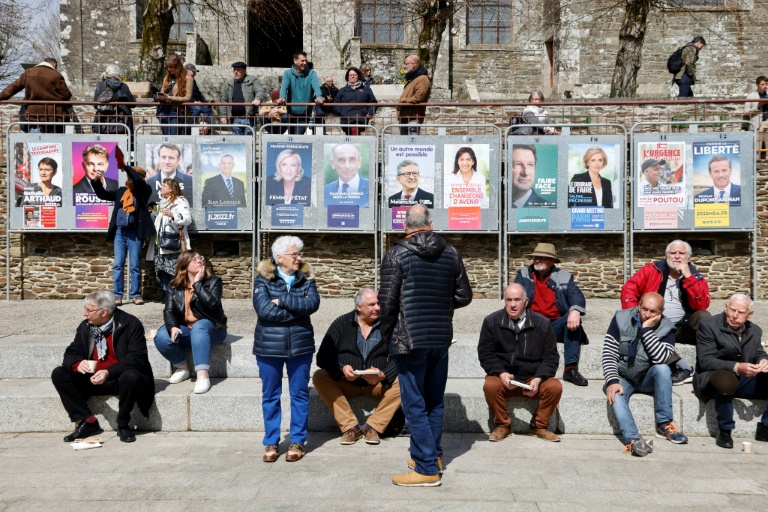
France on Saturday was preparing for the first round of presidential elections projected to produce a run-off rematch between incumbent Emmanuel Macron and far-right leader Marine Le Pen that will be far tighter than their duel five years ago.

All further political activity by candidates was banned on the final day before polls open in mainland France at 0600 GMT on Sunday, after a campaign overshadowed by Russia’s invasion of Ukraine.

French overseas territories began voting earlier to take account of the time difference, starting with the tiny island of Saint Pierre and Miquelon off the coast of Canada whose voters cast ballots from 1000 GMT Saturday.

Territories in the Caribbean followed a few hours later, with Pacific island voters set to cast their ballots from 1800 GMT and then finally the Indian Ocean territories before polling stations open in mainland France.

Polls predict that Macron will lead Le Pen by a handful of percentage points in round one, with the top two going through to a second round vote on April 24.

But analysts warn that the outcome remains highly volatile with uncertainty remaining over turnout and some observers fearing a quarter of the electorate may stay away in a possible record boycott of the vote.

Far-left candidate Jean-Luc Melenchon is snapping at their heels in third and still fancies his chances of reaching the second round at the expense of Le Pen or even — in what would be an extraordinary upset — President Macron himself.

Although her opponents accuse her of being an extremist bent on dividing society, Le Pen has with some success during the campaign sought to show a more moderate image and concern with voters’ daily worries such as rising prices.

Macron by contrast has campaigned relatively little, by his own admission entering the election campaign later than he would have wished due to the war in Ukraine.

French television channels will broadcast projections of the final results, which are generally highly accurate, as soon as polls close at 1800 GMT Sunday.

– ‘Strange campaign’ –

If Macron and Le Pen as forecast reach the second round, analysts predict that their clash will be far tighter than in 2017 when the current president thrashed his rival with 66 percent of the vote. 

“There is an uncertainty ahead of the first round,” said French political scientist Pascal Perrineau, pointing to unprecedently high numbers of voters who were still undecided or who changed their minds during the campaign as well as absentee voters.

Analysts fear that the 2002 record of the numbers of French voters boycotting a first round of 28.4 percent risks being beaten, with the 2017 absentee rate of 22.2 percent almost sure to be exceeded.

Some 48.7 million voters are registered across France to vote in this election.

“We have experienced a strange campaign that was at odds with what we experienced in the past presidential elections,” Frederic Dabi, director of the Ifop polling institute, told AFP.

The stakes of the election are high for Macron, who came to power aged 39 as France’s youngest president with a pledge to shake up the country.

He would be the first French president since Jacques Chirac in 2002 to win a second term and thus cement a place in the country’s history.

If he wins he would have a five-year mandate to impose his vision of reform which would include a crack at reducing the pension age in defiance of union anger.

He would also seek to consolidate his position as the undisputed number one in Europe after the departure of German chancellor Angela Merkel.

A Le Pen victory would however be seen as a victory for right-wing populism and send shockwaves across Europe and markets.

– ‘Republican front illusion’ –

The candidates of France’s traditional parties, the right-wing Republicans and the Socialists on the left, are facing a debacle on election night, continuing a shake-up of French politics that began when Macron took power.

Greens candidate Yannick Jadot, the Republicans’ Valerie Pecresse and the flagging Socialist nominee Anne Hidalgo appear certain to be ejected in the first round.

Far-right former TV pundit Eric Zemmour made a stunning entry into the campaign last year but lost ground, and analysts say he has aided Le Pen by making her appear more moderate.

Even with the outcome of the first round still the subject of some uncertainty, attention is already turning to the second round and who the defeated first-round hopefuls will back.

Analysts question whether Macron would enjoy the same support from a broad anti-far right “Republican front” coalition that helped him win in 2017 and allowed Jacques Chirac to demolish Marine Le Pen’s father Jean-Marie in 2002.

“The Republican front hasn’t been what it used to be for a while,” the director of the Jean-Jaures Foundation, Gilles Finchelstein, told AFP.

War in Ukraine: Latest developments

Here are the latest developments in the war in Ukraine:

– Ukraine ‘still ready’ for talks –

Ukraine is “still ready” to continue negotiations with Moscow, which have stalled since the discovery of atrocities in Bucha and other areas near Kyiv, the Ukrainian President Volodymyr Zelensky says.

“We are ready to fight and to look in parallel to end this war through diplomacy,” Zelensky says at a press conference with the Austrian Chancellor Karl Nehammer, who is visiting the capital and Bucha.

– 4.4 million flee Ukraine war – 

More than 4.4 million Ukrainian refugees have fled their country since Russian President Vladimir Putin ordered an invasion on February 24, the UN refugee agency says.

Ninety percent of those who have fled Ukraine are women and children, as the Ukrainian authorities do not allow men of military age to leave.

– Evacuations from Kramatorsk resume –

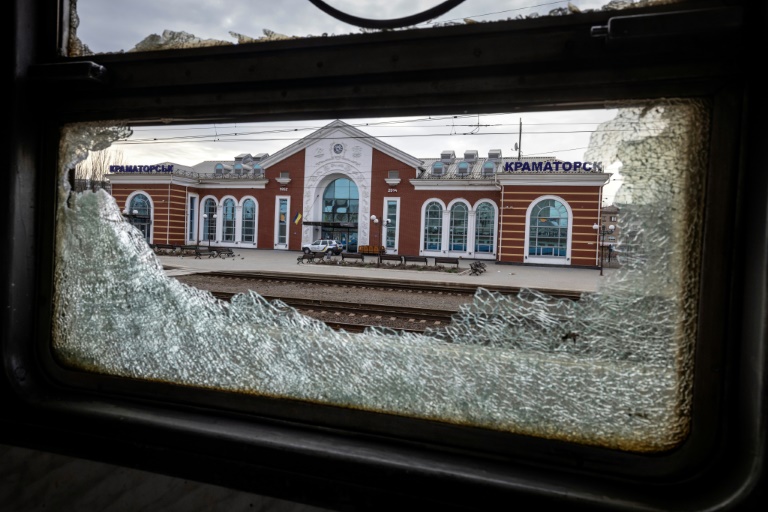
Evacuations resume from the town in eastern Ukraine where a missile strike killed 52 people at a railway station as civilians fled a feared Russian offensive.

Ukrainian President Volodymyr Zelensky describes Russia as an “evil with no limits” after the attack and calls for a “firm global response”.

US President Joe Biden accuses Russia of being behind the attack, calling it a “horrific atrocity”, while French Foreign Minister Jean-Yves Le Drian deems it a “crime against humanity”.

Russia’s defence ministry accuses Kyiv of carrying out the attack, saying it wanted to use fleeing residents “as a ‘human shield’ to defend the positions of Ukraine’s Armed Forces”.

– Russia warns of YouTube reprisals –

Russian officials warn of reprisals after US video hosting service YouTube blocks the channel of the lower house of parliament due to US sanctions.

Vyacheslav Volodin, speaker at lower house of parliament, the State Duma, says Washington is breaching the rights of Russians.

– EU in talks with ICC prosecutor –

The EU is to discuss its support for war crimes probes in Ukraine in meetings over the next two days with the International Criminal Court’s chief prosecutor, the European Commission says.

Karim Khan, of The Hague-based court, is to meet EU foreign policy chief Josep Borrell on Sunday in Luxembourg, then take part in a meeting of EU foreign ministers in the city on Monday.

– EU sanctions Putin’s daughters –

Russian President Vladimir Putin’s two adult daughters and more than 200 other people are blacklisted by the EU.

Those on the list, which additionally includes 18 companies, face asset seizures and travel bans in the 27-nation European Union. 

The United States and Britain had already sanctioned Putin’s daughters, as well as the daughter of Foreign Minister Sergei Lavrov.


– Odessa curfew –  

A curfew is to start in Ukraine’s southern city of Odessa on Saturday evening to Monday evening over a “missile strike threat” from Russia, and after the shelling of the train station in Kramatorsk.

– Germany: ‘Limit’ in arms to Ukraine –

Germany has almost exhausted its ability to supply Ukraine with weapons from its army reserves, but is working on direct deliveries from the arms industry, German Defence Minister Christine Lambrecht says. 

“For deliveries coming from the Bundeswehr’s stocks, I have to say honestly that we have reached a limit,” she tells German daily Augsburger Allgemeine. 

– Eastern evacuation – 

Civilians in eastern Ukraine are struggling to evacuate, after officials tell them they have a “last chance” to avoid a major Russian offensive expected in the Donbas region.

Russia has redeployed its troops towards the east and south, aiming to create a land link between occupied Crimea and the Moscow-backed separatist regions of Donetsk and Lugansk in Donbas.

Pakistan lawmakers clash as PM no-confidence vote adjourned again

Pakistan lawmakers clashed angrily in the national assembly on Saturday with the opposition accusing ruling party members of wasting time ahead of a no-confidence vote that will likely see Prime Minister Imran Khan booted from office.

The session was adjourned for a second time late Saturday afternoon, with lawmakers told to return in the evening after breaking their Ramadan fast.

Khan, who was not present, has lost his majority in the 342-seat assembly through defections by coalition partners and members of his own party, and the opposition needs just 172 votes to dismiss him.

There is no vote for a new premier on the agenda, but that could change and Pakistan Muslim League-N (PML-N) leader Shehbaz Sharif is the anointed candidate.

Whoever takes over will still have to deal with the issues that bedevilled Khan — soaring inflation, a feeble rupee and crippling debt.

Militancy is also on the rise, with Pakistan’s Taliban emboldened by the return to power last year of the hardline Islamist group in neighbouring Afghanistan.

Tempers rose when Shehbaz insisted a vote be held immediately — as ordered by the Supreme Court on Thursday — but Khan loyalists demanded discussion first on their leader’s claims there had been foreign interference in the process.

“You will run proceedings of the house under the order of the Supreme Court,” said a furious Shehbaz, wagging his finger.

“Parliament is going to write a new history. Today, the parliament is going to defeat a… prime minister.”

– Litany of grievances –

“We intend to face it in accordance with law and constitution,” replied Foreign Minister Shah Mehmood Qureshi, adding: “It is my duty to defend the motion.”

Qureshi returned after an adjournment with a litany of grievances, and accused the opposition of leading the country down a dangerous path.

“History will expose all those, who set the stage for this move to topple the government,” he said, to chants of “vote, vote” from the opposition.

Khan, 69, said late Friday he had accepted a Supreme Court ruling that ordered the no-confidence vote, but insisted he was the victim of a “regime change” conspiracy involving the United States.

The former international cricket star said he would not cooperate with any incoming administration and called on his supporters to take to the streets.

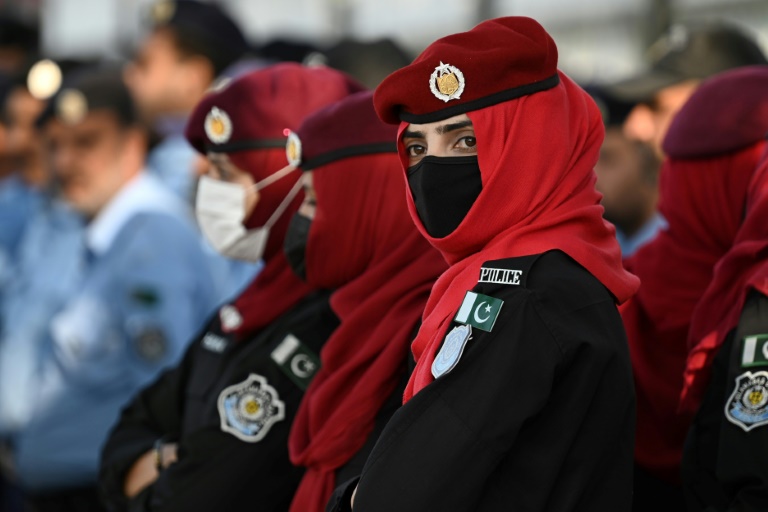
A heavy security blanket was thrown over the capital Saturday, with thousands of police on the streets and a ring of steel containers blocking access to the government enclave.

The Supreme Court ruled Thursday that Khan acted illegally by dissolving parliament and calling fresh elections after the deputy speaker of the national assembly — a loyalist — refused to allow an earlier no-confidence vote because of “foreign interference”.

Khan said the PML-N and the Pakistan Peoples Party (PPP) — two normally feuding dynastic groups who joined forces to oust him — had conspired with Washington to bring the no-confidence vote because of his opposition to US foreign policy, particularly in Muslim nations such as Iraq and Afghanistan.

He also accused the opposition of buying support in the assembly with “open horse-trading… selling of lawmakers like goats and sheep”.

How long the next government lasts is also a matter of speculation.

The opposition said previously they wanted an early election — which must be called by October next year — but taking power gives them the opportunity to set their own agenda and end a string of probes they said Khan launched vindictively against them.

Local media quoted an election commission official as saying it would take them at least seven months to prepare for a national vote.

Publicly the military appears to be keeping out of the current fray, but there have been four coups since independence in 1947 and the country has spent more than three decades under army rule.

Civilians trickle out of Kramatorsk after station attack

Mini-vans were headed to a church in Kramatorsk in east Ukraine on Saturday morning to collect evacuees after a deadly rocket attack on a train station in the city. 

Almost 80 people, most of them elderly, took shelter overnight in the building, not far from the terminal targeted in the strike on Friday.

“There were around 300 to 400 people who rushed here after the strike,” Yevgeny, a member of the protestant church, told AFP.

“They were traumatised. Half of them ran to shelter in the cellar, others wanted to leave as soon as possible. Some were evacuated by bus in the afternoon (on Friday). In the end, almost 80 stayed here and I hosted seven at my house,” he said.

Evacuees slept on mattresses on the floor in the church and were offered breakfast by volunteers on Saturday morning as they waited for the bus to take them out of the path of a feared Russian offensive in the region.

Moscow denied responsibility for the rocket attack on Friday morning, which killed 52 and injured a further 109 people, according to the latest official count.

Six weeks into President Vladimir Putin’s invasion, Moscow has shifted its focus to eastern and southern Ukraine after stiff resistance ended plans to swiftly capture the capital Kyiv.

The stop in Kramatorsk was being used as the main evacuation hub for refugees from the parts of the eastern Donbas region still under Ukrainian control.

– Station closed –

Twenty-four hours after the strike on Saturday morning, the train station was closed and the area cordoned off by police.

Cars charred by the explosion were still sat on the forecourt, while some of the station’s blown-out windows had been boarded up.

A sizeable chunk of the rocket’s twisted fuselage was still to be found on the grassy roundabout in front of the station.

In Kramatorsk, the night into Saturday and the morning were quiet. Regular heavy artillery explosions could be heard in the distance — towards the frontline to the northwest — but none nearby.

The city is now squeezed between the frontlines, to the south and east by the pro-Russian separatist statelets of Donetsk and Lugansk, and to the north by the advance of the Russian army.

The lines of engagement have been relatively stable but daily exchanges between opposing forces have been heated.

The civil-military authorities in Ukrainian-controlled regions of Donetsk and Lugansk, which make up the Donbas, have repeatedly called for civilians to leave the region for fear of a Russian move.

Trains and buses have been laid on for evacuees to leave the area, supported by the work of volunteers.

While the station in Kramatorsk is out of service, four trains are slated to leave from the nearby city of Slavyansk for the west of the country, according to the Ukrainian rail operator.

Other local trains are also set to run, though departure details have yet to be shared for security reasons.

– Two-way street –

Discreetly, evacuations have also continued in the other direction, by road towards the pro-Russian territories.

Convoys of cars, often old Russian-made Ladas with suitcases strapped to the roof, set off every day for the Russian-controlled zone to the north, with the tacit consent of Ukrainian forces manning checkpoints, an AFP journalist understood.

“We are going there because we have relatives there. There is food, it’s calm, there are no issues,” a 30-year-old man travelling with his family told AFP.

“There are good and bad people on both sides,” he said, exchanging Ukrainian currency for Russian rubles at the side of the road.

Once the industrial heartland of the Soviet Union, the former coal-mining region of Donbas, divided by war since 2014, is traditionally more favourable towards Russia.

Nostalgia for the Soviet era comes through in conversation with residents, who regret the closure of the region’s big factories, and often reserve criticism for the government in Kyiv.

What is more, many of them, including women and children, do not intend to flee the arrival of Russian forces.

Dutch teen killed in Malaysia diving accident, two rescued

A Dutch teenager was killed when a group he was diving with off Malaysia’s coast went missing, officials said Saturday following the dramatic rescue of his father and two others.

The three Europeans and their instructor got into trouble Wednesday after they surfaced from a dive near a southern island but could not find their boat.

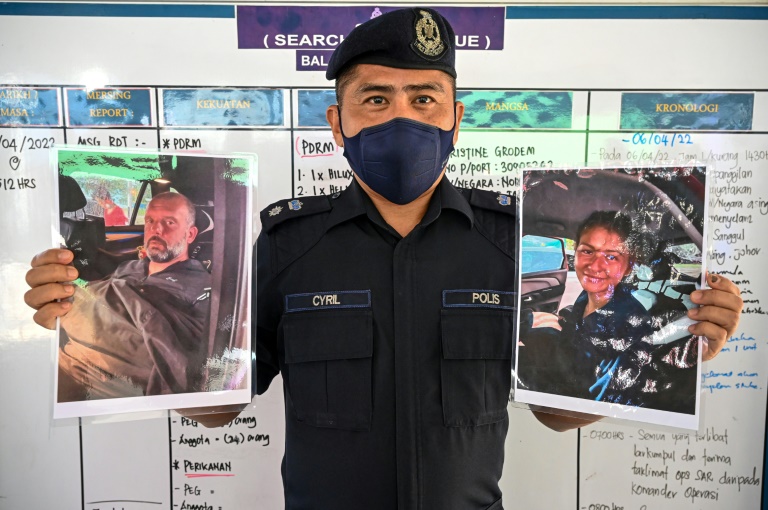
A British man, 46-year-old Adrian Chesters, and Frenchwoman Alexia Molina, 18, were discovered by fishermen in the waters of neighbouring Indonesia, picked up by marine police and taken back to Malaysia. 

But Chesters told officials that his son, 14-year-old Nathen, who holds Dutch citizenship, had died. 

The teen, “as a result of being too weak… was unable to survive”, a coastguard statement said, citing the father. 

Police earlier said the search for the boy had been called off after they concluded he had floated into Indonesian waters, and they had informed their counterparts in the archipelago nation.

In recent days, Malaysia had deployed helicopters, a plane, boats, divers and jet skiers to hunt over a large area. 

The instructor, Norwegian woman Kristine Grodem, had already been rescued on Thursday in waters off southern Malaysia.

The other two survivors were found about 30 kilometres (18 miles) north of Indonesia’s Bintan Island — having drifted some 130 kilometres from where they had been diving.

The pair were admitted to a Malaysian hospital in a stable condition, said local police chief Cyril Edward Nuing in the coastal town of Mersing, the base for search operations.

– ‘Strong girl’ –

Authorities did not give details on how the rescued trio survived a long period drifting at sea, and said they had not yet been questioned in detail about their ordeal.

Previously, officials had expressed hope the divers would be found alive as they had substantial experience and were well equipped, including with a diving buoy.

They also said light rains in recent days might have helped the divers survive by providing drinking water.

On Thursday, the French teen’s mother Esther Molina told AFP from Mersing that the family were “hoping for the best. She’s a strong girl, she’ll kick ass.”

Grodem had been instructing the divers close to a small island, Tokong Sanggol, about 15 kilometres (nine miles) off Malaysia’s southeast coast, when the accident happened.

After a dive lasting about 40 minutes, they surfaced but could not find their boat. They drifted together in strong currents, but ended up getting separated.

The captain of the boat who took them to the dive site has been arrested after testing positive for drugs.

The area where the accident happened is popular with foreign and domestic visitors — resorts dot the coast and the islands.

Diving accidents, while rare, do occasionally happen in Malaysia. 

In 2013, a British tourist died when she was struck by a passing boat’s propeller while diving off resort islands in the South China Sea. 

The tropical Southeast Asian nation’s borders reopened to foreign tourists on April 1 after a two-year coronavirus closure, and thousands of visitors have arrived.

Sri Lanka's embattled leader faces biggest street protest

Tens of thousands marched on beleaguered Sri Lankan President Gotabaya Rajapaksa’s office on Saturday, in the biggest protest to date over the country’s dire economic and political crisis.

Sri Lanka’s 22 million people have seen weeks of power blackouts and severe shortages of food, fuel and other essentials in the country’s worst downturn since independence in 1948.

Saturday’s social-media organised protest drew the largest numbers since the crisis blew up last month according to AFP reporters. And pressure on Rajapaksa intensified further as the country’s powerful business community also began withdrawing support for the president. 

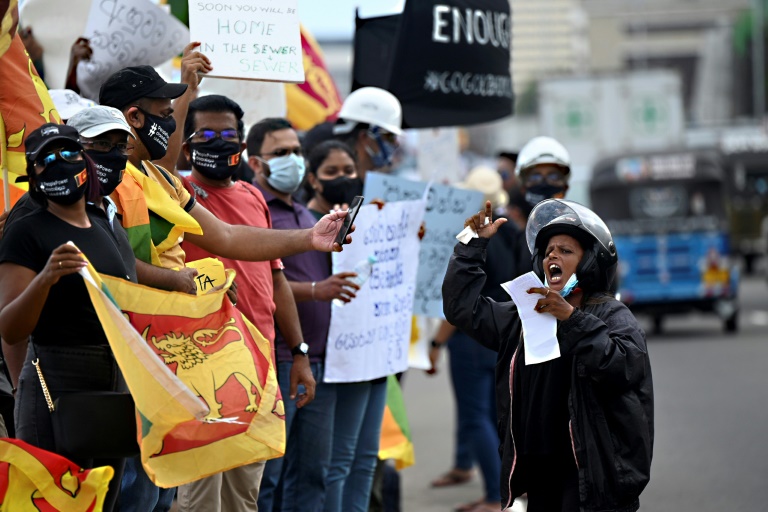
Men and women poured onto Colombo’s seafront promenade and laid siege to the colonial-era Presidential Secretariat, chanting “Go home Gota” and waving the national lion flag. 

Others carried handwritten placards that read “It’s time for you to leave” and “enough is enough.”

Barricades blocked the entrance to the president’s office with police in riot gear taking up positions inside the tightly guarded compound.

“These are innocent people here. we are all struggling to live. The government must go and allow a capable person to lead the country,” one man told the crowd.

The protests appeared to be peaceful, but a police official said teargas and water cannon were at the ready if needed. On Friday security forces fired water cannon at demonstrating students.

Residents said there were widespread protests in the suburbs of the capital too while the Catholic and Anglican churches also brought their followers onto the streets.

The head of the Catholic Church, Cardinal Malcolm Ranjith led a protest in the town of Negombo, just north of Colombo, urging people to continue protesting till the Rajapaksa administration resigned. 

“Everyone must get on the streets till the government leave, these leaders must go. You must go. You have destroyed this country.”

– Fuelling losses –

Sri Lanka’s business community, which largely funded Rajapaksa’s election campaign, also appeared to ditch the president on Saturday. 

“The current political and economic impasse simply cannot continue any further, we need a cabinet and interim government within a week at most,” said Rohan Masakorala, head of Sri Lanka Association of Manufacturers and Exporters of Rubber products.

His association joined 22 other business and industry organisations, seeking a change of government, saying daily losses had reached around $50 million due to the fuel shortage alone.

In a joint statement, they said that they were responsible for generating nearly a quarter of the country’s $80.17 billion gross domestic product and warned millions of jobs would be in jeopardy.

Newly appointed central bank governor Nandalal Weerasinghe said a series of monetary policy blunders had led to the current crisis with no dollars to finance many imports.

In a desperate attempt to shore up the free-falling rupee, Weerasinghe on Friday implemented the country’s biggest-ever interest rate hike of 700 basis points.

“We are now in damage control mode,” he said. 

Weerasinghe added he expected the rupee to stabilise and dollar inflows to improve as he relaxes his predecessor’s tight foreign exchange restrictions which he described as counter-productive.

The government is preparing for bailout negotiations with the International Monetary Fund next week, with finance ministry officials saying that sovereign bond-holders and other creditors may have to take a haircut.

New finance minister Ali Sabry told parliament on Friday that he expects $3 billion from the IMF to support the island’s balance of payments in the next three years.

“We hope to get about a billion dollars a year in the next three years totalling a support of three billion,” he said adding that Colombo will also seek a debt moratorium.

Sri Lanka's embattled leader faces biggest street protest

Tens of thousands marched on beleaguered Sri Lankan President Gotabaya Rajapaksa’s office on Saturday, in the biggest protest to date over the country’s dire economic and political crisis.

Sri Lanka’s 22 million people have seen weeks of power blackouts and severe shortages of food, fuel and other essentials in the country’s worst downturn since independence in 1948.

Saturday’s social-media organised protest drew the largest numbers since the crisis blew up last month according to AFP reporters. And pressure on Rajapaksa intensified further as the country’s powerful business community also began withdrawing support for the president. 

Men and women poured onto Colombo’s seafront promenade and laid siege to the colonial-era Presidential Secretariat, chanting “Go home Gota” and waving the national lion flag. 

Others carried handwritten placards that read “It’s time for you to leave” and “enough is enough.”

Barricades blocked the entrance to the president’s office with police in riot gear taking up positions inside the tightly guarded compound.

“These are innocent people here. we are all struggling to live. The government must go and allow a capable person to lead the country,” one man told the crowd.

The protests appeared to be peaceful, but a police official said teargas and water cannon were at the ready if needed. On Friday security forces fired water cannon at demonstrating students.

Residents said there were widespread protests in the suburbs of the capital too while the Catholic and Anglican churches also brought their followers onto the streets.

The head of the Catholic Church, Cardinal Malcolm Ranjith led a protest in the town of Negombo, just north of Colombo, urging people to continue protesting till the Rajapaksa administration resigned. 

“Everyone must get on the streets till the government leave, these leaders must go. You must go. You have destroyed this country.”

– Fuelling losses –

Sri Lanka’s business community, which largely funded Rajapaksa’s election campaign, also appeared to ditch the president on Saturday. 

“The current political and economic impasse simply cannot continue any further, we need a cabinet and interim government within a week at most,” said Rohan Masakorala, head of Sri Lanka Association of Manufacturers and Exporters of Rubber products.

His association joined 22 other business and industry organisations, seeking a change of government, saying daily losses had reached around $50 million due to the fuel shortage alone.

In a joint statement, they said that they were responsible for generating nearly a quarter of the country’s $80.17 billion gross domestic product and warned millions of jobs would be in jeopardy.

Newly appointed central bank governor Nandalal Weerasinghe said a series of monetary policy blunders had led to the current crisis with no dollars to finance many imports.

In a desperate attempt to shore up the free-falling rupee, Weerasinghe on Friday implemented the country’s biggest-ever interest rate hike of 700 basis points.

“We are now in damage control mode,” he said. 

Weerasinghe added he expected the rupee to stabilise and dollar inflows to improve as he relaxes his predecessor’s tight foreign exchange restrictions which he described as counter-productive.

The government is preparing for bailout negotiations with the International Monetary Fund next week, with finance ministry officials saying that sovereign bond-holders and other creditors may have to take a haircut.

New finance minister Ali Sabry told parliament on Friday that he expects $3 billion from the IMF to support the island’s balance of payments in the next three years.

“We hope to get about a billion dollars a year in the next three years totalling a support of three billion,” he said adding that Colombo will also seek a debt moratorium.

Ex-US general among 24 sanctioned by Iran

Tehran on Saturday said it sanctioned a retired US general and 23 other American nationals involved in what the Islamic republic described as terrorism and human rights violations.

The announcement came days after Washington imposed new sanctions on Iran, and amid crucial talks in Vienna to salvage the 2015 Iran nuclear deal.

Retired US General Joseph Votel, who headed US Central Command which covers the Middle East, is among the 24 sanctioned Americans. Other US former treasury and military officials, ambassadors and company managers are also on the list.

They are targeted for “their involvement in terrorist acts, glorification and supporting terrorism and gross violations of human rights,” a statement by Iran’s foreign ministry said.

The nuclear deal between Tehran and world powers, known as the Joint Comprehensive Plan of Action (JCPOA), gave Iran sanctions relief in exchange for curbs on its nuclear programme.

It aimed to prevent Tehran from developing a nuclear weapon, something it has always denied wanting to do.

The US unilaterally withdrew from the accord in 2018 and reimposed biting economic sanctions, prompting Iran to begin rolling back on its own commitments the following year.

US sanctions “including by deprivation of access to medicine and medical equipment and services, especially, in the situation caused by the Covid-19 pandemic… has endangered lives of millions of Iranians,” the foreign ministry statement said.

“Such unlawful measures constitute flagrant violations of the fundamental principles of international law and fundamental human rights and are a clear example of crime against humanity.”

The Vienna negotiations that started about a year ago involve Iran as well as France, Germany, Britain, Russia and China directly, and the United States indirectly.

Talks had progressed most of the way toward reviving the deal. They were halted on March 11 after Russia demanded guarantees that Western sanctions imposed following its invasion of Ukraine would not damage its trade with Iran.

Days later, Moscow said it had received the necessary guarantees, but the impasse continued as Tehran and Washington traded accusations over causes of the delay.

In late March, the US Treasury announced sanctions targeting several entities it accused of involvement in procuring supplies for Iran’s ballistic missile programme.

A day later, Iran’s foreign ministry spokesman said Washington’s latest sanctions showed its “ill will” towards the country.

One dead as Israel army raids W.Bank after deadly attacks

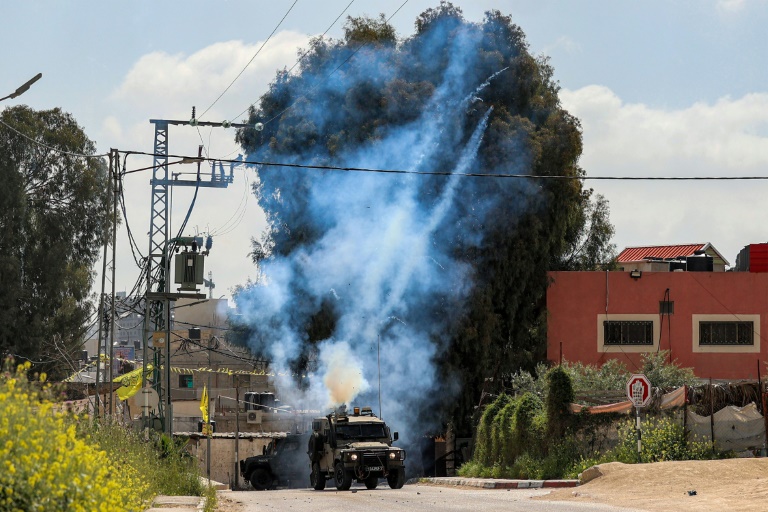
Israeli security forces raided the flashpoint West Bank district of Jenin on Saturday killing a Palestinian and wounding 12 others, after vowing there will “not be limits” to curb surging violence.

The operation, which lasted several hours, came after a gunman from Jenin went on a shooting rampage in a popular Tel Aviv nightlife area on Thursday evening, killing three Israelis and wounding more than a dozen others.

Following the attack, Israeli Prime Minister Naftali Bennett gave security agencies “full freedom” to end deadly violence that has surged since March 22 “in order to defeat terror”.

“There are not and will not be limits for this war,” Bennett.

On Saturday, the army said security forces had launched the operation in the city of Jenin, in the north of the occupied West Bank, its Palestinian refugee camp and adjacent villages.

The Palestinian health ministry said that at least one Palestinian man was killed by Israeli gunfire, while the Red Crescent said 12 others were wounded.

Crowds of mourners marched through the streets carrying the body of the man — identified by Palestinian officials as 25-year-old Ahmad al-Saadi — on a stretcher covered with the flag of the Gaza Strip-based militant group Islamic Jihad.

-‘Armed assailants’ –

Palestinian security sources said part of Saturday’s operation was to identify the home of the Tel Aviv assailant ahead of demolishing it.

Rights activists have repeatedly denounced Israel’s policy of destroying the homes of Palestinian attackers as collective punishment, while Israel says it acts as a deterrent.

Israeli soldiers and border police forces were “conducting counterterrorism activity” in the city of Jenin and its refugee camp, when gunmen had opened fire “endangering their lives,” the army said in a statement.

In response, troops opened fire “towards the armed assailants,” the army said, adding there were no injuries among Israeli ranks.

“An M16 assault rifle used by an assailant to attack the troops was confiscated,” it added.

An AFP photographer at the scene said the operation ended at midday.

The Jenin refugee camp is a stronghold of armed factions, where three other Palestinians linked to an anti-Israeli attack were killed by the army last week. 

Saturday’s raid comes a day after Israel said it had killed Raad Hazem, 28, the alleged Tel Aviv attacker.

In addition to giving security forces a free rein to curb a surge in violence, Bennett on Friday ordered the closure of the Jalameh checkpoint between the Jenin area and Israel.

On Friday, the father of the Tel Aviv attacker, Fathi Hazem — a retired Palestinian security forces officer according to Palestinian sources — struck a defiant tone.

Speaking to hundreds at the family home in Jenin, he said the Palestinian people were looking for “freedom and independence”.

– Ramadan violence –

A total of 14 people have been killed in attacks in Israel since March 22, including some carried out by assailants linked to or inspired by the Islamic State group.

Over the same period, at least 10 Palestinians have been killed, including assailants.

The Palestinian Islamist movement Hamas and the Islamic Jihad group praised the Tel Aviv attack — drawing criticism from the UN — but did not claim responsibility.

Palestinian leader Mahmud Abbas denounced the Tel Aviv attack, while the United States stressed anew its support of key ally Israel.

The Tel Aviv attack killed three Israeli men: childhood friends Tomer Morad and Eytam Magini, as well as father of three Barak Lufan.

It came amid heightened tensions during Ramadan, after violence that flared during the Muslim holy month last year between Israeli forces and Palestinians led to 11 days of devastating conflict between Israel and Hamas.

Earlier this month Israeli security forces killed three Islamic Jihad militants when they came under fire during an operation to arrest them in Jenin.

The raid, in which four Israeli soldiers were wounded, followed another deadly attack on March 29 in Bnei Brak, an Orthodox Jewish city near Tel Aviv. 

The Palestinian assailant, who had also come from Jenin, killed two Israeli civilians, two Ukrainian nationals and an Arab-Israeli policeman using an assault rifle.

Close Bitnami banner
Bitnami