World

Climate activists shut London's Tower Bridge

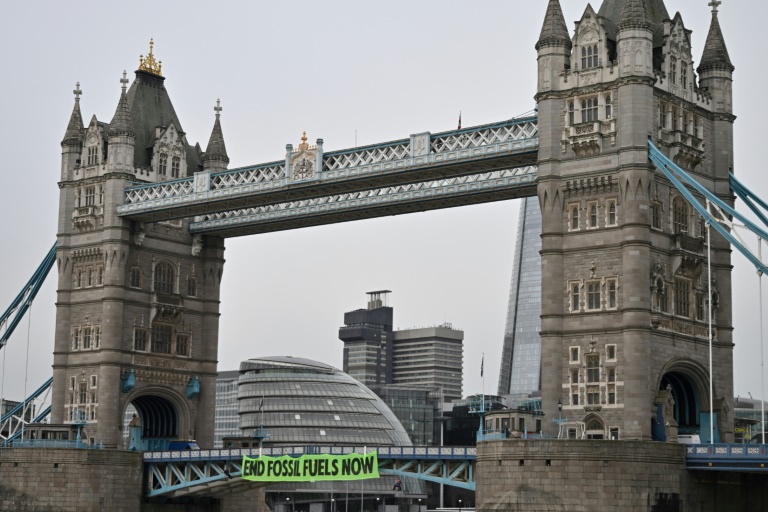
UK climate activist group Extinction Rebellion shut down London’s iconic Tower Bridge on Friday after two of its protesters abseiled over its sides.

The activists were hanging from the bridge by suspension cords after unfurling a banner reading “End fossil fuels now” and letting off red flares.

Tower Bridge was chosen as “the gateway to the City of London — the root source of fossil fuel funding in the UK”, Extinction Rebellion said in a statement, adding it ushered in a week of protests.

The Metropolitan Police were on site but said they had made no arrests.

Demonstrator Amy Rugg-Easey said she had “tremendous hope and optimism in humanity’s ability to fight the climate crisis — but there are certain people who continue to prevent that for their own profit”.

The group has recently staged several protests at oil terminals and refineries across Britain, holding a large demonstration at one facility near Heathrow Airport.

India under fresh scrutiny as UN panel calls for shunning coal

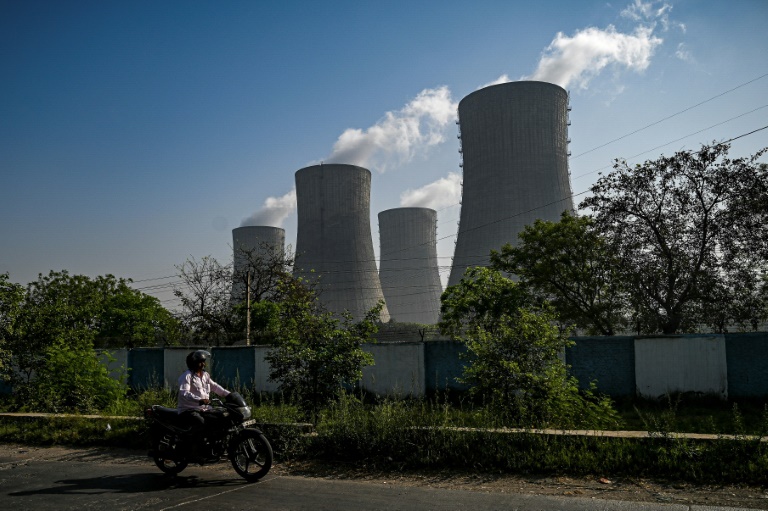
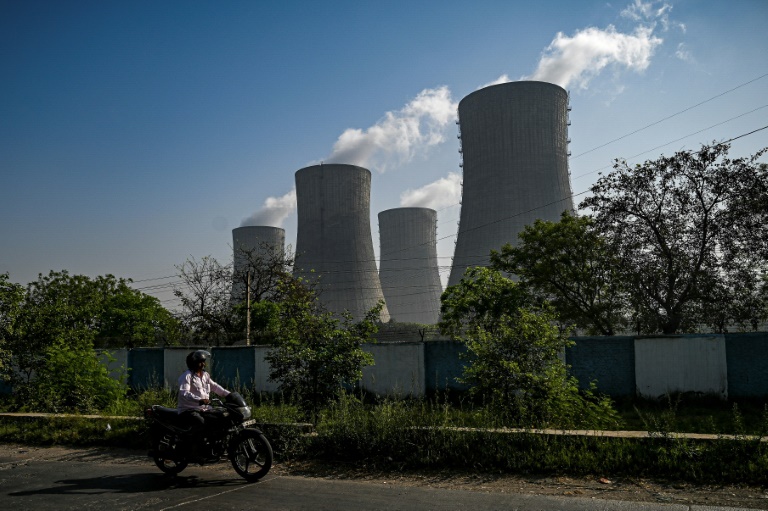
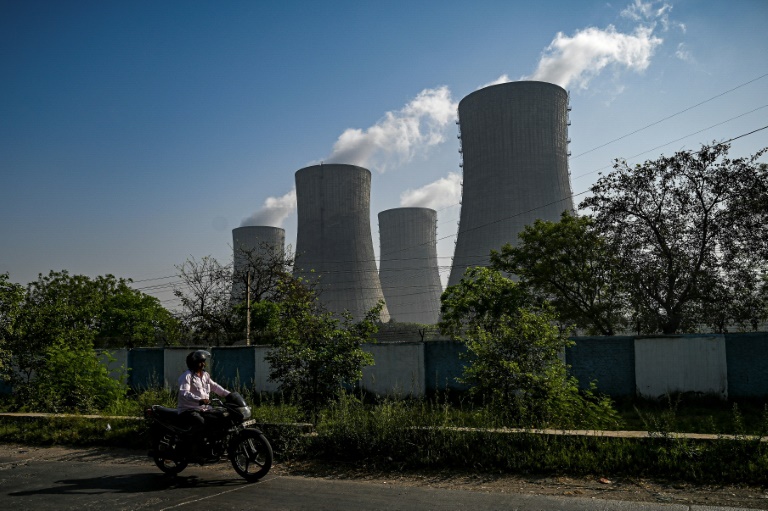
The mounds of jet-black coal shimmering under the afternoon sun at the Dadri power plant are a raw illustration of India’s coal dependence — a habit that despite increasing pressure, the country is finding hard to kick.

Coal is vital for providing electricity to India’s 1.4 billion citizens, making up 70 percent of the country’s energy needs. 

That reliance is in the spotlight after a warning by UN experts this week that to ensure a “liveable future”, countries must move to greener energy sources much faster to reduce emissions. 

Coal-based plants like the sprawling Dadri facility are attempting to make themselves cleaner, but their efforts are mostly in their infancy, and pale in comparison to their overall emission rate. 

Prime Minister Narendra Modi has set ambitious goals for renewable energy development, aiming to increase non-fossil energy capacity to over double the current coal capacity by 2030.

But Harjeet Singh of the Fossil Fuel Non-proliferation Treaty Initiative said that while the cost of renewable energy has come down by up to 90 percent in the last decade, India still requires hundreds of billions of dollars upfront to make the transition.

“That kind of international support in terms of investments or concessional loans or grants is not coming through,” he said. 

Experts say coal will remain the dominant fuel in India for a long time to come, with its energy needs over the next 20 years set to rise faster than any other country in the world. 

– Crossroads –

The UN report, released Monday, said current policies are leading the planet towards catastrophic temperature rises and that the world was at a “crossroads”. 

If the world’s current oil, gas and coal infrastructure operate for their designed lifetime — without technology to capture and store carbon — capping global warming at the target of 1.5 degrees Celsius will be impossible, it said. 

India, which with China reportedly led opposition to a commitment to “phase out” coal at the COP26 summit last year, currently has about 211 gigawatts of operational coal capacity, according to the Central Electricity Authority, with another 55GW under various phases of construction.

None of India’s power stations yet has the technology the UN report mentions as a mitigation option.

“Carbon-trapping technology is being used on an experimental basis at one of our plants,” said B. Srinivasa Rao, chief general manager of the Dadri plant. “If it is successful it will be done at all the plants.”

With six coal-fired units supplying megacity Delhi and elsewhere, the plant — run by India’s biggest power producer, the National Thermal Power Corporation (NTPC) — is spread across some 3,000 acres (1,200 hectares) in the northern state of Uttar Pradesh. 

It has taken some steps to reduce emissions, including burning pellets made from agricultural waste along with coal.

Like several other NTPC units, it has installed a solar thermal power plant with and output of 5 megawatts — though the plant as a whole generates 2500 MW.

Rao said the plant has also achieved 100 percent recycling of fly ash, a main byproduct of burning coal, and implemented a zero liquid discharge system.

But locals living in the vicinity complained about coal dust spilling from trucks and affecting their health.

“It burns our eyes and hurts our lungs,” said Rinku Rana, who runs a confectionery shop close by.

“But if the plant closes down we will be robbed of our livelihoods. So in a way it’s a necessary evil that we have to live with,” 29-year-old Rana said, wiping off a thick layer of ash-grey dust that had settled on biscuit and sweet packets at his shop.

– Climate equity –

Singh, the environmental campaigner, said India cannot continue to rely on fossil fuels, especially in view of severe air pollution.

At the same time, it needs cheap fuel to power its economy and help millions out of poverty.

Levies on coal are an important source of employment and government revenue, especially for states like Jharkhand and Odisha, among the poorest in the country.

Modi has said India will cut its emissions to net-zero only by 2070 — missing a key goal of the COP26 summit for countries to commit to doing so by 2050.

The government argues that although the country is the world’s third-largest emitter in total, its per capita emissions are far lower than the American average.

Singh said New Delhi was “well within its right” to talk about equity and climate justice.

“The current climate crisis is not because of India’s industrialisation. It’s because of the Western industrialisation that has happened over the last 150 years,” he told AFP. 

“Rich countries need to reduce their emissions far more earlier than what they have planned right now… and at the same time provide support to developing countries to move away from fossil fuels.”

India under fresh scrutiny as UN panel calls for shunning coal

The mounds of jet-black coal shimmering under the afternoon sun at the Dadri power plant are a raw illustration of India’s coal dependence — a habit that despite increasing pressure, the country is finding hard to kick.

Coal is vital for providing electricity to India’s 1.4 billion citizens, making up 70 percent of the country’s energy needs. 

That reliance is in the spotlight after a warning by UN experts this week that to ensure a “liveable future”, countries must move to greener energy sources much faster to reduce emissions. 

Coal-based plants like the sprawling Dadri facility are attempting to make themselves cleaner, but their efforts are mostly in their infancy, and pale in comparison to their overall emission rate. 

Prime Minister Narendra Modi has set ambitious goals for renewable energy development, aiming to increase non-fossil energy capacity to over double the current coal capacity by 2030.

But Harjeet Singh of the Fossil Fuel Non-proliferation Treaty Initiative said that while the cost of renewable energy has come down by up to 90 percent in the last decade, India still requires hundreds of billions of dollars upfront to make the transition.

“That kind of international support in terms of investments or concessional loans or grants is not coming through,” he said. 

Experts say coal will remain the dominant fuel in India for a long time to come, with its energy needs over the next 20 years set to rise faster than any other country in the world. 

– Crossroads –

The UN report, released Monday, said current policies are leading the planet towards catastrophic temperature rises and that the world was at a “crossroads”. 

If the world’s current oil, gas and coal infrastructure operate for their designed lifetime — without technology to capture and store carbon — capping global warming at the target of 1.5 degrees Celsius will be impossible, it said. 

India, which with China reportedly led opposition to a commitment to “phase out” coal at the COP26 summit last year, currently has about 211 gigawatts of operational coal capacity, according to the Central Electricity Authority, with another 55GW under various phases of construction.

None of India’s power stations yet has the technology the UN report mentions as a mitigation option.

“Carbon-trapping technology is being used on an experimental basis at one of our plants,” said B. Srinivasa Rao, chief general manager of the Dadri plant. “If it is successful it will be done at all the plants.”

With six coal-fired units supplying megacity Delhi and elsewhere, the plant — run by India’s biggest power producer, the National Thermal Power Corporation (NTPC) — is spread across some 3,000 acres (1,200 hectares) in the northern state of Uttar Pradesh. 

It has taken some steps to reduce emissions, including burning pellets made from agricultural waste along with coal.

Like several other NTPC units, it has installed a solar thermal power plant with and output of 5 megawatts — though the plant as a whole generates 2500 MW.

Rao said the plant has also achieved 100 percent recycling of fly ash, a main byproduct of burning coal, and implemented a zero liquid discharge system.

But locals living in the vicinity complained about coal dust spilling from trucks and affecting their health.

“It burns our eyes and hurts our lungs,” said Rinku Rana, who runs a confectionery shop close by.

“But if the plant closes down we will be robbed of our livelihoods. So in a way it’s a necessary evil that we have to live with,” 29-year-old Rana said, wiping off a thick layer of ash-grey dust that had settled on biscuit and sweet packets at his shop.

– Climate equity –

Singh, the environmental campaigner, said India cannot continue to rely on fossil fuels, especially in view of severe air pollution.

At the same time, it needs cheap fuel to power its economy and help millions out of poverty.

Levies on coal are an important source of employment and government revenue, especially for states like Jharkhand and Odisha, among the poorest in the country.

Modi has said India will cut its emissions to net-zero only by 2070 — missing a key goal of the COP26 summit for countries to commit to doing so by 2050.

The government argues that although the country is the world’s third-largest emitter in total, its per capita emissions are far lower than the American average.

Singh said New Delhi was “well within its right” to talk about equity and climate justice.

“The current climate crisis is not because of India’s industrialisation. It’s because of the Western industrialisation that has happened over the last 150 years,” he told AFP. 

“Rich countries need to reduce their emissions far more earlier than what they have planned right now… and at the same time provide support to developing countries to move away from fossil fuels.”
India under fresh scrutiny as UN panel calls for shunning coal

The mounds of jet-black coal shimmering under the afternoon sun at the Dadri power plant are a raw illustration of India’s coal dependence — a habit that despite increasing pressure, the country is finding hard to kick.

Coal is vital for providing electricity to India’s 1.4 billion citizens, making up 70 percent of the country’s energy needs. 

That reliance is in the spotlight after a warning by UN experts this week that to ensure a “liveable future”, countries must move to greener energy sources much faster to reduce emissions. 

Coal-based plants like the sprawling Dadri facility are attempting to make themselves cleaner, but their efforts are mostly in their infancy, and pale in comparison to their overall emission rate. 

Prime Minister Narendra Modi has set ambitious goals for renewable energy development, aiming to increase non-fossil energy capacity to over double the current coal capacity by 2030.

But Harjeet Singh of the Fossil Fuel Non-proliferation Treaty Initiative said that while the cost of renewable energy has come down by up to 90 percent in the last decade, India still requires hundreds of billions of dollars upfront to make the transition.

“That kind of international support in terms of investments or concessional loans or grants is not coming through,” he said. 

Experts say coal will remain the dominant fuel in India for a long time to come, with its energy needs over the next 20 years set to rise faster than any other country in the world. 

– Crossroads –

The UN report, released Monday, said current policies are leading the planet towards catastrophic temperature rises and that the world was at a “crossroads”. 

If the world’s current oil, gas and coal infrastructure operate for their designed lifetime — without technology to capture and store carbon — capping global warming at the target of 1.5 degrees Celsius will be impossible, it said. 

India, which with China reportedly led opposition to a commitment to “phase out” coal at the COP26 summit last year, currently has about 211 gigawatts of operational coal capacity, according to the Central Electricity Authority, with another 55GW under various phases of construction.

None of India’s power stations yet has the technology the UN report mentions as a mitigation option.

“Carbon-trapping technology is being used on an experimental basis at one of our plants,” said B. Srinivasa Rao, chief general manager of the Dadri plant. “If it is successful it will be done at all the plants.”

With six coal-fired units supplying megacity Delhi and elsewhere, the plant — run by India’s biggest power producer, the National Thermal Power Corporation (NTPC) — is spread across some 3,000 acres (1,200 hectares) in the northern state of Uttar Pradesh. 

It has taken some steps to reduce emissions, including burning pellets made from agricultural waste along with coal.

Like several other NTPC units, it has installed a solar thermal power plant with and output of 5 megawatts — though the plant as a whole generates 2500 MW.

Rao said the plant has also achieved 100 percent recycling of fly ash, a main byproduct of burning coal, and implemented a zero liquid discharge system.

But locals living in the vicinity complained about coal dust spilling from trucks and affecting their health.

“It burns our eyes and hurts our lungs,” said Rinku Rana, who runs a confectionery shop close by.

“But if the plant closes down we will be robbed of our livelihoods. So in a way it’s a necessary evil that we have to live with,” 29-year-old Rana said, wiping off a thick layer of ash-grey dust that had settled on biscuit and sweet packets at his shop.

– Climate equity –

Singh, the environmental campaigner, said India cannot continue to rely on fossil fuels, especially in view of severe air pollution.

At the same time, it needs cheap fuel to power its economy and help millions out of poverty.

Levies on coal are an important source of employment and government revenue, especially for states like Jharkhand and Odisha, among the poorest in the country.

Modi has said India will cut its emissions to net-zero only by 2070 — missing a key goal of the COP26 summit for countries to commit to doing so by 2050.

The government argues that although the country is the world’s third-largest emitter in total, its per capita emissions are far lower than the American average.

Singh said New Delhi was “well within its right” to talk about equity and climate justice.

“The current climate crisis is not because of India’s industrialisation. It’s because of the Western industrialisation that has happened over the last 150 years,” he told AFP. 

“Rich countries need to reduce their emissions far more earlier than what they have planned right now… and at the same time provide support to developing countries to move away from fossil fuels.”
Japan ends Russian coal imports, expels diplomats

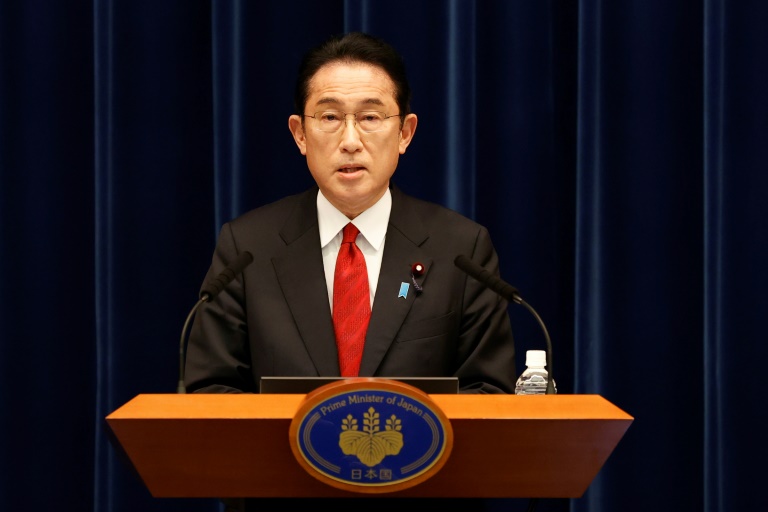
Japan said Friday it will end imports of Russian coal and announced the expulsion of eight of Moscow’s diplomats over “war crimes” in Ukraine.

The move comes as Ukraine’s allies step up pressure on Moscow after allegations that Russian troops killed civilians in areas around Kyiv.

“Russian troops have killed civilians and have attacked nuclear facilities, gravely violating international humanitarian law. These are war crimes that can never be forgiven,” Japanese Prime Minister Fumio Kishida told reporters.

“We will ban imports of Russian coal,” he added, pledging to find alternatives and asking Japanese citizens for their “understanding and cooperation.”

Japan imports around 11 percent of its coal from Russia, and the fuel remains a key plank of the country’s power generation.

Kishida said Japan would, in line with other Group of Seven developed nations, work to decrease its reliance on other energy imports from Russia, which include oil and gas, but he gave no specific timeframe.

He also outlined fresh sanctions, including new asset freezes and a ban on imports from Russia, including machinery and vodka, and said Tokyo would back efforts to investigate Moscow’s actions at the International Criminal Court.

Earlier, Japan’s foreign ministry announced the expulsion of eight Russian diplomats from the embassy and trade office.

The decision does not affect Russia’s ambassador Mikhail Yurievich Galuzin.

Japan has marched in lockstep with Western allies on sanctions against Russia, and has even welcomed several hundred Ukrainians fleeing the conflict despite generally accepting very few refugees.

Tokyo had complex relations with Moscow before the Ukrainian invasion and the two sides have yet to sign a post-World War II peace treaty.

Attempts to do so have been hampered by a long-running dispute over islands controlled by Russia, which calls them the Kurils.

Japan calls the islands the Northern Territories and has long sought to have them under Tokyo’s control.

Japan ends Russian coal imports, expels diplomats

Japan said Friday it will end imports of Russian coal and announced the expulsion of eight of Moscow’s diplomats over “war crimes” in Ukraine.

The move comes as Ukraine’s allies step up pressure on Moscow after allegations that Russian troops killed civilians in areas around Kyiv.

“Russian troops have killed civilians and have attacked nuclear facilities, gravely violating international humanitarian law. These are war crimes that can never be forgiven,” Japanese Prime Minister Fumio Kishida told reporters.

“We will ban imports of Russian coal,” he added, pledging to find alternatives and asking Japanese citizens for their “understanding and cooperation.”

Japan imports around 11 percent of its coal from Russia, and the fuel remains a key plank of the country’s power generation.

Kishida said Japan would, in line with other Group of Seven developed nations, work to decrease its reliance on other energy imports from Russia, which include oil and gas, but he gave no specific timeframe.

He also outlined fresh sanctions, including new asset freezes and a ban on imports from Russia, including machinery and vodka, and said Tokyo would back efforts to investigate Moscow’s actions at the International Criminal Court.

Earlier, Japan’s foreign ministry announced the expulsion of eight Russian diplomats from the embassy and trade office.

The decision does not affect Russia’s ambassador Mikhail Yurievich Galuzin.

Japan has marched in lockstep with Western allies on sanctions against Russia, and has even welcomed several hundred Ukrainians fleeing the conflict despite generally accepting very few refugees.

Tokyo had complex relations with Moscow before the Ukrainian invasion and the two sides have yet to sign a post-World War II peace treaty.

Attempts to do so have been hampered by a long-running dispute over islands controlled by Russia, which calls them the Kurils.

Japan calls the islands the Northern Territories and has long sought to have them under Tokyo’s control.

India under fresh scrutiny as UN panel calls for shunning coal

The mounds of jet-black coal shimmering under the afternoon sun at the Dadri power plant are a raw illustration of India’s coal dependence — a habit that despite increasing pressure, the country is finding hard to kick.

Coal is vital for providing electricity to India’s 1.4 billion citizens, making up 70 percent of the country’s energy needs. 

That reliance is in the spotlight after a warning by UN experts this week that to ensure a “liveable future”, countries must move to greener energy sources much faster to reduce emissions. 

Coal-based plants like the sprawling Dadri facility are attempting to make themselves cleaner, but their efforts are mostly in their infancy, and pale in comparison to their overall emission rate. 

Prime Minister Narendra Modi has set ambitious goals for renewable energy development, aiming to increase non-fossil energy capacity to over double the current coal capacity by 2030.

But Harjeet Singh of the Fossil Fuel Non-proliferation Treaty Initiative said that while the cost of renewable energy has come down by up to 90 percent in the last decade, India still requires hundreds of billions of dollars upfront to make the transition.

“That kind of international support in terms of investments or concessional loans or grants is not coming through,” he said. 

Experts say coal will remain the dominant fuel in India for a long time to come, with its energy needs over the next 20 years set to rise faster than any other country in the world. 

– Crossroads –

The UN report, released Monday, said current policies are leading the planet towards catastrophic temperature rises and that the world was at a “crossroads”. 

If the world’s current oil, gas and coal infrastructure operate for their designed lifetime — without technology to capture and store carbon — capping global warming at the target of 1.5 degrees Celsius will be impossible, it said. 

India, which with China reportedly led opposition to a commitment to “phase out” coal at the COP26 summit last year, currently has about 211 gigawatts of operational coal capacity, according to the Central Electricity Authority, with another 55GW under various phases of construction.

None of India’s power stations yet has the technology the UN report mentions as a mitigation option.

“Carbon-trapping technology is being used on an experimental basis at one of our plants,” said B. Srinivasa Rao, chief general manager of the Dadri plant. “If it is successful it will be done at all the plants.”

With six coal-fired units supplying megacity Delhi and elsewhere, the plant — run by India’s biggest power producer, the National Thermal Power Corporation (NTPC) — is spread across some 3,000 acres (1,200 hectares) in the northern state of Uttar Pradesh. 

It has taken some steps to reduce emissions, including burning pellets made from agricultural waste along with coal.

Like several other NTPC units, it has installed a solar thermal power plant with and output of 5 megawatts — though the plant as a whole generates 2500 MW.

Rao said the plant has also achieved 100 percent recycling of fly ash, a main byproduct of burning coal, and implemented a zero liquid discharge system.

But locals living in the vicinity complained about coal dust spilling from trucks and affecting their health.

“It burns our eyes and hurts our lungs,” said Rinku Rana, who runs a confectionery shop close by.

“But if the plant closes down we will be robbed of our livelihoods. So in a way it’s a necessary evil that we have to live with,” 29-year-old Rana said, wiping off a thick layer of ash-grey dust that had settled on biscuit and sweet packets at his shop.

– Climate equity –

Singh, the environmental campaigner, said India cannot continue to rely on fossil fuels, especially in view of severe air pollution.

At the same time, it needs cheap fuel to power its economy and help millions out of poverty.

Levies on coal are an important source of employment and government revenue, especially for states like Jharkhand and Odisha, among the poorest in the country.

Modi has said India will cut its emissions to net-zero only by 2070 — missing a key goal of the COP26 summit for countries to commit to doing so by 2050.

The government argues that although the country is the world’s third-largest emitter in total, its per capita emissions are far lower than the American average.

Singh said New Delhi was “well within its right” to talk about equity and climate justice.

“The current climate crisis is not because of India’s industrialisation. It’s because of the Western industrialisation that has happened over the last 150 years,” he told AFP. 

“Rich countries need to reduce their emissions far more earlier than what they have planned right now… and at the same time provide support to developing countries to move away from fossil fuels.”
India under fresh scrutiny as UN panel calls for shunning coal

The mounds of jet-black coal shimmering under the afternoon sun at the Dadri power plant are a raw illustration of India’s coal dependence — a habit that despite increasing pressure, the country is finding hard to kick.

Coal is vital for providing electricity to India’s 1.4 billion citizens, making up 70 percent of the country’s energy needs. 

That reliance is in the spotlight after a warning by UN experts this week that to ensure a “liveable future”, countries must move to greener energy sources much faster to reduce emissions. 

Coal-based plants like the sprawling Dadri facility are attempting to make themselves cleaner, but their efforts are mostly in their infancy, and pale in comparison to their overall emission rate. 

Prime Minister Narendra Modi has set ambitious goals for renewable energy development, aiming to increase non-fossil energy capacity to over double the current coal capacity by 2030.

But Harjeet Singh of the Fossil Fuel Non-proliferation Treaty Initiative said that while the cost of renewable energy has come down by up to 90 percent in the last decade, India still requires hundreds of billions of dollars upfront to make the transition.

“That kind of international support in terms of investments or concessional loans or grants is not coming through,” he said. 

Experts say coal will remain the dominant fuel in India for a long time to come, with its energy needs over the next 20 years set to rise faster than any other country in the world. 

– Crossroads –

The UN report, released Monday, said current policies are leading the planet towards catastrophic temperature rises and that the world was at a “crossroads”. 

If the world’s current oil, gas and coal infrastructure operate for their designed lifetime — without technology to capture and store carbon — capping global warming at the target of 1.5 degrees Celsius will be impossible, it said. 

India, which with China reportedly led opposition to a commitment to “phase out” coal at the COP26 summit last year, currently has about 211 gigawatts of operational coal capacity, according to the Central Electricity Authority, with another 55GW under various phases of construction.

None of India’s power stations yet has the technology the UN report mentions as a mitigation option.

“Carbon-trapping technology is being used on an experimental basis at one of our plants,” said B. Srinivasa Rao, chief general manager of the Dadri plant. “If it is successful it will be done at all the plants.”

With six coal-fired units supplying megacity Delhi and elsewhere, the plant — run by India’s biggest power producer, the National Thermal Power Corporation (NTPC) — is spread across some 3,000 acres (1,200 hectares) in the northern state of Uttar Pradesh. 

It has taken some steps to reduce emissions, including burning pellets made from agricultural waste along with coal.

Like several other NTPC units, it has installed a solar thermal power plant with and output of 5 megawatts — though the plant as a whole generates 2500 MW.

Rao said the plant has also achieved 100 percent recycling of fly ash, a main byproduct of burning coal, and implemented a zero liquid discharge system.

But locals living in the vicinity complained about coal dust spilling from trucks and affecting their health.

“It burns our eyes and hurts our lungs,” said Rinku Rana, who runs a confectionery shop close by.

“But if the plant closes down we will be robbed of our livelihoods. So in a way it’s a necessary evil that we have to live with,” 29-year-old Rana said, wiping off a thick layer of ash-grey dust that had settled on biscuit and sweet packets at his shop.

– Climate equity –

Singh, the environmental campaigner, said India cannot continue to rely on fossil fuels, especially in view of severe air pollution.

At the same time, it needs cheap fuel to power its economy and help millions out of poverty.

Levies on coal are an important source of employment and government revenue, especially for states like Jharkhand and Odisha, among the poorest in the country.

Modi has said India will cut its emissions to net-zero only by 2070 — missing a key goal of the COP26 summit for countries to commit to doing so by 2050.

The government argues that although the country is the world’s third-largest emitter in total, its per capita emissions are far lower than the American average.

Singh said New Delhi was “well within its right” to talk about equity and climate justice.

“The current climate crisis is not because of India’s industrialisation. It’s because of the Western industrialisation that has happened over the last 150 years,” he told AFP. 

“Rich countries need to reduce their emissions far more earlier than what they have planned right now… and at the same time provide support to developing countries to move away from fossil fuels.”
India under fresh scrutiny as UN panel calls for shunning coal

The mounds of jet-black coal shimmering under the afternoon sun at the Dadri power plant are a raw illustration of India’s coal dependence — a habit that despite increasing pressure, the country is finding hard to kick.

Coal is vital for providing electricity to India’s 1.4 billion citizens, making up 70 percent of the country’s energy needs. 

That reliance is in the spotlight after a warning by UN experts this week that to ensure a “liveable future”, countries must move to greener energy sources much faster to reduce emissions. 

Coal-based plants like the sprawling Dadri facility are attempting to make themselves cleaner, but their efforts are mostly in their infancy, and pale in comparison to their overall emission rate. 

Prime Minister Narendra Modi has set ambitious goals for renewable energy development, aiming to increase non-fossil energy capacity to over double the current coal capacity by 2030.

But Harjeet Singh of the Fossil Fuel Non-proliferation Treaty Initiative said that while the cost of renewable energy has come down by up to 90 percent in the last decade, India still requires hundreds of billions of dollars upfront to make the transition.

“That kind of international support in terms of investments or concessional loans or grants is not coming through,” he said. 

Experts say coal will remain the dominant fuel in India for a long time to come, with its energy needs over the next 20 years set to rise faster than any other country in the world. 

– Crossroads –

The UN report, released Monday, said current policies are leading the planet towards catastrophic temperature rises and that the world was at a “crossroads”. 

If the world’s current oil, gas and coal infrastructure operate for their designed lifetime — without technology to capture and store carbon — capping global warming at the target of 1.5 degrees Celsius will be impossible, it said. 

India, which with China reportedly led opposition to a commitment to “phase out” coal at the COP26 summit last year, currently has about 211 gigawatts of operational coal capacity, according to the Central Electricity Authority, with another 55GW under various phases of construction.

None of India’s power stations yet has the technology the UN report mentions as a mitigation option.

“Carbon-trapping technology is being used on an experimental basis at one of our plants,” said B. Srinivasa Rao, chief general manager of the Dadri plant. “If it is successful it will be done at all the plants.”

With six coal-fired units supplying megacity Delhi and elsewhere, the plant — run by India’s biggest power producer, the National Thermal Power Corporation (NTPC) — is spread across some 3,000 acres (1,200 hectares) in the northern state of Uttar Pradesh. 

It has taken some steps to reduce emissions, including burning pellets made from agricultural waste along with coal.

Like several other NTPC units, it has installed a solar thermal power plant with and output of 5 megawatts — though the plant as a whole generates 2500 MW.

Rao said the plant has also achieved 100 percent recycling of fly ash, a main byproduct of burning coal, and implemented a zero liquid discharge system.

But locals living in the vicinity complained about coal dust spilling from trucks and affecting their health.

“It burns our eyes and hurts our lungs,” said Rinku Rana, who runs a confectionery shop close by.

“But if the plant closes down we will be robbed of our livelihoods. So in a way it’s a necessary evil that we have to live with,” 29-year-old Rana said, wiping off a thick layer of ash-grey dust that had settled on biscuit and sweet packets at his shop.

– Climate equity –

Singh, the environmental campaigner, said India cannot continue to rely on fossil fuels, especially in view of severe air pollution.

At the same time, it needs cheap fuel to power its economy and help millions out of poverty.

Levies on coal are an important source of employment and government revenue, especially for states like Jharkhand and Odisha, among the poorest in the country.

Modi has said India will cut its emissions to net-zero only by 2070 — missing a key goal of the COP26 summit for countries to commit to doing so by 2050.

The government argues that although the country is the world’s third-largest emitter in total, its per capita emissions are far lower than the American average.

Singh said New Delhi was “well within its right” to talk about equity and climate justice.

“The current climate crisis is not because of India’s industrialisation. It’s because of the Western industrialisation that has happened over the last 150 years,” he told AFP. 

“Rich countries need to reduce their emissions far more earlier than what they have planned right now… and at the same time provide support to developing countries to move away from fossil fuels.”
Pakistan PM Khan to address nation ahead of no-confidence vote

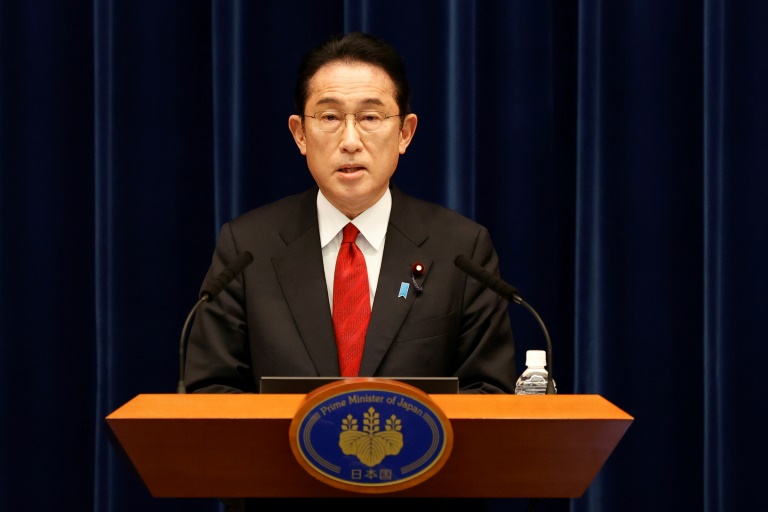
Pakistan Prime Minister Imran Khan is to address the nation Friday, on the eve of a controversial no-confidence vote that looks certain to dismiss him.

The country is abuzz with speculation he may resign rather than face the indignity of being voted out — or that the former international cricket star might pull off another surprise.

Khan, who peppers his speeches with cricket metaphors, said late Thursday he would fight “till the last ball”, while summoning his cabinet and Pakistan Tehreek-e-Insaf party (PTI) leaders for crisis meetings Friday.

His interior minister gave a hint of what might come, telling reporters he had long pressed for PTI lawmakers and coalition partners to quit the assembly en-masse.

“For three months I was asking them to collectively resign… I am saying the same, we should resign in unison,” said Sheikh Rashid Ahmad.

The opposition says it has more than 172 votes in the 342-seat assembly, which needs a quarter of members present for a quorum.

Saturday’s vote will cap a dramatic week during which Khan sidestepped an initial no-confidence vote before getting the loyalist president to dissolve parliament and call fresh elections.

But the Supreme Court Thursday ruled all his actions illegal, and said the national assembly — where Khan has lost his majority — must decide his fate.

The court’s judgement was broader than expected after the chief justice said earlier this week the bench would only rule on the legality of the initial no-confidence motion being blocked.

– End of ‘doctrine of necessity’ –

Constitutionalists praised the verdict, calling it an end to the so-called “doctrine of necessity” that has seen courts throughout Pakistan’s history rule against clear illegality, but accept the consequences as being good for the country.

The decision was met with jubilation by the Pakistan Muslim League-N (PML-N) and the Pakistan Peoples Party (PPP), two normally feuding groups that combined to oust Khan.

PML-N leader Shehbaz Sharif, brother of three-time prime minister Nawaz Sharif and likely to replace Khan, said the decision “has saved Pakistan and the constitution”.

“Democracy is the best revenge”, tweeted PPP leader Bilawal Zardari Bhutto, the scion of another political dynasty. His parents are assassinated former prime minister Benazir Bhutto and ex-president Asif Ali Zardari.

How long the next government lasts is also a matter of speculation.

The opposition said previously they wanted an early election — which must be called by October next year — but taking power gives them the opportunity to set their own agenda and end a string of probes they said Khan launched vindictively against them.

It could also pave the way for a comeback by Nawaz Sharif, who has not returned from Britain since being allowed to leave jail in 2019 to seek medical treatment abroad.

He was barred by the Supreme Court from holding public office after graft revelations, and sentenced to 10 years in prison by an accountability court.

There had been high hopes for Khan when he was elected in 2018 on a promise of sweeping away decades of entrenched corruption and cronyism, but he struggled to maintain support with soaring inflation, a feeble rupee and crippling debt.

There has also been a rise in violence by Islamic militants encouraged by the return to power of the Taliban in neighbouring Afghanistan.

– Underlying issues remain –

Political analyst Hasan Askari told AFP any new government will still have to deal with the underlying issues.

“Conflict and confrontation will persist… the prospects of political harmony and long-term stability are minimal,” he said.

Pakistan has been wracked by political crises for much of its 75-year existence, and no prime minister has ever seen out a full term.

Khan has blown anti-US sentiment into the political atmosphere by saying the opposition had colluded with Washington to oust him.

The 67-year-old says Western powers wanted him removed because he will not stand with them against Russia and China.

Publicly the military appears to be keeping out of the current fray, but there have been four coups since independence in 1947 and the country has spent more than three decades under army rule.

Close Bitnami banner
Bitnami