World

War in Ukraine: Latest developments

Here are the latest developments in the war in Ukraine:

– 30 killed at train station – 

More than 30 people are killed and 100 wounded in a reported rocket attack on a train station in the eastern Ukrainian city of Kramatorsk that is being used for civilian evacuations, according to the Ukrainian railways chief.

– Eastern evacuation  – 

Civilians in eastern Ukraine struggle to evacuate, after officials tell them they have a “last chance” to avoid a major Russian offensive expected in the Donbas region.

Russia has redeployed its troops towards the east and south, aiming to create a land link between occupied Crimea and the Moscow-backed separatist statelets of Donetsk and Lugansk in Donbas.

– Record food prices –

World food prices hit their “highest levels ever” in March as Russia’s invasion of Ukraine has disrupted wheat and coarse grain exports, the UN’s Food and Agriculture Organization says.

The FAO’s food price index surged by 12.6 percent between February and March, “making a giant leap to a new highest level since its inception in 1990”, the FAO says.

– Ukraine controls border region –

Ukrainian forces are in control of the northeast region of Sumy along the border with Russia, governor Dmytro Zhyvytsky says on social media.

He warns: “the region is not safe. There are many areas that have been mined and are still not cleared.”

– EU chief to Kyiv –

European Commission President Ursula von der Leyen says that she is en route to the Ukrainian capital Kyiv, along with the bloc’s diplomatic chief Josep Borrell.

They are to meet with Ukraine President Volodymyr Zelensky.

– New EU, G7 sanctions –

The European Union approves an embargo on Russian coal — the first time the bloc has targeted the energy sector, on which they are heavily dependent — and the closing of its ports to Russian vessels. 

Leaders of the G7 biggest economies also agree to ban “new investments in key sectors of the Russian economy, including the energy sector”, alongside widening export bans on certain goods and tightening the screws on Russian banks and state-owned companies.

They also pledge to “elevate our campaign against the elites and their family members who support President (Vladimir) Putin in his war effort”.

The US Congress also votes to end normal trade relations with Moscow and codify the ban on Russian oil.

– UN rights body suspension –

The UN General Assembly votes to suspend Russia from the UN Human Rights Council as punishment for the invasion of Ukraine.

It is only the second ever suspension of a country from the council, after Libya in 2011.

Russia rejects the suspension as “illegal”, while Ukraine says it is “grateful”.

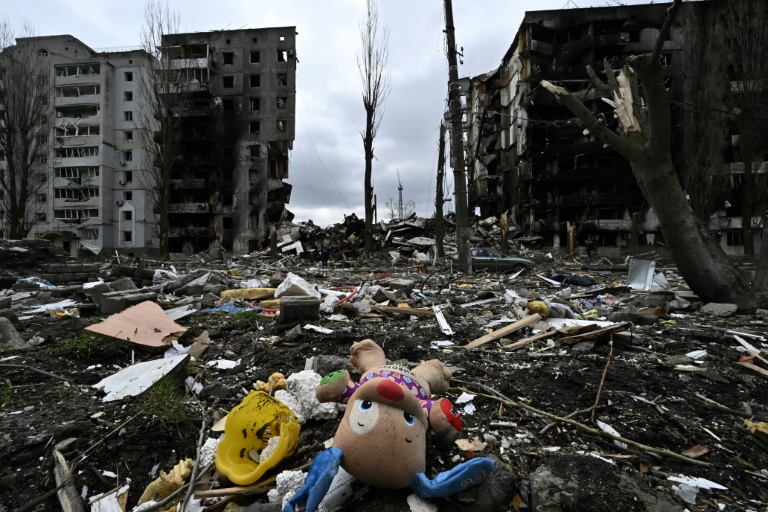
– Borodianka ‘horrific’ –

The destruction left by Russian troops in the town of Borodianka outside of Kyiv is “much more horrific” than the situation uncovered in the nearby town of Bucha, Zelensky says.

Ukraine’s Prosecutor General says 26 bodies have been recovered from underneath two destroyed apartment buildings there. 

– Mariupol deaths –

The new “mayor” of Mariupol, put in place by pro-Russian forces, announces that around 5,000 civilians have died in the besieged southeastern Ukrainian city. 

Ukrainian authorities had put forward a “conservative” estimate of 5,000 dead, while indicating that there could be “tens of thousands of civilian casualties” in the city. 

– Health services attacked –

The World Health Organization (WHO) says it has confirmed over 100 attacks on health services in Ukraine as it calls for humanitarian access to Mariupol.

“As of now, WHO has verified 103 incidents of attacks on health care, with 73 people killed and 51 injured, including health workers and patients,” WHO chief Tedros Adhanom Ghebreyesus says.

burs-jmy/yad

World food prices hit record high over Ukraine war: FAO

World food prices hit an all-time high in March as Russia’s invasion of Ukraine sent “shocks” through markets for staple grains and vegetable oils, the UN’s Food and Agriculture Organization said on Friday.

The disruption in export flows resulting from the February 24 invasion and international sanctions against Russia has spurred fears of a global hunger crisis, especially across the Middle East and Africa, where the knock-on effects are already playing out.

Russia and Ukraine, whose vast grain-growing regions are among the world’s main breadbaskets, account for a huge share of the globe’s exports in several major commodities, including wheat, vegetable oil and corn.

“World food commodity prices made a significant leap in March to reach their highest levels ever, as war in the Black Sea region spread shocks through markets for staple grains and vegetable oils,” the FAO said in a statement.

The FAO’s food price index, which had already reported a record in February, surged by 12.6 percent last month, “making a giant leap to a new highest level since its inception in 1990”, the UN agency said.

The index, a measure of the monthly change in international prices of a basket of food commodities, averaged 159.3 points in March.

The jump includes new all-time highs for vegetable oils, cereals and meats, the FAO said, adding that prices of sugar and dairy products “also rose significantly”.

– Famine fears –

Russia and Ukraine together accounted for around 30 percent and 20 percent of global wheat and maize exports respectively, over the past three years, the FAO said.

The war continues to rage as sowing season has started in Ukraine.

Wheat prices rose by almost 20 percent, with the problem exacerbated by concerns over crop conditions in the United States, the organization said.

The FAO’s vegetable oil price index surged by 23.2 percent, driven by higher quotations for sunflower seed oil, of which Ukraine is the world’s leading exporter.

Spanish supermarkets have rationed the sale of sunflower oil to stop customers stockpiling over shortage fears due to the war.

The United States has accused Russian President Vladimir Putin of creating “this global food crisis”.

France has warned that the war has increased the risk of famine around the world.

The conflict has also sent oil and gas prices through the roof, causing inflation to rise further across the world and raising concerns that it could derail global economic growth.

Asian markets track Wall St gains, traders wary of hawkish Fed

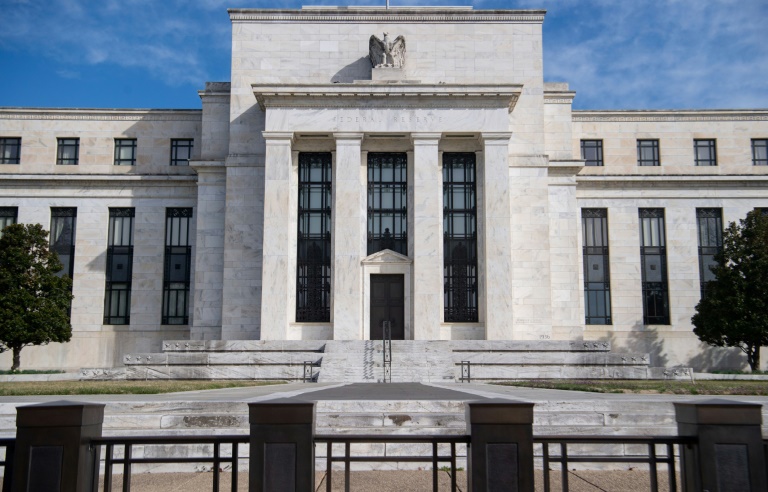
Asian markets mostly rose Friday after a tough week dominated by the US Federal Reserve’s hawkish tone that has set it on an aggressive tightening path, while oil ticked higher after another series of losses.

After a slow start, the region managed to take the lead from Wall Street, which recovered from steep intra-day losses to end on a positive note, having plunged in previous sessions as traders fretted over the prospect of higher interest rates.

While the Fed has made clear it intends to act more decisively to rein in 40-year-high inflation by ramping up borrowing costs and offloading bond holdings, analysts suggested that better clarity on policy was welcome.

The Fed’s desire to tighten has sent the dollar rallying against most other major currencies, particularly the euro, which has been weighed by European officials’ reticence to move as aggressively on prices. The euro is sitting around a one-month low.

Markets have come under huge pressure this year as the end of ultra-cheap central bank cash, a Covid-fuelled slowdown in China’s economic activity, the war in Ukraine and soaring inflation come together in a perfect storm.

Highlighting the difficult task central banks will have in fighting inflation, the UN’s Food and Agriculture Organization said Friday that world food prices hit their “highest levels ever” in March as Russia’s invasion of Ukraine disrupted wheat and coarse grain exports.

Still, all three indexes on Wall Street ended slightly higher, having bounced back from heavy losses thanks to bargain-buying, while some observers suggested recent selling may have gone too far.

Asia saw a tepid start but most markets enjoyed mild gains towards the end of the day.

Tokyo, Hong Kong, Shanghai, Sydney, Seoul, Taipei, Mumbai, Manila, Jakarta and Bangkok all rose, though Singapore and Wellington were lower.

London, Paris and Frankfurt rallied in the morning, while US futures were also well up.

– Crude concerns –

Still, OANDA’s Jeffrey Halley warned traders were “growing warier about China as the Shanghai lockdown drags on” owing to the fast-spreading Omicron virus variant.

“China’s Covid-zero policy continues to be its Achilles heel, although there are plenty of other reasons to be a little cautious,” he said in a note.

“A serious spread outside of its finance and commercial centre to other large cities will be a big headwind for China’s growth, China stocks, and by default eventually, much of Asia.”

Crude prices edged up having also endured a downcast week after the United States and allies pledged to release more than 200 million barrels over the coming months to offset the loss of Russian supplies.

The decision comes on top of concerns about demand from China owing to the lockdowns.

Still, there is a feeling that the war in Ukraine, and any possible further sanctions on Russia, could send the oil market higher again.

“I still think… the sentiment-driven sell-off will give way, and fundamentals will reassert themselves, especially as more market participants start fretting about how will the US administration replenish the SPR drawdown,” said SPI Asset Management’s Stephen Innes.

“Oil prices remain volatile amid concerns over Russian supply against the backdrop of slowing demand in China and a likely depressed US summer driving season due to higher prices at the pump.”

He added that “deficits are likely to persist but only moderated by the accelerated strategic stock release from May to November and weaker demand growth”.

– Key figures around 0810 GMT –

Tokyo – Nikkei 225: UP 0.4 percent at 26,985.80 (close)

Hong Kong – Hang Seng Index: UP 0.3 percent at 21,872.01 (close)

Shanghai – Composite: UP 0.5 percent at 3,251.85 (close)

London – FTSE 100: UP 1.0 percent at 7,625.18

Brent North Sea crude: UP 0.1 at $100.71 per barrel

West Texas Intermediate: UP 0.2 percent at $96.26 per barrel

Euro/dollar: DOWN at $1.0858 from $1.0880 late Thursday

Pound/dollar: DOWN at $1.3035 from $1.3071

Euro/pound: UP at 83.29 pence from 83.17 pence

Dollar/yen: UP at 124.11 yen from 123.95 yen

New York – Dow: UP 0.3 percent at 34,583.57 (close)

Asian markets struggle to track Wall St on hawkish Fed

Asian markets mostly rose Friday after a tough week dominated by the Federal Reserve’s hawkish tone that has set it on an aggressive tightening path, while oil bounced back after another series of losses.

After a slow start, the region managed to take the lead from Wall Street, which recovered from steep intra-day losses to end on a positive note, having plunged in previous sessions as traders fretted over the prospect of higher interest rates.

While the Fed has made clear it intends to act more decisively to rein in 40-year-high inflation by ramping up borrowing costs and offloading bond holdings, analysts suggested that better clarity on policy was welcome.

The Fed’s desire to tighten up has sent the dollar rallying against most other major currencies and particularly the euro, which has been weighed by European officials’ reticence to move as aggressively on prices. The single currency is sitting around a one-month low.

Markets have come under huge pressure this year as the end of ultra-cheap central bank cash, a Covid-fuelled slowdown in China’s economic activity, the war in Ukraine and soaring inflation come together in a perfect storm.

Still, all three indexes on Wall Street ended slightly higher, having bounced back from heavy losses earlier in the day thanks to bargain-buying, while some observers suggested recent selling may have gone too far.

Asia saw a tepid start but most markets enjoyed mild gains towards the end of the day.

Tokyo, Shanghai, Sydney, Seoul, Taipei, Mumbai, Manila, Jakarta and Bangkok all rose, though Hong Kong was weighed by losses in the tech sector while Singapore and Wellington were also lower.

London, Paris and Frankfurt rallied at the open, while US futures were also up.

Still, OANDA’s Jeffrey Halley warned traders were “growing warier about China as the Shanghai lockdown drags on” owing to the fast-spreading Omicron virus variant.

“China’s Covid-zero policy continues to be its Achilles heel, although there are plenty of other reasons to be a little cautious,” he said in a note.

“A serious spread outside of its finance and commercial centre to other large cities will be a big headwind for China’s growth, China stocks, and by default eventually, much of Asia.”

Crude prices climbed nearly one percent having also endured a downcast week after the United States and allies pledged to release more than 200 million barrels over the coming months to offset the loss of Russian supplies.

The decision comes on top of concerns about demand from China owing to the lockdowns.

Still, there is a feeling that the war in Ukraine, and any possible further sanctions on Russia, could send the oil market higher again.

“I still think… the sentiment-driven sell-off will give way, and fundamentals will reassert themselves, especially as more market participants start fretting about how will the US administration replenish the SPR drawdown,” said SPI Asset Management’s Stephen Innes.

“Oil prices remain volatile amid concerns over Russian supply against the backdrop of slowing demand in China and a likely depressed US summer driving season due to higher prices at the pump.”

He added that “deficits are likely to persist but only moderated by the accelerated strategic stock release from May to November and weaker demand growth”.

– Key figures around 0720 GMT –

Tokyo – Nikkei 225: UP 0.4 percent at 26,985.80 (close)

Hong Kong – Hang Seng Index: DOWN 0.1 percent at 21,797.11

Shanghai – Composite: UP 0.5 percent at 3,251.85 (close)

London – FTSE 100: UP 0.8 percent at 7,615.04

Brent North Sea crude: UP 0.9 at $101.48 per barrel

West Texas Intermediate: UP 0.9 percent at $96.89 per barrel

Euro/dollar: DOWN at $1.0859 from $1.0880 late Thursday

Pound/dollar: DOWN at $1.3044 from $1.3071

Euro/pound: UP at 83.24 pence from 83.17 pence

Dollar/yen: DOWN at 124.10 yen from 123.95 yen

New York – Dow: UP 0.3 percent at 34,583.57 (close)

Shanghai lockdown snarls world's busiest port and China supply chains

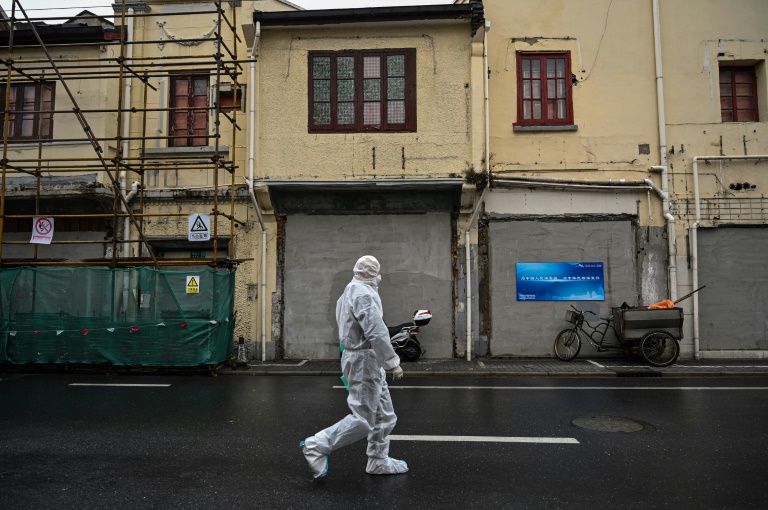
Shanghai’s grinding coronavirus lockdown is slowly clogging China’s supply chains, as delays hit the world’s busiest container port where staff are tangled in a morass of Covid controls.

Beijing has refused to tack away from its strict zero-Covid strategy that has protected its public health system through the pandemic but at a mounting economic cost.

China’s financial hub Shanghai — home to multinational firms and its busiest port — has been sealed off almost entirely for a week following an outbreak fuelled by the Omicron virus variant.

That has forced many companies to halt production and slow new projects, factories told AFP, while those still operating are struggling with a shortage of truck drivers on top of onerous permit and Covid testing requirements.

At Shanghai’s port, the lack of drivers and other workers means getting goods in and out is increasingly hard.

The docks are working normally with a “single-digit” number of vessels waiting to berth, Shanghai International Port Group said this week.

“But the fact is… due to restrictions caused for truck drivers, it is not really operating,” Bettina Schoen-Behanzin, vice president of the EU Chamber of Commerce’s Shanghai Chapter, told AFP.

“The figure I heard is that… week-on-week volumes at the Shanghai port are down by 40 percent. So that’s really enormous.”

Shortages are starting to bite across China’s vast consumer economy, where online shopping platforms such as Taobao face delivery delays, especially of imported goods.

Covid curbs in a number of cities have forced factories to find new suppliers.

But the impact may soon also be felt outside China if lockdowns persist.

Shanghai is the world’s number one container port, a spinal point in the global supply chain and a key gateway for foreign trade.

It handles around 17 percent of China’s total port volume and shipped 47 million TEU — the standard measurement for cargo, meaning Twenty-foot Equivalent Unit — in 2021.

– Factories can’t work from home  –

Chinese manufacturers say lockdowns, no matter how flexible or targeted, pile pressure on their business.

“Not many roles allow working from home,” said Jason Lee, founder of wheelchair producer Megalicht Tech, whose factory in Shanghai’s Puxi area has suspended production.

“People can’t enter the factory… and because our raw materials come from other provinces or cities, these can’t enter Shanghai either,” he said.

A Shanghai-based clothing exporter surnamed Zheng said his biggest problem was that he could not send samples to clients.

“Deliveries can neither leave nor enter,” he said

Experts say the outbreak is currently nibbling at growth, but could soon take a big bite.

Nomura economists estimate that 23 cities accounting for 22 percent of China’s GDP have rolled out full or partial lockdowns.

“The costs of the zero-Covid strategy will rise significantly as its benefits decline, especially as exports are hit by the ongoing lockdowns,” Nomura chief China economist Lu Ting told AFP.

That will challenge Beijing’s 2022 GDP growth target of around 5.5 percent, he added.

– Adapting to survive –

For now, companies are adapting to try and handle the restrictions.

“Our main business activity is down by over 50 percent,” said Gao Yongkang, general manager of Qifeng Technology in eastern China’s Quanzhou city.

The company has been unable to transport textile materials to regular clients because of the Covid curbs, and has instead pivoted to supplying the booming market for protective gear.

Meanwhile, those who cannot reach their original suppliers are scouring for new ones.

“The costs are a little higher and it’s slightly less efficient but we can fulfil our regular needs,” said Shen Shengyuan, deputy general manager of diaper-producer New Yifa Group.

In a nod to struggling industries, Premier Li Keqiang this week announced a temporary deferment of old-age insurance premiums for sectors such as catering, retail and civil aviation.

But industry groups say hard lockdowns on major cities such as Shanghai are unsustainable, especially with many Omicron cases presenting light or no symptoms.

“Does the zero-Covid strategy still work in the current environment,” said Eric Zheng, American Chamber of Commerce president in Shanghai. 

“That’s a big question, particularly when you try to balance the economic cost.”

Xi praises China's virus handling as Shanghai prepares 130,000 Covid beds

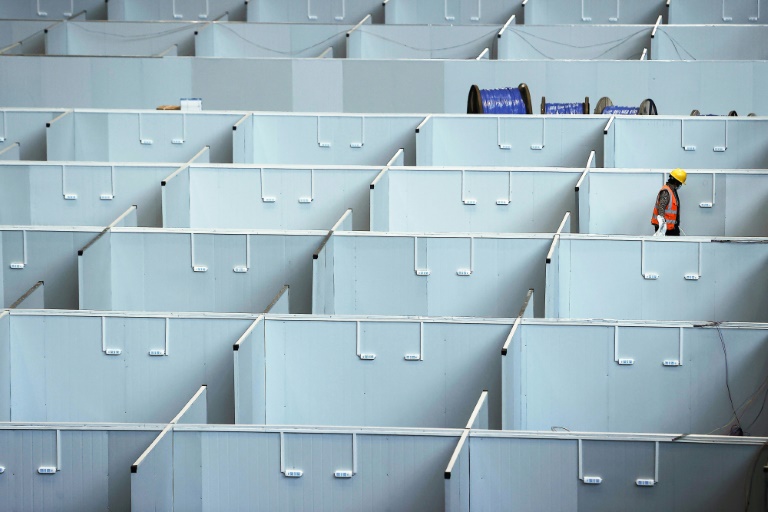
China’s President Xi Jinping praised the country’s “tested” zero-Covid strategy on Friday, even as Shanghai authorities prepared nearly 130,000 beds for Covid-19 patients amid surging cases and mounting public anger.

Until March, China had kept cases low with localised lockdowns, mass testing, and strict restrictions on international travel.

But the country has reported thousands of daily cases in recent weeks, with economic hub and outbreak epicentre Shanghai placed under lockdown over ballooning infections of the highly transmissible Omicron variant.

Shanghai authorities said on Friday that 130,000 new beds were ready or under construction for Covid-positive residents in the city at makeshift venues including exposition halls.

The city reported more than 21,000 new infections on Friday, the vast majority asymptomatic.

Yet President Xi on Friday lauded the country’s Covid response, saying at an event to honour Olympic athletes that the country’s handling of the recent Winter Games showed that its virus policy “once again withstood the test.”

“Some foreign athletes told us that if there was a gold medal for epidemic response, it should be awarded to China,” Xi said at the ceremony in Beijing.

Shanghai’s roughly 25 million inhabitants were locked down in phases last week, prompting scenes of panic buying and mass testing.

Residents have begun to chafe at the restrictions, with some taking to social media to complain of food shortages and express outrage over the killing of a pet corgi by health workers.

Meanwhile, officials softened a policy of splitting Covid-positive children from their virus-free parents after the rule triggered public anger.

But Beijing is sticking to its zero-tolerance approach and is determined to squash the Shanghai outbreak, sending in 38,000 medical workers and 2,000 soldiers from around the country to the city as reinforcements.

The state-run People’s Daily newspaper on Friday declared that zero-Covid remained the “best choice” for China, arguing the country should “never grow numb, never grow tired of fighting, and never grow slack.”

China, the country where the coronavirus was first detected in the central city of Wuhan in late 2019, is among the last remaining places in the world following a zero-Covid approach to the pandemic.

The outbreak has taken on an increasingly serious economic dimension, with China’s factory output falling to its lowest in two years in March, according to independent indices released by Chinese media group Caixin.

Researchers have warned China could suffer a “colossal outbreak” overwhelming its medical system if it abruptly relaxes restrictions.

But the WHO’s Western Pacific regional director Takeshi Kasai on Thursday warned that the “human and social cost of lockdowns are considerable.”

Biden eyes political rebound after historic Supreme Court triumph

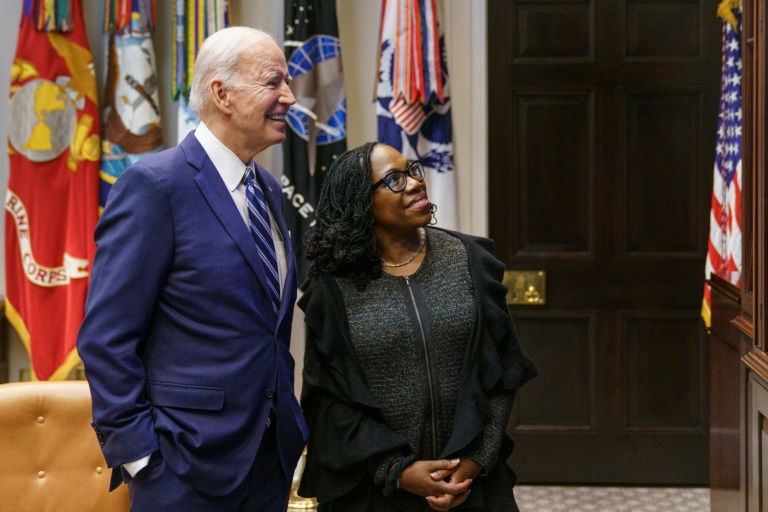
The Thursday confirmation of Ketanji Brown Jackson to the US Supreme Court marks an undeniable success for Joe Biden, with the American president in dire need of fresh political uplift months before midterm elections.

The 79-year-old Democrat has made clear he intends to thoroughly capitalize on the historic appointment, which fulfills a top campaign promise: placing a Black woman for the first time onto the nation’s highest court, a nine-justice bench where America’s most pressing social debates are decided.

Biden hosted the highly respected judge at the White House on February 25 when he unveiled her as his nominee. Then he made it publicly known he called her up to offer encouragement ahead of marathon US Senate confirmation hearings before the judiciary committee that he himself once chaired as a senator.

On Thursday the White House ushered photographers into a room in the presidential mansion where they found Biden and Jackson watching the Senate confirmation vote live on television.

If that wasn’t enough, Biden posted a selfie of the occasion on the presidential Twitter account.

– Reception –

Finally, on Friday Biden and Vice President Kamala Harris will fete Jackson at an event on the White House lawn.

With the rapid approach of the midterm elections, traditionally difficult for the incumbent president’s political party, Biden is desperate to build some political momentum.

His administration may be highlighting the US economy’s rapid rebound and a booming job market following coronavirus pandemic doldrums, but none of that is working.

American households see only their hard-earned dollars being swallowed up at the gas pump and the supermarket checkout counter due to galloping inflation.

The president’s job approval rating is hovering around 41 or 42 percent — dismal, with little signs of improvement.

If there was a slight uptick after Russia launched its invasion of Ukraine, which saw Biden take the reins of the Western response, it hardly lasted, with the nation’s partisan divides pushed to breaking point by previous president Donald Trump.

Such division played out during the Jackson hearings, even as the nominee herself has proven popular with the public.

“The Republicans want to win back the majority (in Congress), and so they were asking a lot, I think, of irrelevant questions,” said University of Richmond law professor Carl Tobias.

He also noted that while three Republicans broke ranks and voted to confirm Jackson, it was nothing like the bipartisan mood that surrounded Stephen Breyer, the justice whom Jackson is replacing. 

He was confirmed 87-9 by the Senate in 1994; Biden’s nominee earned a 53-47 vote.

– Rejuvenation –

If he cannot jolt large swaths of voters to his side, Biden can at least hope the Jackson confirmation lights a fire under a crucial slice of the electorate: African Americans.

He owed them for the 2020 election, not just for getting him into the White House, but for securing a razor-thin Senate majority, after intense fieldwork by Black community leaders in Georgia helped wrest two seats away from Republicans.

But after the euphoria of those victories ebbed, many activists criticized Biden for abandoning some promises he made to minority voters, notably on addressing police brutality and defending voting rights.

Jackson’s appointment to the court could at least temporarily assuage the sting of previous disappointments. She has been praised by luminaries including former first lady Michelle Obama, as well as Martin Luther King III — son of the slain civil rights icon — and Stacey Abrams, the charismatic Black candidate for governor in Georgia.

In the end though, what really could spoil Friday’s party at the White House is Covid-19; infections have exploded in recent days in Washington and its small world of politics and media. 

Israeli police say kill gunman who shot dead two in Tel Aviv

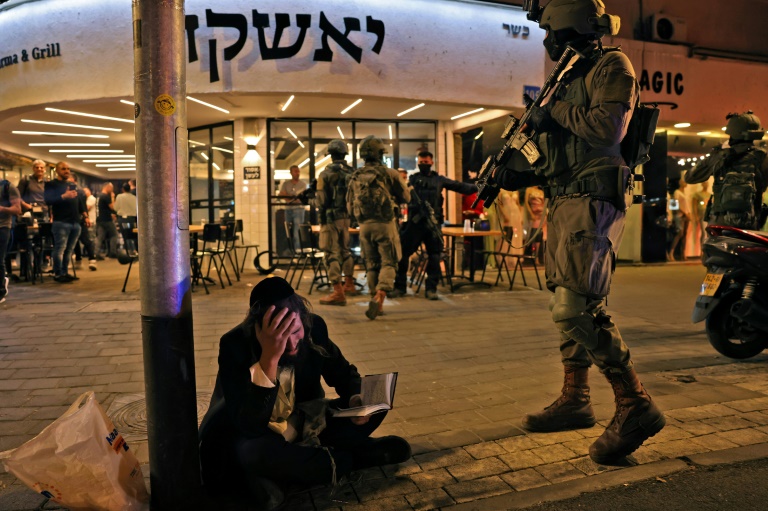
Israeli police said Friday they had shot dead a Palestinian gunman who had killed two people and wounded several others in Tel Aviv sparking an overnight manhunt, the latest in a surge of violence.

“We succeeded this morning… in eliminating the terrorist by exchange of fire,” police commissioner Yaakov Shabtai said in a statement.

The attacker had shot at revellers at a bar on the busy Dizengoff Street in the coastal city of Tel Aviv just after 9:00pm (1800 GMT) Thursday, triggering chaos as people fled in panic.

The Palestinian Islamist movement Hamas, which controls the Gaza Strip, and the Islamic Jihad, praised the attack.

Israel’s Shin Bet security agency named the assailant as Raad Hazem, 28, from Jenin in the north of the Israeli-occupied West Bank.

Special forces found the attacker “hiding near a mosque in Jaffa”, referring to the historically Arab quarter of Tel Aviv, according to the Shin Bet.

Israeli Prime Minister Naftali Bennett praised the security forces for their response.

“We maintain maximum alertness, within Tel Aviv and throughout the country, for fear of further incidents or imitation attacks,” Bennett said.

“Our war on murderous terrorism is long and hard. We will win.”

– ‘A nightmare’ –

The Magen David Adom medical emergency service said 16 people had been taken to hospital, including “two dead, four seriously wounded,” and adding it remained “on high alert”.

Tel Aviv’s Ichilov Hospital, which was treating eight people injured in the shooting, said Friday morning that one of the victims was “in critical condition with an immediate risk to his life”.

Immediately after the attack, police had closed roads and ordered public transport shut down as they hunted for the suspect, with more than 1,000 officers and Israeli soldiers deployed.

Heavily armed forces roamed the streets lined with cocktail bars and fashion boutiques, as the city’s normally bustling roads were emptied.

Noa Roberts, 21, who works at a bar across the street from the attack, said she heard dozens of bullets as terrified customers and staff scurried to shelter.

“We all ran in the back, it was so scary,” Roberts said. “You hear real shooting, it was like a nightmare.” 

She said 50 people cowered for two hours until police told them they could leave.

“My boss has a gun and he joined the police to help them,” she added.

US Secretary of State Antony Blinken condemned the “terrorist attack” and said Washington stood with Israel “in the face of senseless terrorism and violence.”

– ‘High alert’ –

On Thursday night, Islamic Jihad “welcomed” the attack as a “natural response” to Israel’s “crimes”, including a recent raid on the West Bank city of Jenin, where the alleged attacker was from.

One of its leaders, Yussef al-Hasainah, said: “It confirms that the resistance can penetrate the security system…  and that the resistance will continue and that it is the best choice to deter the arrogant enemy”.

The Hamas militant Islamist group that controls the Gaza Strip also praised the attack.

“Hamas congratulates the heroic operation… in the middle of so-called Tel Aviv, which led to the killing of a number of occupying soldiers and Zionist settlers,” it said in a statement.

This was the fourth fatal attack in Israeli cities in two weeks, with 13 victims killed in the violence.

On March 29, a Palestinian gunman — also from the Jenin area, like Raad Hazem who was killed on Friday — opened fire with an M-16 assault rifle in Bnei Brak, a Jewish mostly ultra-Orthodox city near Tel Aviv.

He killed two Ukrainian men and two Israeli civilians. An Arab-Israeli officer died of wounds sustained in an ensuing gunfight that also killed the assailant.

In response to that attack, Israeli troops raided the northern West Bank, killing three fighters from Islamic Jihad in gun battles.

On March 22, a convicted Islamic State group sympathiser killed four Israelis in a stabbing and car-ramming spree in the southern city of Beersheba, before police killed the attacker, a Bedouin citizen of Israel.

The Tel Aviv attack also came with Israeli police on alert for the first Friday prayers of the Muslim holy month of Ramadan at Al-Aqsa Mosque in annexed east Jerusalem.

The third-holiest site in Islam, it is a flashpoint in the long-running Middle East conflict and scene of frequent clashes.

Last year, nightly demonstrations in Jerusalem and the Al-Aqsa compound escalated into 11 days of war between Israel and Hamas.

Ukrainian scientists feel helpless at Antarctic base as war rages

For a dozen Ukrainian scientists thousands of kilometers from home at the Vernadsky Antarctic base, the biting cold hurts less than the feeling of helplessness over the war in their homeland.

They spend their days measuring, observing, analyzing and doing their jobs as best they can as a way of coping with the situation.

“At the beginning, we didn’t sleep for a few days. The whole time we were following news about our home cities,” meteorologist Anastasiia Chyhareva, 26, told AFP in messages sent from the base.

Once the invasion was in full swing, the scientists started waking at 2:00 am — 7:00 am in Ukraine — to check in on family and see how their night went.

“Now, we’re used to it… used to checking news in the morning and before going to bed, in every free minute.”

The Ukrainian base is situated on Galindez island, some 1,200 kilometers (745 miles) from Tierra del Fuego in the far south of Argentina.

It is occupied all year round by a dozen people who have to endure temperatures that drop to -20 degrees Celsius (-4 degrees Fahrenheit) in winter.

The scientists’ duties include observing meteorological, geophysical, geological and biological conditions, unless the weather forces them to shelter at the base.

“My first impression was like all these things happened in another universe, not our world,” said geophysicist Oleksandr Koslokov, whose family lived in war-torn Kharkiv, a heavily targeted city just 40 kilometers from the Russian border.

“I started advising my family on what to do. I had no time to reflect. I had to help my family to survive and to escape from my city… before it became a burning and unpredictable hell. 

“My wife heard and felt the explosions of cruise missiles 10 minutes after (Russian President Vladimir) Putin started this stupid and criminal war.”

Since then, his family has fled to Germany.

– ‘Our part of the war’ –

At the base, which is named after a Soviet mineralogist and geochemist with Russian and Ukrainian roots, the scientists try to live as normal a life as possible. Sunday is a day off and Saturday night everyone has dinner together before playing board games and musical instruments.

“It is hard to be so far away from my family and have no possibility to support them,” said biologist Artem Dzhulai, 34.

“At the station now, there is a wide range of feelings — from sadness due to anxiety for relatives and friends, to high spirits, due to pride in our army and the people who are bravely fighting for the right to live in a free country,” said marine biologist Oksana Savenko, who is studying humpback whales.

Giving practical advice, moral support, donating to the Ukrainian army, signing a petition, creating online lectures to divert Ukrainian children’s attention from the war: the scientists are trying every means available to help in some way.

“It is our part of the war” effort, said Chyhareva.

Ukrainians “try to help each other, they try to help our compatriots, they try to help our army,” said another scientist who requested to remain anonymous.

– ‘Don’t forget us’ –

Dzhulai still remains bitter over the West’s response the last time Russia invaded Ukraine, annexing Crimea in 2014.

“All democratic countries were indifferent to that act of violence,” he said.

“Probably, they hoped that they will not be affected by someone else’s grief… but everything can change if evil is not stopped and punished. 

“A lot of children in Ukraine died because of the indifference of Europe and the US.”

There is fear that the same could happen again.

“Please, don’t forget about us after one month, don’t be tired of Ukraine and our problems,” said Chyhareva.

This team will be replaced later this month, and with their homeland in flames, the departing scientists face an uncertain future.

“I don’t have any real plans,” said Chychareva, who just hopes to go “back to Ukraine as soon as it will be possible.”

“My university in Kharkiv where I studied was destroyed … my research institute and scientific equipment in Ukraine are destroyed,” said Koslokov.

He said he would likely try to continue doing science in Europe or America, adding “time will tell.”

Ukrainian scientists feel helpless at Antarctic base as war rages

For a dozen Ukrainian scientists thousands of kilometers from home at the Vernadsky Antarctic base, the biting cold hurts less than the feeling of helplessness over the war in their homeland.

They spend their days measuring, observing, analyzing and doing their jobs as best they can as a way of coping with the situation.

“At the beginning, we didn’t sleep for a few days. The whole time we were following news about our home cities,” meteorologist Anastasiia Chyhareva, 26, told AFP in messages sent from the base.

Once the invasion was in full swing, the scientists started waking at 2:00 am — 7:00 am in Ukraine — to check in on family and see how their night went.

“Now, we’re used to it… used to checking news in the morning and before going to bed, in every free minute.”

The Ukrainian base is situated on Galindez island, some 1,200 kilometers (745 miles) from Tierra del Fuego in the far south of Argentina.

It is occupied all year round by a dozen people who have to endure temperatures that drop to -20 degrees Celsius (-4 degrees Fahrenheit) in winter.

The scientists’ duties include observing meteorological, geophysical, geological and biological conditions, unless the weather forces them to shelter at the base.

“My first impression was like all these things happened in another universe, not our world,” said geophysicist Oleksandr Koslokov, whose family lived in war-torn Kharkiv, a heavily targeted city just 40 kilometers from the Russian border.

“I started advising my family on what to do. I had no time to reflect. I had to help my family to survive and to escape from my city… before it became a burning and unpredictable hell. 

“My wife heard and felt the explosions of cruise missiles 10 minutes after (Russian President Vladimir) Putin started this stupid and criminal war.”

Since then, his family has fled to Germany.

– ‘Our part of the war’ –

At the base, which is named after a Soviet mineralogist and geochemist with Russian and Ukrainian roots, the scientists try to live as normal a life as possible. Sunday is a day off and Saturday night everyone has dinner together before playing board games and musical instruments.

“It is hard to be so far away from my family and have no possibility to support them,” said biologist Artem Dzhulai, 34.

“At the station now, there is a wide range of feelings — from sadness due to anxiety for relatives and friends, to high spirits, due to pride in our army and the people who are bravely fighting for the right to live in a free country,” said marine biologist Oksana Savenko, who is studying humpback whales.

Giving practical advice, moral support, donating to the Ukrainian army, signing a petition, creating online lectures to divert Ukrainian children’s attention from the war: the scientists are trying every means available to help in some way.

“It is our part of the war” effort, said Chyhareva.

Ukrainians “try to help each other, they try to help our compatriots, they try to help our army,” said another scientist who requested to remain anonymous.

– ‘Don’t forget us’ –

Dzhulai still remains bitter over the West’s response the last time Russia invaded Ukraine, annexing Crimea in 2014.

“All democratic countries were indifferent to that act of violence,” he said.

“Probably, they hoped that they will not be affected by someone else’s grief… but everything can change if evil is not stopped and punished. 

“A lot of children in Ukraine died because of the indifference of Europe and the US.”

There is fear that the same could happen again.

“Please, don’t forget about us after one month, don’t be tired of Ukraine and our problems,” said Chyhareva.

This team will be replaced later this month, and with their homeland in flames, the departing scientists face an uncertain future.

“I don’t have any real plans,” said Chychareva, who just hopes to go “back to Ukraine as soon as it will be possible.”

“My university in Kharkiv where I studied was destroyed … my research institute and scientific equipment in Ukraine are destroyed,” said Koslokov.

He said he would likely try to continue doing science in Europe or America, adding “time will tell.”

Close Bitnami banner
Bitnami