World

First private mission readies for launch to ISS

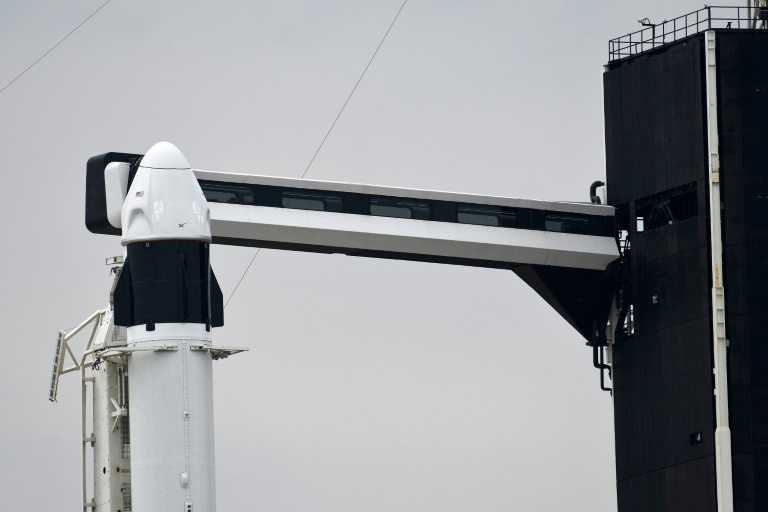
The first fully private mission to the International Space Station is set to blast off Friday with a four-member crew from startup company Axiom Space.

The partnership has been hailed by NASA, which sees it as a key step in its goal to commercialize the region of space known as “low Earth orbit,” leaving the agency to focus on more ambitious endeavors deeper into the cosmos.

Takeoff is set for 11:17 am (1517 GMT) from the Kennedy Space Center in Florida on a SpaceX rocket.

Commanding the Axiom-1 mission will be former NASA astronaut Michael Lopez-Alegria, a dual citizen of the United States and Spain.

He is joined by three paying crewmates: American real estate investor Larry Connor, Canadian businessman Mark Pathy, and Israeli former fighter pilot and entrepreneur Eytan Stibbe.

The widely reported price for tickets — which includes eight days on the outpost — is $55 million. 

But unlike the recent, attention-grabbing suborbital flights carried out by Blue Origin and Virgin Galactic, Axiom says its mission shouldn’t be considered tourism. 

On board the ISS, which orbits 250 miles (400 kilometers) above sea level, the quartet will carry out scientific research projects, including on aging in space, experiments with stem cells, and a technology demonstration of a self-assembling spacecraft.

“The distinction is that our guys aren’t going up there and floating around for eight days taking pictures and looking out of the cupola,” Derek Hassmann, operations director of Axiom Space, told reporters at a pre-launch briefing. 

“I mean we have a very intensive and research-oriented timeline plan for them.”

In addition, crewmember Stibbe plans to carry out a tribute to his friend Ilan Ramon, Israel’s first astronaut, who died in the 2003 Space Shuttle Columbia disaster when the spaceship disintegrated upon reentry.

Surviving pages from Ramon’s space diary, as well as mementos from his children, will be brought to the station by Stibbe.

The Axiom crew will live and work alongside the station’s regular crew: currently three Americans and a German on the US side, and three Russians on the Russian side.

The company has partnered for a total of four missions with SpaceX, and NASA has already approved in principle the second, Ax-2.

Axiom sees the voyages as the first steps of a grander goal: to build its own private space station. The first module is due to launch in September 2024, president and CEO Michael Suffredini said. 

The plan is for it to initially be attached to the ISS, before eventually flying autonomously when the latter retires and is deorbited sometime after 2030.

First private mission readies for launch to ISS

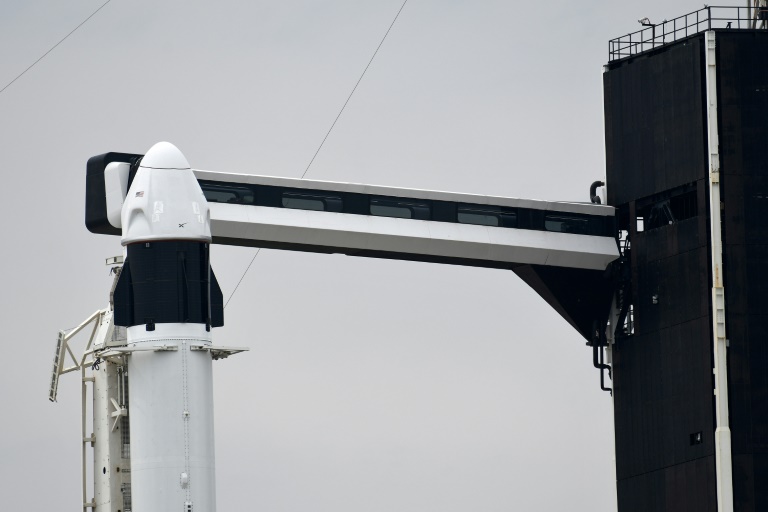
The first fully private mission to the International Space Station is set to blast off Friday with a four-member crew from startup company Axiom Space.

The partnership has been hailed by NASA, which sees it as a key step in its goal to commercialize the region of space known as “low Earth orbit,” leaving the agency to focus on more ambitious endeavors deeper into the cosmos.

Takeoff is set for 11:17 am (1517 GMT) from the Kennedy Space Center in Florida on a SpaceX rocket.

Commanding the Axiom-1 mission will be former NASA astronaut Michael Lopez-Alegria, a dual citizen of the United States and Spain.

He is joined by three paying crewmates: American real estate investor Larry Connor, Canadian businessman Mark Pathy, and Israeli former fighter pilot and entrepreneur Eytan Stibbe.

The widely reported price for tickets — which includes eight days on the outpost — is $55 million. 

But unlike the recent, attention-grabbing suborbital flights carried out by Blue Origin and Virgin Galactic, Axiom says its mission shouldn’t be considered tourism. 

On board the ISS, which orbits 250 miles (400 kilometers) above sea level, the quartet will carry out scientific research projects, including on aging in space, experiments with stem cells, and a technology demonstration of a self-assembling spacecraft.

“The distinction is that our guys aren’t going up there and floating around for eight days taking pictures and looking out of the cupola,” Derek Hassmann, operations director of Axiom Space, told reporters at a pre-launch briefing. 

“I mean we have a very intensive and research-oriented timeline plan for them.”

In addition, crewmember Stibbe plans to carry out a tribute to his friend Ilan Ramon, Israel’s first astronaut, who died in the 2003 Space Shuttle Columbia disaster when the spaceship disintegrated upon reentry.

Surviving pages from Ramon’s space diary, as well as mementos from his children, will be brought to the station by Stibbe.

The Axiom crew will live and work alongside the station’s regular crew: currently three Americans and a German on the US side, and three Russians on the Russian side.

The company has partnered for a total of four missions with SpaceX, and NASA has already approved in principle the second, Ax-2.

Axiom sees the voyages as the first steps of a grander goal: to build its own private space station. The first module is due to launch in September 2024, president and CEO Michael Suffredini said. 

The plan is for it to initially be attached to the ISS, before eventually flying autonomously when the latter retires and is deorbited sometime after 2030.

Cargo plane breaks in two during emergency landing in Costa Rica

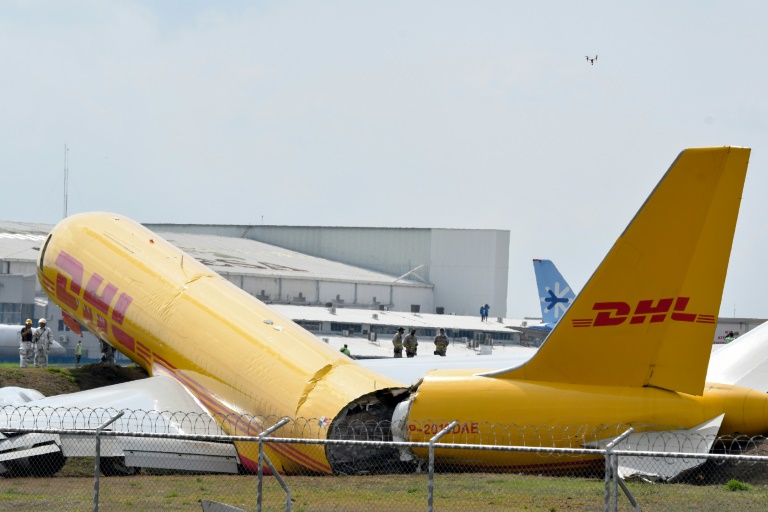
A cargo plane carrying mail and packages skidded off the runway and broke in two during an emergency landing in Costa Rica on Thursday, causing the temporary closure of the international airport in San Jose.

Smoke was billowing from the bright yellow plane of German logistics giant DHL as it ground to a halt, having slid off the runway when it spun and broke up around the rear wheels.

Two crew members aboard were “in good health,” said Costa Rica’s firefighters chief, Hector Chaves.

Nonetheless, the Guatemalan pair were sent to hospital as a precaution “for a medical check-up,” according to Guido Vasquez, a Red Cross worker.

The pilot was shaken up but both crew were conscious and “remember everything vividly,” added Vasquez.

The accident happened just before 10:30 am (1630 GMT) after the Boeing-757 plane, which had taken off from the Juan Santamaria international airport outside San Jose, was forced to return 25 minutes later for an emergency landing due to a mechanical failure.

The crew had reportedly alerted local authorities to a hydraulic problem.

The accident caused operations to shut down at the country’s biggest airport until around 5:30 pm, impacting hundreds of flights and over 8,000 passengers. 

Activities have now gone back to normal, “as well for the arrivals as for the departures”, said Ricardo Hernandez, general manager of Aeris, the public company which manages the airport. 

Kenyans heal devastated land with the power of mangroves

Along a riverbank scarred by logging, Joseph Mwandenge Mangi points out a solitary mangrove tree, a species once abundant in the forest where the mighty Sabaki River meets the sea.

“This is the last one. There are no more left,” said the 42-year-old Kenyan, who grew up on the estuary and possesses a seemingly encyclopedic knowledge of its flora and fauna.

The surviving tree is a sombre reminder for local communities working to restore this critical ecosystem to health, and make amends for the plunder of the past.

For generations villagers living near the Sabaki estuary had relied on its natural bounty for lumber and firewood, fresh water, seafood, farming land, and plants for traditional medicine.

Sustainably nurtured, the coastal wetland is also a resilient ally in the face of a changing climate — storing carbon, filtering water pollution, and protecting against extreme weather and rising sea levels.

But years of unchecked exploitation inflicted terrible damage on the mangroves, mudflats, freshwater pools and sandy dunes at the mouth of Kenya’s second-longest river.

Mangrove wood — harvested sustainably for centuries to build traditional Swahili homes — was chopped down to feed construction in fast-growing coastal towns like nearby Malindi, a popular tourism hub.

Locals overfished the river, using mosquito nets that trapped even the smallest of sea life. 

Fertile soils were uprooted and washed downstream into the Indian Ocean, further reducing fish in the Sabaki and killing coral reefs offshore.

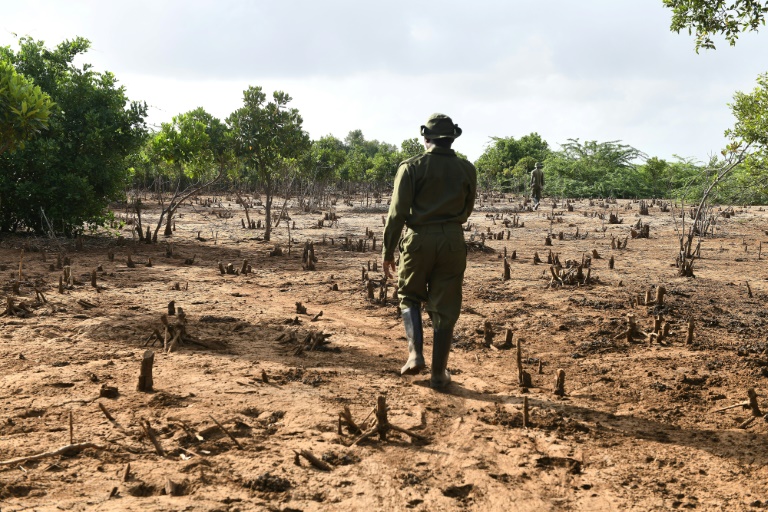
“The landscape has changed. Back in the day, we used to have a huge forest with elephants and monkeys,” said Francis Nyale, a 68-year-old village elder, standing among a clearing of gnarled mangrove stumps.

– Climate ally –

But one tree at a time, local villagers are bringing the estuary back to life.

Further down the Sabaki, where its brown waters meet the blue ocean, and swarms of migratory birds flock overhead, a team of volunteers plant mangrove saplings along the riverbank. 

They’ve planted tens of thousands in recent years, reclaiming cleared land and aiding significant forest regrowth, said Francis Kagema, coast regional coordinator from conservation group Nature Kenya.

There are early signs that their efforts are paying off.

Crouched in a grove of older trees, Kagema spotted clusters of tiny green shoots bursting out of the dark soil — evidence of natural regeneration, an ecosystem on the mend.

“The world is changing, a lot. But for the mangroves, their ability to bounce back… and colonise the areas they used to be in the past, is quite encouraging,” he said.

These remarkable trees also deliver for the planet many times over — mangroves can absorb five times more carbon than forests on land, and act as a barrier against storm surges and coastal erosion.

Protecting mangroves is 1,000 times cheaper per kilometre than building seawalls against ocean rises, according to the UN Environment Programme (UNEP), which sponsors the Sabaki restoration project.

“Healthy wetlands –- critical for climate mitigation, adaptation, biodiversity, and human health and prosperity –- punch above their weight in terms of benefits,” said Leticia Carvalho, UNEP’s principal coordinator for marine and freshwater.

– ‘Our trees, our heritage’ – 

For local communities, there are economic benefits in rehabilitating nature.

UNEP estimates that a single hectare of mangrove forest can deliver anywhere between $33,000 and $57,000 per year economically.

In Sabaki, local guides are supplementing their income by leading visitors and school groups to see the hippos and birdlife that call the estuary home.

Work is under way to improve tourist facilities, expand traditional beekeeping in the forest, and open a nursery for plant saplings.

Convincing the Sabaki’s four villages that there is value in conservation requires careful diplomacy and a local touch, said Mangi, who leads a community group restoring the estuary.

They are working with fishermen to abandon unsustainable practices, and volunteer rangers who catch loggers in the estuary handle offences in-house to keep everyone on side.

“We don’t take them to the police. We talk to them. We want them to understand that please, there is something good in these trees (rather) than cutting,” said Mangi.

Jared Bosire, from the Nairobi Convention, a regional environmental partnership for the Western Indian Ocean, said the Sabaki community was demonstrating how local approaches to conservation could prove mutually advantageous.

“The hope is there will be lessons learned that could be replicated in other areas,” said Bosire, the Convention’s project manager.

More than 80 percent of mangroves have already been lost along western parts of the Indian Ocean. 

For Mangi, there would be no community without them: “If we don’t have these trees, we lose our heritage.”

Colombian flooding kills 12, two missing: authorities

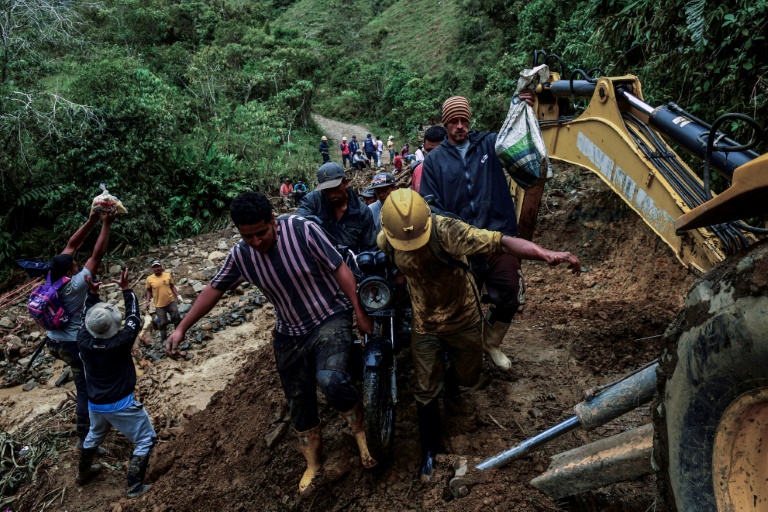
Torrential rains and flooding have killed at least 12 people at a mining camp in mountainous northwest Colombia, with another two reported missing and more damage expected, authorities said Thursday.

The flooding at Abriaqui in the Antioquia department surprised a group of miners as they were eating dinner on Wednesday evening, Mayor Hector Urrego told local television.

“The guys were at dinner, some were preparing to rest, others were leaving work when the flood arrived” at the El Porvenir gold mine, he said.

“We have twelve lifeless bodies (…) and there are still two missing,” he added. 

The flooding destroyed one level of the mining camp as well as part of a plant, according to the Antioquia government.

The effort to recover the missing was delayed until Friday morning due to inclement weather, rescue officials said.

Urrego added that 20 families were evacuated from a nearby town due to the risk of further flooding, with various rivers around Abriaqui threatening to burst their banks.

Several rural roads were made impassable by landslides.

“A team of professionals are heading to the area to support response efforts,” said the provincial disaster management agency DAGRAN.

President Ivan Duque expressed “solidarity with the families of the victims” on Twitter.

“Relief agencies are working… in search operations for the disappeared,” the president said.

So far this rainy season, 17 people have died in floods in Antioquia, according to local authorities.

Hours before the Abriaqui flood, a woman was killed in a landslide triggered by heavy rains in the neighboring town of Barbosa.

In February, at least 14 people died and 34 were injured in a mudslide triggered by heavy rains in the central-west Risaralda province.

Family of French diver missing in Malaysia 'hope for best'

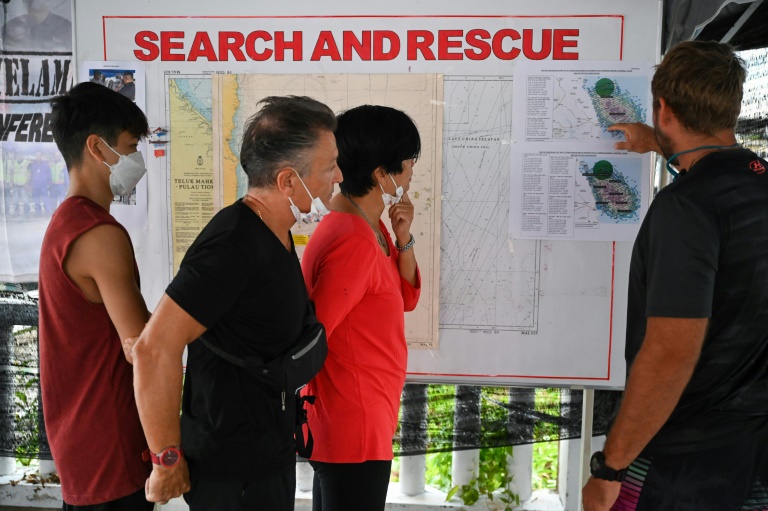
The mother of a French diver missing off the coast of Malaysia said Friday she is “hoping for the best” as the search for the teenager and two other Europeans entered a third day.

The trio disappeared along with their instructor on Wednesday after going diving off a southern island. 

The Norwegian instructor, 35-year-old Kristine Grodem, was rescued alive Thursday after drifting for miles, and was admitted to hospital in a stable condition.

Officials have expressed hope the others will be found alive, as they had surfaced from a dive before going missing and are experienced divers.

Esther Molina, the mother of French 18-year-old Alexia Alexandra Molina, also struck an optimistic note.

“We hear from experienced divers that the situation is positive, they’re above water, hopefully they’re together still,” she told AFP from the coastal town of Mersing, the base for search operations.

“We are hoping for the best. She’s a strong girl, she’ll kick ass.”

She added authorities had been “efficient, we’ve been kept updated about the status of the search”.

The other two missing divers are British man Adrian Peter Chesters, 46, and his 14-year-old son Nathan Renze Chesters, who is a Dutch citizen.

The search, which includes 10 boats, three helicopters and dozens of officials, resumed in the early hours, said senior police official Cyril Edward Nuing.

“Until now we have not received new sightings pertaining to the three missing divers,” he told a press conference, but he added he had a “strong hope” they would be found.

Grodem had been instructing the divers close to a small island, Tokong Sanggol, about 15 kilometres (nine miles) off Malaysia’s southeast coast when the accident happened.

After a dive lasting about 40 minutes, they surfaced but could not find their boat. They drifted together in strong currents, but ended up getting separated. 

The captain of the boat who took them to the dive site has been arrested after testing positive for drugs. 

The area where they disappeared is popular with foreign and domestic visitors — there are resorts dotted along the coast and on nearby islands.

Diving accidents, while rare, do occasionally take place in Malaysia. 

In 2013, a British tourist died when she was struck by a passing boat’s propeller while diving off resort islands in the South China Sea. 

The tropical Southeast Asian nation’s borders reopened to foreign tourists on April 1 after a two-year closure because of the coronavirus pandemic.

Australian flood disinformation sparks threats to pilots

An Australian aviation company says it has received more than 100 threats following an online conspiracy theory that its pilots unleashed a flooding disaster by cloud seeding.

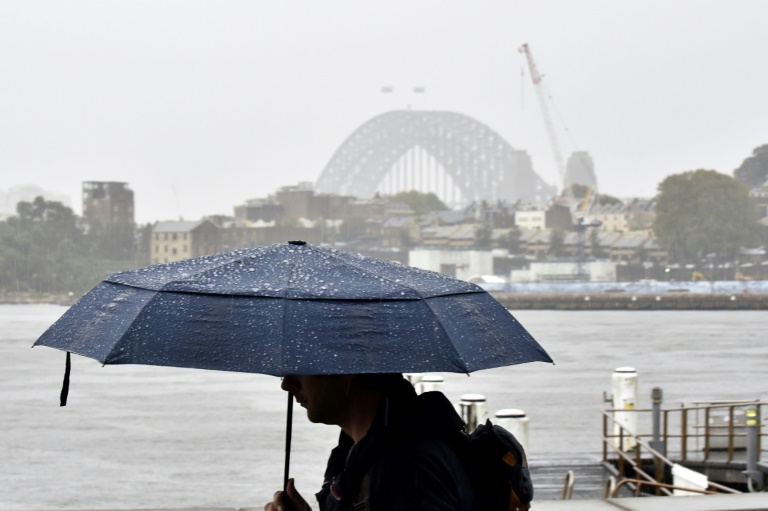
Conspiracy theorists spread the false claims after weeks of torrential rains led to deadly east coast floods over the past two months, engulfing homes and sweeping cars from the roads.

Posts shared online alleged aerial survey pilots from Handel Aviation caused a second deluge in the flood-ravaged New South Wales town of Lismore on March 31 by cloud seeding — dispersing a substance into the clouds to prompt rain. 

“A pilot from Handel Aviation in Cessna 210N Centurion VH-JIL did a breakfast time cloud seeding run over Lismore South & Ballina today while sightseeing the massive flood below him,” one widely shared post reads. 

The flight path of the Handel Aviation aircraft VH-JIL criss-crossing over flooded areas was also shared online by Australian fashion designer Alice McCall alongside claims it was dropping chemicals to “activate rain”.

Handel Aviation operator Mark Handel told AFP on Thursday that the company does not seed clouds. 

The flight was collecting images for aerial maps provided to Australian mapping company, NearMap, he said. 

“Handel Aviation operates aerial photography aircraft only. Our recent flights over flooded areas of NSW and QLD are in response to the floods,” a statement on the Handel Aviation website reads. 

NearMap confirmed to AFP the photos taken by Handel Aviation were commissioned to map disaster-affected areas for insurers and emergency services.  

“These aerial captures are commissioned after major weather catastrophes and natural disasters, including following the recent east coast flooding,” the NearMap spokesman said.

– ‘Threatening stuff’ –

The claims circulating online led to more than 100 threats being sent to Handel Aviation, despite it explaining the purpose of the flights on the contact page of the company’s website. 

 “We had really violent threatening stuff coming through. Like: ‘we have the pilots’ names, we know where you live, you’re going to pay for this,’ kind of stuff,” Handel told AFP. 

Handel said he tasked his operations manager, Anthony Berko, with responding to each email and calling people who provided their phone numbers.

Some of those he contacted were surprised or angry, Berko said.

But others were distressed, telling the experienced pilot they had lost everything during the floods and thought the company was responsible. 

“They needed a shoulder to cry on and hear their story. They’ve basically lost everything and then someone has then said here’s your answer,” Berko said. 

Despite the online claims, cloud seeding is not responsible for any of the east coast floods, said weather modification expert Simon Siems. 

Siems, a professor who leads a Monash University team studying clouds and precipitation, said the practise is not conducted in the Northern Rivers region and it cannot cause flooding.

“Cloud seeding is not that effective, people do it only under very special circumstances,” he said. 

St Mark's storied palazzo opens doors to Venetians for first time

For centuries the impressive arcades flanking St Mark’s Square in Venice have embodied the watery city’s elegance, harmony and architectural significance.

Now, the Renaissance-era palazzo whose galleries span as far as the eye can see on the north side of the square is opening to the public for the first time on Friday, following a three-year renovation.

The building known as the Procuratie Vecchie, now owned by Italian insurer Generali, was long the seat of the Procurators of St Mark, who for centuries administered the assets of the church in the wealthy city of Venice, away from the public eye.

The exclusive invitation for locals to finally glimpse the interior of the storied palace following Friday’s inauguration has already attracted reservations from more than 3,000 Venetians. Doors will be open to tourists from around the world from April 13.

Built in the 12th century, the Procuratie Vecchie was devastated by fire in 1512, its Venetian-Byzantine building replaced in 1538 by the Renaissance gem in classical style, whose arches — along with the square’s basilica, belltower — are one of the St. Mark’s most recognised features.

– Famous facade –

Generali commissioned renowned English architect David Chipperfield to breathe new life into the building.

Although St Mark’s Square is one of the world’s most famous, “none of us has really imagined what is behind these facades,” Chipperfield told AFP, adding it was rare for such a big square to enjoy “such a coherent facade”. 

“Superficially it all looks as if it has been built in one time but it has been built by a number of architects over 100 years,” he said, adding that his role was to correct many of the “haphazard changes” made over the years.

Besides restoring the first and second floors and improving accessibility on higher floors, the work has included building a new home for The Human Safety Net, a foundation launched by Generali to help the world’s most vulnerable, including refugees. 

The renovation includes the addition of exhibition rooms, an auditorium and a cafe.

The foundation’s director, Emma Ursich, said the Procuratie Vecchie was a fitting spot for the group, given that the Venetian officials who lived and worked there were also responsible for widows, orphans and the destitute.

“So for us it’s a nice homage to the history and to the identity of this building that we have the home of The Human Safety Net here, which works around social inclusion topics,” Ursich said. 

– Venice’s winged lion –  

To the left of the main entrance, the winged lion of Saint Mark, symbol of the city but also the emblem of Generali, is inlaid in the white marble wall. A plaque commemorates the birth in 1831 of the insurer in Trieste, which moved part of its operations to Venice the following year. 

“We had a building that had been compromised over a very long period of time. It had been modified, added on, changed,” said Chipperfield. “So our responsibility was to bring the building back into some type of integrity.”

The recovery project took three years following a two-year design phase aimed at preserving as much of the existing structure as possible. 

Chipperfield lauded Italy’s skilled craftsmen who “have been restoring buildings for a thousand years”. 

They relied on techniques and materials that are part of Venice’s tradition, such as a finishing plaster with a satin effect known as “marmorino”, and “terrazzo”, a mix of coloured marble fragments and cement for floors and walls.  

Just across the square is the 17th-century Procuratie Nuove building. The home of illustrious members of the Habsburg dynasty in the mid-1800s, the structure overlooks the secretive Royal Gardens along the Grand Canal.

The gardens were reopened to the public in 2019 after five years of restoration.

Tesla inaugurates huge Texas plant with 'Cyber Rodeo'

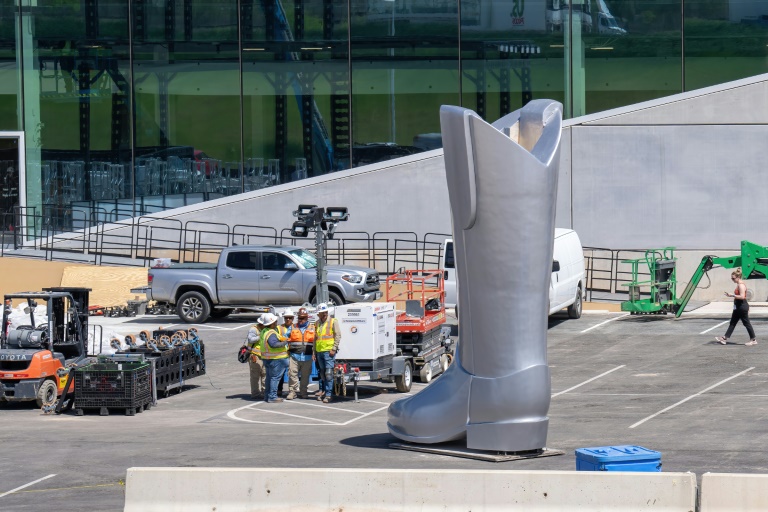
Tesla welcomed throngs of electric car lovers to Texas Thursday for a huge party dubbed a “cyber rodeo” to inaugurate a manufacturing plant the size of 100 soccer fields.

Photos and videos flooded Twitter as guests explored the cavernous factory plant decked out in a distinctive nightclub look.

Visitors mingled under red and blue lights while production machinery and Tesla models were displayed like museum artwork. Outside, cars were parked in the pattern of the Texas flag.

Bulldozers were still at work near the so-called “gigafactory,” which signs indicated was constructed with more steel than New York City’s famed Empire State Building.

“It’s the equivalent to three Pentagons,” Tesla’s colorful but controversial founder and chief executive Elon Musk proudly told a cheering crowd inside the factory.

“This is the most advanced car factory the Earth has ever seen; raw materials in one side, cars out the other side.”

Musk drove on stage in the first production model Tesla ever built and stepped out dressed in black complete with a cowboy hat and sunglasses.

He said ramping up production of existing models was going to be Tesla’s priority this year.

“We are going to move to just truly massive scale,” Musk said.

“That has to happen in order to transition the world to sustainable energy.”

– Farewell Silicon Valley –

The move to a US state known for conservative Republican politics is seen by some as Musk stepping away from the liberal Silicon Valley culture in which he made his fortune.

The South African-born serial entrepreneur is now ranked the world’s richest man. He founded Tesla in Silicon Valley in 2003, but shifted its headquarters to Texas late last year.

Musk has clashed with California regulators, particularly when health precautions mandated at the height of the pandemic closed Tesla’s Fremont plant.

California is also investigating whether discrimination took place at Tesla’s plant there.

Musk told the crowd that Tesla was continuing to expand in California, but was running out of room there.

“We needed a place where we could be really big, and there is no place like Texas,” Musk said.

It remains to be seen how Musk will navigate conservative policies in Texas, such as the state’s restrictive new abortion law and limits on seeking health services for transgender children.

Part of the Texas allure is a lack of corporate or personal income taxes. Tesla received more than $60 million in tax breaks to build the factory.

While Musk has spoken of a desire for a shift away from climate-wrecking fossil fuels, Texas is known for oil rigs and gas-guzzling cars and trucks.

“I think he is having a bit of an identity crisis and forgotten who his customer is, and it is going to come back to bite him,” tech analyst Rob Enderle said of Musk.

“He is drifting to the right; what he doesn’t seem to remember is that most of the people who buy electric cars are the liberals.”

– Cybertruck –

Giga Texas, as the plant is also called, has been in operation since late last year. It is the fifth and largest gigafactory cranking out battery packs and vehicles for Tesla.

Since starting with a car plant in Silicon Valley, Tesla has gone global with mega-factories in Berlin and Shanghai as well as in US states New York and Nevada.

The Austin plant will produce Model 3 and Y cars and eventually a Cybertruck pickup and a semi for hauling cargo trailers set to go into production next year, according to Edmunds analyst Jessica Caldwell.

Pickup trucks are a hot item in the United States, and having a winning electric model is seen as key in the market.

Electric truck maker Rivian has already started deliveries.

“Rivian right now is the must-have truck,” analyst Enderle said.

“The fact that Rivian was able to get a truck out faster than Tesla points to a problem with Tesla.”

Tesla demand is outstripping supply to the point that some Model Y and 3 cars are being delivered months late in parts of the world, according to Wedbush analyst Dan Ives.

“The solution is mainly in Austin and Berlin,” Ives said.

Tesla “has a shot” at beginning production of its Optimus humanoid robot in Austin next year, according to Musk.

The robot will do anything people don’t want to do, he contended.

“We are also going to make sure it’s safe, no ‘Terminator’ stuff,” he quipped, referring to the hit action film about a killer cyborg.

Civilians flee east Ukraine, warnings of 'horrific' abuses

Civilians in eastern Ukraine struggled to evacuate Friday as Russia redirects its firepower, with President Volodymyr Zelensky warning of “even more horrific” devastation being uncovered around the capital.

Ukrainian allies tightened the screws on Moscow further in response to shocking images from Bucha and other regions around Kyiv, with the European Union announcing an embargo on Russian coal and a ban on Russian vessels at its ports.

And at the United Nations, the General Assembly voted to suspend Russia from the Human Rights Council, only the second-ever suspension of a country from the body.

“Russia’s lies are no match for the undeniable evidence of what is happening in Ukraine,” US President Joe Biden said, calling Russia’s actions in the country “an outrage to our common humanity.”

More than a month into President Vladimir Putin’s invasion of Ukraine, Moscow has shifted its focus after stiff resistance put paid to hopes of an easy capture of the country.

Instead, troops are being redeployed towards the east and south, aiming to create a long-sought land link between occupied Crimea and the Moscow-backed separatist statelets of Donetsk and Lugansk in Donbas.

Heavy shelling has already begun to lay waste to towns in the region, and officials have begged civilians to flee, but the intensity of fighting is starting to hamper evacuations.

Lugansk governor Sergiy Gaiday said Russian shelling had damaged a railway route being used by evacuees in the town of Schastia, north of Lugansk.

“The railway was damaged. Train evacuation is in question. Thousands of people are still in the cities of Lugansk region,” he wrote on Facebook.

And in Donetsk, the head of the regional military administration Pavlo Kyrylenko said three evacuation trains had been temporarily blocked after a Russian airstrike on an overpass by a station.

But officials continued to press civilians to leave where possible.

“There is no secret — the battle for Donbas will be decisive. What we have already experienced, all this horror, it can multiply,” warned Gaiday.

“Leave! The next few days are the last chances. Buses will be waiting for you in the morning,” he added.

– ‘I want to escape this hell’ –

A barrage of shells and rockets was already hammering the industrial hub Severodonetsk, the easternmost city held by Ukrainian forces in Donbas, leaving buildings engulfed in flames.

“Every day it’s worse and worse. They’re raining down on us from everywhere. We cannot take it anymore,” said Denis, a man in his forties with a pale, emaciated face.

“I want to escape this hell.”

Around the capital meanwhile, residents and Ukrainian officials returning after the Russian redeployment are trying to piece together the scale of the devastation.

Violence in the town of Bucha, where authorities say hundreds were killed — including some found with their hands bound — has become a byword for allegations of brutality inflicted under Russian occupation. 

But Zelensky warned worse was being uncovered.

“They have started sorting through the ruins in Borodianka,” northwest of Kyiv, he said in his nightly address.

“It’s much more horrific there, there are even more victims of Russian occupiers.”

Violence in the area has caused massive destruction, levelling and damaging many buildings, and bodies are only now being retrieved.

Ukraine’s Prosecutor General Iryna Venediktova said Thursday that 26 bodies had been recovered from two destroyed apartment buildings so far.

“Only the civilian population was targeted: there is no military site here,” she said, describing evidence of war crimes “at every turn”.

Fresh allegations emerged from other areas too, with villagers in Obukhovychi, northwest of Kyiv, telling AFP they were used as human shields.

And in besieged Mariupol, even the pro-Russian official designated “mayor” of the destroyed city acknowledged that around 5,000 civilians had been killed there.

– ‘Help us now’ –

Moscow has denied targeting civilians in areas under its control, but growing evidence of atrocities has galvanised Ukraine’s allies to pile on more pressure.

On Thursday, the EU approved an embargo on Russian coal and the closing of its ports to Russian vessels as part of a “very substantial” new round of sanctions that also includes an export ban and new measures against Russian bans.

In addition, it backed a proposal to boost its funding of arms supplies to Ukraine by 500 million euros, taking it to a total of 1.5 billion euros.

The Group of Seven industrialised nations also agreed more sanctions, including a ban on new investments in key sectors and fresh export restrictions, as well as the phasing out of Russian coal.

At the United Nations, 93 of the General Assembly’s 193 members voted to suspend Russia from the body’s rights council over its actions in Ukraine.

Russia blasted the move as “illegal and politically motivated”, while Biden said it confirmed Moscow as an “international pariah”.

Ukraine has welcomed new measures on Moscow, as well as the UN suspension, but it continues to push for more support.

“Ukraine needs weapons that will allow us to win on the battlefield, and this will be the strongest sanction,” Zelensky said in his address, echoing calls from his foreign minister, who earlier asked NATO for heavy weaponry, including air defence systems, artillery, armoured vehicles and jets.

“Either you help us now — and I’m speaking about days, not weeks — or your help will come too late, and many people will die, many civilians will lose their homes, many villages will be destroyed,” Dmytro Kuleba said after meeting NATO foreign ministers in Brussels.

In a show of support, European Commission President Ursula von der Leyen will travel to Kyiv on Friday with the bloc’s diplomatic chief Josep Borrell for talks with Zelensky.

The prospects for peace talks meanwhile appeared to fade further as Russia accused Ukraine of shifting its position from earlier discussions in Istanbul.

Ukrainian presidential adviser Mykhaylo Podolyak meanwhile warned Moscow to “lower the degree of hostility” if it was interested in peace.

burs-sah/reb

Close Bitnami banner
Bitnami