World

Weary and worried, French voters are in unpredictable mood

Every five years French goose farmer Frederic Coudray-Ozbolt revels in the attention his quiet village receives when journalists come knocking at presidential election time. 

Two and half hours’ drive south of the capital, Donzy has found fame as a national bellwether that has correctly picked the winner of every presidential election since 1981.

“It makes us feel like we’re a part of France and not at the end of it,” says Coudray-Ozbolt of the brief celebrity he and his neighbours enjoy. 

Their powers of prediction faltered slightly in the first round of voting in 2017, but were restored in the second when Donzy voted like the rest of the country for Emmanuel Macron, a then 39-year-old newcomer who destroyed the stranglehold of France’s traditional parties of government.

But five years later Coudray-Ozbolt says he’s hesitating about voting for Macron again in Sunday’s first round.

“There’s too much PR,” said the 54-year-old, who makes the controversial French delicacy foie gras. “Every day they announce something. How much of it will materialise?”  

As polls show far-right leader Marine Le Pen closing in on Macron, still the narrow favourite, the hesitation of people like Coudray-Ozbolt could prove crucial.

– Inflation worries – 

After a highly unusual campaign overshadowed by outside events, the words on many people’s lips in Donzy — like elsewhere in France — are “the crises”.

“There was Covid 19, now the war in Ukraine,” sighed Jacques Martin, a 66-year-old retired policeman who is president of the rugby club. 

Local mayor Marie-France Lurier says “people are anxious and they’re finding it difficult to think about the future.” 

Three lockdowns since 2020 have brought life repeatedly to a standstill, and now galloping inflation linked to Covid and the Ukraine conflict, is eating into household budgets.

“The biggest, fundamental concern is spending power, the need for salary rises, and worries over the increase in fuel and energy prices,” said Lurier, a left-leaning independent.

All across the village, people are quick to mention sudden price hikes that belie the official inflation rate of just 4.5 percent.

A local builder said he’d just been notified of a 12-percent price increase for plaster. The nearest winemaker faces a 53-percent rise in the cost of glass bottles. 

Diesel prices at the local supermarket hover near 2.0 euros ($2.18) a litre, up around 20 percent since the start of the year.

“We’re going out less and we’re not sure what we’re going to do for the holidays,” said 37-year-old Sarah Lesage, a nurse and mother-of-four. 

– ‘Could be worse’ – 

Conversations with the voters of Donzy suggested Sunday’s first-round and the second-round run-off on April 24 will be won or lost by the candidate seen as most trusted to find solutions.

Though early campaigning was dominated by anti-immigration rhetoric from “France’s Trump” — new far-right candidate Eric Zemmour — polls overwhelmingly show that household spending is the priority now. 

Although there was little fervour for Macron in Donzy, there was clear respect by some, admiration even, for his role as the country’s crisis-manager-in-chief. 

“With everything that’s going on, at least we have a president that seems to have his head firmly on his shoulders,” said Jacqueline Vincent, 69, clutching baguettes outside a bakery. 

“It could be a lot worse.”

Many are grateful for the 100-billion-euro ($110-billion) rescue plan announced in September 2020 that has sent the national debt rocketing but has trickled down to places like Donzy.

Four local bars, where people gather over a glass of wine at the end of the day, were kept afloat by government aid through the lockdowns. 

“I say ‘Thank you Mr Macron’ for everything I got,” 67-year-old waitress Martine said, adding that her employer had been repeatedly shut during the lockdowns. “I had seven months of salary paid by the state.”

– Le Pen’s gain – 

But Macron, a former investment banker, has also earned a reputation for arrogance and high-handedness that is particularly resented in small towns and villages.

A 2018 revolt against him by so-called “Yellow Vest” protesters was sparked as much by his abrasive personality as his pro-business policies and tax cuts for the wealthy.  

Distracted by his diplomatic efforts with Russia and Ukraine, he only started campaigning two weeks ago.

Le Pen meanwhile has spent months shaking hands at provincial markets and agricultural fairs, focusing on the issue now on everyone’s minds: inflation and incomes.

“Between Macron and us, it’s a choice between the power of money that benefits the few, and household purchasing power that benefits the many,” she said recently, promising more tax cuts and social spending.

Her decision not to play up fears over Muslim immigration to France, her traditional rallying cry, has helped soften her image.

And she has hammered Macron in recent weeks on the record two billion euros spent on management consultancies during his term, an issue that appeared to be cutting through in Donzy.

– Hate speech – 

Le Pen, 53, has also been helped by Zemmour in her quest to detoxify her image. 

Having spent a decade trying to erase her party’s reputation for racism and its association with its violent neo-Nazi fringe, Le Pen found an ideal foil in Zemmour. 

The best-selling author of books such as “French Suicide” has several convictions for racist hate speech and wants to deport a million foreigners.

A picture of him giving the finger to a protester in Marseille last November reinforced his image as a cranky political maverick.

“Compared to him, everyone looks like a moderate,” said Arnaud Mercier, an expert on political communication at Paris Pantheon-Assas University.

Polls suggest Zemmour will score around 10 percent in Sunday’s vote, but he has opened up new political space for Le Pen.

He has also normalised the idea of the “Great Replacement”, a white supremacist conspiracy theory suggesting indigenous Europeans are being deliberately replaced by immigrants.

“He’s dangerous in that he encourages conflicts and feeds off hatred,” former Socialist president Francois Hollande said last year.

– Old certainties –  

Mayor Lurier, a retired social housing administrator, is frustrated that the left-wing Socialists have failed to reinvent themselves since Hollande lost power in 2017.

She regrets the decline of France’s two traditional political parties, which have been peripheral in this campaign, and is unconvinced by hard-left populist Jean-Luc Melenchon.

The former Trotskyist is the leading left-winger in a race that could still spring a surprise on Sunday. 

“Political parties, whether of the left or the right, provided a framework and the fact that we don’t have that any more means that things are breaking down,” said Lurier.

Socialist candidate Anne Hidalgo, the mayor of Paris, is polling around two percent. 

The nominee for the once mighty right-wing Republicans party, Valerie Pecresse, is trending downwards on around 10 percent in fourth or fifth position.

– ‘Nothing is impossible’ –

Worried by the biggest war in Europe since 1945 and the largest inflation crisis since the 1970s, France’s election is now seen as highly unpredictable.

Polls show around a quarter of voters are unsure of who to vote for on Sunday, and the same proportion might abstain in what would be a record.

The country appears to be heading for another run-off between Macron and Le Pen, who faced each other in 2017 not long after Britain had voted for Brexit and the United States had elected Donald Trump.

With Le Pen breathing down his neck, Macron has been trying to rally voters by sounding the alarm that his promise of continuity and steady leadership might not be enough. 

“Look at what happened with Brexit, and so many other elections: what looked improbable actually happened,” he warned at his first rally last weekend. 

“Nothing is impossible,” he added. 
US bans exports to three Russian airlines for sanctions violations

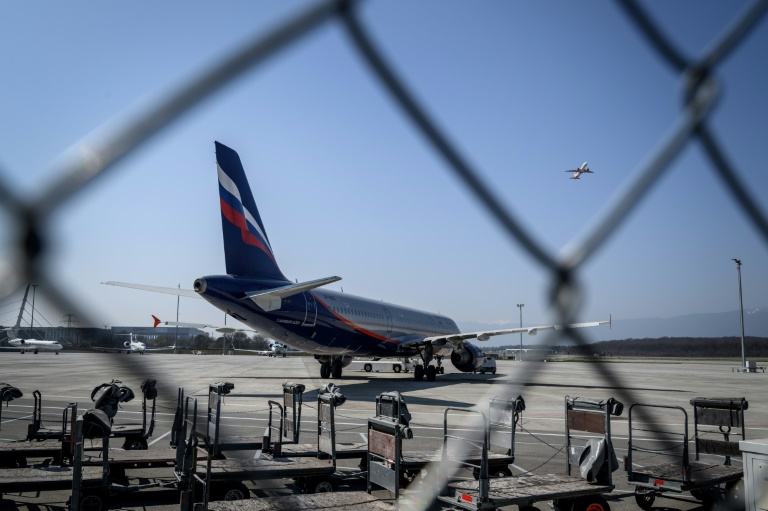
The US government has banned exports to Russian state airline Aeroflot as well as two other carriers for flying aircraft in violation of sanctions, the Commerce Department said Thursday.

Washington warned last month that the carriers had gone against penalties imposed on Moscow over its invasion of Ukraine by flying Boeing aircraft, as had billionaire Chelsea football club owner Roman Abramovich for his use of a Gulfstream jet.

The Commerce Department cited the warning in announcing that Aeroflot as well as Azur Air and Utair were banned from receiving American goods for the next 180 days.

“We are cutting off not only their ability to access items from the United States but also re-exports of US-origin items from abroad,” Commerce Secretary Gina Raimondo said in a statement.

“Any companies that flout our export controls, specifically those who do so to the benefit of Vladimir Putin and the detriment of the Ukrainian people, will feel the full force of the department’s enforcement.”

Commerce announced no action against Abramovich, who has been participating on the Russian side in peace talks with Ukraine held in Turkey.

The statement said the sanctioned airlines had operated flights within Russia as well as to countries including China, Vietnam, Turkey, India and the United Arab Emirates without seeking US permission as the sanctions require.

Separately the US Treasury Department announced sanctions against one of the world’s largest diamond mining companies, the Russian state-owned Alrosa.

The State Department also blacklisted state-owned United Shipbuilding Corporation (USC) as well as its subsidiaries and board members.

Asian markets struggle to track Wall St on hawkish Fed

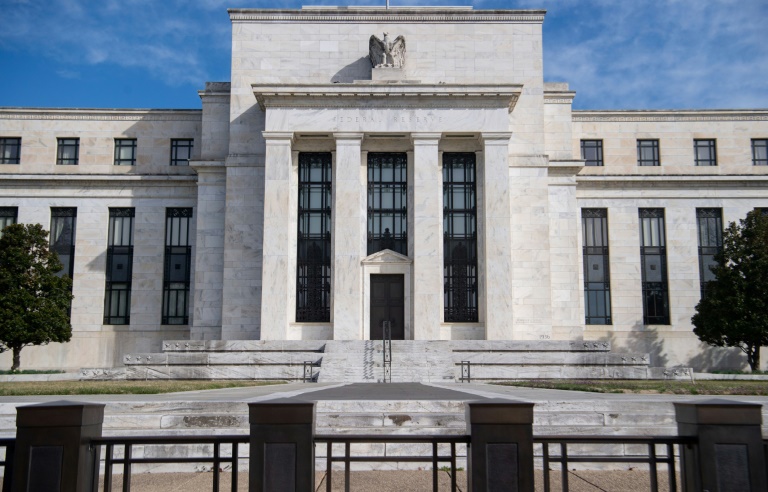
Asian markets limped into the weekend Friday at the end of a tough week dominated by the Federal Reserve’s hawkish tone that has set up an aggressive tightening of monetary policy, while oil drifted after another series of losses.

The region struggled to take a lead from Wall Street, which recovered from steep intraday losses to end on a positive note, having plunged in previous sessions as traders fretted over the prospect of higher interest rates.

While the Fed has made clear it intends to act more decisively to rein in 40-year-high inflation by ramping up borrowing costs and offloading bond holdings, analysts suggested the better clarity on policy was welcome.

The Fed’s desire to tighten up has sent the dollar rallying against most other major currencies and particularly the euro, which has been weighed by European officials’ reticence to move as aggressively on prices. The single currency is sitting around a one-month low.

Markets have come under huge pressure this year as the end of ultra-cheap central bank cash, a Covid-fuelled slowdown in China’s economic activity, the war in Ukraine and soaring inflation come together in a perfect storm.

Still, all three indexes on Wall Street ended slightly higher, having bounced back from heavy losses earlier in the day thanks to bargain-buying, while some observers suggested recent selling may have gone too far.

But Asia was unable to take up the reins.

Tokyo, Hong Kong, Shanghai, Seoul, Singapore, Bangkok and Wellington were in the red, though Sydney, Taipei, Manila and Jakarta edged up.

Crude prices were barely moved in early Asian business at the end of another tough week after the United States and allies pledged to release more than 200 million barrels over the coming months to offset the loss of Russian supplies.

The decision comes on top of concerns about demand from China owing to lockdowns and other strict containment measures across the country including the biggest city Shanghai.

Still, there is a feeling that the war in Ukraine, and any possible further sanctions on Russia, could send the oil market higher again.

“I still think… the sentiment-driven sell-off will give way, and fundamentals will reassert themselves, especially as more market participants start fretting about how will the US administration replenish the SPR drawdown,” said SPI Asset Management’s Stephen Innes.

“Oil prices remain volatile amid concerns over Russian supply against the backdrop of slowing demand in China and a likely depressed US summer driving season due to higher prices at the pump.”

He added that “deficits are likely to persist but only moderated by the accelerated strategic stock release from May to November and weaker demand growth”.

– Key figures around 0230 GMT –

Tokyo – Nikkei 225: DOWN 0.3 percent at 26,820.37 (break)

Hong Kong – Hang Seng Index: DOWN 0.8 percent at 21,642.40

Shanghai – Composite: DOWN 0.7 percent at 3,215.43

Brent North Sea crude: FLAT at $100.56 per barrel

West Texas Intermediate: UP 0.1 percent at $96.15 per barrel

Euro/dollar: DOWN at $1.0863 from $1.0880 late Thursday

Pound/dollar: DOWN at $1.3069 from $1.3071

Euro/pound: DOWN at 83.12 pence from 83.17 pence

Dollar/yen: DOWN at 123.85 yen from 123.95 yen

New York – Dow: UP 0.3 percent at 34,583.57 (close)

London – FTSE 100: DOWN 0.5 percent at 7,551.81 (close)

India's Hindu hardliners jump on Kashmir blockbuster

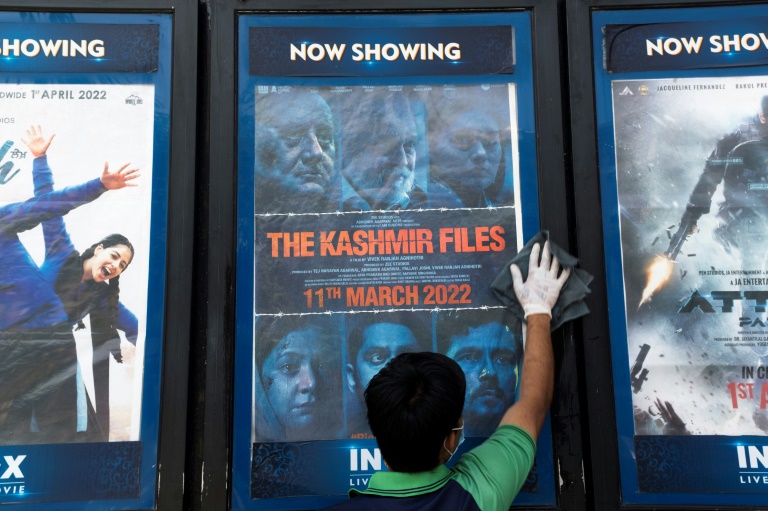
Indian Hindu hardliners have jumped on an explosive new film endorsed by Prime Minister Narendra Modi on the mass flight of Hindus from Kashmir 30 years ago to stir up hatred against minority Muslims.

“The Kashmir Files” is the latest Bollywood offering — more famous for its song-and-dance love stories — to tackle themes close to the political agenda of Modi’s Hindu nationalist government, critics say.

Released last month and already one of the country’s highest-grossing films this year, it depicts in harrowing detail how several hundred thousand Hindus fled Muslim militants in Indian-administered Kashmir in 1989-90.

Authorities have made entrance to the film tax-free in many states, with police and others given time off to go watch.

Numerous videos shared on social media and verified as genuine by AFP have shown people in cinemas calling for revenge and for Muslims to be killed.

One clip shows Swami Jeetendranand, a Hindu monk, leading a crowd in nationalist and anti-Muslim chants.

“We think that we are safe, but we are safe as long as they don’t attack us,” he rails.

“(Muslims) are not only dangerous to India but to the whole world.”

– Fact or fiction? –

Muslim-majority Kashmir, split between India and Pakistan since 1947, has a bloody past.

Three decades of insurgency — with Pakistan’s backing, according to New Delhi — and a heavy-handed response by the Indian military have killed tens of thousands of people, mostly Muslims.

Around 200,000 Kashmiri Hindus — known as Pandits — fled after the violence began in the late 1980s. Up to 219 may have been killed, according to official figures.

Redressing this “genocide” and “exodus”, as right-wing Hindu groups call it — likening it to the Holocaust — has long been a central theme of Modi’s Bharatiya Janata Party.

In 2019, his administration — often accused of marginalising and vilifying India’s 200 million Muslims — revoked the region’s partial autonomy and imposed a vice-like security blanket.

But Sanjay Kaw, a Kashmiri Pandit journalist who himself fled in the 1990s, said the movie makes no allusion to the persecution of the region’s Muslim community either before or since.

“One of my relatives was shot dead… barely 300 meters away from our home,” Kaw told AFP.

“The movie only talks about the exodus part, and only refers to the failure of the state but not the things that led to the situation.”

– BJP agenda –

The movie’s director Vivek Agnihotri, an avowed Modi fan, told AFP that he wanted to give “some dignity to the people who have been hurt”.

“Nobody asked Steven Spielberg why there were a few violent reactions to ‘Schindler’s List’,” he said, referring to the 1993 movie on the Holocaust that was widely acclaimed as historically accurate.

“Give (people) the right to react the way they want to react. As long as they are not hurting anybody physically, I think it’s fine,” Agnihotri added.

But the film “certainly has an agenda”, said documentary filmmaker Sanjay Kak, as it “strongly feeds into the current Islamophobic discourse in our society”.

“I think the film makes those goals (of the BJP) quite explicit: which is basically about setting up Kashmir as a kind of ideological pole for their vision of a new resurgent Hindu India,” he told AFP.

– Modiwood –

Modi has hit back against the criticism, saying a “whole ecosystem is trying to silence the person who made the film and tried to reveal the truth”.

The world’s largest democracy has a long history of film censorship, but detractors say the industry has come under increased pressure to make films that dovetail more with the BJP’s narrative.

In 2019, the hagiographic “PM Narendra Modi” about the premier’s life story, was too much even for the Election Commission, which delayed its release until after a vote that year.

The same year saw the gung-ho “Uri”, a blockbuster based on India’s 2016 “surgical strikes” on militants across Pakistan that critics said also played thick and fast with the facts.

It was just one of a string of recent military-themed movies that have been nationalistic, all-guns-blazing stories of heroics by soldiers and police — usually Hindus — against enemies outside and within India.

“Most Indians think what happened in ‘Uri’ is what they saw in the film,” Kak said. 

“In the same way what they see in this film becomes the story of Kashmir.”

France's Le Pen says 'so close' as election battle enters crucial stage

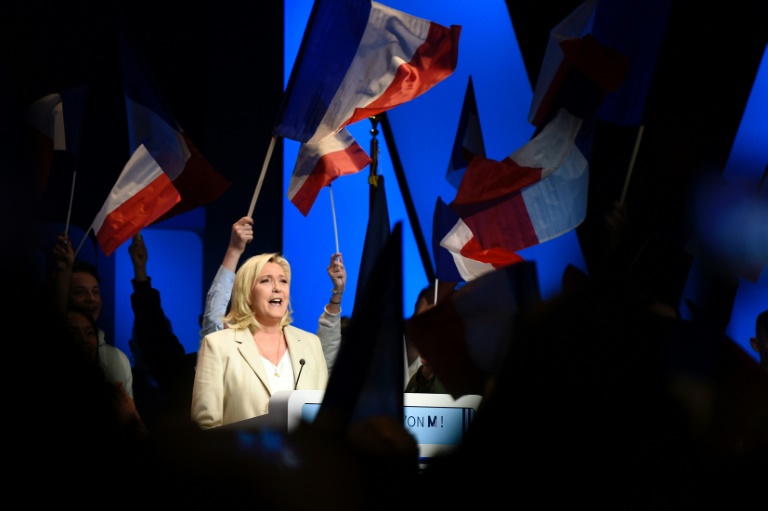
French far-right presidential candidate Marine Le Pen said Thursday she had never been “so close” to power at a jubilant final rally before this weekend’s election, which polls suggest is an increasingly tight battle between her and President Emmanuel Macron.

In front of around 4,000 upbeat supporters chanting “President Marine!” and “We’re going to win!”, Le Pen promised to help French families struggling with inflation and compared Macron to a “stunned boxer”.

“Never before has the prospect of a real change been so close, but it depends on you,” Le Pen told the crowd in far-right stronghold Perpignan in southern France.

“Never forget and tell people around you: if the people vote, the people will win,” she said in a speech that repeatedly appealed to the roughly one quarter of French adults who are projected to abstain on Sunday. 

Last month, polls suggested Macron had an almost unassailable lead ahead heading into the first round and would go on to win the second-round run-off scheduled for April 24.

But all bets are off, with up to a quarter of voters thought to be undecided and surveys suggesting a major swing towards Le Pen, who is now shown as only marginally behind the president. 

With France’s traditional right- and left-wing parties facing electoral disaster, rising far-left candidate Jean-Luc Melenchon still believes he can sneak into a run-off and is shown running third. 

The war in Ukraine as well as strains on the health system after two years of Covid-19 are high among voter concerns, behind the biggest worries of all: inflation and incomes.

“We’re going to live the founding moment of a new era,” Le Pen, 53, added, a sentiment shared by many supporters in sun-drenched Perpignan, a short trip from the Spanish border. 

“It’s the first time that I feel this confident,” said Mireille Redon, 74, who has voted for Le Pen and her father Jean-Marie for more than 20 years.  

“I feel like she’s ready. She’s learned from her mistakes and seems much more confident in herself,” she told AFP. 

Meanwhile, Macron blasted his closest rival, accusing Le Pen of “lying to the people” over policies she will not be able to finance.

In an interview with readers of Le Parisien newspaper he said that while Le Pen had become mainstream “her fundamentals have not changed”, with “a racist manifesto that aims to divide society”.

– Tight polling –

The latest OpinionWay-Kea Partners survey out Thursday showed Macron falling back to 26 percent in the first round and Le Pen edging up to 22 percent, with Melenchon also gaining ground on 17.

Macron was shown beating Le Pen in the second round with 53 percent to her 47 if it were held today — a narrower margin than the same pollsters forecast last week.

A new Ifop-Fidicual poll showed similar trends of Macron slipping and Le Pen gaining with the president on 26.5 percent in round one and Le Pen on 24 percent. 

It indicated Macron would win the second round with 52 percent compared with Le Pen’s 48.

“Our initial objective is to consolidate our lead and to prevent Marine Le Pen coming out ahead in the first round,” a figure in Macron’s ruling party, who asked not to be named, told AFP.

Another advisor added: “We see Marine Le Pen’s dynamic and we will need to put on turbo engines for round two… It’s not won until the end.”

Despite starting campaigning only two weeks ago after being distracted by his diplomatic efforts to end the war in Ukraine, Macron made no public appearance on Thursday. 

“I’ve acquired experience of crises, international experience. I’ve also learned from my mistakes,” Macron told Le Figaro newspaper in an interview published Thursday.

“Emmanuel Macron keeps talking to us about crises, like a stunned boxer who is stuck thinking about the uppercut that put him on the floor,” Le Pen replied in Perpignan.

– Chasing candidates –

Among the other chasing candidates, Melenchon is rising strongly in the polls and is talking up his chances of springing a surprise, helped by a confident rally Tuesday that saw him beamed by hologram into 11 French cities.

Greens candidate Yannick Jadot, conservative Valerie Pecresse, far-right former TV pundit Eric Zemmour and flagging Socialist nominee Anne Hidalgo also had rallies Thursday.

According to the Le Monde newspaper, Hidalgo hosted a secret dinner of Socialist grandees including ex-president Francois Hollande to discuss the party’s post-election future, prompting allegations she had capitulated before the poll had even taken place.

Le Pen’s speech in Perpignan underlined how she has toned down her anti-immigration rhetoric during campaigning this year in order to focus on household spending.

“Our programme is a social programme and I dare to say it and I take responsibility for it,” she added, detailing how she would slash fuel taxes and increase pensions.

In an interview with RTL radio earlier in the day, she explained how she would implement a planned ban on the Muslim headscarf in public spaces, which experts believe would be unconstitutional.  

“People will be given a fine in the same way that it is illegal to not wear your seat belt,” she said.

She laughed at the idea that she could be demonised on her third run for the presidency despite Macron’s intention of attacking her as economically reckless and xenophobic. 

“Scare-mongering which entails saying that unless Emmanuel Macron is re-elected, it will be a crisis, the sun will be extinguished, the sea will disappear and we’ll suffer an invasion of frogs, no longer works,” she told RTL.

The struggle to save Cuban sugar from bitter end

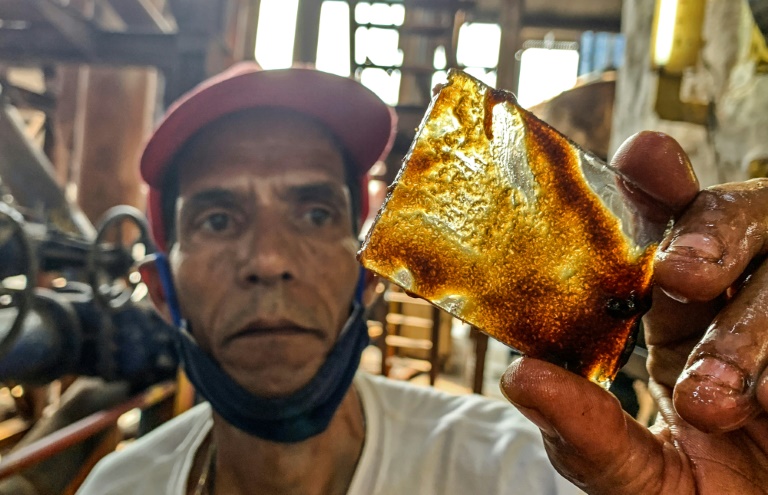
A whistle reverberates through a sugar factory in central Cuba to signal the resumption of milling at midday after an hours-long halt when the raw cane ran out.

It is cane harvest time in Cuba — once the world’s top sugar exporter but now reliant on imports. 

A critical shortage of harvesters and trucks to deliver the cane to factories has hamstrung production even as the government scrambles to revive the once-vibrant industry.

Cuba’s 2020-21 harvest yielded 800,000 tons of the sweet stuff, according to official figures.

This was just 10 percent of peak production some three decades ago and the worst outcome in 130 years for an industry that was once Cuba’s economic motor and a huge source of national pride.

“This is a war without end,” Lazaro Manuel Torres, boss of the Antonio Sanchez mill in Cuba’s central Cienfuegos province, told AFP.

“From the moment you wake up, you run into a mountain” of problems, said Torres, watching with obvious relief as a column of white smoke billowed from the chimney after the restart. 

– Just 56 mills left –

Until 1989, Cuba was the world’s biggest sugar exporter.

The United States was its major client until 1960 — two years before Washington imposed crippling sanctions on the communist island nation.

The Soviet Union, a political ally, then became an important buyer and was given preferential rates. 

Sugar was at the heart of Cuba’s plans for a prosperous future, with Fidel Castro leading a drive in the 1970s — complete with propaganda photos of him wielding a machete in the sugar plantations — to push the country’s output to 10 million tons per year. 

The goal was never achieved. 

The fall of the communist bloc in 1991 marked the beginning of the end for Cuba’s sugar industry — exacerbated by sanctions, a steep drop in prices and a lack of investment that saw 100 mills disappear.

Just 56 are left today.

Cuba now needs to import sugar to meet local demand and its export commitments.

“We have been in decline since 2017,” Noel Casanas, vice director of state-owned sugar producer AZCUBA, told AFP.

“If the situation continues, it is true that (the industry) will disappear.”

Sugar is still an important income generator for 50 of Cuba’s 169 municipalities, or some 1.2 million of the country’s 11.2 million inhabitants, he said.

– ‘Practically a corpse’ –

In December, the government approved dozens of measures in a bid to resuscitate sugar.

It doubled the price paid to cane producers, authorized the free hiring and firing of labor, and gave factories more decision-making autonomy in a country where just about everything is state-run.

“I don’t think these measures can revive an industry that is already practically a corpse,” said economist Emilio Morales of the Miami-based Havana Consulting Group.  

Casanas conceded production faces “limitations of all kinds” — critically a lack of foreign investment due to the strengthening of US sanctions since the presidency of Donald Trump.

Since the cane harvest opened in December, Antonio Sanchez has not managed to exceed 65 percent of milling capacity, set at 20,000 tons for this year’s harvest.

The problem has not been a lack of fuel or raw product, this time, but a shortage of harvesters and delivery trucks.

There are not enough spare parts, even tires, for vehicles in Cuba and producers such as Torres cannot afford to buy the limited components that are available.

“If you don’t have harvesters, if you do not have trucks, you cannot mill,” he lamented. 

Sugar producers in Cuba are also hard hit by a lack of fertilizers and pesticides.

For now, the government’s measures have managed to slow an exodus of sugar workers, industry bosses told AFP.

“We cannot complain, we are doing quite well — up to 700 pesos (about $29) a day,” said farmer Livan Hernandez. 

The average monthly Cuban salary is about $162.

Casanas said what is needed is foreign investment and expanding the industry into highly lucrative sugar derivatives such as bioethanol.

Sugar “is no longer the locomotive (of the Cuban economy) nor will it be,” he said.

But “it continues to be a strategic sector… that must be developed.”

Toshiba pauses spin-off plan, weighs going private

Troubled Japanese conglomerate Toshiba has said it is suspending its plan to split into two after last month’s shareholder vote against the idea and will now weigh the possibility of going private.

The firm announced in a statement Thursday that its management team will lead discussions with private equity funds and other possible investors on potential offers.

A newly formed special committee will also “identify the privatisation offer that is best for our diverse stakeholders” and report back before Toshiba’s annual shareholders’ meeting in June.

The management team will separately develop a new business plan, which will also be announced before the meeting, Toshiba said.

The decision comes after shareholders, in a non-binding decision, voted against a proposal to split the company into two.

It was the latest setback for the engineering giant, which was once a symbol of Japan’s tech and business prowess but has faced a series of scandals, financial troubles and shock high-level resignations in recent years.

The plan had already been revised once after an initial proposal to break up the company into three met stiff resistance.

Several major shareholders argued that a spin-off would only add to Toshiba’s woes by creating more managerial posts at smaller units, rather than improving the firm’s governance.

And some want a buyout instead, following an abandoned takeover offer last year from private equity fund CVC Capital Partners.

Bain Capital has said it is examining a bid for Toshiba, and the private equity firm has already received backing from one key shareholder.

It could face hurdles though given the national security implications of some of Toshiba’s businesses.

Amazon to fight union's win in NY labor election

Amazon told a federal agency it will file “substantial” objections to last week’s worker election in New York that established the company’s first union in the United States, according to a filing released Thursday.

In a letter to the National Labor Relations Board (NLRB), the retail giant requested more time to compile and present evidence about alleged problematic election conduct on the part of the union and the board’s officials. 

“This election involves more than 8,300 eligible voters, and voting spanned over 50 polling hours,” Amazon attorneys with the firm Hunton Andrews Kurth said in a motion to the NLRB. 

“It is simply infeasible for Amazon to sufficiently investigate the myriad of objectionable conduct within five business days.”

The NLRB granted Amazon until April 22 to present proof, but the company still must file its objections by Friday night, an official said.

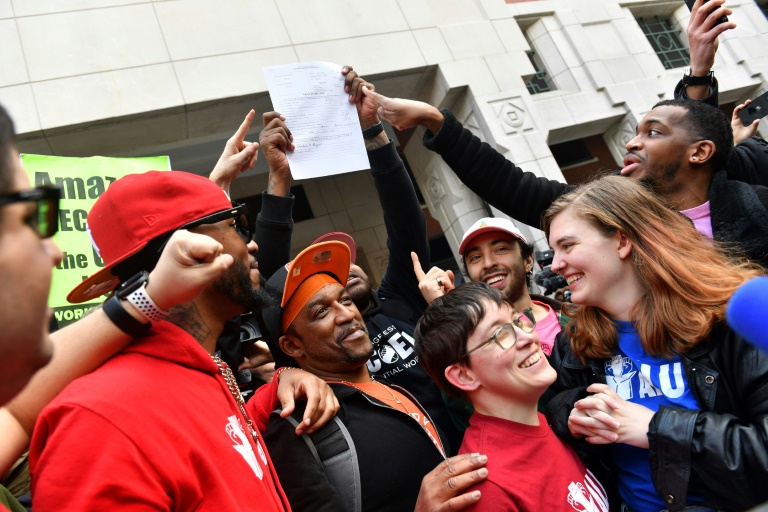
On April 1, more than 55 percent of the votes at the Staten Island, New York JFK8 warehouse sided with Amazon Labor Union (ALU), handing the bootstrap labor organization a surprise victory that has cheered the American labor movement and drew kudos from President Joe Biden.

The filing accuses union backers of intimidating workers, and said the NLRB administration of the vote led to “inordinately” long wait times that depressed turnout.

But the document did not provide evidence of these allegations, saying the company needed more time “to further compile, review and outline evidence” to support the claims.

Eric Milner, an attorney representing ALU, dismissed as “absurd” Amazon’s complaints.

“The employees have spoken and their voices have been heard,” Milner told AFP. 

“Amazon is choosing to ignore that, and instead engage in stalling tactics to avoid the inevitable; coming to the bargaining table and negotiating for a contract on behalf of the fulfillment center associates at JFK8.”

Meanwhile, organizers of an effort to form a union at an Amazon warehouse in the Alabama city of Bessemer on Thursday accused the company of interfering with a vote there that was still up in the air.

The vote is a redo of a 2021 ballot thrown out by federal officials in which 993 workers cast ballots against the labor group, compared with 875 employees in favor.

But there were 416 “challenged” ballots, according to the NLRB, meaning the number of votes still to be settled is big enough to potentially decide the final result.

The Retail, Wholesale and Department Store Union backing the Bessemer campaign asked the labor board for a hearing to decide whether Amazon “created an atmosphere of confusion, coercion and/or fear of reprisals and thus interfered with the employees’ freedom of choice.”

If that is found to be true, the results of the Bessemer vote should be put aside, union officials argued.

At least two killed in Tel Aviv shooting

At least two people were killed Thursday and several wounded in a shooting spree in the Israeli coastal city of Tel Aviv, the latest in a surge of violence in Israel and the occupied West Bank since late March.

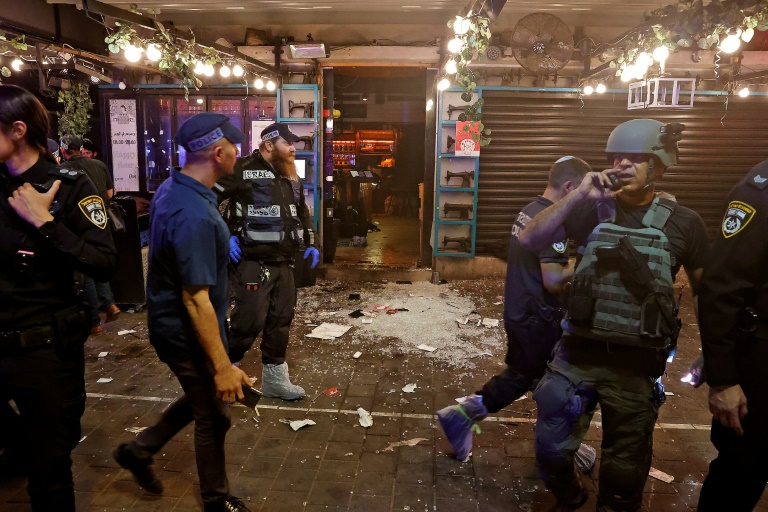
The attack sparked mayhem in Dizengoff Street, a popular nightspot full of bars and restaurants.

It was not immediately clear who was responsible for the shooting, which came with Israeli security forces already on high alert.

But the Palestinian Islamist movement Hamas, which controls the Gaza Strip, and the Islamic Jihad welcomed the attack.

Witnesses told AFP that they heard gunfire and saw scenes of chaos.

“It’s an atmosphere of war. Soldiers and police are everywhere… They searched the restaurant, and people are crying,” said Binyamin Blum, who works in a restaurant near the scene.

Two people were killed and four others seriously wounded, the Magen David Adom emergency service said.

“Sixteen people evacuated to hospitals, two dead, four seriously wounded,” said spokesperson Zaki Heller.

Tel Aviv’s Ichilov Hospital confirmed that two people were killed and “several seriously injured”.

“Most of them were severely wounded with various kind of injuries mainly in the thoracic area, in the abdomen, and some in the face,” hospital director Ronni Gamzu told AFP.

Police spokesman Baruch Honig said more than 1,000 policemen were deployed in Tel Aviv.

They cordoned off the scene of the attack, asking people to stay indoors “while they track down suspects”, a police statement said.

Unverified social media images showed panicked people fleeing the scene, with glass carpeting the ground.

US Secretary of State Antony Blinken condemned the “terrorist attack” and said Washington would “continue to be in regular contact with our Israeli partners, with whom we stand resolutely in the face of senseless terrorism and violence.”

– ‘State of alert’ –

Outside a cafe, a man comforted a woman sitting on a bar stool as heavily armed police deployed nearby.

Witnesses told AFP they had heard gunshots.

Brenda Ehrlich, 31, an insurance agent from the Tel Aviv suburb of Holon, said she learnt of the attack as she rode a bus into the city to celebrate a friend’s birthday.

“I feel like I’m on high alert,” she said, as she and her friends took cover.

“I feel like I need to look in all directions to not be caught by surprise. We were thinking of heading home but it feels a little dangerous so we might stay inside in Tel Aviv before we go home,” Ehrlich added.

Prime Minister Naftali Bennett was at army headquarters in the coastal city receiving updates on the fourth attack in just over two weeks in Israel.

He sent his condolences to the bereaved families in a statement and said that “security forces are in pursuit of the terrorist who carried out the murderous rampage tonight in Tel Aviv.”

“Wherever the terrorist is — we’ll get to him. And everyone who helped him indirectly or directly will pay a price,” Bennett added.

On March 29, a Palestinian gunman opened fire with an M-16 assault rifle in Bnei Brak, a mostly Jewish Orthodox city near Tel Aviv. 

He killed two Ukrainian men and two Israeli civilians. An Arab-Israeli officer died of wounds sustained in an ensuing gunfight that also killed the assailant.

Two days earlier, “terrorists” opened fire and killed two police officers in the northern city of Hadera before officers shot dead the assailants, police said.

On March 22, a convicted Islamic State group sympathiser killed four Israelis in a stabbing and car-ramming spree in the southern city of Beersheba.

In the wake of the previous attacks, Israeli security forces arrested dozens of people suspected of IS links. 

And last Saturday, security forces killed three members of the Islamic Jihad militant group who had opened fire during an operation to arrest them near the northern West Bank city of Jenin.

Four Israeli soldiers were wounded, one of them seriously, in the operation, police said.

– Fears of escalation –

Hamas praised the latest attack.

“Hamas congratulates the heroic operation that took place this evening, in the middle of so-called Tel Aviv, which led to the killing of a number of occupying soldiers and Zionist settlers,” it said in a statement.

“It is a natural response in defence of our people and our sanctity and sanctuary.”

There was also praise from the Gaza-based Islamic Jihad.

One of its leaders, Yussef al-Hasainah, said: “It confirms that the resistance can penetrate the security system…  and that the resistance will continue and that it is the best choice to deter the arrogant enemy”.

The Tel Aviv attack also came with Israeli police on alert for the first Friday prayers of the Muslim holy month of Ramadan at Al-Aqsa Mosque in annexed east Jerusalem.

The third-holiest site in Islam, it is a flashpoint in the long-running Middle East conflict and scene of frequent clashes.

Last year, nightly demonstrations in Jerusalem and the Al-Aqsa compound escalated into 11 days of war between Israel and Hamas.

Ex-MSF worker testifies at trial of IS 'Beatle'

A former Doctors Without Borders (MSF) worker held for three months in Syria in 2014 by the Islamic State group testified on Thursday to the particularly brutal treatment meted out to American and British hostages.

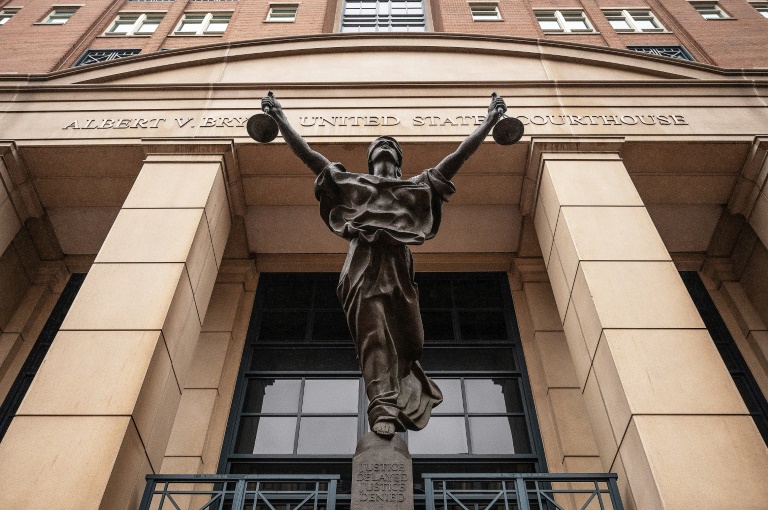
Frida Saide, a Swede, revealed details of her captivity on the seventh day of the trial of El Shafee Elsheikh, a 33-year-old former British national who was allegedly one of her IS jailers.

Elsheikh is charged with the murders of American freelance journalists James Foley and Steven Sotloff and aid workers Kayla Mueller and Peter Kassig and suspected of the kidnapping of nearly 20 other Westerners.

Several former European journalists and Syrian hostages have testified over the past few days at the trial of the alleged member of the notorious IS kidnap-and-murder cell known as the “Beatles.”

While there has been extensive reporting about the kidnappings of the four Americans and the European journalists, little has been revealed previously about the abduction of Saide and four other MSF workers.

Saide said she arrived in Syria in November 2013 to work as a hospital administrator and lived in a house with nine international colleagues.

She and four other MSF workers — two women and two men — were seized by a group of armed men on January 2, 2014, she told the court.

“I went to take a shower,” Saide said. “I could hear loud voices from outside.

“I thought it was our guards,” she said, but soon “realized we were attacked.”

She said a masked man broke down the door, threw her some clothes and took her outside, where she was blindfolded, handcuffed and put into a vehicle.

For the first month, Saide said she and her MSF colleagues were moved among various prisons and placed with other Westerners taken hostage by IS.

She said that on January 31, 2014, three British guards arrived — the so-called “Beatles” — and “that completely changed everything.”

She said some of the male prisoners who had been held and tortured by the “Beatles” described them as “social psychopaths with no moral boundaries.”

“We realized soon it was an accurate description,” she said.

“They were very aggressive towards us, very hateful,” she said.

“They treated Americans the worst and then the British,” she said. “But they hated all of us.”

Foley and Kassig were singled out for particularly harsh treatment.

– ‘Threat of torture’ –

Saide said the three MSF women were moved to a cell in mid-February with Mueller, the 25-year-old American relief worker.

She said the “Beatles” treated Mueller with “a lot of aggressiveness” because she was an American.

“They mentioned that Kayla might have a djinn or a demon inside her,” she said, and talked about “horrible ways” to expel it.

“We took it as a threat of torture,” she said.

Saide said that when it came time for her and the two other MSF women to be released they pleaded with the “Beatles” for Mueller to be freed with them.

“They were angry,” she said, adding that they would “keep her here until she dies” unless a ransom was paid by her family.

The “Beatles” held at least 27 foreign hostages in Syria between 2012 and 2015.

A number of European journalists and aid workers were released after ransoms were paid but the Americans — Foley, Sotloff and Kassig — were killed and videos of their murders released by IS for propaganda purposes.

According to prosecutors, Mueller was turned over to IS leader Abu Bakr al-Baghdadi, who raped her repeatedly.

IS announced her death in February 2015 and said she was killed in a Jordanian airstrike, a claim that was disputed by US authorities.

Elsheikh and another former Briton, Alexanda Amon Kotey, were captured in January 2018 by a Kurdish militia in Syria and turned over to US forces in Iraq.

They were flown to Virginia in 2020 to face charges of hostage-taking, conspiracy to murder US citizens and supporting a terrorist organization.

Kotey pleaded guilty in September 2021 and is facing life in prison.

“Beatles” executioner Mohamed Emwazi was killed by a US drone in Syria in 2015.

Elsheikh has denied the charges and his lawyers claim his arrest is a case of mistaken identity.

Close Bitnami banner
Bitnami