World

Colombian flooding kills 10, several missing: authorities

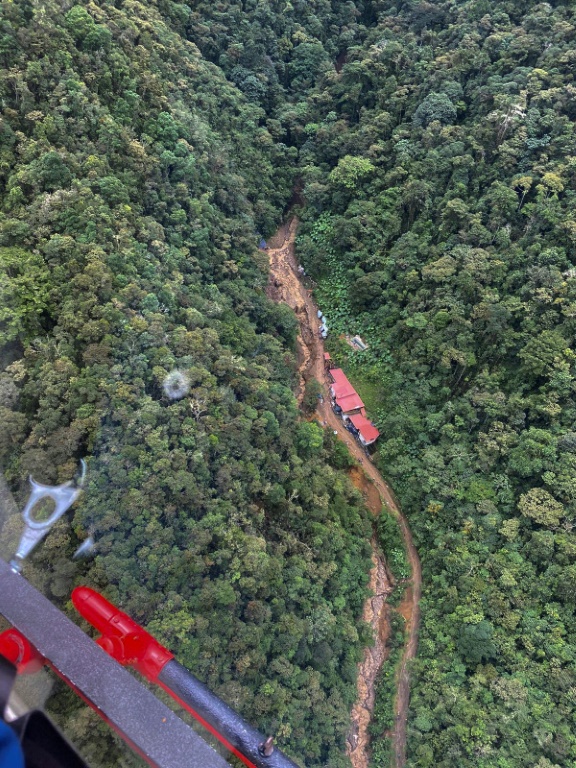
Torrential rains and flooding have killed at least 10 people at a mining camp in mountainous northwest Colombia, with several reported missing and more damage expected, authorities said Thursday.

The flooding at Abriaqui in the Antioquia department surprised a group of miners as they were eating dinner on Wednesday evening, mayor Hector Urrego told local television.

“The guys were at dinner, some were preparing to rest, others were leaving work when the flood arrived” at the El Porvenir gold mine, he said.

It destroyed one level of the mining camp as well as part of a plant, the Antioquia government said.

The National Disaster Risk Management Unit said the preliminary toll was 10 dead, seven missing and 10 injured.

Jaime Gomez of the DAGRAN regional rescue service said the casualty numbers may rise.

Urrego said 20 families were evacuated from a nearby town due to the risk of further flooding, with various rivers around Abriaqui threatening to burst their banks.

Several rural roads were made impassable by landslides.

“A team of professionals are heading to the area to support response efforts,” said the DAGRAN.

President Ivan Duque expressed “solidarity with the families of the victims” on Twitter.

“Relief agencies are working… in search operations for the disappeared,” the president said.

So far this rainy season, 17 people have died in floods in Antioquia, according to local authorities.

Hours before the Abriaqui flood, a woman was killed in a landslide triggered by heavy rains in the neighboring town of Barbosa.

In February, at least 14 people died and 34 were injured in a mudslide triggered by heavy rains in the central-west Risaralda province.

Colombian flooding kills 10, several missing: authorities

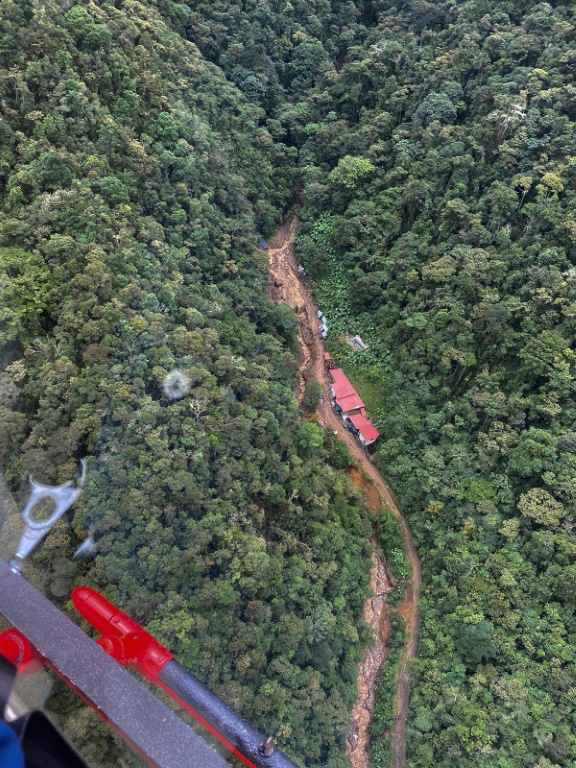
Torrential rains and flooding have killed at least 10 people at a mining camp in mountainous northwest Colombia, with several reported missing and more damage expected, authorities said Thursday.

The flooding at Abriaqui in the Antioquia department surprised a group of miners as they were eating dinner on Wednesday evening, mayor Hector Urrego told local television.

“The guys were at dinner, some were preparing to rest, others were leaving work when the flood arrived” at the El Porvenir gold mine, he said.

It destroyed one level of the mining camp as well as part of a plant, the Antioquia government said.

The National Disaster Risk Management Unit said the preliminary toll was 10 dead, seven missing and 10 injured.

Jaime Gomez of the DAGRAN regional rescue service said the casualty numbers may rise.

Urrego said 20 families were evacuated from a nearby town due to the risk of further flooding, with various rivers around Abriaqui threatening to burst their banks.

Several rural roads were made impassable by landslides.

“A team of professionals are heading to the area to support response efforts,” said the DAGRAN.

President Ivan Duque expressed “solidarity with the families of the victims” on Twitter.

“Relief agencies are working… in search operations for the disappeared,” the president said.

So far this rainy season, 17 people have died in floods in Antioquia, according to local authorities.

Hours before the Abriaqui flood, a woman was killed in a landslide triggered by heavy rains in the neighboring town of Barbosa.

In February, at least 14 people died and 34 were injured in a mudslide triggered by heavy rains in the central-west Risaralda province.

UN General Assembly suspends Russia from Human Rights Council

The UN General Assembly voted Thursday to suspend Russia from the global body’s Human Rights Council as punishment for the invasion of Ukraine.

The high-profile rebuke of Moscow marked only the second ever suspension of a country from the council. Libya was the first, in 2011.

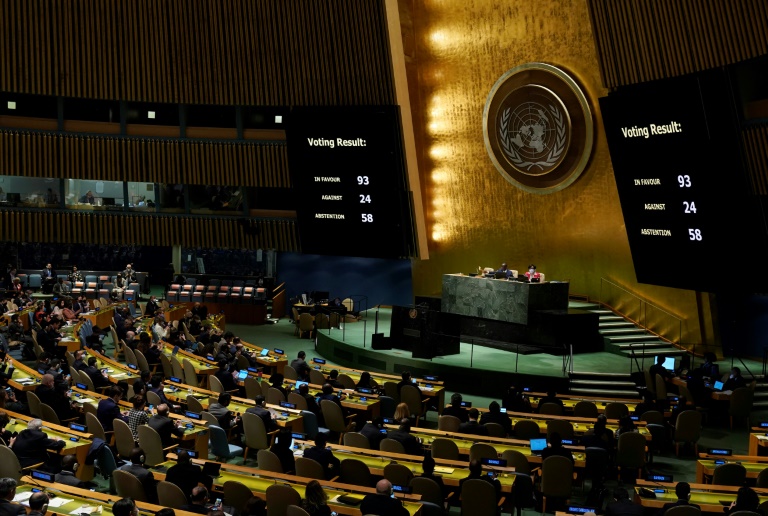
Of the 193 members of the assembly, 93 voted in favor of suspension as proposed by the United States, while 24 voted against. Fifty-eight abstained and the remainder did not participate, suggesting a weakening international unity against Russia at the United Nations.

Suspension required support from two-thirds of the member countries casting for or against; the abstentions and absences did not count.

Russia swiftly rejected the suspension, with its foreign ministry blasting the move as “illegal and politically motivated, aimed at ostentatiously punishing a sovereign UN member state that pursues an independent domestic and foreign policy.”

But US President Joe Biden’s top diplomat said Moscow got what it deserved.

“Today, a wrong was righted,” Secretary of State Antony Blinken said in Brussels, where he met foreign ministers from NATO and said Russia was carrying out “atrocities” in Ukraine.

“A country that is perpetrating gross and systematic violations of human rights should not sit on a body whose job it is to protect those rights,” he said.

Countries voting against included China, a Moscow ally which has steadfastly abstained from criticizing the invasion. Others were Iran, the former Soviet republic of Kazakhstan and communist Cuba, as well as Russia itself, Belarus and Syria.

Despite pressure from Moscow for a no vote, several African countries only abstained, such as South Africa and Senegal. Also abstaining were Brazil, Mexico and India.

– ‘Held accountable’ –

The UN Human Rights Council was founded in 2006 and is composed of 47 member states chosen by the General Assembly.

Washington argues that the punishment — suspending Russia from the Geneva-based organization that is the United Nations’ main human rights monitor — is more than symbolic and in fact intensifies Russia’s isolation after the assault on Ukraine that began February 24.

Ukrainian President Volodymyr Zelensky has also called for Russia to be expelled from the UN Security Council “so it cannot block decisions about its own aggression, its own war.”

Washington has admitted there is little anyone can do about Russia’s position on the Security Council, where it has a veto.

But the US ambassador to the United Nations, Linda Thomas-Greenfield, hailed the vote in New York as an “important and historic day.”

“We have collectively sent a clear message that Russia will be held accountable,” she said on Twitter.

More than 11 million people have been displaced since Russia launched an invasion of its West-leaning neighbor.

The world has been outraged by images of civilians apparently executed and left in the streets or buried in mass graves in areas formerly controlled by Russian troops. The carnage has led to new rounds of sanctions against Russia.

Journalists including from AFP last weekend found corpses in civilian clothes, some with their hands bound, in the town of Bucha outside the capital Kyiv.

The Kremlin has denied Russian forces killed civilians, and alleged that the images of dead bodies in Bucha were “fakes.”

War in Ukraine: Latest developments

Here are the latest developments in the war in Ukraine:

– ‘Last chance’ to leave East –

A Ukrainian official warns residents in the east that they have a “last chance” to flee before a major Russian offensive expected in the Donbas region.

“These few days may be the last chance to leave,” says Sergiy Gaiday, governor of the Lugansk region, part of the Donbas, where the city of Severodonetsk is coming under sustained artillery and rocket fire.

However, trains evacuating residents are halted by Russian strikes on the only line still under Kyiv’s control.

– Lavrov ‘an accomplice’: Ukraine –

Ukrainian Foreign Minister Dmytro Kuleba says his Russian counterpart Sergei Lavrov’s denials of Russian responsibility in the killings of civilians in the Ukrainian town of Bucha and elsewhere “makes him an accomplice to these crimes”.

– More ‘atrocities’: US –  

US Secretary of State Antony Blinken says it is likely that Russian forces are carrying out more “atrocities, right now” in parts of Ukraine after bodies were found in Bucha.

– Radio intercepts –

German intelligence services have intercepted radio traffic of Russian soldiers discussing the killings of civilians in Bucha, der Spiegel reports.

The Kremlin has denied the accusations of mass killings, claiming instead that the images emerging from Bucha were “fakes” or that the deaths occurred after Russian soldiers pulled out.

– Talks ‘overshadowed’ –

Foreign Minister Mevlut Cavusoglu of Turkey, which is hosting negotiations between Russia and Ukraine, says the images of bodies from Bucha and other areas had “overshadowed” what had been an “emerging positive atmosphere”.

– New G7, US sanctions –

Leaders of the G7 biggest economies agree to ban “new investments in key sectors of the Russian economy, including the energy sector”, alongside widening export bans on certain goods and tightening the screws on Russian banks and state-owned companies.

They also pledge to “elevate our campaign against the elites and their family members who support President (Vladimir) Putin in his war effort”.

The US Congress also votes to end normal trade relations with Moscow and codify the ban on Russian oil.

– ‘Significant’ Russian losses –

Russian troops have suffered “significant losses” in Ukraine, Kremlin spokesman Dmitry Peskov says in an interview with Britain’s Sky News, but does not specify a toll.

Russia in late March said it had lost 1,351 soldiers with another 3,825 wounded.

– UN rights body suspension –

The UN General Assembly votes to suspend Russia from the UN Human Rights Council as punishment for the invasion of Ukraine.

Of the 193 members of the assembly, 93 voted in favour of suspension while 24 voted against and 58 abstained, in only the second ever suspension of a country from the council, after Libya in 2011.

Russia rejects the suspension as “illegal”, while Ukraine says it is “grateful”.

– New plea for weapons –

Ukraine’s Foreign Minister Kuleba calls on NATO members to provide Kyiv with all the weaponry it needs to fight Russia.

“My agenda is very simple. It has only three items on it. It’s weapons, weapons, and weapons,” Kuleba tells journalists at NATO headquarters in Brussels.

– Hungary ‘helping’ Putin –

Ukraine accuses its neighbour and Kremlin-ally Hungary of appeasing Russian aggression and “destroying unity in the EU”.

Newly-reelected Hungarian Prime Minister Viktor Orban says he is prepared to pay for Russian gas in rubles, a demand of Putin’s that was rejected by the West. 

– EU’s Von der Leyen to Kyiv –

European Commission President Ursula von der Leyen says she will travel to Kyiv on Friday to show Europe’s “unwavering support” for Ukraine in its fight against Russia.

burs-cb-jmy/har

Pakistan PM Khan faces boot after court orders parliament restored

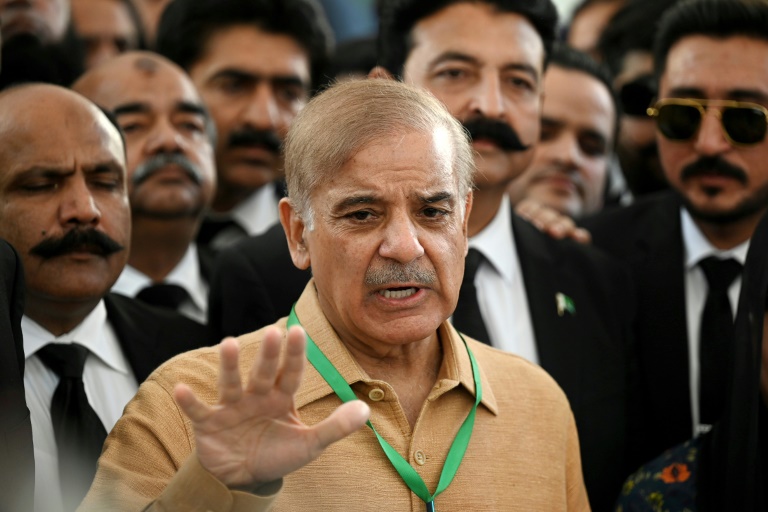
Pakistan Prime Minister Imran Khan faces being booted from office at the weekend after the Supreme Court ruled Thursday that parliament had been illegally dissolved and a no-confidence vote on his government must go ahead.

Khan’s coalition lost its majority in the national assembly last week, but he avoided being dismissed when the deputy speaker blocked a no-confidence motion against him and the president dissolved parliament and ordered fresh elections.

“All actions taken are of no legal effect and quashed,” the Supreme Court said after hearing four days of argument on the matter.

“The national assembly continues to remain in session,” it added, with officials saying it would sit again Saturday.

The court’s judgement was broader than expected after the chief justice said earlier this week they would only rule on the legality of the no-confidence motion being blocked.

The decision — which the court said was unanimous — was met with jubilation by opposition supporters in the capital, with packed cars racing through the streets, sounding their horns.

Khan, one of the world’s top cricketers before he turned to politics, said he would call a cabinet meeting Friday and address the nation in the evening.

“I have always & will continue to fight for Pak till the last ball,” he tweeted.

Shehbaz Sharif, head of the Pakistan Muslim League-N (PML-N) and likely to be the next prime minister, said the court’s decision “has saved Pakistan and the constitution of Pakistan”.

Pakistan People’s Party (PPP) leader Bilawal Zardari Bhutto, who had joined forces with Sharif to oust Khan, tweeted: “Democracy is the best revenge”.

Khan claimed the opposition had colluded with the United States for “regime change” when the deputy speaker — a loyalist — refused to allow the no-confidence motion.

Simultaneously, Khan asked the presidency — a largely ceremonial office also held by a loyalist — to dissolve the assembly.

– Refused to cooperate –

President Arif Alvi has already told the feuding factions to nominate candidates for interim prime minister and asked the country’s election commission to fix a date for a new national ballot.

The opposition had refused to cooperate.

There had been high hopes for Khan when he was elected in 2018 on a promise of sweeping away decades of entrenched corruption and cronyism, but he struggled to maintain support with soaring inflation, a feeble rupee and crippling debt.

On Thursday the rupee was trading at a historic low of 190 to the dollar, and the central bank raised the key interest rate by 250 basis points to 12.25 percent — the biggest hike in over a quarter of a century.

Pakistan has been wracked by political crises for much of its 75-year existence, and no prime minister has ever seen out a full term.

Khan has blown anti-US sentiment into the political atmosphere by saying the opposition had colluded with Washington.

The 67-year-old says Western powers wanted him removed because he will not stand with them against Russia and China.

The Supreme Court is ostensibly independent, but rights activists say previous benches have been used by civilian and military administrations to do their bidding throughout Pakistan’s history.

Publicly the military appears to be keeping out of the current fray, but there have been four coups since independence in 1947 and the country has spent more than three decades under army rule.

Revoke Russian investor passports, Zelensky urges Cyprus

Ukrainian President Volodymyr Zelensky on Thursday urged Cyprus to revoke passports issued to Russians through an investment scheme and stop private yachts docking in its marinas.

Zelensky made the plea during an address to the Cypriot parliament via live video link, the latest in a series of such speeches he has made to foreign legislatures after Russia’s invasion of Ukraine.

“I’m grateful to you for your moral stance. You reacted to the Russian invasion and banned the docking of Russian ships in your ports,” Zelensky said.

He added that Cyprus has “tools to pressure” its traditionally close friend Russia, and urged Cypriot authorities to “close the ports” to all Russian private yachts.

He called on the Cypriots to revoke passports issued to wealthy Russians under the disgraced citizenship for investment scheme shut down under corruption allegations in November 2020.

“Stop Russian golden passports, dual citizenship. Except those where there is evidence they do not harm Ukraine,” Zelensky said.

After attending the session, Cypriot President Nicos Anastasiades told reporters that instructions were given for revocation of four passports of Russians on the European Union’s sanctions list.

During the investment scheme, Cyprus issued hundreds of passports to Russian nationals and their families.

In November 2020, the Mediterranean island dropped the initiative after Al Jazeera aired a documentary showing reporters posing as fixers for a Chinese businessman seeking a Cypriot passport despite having a criminal record.

A public inquiry found that around half of the 6,779 passports issued under the programme were granted illegally.

Cyprus, a European Union member, allowed investors to acquire a passport in exchange for an investment of $2.5 million euros ($3 million).

During the 20-minute speech, a short video showed bomb-scarred cities like Mariupol and the bodies of Ukrainian civilians.

Cyprus has sent more than 215 tonnes of humanitarian aid to Ukraine, its largest contribution overseas.

It has also received around 10,000 Ukrainian refugees in a country with a relatively large Russian diaspora.

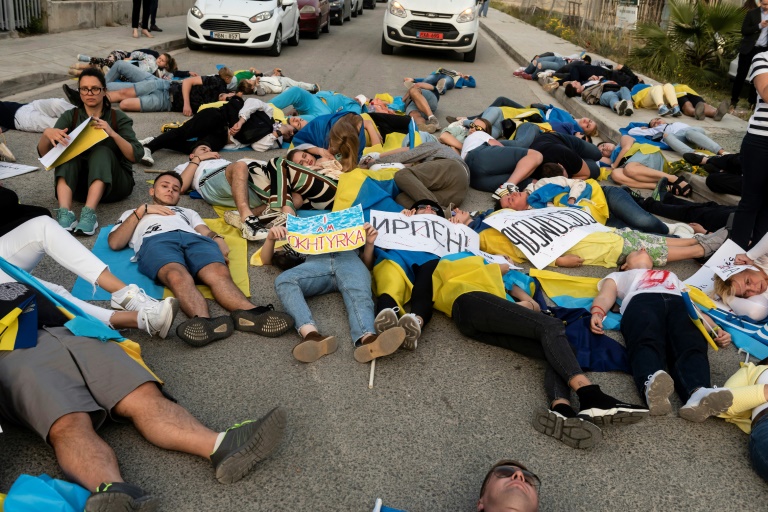
A protest against the war took place outside parliament during the session.

Cyprus’s main opposition party, communist AKEL, boycotted the meeting after a self-styled member of the Azov Regiment appeared in the teleconference Zelensky gave to Greece’s parliament earlier Thursday.

The Azov Regiment defending Mariupol has been accused of far-right links.

Cyprus, one-third of which remains occupied by Turkish troops following that country’s 1974 invasion, has ruled out sending Russian-made weapons systems on its territory to Ukraine.

'Mystery' boson finding contradicts understanding of universe

After a decade of meticulous measurements, scientists announced Thursday that a fundamental particle — the W boson — has a significantly greater mass than theorised, shaking the foundations of our understanding of how the universe works.

Those foundations are grounded by the Standard Model of particle physics, which is the best theory scientists have to describe the most basic building blocks of the universe, and what forces govern them.

The W boson governs what is called the weak force, one of the four fundamental forces of nature, and therefore a pillar of the Standard Model.

However new research published in the Science journal said that the most precise measurement ever made of the W Boson directly contradicts the model’s prediction.

Ashutosh Kotwal, a physicist at Duke University who led the study, told AFP that the result had taken more than 400 scientists over 10 years to scrutinise four million W boson candidates out of a “dataset of around 450 trillion collisions”.

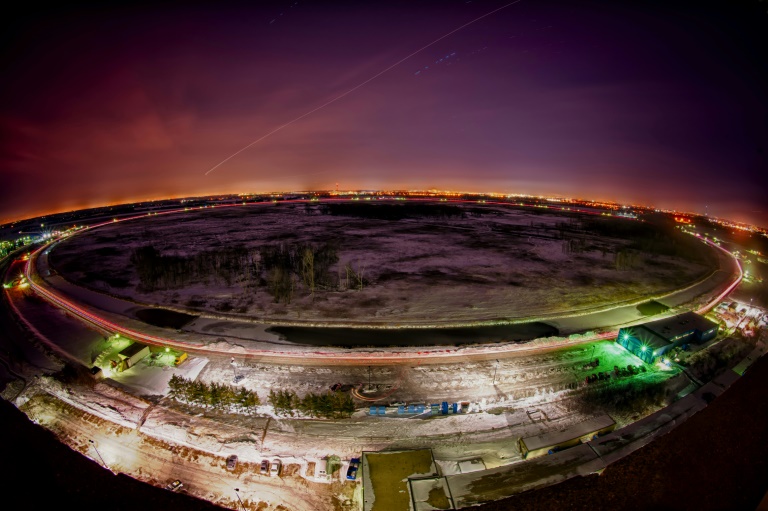
These collisions — made by smashing particles together at mind-bending speeds to study them — were done by the Tevatron collider in the US state of Illinois.

It was the world’s highest-energy particle accelerator until 2009, when it was supplanted by the Large Hadron Collider near Geneva, which famously observed the Higgs boson a few years later.

The Tevatron stopped running in 2011, but the scientists at the Collider Detector at Fermilab (CDF) have been crunching numbers ever since.

– ‘Fissures’ in the model –

Harry Cliff, a particle physicist at Cambridge University who works at the Large Hadron Collider, said the Standard Model is “probably the most successful scientific theory that has ever been written down”.

“It can make fantastically precise predictions,” he said. But if those predictions are proved wrong, the model cannot merely be tweaked.

“It’s like a house of cards, you pull on one bit of it too much, the whole thing comes crashing down,” Cliff told AFP.

The standard model is not without its problems.

For example, it doesn’t account for dark matter, which along with dark energy is thought to make up 95 percent of the universe. It also says that the universe should not have existed in the first place, because the Big Bang ought to have annihilated itself. 

On top of that, “a few fissures have recently been exposed” in the model, physicists said in a companion Science article.

“In this framework of clues that there are missing pieces to the standard model, we have contributed one more, very interesting, and somewhat large clue,” Kotwal said.

Jan Stark, physicist and director of research at the French CNRS institute, said “this is either a major discovery or a problem in the analysis of data,” predicting “quite heated discussions in the years to come”.

He told AFP that “extraordinary claims require extraordinary evidence”.

– ‘Huge deal’ –

The CDF scientists said they had determined the W boson’s mass with a precision of 0.01 percent — twice as precise as previous efforts. 

They compared it to measuring the weight of a 350-kilogram (800-pound) gorilla to within 40 grams (1.5 ounces). 

They found the boson was different than the standard model’s prediction by seven standard deviations, which are also called sigma. 

Cliff said that if you were flipping a coin, “the chances of getting a five sigma result by dumb luck is one in three and a half million”.

“If this is real, and not some systematic bias or misunderstanding of how to do the calculations, then it’s a huge deal because it would mean there’s a new fundamental ingredient to our universe that we haven’t discovered before,” he said.

“But if you’re going to say something as big as we’ve broken the standard model of particle physics, and there’s new particles out there to discover, to convince people of that you probably need more than one measurement from more than one experiment.”

CDF co-spokesperson David Toback said that “it’s now up to the theoretical physics community and other experiments to follow up on this and shed light on this mystery”.

And after a decade of measurements, Kotwal isn’t done yet.

“We follow the clues and leave no stone unturned, so we’ll figure out what this means.”

Tesla inaugurates huge Texas plant with party just as big

Tesla welcomed throngs of  electric car lovers to Texas Thursday for a huge party inaugurating a “gigafactory” the size of 100 professional soccer fields.

Online buzz has swelled ever since Tesla’s colorful but controversial founder and chief executive Elon Musk tweeted word of the event, with reports of perhaps as many as 15,000 guests taking part in the official plant opening in the state capital Austin.

Tesla owners posted plans for cross country road trips, while others urged the uninvited to just show up and find a way inside.

As Thursday arrived, Musk tweeted images and video of preparations including a kaleidescope-like walkway leading into a plant given a nightclub look with red and blue lights.

Tesla electric cars were on a stage backed by a giant “Giga Texas” sign made of neon lights. The festivities would not start until the evening, Musk tweeted.

The company has remained mum about details of the extravaganza, but rumors abound, including reports of an open bar and concert at Tesla’s 74-acre home in Texas.

Tesla fans have posted drone footage and other video showing sightings of what could be new vehicle models on display at the event.

“I got a golden ticket!” Luke Metger, president of a Texas environmental organization, tweeted on the eve of the party, attaching a screen-shot of his invite to the Cyber Rodeo – Giga Texas gala.

But will Texas be Musk’s land of promise?

– Farewell Silicon Valley –

The move to a US state known for conservative Republican politics is seen by some as Musk stepping away from the liberal Silicon Valley culture in which he made his fortune.

The South African-born serial entrepreneur is now ranked the world’s richest man. He founded Tesla in Silicon Valley in 2003, but shifted its headquarters to Texas late last year.

Musk has clashed with California regulators, particularly when health precautions mandated at the height of the pandemic closed Tesla’s Fremont plant.

California is also investigating whether discrimination took place at Tesla’s plant there.

It remains to be seen how Musk will navigate conservative policies in Texas, such as the state’s restrictive new abortion law and limits on seeking health services for transgender children.

Part of the Texas allure is a lack of corporate or personal income taxes. Tesla received more than $60 million in tax breaks to build the factory, which is expected to employ 10,000 people over time.

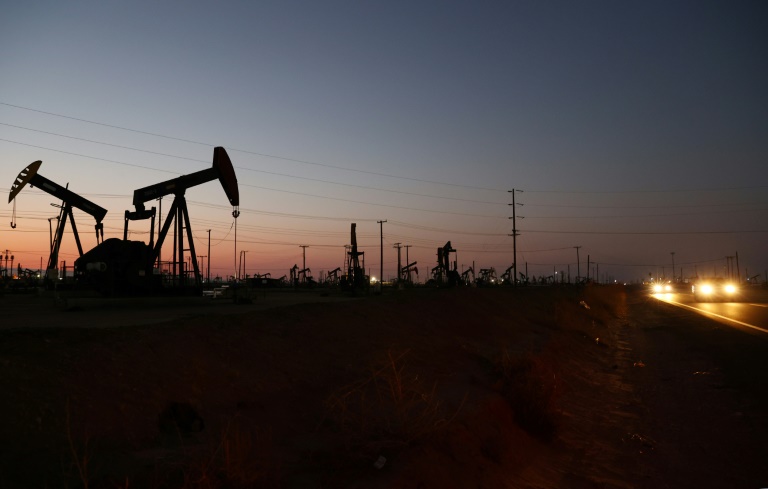
While Musk has spoken of a desire for a shift away from climate-wrecking fossil fuels, Texas is known for oil rigs and gas-guzzling cars and trucks.

“I think he is having a bit of an identity crisis and forgotten who his customer is, and it is going to come back to bite him,” tech analyst Rob Enderle said of Musk.

“He is drifting to the right; what he doesn’t seem to remember is that most of the people who buy electric cars are the liberals.”

– Cybertruck –

Giga Texas has been in operation since late last year. It is the fifth and largest gigafactory cranking out battery packs and vehicles for Tesla.

Since starting with a car plant in Silicon Valley, Tesla has gone global with mega-factories in Berlin and Shanghai as well as in US states New York and Nevada.

The Austin plant will produce Model 3 and Y cars and eventually a Cybertruck pickup and a semi for hauling cargo trailers set to go into production next year, according to Edmunds analyst Jessica Caldwell.

Tesla demand is outstripping supply to the point that some Model Y and 3 cars are being delivered months late in some parts of the world, according to Wedbush analyst Dan Ives.

“The solution is mainly in Austin and Berlin,” Ives said.

Gigafactory Berlin officially opened last month.

Tesla wants to ramp up production by some 50 percent annually, and should easily top that goal this year, Musk said recently.

He has delivered more than a million vehicles during the past 12 months despite production constraints caused by a global chip shortage plaguing many industries.

Increase in atmospheric methane set new record in 2021: US

For the second year running, US scientists observed record increases in the atmospheric concentration of the potent greenhouse gas methane, the National Oceanic and Atmospheric Administration (NOAA) said Thursday.

Methane, the second biggest contributor to global warming after carbon dioxide, is generated by the production, transport and use of fossil fuels, but also from the decay of organic matter in wetlands, and as a byproduct of ruminant digestion in agriculture.

At last year’s COP26 Climate Change Conference in Glasgow, participants agreed to a Global Methane Pledge to reduce methane emissions by 30 percent by 2030 — but notable emitters including China, Russia, Iran and India have not signed on.

“Our data show that global emissions continue to move in the wrong direction at a rapid pace,” said NOAA administrator Rick Spinrad in a statement.

The annual increase in atmospheric methane during 2021 was 17 parts per billion (ppb), the largest rise recorded since systematic measurements began in 1983, said NOAA.

Across 2021, atmospheric methane levels averaged 1,895.7 ppb, around 162 percent greater than pre-industrial levels.

“We can no longer afford to delay urgent and effective action needed to address the cause of the problem — greenhouse gas pollution,” Spinrad warned.

It’s estimated about 30 percent of methane comes from fossil fuel production — making it a clear target for lessening the impacts of the climate crisis in the short term.

Meanwhile, carbon dioxide levels continued to increase at historically high rates.

NOAA found that the global surface average for carbon dioxide during 2021 was 414.7 parts per million (ppm), which is an increase of 2.66 ppm over the 2020 average. 

Atmospheric levels of carbon dioxide are now comparable to where they were 4.3 million years ago, during the mid-Pliocene epoch. 

At that time, the sea level was about 75 feet (23 meters) higher than today, the average temperature was 7 degrees Fahrenheit (4C) higher than pre-industrial times, and large forests occupied areas of the Arctic.

Methane is far less abundant but around 25 times more potent than carbon dioxide at trapping heat in the atmosphere. 

The “atmospheric residence time” of methane is approximately nine years, compared to thousands of years for carbon dioxide — therefore controlling methane is critical to influencing the rate of climate change in the near future.

Methane also contributes to the formation of ozone at the ground level, which in turn is the main ingredient in smog and has harmful effects on the environment and people’s health.

Previous NOAA methane research indicated that biological sources of methane — such as from wetlands — are the main driver of increasing methane post-2006. 

This is worrying because it may signal a feedback loop caused by more rain over tropical wetlands, which in turn generates yet more methane — a cycle that would become largely outside of human control.

US Treasury secretary calls for improved cryptocurrency rules

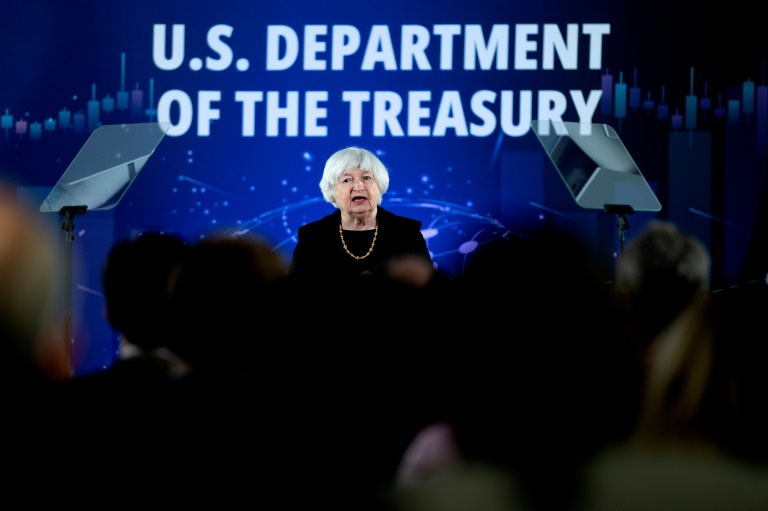
US Treasury Secretary Janet Yellen on Thursday called for increased oversight of cryptocurrencies, after President Joe Biden last month green-lit work on creating a digital American dollar.

Digital currencies such as bitcoin and ethereum have seen explosive growth in recent years, even as American officials have expressed concerns over whether the assets are properly regulated, or could be used for criminal activity.

In a speech at American University in Washington, Yellen said better regulations on such assets would protect consumers while still allowing for innovation.

“As banks and other traditional financial firms become more involved in digital asset markets, regulatory frameworks will need to appropriately reflect the risks of these new activities,” Yellen said.

“And new types of intermediaries, such as digital asset exchanges and other digital native intermediaries, should be subject to appropriate forms of oversight.”

Biden’s order last month put the United States among the more than 100 countries that are exploring or have launched pilot programs with their own central bank digital currency, including China’s digital yuan, although Yellen said issuing such a currency is likely to “require years of development, not months.” 

Washington has also looked to expand taxation of cryptocurrencies, with the $1 trillion national infrastructure overhaul that Congress passed last year including provisions to expand reporting requirements for digital assets.

Governments worldwide have fretted that cryptocurrencies are being used to fund illicit activities.

On Tuesday, Germany shut down Russian-language illegal darknet marketplace Hydra, the largest such network in the world, and seized bitcoin worth $25 million.

The US Treasury sanctioned that site and Garantex, an exchange for virtual currencies that it said was used for collecting ransomware payments.

Yellen warned that “‘financial innovation’ of the past has too often not benefited working families, and has sometimes exacerbated inequality,” and added that the department is working with Congress to regulate stablecoins, which are cryptocurrencies backed by reserves.

Yellen called for “tech neutral” regulations on digital assets that are intended to protect consumers and businesses without hampering the technology behind them.

“In many cases, regulators have authorities they can use to promote these objectives and Treasury supports those efforts,” Yellen said.

“To the extent there are gaps, we will make policy recommendations, including assessment of potential regulatory actions and legislative changes.”

Close Bitnami banner
Bitnami