World

Second Iran cleric dies after knifing at shrine

A suspected jihadist attack at a revered shrine in Iran has claimed the life of a second Shiite Muslim cleric, state television said on Thursday.

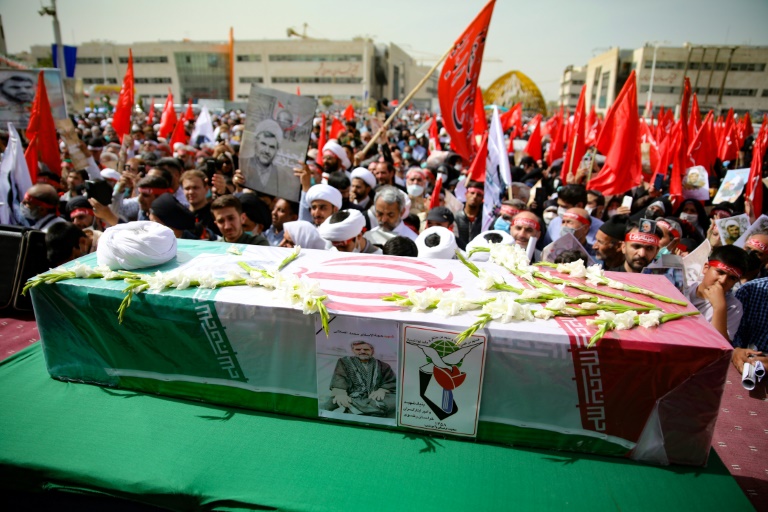
The death of Sadegh Darai was reported as thousands of mourners attended the funeral of another Shiite cleric, Mohammad Aslani, stabbed by the same suspected Sunni extremist.

A third cleric was wounded in Tuesday’s attack at the Imam Reza shrine in Iran’s second-largest city of Mashhad, during the Muslim holy month of Ramadan.

Darai, seriously wounded during the knifing, died in hospital, state television said.

TV images showed thousands of mourners, including local officials, attending Aslani’s funeral at the city’s Shohada Square near the shrine, following a memorial service the previous day.

He was buried in a plot reserved for “martyrs” in the sanctuary’s courtyard.

The assailant stabbed one of the victims 20 times, according to Tasnim news agency.

The chief suspect has been identified as Abdolatif Moradi, 21, an ethnic Uzbek who had entered Iran illegally via the Pakistani border a year ago, Tasnim said.

Moradi had “worked in transport” in a poor city district and had been active on social media using pseudonyms including Abdolatif al-Salafi to “spread takfiri ideology and confront Shiites”, it said.

President Ebrahim Raisi has blamed the knife attack on the influence of US-based “takfiri” groups — a term used for Muslims who brand others as apostates, condemning them to death, and usually referring to Sunni extremists.

The assailant struck on Iran’s third day of Ramadan. Large crowds of worshippers had gathered at the shrine of Imam Reza, one of the most revered figures in Shiite Islam.

Authorities arrested six suspected accomplices, including the chief suspect’s two brothers.

US bans exports to three Russian airlines for sanctions violations

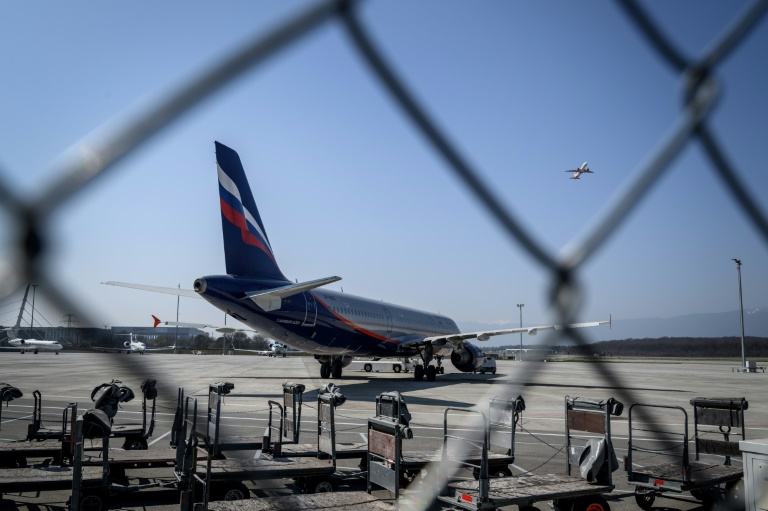
The US government has banned exports to Russia’s state airline Aeroflot as well as two other carriers for flying aircraft in violation of sanctions, the Commerce Department said Thursday.

Washington warned last month that the carriers had gone against penalties imposed on Moscow over its invasion of Ukraine by flying Boeing aircraft, as had billionaire Chelsea football club owner Roman Abramovich for his use of a Gulfstream jet.

The Commerce Department cited the warning in announcing that Aeroflot as well as Azur Air and Utair are banned from receiving American goods for the next 180 days.

“We are cutting off not only their ability to access items from the United States but also reexports of US-origin items from abroad,” Commerce Secretary Gina Raimondo said in a statement.

“Any companies that flout our export controls, specifically those who do so to the benefit of Vladimir Putin and the detriment of the Ukrainian people, will feel the full force of the department’s enforcement.”

Commerce announced no action against Abramovich, who has been participating on the Russian side in peace talks with Ukraine held in Turkey.

The statement said the sanctioned airlines had operated flights within Russia as well as to countries including China, Vietnam, Turkey, India and the United Arab Emirates without seeking US permission, as the sanctions require.

War in Ukraine: Latest developments

Here are the latest developments in the war in Ukraine:

– ‘Last chance’ to leave East –

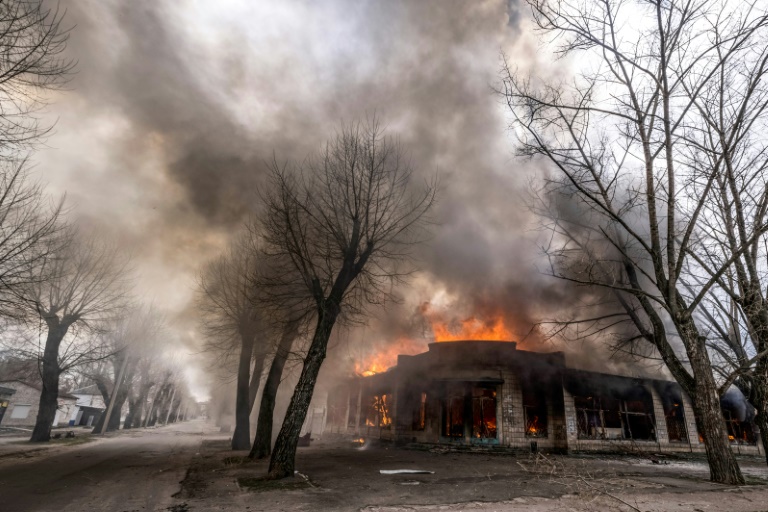
A Ukrainian official warns residents in the east that they have a “last chance” to flee before a major Russian offensive expected in the Donbas region.

“These few days may be the last chance to leave,” says Sergiy Gaiday, governor of the Lugansk region, part of the Donbas, where the city of Severodonetsk is coming under sustained artillery and rocket fire.

– Ukraine changed demands: Moscow –

Russia accuses Ukraine of changing position on the international security guarantees it is seeking in return for becoming a neutral country as demanded by Moscow.

Foreign Minister Sergei Lavrov says that Ukraine had previously agreed those security guarantees wouldn’t apply to the annexed Crimea peninsula but that a draft agreement presented by Kyiv now excluded that caveat.

Ukraine says that Moscow should show less “hostility” if it wants to resume dialogue.

– UN rights body suspension –

The foreign ministers of G7 ministers back suspending Russia from the UN Human Rights Council. The UN General Assembly is due to vote on the issue Thursday.

Russia has warned that expelling it from multilateral forums will make dialogue even more difficult.

– Mariupol evacuations pick up –

Seven buses and dozens of cars transporting evacuees, mostly from the devastated besieged southern city of Mariupol, reach the city of Zaporizhzhia in a Red Cross convoy.

The Red Cross has failed to get into Mariupol itself, but managed to help those who had made it out to the nearby Russian-held city of Berdiansk.

– New plea for weapons –

Ukraine’s Foreign Minister Dmytro Kuleba calls on NATO members to provide Kyiv with all the weaponry it needs to fight Russia.

“My agenda is very simple. It has only three items on it. It’s weapons, weapons, and weapons,” Kuleba tells journalists at NATO headquarters in Brussels.

– Hungary ‘helping’ Putin –

Ukraine accuses its neighbour and Kremlin-ally Hungary of appeasing Russian aggression and “destroying unity in the EU”.

Newly-reelected Hungarian Prime Minister Viktor Orban says he is prepared to pay for Russian gas in rubles, a demand of Putin’s that was rejected by the West. 

– ‘Major war crimes’ – 

US President Joe Biden denounces the killing of Ukrainian civilians in the town of Bucha allegedly by Russian troops as “major war crimes”. 

Russia has denied the claims, saying images of dead bodies are fakes or that the killings occurred after Russian forces withdrew.

Ukrainian officials warn other areas may have suffered worse, including nearby Borodianka.

“Locals talk about how planes came in during the first days of the war and fired rockets at them from low altitudes,” Ukraine’s Interior Minister Denys Monastyrsky says.

– French anger over tweet –

The French government summons Russia’s ambassador to Paris in protest after his embassy posted a photo on Twitter claiming to show a Ukrainian “film set” used to stage civilian killings in Bucha.

French Foreign Minister Jean-Yves Le Drian calls the tweet “obscene”.

– Shell faces $5bn hit –

British energy giant Shell says its exit from Russia could cost it up to $5 billion (4.6 billion euros) in the first quarter of the year.

Shell announced it was selling its stakes in joint ventures with Russian state energy giant Gazprom shortly after the Kremlin launched its invasion of Ukraine.

– Putin daughters sanctioned –

The United States announces sanctions on two of Putin’s daughters, saying family members are known to hide the Russian president’s wealth.

The EU is also looking to add Putin’s daughters to its sanctions blacklist.

Washington also declared “full blocking” sanctions on Russia’s largest public and private financial institutions, Sberbank and Alfa Bank, and says all new US investments in Russia are now prohibited.

The UK also adds new energy and banking sanctions and bans new Russian investments.

burs-cb/jmy/yad

Sudan court acquits Bashir-era figures of plotting against transition

A Sudanese court on Thursday acquitted politicians and figures linked to the deposed regime of president Omar al-Bashir of plotting to overthrow the transition, a lawyer said. 

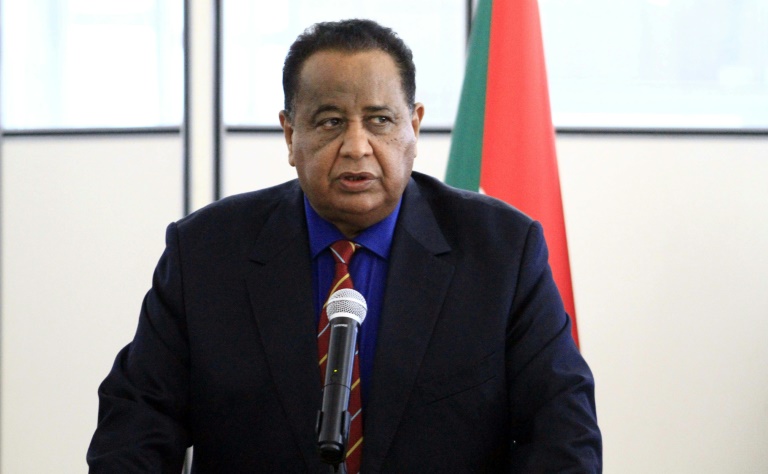
The case involved 13 defendants including the head of the former ruling National Congress Party, Ibrahim Ghandour, who is also an ex-foreign minister under Bashir. 

Following Bashir’s April 2019 ouster, Sudan embarked on a fragile transition toward civilian rule which was derailed in an October military coup. 

The accused were charged in 2020 during the now-deposed civilian-military transitional administration but trial began only a few months ago, according to defence lawyer Abdalla Derf.

They were accused of an array of charges including undermining constitutional order and financing terrorism during the transition,  Derf said.

“The court ordered the acquittal of all the defendants and their immediate release,” Derf told AFP. 

He said the prosecution can still appeal the case but the court “found no evidence to condemn the defendants.” 

Thursday’s verdict comes as Sudan grapples with the political and economic fallout of the coup led by army chief Abdel Fattah al-Burhan.

Burhan has since tightened his grip on power, ousting from top posts Sudan’s main civilian alliance the Forces for Freedom and Change, which spearheaded anti-Bashir protests. 

The NCP hailed the verdict in favour of the party’s “leaders, figures, and youths after a long litigation process that lasted some 22 months”.

It also accused the FFC of “fabricating” the charges.  

“We see the innocence of our party leaders as an opportunity for a new national launch and building a future fenced with comprehensive national consent,” it said in a statement.

Sudan’s latest military power grab triggered widespread international condemnation, crucial aid cuts, and regular mass protests across the country. 

ECB members divided over inflation response: minutes

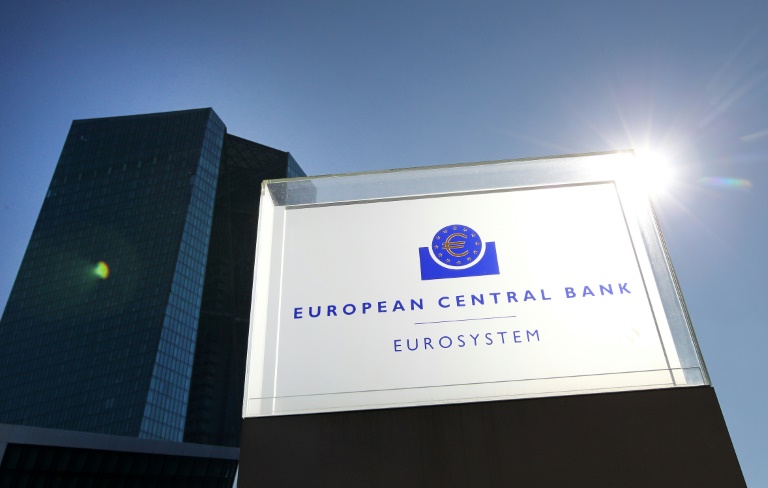
European Central Bank policymakers disagreed last month on how to respond to runaway inflation and economic uncertainty caused by the Ukraine war, minutes from their meeting showed on Thursday.

The revelation comes as markets are looking for signs that the ECB could soon announce the first interest rate hike in over a decade.

“A large number of members held the view that the current high level of inflation and its persistence called for immediate further steps towards monetary policy normalisation,” the minutes read.

The ECB’s governing council played it safe at the March meeting, agreeing to wind down monthly bond purchases at an accelerated pace in the second quarter, while keeping the end date of the stimulus scheme flexible.

An interest rate hike would follow “some time” after the end of the bond-buying scheme, it said.

But the minutes revealed that some governors wanted to go further to combat inflation, as the war in Ukraine further pushes up prices for energy, food and raw materials.

“Among those calling for action at the present meeting, some members preferred to set a firm end date for (bond) purchases during the summer,” the text read.

“This could clear the way for a possible rate rise in the third quarter of this year in the light of the deterioration in the inflation outlook.”

Other members meanwhile preferred a “wait-and-see approach” given the “exceptionally high uncertainty” created by Russia’s invasion of Ukraine and Western sanctions against Moscow.

The minutes show that the ECB “has become more hawkish”, said ING bank economist Carsten Brzeski, using a term describing those advocating for a tightening of monetary conditions.

– ‘Doubts’ –

The ECB has for years maintained an ultra-loose monetary policy, pushing interest rates to record lows and hoovering up billions of euros in bonds each months to keep credit flowing in the eurozone.

Like other central banks, it now faces the challenge of scaling back stimulus to stem inflation without hurting economic growth, a task made more complicated by the return of war to Europe.

ECB president Christine Lagarde warned last week that a prolonged Ukraine conflict would keep energy prices and the cost of living spiralling, blighting a post-Covid recovery.

Eurozone inflation jumped to a record high of 7.5 percent in March, well past the ECB’s two-percent target.

The ECB expects inflation to come down to 1.9 percent by 2024 once the energy shock wears off, although the minutes reflected “doubts” about the forecast.

The US Federal Reserve last month announced its first interest rate rise since 2018, with further hikes expected.

Yemen president cedes powers to council as ceasefire holds

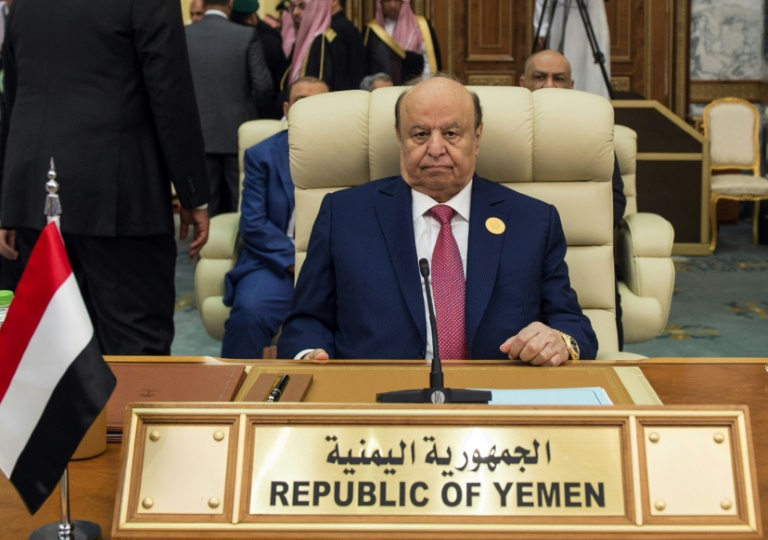
Yemen’s president said Thursday he is handing his powers to a new leadership council, in a major shake-up in the coalition battling Huthi rebels as a fragile ceasefire takes hold.

But Huthi spokesman Mohammed Abdulsalam dismissed the move as “a desperate attempt to rearrange the ranks of the mercenaries” fighting in Yemen, and said peace would only come once foreign forces leave.

President Abedrabbo Mansour Hadi made the announcement in a televised statement on the final day of Yemen talks held in the Saudi capital Riyadh.

“I irreversibly delegate to this presidential leadership council my full powers,” he said.

Saudi Arabia said it welcomed Hadi’s announcement and pledged $3 billion in aid and support for its war-torn neighbour, some of it to be paid by the United Arab Emirates.

Hadi’s internationally recognised government has been locked in conflict with the Iran-backed Huthis, who control the capital Sanaa and most of the north despite a Saudi-led military intervention launched in 2015.

Hadi has been based in Saudi Arabia since fleeing to the kingdom that year as rebel forces closed in on his last redoubt, the southern port city of Aden.

A United Nations-brokered truce that took effect last Saturday — the first day of the Muslim holy month of Ramadan — has offered a glimmer of hope in the conflict which has triggered what the UN calls the world’s worst humanitarian crisis.

The truce came as discussions on Yemen were unfolding in Riyadh without the participation of the Huthis, who refused to attend talks on “enemy” territory.

“The path to peace is by stopping the aggression, lifting the siege, and taking the foreign forces out of the country,” said Abdulsalam, the Huthi spokesman.

– ‘Something big’ –

Some analysts had cast doubt on what the negotiations could achieve in the absence of the Huthis, but Thursday’s news may help the sometimes fractious coalition battling the rebels to speak with one voice in any future peace negotiations.

“The status quo was going nowhere,” Elisabeth Kendall, a researcher at Oxford University, told AFP.

“Something big needed to change to get the warring parties on track to a political process. This transfer of presidential powers could be it.”

Peter Salisbury, senior Yemen analyst for the International Crisis Group, said on Twitter that the formation of the council represents “the most consequential shift in the inner workings of the anti-Huthi bloc since the war began”.

But he cautioned that implementing the arrangement would be “complicated to say the least”.

Hadi also announced he had sacked Vice President Ali Mohsen Al-Ahmar.

The new council will consist of eight members and be led by Rashad al-Alimi, a former interior minister and adviser to Hadi.

Hadi said it would be tasked with “negotiating with the Huthis for a permanent ceasefire”.

He said it should also sit down for talks “to reach a final and comprehensive political solution, that includes a transitional phase that will move Yemen from a state of war to a state of peace”.

– A ‘new page’? –

Saudi Arabia’s de facto ruler, Crown Prince Mohammed bin Salman, met the council and said he hoped for a “new page” to turn in Yemen, footage aired by state media showed.

The secretary-general of the Gulf Cooperation Council Nayef al-Hajraf also welcomed Hadi’s announcement, pledging the bloc’s support for the new council “in its tasks to achieve safety and security” in Yemen. 

France said it welcomed the creation of the council and called it “an important step towards restoring a state that serves all Yemenis and is engaged in the political process”.

Yemen’s 30 million people are in dire need of assistance. 

A UN donors’ conference this month raised less than a third of its $4.27 billion target, prompting dark warnings for a country where 80 percent of the population depends on aid.

As part of the truce, the Saudi-led coalition agreed to ease its longstanding air and sea blockade to allow commercial flights into the capital Sanaa, and fuel and more food shipments into the aid lifeline port of Hodeida. Both cities are held by the Huthis.

The UN special envoy for Yemen, Hans Grundberg, said Wednesday that there had been a “significant reduction of violence” since the truce took effect but both sides have accused each other of minor “breaches” of the ceasefire.

Stopped press: Algeria billionaire to shut Liberte newspaper

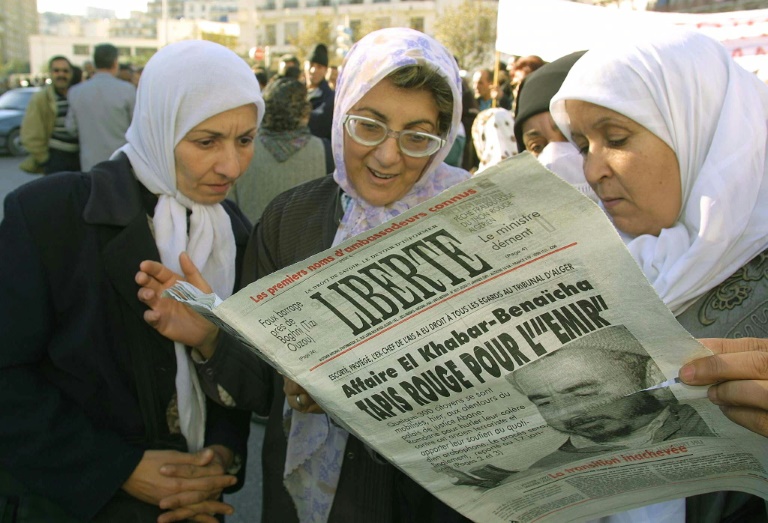
Algeria’s French-language newspaper Liberte will run its final edition next week, the newspaper announced Thursday, criticising the decision by its owner, the country’s richest man.

“After 30 years in existence, Liberte is being extinguished,” it said in an editorial.

The closure adds to an already difficult climate for journalism in Algeria, which is ranked one of the world’s worst countries for press freedom.

Liberte’s final press run will occur next Thursday, said the paper whose motto is: “The right to know and the duty to inform.”

“In just a few days, newspaper vendors, readers, advertisers and the institutions of the republic will be orphaned by a newspaper that had made its name as a reference for all viewpoints,” it wrote.

Algerian intellectuals and public figures had signed a petition urging its owner Issad Rebrab to change his mind, but to no avail.

An appeal by the newspaper’s journalists also fell on deaf ears. 

They had written Sunday that they did not understand why the newspaper was to be closed.

“The publishing company still has sufficient financial resources to allow it to continue to exist,” they wrote.

Forbes reported Thursday that Rebrab and his family “are the world’s second-richest Arabs, worth $5.1 billion.”

Rebrab is the founder of Cevital, which owns one of the world’s biggest sugar refineries.

Liberte’s closure is “a victory for silence over speech and for violence over debate”, Algerian novelist Kamel Daoud wrote Thursday in the newspaper. 

Algerian media went through something of a golden age after protests against the country’s one-party system in 1988, but several titles have closed since the turn of the millennium, mostly due to falling sales and advertising revenue.

Many cities in Algeria, Africa’s biggest country by surface area, lack access to hard copies of newspapers, meaning free news websites have largely taken their place.

Several journalists are in prison or facing trial, notably for defamation of political figures or because of social media posts.

The country ranks 146th out of 180 on the Reporters Without Borders (RSF) Press Freedom Index.

Stopped press: Algeria billionaire to shut Liberte newspaper

Algeria’s French-language newspaper Liberte will run its final edition next week, the newspaper announced Thursday, criticising the decision by its owner, the country’s richest man.

“After 30 years in existence, Liberte is being extinguished,” it said in an editorial.

The closure adds to an already difficult climate for journalism in Algeria, which is ranked one of the world’s worst countries for press freedom.

Liberte’s final press run will occur next Thursday, said the paper whose motto is: “The right to know and the duty to inform.”

“In just a few days, newspaper vendors, readers, advertisers and the institutions of the republic will be orphaned by a newspaper that had made its name as a reference for all viewpoints,” it wrote.

Algerian intellectuals and public figures had signed a petition urging its owner Issad Rebrab to change his mind, but to no avail.

An appeal by the newspaper’s journalists also fell on deaf ears. 

They had written Sunday that they did not understand why the newspaper was to be closed.

“The publishing company still has sufficient financial resources to allow it to continue to exist,” they wrote.

Forbes reported Thursday that Rebrab and his family “are the world’s second-richest Arabs, worth $5.1 billion.”

Rebrab is the founder of Cevital, which owns one of the world’s biggest sugar refineries.

Liberte’s closure is “a victory for silence over speech and for violence over debate”, Algerian novelist Kamel Daoud wrote Thursday in the newspaper. 

Algerian media went through something of a golden age after protests against the country’s one-party system in 1988, but several titles have closed since the turn of the millennium, mostly due to falling sales and advertising revenue.

Many cities in Algeria, Africa’s biggest country by surface area, lack access to hard copies of newspapers, meaning free news websites have largely taken their place.

Several journalists are in prison or facing trial, notably for defamation of political figures or because of social media posts.

The country ranks 146th out of 180 on the Reporters Without Borders (RSF) Press Freedom Index.

Sri Lanka asks experts to plan debt restructure as protests rage

Sri Lanka’s president has appointed a panel of experts to organise a restructuring of foreign debt as he seeks a way out of a worsening economic crisis, with protests demanding his resignation escalating.

Shortages of food and fuel, along with record inflation and regular blackouts, have inflicted unprecedented misery on Sri Lankans in the most painful downturn since independence from Britain in 1948.

Ratings agencies have warned of a potential default on the nation’s $51 billion foreign debt, with authorities unable to secure more commercial loans because of credit downgrades.

President Gotabaya Rajapaksa’s office said late Wednesday that a three-member advisory panel had been tasked with guiding Sri Lanka through a “sustainable and inclusive recovery”.

His government is preparing for bailout negotiations with the International Monetary Fund, and finance ministry officials told AFP the trio will prepare a programme for sovereign bond holders and other creditors to take a haircut.

“What Sri Lanka is keen to do is avoid a hard default,” a source from the ministry who requested anonymity told AFP. 

“It will be a negotiated restructuring of the debt with the help of the IMF.”

Parliamentary Speaker Mahinda Yapa Abeywardana warned Wednesday that the economic crisis could lead to starvation unless addressed within the week.

Meetings with the IMF are set to begin by next week but Finance Minister Basil Rajapaksa — the president’s brother — resigned on Sunday night along with nearly the entire cabinet. 

The country is still without a replacement, with his successor quitting after just one day in office.

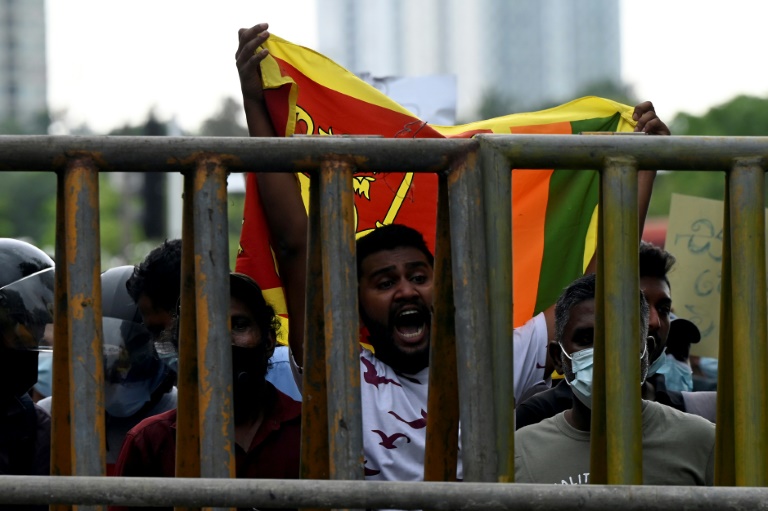
Public anger is at fever pitch, with crowds attempting to storm the homes of several government figures and demanding President Rajapaksa’s resignation.

On Thursday a court in Colombo slapped a travel ban on the country’s recently resigned central bank chief over allegations he was responsible for the country’s predicament by not seeking IMF help earlier.

Ajith Cabraal, who quit Monday, was told to appear in court on April 18 to answer allegations of a criminal breach of trust.

Rights activist Keerthi Tennakoon has filed a petition with the court alleging the current shortages are due to Cabraal’s mismanagement of Sri Lanka’s foreign reserves.

Court proceedings were briefly held up when the power went off.

– Holidays declared –

Local media have reported that protests are escalating, with civil servants and schoolchildren joining demonstrations organised largely through social media.

In an apparent bid to head off more protests, the government on Thursday declared extra public holidays for next week to coincide with the traditional Sinhalese and Tamil New Year.

Security forces have dispersed some protests with tear gas, water cannon and rubber bullets, and dozens of people have been arrested, with many saying they were tortured in police custody. 

Opposition parties have rejected an overture from the president to form a unity administration and joined calls for him to step down.

But chief government whip Johnston Fernando reiterated Thursday that Rajapaksa would stay in office to lead the country out of the crisis.

Rajapaksa attended parliament Thursday but did not address the chamber, where he has lost his majority.

There has so far been no clear signal that opposition legislators will attempt a no-confidence motion to topple the administration.

The foreign currency shortage has left Sri Lanka struggling to import essential goods, with the coronavirus pandemic torpedoing vital revenue from tourism and remittances.

Economists say the crisis has been exacerbated by government mismanagement, years of accumulated borrowing and ill-advised tax cuts.

Greece to double coal output to reduce Russian gas use

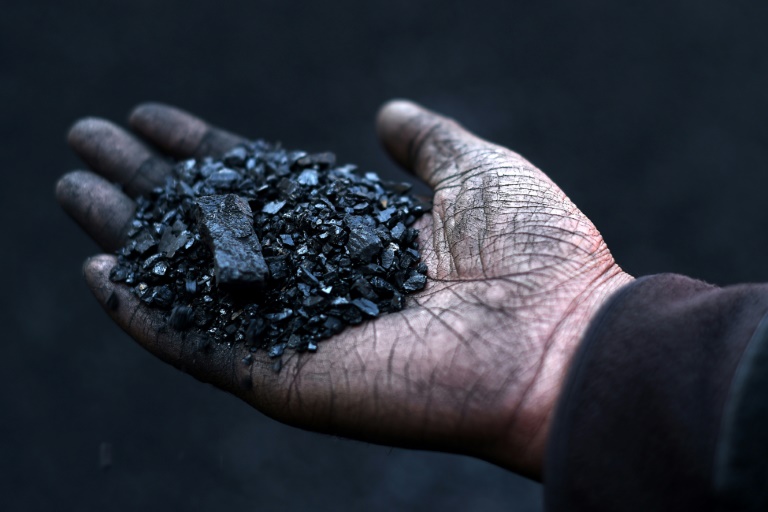
Greece’s government said Thursday it plans to double production of lignite, or brown coal, in the coming two years despite the pollution it causes as Athens aims to reduce its dependence upon Russian gas.

Greece depends upon Russia for 40 percent of its natural gas and since Moscow invaded Ukraine in February it has been searching for alternatives to ensure normal supplies.

“Lignite is polluting and in normal circumstances, natural gas is cheaper,” government spokesman Giannis Ekonomou said.

But given the conflict in Ukraine and the needed to diversify energy supplies, Ekonomou said increased brown coal production would be “necessary” for the next two years.

European countries have been seeking to reduce their use of brown coal to meet their climate pledges. Natural gas produces less emissions and has often been a relatively inexpensive alternative.

However, gas prices have surged this heating season as Russia reduced its sales on the European spot market, and deliveries under long-term contracts could be impacted by Western sanctions over Ukraine or Russian counter-sanctions.

Prime Minister Kyriakos Mitsotakis said Wednesday at the inauguration of a solar panel park that Greece’s energy policy needs to be flexible given the current circumstances.

But he also said that “in no case” would it affect the government’s objectives to reduce carbon emissions by 55 percent by 2030 and reach carbon neutrality by 2050.

Yet the increased coal production is a tacit abandonment of the goal to close the coal power plants by next year.

“It is an admission of failure,” said the Kinal socialist party.

Close Bitnami banner
Bitnami