World

New Tesla factory another win for business-friendly Texas

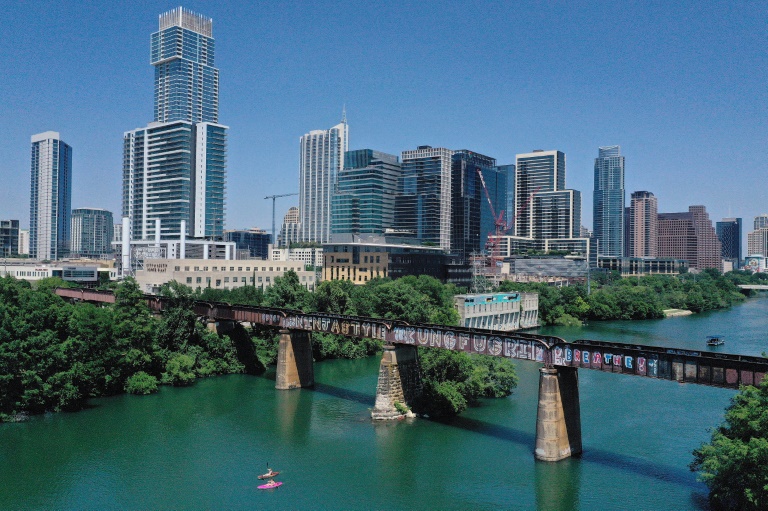
Tesla’s unveiling this week of a new auto factory in Austin has highlighted corporate America’s growing affinity for Texas compared with California and other states seen as less business-friendly.

The state, bigger than France in land mass and second among US states to California in population, has become the location of choice for Tesla CEO Elon Musk’s new “Gigafactory.”

The new factory will be officially presented at what Musk has dubbed a “Cyber Rodeo” on Thursday, with up to 15,000 visitors.

Last year, Tesla moved its corporate headquarters from Silicon Valley to Austin. And Tesla is far from alone in picking the Lone Star state as its corporate seat.

Texas Governor Greg Abbott has spoken of the state’s commitment to “economic liberty.” In practice that means Texas is one of just a handful of US states with no individual income tax, or a corporate income tax.

The state also is aggressive about offering subsidies to attract businesses and new jobs.

– The ‘new California’ –

In a country often described as riven between red (conservative) and blue (progressive) ideologies, Texas and California are in many ways prototypical of a divided country.

Texas has pushed ahead with myriad hardline policies on divisive social issues. 

These include heavy restrictions on abortion rights and on parents who seek health services for transgender children — policies that led New York Times columnist Frank Bruni to recently question  whether Texas was the most “meanspirited” state in the nation.

Despite these controversies, big business has continued to flock to Texas.

The state has long prospered from its legacy as a petroleum powerhouse, but the Austin area has become a major center for technology, while Houston is known as a biomedical center and as home to a major NASA site.

Lee Ohanian and Joseph Vranich of the Hoover Institution, a conservative think tank at Stanford University, have hailed the Texas model of lower taxes and limited regulation in comparison with the California approach.

“Texas has become the new California, and California is becoming the new Rust Belt, losing businesses and people to states that offer more opportunities and a better, more affordable life,” they wrote in an August 2021 column that noted that Texas has now seven times the number of capital investment projects compared with California. 

The state is home to dozens of Fortune 500 companies, including others that have, like Texas, relocated to the Lone Star State. These include Oracle and Hewlett Packard, which moved in 2020.

Other companies that are based in other states are also picking Texas as home to key operations.

Aerospace giant Boeing, which is based in Chicago, is considering relocating some of its remanufacturing capacity from Seattle to Texas, an industrial source told AFP.

– Human capital –

Beyond its business climate, Texas is home to several top schools, including Rice University in Houston and the University of Texas at Austin, both ongoing sources of young, diverse and skilled labor.

Moreover, Texas’ greater affordability in terms of lower rental costs, accessible cost of living and more physical space makes the state an appealing option for recent graduates.

In the third quarter of 2021, the median price for a home  was $233,593 in Austin and $274,136 in Dallas. That compared with $1.2 million in San Francisco and $647,605 in Westchester County, New York, according to National Association of Realtors.

“Why Texas?” asked Abbott in a recent fireside chat.

“From education, agriculture, space, technology, and more, Texas offers everything families, growing businesses, and individuals need to succeed,” Abbott said, pointing to attributes that include “our world-class business climate and diverse workforce that make Texas the best place to live, work, and raise a family.”
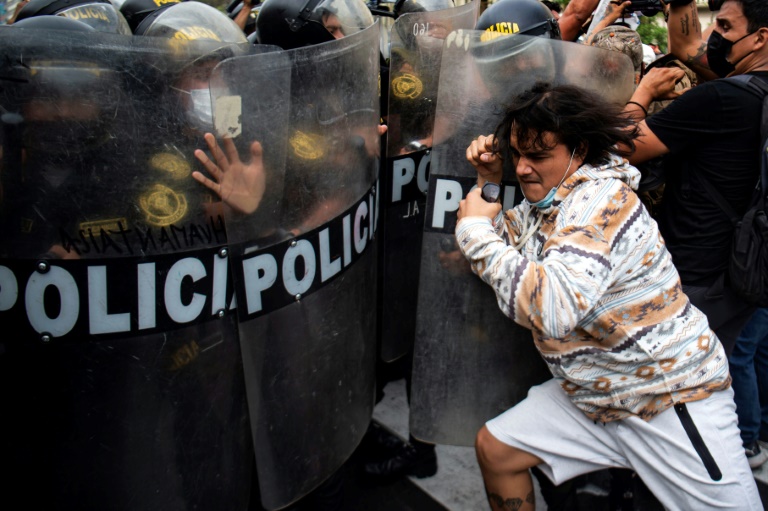
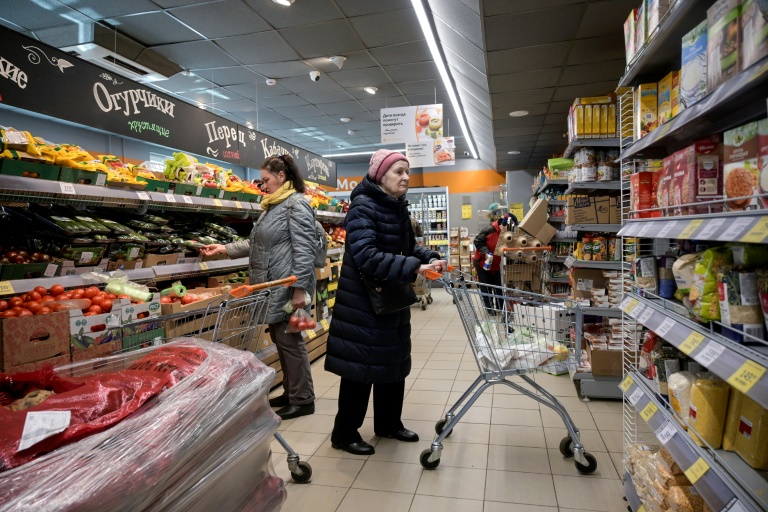
One protester dead, several injured in clashes with Peru police

A farm worker who took part in a road block protest in Peru died Wednesday following clashes with police while several others were injured, a hospital said.

The violence came a day after President Pedro Castillo called off a curfew in Lima aimed at curbing nationwide protests against rising fuel prices.

“Fifteen injured people have come in, we have one seriously injured. There is a civilian who came in dead as a result of the conflict,” Carlos Navea, director of the hospital in Ica some 300 kilometers (180 miles) south of Lima, said on Facebook.

Navea said 12 police officers and three civilians were injured.

A farm workers leader told RPP radio the dead man was a 25-year-old from Huancavelica who worked for a company in Ica.

The clashes broke out on Wednesday morning after police tried to break up a blockade by dozens of farm workers on the Pan-Americana Highway, the country’s most important artery for people and goods.

The fertile Ica region is a hub of the Peruvian agricultural sector.

Tensions had been building in Peru since Monday when truckers called for a strike and protests broke out in Lima, Ica and other parts of the country over rising food and fuel prices.

Castillo reacted late on Monday night by calling a curfew in Lima and the neighboring port city of Callao — together home to 10 million people — on Tuesday.

A widespread public backlash and pressure from the right-wing opposition dominated Congress prompted the leftist Castillo to lift the curfew late on Tuesday afternoon.

That brought celebrations from protesters outside parliament and around the capital but the crisis did not end.

Clashes broke out on Tuesday night in Lima following marches in several parts of the city with demonstrators chanting: “Castillo out!”

Buildings were attacked and shops vandalized.

The interior minister said 25 police officers were injured in the trouble.

It is the first time in the 52-year-old former rural school teacher’s eight months in power that he has faced a social protest movement.

Like much of the rest of the world, Peru’s economy is reeling from damage wrought by the coronavirus pandemic.

In an attempt to appease protesters, the government over the weekend eliminated a tax on fuel and decreed a 10 percent increase in the minimum wage from May 1. 

But the General Confederation of Workers of Peru — the country’s main trade union federation — has remained defiant and called for more protests on Thursday.

Russia says paid dollar debt in rubles amid default fears

Russia said Wednesday it had been forced to make foreign debt payments on dollar-denominated bonds in rubles, raising the prospect of a potential default amid unprecedented Western sanctions over the Ukraine conflict.

The announcement came on the 42nd day of Russia’s military campaign in pro-Western Ukraine, with thousands killed and more than 11 million having fled their homes or the country in the worst refugee crisis in Europe since World War II.

The West has pummelled Russia with debilitating sanctions since President Vladimir Putin sent troops into Ukraine on February 24.

On Wednesday, the United States announced sanctions against Putin’s two adult daughters and “full blocking” sanctions on Russia’s largest public and private financial institutions, Sberbank and Alfa Bank. It also said all new US investment in Russia was now prohibited.

The Russian finance ministry said earlier in the day that it had been forced to repay $649.2 million to foreign debt-holders in rubles after a correspondent bank refused to execute payment instructions.

Ratings agencies have downgraded Russia and warned that payments of dollar-denominated debt in local currency would constitute a sovereign default, the country’s first in decades.

The United States this week barred Russia from making debt payments using funds held at American banks, ramping up the economic pain in Moscow.

“A foreign correspondent bank refused to execute instructions for the payment” of debt on two eurobonds on April 4, the Russian finance ministry said.

“In order to fulfil the state debt obligations,” the ministry said it “was forced to call upon a Russian financial institution to make the necessary payments”.

The finance ministry did not specify whether the ruble payment had been accepted. 

“If Russia attempts to transfer payment in rubles –- as it has warned in the past –- via a special payment procedure set up in mid-March for bonds that do not have a ruble repayment clause, this will constitute default,” said Elina Ribakova, deputy chief economist at the Institute of International Finance, a US-headquartered financial industry association.

– ‘Putin impoverishing Russia’ –

The Kremlin denied suggestions that Russia could default on foreign debt payments.

“Russia has all the necessary resources to service its debts,” Kremlin spokesman Dmitry Peskov told reporters. 

“There are no grounds for a real default.”

Timothy Ash, an emerging markets strategist at BlueBay Asset Management, said, however, that it was hard to see Russia avoiding a sovereign default. 

“Putin is impoverishing Russia for years to come,” he said in a note to clients.

“Default might not crash Russian markets and the economy immediately but will have devastating longer term consequences.”

Russia last missed payments on domestic, ruble-denominated debt in 1998, but last defaulted on its foreign currency debt in 1918 under Bolshevik leader Vladimir Lenin. 

In recent years, Moscow amassed about $600 billion in foreign currency reserves, including gold, largely from oil and natural gas sales.

The government has about $40 billion in dollar- or euro-denominated debt, though only half of that is held by foreign creditors.

– ‘Eye-popping’ price hikes –

The sanctions also sparked an exodus from Russia of hundreds of foreign companies.

US officials expect the sanctions to plunge Russia, which has heavily relied on imports of manufacturing equipment and consumer goods, into deep recession.

Ordinary Russians have been bracing for tough times, stocking up on food and other supplies as inflation soars.

Prices for consumer goods have risen on average of almost 10 percent since the start of the year, the national statistics agency Rosstat said Wednesday, while for some items it is much higher.

Olesya Ogiyeva, a 42-year-old factory worker in Russia’s second largest city of Saint Petersburg, complained recent price hikes were “eye-popping.”

“You come home, take out your purchases and realise that you’ve basically bought nothing, because everything is very expensive,” she told AFP.

New car sales sank almost 63 percent in Russia in March year-on-year, the Association of European Businesses reported Wednesday. 

Rosstat said prices for new cars of foreign makes rose over 30 percent since the end of last year, while Russian-make cars rose over 20 percent.

Andrei Yakovlev, director of the Institute for Industrial and Market Studies at Moscow’s Higher School of Economics, said the worst economic impact of the sanctions was still to come.

“Disruption to component supplies across all industries will begin in about a month or a month and a half,” Yakovlev told AFP. 

“It is possible that a large number of enterprises will stop working because of this in May,” he said, adding that eventually tens or even hundreds of thousands of people will stop receiving wages.

Number of spider species creeps up to 50,000

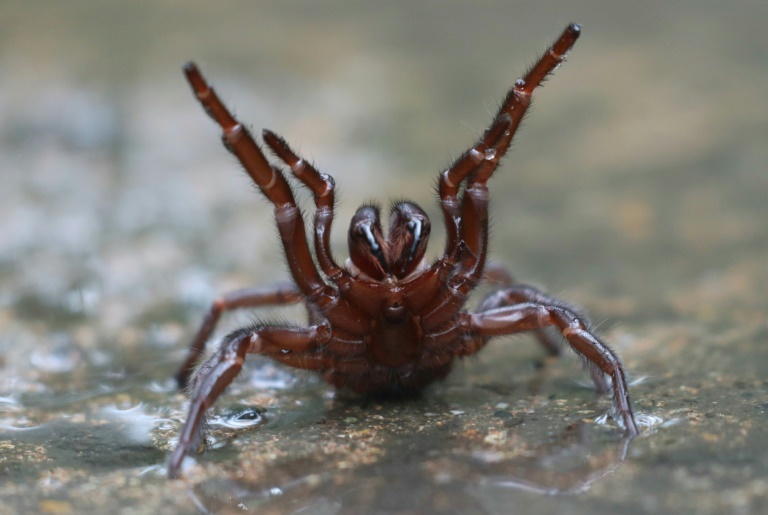
There are now 50,000 known different species of spider crawling the Earth, the World Spider Catalog announced Wednesday — and there might be another 50,000 out there.

The WSC, based at the Natural History Museum of Bern in the Swiss capital, said the 50,000th spider registered is the Guriurius minuano, which belongs to the Salticidae family of jumping spiders and hunts its prey on shrubs and trees in southern Brazil, Uruguay, and around Buenos Aires.

It was described by the arachnologist Kimberly S. Marta and her colleagues from Brazil and is named after the now-extinct Minuane people who lived in the area.

The first scientific description of a spider was in 1757 and while it has taken 265 years to reach 50,000, the rate of discovery is steadily increasing, and it is thought it could take less than 100 years to discover the same number again.

“We estimate that there are still approximately 50,000 more spider species out there to discover,” said the WSC’s publishers.

The spider catalogue is freely available on the museum’s website.

“Spiders are the most important predators in Earth’s terrestrial habitats, and their ecological significance should not be underestimated,” the museum said.

“Consuming some 400 to 800 million tonnes of insects every year, they are the most important regulators of insect populations. Accordingly, they are also of fundamental importance to humans.”

World stock markets beat retreat with all eyes on Fed

Global equities sank Wednesday on bets the US Federal Reserve will act more aggressively to bring inflation under control.

Asian and European bourses retreated, and Wall Street was also trading lower, extending heavy falls in US stocks a day earlier.

The euro hit a one-month dollar low ahead of the release due Wednesday of the minutes from the Fed’s latest policy meeting.

The minutes from the Fed’s March meeting will be pored over for insights into the thinking of US central bankers, in light of the Ukraine war and recent data suggesting the world’s top economy remains resilient.

“The markets remain unnerved by the economic implications of a highly aggressive Fed and a potential policy mistake,” analysts from Charles Schwab said in a note.

London stocks slid also as UK businesses and individuals saw a major tax hike kick in, worsening Britain’s cost-of-living crisis as domestic energy bills rocket.

– ‘Significant headwinds’ –

“Investor confidence might have improved from the low point in early March when the Ukraine war was unfolding,” said AJ Bell investment director Russ Mould. 

“However, there remain significant headwinds for equities and the latest trouble spot is what the Federal Reserve might do to curb inflation.”

Investors are fretting also over how quickly officials will withdraw their vast pandemic-era financial support.

After last month’s 0.25-percentage-point hike in US interest rates, the focus is now on its plans for May’s meeting, with expectations growing that the Fed will announce a 0.50-point lift followed by several more before the end of the year.

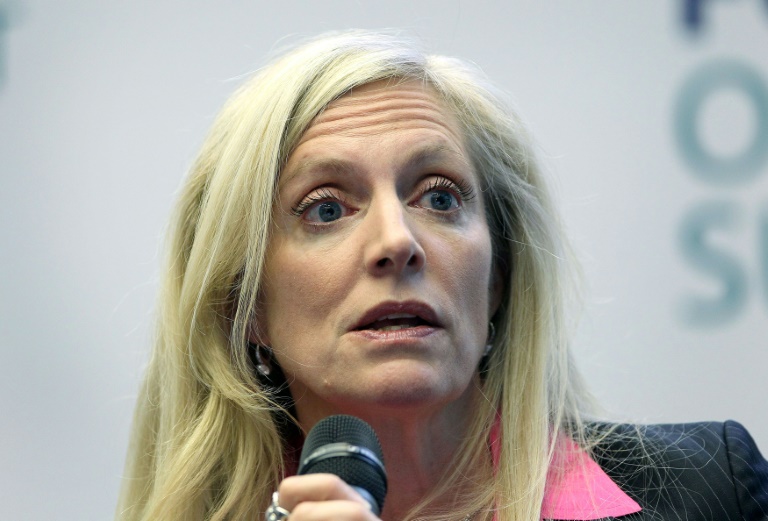
Fed governor Lael Brainard, who is considered a dove, on Tuesday spooked traders by saying bringing US inflation down from 40-year highs was of “paramount importance” and that the bank was “prepared to take stronger action” if warranted.

Brainard also said bank policymakers were ready to start reducing its vast bond holdings, which have helped keep borrowing costs down.

“It’s an ugly affair right now, because the increased chatter from Fed officials about perhaps needing to be more aggressive with the policy stance shows that the Fed is recognising it is behind the inflation curve and now risks making a policy mistake trying to catch up,” said Patrick O’Hare from Briefing.com.

– Oil rebounds –

Oil prices dropped after rebounding earlier when European Council chief Charles Michel told the European Parliament that it must impose oil and gas sanctions on Russia “sooner or later”.

Crude futures had slid the previous day on the European Union’s decision not to include Russian oil in a fresh round of sanctions.

Britain slapped new sanctions on Russia Wednesday over its invasion of Ukraine, targeting two banks and eliminating all Russian oil and coal imports by the end of the year.

The White House also announced sanctions targeting Russia’s top public and private banks and two daughters of President Vladimir Putin.

– Key figures around 1605 GMT –

London – FTSE 100: DOWN 0.3 percent at 7,587.70 points (close)

Frankfurt – DAX: DOWN 1.9 percent at 14,151.69 (close) 

Paris – CAC 40: DOWN 2.2 percent at 6,498.83  (close) 

EURO STOXX 50: DOWN 2.4 percent at 3,824.69

New York – Dow: DOWN 0.6 percent at 34,434.41 

Tokyo – Nikkei 225: DOWN 1.9 percent at 27,080.52 (close)

Hong Kong – Hang Seng Index: DOWN 1.3 percent at 22,219.85 (close)

Shanghai – Composite: FLAT at 3,283.43 (close)

Brent North Sea crude: DOWN 2.6 percent at $103.86 per barrel

West Texas Intermediate: DOWN 2.8 percent at $99.11 per barrel

Euro/dollar: UP at $1.0913 from $1.0905 late Tuesday

Pound/dollar: UP at $1.3086 from $1.3074

Euro/pound: DOWN at 83.40 pence from 83.41 pence

Dollar/yen: UP at 123.73  yen from 123.60 yen

burs-rfj-kjm/har

US, UK up Russia sanctions as Kyiv warns of eastern attack

The US and Britain announced new sanctions against Russia Wednesday after Ukraine said hundreds of civilians were found dead around its capital, as Kyiv warned residents in the east of the country to get out “now” ahead of a feared assault.

The White House unveiled measures targeting Russia’s top public and private banks and two daughters of President Vladimir Putin, while Britain sanctioned two banks — and vowed to eliminate all Russian oil and gas imports by year-end.

Their actions followed an international outcry after Ukraine said its forces found  hundreds of civilians dead around the capital Kyiv, including the town of Bucha, after Russian troops withdrew.

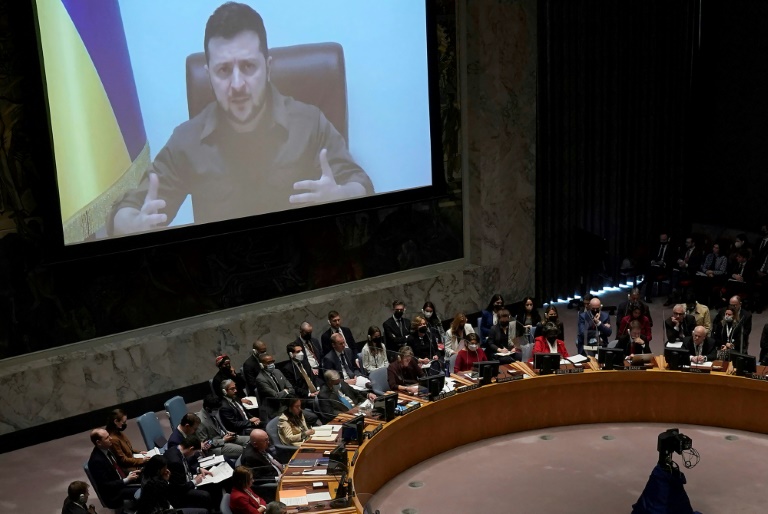
In a video address to the UN Security Council on Tuesday, Ukrainian leader Volodymyr Zelensky showed harrowing images of corpses — including of children — that he said were victims of Russian atrocities.

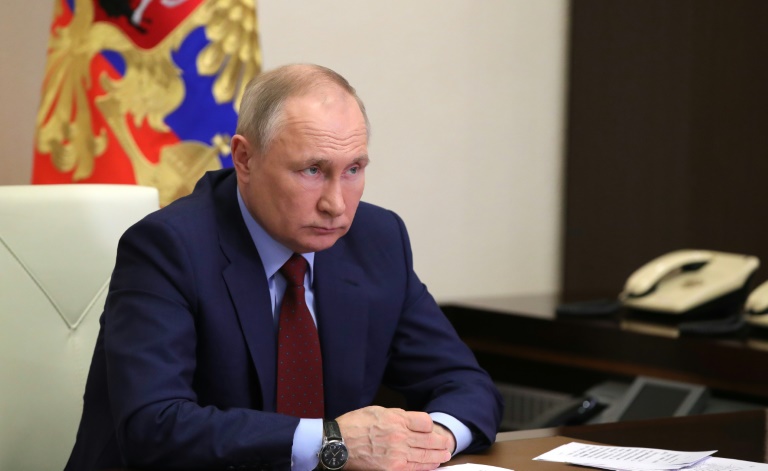
The Kremlin denies responsibility and on Wednesday, Putin accused Ukrainian authorities of being behind “crude and cynical provocations” in Bucha, in a call with Hungary’s prime minister, the Kremlin said.

The Russian withdrawal from areas around Kyiv and the north is part of a shift in focus towards Ukraine’s southeast, in a bid to create a land bridge between occupied Crimea and Moscow-backed separatist statelets in the region of Donbas.

Ukraine Deputy Prime Minister Iryna Vereshchuk on Wednesday warned residents in the eastern Kharkiv, Lugansk and Donetsk regions to leave immediately due a feared Russian attack.

“It has to be done now because later people will be under fire and face the threat of death,” she wrote on Telegram.

NATO chief Jens Stoltenberg said there was no sign Putin had dropped “his ambition to control the whole of Ukraine”.

“We have to be realistic and realise that this may last for a long time, for many months, for even years,” he said ahead of a meeting with NATO foreign ministers. 

– ‘Slashed their throats’ –

Zelensky called for Russia’s exclusion from the UN Security Council, where it is one of five members with veto power, and made an impassioned plea for action in response to the civilian killings.

“They cut off limbs… slashed their throats. Women were raped and killed in front of their children,” he said, after earlier comparing Russia’s assault to the 1937 Nazi bombing of the town of Guernica.

The US and Britain have also pressed to have Russia excluded from the UN Human Rights Council, with a vote in the General Assembly scheduled for Thursday.

At his weekly audience at the Vatican, Pope Francis deplored the “powerlessness of international organisations” before what he called “ever more horrendous cruelties”, before kissing a flag brought from Bucha.

Thousands of people have been killed and more than 11 million displaced as refugees or within Ukraine since Russia invaded, sparking Europe’s largest refugee crisis since World War II.

Western powers have already pummelled Russia with debilitating economic sanctions, which forced Moscow Wednesday to make foreign debt payments on dollar-denominated bonds in rubles, raising the prospect of a potential default.

Washington’s new sanctions targeted Maria Vorontsova and Katerina Tikhonova, two adult daughters of Putin, plus the wife and daughter of Foreign Minister Sergei Lavrov and members of the Russia’s Security Council.

The White House also declared “full blocking” sanctions on Russia’s largest public and private financial institutions, Sberbank and Alfa Bank, and said all new US investment in Russia was now prohibited.

Britain meanwhile froze the overseas assets of Sberbank — Russia’s largest bank — and Credit Bank of Moscow.

Prime Minister Boris Johnson had earlier said what happened in Bucha “doesn’t look far short of genocide to me”.

– EU ‘indecisiveness’ –

The EU is also poised to implement a fifth round of sanctions cutting off Russian coal imports — and European Council chief Charles Michel said that “sooner or later”, it must also impose oil and gas sanctions.

Condemning “war crimes” in Russia, he said: “There must be, and there will be, severe consequences for all those responsible.”

But addressing the Irish parliament Wednesday, Zelensky condemned the “indecisiveness” on the part of European nations dependent on Russian energy.

He called for the total exclusion of Russian banks from Western finance.

In other moves to isolate Moscow, EU countries including Germany, France, Italy and Spain have expelled more than 200 Russian diplomats and staff between them this week.

The Kremlin called the mass expulsions a “short-sighted move” that would complicate efforts to negotiate an end to the hostilities.

Peace talks between the sides have so far gone nowhere, though Moscow says it is “ready” to continue.

Putin also warned of “reprisals” for recent European measures targeting Russian gas giant Gazprom — and said Moscow would “monitor” its food exports to “hostile” nations, raising the spectre of shortages and price spikes.

– Cluster bombs flying –

Satellite photos taken while Bucha was still under Moscow’s control show what appear to be bodies lying in streets where the dead were later found by Ukrainian forces and seen by journalists. 

And multiple Bucha residents told AFP they had seen Russian soldiers killing civilians.

“Right in front of my eyes, they fired on a man who was going to get food at the supermarket,” said 43-year-old Olena, who declined to give her family name.

During a grim cleanup, the remains of partially burned bodies in black bags were lifted into a van, with officials telling journalists “dozens of bodies” remained in apartments and in nearby woods.

European Commission chief Ursula von der Leyen, who will visit Kyiv this week, has offered the bloc’s assistance in documenting proof of war crimes.

Scenes of devastation have met those venturing into other areas from which Russian forces have withdrawn. 

In the northern city of Chernigiv, which was besieged from the early days of the invasion, a charred children’s hospital, full of bullet and shrapnel holes, served as a shelter.

“Cluster bombs were flying, we have traces of these bombs,” said 51-year-old Olena Makoviy. “The injured were brought to the children’s hospital, both adults and children.”

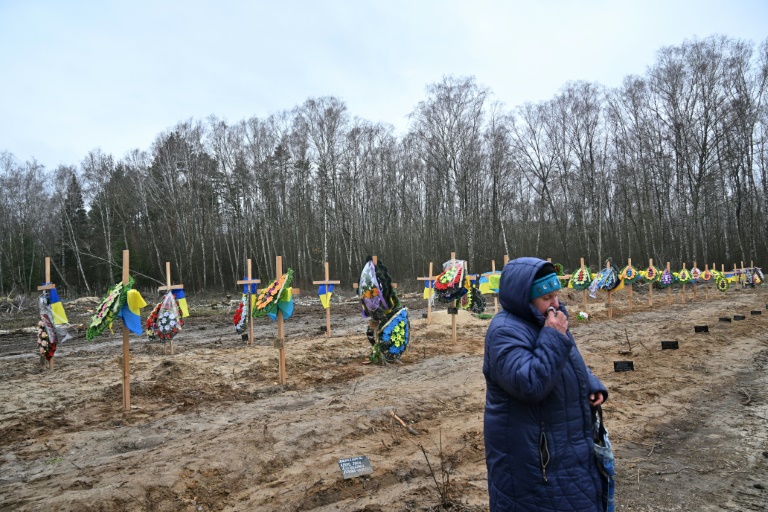
City officials estimate around 350 civilians have been killed in Chernigiv, with fellow residents digging mass graves to bury them. 

“It was very scary here from the first days of the war,” said Makoviy. “They brought guys, handsome, young, but no longer alive,”

burs-ar/yad

Tear gas fired at Sudan protest 3 years after anti-Bashir sit-in

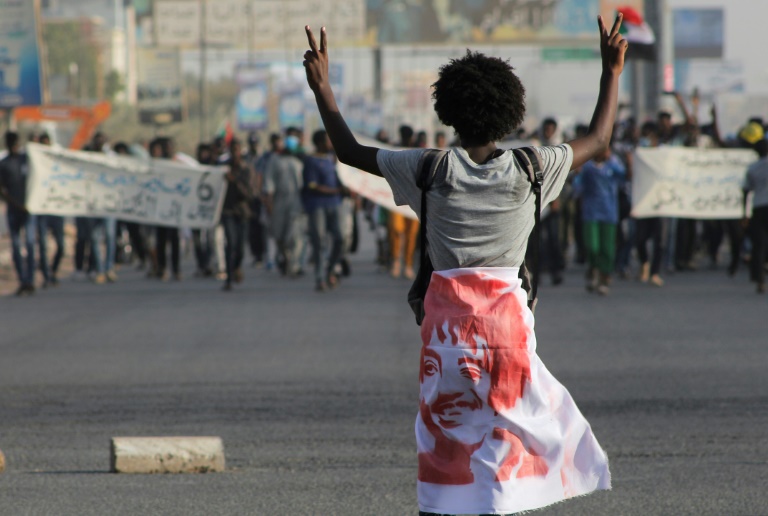
Thousands protested across Sudan against military rule on the anniversary Wednesday of previous popular uprisings, most recently against autocrat Omar al-Bashir three years ago. 

Security forces fired tear gas at demonstrators in the capital Khartoum, its twin city of Omdurman, and in Wad Madani to the south, witnesses and AFP correspondents said. 

They also “stormed Al-Jawda hospital and fired tear gas inside, scaring patients and health workers and causing suffocation among some of them”, said the independent Central Committee of Sudan Doctors. 

Sudan has grappled with an October 25 coup led by army chief Abdel Fattah al-Burhan that has derailed a political transition period and hammered the economy of one of the world’s poorest countries.

Pro-democracy activists had warned online of a people power “earthquake of April 6” — a momentous day in Sudan’s history that was key in bringing down earlier strongmen.

In 1985, the day saw the ouster of president Jaafar Nimeiri following a popular uprising. In 2019 it marked the start of a mass sit-in outside army headquarters, after months of protests, against Bashir’s three decades in power.

“It is an important day… so we expect many to take to the streets despite the heat and Ramadan,” the Muslim month of fasting, said one Khartoum protester, Badwi Bashir.

“We just want to bring down the coup (leadership) and end the prospect of any future coups.”

– ‘No to military rule’ –

Sudan’s latest putsch has “set fire to all aspects of life, turning our country into an arena of crises,” said the civilian alliance Forces of Freedom and Change, or FFC.

Security forces had earlier sealed off key bridges and deployed around the presidential palace and army headquarters.

In Omdurman, protesters broke through barbed wire blockades and marched through streets leading to the parliament building, according to an AFP correspondent. 

Protesters marched in the eastern state of Gedaref with banners that read “No to military rule” and “Away with the government of hunger”, said one witness, Ahmed Salah. 

Demonstrations were also held in several cities across the Darfur region, the central state of North Kordofan and the Red Sea city of Port Sudan, according to witnesses. 

Five days after the start of the 2019 sit-in, generals bowed to the pressure on the streets to remove Bashir. 

But the protesters stayed on to press for civilian rule, only to be dispersed in a crackdown in June that year by men in military fatigues that claimed 128 lives according to medics.

Sudan’s civilian and military leaders later agreed on a transition of power, which promised greater international engagement for the country as well as foreign aid and investment.

But last October’s coup upended those plans, leading to the current wave of protests. At least 93 people have been killed and hundreds wounded in the crackdown since, medics say.

– Partnership ‘failed’ –

“We have to defeat the coup,” FFC spokesman Jaafar Hassan said last week. 

“We have tried a partnership with the military, and it failed, ending in this coup, and we shouldn’t do this again.”

Burhan said last Saturday he would only “hand over power to an honest, elected authority, accepted by the all the Sudanese people”.

The United States on Wednesday warned against “the use of any violence” and demanded Sudanese authorities “keep their word and hold accountable those responsible for abuses.”

Since the coup, Sudan’s already ailing economy has suffered severe blows, as Western donors cut crucial aid pending the restoration of a transition to civilian rule.

Prices of food, fuel and basic commodities have soared and crime has spiked. Violence has intensified in remote areas, particularly the restive Darfur region, the UN says.

Burhan last week threatened to expel UN special representative Volker Perthes, accusing him of “interference” in the country’s affairs after Perthes warned of the deepening crisis in Sudan during a UN Security Council briefing.

US slaps sanctions on Putin's daughters, Russia's biggest banks

The White House announced sanctions Wednesday targeting Russia’s top public and private banks and two daughters of Vladimir Putin, adding pressure on the country’s economy and its elite over the invasion of Ukraine.

The new sanctions targeted Maria Vorontsova and Katerina Tikhonova, two adult daughters of Putin’s with his former wife Lyudmila Shkrebneva.

Also hit with new sanctions were the wife and daughter of Russian Foreign Minister Sergei Lavrov and members of Russia’s Security Council, including former president and prime minister Dmitry Medvedev and Prime Minister Mikhail Mishustin.

“These individuals have enriched themselves at the expense of the Russian people. Some of them are responsible for providing the support necessary to underpin Putin’s war on Ukraine,” the White House said in a statement.

“We believe that many of Putin’s assets are hidden with family members, and that’s why we’re targeting them,” a senior US official told reporters, referring to the two daughters.

The White House also declared “full blocking” sanctions on Russia’s largest public and private financial institutions, Sberbank and Alfa Bank, and said all new US investment in Russia was now prohibited.

And it said that new sanctions would be announced Thursday on key Russian state enterprises, aiming to hamper their ability to trade and move money through the global financial system.

President Joe Biden tied the escalation of sanctions directly to the evidence that has mounted that Russian forces deliberately murdered civilians in Bucha, a town outside Kyiv.

“I made clear that Russia would pay a severe and immediate price for its atrocities in Bucha,” Biden tweeted.

– Energy transactions protected – 

The new sanctions were being coordinated with US allies in Europe and elsewhere, aiming to further damage the Russian economy in order to pressure Putin to stop the war.

“Today, in alignment with G7 allies and partners, we are intensifying the most severe sanctions ever levied on a major economy,” the official said on grounds of anonymity.

The sanctions on the two banks broadened an earlier measure that blocked certain capital transactions with them.

Now any asset the bank has that is or comes under US jurisdiction will be frozen, and people and companies under US jurisdiction are banned from doing business with them.

This could have a significant impact on Sberbank, which holds nearly one-third of the assets in the Russian banking industry.

However, the US sanctions continued to avoid Russia’s energy sector, which still reaps millions of dollars daily from European customers for its natural gas.

Energy-related transactions at the two banks will still be permitted, the White House said.

In a parallel action Wednesday, the US Justice Department indicted Russian oligarch Konstantin Malofeyev for sanctions violations.

Attorney General Merrick Garland said the Russian billionaire was a source of financing for Russians promoting separatism in Crimea and supported pro-Moscow separatists in the so-called Donetsk People’s Republic in eastern Ukraine.   

“After being sanctioned by the United States, Malofeyev attempted to evade the sanctions by using co-conspirators to surreptitiously acquire and run media outlets across Europe,” Garland told reporters.

“Malofeyev played a leading role in supporting Russia’s 2014 invasion of eastern Ukraine, continues to run a pro-Putin propaganda network, and recently described Russia’s 2022 military invasion of Ukraine as a ‘holy war,’” said FBI official Michael Driscoll.

War in Ukraine: Latest developments

Here are the latest developments in the war in Ukraine:

– Leave ‘now’, residents in east Ukraine told –

Ukraine tells residents in the country’s east to evacuate “now” or “risk death” ahead of a feared Russian onslaught on the Donbas region, which Moscow has declared its top prize.

Deputy prime minister Iryna Vereshchuk writes on Telegram that the governors of the Lugansk and Donetsk regions, part of the Donbas, and the nearby city of Kharkiv “are doing everything to ensure that the evacuations take place in an organised manner.”

– Putin speaks on Bucha –

Russian President Vladimir Putin accuses Ukrainian authorities of being behind “crude and cynical provocations”, after they said hundreds of civilians were found dead in the town of Bucha when Russian troops withdrew.

– Denials ‘not tenable’ –

The Berlin government says that satellite images from last month provided strong rebuttal of Russian denials of involvement in civilian deaths in Bucha.

“Russian declarations” that images of civilian deaths “were posed scenes or that they were not responsible for the murders are in our view not tenable”, government spokesman Steffen Hebestreit says.

– Putin daughters sanctioned –

The United States announces sanctions on two daughters of Putin, saying family members are known to hide the Russian president’s wealth.

It also declared “full blocking” sanctions on Russia’s largest public and private financial institutions, Sberbank and Alfa Bank, and says all new US investments in Russia are now prohibited.

The EU is also looking to add Putin’s daughters to its sanctions blacklist, European diplomats tell AFP.

– ‘Long’ war ahead –

NATO chief Jens Stoltenberg says there is no sign Putin has dropped “his ambition to control the whole of Ukraine”.

He says the war could last “for a long time, for many months, for even years” saying the West must be prepared for “the long haul”.

– Orban invites Putin, Zelensky –

Hungarian Prime Minister Viktor Orban, one of Putin’s rare allies in Europe,  says he has urged the Russian leader to declare an immediate ceasefire in Ukraine.

He also invites the leaders of France, Germany and Ukraine to meet Putin in Budapest.

– UN rights body suspension –

The UN General Assembly will vote Thursday on suspending Russia from the UN Human Rights Council as punishment for invading Ukraine, the assembly presidency says.

A day earlier Ukrainian President Volodymyr Zelensky had also called for Russia to be expelled from the UN Security Council “so it cannot block decisions about its own aggression, its own war.”

– Dollar debt paid in rubles –

Russia says it had made payments on dollar-denominated foreign debt in rubles, adding to fears the country is headed for a sovereign default.

The finance ministry says it was forced to make the $649.2-million payment in rubles after an intermediary bank refused to execute the payment.

It did not say whether the payment was accepted.

– ‘Not far short of genocide’: Johnson –

British Prime Minister Boris Johnson says the alleged massacre in Bucha “doesn’t look far short of genocide to me” and that Britain will also step up sanctions on Russia.

US President Joe Biden has branded Putin a war criminal.

– Pope slams ‘horrendous cruelties’ –

Pope Francis says during his weekly audience the “recent news about the war in Ukraine, instead of bringing relief and hope, instead attests to new atrocities, such as the Bucha massacre.”

– Red Cross convoy –

A Red Cross convoy arrives in the southern Ukrainian town of Zaporizhzhia after failing to reach the besieged port city of Mariupol, an AFP journalist  reports.

Seven buses with around 300 people onboard accompanied by the International Committee of the Red Cross and at least 40 private cars arrive in the southern town.

burs-cb-jmy/pvh

Israel's Bennett loses majority after MP quits coalition

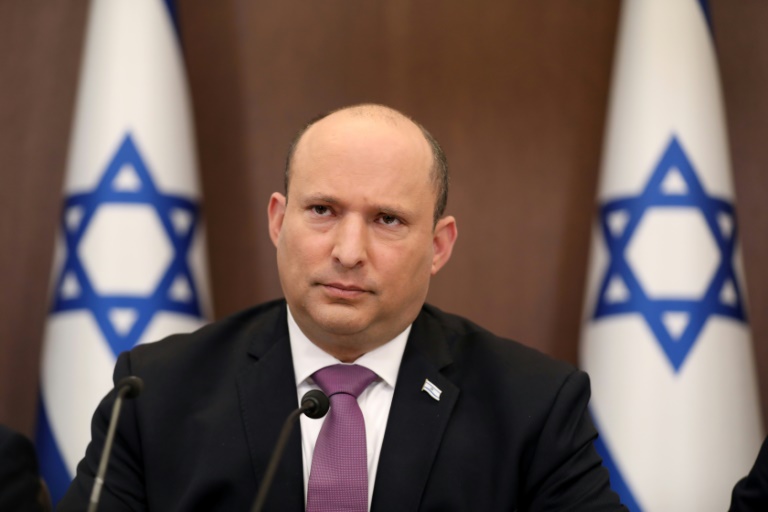
A key member of Israeli Prime Minister Naftali Bennett’s Yamina party said Wednesday she was quitting his coalition government, in a surprise move that leaves him without a parliamentary majority.

Idit Silman’s announcement left Bennett’s coalition, an alliance of parties ranging from the Jewish right and Israeli doves to an Arab Muslim party, with 60 seats — the same as the opposition.

Although Silman´s defection does not mean the fall of the coalition, it raises the spectre of a potential return to office by veteran leader Benjamin Netanyahu, less than a year after he lost the premiership to Bennett. 

“I tried the path of unity. I worked a lot for this coalition,” Silman, a religious conservative who served as coalition chairperson, said in a statement.

“Sadly, I cannot take part in harming the Jewish identity of Israel.”

On Monday, Silman lashed out at Health Minister Nitzan Horowitz, after he instructed hospitals to allow leavened bread products onto their premises during the upcoming Passover holiday, in line with a recent supreme court ruling reversing years of prohibition.

Jewish tradition bars leavened bread from the public domain during Passover.

“I am ending my membership of the coalition and will try to continue to talk my friends into returning home and forming a right-wing government,” Silman said.

“I know I’m not the only one who feels this way.”

Bennett’s coalition may continue ruling with 60 seats, although with difficulty passing new legislation. 

If another member of the coalition defects, however, the Knesset could hold a vote of no confidence and lead Israel back to the polls for a fifth parliamentary election in four years. 

Political analyst Dahlia Scheindlin told AFP that if Silman “is the first person to really prepare to bring down the government, she is doing it from the place of conviction”.

“She is religious, and I think we all underestimate the power of theology,” said Scheindlin. 

In a formal resignation letter addressed to Bennett, Silman said: “We must admit that we tried. It’s time to recalculate and try to form a national, Jewish, Zionist government.”

There was no immediate comment from Bennett, whose Yamina party has suffered numerous splits and defections since its inception in 2019. 

Yamina now holds just five of parliament’s 120 seats.

– ‘Limp government’ –

Following the announcement, Silman was embraced by the same right-wing politicians who had relentlessly attacked her since she followed Bennett into the governing coalition last year, reneging on campaign promises.

“Idit, you’re proof that what guides you is the concern for the Jewish identity of Israel, the concern for the land of Israel, and I welcome you back home to the national camp,” opposition leader Netanyahu said in a video recording.

“I call on whoever was elected with the votes of the national camp to join Idit and come back home, you’ll be received with all due honour and open arms,” the right-wing former prime minister added.

Netanyahu, Israel’s longest-serving prime minister, who was in office from 1996 to 1999 and again from 2009 until June, had pledged to play the role of spoiler against Bennett’s government which brought an end to his hold on power.

At a special session of the Knesset, which is currently in recess, Netanyahu said: “There is a weak and limp government in Israel today. Its days are numbered.”  

The Knesset will reconvene on May 8 to resume its legislative work. 

“Ï won´t name any names, but there will be more defectors,” Miki Zohar of Netanyahu´s Likud party told Kan public radio.

“We’re in talks with more than two lawmakers who are considering coming to us,” Zohar added.

To form a coalition of his own without new elections, Netanyahu would need the support of at least 61 lawmakers.

Currently he falls well short of that threshold, and does not command the support of all 60 opposition MPs. The six lawmakers of the Arab-led Joint List are fierce opponents of the former premier.

Bezalel Smotrich of the Religious Zionism party, once a political partner of Bennett, predicted the ruling coalition would not survive Silman’s defection.

“This is the beginning of the end of the left-wing, non-Zionist government of Bennett and the Islamist Movement,” he wrote on Twitter.

Close Bitnami banner
Bitnami