World

Bolsonaro vetoes Covid aid for Brazil culture sector

Brazilian President Jair Bolsonaro vetoed a bill Wednesday that would have provided aid funds to artists and cultural programs hit hard by the coronavirus pandemic, triggering an outcry from opposition lawmakers, who vowed to override him.

Named for a widely beloved comedian and actor who died of Covid-19 last year, the Paulo Gustavo Bill aimed to provide 3.86 billion reais ($820 million) in federal funds to local and state governments to aid the cultural sector, still reeling from the impact of pandemic shut-downs.

It had passed Congress with broad support, by a vote of 74-0 in the Senate and 411-27 in the Chamber of Deputies.

Bolsonaro’s veto, published in the official gazette, was for economic reasons, the administration said. It argued the bill would breach the government’s spending cap without sourcing enough funds elsewhere to compensate.

Opposition lawmakers called that an excuse from the far-right president, long criticized for alleged attacks on culture and the arts.

Bolsonaro, who comes up for reelection in October, downgraded the culture ministry to a secretariat on taking office in 2019. His administration has faced repeated accusations of using its control over federal funding for the arts to try to censor projects it deems ideologically threatening.

“It’s not surprising that Bolsonaro vetoed the Paulo Gustavo Bill, given that this is an administration that hates culture,” tweeted Senator Zenaide Maia of opposition party PROS.

“But his veto also shows tremendous lack of vision, since investing in the cultural sector helps Brazil exit the current crisis. Culture is good in and of itself, but it also creates jobs and income.”

Congressman Odair Cunha of the left-wing Workers’ Party tweeted that Bolsonaro is “afraid of culture and freedom of expression, like every lover of dictatorship,” vowing: “We’re going to override that veto.”

Lawmakers would need an absolute majority in both houses of Congress to override.

Russia says paid dollar debt in rubles amid default fears

Russia said Wednesday it had been forced to make foreign debt payments on dollar-denominated bonds in rubles, raising the prospect of a potential default amid unprecedented Western sanctions over the Ukraine conflict.

The announcement came on the 42nd day of Russia’s military campaign in pro-Western Ukraine, with thousands killed and more than 11 million having fled their homes or the country in the worst refugee crisis in Europe since World War II.

The West has pummelled Russia with debilitating sanctions since President Vladimir Putin sent troops into Ukraine on February 24.

On Wednesday, the United States and the European Union were readying new sanctions after Ukrainian President Volodymyr Zelensky showed the UN Security Council harrowing images of violence.

The Russian finance ministry said on Wednesday that it had been forced to repay $649.2 million to foreign debt-holders in rubles after a correspondent bank refused to execute payment instructions.

Ratings agencies have downgraded Russia and warned that payments of dollar-denominated debt in local currency would constitute a sovereign default, the country’s first in decades.

The United States from Monday barred Russia from making debt payments using funds held at American banks, ramping up the economic pain in Moscow.

“A foreign correspondent bank refused to execute instructions for the payment” of debt on two eurobonds on April 4, the ministry said in a statement.

“In order to fulfil the state debt obligations of the Russian Federation,” the finance ministry said it “was forced to call upon a Russian financial institution to make the necessary payments”.

The finance ministry did not specify whether the ruble payment had been accepted. 

“If Russia attempts to transfer payment in rubles –- as it has warned in the past –- via a special payment procedure set up in mid-March, for bonds that do not have a ruble repayment clause, this will constitute default,” said Elina Ribakova, deputy chief economist at the Institute of International Finance, a US-headquartered financial industry association.

– ‘Putin impoverishing Russia’ –

The Kremlin denied suggestions that Russia could default on foreign debt payments.

“Russia has all the necessary resources to service its debts,” Kremlin spokesman Dmitry Peskov told reporters. 

“There are no grounds for a real default.”

Timothy Ash, an emerging markets strategist at BlueBay Asset Management, said, however, that it was hard to see Russia avoiding a sovereign default. 

“Putin is impoverishing Russia for years to come,” he said in a note to clients.

“Default might not crash Russian markets and the economy immediately but will have devastating longer term consequences,” he said, adding that investment, growth and living standards will be affected.

Russia missed payments on domestic, ruble-denominated debt in 1998 amid a broader financial crisis, but last defaulted on its foreign currency debt in 1918, when Bolshevik revolution leader Vladimir Lenin refused to recognise the obligations of the deposed tsar’s regime. 

In recent years, Moscow amassed about $600 billion in foreign currency reserves, including gold, largely from oil and natural gas sales.

The government owes about $40 billion in dollar- or euro-denominated debt, though only half of that is held by foreign creditors.

– No wages? –

The sanctions also sparked an exodus from Russia of hundreds of foreign companies.

US officials expect the sanctions to plunge Russia, which has heavily relied on imports of manufacturing equipment and consumer goods, into deep recession.

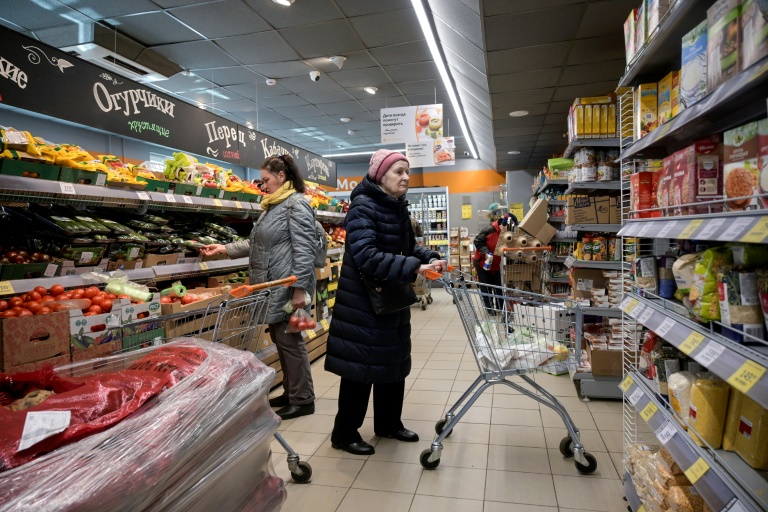
Ordinary Russians have been bracing for tough times, stocking up on food and other supplies as inflation soars.

New car sales sank almost 63 percent in Russia in March year-on-year, industry data showed Wednesday, with Russians less likely to buy imported cars after the ruble plummeted in value.

Only 55,129 cars or light commercial vehicles were sold last month, a 62.9-percent drop from the same period last year, said the Association of European Businesses. 

Andrei Yakovlev, director of the Institute for Industrial and Market Studies at Moscow’s Higher School of Economics, said the worst economic impact of the sanctions is still to come, since many Russian businesses rely on imported components and are using up their current stocks.

“Disruption to component supplies across all industries will begin in about a month or a month and a half,” Yakovlev told AFP. 

“It is possible that a large number of enterprises will stop working because of this in May,” he said, adding that eventually tens or even hundreds of thousands of people will stop receiving wages.

Greeks demonstrate over soaring prices

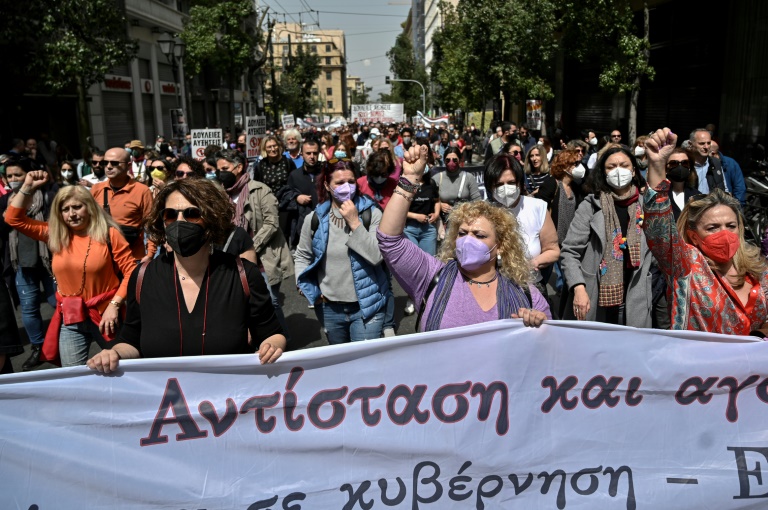
Thousands of Greeks demonstrated in Athens against soaring prices Wednesday as a general strike shut down public services.

Some 10,000 marched in the capital, with more protests held in other major cities, police said.

Ferry and train services were halted, though airports were unaffected by the walkout.

“Compared to the cost of living, salaries are paltry,” said one of the demonstrators, 32-year-old teacher Yannis Bitzoulis.

“Society is on its knees,” he told AFP.

Countries across Europe are facing rising inflation as energy prices have jumped since Russia invaded Ukraine on February 24, with the growing cost of living also sparking strikes and protests in fellow EU nation Spain.

Greeks have been hit by rising electricity and heating bills as well as housing costs.

Prices rose 6.2 percent in January compared with a year earlier — a record for Greece since it adopted the European Union’s single currency in 2001. It bumped up to 7.2 percent in February.

“Everything is more expensive, we can no longer cope,” said Evangelia, who works for a social collective and declined to give her surname.

The country’s biggest civil service and private sector unions, which called the industrial action on Wednesday, are demanding a raise in the minimum wage — currently at under 780 euros a month — that is among the lowest in the eurozone.

The Communist-affiliated Pame union on Wednesday said that the minimum wage had been slashed by 22 percent in 2012, at the height of Greece’ near-decade debt crisis.

Facing a drop in popularity ahead of 2023 elections, Prime Minister Kyriakos Mitsotakis last month announced a 1.1-billion-euro ($1.2-billion) benefits package to help poor households weather rising prices.

DR Congo Pygmies attacked in wildlife park: rights group

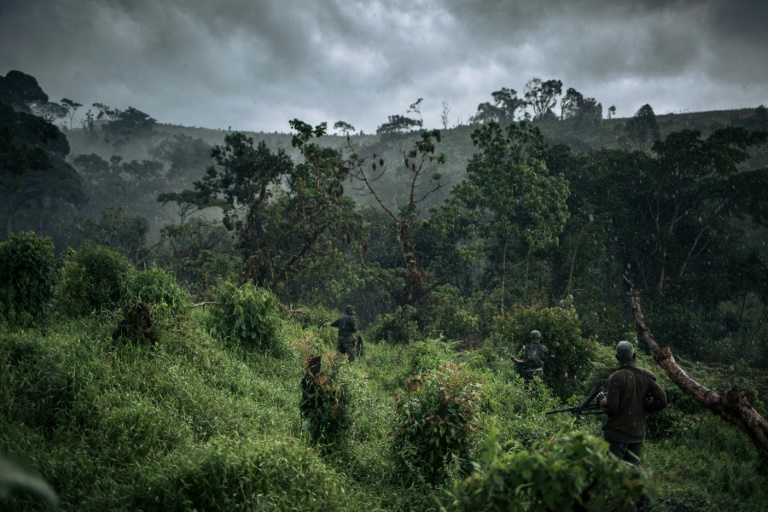
Troops and rangers in the Kahuzi-Biega National Park in eastern DR Congo have carried out attacks on indigenous Pygmies living in the famed wildlife haven, a rights watchdog said on Wednesday

Violence broke out in 2018 between park rangers and members of the Batwa community, who are accused of illegally settling in the reserve, cutting down trees to make charcoal and opening fire on rangers, killing and wounding a number of them.

The British watchdog Minority Rights Group (MRG), in a report on Wednesday, alleged that soldiers and Kahuzi-Biega guards carried out attacks against the Pygmies living in the park. 

“The attacks were well-planned, targeted civilian populations,” the group said.

“The research team obtained direct evidence of the deaths of at least 20 individual Batwa community members in connection with this three-year campaign of forced expulsion,” it added.

“The research team obtained direct evidence that 15 Batwa women were forcibly group-raped by park guards and soldiers during the July and November-December 2021 operations,” the watchdog said.

The 6,000-square-kilometre (2,300-square-mile mile) reserve lies close to the Rwandan border near Bukavu, in one of the most troubled areas of the vast country.

– Legal limbo –

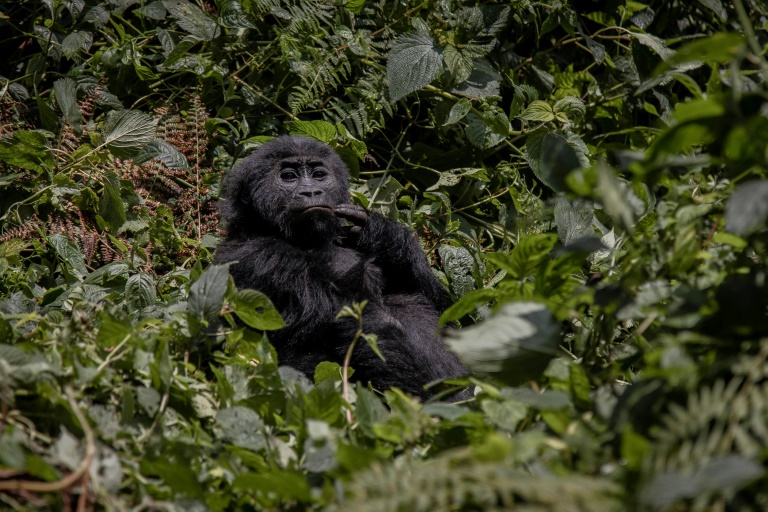
Dominated by the extinct volcanoes of Kahuzi and Biega, the park’s tropical forests are a redoubt for one of the last populations of eastern lowland gorillas, made up of about 250 primates, according to its website.

Since the 1990s, the haven has been listed by UNESCO as a World Heritage site in danger because of the presence of armed groups and settlers, poaching and deforestation.

A number of Pygmies charge that their land was confiscated when the national park was expanded and want to recover what they say is theirs.

The MRG report, based on on-site investigation and dozens of witnesses, said the park rangers received financial and technical support at the time from the governments of Germany and the United States, as well as international conservation organizations such as the Wildlife Conservation Society.

An investigation has recently been launched by the park’s overseers, the Congolese Institute for the Conservation of Nature (ICCN), to probe alleged violations.

The panel has been in Bukavu since April 4 and will travel to the scene of the alleged crimes, Georges Muzibaziba, who heads the ICCN’s human rights section.

There is a lack of legal clarity between DR Congo’s laws that protect the national park and those guaranteeing the rights of the Pygmy populations. 

On April 7, 2021, a bill to protect and promote the rights of indigenous people was adopted by the DR Congo parliament.

It guarantees among other things recognition of the rights to land and natural resources of the indigenous Pygmy people to possess, occupy and use traditionally.

The Senate has been reviewing the bill for the last year.

Tear gas fired at Sudan protest 3 years after anti-Bashir sit-in

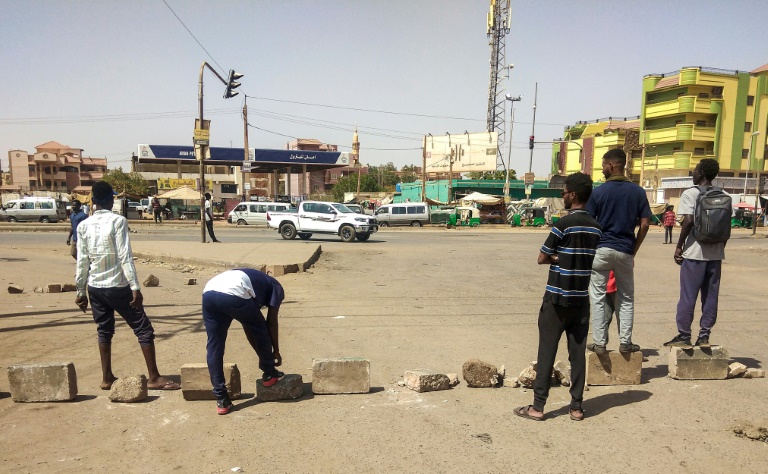
Thousands protested in Sudan against military rule on the anniversary Wednesday of previous popular uprisings, most recently against autocrat Omar al-Bashir three years ago. 

In the capital Khartoum, where hundreds took to the streets, security forces fired tear gas at the crowd, said witnesses.

The security forces also “stormed al-Jawda hospital and fired tear gas inside, scaring patients and health workers and causing suffocation among some of them,” said the independent Central Committee of Sudan Doctors. 

Sudan has grappled with an October 25 coup led by army chief Abdel Fattah al-Burhan that has derailed a political transition period and hammered the economy of one of the world’s poorest countries.

Pro-democracy activists have warned online of a people power “earthquake of April 6” — a momentous day in Sudan’s history that was key in bringing down earlier strongmen.

In 1985, the day saw a popular uprising that ousted president Jaafar Nimeiri. In 2019 it marked the start of a mass sit-in outside army headquarters, after months of protests, against Bashir’s three decades in power.

“It is an important day… so we expect many to take to the streets despite the heat and Ramadan,” the Muslim month of fasting, said one Khartoum protester, Badwi Bashir.

“We just want to bring down the coup (leadership) and end the prospect of any future coups.”

Sudan’s latest putsch has “set fire to all aspects of life, turning our country into an arena of crises,” said the civilian alliance Forces of Freedom and Change, or FFC.

As protesters started to gather in the capital, security forces sealed off key bridges and deployed around the presidential palace and army headquarters.

In Khartoum’s twin city of Omdurman, they set up barbed wire blockades on streets leading to the parliament building. 

Hundreds marched in the eastern state of Gedaref with banners that read “No to military rule” and “Away with the government of hunger”, said one witness, Ahmed Salah. 

A demonstration was also held in Nyala, South Darfur, according to witness Mahdi Adam. 

– ‘Defeat the coup’ –

Five days after the start of the 2019 sit-in, generals bowed to the pressure on the streets to remove Bashir. 

But the protesters stayed on to press for civilian rule, only to be dispersed in a crackdown in June that year by men in military fatigues that claimed 128 lives according to medics.

Sudan’s civilian and military leaders later agreed on a transition of power, which promised greater international engagement for the country as well as foreign aid and investment.

But last October’s coup upended those plans, leading to the current wave of protests. At least 93 people have been killed and hundreds wounded in the crackdown since, medics say.

“We have to defeat the coup,” FFC spokesman Jaafar Hassan said last week. 

“We have tried a partnership with the military, and it failed, ending in this coup, and we shouldn’t do this again.”

Burhan said last Saturday he would only “hand over power to an honest, elected authority, accepted by the all the Sudanese people”.

The United States on Wednesday warned against “the use of any violence” and demanded Sudanese authorities “keep their word and hold accountable those responsible for abuses.”

Since the coup, Sudan’s already ailing economy has suffered severe blows, as Western donors cut crucial aid pending the restoration of a transition to civilian rule.

Prices of food, fuel and basic commodities have soared and crime has spiked. Violence has intensified in remote areas, particularly the restive Darfur region, the UN says.

Burhan last week threatened to expel UN special representative Volker Perthes, accusing him of “interference” in the country’s affairs after Perthes warned of the deepening crisis in Sudan during a UN Security Council briefing.

Thai national parks ban single-use plastics

Thailand on Wednesday banned styrofoam packaging and single-use plastics from national parks as it fights a scourge of waste threatening wildlife.

Waters off the coast of Thailand are choked with pollution and the coronavirus pandemic has brought a surge in plastic waste as demand for takeaway food grows.

The Thai Department of National Parks, Wildlife and Plant Conservation said the ban was necessary to protect ecology.

Offenders can be fined up to 100,000 baht ($3,000) if caught travelling into the parks with single-use plastic items or styrofoam containers.

The new regulations came into force Wednesday after they were published in the Royal Gazette a day earlier.

The ban includes “carry plastic bags which are less than 36 microns, plastic food containers, cups, straws, and cutlery”, the announcement said.

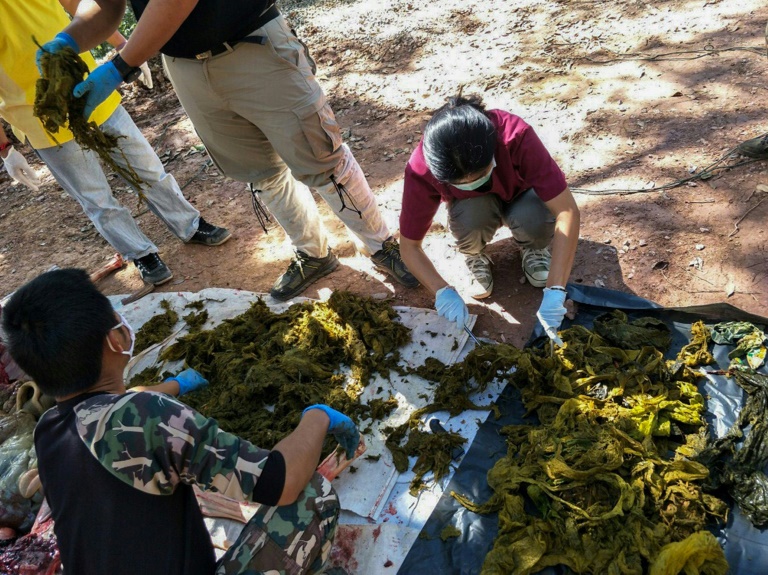
Greenpeace Thailand says plastic waste is a threat to the country’s wildlife including its elephant population. Digesting plastic can block animals’ intestines and disrupt the digestive system.

Elephants in Khao Yai National Park — three hours northeast of Bangkok — have reportedly eaten packaging, and plastic bags have been found in their faeces.

Plastic pollution on land can also wash into waterways and threaten river ecology and marine life.

Thailand, Indonesia, the Philippines, China and Vietnam together produce half of the plastic waste in the world’s oceans, according to campaign group the Ocean Conservancy.

Thailand outlawed the sale of single-use plastic bags at supermarkets and department stores in 2020, but they are still handed out by street food vendors, cafes, markets and smaller retailers.

Thais on average used around eight a day before the ban at major retailers was imposed.

The government wants 100 percent recyclable plastic to be in use by 2027.

JetBlue seeks to buy Spirit Airlines, threatening Frontier deal

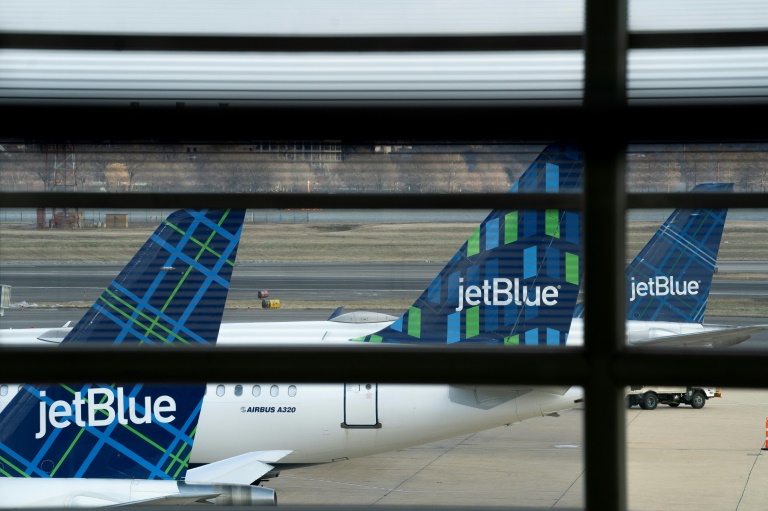
JetBlue Airways announced Tuesday a bid to acquire Spirit Airlines for $3.6 billion, setting up a bidding war with Frontier Airlines in the discount flying market.

The all-cash bid of $33 a share marks a 52 percent premium of Spirit’s price prior to its February 7 announcement of the deal with Frontier, according to JetBlue.

“JetBlue firmly believes its proposal constitutes a ‘superior proposal’ under Spirit’s merger agreement with Frontier and represents the most attractive opportunity for Spirit’s shareholders,” JetBlue said.

Spirit confirmed receipt of the “unsolicited” proposal from JetBlue, adding that its board would weigh the offer.

The board “will work with its financial and legal advisors to evaluate JetBlue’s proposal and pursue the course of action it determines to be in the best interests of Spirit and its stockholders,” Spirit said.

Frontier hit back at the JetBlue announcement and said its proposed merger with Spirit remained “in the best interest of consumers and shareholders,” a Frontier spokesperson said.

“Unlike the compelling Spirit-Frontier combination, an acquisition of Spirit by JetBlue, a high-fare carrier, would lead to more expensive travel for consumers. In particular, the significant East Coast overlap between JetBlue and Spirit would reduce competition and limit options for consumers.”

Frontier also said that JetBlue’s effort was “surprising” given an antitrust lawsuit by the Department of Justice challenging an alliance between American Airlines and JetBlue. 

In announcing the merger between Frontier and Spirit two months ago, executives from the two carriers argued they could together challenge larger US carriers and save about $1 billion in costs. 

JetBlue offered a similar argument Tuesday, saying the deal would “position JetBlue as the most compelling national low-fare challenger to the four large dominant US carriers.”

Shares of Spirit rose 22.4 percent Tuesday, while JetBlue fell 7.1 percent. Frontier Group rose 3.9 percent.

Israel's Bennett loses majority after MP quits coalition

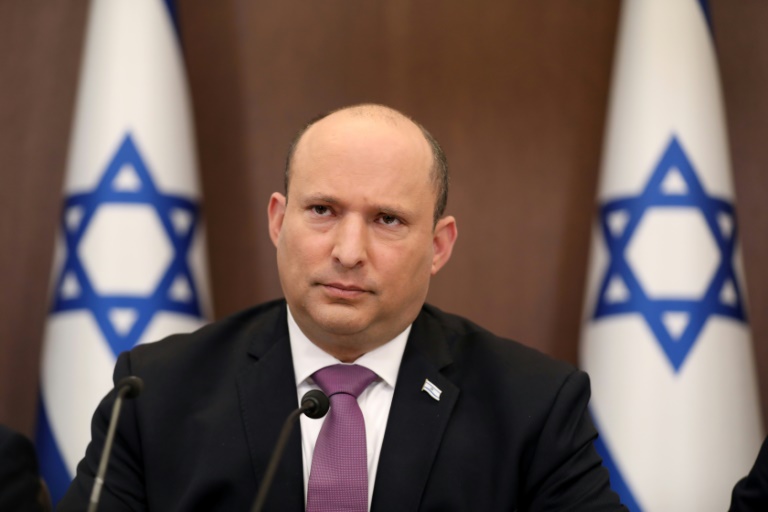
A key member of Israeli Prime Minister Naftali Bennett’s Yamina party said Wednesday she was quitting his coalition government, in a surprise move that leaves him without a parliamentary majority.

Idit Silman’s announcement left Bennett’s coalition, an alliance of parties ranging from the Jewish right and Israeli doves to an Arab Muslim party, with 60 seats — the same as the opposition.

Although Silman´s defection does not mean the fall of the coalition, it raises the spectre of a potential return to office by veteran leader Benjamin Netanyahu, less than a year after he lost the premiership to Bennett. 

“I tried the path of unity. I worked a lot for this coalition,” Silman, a religious conservative who served as coalition chairperson, said in a statement.

“Sadly, I cannot take part in harming the Jewish identity of Israel.”

On Monday, Silman lashed out at Health Minister Nitzan Horowitz, after he instructed hospitals to allow leavened bread products into their facilities during the upcoming Passover holiday, in line with a recent supreme court ruling reversing years of prohibition.

Jewish tradition bars leavened bread from the public domain during Passover.

“I am ending my membership of the coalition and will try to continue to talk my friends into returning home and forming a right-wing government,” Silman said.

“I know I’m not the only one who feels this way.”

Bennett’s coalition may continue ruling with 60 seats, although with difficulty passing new legislation. 

If another member of the coalition defects, however, the Knesset could hold a vote of no confidence and lead Israel back to the polls for a fifth parliamentary election in four years. 

Political analyst Dahlia Scheindlin told AFP that if Silman “is the first person to really prepare to bring down the government, she is doing it from the place of conviction”.

“She is religious, and I think we all underestimate the power of theology,” said Scheindlin. 

In a formal resignation letter addressed to Bennett, Silman said: “We must admit that we tried. It’s time to recalculate and try to form a national, Jewish, Zionist government.”

There was no immediate comment from Bennett, whose Yamina party has suffered numerous splits and defections since its inception in 2019. 

Israeli media reported that Bennett convened his party amid fears of more defections. Yamina now holds just five of parliament’s 120 seats.

– ‘Limp government’ –

Following the announcement, Silman was embraced by the same right-wing politicians who had relentlessly attacked her since she followed Bennett into the governing coalition last year, reneging on campaign promises.

“Idit, you’re proof that what guides you is the concern for the Jewish identity of Israel, the concern for the land of Israel, and I welcome you back home to the national camp,” opposition leader Netanyahu said in a video recording.

“I call on whoever was elected with the votes of the national camp to join Idit and come back home, you’ll be received with all due honour and open arms,” the right-wing former prime minister added.

Netanyahu, Israel’s longest-serving prime minister, who was in office from 1996 to 1999 and again from 2009 until June, had pledged to play the role of spoiler against Bennett’s government which brought an end to his years in power.

At a special session of the Knesset, which is currently in recess, Netanyahu said: “There is a weak and limp government in Israel today. Its days are numbered.”  

The Knesset will reconvene on May 8 to resume its legislative work. 

Israeli media reported that Netanyahu lured Silman by promising her the health portfolio should he become premier again. 

To form a coalition of his own without new elections, Netanyahu would need the support of at least 61 lawmakers, which he currently does not have.

Bezalel Smotrich of the Religious Zionism party, once a political partner of Bennett, expressed his appreciation to Silman for her “courage to make the difficult move”, and predicted the ruling coalition would not survive her defection.

“This is the beginning of the end of the left-wing, non-Zionist government of Bennett and the Islamist Movement,” he wrote on Twitter.

Easier for Europe to give up Russian coal than gas

The EU is preparing to hit Russian coal with sanctions.

While European Council chief Charles Michel said Wednesday the 27-nation bloc will have to impose oil and gas sanctions on Moscow “sooner or later”, it has been reluctant to do so for now.

Here is a look at the reasons behind the hestitation:

– A boon for Russia –

Russia is a major fossil fuel producer, and revenue from oil and gas made up 45 percent of the federal budget last year, according to the International Energy Agency.

That’s why Ukrainian President Volodymyr Zelensky urged the EU to stop buying Russian energy so “Russia will have no more money for this war”.

Russia exported nearly five million barrels per day of oil in 2020, with half going to European countries, especially Germany, the Netherlands and Poland, according to US data.

The United States, a major energy producer, has put an embargo on Russian energy including oil.

But there is only an EU proposal to ban coal imports, although Brussels aims to reduce purchases of Russian gas by two-thirds this year.

– Coal: replaceable –

Russia holds 15 percent of the world’s coal reserves, according to BP’s annual report on global energy.

Certain European countries like Germany and Poland are especially dependent on Russia for coal, used to produce electricity.

The trend in the EU is to move away from polluting coal: consumption of solid fossil fuels dropped from 1.2 billion to 427 million tonnes between 1990 and 2020, according to the Brussels-based Bruegel Institute think-tank.

Europeans also closed their mines but they became more dependent on imports.

The EU purchased 40 million tonnes of Russian hard coal in 2020 (54 percent of imports) compared with eight million tonnes in 1990 (seven percent).

But Germany plans to live without Russian coal by this autumn.

“Russian coal can be replaced because global coal markets are well supplied and flexible,” noted Bruegel.

Other major producers of coal include the US from where the EU imports 17.5 percent of coal today or Australia, representing 16 percent of the bloc’s purchases. Other options include South Africa or Indonesia.

– Oil remains possible –

Russia is the world’s largest oil exporter and supplies more than 25 percent of the EU’s crude, according to the EU statistics agency Eurostat.

In the first six months of 2021, Russia provided 75 percent of crude to Bulgaria, Slovakia, Hungary and Finland.

“In principle, replacing Russian oil will be easier than replacing Russian gas” because the imports arrive by ship and not infrastructure like pipelines, wrote Bruegel.

Experts also refer to the phenomenon of “communicating vessels”: Russian barrels would ultimately be sold in China, replacing those from the Middle East, which would then become available to Europe.

But Russia also exports 1.5 million barrels per day of diesel, which Europe is very fond of.

“(An embargo) will pose a real problem for diesel,” warned French ecological transition minister Barbara Pompili.

If there is an embargo, it will be necessary to find other sources of diesel, and not just crude oil. French energy giant TotalEnergies plans to import oil from its Saudi refinery.

– Expensive choice –

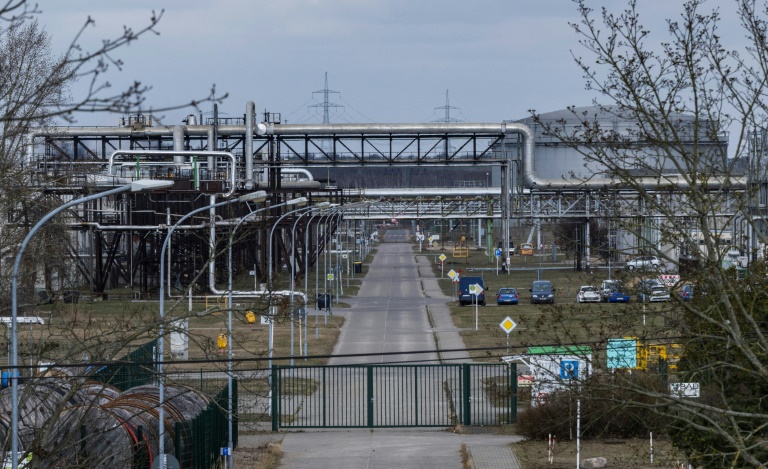
Russia exports gas directly to Europe via a network of pipelines.

With 155 billion cubic metres imported annually, Russian gas represents 45 percent of the EU’s imports and meets nearly 40 percent of consumption.

A potential embargo on all Russian energy divides Europe because some are more dependant than others, like Germany where 55 percent of its gas is from Russia.

“Russian gas deliveries are not exchangeable” and cutting them off “would harm us more than Russia”, German Finance Minister Christian Lindner said.

Russian gas made up 75 percent of imports of 10 countries — Austria, Bulgaria, Czech Republic, Estonia, Finland, Hungary, Latvia, Romania, Slovakia and Slovenia — last year, according to Eurostat. 

Baltic states stopped importing Russian gas this month and are using their reserves.

By depriving itself of Russian gas completely, Europe would struggle to replenish its gas storage for next winter.

Experts say Europe could only partly replace it by increasing imports from other countries, including liquefied natural gas (LNG) arriving by ship.

It would therefore be necessary to lower gas usage also by limiting some industries’ production.

The French Council of Economic Analysis (CAE), a body tasked with advising Paris on policy, calculated an embargo on Russian energy — gas included — would cost Germany between 0.3 and three percent of its GDP.

And “Lithuania, Bulgaria, Slovakia, Finland or the Czech Republic may experience national income falls between one and five percent,” it said.

DR Congo Pygmies attacked in wildlife park: rights group

Troops and rangers in the Kahuzi-Biega National Park in eastern DR Congo have carried out attacks on indigenous Pygmies living in the famed wildlife haven, a rights watchdog said on Wednesday

Violence broke out in 2018 between park rangers and members of the Batwa community, who are accused of illegally settling in the reserve, cutting down trees to make charcoal and opening fire on rangers, killing and wounding a number of them.

The British watchdog Minority Rights Group (MRG), in a report on Wednesday, alleged that soldiers and Kahuzi-Biega guards carried out attacks against the Pygmies living in the park. 

“The attacks were well-planned, targeted civilian populations,” the group said.

“The research team obtained direct evidence of the deaths of at least 20 individual Batwa community members in connection with this three-year campaign of forced expulsion,” it added.

“The research team obtained direct evidence that 15 Batwa women were forcibly group-raped by park guards and soldiers during the July and November-December 2021 operations,” the watchdog said.

The 6,000-square-kilometre (2,300-square-mile mile) reserve lies close to the Rwandan border near Bukavu, in one of the most troubled areas of the vast country.

– Legal limbo –

Dominated by the extinct volcanoes of Kahuzi and Biega, the park’s tropical forests are a redoubt for one of the last populations of eastern lowland gorillas, made up of about 250 primates, according to its website.

Since the 1990s, the haven has been listed by UNESCO as a World Heritage site in danger because of the presence of armed groups and settlers, poaching and deforestation.

A number of Pygmies charge that their land was confiscated when the national park was expanded and want to recover what they say is theirs.

The MRG report, based on on-site investigation and dozens of witnesses, said the park rangers received financial and technical support at the time from the governments of Germany and the United States, as well as international conservation organizations such as the Wildlife Conservation Society.

An investigation has recently been launched by the park’s overseers, the Congolese Institute for the Conservation of Nature (ICCN), to probe alleged violations.

The panel has been in Bukavu since April 4 and will travel to the scene of the alleged crimes, Georges Muzibaziba, who heads the ICCN’s human rights section.

There is a lack of legal clarity between DR Congo’s laws that protect the national park and those guaranteeing the rights of the Pygmy populations. 

On April 7, 2021, a bill to protect and promote the rights of indigenous people was adopted by the DR Congo parliament.

It guarantees among other things recognition of the rights to land and natural resources of the indigenous Pygmy people to possess, occupy and use traditionally.

The Senate has been reviewing the bill for the last year.

Close Bitnami banner
Bitnami