World

US, EU ready new sanctions on Russia over Ukraine killings

The United States and EU were readying new sanctions against Russia on Wednesday, after Ukraine’s president showed the UN Security Council harrowing images of violence and accused Moscow of widespread atrocities.

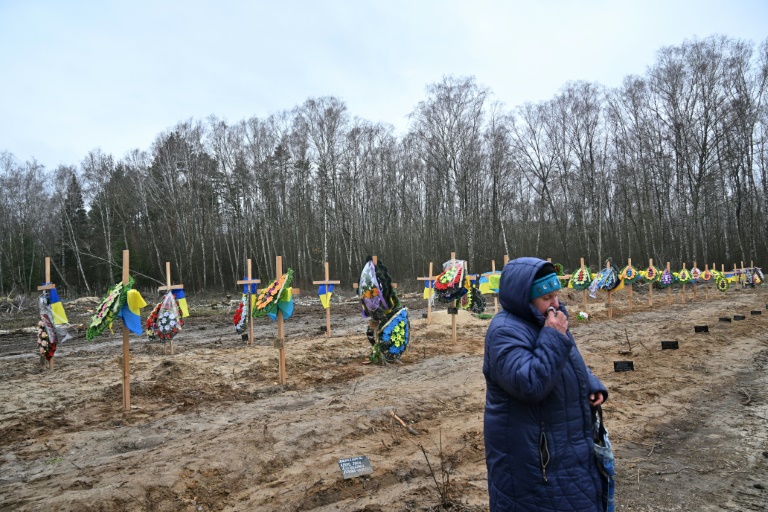
The measures follow an international outcry over hundreds of civilians found dead in areas from which Russian troops have withdrawn around Ukraine’s capital, including the town of Bucha. 

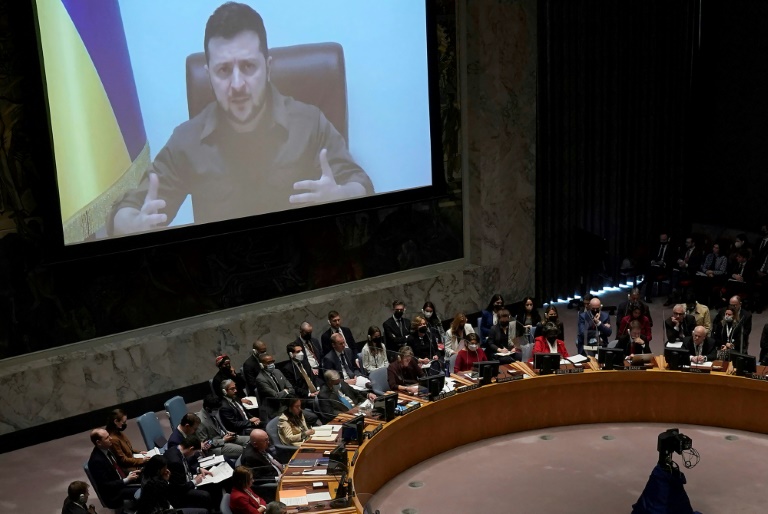
Ukrainian leader Volodymyr Zelensky likened Russia’s actions to Nazi atrocities in an impassioned speech by videolink to the 15-member UN Security Council on Tuesday. 

“They cut off limbs, slashed their throats, women were raped and killed in front of their children,” Zelensky said. 

He demanded stronger action from Western powers and called for Russia’s exclusion from the Council, where it holds veto power.

Later in his night-time address, a frustrated Zelensky said Russia was blocking the UN from carrying out “the functions for which it was created”. 

“The UN Security Council exists, and security in the world doesn’t,” he said. 

In an interview with the BBC, the US ambassador to the UN admitted that “no one can question (Zelensky’s) frustration with the Council and how the Council operates”. 

But ambassador Linda Thomas-Greenfield insisted that the Council was holding Russia to account, and that Moscow was isolated within it. 

– Push to isolate Moscow –

The killings in Bucha and elsewhere have galvanised support for Ukraine, with Washington announcing another $100 million in military aid, and produced new momentum for additional sanctions on Moscow.

“We had already concluded that Russia committed war crimes in Ukraine, and the information from Bucha appears to show further evidence of war crimes,” a US source familiar with the planned measures said. 

Washington, in coordination with the G7 and the European Union, is expected on Wednesday to announce measures including a ban on all new investments in Russia.  

“You can expect… that they will target Russian government officials, their family members, Russian-owned financial institutions, also state-owned enterprises,” White House Press Secretary Jen Psaki told a briefing on Tuesday. 

The EU meanwhile was poised to implement a fifth round of sanctions cutting off Russian coal imports.

European Council chief Charles Michel said the bloc must also impose oil and gas sanctions on Russia “sooner or later”.

The deaths of civilians in Bucha and other parts of Ukraine were “war crimes”, he said, adding: “There must be, and there will be, severe consequences for all those responsible.”

However, addressing the Irish parliament Wednesday, Zelensky condemned the “indecisiveness” on the part of EU nations, which are dependent on Russian energy.

“We still need to convince Europe that Russian oil cannot feed the Russian military machine with new sources of funding,” Zelensky added, calling also for the total exclusion of Russian banks from Western finance.

Britain said it has so far frozen some $350 billion in assets from President Vladimir Putin’s “war chest”.

In a further effort to isolate Moscow, a string of EU countries including Germany, France, Italy and Spain have expelled more than 200 Russian diplomats and staff between them this week.

The Kremlin called it a “short-sighted move” that would complicate efforts to negotiate an end to the hostilities.

Putin also warned of “reprisals” for recent European measures targeting Russian gas giant Gazprom — and said Moscow would “monitor” its food exports to “hostile” nations, raising the spectre of shortages and price spikes.

– Kremlin denials –

The Kremlin has denied any civilian killings, claiming the images emerging from Bucha and other sites are fakes produced by Ukrainian forces, or that the deaths occurred after Russian soldiers pulled out.

At the Security Council meeting, Moscow’s ambassador rejected Zelensky’s claims, saying the “ungrounded accusations… are not confirmed by any eyewitnesses”.

But satellite photos taken while Bucha was still under Moscow’s control show what appear to be bodies lying in streets where the dead were later found by Ukrainian forces and seen by journalists. 

And multiple Bucha residents told AFP they had seen Russian soldiers killing civilians.

“Right in front of my eyes, they fired on a man who was going to get food at the supermarket,” said 43-year-old Olena, who declined to give her family name.

During a grim cleanup, the remains of partially burned bodies in black bags were lifted into a van, with officials telling journalists “dozens of bodies” remained in apartments and in nearby woods.

Western nations have given short shrift to Russia’s denials.

“What we’ve seen in Bucha is not the random act of a rogue unit. It’s a deliberate campaign to kill, to torture, to rape, to commit atrocities,” US Secretary of State Antony Blinken said.

European Commission chief Ursula von der Leyen, who will visit Kyiv this week, has offered the bloc’s assistance in documenting proof of war crimes.

– Cluster bombs –

Ukrainian authorities have warned that others areas may have suffered even worse fates than Bucha. 

Scenes of devastation have met those venturing into areas from which Russian forces have withdrawn. 

In the northern city of Chernigiv, which was besieged from the early days of the invasion, a charred children’s hospital, full of bullet and shrapnel holes, served as a shelter.

In the dank basement, children painted on walls — tiny handprints, a smeared rainbow, a fluttering Ukrainian flag.

“Cluster bombs were flying, we have traces of these bombs,” said 51-year-old Olena Makoviy. “The injured were brought to the children’s hospital, both adults and children.”

City officials estimate around 350 civilians have been killed in Chernigiv, with fellow residents digging mass graves to bury them. 

“It was very scary here from the first days of the war,” said Makoviy. “They brought guys, handsome, young, but no longer alive,”

– ‘We are ready’ –

The Russian withdrawal from areas around Kyiv and the north is part of a shift of focus towards Ukraine’s southeast, in a bid to create a land bridge between occupied Crimea and Moscow-backed separatist statelets in Donbas.

NATO chief Jens Stoltenberg said the alliance expects a Russian push in “coming weeks” to try to seize the entire Donbas. 

In the village of Krasnopillia there, Ukrainian forces were preparing to counter that push. 

“We know the Russians are reinforcing and are getting ready to attack,” a senior Ukrainian officer on the ground told AFP. “We are ready… we’ve planned some surprises for them along the way.”

Civilians have been asked to evacuate west and on Tuesday a line of cars stretching three kilometres was waiting to pass a checkpoint, while thousands of other residents boarded trains to leave.

Russian strikes on Wednesday killed at least two people and wounded five others near a humanitarian distribution point in the eastern Donetsk region, the regional governor said.

Peace talks between the sides have so far gone nowhere, though Moscow says it is “ready” to continue.

Ukraine has proposed an agreement where other countries would guarantee its security in return for Kyiv accepting a neutral and non-nuclear status, not joining NATO and refusing to host foreign military bases.

The proposal would also see Russia accept Kyiv’s admission to the European Union.

burs-reb-ar/spm
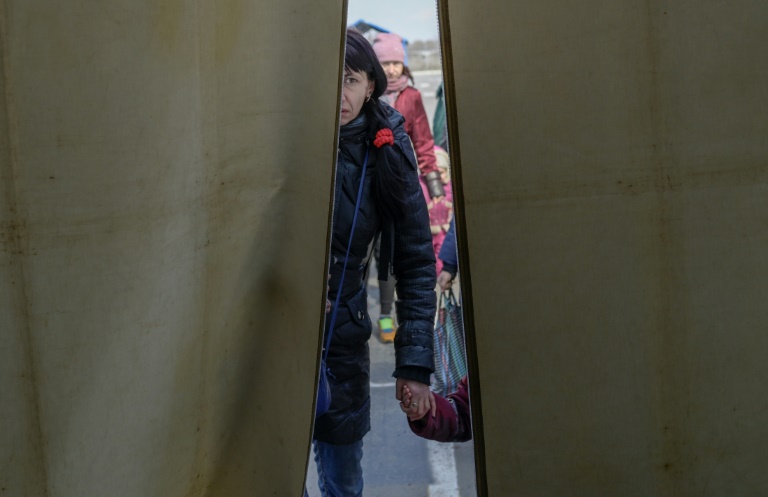
Ukrainians fleeing occupation pour into Zaporizhzhia

A large white tent in a shopping centre car park in Zaporizhzhia has become the meeting place for thousands from southern Ukraine who have fled the Russian invasion and left everything behind.

The lot is a transit point for those escaping besieged Mariupol, over 200 kilometres (124 miles) to the southeast, and the coastal region captured by Russian forces.

Under the marquee, displaced people eat at communal tables, are given clothes, medicine and even toys, as they wait for buses to take them on to regions less exposed to attacks.

Children’s drawings have been stuck to the inside of the tarp, most of them celebrating Ukraine and its army. One is a portrait of a green-eyed black cat with the message: “If you find my cat Myka, let the psychologist know.”

Further along, a noticeboard is filled with announcements offering spaces in cars heading west and the photos and numbers of missing relatives.

Angela Berg, an energetic 55-year-old with short hair, left everything behind in Mariupol, including her mother, too old to take on the journey.

“A man armed with a machine gun forced us to lie on the ground in front of our 12-storey building, on bits of broken glass. Then they started to fire on it with tanks. The building caught on fire and the man with the machine gun shot at the people trying to get out,” she told AFP.

“They didn’t let us retrieve anything from the building until it had all burnt, not our stuff, not any documents,” said Berg, who worked in hospitality before the war. 

“Even the clothes I am wearing now are the ones the welcome centre gave me.”

Her voice begins to break at the mention of the mother and disabled sister-in-law, whom she left behind to save the rest of her family, including her sick three-month-old granddaughter.

“It’s the hardest decision I have ever had to make. I had to choose between my mother and my grandchildren.”

“Only people who can walk are able to escape. My mother and my sister-in-law have nowhere to go, and we have no information on what happened to them,” she said.

– ‘Burnt alive’ –

The conditions faced by the 120,000 people still in Mariupol, scene of intense fighting for over a month, are “unliveable”, the city’s mayor Vadym Boichenko told AFP on Tuesday.

“We have passed the point beyond a humanitarian disaster, because for the last 30 days, these people haven’t had heating, water — anything,” he said.

Ivan Kosyan, 17, who arrived in Zaporizhzhia on March 22 with his mother and some friends describes appalling scenes from the besieged port.

“In our building, three entrances were completely engulfed by the flames. People burnt alive. It was horrible,” said the teenager.

“It took us between 10 to 12 hours to get here,” he said over tea handed out by volunteers.

More than 3,800 people were evacuated on Tuesday, 2,200 of them coming to Zaporizhzhia from Mariupol and Berdyansk, another port city, according to Ukrainian authorities.

At another table, Natalia Babychuk, a teacher from Polohy, between Mariupol and Zaporizhzhia, is still trying to understand what happened to her.

“Truth be told, it’s a month now that we haven’t slept properly,” she said, playing with her wedding ring.

“I asked one of the Russian soldiers, who they called ‘Avenger’ because his son had been killed by Ukrainians, what they wanted. He said it was payback for what is happening in Donbas,” the eastern region where Ukrainian troops have clashed with pro-Russian separatists since 2014, Babychuk said.

“They take the kids’ phones and ours, the SIM cards, the computers, everything… They take everything,” she said. “I don’t know how they can call themselves our brothers.”

China reports most virus cases since pandemic start

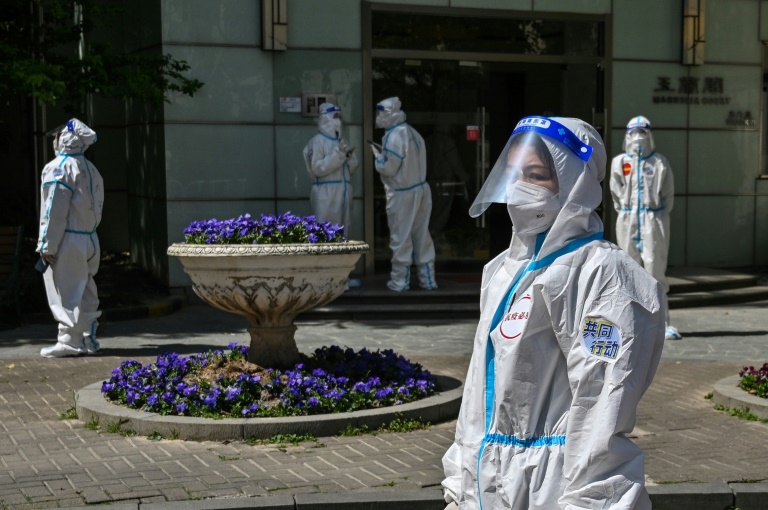
China reported more than 20,000 Covid-19 cases on Wednesday, the highest daily tally given since the start of the pandemic as millions in locked-down Shanghai began a new round of testing.

The country’s “zero-Covid” strategy has come under immense strain as cases spike, with around 25 million residents of Shanghai — China’s largest city and economic engine room — ordered to stay at home as the authorities struggle to contain the outbreak.

Until March, China had kept daily cases low with snap localised lockdowns, mass testing, and strict restrictions on international travel.

But the caseload has hit thousands per day in recent weeks, with Shanghai driving the surge of the highly transmissible Omicron variant.

The city locked down in phases last week and complaints have swelled online of fresh food shortages caused by logistics disruptions and panic buying, which has left many residents waking early to try to beat the queues on grocery apps.

State broadcaster CCTV reported that the city will launch a fresh round of tests on the entire population on Wednesday.

Shanghai’s “prevention and control situation is very severe,” National Health Commission official Lei Zhenglong said Wednesday, adding the outbreak is still “in its peak phase.”

It was the latest dour warning suggesting a long run in lockdown may be ahead, while city health officials have converted a convention centre into a makeshift Covid hospital for 40,000 people.

– Grocery woes –

China recorded 20,472 infections on Wednesday, according to the National Health Commission.

It is the country’s highest daily infection number given by authorities, even during the peak of the initial outbreak which centred around Wuhan. 

The majority of the cases are, however, asymptomatic.

Authorities reported no new deaths, in a country which says only two people have died of the virus in nearly two years.

Yet China faces low vaccination rates, especially among the elderly, leaving officials with a high-wire balancing act of maintaining public health while keeping the economy moving. 

Omicron can only be thwarted by vaccination “protecting high-risk populations like the elderly and those with underlying conditions,” Wang Guiqing, an infectious disease expert of Peking University said in a Wednesday press conference.

In Shanghai quarantine facilities are bulging with people who test positive — even if they are asymptomatic — as city officials stick rigidly to virus protocols.

Those include separating Covid-positive babies and children from parents who test negative, a policy that has anguished worried families.

City officials said on Wednesday that parents of some child patients with “special needs” would now be allowed to remain with their Covid-positive children.

Anger over lack of fresh food and curtailed movements is rising among residents as officials extend what was originally intended to be a short lockdown.

The Weibo hashtag “buying groceries in Shanghai” was censored from the platform, even though many of the posts detailing residents’ efforts to nab coveted vegetables were still visible on Wednesday.

Shanghai, China’s largest city, accounted for more than 80 percent of the national tally, city officials said Wednesday.

A top Shanghai official has conceded that the financial hub had been “insufficiently prepared” for the outbreak.

China, the country where the coronavirus was first detected in the central city of Wuhan in late 2019, is among the last remaining places in the world following a zero-Covid approach to the pandemic.

The outbreak has taken on an increasingly serious economic dimension, with China’s factory output falling to its lowest in two years in March, according to independent indices released by Chinese media group Caixin.

Israel's Bennett loses majority after MP quits coalition

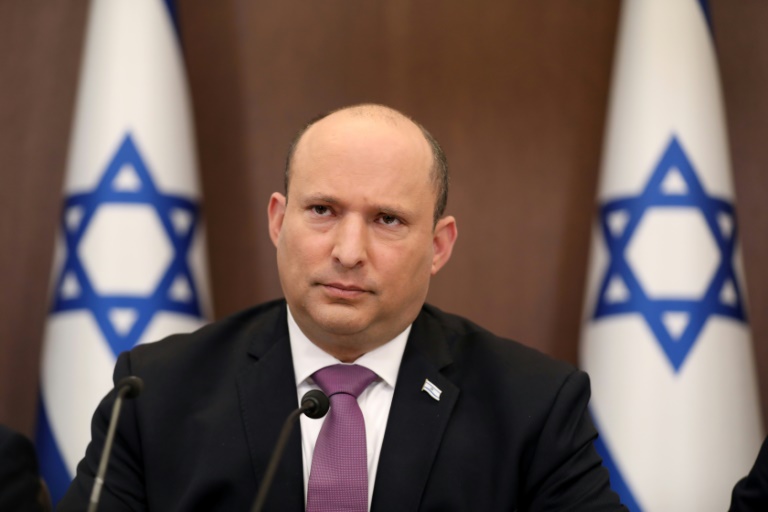
A key member of Israeli Prime Minister Naftali Bennett’s Yamina party said Wednesday she was quitting his coalition government, in a surprise move that leaves him without a parliamentary majority.

Idit Silman’s announcement left Bennett’s coalition, an alliance of parties ranging from the Jewish right and Israeli doves to an Arab Muslim party, with 60 seats — the same as the opposition.

“I tried the path of unity. I worked a lot for this coalition,” Silman, a religious conservative who served as coalition chairperson, said in a statement.

“Sadly, I cannot take part in harming the Jewish identity of Israel.”

On Monday, Silman lashed out at Health Minister Nitzan Horowitz, after he instructed hospitals to allow leavened bread products into their facilities during the upcoming Passover holiday, in line with a recent supreme court ruling reversing years of prohibition.

Jewish tradition bars unleavened bread from the public domain during Passover.

“I am ending my membership of the coalition and will try to continue to talk my friends into returning home and forming a right-wing government,” Silman said.

“I know I’m not the only one who feels this way.”

Bennett’s coalition may continue ruling with 60 seats, although with difficulty passing new legislation. 

If another member of the coalition defects, however, the Knesset could hold a vote of no confidence and potentially lead Israel back to the polls for a fifth parliamentary election in four years. 

Political analyst Dahlia Scheindlin told AFP that if Silman “is the first person to really prepare to bring down the government, she is doing it from the place of conviction”.

“She is religious, and I think we all underestimate the power of theology,” said Scheindlin. 

In a formal resignation letter addressed to Bennett, Silman said: “We must admit that we tried. It’s time to recalculate and try to form a national, Jewish, Zionist government.”

– ‘Limp government’ –

Following the announcement, Silman was embraced by the same right-wing politicians who had relentlessly attacked her since she followed Bennett into the governing coalition last year, reneging on election promises.

“Idit, you’re proof that what guides you is the concern for the Jewish identity of Israel, the concern for the land of Israel, and I welcome you back home to the national camp,” opposition leader Benjamin Netanyahu said in a video recording.

“I call on whoever was elected with the votes of the national camp to join Idit and come back home, you’ll be received with all due honour and open arms,” the right-wing former prime minister added.

Netanyahu, Israel’s longest-serving prime minister who was in office from 1996 to 1999 and again from 2009 until June, had vowed to play the role of spoiler against Bennett’s government which brought an end to his years in power.

At a special session of the Knesset, which is currently in recess, Netanyahu said: “There is a weak and limp government in Israel today. Its days are numbered.”  

The Knesset will reconvene on May 8 to resume its legislative work. 

To form a coalition of his own without new elections, Netanyahu would need the support of at least 61 lawmakers, which he currently does not have.

Bezalel Smotrich of the Religious Zionism party, once a political partner of Bennett, expressed his appreciation to Silman for her “courage to make the difficult move”, and predicted the ruling coalition would not survive her defection.

“This is the beginning of the end of the left-wing, non-Zionist government of Bennett and the Islamist Movement,” he wrote on Twitter.

There was no immediate comment from Bennett, whose Yamina party now holds just five of parliament’s 120 seats.

Former Amnesty India chief stopped from leaving country

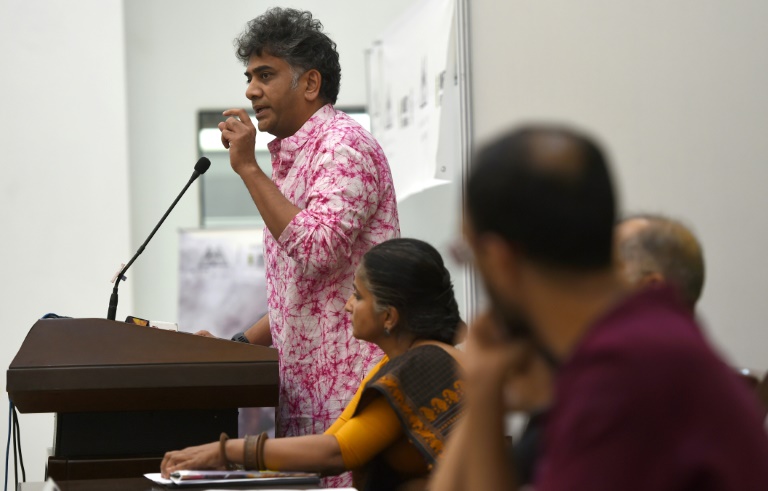
Amnesty International’s former India chief said Wednesday he was stopped from flying to the United States because of government legal action against the human rights watchdog. 

Prime Minister Narendra Modi’s administration has long been accused of trying to silence critics, and activists say they have been targeted for harassment since he took office in 2014. 

Aakar Patel said he was stopped from boarding his flight to the United States at the airport in the southern city of Bangalore because he was on an “exit control list”. 

He wrote on Twitter that he was then contacted by the country’s Central Bureau of Investigation (CBI) and told he was prevented from leaving “because of the case Modi govt has filed against Amnesty International India”.

Amnesty has been a vocal critic of the Modi government’s treatment of minorities and alleged abuses by Indian security forces in the disputed territory of Kashmir.

It halted its India operations in 2020 after the government froze its bank accounts in what the group said was part of an official “witch hunt”. 

Amnesty’s Bangalore offices had been raided two years earlier by the Enforcement Directorate, which investigates financial crimes in India. 

The group had also faced sedition charges, later dropped, over a 2016 event to discuss human rights violations in Kashmir.

Amnesty on Wednesday called on Indian authorities to allow Patel to fly.

“For Aakar, who dares to raise his voice peacefully and consistently against injustice, a travel ban is nothing but retaliation from the Indian government against his activism,” said the watchdog’s deputy secretary general Kyle Ward.

Last week, prominent Indian activist and writer Rana Ayyub was prevented from flying to London to speak about the intimidation of journalists in India. 

Ayyub, a fierce government critic, tweeted that she was stopped at Mumbai airport because of a probe into an alleged money laundering case against her. 

Delhi’s high court on Monday gave the 37-year-old permission to fly.

War in Ukraine: Latest developments

Here are the latest developments in the war in Ukraine:

– US, EU ready new sanctions –

The United States, European Union and G7 are set to toughen sanctions on Russia following allegations of war crimes in the Ukrainian town of Bucha.

A source in Washington says the US will ban all new investment in Russia. The White House says it will also add sanctions on government officials and “their family members”, as well as state-owned entreprises.

The EU has proposed banning Russian ships from European ports and halting Russian coal imports, but European Council president Charles Michel says the bloc would also have to act “sooner or later” on Russian oil and gas.

– Pope slams ‘horrendous cruelties’ –

Pope Francis says the “recent news about the war in Ukraine, instead of bringing relief and hope, instead attests to new atrocities, such as the Bucha massacre.”

“Ever more horrendous cruelties, also perpetrated against defenceless civilians, women and children,” he says during his weekly audience.

– ‘Act immediately’ –

Ukrainian President Volodymyr Zelensky challenges the United Nations to “act immediately” or “dissolve yourself altogether” during an address in which he shows harrowing footage of dead bodies — including children — he says were victims of Russian atrocities.

Likening Russia’s actions in Bucha and other Ukrainian cities to violence carried out by “terrorists” such as the Islamic State group, Zelensky calls on the Security Council to expel Russia “so it cannot block decisions about its own aggression, its own war.”

– Russian yachts seized –

Dutch authorities impound 14 yachts on order from Russian customers in Dutch shipyards, 12 of them still under construction.

“Given the current measures, these vessels cannot be delivered, transferred or exported for the moment,” Foreign Minister Wopke Hoekstra tells Dutch parliament, adding Dutch authorities are checking whether the customers are on the sanctions list.

– Bid to ‘torpedo’ talks: Russia –

Russian Foreign Minister Sergei Lavrov says the images of bodies in Bucha, which the Kremlin claims are fakes, are a “provocation” aimed at scuppering talks between Moscow and Kyiv.

“A question arises: What purpose does this blatantly untruthful provocation serve? We are led to believe it is to find a pretext to torpedo the ongoing negotiations,” He says in a message broadcast on Russian television.

– 600,000 ‘evacuated’ to Russia –

Russia’s UN ambassador Vassily Nebenzia says over 600,000 people have been taken voluntarily to Russia since the start of the conflict in Ukraine, denying Kyiv’s claim of mass deportations.

“And we’re not talking about any kind of coercion or abduction, as our Western partners like to present this, but rather the voluntary decision by these people…” he tells the Security Council.

– More US military aid –

Washington announces it will send $100 million in additional anti-armour weapons to Ukraine, bringing US military aid to Ukraine to over $1.7 billion, according to the Pentagon.

– Cluster munitions –

UN undersecretary-general for political and peacebuilding affairs, Rosemary DiCarlo, tells the Security Council of “credible” claims Russia has used indiscriminate cluster munitions two dozen times in populated parts of Ukraine.

– War chest frozen –

Britain has frozen some $350 billion (321 billion euros) in assets from the “war chest” of Russian President Vladimir Putin, British Foreign Secretary Liz Truss says during a visit to Warsaw.

She says this action meant that “over 60 percent of the regime’s $604 billion foreign currency reserves” were now “unavailable” to the Russian government.

– Twitter curbs Russian accounts –

Twitter says it will introduce new measures against Russian government accounts to reduce the impacts of official propaganda.

Moscow restricts access to Twitter and has blocked Facebook and Instagram.

– Mariupol helicopters hit –

Russia says it shot down two Ukrainian helicopters that were trying to evacuate leaders of the controversial nationalist Azov battalion from besieged Mariupol.

It also says it proposed that Ukrainian fighters lay down their arms and leave the city “via an agreed route” to territory under Kyiv’s control, adding that Ukraine had “ignored” the suggestion. 

burs-cb/spm

Sri Lanka parliament speaker warns crisis risks starvation

Sri Lanka’s crippling economic crisis risks starvation across the island nation of 22 million while acute shortages and blackouts will get worse, the speaker of parliament warned Wednesday.

Scarce supplies of food and fuel, along with record inflation and blackouts, have inflicted widespread misery in the country’s most painful downturn since independence from Britain in 1948.

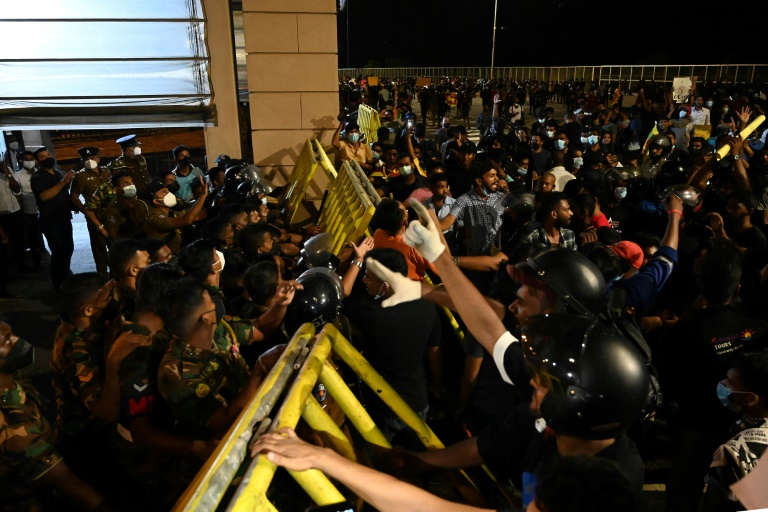
Public anger is at a fever pitch, with crowds attempting to storm the homes of several government figures — including President Gotabaya Rajapaksa — and large demonstrations elsewhere.

Mahinda Yapa Abeywardana told legislators that more hardships were to come.

“We are told this is the worst crisis, but I think this is just the beginning,” Abeywardana said at the start of a two-day debate on the worsening economic woes.

“The food, gas and electricity shortages will get worse. There will be very acute food shortages and starvation.”

Security forces have dispersed protests with tear gas, water cannon and rubber bullets, but a state of emergency imposed by the president last week to quell demonstrations was lifted at midnight.

More than 60 people had been arrested in connection with unrest and many have said they were tortured in police custody.

Legislators had pushed for a debate on the emergency decree during this week’s session of parliament, where the government has lost its majority after the desertion of political allies — several of whom have since called for Rajapaksa’s resignation.

Opposition parties had already rejected the president’s overture to form a unity administration after the resignation of nearly the entire cabinet late on Sunday.

But there has so far been no clear signal that opposition legislators will attempt a no-confidence motion to topple the Rajapaksa administration.

– Prior warnings –

A critical foreign currency shortage has left Sri Lanka struggling to import essential goods, with the pandemic torpedoing vital revenue from tourism and remittances.

Rating agencies have warned of a potential default on Sri Lanka’s $51 billion foreign debt, and authorities are unable to raise more commercial loans because of credit downgrades.

Economists say the crisis has been exacerbated by government mismanagement, years of accumulated borrowing and ill-advised tax cuts.

Agriculture ministry secretary Udith Jayasinghe warned in December that the country could face a famine due to the government’s decision to ban agrochemical imports last year.

The decision, taken in an apparent effort to shore up foreign currency reserves, saw farmers leave their fields barren instead of toiling over crops without the aid of fertiliser and pesticides. 

Jayasinghe was sacked within hours of issuing his warning. 

Sri Lanka has said it will seek an IMF bailout to overcome the crisis but negotiations are yet to begin, and the country’s latest finance minister resigned Tuesday after just one day in office.

Asian, European markets track Wall St retreat on hawkish Fed bets

Equities sank Wednesday after Wall Street tumbled on bets the Federal Reserve will act more aggressively to bring inflation under control, while oil recovered some losses caused by the European Union’s decision not to ban Russian crude.

While the Ukraine war continues to cast a shadow across trading floors, Fed monetary policy is at the top of the agenda this week as investors fret over how quickly officials will withdraw their vast pandemic-era financial support.

After last month’s 0.25-percentage-point hike in interest rates, the focus is now on its plans for May’s meeting, with expectations growing that it will announce a 0.50-point lift followed by several more before the end of the year.

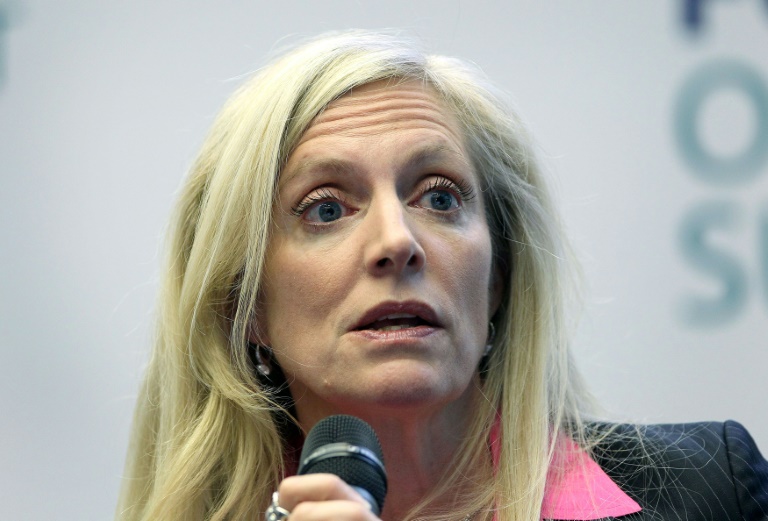
Fed governor Lael Brainard, who is considered a dove, on Tuesday spooked traders by saying bringing inflation down from 40-year highs was of “paramount importance” and that the bank was “prepared to take stronger action” if warranted.

Brainard, who is awaiting congressional confirmation for the position of Fed vice chair, also said bank policymakers were ready to start reducing its vast bond holdings, which have helped keep borrowing costs down.

“The market might have been looking for… Brainard to at least give more balanced remarks — instead, they were at the hawkish end of the spectrum from someone like Brainard,” said Stephen Innes of SPI Asset Management.

“She was not overly hawkish, but neither did she offer anything for the doves to cling to.”

Michael Hewson at CMC Markets added that Brainard’s comments, and those from Mary Daly of the San Francisco Fed, “put into sharp relief the concerns investors have, that in looking to rein back inflation, the Fed might overplay its hand and tighten too aggressively and tip the economy into recession”.

Minutes from the Fed’s March meeting will be released later in the day and will be pored over for insights into officials’ thinking, in light of the war and recent data suggesting the world’s top economy remains resilient for now.

All three main indexes on Wall Street ended in the red, with the Nasdaq off more than two percent owing to tech firms being more susceptible to higher rates.

And the selling seeped through to Asia.

Hong Kong and mainland Chinese investors returned from a break to data indicating a sharp drop in China’s services sector caused by the imposition of lockdowns around the country including Shanghai, its biggest city.

Hong Kong dropped more than one percent but Shanghai recovered from early selling to end marginally higher.

Tokyo, Sydney, Seoul, Singapore, Mumbai, Manila, Jakarta, Bangkok and Wellington also retreated.

London, Paris and Frankfurt opened lower.

“Liquidity remains poor, and no one seems willing to take the other side as air pockets are becoming easier to find these days,” Innes added.

The European Union’s decision not to include Russian oil in a fresh round of sanctions saw both main contracts drop Tuesday and extend losses in early Asian business.

The reliance of the bloc — and particularly Germany — on crude from Russia has kept it from following the United States and Britain in imposing an embargo, though it signalled it wants to hit the country’s coal and shipping.

However, European Council chief Charles Michel told the European Parliament on Wednesday that it must impose oil and gas sanctions “sooner or later”.

Adding to downward pressure on crude is the stronger dollar, which jumped in reaction to Brainard’s comments. Oil is priced in dollars, making it more expensive for clients using other currencies.

A coordinated move by Washington, Brussels and the G7 could also ban “all” new investments in Russia on Wednesday, while the US Treasury said Washington has barred Moscow from making debt payments using funds held at American banks.

Meanwhile, the Asian Development Bank lowered its 2022 growth forecast for developing Asia owing to “increasing” price pressures caused by Russia’s invasion of Ukraine, offsetting the recovery from Covid-19.

“The Ukraine crisis is nowhere near to being resolved,” Amy Wu Silverman, at RBC Capital Markets LLC, told Bloomberg Television. “And then we’re heading into earnings season. Volatility levels are probably too low and will start to pick up.”

– Key figures around 0720 GMT –

Tokyo – Nikkei 225: DOWN 1.6 percent at 27,350.30 (close)

Hong Kong – Hang Seng Index: DOWN 1.3 percent at 22,219.85

Shanghai – Composite: FLAT at 3,283.43 (close)

London – FTSE 100: DOWN 0.2 percent at 7,599.04

Brent North Sea crude: UP 0.5 percent at $107.19 per barrel

West Texas Intermediate: UP 0.3 percent at $102.21 per barrel

Dollar/yen: UP at 123.93 yen from 123.60 yen late Tuesday

Euro/dollar: DOWN at $1.0892 from $1.0903

Pound/dollar: DOWN at $1.3067 from $1.3071

Euro/pound: DOWN at 83.35 pence from 83.38 pence

New York – Dow: DOWN 0.8 percent at 34,641.18 (close)

Sudanese plan mass anti-coup rallies on sit-in anniversary

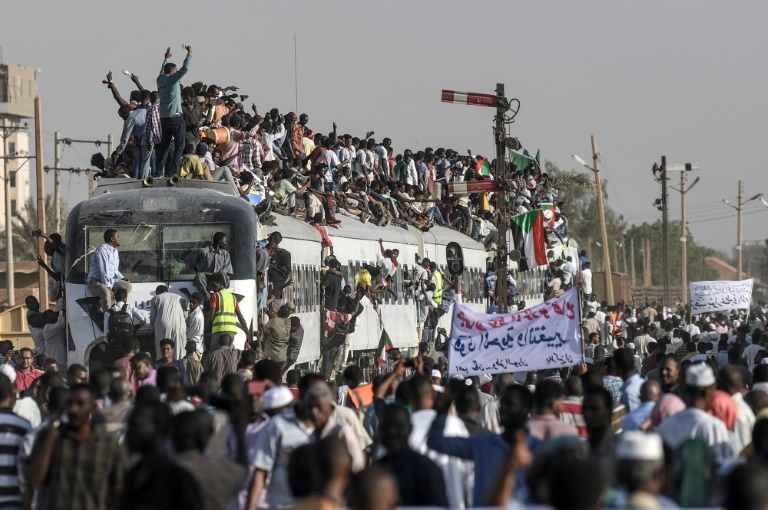
Sudanese protesters are gearing up for mass rallies demanding an end to military rule on Wednesday, the historic anniversary of events leading to the toppling of autocrats including Omar al-Bashir.

The planned demonstrations come as Sudan grapples with fallout from an October 25 military coup led by army chief Abdel Fattah al-Burhan that has hammered its economy.

Security forces sealed off bridges connecting Khartoum with other major cities in the morning and deployed around the presidential palace and army headquarters in the capital, witnesses said.

The protest was organised to coincide with the anniversary a 1985 popular uprising that ousted president Jaafar Nimeiri after years of harsh rule.

April 6 also marks the third anniversary of the beginning of a mass sit-in demonstration outside the army headquarters, the culmination of months of protests calling for an end to Bashir’s iron-fisted three decades in power.

Generals bowed to the pressure from the street to remove Bashir five days later, but the protesters stayed at their encampment to press for civilian rule, only to be dispersed violently in June that year by men in military fatigues.

At least 128 people were killed in an ensuing crackdown that lasted for days, according to medics.

Civilian and military leaders later agreed on a transition to civilian rule, but Sudan’s latest coup in October upended those plans.

Protesters have since been taking to the streets seeking to end military rule.

In recent weeks, activists have ramped up online calls for Wednesday’s protests, using hashtags such as “The storm of April 6” and “The earthquake of April 6”.

– ‘Defeat the coup’ –

The government has declared Wednesday a public holiday, in a brief statement.

“It is an important day… so we expect many to take to the streets despite the heat and Ramadan,” said Badwi Bashir, a protester from Khartoum.

“We just want to bring down the coup and end the prospect of any future coups.”

Jaafar Hassan, a spokesman for the Forces of Freedom and Change, the main civilian bloc which was ousted after the coup, said April was “the month of victories for the Sudanese”.

“We have to defeat the coup… We have to get out of this crisis,” Hassan told a news conference last week.

Since grabbing power, the military leaders have moved to tighten their grip, rounding up prominent civilian leaders and reversing appointments made during the transition.

“We want a unified front,” said Hassan. “We have tried a partnership with the military, and it failed, ending in this coup, and we shouldn’t do this again.”

General Burhan said on Saturday he would only “hand over power to an honest, elected authority, accepted by the all the Sudanese people”.

At least 93 people have been killed and hundreds wounded in the crackdown on the latest anti-coup protests, according to medics.

– Economy in nosedive –

Since the coup, Sudan’s already ailing economy has suffered severe blows, as Western donors cut crucial aid pending the restoration of a transition to civilian rule.

Prices of food, fuel and basic commodities have soared and crime and has spiked.

Violence has intensified in remote areas of Sudan, particularly the restive Darfur region, according to the United Nations.

On Thursday, clashes between Arab and non-Arab tribes left at least 45 people killed in South Darfur state.

Darfur was the scene of a bitter conflict in 2003 under Bashir, who is wanted by the International Criminal Court over accusations of atrocities in the region.

On Tuesday, the ICC began the trial of Ali Muhammad Ali Abd-Al-Rahman, an ally of Bashir, over his role in the conflict.

The UN has warned of growing humanitarian needs and food insecurity in Sudan.

Last month, the World Food Programme said the number of Sudanese facing acute hunger would double to more than 18 million by September.

Late Tuesday, Burhan welcomed an initiative for talks to resolve the political crisis by the Sudanese Revolutionary Front, an alliance including ex-rebel groups allied with the military.

Burhan last week threatened to expel UN special representative Volker Perthes, accusing him of “interference” in the country’s affairs after Perthes warned of the deepening crisis in Sudan during a UN Security Council briefing.

Perthes’ mission, UNITAMS, along with the African Union and the regional bloc IGAD, have agreed on joint efforts to facilitate Sudanese-led talks in a bid to resolve the crisis.

El Salvador criminalizes gang-related messages in media

El Salvador’s Congress on Tuesday approved sentences of 10 to 15 years for those who spread gang-related messages in the media, prompting journalists to raise censorship fears.

The reform to the penal code applies to those who “reproduce and transmit messages or communications originating or allegedly originating from said criminal groups that could generate anxiety and panic among the general population.” 

The measure, which was requested by President Nayib Bukele, also targets those who “mark” their territories with acronyms — a practice that gang members use to threaten those who report them to authorities. 

“When the Germans wanted to eradicate Nazism, they prohibited by law all Nazi symbology, as well as messages, apologies and everything aimed at promoting Nazism… Now we will do the same with gangs,” Bukele said on Twitter.  

El Salvador declared a state of emergency 10 days ago following a weekend of violence that included at least 87 reported killings, which the government attributed to the Mara Salvatrucha (MS-13) and Barrio 18 gangs.

About 6,000 suspected gang members have been arrested since then, according to official figures.  

There are about 70,000 gang members in the Central American country.

– ‘Gag’ reform –

El Salvador’s journalists’ association issued a statement expressing its “concern” about a “clear attempt at censorship.”  

The “gag” reform, as the group described it, “threatens with imprisonment the media and journalists who report on a reality that the current administration” of Bukele “seeks to hide.”  

It is a “new tool to criminalize journalistic work,” the group said.  

The deputy of the ruling party, Marcela Pineda, said the reform does not seek “to restrict freedom of expression” but to force responsibility “in the messages that are disseminated to the population.” 

The reform adds to a series of changes to the penal code approved by Congress to crack down on gangs, which the government refers to as “terrorists.”

Last week, Congress increased the maximum prison sentence for being a gang member from nine to 45 years.

The government also raised maximum prison sentences for children and will allow teenagers to be tried as adults for the most serious offenses, and serve their sentences in adult prisons rather than juvenile detention facilities.

The office of the UN High Commissioner for Human Rights has expressed concern about El Salvador’s approach to combating gang violence, pointing to “alleged cruel, inhuman or degrading treatment.”

“In addition to the state of emergency, we are deeply concerned about certain amendments to criminal law and criminal procedure,” said the office’s spokeswoman Liz Throssell.

Close Bitnami banner
Bitnami