World

African support on Ukraine shows Kremlin's soft power

African leaders, opposition figures and social influencers are stepping up their support for the Kremlin even as Russia’s image elsewhere is being shredded by the war in Ukraine.

Some of Russian President Vladimir Putin’s most vocal defenders are pan-Africanists — advocates of the doctrine of African unity and anti-imperialism that flowered at the height of the Cold War.

Putin “wants to get his country back,” Kemi Seba, a Franco-Beninese pan-Africanist, declared in early March.

“He doesn’t have the blood of slavery and colonisation on his hands,” Seba argued. 

“Putin is not my Messiah but I prefer him to all the western presidents and all the damned African presidents who are under the thumb of western oligarchy.”

In Uganda, the powerful son of veteran leader Yoweri Museveni, Lieutenant-General Muhoozi Kainerugaba, is another fervent Putin supporter.

“The majority of mankind (that are non-white) support Russia’s stand in Ukraine,” he tweeted in late February. “Putin is absolutely right!”

– Historical ties –

Many African countries showed their support for Russia, or at least their diplomatic ambivalence, at an early stage in the crisis.

On March 2, members of the UN General Assembly voted massively to condemn the invasion of Ukraine.

But out of the 35 countries that abstained, nearly half — 16 — were in Africa. Added to that is Eritrea, which voted against the resolution, while another eight African countries did not cast their vote.

“Generally, the countries which abstained were either authoritarian regimes or countries which have had historical ties with Russia, often military ones, since the Soviet era,” said Mahama Tawat, a researcher at the University of Malmo in Sweden.

Sympathy for Russia in Africa has roots dating back to the 1950s and 60s, when the Kremlin backed anti-imperialist and anti-colonial movements and helped the fight against apartheid.

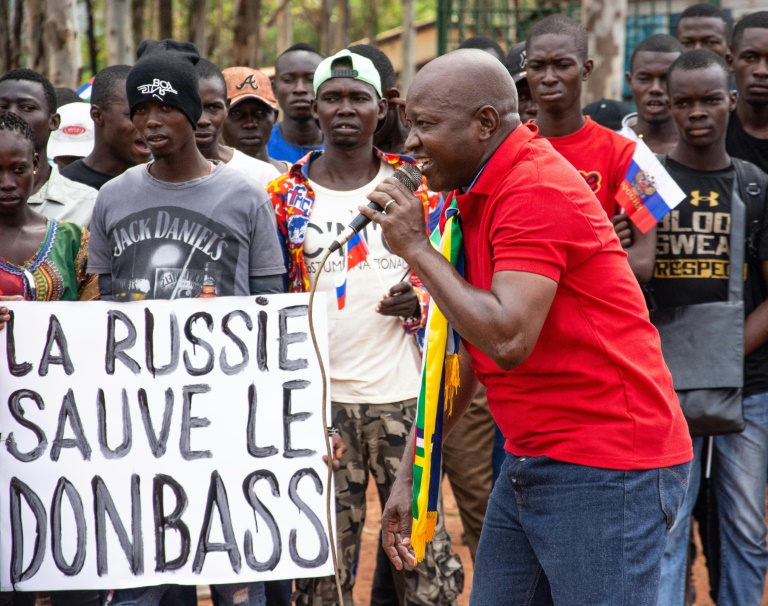
At a rally on March 21 — the anniversary of the Sharpeville Massacre at the height of white-minority rule — South African radical leader Julius Malema declared: “We are here to say to NATO, we are here to say to America, ‘we are not with you, we are with Russia’.

“Today we want to say to Russia, ‘thank you for being there when it was not fashionable to be there, and do not doubt our support, Russia. Teach them a lesson, we need a new world order — we are tired of being dictated to by America’.”

There have also been pro-Russian rallies in the Sahel, where Moscow is pushing its influence at the expense of France, the region’s former colonial power and traditional ally.

Mali’s junta, as well as the beleaguered government in Central African Republic (CAR), have turned to hundreds of Russian paramilitaries to provide support.

The Malian armed forces last week received two Russian combat helicopters and radars to help its fight against a decade-old jihadist insurgency.

– Soft power –

The Kremlin’s soft power is being amplified by social media and other outlets.

“There’s a proliferation of YouTube channels which disseminate destabilising messages. They create a rift between the West and African regimes and thus help Russia’s interests,” said Tawat.

In Cameroon, the pan-Africanist TV channel Afrique Media frequently hosts pro-Kremlin commentators, including Seba.

The discussion section on its Facebook page has subjects such as “Plans for assassinating Vladimir Putin — where will the West draw the line?”

Fake news on social media typically plays up the claimed legitimacy of the invasion of Ukraine and extols Russia’s military might.

The French Institute of International Relations (IFRI), in a report last April, said Russia took a two-pronged approach on its attempt to sway opinion.

“Anti-Muslim, anti-migrant and xenophobic narratives are aimed at a European audience, while calls for decolonisation and the end of Western imperialism target sub-Saharan Africa and the Muslim world,” it said.

Is Picasso being cancelled?

Pablo Picasso’s track-record with women certainly would not make him a feminist pin-up today. 

There were two wives, at least six mistresses and countless lovers — with a tendency to abandon women when they became ill, a voracious appetite for prostitutes, and some eye-popping age differences (his second wife was 27 when he married her at 79).

Some of the quotes attributed to him would probably cause Twitter’s servers to combust if he said them now (“For me there are only two kinds of women: goddesses and doormats”).

None of this is new — it has been recycled through books and articles from (sometimes traumatised) family members since soon after his death in 1973. 

But in a post-MeToo world, it poses a challenge for those who manage his legacy. 

“Obviously MeToo tarnished the artist,” said Cecile Debray, director of the Picasso Museum in Paris.  

But she added: “The attacks are undoubtedly all the more violent because Picasso is the most famous and popular figure in modern art — an idol that must be destroyed.”

– ‘Perverse, destructive’ –

Not that the issue is being brushed under the carpet.  

The Paris museum has recently invited women artists to respond to the debate, including “Weeping Women Are Angry” by French painter Orlan (a reference to one of his most famous portraits, “The Weeping Woman”). 

The sister museum in Barcelona is holding workshops and talks this May with art historians and sociologists to unpack the issue. 

The experts are, however, critical of some recent hit-jobs on their beloved master.  

An award-winning French podcast on the topic has reignited the debate, leaning heavily on a 2017 book by journalist Sophie Chauveau, “Picasso, the Minotaur”, for whom the artist was “violent… jealous… perverse… destructive”. 

Debray said some of their claims were “anachronistic” and given to “conjecture and assertions without historical references”.

But she still welcomed the challenge, saying: “The history of art is nourished by the questions of our time and new generations.”

– ‘Animal sexuality’ –

Nor is it simple to separate the artist from the art. 

Of her grandfather’s women, Marina Picasso once wrote: “He submitted them to his animal sexuality, tamed them, bewitched them, ingested them, and crushed them onto his canvas.”

But, says another grandchild Olivier Picasso, depicting Picasso as a monster risks removing the agency of the women who loved him.  

Some, like Marie-Therese Walter, were young and vulnerable muses who felt discarded (she later killed herself), he told AFP. 

But others, like Francoise Gilot, knew exactly what they were getting with Picasso and had no problem walking away when they had had enough. 

“Some came out of it well, but for others it went badly,” he said. “It’s all very complicated — these women don’t resemble each other.”

The paintings themselves show some of that complexity. 

“There are violent works, others that are very tender, very soft… Each time, after exhausting his inspiration, he moves on to something else,” he said. 

“Women were necessary to his creations and without them, there would have been something missing.”

Former Amnesty India chief stopped from leaving country

Amnesty International’s former India chief said Wednesday he was stopped from flying to the United States because of government legal action against the human rights watchdog. 

Prime Minister Narendra Modi’s administration has long been accused of trying to silence critics, and activists say they have been targeted for harassment since he took office in 2014. 

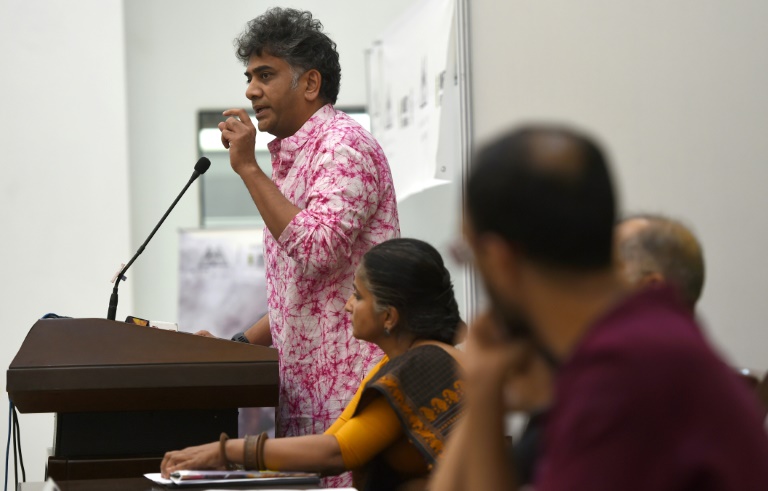
Aakar Patel said he was stopped from boarding his flight to the United States at the airport in the southern city of Bangalore because he was on an “exit control list”. 

He wrote on Twitter that he was then contacted by the country’s Central Bureau of Investigation (CBI) and told he was prevented from leaving “because of the case Modi govt has filed against Amnesty International India.”

Amnesty has been a vocal critic of the Modi government’s treatment of minorities and alleged abuses by Indian security forces in the disputed territory of Kashmir.

It halted its India operations in 2020 after the government froze its bank accounts in what the group said was part of an official “witch hunt”. 

Amnesty’s Bangalore offices had been raided two years earlier by the Enforcement Directorate, which investigates financial crimes in India. 

The group had also faced sedition charges, later dropped, over a 2016 event to discuss human rights violations in Kashmir.

Last week, prominent Indian activist and writer Rana Ayyub was prevented from flying to London to speak about the intimidation of journalists in India. 

Ayyub, a fierce government critic, tweeted that she was stopped at the Mumbai airport because of a probe into an alleged money laundering case against her. 

Delhi’s high court gave the 37-year-old permission to fly on Monday.

US, UK, Australia vow to cooperate on hypersonic weapons

The United States, Britain and Australia said Tuesday they would begin collaborating on hypersonic missile strike and defence capacity, as rivals Russia and China advance rapidly in the cutting-edge technology.

The trio said they would work on hypersonics in an expansion of their recent AUKUS defence alliance, which is to equip Australia with nuclear-powered submarines to counter China’s growing military clout.

They pledged “new trilateral cooperation on hypersonics and counter-hypersonics, and electronic warfare capabilities” in a statement by US President Joe Biden, British Prime Minister Boris Johnson and Australian Prime Minister Scott Morrison.

Hypersonic missiles can travel more than five times the speed of sound and manoeuvre in mid-flight, making them much harder to track and intercept than traditional projectiles.

They may carry conventional or nuclear warheads.

Hypersonics and related technologies were now “very much a part of what the AUKUS partnership is striving to deliver”, Australia’s Morrison told reporters on Wednesday.

But there were few details about what the leaders’ hypersonic plan entailed.

Marcus Hellyer, defence analyst at the Australian Strategic Policy Institute, said it was hard to judge “what is actually new” in the statement.

Australia and the United States were already working together on hypersonics, he said, although the new commitment may open up new areas of cooperation with Britain.

Australia announced in December 2020 it would work with the United States on developing hypersonic weapons in a so-called SCIFIRE programme.

And Canberra committed in its 2020 defence strategy programme to invest Aus$6.2 billion-9.3 billion (US$4.7 billion-7.0 billion) in high-speed, long-range strike and missile defence, including hypersonics.

– Russia ahead –

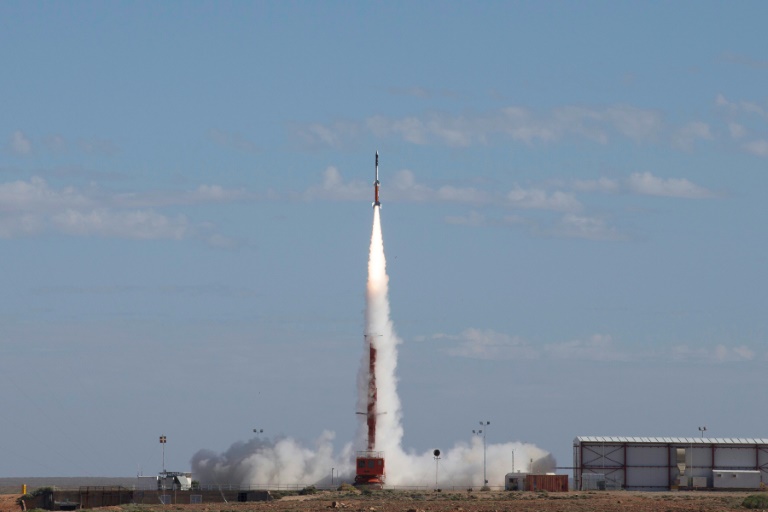
On the same day as the latest AUKUS announcement, the US military said it had recently completed a free-flight test of an aircraft-launched hypersonic missile that maintained a speed of more than Mach 5.

But rival powers are making rapid advances.

Russia is the most advanced nation in hypersonics while China is also aggressively developing the technology, according to the US Congressional Research Service.

Last month, Moscow claimed it had twice fired its newest Kinzhal hypersonic missiles to hit targets in Ukraine.

Russia has also claimed a series of successful tests including firing a Zircon hypersonic missile from a submerged submarine.

China tested a nuclear-capable hypersonic missile that circled the Earth last year, according to media reports confirmed by the Pentagon’s top general. China said it was “a routine spacecraft test”.

North Korea claimed to have carried out two hypersonic missile tests in January.

The United States, Britain and Australia launched AUKUS last September, vowing to provide Australia with the technology to build a nuclear-powered, conventionally armed submarine fleet, giving it greater stealth and reach in the Pacific region.

As a result, Canberra scrapped a multibillion-dollar submarine deal with France, infuriating Paris.

The three leaders said Tuesday they were “pleased” with progress on the Australian submarine programme.

'TikTok is having a bad war,' say disinformation experts

The war in Ukraine has rapidly positioned TikTok as the number one source of misinformation thanks to its gigantic number of users and minimal filtering of content, experts say. 

Every day, Shayan Sardarizadeh, a journalist with the BBC’s disinformation team, ploughs through a hallucinatory mix of fake and misleading information about the war being spewed out on the video-sharing site. 

“TikTok is really not having a good war,” he told AFP.

“I haven’t seen another platform with so much false content,” he added. 

“We’ve seen it all: videos from past conflicts being recycled, genuine footage presented in a misleading way, things that are so obviously false but still get tens of millions of views.”

He said the most disturbing were fake live-streams in which users pretended to be on the ground in Ukraine, but were actually using footage from other conflicts or even video games — and then asking for money to support their “reporting”. 

“Millions tune in and watch. They even add fake gunshots and explosions,” said Sardarizadeh.

Anastasiya Zhyrmont of Access Now, an advocacy group, said it was no excuse to say that the war came as a surprise. 

“This conflict has been escalating since 2014 and these problems of Kremlin propaganda and misinformation have been raised with TikTok long before the invasion,” she told AFP. 

“They’ve promised to double their efforts and partner with content checkers, but I’m not sure they are taking this obligation seriously,” she added. 

– ‘No context’ –

Zhyrmont said the problem may lie with the lack of Ukrainian language content moderators, making it trickier for TikTok to spot false information. 

TikTok told AFP that it has Russian and Ukrainian speakers, but did not say how many, and said it had added resources specifically focused on the war, but did not provide details. 

But some say the very nature of TikTok makes it problematic when subject matter becomes more serious than funny skits and dance routines. 

“The way you consume information on TikTok — scrolling from one video to another really quickly — means there is no context on any given piece of content,” said Chine Labbe of NewsGuard, which tracks online misinformation. 

NewsGuard ran an experiment to see how long it would take for new users to start receiving false information if they lingered on videos about the war. 

The answer was 40 minutes. 

“NewsGuard’s findings add to the body of evidence that TikTok’s lack of effective content-labelling and moderation, coupled with its skill at pushing users to content that keeps them on the app, have made the platform fertile ground for the spread of disinformation,” it concluded in its report. 

TikTok recognises the problem. 

In a blog post on March 4, it said it was using “a combination of technology and people to protect our platform” and partnering with independent fact-checkers to provide more context. 

– ‘Really troubling’ –

In the meantime, the particular concern with TikTok is the age of its users: a third in the United States, for example, are 19 or younger. 

“It’s hard enough for adults to decipher the real from the propaganda in Ukraine. For a young user to be fed all this false information is really troubling,” said Labbe.

All those interviewed emphasised that misinformation is rampant across all social media, but that TikTok had done even less than Facebook, Instagram or Twitter to combat it. 

TikTok’s relative infancy also means its own users have not yet joined the fight as they have on other platforms. 

“There are communities on Twitter and Instagram who are involved in disinformation,” said Sardarizadeh. 

“Some are starting to do fact-checking and educate people on TikTok, but we’re talking about a dozen or two dozen, compared with hundreds on Twitter.”

Pakistan's political crisis: What happens next?

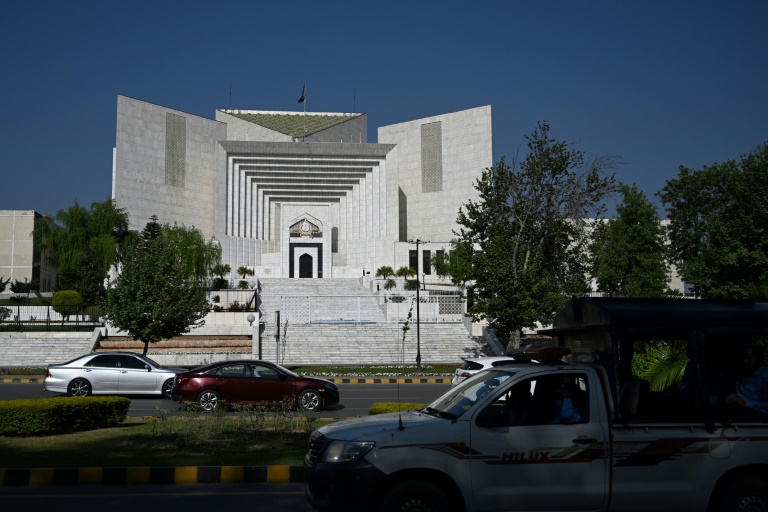
Pakistan’s supreme court is meeting for the third time Wednesday to rule on the legality of political manoeuvres that led Prime Minister Imran Khan to dissolve the national assembly over the weekend and call for fresh elections.

The court says it will only rule on whether the deputy speaker acted against the constitution in refusing to allow a vote on a no-confidence motion against Khan — although that would affect the dissolution of the assembly.

It also won’t consider the alleged “foreign conspiracy” that Khan says the opposition joined to unseat him.

So what are the possible court rulings, and what would be the consequences?

Here follows the likely scenarios:

– ‘It’s not our business’ –

The court could decide that the national assembly is responsible for its own rules and regulations, and the refusal of the deputy speaker — a Khan loyalist — to hold a vote is a matter for lawmakers to settle.

However, some legal analysts argue it is an issue for the court — according to the constitution, the prime minister cannot ask the president to dissolve the assembly if a no-confidence vote is pending.

Still, the court could decide the decision to refuse the vote effectively meant the matter was no longer pending, sending the issue back to the assembly — which would mean the dissolution likely stands.

– ‘The deputy speaker acted illegally’-

In this case the ruling would effectively nullify the subsequent decision to dissolve parliament, so lawmakers could be ordered to reconvene and Khan would almost certainly be booted out of office.

There is precedent, however.

In 1988, Muhammad Khan Junejo appealed to the court after the assembly was dissolved by then-president General Zia-ul-Haq, who had taken power in a military coup years earlier.

It agreed his government had been dissolved unconstitutionally, but ruled that since elections had been announced anyway it was best to move on.

No date has been set for elections in the current crisis, but a similar ruling could emerge.

Also, in 1993, the court ruled president Ghulam Ishaq Khan had illegally dissolved the assembly — then with Nawaz Sharif as prime minister.

Although the government resumed business, it lasted less than two months before being dissolved again.

– ‘The deputy speaker acted legally’-

If the court rules nothing untoward happened, it seems likely all subsequent actions would also stand and Pakistan would go to polls within 90 days.

The rancour and bitterness the issue has unearthed means, however, that the country faces more political uncertainty.

Past elections have been violent, messy affairs, and a campaign season beginning during the fasting month of Ramadan and continuing through the hottest period of the year will fray nerves and raise tensions.

The stakes have also been raised by Khan’s anti-US rhetoric — a potential flashpoint during political rallies.

– ‘No appeals against our decision’ –

The supreme court has received a slew of petitions and countersuits on the saga. 

But it said it was taking the case “suo motu”, meaning on its own account.

The supreme court is ostensibly independent, but rights activists say previous benches have been used by civilian and military administrations to do their bidding throughout Pakistan’s history.

No ruling will please all parties, but as the highest court in the land it would also be responsible for hearing any possible appeals against its own ruling.

That seems unlikely, however, and a definitive decision will likely see a return to status quo and another round of political squabbling.

By law, an election must be held before October 2023.

China reports most virus cases since pandemic start

China reported more than 20,000 Covid-19 cases on Wednesday, the highest daily tally given since the start of the pandemic, as millions in locked-down Shanghai began a new round of testing.

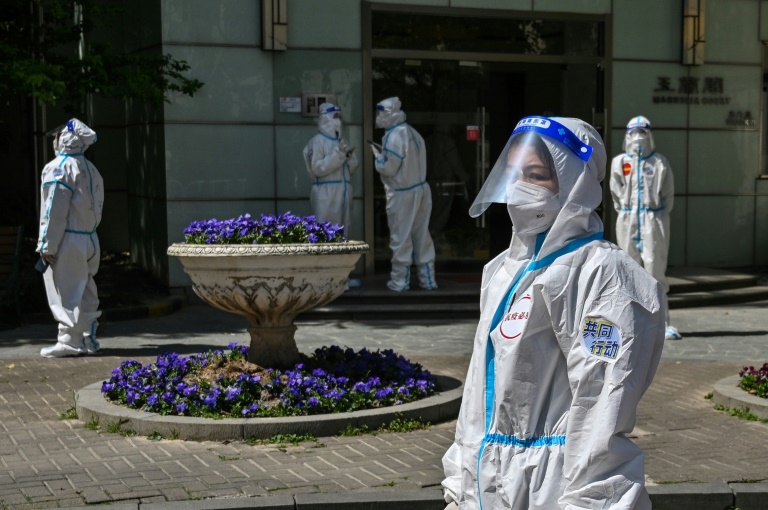
The country’s “zero-Covid” strategy has come under immense strain as cases spike, with around 25 million residents of Shanghai — China’s largest city and economic engine room — ordered to stay-at-home as the authorities struggle to contain the outbreak.

Until March, China had kept daily cases low with snap localised lockdowns, mass testing, and strict restrictions on international travel.

But the caseload has hit thousands per day in recent weeks, with Shanghai driving the surge of the highly transmissible Omicron variant.

The city locked down its residents in phases last week, prompting scenes of panic-buying and mass testing.

But state broadcaster CCTV reported that the city will launch a fresh round of tests on the entire population on Wednesday.

Shanghai is “testing its strength against the virus,” senior city health official Wu Qianyu said at a press conference Wednesday, the latest dour warning from authorities suggesting a long run in lockdown may be ahead. 

The city is converting its landmark National Exhibition and Convention Center into a makeshift Covid hospital for 40,000 people, state news agency Xinhua reported Wednesday, just days after setting up a temporary quarantine centre in another expo hall.

– Extended lockdown –

China recorded 20,472 infections on Wednesday, the National Health Commission said in a statement.

It is the country’s highest-ever daily infection number given by authorities, even during the peak of the initial outbreak which centred around Wuhan. 

The majority of the cases are, however, asymptomatic.

Authorities reported no new deaths, in a country which says only one person has died of the virus in nearly two years.

Yet China faces low vaccination rates, especially among the elderly, leaving officials with a high-wire act of balancing maintaining public health with keeping the economy moving.

In Shanghai quarantine facilities are bulging with people who test positive — even if they are asymptomatic — as city officials stick rigidly to virus protocols.

Those include separating Covid-positive babies and children from parents who test negative, a policy that has stirred anxiety and anguish from worried families.

City officials said on Wednesday that parents of some child patients with “special needs” would now be allowed to remain with their Covid-positive children.

Meanwhile anger over lack of fresh food and curtailed movements is rising among residents as officials extend what was originally intended to be a short lockdown.

Shanghai, China’s largest city, accounted for more than 80 percent of the national tally, city officials said on Wednesday.

A top Shanghai official has conceded that the financial hub had been “insufficiently prepared” for the outbreak.

China, the country where the coronavirus was first detected in the central city of Wuhan in late 2019, is among the last remaining places following a zero-Covid approach to the pandemic.

The outbreak has taken on an increasingly serious economic dimension, with China’s factory output falling to its lowest in two years in March and services activity suffering a “notable drop in sales,” according to independent indices released by Chinese media group Caixin.

Hong Kong police arrest six for sedition over court 'nuisance'

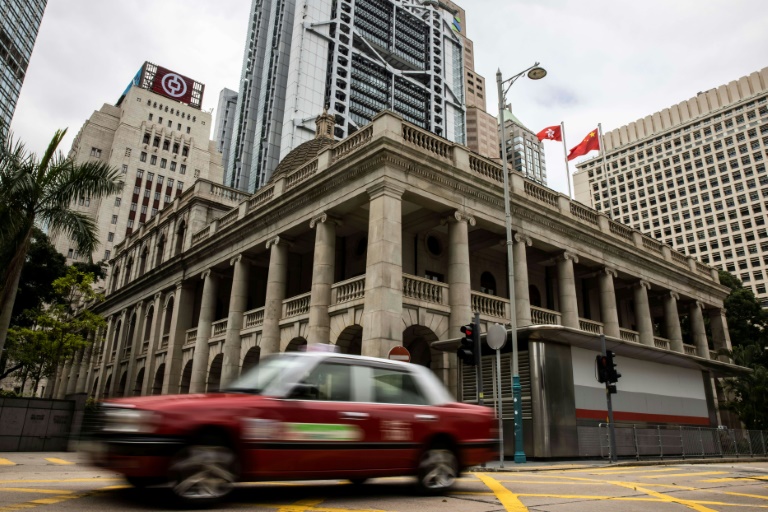
Six people accused of causing a nuisance in a Hong Kong courtroom found themselves arrested for sedition Wednesday, as local authorities continue to ramp up use of the colonial-era law against critics.

Court disruptions are usually dealt with under contempt rules but authorities have chosen to deploy sedition, a charge treated as a national security offence.

Police said four men and two women aged between 32 and 67 were arrested over behaviour at court hearings between December and January.

The suspects “purposely caused nuisance” while attending the hearings and “severely affected jurisdictional dignity and court operations”, police said in a press release.

The statement did not detail what specific behaviour or actions were deemed to be seditious.

Hong Kong’s courts have become gathering places for democracy supporters as authorities prosecute thousands of activists and protesters following citywide protests in 2019.

Most hearings are open to the public, and democracy supporters often applaud or shout words of encouragement to defendants appearing in the dock.

Hong Kong judges have previously chastised spectators for their behaviour and warned they could be in contempt of court, but none had been arrested before Wednesday.

Police said they seized records that allegedly show the suspects “conspiring” to commit disruptive acts in court, after searching their residences.

Siew Yun-long, a citizen journalist known for his court reporting, was among those arrested, his family confirmed to AFP.

Leo Tang, a former leader of the now-disbanded Hong Kong Confederation of Trade Unions (HKCTU), was also arrested, according to local media.

The HKCTU is among scores of civil society groups and government-critical local news outlets that have shuttered following a sweeping national security law that was imposed by Beijing in 2020 to stamp out dissent.

Police have arrested around 170 people under the security law, including opposition lawmakers, activists, journalists and students.

Authorities have also increasingly relied on sedition, a legacy law that until recently had not been deployed in decades.

The offence carries a maximum penalty of two years in jail.

In recent months, sedition charges have been brought against pro-democracy unionists who produced euphemistic children’s books; journalists from now-shuttered pro-democracy news outlets; and people critical of the government’s response to the pandemic.

US to announce new sanctions on Russia over Ukraine killings

The United States was expected to announce tough new sanctions on Russia Wednesday, including a ban on new investments, a day after Ukraine’s president showed the UN Security Council harrowing images of violence and accused Moscow of widespread atrocities.

The sanctions come after an outcry over the discovery of dozens of bodies in civilian clothing in areas from which Russian troops have withdrawn around Ukraine’s capital, including the town of Bucha. 

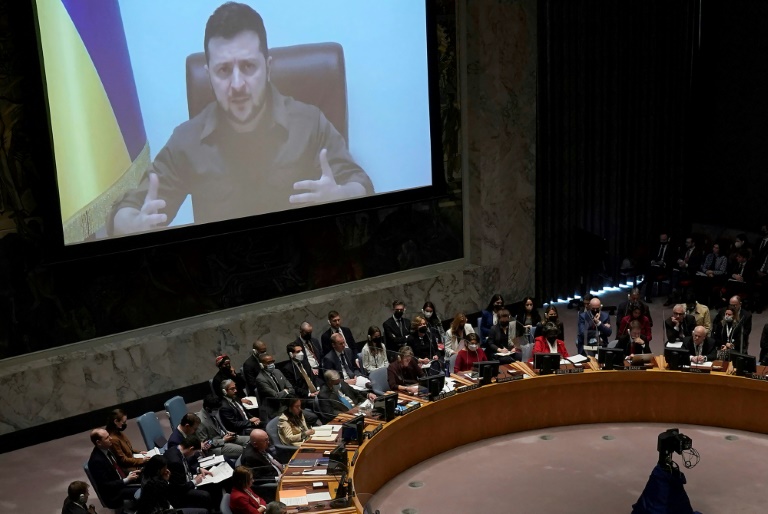
Ukrainian leader Volodymyr Zelensky likened Russia’s actions to Nazi atrocities in an impassioned speech by videolink to the 15-member UN Security Council on Tuesday. 

“They cut off limbs, slashed their throats, women were raped and killed in front of their children,” Zelensky said. 

He demanded stronger action from Western powers and called for Russia’s exclusion from the Council, where it holds veto power.

Later in his nightly address, a frustrated Zelensky said Russia was blocking the UN from carrying out “the functions for which it was created”. 

“The UN Security Council exists, and security in the world doesn’t,” he said. 

In an interview with the BBC, the US ambassador to the UN admitted that “no one can question (Zelensky’s) frustration with the Council and how the Council operates”. 

But she insisted that the Council was holding Russia to account, and that Moscow was isolated within it. 

– Push to isolate Moscow –

The killings in Bucha and elsewhere have galvanised support for Ukraine, with Washington announcing another $100 million in military aid, and produced new momentum for additional sanctions on Moscow.

“We had already concluded that Russia committed war crimes in Ukraine, and the information from Bucha appears to show further evidence of war crimes,” a US source familiar with the planned measures said. 

On Wednesday, Washington, in coordination with the G7 and the European Union, is expected to announce measures including a ban on all new investments in Russia.  

“You can expect… that they will target Russian government officials, their family members, Russian-owned financial institutions, also state-owned enterprises,” White House Press Secretary Jen Psaki told a briefing on Tuesday. 

A new sanctions package being prepared by Europe, meanwhile, is set to include oil and coal, France’s foreign minister said at EU talks in Luxembourg.

And Britain said it has so far frozen some $350 billion in assets from President Vladimir Putin’s “war chest”.

As part of the push to isolate Moscow, Spain, Italy, Denmark and Slovenia expelled dozens of Russian diplomats suspected of being intelligence operatives on Tuesday, following similar moves in France and Germany — a total of some 180 expulsions in 48 hours.

The Kremlin called it a “short-sighted move” that would complicate efforts to negotiate an end to the hostilities.

Putin also warned of “reprisals” for recent European measures targeting Russian gas giant Gazprom — and said Moscow would “monitor” its food exports to “hostile” nations, raising the spectre of shortages and price spikes.

– Kremlin denials –

The Kremlin has denied any civilian killings, claiming the images emerging from Bucha and other sites are fakes produced by Ukrainian forces, or that the deaths occurred after Russian soldiers pulled out.

At the Security Council meeting, Moscow’s ambassador rejected Zelensky’s claims, saying the “ungrounded accusations… are not confirmed by any eyewitnesses”.

But satellite photos taken while Bucha was still under Moscow’s control show what appear to be bodies lying in streets where the dead were later found by Ukrainian forces and seen by journalists. 

And multiple Bucha residents told AFP they had seen Russian soldiers killing civilians.

“Right in front of my eyes, they fired on a man who was going to get food at the supermarket,” said 43-year-old Olena, who declined to give her family name.

During a grim cleanup, the remains of partially burned bodies in black bags were lifted into a van, with officials telling journalists “dozens of bodies” remained in apartments and in nearby woods.

Western nations have given short shrift to Russia’s denials.

“What we’ve seen in Bucha is not the random act of a rogue unit. It’s a deliberate campaign to kill, to torture, to rape, to commit atrocities,” US Secretary of State Antony Blinken said.

European Commission chief Ursula von der Leyen, who will visit Kyiv this week, has offered the bloc’s assistance in documenting proof of war crimes.

– Cluster bombs –

Ukrainian authorities have warned that others areas may have suffered even worse fates than Bucha. 

Scenes of devastation have met those venturing into areas from which Russian forces have withdrawn. 

In the northern city of Chernigiv, which was besieged from the early days of the invasion, a charred children’s hospital, full of bullet and shrapnel holes, served as a shelter.

In the dank basement, children painted on walls — tiny handprints, a smeared rainbow, a fluttering Ukrainian flag.

“Cluster bombs were flying, we have traces of these bombs,” said 51-year-old Olena Makoviy. “The injured were brought to the children’s hospital, both adults and children.”

City officials estimate around 350 civilians have been killed in Chernigiv, with fellow residents digging mass graves to bury them. 

“It was very scary here from the first days of the war,” said Makoviy. “They brought guys, handsome, young, but no longer alive,”

– ‘We are ready’ –

The Russian withdrawal from areas around Kyiv and the north is part of a shift of focus towards Ukraine’s southeast, in a bid to create a land bridge between occupied Crimea and Moscow-backed separatist statelets in Donbas.

NATO chief Jens Stoltenberg said the alliance expects a Russian push in “coming weeks” to try to seize the entire Donbas. 

In the village of Krasnopillia there, Ukrainian forces were preparing to counter that push. 

“We know the Russians are reinforcing and are getting ready to attack,” a senior Ukrainian officer on the ground told AFP. “We are ready… we’ve planned some surprises for them along the way.”

Civilians have been asked to evacuate west and on Tuesday a line of cars stretching three kilometres was waiting to pass a checkpoint, while thousands of other residents boarded trains to leave.

And violence has continued elsewhere, with Ukraine’s prosecutor general saying Tuesday that bombing around Kyiv had killed 12 people.

Peace talks between the sides have so far gone nowhere, though Moscow says it is “ready” to continue.

Ukraine has proposed an agreement where other countries would guarantee its security in return for Kyiv accepting a neutral and non-nuclear status, not joining NATO and refusing to host foreign military bases.

The proposal would also see Russia accept Kyiv’s admission to the European Union.

burs-reb/je

Russian cinema in turmoil as Hollywood pulls out

After years spent translating Hollywood films, Russian Mila Grekova was suddenly thrown out of work after Moscow’s military intervention in Ukraine.

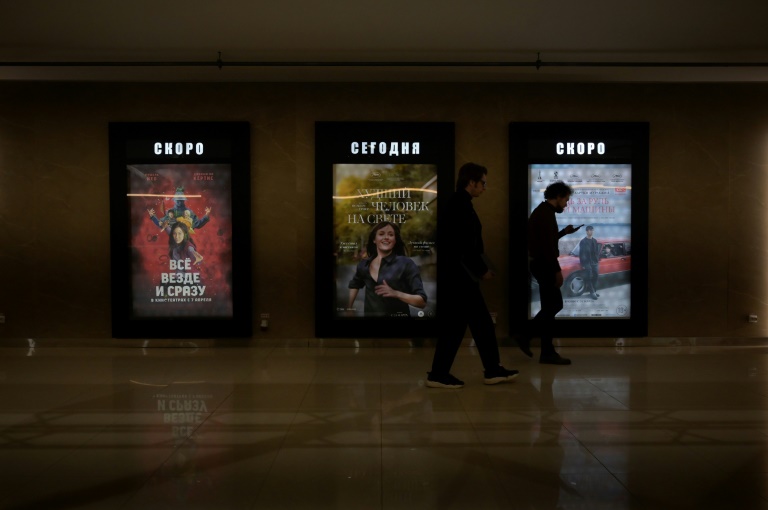
Five Hollywood giants — Disney, Warner Bros, Universal, Sony Pictures and Paramount — have all stopped releasing new films there, leaving Russian cinemas bereft of the latest blockbusters.

But it has not made Grekova turn against President Vladimir Putin.

“It’s the West that I hate today and not Putin,” the 56-year-old said.

“Bollywood may replace Hollywood in Russia, but it’s too late for me to learn Hindi,” she said, referring to India’s refusal to condemn Moscow or join in with sanctions.

Russia’s film industry has been thrown into turmoil by the fighting in Ukraine just as it was beginning to recover from the pandemic.

And like in many sectors hit by sanctions, the film industry is turning away from the West, looking inward to its own movies or east to Asia.

Russians are avid cinema-goers with the highest number of admission in Europe, 145.7 million last year, according to the European Audiovisual Observatory. 

Many flock to see Hollywood films, which are often dubbed instead of being shown with subtitles. 

– Looking to Asia –

Before Hollywood’s withdrawal, Russian company Mosfilm-Master was dubbing around 10 foreign films a month, mostly from English.

“Now we have lost two thirds” of business, the company’s director Yevgeny Belin told AFP in its high-tech dubbing studio in Moscow.

“During the pandemic, we had films but no cinemas open. Today, we have our cinemas but no films,” he said.

Russia’s National Association of Cinema Owners said last month that cinemas risk losing up to 80 percent of their revenue.

Looking to adapt, Mosfilm-Master is on the hunt for translators from Korean and Mandarin, even though Belin said he “doubts that Asian films work for Russians” because of cultural differences. 

“Westerners are closer to us,” said the 70-year-old, who has spent three decades in dubbing. 

Olga Zinyakova, the president of Karo, one of Russia’s leading cinema chains, said she is confident the industry can rebuild.

“The situation is extremely difficult but not catastrophic,” the 37-year-old said.

“Since the arrival of Hollywood in post-Soviet Russia 30 years ago, we have gone through a lot of crises: political, economic and the pandemic,” she said, surrounded by empty seats in Moscow’s Oktyabr cinema, home to Europe’s largest screening room with 1,500 places.

– Russian identity –

Since the conflict began on February 24, the number of tickets sold in Karo’s 35 cinemas has fallen by 70 percent, Zinyakova said.

The Russian government has promised major financial support and tax breaks to film production and cinemas, as it looks to replace Hollywood films with more homegrown fare.

“Russians will explore themselves more deeply,” said Zinyakova, pointing to the success of Russian films from the 1990s like the cult movie “Brat” (“Brother”) which is screening again in several Moscow cinemas.

Zinyakova is also preparing to include more Asian and Latin American films among upcoming releases. 

“And when Hollywood comes back, the Russian market and viewers will no longer be the same,” she said.

Pavel Doreuli, a 44-year-old sound designer who works on around 15 Russian films a year, said it was no surprise that Hollywood has pulled out of Russia. 

“World cinema has been hostage to big politics for years,” he said, saying major film festivals like Cannes and Berlin were no longer about art, but about promoting “certain values”.

Still, Doreuli said it would be a shame for Russia to be cut off from world cinema, pointing to the exclusion of official Russian delegations from this year’s Cannes film festival.

“If they are excluded from international festivals, Russians will give up on arthouse cinema that offers a different vision of the world, which is so precious today,” he said.

Close Bitnami banner
Bitnami