World

Sudanese plan mass anti-coup rallies on anniversary of sit-in

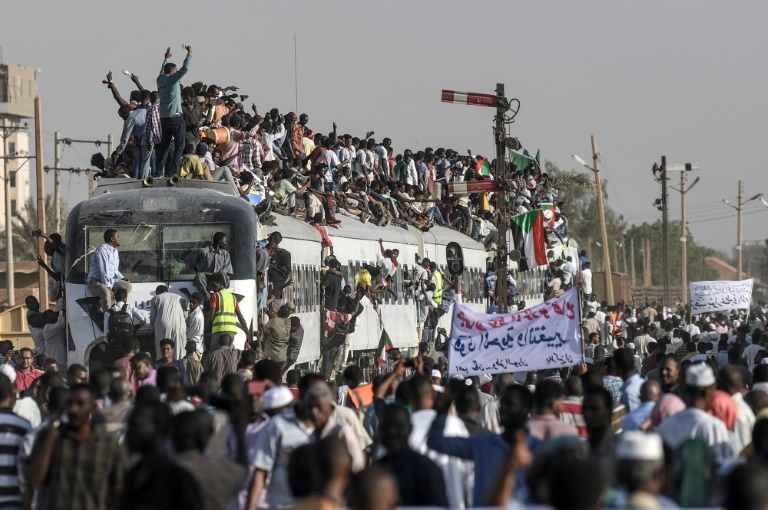
Sudanese protesters are gearing up for mass anti-coup rallies Wednesday to mark the anniversaries of historic events that toppled Sudanese autocrats, most recently president Omar al-Bashir three years ago. 

The planned demonstrations will come as political and economic turmoil have deepened in Sudan following an October 25 military coup led by army chief Abdel Fattah al-Burhan. 

The protests have been planned for April 6, which coincides with the anniversary of a 1985 popular uprising that toppled president Jaafar Nimeiri after years of harsh rule. 

It also marks the third anniversary of the beginning of a mass encampment outside the army headquarters in Khartoum, the culmination of months of protests demanding an end to Bashir’s three decades in power.

Bashir was ousted on April 11, 2019 by senior military officials.

Protesters then kept up the sit-in to demand civilian rule, but in June that year it was violently dispersed by men in military fatigues.

At least 128 people were killed in a crackdown that lasted for days, according to medics.  

Civilian and military leaders later agreed on a transition toward civilian rule, but Sudan’s latest coup in October upended those plans. 

– ‘Defeat the coup’ –

Sudanese protesters have since been taking to the streets seeking to bring down the coup. In recent weeks, activists have ramped up online calls for Wednesday’s protests, using hashtags such as “the storm of April 6” and “the earthquake of April 6”.

“It is an important day… so we expect many to take to the streets despite the heat and Ramadan,” said Badwi Bashir, a protester from Khartoum. “We just want to bring down the coup and end the prospect of any future coups.”

Jaafar Hassan, a spokesman for the Forces of Freedom and Change (FFC) — an umbrella civilian alliance whose representatives were ousted from positions of power in the October coup — said April is “the month of victories for the Sudanese”.

“We have to defeat the coup… We have to get out of this crisis,” Hassan told a press conference last week.

Since the takeover, military leaders have been moving to tighten their grip on power, rounding up prominent civilian leaders and reversing appointments made during the transition.

“We want a unified front,” said Hassan. “We have tried a partnership with the military and it failed, ending in this coup, and we shouldn’t do this again.”

On Saturday, Burhan said he will only “hand over power to an honest, elected authority, accepted by the all the Sudanese people”.

At least 93 people have been killed and hundreds wounded in the crackdown on the anti-coup protests, according to medics.

– Economy in nosedive –

Since the coup, Sudan’s already ailing economy has suffered severe blows, as Western donors cut crucial aid pending the restoration of a transition to civilian rule.

Prices of food, fuel and basic commodities have soared, in large part due to the deepening economic crisis since the military takeover. 

Crime and lawlessness have increased as violence in remote areas of Sudan has intensified, particularly the restive Darfur region, according to the United Nations. 

On Thursday, clashes between Arab and non-Arab tribes left at least 45 people killed in South Darfur state.

Darfur was the scene of a bitter conflict in 2003 under Bashir, who is wanted by the International Criminal Court over accusations of atrocities in the region.

On Tuesday, the ICC began the trial of Ali Muhammad Ali Abd-Al-Rahman, an ally of Bashir, over his role in the conflict.

The UN has warned of growing humanitarian needs and food insecurity in Sudan.

Last month, the World Food Programme said that the number of Sudanese facing acute hunger would double to more than 18 million by September 2022.

On Friday, Burhan threatened to expel UN special representative Volker Perthes, accusing him of “interference” in the country’s affairs after Perthes warned of the deepening crisis in Sudan during a UN Security Council briefing.

Perthes’ mission, UNITAMS, along with the African Union and the regional bloc IGAD, have agreed on joint efforts to facilitate Sudanese-led talks in a bid to resolve the crisis. 
Verdict due in Burkina leader Sankara's 1987 assassination trial

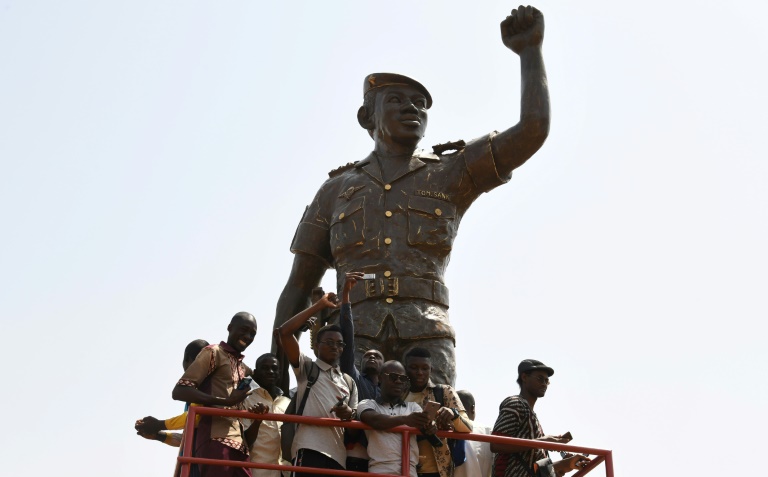
A court in Burkina Faso will on Wednesday hand down the long-awaited verdict in the prosecution of 14 men accused of assassinating revolutionary leader Thomas Sankara, crowning a six-month trial marked by grim testimony and disrupted by a military coup.

Revered among pan-Africanist radicals, Sankara was an army captain aged just 33 when he came to power in a coup in 1983.

The fiery Marxist-Leninist railed against imperialism and colonialism, often angering Western leaders but gaining followers across the continent and beyond.

He and 12 colleagues were gunned down by a hit squad on October 15, 1987, at a meeting of the ruling National Revolutionary Council.

The massacre coincided with a coup that took Sankara’s erstwhile comrade Blaise Compaore to power.

Throughout his 27-year reign, Compaore clamped a tight lid on the circumstances of Sankara’s demise, fuelling speculation that he was the mastermind.

The historic trial into Sankara’s death opened last October, more than 34 years after his death. 

– Tried in absentia –

Prosecutors at a military court in the capital Ouagadougou have demanded a 30-year jail term for Compaore, who now lives in exile in neighbouring Ivory Coast.

Compaore is being tried in absentia on counts of attacking state security, concealing a corpse and complicity in a murder.

He denies the charges.

The prosecution is also seeking 30 years for Hyacinthe Kafando, who is suspected of having led the hit squad. Kafando, who later commanded Compaore’s presidential guard, is also being tried in absentia.

It is calling for a 20-year sentence for Gilbert Diendere, one of the commanders of the army during the 1987 coup and the main defendant present at the trial. 

He is already serving a 20-year sentence over an attempted military coup in 2015.

In its closing statement, the prosecution recounted in grim detail the day Sankara was killed.

As Sankara headed to the National Revolutionary Council meeting, “his executioners were already there,” it said.

After Sankara entered the meeting room, the hit squad burst in, killing his guards, the prosecution said. 

“The squad then ordered president Sankara and his colleagues to leave the room. They would then be killed one by one.”

Ballistics experts told the trial Sankara had been shot in the chest at least seven times by assassins using tracer rounds.

But the defendants said the victims died in a botched attempt to arrest Sankara after he and Compaore fell out over the direction the country’s revolution was taking.

– ‘Asking for justice’ –

The trial was briefly suspended after a coup on January 24 that deposed the elected president, Roch Marc Christian Kabore.

One of the world’s poorest countries, Burkina has a long history of political turmoil, but was a relative oasis of peace until jihadist insurgents encroached from neighbouring Mali in 2015.

Their campaign has claimed some 2,000 lives and displaced some 1.8 million people.

The trial resumed after new military strongman Paul-Henri Sandaogo Damiba restored the constitution and swore an oath.

Compaore, who was deposed by a popular uprising in 2014, has boycotted what his lawyers dismiss as a “political trial.”

Prosper Farama, the lawyer representing the Sankara family, said that, as the trial nears its end, the families were finally feeling some relief — even though “during this trial, no-one confessed or repented. No-one!”

“We ask the court to give the families justice,” he said. “We don’t want revenge, we’re simply asking for justice.”

Macron: an abrasive reformer in turbulent times

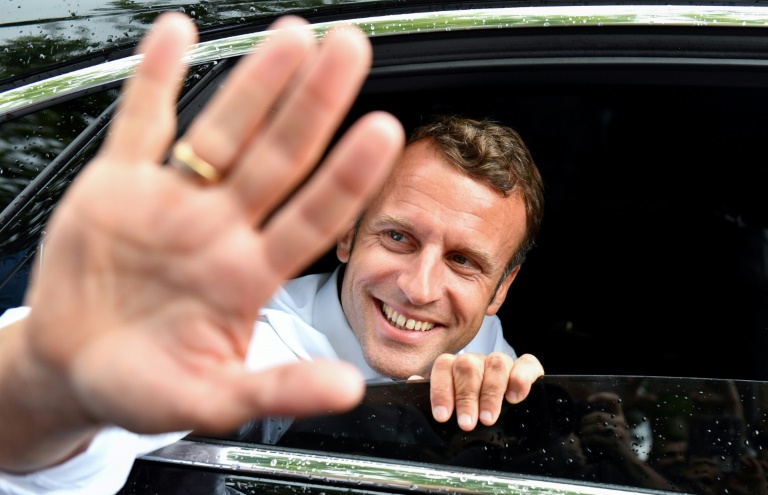
A short time after becoming France’s youngest ever president in 2017, Emmanuel Macron made a boast about his temperament that made clear he was expecting trouble while in office.

“I’m not made to lead in calm weather,” he told author Emmanuel Carrere during a tour of the hurricane-hit French Caribbean island of Saint Martin in 2017. “My predecessor was, but I’m made for storms.” 

The comment, made as he observed devastated homes, proved prophetic.

Over his five years, some storms were expected, some were of his own making, while others barrelled over the horizon unannounced. 

After Macron’s first year in office, marked by major tax and labour market reforms, he faced some of the most violent anti-government demonstrations since the 1960s when protesters in florescent yellow safety jackets began a nationwide revolt against his policies. 

From the beginning of 2020, he battled a once-in-a-century global pandemic as Covid-19 spread from China, rendering almost all other government business irrelevant and putting paid to his last reform plans.

“We are at a time in the history of humanity when we have rarely seen such an accumulation of short-term crises,” he told a think-tank in late 2020.

For the last month and a half, having weathered Donald Trump’s norm-shredding American presidency, he has been on the diplomatic frontlines trying to end Russian President Vladimir Putin’s invasion of Ukraine.

– ‘President of the rich’? – 

Throughout all these crises, the man dubbed “The Chameleon President” by Le Monde newspaper, has often confounded the French.

His pro-enterprise reforms, tough talk on crime, and belief in well-funded public services and state regulation — “neither of the left, nor the right,” he says — has sometimes made it hard to pin down the essence of “Macronism”. 

As a personality, still aged only 44, he is seen by fans as energetic and bold, but criticised for being abrasive and sometimes authoritarian.

His long work days and late-night demands on ministers have left many around him exhausted. 

“I think I arrived in power with a sort of vitality, which I hope I still have, with a desire to shake things up,” he told TF1 television in an interview in December.

That desire, he now concedes, has sometimes been the source of his errors, particularly off-the-cuff comments made to members of the public that have forged his reputation for arrogance and insensitivity.

He once told an unemployed gardener that he could “cross the road and get you a job” and accused opponents of his labour market reforms of being “slackers”.

“I think that with some of my comments I hurt people,” the former investment banker at Rothschild and Co continued during his interview with TF1. “And I think you can get things done without hurting people.” 

Nicolas Domenach, co-author of a recent book titled “Macron: Why so much hatred?”, said these remarks, coupled with Macron’s decision to make tax cuts for the wealthy one of his first priorities, were the fuel for the “Yellow Vest” protests in 2018.

“Not only did we have a ‘president of the rich’, but a president of contempt and arrogance. Everyone we spoke to mentioned it,” said the veteran journalist and commentator. “It cut through. It was like he was branded with it, with hot iron.”

– Reforms – 

Despite stirring such strong feelings in opponents, Macron has always retained a loyal core of support, mainly from urban professionals.

They admire his pro-business policies and desire to modernise France’s vast social security system, as well as what is widely seen as an uncommon intellect and grasp of policy detail.

Partly thanks to his reforms and vast government spending during the Covid-19 pandemic, unemployment is at its lowest level in 14 years. 

“People are also proud when they see him overseas. He represents France well,” explained Domenach. 

Macron believes in a “diplomacy of audacity” and he has thrown himself into the search for solutions to crises ranging from Iran’s disputed nuclear programme, to Libya’s civil war, and latterly the Russian-Ukraine conflict. 

His repeated mediation efforts have rarely borne fruit — including his most recent attempts to convince Putin not to invade — but the Ukraine crisis has proved a boon for his dream of a stronger, more united European Union.

– Private life –

Macron’s unusual personal life remains a source of fascination in France, though his marriage is no longer a subject of open speculation, as it was before the 2017 election which forced him to make a public denial that he was gay.  

He is married to his former drama teacher Brigitte, whom he met while a pupil at a private school in their hometown of Amiens in northeast France. 

More than 24 years his senior and a mother of three children, Brigitte divorced her husband and began a relationship with Macron while he was in his late teens.

Known to have reluctantly embraced her husband’s political ambitions, she once said she wanted to avoid being like “a vase of flowers” in the background at official functions but has kept a relatively low profile as first lady.

“I’ve learned not to speak openly to anyone, anywhere and anyhow which is a colossal effort for me because I’m very talkative,” she told the Figaro newspaper recently. 

If Macron fails with his bid for a second term — or succeeds and serves a second term until 2027, when he will be only aged 49 — his mother has an idea of what his future might hold.

“I’m convinced he’ll launch himself as a writer, that he’ll take another path. He’s not the sort of person to do the international conference circuit,” Francoise Nogues told the writer Gael Tchakaloff for her book about the Macron couple.

France votes as tight Le Pen-Macron duel looms

France votes Sunday in the first round of presidential elections at which Emmanuel Macron is bidding for a second term in the face of a strengthening challenge from resurgent far-right leader Marine Le Pen.

In an election whose outcome is crucial for the future direction of France and also Europe, the first round will determine which two candidates go through to the run-off on April 24.

Polls project that the final two will be Macron and Le Pen, in a repeat of their duel from 2017 that saw the centrist become France’s youngest-ever head of state.

With the traditional Socialist and right-wing parties that dominated French politics for last decades facing near electoral oblivion, far-left politician Jean-Luc Melenchon is projected to come third, though he believes he could still reach the second round.

But while Macron handily trounced Le Pen five years ago, the veteran anti-immigration campaigner has sought to rebrand herself with a softer image and has closed the gap with the president in recent opinion polls.

– ‘Possible to defeat Macron’ –

Macron entered the campaign at the last minute, saying he had been focusing on ending Russia’s invasion of Ukraine, while Le Pen has crossed the country seeking to strike a chord with the French on issues of daily concern.

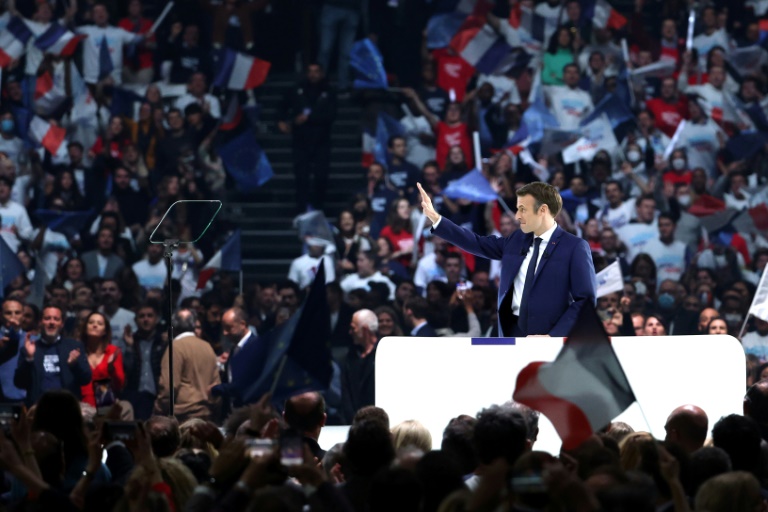
The president addressed his first major campaign event only on Saturday, a rock concert-style rally where he entered like a prize fighter but warned that defeat to Le Pen was possible.

“Look at what happened with Brexit, and so many other elections: what looked improbable actually happened,” Macron said, alluding not least to Donald Trump’s defeat of Hillary Clinton in the 2016 US elections. 

Macron received a poll boost in the immediate aftermath of President Vladimir Putin’s decision to invade Ukraine, but in the last weeks Le Pen has been eating away at what once looked an unassailable lead.

A survey published Monday by Harris Interactive showed Macron’s second-round lead at its narrowest yet, at 51.5 percent against Le Pen’s 48.5 percent.

“What people said was the automatic re-election of Emmanuel Macron turned out to be fake news,” Le Pen said on Friday.

“It is perfectly possible to defeat Emmanuel Macron and radically change the politics of this country,” she added.

Other polls have credited Macron with a slightly wider margin but still too close for comfort. An Ifop-Fiducial poll, also published Monday, showed Macron at 53 percent against 47 percent for Le Pen.

Marine Le Pen has seen a “strong dynamic at the end of the campaign… The second round promises to be much tighter than 2017” when Macron won with over 66 percent of the vote, said Jean-Daniel Levy, director at Harris Interactive.

– ‘A clan not a rally’ –

The stakes are huge, with Macron vowing further reforms of France if he wins a new term, and set to retain his status as Europe’s number one figure after the departure of former German chancellor Angela Merkel.

A Le Pen presidency would likely see a tougher stance from France on immigration and integration, and raise questions over whether Paris can retain its global diplomatic clout in a world shadowed by Russian aggression.

She has sought to detoxify her party from the heritage of its founder and her father Jean-Marie Le Pen, not least by renaming it the National Rally (RN) instead of the National Front (FN), but Macron and his allies insist it has not changed.

“It’s not a rally, it’s a clan,” Macron said in an interview with regional newspapers published on Monday.

While Social Democrat Olaf Scholz has succeeded Merkel, the right has been surging elsewhere in Europe with Hungarian Prime Minister Viktor Orban, Putin’s closest ally within the EU, securing a new term in elections at the weekend.

Should he win, Macron would be the first French president since Jacques Chirac in 2002 to win a second term after the presidencies of right-winger Nicolas Sarkozy and Socialist Francois Hollande ended in one-term disappointments.

– Struggling rivals –

Polls project Macron winning the first round with a score in the high twenties, followed by Le Pen and then Melenchon.

The far left-leader of the France Unbowed (LFI) party, Melenchon is banking on a late surge fuelled by an unusual meeting late Tuesday where he appeared as a hologram simultaneously in 12 cities across the country from a live rally in the central city of Lille.

“Macron against Le Pen — it’s not going to happen,” he insisted Tuesday, saying he could even sneak into the second round at the expense of Macron. “Look at the (poll) curves,” he told Sud Radio.

Elsewhere on the left, the Greens and Communist candidates failed to make an impact while Socialist candidate Anne Hidalgo, the mayor of Paris, is projected to struggle to reach even two percent.

Valerie Pecresse, the candidate of the main rightwing party The Republicans, the political home of former presidents including Chirac and Sarkozy, also appears out of contention after a campaign that never found momentum.

Sarkozy, who retains influence on the right despite criminal convictions in graft scandals, has not even bothered to endorse Pecresse, a major setback for the Paris region chief.

Extreme-right pundit Eric Zemmour made a sensational entry into the campaign last year but has gradually lost ground, with analysts saying he has in fact aided Le Pen by making her appear more moderate. 

War in Ukraine: Latest developments

Here are the latest developments in the war in Ukraine:

– ‘Act immediately’ –

Ukrainian President Volodymyr Zelensky challenges the United Nations to “act immediately” or “dissolve yourself altogether” during an address in which he shows harrowing footage of dead bodies — including children — he says were victims of Russian atrocities.

Likening Russia’s actions in Bucha and other Ukrainian cities to violence carried out by “terrorists” such as the Islamic State group, Zelensky calls on the Security Council to expel Russia “so it cannot block decisions about its own aggression, its own war.”

– Moscow denies atrocities –

Russian Foreign Minister Sergei Lavrov says the discovery of bodies in Bucha was a “provocation” aimed at scuppering talks between Moscow and Kyiv.

“A question arises: What purpose does this blatantly untruthful provocation serve? We are led to believe it is to find a pretext to torpedo the ongoing negotiations,” Lavrov says in a video message broadcast on Russian television.

– US announces military aid –

Washington announces it will send $100 million in additional anti-armour weapons to Ukraine, bringing US military aid to Ukraine to over $1.7 billion, according to the Pentagon.

– 600,000 evacuated to Russia –

Russia’s UN ambassador Vassily Nebenzia says over 600,000 people have been evacuated into Russia during the conflict in Ukraine, denying Kyiv’s claim of mass deportations.

“And we’re not talking about any kind of coercion or abduction, as our Western partners like to present this, but rather the voluntary decision by these people…” he tells the Security Council.

– Donbas onslaught feared –

NATO chief Jens Stoltenberg says that, after withdrawing most of its troops from northern Ukraine, Moscow aims to capture the “entire” Donbas region in the east, with the aim of creating a land corridor from Russia to annexed Crimea.

– Cluster munitions –

UN undersecretary-general for political and peacebuilding affairs, Rosemary DiCarlo, tells the Security Council of “credible” claims Russia has used indiscriminate cluster munitions two dozen times in populated parts of Ukraine.

– War chest frozen –

Britain has frozen some $350 billion (321 billion euros) in assets from the “war chest” of Russian President Vladimir Putin, British Foreign Secretary Liz Truss says during a visit to Warsaw.

She says this action meant that “over 60 percent of the regime’s $604 billion foreign currency reserves” were now “unavailable” to the Russian government.

– US squeezes Russia payments –

The United States bars Moscow from making debt payments using funds held at American banks — a move that takes Russia a step closer to default.

“Russia must choose between draining remaining valuable dollar reserves or new revenue coming in, or default,” a Treasury spokesperson tells AFP.

On Wednesday, the US, G7 and EU are expected to ban all new investments in Russia in a new round of sanctions.

– EU to target Russian coal –

The EU proposes a ban on Russian coal imports and on Russian ships entering European ports.

“Russia is waging a cruel, ruthless war, also against Ukraine’s civilian population. We need to sustain utmost pressure at this critical point,” European Commission President Ursula von der Leyen says.

– Putin warning on food –

Putin retaliates by saying Moscow will “carefully monitor” food exports to “hostile” nations.

He cites “global food shortages” for the need in caution in exporting “to countries that are clearly hostile towards us.”

– Russia government Twitter limits –

Twitter says it will introduce new measures against Russian government accounts to reduce the impacts of official propaganda.

Moscow restricts access to Twitter and has blocked Facebook and Instagram.

– Mariupol helicopters hit –

Russia says it shot down two Ukrainian helicopters that were trying to evacuate leaders of the controversial nationalist Azov battalion from besieged Mariupol.

It also says it proposed that Ukrainian fighters lay down their arms and leave the city “via an agreed route” to territory under Kyiv’s control, adding that Ukraine had “ignored” the suggestion. 

burs-sah/jfx

China reports 20,000 daily Covid cases, most since start of pandemic

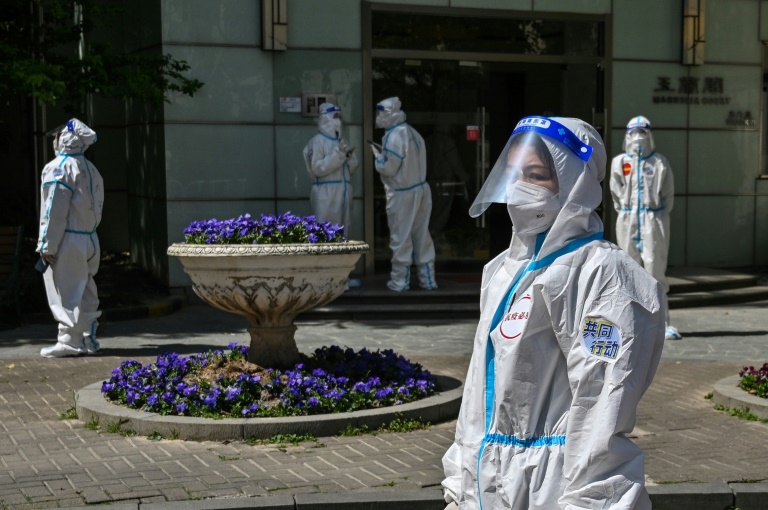
China reported over 20,000 Covid-19 cases on Wednesday, the highest daily tally given since the start of the pandemic, with Shanghai the heart of the virus surge despite being in lockdown.

The country’s “zero-Covid” strategy has come under immense strain as cases spike.

Until March, China had kept daily cases low with snap localised lockdowns, mass testing, and strict restrictions on international travel.

But the caseload has hit thousands per day in recent weeks, with officials saying they have detected a mutation of the highly transmissible Omicron variant near Shanghai.

China recorded 20,472 infections on Wednesday, the National Health Commission said in a statement, adding that there were “no new deaths.”

It is the country’s highest-ever daily infection number given by authorities, even during the peak of the initial outbreak which centreed around Wuhan. 

The majority of the cases are, however, asymptomatic.

Yet in Shanghai quarantine facilities are bulging with people who test positive as city officials stick rigidly to virus protocols.

Those include separating Covid-positive babies and children from parents who test negative, a policy that has stirred anxiety and anguish from worried families.

Shanghai, China’s largest city, accounted for more than 80 percent of the national tally, city officials said on Wednesday.

The metropolis of 25 million locked down its residents in phases last week, prompting scenes of panic-buying and mass testing.

A top Shanghai official has conceded that the financial hub had been “insufficiently prepared” for the outbreak.

Anger over lack of fresh food and curtailed movements is rising among residents as the lockdowns drag on, with state broadcaster CCTV reporting that the city will launch a fresh round of tests on the entire population on Wednesday.

China, the country where the coronavirus was first detected in the central city of Wuhan in late 2019, is among the last remaining places following a zero-Covid approach to the pandemic.

The outbreak has taken on an increasingly serious economic dimension, trimming analysts’ growth projections as factories close and millions of consumers are ordered indoors.

Twitter to test longed-for edit button

Twitter announced Tuesday it will soon start experimenting with an edit button, but only on its monthly subscription service at first.

The inability to tweak tweets after firing them off has been a key complaint among users of the one-to-many messaging platform.

Word that the company would start testing an edit feature on Twitter Blue came after newly-named board member Elon Musk conducted an online poll.

In a tweet, Musk asked if people wanted an edit button at Twitter. Nearly 4.4 million votes were cast, some 73 percent of them saying “yes.”

“Now that everyone is asking… yes, we’ve been working on an edit feature since last year,” Twitter posted on its communications account.

“No, we didn’t get the idea from a poll,” it added, poking fun at the Tesla boss.

According to Jay Sullivan, the company’s head of consumer product, “Edit” has been the most requested Twitter feature “for many years.”

“People want to be able to fix (sometimes embarrassing) mistakes, typos and hot takes in the moment. They currently work around this by deleting and tweeting again,” Sullivan said in a tweet-thread.

The San Francisco-based internet firm said it will kick off testing in coming months to figure out what works when it comes to letting users tinker with posts after they have gone live.

Twitter Blue lets people pay a monthly subscription fee of $3 to access special content or features.

Blue is available on the Twitter application for Apple or Android smartphones in Australia, Canada, New Zealand and the United States, according to the company.

Twitter also announced Tuesday that Musk will join its board, boosting hopes the eccentric entrepreneur will lift the social media company’s prospects — although some observers expressed wariness of the billionaire’s influence.

Twitter CEO Parag Agrawal called Musk “a passionate believer and intense critic of the service which is exactly what we need,” while Musk said he looked forward to soon making “significant improvements to Twitter.”

Musk, who also leads the SpaceX venture and is the world’s richest man, on Monday had announced his purchase of 73.5 million Twitter shares, or 9.2 percent of the company’s common stock.

Jack Dorsey, the co-founder of Twitter who stepped down as CEO last year, had long opposed an “edit” button on the basis that users could change a tweet that had already been widely shared, changing its meaning or context.

Sullivan addressed those concerns in his posts.

“Without things like time limits, controls, and transparency about what has been edited, Edit could be misused to alter the record of the public conversation,” he said, adding that that company’s top priority is “protecting the integrity of that public conversation.”

He noted that “it will take time” to develop the “Edit” feature and the company will be “actively seeking input and adversarial thinking” in advance of its launch.

Asian markets track Wall St retreat on hawkish Fed bets

Equities sank Wednesday after Wall Street tumbled on bets the Federal Reserve will act more aggressively to bring inflation under control, while oil prices extended losses after the European Union refrained from imposing sanctions on Russian crude.

While the Ukraine war continues to cast a shadow across trading floors, Fed monetary policy is at the top of the agenda this week as investors fret over how quickly officials will withdraw their vast pandemic-era financial support.

After last month’s 0.25 percentage point hike in interest rates, the focus is now on its plans for May’s meeting, with expectations growing that it will announce a 0.50 point lift followed by several more before the end of the year.

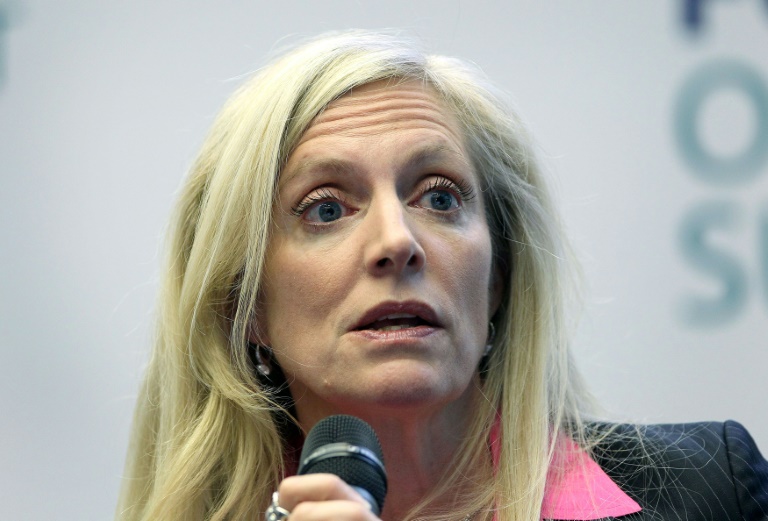
Fed governor Lael Brainard, who is considered a dove, on Tuesday spooked traders by saying bringing inflation down from 40-year highs was of “paramount importance” and that the bank was “prepared to take stronger action” if warranted.

Brainard, who is awaiting congressional confirmation for the position of Fed vice chair, also said bank policymakers were ready to start reducing its vast bond holdings, which have helped keep borrowing costs down.

“The market might have been looking for… Brainard to at least give more balanced remarks — instead, they were at the hawkish end of the spectrum from someone like Brainard,” said Stephen Innes of SPI Asset Management.

“She was not overly hawkish, but neither did she offer anything for the doves to cling to.”

Minutes from the Fed’s March meeting will be released later in the day and will be pored over for insights into officials’ thinking in light of the war and recent data suggesting the world’s top economy remains resilient for now.

All three main indexes on Wall Street ended in the red, with the Nasdaq off more than two percent owing to tech firms being more susceptible to higher rates.

And the selling seeped through to Asia, where Hong Kong, Shanghai and Taipei dropped on their return from a break.

Tokyo, Sydney, Seoul, Singapore, Manila, Jakarta and Wellington also retreated.

“Liquidity remains poor, and no one seems willing to take the other side as air pockets are becoming easier to find these days,” Innes added.

The European Union’s decision not to include Russian oil in a fresh round of sanctions saw both main contracts drop Tuesday and extend losses in early Asian business.

The reliance of the bloc — and particularly Germany — on crude from Russia has kept it from following the United States and Britain in imposing an embargo, though it signalled it wants to hit the country’s coal and shipping.

Adding to downward pressure on crude is the stronger dollar, which jumped in reaction to Brainard’s comments. Oil is priced in dollars, making it more expensive for clients using other currencies.

A coordinated move by Washington, Brussels and the G7 could also ban “all” new investments in Russia on Wednesday, while the US Treasury said Washington has barred Moscow from making debt payments using funds held at American banks.

Meanwhile, the Asian Development Bank lowered its 2022 growth forecast for developing Asia owing to “increasing” price pressures caused by Russia’s invasion of Ukraine, offsetting the recovery from Covid-19.

– Key figures around 0230 GMT –

Tokyo – Nikkei 225: DOWN 1.9 percent at 27,262.05 (break)

Hong Kong – Hang Seng Index: DOWN 1.8 percent at 22,106.00

Shanghai – Composite: DOWN 0.7 percent at 3,261.22

Brent North Sea crude: DOWN 0.2 percent at $106.44 per barrel

West Texas Intermediate: DOWN 0.3 percent at $101.68 per barrel

Dollar/yen: UP at 124.00 yen from 123.60 yen late Tuesday

Euro/dollar: DOWN at $1.0895 from $1.0903

Pound/dollar: DOWN at $1.3069 from $1.3071

Euro/pound: DOWN at 83.35 pence from 83.38 pence

New York – Dow: DOWN 0.8 percent at 34,641.18 (close)

London – FTSE 100: UP 0.7 percent at 7,613.72 (close) 

Twitter moves to limit reach of Russian govt accounts

Twitter announced Tuesday it was introducing new measures against Russian government accounts to reduce the impact of official propaganda on the social network. 

The official accounts will no longer be “recommended” to Twitter users across all categories of the app, including in searches, the platform said in a statement. 

The California company, like its rival Meta, parent company of Facebook and Instagram, had already blocked the accounts of the Russian state-run media RT and Sputnik in the European Union. 

Moscow responded by restricting access to Twitter in the country, and blocking Facebook and Instagram.

“We will not amplify or recommend government accounts belonging to states that limit access to free information and are engaged in armed interstate conflict — whether Twitter is blocked in that country or not,” Twitter said in a statement.

“When a government blocks or limits access to online services within their state, undercutting the public’s voice and ability to freely access information, but continues to use online services for their own communications, a severe information imbalance is created,” it said.

The official English account of Russian President Vladimir Putin has only 1.7 million followers. 

Since the start of the Russian offensive in Ukraine on February 24, the authorities have stepped up censorship — which was already strict — to control the way in which the war is portrayed on television and in the press, but also by private individuals on social networks. 

Using words such as “war” or “invasion” to describe the intervention or refer to actions against civilians is prohibited. The Russian government has instead labeled the conflict a “special military operation.”

In addition, the main independent media that still exist in Russia have been blocked or have suspended their work to avoid trouble.

Kayla Mueller's mother recalls pleas to IS to spare her daughter

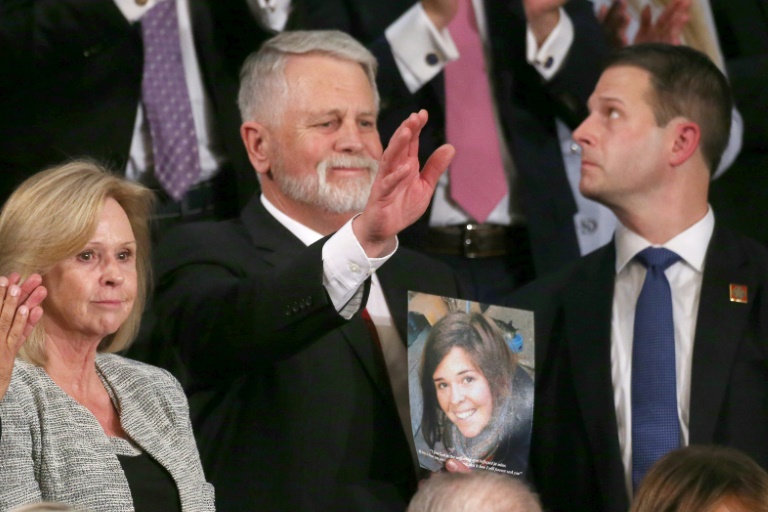
The mother of slain US relief worker Kayla Mueller testified Tuesday at the trial of one of her daughter’s alleged Islamic State captors, recounting the desperate pleas for her release and tortuous negotiations.

Marsha Mueller’s emotional testimony came on the fifth day of the trial in US federal court of El Shafee Elsheikh, a 33-year-old former British national.

Elsheikh is accused of involvement in the murders of Kayla Mueller and three other Americans: journalists James Foley and Steven Sotloff and aid worker Peter Kassig.

Marsha Mueller’s testimony came a day after Kayla Mueller’s boyfriend, Rodwan Safarjalani, took the witness stand against Elsheikh, an alleged member of the notorious IS kidnap-and-murder cell known to their captives as the “Beatles” because of their British accents.

Occasionally dabbing tears from her eyes, Marsha Mueller recalled how her daughter had worked at an orphanage in India and taught English to Tibetan refugees in Dharamsala before going to Syria.

“She was always interested in helping people,” Mueller said.

Kayla Mueller was captured by IS in August 2013 while accompanying Safarjalani, a Syrian national, on a trip to a hospital in Aleppo where he was contracted to repair a satellite dish.

Marsha Mueller told the court about email exchanges with her daughter’s captors, who were demanding a ransom of five million Euros or the release of Aafia Siddiqui, a Pakistani woman who is imprisoned in the United States for the attempted murder of US soldiers.

“We don’t want to harm her,” the hostage-takers said in a May 2014 email. “She is like a guest with us at the moment.”

But, they warned, if the Muellers could not meet their demands, their daughter would serve “a life sentence just like Siddiqui.”

The Muellers told the kidnappers they were asking for “an astronomical amount of money from a family with limited resources.”

In one email, they said Kayla’s father, Carl Mueller, had retired from the auto repair business he operated in Prescott, Arizona,

They received a curt reply. “Retiring will not help you get your daughter back so go back to work and earn some money,” it said.

– ‘Kayla is not your enemy’ –

Mueller said the family had been told by the US government that her captors “will not harm a woman,” but they decided to make a personal appeal to then-IS leader Abu Bakr al-Baghdadi.

“Kayla is not your enemy,” Marsha Mueller said in the video message. “Show your mercy and release our daughter.”

It did not come up at the trial on Tuesday, but it has been reported previously that Kayla Mueller was handed over to Baghdadi, who allegedly raped her repeatedly before killing her.

In September 2014, Kayla’s captors added another demand: a halt to US military activities against the Islamic State.

The Muellers received no response to numerous subsequent emails, and IS claimed in February 2015 that Kayla had been killed in an airstrike by Jordanian warplanes.

During a break in the proceedings on Tuesday, Safarjalani, Kayla’s boyfriend, approached Elsheikh as he was being led out of court by US Marshals and shouted at him in Arabic that he would end up in hell.

Judge T.S. Ellis warned Safarjalani when the court reconvened that he would be thrown out if there was another outburst.

The judge said he was allowing him to remain in the public gallery because he had only made a “prediction” and not a “threat.”

The IS “Beatles” held at least 27 people in Syria between 2012 and 2015, including a number of European journalists who were released after ransoms were paid.

Videos of the brutal executions of Foley, Sotloff and Kassig were released by the group for propaganda purposes.

Elsheikh and another “Beatle,” Alexanda Amon Kotey, were captured in January 2018 by a Kurdish militia in Syria, turned over to US forces in Iraq and flown to Virginia in October 2020.

Kotey pleaded guilty in September 2021 and is facing life in prison.

“Beatles” executioner Mohamed Emwazi was killed by a US drone in Syria in November 2015, while the fourth member of the cell, Aine Davis, is imprisoned in Turkey after being convicted of terrorism.

Elsheikh has denied the charges, and his lawyers claim his arrest is a case of mistaken identity. He faces life in prison if convicted.

Close Bitnami banner
Bitnami