World

Mexico seeks 'miracle' to save near-extinct vaquita porpoise

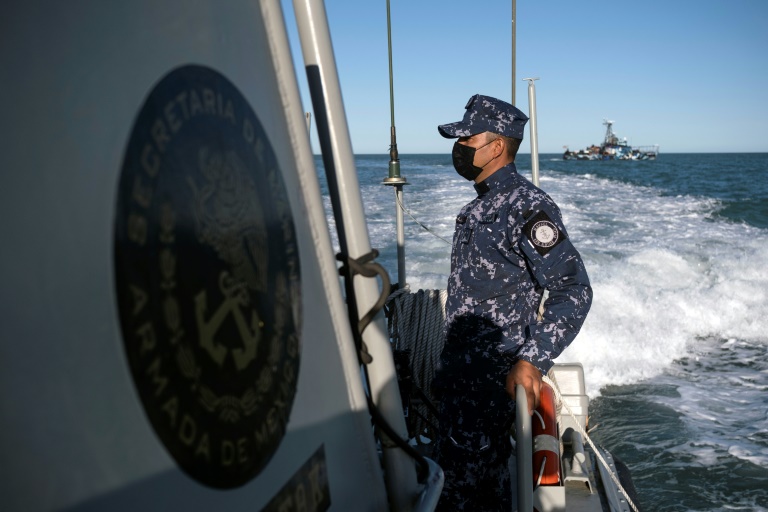
Mexican naval vessels, spotter planes and conservationists are patrolling the upper Gulf of California in a race against time to save the world’s rarest marine mammal from extinction.

Mexico’s navy and the environmental organization Sea Shepherd are working together to prevent the vaquita porpoise — which counts Leonardo DiCaprio among its celebrity defenders — disappearing forever.

The species is critically endangered, due to illegal gillnets used to catch totoaba, a large fish whose swim bladder can fetch thousands of dollars in China thanks to its supposed medicinal properties.

The navy stepped up surveillance in January amid criticism from the United States that Mexico was not doing enough to protect the vaquita, the smallest porpoise on the planet.

The deployment came after researchers sighted eight specimens of the mammal — known as the “panda of the sea” for the distinctive black circles around its eyes — between October and November.

There are estimated to be fewer than 20 individuals left in a small area in the Gulf of California, the only place in the world where the vaquita is found, according to Sea Shepherd.

Navy personnel and activists from the conservation group now monitor the area every day, looking for illegal nets and preventing fishermen from approaching a “zero tolerance zone.”

In the skies overhead, naval aircraft look for boats venturing into forbidden waters, in the latest phase of “Operation Miracle” — launched by Sea Shepherd in 2015 to try to save the vaquita.

“The efforts that we’ve seen, specifically seen over the last three or four months, mean the vaquita has the best chance that they’ve had in decades,” Sea Shepherd CEO Chuck Lindsey told reporters.

– ‘Fighting chance’ –

During a tour of the area for media, including AFP, Mexico’s navy said it had recovered 70 nets so far this year, compared with 172 for all of 2021.

Gillnets form invisible barriers under the water that can span several hundred feet and trap not just totoabas but also vaquitas, whales, dolphins, sharks and sea turtles, according to Sea Shepherd.

“As we see a dramatic reduction in the illegal nets in the water, we know that the vaquita have a fighting chance,” Lindsey said.

Conservationists have previously been involved in a number of violent confrontations with fishermen while working with Mexican authorities to remove illegal nets.

The vaquita grows up to a length of around 1.5 meters (five feet) and a weight of 50 kilos (110 pounds).

It has been listed as critically endangered by the International Union for Conservation of Nature since 1996.

In 2019 UNESCO added the Gulf of California’s islands and protected areas to the World Heritage in Danger list due to fears of the imminent extinction of the species.

From dawn, Mexican authorities now check that fishermen in the upper Gulf of California have the necessary paperwork, and later check their nets.

But “they should check beyond the breakwater. There are many boats that don’t have permits,” fisherman Roberto Lopez told reporters during an inspection.

Officials also scour beaches for nets washed ashore.

– DiCaprio, diplomacy –

International attention on the vaquita’s plight grew after DiCaprio in 2017 asked his millions of social media followers to sign a petition calling on Mexico’s then-president Enrique Pena Nieto to do more to protect the porpoise.

Last August, the Hollywood star accused President Andres Manuel Lopez Obrador’s government of abandoning the vaquita, “effectively ensuring that the remaining 10 or so porpoises will die in gillnets.”

Saving the vaquita has also become a source of diplomatic friction.

In February, the United States requested consultations with Mexico under a North American free trade pact on efforts to protect the species.

It was the first time a government has invoked the environmental provisions of the United States-Mexico-Canada Agreement, which took effect in July 2020.

Without a resolution, the move from the Washington could lead to imposition of tariffs, although US officials said at the time that it was premature to discuss punitive action.

In the meantime, the Mexican navy promises round-the-clock protection for the vaquita.

“The work that the navy has done, as in other places, is to protect the environment. We’re doing that here every day,” Admiral Luis Javier Robinson told AFP.

JetBlue seeks to buy Spirit Airways, threatening Frontier deal

JetBlue Airways announced Tuesday a bid to acquire Spirit Airlines for $3.6 billion, setting up a bidding war with Frontier Airlines in the discount flying market.

The all-cash bid of $33 a share marks a 52 percent premium of Spirit’s price prior to its February 7 announcement of the deal with Frontier, according to JetBlue.

“JetBlue firmly believes its proposal constitutes a ‘superior proposal’ under Spirit’s merger agreement with Frontier and represents the most attractive opportunity for Spirit’s shareholders,” JetBlue said.

Spirit confirmed receipt of the “unsolicited” proposal from JetBlue, adding that its board would weigh the offer.

The board “will work with its financial and legal advisors to evaluate JetBlue’s proposal and pursue the course of action it determines to be in the best interests of Spirit and its stockholders,” Spirit said.

Frontier hit back at the JetBlue announcement and said its proposed merger with Spirit remained “in the best interest of consumers and shareholders,” a Frontier spokesperson said.

“Unlike the compelling Spirit-Frontier combination, an acquisition of Spirit by JetBlue, a high-fare carrier, would lead to more expensive travel for consumers. In particular, the significant East Coast overlap between JetBlue and Spirit would reduce competition and limit options for consumers.”

Frontier also said that JetBlue’s effort was “surprising” given an antitrust lawsuit by the Department of Justice challenging an alliance between American Airlines and JetBlue. 

In announcing the merger between Frontier and Spirit two months ago, executives from the two carriers argued they could together challenge larger US carriers and save about $1 billion in costs. 

JetBlue offered a similar argument Tuesday, saying the deal would “position JetBlue as the most compelling national low-fare challenger to the four large dominant US carriers.”

Shares of Spirit rose 22.4 percent Tuesday, while JetBlue fell 7.1 percent. Frontier Group rose 3.9 percent.

French artist sprays 'smiles and humanity' on Ukraine walls

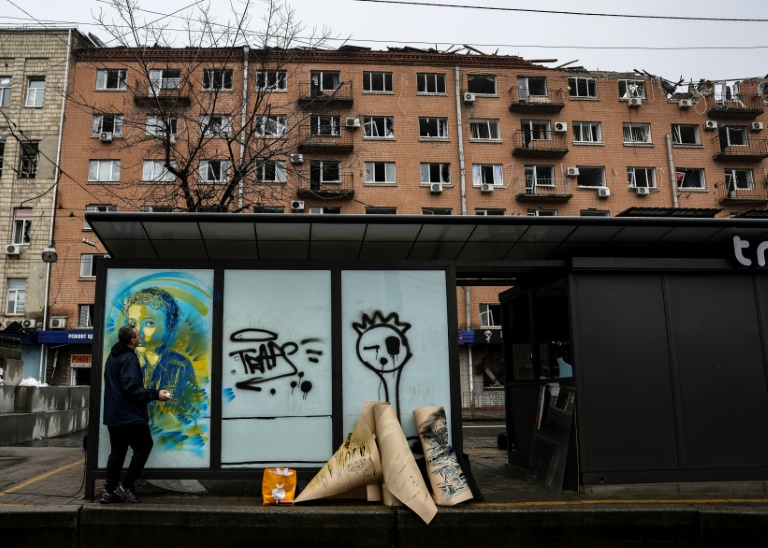
Paris-based graffiti legend C215 puts the final touches on a blue and yellow portrait of a young girl on a Kyiv bus shelter, a colourful contrast with the badly damaged buildings nearby.

“It’s a sign of support,” the energetic 48-year-old tells AFP, spray can in hand. “If this can bring a little smile or a bit of humanity in a difficult situation, then I’m satisfied.”

One of France’s leading street artists, the man — whose real name is Christian Guemy — travelled to Ukraine to tag the country’s walls with images of peace and innocence in a time of brutal war.

After the Russian invasion, the one-time Banksy collaborator did a huge mural of the same girl in the colours of the Ukrainian flag covering the side of a Paris apartment block.

But despite the dangers C215 felt he “had no choice” but to come to Ukraine itself, after meeting Ukrainians and wondering for several days what more he could do to help.

“I didn’t really decide to come to Kyiv, it was more that my paintings decided for me,” he told AFP last week, as Kyiv residents stopped and took pictures of him at work.

This painting of a young girl with a headband of flowers is located next to a metro station and food market that were badly damaged by a Russian strike — which he says shows Russia is deliberately targeting civilians.

“It’s very intense to see the contrast with the bombed building behind,” he said.

“If you want to do street art that speaks about war, the work must be in the place where the war is, and it must show the destruction and the situation in that country.”

– ‘A child is an innocent’ –

C215’s own journey began with a traumatic upbringing, born in a tough Paris suburb to a teenage mother who killed herself, and then a painful break-up that caused him to sink into depression.

After the split, he gave up his job to start doing graffiti, stencilling his daughter’s portrait to “channel my depression” and developing his technique of cutting out faces in card then spray-painting them.

That technique can now be seen in several places around Kyiv. 

C215 gives AFP a tour of his works, including one on a rusty signboard near the city’s TV tower that was targeted in a deadly Russian missile strike on March 2 which killed five people.

Another picture of a girl is stencilled on an abandoned tram near a checkpoint, painted in the same faded red and cream colours as the carriage.

He has also tagged walls in the western city of Lviv, where a huge missile struck an oil depot during his time there, and in the central town of Zhytomyr.

The imagery of childhood that haunts his work — he has said his work was “too French, too tragic” to continue his Banksy collaboration — is clear in all his Ukrainian works.

“A child is an innocent, a child doesn’t have to cope with war, and in this war there are millions of mothers and children that are spread all over Europe,” he said.

Walking off into the rain in his cagoule, C215 says he is returning to France soon but will definitely be coming back to Kyiv.

The reaction from Ukrainians themselves has been “super — that is what makes me happy”.

Peru ends Lima curfew aimed at quelling protests

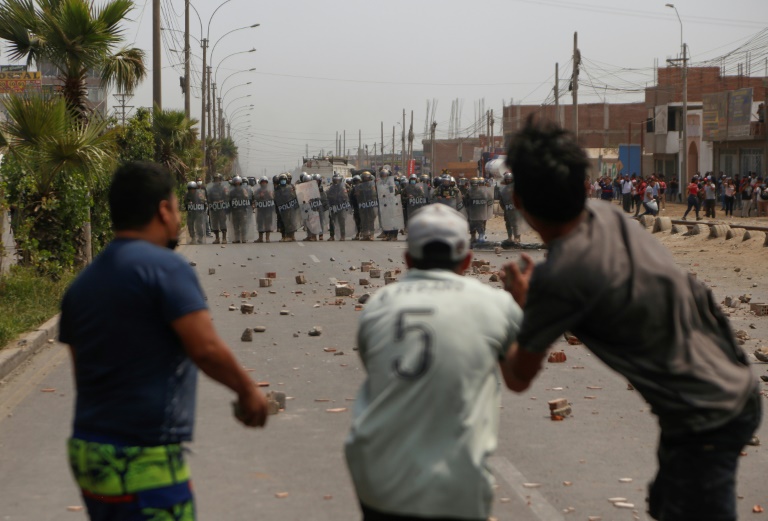
Peruvian President Pedro Castillo on Tuesday announced the end of a curfew in the capital Lima aimed at containing protests against rising fuel prices following crisis talks with Congress.

“We will with immediate effect remove this immobility (curfew). We call on the Peruvian people to be calm,” said the leftist leader, alongside Congress president Maria del Carmen Alva.

Police and soldiers patrolled the largely empty streets of the capital earlier Tuesday after Castillo announced the curfew shortly before midnight on Monday for Lima and the neighboring port city of Callao.

It was due to last until midnight on Tuesday as authorities attempted to curtail protests against rising fuel and toll prices amid growing economic hardship.

But news of the curfew’s end was met with cheers by hundreds of protesters outside Congress and in other parts of the capital, AFP journalists noted.

“The people did it!” said opposition legislator Alva on Twitter.

Shops and schools were closed and bus services mostly suspended but many workers, at hotels or hospitals for example, ignored the shut-down, which was widely criticized on social media. 

The measure took many in Lima by surprise, given that the most violent protests in recent days took place far from the capital.

Many had no choice but to take a taxi or walk to their place of work.

“It was a very late and improvised” announcement, complained Cinthya Rojas, a nutritionist who waited patiently for one of the handful of buses still running to get to work at a hospital east of Lima.

A hotel employee told AFP she had to pay the equivalent of $8, a small fortune on her salary, for a taxi to work.

Some tourists had difficulty finding food, with restaurants and supermarkets closed, but domestic and international flights continued as normal from Jorge Chavez airport, its concessioner said.

Residents of some Lima neighborhoods beat pots and pans at their windows in protest against the lockdown at noon.

– Soaring food prices –

“The measures taken, like those taken yesterday, are not against the people but in order to save the lives of compatriots,” said Castillo, balked by the first social protests of his eight-month-old presidency.

He had said the curfew move was “to reestablish peace” after countrywide protests amidst biting food inflation.

“There was information from a source that there were going to be acts of vandalism today. That is why we have taken this step,” Defense Minister Jose Gavidia said earlier on Tuesday. 

While Lima was under curfew, protests continued and roads were blocked in several smaller cities elsewhere in Peru.

Like much of the rest of the world, Peru’s economy is reeling from the damages wrought by the coronavirus pandemic.

The country’s Consumer Price Index in March saw its highest monthly increase in 26 years, driven by soaring food, transport and education prices, according to the national statistics institute. 

In an attempt to appease protesters, the government over the weekend eliminated the fuel tax and decreed a 10 percent increase in the minimum wage from May 1. 

But the General Confederation of Workers of Peru (CGTP) — the country’s main trade union federation — considered the measures insufficient and took to the streets again Monday in Lima and several regions in Peru’s north.

Some protesters set fire to toll booths on highways, looted shops and clashed with police.

Others burned tires and blocked the north-south Pan-American highway, the country’s most important artery for people and goods.

The disruptions halted public transport and closed schools on Monday.

“Social protest is a constitutional right, but it must be done within the law,” Castillo, a 52-year-old former rural school teacher, pleaded during his brief TV appearance late on Monday. 

– ‘Authoritarian measure’ –

Two-thirds of Peruvians disapprove of Castillo’s rule, according to an Ipsos opinion poll in March.

Castillo’s announcement of a curfew came a week after he escaped impeachment by Congress, where opponents accuse his administration of a “lack of direction” and of allowing corruption in his entourage.

It also coincided with the 30th anniversary of a coup staged by ex-president Alberto Fujimori, jailed over his regime’s bloody campaign against insurgents. 

“The measure dictated by President Pedro Castillo is openly unconstitutional, disproportionate and violates people’s right to individual freedom,” tweeted lawyer Carlos Rivera, a representative of Fujimori’s victims.

Political analyst Luis Benavente told AFP the curfew was “an authoritarian measure” that revealed “ineptitude, incapacity to govern.”

A large proportion of Lima’s 10 million residents work in the informal sector, as street sellers and other traders, meaning the curfew left them without income for the day.

A Copa Libertadores football match between Peruvian Club Sporting Cristal and Brazil’s Flamengo, which had been thrown into doubt, would go ahead as scheduled on Tuesday night in Lima, regional governing body CONMEBOL said on Instagram.

Children of Chernigiv leave clues of Russian siege

In the dank basement of a children’s hospital in Chernigiv there are cave paintings on the wall — tiny handprints, a smeared rainbow, a fluttering Ukrainian flag.

After Russian bombs began to fall on February 24 the underage patients came here to wait out the fury being visited on the city above.

They daubed the walls to pass the hours and days. Some wrote their names inside the silhouette of a cluster of balloons: Myroslava, Vasylyna, Glasha, Ulya.

“I did not count them, but there were quite a lot,” said 30 year-old Natalia, a member of Ukraine’s territorial defence forces, barely visible in the stifling gloom.

Before Russia launched the war she was an interior designer. But this is a dwelling no reasonable person would choose, least of all for children.

The entrance to the stairwell has been smashed through a wall. There is head-splitting pipework hidden in the dim. The odour of damp hangs thick in the air.

“We are very grateful that the children were taken out before we had no electricity, no water and no heat,” she said.

“Not all, but most of the children were taken out before all these benefits of civilisation disappeared.”

“They got a chance to survive.”

– A city encircled – 

Chernigiv — just 50 kilometres (31 miles) from the border with Belarus — was swiftly encircled in the early days of the invasion ordered by Russian President Vladimir Putin.

Moscow’s forces did not take the city but it was pounded with artillery and air strikes for more than a month before troops withdrew in recent days, regrouping for an offensive in eastern Ukraine.

Signs of the siege they waged to take this foothold towards the capital Kyiv are everywhere.

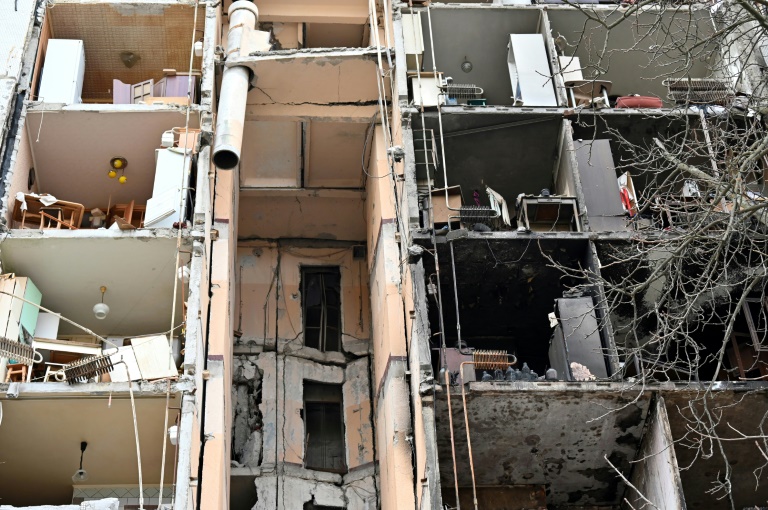
Apartment blocks have been gored by blasts. A hotel has a semicircle missing from its top half, as though the sky has taken a bite from above. The football stadium has been pummelled into its pitch.

The children’s hospital has also been marked by the deluge. On the upper floor there is a puckered, charred wound from an incoming strike. The windows are flecked with holes.

Now it is being used to store aid supplies. The children — cancer patients among them — are no longer here. They have been transported south.

But there are clues of the traumas they endured. On a ledge outside, a plastic bag of Lego is paired with another collection of trinkets — shrapnel garnered from the hospital grounds.

“Cluster bombs were flying, we have traces of these bombs,” said 51-year-old Olena Makoviy. “The injured were brought to the children’s hospital, both adults and children.”

“It was very scary here from the first days of the war,” she said. “They brought guys, handsome, young, but no longer alive.”

– Neighbours bury neighbours – 

City officials estimate around 350 civilians have been killed in Chernigiv.

Municipal council secretary Oleksandr Lomako said the city witnessed “war crimes” under “artillery, heavy weapons and bombs”.

Civilians died waiting in line for water and bread, and in early March an air strike on a 12-storey residential building claimed 45 to 50 lives, he said.

All of these bodies have been buried in a mass grave by fellow citizens, in a cleared patch of forest land. 

Galyna Troyanovska, 66, has come to look for the son of a friend buried among the forest of grave markers staked in the mud.

Like the children of Chernigiv, she has been living underground.

“We did not go out of the basements,” she said. “There was no water, no light, no gas, the walls were trembling.”

“We try not to cry, we have already cried before,” she adds. “We hold back, we need to live on.”

NASA delays final test for moon shot

The latest test of NASA’s giant Moon rocket SLS has been pushed back to allow for a SpaceX rocket to launch later this week, the US space agency announced Tuesday.

The dress rehearsal for the giant Space Launch System had been scheduled for Friday at launch pad 39B at Cape Canaveral, Florida, at the same time as SpaceX’s lift-off from pad 39A.

The test of the rocket, which is to return humans to the Moon, is now expected to resume shortly after the take-off of the SpaceX flight, which is to carry three businessmen and a former astronaut to the International Space Station. 

The 322-foot (98 meters) SLS rocket will remain on its launch pad while waiting.

In this final test before blast-off for the Moon later this year, all the steps leading up to launch must be rehearsed, from filling the tanks to the final countdown, which will be stopped just before the engines fire. 

The run-through started last Friday and was originally scheduled to end late Sunday, but NASA teams encountered “a whole myriad of technical challenges” as well as uncooperative weather on Saturday, said Mike Sarafin, the mission manager for the Artemis Moon landing. 

Among the problems encountered were four lightning strikes hitting the launch pad during a thunderstorm, which at least proved that the protection system had worked as planned. 

But the problems were not “major issues,” Sarafin said. “We haven’t run into any fundamental design flaws or design issues.”

“We take pride in learning from these tests,” he said, calling the ones already carried out in recent days “partially successful.” 

Artemis 1 will mark the first flight of the SLS, whose development has lagged years behind schedule. 

The Orion capsule at its top will be propelled to the Moon, where it will be placed in orbit before returning to Earth. 

The first mission will not have astronauts on board. The take-off date is to be announced after the so-called “wet” dress rehearsal. 

A launch window is possible in early June, and Sarafin said he was “not ready to give up on it yet.” 

Another launch window is possible in early July.

EU stocks sag on prospect of more Russia sanctions

EU stocks sagged on Tuesday after Brussels proposed further sanctions against Russia in response to killings in the Ukrainian town of Bucha that have prompted international condemnation.

Wall Street also ended lower after a top Federal Reserve official said the central bank could act more aggressively against inflation, while Asian equity markets rose. The dollar was mixed against major rivals.

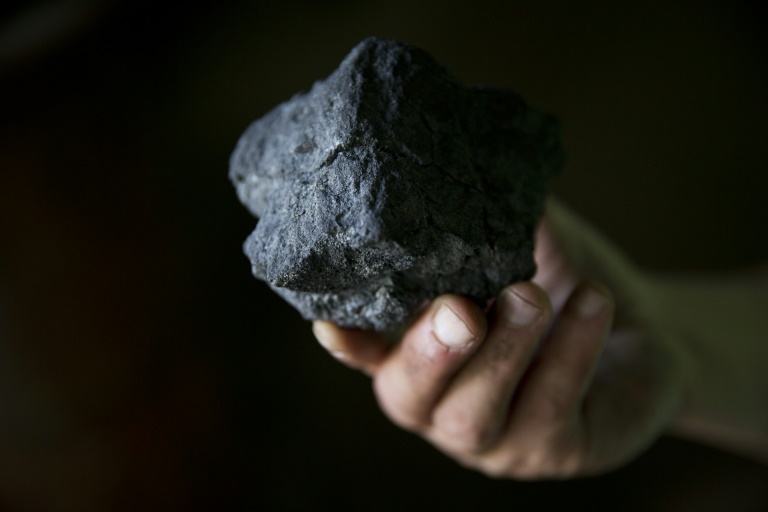
Frankfurt stocks shed 0.7 percent while Paris slumped 1.3 percent after the European Union signaled it wants to impose sanctions on Russian coal and shipping.

“Tensions between Moscow and the West have ticked up, and that has prompted a decline in equities,” said market analyst David Madden at Equiti Capital, pointing to a thinly veiled threat by Russian President Vladimir Putin to withhold food exports to “hostile” nations.

Russia is a major exporter of wheat, as is Ukraine, where production is likely to be severely disrupted due to the invasion.

The EU however did not announce measures targeting Moscow’s oil exports. 

– ‘Pressure is growing’ –

Both Brent North Sea and WTI oil contracts dipped on Tuesday, after the prospects of sanctions on Russia crude had sent oil prices sharply higher Monday.

While coal sanctions are likely to have a limited impact, “the pressure is growing for this commitment to be extended to oil and gas supplies,” said market analyst Michael Hewson at CMC Markets UK. 

“It is becoming ever clearer that Russia is likely to become increasingly more isolated as sanctions get tightened and widened further, with the prospect that inflationary pressure in the global economy will remain more persistent in the coming months,” he added.

The additional EU sanctions came days after dozens of bodies were found on the streets in Bucha, northwest of Kyiv, though some countries remain worried of the potential fallout from targeting Russia’s economy.

Ukrainian President Volodymyr Zelensky blames Russian troops for the killings, but the Kremlin has denied responsibility.

Meanwhile a source told AFP that the United States, in coordination with the G7 and European Union, plans to ban “all” new investments in Russia on Wednesday, while the US Treasury said Washington has barred Russia from making debt payments using funds held at American banks.

In New York, major stock indices retreated after Fed Governor Lael Brainard said the US central bank was “prepared to take stronger action” to reduce inflation that has hit levels not seen since the 1980s.

The remarks helped lift the yield on the 10-year US Treasury note above 2.5 percent, well above where it was throughout the Covid-19 pandemic. 

“We already had the yields moving higher but after Lael Brainard’s comments, it just poured some fuel on the fire,” said Brad Bechtel, managing director at FX Jefferies.

US traders on Wednesday will be keeping a close eye on the minutes from the Fed’s most recent policy meeting, hoping for an insight into officials’ thinking over future monetary policy.

After the Fed’s expected quarter-point interest rate hike last month, central bankers have signaled a half-point increase is possible in May in light of soaring inflation, as strong jobs growth and other data suggest the US economy remains robust enough to absorb higher borrowing costs.

– Key figures around 2145 GMT –

New York – Dow: DOWN 0.8 percent at 34,641.18 (close)

New York – S&P 500: DOWN 1.3 percent at 4,525.12 (close)

New York – Nasdaq: DOWN 0.8 percent at 14,204.17 (close)

EURO STOXX 50: DOWN 0.8 percent at 3,917.85 (close)

London – FTSE 100: UP 0.7 percent at 7,613.72 (close) 

Frankfurt – DAX: DOWN 0.7 percent at 14,424.36 (close)

Paris – CAC 40: DOWN 1.3 percent at 6,645.51 (close)

Tokyo – Nikkei 225: UP 0.2 percent at 27,787.98 (close)

Hong Kong – Hang Seng Index: Closed for a holiday

Shanghai – Composite: Closed for a holiday

Brent North Sea crude: DOWN 0.8 percent at $106.64 per barrel

West Texas Intermediate: DOWN 1.3 percent at $101.96 per barrel

Euro/dollar: DOWN at $1.0903 from $1.0978 late Monday

Pound/dollar: UP at $1.3071 from $1.3114

Euro/pound: DOWN at 83.38 pence from 83.65 pence

Dollar/yen: UP at 123.60 yen from 122.78 yen

burs-rl/gw/cs/hs

Technology boosts pitchers for new baseball season

Pitchers and catchers will be given the option of using new technology to prevent sign-stealing as Major League Baseball looks to move on from its scandal-plagued recent past when the delayed new season finally gets under way on Thursday.

Five years after the Houston Astros claimed a controversial World Series victory over the Los Angeles Dodgers, baseball chiefs said Tuesday that clubs will be allowed to use new “PitchCom” equipment that has been successfully tested during Spring Training.

PitchCom is wearable technology that allows catchers and pitchers to communicate directly without needing to use hand signals — the traditional method of signaling what kind of pitches a batter will face.

Under the new technology, catchers wear a sleeve on their forearm with nine buttons that represent different pitches and the location where they will be thrown.

Messages from the catcher’s device are transmitted to a receiver fitted in the pitcher’s cap.

The Astros were fined $5 million and manager A.J. Hinch was suspended for a season after the MLB found the club had been using a camera hidden in the outfield to decode the signs being used by the Dodgers in the 2017 World Series.

The new technology — which is also aimed at speeding up the pace of play — has received broad support since being tested.

“Anything that can help the pitcher get the sign without anyone knowing what the sign is, we’re moving in the right direction,” was the verdict of Colorado Rockies director of pitching Steve Foster.

New York Yankees ace Luis Severino tested the system for the first time last weekend and was impressed.

“I think it was great,” Severino told reporters. “I was a little doubtful at the beginning, but when we started using it, it was really good. You know what pitch you’re going to throw right away.”

Thursday’s opening round of regular season fixtures comes after an acrimonious off-season dominated by the labor dispute between MLB owners and players.

– Dodgers favored –

The season had been due to start on March 31 but was delayed after negotiations for a new collective bargaining agreement became deadlocked.

The dispute came to an end last month after both sides reached agreement on a new deal that includes increased minimum salaries, a pre-arbitration bonus pool to reward top young players before they can negotiate new deals and a boost to the league’s luxury tax thresholds.

Designated hitters will replace batters in the National League, as they have for many years in the American League.

An expanded playoff format will see 12 teams advance, six from each league, adding two clubs to the post-season championship chase. 

The two top division winners in each league would receive first-round byes.

Bookmakers have installed the Dodgers as early favorites to repeat their World Series triumph from the pandemic-shortened 2020 season.

The Dodgers pulled off one of the coups of the off-season by prizing star first baseman Freddie Freeman away from the reigning champion Atlanta Braves.

Freeman, the National League Most Valuable Player in 2020, gives the Dodgers’ already formidable batting line-up another weapon as they chase an eighth World Series.

Although the Dodgers have not strengthened their starting rotation, and doubts continue to swirl around the availability of pitcher Trevor Bauer, who has effectively been frozen out of the league since the emergence of lurid allegations concerning his private life last year, the NL West powerhouses can still call on Walker Buehler, Clayton Kershaw and Julio Urias from the mound.

Dodgers manager Dave Roberts believes if his starters can stay healthy in 2022, his team will win a second title in three seasons.

“We are winning the World Series. Put it on record,” Roberts said last month.

“We are winning the World Series if our starting staff stays healthy. I know that’s vague, but that’s my answer. I think it’s about our starting pitching, just keeping our guys healthy.”

Zelensky calls on world to stop Russia, more atrocities feared

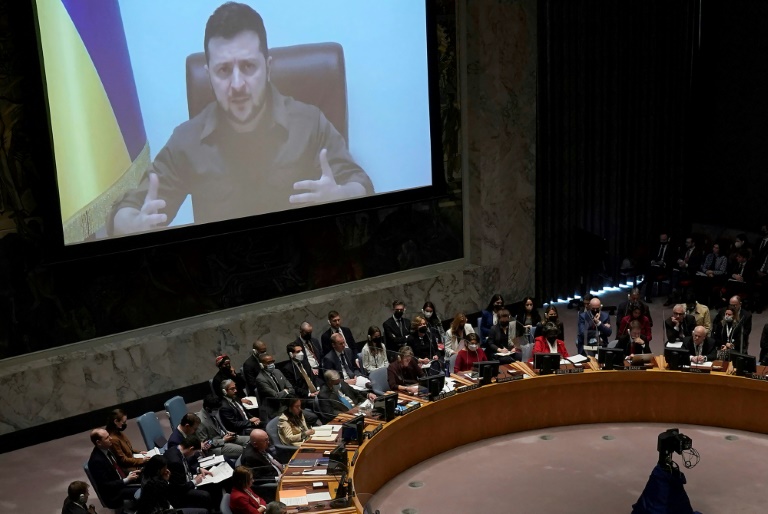
Ukraine’s president showed a harrowing video of dead civilians to the UN Security Council Tuesday and called for “accountability” for apparent Russian atrocities, as fears grow that Moscow is preparing new offensives.

With global revulsion solidifying over civilian killings in the town of Bucha, President Volodymyr Zelensky likened Russia’s assault to Nazi war crimes and Western nations ramped up sanctions against the Kremlin.

The United States is expected Wednesday to ban all new investment in Russia, while Britain announced it has frozen some $350 billion in assets from President Vladimir Putin’s “war chest” so far.

Despite the pressure, bombardments rocked the Kyiv area villages of Velyka Dymerka and Bogdanivka, where 12 people were killed by Russian firearms and artillery, Ukraine’s prosecutor general’s office said on Telegram.

And new warnings emerged from Ukraine that other shattered communities, notably the town of Borodianka, may have suffered even worse fates than Bucha.

Zelensky, in an impassioned speech by videolink from Kyiv to the 15-member Security Council, demanded stronger action as he delivered a chilling account of Putin’s six-week-old war.

People “were killed in their apartments, houses… civilians were crushed by tanks while sitting in their cars in the middle of the road,” Zelensky said.

“They cut off limbs, slashed their throats, women were raped and killed in front of their children.”

“Accountability must be inevitable,” he added, calling for Russia’s exclusion from the Security Council — on which it holds veto power.

“Are you ready to close the UN” and abandon international law, the president asked. “If your answer is no, then you need to act immediately.”

Zelensky’s plea follows the harrowing discovery of civilian victims in Bucha and other towns near Kyiv following Russian troop withdrawals, which he and other officials have denounced as war crimes and attempted genocide.

– ‘Deliberate campaign to kill’ –

In a subsequent address to Spanish lawmakers, Zelensky compared Russia’s devastating assault to the Nazis’ 1937 bombing of the town of Guernica.

During a grim cleanup Tuesday in Bucha, local workers placed the remains of partially burned bodies into black bags and lifted them into a van.

After touring the devastation, Interior Minister Denys Monastyrsky told journalists that “dozens of bodies” remain in Bucha apartments and in nearby woods.

“What we’ve seen in Bucha is not the random act of a rogue unit. It’s a deliberate campaign to kill, to torture, to rape, to commit atrocities,” US Secretary of State Antony Blinken said.

Looking ahead, NATO chief Jens Stoltenberg said the alliance expects a Russian push in “coming weeks” to try to seize Ukraine’s entire eastern region of Donbas, and create a land bridge to occupied Crimea. 

Both Washington and the EU have vowed to squeeze Russia’s economy until Putin is forced to halt the war he launched.

European Commission chief Ursula von der Leyen, who said she would travel to Kyiv this week, has offered the bloc’s assistance in documenting proof of war crimes.

The Kremlin has denied any civilian killings, claiming the images emerging from Bucha and other sites are fakes produced by Ukrainian forces, or that the deaths occurred after Russian soldiers pulled out.

But one Bucha resident named Olena told AFP she saw Russian soldiers shoot a man in cold blood after “brutal” troop units moved in.

“Right in front of my eyes, they fired on a man who was going to get food at the supermarket,” said the 43-year-old, who did not wish to give her family name.

Despite Olena’s and other firsthand accounts, Moscow’s UN ambassador Vassily Nebenzia rejected Zelensky’s claims of Russian atrocities, telling the Security Council that the “ungrounded accusations… are not confirmed by any eye witnesses.”

Zelensky delivered a forceful rebuttal, airing a graphic, 90-second video of what he said were images from towns including Bucha, Irpin, Dymerka, and the besieged southern port of Mariupol.

The footage showed partially uncovered dead people, including children, in shallow graves, bodies in a courtyard, burned corpses in the streets, and slumped victims with hands tied behind their back.

In the push to isolate Moscow, Spain, Italy, Denmark and Slovenia expelled dozens of its diplomats suspected of being intelligence operatives, after France and Germany did the same Monday, for a total of some 180 expulsions in 48 hours.

The Kremlin called it a “short-sighted move” that would complicate efforts to negotiate an end to the hostilities.

Putin warned of “reprisals” for recent European measures targeting Russian gas giant Gazprom — and said Moscow would “monitor” its food exports to “hostile” nations, raising the spectre of further inflation surges worldwide.

– Worse than Bucha? –

Europe’s worst conflict in decades has killed as many as 20,000 people, according to Ukrainian estimates, and 4.25 million have fled the country.

Many in Ukraine are bracing for further Russian bombardments.

Ukrainian officials say over 400 civilian bodies have been recovered from the wider Kyiv region, many buried in mass graves.

But Zelensky said he had information of worse atrocities in places such as Borodianka.

“Bucha is not the worst,” Ukrainian presidential advisor Oleksiy Arestovych said on a Russian lawyer’s YouTube channel. “Everyone who managed to visit Borodianka says that it is much, much worse.”

AFP reporters who briefly visited the Borodianka area saw no bodies in the streets, but locals reported many deaths, and buildings were ravaged and blown open.

“I know five civilians were killed,” said 58-year-old Rafik Azimov. “But we don’t know how many more are left in the basements of the ruined buildings after the bombardments.”

“I buried six people,” another resident, Volodymyr Nahornyi, said. “More people are under the ruins.”

– A chance of talks –

Foreign Minister Sergei Lavrov meanwhile said Tuesday on Russian television that Russia was “ready” to continue the negotiations.

Ukraine has proposed an international agreement with other countries guaranteeing its security in return for accepting a neutral and non-nuclear status, not joining NATO and refusing to host foreign military bases.

According to the Ukrainian proposal, Russia would not oppose Kyiv’s admission to the European Union.

burs-mlm/bgs

Colombian researchers seek safety for bees in urban jungle

Far from the flowery fields that are their natural home, honey bees imperiled by pesticides in rural Colombia are finding sanctuary on university campuses in the bustling capital Bogota.

Even though hives are banned from the city due to the risk the insects’ stings can pose to humans, universities enjoy an exemption for research purposes.

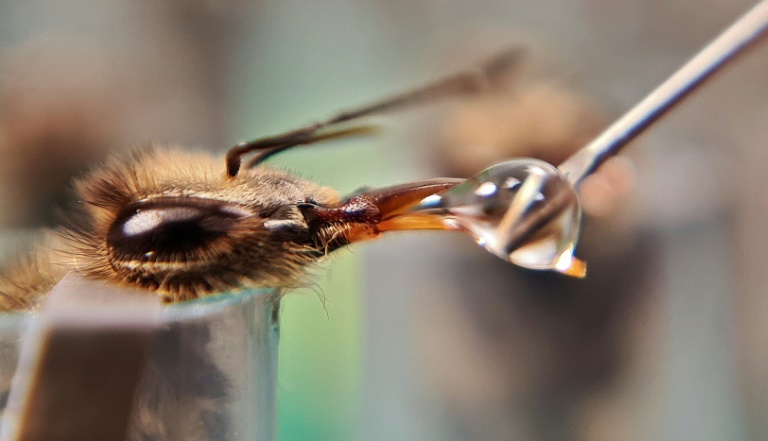
At the University of Rosario, biologist Andre Riveros very carefully feeds a bee some sugar water, watching attentively as it stretches its straw-like tongue, or proboscis, towards the sweet liquid.

The university boasts a rooftop apiary in a bamboo structure some six meters (nearly 20 feet) high, surrounded by trees and flowers.

Here, Riveros and his team study a colony of bees in the hopes of developing a food supplement that will offer the critical crop pollinators protection from insecticides

“Pesticides end up affecting some (neurological) regions that, for example, affect learning and memory and (the bees) end up with damage very similar to Alzheimer’s,” Riveros told AFP.

“We are trying to find a solution for the problem of bee disappearances,” he added. “We seek to shield the bees, in essence.”

The team’s work focuses on the Apis mellifera, or Western Honey Bee, one of about 20,000 known species worldwide.

Hundreds of hives have been killed off in Colombia in recent years, and investigations into the cause have pointed to fipronil, an insecticide banned in Europe and restricted in the United States and China.

Fipronil has been widely used in a profitable avocado and citrus boom in Colombia, though the Latin American country suspended its use in some crops for six months last year.

– ‘Fleeing the fields’ –

Elsewhere in Bogota, the EAN University boasts its own hives, perched on a six-story building overlooking the city of eight million people.

Beekeeper Gino Cala extracts honey from the hives as part of his work to instruct and assist universities in the management of urban apiaries.

But Cala told AFP Colombia’s bees “are fleeing the fields” partly due to the “indiscriminate use of agrochemicals.”

“These insects are extremely relevant and important… because they help guarantee part of the food security of Colombia and the world,” he added.

From the EAN University grounds, Cala’s bees help to pollinate plants in surrounding areas.

About 1.4 billion jobs and three-quarters of all crops around the world, according to a 2016 study, depend on pollinators — mainly bees — which provide free fertilization services worth billions of dollars.

In recent years, bees in North America, Europe, Russia, South America and elsewhere have started dying off from “colony collapse disorder,” a mysterious scourge blamed partly on pesticides but also on mites, viruses and fungi.

The UN warns that nearly half of insect pollinators, particularly bees and butterflies, risk global extinction.

Despite the city ban, there are private beekeepers in Bogota who sell products such as honey, pollen or beeswax.

The fire department of Bogota says it attends to eight bee sting-related emergencies on average every day.

Close Bitnami banner
Bitnami