World

Twitter names Elon Musk to board, further lifting shares

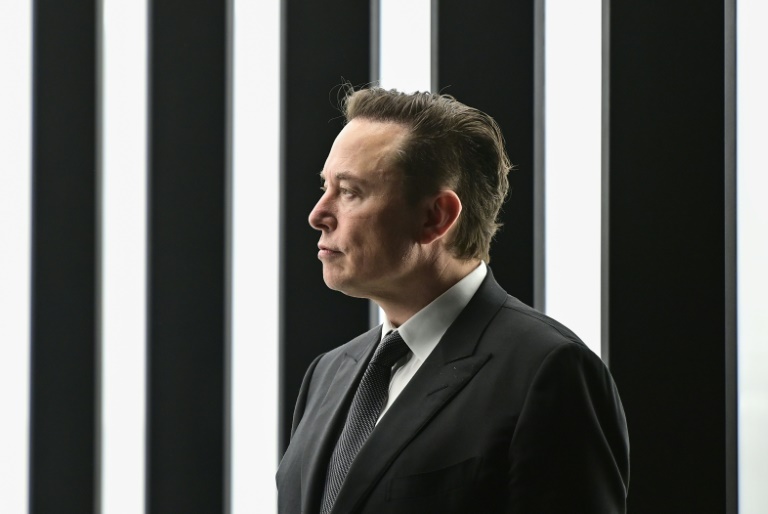
Twitter announced Tuesday that Elon Musk will join its board, boosting hopes the Tesla boss will lift the social media company’s prospects as some observers expressed wariness of the billionaire’s influence.

Shares rose for a second day on news of Musk’s board appointment after surging on Monday’s disclosure of the outspoken entrepreneur’s large stake in the company.

“I’m excited to share that we’re appointing @elonmusk to our board! Through conversations with Elon in recent weeks, it became clear to us that he would bring great value,” Twitter CEO Parag Agrawal said in a tweet.

Agrawal called Musk “a passionate believer and intense critic of the service which is exactly what we need,” while Musk said he looked forward to soon making “significant improvements to Twitter.”

Musk, who also leads the SpaceX venture and is the world’s richest man, had the day prior announced his purchase of 73.5 million shares or 9.2 percent of Twitter’s common stock, sending the company’s value up more than 27 percent on Wall Street.

Analysts at Wedbush said the invitation from Agrawal marks “a friendly move by the Twitter board to embrace Musk” that could lead to strategic shifts for a company “still struggling in a social media arms race,” according to a note.

Musk had previously questioned the platform’s committment to freedom of speech — criticism that has now fed hopes among political conservatives who accuse the platform of “censorship” and hope to see former US president Donald Trump returned to Twitter following a lifetime ban in the wake of the January 6 riot.

Some progressives expressed discomfort with Musk’s increased say at Twitter, which the Tesla boss has called a “de facto public town square.”

“What could possibly go wrong with an oligarch determining what constitutes free speech?” tweeted former Labor Secretary Robert Reich, who noted that Musk has “threatened to sue bloggers and fired employees for speaking out about safety concerns.”

Musk will remain on Twitter’s board until the company’s annual shareholder’s meeting in 2024, and he has promised not to take a stake larger than 14.9 percent in the company during that time, according to a securities filing.

– Political implications? –

The arrival of Musk cheered several analysts, who have rued the performance of a company that is influential in the political and media worlds but for which profitable growth has proved elusive.

In 2021, Twitter’s revenues were $5.1 billion, up 37 percent from 2020, but a fraction of the $33.7 billion reported by Facebook parent Meta.

CFRA Research analyst Angelino Zino applauded the arrival of a “true visionary” in Musk.

“Ultimately, the goal is to better monetize the platform, and we think Musk can only help, not hurt the process, with his recent criticism of the company as a refreshing sign,” Zino said, noting that the term’s of Musk’s stake mean he can’t take over the company.

Susannah Streeter, an analyst at Hargreaves Lansdown, offered a more muted outlook, characterizing Musk as “socially ambitious” and raising the possibility that the Tesla boss will use the platform to promote his ventures.

“Over the longer term, Twitter investors will want to see that high levels of governance are adhered to, otherwise the independence of Twitter could be questioned, and the risk is that users may start to drift away,” Streeter said.

In the political universe, far-right Republican House Representative Lauren Boebert was among those calling for Musk to “lift the political censorship.”

“Oh… and BRING BACK TRUMP!” she tweeted.

Two days after the January 6 attack on the US capitol, Twitter announced the “permanent suspension” of Trump’s account, citing the “risk of further incitement of violence.”

Historian James Fell was among those trying to preempt a Trump Twitter revival, saying if the ex-president is restored, “I’ll probably ditch this platform altogether.”

But others said Musk’s motivation behind the Twitter investment probably has little to do with national politics.

“Twitter is a key resource for him,” said David Kirsch, a professor at the Robert Smith School of Business, who has written extensively on electric vehicles and modern technology.

Musk currently has more than 80 million followers on the platform, which Kirsch said has likely saved him hundreds of millions of dollars in advertising.

“He is the master of the platform, at a certain point he couldn’t afford not to have a say in how it’s managed,” said Kirsch. “All the politics are secondary.”

Shares of Twitter rose 2.0 percent to $50.98 trading.
'Infurrection': red fox terrorizes humans in US Capitol rampage

Being outfoxed in Congress usually means losing a vote on an amended resolution or being too late for the donut line in the Senate cafeteria.

So spare a thought for the politicians and staff at the US Capitol in Washington, where a highly aggressive red fox spent at least two days stalking frightened humans, including a Democratic congressman.

Police officers warned Tuesday that they had received multiple reports of people “being attacked or bitten” by an aggressive canine at the seat of US democracy — in a statement first reported by none other than… Fox News.  

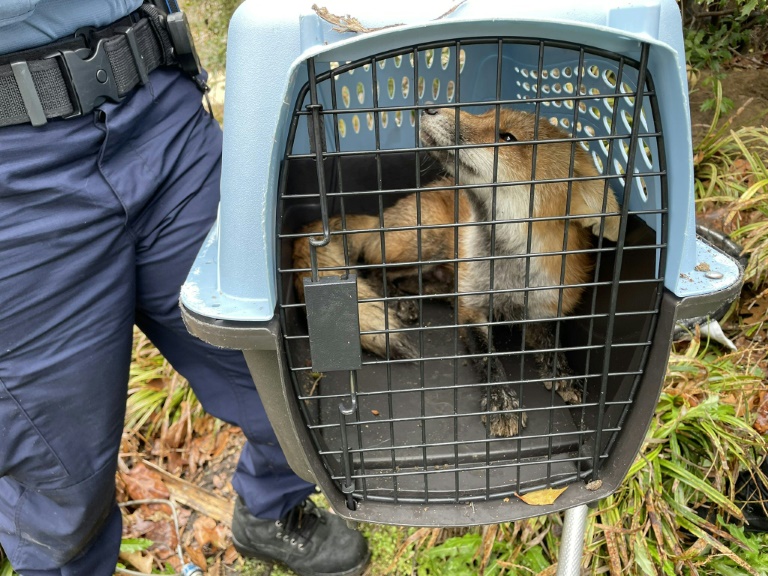
The force quickly dispatched animal control officers to “trap and relocate” any foxes they found — and within hours they posted pictures on social media of the beast, finally taken into custody, sitting in an animal cage above the caption: “Captured.”

Online political magazine Punchbowl News reported that congressman Ami Bera had to be rescued by police late Monday after squaring up to a fox that had just bitten him in an “unprovoked” attack.

“I didn’t see it and all of a sudden I felt something lunge at the back of my leg,” Bera, a physician by profession, told Punchbowl.

The 57-year-old Sacramento Democrat wasn’t hurt, but agreed “out of an abundance of caution” to get a series of rabies shots. 

– Bloodlust sated –

“I expect to get attacked if I go on Fox News, I don’t expect to get attacked by a fox,” he told Punchbowl.

Ximena Bustillo, a Congress reporter for Politico, said she was bitten on the ankle from behind as she was leaving the complex.

“I’m from Idaho. I know to not try and pet it!!” she tweeted.

Witnesses flooded social media with sightings, with several reporting seeing it munching on a squirrel or merely enjoying the sun — its bloodlust apparently sated — in the Senate gardens. 

Fifteen months after a violent mob stormed the Capitol to disrupt the certification of last presidential election, one wag even referred to the ongoing animal threat as an “infurrection.”

Inside the Capitol, reporters spent the weekly leaders’ press conferences in a breathless interrogation about possible action on the four-legged menace. 

Top Republican Mitch McConnell ignored the inquiries, but Iowa’s intrepid two-term senator Joni Ernst was proud to report that she had spotted the animal, without revealing how close the encounter was.

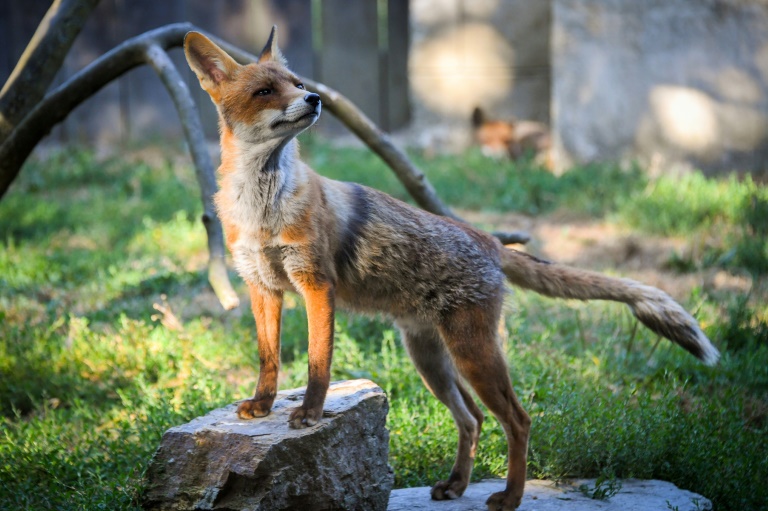
Red foxes — the most common of several North American species — are regularly found in towns and cities but tend to avoid people, according to the city environmental department.

They typically eat insects, small birds, squirrels and rabbits, and are not known for their predilection for legislators or their intimidated staffers.

The species has thrived during the pandemic, according to wildlife experts in the nation’s capital.

“Less ambient noise, less traffic, less interference… right now, life is better for them,” Bill McShea, a wildlife ecologist with the Smithsonian National Zoo, told DCist magazine.

“If there’s an upside to Covid, it’s on the wildlife.”

'Infurrection': red fox terrorizes humans in US Capitol rampage

Being outfoxed in Congress usually means losing a vote on an amended resolution or being too late for the donut line in the Senate cafeteria.

So spare a thought for the politicians and staff at the US Capitol in Washington, where police were scouring the grounds Tuesday amid reports of a highly aggressive red fox trying to take chunks out of humans, including a Democratic congressman.

Officers warned that they received multiple reports on Monday of people “being attacked or bitten” by at least one aggressive canine at the seat of US democracy, in a statement first reported by none other than… Fox News.  

“One encounter was at the botanic garden, and a second was on the House side of the Capitol near the building foundation,” the US Capitol Police (USCP) said.

“This morning, USCP received a call about a fox approaching staff near First and C Street. This fox may have a den in the mulch bed area… and there is another possible den near the perimeter of the Russell Building.”

The force said animal control officers were responding to the incidents and “looking to trap and relocate” any foxes they find. 

“Foxes are wild animals that are very protective of their dens and territory. Please do not approach any fox you see,” the police cautioned.

Online political magazine Punchbowl News reported that congressman Ami Bera had to be rescued by police late Monday after squaring up to a fox that had just bitten him in an “unprovoked” attack.

“I didn’t see it and all of a sudden I felt something lunge at the back of my leg,” Bera, a physician by profession, told Punchbowl. “I jumped and got my umbrella.”

– Bloodlust sated –

The 57-year-old Sacramento Democrat wasn’t hurt, but agreed “out of an abundance of caution” to get a series of rabies shots. 

“I expect to get attacked if I go on Fox News, I don’t expect to get attacked by a fox,” he told Punchbowl.

Witnesses flooded social media with sightings, with several reporting seeing it munching on a squirrel or merely enjoying the sun — its bloodlust apparently sated — in the Senate gardens. 

Fifteen months after a violent mob stormed the Capitol to disrupt the certification of last presidential election, one wag even referred to the ongoing animal threat as an “infurrection.”

Inside the Capitol, reporters dropped the usual barrage of economic questions at the weekly leaders’ press conferences in favor of a breathless interrogation about possible action on the four-legged menace. 

Top Republican Mitch McConnell ignored the inquiries, but Iowa’s intrepid two-term senator Joni Ernst was proud to report that she had spotted the animal, without revealing how close the encounter was.

Red foxes — the most common of several North American species — are regularly found in towns and cities but tend to avoid people, according to the city environmental department.

They typically eat insects, small birds, squirrels and rabbits, and are not known for their predilection for legislators or their intimidated staffers.

The species has thrived during the pandemic, according to wildlife experts in the nation’s capital.

“Less ambient noise, less traffic, less interference… right now, life is better for them,” Bill McShea, a wildlife ecologist with the Smithsonian National Zoo, told DCist magazine.

“If there’s an upside to Covid, it’s on the wildlife.”

Zelensky demands world 'act immediately' to stop Russia

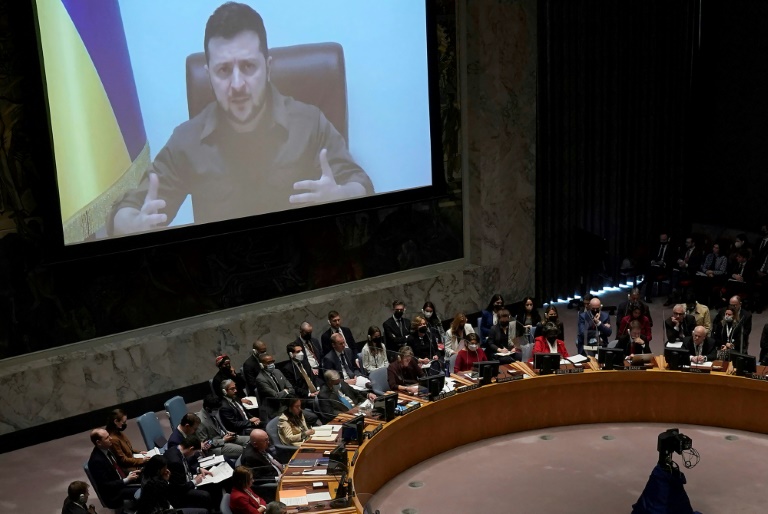
Ukraine’s president showed a harrowing video of dead civilians to the UN Security Council Tuesday and called for immediate action and “accountability” for apparent Russian atrocities, as fears grow that Russia is preparing new offensives in the east and south.

With global revulsion solidifying over Moscow’s prosecution of the war, President Volodymyr Zelensky likened Russia’s assault to Nazi war crimes, while Western nations were ramping up their punishments against the Kremlin.

Washington on Wednesday will ban “all new investment” in Russia, a US source said, while Britain announced it has frozen some $350 billion in assets from President Vladimir Putin’s “war chest” so far.

But Zelensky, in an impassioned speech by video link from Kyiv to the 15-member Security Council, demanded stronger action as he delivered a chilling account of the human toll of Putin’s six-week-old war.

People “were killed in their apartments, houses… civilians were crushed by tanks while sitting in their cars in the middle of the road,” Zelensky said.

“They cut off limbs, slashed their throats, women were raped and killed in front of their children.”

“Accountability must be inevitable,” he added, calling for Russia’s exclusion from the Security Council — on which it holds veto power.

“Are you ready to close the UN” and abandon international law, the president asked. “If your answer is no, then you need to act immediately.”

Zelensky’s plea follows the harrowing discoveries of civilian victims in Bucha and other towns near Kyiv following Russian troop withdrawals, which he and other officials have denounced as war crimes and attempted “genocide”.

In an subsequent address to Spanish lawmakers, Zelensky compared Russia’s devastating assault to the Nazis’ 1937 bombing of the town of Guernica.

A grim cleanup was underway Tuesday in Bucha, where local workers were seen placing the remains of six partially burned bodies into black bags and placing them into a van.

“What we’ve seen in Bucha is not the random act of a rogue unit. It’s a deliberate campaign to kill, to torture, to rape, to commit atrocities,” US Secretary of State Antony Blinken said before leaving for a NATO meeting in Europe starting Wednesday.

NATO chief Jens Stoltenberg said the alliance expects a Russian push in “coming weeks” to try to take Ukraine’s entire eastern region of Donbas, and create a land bridge to occupied Crimea. 

– ‘In front of my eyes’ –

Both Washington and the EU have vowed to squeeze Russia’s economy until Putin is forced to halt the war he launched, purportedly to defend two pro-Russia enclaves in the east.

The EU announced a fifth package of measures that would target oil and coal exports and bar Russian ships from European ports, while the US Treasury said Russia would no longer be able to pay its foreign debt with dollars held in American banks.

EU Commission chief Ursula von der Leyen, who said she would travel to Kyiv this week, has offered the bloc’s assistance in documenting proof of war crimes.

The Kremlin has denied any civilian killings, claiming that the images emerging from Bucha and other sites are fakes produced by Ukrainian forces, or that the deaths occurred after Russian soldiers pulled out.

But one Bucha resident named Olena told AFP she saw Russian soldiers shoot a man in cold blood after “brutal” troop units, older and rougher than the forces who captured the town, moved in and began spreading fear.

“Right in front of my eyes, they fired on a man who was going to get food at the supermarket,” said the 43-year-old, who did not wish to give her family name.

Despite Olena’s and other firsthand accounts, Moscow’s UN ambassador Vassily Nebenzia rejected Zelensky’s claims of Russian atrocities, telling the Security Council that the “ungrounded accusations… are not confirmed by any eye witnesses.”

Zelensky delivered a forceful rebuttal, airing a graphic, 90-second clip of what he said were images from towns including Bucha, Irpin, Dymerka, and the southern port of Mariupol.

The footage showed partially uncovered dead people, including children, in shallow graves, several bodies in a courtyard, burned corpses in the streets, and victims with hands tied behind their back slumped towards a wall.

In a continuing push to isolate Moscow, Spain, Italy, Denmark and Slovenia expelled dozens of its diplomats suspected of being intelligence operatives, after France and Germany did the same Monday, for a total of some 180 expulsions in 48 hours.

The Kremlin called it a “short-sighted move” that would complicate efforts to negotiate an end to the hostilities.

Putin meanwhile warned of “reprisals” for recent European measures targeting Russian gas giant Gazprom — and said Moscow would “monitor” its food exports to “hostile” nations, raising the spectre of further inflation pressures worldwide as the war endures.

– Mass graves –

Europe’s worst conflict in decades has killed as many as 20,000 people, according to Ukrainian estimates. 

Nearly 4.25 million Ukrainians have fled the country, while an estimated 7.1 million are internally displaced, the United Nations said Tuesday.

Many in Ukraine are bracing for further Russian bombardments, and air raid sirens rang out overnight across much of the country.

Ukrainian officials say over 400 civilian bodies have been recovered from the wider Kyiv region, many of whom were buried in mass graves.

But Zelensky has warned that the deaths in Bucha could be only the tip of the iceberg, saying he had information that even more people had been killed in places like nearby Borodianka.

AFP reporters who briefly visited the Borodianka area saw no bodies in the streets, but locals reported many deaths. The scale of devastation in the town saw buildings flayed open.

“I know five civilians were killed,” said 58-year-old Rafik Azimov. “But we don’t know how many more are left in the basements of the ruined buildings after the bombardments.”

“I buried six people,” another resident, Volodymyr Nahornyi, said. “More people are under the ruins.”

– Cluster bombs used? –

Even where troops have withdrawn, fears remain, with Kyiv’s Mayor Vitali Klitschko telling residents not to return yet, citing dangers of continued shelling and unexploded munitions.

On Monday, officials in Mykolaiv, on the Black Sea not far from Odessa, said cluster bombs were used against the city in strikes that killed 10 civilians and wounded 46.

Such weapons are banned under a 2008 UN convention but it has not been signed by Russia or Ukraine.

The UN’s undersecretary-general for political and peacebuilding affairs, Rosemary DiCarlo, told the Security Council there were “credible allegations” Russia had used cluster munitions in populated areas at least 24 times.

burs-mlm/ec

Soldiers police Lima curfew after fuel price protests

Police and soldiers patrolled the largely empty streets of Peru’s capital Lima Tuesday, monitoring a curfew imposed to curtail protests against rising fuel and toll prices amid growing economic hardship.

Shops and schools were closed and bus services mostly suspended after President Pedro Castillo announced a curfew shortly before midnight Monday for Lima and the neighboring port city of Callao.

But many workers, at hotels or hospitals for example, ignored the shut-down, which was widely criticized on social media. 

The measure took many in Lima by surprise, given that the most violent protests in recent days took place far from the capital.

Many had no choice but to take a taxi or walk to their place of work.

“It was a very late and improvised” announcement, complained Cinthya Rojas, a nutritionist who waited patiently for one of the handful of buses still running to get to work at a hospital east of Lima.

A hotel employee told AFP she had to pay the equivalent of $8, a small fortune on her salary, for a taxi to work.

Some tourists had difficulty finding food, with restaurants and supermarkets closed, but domestic and international flights continued as normal from Jorge Chavez airport, its concessioner said.

Residents of some Lima neighborhoods beat pots and pans at their windows in protest against the lockdown at noon.

– Soaring food prices –

Castillo announced the curfew would last until midnight Tuesday “to reestablish peace” after countrywide protests against fuel and toll price increases on top of biting food inflation.

“There was information from a source that there were going to be acts of vandalism today. That is why we have taken this step,” added Defense Minister Jose Gavidia. 

While Lima was under curfew, protests continued and roads were blocked in several smaller cities elsewhere in Peru.

Like much of the rest of the world, Peru’s economy is reeling from the damages wrought by the coronavirus pandemic.

The country’s Consumer Price Index in March saw its highest monthly increase in 26 years, driven by soaring food, transport and education prices, according to the national statistics institute. 

In an attempt to appease protesters, the government over the weekend eliminated the fuel tax and decreed a 10 percent increase in the minimum wage from May 1. 

But the General Confederation of Workers of Peru (CGTP) — the country’s main trade union federation — considered the measures insufficient and took to the streets again Monday in Lima and several regions in Peru’s north.

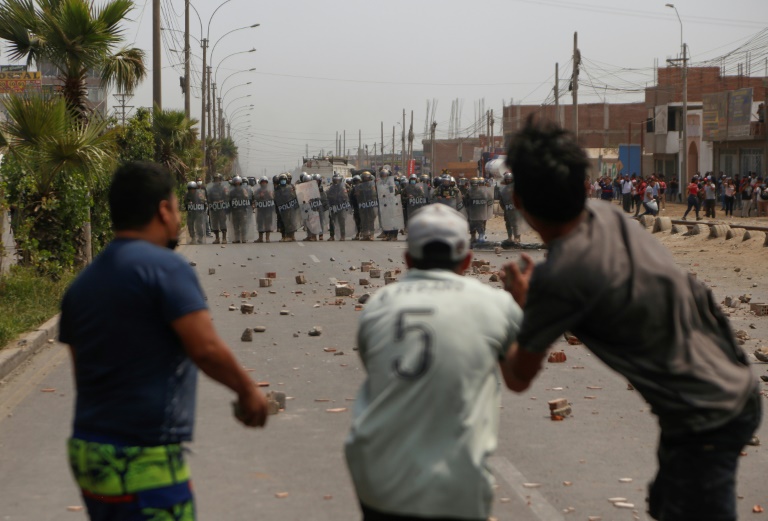
Some protesters set fire to toll booths on highways, looted shops, and clashed with police.

Others burnt tires and blocked the north-south Pan-American highway, the country’s most important artery for people and goods.

The disruptions halted public transport and closed schools on Monday.

“I call for calm and serenity,” the leftist president said during his brief late-night TV appearance. 

“Social protest is a constitutional right, but it must be done within the law,” he said.

– ‘Authoritarian measure’ –

The protests were the first against the government since Castillo, a 52-year-old former rural school teacher, took office eight months ago.

Two-thirds of Peruvians disapprove of his rule, according to an Ipsos opinion poll in March.

Castillo’s announcement of a curfew came a week after he escaped impeachment by Congress, where opponents accuse his administration of a “lack of direction” and of allowing corruption in his entourage.

It also coincided with the 30th anniversary of a coup staged by ex-president Alberto Fujimori, jailed over his regime’s bloody campaign against insurgents. 

“The measure dictated by President Pedro Castillo is openly unconstitutional, disproportionate and violates people’s right to individual freedom,” tweeted lawyer Carlos Rivera, a representative of Fujimori’s victims.

Political analyst Luis Benavente told AFP the curfew was “an authoritarian measure” that revealed “ineptitude, incapacity to govern.”

A large proportion of Lima’s 10 million residents work in the informal sector, as street sellers and other traders, meaning the curfew left them without income for the day.

A football match of the Copa Libertadores between Peruvian Club Sporting Cristal and Brazil’s Flamengo, scheduled for Tuesday night in Lima, was also thrown into doubt. 

Castillo was to meet leaders of Congress later Tuesday to “analyze the proposals and measures necessary to find a solution to the crisis facing the country”, according to a statement from parliament.

US, UK, Australia to cooperate on hypersonic weapons

The United States, Britain and Australia said Tuesday they will begin jointly collaborating on hypersonic weapons and “electronic warfare capabilities”, as part of their new AUKUS alliance aimed at countering China.

The three countries said the joint initiatives will bolster existing efforts to deepen cooperation in numerous areas that they already agreed when forming the new defensive pact last September.

“We… committed today to commence new trilateral cooperation on hypersonics and counter-hypersonics, and electronic warfare capabilities, as well as to expand information sharing and to deepen cooperation on defence innovation,” they said in a joint statement.

“These initiatives will add to our existing efforts to deepen cooperation on cyber capabilities, artificial intelligence, quantum technologies, and additional undersea capabilities.

“As our work progresses on these and other critical defense and security capabilities, we will seek opportunities to engage allies and close partners.”

Russia, China, the United States and North Korea have all test-launched hypersonic missiles, with Tuesday’s announcement coming just weeks after Moscow said it had launched them for the first time in its war in Ukraine.

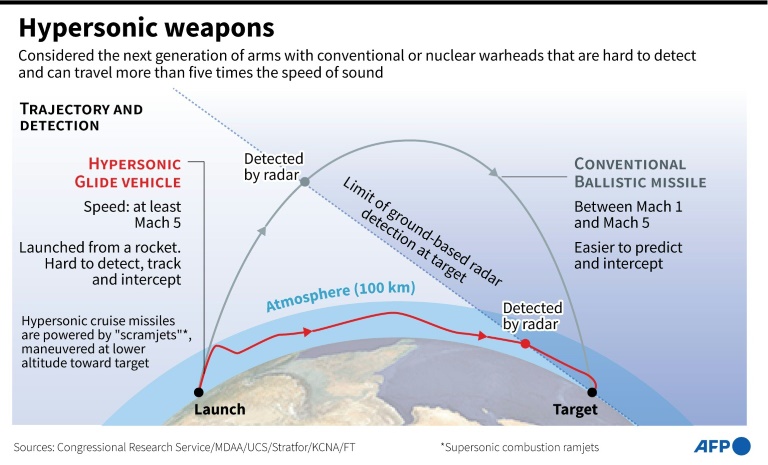
Hypersonic missiles, like traditional ballistic missiles which can deliver nuclear weapons, can fly at more than five times the speed of sound.  

While ballistic missiles fly high into space in an arc to reach their target, a hypersonic weapon flies on a trajectory low in the atmosphere, potentially reaching a target more quickly.

Crucially, a hypersonic missile is manoeuvrable — like the much slower, often subsonic cruise missile — making it much harder to track and defend against.

Russia is seen as the most advanced nation in this field, while China is also aggressively developing the technology, according to the US Congressional Research Service (CRS).

France, Germany, Australia, India and Japan have been working on hypersonics, and Iran, Israel and South Korea have conducted basic research on the technology, the CRS has previously said.

The US, Britain and Australia launched their landmark security pact last September, alongside Canberra scrapping a multi-billion-dollar submarine deal with France that infuriated Paris.

The pact, known as AUKUS, was proclaimed at the time as allowing the three allies to share advanced technologies. 

Germany closes Russian darknet marketplace Hydra

German police said Tuesday they have taken down Russian-language illegal darknet marketplace Hydra, the largest such network in the world, and seized bitcoins worth 23 million euros ($25 million).

Founded in 2015, Hydra sold illegal drugs but also stolen credit card data, counterfeit currency and fake identity documents, masking the identities of those involved using the Tor encryption network.

The marketplace had around 17 million customer accounts and more than 19,000 vendor accounts, according to the BKA federal police.

“The Hydra market was probably the illegal marketplace with the highest turnover worldwide”, with sales amounting to at least 1.23 billion euros in 2020 alone, the BKA said in a statement.

Investigators have taken control of Hydra’s servers in Germany and the marketplace has been “shut down”, the BKA said.

Suspects are being investigated for “operating criminal trading platforms on the internet on a commercial basis”.

Investigators do not know whether Hydra also has servers in other countries but “assume this was the main hub” of the network’s infrastructure, a spokesman for Frankfurt prosecution service’s internet crime office ZIT told AFP.

Investigations into the illegal marketplace started in August 2021 and also involved several US authorities, according to the BKA.

The “Bitcoin Bank Mixer” provided by the platform, a service for concealing digital transactions, had made investigations especially difficult, it added. 

The BKA said it had published a seizure banner on the marketplace’s website.

– US sanctions –

In Washington Tuesday, the US Treasury announced sanctions on Hydra as well as Garantex, an exchange for virtual currencies that the Treasury said was used for collecting ransomware payments.

Formerly based in Estonia, Garantex operates out of Federation Tower in Moscow, it said, like two other similar exchanges already under sanctions, Suex and Chatex.

“Analysis of known Garantex transactions shows that over $100 million in transactions are associated with illicit actors and darknet markets,” the Treasury said, including nearly $6 million from Russian ransomware group Conti and $2.6 million from Hydra.

The sanctions block accounts and financial activities under US jurisdiction of anyone involved in the two markets, effectively making it harder for users to obtain and transfer funds.

– ‘Uniquely sophisticated operations’ –

The secret “darknet” includes websites that can be accessed only with specific software or authorisations, ensuring anonymity for users.

Such networks have faced increased pressure from international law enforcement after a boom in usage during the coronavirus pandemic.

The United States, Russia, Ukraine and China dominate in terms of value both sent to and received from darknet markets, according to a 2021 report from blockchain forensics firm Chainalysis.

Hydra accounted for 75 percent of sales in the global darknet market in 2020, the report said.

The US Treasury said Hydra’s revenue passed $1.3 billion in 2020.

“Hydra is a big driver of Eastern Europe’s unique crypto crime landscape. Eastern Europe has one of the highest rates of cryptocurrency transaction volume associated with criminal activity,” Chainalysis said.

The marketplace had become particularly popular with users by developing creative delivery methods, the Chainalysis report added.

“Hydra has developed uniquely sophisticated operations, such as an Uber-like system for assigning drug deliveries to anonymous couriers, who drop off their packages in out-of-the-way, hidden public locations, commonly referred to as ‘drops’,” it said. 

“That way, no physical exchange is made, and unlike with traditional darknet markets, vendors don’t need to risk using the postal system.”

A German-led police sting last year took down notorious darknet marketplace DarkMarket, which had nearly 500,000 users and more than 2,400 vendors worldwide.

The marketplace had offered for sale “all kinds of drugs” as well as “counterfeit money, stolen and fake credit card data, anonymous SIM cards, malware and much more”, prosecutors said.

Orban's Hungary risks EU funding cut over corruption fears

The EU executive on Tuesday launched a never-used procedure against Hungary that could see the Hungarian government stripped of EU funding for falling short on anticorruption and flouting democratic standards.

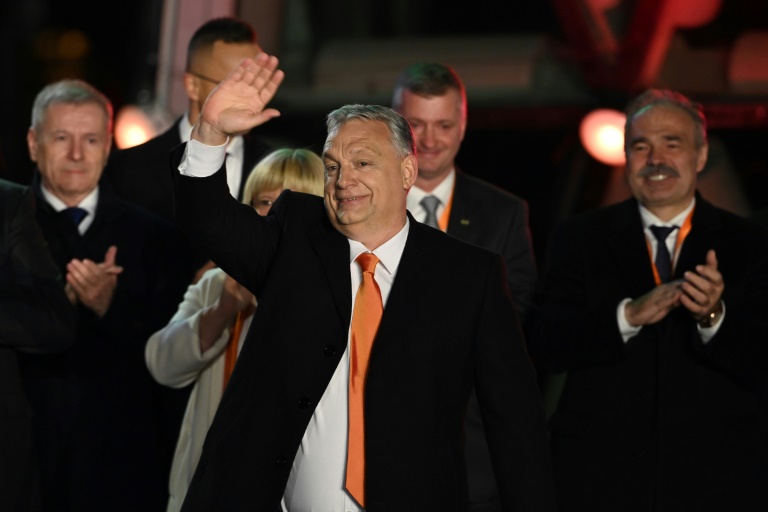
The move comes two days after Hungarian Prime Minister Viktor Orban won re-election with an overwhelming majority, claiming his victory as a win over liberal values defended by Brussels.

The nationalist and ally of Russian President Vladimir Putin is frequently accused in Brussels of backsliding on democratic norms.

The European Commission “will now send the letter of formal notification to start the conditionality mechanism,” European Commission head Ursula von der Leyen said to applause at a plenary session of the European Parliament in Strasbourg, France.

The latest clash with Hungary is over its public procurement system, conflict of interests and corruption and could see Budapest lose EU cash if endorsed by a super-majority of the 27 member states.

Orban’s chief of staff Gergely Gulyas urged the European Commission “not to punish Hungarian voters for expressing an opinion not to Brussels’ taste” in the elections.

“Brussels is making a mistake,” he added, “the basic rules of democracy must be accepted by the Commission”.

Gulyas urged the European Union to “return to common sense and dialogue”.

Regularly criticised by the EU for undermining the rule of law, Orban attacked the “Brussels bureaucrats” in his victory speech, after securing a fourth term in office.

The conditionality mechanism was created in 2020, after a summit at the height of the coronavirus pandemic that agreed common borrowing to build an 800-billion-euro ($900 billion) pile of grants and loans for EU countries to recover.

Budget hawks, including the Netherlands and Nordic countries, demanded the conditionality mechanism to put guard rails around the spending of taxpayers’ money.

– ‘Long overdue’ –

Hungary and Poland challenged the new procedure in the EU’s top court. But the European Court of Justice in February greenlit its use, saying the European Union “must be able to defend those values”.

The commission has been under pressure from the European Parliament to apply the conditionality mechanism against Poland and Hungary. The legislature launched legal action to make the commission act.

“This is long overdue. The failure of the Hungarian government to manage public money transparently is well known and documented,” said French MEP Gwendoline Delbos-Corfield.

“How can a member state use EU funds properly when the independence of the judiciary has been destroyed and there are no sufficient safeguards against corruption?” she added.

The use of the mechanism adds to a long list of other procedures the commission has taken over rule-of-law concerns against Hungary and Poland that has included court ordered fines.

The issue of corruption is also the reason for the commission’s blocking of the Hungarian recovery plan, worth 7.2 billion euros in European subsidies.

War in Ukraine: Latest developments

Here are the latest developments in the war in Ukraine:

– ‘Act immediately’ –

Ukrainian President Volodymyr Zelensky challenges the United Nations to “act immediately” or “dissolve yourself altogether” during an address in which he shows harrowing footage of dead bodies — including children — he says were victims of Russian atrocities.

Likening Russia’s actions in Bucha and other Ukrainian cities to violence carried out by “terrorists” such as the Islamic State group, Zelensky calls on the Security Council to expel Russia “so it cannot block decisions about its own aggression, its own war.”

– Moscow denies atrocities –

Russian Foreign Minister Sergei Lavrov says the discovery of bodies in Bucha was a “provocation” aimed at scuppering talks between Moscow and Kyiv.

“A question arises: What purpose does this blatantly untruthful provocation serve? We are led to believe it is to find a pretext to torpedo the ongoing negotiations,” Lavrov says in a video message broadcast on Russian television.

– 600,000 evacuated to Russia –

Russia’s UN ambassador Vassily Nebenzia says over 600,000 people have been evacuated into Russia during the conflict in Ukraine, denying Kyiv’s claim of mass deportations.

“And we’re not talking about any kind of coercion or abduction, as our Western partners like to present this, but rather the voluntary decision by these people…” he tells the Security Council.

– Donbas onslaught awaited –

NATO chief Jens Stoltenberg says that, after withdrawing most of its troops from northern Ukraine, Moscow aims to capture the “entire” Donbas region in the east, with the aim of creating a land corridor from Russia to annexed Crimea.

– Cluster munitions –

UN undersecretary-general for political and peacebuilding affairs, Rosemary DiCarlo, tells the Security Council of “credible” claims Russia has used indiscriminate cluster munitions two dozen times in populated parts of Ukraine.

– War chest frozen –

Britain has frozen some $350 billion (321 billion euros) in assets from the “war chest” of Russian President Vladimir Putin, British Foreign Secretary Liz Truss says during a visit to Warsaw.

She says this action meant that “over 60 percent of the regime’s $604 billion foreign currency reserves” were now “unavailable” to the Russian government.

– US squeezes Russia payments –

The United States bars Moscow from making debt payments using funds held at American banks — a move that takes Russia a step closer to default.

“Russia must choose between draining remaining valuable dollar reserves or new revenue coming in, or default,” a Treasury spokesperson tells AFP.

– EU to target Russian coal –

The EU proposes a ban on Russian coal imports and on Russian ships entering European ports.

“Russia is waging a cruel, ruthless war, also against Ukraine’s civilian population. We need to sustain utmost pressure at this critical point,” European Commission President Ursula von der Leyen says.

– Putin warning on food –

Putin retaliates by saying Moscow will “carefully monitor” food exports to “hostile” nations.

He cites “global food shortages” for the need in caution in exporting “to countries that are clearly hostile towards us.”

– Diplomats kicked out –

Italy, Spain, Denmark and Slovenia expel a raft of Russian diplomats bringing to almost 200 the number ordered home by EU allies in 48 hours.

The Kremlin laments a “short-sighted move” that will “further complicate our communication” with Europe.

burs-cb-jmy/pvh

France's Macron targets poll rival Le Pen over ties to Russia

French President Emmanuel Macron on Tuesday accused his far-right election rival Marine Le Pen of being too close to Russian leader Vladimir Putin, denying he had indulged the Kremlin over the Russian invasion of Ukraine.

Russia and Ukraine risk becoming a key issue in France’s election campaign this month, as polls project Le Pen could make a serious challenge to the centrist Macron in the second round run-off on April 24.

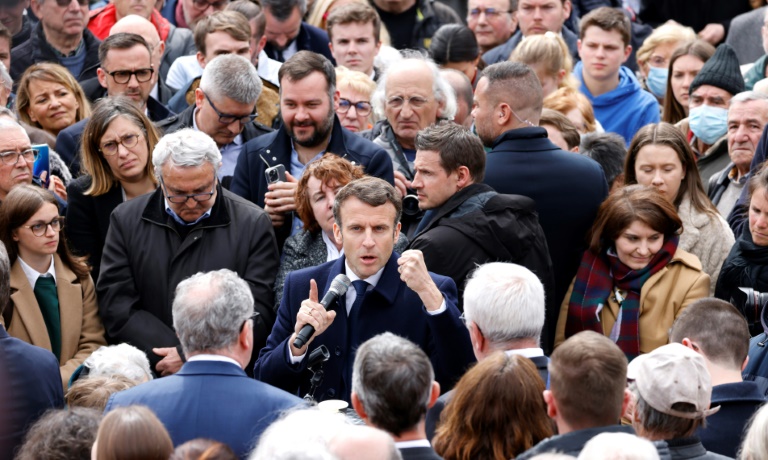
“You should not be looking at me if you want to find complacency towards Vladimir Putin, or Russian financing,” he told reporters on a campaign visit to Brittany ahead of the first round of polls Sunday.

“You should be looking at the other candidates. Don’t forget that,” he said on a cam.

While Macron did not name Le Pen by name, his comments were a clear reference to the far-right National Rally (RN) leader who was hosted by Putin in 2017 and whose party is continuing to pay back a loan of some nine million euros from a Russian creditor.

Le Pen has sought to distance herself from Putin after invasion of Ukraine, saying he is “not the same person” she had met in 2017 and speaking of “war crimes” after the discovery of corpses outside Kyiv.

Macron has kept up dialogue with Putin even after the launch of the Russian invasion on February 24 but said that it was at the request of President Volodymyr Zelensky who believed such talks were still useful.

“I will do so, so long as the Ukrainian president asks me to have a dialogue with Russia, so long as France can play a role in making the negotiations progress, obtaining things on the humanitarian level and preparing for peace.”

His comments also came after bitter criticism from Polish Prime Minister Mateusz Morawiecki over Macron’s policy of keeping up talks with Putin despite the mounting outrage over Russia’s actions in Ukraine.

“How many times have you negotiated with Putin and what have you achieved? We do not discuss, we do not negotiate with criminals. Criminals have to be fought against,” Morawiecki said Monday, addressing Macron.

“Nobody negotiated with Hitler. Would you negotiate with Hitler, with Stalin, with Pol Pot?” he asked.

Macron said that he had never used the situation in Ukraine for political ends and said he would only visit Zelensky in Kyiv if it could bring results.

“If it can bring something and have a useful effect I would do it either before or after” the presidential election, he said.

Close Bitnami banner
Bitnami