World

Fed prepared to take 'stronger action' to fight inflation: Brainard

Reducing high inflation is of “paramount importance” for the US central bank and policymakers are prepared to act more aggressively if needed, Federal Reserve Governor Lael Brainard said Tuesday.

“Getting inflation down is our most important task, while sustaining a recovery that includes everyone,” Brainard said in a prepared speech, noting that rising prices for food and fuel hurt lower-income families the most.

The central bank’s policy-setting committee  “is prepared to take stronger action” if warranted, said Brainard, who is awaiting congressional confirmation for the position of Fed vice chair.

The committee took the first step to raise the benchmark lending rate last month with a quarter-point increase, but a growing number of central bankers, including Fed Chair Jerome Powell, have signaled bigger steps could be coming as soon as its meeting next month.

The Fed also is expected to start reducing its massive bond holdings as part of its efforts to cool price pressures and bring inflation back down towards its two percent target.

“It is of paramount importance to get inflation down,” Brainard said. “Accordingly, the committee will continue tightening monetary policy methodically through a series of interest rate increases and by starting to reduce the balance sheet at a rapid pace as soon as our May meeting.”

Removing CO2 from air, sea no longer optional, says UN

However quickly the world slashes greenhouse gas emissions, it will still need to suck CO2 from the air and oceans to avoid climate catastrophe, a landmark UN report said this week.

Long seen as marginal or an industry ploy to avoid curbing emissions, carbon dioxide removal (CDR) is today a necessary weapon in the battle against global heating, according to the UN’s Intergovernmental Panel on Climate Change (IPCC). 

“This is the first IPCC report to state clearly that carbon dioxide removal is needed to achieve our climate targets,” said Steve Smith, head of Oxford Net Zero at the University of Oxford.

The Paris Agreement calls for capping global warming below two degrees Celsius, and most countries have signed on for a more ambitious limit of 1.5C.   

Even under the most aggressive carbon-cutting scenarios, several billion tonnes of CO2 will need to be extracted each year from the atmosphere by 2050, and an accumulated total of hundreds of billions of tonnes by 2100. 

“Carbon dioxide removal is necessary to achieve net-zero C02 and greenhouse gas emissions, both globally and nationally,” the report concludes.

This will compensate for sectors where emissions will be hard to abate, such as aviation, shipping and cement. 

And depending on how successfully carbon pollution is drawn down, CDR may be needed to cool Earth’s surface if the Paris treaty temperatures targets are breached. 

– Grow, burn, bury –

There are a variety of ways that “negative emissions” can be achieved, but all would be needed to be ramped up significantly to make a dent in the approximately 40 billion tonnes of CO2 currently emitted each year.

Drawing down carbon pollution remains the absolute priority. 

“It is critical that an equitable and orderly roadmap for the transition away from fossil fuels is agreed,” said David King, head of the Climate Crisis Group and Britain’s former Chief Scientific Advisor.

“But we must also put significantly more resource into greenhouse gas removal.”

Virtually all of the IPCC models laying out pathways for a liveable future reserve an important role for technology called BECCS, or bioenergy with carbon capture and storage.

The recipe is pretty straightforward: grow trees, burn them for energy, and bury the CO2 emitted underground, in an abandoned mineshaft for example.

By 2050, the IPCC says, BECCS could be called upon to extract just under three billions tonnes of CO2 per year.

Restoring forests and planting trees that absorb and stock CO2 as they grow also figure prominently in development scenarios achieving net-zero emissions at or near mid-century, accounting for the same level of carbon removal at mid-century. 

But what works on paper — and in so-called integrated assessment models — has not materialised in reality. 

One of the few commercial-scale BECCS facilities in the world, in Britain, was dropped last year from the S&P Clean Energy Index because it failed to meet sustainability criteria.

“I don’t see a BECCS boom,” said Oliver Geden, a senior fellow at the German Institute for International and Security Affairs and an expert on CDR. 

– Offset schemes –

The area required, meanwhile, for tree-planting schemes — up to twice the size of India — would compete with food and biofuel needs.

Many businesses, including fossil fuel companies, rely heavily on carbon offset schemes based on afforestation to compensate for continuing carbon emissions.

The newest CDR method, a chemical process known as direct air carbon capture and storage (DACCS), is attracting interest.

Industry leader Swiss-based Climeworks announced Tuesday it had raised $650 million (595 million euros), and the technology has attracted major corporate backing from via Bill Gates’ Breakthrough Energy partnership. 

But the potential for scaling up remains to be proven: Climeworks’ direct air capture facility in Iceland — the largest in the world — removes in a year what humanity emits in three or four seconds.

Other CDR methods at various stages of experimentation and development include enhancing the capacity of soil to sequester carbon; conversion of biomass into a charcoal-like substance called biochar; peatland and coastal wetland restoration; and so-called enhanced weathering of rocks rich in minerals that absorb CO2.

Potential ocean-based methods include boosting marine alkalinity, either by directly adding alkaline minerals or an electrochemical processing, and stimulating the growth of phytoplankton, tiny organisms  that stock carbon through photosynthesis and then sink to the ocean floor when they die

Ukrainian forces brace for Russian assault in Donbas

Ukrainian forces are dug in around the village of Krasnopillia in the Donbas as they brace for an anticipated Russian offensive to take the eastern region. 

“We know the Russians are reinforcing and are getting ready to attack,” a senior Ukrainian officer on the ground told AFP, echoing other sources who warned of a Russian assault in the Donbas that could begin at any moment.

The village sits on the road between the Ukrainian-held cities of Slavyansk and Kramatorsk, and Izyum, to the northwest, recently captured by the Russian army.

On Tuesday, AFP journalists in Krasnopillia heard artillery explosions but not the sound of shots fired from automatic weapons, a sign of ground combat. 

While the front was stable for the moment, Russian helicopters have increased the number of flights they were making over the area, the Ukrainian officer said, often a harbinger of a large-scale operation.

“We are ready… we’ve planned some surprises for them along the way,” the officer said.

In the face of rising pressure, the forces present seemed confident. “We’re waiting for them!” said a lieutenant tasked with reinforcing the positions along the road, giving a thumbs up. 

Artillery and armoured vehicles are dug in along the sides of the route. The adjacent forest is scattered with other fortified positions and camouflaged equipment.

As winter reaches its end and the sodden terrain makes moving through the fields difficult, the road between Izyum and Sloviansk looks set to play an important strategic role in the offensive expected in the Donbas.

Since Russia announced its intention to focus on the “liberation” of the Donbas, residents in the traditional mining region in the east of Ukraine have lived in fear of an assault.

Ukrainian forces have been deployed in the region since 2014 along a frontline running between Donetsk to the south and Lugansk in the east, the capitals of the two pro-Russian, breakaway “republics” of the same name.

– Westbound train –

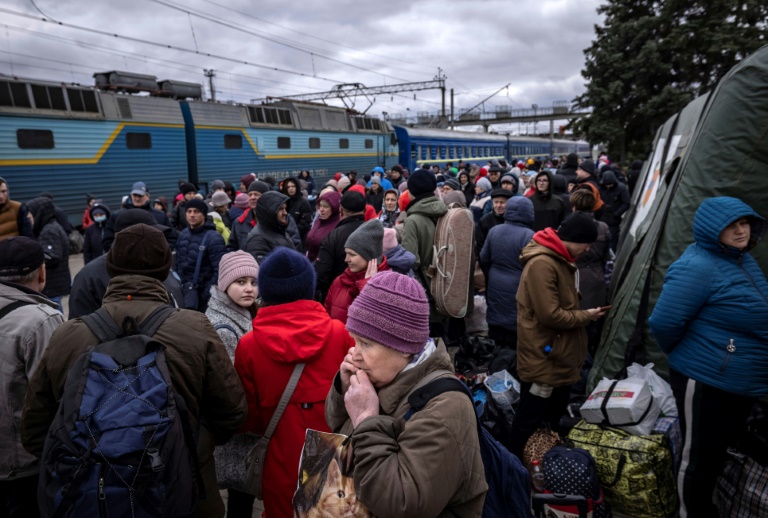
The Ukrainian leaders of the Donetsk and Lugansk regions in the Donbas have asked civilians to evacuate west.

On Tuesday morning, a three-kilometre-long line of cars was waiting to pass a checkpoint to enter Kramatorsk and its sister city of Slavyansk before moving on.

So far evacuations have mostly been by train, with between 2,000 and 3,000 leaving the station in Kramatorsk every day.

But damages to the trainline overnight meant that the service was suspended Tuesday morning, according to the Ukrainian rail operator.

Late-afternoon, a train finally left the station, where hundreds had been patiently waiting for transport out.

The few who remain in Kramatorsk live under a nighttime curfew and to the rhythm of air-raid sirens. Fuel is hard to come by and most shops are closed. 

“The atmosphere has become tense, everyone is nervous. It’s time to go now,” a volunteer at the station told AFP.

Hit by sanctions, Lada factory town braces for tough times

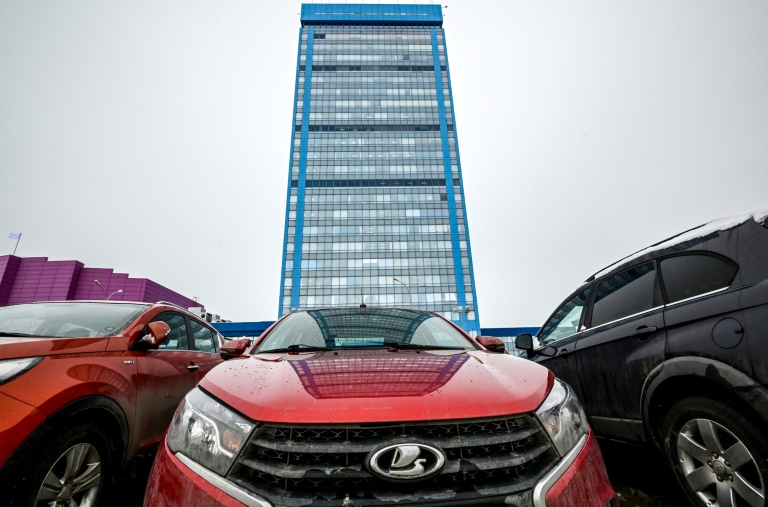
For generations the Russian city of Tolyatti has been synonymous with leading car manufacturer Avtovaz, maker of one of the country’s best-known brands, the Lada automobile.

But with the West piling sanctions on Russia over its military action in Ukraine, Tolyatti and the workers of Avtovaz are bracing for tough times.

Gathered in a small apartment in the city’s Avtozavodsky district, a residential area surrounding the sprawling factory, several workers from the “Yedinstvo” (Unity) trade union said they were worried about their future.

“It’s a factory town. Everyone here works either for the factory or for the police,” said Alexander Kalinin, 45, a freight elevator operator at Avtovaz for 15 years.

Founded in the 1960s for the Soviet Union to meet the growing demand for affordable cars, the Avtovaz factory’s flagship Lada vehicles became widely known for their simplicity and durability.

The factory was set up in the town of Stavropol about 780 kilometres (485 miles) southeast of Moscow, which was renamed Tolyatti after Italian Communist politician Palmiro Togliatti.

The plant survived the economic crisis that followed the 1991 collapse of the Soviet Union and was eventually taken over by French auto group Renault.

“For Tolyatti, the factory is everything. The whole city was built around it,” said 33-year-old Irina Myalkina, a worker in the spare parts warehouse for 11 years.

“When I started, I was full of enthusiasm, I hoped for a good income. I still hope,” Myalkina added with a sad smile.

– ‘People are nervous’ –

Most of the factory’s assembly lines stopped running after Moscow moved troops into Ukraine on February 24 and sanctions meant it could no longer receive components from aboard.

Workers are on paid leave, with two-thirds of their usual wage, which for Myalkina means receiving 13,000 rubles (about $140) instead of her usual 20,000 rubles ($215).

Prices for food and other basic goods are soaring, in Tolyatti as elsewhere in Russia.

“People are nervous,” Myalkina said.

After completing its acquisition of Avtovaz, Renault funnelled billions of euros into the Soviet-era factory, but also carried out huge staff cuts, leaving fewer than 40,000 workers out of 70,000.

“There were many problems with the departure of employees, but nevertheless there was a clear positive trend,” said Andrei Yakovlev, head of the Institute for Industrial and Market Studies at Moscow’s Higher School of Economics.

“A major Russian car manufacturer was being born.” 

Now its future is very much in doubt, with Renault, under intense pressure to boycott Russia, considering whether to withdraw from Avtovaz. 

No one from the company would agree to talk and it even refused to give access to the Lada Museum in Tolyatti during a recent visit.

When AFP was filming near the factory, Avtovaz security called police, who questioned and released the journalists after several hours.

The factory’s employees have been forced to take their three weeks of summer vacation in April, while Renault considers its options.

– Second jobs –

Many employees have already been forced to take up second jobs, like Leonid Emchanov, 31, a mechanic now moonlighting as a security guard to feed his family. 

“I am the only one in the family who works. I have two children, my wife… is on maternity leave. I have to work two jobs, but even this is not enough,” he said.

If Avtovaz is unable to survive this crisis, its demise would mark the end of an industrial era for Russia, and for its many Lada enthusiasts.

In an underground garage in Tolyatti, two men in vintage overalls were busy at work on an ’80s Lada Niva, a legendary four-wheel drive vehicle, that was shining with a fresh coat of red paint. 

“Since childhood, my whole life has been linked to the factory,” said one of the mechanics, Sergei Diogrik.

“All our relatives in Tolyatti worked at the factory and I myself worked there. I had no choice, everything is related to the company,” he added. 

The 43-year-old founded and runs the Lada History Club, bringing together fans of the Soviet car from all over the world.  

“It was a powerful producer. The record in the early 1980s was 720,000 cars per year,” he said, compared to nearly 300,000 cars produced in 2021.

“It was fashionable to come here. Now the fashion is for young people to go to Moscow or somewhere else,” Diogrik added.

He said he is trying to remain hopeful, pointing out that the factory and its workers already survived the economic hardships of the 1990s.

“A Russian person who survived the 90s, especially in Tolyatti, will cope now, everything will be fine.”


Iran shrine stabbing kills cleric, wounds two others

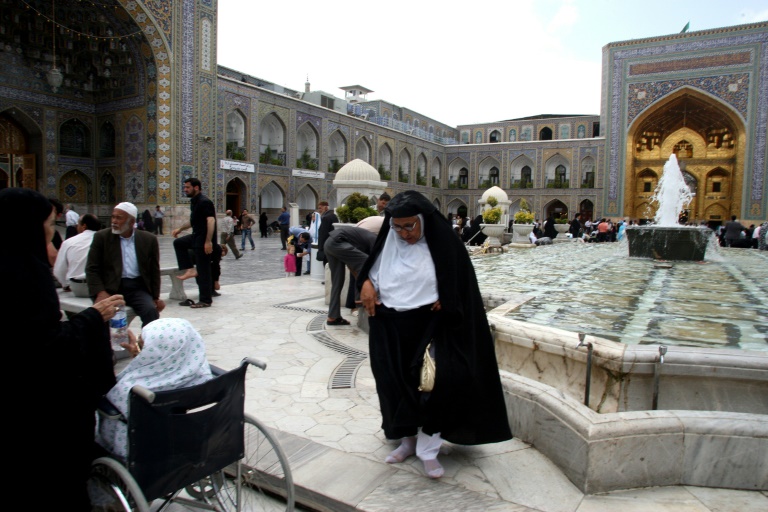
An attacker stabbed to death an Iranian Shiite Muslim cleric Tuesday and wounded two others, one of them seriously, in the shrine city of Mashhad, officials and state media said.

The assailant and four suspected accomplices were arrested after the bloody attack in the Imam Reza shrine’s courtyard, said Mohammad-Hossein Doroudi, the chief prosecutor of the northeastern city.

“The attacker is a foreign national,” he told the Fars news agency, without specifying the country.

Mashhad, Iran’s second city, attracts pilgrims from across the country during religious events, including the Muslim holy month of Ramadan, which began on Sunday in Iran.

Amateur video footage showed a man lying in a pool of blood in the courtyard of the site with golden domes and minarets.

“A man stabbed three Shiite clerics with knives, killing one and wounding two others,” said the governor of Khorasan Razavi province, Yaghoub-Ali Nazari, adding that “one of the injured is in serious condition”.

The assailant struck as large crowds of worshippers had gathered in the courtyard of the shrine of Imam Reza, of one of the most revered figures in Shiite Islam.

“Preliminary investigations show that the attacker committed this action under the influence of takfiri currents,” Nazari added.

The term “takfiri” is used to describe Muslims who take it upon themselves to brand others as apostates and thus condemn them to death, and usually refers to Sunni extremists.

The Astan Quds Razavi charitable foundation which runs the shrine, said: “With the vigilance of the pilgrims and the efforts of security forces, the assailant was immediately arrested and handed over to the police, and the injured were quickly taken to the hospital.

“The identity of the assailant is under investigation,” added that foundation, whose large asset portfolio was managed from 2016 to 2019 by Iran’s President Ebrahim Raisi.

State news agency IRNA published mobile phone footage of the arrest of a presumed assailant in which several people were seen pushing a young man in the courtyard.

People were heard shouting “don’t beat him up!” in the video, as some tried to prevent him from being attacked.

Iran has a population of 83 million, 90 percent of whom are Shiite.

In space, Russians and Americans remain 'dear friends': astronaut

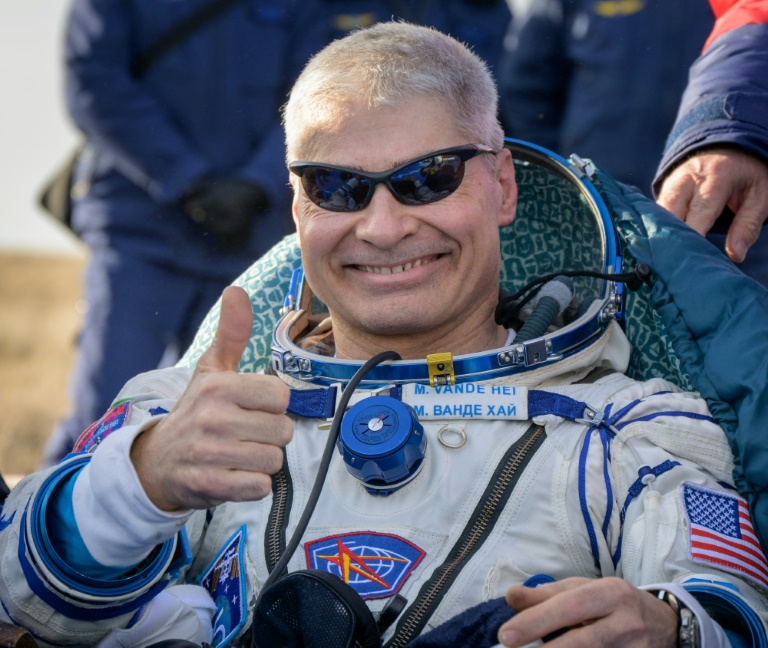
After nearly a week back on Earth, NASA astronaut Mark Vande Hei said Tuesday the relationship between US astronauts and Russian cosmonauts remained positive while on board the International Space Station, despite their countries’ animosity over Moscow’s February invasion of neighboring Ukraine.

Vande Hei landed in Kazakhstan last Wednesday in a Russian capsule, along with cosmonauts Anton Shkaplerov and Pyotr Dubrov.

“About my relationship with my Russian crewmates, they were, are and will continue to be very dear friends of mine,” the American Vande Hei said during a press conference in Texas Tuesday. 

“We supported each other throughout everything,” he said. “And I never had any concerns about my ability to continue working with them.”

Vande Hei said the Russian invasion of Ukraine was discussed on board the ISS, but “it was largely how they felt about things and those are things that I would prefer that they get to share directly.”

Moscow and Washington jointly manage the ISS, and NASA has said cooperation between the two countries’ space programs has so far remained unaffected by their governments’ friction. 

But Russian space authority head Dmitry Rogozin has been ramping up incendiary rhetoric on Twitter for weeks.

“If you block cooperation with us, who will save the ISS from uncontrolled deorbiting and falling on US or European territory?” Rogozin wrote in a February tweet — noting that the station does not fly over much of Russia.

Vande Hei said he has stayed away from social media, but heard about some of the tweets from his wife. 

“I just had too much confidence in our cooperation to date, to take that those tweets as anything but something that was meant for a different audience than myself,” he said. 

The 55-year-old now holds the record for the American who has spent the most consecutive days in space, at 355 days. 

He said his legs were a bit “wobbly” for his first eight hours back on solid ground, but he is adjusting quickly to life back on Earth. 

“I’m a little disappointed with how normal it feels. I kind of want it to seem more strange being back,” he said. 

“I’m still uncomfortable, but humans are very adaptable.”

The goal for the extended mission was to observe the effects of prolonged exposure to a space environment on humans in preparation for future missions — like going to Mars, for example. 

“My body is part of the experiment,” Vande Hei remarked, adding that he hopes his record time in space is soon broken.

The record for the longest space journey for any human belongs to Russian cosmonaut Valery Polyakov, who spent 437 days on board the Mir station in 1994 and 1995. 

In space, Russians and Americans remain 'dear friends': astronaut

After nearly a week back on Earth, NASA astronaut Mark Vande Hei said Tuesday the relationship between US astronauts and Russian cosmonauts remained positive while on board the International Space Station, despite their countries’ animosity over Moscow’s February invasion of neighboring Ukraine.

Vande Hei landed in Kazakhstan last Wednesday in a Russian capsule, along with cosmonauts Anton Shkaplerov and Pyotr Dubrov.

“About my relationship with my Russian crewmates, they were, are and will continue to be very dear friends of mine,” the American Vande Hei said during a press conference in Texas Tuesday. 

“We supported each other throughout everything,” he said. “And I never had any concerns about my ability to continue working with them.”

Vande Hei said the Russian invasion of Ukraine was discussed on board the ISS, but “it was largely how they felt about things and those are things that I would prefer that they get to share directly.”

Moscow and Washington jointly manage the ISS, and NASA has said cooperation between the two countries’ space programs has so far remained unaffected by their governments’ friction. 

But Russian space authority head Dmitry Rogozin has been ramping up incendiary rhetoric on Twitter for weeks.

“If you block cooperation with us, who will save the ISS from uncontrolled deorbiting and falling on US or European territory?” Rogozin wrote in a February tweet — noting that the station does not fly over much of Russia.

Vande Hei said he has stayed away from social media, but heard about some of the tweets from his wife. 

“I just had too much confidence in our cooperation to date, to take that those tweets as anything but something that was meant for a different audience than myself,” he said. 

The 55-year-old now holds the record for the American who has spent the most consecutive days in space, at 355 days. 

He said his legs were a bit “wobbly” for his first eight hours back on solid ground, but he is adjusting quickly to life back on Earth. 

“I’m a little disappointed with how normal it feels. I kind of want it to seem more strange being back,” he said. 

“I’m still uncomfortable, but humans are very adaptable.”

The goal for the extended mission was to observe the effects of prolonged exposure to a space environment on humans in preparation for future missions — like going to Mars, for example. 

“My body is part of the experiment,” Vande Hei remarked, adding that he hopes his record time in space is soon broken.

The record for the longest space journey for any human belongs to Russian cosmonaut Valery Polyakov, who spent 437 days on board the Mir station in 1994 and 1995. 

Zelensky tells UN to 'act immediately' on Russia or close

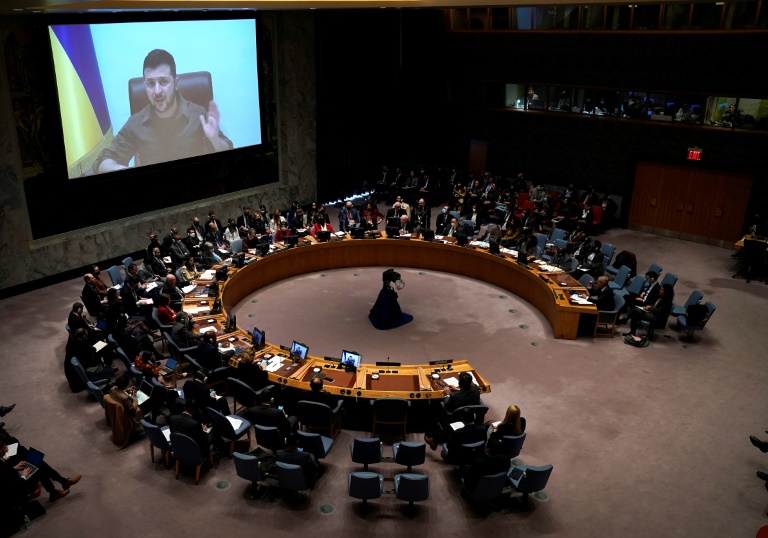
Ukrainian President Volodymyr Zelensky challenged the United Nations to “act immediately” or “dissolve yourself altogether” during a blistering address Tuesday in which he showed harrowing footage of dead bodies — including children — he said were victims of Russian atrocities.

Likening Russia’s actions in Bucha and other Ukrainian cities to violence carried out by “terrorists” such as the Islamic State group, Zelensky called on the 15-member Security Council — which aims to ensure international peace and security — to expel Russia “so it cannot block decisions about its own aggression, its own war.”

Russia, as one of the five permanent members of the Council, has a veto, which it has repeatedly wielded to block resolutions and negotiations on the global stage.

That means it cannot be expelled from the body, as it would simply veto any vote or recommendation by the Security Council to do so. 

“If there is no alternative … then the next option would be dissolve yourself altogether,” Zelensky continued.

“Ladies and gentlemen, are you ready to close the UN? … If your answer is no, then you need to act immediately.”

Bearded and dressed in his now trademark military green T-shirt, Zelensky, speaking remotely from Kyiv, gave a chilling rendition of the atrocities he said were carried out by Russian troops against civilians in Bucha, a town outside the Ukrainian capital.

Bucha had been occupied by Russian troops, but when they withdrew recently Ukrainian authorities and independent international journalists including AFP found bodies of people in civilian clothing, some with their hands tied behind their backs.

Zelensky aired a graphic, 90-second clip of what he said were images from towns including Bucha and the southern port of Mariupol. 

The footage showed partially uncovered dead people, including children, in shallow graves, several bodies in a courtyard and dead people with hands tied behind their back slumped towards a wall.

“Now the world can see what the Russian military did in Bucha,” Zelensky said. 

“They were killed in their apartments, houses, blowing up grenades, civilians were crushed by tanks while sitting in their cars in the middle of the road, just for their pleasure. They cut off limbs… slashed their throats,” he said.

“Women were raped and killed in front of their children, their tongues were pulled out only because the aggressors did not hear what they wanted to hear from them. 

“This is no different from other terrorists such as Daesh … and here it is done by a member of the United Nations Security Council,” he said, using another acronym for the Islamic State group.

“Accountability must be inevitable,” he said, claiming that “hundreds of thousands” of Ukrainians had also been deported to Russia.

Moments later Russia’s ambassador, in his own comments, rejected the claims entirely.

– ‘No witnesses’ –

Addressing his remarks directly to Zelensky, Vassily Nebenzia said Moscow places “on your conscience the ungrounded accusations against the Russian military, which are not confirmed by any eye witnesses.”

At least one witness has told AFP of watching Russian soldiers shoot a man in cold blood in Bucha.

Russia has claimed that images presented by Ukrainian authorities to show there had been a massacre in Bucha were fake, or that the deaths occurred after Russian soldiers pulled out of the areas. 

It has not offered evidence, and satellite imagery has shown bodies there for weeks, before Moscow withdrew its troops from the town. 

Nevertheless Nebenzia repeated those claims, telling the council: “You only saw what they showed you. You couldn’t ignore the flagrant inconsistencies in the version of events which are being promoted by Ukrainian and Western media.”

He also denied Zelensky’s allegation of mass deportations. 

Since the invasion began “over 600,000 people have been evacuated to Russia, including over 119,000 children,” Nebenzia told the body.

He said the evacuations were “voluntary,” not “coercion or abduction.”

Russia invaded Ukraine on February 24, sparking outrage across the world and displacing millions of Ukrainians.

Twitter names Elon Musk to board, further lifting shares

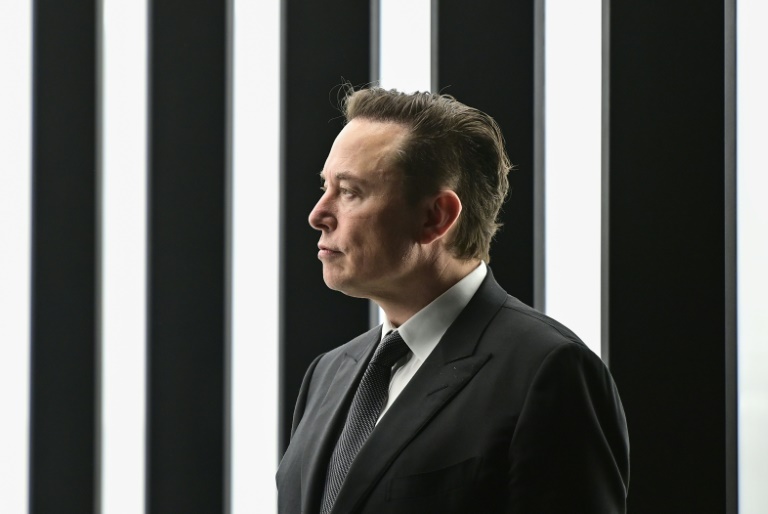
Twitter announced Tuesday that Elon Musk will join its board, one day after the Tesla CEO disclosed a large stake that made him the social media company’s largest shareholder.

“I’m excited to share that we’re appointing @elonmusk to our board! Through conversations with Elon in recent weeks, it became clear to us that he would bring great value to our Board,” Twitter CEO Parag Agrawal said in a tweet.

Musk, who also leads the SpaceX venture and is the world’s richest man, had the day prior announced his purchase of 73.5 million shares or 9.2 percent of Twitter’s common stock, sending the company’s value up more than 27 percent on Wall Street.

The billionaire’s investment had fueled speculation about a takeover of the microblogging platform, which is influential in the political and media worlds but for which profitable growth has often proved elusive.

Analysts at Wedbush said the invitation from Agrawal marks “a friendly move by the Twitter board to embrace Musk with open arms” that could lead to significant strategic shifts for a company “still struggling in a social media arms race,” according to a note.

But given Musk’s penchant for polarizing comments, they advised: “get out the popcorn.”

Musk had previously questioned the platform’s committment to freedom of speech, echoing a position of Donald Trump’s supporters, who hope to see the former US president return to Twitter following a lifetime ban instituted in the wake of the January 6 riot.

Agrawal called Musk “a passionate believer and intense critic of the service which is exactly what we need” at the company. 

The Twitter CEO also shared a poll posted by Musk to the platform asking whether to add a function to edit tweets, saying, “the consequences of the poll will be important. Please vote carefully.”

Musk, for his part, said he was “looking forward to working with Parag & Twitter board to make significant improvements to Twitter in coming months!”

Also applauding was founder Jack Dorsey, who said of Musk, “he cares deeply about our world and Twitter’s role in it.”

Musk will remain on Twitter’s board until the company’s annual shareholder’s meeting in 2024, and he has promised not to take a stake larger than 14.9 percent in the company during that time, according to a securities filing.

– Political implications? –

The arrival of Musk also cheered some analysts, who have expressed chagrin at the company’s performance.

In 2021, Twitter’s revenues were $5.1 billion, up 37 percent from 2020, but a fraction of the $33.7 billion reported by Facebook parent Meta.

CFRA Research analyst Angelino Zino applauded the arrival of a “true visionary” in Musk.

“Ultimately, the goal is to better monetize the platform, and we think Musk can only help, not hurt the process, with his recent criticism of the company as a refreshing sign,” Zino said, noting that the term’s of Musk’s stake mean he can’t take over the company. 

Susannah Streeter, an analyst at Hargreaves Lansdown, offered a more muted outlook, characterizing Musk as “socially ambitious” and raising the possibility that the Tesla boss will use the platform to promote his ventures.

“Over the longer term, Twitter investors will want to see that high levels of governance are adhered to, otherwise the independence of Twitter could be questioned, and the risk is that users may start to drift away,” Streeter said, adding that Musk could also use the intelligence gathered to launch his own platform.

In the political universe, far-right Republican House Representative Lauren Boebert was among those calling for Musk to “lift the political censorship.”

“Oh… and BRING BACK TRUMP!” she tweeted.

Two days after the January 6 attack on the US capitol, Twitter announced the “permanent suspension” of Trump’s account, citing the “risk of further incitement of violence.”

Historian James Fell was among those trying to preempt a Trump Twitter revival, saying if the ex-president is restored, “I’ll probably ditch this platform altogether.”

Also unhappy was former labor secretary Robert Reich, who tweeted, “What could possibly go wrong with an oligarch determining what constitutes free speech?”

Shares of Twitter rose 4.5 percent to $52.20 in midday trading.

Soldiers police Lima curfew after fuel price protests

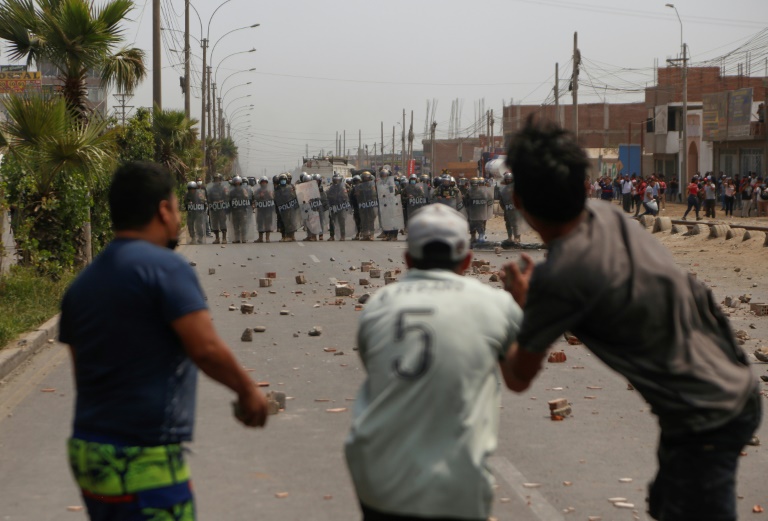
Soldiers patrolled the largely empty streets of Peru’s capital Lima Tuesday, monitoring a curfew imposed after widespread protests against rising fuel and toll prices amid growing economic hardship.

Shops and schools were closed and bus services mostly suspended after President Pedro Castillo announced a curfew shortly before midnight Monday for Lima and the neighboring port city of Callao.

But many workers, at hotels or hospitals for example, ignored the shut-down which was widely criticized on social media. 

The measure took many in Lima by surprise, given that most of the protests in recent days — some of which turned violent — took place far from the capital.

Many had no choice but to take a taxi or walk to their place of work.

“It was a very late and improvised” announcement, complained Cinthya Rojas, a nutritionist who waited patiently for one of the handful of buses still running to get to work at a hospital east of Lima.

A hotel employee told AFP she had to pay the equivalent of $8, a small fortune on her salary, for a taxi to work.

– Soaring food prices –

Castillo announced the curfew would last until midnight Tuesday “to reestablish peace” after countrywide protests against fuel and toll price increases on top of biting food inflation.

Like much of the rest of the world, Peru’s economy is reeling from the damages wrought by the coronavirus pandemic.

The country’s Consumer Price Index in March saw its highest monthly increase in 26 years, driven by soaring food, transport and education prices, according to the national statistics institute. 

In an attempt to appease protesters, the government over the weekend eliminated the fuel tax and decreed a 10 percent increase in the minimum wage from May 1. 

But the General Confederation of Workers of Peru (CGTP) — the country’s main trade union federation — considered the measures insufficient and took to the streets again Monday in Lima and several regions in Peru’s the north.

Some protesters set fire to toll booths on highways, looted shops, and clashed with police.

Some also burnt tires and blocked the north-south Pan-American highway, the country’s most important artery for people and goods.

The disruptions halted public transport and closed schools on Monday.

“I call for calm and serenity,” the leftist president said during his brief late-night TV appearance. 

“Social protest is a constitutional right, but it must be done within the law,” he said.

– ‘Authoritarian measure’ –

The protests were the first against the government since Castillo, a 52-year-old former rural school teacher, took office eight months ago.

Two-thirds of Peruvians disapprove of his rule, according to an Ipsos opinion poll in March.

Castillo’s announcement of a curfew came just a week after he escaped impeachment by Congress, where opponents accuse his administration of a “lack of direction” and of allowing corruption in his entourage.

It also coincided with the 30th anniversary of a coup staged by ex-president Alberto Fujimori, jailed over his regime’s bloody campaign against insurgents. 

“The measure dictated by President Pedro Castillo is openly unconstitutional, disproportionate and violates people’s right to individual freedom,” tweeted lawyer Carlos Rivera, a representative of Fujimori’s victims.

Political analyst Luis Benavente added the curfew was “an authoritarian measure” that revealed “ineptitude, incapacity to govern.”

“It is like putting an end to traffic accidents by taking vehicles off the roads,” he told AFP.

A large proportion of Lima’s 10 million residents work in the informal sector, as street sellers and other traders, meaning the curfew left them without income for the day.

A football match of the Copa Libertadores between Peruvian Club Sporting Cristal and Brazil’s Flamengo, scheduled for Tuesday night in Lima, was also thrown into doubt. 

Close Bitnami banner
Bitnami