World

EU proposes sanctions on Russian coal, shipping

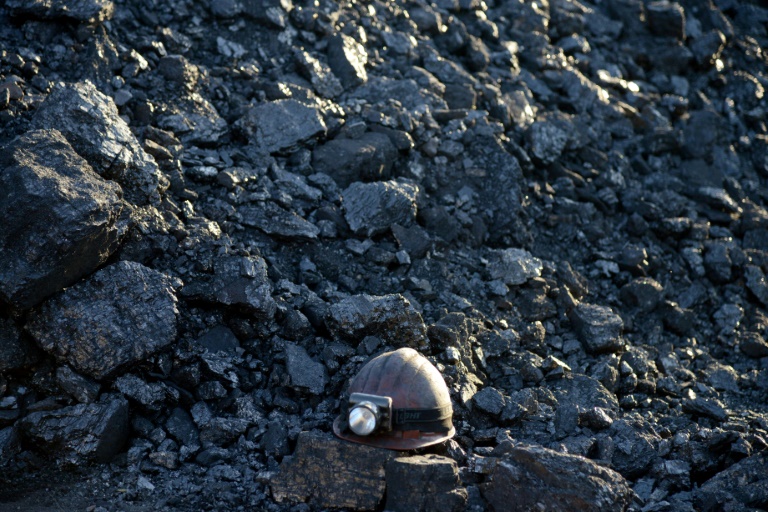
The EU executive on Tuesday proposed a fresh wave of sanctions against Russia that would include a ban on coal imports and blocking Russian ships from entering European ports.

The proposal, part of the bloc’s planned fifth wave of sanctions since the February 24 invasion, needs to be approved unanimously by the EU’s 27 member states.

The European Union and US are seeking to tighten the noose on Moscow after dozens of bodies were discovered in the Ukrainian town of Bucha following the withdrawal of Russian troops.

“Russia is waging a cruel, ruthless war, also against Ukraine’s civilian population. We need to sustain utmost pressure at this critical point,” European Commission President Ursula von der Leyen said in a video address.

The Europeans have been under pressure to hit Moscow in the crucial energy sector and stop Russia’s main source of revenue to pay for its war.

Brussels is also proposing a total ban on transactions of four large banks that represent a quarter of the Russian banking sector, including VTB, the country’s second largest lender.

The EU executive additionally wants to expand the list of Russian products banned in the EU, including vodka.

The proposal from the commission will now be presented to the EU’s member states with hopes they will approve it as early as Wednesday.

So far countries deeply dependent on Russia for energy — such as Germany, Austria and Italy — have resisted expanding the measures to gas or oil.

Germany on Monday said gas was still off-limits for now, given its continued importance to the European economy, but insisted that it could target gas and oil later.

Von der Leyen said additional sanctions, including on oil imports, were being worked on.

EU foreign ministers could adopt the latest package, either on the sidelines of NATO and G7 meetings happening Wednesday and Thursday, or at their regular meeting early next week.

Since Russia’s military buildup against Ukraine began, sanctions against Moscow have been coordinated with the United States and other allies.

Washington on Monday said more sanctions against Russia would be announced “this week”.

Publisher signs over Russian printing houses to Nobel winner

Norwegian publisher Amedia said Tuesday it was transferring control over its Russian printing houses to Nobel Peace Prize winner Dmitry Muratov, chief editor of independent newspaper Novaya Gazeta.

The announcement came as the media group also announced it was leaving Russia over the country’s invasion of Ukraine.

“With what we are currently witnessing in Ukraine from the Russian authorities, it is impossible for Amedia to continue the printing business in the country,” Amedia chief executive Anders Moller Opdahl said in a statement.

“Amedia is now withdrawing, in a way that leaves control to Peace Prize laureate Muratov,” Opdahl added.

Board chairman Andre Stoylen said the company believed this was “the best possible solution given the prevailing circumstances.”

“In this way, the printing houses will be able to continue being important for independent media in Russia in the future,” Stoylen said.

Muratov, who together with Maria Ressa of the Philippines was awarded the 2021 Nobel Peace Prize, would have full control of daily operations and “exercise all shareholder rights at his own discretion” of the four printing houses wholly owned by Amedia’s Russian subsidiary.

Novaya Gazeta, which was already using the printing presses of Amedia’s subsidiary, announced in late March that it had suspended its publication until the end of Russia’s military actions in Ukraine.

“This will support free expression of opinion, and all profits will be contributed to promoting it. Independent media are the antidote to war. We will take care of the open printing business and the employees,” Muratov said in a statement, adding his paper welcomed the resource with “great gratitude.”

Amedia also said it had written down the value of its Russian operations from 38 million Norwegian kroner ($4.4 million, 4 million euros) to zero.

In total the Norwegian publisher owns six printing houses in Russia, four of them wholly-owned and two together with Russian minority shareholders.

“Amedia is working on a solution with the minority shareholders in the last two printing companies, so that the group can withdraw completely from Russia,” the company said, adding that funds from a potential future sale would be used to support independent media in Russia.

Twitter announces Elon Musk to join board of directors

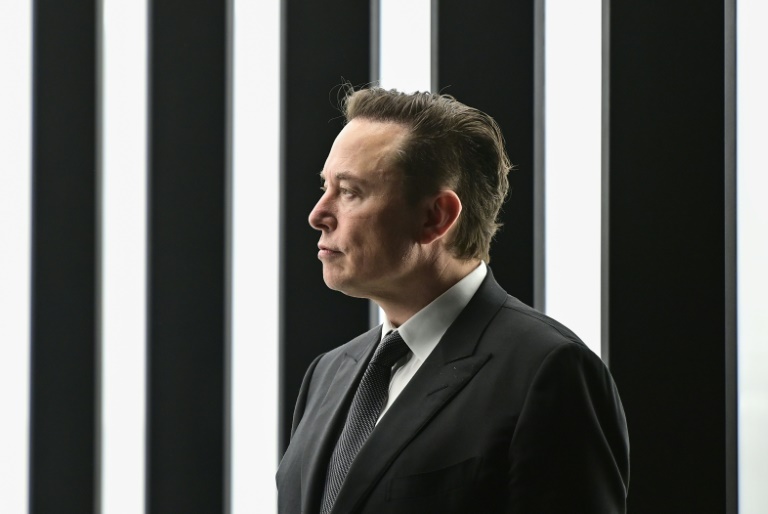
Elon Musk will join Twitter’s board of directors, the social network’s chief executive announced Tuesday, a day after the Tesla boss bought a major stake in the company and became its largest shareholder.

“I’m excited to share that we’re appointing @elonmusk to our board! Through conversations with Elon in recent weeks, it became clear to us that he would bring great value to our Board,” Twitter CEO Parag Agrawal said in a tweet.

He called Musk “a passionate believer and intense critic of the service which is exactly what we need” at the company.

Currently the world’s richest man and with more than 80 million followers on the microblogging platform, Musk on Monday disclosed a purchase of 73.5 million shares or 9.2 percent of Twitter’s common stock.

The billionaire is a frequent user of the platform, regularly mixing in inflammatory and controversial statements about current affairs or other public figures with remarks that range from whimsical to business-focused.

He has also sparred repeatedly with federal securities regulators, who cracked down on his social media use after a purported effort to take Tesla private in 2018 fell apart.

Musk has criticized Twitter for its approach to freedom of speech, launching a poll last month in which he asked if the network adheres to the principle — to which a majority of respondents voted no.

Musk will remain on Twitter’s board until the company’s annual shareholder’s meeting in 2024, and he has promised not to take a stake larger than 14.9 percent in the company during that time, according to a securities filing.

Kinder recalls chocolate eggs after salmonella cases

Italian confectionary group Ferrero said Tuesday it has recalled Kinder chocolate eggs in several European countries over possible links to dozens of salmonella cases less than two weeks before Easter.

While none of the toy-filled Kinder Surprise chocolate eggs or other products has been proven to contain salmonella, Ferrero told AFP that it issued the recall as a precautionary step.

It concerns products from Ferrero’s factory in the Belgian town of Arlon that were put on sale in Belgium, Britain, France, Germany and Sweden.

British authorities warned the public on Saturday about the Kinder products “in connection with a potential link to a salmonella outbreak” that included children and said Ferrero had issued a recall as a “precautionary step”.

An official said Tuesday that the number of salmonella cases in Britain had now risen to 63.

In France, 21 cases have been reported and 15 reported having eaten the Kinder products that have now been recalled, according to the French public health service.

The median age of those stricken is four years old.

Salmonella is a type of bacteria that can cause symptoms including diarrhoea, fever and stomach cramps in humans, and is one of the most common food-borne infections.

“None of our Kinder products put on the market have tested positive for salmonella and we have not received any complaints from consumers,” the company said in a statement released Monday on its French website.

In France, the recall totals several hundred tonnes of products, a company spokeswoman said.

The recall concerns the original 20-gram Kinder Surprise milk chocolate egg that contains a small plastic capsule with a toy inside, as well as a larger 100-gram version, with last sale dates between the end of June and end of October 2022.

Kinder Schoko-Bons, Kinder Mini Eggs, Kinder Happy Moments, Kinder Mix and a number of other products have also been recalled. 

Zelensky goes to UN to urge response to Russian 'war crimes'

Ukrainian President Volodymyr Zelensky will on Tuesday address the UN Security Council, seeking tougher measures against Moscow over alleged killings of civilians, as his country braces for further Russian bombardments in the east and south.

The speech, Zelensky’s first to the body since Russia’s invasion, comes after he made an emotional trip to Bucha, where dozens of bodies were discovered after the withdrawal of Russian troops.

US President Joe Biden has called for a “war crimes trial” over the alleged atrocities and Western officials have vowed new economic sanctions this week in response to the harrowing discoveries in Bucha and other towns near Kyiv.

Zelensky has denounced “war crimes” and attempted “genocide” while appealing for new sanctions, and more Western defence aid, saying they could have helped save innocent lives.

It was not clear if his speech to the UN Security Council, to be delivered on the 41st day of Russia’s invasion of Ukraine, would be pre-recorded or live.

Europe’s worst conflict in decades has killed as many as 20,000 people, according to Ukrainian estimates. It has seen more than 4.2 million flee the country and displaced another 6.5 million internally.

“The sanctions response to Russia’s massacre of civilians must finally be powerful,” Zelensky said in a Telegram video late Monday after touring the devastated streets of Bucha.

“Did hundreds of our people have to die in agony for some European leaders to finally understand that the Russian state deserves the most severe pressure?” he asked.

– ‘In front of my eyes’ –

Moscow has denied responsibility and suggested that the images are fake or that the deaths occurred after Russian forces pulled out of the area.

One resident in Bucha, Olena, told AFP she saw Russian soldiers shoot a man in cold blood as units of “brutal” older troops sowed fear in the town.

“Right in front of my eyes, they fired on a man who was going to get food at the supermarket,” said the 43-year-old, who did not wish to give her family name.

Denmark, Italy and Spain on Tuesday became the the latest European nations to expel dozens of Russian “intelligence officers” registered as diplomats, with more than 150 sent home in 48 hours.

The Kremlin called the mass expulsions a “short-sighted move” that would complicate negotiations aimed at finding a solution to the conflict.

EU Commission president Ursula von der Leyen will travel to Kyiv this week alongside EU foreign policy chief Joseph Borrell, her spokesman said, after the bloc offered assistance in documenting potential atrocities against unarmed residents.

French prosecutors in Paris said they had opened three more probes into suspected war crimes committed against French citizens in Ukraine.

– NATO warns of Donbas push –

Many in Ukraine are bracing for further Russian bombardments especially in the east and south, and air raid sirens rang out overnight across much of the country.

“In the coming weeks, we expect a further Russian push in the eastern and southern Ukraine to try to take the entire Donbas and to create a land bridge to occupied Crimea,” NATO chief Jens Stoltenberg said.

Biden told reporters Monday that there should be “a war crimes trial” for Russian President Vladimir Putin, vowing that Washington would join the EU in announcing new sanctions this week.

The US Treasury announced Tuesday that Russia will no longer be able to pay its foreign debt with dollars held in American banks, further squeezing its financial system.

European sanctions will “include oil and coal,” French Foreign Minister Jean-Yves Le Drian said after talks with his German counterpart in Berlin.

US National Security Adviser Jake Sullivan has warned that the “next phase” of Russia’s invasion, focusing on expanding territories it holds in the east and south, “could be measured in months or longer.”

The full nature of the killings in Bucha and other areas from which Russian troops have withdrawn is still being pieced together.

Ukrainian officials say over 400 civilian bodies have been recovered from the wider Kyiv region, many of whom have been buried in mass graves.

– ‘I buried six people’ –

But Zelensky has warned that the deaths in Bucha could be only the tip of the iceberg, saying he had information that even more people had been killed in places like nearby Borodianka.

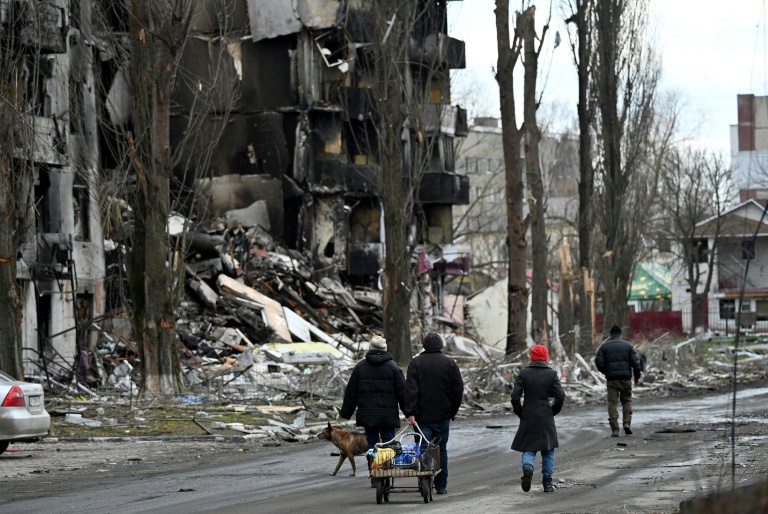
AFP reporters who briefly visited the area saw no bodies in the streets, but locals reported many deaths. The scale of devastation in the town saw buildings flayed open.

“I know five civilians were killed,” said 58-year-old Rafik Azimov. “But we don’t know how many more are left in the basements of the ruined buildings after the bombardments.”

“I buried six people,” another resident, Volodymyr Nahornyi, said. “More people are under the ruins.”

Ukraine has warned that Moscow is preparing a “full-scale” attack in the country’s east and regional officials urged civilians to evacuate Lugansk fearing a major Russian attack.

Even where troops have withdrawn, fears remain, with Kyiv’s Mayor Vitali Klitschko telling residents to not yet return, citing the danger of continued shelling and the danger of unexploded munitions.

On Monday, officials in Mykolaiv, on the Black Sea not far from Odessa, said cluster bombs were used against the city in strikes that killed 10 civilians and wounded 46.

A 2008 UN convention bans the production and use of cluster bombs, which kill indiscriminately, but it has not been signed by Russia or Ukraine.

Elsewhere in the south, concerns remain for civilians trapped in the besieged city of Mariupol, which has been besieged by Russian forces for over a month, and where authorities say at least 5,000 people have been killed. 

The Red Cross said Tuesday that Russian forces had released a team sent to help evacuate Mariupol residents that was detained en route Monday.

burs/js/jm

Pakistan court adjourns again on PM Khan no-confidence saga

Pakistan’s supreme court adjourned Tuesday without ruling on the legality of political manoeuvres that led Prime Minister Imran Khan to dissolve the national assembly and call fresh elections.

The court, which will resume Wednesday, must decide if the deputy speaker of the assembly violated the constitution by refusing to allow a no-confidence vote against Khan at the weekend.

Had the vote taken place Khan was certain to have been booted from office, but the move allowed him to get the presidency — a largely ceremonial role held by a loyalist — to dissolve parliament and order an election, which must be held within 90 days.

President Arif Alvi upped the ante Tuesday by issuing a letter to the opposition saying if they did not nominate a candidate for interim prime minister, the process would continue without them.

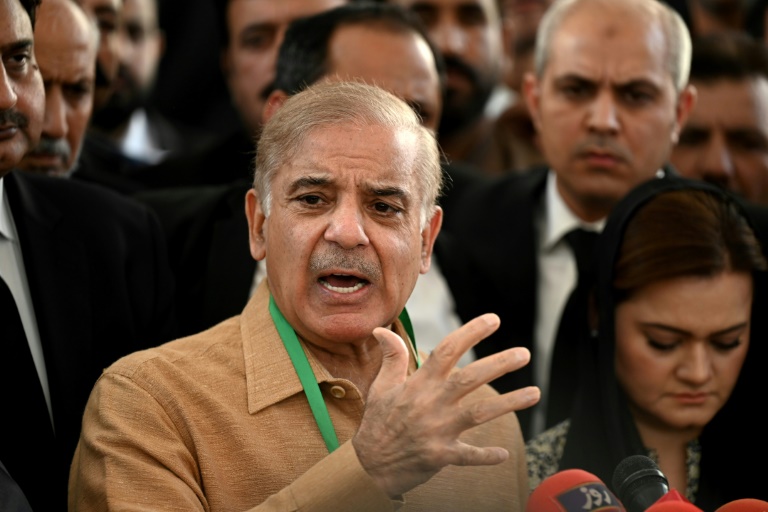
Shehbaz Sharif, who would have replaced Khan had Sunday’s vote taken place, said he would not participate.

“The main issue is that the constitution has been abrogated,” he told reporters outside the court.

“If we don’t get a remedy then Pakistan will, God forbid, become a banana republic.”

Khan has already nominated former chief justice Gulzar Ahmad for the role.

Nuclear-armed Pakistan has been wracked by political crises for much of its 75-year existence, and no prime minister has ever seen out a full term.

There had been high hopes for Khan when he was elected in 2018 on a promise of sweeping away decades of entrenched corruption and cronyism, but he has struggled to maintain support with soaring inflation, a feeble rupee and crippling debt.

– ‘Foreign interference’ –

The opposition had expected to take power on Sunday after mustering enough support to oust him, but the deputy speaker refused to allow the vote to proceed because of alleged “foreign interference”.

Khan said the opposition had gone too far by colluding with the United States for “regime change”.

The cricket star turned politician says Western powers want him removed because he will not stand with them against Russia and China, and the issue is sure to ignite any forthcoming election.

Washington has denied any interference.

On Tuesday Khan ramped up the anti-US rhetoric, calling for protests to “send a message to America, and those traitors who are a part of it here, so they should know that we are a free country and will never let this conspiracy succeed”.

It is unclear when the court will rule on the issue — or if Khan would even accept its decision — but there is precedent.

In 1988, Muhammad Khan Junejo appealed to the court after the assembly was dissolved by then president General Zia-ul-Haq, who had taken power in a military coup years earlier.

It agreed his government had been dissolved unconstitutionally, but ruled that since elections had been announced anyway it was best to move on.

In 1993, the court ruled president Ghulam Ishaq Khan had also illegally dissolved the assembly — then with Nawaz Sharif as prime minister.

Although the government resumed business, it lasted less than two months before being dissolved again.

The supreme court is ostensibly independent, but rights activists say previous benches have been used by civilian and military administrations to do their bidding throughout Pakistan’s history.

Publicly the military appears to be keeping out of the current fray, but there have been four coups since independence in 1947 and the country has spent more than three decades under army rule.

On Tuesday the court said it would not “indulge in the matter of state policy or foreign policy” in making a decision.

“Our concern is the legality of the ruling of the speaker,” said Chief Justice Umar Ata Bandial.

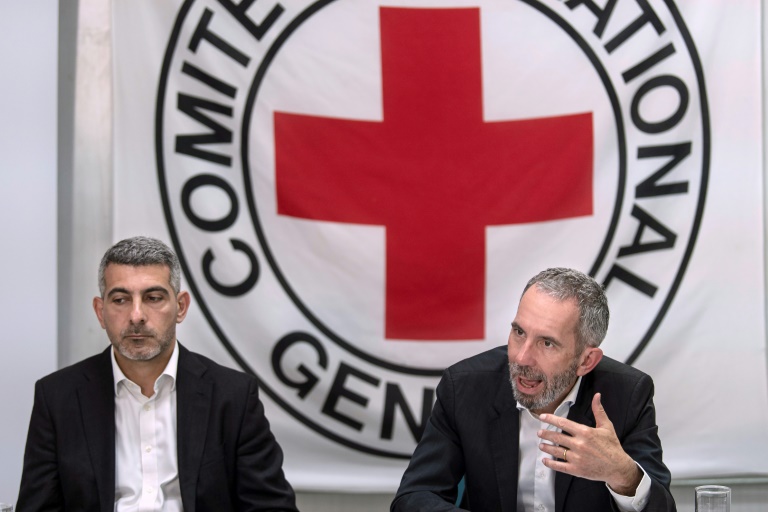
Hunger crisis across Africa 'going unnoticed,' says Red Cross

The International Committee of the Red Cross warned Tuesday that a major hunger crisis in Africa is “going largely unnoticed” as the world focuses on Ukraine and other crises.

Some 346 million people — more than one in four people across Africa — are suffering from “alarming” hunger and that number will probably rise in the coming months, the ICRC said.

The crisis spans the continent from drought-ravaged Somalia and Ethiopia in the east to Mauritania and Burkina Faso in the west, it said.

But, it warned, funding to assist millions going without meals is in short supply.

“This is a disaster going largely unnoticed. Millions of families are going hungry and children are dying because of malnutrition,” ICRC head of global operations Dominik Stillhart told reporters in Nairobi.

He said global attention on the “terrible” plight of civilians in Ukraine “should not prevent the world from looking at other crises.”

The conflict in Ukraine has also contributed to rising food and fuel costs and supply chain disruptions, amplifying the economic effect of the coronavirus pandemic, the ICRC added.

The ICRC has budgeted $1 billion euros ($1.1 billion) this year for its humanitarian response across Africa but faces a $800-million-euro shortfall.

“We are scaling up our operations… to help as many people as we can, but the number of people going without food and water is staggering,” said Stillhart.

The UN’s World Food Programme (WFP) warned last month that over 70 percent of South Sudan’s population would face extreme hunger this year because of natural disasters and armed instability.

More than six million people in eastern and southern Ethiopia would need “life-saving” interventions this year as the region suffers its worst drought in decades, the UN said in January.

In Burkina Faso, the number of people displaced by hunger had more than doubled in the past year.

Stillhart also warned about the underlying impact on harvests from climate change.

“The current food security crisis is clearly the result of combined effects of conflict… but it is also the effect of repeated climate shocks,” he said.

'Drive My Car' director ready for Hollywood 'challenge'

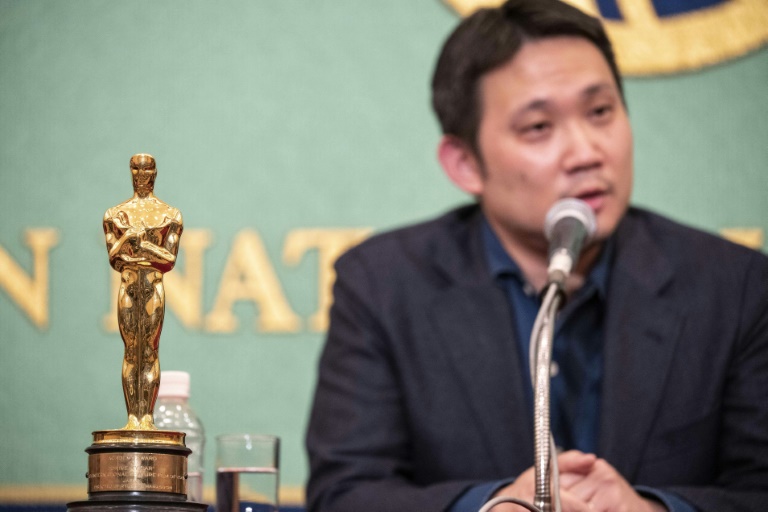
Japanese director Ryusuke Hamaguchi, whose “Drive My Car” won this year’s best international film Oscar, said Tuesday he is ready to “take on the challenge” of a Hollywood blockbuster.

The 43-year-old said he was still in shock over the film’s Oscar win.

“Until the very last minute, I was convinced that the Oscars and my life were two things that had absolutely nothing in common,” he told reporters in Tokyo at a press conference with the film’s lead Hidetoshi Nishijima.

The 51-year-old actor said he thought the film’s success was due in part to its universality and “the fact that the main character has lost someone dear and is trying to continue living nonetheless”.

Inspired by a work by famed author Haruki Murakami, the three-hour film scooped multiple honours en route to its Oscars triumph, including Golden Globes and a Bafta.

Hamaguchi said he had received some counsel from fellow director Chloe Zhao, whose “Nomadland” was the toast of the Oscars last year and who went on to direct Marvel superhero movie “The Eternals”.

“She told me ‘Stay sane,’ and I found these words very important,” said Hamaguchi, adding that he felt ready to “take on the challenge” of a Hollywood blockbuster, if offered the opportunity.

Taking on such a project would depend on the subject of the film and whether conditions would allow him to “keep my feet firmly on the ground”, he added.

Hamaguchi is the fifth Japanese director to have a film receive the foreign-language Oscar, along with the likes of cinema icon Akira Kurosawa, whose “Rashomon” won in 1952.

“Drive My Car” was also nominated for best director and best adapted screenplay, as well as best picture — a first in the history of Japanese cinema.

Germany closes Russian darknet marketplace Hydra

German police said Tuesday they have taken down Russian-language illegal darknet marketplace Hydra, the largest such network in the world, and seized bitcoins worth 23 million euros ($25 million).

Founded in 2015, Hydra sold illegal drugs but also stolen credit card data, counterfeit currency and fake identity documents, masking the identities of those involved using the Tor encryption network.

The marketplace had around 17 million customer accounts and over 19,000 vendor accounts, according to the BKA federal police.

“The Hydra market was probably the illegal marketplace with the highest turnover worldwide” with sales amounting to at least 1.23 billion euros in 2020 alone, it said in a statement.

Investigators have taken control of Hydra’s servers in Germany and the marketplace has been “shut down”, the BKA said.

Suspects are being investigated for “operating criminal trading platforms on the internet on a commercial basis”, the BKA said. 

Investigators do not know whether Hydra also has servers in other countries but “assume this was the main hub” of the network’s infrastructure, a spokesman for Frankfurt prosecution service’s internet crime office ZIT told AFP.

Investigations into the illegal marketplace started in August 2021 and also involved several US authorities, according to the BKA.

The “Bitcoin Bank Mixer” provided by the platform, a service for concealing digital transactions, had made investigations especially difficult, it added. 

The BKA said it had published a seizure banner on the marketplace’s website.

– ‘Uniquely sophisticated operations’ –

The secret “darknet” includes websites that can be accessed only with specific software or authorisations, ensuring anonymity for users.

Such networks have faced increased pressure from international law enforcement after a boom in usage during the coronavirus pandemic.

The United States, Russia, Ukraine and China dominate in terms of value both sent to and received from darknet markets, according to a 2021 report from blockchain forensics firm Chainalysis.

Hydra accounted for 75 percent of sales in the global darknet market in 2020, the report said.

“Hydra is a big driver of Eastern Europe’s unique crypto crime landscape. Eastern Europe has one of the highest rates of cryptocurrency transaction volume associated with criminal activity,” it said.

The marketplace had become particularly popular with users by developing creative delivery methods, the Chainalysis report added.

“Hydra has developed uniquely sophisticated operations, such as an Uber-like system for assigning drug deliveries to anonymous couriers, who drop off their packages in out-of-the-way, hidden public locations, commonly referred to as ‘drops’,” it said. 

“That way, no physical exchange is made, and unlike with traditional darknet markets, vendors don’t need to risk using the postal system.”

A German-led police sting also last year took down notorious darknet marketplace DarkMarket, which had nearly 500,000 users and more than 2,400 vendors worldwide.

The marketplace had offered for sale “all kinds of drugs” as well as “counterfeit money, stolen and fake credit card data, anonymous SIM cards, malware and much more”, prosecutors said.

Sri Lanka president loses parliament majority as protests mount

Sri Lanka’s president lost his parliamentary majority Tuesday as former allies urged his resignation, following days of street protests over the island nation’s crippling economic crisis.

Severe shortages of food, fuel and other essentials — along with record inflation and crippling power cuts — have inflicted widespread misery in the country’s most painful downturn since independence from Britain in 1948.

President Gotabaya Rajapaksa’s once-powerful ruling coalition is in turmoil after a string of defections, capped Tuesday by the new finance minister’s resignation just one day after taking office.

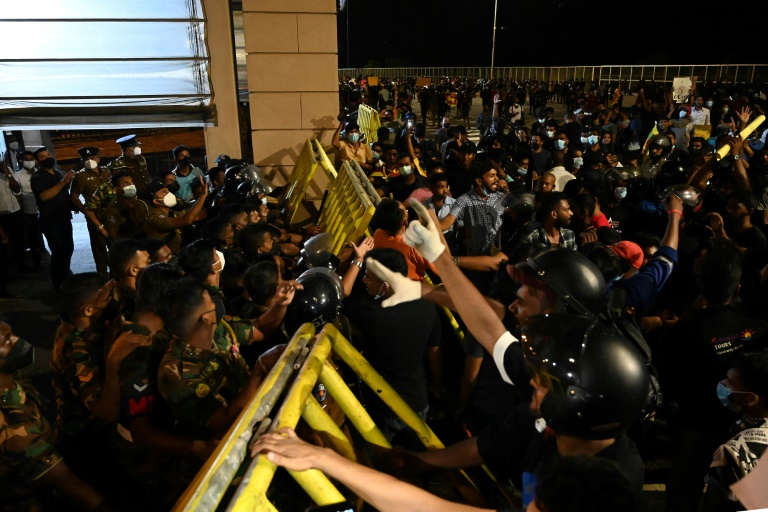
Public anger is at a fever pitch, with crowds attempting to storm the homes of several government figures since the weekend and large demonstrations elsewhere.

“If we don’t act now, there will be a river of blood in the country,” said Wijeyadasa Rajapakshe, a newly independent lawmaker who broke ranks with the president’s party and joined calls for the leader to step down.

“We have to forget party politics and ensure an interim government.”

Tuesday’s parliamentary session was the first since dozens of MPs withdrew their support for Rajapaksa’s government, including 16 lawmakers from the president’s own Sri Lanka Podujana Party (SLPP).

The government is now five short of a majority in the 225-member house, but there has been no clear signal that legislators will attempt a no-confidence motion that would compel it to resign.

Opposition parties have already rebuffed Rajapaksa’s call to join a unity administration helmed by him and his elder brother, Prime Minister Mahinda Rajapaksa.

Their government imposed a state of emergency last week in an effort to quell rising street protests, but the ordinance is set to expire next week unless ratified by parliament. 

Rejecting calls for a vote on the emergency decree, the government cut short Tuesday’s parliamentary session more than two hours before its scheduled finish. 

Nimal Lanza, a former minister who has also abandoned Rajapaksa’s administration, conceded that the ruling party no longer had a mandate to govern and threw his support behind the crowds calling for the president’s resignation.

“I beg and appeal to you to take the side of the protesters,” he told parliament, addressing the prime minister, who attended the session but remained silent. 

Every member of Sri Lanka’s cabinet except the president and prime minister resigned late Sunday.

Former justice minister Ali Sabry was appointed to helm the finance ministry on Monday, replacing the president’s brother Basil Rajapaksa, but abruptly resigned after just one day in office.

“Whilst I regret the inconvenience caused, I believe I have always acted in the best interests of the country,” Sabry said in a statement.

The ministry’s top civil servant also resigned Tuesday, a day after the central bank governor quit. 

– ‘Cry of the people’ –

Boisterous demonstrations have spread across the country of 22 million despite the emergency laws allowing troops to detain participants and a weekend curfew that lapsed on Monday morning. 

Crowds have attempted to storm the homes of more than a dozen government figures, including the president’s house in Colombo.

Protesters there torched the vehicles of security forces, who responded by firing rubber bullets and tear gas.

Most demonstrations have been peaceful, with Catholic clergy and nuns led by Sri Lanka’s Cardinal Malcolm Ranjith leading a procession in the capital.

“This is a valuable country with intelligent people. But our intelligence, the people’s intelligence, has been insulted by corruption,” Ranjith said. 

“Therefore now we call out… please now listen to the cry of the people and step down.”

A critical lack of foreign currency has left Sri Lanka struggling to service its ballooning $51 billion foreign debt, with the pandemic torpedoing vital revenue from tourism and remittances.

The result has seen unprecedented shortages with no sign of an end to the economic woes.

Economists say Sri Lanka’s crisis has been exacerbated by government mismanagement, years of accumulated borrowing and ill-advised tax cuts.

Close Bitnami banner
Bitnami