World

Pakistan constitution wrangle drags on in court

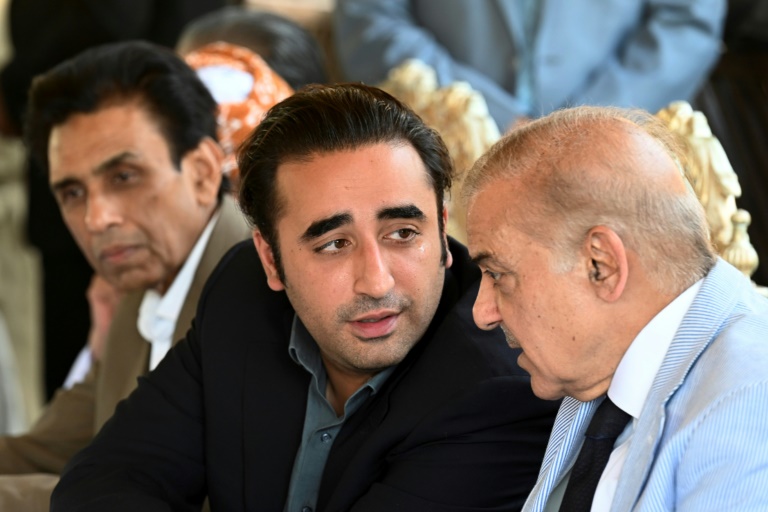
Pakistan’s supreme court was sitting Tuesday for a second day to rule on the legality of political manoeuvres that led Prime Minister Imran Khan to dissolve the national assembly and call fresh elections.

The court must decide if the deputy speaker of the assembly violated the constitution by refusing to allow a no-confidence vote against Khan at the weekend.

The move allowed Khan to get the presidency — a largely ceremonial role taken by a loyalist — to dissolve parliament and order an election, which must be held within 90 days.

Had the vote taken place, Khan was certain to have been booted from office.

President Arif Alvi upped the ante Tuesday by issuing a letter to the opposition saying if they didn’t nominate a candidate for interim prime minister, the process would continue without them.

Shehbaz Sharif, who would have replaced Khan had Sunday’s vote taken place, said he wouldn’t participate.

“The main issue is that the constitution has been abrogated,” he told reporters.

“If we don’t get a remedy then Pakistan will, God forbid, become a banana republic.”

Khan has already nominated former chief justice Gulzar Ahmad for the role.

Pakistan has been wracked by political crisis for much of its 75-year existence, and no prime minister has ever seen out a full term.

There had been high hopes for Khan when he was elected in 2018 on a promise of sweeping away decades of entrenched corruption and cronyism, but he has struggled to maintain support with soaring inflation, a feeble rupee and crippling debt.

The opposition had expected to take power on Sunday after mustering enough support to oust him, but the deputy speaker refused to allow the vote to proceed because of alleged “foreign interference”.

Khan said the opposition had gone too far by colluding with the United States for “regime change”.

The cricket star-turned-politician says Western powers want him removed because he won’t stand with them against Russia and China, and the issue is sure to ignite any forthcoming election.

Washington has denied any interference.

It is unclear when the court will rule on the issue — or if Khan would even accept its decision — but there is precedent.

In 1988, Muhammad Khan Junejo appealed to the supreme court after the assembly was dissolved by then-president General Zia-ul-Haq, who had taken power in a military coup years earlier.

The court agreed his government had been dissolved unconstitutionally, but ruled that since elections had been announced anyway it was best to move on.

In 1993, it ruled president Ghulam Ishaq Khan had also illegally dissolved the assembly, then with Nawaz Sharif as prime minister.

Although the government resumed business, it lasted less than two months before being dissolved again.

The supreme court is ostensibly independent, but rights activists say previous benches have been used by civilian and military administrations to do their bidding throughout Pakistan’s history.

Publicly the military appears to be keeping out of the current fray, but there have been four coups since independence in 1947, and the country has spent more than three decades under army rule.

El Salvador president says 6,000 gang members arrested

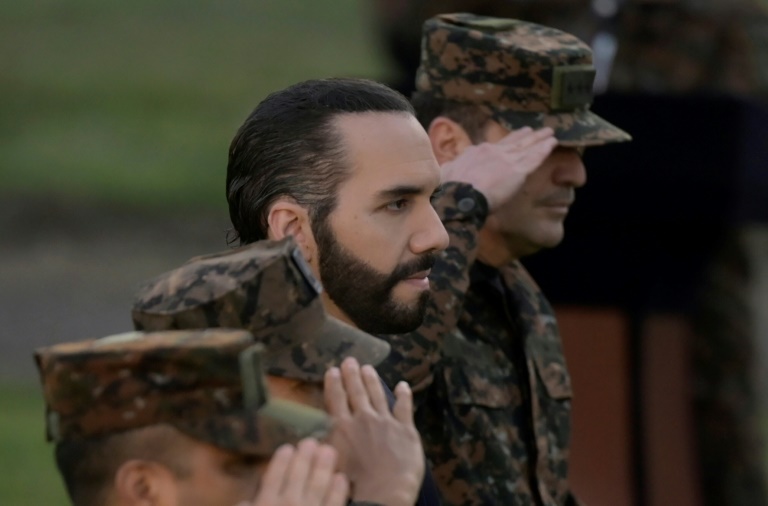
More than 6,000 gang members have been detained in the first nine days of a state of emergency in El Salvador, President Nayib Bukele said Monday, after imposing the measures to stamp out a soaring homicide wave.

The Central American country declared the emergency measures — allowing the arrest of gang members without a warrant — last week after 87 reported killings from March 25 to 27.

And on Monday the president said the 6,000 detained in a little over a week added to the 16,000 gang members already incarcerated in El Salvador’s prisons.

Speaking at a police barracks in the capital San Salvador, Bukele addressed public concerns of gangs “taking revenge” on the population due to the massive arrest operations. 

If they commit an act of revenge, “there will not be even one meal in the prisons,” the president said. 

“I swear to God that they will not eat a single grain of rice, and we will see how long they last, and I don’t care what international organizations say,” he added.

Besides arrests without a warrant, the emergency measures — which last one month — also restrict freedom of assembly, while telephone calls and emails can be intercepted without a court order.

Such broad and swift enactment of powers granted to the military and police has drawn alarm from local and international human rights organizations.

Bukele added that he had ordered the construction of a maximum-security prison with a capacity of 20,000 inmates. 

“There are only two ways: jail or death,” he said.

The 40-year-old president, elected in 2019, enjoys broad support in El Salvador over his promises to fight organized crime and improve security in the violence-wracked country.

Last week, the ruling party-controlled parliament reformed the penal code to increase the maximum sentence for gang membership from nine to 45 years in prison.

Peru president imposes curfew in Lima, Callao after protests

Peruvian President Pedro Castillo announced a curfew for Tuesday in the capital Lima and neighboring port city Callao, after demonstrations across the country over fuel prices caused roadblocks and “acts of violence”.

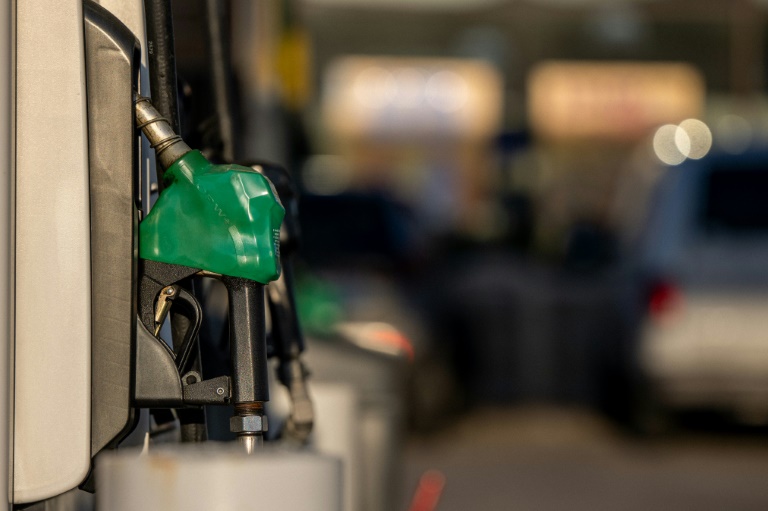
Protests had erupted across Peru in recent days due to a hike in fuel prices and tolls, during a time of rising food prices.

In an attempt to appease protesters, the government eliminated the fuel tax over the weekend.

But truckers and other transport workers took to the streets again Monday in Lima, as well as several regions in the north — from the coastal city Piura to the densely forested Amazonas.

Castillo announced late Monday that Peru’s Council of Ministers had approved a curfew for the following day.

“In view of the acts of violence that some groups have wanted to create… and in order to reestablish peace… the Council of Ministers has approved the declaration of citizen immobility (curfew) from 2:00 am to 11:59 pm on Tuesday, April 5,” he said in a televised message.

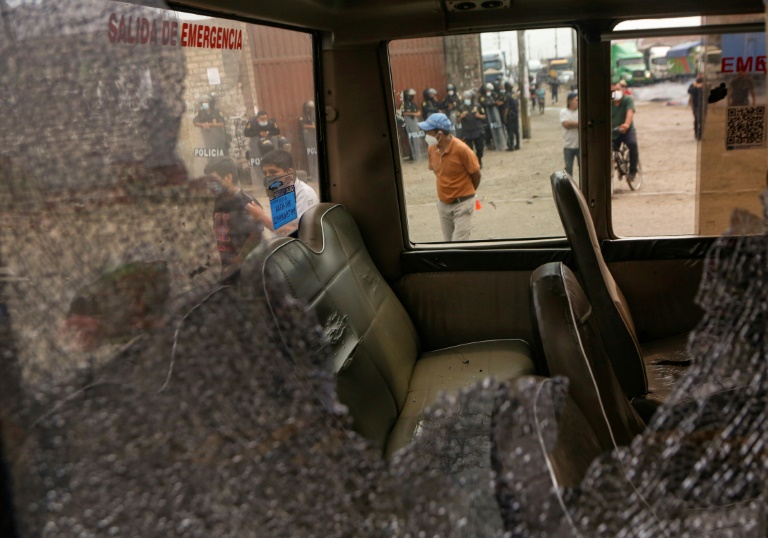
There have been several violent incidents during recent protests, including the burning of toll booths on highways, looting and clashes with police.

Protesters had also set fire to tires and blocked the Pan-American highway, the country’s most important transport and traffic artery snaking north to south, and school was suspended. 

“I call for calm and serenity,” the leftist president said during his brief appearance on television. 

“Social protest is a constitutional right, but it must be done within the law.”

– ‘Lack of direction’ –

The 52-year-old former teacher announced the curfew a week after he was saved from being impeached by Congress, where opponents accused his administration of having a “lack of direction” and for allegedly allowing corruption in his entourage.

The impeachment attempt last week was the second during Castillo’s eight-month administration in a country with a recent history of ousting presidents.

Castillo’s action to impose movement restrictions — which will cover more than 10 million residents in Lima and Callao — was met with immediate repudiation. 

“A curfew to reestablish order — (this is) an authoritarian measure of Pedro Castillo’s government that shows ineptitude, incapacity to govern,” political analyst Luis Benavente told AFP. 

“It is like putting an end to traffic accidents by taking vehicles off the roads.”

Tuesday’s curfew measures coincide with the 30th anniversary of a coup staged by ex-president Alberto Fujimori, a controversial figure now jailed after a regime marked by a bloody campaign against insurgents. 

“The measure dictated by President Pedro Castillo is openly unconstitutional, disproportionate and violates people’s right to individual freedom,” tweeted lawyer Carlos Rivera, one of the defenders of the victims of Fujimori’s government.

– Fuel and wage woes –

Like much of the rest of the world, Peru’s economy is still recovering from the damages wrought by the coronavirus pandemic.

The country’s Consumer Price Index in March saw its highest monthly increase in 26 years, driven by soaring food, transport and education prices, according to the national statistics institute. 

The multi-region demonstration was largely organized by the Union of Multimodal Transport Guilds of Peru.

To appease them the government eliminated the fuel tax over the weekend, and Castillo decreed a 10 percent increase in the monthly minimum wage — which would rise to 1,025 soles ($277) beginning in May.

But the General Confederation of Peruvian Workers, the country’s main trade union confederation, rejected the wage hike, stating it was insufficient, and called on its affiliates to march on Thursday.

Influential journalist Rosa Maria Palacios said on Twitter that Castillo’s 11th-hour announcement of a curfew only revealed how the government had “lost all control of public order”. 

“By denying them the right to work, without any real cause, Castillo has put himself in a situation of absolute vulnerability,” she warned.

Zelensky to address UN Security Council over Russian 'genocide'

Ukraine’s President Volodymyr Zelensky will address the UN Security Council on Tuesday, where he is expected to demand tough new sanctions on Moscow over killings in the town of Bucha that he has called “war crimes” and “genocide”.

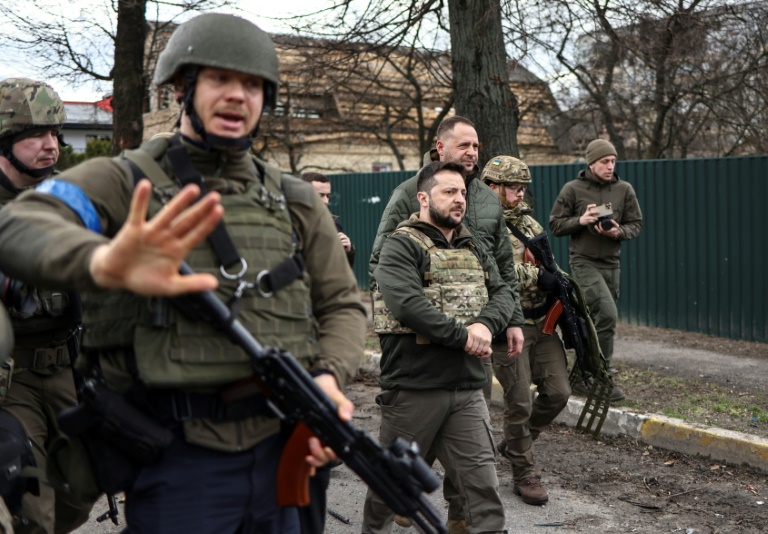
The speech, Zelensky’s first to the body since Russia’s invasion, comes after he made an emotional trip to Bucha, where dozens of bodies were discovered after the withdrawal of Russian troops.

Horrific images of corpses lying in the streets, some with their hands bound behind them, have drawn international condemnation of Russia.

Moscow has denied responsibility and suggested the images are fake or that the deaths occurred after Russian forces pulled out of the area.

But newly released satellite photographs taken by Maxar Technologies in mid-March, before the Russian withdrawal, showed what appeared to be bodies in some of the same places they were later found by Ukrainian troops and seen by journalists. 

On Monday, wearing body armour and visibly distressed, Zelensky spent half an hour in Bucha, where he blamed Russian troops for the killings.

“These are war crimes and it will be recognised by the world as genocide,” he said.

Later in his nightly address, he said “the sanctions response to Russia’s massacre of civilians must finally be powerful”. 

“But… did hundreds of our people have to die in agony for some European leaders to finally understand that the Russian state deserves the most severe pressure?” he asked in the video posted to Telegram. 

He also called for additional weapons from Western allies, saying more equipment could have saved thousands.  

“I do not blame you -– I blame only the Russian military,” he said. “But you could have helped.”

– More sanctions ‘this week’ –

Ukraine’s allies have called the killings in Bucha war crimes, with the EU offering to send investigators to gather evidence.

US President Joe Biden told reporters at the White House that there should be “a war crimes trial”, adding that Russian President Vladimir Putin “is a war criminal”.  

The White House said it would announce fresh sanctions on Moscow this week, with France suggesting new measures could target Russian oil and coal exports.

But Germany warned it was too soon to cut off Russian gas.

All economic ties to Russia would have to be severed, German Finance Minister Christian Lindner said, adding, “but at the moment, it’s not possible to cut the gas supplies. We need some time”.

Elsewhere, the United States and Britain said they would seek Russia’s suspension from the UN Human Rights Council — a move Moscow branded “unbelievable”. 

Russia has called for a UN Security Council meeting on what it dubbed the “heinous provocation of Ukrainian radicals in Bucha”, but Britain — which holds the Council presidency — has so far refused the request.

– More horrors emerge –

The full nature of the killings in Bucha and other areas from which Russian troops have withdrawn is still being pieced together.

On Monday, the bodies of five men were found in a children’s sanatorium basement in Bucha. The Ukrainian prosecutor general’s office said they were unarmed civilians, who had been bound, beaten and killed by Russian troops.

And in Motyzhyn, west of Kyiv, Ukrainian police showed AFP journalists the bodies of five civilians with their hands tied, including those of the village’s mayor, her husband and son.

Ukrainian officials say over 400 civilian bodies have been recovered from the Kyiv region, many of whom have been laid to rest in mass graves.

But Zelensky has warned that the deaths in Bucha could be only the tip of the iceberg, saying he had information that even more people had been killed in places like nearby Borodianka.

AFP reporters who briefly visited the area saw no bodies in the streets, but locals reported many deaths.

“I know five civilians were killed,” said 58-year-old Rafik Azimov. “But we don’t know how many more are left in the basements of the ruined buildings after the bombardments.”

“I buried six people,” another resident, Volodymyr Nahornyi, said. “More people are under the ruins.”

– ‘Cluster munitions’ in Mykolaiv –

The Russian withdrawal from Kyiv has been seen as a pivot to a renewed offensive in the country’s east and south, where Moscow wants to consolidate territory around occupied Crimea and the separatist statelets of Donetsk and Lugansk.

The Ukrainian government has warned that Moscow is preparing a “full-scale” attack in the country’s east and regional officials urged civilians to evacuate Lugansk fearing a major Russian attack.

The Pentagon estimates Russia has withdrawn about two-thirds of the troops it had around Kyiv and will redeploy them to the east and south, with the White House warning the war’s “next phase could be measured in months or longer”.

Even where troops have withdrawn, fears remain, with Kyiv Mayor Vitali Klitschko telling residents to wait before returning, citing the danger of continued shelling and the danger of unexploded munitions. 

Overnight, air raid sirens rang out across much of the country, from Lviv in the west to southern Mykolaiv, where officials said Monday that Russian strikes killed 10 civilians and wounded 46.

The General Staff of the Ukrainian Armed Forces said cluster munitions, which explode in the air and send dozens of small bomblets over a large area, were used on the city.

A 2008 UN convention bans the production and use of the weapons, but it has not been signed by Russia or Ukraine.

The Ukrainian army said residential and medical facilities, including a children’s hospital, were fired on. 

“There are dead and wounded, including children,” it said. 

Elsewhere in the south, concerns remain about civilians trapped in the besieged city of Mariupol.

Authorities say at least 5,000 people have been killed in the city, 90 percent of which has been destroyed, according to Mayor Vadym Boichenko.

Around 130,000 residents are still trapped inside, and efforts to evacuate them are now on hold because of “incessant” bombing, he said.

The Red Cross said Monday a team it sent to help get civilians out of Mariupol was being held by police in Russian-controlled territory.

Europe’s worst conflict in decades has killed as many as 20,000 people since Russia’s February 24 invasion, according to Ukrainian estimates.

More than 4.2 million Ukrainians have fled the country and about 6.5 million have been internally displaced, UN agencies say.

burs-reb/lb

Oil extends rally on Russia sanctions bets, stocks edge higher

Oil prices extended gains Tuesday on the prospect of further sanctions on Russia for alleged “atrocities” in some occupied Ukrainian cities, while equities edged up after a rally in New York and Europe.

European Union officials were discussing new measures against Moscow after reports — denied by the Kremlin — that troops had executed civilians.

Among the punishments could be a ban on imports of Russian crude, following a similar move by the United States and Britain.

White House National Security Advisor Jake Sullivan also signalled more US sanctions were on the way this week.

While Europe’s economy — particularly Germany’s — relies heavily on energy from Russia, the possibility of an embargo sent both main contracts sharply higher Monday, and they continued their rise in Asia, putting on more than one percent.

That pared some of the sharp losses seen Friday in reaction to a pledge by Washington and other major economies to unleash millions of barrels from their stockpiles to keep a lid on prices, which are fanning already high inflation.

It also offset an expected hit to demand in China from lockdowns in parts of the country — including Shanghai, the biggest city — sparked by a wave of Omicron outbreaks.

“In the wake of ‘Russian atrocities’ claims and the ensuing public outrage, there is a strong chance we could see another layer of sanctions on Russian energy,” said SPI Asset Management’s Stephen Innes. 

“The receptiveness on the part of Europe (including Germany) to refrain from importing Russian gas has put a bid under and should keep energy prices supported.”

The continued uncertainty caused by the war in Ukraine, and the blow to the global economy it is expected to deal, was unable to prevent another healthy performance on Wall Street, where the Nasdaq’s surge led all three main indexes higher.

“Despite all the concerns, equities remain the best bet to achieve returns above today’s elevated inflation,” said markets strategist Louis Navellier.

Trade was tepid in Asia, with Hong Kong, Shanghai and Taipei closed for holidays but most markets rose.

Tokyo, Sydney, Seoul, Singapore, Jakarta, Bangkok and Wellington were slightly up, though Mumbai and Manila dropped.

London, Paris and Frankfurt all opened on the front foot.

Traders will be keeping a close eye on the release this week of minutes from the Federal Reserve’s most recent policy meeting, hoping for an insight into officials’ thinking over monetary policy.

After last month’s expected 0.25 percentage point interest rate hike, there are increasing bets on a half-point lift in May in light of soaring inflation and strong jobs data that suggest the economy remains robust enough to absorb higher borrowing costs.

And National Australia Bank’s Tapas Strickland added: “Profit reporting season in the US kicks off next week and it will be interesting to see how firms are interpreting the tea leaves, and whether earnings guidance is revised down.”

– Key figures around 0720 GMT –

Tokyo – Nikkei 225: UP 0.2 percent at 27,787.98 (close)

Hong Kong – Hang Seng Index: Closed for a holiday

Shanghai – Composite: Closed for a holiday

London – FTSE 100: UP 0.1 percent at 7,567.98

Brent North Sea crude: UP 1.6 percent at $109.20 per barrel

West Texas Intermediate: UP 1.6 percent at $104.93 per barrel

Euro/dollar: UP at $1.0984 from $1.0978 late Monday

Pound/dollar: UP at $1.3142 from $1.3114

Euro/pound: DOWN at 83.56 pence from 83.65 pence

Dollar/yen: DOWN at 122.66 yen from 122.78 yen

New York – Dow: UP 0.3 percent at 34,921.88 (close)

Pakistan constitution wrangle drags on in court

Pakistan’s supreme court was to sit Tuesday for a second day to rule on the legality of political manoeuvres that led Prime Minister Imran Khan to dissolve the national assembly and call fresh elections.

The court must decide if the deputy speaker of the assembly violated the constitution by refusing to allow a no-confidence vote against Khan at the weekend.

The move allowed Khan to get the presidency — a largely ceremonial role taken by a loyalist — to dissolve parliament and order an election, which must be held within 90 days.

Had the vote taken place, Khan was certain to have been booted from office.

President Arif Alvi upped the ante Tuesday by issuing a letter to the opposition saying if they didn’t nominate a candidate for interim prime minister, the process would continue without them.

Khan has already nominated former chief justice Gulzar Ahmad for the role.

Pakistan has been wracked by political crisis for much of its 75-year existence, and no prime minister has ever seen out a full term.

There had been high hopes for Khan when he was elected in 2018 on a promise of sweeping away decades of entrenched corruption and cronyism, but he has struggled to maintain support with soaring inflation, a feeble rupee and crippling debt.

The opposition had expected to take power on Sunday after mustering enough support to oust him, but the deputy speaker refused to allow the vote to proceed because of alleged “foreign interference”.

Khan said the opposition had gone too far by colluding with the United States for “regime change”.

The cricket star-turned-politician says Western powers want him removed because he won’t stand with them against Russia and China, and the issue is sure to ignite any forthcoming election.

Washington has denied any interference.

It is unclear when the court will rule on the issue — or if Khan would even accept its decision — but there is precedent.

In 1988, Muhammad Khan Junejo appealed to the supreme court after the assembly was dissolved by then-president General Zia-ul-Haq, who had taken power in a military coup years earlier.

The court agreed his government had been dissolved unconstitutionally, but ruled that since elections had been announced anyway it was best to move on.

In 1993, it ruled president Ghulam Ishaq Khan had also illegally dissolved the assembly, then with Nawaz Sharif as prime minister.

Although the government resumed business, it lasted less than two months before being dissolved again.

The supreme court is ostensibly independent, but rights activists say previous benches have been used by civilian and military administrations to do their bidding throughout Pakistan’s history.

The military appears to be keeping out of the current fray, but there have been four coups — and at least as many unsuccessful ones — since independence in 1947, and the country has spent more than three decades under army rule.

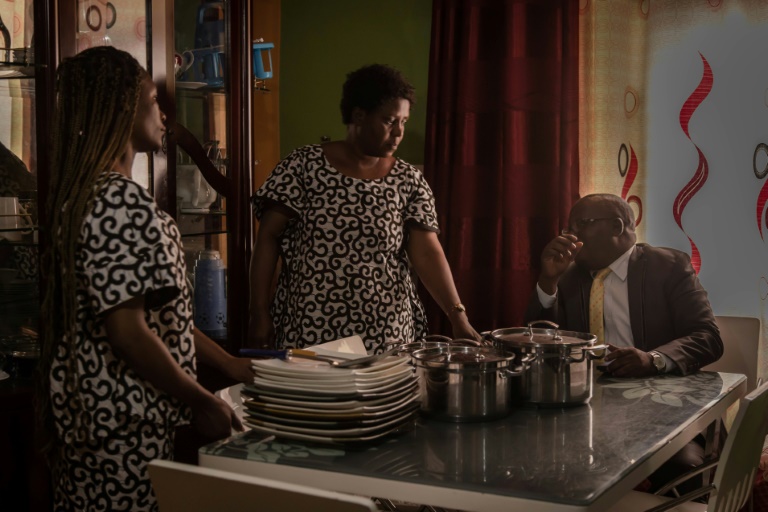
Tied in knots? Polygamy persists in DR Congo despite ban

“I can get married again — the dream is to get to seven wives,” said Congolese church pastor Chirhuza Zagabe, a husband to four spouses and father of 16 children.

In 2012, the 60-year-old married three women simultaneously in his church in eastern Democratic Republic of Congo. He repudiated one for “bad behaviour”, but now has four aged between 26 and 48 through other marriages.

Zagabe’s situation shows that polygamy persists in the vast central African country, where advocates strongly back the practice of being married to more than one person despite it having been officially outlawed for more than three decades.

Around two percent of the world’s population live in polygamous households, according to the American think tank, Pew Research Center.

The practice is most widespread in sub-Saharan Africa, where an estimated 11 percent of the population live in polygamous households. 

The proportion in DR Congo is two percent. Examples abound of Congolese men boasting about having a “second office” that everyone is aware of — even their first spouse.

When a video purporting to show a man marrying three women at the same time was posted on YouTube last month, the video went viral on social media.

It told the story of a young Congolese man who supposedly fell in love with a woman who had two look-alikes that were so convincing he ended up marrying all three.

It was false — but viewers apparently believed the story.

Some comments pitied the alleged groom. “He’s going to suffer”, wrote one reviewer. “We will have seen it all,” said another, while an admirer remarked: “The lad is strong.”

A cinema director from the eastern city of Goma revealed he was behind the film, which he says was based on a true story and used actors to raise the issue of polygamy.

– Traditional culture –

Every Sunday, Zagabe explains and praises the merits of polygamy in the Lord’s Primitive Church, which was established in 1983 and is one of DR Congo’s many religious sects.

A few dozen of his flock eagerly listen to his preaching in Bukavu, the capital of South Kivu province, with women on one side of the central aisle and men on the other.

Zagabe’s sermon claims humanity’s story started with one male and several females. “Instead of living in adultery and debauchery, God authorised man to have several wives,” he told AFP.

Three of the pastor’s wives live with him in Bukavu and the fourth in Bujumbura in neighbouring Burundi.

But other Christians challenge Zagabe’s interpretation of polygamy’s divinely ordained roots.

“Polygamy is a human institution that goes far back in our traditional African and Congolese culture. It’s not a divine institution,” said Raymond Kongolo, a Catholic priest in Bukavu.

DR Congo’s constitution and family code have clearly stated since 1987 that polygamy is an offence, according to Joseph Yav, a lawyer and law professor in the southern city of Lubumbashi. 

“Marriage in DR Congo is monogamous,” he stressed. But polygamy “is present and practised in Congolese traditions, notwithstanding the formal legal ban”.

– ‘Blessed by God’ –

Among Zagabe’s congregation was Kalungu Kalebe, who has two wives and eight children. Rather than transgressing the law, the 40-year-old believes he is “blessed by God”.

“I must follow David, Abraham and Solomon, who married several wives,” he said, referring to Biblical prophets.

Fellow parishioner Nathanaelle, 15, said she was “ready” to wed a man with other wives. “That doesn’t bother me at all,” she added.

Rakel, one of Zagabe’s wives, sees the children of his other spouses as her own, in addition to the three offspring she has borne him.

Another of Zagabe’s wives, Yaelle, said she lives in harmony with his other spouses. But she noticed that neighbours who used to visit her when she was the only wife in the household have since stopped coming. “They fled from us,” Yaelle said.

“This polygamy business is a deviation in our society, it’s unthinkable!” said Nicolas Lubala, a 42-year-old Catholic who accuses the Kinshasa-headquartered Primitive Church of “contributing to moral depravation”.

Mathilde, 23, was clear that marrying a bigamous man was “impossible”. “In polygamy, there are too many problems, discord between the wives, the children,” she said.

But “if the man has money and other wives, getting attached to him isn’t troubling”.

Peru president imposes curfew in Lima, Callao after protests

Peruvian President Pedro Castillo announced a curfew for Tuesday for the capital Lima and neighboring port city Callao following a demonstration that caused roadblocks and “acts of violence”. 

Protests had erupted across the country in recent days due to a hike in fuel prices and tolls, during a period in which Peru is also suffering from a rise in food prices. 

In an attempt to appease protesters, the government eliminated the fuel tax over the weekend.

But Monday’s demonstration saw truckers and passenger carrier drivers continue to take to the streets in Lima, as well as several regions in the north — from the coastal city Piura to the densely forested Amazonas.

Castillo announced late Monday that Peru’s Council of Ministers had approved a curfew for the following day. 

“In view of the acts of violence that some groups have wanted to create… and in order to reestablish peace… the Council of Ministers has approved the declaration of citizen immobility (curfew) from 2:00 am to 11:59 pm on Tuesday, April 5,” he said in a televised message.

Several violent incidents, including the burning of toll booths on highways, looting in stores and clashes between protesters and police occurred during the first such stoppage faced by Castillo’s leftist government.

Protesters had also blocked the Pan-American highway, the country’s most important transport and traffic artery snaking north to south, and school had been suspended. 

“I call for calm and serenity,” he said during his brief appearance on television. 

“Social protest is a constitutional right, but it must be done within the law.”

– Fuel and wage woes –

The United States embassy in Peru had issued an “alert” on the demonstrations earlier Monday, calling for Americans to “avoid the areas”. 

“Past demonstrations in Lima have turned violent,” it said. 

The multi-region demonstration was largely organised by the Union of Multimodal Transport Guilds of Peru, angered by a recent hike in fuel prices. 

The government had eliminated the fuel tax over the weekend, and Castillo had also decreed a 10 percent increase in the monthly minimum wage — which would rise to 1,025 soles ($277) beginning in May. 

But the General Confederation of Peruvian Workers, the country’s main trade union confederation, rejected the wage hike, stating it is insufficient. 

It has called on its affiliates to march on Thursday.

The embattled Castillo had survived an impeachment attempt by congress last week, the second time during his eight-month administration in a country with a recent history of ousting its presidents.

Sri Lanka parliament reconvenes after state of emergency

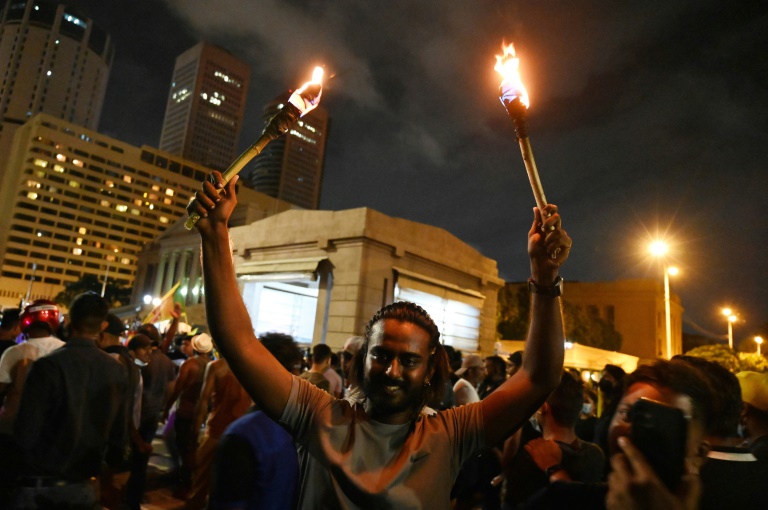
Sri Lanka’s parliament will convene Tuesday in its first session since a state of emergency was imposed as the country grapples with protests and mounting demands for the president’s resignation over a worsening economic crisis.

Severe shortages of food, fuel and other essentials — along with record inflation and crippling power cuts — have inflicted widespread misery across the island nation, which is enduring its most painful downturn since independence from Britain in 1948.

President Gotabaya Rajapaksa’s once-powerful SLPP ruling coalition suffered a string of defections ahead of the parliamentary session, undermining his ability to ratify a state of emergency imposed on Friday to quell the growing public protests. 

The state of emergency is due to expire on Thursday next week unless it is ratified in a parliamentary vote.

As parliament reconvenes, the speaker is obliged to officially inform MPs that the state of emergency has been declared, raising the prospect of opposition demands it be put to a vote immediately — which the government would likely lose.

All opposition parties and even some lawmakers from Rajapaksa’s own party have announced their intention to vote against extending the ordinance.

“Our party no longer has a mandate to govern,” former minister Nimal Lanza told reporters in the town of Negombo, adding that about 50 lawmakers previously allied with the government would instead sit as independents. 

Every member of Sri Lanka’s cabinet except the president and his elder brother, Prime Minister Mahinda Rajapaksa, resigned late on Sunday.

But an overture to opposition parties requesting their participation in a unity government was swiftly rejected the next day.

“We will not be joining this government,” Eran Wickramaratne of the main opposition Samagi Jana Balawegaya (SJB) party told AFP. “The Rajapaksa family must step down.”

Boisterous demonstrations have spread across the country of 22 million despite emergency laws allowing troops to detain participants and a weekend curfew that lapsed on Monday morning. 

Crowds have attempted to storm the homes of over a dozen government figures including the president’s house in Colombo, where protesters torched the vehicles of security forces, who responded by firing rubber bullets and tear gas 

However, Wickramaratne told AFP on Monday that the opposition would not be voting for the emergency orders. “We’ll see what happens tomorrow, it is going to be a decisive day.”

A critical lack of foreign currency has left Sri Lanka struggling to service its ballooning $51 billion foreign debt, with the pandemic torpedoing vital revenue from tourism and remittances.

The result has seen unprecedented food and fuel shortages along with record inflation and crippling power cuts, with no sign of an end to the economic woes.

Economists say Sri Lanka’s crisis has been exacerbated by government mismanagement, years of accumulated borrowing and ill-advised tax cuts.

The government plans to negotiate an IMF bailout, but talks are yet to begin.

War in Ukraine: Latest developments

Here are the latest developments in the war in Ukraine:

– Zelensky to address UN –

Ukrainian President Volodymyr Zelensky addresses the United Nations Security Council later on Tuesday for the first time since the invasion of his country.

It was not immediately clear if his speech would be recorded or live but it was expected to discuss the grisly discovery of hundreds of deaths in areas around Kyiv from which Moscow has withdrawn.

Zelensky has accused Moscow of war crimes and “genocide” and is seeking stronger international pressure on Russia.

– Satellite images show bodies –

Satellite images taken in mid-March and released by the firm Maxar Technologies appear to show bodies lying in the streets of Bucha, potentially rebutting claims by Russia that the deaths occurred after its withdrawal from the town.

Moscow has systematically denied responsibility for civilian deaths in the area, claiming images were “fakes” and that any killings came after Ukrainian forces entered Bucha.

– War crimes trial sought –

US President Joe Biden calls for a war crimes trial and more sanctions on Russia over the deaths in Bucha, while European Commission chief Ursula von der Leyen says the EU is ready to send a team of investigators to gather evidence.

– More deaths uncovered –

Ukrainian authorities say they have found the bodies of five civilians with their hands tied in a village west of Kiev, including those of the mayor, her husband and son.

Police show AFP journalists four bodies, including that of the mayor, half buried in a grave in a pine forest bordering her house in Motyzhyn. A fifth body is located in a nearby well.

Ukrainian prosecutor general Iryna Venediktova says on Twitter that the bodies of five men tortured and killed by Russian troops have been found in the basement of a children’s health resort in Bucha.

– Kyiv mayor warns against returns –

Kyiv’s mayor Vitali Klitschko warns residents who fled the capital not to return for “at least another week”, cautioning that explosives laid around the area are still a threat.

Some areas are also under curfew and he says he cannot “rule out the possibility of rocket fire”.

– ‘Big attack’ coming in East –

Russian troops are preparing for a big attack in the Lugansk region of eastern Ukraine, the local governor Sergiy Gaiday says on Telegram.

“We see that equipment is coming from different directions, they are bringing manpower, they are bringing fuel,” he says, adding that Russia is “preparing for a full-scale big breakthrough”.

A senior Pentagon official says Russia has removed about two-thirds of the troops it had around Kyiv, mostly sent back to Belarus with plans to redeploy elsewhere in Ukraine.

The White House warns the next phase of the war could last “months or longer”.

– Mariupol destroyed –

The southeastern port city of Mariupol has been “90 percent” destroyed after being besieged by Russian forces, its mayor Vadym Boichenko says, adding 40 percent is “unrecoverable”. 

Around 130,000 people remain trapped in the city, which continues to be pounded by Russian bombardments, he says.

The Red Cross, which has tried and failed to evacuate people from the city, says a team sent to help get civilians out was being held by police in Russian-controlled territory.

– More sanctions –

The White House says more sanctions against Russia will be announced “this week”, and the EU’s foreign policy chief Josep Borrell says the bloc is urgently discussing further measures.  

French President Emmanuel Macron says that they could target Russia’s oil and coal sectors, while Germany warns that cutting off the supply of Russian gas to Europe is not yet possible, despite calls to do so.

– Bid to suspend Russia from rights council –

The United States and Britain announce plans to seek Russia’s suspension from the UN Human Rights Council over killings in Bucha.

Russia reacts furiously, deeming the bid “unbelievable” and “unprecedented”. 

– Diplomats kicked out –

Germany and France each expel dozens of Russian diplomats over the invasion.

And the former Soviet republic of Lithuania expels the Russian ambassador to Vilnius over what it calls the “horrific massacre” in Bucha and atrocities in other occupied Ukrainian cities. Moscow vows to retaliate.

– Over 4.2 million refugees –

More than 4.2 million Ukrainian refugees have fled the country since the Russian invasion, the UN says.

burs-sah/reb

Close Bitnami banner
Bitnami