World

Zelensky to address UN Security Council over Russian 'genocide'

Ukraine’s President Volodymyr Zelensky will address the UN Security Council on Tuesday, where he is expected to demand tough new sanctions on Moscow over killings in the town of Bucha he has called “war crimes” and “genocide”.

The speech, Zelensky’s first to the body since Russia’s invasion, comes after he made an emotional trip to Bucha outside the capital, where dozens of bodies were discovered after the withdrawal of Russian troops.

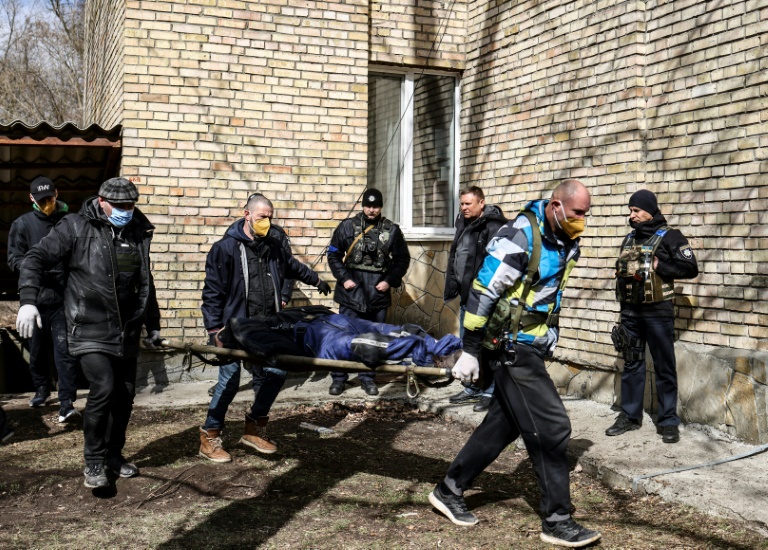
Horrific images of corpses lying in the streets, some with their hands bound behind them, have drawn international condemnation of Russia.

It has denied responsibility and suggested the images are fake or that the deaths occurred after Russian forces pulled out of the area.

But newly released satellite photographs taken by Maxar Technologies in mid-March, before the Russian withdrawal, showed what appeared to be bodies in some of the same places they were later found by Ukrainian troops and seen by journalists. 

On Monday, wearing body armour and visibly distressed, Zelensky spent half an hour in Bucha, where he blamed Russian troops for the killings.

“These are war crimes and it will be recognised by the world as genocide,” he said.

Later in his nightly address, he demanded “the sanctions response to Russia’s massacre of civilians must finally be powerful”. 

“But… did hundreds of our people have to die in agony for some European leaders to finally understand that the Russian state deserves the most severe pressure?” he asked in the video posted to Telegram. 

He also called for additional weapons from Western allies, saying more equipment could have saved thousands.  

“I do not blame you -– I blame only the Russian military,” he said. “But you could have helped.”

– More sanctions ‘this week’ –

Ukraine’s allies have called the killings in Bucha war crimes, with the EU offering to send investigators to gather evidence.

“(Russian President Vladimir Putin) is a war criminal,” US President Biden told reporters at the White House. “What’s happening to Bucha is outrageous and everyone’s seen it.”

The White House said it would announce fresh sanctions on Moscow “this week” with France suggesting new measures could target Russian oil and coal exports.

But Germany warned it was too soon to cut off Russian gas.

“We have to cut all economic relationship to Russia, but at the moment, it’s not possible to cut the gas supplies. We need some time,” German Finance Minister Christian Lindner said.

Elsewhere, the United States and Britain said they would seek Russia’s suspension from the UN Human Rights Council — a move Moscow branded “unbelievable”. 

Russia has called for a UN Security Council meeting on what it dubbed the “heinous provocation of Ukrainian radicals in Bucha”, but Britain — which holds the Council presidency — has so far refused the request.

– More horrors emerge –

The full nature of the killings in Bucha and other areas from which Russian troops have withdrawn is still being pieced together.

On Monday, the bodies of five men were found in a children’s sanatorium basement in Bucha. The Ukrainian prosecutor general’s office said they were unarmed civilians, who had been bound, beaten and killed by Russian troops.

And in Motyzhyn, west of Kyiv, Ukrainian police showed AFP journalists the bodies of five civilians with their hands tied, including those of the village’s mayor, her husband and son.

Ukrainian officials say over 400 civilian bodies have been recovered from the Kyiv region, many of whom have been laid to rest in mass graves.

But Zelensky has warned that the deaths in Bucha could be only the tip of the iceberg, saying he had information even more people had been killed in places like nearby Borodianka.

AFP reporters who briefly visited the area saw no bodies in the streets, but locals reported many deaths.

“I know five civilians were killed,” said 58-year-old Rafik Azimov. “But we don’t know how many more are left in the basements of the ruined buildings after the bombardments.”

“I buried six people,” another resident, Volodymyr Nahornyi, said. “More people are under the ruins.”

– Mariupol ’90 percent destroyed’ –

The Russian withdrawal from Kyiv has been seen as a pivot to a renewed offensive in the country’s east and south, where Moscow wants to consolidate territory around occupied Crimea and the separatist statelets of Donetsk and Lugansk.

The Ukrainian government has warned Moscow is preparing a “full-scale” attack in the country’s east and regional officials urged civilians to evacuate Lugansk fearing a major Russian attack.

The Pentagon estimates Russia has withdrawn about two thirds of the troops it had around Kyiv and will redeploy them to the east and south, with the White House warning the war’s “next phase could be measured in months or longer.”

Even where troops have withdrawn, fears remain, with Kyiv mayor Vitali Klitschko telling residents to wait before returning, citing the danger of continued shelling and the danger of unexploded munitions. 

Overnight, air raid sirens rang out across much of the country, from Lviv in the west to southern Mykolaiv, where officials said Monday that Russian strikes killed 10 civilians and wounded 46.

Elsewhere in the south, concerns remain about civilians trapped in the besieged city of Mariupol.

Authorities say at least 5,000 people have been killed in the city, 90 percent of which has been destroyed, according to mayor Vadim Boichenko.

Around 130,000 residents are still trapped inside, and efforts to evacuate them are now on hold because of “incessant” bombing, he said.

The Red Cross said Monday a team it sent to help get civilians out of Mariupol was being held by police in Russian-controlled territory.

Europe’s worst conflict in decades, sparked by Russia’s invasion on February 24, has killed as many as 20,000 people, according to Ukrainian estimates.

More than 4.2 million Ukrainians have fled the country and about 6.5 million have been internally displaced, UN agencies say.

burs-reb/sah/je
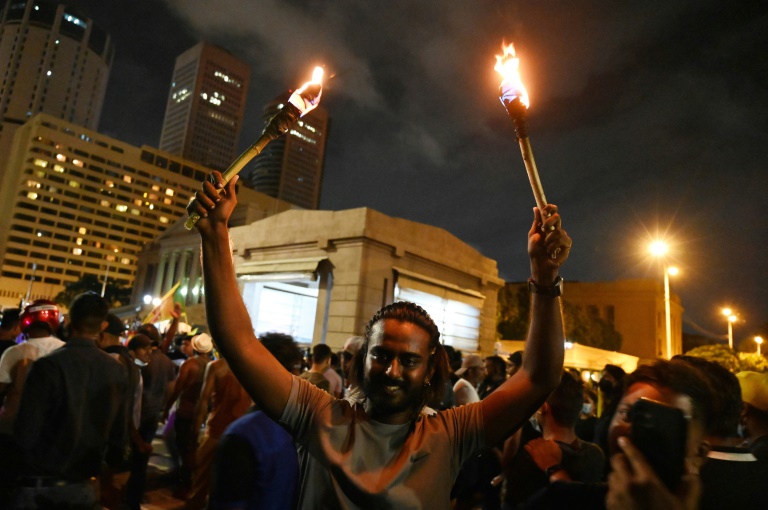
Sri Lanka parliament reconvenes after state of emergency

Sri Lanka’s parliament will convene Tuesday in its first session since a state of emergency was imposed as the country grapples with protests and mounting demands for the president’s resignation over a worsening economic crisis.

Severe shortages of food, fuel and other essentials — along with record inflation and crippling power cuts — have inflicted widespread misery across the island nation, which is enduring its most painful downturn since independence from Britain in 1948.

President Gotabaya Rajapaksa’s once-powerful SLPP ruling coalition suffered a string of defections ahead of the parliamentary session, undermining his ability to ratify a state of emergency imposed on Friday to quell the growing public protests. 

The state of emergency is due to expire on Thursday next week unless it is ratified in a parliamentary vote.

As parliament reconvenes, the speaker is obliged to officially inform MPs that the state of emergency has been declared, raising the prospect of opposition demands it be put to a vote immediately — which the government would likely lose.

All opposition parties and even some lawmakers from Rajapaksa’s own party have announced their intention to vote against extending the ordinance.

“Our party no longer has a mandate to govern,” former minister Nimal Lanza told reporters in the town of Negombo, adding that about 50 lawmakers previously allied with the government would instead sit as independents. 

Every member of Sri Lanka’s cabinet except the president and his elder brother, Prime Minister Mahinda Rajapaksa, resigned late on Sunday.

But an overture to opposition parties requesting their participation in a unity government was swiftly rejected the next day.

“We will not be joining this government,” Eran Wickramaratne of the main opposition Samagi Jana Balawegaya (SJB) party told AFP. “The Rajapaksa family must step down.”

Boisterous demonstrations have spread across the country of 22 million despite emergency laws allowing troops to detain participants and a weekend curfew that lapsed on Monday morning. 

Crowds have attempted to storm the homes of over a dozen government figures including the president’s house in Colombo, where protesters torched the vehicles of security forces, who responded by firing rubber bullets and tear gas 

However, Wickramaratne told AFP on Monday that the opposition would not be voting for the emergency orders. “We’ll see what happens tomorrow, it is going to be a decisive day.”

A critical lack of foreign currency has left Sri Lanka struggling to service its ballooning $51 billion foreign debt, with the pandemic torpedoing vital revenue from tourism and remittances.

The result has seen unprecedented food and fuel shortages along with record inflation and crippling power cuts, with no sign of an end to the economic woes.

Economists say Sri Lanka’s crisis has been exacerbated by government mismanagement, years of accumulated borrowing and ill-advised tax cuts.

The government plans to negotiate an IMF bailout, but talks are yet to begin.

Abramovich: surprise participant in Russia-Ukraine talks

When Turkey hosted talks between Russia and Ukraine last week, a familiar but unexpected face was seen among the officials and diplomats gathered in a wing of the former imperial Dolmabahce Palace in Istanbul. 

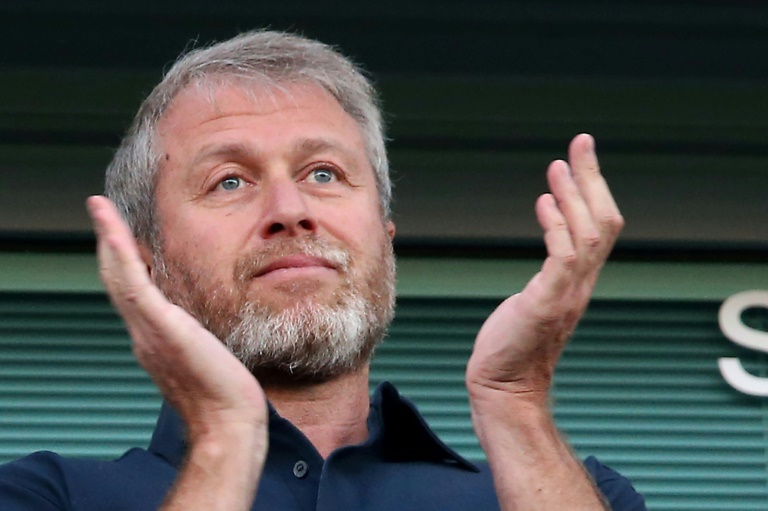
It was Roman Abramovich, the billionaire Russian tycoon and owner of Chelsea Football Club, who has long sought to strike a balance between cordial ties with the Kremlin and a jet-setting lifestyle in the West.

What was he doing at the Istanbul talks?

“Abramovich participated in the negotiations as a member of the Russian delegation,” explained Turkish President Recep Tayyip Erdogan. 

He said Abramovich’s presence indicated that the oligarch was “trusted” by Moscow.

Turkish Foreign Minister Mevlut Cavusoglu said Abramovich had been making “sincere” efforts for peace since the first days of the war, adding that he had made a “positive” contribution to diplomatic efforts.

Kremlin spokesman Dmitry Peskov said that while Abramovich was not an official member of the delegation, he was involved in “ensuring certain contacts” between the Russian and Ukrainian sides, for which he had approval from both parties.

Adding to the intrigue, the Wall Street Journal last week reported that Abramovich had travelled to Kyiv earlier in March to meet President Volodymyr Zelensky. While there, he suffered a suspected poisoning attack that temporarily affected his eyesight.

– ‘Right side of history’ –

Analysts say Russia’s invasion of Ukraine has been a personal disaster for Abramovich, leaving him sanctioned by the EU and UK, forced to sell Chelsea and seeing billions wiped off the value of his assets.

He has every personal interest in seeing a peaceful end to the conflict and possibly performing a role that could allow him to win back favour in the Western capitals that once welcomed him so ardently.

Alexander Baunov, senior fellow at the Carnegie Moscow Center, said Abramovich’s presence at the talks had “various possible explanations” but could be linked to “reparations” in rebuilding areas destroyed in Ukraine, possibly using private money.

“For Abramovich, it’s also a welcome chance to be on the right side of history,” he added.

For critics, the situation has merely exposed the reality that Abramovich is a Kremlin-friendly oligarch, who managed to build up his wealth thanks to close ties with President Vladimir Putin.

Abramovich has “had privileged access to the president and has maintained very good relations with him. This connection with the Russian leader helped him to maintain his considerable wealth,” the EU said last month when it announced sanctions against Abramovich and other Russia oligarchs over Ukraine.

In a possible bid to avoid being hit by sanctions, two luxury superyachts owned by Abramovich –- the over 160-metre Eclipse and 140-metre Solaris –- have docked in Turkey, which has not joined the European sanctions.

– ‘PR stunt?’ –

Maria Pevchikh, investigative chief at Kremlin opponent Alexei Navalny’s anti-corruption foundation, described Abramovich as “the most faithful and devoted of Putin’s oligarchs”. She said they had profited from a tacit deal with the Kremlin to stay out of politics.

His participation in the talks “looks like a PR stunt to me”, she said.

In a surprising career turn, Abramovich served from 2001 to 2008 as governor of the sparsely populated Chukotka region in the far northeast of Russia, pouring his own money into one of the country’s least developed regions.

Abramovich used to be a co-owner, along with the government, of Russia’s Channel One television. The channel has earned notoriety during the invasion for its pro-Kremlin reporting and for being the target of an on-air protest by a disgruntled journalist.

He reduced his stake to 20 percent and then sold off that final portion to a Russian state-owned bank in March 2019.

According to Forbes magazine, the invasion of Ukraine has resulted in Abramovich’s net worth being whittled down to $8.3 billion (7.6 billion euros), compared to almost $15 billion before the assault started.

“And he likely has only limited access to that,” it said, describing the invasion as a “personal, financial and now physical disaster” for Abramovich.

– ‘Rehabilitate himself’ –

Famously publicity shy and never giving interviews, Abramovich announced in a rare personal statement on March 2 that he was selling Chelsea Football Club, although the UK sanctions mean he cannot profit from the sale.

In a carefully worded statement that contained no criticism of the Russian invasion, he said then that a foundation would be set up “for the benefit of all victims of the war in Ukraine”, including their immediate needs as well as “supporting the long-term work of recovery”.

“The most important thing is that Putin trusts him. But Zelensky can also trust him,” Konstantin Kalachev, a Russian political scientist who once worked with the ruling party, told AFP.

“Abramovich must rehabilitate himself in the West. He wants to keep his status as a citizen of the world. I doubt very much that he would want to isolate himself in Russia.”

Ecuador banana industry slips over war in Ukraine

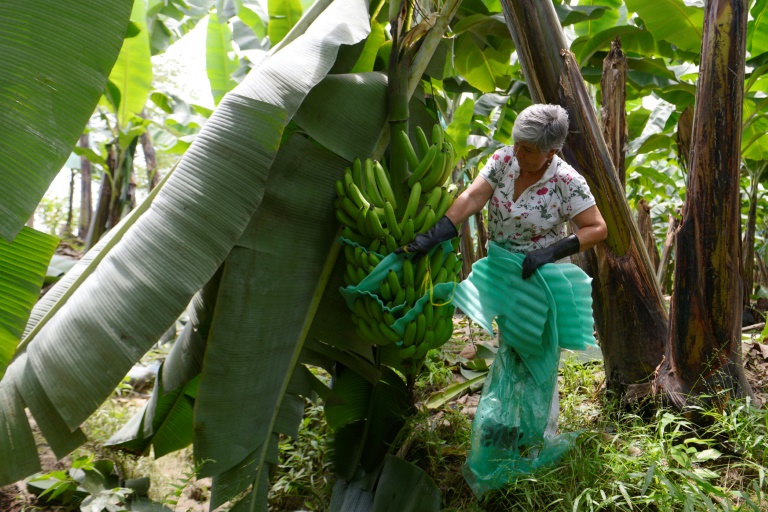
Until recently, the incessant bustle of Ecuadoran banana plantations provided evidence of the industry’s robust export business. But from one week to the next, the groves have fallen silent — trade victims to a conflict half a world away.

Ecuador is the world’s largest banana exporter, but the sector has been hammered by the war in Ukraine. Now, with nowhere to send them, containers of the rotting fruit are piling up not far from where they were originally harvested.

“One in every five bananas produced in Ecuador goes to Ukraine and Russia,” said Franklin Torres, president of Ecuador’s FENABE banana producers federation.

“This war really affected us in that sense.”

The vast majority of that portion goes to Russia, where banana sales are worth $698 million a year to Ecuador, which usually sends almost two million boxes of bananas a week to the eastern European neighbors.

But due to international transport sanctions over its invasion of Ukraine, Russia is not receiving its cargos of bananas.

The conflict has put the brakes on production in El Triunfo, close to Guayaquil, the site of Ecuador’s main port..

“The banana producers are finished, I have not processed a single box for three weeks,” said Mireya Carrera, 62, the owner of the Thalia banana plantation.

“The staff are leaving on their own without being fired because I cannot pay them.”

She used to fill three containers with 3,000 20-kilogram (43-pound) boxes of bananas from her 28 hectare plantation.

“Now I have 7,000 bunches with no buyer,” she told AFP.

– ‘Price crisis’ –

The industry had already been hit by falling prices.

Torres said it costs $5.50 to produce a box of bananas, and even though the internal sales price is $6.25, “right now we’re receiving less than $2 for each box of bananas, we’re receiving $1 or $1.20.

“Truly it’s an insult to any type of business. What we’re receiving is shameful and it’s not even worth picking them.”

He said the industry has lost “more than $10 million in three weeks.”

“Every year we have the problem of low prices, but now it has become impossible to get a contract for bananas. I prefer to give them away,” said Carrera.

Seeing Ecuador’s surplus of bananas, other markets “have started reducing their price offers,” said Richard Salazar, president of the ACORBANEC association for banana commercialization and export.

According to Jose Antonio Hidalgo, director of the AEBE association of banana exporters, within a week of the war starting, the bananas destined for Russia and Ukraine needed a new market, “causing a price crisis.”

Around a million boxes have remained unsold in the last month.

Faced with the prospect of a surplus sending the domestic price plummeting, the banana business union decided to donate them to local food programs.

Ecuador has 160,000 hectares of banana plantations that in 2021 generated almost $3.5 billion in sales around the world.

The South American country has more than 260 banana exporters.

– Unrealistic utopia –

The banana industry generates 50,000 direct jobs and 250,000 indirect ones in Ecuador.

The war has already cost around 6,000 permanent employees their jobs, according to ACORBANEC.

The difficulties have also impacted he El Porvenir plantation in neighboring Puerto Inca, which neighbors Guayaquil.

Having sold a container with more than 1,000 boxes “what we received is to pay salaries,” said the plantation’s administrator Lourdes Cedeno.

El Porvenir already had to halve salaries in March as it was.

Banana producers, who protested in Guayaquil last week, want the government to help them out by buying their fruit for its food programs.

President Guillermo Lasso said that “is not realistic. We need to place them in other markets in the world.”

But for Salazar, “Putting them in other markets is utopian. There’s no other market in the world that can buy as much as Russia,” he said.

Ecuador banana industry slips over war in Ukraine

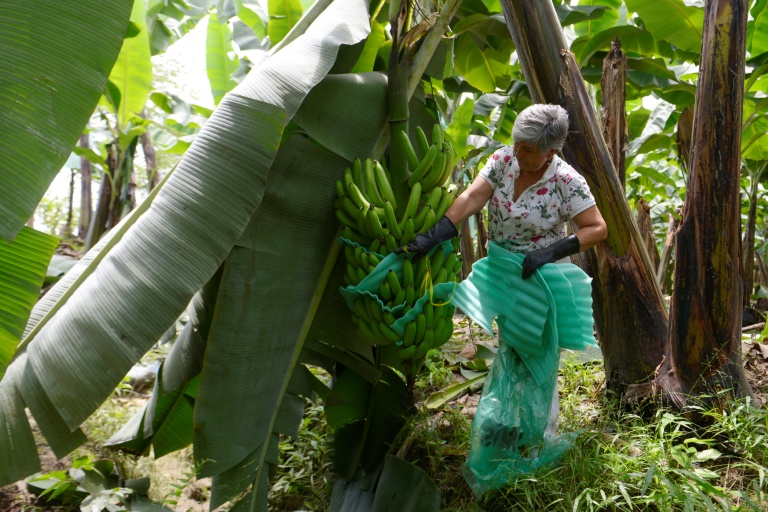
Until recently, the incessant bustle of Ecuadoran banana plantations provided evidence of the industry’s robust export business. But from one week to the next, the groves have fallen silent — trade victims to a conflict half a world away.

Ecuador is the world’s largest banana exporter, but the sector has been hammered by the war in Ukraine. Now, with nowhere to send them, containers of the rotting fruit are piling up not far from where they were originally harvested.

“One in every five bananas produced in Ecuador goes to Ukraine and Russia,” said Franklin Torres, president of Ecuador’s FENABE banana producers federation.

“This war really affected us in that sense.”

The vast majority of that portion goes to Russia, where banana sales are worth $698 million a year to Ecuador, which usually sends almost two million boxes of bananas a week to the eastern European neighbors.

But due to international transport sanctions over its invasion of Ukraine, Russia is not receiving its cargos of bananas.

The conflict has put the brakes on production in El Triunfo, close to Guayaquil, the site of Ecuador’s main port..

“The banana producers are finished, I have not processed a single box for three weeks,” said Mireya Carrera, 62, the owner of the Thalia banana plantation.

“The staff are leaving on their own without being fired because I cannot pay them.”

She used to fill three containers with 3,000 20-kilogram (43-pound) boxes of bananas from her 28 hectare plantation.

“Now I have 7,000 bunches with no buyer,” she told AFP.

– ‘Price crisis’ –

The industry had already been hit by falling prices.

Torres said it costs $5.50 to produce a box of bananas, and even though the internal sales price is $6.25, “right now we’re receiving less than $2 for each box of bananas, we’re receiving $1 or $1.20.

“Truly it’s an insult to any type of business. What we’re receiving is shameful and it’s not even worth picking them.”

He said the industry has lost “more than $10 million in three weeks.”

“Every year we have the problem of low prices, but now it has become impossible to get a contract for bananas. I prefer to give them away,” said Carrera.

Seeing Ecuador’s surplus of bananas, other markets “have started reducing their price offers,” said Richard Salazar, president of the ACORBANEC association for banana commercialization and export.

According to Jose Antonio Hidalgo, director of the AEBE association of banana exporters, within a week of the war starting, the bananas destined for Russia and Ukraine needed a new market, “causing a price crisis.”

Around a million boxes have remained unsold in the last month.

Faced with the prospect of a surplus sending the domestic price plummeting, the banana business union decided to donate them to local food programs.

Ecuador has 160,000 hectares of banana plantations that in 2021 generated almost $3.5 billion in sales around the world.

The South American country has more than 260 banana exporters.

– Unrealistic utopia –

The banana industry generates 50,000 direct jobs and 250,000 indirect ones in Ecuador.

The war has already cost around 6,000 permanent employees their jobs, according to ACORBANEC.

The difficulties have also impacted he El Porvenir plantation in neighboring Puerto Inca, which neighbors Guayaquil.

Having sold a container with more than 1,000 boxes “what we received is to pay salaries,” said the plantation’s administrator Lourdes Cedeno.

El Porvenir already had to halve salaries in March as it was.

Banana producers, who protested in Guayaquil last week, want the government to help them out by buying their fruit for its food programs.

President Guillermo Lasso said that “is not realistic. We need to place them in other markets in the world.”

But for Salazar, “Putting them in other markets is utopian. There’s no other market in the world that can buy as much as Russia,” he said.

Oil extends rally on Russia sanctions bets, stocks wobble

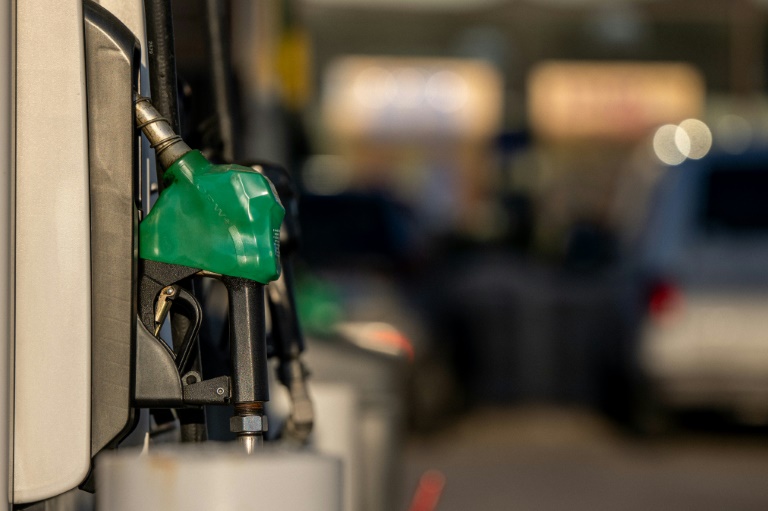
Oil prices extended gains Tuesday on the prospect of further sanctions on Russia for alleged “atrocities” in some occupied Ukraine cities, while equities struggled to build on a rally in New York and Europe.

European Union officials were discussing new measures against Moscow after reports — denied by the Kremlin — that troops had executed civilians.

Among the punishments could be a ban on imports of Russian crude, following a similar move by the United States and Britain.

White House National Security Advisor Jake Sullivan also signalled more US sanctions were on the way this week.

While Europe’s economy relies heavily on energy from Russia, the possibility of an embargo sent both main contracts sharply higher Monday, and they continued their rise in Asia, putting on more than one percent.

That pared some of the sharp losses seen Friday in reaction to a pledge by Washington and other major economies to unleash millions of barrels from their stockpiles to keep a lid on prices, which are fanning already high inflation.

It also offset an expected hit to demand in China from lockdowns in parts of the country — including Shanghai, the biggest city — sparked by a wave of Omicron outbreaks.

The continued uncertainty caused by the war in Ukraine, and the blow to the global economy it is expected to deal, was unable to prevent another healthy performance on Wall Street, where the Nasdaq’s surge led all three main indexes higher.

“Despite all the concerns, equities remain the best bet to achieve returns above today’s elevated inflation,” said markets strategist Louis Navellier.

However, trade was tepid in Asia, with Hong Kong, Shanghai and Taipei closed for holidays.

Tokyo, Sydney, Singapore, Jakarta and Wellington were slightly up, while Seoul and Manila dropped.

Traders will be keeping a close eye on the release this week of minutes from the Federal Reserve’s most recent policy meeting, hoping for an insight into officials’ thinking over monetary policy.

After last month’s expected 0.25 percentage point interest rate hike, there are increasing bets on a half-point lift in May in light of soaring inflation and strong jobs data that suggest the economy remains robust enough to absorb higher borrowing costs.

And National Australia Bank’s Tapas Strickland added: “Profit reporting season in the US kicks off next week and it will be interesting to see how firms are interpreting the tea leaves, and whether earnings guidance is revised down.”

– Key figures around 0200 GMT –

Tokyo – Nikkei 225: UP 0.1 percent at 27,756.54

Hong Kong – Hang Seng Index: Closed for a holiday

Shanghai – Composite: Closed for a holiday

Brent North Sea crude: UP 1.7 percent at $109.31 per barrel

West Texas Intermediate: UP 1.7 percent at $105.00 per barrel

Euro/dollar: DOWN at $1.0969 from $1.0978 late Monday

Pound/dollar: UP at $1.3117 from $1.3114

Euro/pound: DOWN at 83.62 pence from 83.65 pence 

Dollar/yen: DOWN at 122.60 yen from 122.78 yen

New York – Dow: UP 0.3 percent at 34,921.88 (close)

London – FTSE 100: UP 0.3 percent at 7,558.92 (close)

Oil extends rally on Russia sanctions bets, stocks wobble

Oil prices extended gains Tuesday on the prospect of further sanctions on Russia for alleged “atrocities” in some occupied Ukraine cities, while equities struggled to build on a rally in New York and Europe.

European Union officials were discussing new measures against Moscow after reports — denied by the Kremlin — that troops had executed civilians.

Among the punishments could be a ban on imports of Russian crude, following a similar move by the United States and Britain.

White House National Security Advisor Jake Sullivan also signalled more US sanctions were on the way this week.

While Europe’s economy relies heavily on energy from Russia, the possibility of an embargo sent both main contracts sharply higher Monday, and they continued their rise in Asia, putting on more than one percent.

That pared some of the sharp losses seen Friday in reaction to a pledge by Washington and other major economies to unleash millions of barrels from their stockpiles to keep a lid on prices, which are fanning already high inflation.

It also offset an expected hit to demand in China from lockdowns in parts of the country — including Shanghai, the biggest city — sparked by a wave of Omicron outbreaks.

The continued uncertainty caused by the war in Ukraine, and the blow to the global economy it is expected to deal, was unable to prevent another healthy performance on Wall Street, where the Nasdaq’s surge led all three main indexes higher.

“Despite all the concerns, equities remain the best bet to achieve returns above today’s elevated inflation,” said markets strategist Louis Navellier.

However, trade was tepid in Asia, with Hong Kong, Shanghai and Taipei closed for holidays.

Tokyo, Sydney, Singapore, Jakarta and Wellington were slightly up, while Seoul and Manila dropped.

Traders will be keeping a close eye on the release this week of minutes from the Federal Reserve’s most recent policy meeting, hoping for an insight into officials’ thinking over monetary policy.

After last month’s expected 0.25 percentage point interest rate hike, there are increasing bets on a half-point lift in May in light of soaring inflation and strong jobs data that suggest the economy remains robust enough to absorb higher borrowing costs.

And National Australia Bank’s Tapas Strickland added: “Profit reporting season in the US kicks off next week and it will be interesting to see how firms are interpreting the tea leaves, and whether earnings guidance is revised down.”

– Key figures around 0200 GMT –

Tokyo – Nikkei 225: UP 0.1 percent at 27,756.54

Hong Kong – Hang Seng Index: Closed for a holiday

Shanghai – Composite: Closed for a holiday

Brent North Sea crude: UP 1.7 percent at $109.31 per barrel

West Texas Intermediate: UP 1.7 percent at $105.00 per barrel

Euro/dollar: DOWN at $1.0969 from $1.0978 late Monday

Pound/dollar: UP at $1.3117 from $1.3114

Euro/pound: DOWN at 83.62 pence from 83.65 pence 

Dollar/yen: DOWN at 122.60 yen from 122.78 yen

New York – Dow: UP 0.3 percent at 34,921.88 (close)

London – FTSE 100: UP 0.3 percent at 7,558.92 (close)

US, Britain to seek Russia's suspension from UN Rights Council

The United States and Britain announced plans Monday to seek Russia’s suspension from the UN Human Rights Council following allegations that Russian troops systematically executed civilians in Bucha, Ukraine.

“The images out of Bucha and devastation across Ukraine require us to now match our words with action,” US ambassador to the United Nations Linda Thomas-Greenfield said in a tweet Monday.

“We cannot let a member state that is subverting every principle we hold dear to continue to participate” in the council, she said. A vote on Russia’s suspension could be held by Thursday, according to the US.

“Given strong evidence of war crimes, including reports of mass graves and heinous butchery in Bucha, Russia cannot remain a member of the UN Human Rights Council. Russia must be suspended,” said British Foreign Secretary Liz Truss.

Russia reacted furiously. “This is unbelievable,” said Vassily Nebenzia, the Russian ambassador to the UN. “What the West is trying to do with Russia, trying to exclude it from multilateral forums we are having in the world… this is unprecedented.” 

“This will not facilitate or encourage or be helpful to what is happening between Russian and Ukrainians in peace talks,” he said.

Journalists over the weekend found corpses in civilian clothes, some with their hands bound, in the town of Bucha outside Ukraine’s capital after Kyiv’s forces retook it from Russia’s army.

Bucha Mayor Anatoly Fedoruk said many “were shot, killed, in the back of the head.”

The scale of the killings is still being pieced together, but Ukrainian prosecutor general Iryna Venediktova said 410 civilian bodies had been recovered so far.

The UN’s human rights chief Michelle Bachelet said the images from Bucha point to “possible war crimes.”

The Kremlin denied Russian forces killed civilians, and alleged that the images of dead bodies in Bucha are “fakes.”

Suspending Russia from the council would require a vote in favor by two-thirds of the UN General Assembly. 

Abstentions are not taken into account in the required two-thirds majority, which the United States and Britain believe they can secure.

Such an action has been taken in the past against Libya.

Asked at the daily UN press briefing about UN Secretary-General Antonio Guterres’ position on suspending Russia from the Human Rights Council, his deputy spokesman Farhan Haq appeared embarrassed.

“We will leave it to the member states to decide,” he said.

“What the worry has been on this side is the precedent being set,” he added, declining to explain further.

“Russia should not have a position of authority in that body, nor should we allow Russia to use its seat on the Council as a tool of propaganda to suggest they have a legitimate concern about human rights,” said Thomas-Greenfield.

– ‘More than symbolic’ –

“Our expectation is to do it as soon as possible – this week, and possibly as early as Thursday,” the US envoy said later in an interview with US radio NPR.

“It’s more than symbolic, and it does have force because it continues what we have started, and that is to isolate Russia and to call them out for what they’re doing,” she added. 

She said that Russia had pushed a narrative “that what they’re doing is normal. This is not normal. They will hear from the entire world that we will not continue to allow their misinformation, their propaganda to be used in – on a UN platform,” she said.

Kim's sister says North Korea nukes could 'eliminate' South

North Korea will use its nuclear weapons to “eliminate” South Korea’s army in the event they launch a pre-emptive strike, the powerful sister of leader Kim Jong Un said Tuesday.

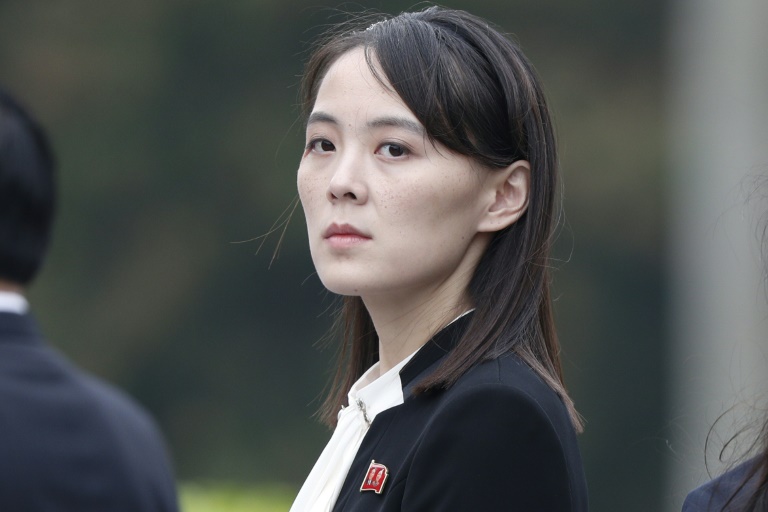
Kim Yo Jong’s warning, carried in state media, was her second angry retort in three days to comments made by South Korea’s defence chief Suh Wook last week.

They come as North Korea has resumed its sanctions-breaking weapons tests with an unprecedented blitz this year, last month firing its first intercontinental ballistic missile at full range since 2017.

Suh had said Friday that South Korea’s military had missiles with “the ability to accurately and quickly hit any target in North Korea when there are clear signs of North’s missile launch”. 

In response, Kim Yo Jong said it was a “very big mistake” for “lunatic” Suh to have discussed a pre-emptive strike against a nuclear power, according to the report in KCNA.

“In case South Korea opts for military confrontation with us, our nuclear combat force will have to inevitably carry out its duty,” said Kim Yo Jong, who is a key policy advisor in Pyongyang.

She said the “primary mission” for her country’s nuclear forces was to act as a deterrent, but if an armed conflict were to break out, such weapons will be used for “eliminating the enemy’s armed forces at a strike”.

As a result of this “dreadful attack”, South Korean forces will face a “miserable fate little short of total destruction and ruin”, she said.

“We do not regard (them) as (a) match for our armed forces,” she said, referring to South Korea’s military.

Her latest comments follow an initial attack on Suh’s “reckless remarks” Sunday, in which she warned the South should “discipline itself if it wants to stave off disaster”.

North Korea had paused its long-range and nuclear tests when Kim Jong Un and then US president Donald Trump engaged in a high-profile bout of diplomacy that subsequently collapsed in 2019. Talks have since stalled.

North Korea will this month mark the 110th anniversary of the birth of founder Kim Il Sung — the grandfather of current leader Kim. 

Typically, Pyongyang likes to mark key domestic anniversaries with military parades, major weapons tests or satellite launches.

Colombian researchers seek safety for bees in urban jungle

Far from the flowery fields that are their natural home, honey bees imperiled by pesticides in rural Colombia are finding sanctuary on university campuses in the bustling capital Bogota.

Even though hives are banned from the city due to the risk the insects’ stings can pose to humans, universities enjoy an exemption for research purposes.

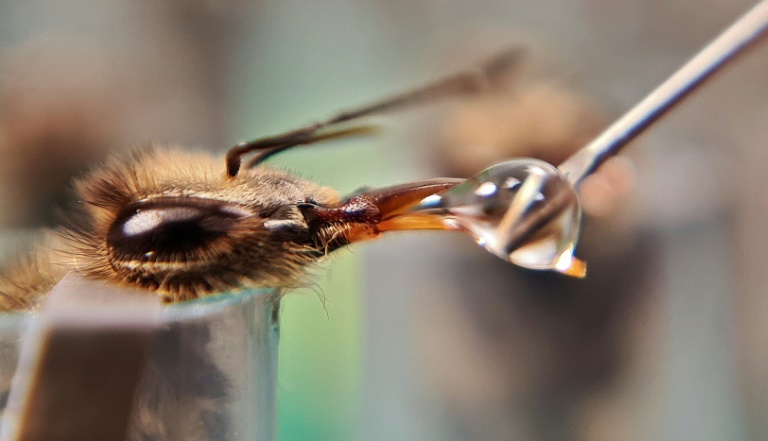
At the University of Rosario, biologist Andre Riveros very carefully feeds a bee some sugar water, watching attentively as it stretches its straw-like tongue, or proboscis, towards the sweet liquid.

The university boasts a rooftop apiary in a bamboo structure some six meters (nearly 20 feet) high, surrounded by trees and flowers.

Here, Riveros and his team study a colony of bees in the hopes of developing a food supplement that will offer the critical crop pollinators protection from insecticides

“Pesticides end up affecting some (neurological) regions that, for example, affect learning and memory and (the bees) end up with damage very similar to Alzheimer’s,” Riveros told AFP.

“We are trying to find a solution for the problem of bee disappearances,” he added. “We seek to shield the bees, in essence.”

The team’s work focuses on the Apis mellifera, or Western Honey Bee, one of about 20,000 known species worldwide.

Hundreds of hives have been killed off in Colombia in recent years, and investigations into the cause have pointed to fipronil, an insecticide banned in Europe and restricted in the United States and China.

Fipronil has been widely used in a profitable avocado and citrus boom in Colombia, though the Latin American country suspended its use in some crops for six months last year.

– ‘Fleeing the fields’ –

Elsewhere in Bogota, the EAN University boasts its own hives, perched on a six-story building overlooking the city of eight million people.

Beekeeper Gino Cala extracts honey from the hives as part of his work to instruct and assist universities in the management of urban apiaries.

But Cala told AFP Colombia’s bees “are fleeing the fields” partly due to the “indiscriminate use of agrochemicals.”

“These insects are extremely relevant and important… because they help guarantee part of the food security of Colombia and the world,” he added.

From the EAN University grounds, Cala’s bees help to pollinate plants in surrounding areas.

About 1.4 billion jobs and three-quarters of all crops around the world, according to a 2016 study, depend on pollinators — mainly bees — which provide free fertilization services worth billions of dollars.

In recent years, bees in North America, Europe, Russia, South America and elsewhere have started dying off from “colony collapse disorder,” a mysterious scourge blamed partly on pesticides but also on mites, viruses and fungi.

The UN warns that nearly half of insect pollinators, particularly bees and butterflies, risk global extinction.

Despite the city ban, there are private beekeepers in Bogota who sell products such as honey, pollen or beeswax.

The fire department of Bogota says it attends to eight bee sting-related emergencies on average every day.

Close Bitnami banner
Bitnami