World

War in Ukraine: Latest developments

Here are the latest developments in the war in Ukraine:

– Calls for war crimes trial –

The discovery of bodies scattered on the streets of the Ukrainian town of Bucha after the withdrawal of Russian forces sparks global outrage.

US President Joe Biden calls for a war crimes trial and more sanctions on Russia. 

The UN’s human rights chief Michelle Bachelet also says the images of people in civilian clothing, some of whom appear to have been bound by their hands and feet before being shot, suggests “possible war crimes”, as does German Chancellor Olaf Scholz and French President Emmanuel Macron.

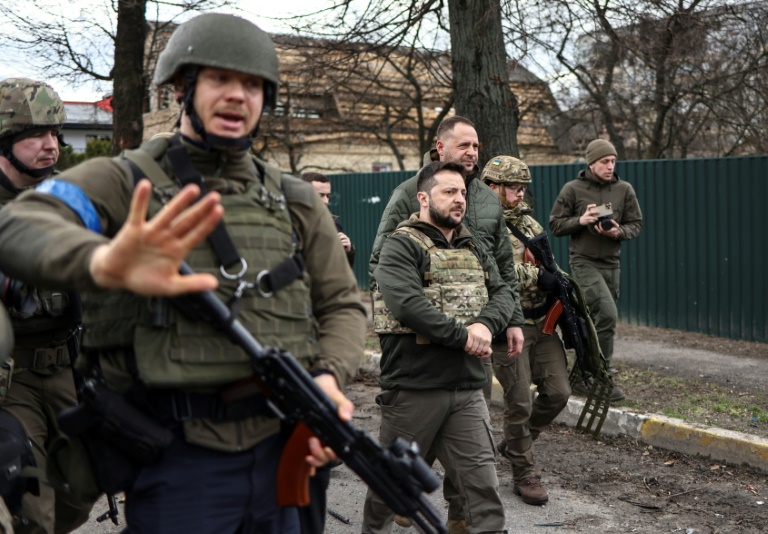
On a visit to the town, Ukrainian President Volodymyr Zelensky labels the killings “genocide”, a term echoed by the prime minister of Poland.

– Hundreds of bodies –

AFP saw at least 20 bodies strewn along a single street in Bucha.

Ukrainian prosecutor general Iryna Venediktova says 410 civilian bodies were recovered from areas around Kyiv recently retaken from Russian forces.

Bucha’s mayor Anatoly Fedoruk says 280 bodies were buried in mass graves during the fighting.

– Russian denial – 

The Kremlin denies Russian forces killed civilians, claiming that the images of dead bodies in Bucha are “fakes” produced by “Ukrainian radicals.”

“We categorically reject all allegations,” Kremlin spokesman Dmitry Peskov says.

Moscow has called for a special UN Security Council meeting to discuss the situation.

– More EU sanctions –

The EU’s foreign policy chief Josep Borrell says the bloc is urgently discussing a new round of sanctions on Russia over the “atrocities” reported in Bucha and other Ukrainian towns that were occupied by Russian forces.

“We stand in full solidarity with Ukraine and the Ukrainian people in these sombre hours for the whole world,” he says.

– ‘Not possible’ to cut gas –

Germany warns that cutting off Russian gas supplies to Europe is not a possibility, despite growing pressure on the EU to do so.

“We have to cut all economic relationship to Russia, but at the moment, it’s not possible to cut the gas supplies. We need some time,” German Finance Minister Christian Lindner says.

– Gazprom subsidiary seized –

Germany takes control of Gazprom’s German subsidiary after the Russian gas giant said it is withdrawing from Gazprom Germania.

Berlin says it is “doing what is necessary to ensure security of supplies in Germany.”

– Ambassador expelled –

The former Soviet republic of Lithuania expels the Russian ambassador to Vilnius over what it calls the “horrific massacre” in Bucha and atrocities in other occupied Ukrainian cities. Moscow vows to retaliate.

– Eastern offensive –

After withdrawing from northern Ukraine, Russia steps up its attacks in the east and south.

Seven people are reported killed and 34 wounded in strikes on Ukraine’s second-biggest city Kharkiv, with three more reported killed in the suburb of Dergachi.

In the south, seven people are killed in shelling of the town of Ochakiv on the Black Sea and one person is killed in a strike on the nearby city of Mykolaiv, Ukrainian authorities say.

– Spain seizes yacht –

Spanish police announce the seizure of a mega yacht owned by an oligarch with close ties to Russian President Vladimir Putin.

The 78-metre-long yacht named Tango was impounded at the Mediterranean port of Palma de Mallorca by Spanish police working with the US.

– Putin hails Orban win –

An increasingly isolated Putin congratulates Hungary’s nationalist Prime Minister Viktor Orban on winning a fourth term in office.

Putin says he hopes to deepen ties with a rare ally in Europe.

– Over 4.2 million refugees –

More than 4.2 million Ukrainian refugees have fled the country since the Russian invasion, the UN says.
Zelensky accuses Russia of 'genocide', Biden calls for war crimes trial

Ukraine’s president on Monday urged the world to acknowledge “genocide” at the hands of Russian troops after bodies were discovered in a town outside Kyiv, sparking global outrage.

US President Joe Biden called for a “war crimes trial” over the alleged atrocities in Bucha and said he would seek “more sanctions” against Moscow, as EU momentum built for a tougher response on top of already unprecedented sanctions against Russia over the war.

European Commission chief Ursula von der Leyen said the European Union was ready to send a team of investigators to gather evidence of possible war crimes. 

Ukrainian President Volodymyr Zelensky accuses Russian troops of being behind the killings, but the Kremlin has denied any responsibility and suggested images of corpses were “fakes”.

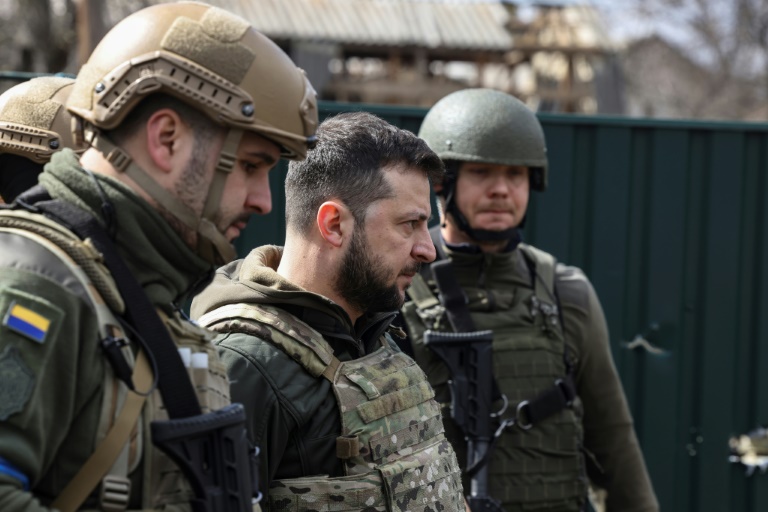
“These are war crimes and it will be recognised by the world as genocide,” Zelensky said Monday as he visited the town, where the corpses, some with their hands bound behind their backs, were discovered over the weekend near Kyiv.

“You stand here today and see what happened. We know that thousands of people have been killed and tortured with extremities cut off, women raped, children killed,” he told reporters, wearing a bullet-proof vest for a rare visit outside the Ukrainian capital.

Moscow has called for a UN Security Council meeting on what its deputy ambassador to the body called a “heinous provocation of Ukrainian radicals in Bucha.”

“What’s happening to Bucha is outrageous and everyone’s seen it,” Biden said Monday, calling Russian President Vladimir Putin “a war criminal”.

– ‘We dug a mass grave’ –

“We have to gather all the details” to be able to have a trial, the US president added.

The United States also said it would seek to suspend Russia from the UN Human Rights Council and EU foreign policy chief Josep Borrell said urgent discussions were underway on tougher sanctions against Russia.

The scale of the killings is still being pieced together. On Sunday, Ukrainian prosecutor general Iryna Venediktova said 410 civilian bodies had been recovered in the wider Kyiv region after Russian troops pulled back.

In Bucha, the local mayor said 280 people were buried in mass graves because they could not be buried in cemeteries that were within firing range. 

AFP on Saturday saw the bodies of at least 22 people in civilian clothes on a single street in Bucha. 

Satellite imagery firm Maxar released pictures it said showed a mass grave located in the grounds of a church in Bucha.

Before leaving the city, Russian forces refused to let residents bury the dead, municipal worker Serhii Kaplychnyi told AFP.

Eventually, they were able to retrieve the bodies, he said. “We dug a mass grave with a tractor and buried everyone.”

– Mariupol ’90 percent destroyed’ –

Russia has redoubled its efforts in Ukraine’s south and east, including strikes Sunday on the strategic Black Sea port of Odessa, which Moscow said targeted an oil refinery and fuel depots.

The mayor of the south-eastern port city of Mariupol said Monday 90 percent of the city had been destroyed since being besieged by Russian forces, trapping some 130,000 residents who have not yet fled.

“We are planning to evacuate the remaining residents, but we cannot do it today” because of “incessant” bombings, Vadym Boichenko told journalists.

Britain’s defence ministry also said recent Russian air activity had focused on south-eastern Ukraine. Mariupol “continues to be subject to intense, indiscriminate strikes,” it said.

Attacks on two other towns in southern Ukraine on Sunday killed eight people and wounded 34, prosecutors in Kyiv said.

One EU official told AFP that a new sanctions package on Russia could be discussed by foreign ministers, either on the sidelines of a NATO meeting on Wednesday and Thursday, or at early next week.

French President Emmanuel Macron, who spoke about “very clear indications of war crimes,” told France Inter radio that they could target Russia’s oil and coal sectors.

But Germany warned that cutting off the supply of Russian gas to Europe was not yet possible, despite calls in several EU countries that the measure was necessary to face down Russia.

– ‘Something terrible is coming’ –

“We have to cut all economic relationship to Russia, but at the moment, it’s not possible to cut the gas supplies. We need some time,” German Finance Minister Christian Lindner said as he arrived for talks with his eurozone counterparts in Luxembourg.

Europe’s worst conflict in decades, sparked by Russia’s invasion on February 24, has already killed 20,000 people, according to Ukrainian estimates.

Nearly 4.2 million Ukrainians have fled the country, with almost 40,000 pouring into neighbouring countries in the last 24 hours alone, the UN refugee agency said.

In the eastern city of Kramatorsk, women, children and the elderly boarded trains to flee the Donbas region and out of the path of the Russian advance.

“The rumour is that something terrible is coming,” said Svetlana, a volunteer organising the crowd on the station platform.

The UN’s top humanitarian envoy Martin Griffiths is expected in Kyiv after arriving in Moscow on Sunday in an attempt to halt the fighting.

And talks were scheduled to resume by video on Monday, though Russia’s chief negotiator Vladimir Medinsky said it was too early for a top-level meeting between Zelensky and Putin.

He said Kyiv had become “more realistic” in its approach to issues related to the neutral and non-nuclear status of Ukraine, but a draft agreement for submission to a summit meeting was not ready.

burs/js/jh/jm

Sri Lanka opposition rejects unity offer, demands president resign

Sri Lanka’s opposition on Monday dismissed the president’s invitation to join a unity government as “nonsensical” and instead demanded he resign over the country’s worsening shortages of food, fuel and medicines.

President Gotabaya Rajapaksa’s overture came as armed troops looked to quell more demonstrations over what the government acknowledges is the country’s most severe economic crisis since independence from Britain in 1948.

Police fired tear gas and water cannon to disperse thousands of protesters trying to storm the private home of the prime minister — the president’s elder brother and the head of the family political clan — in Tangalle, once a bastion of support for the Rajapaksas in the island’s south.

The president asked opposition parties represented in parliament to “join the effort to seek solutions to the national crisis,” after the late-night resignation of nearly all cabinet ministers to pave the way for a revamped administration.

“We will not be joining this government,” Eran Wickramaratne of the main opposition Samagi Jana Balawegaya (SJB) party told AFP. “The Rajapaksa family must step down.”

It capped a day of rejections from political parties demanding the once popular and powerful ruling family relinquish power.

“He really must be a lunatic to think that opposition MPs will prop up a government that is crumbling,” lawmaker Anura Dissanayake of the leftist People’s Liberation Front (JVP) told reporters in the capital Colombo.

And Abraham Sumanthiran of the Tamil National Alliance told AFP: “His offer to reconstitute the cabinet with opposition MPs is nonsensical and infuriates the people who have been demanding his resignation.”

Every member of Sri Lanka’s cabinet except the president and his elder brother, Prime Minister Mahinda Rajapaksa, resigned late Sunday.

The country’s central bank governor Ajith Cabraal — who has long opposed the International Monetary Fund bailout now being sought by the country — also stepped down on Monday.

A day after en masse resignations, the president reappointed four of the outgoing ministers — three of them to their old jobs — while replacing brother Basil Rajapaksa as finance minister with the previous justice chief.

– ‘Deck chairs on the Titanic’ –

Political analysts said the offer of a unity government did not go far enough to address the economic crisis or restore confidence in the Rajapaksa administration.

“This is like re-arranging the deck chairs on the Titanic,” Bhavani Fonseka, political analyst and human rights lawyer, told AFP. “This is a joke.”

Political columnist Victor Ivan told AFP that a cabinet reshuffle in the guise of a national government would not be acceptable to the public.

“What is needed is a serious reform programme, not just to revive the economy but address issues of governance,” Ivan told AFP. 

A critical lack of foreign currency has left Sri Lanka struggling to service its ballooning $51-billion foreign debt, with the pandemic torpedoing vital revenue from tourism and remittances.

The result has seen unprecedented food and fuel shortages along with record inflation and crippling power cuts, with no sign of an end to the economic woes.

Trading was halted on the country’s stock exchange seconds after it opened Monday as shares plunged past the five percent threshold needed to trigger an automatic stop.

Economists say Sri Lanka’s crisis has been exacerbated by government mismanagement, years of accumulated borrowing and ill-advised tax cuts.

The government plans to negotiate an IMF bailout, but talks are yet to begin.

– ‘Step down Rajapaksa’ –

Noisy demonstrations have spread across the country since Sunday evening with thousands of people joining. 

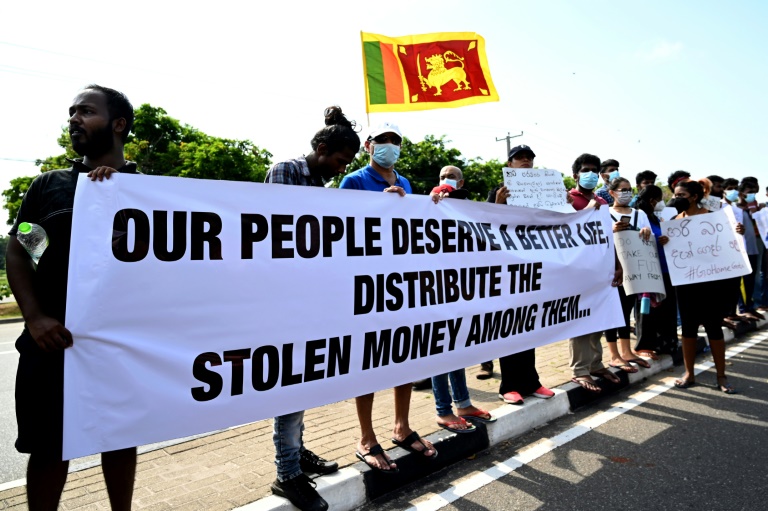
Thousands of young men and women dressed mostly in black and carrying hand-written posters and placards staged a noisy but peaceful demonstration at a busy roundabout in Colombo on Monday.

“Step down Rajapaksa,” said one placard, while another read: “Return the funds stolen from the republic.”

“Gota lunatic, go home Gota,” crowds chanted elsewhere in the city, referring to the president, who imposed a state of emergency last week, the day after a crowd attempted to storm his residence.

The homes of several senior administration figures in various parts of the island were surrounded by protesters, with police firing tear gas to disperse the crowds. 

'Now or never' to avoid climate catastrophe, warns UN

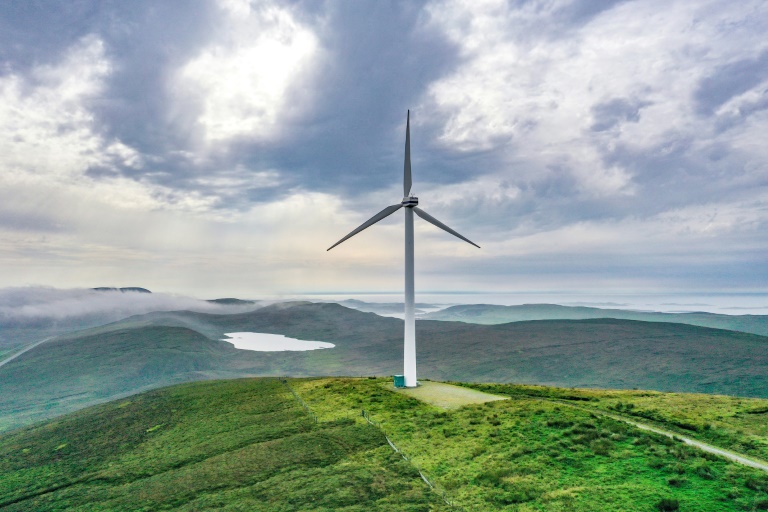
Humanity has less than three years to halt the rise of planet-warming carbon emissions and less than a decade to slash them almost in half, the UN said Monday in a landmark report on stopping global warming and ensuring a “liveable future”.

That daunting task is still — and only just — possible, but current policies are leading the planet towards catastrophic temperature rises, the UN’s Intergovernmental Panel on Climate Change (IPCC) made clear.

The world’s nations, they said, are taking our future right to the wire. 

The 2,800-page report — by far the most comprehensive assessment of how to halt global heating ever produced — documents to “a litany of broken climate promises”, said UN chief Antonio Guterres in a blistering judgement of governments and industry.   

“Some government and business leaders are saying one thing — but doing another. Simply put, they are lying. And the results will be catastrophic,” Guterres said in a video message released at the same time as the UN report.

In recent months, the IPCC has published the first two instalments in a trilogy of mammoth scientific assessments covering how greenhouse gas emissions are heating the planet and what that means for life on Earth.

This third report outlines what we can do about it.

“We are at a crossroads,” said IPCC chief Hoesung Lee. “The decisions we make now can secure a liveable future. We have the tools and know-how required to limit warming.” 

There are solutions, the report says, but they touch on virtually all aspects of modern life and require significant investment and need “immediate action”.

The very first item on the global to-do list is to stop greenhouse gas emissions from rising any further. 

That must be done before 2025 to have a hope of keeping within even the less ambitious warming targets of the Paris deal of two degrees Celsius above preindustrial levels. 

Scenarios of catastrophic 2.5C of warming also have emissions peaking within three years.

Beyond that, the report said carbon emissions need to drop 43 percent by 2030 and 84 percent by mid-century to meet the more ambitious Paris goal of 1.5C.  

“It’s now or never, if we want to limit global warming to 1.5C,” said Jim Skea, a professor at Imperial College London and co-chair of the working group behind the report. 

“Without immediate and deep emissions reductions across all sectors, it will be impossible.”

And cutting emissions is no longer enough, the IPCC said. Technologies to suck CO2 out of the atmosphere — not yet operating to scale — will need to be ramped up enormously.

– Fossil fuels –

The 1.5C target is presently “beyond reach”, even with the most updated global climate pledges, the IPCC said.

To get there the world must radically reduce the fossil fuels behind the lion’s share of emissions. 

Nations should stop burning coal completely and slash oil and gas use by 60 and 70 percent respectively to keep within the Paris goals, the IPCC said. 

It warned that current fossil fuel infrastructure, if used to the end of its expected lifetime without capturing carbon emissions, would make it impossible to limit global warming to 1.5 degrees Celsius above preindustrial levels, the IPCC said.

While government policies, investments and regulations will propel emissions cuts, the IPCC made clear that individuals can also make a big difference.

Cutting back on long-haul flights, switching to plant-based diets, climate-proofing buildings and other ways of cutting the consumption that drives energy demand could reduce greenhouse gas emissions 40 to 70 percent by 2050. 

“Rapid and deep changes in demand make it easier for every sector to reduce greenhouse gas emissions,” including construction, food consumption and transport, the report said.

With war in Ukraine spurring urgent efforts to transition away from Russian oil and gas in the West, observers said the report should sharpen nations’ focus on climate commitments. 

Elon Musk buys large stake in Twitter, sending stock soaring

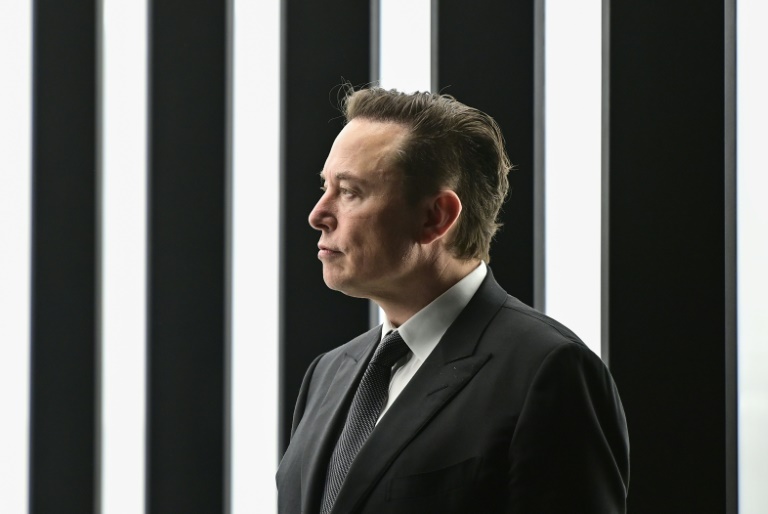
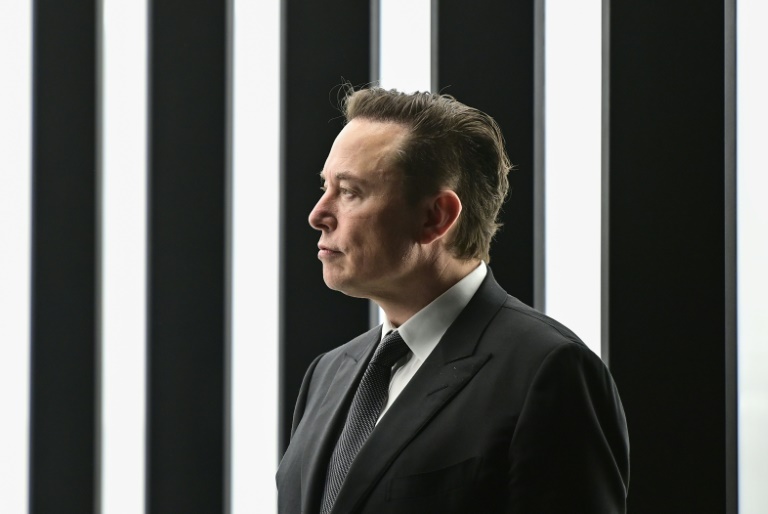
Tesla CEO Elon Musk, who has expressed concern over protecting freedom of speech in the “de facto public town square” of Twitter, disclosed Monday a large stake in the social media company, sending shares soaring.

Musk, who has more than 80 million followers on the microblogging platform, became its largest shareholder following the purchase of 73.5 million shares or 9.2 percent of common stock, according to a securities filing.

The investment is worth about $2.9 billion based on Friday’s share price. Musk is currently the world’s richest man, with a net worth of $287.6 billion, according to Forbes.

The billionaire is a frequent Twitter user, regularly mixing in inflammatory and controversial statements about issues or other public figures with remarks that are whimsical or business-focused. 

He has also sparred repeatedly with federal securities regulators, who cracked down on his social media use after a purported effort to take Tesla private in 2018 fell apart.

Twitter shares rocketed higher on the announcement, surging more than 20 percent to $47.86 in mid-morning trading. 

“We would expect this passive stake as just the start of broader conversations with the Twitter board (and) management that could ultimately lead to an active stake and a (potentially) more aggressive ownership role of Twitter,” analysts Daniel Ives and John Katsingris of Wedbush wrote in a note.

– ‘Just buy Twitter’ –

Disclosure of Musk’s stake follows a recent poll launched by the billionaire to his followers.

Saying “free speech is essential to a functioning democracy,” Musk on March 25 launched a survey on Twitter that asked: “Do you believe Twitter rigorously adheres to this principle?” 

More than two million people voted in the poll, with over 70 percent saying “no.”

“Given that Twitter serves as the de facto public town square, failing to adhere to free speech principles fundamentally undermines democracy. What should be done?” he continued the next day. “Is a new platform needed?”

“Just buy twitter,” was one of the first responses from tens of thousands of users.

US political conservatives have long complained that the platform censors right-wing voices, an assertion the company denies.

Its critics in particular cite Twitter’s decision to ban Donald Trump over the former US president’s role in fomenting the January 6, 2021 attack on the US Capitol. 

Twitter has also at times punished Representative Marjorie Taylor Greene, a far right Georgia congresswoman who has repeatedly posted misinformation about Covid-19 and vaccines against it.

Greene welcomed Musk’s investment on Twitter, tweeting “freedom of speech restored will enable us all to defeat them.”

– SEC deal –

Musk has cited the right to freedom of speech as a driver of his efforts to undo a agreement with the Securities and Exchange Commission (SEC) that tightened his use of the social media platform after he tweeted in August 2018 that funding was “secured” to take Tesla private.

The following month, Musk agreed to pay $20 million to settle SEC charges of securities fraud over the claim, and to institute new controls and procedures to oversee his communications.

But Musk’s attorneys have asked a federal court to cancel the agreement, saying the agency has pursed “endless unfounded investigations” into the Tesla boss and his company because Musk “remains an outspoken critic of the government.”

Musk has also used Twitter to court controversy away from the business world: in March he challenged Russian President Vladimir Putin to a fight following the invasion of Ukraine, and in February, Musk drew condemnation for a tweet comparing Canadian leader Justin Trudeau to Adolf Hitler.

The billionaire famously sparred with a British caver who belittled Musk’s offer to help rescue young soccer players trapped in a cave in Thailand in the summer of 2018.

Musk called the caver, Vernon Unsworth, “pedo guy” on Twitter.

Unsworth sued Musk for defamation, but a Los Angeles jury sided with the billionaire in December 2019 following a trial.

Hungary PM tightens hold on power after poll victory

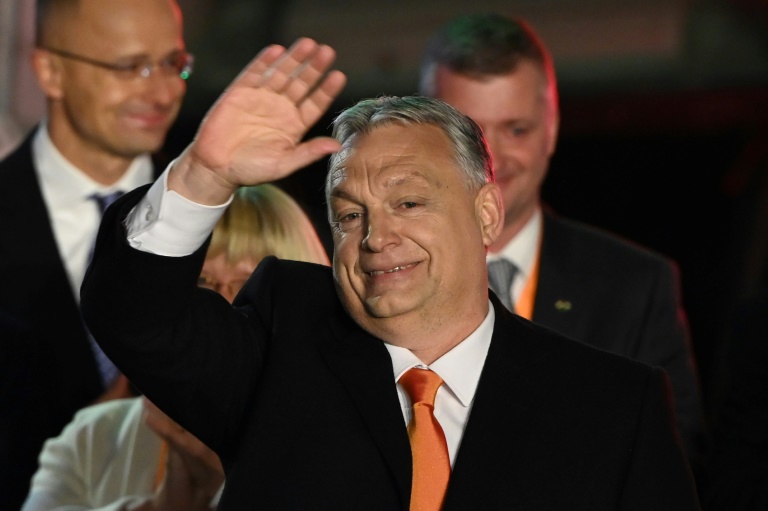
Prime Minister Viktor Orban’s fourth-term victory threatens to erode democracy further in Hungary, but he needs to tread a careful path with Brussels to secure much-needed EU funds, analysts said Monday.

His ruling Fidesz party extended its parliamentary majority by two seats in Sunday’s general election with turnout at near record levels, trouncing a united opposition in an election overshadowed by Russia’s war in neighbouring Ukraine.

An international mission of observers said the vote was “marred by the absence of a level playing field”, citing deficiencies that included the way in which the media landscape was slanted towards Fidesz and a lack of transparency in campaign financing.

But electoral victory, on top of 12 consecutive years in power, will make Orban “extremely confident”, said analyst Patrik Szicherle of Political Capital.

“This victory shows Fidesz that they need not change course, he can continue constructing his illiberal political system,” he told AFP.

Russian President Vladimir Putin, increasingly isolated over the war in Ukraine, congratulated Orban on Monday and said he hoped to develop further Moscow’s ties with Budapest.

The Hungarian nationalist has been a rare Putin ally in Europe and in NATO, even if diplomatically he has fallen broadly into line with EU support for Kyiv over the war.

Orban, 58, has ruled the EU nation in central Europe with a tight grip since 2010, taking control of the judiciary and other institutions and cracking down on civil liberties, raising alarm in Brussels.

“We have won a great victory — a victory so great you can perhaps see it from the moon and certainly from Brussels,” Orban told jubilant supporters in a victory speech late Sunday that needled the European Union.

– ‘Disaster for democracy’ –

“Conservative politics has won, this is not the past, this is the Europe of the future.”

Orban has presided over repeated confrontations with the European Union, including over the neutering of the press and judiciary, and measures targeting the LGBTQ community.

With almost all the votes counted, Fidesz won 53 percent of the vote compared to 35 percent for the opposition coalition, according to the national election office.

As a result, Fidesz and its Christian democratic partner KDNP retains its two-thirds majority in parliament with 135 seats — two more than in the outgoing legislature.

“I’m still savouring this victory,” Fidesz MEP Balazs Hidveghi told AFP. “We didn’t expect such a big win,” he conceded.

The far-right Mi Hazank party also surpassed expectations and will now enter parliament for the first time, after crossing the five-percent minimum threshold.

Marta Pardavi of rights group Hungary Helsinki Committee said the results were “a disaster for Hungarian democracy”.

“We see from other countries how autocrats do not go into reverse mode on their own,” she told AFP.

Analysts say Orban is likely to remain a thorn in the side of Brussels but seek a compromise to unlock billions of euros of pandemic post recovery funds.

Brussels has not released the funds to Hungary amid a row about rule-of-law issues and has set up an unprecedented mechanism to slash funds to EU members that flout democratic standards.

– Confrontation ‘ingrained’ –

“Confrontation with Brussels, at least on the rhetorical level, is ingrained into the political strategy of Fidesz. It will not disappear,” Szicherle said.

Gabor Gyori of Policy Solutions said Hungary needed to secure the Brussels funds.

“In part because of the massive amount of election spending and in part because of the uncertain economic environment he’s going to need financial support from the European Union more even than he needed before,” Gyori said.

Orban’s opponent, conservative Peter Marki-Zay, 49, who lost even in his own district, said the election had been “an unequal fight” given government control of public media.

Orban has insisted the vote was fair.

One failure for Orban, however was that a referendum on what Fidesz calls a “child protection” law banning the portrayal of LGBTQ people to under-18s, failed to garner the requisite votes.

But it was a fig-leaf referendum only as the law was already introduced last year.

Less than half of all general election voters cast valid ballots in the referendum.

Pardavi said on that point alone she was “very happy”.

burs-jsk/jm

Nearly entire global population breathing polluted air: WHO

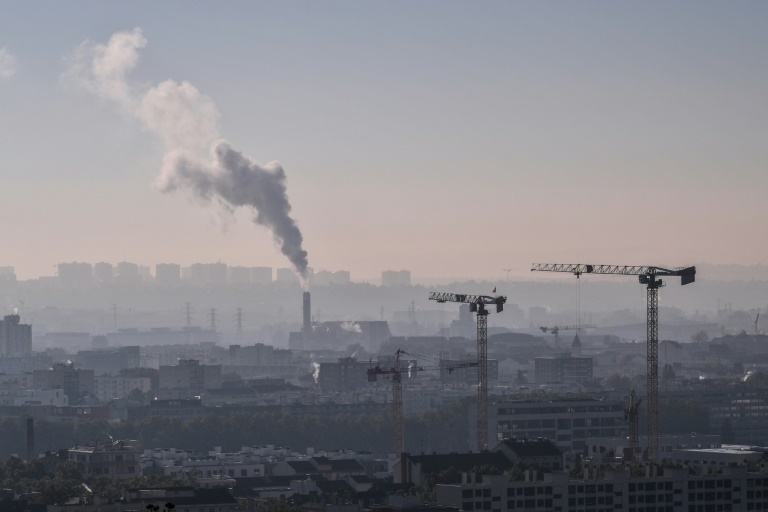
A full 99 percent of people on Earth breathe air containing too many pollutants, the World Health Organization said Monday, blaming poor air quality for millions of deaths each year.

Fresh data from the UN health agency showed that every corner of the globe is dealing with air pollution, although the problem is much worse in poorer countries.

“Almost 100 percent of the global population is still breathing air that exceeds the standards recommended by the World Health Organization,” the agency’s environment, climate change and health director Maria Neira told reporters.

“This is a major public health issue.”

In its previous report four years ago, WHO had already found that over 90 percent of the global population was affected, but it has since tightened its limits, it said.

“The evidence base for the harm caused by air pollution has been growing rapidly and points to significant harm caused by even low levels of many air pollutants,” WHO said. 

While UN data last year indicated that pandemic lockdowns and travel restrictions caused short-lived improvements in air quality, WHO said air pollution remains a towering problem.

“After surviving a pandemic, it is unacceptable to still have seven million preventable deaths and countless preventable lost years of good health due to air pollution,” Neira said.

– ‘Healthier energy systems’ –

WHO’s study provides air quality data from more than 6,000 cities and other settlements across 117 countries — representing around 80 percent of urban settings. 

In addition, Neira said WHO used satellite data and mathematical models to determine that air quality is falling short basically everywhere.

The poorest air quality was found in the eastern Mediterranean and Southeast Asia regions, and Africa, she said.

The findings were alarming, the organisation said, and highlighted the importance of rapidly curbing fossil fuel use.  

WHO chief Tedros Adhanom Ghebreyesus stressed that worries over soaring energy prices, due in part to Russia’s invasion of Ukraine, should help propel change.

“Current energy concerns highlight the importance of speeding up the transition to cleaner, healthier energy systems,” he said in a statement.

“High fossil fuel prices, energy security, and the urgency of addressing the twin health challenges of air pollution and climate change, underscore the pressing need to move faster towards a world that is much less dependent on fossil fuels.”

– Worse in poorer countries –

The report provides data on concentrations of dangerous particulate matter with a diameter of between 2.5 and 10 micrometres (PM10), and particles with a diameter of less than 2.5 micrometres (PM2.5).

PM2.5 includes toxins like sulfate and black carbon, which pose the greatest health risks since they can penetrate deep into the lungs or cardiovascular system.

And for the first time, the report also provides ground measurements of annual mean concentrations of nitrogen dioxide (NO2), a common urban pollutant, which is associated with respiratory diseases, particularly asthma.

The report found problems related to particulate pollution were far worse in poorer countries, but that most cities had trouble with nitrogen dioxide.

While the air in 17 percent of cities in high-income countries fell below WHO’s air quality guidelines for PM2.5 or PM10, less than one percent of cities in low and middle-income countries complied with the recommended thresholds, the report said.

Out of the around 4,000 cities across 74 countries that collected NO2 data, measurements meanwhile showed only 23 percent of people breathed annual average concentrations of the gas that met levels in WHO’s recently updated guidelines.

Sri Lanka opposition rejects unity govt offer, demands president resign

Sri Lanka’s opposition on Monday dismissed the president’s invitation to join a unity government as “nonsensical” and instead demanded he resign over the country’s worsening shortages of food, fuel and medicines.

President Gotabaya Rajapaksa’s overture came as armed troops looked to quell more demonstrations over what the government acknowledges is the country’s most severe economic crisis since independence from Britain in 1948.

Police fired tear gas and water cannon to disperse thousands of protesters trying to storm the private home of the prime minister — the president’s elder brother and the head of the family political clan — in Tangalle, once a bastion of support for the Rajapaksas in the island’s south.

The president asked opposition parties represented in parliament to “join the effort to seek solutions to the national crisis,” after the late-night resignation of nearly all cabinet ministers to pave the way for a revamped administration.

But the leftist People’s Liberation Front (JVP) responded by urging Gotabaya Rakapaksa and his once popular and powerful family to immediately step down.

“He really must be a lunatic to think that opposition MPs will prop up a government that is crumbling,” JVP lawmaker Anura Dissanayake told reporters in Colombo.

The main minority opposition party, the Tamil National Alliance (TNA), also dismissed the idea of their joining a Rajapaksa-led administration.

“His offer to reconstitute the cabinet with opposition MPs is nonsensical and infuriates the people who have been demanding his resignation,” TNA spokesman and lawmaker Abraham Sumanthiran told AFP.

The main opposition Samagi Jana Balawegaya (SJB) party made no formal statement, but its leader Sajith Premadasa vowed Sunday that it would not join any government featuring members of Rajapaksa’s family.

Every member of Sri Lanka’s cabinet except the president and his elder brother, Prime Minister Mahinda Rajapaksa, resigned late Sunday.

The country’s central bank governor Ajith Cabraal — who has long opposed the International Monetary Fund bailout now being sought by the country — also stepped down on Monday.

The departures cleared the way for the country’s ruling political clan to seek to shore up its weakening position and attempt to stem growing public protests.

But the president has already reappointed four of the outgoing ministers — three of them to their old jobs — while replacing brother Basil Rajapaksa as finance minister with the previous justice chief.

– ‘Deck chairs on the Titanic’ –

Political analysts said the offer of a unity government did not go far enough to address the economic crisis or restore confidence in the Rajapaksa administration.

“This is like re-arranging the deck chairs on the Titanic,” Bhavani Fonseka, political analyst and human rights lawyer, told AFP. “This is a joke.”

Political columnist Victor Ivan added that a cabinet reshuffle in the guise of a national government would not be acceptable to the public.

“What is needed is a serious reform programme, not just to revive the economy but address issues of governance,” Ivan told AFP. 

A critical lack of foreign currency has left Sri Lanka struggling to service its ballooning $51-billion foreign debt, with the pandemic torpedoing vital revenue from tourism and remittances.

The result has been unprecedented food and fuel shortages along with record inflation and crippling power cuts, with no sign of an end to the economic woes.

Trading was halted on the country’s stock exchange seconds after it opened Monday as shares plunged past the five percent threshold needed to trigger an automatic stop.

Economists say Sri Lanka’s crisis has been exacerbated by government mismanagement, years of accumulated borrowing and ill-advised tax cuts.

The government has announced it will seek a bailout from the International Monetary Fund, but talks are yet to begin.

– ‘Gota lunatic’ –

“Go lunatic, Gota lunatic,” crowds chanted on Monday in Colombo, referring to the president, who had imposed a state of emergency a day after a crowd attempted to storm his residence.

Throughout Sunday evening, hundreds of people had staged noisy but peaceful demonstrations in towns across the island of 22 million, denouncing Rajapaksa’s handling of the crisis.

A junior coalition partner announced it would quit the administration this week, a move that would further weaken Rajapaksa’s majority in the legislature.

Elon Musk buys large stake in Twitter, sending stock soaring

Elon Musk has taken a major stake in Twitter, regulatory filings showed Monday, sending the social media network’s stock soaring and igniting speculation he could seek an active role in its operations.

Musk, the world’s richest man and CEO of electric vehicle company Tesla, is a frequent Twitter user who often posts controversial messages and announcements, and has long been critical of social media companies.

In one recent post he questioned Twitter’s adherence to free speech and hinted at launching his own platform. 

According to a document filed with the US Securities and Exchange Commission (SEC), the South African-born billionaire acquired nearly 73.5 million Twitter shares — a 9.2 percent stake in the company.

Based on Friday’s closing price of the company’s stock, his investment amounts to nearly $2.9 billion.

Investors responded quickly. At 7.15 am in New York (1115 GMT) Twitter’s stock was trading at about $49, up by around 26 percent.

“We would expect this passive stake as just the start of broader conversations with the Twitter board/management that could ultimately lead to an active stake and a potential more aggressive ownership role of Twitter,” analysts Daniel Ives and John Katsingris of Wedbush wrote in a note.

Musk launched a poll on Twitter on March 25, saying “free speech is essential to a functioning democracy. Do you believe Twitter rigorously adheres to this principle?” 

More than two million people voted in the poll, with over 70 percent saying “no.”

“Given that Twitter serves as the de facto public town square, failing to adhere to free speech principles fundamentally undermines democracy. What should be done?” he continued the next day.

“Is a new platform needed?”

“Just buy twitter,” was one of the first responses from tens of thousands of users.

– Musk, Twitter and controversy –

Musk has wielded Twitter polls to conduct business before: in November last year he offloaded $5 billion in Tesla shares days after asking fellow social media users if he should sell 10 percent of his stake.

In summer 2018 Musk published a tweet where he claimed that he had the appropriate funding to take Tesla private, without providing proof.

The tweet caused a brief spike in Tesla’s share price but the SEC said the statements on Twitter were “false and misleading.”

The mogul then agreed that any tweets capable of moving Tesla’s share price would be screened by lawyers, as part of a deal that saw him pay $20 million to settle a fraud case brought by the SEC.

Then in early March, Musk asked a New York judge to overturn the agreement with the stock market watchdog on his tweets. 

His lawyer said the dispute with the SEC was “yet another attempt to harass Tesla and silence Mr Musk.”

Musk has also used Twitter to court controversy away from the business world: in March he challenged Russian President Vladimir Putin to a fight, with the fate of Ukraine at stake; and in February he drew condemnation for a tweet comparing Canadian leader Justin Trudeau to Adolf Hitler.

Elon Musk buys large stake in Twitter, sending stock soaring

Elon Musk has taken a major stake in Twitter, regulatory filings showed Monday, sending the social media network’s stock soaring and igniting speculation he could seek an active role in its operations.

Musk, the world’s richest man and CEO of electric vehicle company Tesla, is a frequent Twitter user who often posts controversial messages and announcements, and has long been critical of social media companies.

In one recent post he questioned Twitter’s adherence to free speech and hinted at launching his own platform. 

According to a document filed with the US Securities and Exchange Commission (SEC), the South African-born billionaire acquired nearly 73.5 million Twitter shares — a 9.2 percent stake in the company.

Based on Friday’s closing price of the company’s stock, his investment amounts to nearly $2.9 billion.

Investors responded quickly. At 7.15 am in New York (1115 GMT) Twitter’s stock was trading at about $49, up by around 26 percent.

“We would expect this passive stake as just the start of broader conversations with the Twitter board/management that could ultimately lead to an active stake and a potential more aggressive ownership role of Twitter,” analysts Daniel Ives and John Katsingris of Wedbush wrote in a note.

Musk launched a poll on Twitter on March 25, saying “free speech is essential to a functioning democracy. Do you believe Twitter rigorously adheres to this principle?” 

More than two million people voted in the poll, with over 70 percent saying “no.”

“Given that Twitter serves as the de facto public town square, failing to adhere to free speech principles fundamentally undermines democracy. What should be done?” he continued the next day.

“Is a new platform needed?”

“Just buy twitter,” was one of the first responses from tens of thousands of users.

– Musk, Twitter and controversy –

Musk has wielded Twitter polls to conduct business before: in November last year he offloaded $5 billion in Tesla shares days after asking fellow social media users if he should sell 10 percent of his stake.

In summer 2018 Musk published a tweet where he claimed that he had the appropriate funding to take Tesla private, without providing proof.

The tweet caused a brief spike in Tesla’s share price but the SEC said the statements on Twitter were “false and misleading.”

The mogul then agreed that any tweets capable of moving Tesla’s share price would be screened by lawyers, as part of a deal that saw him pay $20 million to settle a fraud case brought by the SEC.

Then in early March, Musk asked a New York judge to overturn the agreement with the stock market watchdog on his tweets. 

His lawyer said the dispute with the SEC was “yet another attempt to harass Tesla and silence Mr Musk.”

Musk has also used Twitter to court controversy away from the business world: in March he challenged Russian President Vladimir Putin to a fight, with the fate of Ukraine at stake; and in February he drew condemnation for a tweet comparing Canadian leader Justin Trudeau to Adolf Hitler.

Close Bitnami banner
Bitnami