World

UN to release handbook of climate change solutions

UN climate experts are set to release what is expected to be the definitive guide to halting global warming on Monday, in a report that lays out how societies and economies must transform to ensure a “liveable” future.

With war in Ukraine spurring an urgent energy rethink in the West, analysts say the latest report from the UN’s Intergovernmental Panel on Climate Change will also be an important resource for nations seeking a rapid transition away from Russian oil and gas.

In recent months the IPCC has published the first two instalments in a trilogy of mammoth scientific assessments covering how greenhouse gas pollution is heating the planet and what that means for life on Earth.

This third report will outline what to do about it.

But that answer has sweeping political ramifications as climate solutions touch on virtually all aspects of modern life — and require significant investment. 

Two weeks of gruelling negotiations have seen nearly 200 nations struggling to thrash out line-by-line a high-level “summary for policymakers” that distils the hundreds of pages of underlying assessment. 

That meeting was supposed to wrap up on Friday, but dragged on through the weekend. The IPCC assessment was originally due to be published publicly on Monday at 0900 GMT, but will now be released at 1500GMT. 

“Everybody has something to lose and everybody has something to gain,” said one person close to the process.

Easy answers are unlikely, with the IPCC expected to detail the need for transformational changes to energy generation and industry, as well as to cities, transportation and food systems. 

To save the world from the worst ravages of climate change, the report is also expected to warn that slashing carbon dioxide pollution is no longer enough. 

And technologies that are not yet operating to scale will need to be ramped up enormously to suck CO2 out of the atmosphere.

A 1.5C cap on global warming — the aspirational goal of the 2015 Paris climate accord — has been embraced as a target by most of the world’s nations.

Barely 1.1C of warming so far has ushered in a devastating surge of deadly extreme weather across the globe.

– Fossil fuels –

UN chief Antonio Guterres warned last month that major economies are allowing carbon pollution to increase when drastic cuts are needed.

“We are sleepwalking to climate catastrophe,” he said.

In February, the IPCC report on past, present and future climate change impacts and vulnerabilities detailed what Guterres called an “atlas of human suffering”. 

The report concluded that further delays in cutting carbon pollution and preparing for impacts already in the pipeline “will miss a brief and rapidly closing window of opportunity to secure a liveable and sustainable future for all”.

Current national carbon-cutting commitments still put the world on a catastrophic path toward 2.7C of warming by 2100.

“How much more destruction must we witness, and how many more scientific reports will it take, before governments finally acknowledge fossil fuels as the real culprits behind the human suffering being felt across the globe?”, said Namrata Chowdhary of 350.org. 

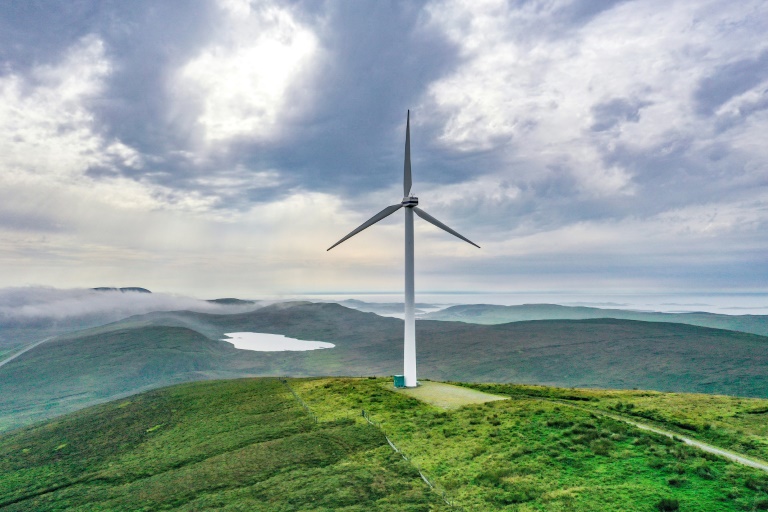
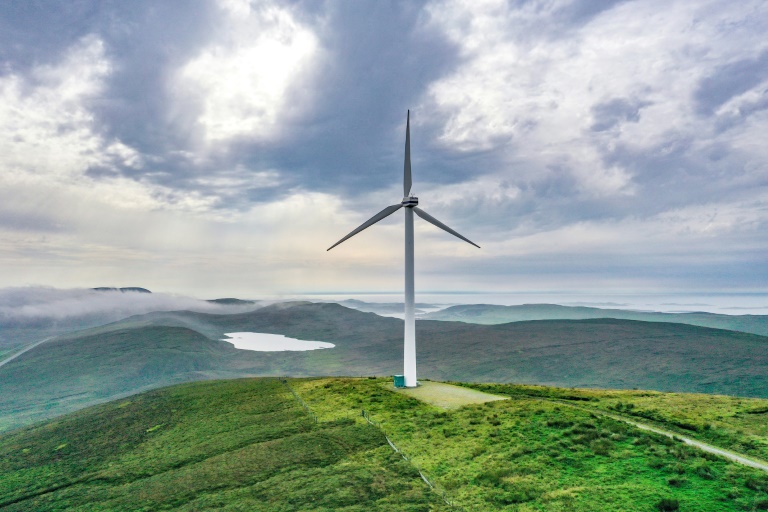
The main focus of the report is on weaning the global economy off fossil fuels and moving to low- or zero-carbon sources of energy, from solar and wind to nuclear, hydro and hydrogen.

Helping that transition is the fact that renewable energy is now cheaper than energy generated by fossil fuels in most markets.

The IPCC also details ways to reduce demand for oil, gas and coal, whether by making buildings more energy-efficient or encouraging shifts in lifestyle, such as eating less beef and not flying half-way around the world for a holiday or business meeting.

With intense political wrangling over the high-level policy summary, some fear the message will have been watered down.  

“The climate crisis is accelerating and fossil fuels are the overwhelming cause. Any report on mitigation that fails to emphasise that fact is denying the very science to which the IPCC is committed,” said Nikki Reisch of the Center for International Environmental Law. 

The report’s finding will feed into UN political negotiations, which resume in November in Egypt at COP 27.   
Shanghai defends policy of separating Covid-positive kids from parents

Shanghai health officials on Monday defended a policy of separating babies and young children from their parents if they test positive for Covid-19, as frustration at the city’s tough virus controls builds.

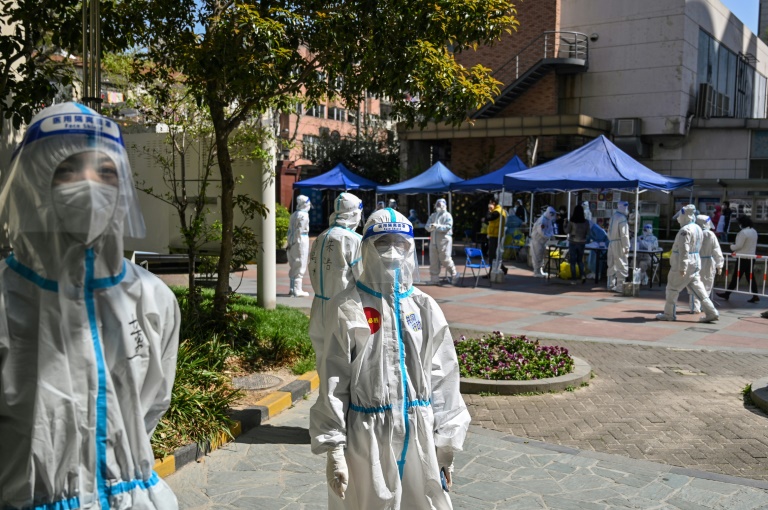
Around 25 million people in Shanghai, China’s largest city and financial centre, remain locked down as authorities try to snuff out the country’s most severe virus outbreak since the end of the first pandemic wave in early 2020.

Under China’s unbending virus controls, anyone found positive — even if they are asymptomatic or have a mild infection — must be isolated from non-infected people.

That includes children who test positive but whose family members do not, health officials confirmed on Monday, defending a policy which has spread anxiety and outrage across the city.

“If the child is younger than seven years old, those children will receive treatment in a public health centre,” Wu Qianyu, an official from the Shanghai Municipal Health Commission, said Monday.

“For older children or teenagers… we are mainly isolating them in centralised (quarantine) places.”

Parents and guardians have taken to social media to voice their anger at the policy.

“Parents need to meet ‘conditions’ to accompany their children? That’s absurd… it should be their most basic right,” one unnamed commenter wrote on social media platform Weibo. 

Unverified videos of babies and young children in state-run wards have been widely shared.

But Shanghai official Wu said the policy was integral to virus “prevention and control work”.

“We have made it clear that children whose parents are also positive… can live in the same place as the children,” she added.

Frustration is mounting in Shanghai, which on Monday recorded 9,000 new virus cases and is the epicentre of China’s outbreak.

Authorities initially promised not to lock down the whole city, instead targeting virus clusters with localised lockdowns of specific compounds or districts.

After weeks of growing case numbers, city officials last week gave a rare admission of failure of their tactics. 

They introduced a two-stage lockdown, initially billed as lasting four days each to mass test both sides of the city.

Several days on, residents fear they are under a prolonged stay-at-home order by stealth, unable to exercise outside or walk dogs and with limited access to fresh food. 

China’s zero-Covid strategy is under extreme pressure as the virus whips across the country, with another outbreak in the northeast.

Until March, China had successfully kept the daily caseload down to double or triple digits, with harsh localised lockdowns, mass testing and travel restrictions.

On Monday the nationwide caseload topped 13,000 for a second day, as the daily infection tally hit rates unseen since mid-February 2020.

Sri Lanka leader offers to share power as protests mount

Sri Lanka’s president offered to share power with the opposition on Monday as protests escalated across the country demanding his resignation over worsening shortages of food, fuel and medicines.

President Gotabaya Rajapaksa’s appeal to legislators came as heavily armed security forces looked to quell more demonstrations over what the government itself has acknowledged as the worst shortages of essentials since independence from Britain in 1948.

“The president invites all political parties in parliament to accept cabinet posts and join the effort to seek solutions to the national crisis,” Rajapaksa’s office said in a statement.

It stressed that solutions to the deepening crisis should be found “within a democratic framework”, as hundreds were joining spontaneous demonstrations in cities, towns and villages.

The invitation came after 26 cabinet ministers — every member except Rajapaksa and his elder brother Prime Minister Mahinda Rajapaksa — submitted letters of resignation at a late-night meeting on Sunday. The country’s central bank governor Ajith Cabraal joined the long list of resignations on Monday.

The move cleared the way for the country’s ruling political clan to seek to shore up its position.

Trading was halted on the country’s stock exchange seconds after it opened as shares fell by more than the five percent threshold needed to trigger an automatic stop.

The South Asian island nation is in the grip of unprecedented food and fuel shortages along with record inflation and crippling power cuts, with no sign of an end to the economic woes.

The government has announced it will seek a bailout from the International Monetary Fund, but talks are yet to begin.

Troops and police were placed on high alert as a 36-hour curfew ended at dawn on Monday despite intelligence reports warning of more unrest, a top security official told AFP. 

– ‘Go home Gota’ –

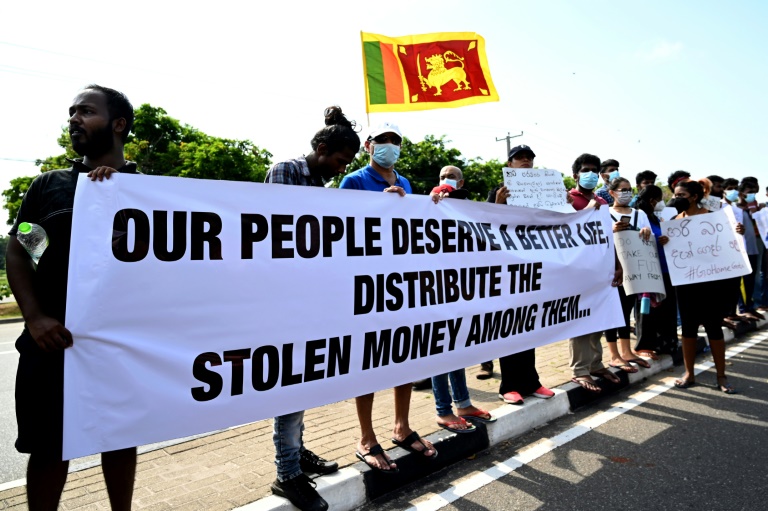
“Go lunatic, Gota lunatic,” crowds chanted on Monday in Kiribathgoda, referring to the president, who imposed the state of emergency a day after a crowd attempted to storm his residence.

Throughout Sunday evening, hundreds of people had staged noisy but peaceful demonstrations in towns across the island of 22 million, denouncing Rajapaksa’s handling of the crisis.

“Go home Gota, go home Gota” protesters shouted in Rajagiriya, near the national parliament, while in Negombo, near the main international airport, people chanted, “Gota fail, fail, fail”.

Sunday’s full-day curfew prevented larger protests that had been organised through social media platforms such as Facebook, Twitter and WhatsApp, all of which were blocked by the government.

The platforms were unlocked and the partial internet censorship ended after 15 hours, as the Human Rights Commission of Sri Lanka ruled the ban was illegal.

Activists said they would hold larger demonstrations in several key towns on Monday to force the once hugely-popular Rajapaksa and his family to step down.

A junior coalition partner announced it will quit the administration this week, a move that would weaken Rajapaksa’s majority in the legislature.

Many economists say Sri Lanka’s crisis has been exacerbated by government mismanagement, years of accumulated borrowing and ill-advised tax cuts.

Hong Kong leader Carrie Lam to leave office

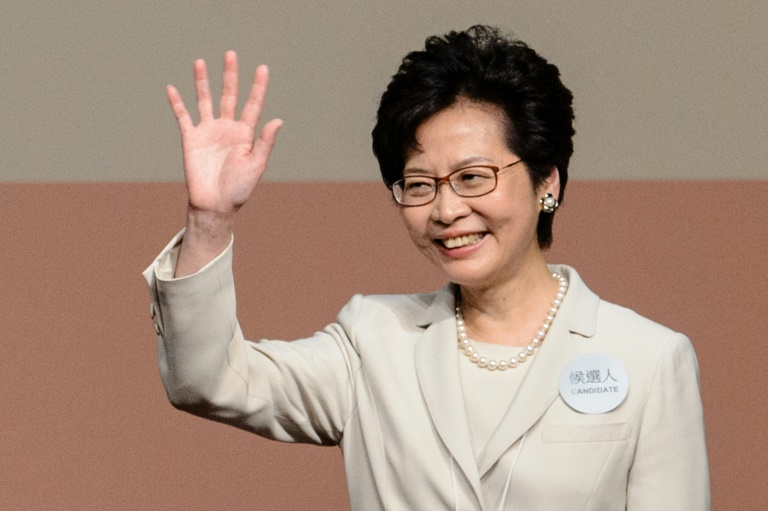
Hong Kong’s leader Carrie Lam announced Monday that she will step down in June, ending a divisive term that saw democracy protests squashed and strict pandemic curbs plunge the business hub into international isolation.

Ending months of speculation, Lam confirmed she would not seek a second term when a committee made up of the city’s political elite chooses a new leader next month. 

“I will complete my five-year term as chief executive on June 30, and officially conclude my 42-year career in government,” Lam told reporters.

Lam said China’s leaders “understood and respected” her choice not to seek another term and that she wanted to spend more time with her family. 

A career bureaucrat, Lam became Hong Kong’s first woman leader in 2017.

The 64-year-old had dodged questions for months over whether she would run again and during Monday’s announcement she revealed that had informed Beijing of her plans to quit more than a year ago.  

Hong Kongers and businesses based in the finance hub currently have little clarity on who will be the next leader.

The chief executive position is not popularly elected, one of the core demands of years of democracy protests which have since been crushed.

Instead, the position is selected by a 1,500-strong pro-Beijing committee, the equivalent of 0.02 percent of the city’s 7.4 million population. 

The city’s next chief executive will be chosen on May 8 but so far no one with a realistic prospect has publicly thrown their hat into the ring. 

– Politics and pandemic –

Hong Kong’s number two official, John Lee, who has a background in the security services, has been tipped by local press as the most likely contender.

Another potential front runner is finance chief Paul Chan.

Lam said on Monday morning that she has not yet received any resignations from her ministers, a step that Lee and Chan would need to make before running.

Lam’s successor will take office on July 1, the 25th anniversary of Hong Kong’s handover by Britain to China.

She leaves office a controversial figure. 

Supporters see her as a staunch Beijing loyalist who steered the city through huge democracy protests and a debilitating pandemic. 

Critics, including many western powers, view her as someone who oversaw the collapse of Hong Kong’s political freedoms and its reputation as a stable regional business hub.

After huge and sometimes violent protests swept Hong Kong in 2019 Beijing responded with a crackdown that has remoulded the once outspoken city into a mirror of the authoritarian mainland. 

Lam became the first Hong Kong leader to be sanctioned by the United States because of her support for the crackdown which has seen most of the city’s prominent democracy supporters arrested, jailed or flee overseas.

Her administration also hewed to China’s zero-Covid model, implementing some of the world’s toughest anti-coronavirus measures and exasperating international businesses.

The largely closed borders and strict quarantine rules kept infections at bay for some 18 months at the expense of Hong Kong being cut off internationally.

But the zero-Covid strategy collapsed when the highly transmissible Omicron variant broke through earlier this year leaving Hong Kong with one of the developed world’s highest fatality rates. 

Hong Kongers have been leaving the city over the last two years at a rate not seen since the period before the handover.

Thousands of foreign residents have also departed, especially in the first quarter of this year when the Omicron outbreak raged and it became clear the city would remain cut-off.

Lam is currently on track to leave office as the least popular leader in Hong Kong’s post-handover period, according to regular polling by the Hong Kong Public Opinion Research Institute.

The Hong Kong stock exchange was trading up 1.4 percent after her announcement. 

But Lam predicted her successor would have an easier ride. 

“Compared to this term of government, the next government will be seeing a more stable political environment,” she told reporters. 

Pakistan's top court to hear arguments on constitutional crisis

Pakistan’s Supreme Court will hear arguments later on Monday around Prime Minister Imran Khan’s shock decision to call an early election, sidestepping a no-confidence vote that would have seen him booted from office.

The opposition had expected to take power on Sunday after mustering enough votes to oust the cricketer-turned-politician, but the national assembly deputy speaker refused to allow the motion to proceed because of “foreign interference”.

Simultaneously, Khan asked the presidency — a largely ceremonial office held by a loyalist — to dissolve the assembly, meaning an election must be held within 90 days.

On paper, and pending any court decision, Khan will remain in charge for at least two weeks, or until an interim government is formed to oversee elections.

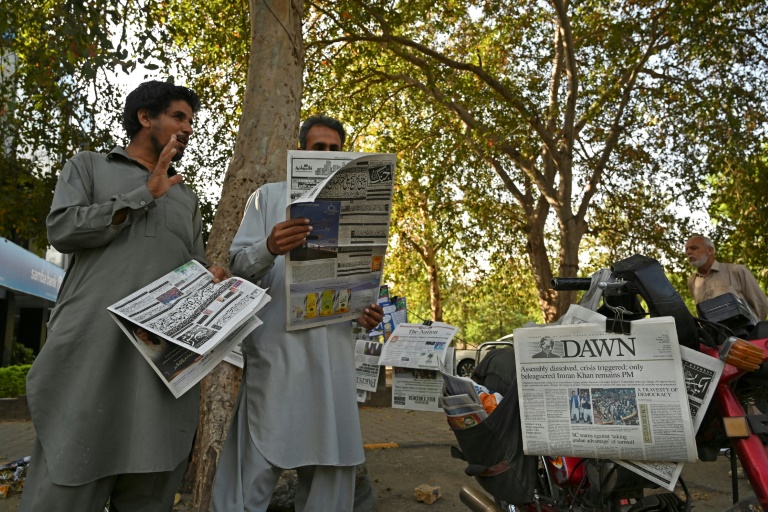
“Khan’s ‘surprise’ triggers constitutional crisis,” thundered The Nation newspaper Monday, while its rival Dawn called it “A travesty of democracy” above a front-page editorial.

According to the constitution, a prime minister cannot ask for the assembly to be dissolved while facing a no-confidence vote.

An alliance of usually feuding dynastic parties had plotted for weeks to unravel the tenuous coalition that made Khan premier in 2018, but he claimed they went too far by colluding with the United States for “regime change”.

– Washington denial –

Khan insists he has evidence — which he has declined to disclose publicly — of Washington’s involvement, although local media have reported it was merely a letter from Pakistan’s ambassador following a briefing with a senior US official.

Western powers want him removed because he won’t stand with them on global issues against Russia and China, Khan said.

Washington has denied involvement.

Pakistan’s Supreme Court has now received a slew of suits and petitions from the government and opposition regarding the crisis, but has also taken up the case “suo moto” — on its own merit.

“This is an urgent matter,” chief justice Umar Atta Bandial said late Sunday.

The current court is ostensibly independent, but rights activists say previous benches have been used by civilian and military administrations to do their bidding throughout Pakistan’s history.

Khan was elected after promising to sweep away decades of entrenched corruption and cronyism, but has struggled to maintain support with inflation skyrocketing, a feeble rupee and crippling debt.

Some analysts said Khan had also lost the crucial support of the military, but it is unlikely he would have pulled off Sunday’s manoeuvres without its knowledge — if not blessing.

There have been four military coups — and at least as many unsuccessful ones — since independence in 1947, and the country has spent more than three decades under army rule.

“The best option in this situation are fresh elections to enable the new government to handle economic, political and external problems faced by the country,” said Talat Masood, a general turned political analyst.

As the opposition scrambled to react, Khan taunted them on Twitter.

“Astonished by the reaction,” he tweeted, adding the opposition had been “crying hoarse” about the government failing and losing the support of the people.

“So why the fear of elections now?”

Rodrigo Chaves leaves scandal behind in fast track to presidency

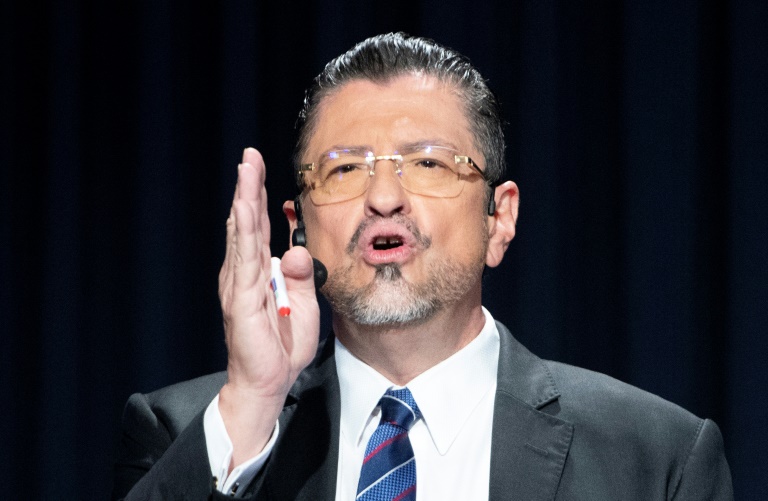
Right-wing conservative Rodrigo Chaves entered politics like a racing car.

At high speed he dodged accusations of sexual harassment and stormed straight to his goal: the Costa Rica presidency.

Leading the brand new Social Democratic Progress Party, Chaves was a relative unknown to many.

His only previous political experience was a six-month stint as finance minister between 2019 and 2020 in the outgoing administration.

But his confrontational attitude and promises to tackle the economy under the slogan “I’m up for the fight” helped him negotiate a congested field of 25 candidates in February’s first round.

Although he finished a distant second to former president Jose Maria Figueres in that, by polling day for Sunday’s second-round run-off, Chaves was leading voter intentions.

“We’re going to win … We’ve climbed the mountain, without resources, with the media against us, with insults and disgraces. But you said ‘we’re up for the fight’ for our country,” the 60-year-old called out to 250 supporters as he ended his campaign. 

An economist with a 30-year career at the World Bank, Chaves jumped to the head of the opinion polls as soon as he made the second round.

Voters seemed more interested in his economics background than his shameful behavior.

“We have more than 25 years of constant economic and moral crisis and we hope that Don Rodrigo will manage to help us in this really difficult situation,” said Rolando Gutierrez, 58, an automotive technician.

With a degree in economics from the University of Ohio, Chaves has vowed to pick the country up off its knees.

Known as a beacon of political stability, Costa Rica has been plunged into an economic crisis partly by the coronavirus pandemic that lashed its vital tourism sector.

– Improper conduct –

It was at the World Bank that the 1.85-meter tall Chaves, whose opponents accuse him of arrogance, became embroiled in a scandal. 

He was accused of improper conduct towards two young subordinates between 2008 and 2013.

The sexual harassment charge earned him a demotion in October 2019 to a position with no responsibilities and no prospects of a salary rise for three years.

He resigned around a month later, and took on the role of finance minister in Carlos Alvarado’s government.

In defense of his conduct, Chaves insisted it had been merely “jokes” that were “misinterpreted due to cultural differences.” 

“I have a wife, six sisters, eight aunts and two daughters — I have a deep respect for all women,” Chaves told AFP in February, ahead of the first round of voting.

Even so, last month the Wall Street Journal accused Chaves of continuing his improper behavior in a World Bank post in Indonesia between 2018 and 2019.

It also said he was denied a position in Brazil because the institution’s employees there refused to work with him due to his reputation.

His troubles don’t stop there. Chaves been accused of paying for campaign expenses from bank accounts that have not been declared officially, something he denies.

“We’re worried that when someone like that takes power it will normalize even more so harassment and violence against women” by his supporters, said Rocio Jimenez, a member of the Women to the Fore collective.

UN to release handbook of climate change solutions

UN climate experts are set to release what is expected to be the definitive guide to halting global warming on Monday, in a report that lays out how societies and economies must transform to ensure a “liveable” future.

With war in Ukraine spurring an urgent energy rethink in the West, analysts say the latest report from the UN’s Intergovernmental Panel on Climate Change will also be an important resource for nations seeking a rapid transition away from Russian oil and gas.

In recent months the IPCC has published the first two instalments in a trilogy of mammoth scientific assessments covering how greenhouse gas pollution is heating the planet and what that means for life on Earth.

This third report will outline what to do about it.

But that answer has sweeping political ramifications as climate solutions touch on virtually all aspects of modern life — and require significant investment. 

Two weeks of gruelling negotiations have seen nearly 200 nations struggling to thrash out line-by-line a high-level “summary for policymakers” that distils the hundreds of pages of underlying assessment. 

That meeting was supposed to wrap up on Friday, but dragged on through the weekend. The IPCC assessment was originally due to be published publicly on Monday at 0900 GMT, but that is now likely to be delayed until later in the day. 

“Everybody has something to lose and everybody has something to gain,” said one person close to the process.

Easy answers are unlikely, with the IPCC expected to detail the need for transformational changes to energy generation and industry, as well as to cities, transportation and food systems. 

To save the world from the worst ravages of climate change, the report is also expected to warn that slashing carbon dioxide pollution is no longer enough. 

And technologies that are not yet operating to scale will need to be ramped up enormously to suck CO2 out of the atmosphere.

A 1.5C cap on global warming — the aspirational goal of the 2015 Paris climate accord — has been embraced as a target by most of the world’s nations.

Barely 1.1C of warming so far has ushered in a devastating surge of deadly extreme weather across the globe.

– Fossil fuels –

UN chief Antonio Guterres warned last month that major economies are allowing carbon pollution to increase when drastic cuts are needed.

“We are sleepwalking to climate catastrophe,” he said.

In February, the IPCC report on past, present and future climate change impacts and vulnerabilities detailed what Guterres called an “atlas of human suffering”. 

The report concluded that further delays in cutting carbon pollution and preparing for impacts already in the pipeline “will miss a brief and rapidly closing window of opportunity to secure a liveable and sustainable future for all”.

Current national carbon-cutting commitments still put the world on a catastrophic path toward 2.7C of warming by 2100.

“How much more destruction must we witness, and how many more scientific reports will it take, before governments finally acknowledge fossil fuels as the real culprits behind the human suffering being felt across the globe?”, said Namrata Chowdhary of 350.org. 

The main focus of the report is on weaning the global economy off fossil fuels and moving to low- or zero-carbon sources of energy, from solar and wind to nuclear, hydro and hydrogen.

Helping that transition is the fact that renewable energy is now cheaper than energy generated by fossil fuels in most markets.

The IPCC also details ways to reduce demand for oil, gas and coal, whether by making buildings more energy-efficient or encouraging shifts in lifestyle, such as eating less beef and not flying half-way around the world for a holiday or business meeting.

With intense political wrangling over the high level policy summary, some fear the message will have been watered down.  

“The climate crisis is accelerating and fossil fuels are the overwhelming cause. Any report on mitigation that fails to emphasise that fact is denying the very science to which the IPCC is committed,” said Nikki Reisch of the Center for International Environmental Law. 

The report’s finding will feed into UN political negotiations, which resume in November in Egypt at COP 27.   
UN to release handbook of climate change solutions

UN climate experts are set to release what is expected to be the definitive guide to halting global warming on Monday, in a report that lays out how societies and economies must transform to ensure a “liveable” future.

With war in Ukraine spurring an urgent energy rethink in the West, analysts say the latest report from the UN’s Intergovernmental Panel on Climate Change will also be an important resource for nations seeking a rapid transition away from Russian oil and gas.

In recent months the IPCC has published the first two instalments in a trilogy of mammoth scientific assessments covering how greenhouse gas pollution is heating the planet and what that means for life on Earth.

This third report will outline what to do about it.

But that answer has sweeping political ramifications as climate solutions touch on virtually all aspects of modern life — and require significant investment. 

Two weeks of gruelling negotiations have seen nearly 200 nations struggling to thrash out line-by-line a high-level “summary for policymakers” that distils the hundreds of pages of underlying assessment. 

That meeting was supposed to wrap up on Friday, but dragged on through the weekend. The IPCC assessment was originally due to be published publicly on Monday at 0900 GMT, but that is now likely to be delayed until later in the day. 

“Everybody has something to lose and everybody has something to gain,” said one person close to the process.

Easy answers are unlikely, with the IPCC expected to detail the need for transformational changes to energy generation and industry, as well as to cities, transportation and food systems. 

To save the world from the worst ravages of climate change, the report is also expected to warn that slashing carbon dioxide pollution is no longer enough. 

And technologies that are not yet operating to scale will need to be ramped up enormously to suck CO2 out of the atmosphere.

A 1.5C cap on global warming — the aspirational goal of the 2015 Paris climate accord — has been embraced as a target by most of the world’s nations.

Barely 1.1C of warming so far has ushered in a devastating surge of deadly extreme weather across the globe.

– Fossil fuels –

UN chief Antonio Guterres warned last month that major economies are allowing carbon pollution to increase when drastic cuts are needed.

“We are sleepwalking to climate catastrophe,” he said.

In February, the IPCC report on past, present and future climate change impacts and vulnerabilities detailed what Guterres called an “atlas of human suffering”. 

The report concluded that further delays in cutting carbon pollution and preparing for impacts already in the pipeline “will miss a brief and rapidly closing window of opportunity to secure a liveable and sustainable future for all”.

Current national carbon-cutting commitments still put the world on a catastrophic path toward 2.7C of warming by 2100.

“How much more destruction must we witness, and how many more scientific reports will it take, before governments finally acknowledge fossil fuels as the real culprits behind the human suffering being felt across the globe?”, said Namrata Chowdhary of 350.org. 

The main focus of the report is on weaning the global economy off fossil fuels and moving to low- or zero-carbon sources of energy, from solar and wind to nuclear, hydro and hydrogen.

Helping that transition is the fact that renewable energy is now cheaper than energy generated by fossil fuels in most markets.

The IPCC also details ways to reduce demand for oil, gas and coal, whether by making buildings more energy-efficient or encouraging shifts in lifestyle, such as eating less beef and not flying half-way around the world for a holiday or business meeting.

With intense political wrangling over the high level policy summary, some fear the message will have been watered down.  

“The climate crisis is accelerating and fossil fuels are the overwhelming cause. Any report on mitigation that fails to emphasise that fact is denying the very science to which the IPCC is committed,” said Nikki Reisch of the Center for International Environmental Law. 

The report’s finding will feed into UN political negotiations, which resume in November in Egypt at COP 27.   
Hong Kong leader Carrie Lam to leave office

Hong Kong’s leader Carrie Lam announced Monday that she will step down in June ending a five-year term in office that saw democracy protests squashed and strict pandemic curbs plunge the business hub into international isolation.

Ending months of speculation, Lam confirmed she would not seek a second term when a committee made up of the city’s political elite chooses a new leader next month. 

“I will complete my five-year term as chief executive on June 30, and officially conclude my 42-year career in government,” Lam told reporters.

Lam said China’s leaders “understood and respected” her choice not to seek another term and that she wanted to spend more time with her family. 

“I have to put my family members first, and they feel it is time for me to return home,” she said.

A career bureaucrat, Lam became Hong Kong’s first woman leader in 2017.

The 64-year-old had dodged questions for months over whether she would run again and during Monday’s announcement she revealed that had informed Beijing of her plans to quit more than a year ago.  

Hong Kongers currently have little clarity on who will be their next leader.

The chief executive position is not popularly elected, one of the core demands of years of democracy protests which have since been crushed.

Instead, the position is selected by a 1,500-strong pro-Beijing committee, the equivalent of 0.02 percent of the city’s 7.4 million population. 

The city’s next leader will be chosen on May 8 but so far no one with a realistic prospect has publicly thrown their hat into the ring. 

– Politics and pandemic –

Hong Kong’s number two official, John Lee, who has a background in the security services, has been tipped by local press as a likely contender.

Another potential front runner is finance chief Paul Chan.

Lam said on Monday morning that she has not yet received any resignations from her ministers, a step that cabinet members like Lee and Chan would need to make before running.

Lam’s successor will take office on July 1, the 25th anniversary of Hong Kong’s handover by Britain to China.

She leaves office a divisive figure. 

Supporters see her as a staunch Beijing loyalist who steered the city through huge democracy protests and a debilitating pandemic. 

Critics, including many western powers, view her as someone who oversaw the collapse of Hong Kong’s political freedoms and its reputation as a stable regional business hub.

After huge and sometimes violent protests swept Hong Kong in 2019 Beijing responded with a crackdown that has remoulded the once outspoken city into a mirror of the authoritarian mainland. 

Lam became the first Hong Kong leader to be sanctioned by the United States because of her support for the crackdown which has seen most of the city’s prominent democracy supporters arrested, jailed or flee overseas.

Her administration also hewed to China’s zero-Covid model, implementing some of the world’s toughest anti-coronavirus measures.

The largely closed borders and strict quarantine rules kept infections at bay for some 18 months at the expense of Hong Kong being cut off internationally.

But the zero-Covid strategy collapsed when the highly transmissible Omicron variant broke through earlier this year leaving Hong Kong with one of the developed world’s highest fatality rates. 

War in Ukraine: Latest developments

Here are the latest developments in the war in Ukraine:

– Outrage at Russian ‘war crimes’ –

Global outrage and accusations of Russian war crimes mount after the discovery of dozens of bodies, some with their hands bound, near Kyiv.

Britain, France, Germany, the United States, NATO and the United Nations all voice horror at the reports of civilians being murdered in Bucha, northwest of the Ukrainian capital.

Ukraine’s Foreign Minister Dmytro Kuleba calls it a “deliberate massacre” while President Volodymyr Zelensky says Russian forces are committing “genocide”.

In a later address, Zelensky says Russian troops are “murderers, torturers, rapists, looters, who call themselves the army and who deserve only death after what they did”. 

– Hundreds of bodies –

Ukrainian prosecutor general Iryna Venediktova says 410 civilian bodies were recovered from areas around Kyiv recently retaken from Russian forces.

AFP sees at least 20 bodies, all in civilian clothing, strewn across a single street in Bucha.

– Russia denies accusations, calls UNSC meeting –

Russia’s defence ministry says “not a single local resident” in Bucha suffered violence, accusing Ukraine of bombarding its southern suburbs and falsifying images of corpses in “another production” for Western media.

Moscow calls for a special UN Security Council meeting “in the light of heinous provocation of Ukrainian radicals in Bucha”, its deputy ambassador to the United Nations says. 

A senior Washington official says the move is designed to “feign outrage”.

– West calls for investigation –

Britain, France, Germany, Italy and the European Union all call for those responsible for the Bucha killings to be brought to justice at the international tribunal in The Hague.

– EU chief vows more sanctions –

EU chief Charles Michel pledges further sanctions on Moscow as he condemns “atrocities” near Kyiv.

– Zelensky addresses Grammys –

Zelensky makes a surprise appearance at the Grammy music awards, appearing in a pre-taped video urging support for his country.

“Our musicians wear body armour instead of tuxedos,” he says. “They sing to the wounded in hospitals — even to those who can’t hear them. But the music will break through anyway.”

– Russia says full isolation ‘impossible’ –

Kremlin spokesman Dmitry Peskov says it is not possible to isolate Russia entirely, telling Russian state television that the world is “much larger than Europe”.

– Strikes in eastern Ukraine –

Seven people die and 34 are wounded after Russian forces strike a residential area in Ukraine’s second largest city Kharkiv, local prosecutors say.  

Russian forces also shell the nearby town of Dergachi, leaving at least three civilians dead and wounding seven, its mayor says on Facebook.  

Six people were also killed and another injured in the eastern Donetsk region by Russian strikes, the head of the regional military administration says on Telegram. 

– Ukraine says Russia hit hospital –

The governor of the east Ukrainian town of Rubizhne says one person was killed and three others were injured when Russian forces targeted a local hospital.

Another local governor says one person died and 14 were injured after a Russian strike on the south Ukraine city of Mykolaiv.

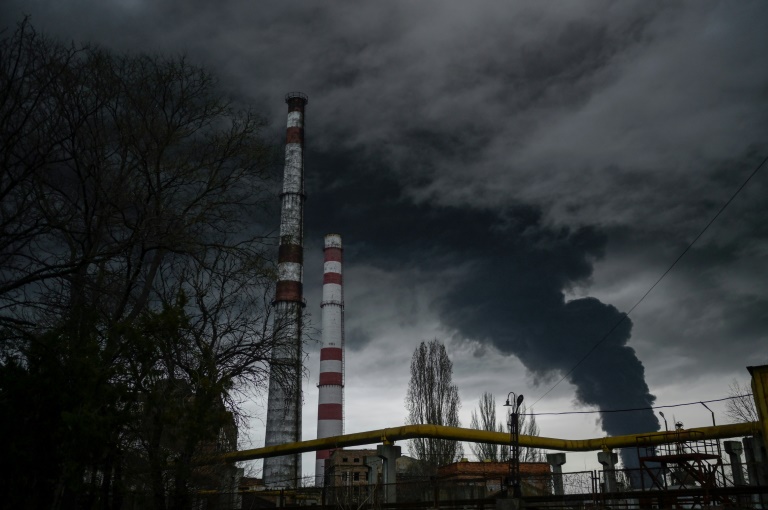
Air strikes rock Ukraine’s strategic Black Sea port Odessa.

– NATO says Russia repositioning troops –

NATO chief Jens Stoltenberg cautions that Russia’s claim to be pulling troops away from Kyiv is “not a withdrawal” but Russia repositioning its troops.

– Human Rights Watch report –

Human Rights Watch says Russian troops may have committed possible war crimes against civilians in occupied areas of Chernigiv, Kharkiv and Kyiv, including rape and summary execution.

– UN official arrives in Moscow –

Top UN humanitarian envoy Martin Griffiths arrives in Moscow on Sunday before an expected visit to Kyiv to seek a halt to the fighting. 

– Too soon for peace summit –

Russia’s chief negotiator Vladimir Medinsky says it is too early for a top-level meeting between Zelensky and Putin on ending the conflict.

He says Kyiv has become “more realistic” in its approach to issues related to the neutral and non-nuclear status of Ukraine but a draft agreement for submission to a summit meeting is not ready.

Close Bitnami banner
Bitnami