World

At least six dead in California shooting

Six people were shot and killed Sunday in California, with 12 more injured in the latest mass casualty event to spark calls in the United States for new actions to combat gun violence.

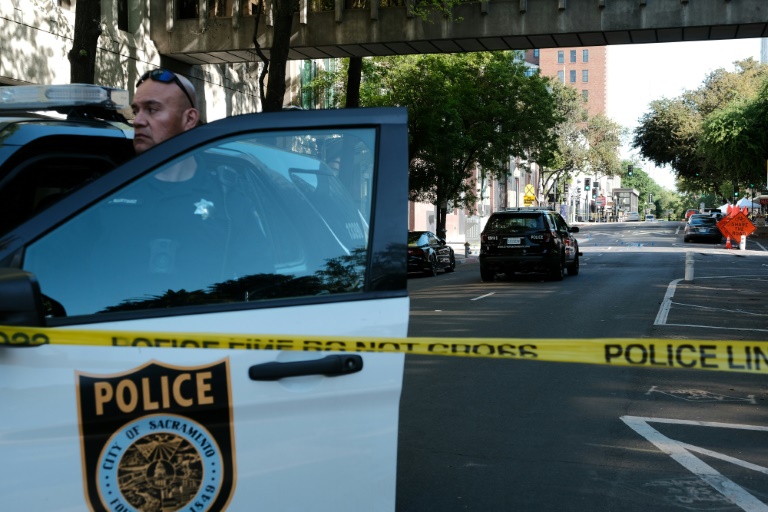
The shooting occurred Sunday morning in the California capital city of Sacramento around 2:00 AM after a “large fight” broke out in its downtown area, Police Chief Kathy Lester said at a press conference.

Officers on patrol nearby heard the gunshots and saw people running, she said.

Upon arriving at the scene, “they encountered a large crowd and multiple gunshot victims.” 

Despite attempts at resuscitation, six victims were pronounced dead at the scene — three men and three women, all adults, Lester said. 

Twelve others were hit by gunfire and are being treated in local hospitals.

At a press conference Sunday morning, Sacramento Mayor Darrell Steinberg described some of the hospitalized as “seriously and critically injured.”

He also called on anyone with information to contact authorities or submit evidence via a scannable QR code.

Lester said Sunday evening there were “multiple shooters” and a “stolen handgun” had been recovered at the scene.

She added that investigators had already received multiple videos and tips from members of the public, but were urgently seeking more information.

A video posted online Sunday appeared to show people scuffling in the street, then starting to run as gunfire can be heard. 

AFP could not verify the footage, and it was not known if there was a direct relation, but local police said they were aware of the video.

“It was just horrific,” said community activist Berry Accius, who arrived minutes after the shooting.

“Just as soon as I walked up you saw a chaotic scene, police all over the place, victims with blood all over their bodies, folks screaming, folks crying, people going, ‘Where is my brother?’ Mothers crying and trying to identify who their child was,” he told local broadcaster KXTV.

The shooting happened in the downtown area, just blocks from the state capitol and close to the venue where the NBA’s Sacramento Kings play.

– ‘We must act’ –

“America once again mourns for another community devastated by gun violence,” said US President Joe Biden in a statement Sunday night.

“We must do more than mourn; we must act,” stated Biden, who reiterated his call for Congress to pass legislation to strengthen restrictions on guns.

Mayor Steinberg said it was difficult to find the right words to describe the tragedy.

“The numbers of dead and wounded are difficult to comprehend,” he said, adding that he was waiting for more information about the incident. 

“Rising gun violence is the scourge of our city, state and nation, and I support all actions to reduce it,” he said.

The mass casualty shooting is the latest in the United States, where firearms are involved in approximately 40,000 deaths a year, including suicides, according to the Gun Violence Archive website.

California Governor Gavin Newsom described gun violence as a “crisis” for the United States.

“We cannot continue to let gun violence be the new normal,” he said in a post on Twitter.

Lax gun laws and a constitutionally guaranteed right to bear arms have repeatedly stymied attempts to clamp down on the number of weapons in circulation, despite greater controls being favored by the majority of Americans.

Three-quarters of all homicides in the US are committed with guns, and the number of pistols, revolvers and other firearms sold continues to rise.

More than 23 million guns were sold in 2020 — a record — on top of 20 million in 2021, according to data compiled by website Small Arms Analytics.

That number does not include “ghost” guns, which are sold disassembled, lack serial numbers, and are highly prized in criminal circles.

In June 2021, 30 percent of American adults said they owned at least one gun, according to a Pew survey.
Pipe dreams: Pakistan sewage workers hope for better future

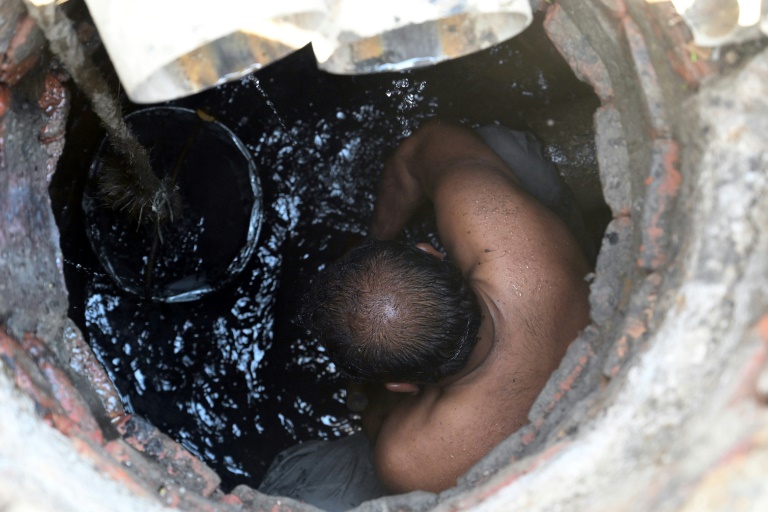
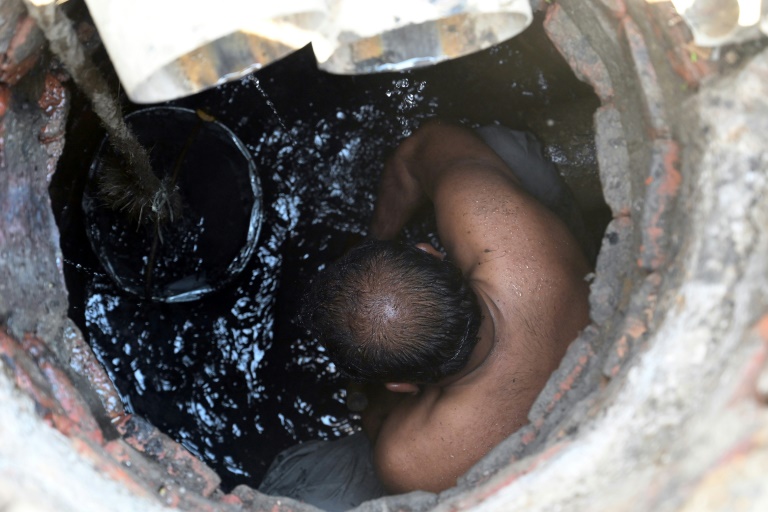
Nearly naked and covered with a black, foul-smelling muck, Shafiq Masih struggles out of a sewer he has just cleaned by hand in an upmarket district of Lahore, Pakistan’s second biggest city.  

Every day the 44-year-old descends into the city’s sewers, braving toxic gases emitted by excrement, pollutants and other waste, to manually unblock the drains of the city.

“When someone goes down, they have to sacrifice all self-respect,” he told AFP.

“People go to the toilet, flush the toilet, and all the dirt gets dumped on us.”

Like the vast majority of sanitation workers in Pakistan, Shafiq is a Christian, and doing a job that comes with strong social stigma — one considered impure by many Muslims.

Even in death there is no dignity.

In 2017 Muslim doctors sparked outrage and protests in Umerkot when they refused to treat a Christian sewage worker overcome by toxic gases, saying they could not touch his soiled body because they had to remain pure during Ramadan.

– Caste discrimination –

Most Christians in Pakistan are descendants of lower-caste Hindus who converted during the British colonial era in the hope of escaping a system that frequently forced them into a life of toil almost from birth.

They make up less than two percent of the population, but occupy more than 80 percent of jobs involving refuse collection, sewage work and street sweeping, according to figures cited regularly by the National Human Rights Commission (NHRC).

The remainder are filled mostly by Hindus, another tiny community in the Muslim-majority nation.

Even though the caste system doesn’t officially exist in Pakistan, it persists in these occupations, experts say. 

The word “chuhra”, traditionally used to describe those working in the sanitation industry — and considered extremely derogatory — is now synonymous with being a Christian.

Institutionalised discrimination is also rampant: some job adverts from public bodies have specified menial cleaning jobs are reserved for “non-Muslims”, with the Centre for Law and Justice, a local NGO, identifying nearly 300 such announcements over the past decade.

The NCHR has recently launched a campaign to protest against this practice.

– Immense risks –

Like much of Pakistan, the drains in Lahore — a city of 11 million — are routinely unclogged with a long bamboo stick. If this doesn’t work, someone has to go in.

For doing this, and after 22 years of service, Shafiq receives just 44,000 rupees ($240) a month — still, almost double the salary of street sweepers and garbage collectors.

But the associated risks are immense with infections including tuberculosis and hepatitis common, as well as skin and eye diseases.

Accidents also happen frequently.

At least ten people have died since 2019 in Pakistani sewers, according to the Centre for Law and Justice (CLJ), a local NGO which says the figures are probably far higher than reported.

In October in Sargodha, two Christian sewage workers died rescuing a third who had been forced by his Muslim supervisors to enter a sewer he knew to be full of poisonous gas.

Their families filed a complaint of criminal negligence — a first in Pakistan — but agreed to an out-of-court settlement.

“When you go to work, you are never sure you will get home,” said Shahbaz Masih, 32, who was once overcome by fumes in the sewer before being revived in hospital.

– State exploitation –

Industry insiders say companies responsible for the city contracts take advantage of worker illiteracy and disorganisation to pay them monthly salaries of under 10,000 rupees (50 euros) — less than half the legal minimum.

“The state is directly responsible for this exploitation,” says Mary James Gill, a Pakistani lawyer and politician who heads the CLJ and received the 2021 Human Rights Award from France for her “Sweepers are Superheroes” campaign.

“From their recruitment to their death, we have clear and undeniable evidence that they are discriminated against by society and the state.”

Gill says there is a vicious circle, with poverty preventing many Christians from providing an education for their children, who have no choice but to turn to the same occupation.

Shafiq knows that he is not about to be promoted and leave the sewers.

Still, every day he “thanks God for another day to live”.

Pipe dreams: Pakistan sewage workers hope for better future

Nearly naked and covered with a black, foul-smelling muck, Shafiq Masih struggles out of a sewer he has just cleaned by hand in an upmarket district of Lahore, Pakistan’s second biggest city.  

Every day the 44-year-old descends into the city’s sewers, braving toxic gases emitted by excrement, pollutants and other waste, to manually unblock the drains of the city.

“When someone goes down, they have to sacrifice all self-respect,” he told AFP.

“People go to the toilet, flush the toilet, and all the dirt gets dumped on us.”

Like the vast majority of sanitation workers in Pakistan, Shafiq is a Christian, and doing a job that comes with strong social stigma — one considered impure by many Muslims.

Even in death there is no dignity.

In 2017 Muslim doctors sparked outrage and protests in Umerkot when they refused to treat a Christian sewage worker overcome by toxic gases, saying they could not touch his soiled body because they had to remain pure during Ramadan.

– Caste discrimination –

Most Christians in Pakistan are descendants of lower-caste Hindus who converted during the British colonial era in the hope of escaping a system that frequently forced them into a life of toil almost from birth.

They make up less than two percent of the population, but occupy more than 80 percent of jobs involving refuse collection, sewage work and street sweeping, according to figures cited regularly by the National Human Rights Commission (NHRC).

The remainder are filled mostly by Hindus, another tiny community in the Muslim-majority nation.

Even though the caste system doesn’t officially exist in Pakistan, it persists in these occupations, experts say. 

The word “chuhra”, traditionally used to describe those working in the sanitation industry — and considered extremely derogatory — is now synonymous with being a Christian.

Institutionalised discrimination is also rampant: some job adverts from public bodies have specified menial cleaning jobs are reserved for “non-Muslims”, with the Centre for Law and Justice, a local NGO, identifying nearly 300 such announcements over the past decade.

The NCHR has recently launched a campaign to protest against this practice.

– Immense risks –

Like much of Pakistan, the drains in Lahore — a city of 11 million — are routinely unclogged with a long bamboo stick. If this doesn’t work, someone has to go in.

For doing this, and after 22 years of service, Shafiq receives just 44,000 rupees ($240) a month — still, almost double the salary of street sweepers and garbage collectors.

But the associated risks are immense with infections including tuberculosis and hepatitis common, as well as skin and eye diseases.

Accidents also happen frequently.

At least ten people have died since 2019 in Pakistani sewers, according to the Centre for Law and Justice (CLJ), a local NGO which says the figures are probably far higher than reported.

In October in Sargodha, two Christian sewage workers died rescuing a third who had been forced by his Muslim supervisors to enter a sewer he knew to be full of poisonous gas.

Their families filed a complaint of criminal negligence — a first in Pakistan — but agreed to an out-of-court settlement.

“When you go to work, you are never sure you will get home,” said Shahbaz Masih, 32, who was once overcome by fumes in the sewer before being revived in hospital.

– State exploitation –

Industry insiders say companies responsible for the city contracts take advantage of worker illiteracy and disorganisation to pay them monthly salaries of under 10,000 rupees (50 euros) — less than half the legal minimum.

“The state is directly responsible for this exploitation,” says Mary James Gill, a Pakistani lawyer and politician who heads the CLJ and received the 2021 Human Rights Award from France for her “Sweepers are Superheroes” campaign.

“From their recruitment to their death, we have clear and undeniable evidence that they are discriminated against by society and the state.”

Gill says there is a vicious circle, with poverty preventing many Christians from providing an education for their children, who have no choice but to turn to the same occupation.

Shafiq knows that he is not about to be promoted and leave the sewers.

Still, every day he “thanks God for another day to live”.

Zelensky calls Russian troops murderers, outrage grows over 'war crimes'

Ukraine’s President Volodymyr Zelensky called Russian troops “murderers, torturers, rapists, looters” on Monday after dozens of bodies were found near Kyiv, triggering global outrage and vows of tough new sanctions on Moscow.

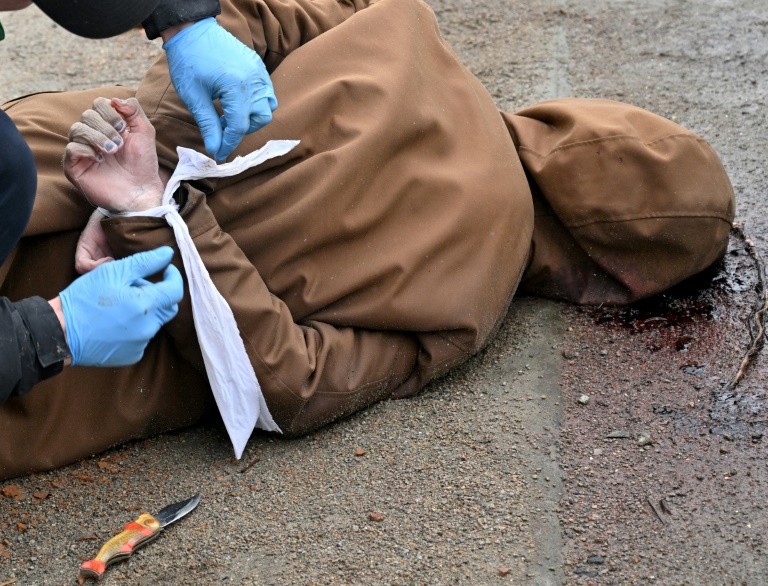
Local authorities said they had been forced to dig communal graves to bury the dead accumulating in the streets, including some found with their hands bound behind their backs, in scenes that sent shockwaves through international capitals more than a month into Russia’s invasion.

Despite Russian denials of responsibility, condemnation was swift, with Western leaders, NATO and the UN all voicing horror at reports of civilian murders in Bucha, northwest of Kyiv, and elsewhere.

Zelensky was unsparing in his nightly video message, warning “concentrated evil has come to our land”.

He described Russian troops as “murderers, torturers, rapists, looters, who call themselves the army and who deserve only death after what they did”, speaking in Ukrainian.

Switching to Russian, he continued: “I want every mother of every Russian soldier to see the bodies of the killed people in Bucha, in Irpin, in Hostomel.”

“I want all the leaders of the Russian Federation to see how their orders are being fulfilled.”

Zelensky said he had created a special body to investigate killings in areas from which Russian troops have withdrawn around the capital, as Moscow refocuses its energies on southeastern Ukraine.

The scale of the killings is still being pieced together, but Ukrainian prosecutor general Iryna Venediktova said 410 civilian bodies had been recovered so far.

And Bucha’s mayor Anatoly Fedoruk told AFP that 280 bodies were placed in mass graves because it was impossible to bury them in cemeteries within firing range.

Satellite imagery firm Maxar released pictures it said showed a mass grave located in the grounds of a church in the town.

Municipal worker Serhii Kaplychnyi told AFP that Russian troops initially refused to allow residents to bury the dead in Bucha.

“They said while it was cold to let them lie there.”

Eventually, they were able to retrieve the bodies, he said. “We dug a mass grave with a tractor and buried everyone.”

The UN said it was “highly concerned” by images emerging from the region, though it said it could not rule out that some of the dead were fighters or had died of natural causes.

– ‘Putin… will feel consequences’ –

Ukraine’s Foreign Minister Dmytro Kuleba accused Russia of a “deliberate massacre”, while Zelensky’s spokesman, Sergiy Nikiforov, said the killings in Bucha “looks exactly like war crimes”.

Russia’s defence ministry pushed back, saying “not a single local resident” in Bucha suffered violence. 

It accused Kyiv of bombarding its southern suburbs and falsifying images of corpses in “another production” for Western media.

Moscow’s deputy ambassador to the UN said Russia had requested a UN Security Council meeting on Monday “in light of heinous provocation of Ukrainian radicals in Bucha”.

AFP reporters in the town saw at least 20 bodies, all in civilian clothing, strewn across a single street, and images of the deaths have drawn global shock and calls for new measures against Russia.

US Secretary of State Antony Blinken called the killings “a punch to the gut”, while NATO chief Jens Stoltenberg said the violence — unseen in Europe for decades — was “horrific” and “absolutely unacceptable”.

German Chancellor Olaf Scholz said new sanctions would be decided “in the coming days.”

“(Russian) President (Vladimir) Putin and his supporters will feel the consequences,” he said, as his defence minister raised the possibility of an end to gas imports.

Other European officials, including Irish Foreign Minister Simon Coveney, said the EU “must respond strongly with tougher sanctions”, while Zelensky said “there will definitely be a new package of sanctions against Russia”.

But the Ukrainian leader warned that the worst could be yet to come as Moscow refocuses its attention on the south and east of the country, in a bid to create a landlink between occupied Crimea and the Russian-backed separatist statelets of Donetsk and Lugansk.

“Russian troops still control the occupied areas of other regions, and after the expulsion of the occupiers, even worse things could be found there, even more deaths and tortures,” he said.

He also appeared in a taped message at the Grammys, urging people to “tell the truth about this war… support us in any way you can, any, but not silence”.

– ‘Something terrible is coming’ –

Europe’s worst conflict in decades, sparked by Russia’s invasion on February 24, has already killed 20,000 people, according to Ukrainian estimates.

Nearly 4.2 million Ukrainians have fled the country, with almost 40,000 pouring into neighbouring countries in the last 24 hours alone, the UN refugee agency said.

In the eastern city of Kramatorsk, women, children and elderly people were boarding trains to flee the Donbas region.

“The rumour is that something terrible is coming,” said Svetlana, a volunteer organising the crowd on the station platform.

Russia has redoubled its efforts in Ukraine’s south and east, including carrying out several strikes Sunday on the strategic Black Sea port of Odessa, which Moscow said targeted an oil refinery and fuel depots.

“We were woken up by the first explosion, then we saw a flash in the sky, then another, then another. I lost count,” local resident Mykola, 22, told AFP.

In the eastern city of Kharkiv, seven people died and 34 were wounded after Russian forces struck a residential area on Sunday, local prosecutors said in a statement.

Britain’s defence ministry said recent Russian air activity had been focused on southeastern Ukraine, adding that heavy fighting was continuing in the devastated and besieged southern city of Mariupol.

“The city continues to be subject to intense, indiscriminate strikes,” the ministry said in an update on Twitter.

The UN’s top humanitarian envoy Martin Griffiths is expected in Kyiv soon after arriving in Moscow Sunday in an attempt to halt the fighting.

And peace talks are scheduled to resume by video on Monday, though Russia’s chief negotiator Vladimir Medinsky said it was too early for a top-level meeting between Zelensky and Putin.

He said Kyiv had become “more realistic” in its approach to issues related to the neutral and non-nuclear status of Ukraine, but a draft agreement for submission to a summit meeting was not ready.

Ukraine has proposed abandoning its aspirations to join NATO and declaring official neutrality, if it obtains security guarantees from Western countries. 

It has proposed temporarily shelving the question of Crimea, annexed by Russia in 2014, and two breakaway territories in the Donbas that Russia has recognised as independent.

Medinsky said Russia’s position on Crimea and the Donbas “remains unchanged”.

burs-sah/reb

Right wing Chaves wins Costa Rica presidency as Figueres concedes

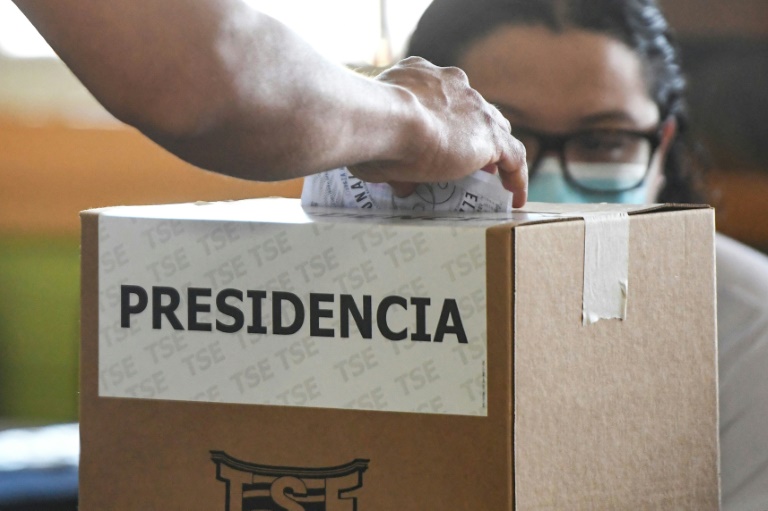
Right-wing former finance minister Rodrigo Chaves is set to be Costa Rica’s new president after his opponent Jose Maria Figueres conceded defeat on Sunday.

Chaves held a close to six percentage point lead in provisional results over Figueres, the centrist former president.

“Costa Rica has voted and the people have spoken. Since we are democrats we respect that decision,” said Figueres, 67, who congratulated Chaves and wished him well.

His concession came moments after the Supreme Electoral Court (TSE) revealed Chaves led by 52.9 percent compared to 47.1 percent for Figueres with 89 percent of votes counted.

Unemployment and an economic crisis dominated the campaign between two scandal-tainted candidates relieved not to have their past indiscretions take center stage.

Economist Chaves, 60, was once demoted for sexual harassment, while Figueres was previously investigated for corruption.

But with 23 percent of the population living in poverty and unemployment soaring to 14 percent alongside a series of corruption scandals, Costa Ricans seemed more focused on the economy as they elected the successor to President Carlos Alvarado.

Voting was carried out “in peace and tranquility,” said TSE spokesman Gustavo Ramon.

Chaves will take over from the unpopular Alvarado next month with the major challenge of reigniting an economy in crisis.

Costa Rica has been described as the “happiest” country in Latin America and praised for its political stability, environmental policies and eco-tourism, but the vital tourism industry was hard hit by the coronavirus pandemic.

Alongside Peru, it suffered the largest fall in employment figures in the region between 2019 and 2020.

“Costa Rican society was not poor, they made it poor. Costa Rican society was not unequal, they made it unequal,” said Chaves, who voted in mid-morning at a school in the capital’s city center.

“The country has never before been in an emergency like the one we are going through,” added Figueres, who cast his vote at a school on the outskirts of San Jose.

– ‘We’re very poor’ –

Voters were very clear about what concerned them the most: the economy and employment.

“The next president has to change everything because we’re very poor. There is no work here, there is nothing,” said Ana Briceno, 64, a travel agent in San Jose.

“In the last years with Carlos Alvarado the situation has been very difficult … so I think the future president must focus on the economy,” said Cristina Aguilar, 32.

Chaves was a surprise qualifier for Sunday’s run-off, having polled fourth ahead of February’s first round.

Representing the newly formed right-wing Social Democratic Progress Party, Chaves had led the most recent opinion polls, with more than 41 percent support, compared to 38 percent for Figueres.

“We have spoken about progression and rejecting regression,” he said in a press conference.

Figueres was previously president from 1994 to 1998.

His father Jose abolished the army in 1948 when he was president.

“We have options to generate employment, which is what is most lacking, and to grow the economy,” he said.

Figueres topped the first round of voting among a crowded field of 25 contenders with 27.3 percent, ahead of Chaves who had 16.8 percent.

But they were a long way from the 40 percent needed to win outright.

– ‘Misinterpreted’ jokes – 

Both men have reached this final stage of the election despite the specter of past scandals.

Chaves, who spent six months as finance minister in the outgoing government, was investigated over sexual harassment complaints brought by multiple women while he was a senior official at the World Bank, where he worked for 30 years.

He was demoted, though not fired, and has dismissed his behavior as jokes that were “misinterpreted due to cultural differences.”

Figueres, who represents the centrist National Liberation Party (PLN), was investigated for allegedly taking $900,000 from French engineering firm Alcatel, which has admitted to bribing officials.

The ex-president, who worked abroad at the time as executive director of the World Economic Forum (WEF), refused to give evidence in the case in 2004 and returned to Costa Rica only in 2011 when the investigation expired.

Chaves’s four-year term will begin on May 8.

Troubled Sri Lanka set for new cabinet and protests

Sri Lanka’s president was set to appoint a new cabinet Monday as security forces braced for possible violence with more protests expected against worsening shortages of food, fuel and medicines.

Twenty-six ministers in the cabinet — all members except President Gotabaya Rajapaksa and his elder brother Prime Minister Mahinda Rajapaksa — submitted letters of resignation at a late-night meeting on Sunday.

The move clears the way for the president to appoint a new cabinet on Monday — possibly including some of those who quit — as the ruling political clan seeks to shore up its position in the face of the economic crisis.

The country is in the grip of an unprecedented shortage of food, fuel and other essentials — along with record inflation and crippling power cuts with no sign of an end to the economic woes.

The situation is acknowledged by the government as the worst economic crisis since independence from Britain in 1948, and it has announced it will seek a bailout from the IMF.

Troops and police were placed on a high state of alert as a 36-hour curfew ended at dawn Monday despite intelligence reports warning of more unrest, a top security official told AFP.

“Indications are that we can expect more demonstrations,” he said, reiterating that the military has been empowered to detain suspects under a state of emergency declared on Friday.

President Gotabaya Rajapaksa imposed the emergency a day after a crowd attempted to storm his home in the capital Colombo.

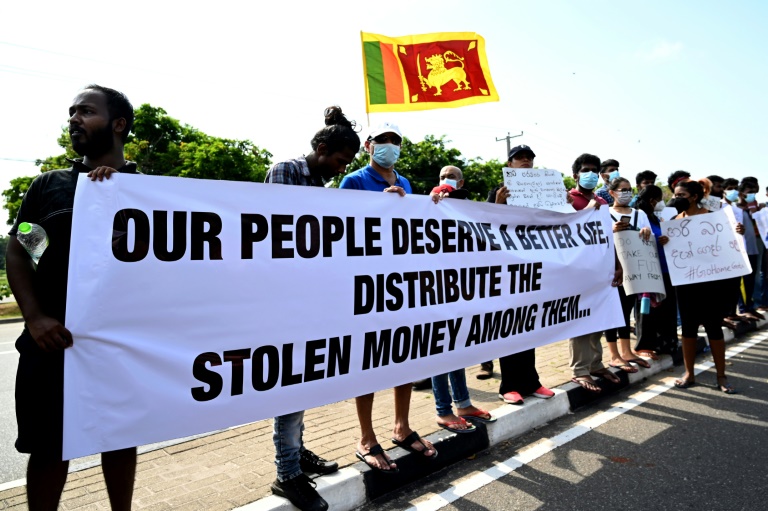
Throughout Sunday evening, hundreds of people staged noisy but peaceful demonstrations in towns across the island of 22 million denouncing Rajapaksa’s handling of the crisis.

“Go home Gota, go home Gota” shouted protesters at Rajagiriya, near the national parliament, while at Negombo, near the main international airport, people shouted, “Gota fail, fail, fail”.

Sunday’s full-day curfew prevented larger protests that had been organised through social media platforms such as Facebook, Twitter and WhatsApp, all of which were blocked by the government.

The platforms were unlocked and the partial internet censorship ended after 15 hours as the Human Rights Commission of Sri Lanka ruled that the ban was illegal.

Activists said they will hold larger demonstrations in several key towns on Monday to force President Rajapaksa and his family to step down.

A junior coalition partner has announced it will quit the administration this week, a move that would weaken Rajapaksa’s majority in the legislature.

Many economists say Sri Lanka’s crisis has been exacerbated by government mismanagement, years of accumulated borrowing and ill-advised tax cuts.

Asian markets mixed as strong US jobs data boosts rate hike bets

Asian markets were mixed Monday as another strong jobs report provided some reassurance that the recovery in the US economy remained on track but also solidified expectations for more aggressive Federal Reserve interest rate hikes.

The gains were helped by another drop in oil prices after the 31-nation International Energy Agency agreed to tap its vast reserves to offset the removal of Russian exports, while the start of a ceasefire in Yemen eased concerns over supplies from the region.

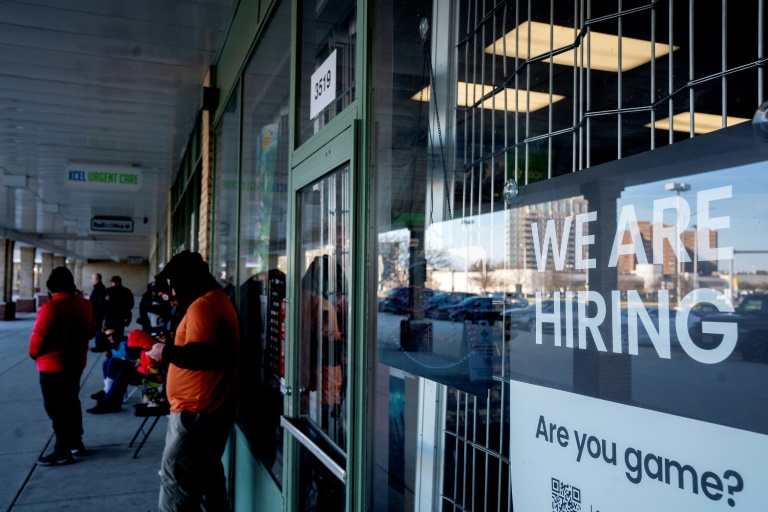
Officials said Friday that the world’s top economy added 431,000 positions in March while the unemployment rate fell to just slightly above pre-pandemic levels. 

The figures showed that while inflation has surged to a 40-year high and the Ukraine war has fanned uncertainty, the recovery continues.

The economy’s resilience will be taken as further evidence that the economy could withstand a sharper rise in interest rates to bring prices under control, with many observers now predicting a half-point hike in May.

However, expectations that rates will continue to go up have seen Treasury yields surge with commentators saying there were warning signs that growth will slow as the year progresses.

“It would not be surprising to see yields rise further from here and it is very hard to know where they will land,” Angela Ashton, of Evergreen Consultants, noted.

“Markets are volatile and there is every chance they will overshoot.”

A positive close on Wall Street was followed by a broadly upbeat start to the week in Asia.

Hong Kong led gains thanks to a rally in tech firms after Beijing removed a rule preventing US authorities from inspecting the audits of Chinese companies listed in New York.

The announcement came after a drawn-out row between the two countries with Washington saying Chinese firms could be delisted by 2024 if they do not comply with audit requirements. 

The demand put at risk more than 200 companies including ecommerce titans Alibaba and JD.com and Tencent.

Singapore, Sydney and Seoul also rose, though Tokyo, Manila and Jakarta struggled.

Crude extended Friday’s losses — with WTI holding below $100 — after IEA members including the United States, Japan the European Union pledged to dip into stockpiles to shore up tight supplies caused by Russia’s invasion of Ukraine.

The grouping made the promise at an emergency ministerial meeting, having already announced last week a plan to release more than 60 million barrels.

That came a day after Joe Biden said he would release a record 180 million barrels onto the market over six months.

Meanwhile, there was also some cheer from news of a 60-day ceasefire in Yemen’s six-year civil war, which has seen several attacks on Saudi facilities that have hit output from the world’s biggest producer.

Still, analysts said that while markets equity and crude markets have shown some stability after the wild swings seen at the start of the Ukraine war, uncertainty continued to act as a drag and traders remained nervous.

“Risk sentiment over the past week has been inconsistent,” said SPI Asset Management’s Stephen Innes.

“Market signals could be characterised by a repetitive cat-and-mouse game whereby headlines initially emerge around the progress in ceasefire talks before being typically walked down by Russian officials who deny the odds of any close peace deal.

– Key figures around 0230 GMT –

Tokyo – Nikkei 225: DOWN 0.1 percent at 27,626.77 (break)

Hong Kong – Hang Seng Index: UP 1.2 percent at 22,297.32

Shanghai – Composite: Closed for a holiday

Brent North Sea crude: DOWN 0.4 percent at $104.00 per barrel

West Texas Intermediate: DOWN 0.3 percent at $99.01 per barrel

Euro/dollar: UP at $1.1051 from $1.1049 late Friday

Pound/dollar: DOWN at $1.3112 from $1.3118

Euro/pound: UP at 84.28 pence at 84.24 pence 

Dollar/yen: UP at 122.61 yen from 122.49 yen

New York – Dow: UP 0.4 percent at 34,818.27 (close)

London – FTSE 100: UP 0.3 percent at 7,537.90 (close)

Ukraine war sows more turmoil for UK farms

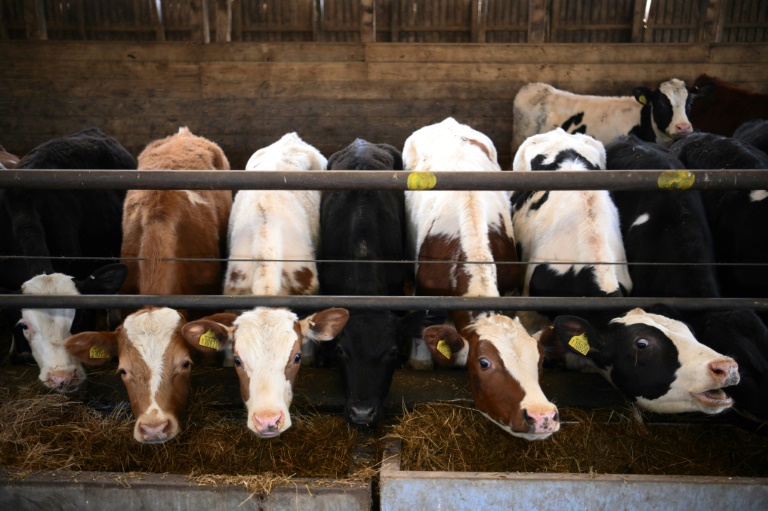
Hungry cows at Westons Farm jostle for position at the feeding trough, blissfully unaware that Ukraine’s war has sowed more turmoil for UK farms ploughing through Covid and Brexit fallout.

Westons — based in the picturesque village of Itchingfield in southern England — uses excrement from the farm’s cattle, chickens, pigs and sheep to fertilise arable crops like carrots, pumpkins, spinach and wheat.

The agriculture sector, like large swathes of the UK economy, is grappling with sky-high energy prices following pandemic lockdowns and labour shortages in the wake of Britain’s exit from the European Union.

Now, Moscow’s invasion of Ukraine has fuelled rocketing prices for fertiliser because Russia is a major producer.

Farms like Westons have therefore become more and more reliant on animal slurry to grow crops and cut costs.

“The thing that’s really concerning us as farmers are the multiple issues that are coming our way all at once,” the farm’s owner David Exwood told AFP as he fed the cattle.

There is the “high fertiliser price, we have a high fuel price, we’ve got a shortage of labour, and we’ve got regulatory change”, said Exwood, who is also vice-president of the National Farmers’ Union (NFU).

Fertiliser prices in the UK have soared almost fourfold over the past year, sector data show.

The nutrient-rich material was already in short supply after surging gas prices forced leading UK manufacturer, CF Fertilisers, to pause production in September.

Six months later, the Ukraine war sent fertiliser prices hurtling even higher.

Wheat hit recent record peaks because sanctions-hit Russia is a key producer alongside Ukraine.

– Staff shortages –

Meanwhile, worsening labour shortages, sparked by Brexit and exacerbated by Covid, are particularly acute in Britain’s agricultural sector.

The industry had 500,000 job vacancies in September, according to NFU data.

Visa issues and Covid restrictions have caused many farm workers to return abroad, notably including many European lorry drivers.

Britain’s departure from the European Union at the start of last year formalised Brexit.

“The lack of labour has meant that crops… have gone unpicked and are rotting away in fields,” said Jack Ward, chief executive of the British Growers’ Association.

The British Meat Packing Association has expressed similar troubles.

“Our main concerns are the lack of staff able to process (carcasses) in the UK,” it noted.

Thousands of pigs have been culled because of a chronic lack of butchers in abattoirs.

“UK pigs are being killed, incinerated and not entering the food chain,” said farmer Andrew Ward, who grows wheat in Leadenham in central England.

“We have pig farmers going out of business, but imports of pig meat have gone up 20 percent in the last six months (to meet demand) and the government is standing by and letting it happen.”

– Birds, bees and trees –

At the same time, the rollout of its Environmental Land Management Scheme (ELMS) will replace the UK’s participation in the EU Common Agricultural Policy.

The proposed scheme places greater emphasis on the environment and is expected to ramp up costs for farmers.

“All they are interested in is birds, bees and trees… we can’t go green if our bank balance is in the red,” said farmer Ward.

Following Brexit, the government of Prime Minister Boris Johnson has agreed a number of new trade deals, including for Australian beef and lamb.

Britain’s livestock farmers are concerned they will be undercut, complaining that overseas meat may not be held to the same quality or environmental standards as domestic producers. 

Back on the farm in Itchingfield, the turmoil is palpable.

“Farmers are uncertain, they’re scared, and I’ve never known them so afraid of the future (and) not sure what it means to them,” said Exwood.

Myanmar military's beer sales tumble after junta boycott

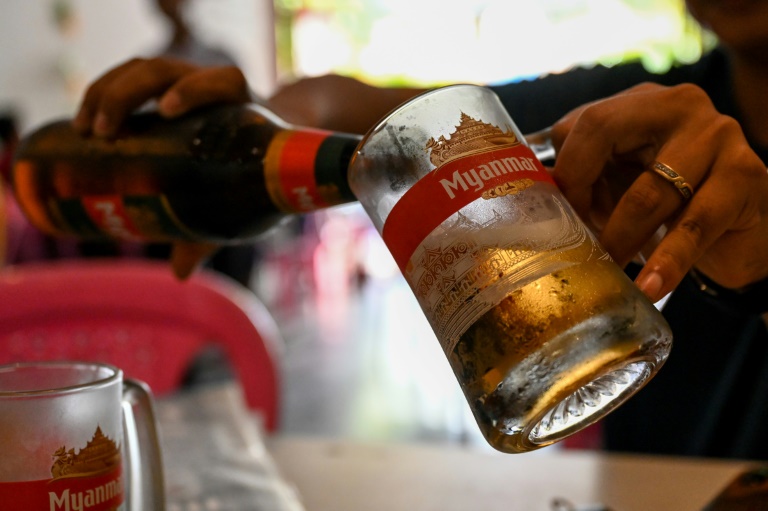
When Japanese brewing giant Kirin called time on its Myanmar operations last month, the news made little difference to Kyaw Gyi — like many drinkers, he had long boycotted the beer it produced with a military conglomerate.

For years, Myanmar Beer dominated bars and supermarket shelves, its Japanese backing a sign of the economic liberalisation washing into the Southeast Asian country after the military relaxed its iron grip on power in 2011. 

But after the generals ousted Aung San Suu Kyi’s civilian government in February last year, many turned their backs on the brew, along with a host of other goods made by companies linked to the armed forces, from soap to coffee.

“We know other beer brands are paying tax to the military, but we don’t want all of our money going to them,” said sailor Kyaw Gyi, sitting outside a bar on Yangon’s 19th Street, a popular drinking haunt.

“We avoid it. If there is only Myanmar Beer in the restaurant, then we don’t drink beer,” he said, using a pseudonym.

Farther along the street in Yangon’s bustling downtown, restaurant manager Zaw Naing said his establishment hadn’t sold the light, five percent brew since April last year.

It was not just the beer orders they had cancelled, he added — they also asked the brand to take back all the chairs, tables and umbrellas that bore its red, white and gold emblem.

“If people see the Myanmar Beer logo with our restaurant name, they won’t come,” he said, also asking to use a pseudonym.

– Demand down –

As anger seethes at the military’s crackdown on dissent — which a local monitoring group says has killed more than 1,700 people — establishments still serving the beer have faced more serious consequences.

In early March, bombs were set off outside two Yangon bars and a restaurant in second city Mandalay that were still selling the beer, according to local media.

Drivers transporting the beer in the rural central plains have also been stopped by local anti-coup groups and their cargoes trashed, according to local media reports. 

Myanmar Brewery — the firm run by Kirin and military conglomerate Myanma Economic Holdings — enjoyed a market share of nearly 80 percent, according to figures published by Kirin in 2018.

Following months of Covid- and coup-related disruption in 2021, its year-end operating profit was just 6.6 billion yen ($54 million) — compared with 13.8 billion the previous year.

In February, after months of trying to dissolve its partnership with the military-backed firm, and as pressure from rights groups escalated, the Japanese giant announced it would leave Myanmar.

The boycott and its upcoming exit is leaving rivals Heineken, Carlsberg and Thailand’s Chang eyeing the market gap.

The three breweries “have picked up market share from Myanmar Beer, particularly in the cities”, said a Yangon-based market observer who did not want to be named.

AFP has contacted Carlsberg for comment.

A representative for Heineken who requested anonymity said it was “too early to assess and comment on consumer purchasing habits”.

– ‘We keep drinking’ –

But back on 19th Street, Aung Myo said customers had long switched to beers untainted by connections to military-backed firms, like Chang, Tiger — owned by Heineken — and Carlsberg’s Tuborg. 

“People don’t want to drink Myanmar Beer even though it tastes good,” he told AFP.

“The demand is definitely down.”

In Myanmar’s complex political landscape, there are still some areas where punters can enjoy a Myanmar Beer in peace.

Crowded bars in the military-built capital Naypyidaw were still serving it on a recent Saturday night, and the brew is reportedly still available in further-flung rural areas that have seen little coup-related violence. 

The boycott has also been rebuffed in Rakhine in the west, where a truce between the junta and Arakan Army (AA) rebels fighting for greater autonomy has insulated the state from the turmoil gripping much of the rest of Myanmar.

“We don’t see any boycott movement here,” said government employee Htun Htun, 28, at a bar in state capital Sittwe, where billboards for the beer still lined the streets.

“So, we keep drinking it… The alcohol rate is not too high and the taste is good.” 

Analysts say the AA is taking advantage of the calm to expand its presence in the state, setting up its own courts and administration while the junta battles anti-coup dissidents elsewhere.

Clashes between the AA and the military in 2019 displaced more than 200,000 people across the state, one of Myanmar’s poorest. 

While the current peace lasts, Nyi Nyi, 27, said he would not be looking to change. 

“If there’s no problem with the military, we will still choose our usual Myanmar Beer,” he said.

Bucha mourns at mass graves in wreck of Russian retreat

The grieving of Bucha begins today, for those who can bear to face it.

There are bodies in mass graves yet to be claimed, bodies in the street waiting to be collected, bodies everywhere in the ruined Kyiv suburb left by Russian forces which retreated earlier this week.

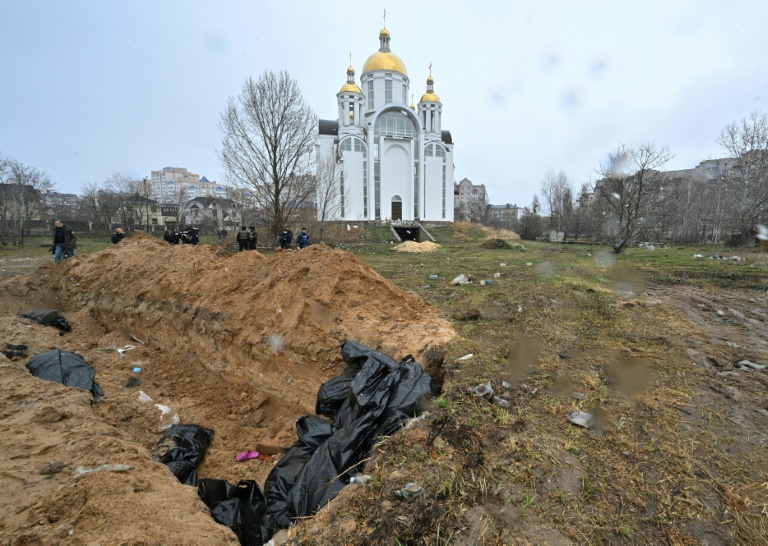
Liuba, 62, leads her neighbour to the lip of a trench in the sodden clay behind a gold-domed church. But he cannot bring himself to peer inside the grave and search for his missing brother rumoured to lie inside.

57 people are here at this mass burial site, a city worker told AFP. But only a fraction of those are visible.

Some are heaped in black zipped body bags. Others in civilian clothing are only partly buried — a pale hand, a booted foot or the cusp of a forehead exposed to snow falling on the harrowed commuter town.

One body is bundled in a red and white bedsheet near a single pink women’s sandal.

Hands and feet reach out from the earth in improbable poses, suggesting a tangle of remains beneath the surface.

Liuba’s neighbour retreats to a fallen tree and collapses. Though he is held in comfort by a female companion, his anguish prevents him from coming closer.

“This wound will never heal,” says Liuba. “I would not wish it even on my worst enemy.”

– A necessary task – 

Nearby, along a thin grey road framed by shattered homes, four men pilot a white van from corpse to corpse.

AFP counted 20 along this single stretch. Some lie with legs tangled in bikes, others near a ruined car blemished with countless bullet marks.

All are in civilian clothing and one has his hands bound behind his back with a strip of white fabric, his hooded head in a crimson puddle.

Vitalii Shreka, 27, tries to cut the cloth but his pen knife fails. He unknots it instead and hauls the cadaver into a body bag the team zips tight.

One by one, the men inspect the dead for ID cards then stack them in the cargo bay. Shreka holds them steady with blue surgical gloves smeared in days-old blood.

One corpse is wearing a blue and yellow armband, a signal of solidarity with Ukraine. 

A worker throws a bike at two lumbering dogs stalking too close.

The team drive up the road but are forced to reverse. They have missed one more person: a black hooded figure, totally still, lost in the devastated scenery.

It is added to the growing pile in the van.

“It needs to be done,” says 44-year-old Vladyslav Minchenko, standing over a body next to a scattering of potatoes wrinkled by rain — relics from a final shopping trip.

“I did not understand this myself before, when I didn’t have to, but it’s necessary.”

Minchenko and his three colleagues estimate there are “more than 10” dead bodies already inside the van.

But still there is more work to do.

– ‘Let them lie there’ – 

Municipal worker Serhii Kaplychnyi says his team struggled to bury the dead during Russia’s short-lived occupation of Bucha, the focus of growing war crimes allegations against President Vladimir Putin.

“There are many people who died from their bullets and shrapnel,” he told AFP. “They would not allow us to bury them.”

“They said while it was cold to let them lie there.”

Eventually, he says, the Russians allowed his team to collect the bodies from the morgue. “We dug a mass grave with a tractor and buried everyone,” he recalls.

Outside the Bucha mayor’s office Kaplychnyi now coordinates a recovery effort in the town. 

There is a thin sheen of triumph. Military men give each other hard-gripping hugs, miniature Ukrainian flags are being handed out, aid convoys are creeping in.

But Kaplychnyi’s mind travels to the trauma of the past weeks. On one day his team recovered 10 people shot in the head: “Apparently a sniper was ‘having fun’.” 

Civilians also made efforts to bury their neighbours as best they could, in gardens and factories, too fearful to risk a proper funeral.

“There is an old disused sewer pit and they put them there too — covered them up so they’re still lying there,” he said.

“Now we will go and collect them.”

Close Bitnami banner
Bitnami