World

Sri Lanka protesters defy curfew after social media ban

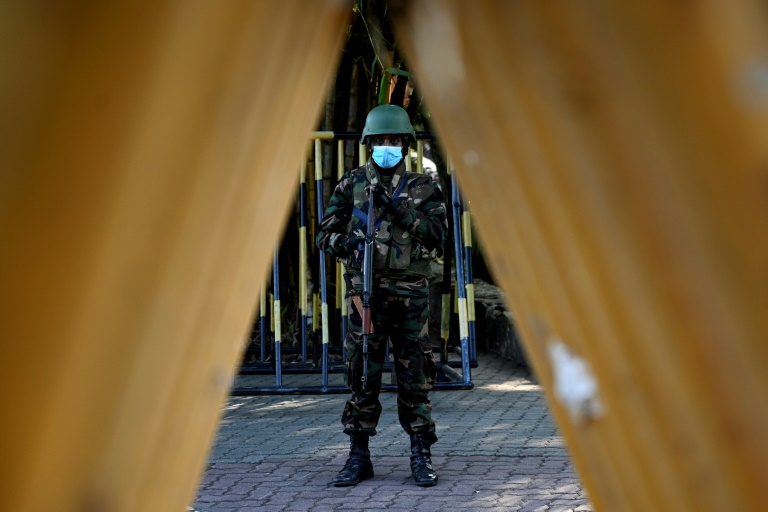
Armed troops in Sri Lanka had a tense confrontation with a crowd protesting a worsening economic crisis on Sunday, after a social media blackout failed to halt another day of anti-government demonstrations.

The South Asian nation is facing severe shortages of food, fuel and other essentials — along with record inflation and crippling power cuts — in its most painful downturn since independence from Britain in 1948.

President Gotabaya Rajapaksa imposed a state of emergency on Friday, the day after a crowd attempted to storm his home in the capital Colombo, and a nationwide curfew is in effect until Monday morning.

The Samagi Jana Balawegaya (SJB), Sri Lanka’s main opposition alliance, denounced a social media blackout aimed at quelling intensifying public demonstrations, and said it was time for the government to resign.

“President Rajapaksa better realise that the tide has already turned on his autocratic rule,” SJB lawmaker Harsha de Silva told AFP.

Troops armed with automatic assault rifles moved to stop a protest by opposition lawmakers and hundreds of their supporters attempting to march to the capital’s Independence Square.

The road was barricaded a few hundred metres from the home of opposition leader Sajith Premadasa and the crowd engaged in a tense stand-off with security forces for nearly two hours before dispersing peacefully. 

Eran Wickramaratne, another SLB lawmaker, condemned the state of emergency declaration and the presence of troops on city streets.

“We can’t allow a military takeover,” he said. “They should know we are still a democracy.”

– Social media blackout –

Internet service providers were ordered to block access to Facebook, WhatsApp, Twitter and several other social media platforms but the blackout did not deter several small demonstrations elsewhere in Sri Lanka. 

Police fired tear gas to disperse university students in the central town of Peradeniya, though protests in other parts of the country ended without incident.

Private media outlets reported that the chief of Sri Lanka’s internet regulator resigned after the ban order went into effect.

The blackout was rescinded later in the day after the country’s Human Rights Commission ruled that the defence ministry had no power to impose the censorship.

The streets of Colombo stayed largely empty on Sunday, apart from the opposition protest and long lines of vehicles queued for fuel. 

But police told AFP that one man had died by electrocution after climbing a high-tension pylon near Rajapaksa’s home. Residents said he was protesting rolling power cuts.

Mass protests had been planned for Sunday before the social media blackout went into effect, but organisers have postponed the rallies until after the curfew is lifted on Monday.

– Internal rifts –

The escalating protests have led to fissures within the government, with the president’s nephew Namal Rajapaksa condemning the partial internet blackout.

“I will never condone the blocking of social media,” said Namal, the country’s sports minister. 

A junior party has also hinted it may leave the ruling coalition within a week.

The move would not threaten the government’s survival but threatens its chances of lawfully extending the country’s state of emergency ordinance.

Western diplomats in Colombo have expressed concern over the use of emergency laws to stifle democratic dissent and said they were closely monitoring developments.

Sri Lanka’s influential Bar Association has urged the government to rescind the state of emergency, which allows security forces to arrest and detain suspects for long periods without charges.

Solidarity protests were staged elsewhere in the world over the weekend including in the Australian city of Melbourne, home to a large Sri Lankan diaspora.

A critical lack of foreign currency has left Sri Lanka struggling to service its ballooning $51 billion foreign debt, with the pandemic torpedoing vital revenue from tourism and remittances.

The crisis has also left the import-dependent country unable to pay even for essentials.

Diesel shortages have sparked outrage across Sri Lanka in recent days, causing protests at empty pumps, and electricity utilities have imposed 13-hour blackouts to conserve fuel.

Many economists also say the crisis has been exacerbated by government mismanagement, years of accumulated borrowing, and ill-advised tax cuts.

Sri Lanka is negotiating with the International Monetary Fund for a bailout.
Hungary vote goes to wire as PM Orban seeks fourth term

Nationalist Hungarian Prime Minister Viktor Orban faced a tough challenge with a united opposition in an unpredictable general election on Sunday, after a campaign dominated by Russia’s invasion of neighbouring Ukraine.

The six main opposition parties are for the first time fielding a joint list, determined to roll back the “illiberal” revolution Orban’s Fidesz party has pursued during 12 consecutive years in office.

That has involved repeated confrontations with EU institutions, including over the neutering of the press and judiciary, and measures targeting the LGBT community.

By early afternoon turnout stood at 40 percent, down slightly from the record participation seen at the last national elections in 2018.

– ‘Anything can happen’ –

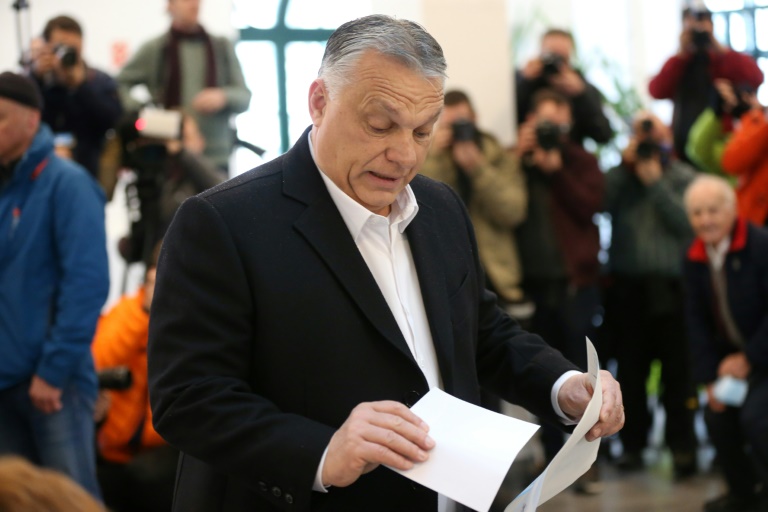
Orban himself voted Sunday morning at a school in a leafy Budapest suburb and told reporters he was expecting a “great victory”.

Challenger Peter Marki-Zay, head of the main opposition alliance, cast his ballot accompanied by his wife and seven children after attending mass in the city of Hodmezovasarhely, where he inflicted a shock defeat on Fidesz’s candidate to become mayor in 2018.

He said the opposition had to battle “unfair and impossible circumstances”.

With the opposition  all but absent from state media, he said: “Regardless of the result, this election is not free”.

Orban dismissed such complaints and insisted the vote was “fair”.

More than 200 international observers are monitoring the election for the first time, along with thousands of domestic volunteers from both camps.

Budapest resident Agnes Kunyik, 56, told AFP she backed the opposition. “We want to remain in Europe, we want a democratic rational state. 

“They have ruined our country, destroyed it,” she said of Fidesz, becoming visibly emotional.

However, while the capital is fertile territory for the opposition, the election will be decided in around 30 less-urban swing seats out of the 106 directly elected constituencies. 

Marki-Zay has been criss-crossing these areas to reach voters directly and try to break through government “propaganda”.

By contrast, Orban has been “hidden”, with no open events apart from a final rally on Friday, said Andras Pulai of the opposition-leaning Publicus polling institute.

Instead, Orban preferred “closed events where he talked to his most loyal supporters”, said Pulai.

Retired engineer Lajos Rebay, 78, said he was voting for Fidesz because “lots of positive things have happened in the last 12 years, an exceptional number,” adding: “We must continue.”

Publicus’ last pre-election poll, published Saturday, put Fidesz and the opposition neck-and-neck, while most other pollsters have Fidesz ahead.

However, given the advantage Fidesz enjoys under the electoral system, “the opposition needs to have a three-to-four-point lead to win a majority” in the 199-seat chamber, Pulai pointed out.

He cautioned that the votes of Hungarians abroad constitute another unknown factor making the election “too close to call”.

“Anything can happen,” he said.

– ‘War changed everything’ –

As Orban told supporters on Friday, “the war (in Ukraine) changed everything” for the campaign.

In the wake of the Russian invasion, Orban went along with EU support for Kyiv despite his long-standing closeness to Russian President Vladimir Putin.

However, domestically Orban has struck a neutral and even at times anti-Ukrainian tone, refusing to let weapons for Ukraine cross Hungarian territory.

He has presented himself as the protector of peace and stability as opposed to a “warmongering” opposition he alleges would immediately boycott vital Russian energy imports — a charge Marki-Zay denies.

Marki-Zay has tried to frame the vote as “a clear choice: Putin or Europe?”

As well as electing  MPs on Sunday, Hungarians are voting in a referendum posing four questions designed to elicit support for what Fidesz calls a “child protection” law banning the portrayal of LGBT people to under-18s. 

Budapest resident Regina, 25 — who refused to give her surname — told AFP she had spoiled her ballot in the “twisted” referendum which she said had portrayed LGBT Hungarians as an “enemy”. 

Government spokesman Zoltan Kovacs said a definitive picture of results will likely  emerge between 11:00 pm and midnight.

Polls opened at 6:00 am local time (0400 GMT) and will close at 7:00 pm.

Pope laments 'tormented Ukraine' on final day of Malta visit

Pope Francis condemned the “sacrilegious war” in Ukraine at an open-air mass in Malta on Sunday, ahead of a visit to a migrant centre preparing to take refugees fleeing Russia’s invasion.

He was speaking amid international outrage over the killing of civilians near the Ukrainian capital Kyiv, after officials in Bucha said nearly 300 bodies had been found in mass graves after Russian forces withdrew.

“Let us pray for peace, thinking of the humanitarian tragedy of tormented Ukraine, still under the bombardments of this sacrilegious war,” Francis said after mass to an estimated crowd of about 12,000 worshippers in Floriana, outside Malta’s capital of Valletta.

The war has overshadowed the 85-year-old’s first trip to the Mediterranean island nation, but also added urgency to a key theme of his nine-year papacy — the need to welcome those fleeing war, poverty or the effects of climate change.

Russia’s invasion of Ukraine has triggered the worst refugee crisis in Europe since World War II — a continent already struggling to form a coherent response to thousands of people who arrive by sea each year from North Africa.

Catholic-majority Malta, located off the coast of Sicily, is on the frontline of that influx but has been accused by charities of turning a blind eye to those in distress in its waters.

Francis earlier Sunday highlighted the example of St. Paul — whom according to Christian tradition was shipwrecked on Malta in 60 AD — to remind the world how to show charity. 

– Rare humanity –

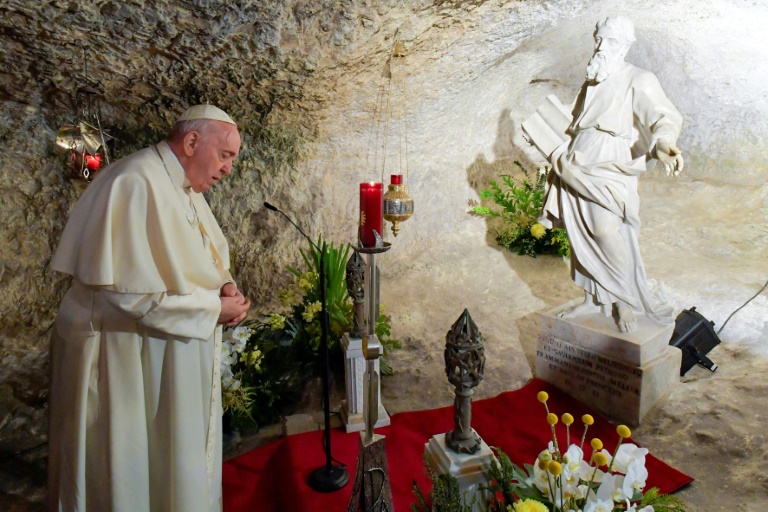
Visiting the grotto in the Malta town of Rabat where the apostle lived for three months, the pope lit a candle. 

He said a prayer recalling how the shipwreck survivors were treated with “rare humanity” despite the fact that “no one knew their names, their place of birth or their social status”. 

Francis called on God to “help us to recognise from afar those in need, struggling amidst the waves of the sea, dashed against the reefs of unknown shores”.

Later Sunday he will visit the John XXIII Peace Lab, a centre inspired by the pope of that name, which is preparing for the arrival of Ukrainian refugees.

Run for the past five decades by Franciscan friar Dionysius Mintoff, now 91, it already hosts around 55 young men from different parts of Africa who arrived in Malta without any legal papers.

The pope, who last summer underwent colon surgery and cancelled an event in February due to acute knee pain, appeared to have trouble walking on Sunday during the visit.

But his first trip to Malta — delayed two years because of the coronavirus pandemic — has been warmly welcomed by people, who have lined the streets waving flags.

– ‘Very tired’ –

“He’s a sign of hope in a time when nobody seems to believe anything any more,” said Isabella Dorgu, 38, an Italian living in Malta, as she strained for a view of the pope at the mass.

Anna Balzan, 67, draped in a Vatican flag purchased during John Paul II’s visit in 1990, expressed concern for the current pope’s health, saying he looked “very tired yesterday”.

Francis has repeatedly condemned the war in Ukraine but has never directly blamed Moscow or Russian President Vladimir Putin.

He came closest on Saturday, warning that “some potentate, sadly caught up in anachronistic claims of nationalist interests, is provoking and fomenting conflicts”.

Francis has been invited to Kyiv by Mayor Vitali Klitschko — a trip that the pontiff said Saturday was “on the table,” when asked by a reporter.

Although he emphasised Malta’s status as a “safe harbour”, the pope also said all must share the burden for the world’s migration crises.

“The growing migration emergency — here we can think of the refugees from war-torn Ukraine — calls for a broad-based and shared response,” he said.

Ukraine accuses Russia of war crimes as air strikes hit Odessa

Ukraine on Sunday accused Russian troops of war crimes after the discovery of mass graves and civilians apparently “executed” in the streets of Bucha, near the capital Kyiv. 

The claims came as explosions rocked the Black Sea port city of Odessa, which has largely been spared in the conflict, with air strikes apparently targeting key infrastructure.

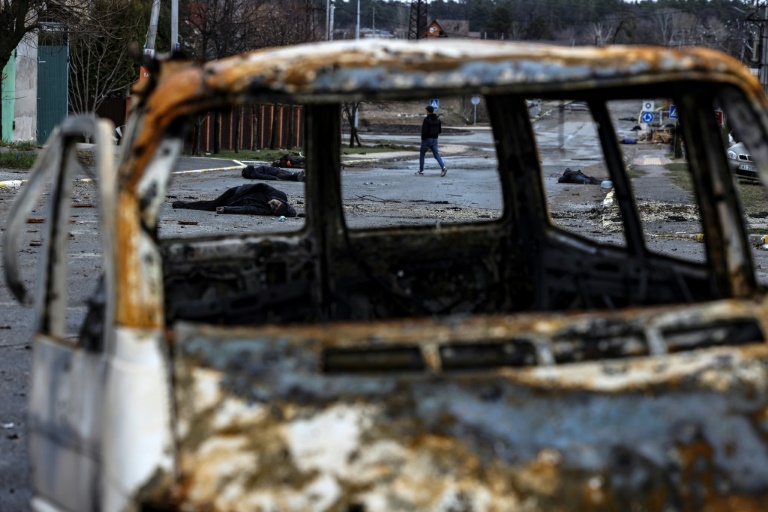
In Bucha, AFP reporters saw at least 20 bodies, all in civilian clothing, strewn across a single street. One had his hands tied behind his back with a white cloth, and his Ukrainian passport left open beside his body.

“All these people were shot,” Bucha’s mayor Anatoly Fedoruk said, adding that 280 other bodies had been buried in mass graves elsewhere in Bucha. 

Ukraine’s Foreign Minister Dmytro Kuleba called it a “deliberate massacre” and urged G7 countries to impose “devastating” sanctions immediately.

“It looks exactly like war crimes,” President Volodymyr Zelensky’s spokesman  told BBC television.

“We found mass graves. We found people with their hands and with their legs tied up… and with shots, bullet holes, in the back of their head. 

“They were clearly civilians and they were executed.”

UK Foreign Secretary Liz Truss called for “indiscriminate” Russian attacks in Bucha and elsewhere to “be investigated as war crimes”.

“We will not allow Russia to cover up their involvement in these atrocities through cynical disinformation,” she added.

In Brussels, European Council chief Charles Michel said the EU was helping Ukraine and NGOs gather evidence “for pursuit in international courts”. 

And Germany’s vice chancellor and economy minister Robert Habeck said a “terrible war crime” had been carried out in Bucha and called for fresh EU sanctions against Russia.

The International Criminal Court in The Hague has already opened a probe into possible war crimes committed in Ukraine.

Several Western leaders, including US President Joe Biden, have accused Russia’s Vladimir Putin of being a “war criminal”.

Human Rights Watch said it had documented cases of Russian troops committing possible war crimes against civilians in occupied areas of Chernigiv, Kharkiv, and Kyiv, including rape and summary execution.

Zelensky has also alleged that Russian soldiers planted mines and other booby traps as they withdraw from northern Ukraine, warning returning residents to be wary of tripwires and other dangers.

Ukraine’s deputy prime minister Iryna Vereshchuk meanwhile said 11 local community leaders in Kyiv, Kherson, Kharkiv, Zaporizhzhia, Mykolaiv and Donetsk were “in captivity”.

– Oil refinery –

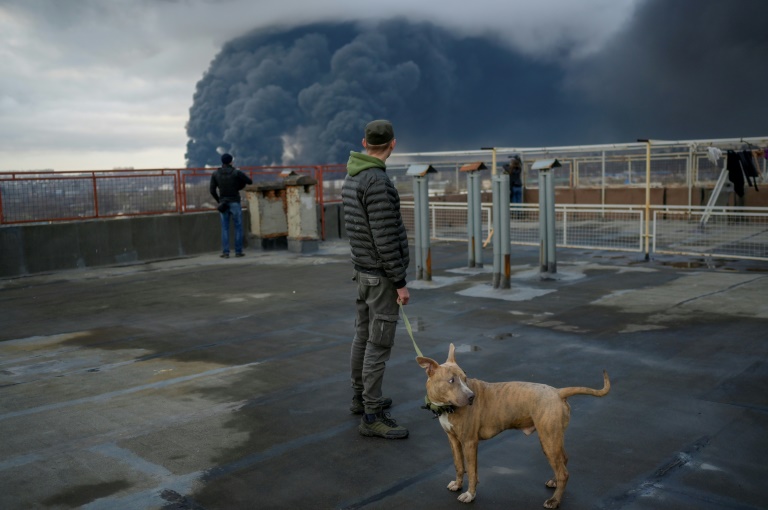
In Odessa, plumes of thick black smoke billowed over the strategic port city, after air strikes shook residents awake at about 6:00 am (0300 GMT).

“We were woken up by the first explosion then we saw a flash in the sky, then another, then another. I lost count,” one local man, Mykola, 22, told AFP from the roof of a building overlooking the site.

Russia’s defence ministry said, “High-precision sea and air-based missiles destroyed an oil refinery and three storage facilities for fuel and lubricants” at Odessa that were  supplying fuel to Ukrainian troops.

Anton Herashchenko, an adviser to Ukraine’s interior minister, said: “Some of the missiles were shot down by air defence.”

The strikes came as top UN humanitarian envoy Martin Griffiths was expected in Moscow then Kyiv to seek a halt in the fighting, which by Ukrainian estimates has left some 20,000 people dead.

Nearly 4.2 million Ukrainians have fled the country since Russia invaded on February 24, with almost 40,000 pouring into neighbouring countries in the last 24 hours alone, the UN refugee agency said.

The International Organization for Migration said nearly 6.48 million were estimated to be displaced inside Ukraine.

Pope Francis, on a visit to the Mediterranean island of Malta on Sunday, made a plea for refugees fleeing the “sacrilegious war” in “tormented Ukraine”  to be welcomed.

– Too soon –

On talks to end the fighting, Russia’s chief negotiator Vladimir Medinsky said it was too early for a top-level meeting between Zelensky and Putin on ending the conflict.

He said Ukraine had become “more realistic” in its approach to issues related to the neutral and non-nuclear status of Ukraine but a draft agreement for submission to a summit meeting was not ready.

He said he did not share the “optimism” of Ukraine’s negotiators on the possibility of talks between the two countries’ leaders in Turkey.

His Ukrainian counterpart, David Arakhamia, had said on Saturday that Moscow had “verbally” agreed to key Ukrainian proposals, raising hopes that talks to end fighting were moving forward.

Ukraine has proposed abandoning its aspirations to join NATO and declaring official neutrality, if it obtains security guarantees from Western countries. It would also pledge not to host any foreign military bases.

It has proposed to temporarily put aside the question of Crimea, annexed by Russia in 2014, and two breakaway territories in the eastern Donbas region that Russia has recognised as independent.

Medinsky said Russia’s position on Crimea and the Donbas “remains unchanged” and that talks would resume by video conference on Monday.

– Weapons call –

As Russian forces withdraw from some northern areas, Moscow appears to be focusing on eastern and southern Ukraine, where it already holds vast swathes of territory.

UK Defence Intelligence said early Sunday that Russian air activity in the last week had been concentrating on southeastern Ukraine, “likely as a result of Russia focusing its military operations in this area”.

But it said Russia was struggling to find and destroy air systems, which has “signficantly affected their ability to support the advance of their ground forces”.

In his latest video message, Zelensky said Russian troops wanted to seize the disputed Donbas region and the south of Ukraine, promising “to defend our freedom, our land and our people”.

Ukraine on Saturday claimed progress against Russian forces, saying Irpin, Bucha, Gostomel and the whole Kyiv region had been “liberated”.

– Protests –

Russia’s efforts to consolidate its hold on southern and eastern areas of Ukraine have been hampered by the resistance of Mariupol despite devastating attacks lasting weeks.

At least 5,000 residents have been killed in the besieged southern port city, according to officials, while the estimated 160,000 who remain face shortages of food, water and electricity.

The International Committee of the Red Cross (ICRC) said its team left for Mariupol on Saturday to make another attempt at conducting an evacuation, after being forced to turn back the day before.

burs-phz/bp

Singaporeans protest the death penalty in rare demonstration

Hundreds of protesters in tightly controlled Singapore staged a rare demonstration against the death penalty Sunday as fears grow the city-state is set to carry out a wave of hangings. 

Authorities last week conducted the country’s first execution since 2019 when they hanged a drug trafficker. Several other death row convicts recently had appeals rejected. 

Organisers said about 400 people joined the demonstration at “Speakers’ Corner” in a downtown park, the only place in the city-state where protests are allowed without prior police approval. 

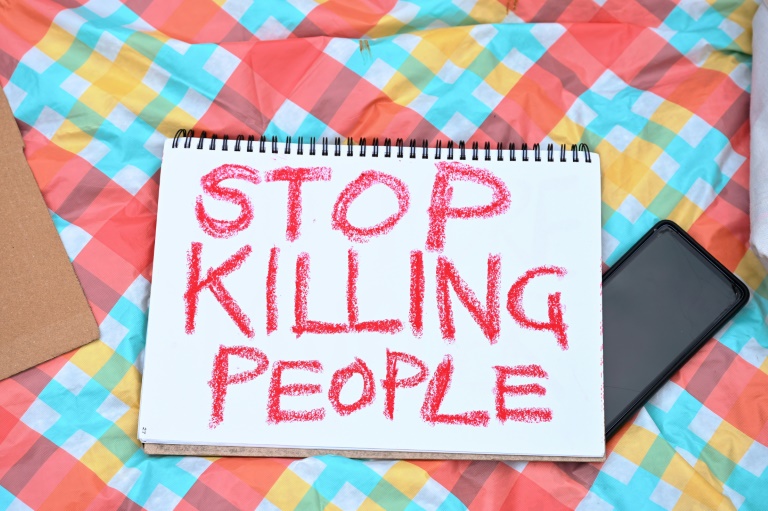
They held signs reading “Capital punishment does not make us safer”, and “Don’t kill in our names”, and chanted slogans against the death penalty.

“Capital Punishment is a brutal system that makes brutes of us all,” Kirsten Han, a prominent local activist, said in an address to the crowd. 

“Instead of pushing us to address inequalities and exploitative and oppressive systems that leave people marginalised and unsupported, it makes us the worst version of ourselves.”

Protests are unusual in Singapore, which frequently faces criticism for curbing civil liberties. 

Aside from in “Speakers’ Corner”, it is illegal for even one person to stage a demonstration without a police permit. 

Abdul Kahar Othman, a 68-year-old Singaporean drug trafficker, was hanged Wednesday despite appeals for clemency from the United Nations and rights groups.

Next in line to be executed could be Nagaenthran K. Dharmalingam, a mentally disabled Malaysian convicted of heroin trafficking who lost his final appeal last week.

His case has attracted a storm of criticism, including from the European Union and British billionaire Richard Branson.

Three other men sentenced to death for drugs offences had their appeals rejected earlier in March.

Prosperous but socially conservative Singapore has some of the world’s toughest drugs laws, and has faced mounting calls from rights groups to abandon the death penalty.

Authorities insist that capital punishment remains an effective deterrent against drug trafficking and has helped to keep the city-state one of the safest places in Asia.

Serbians vote in polls overshadowed by war in Ukraine

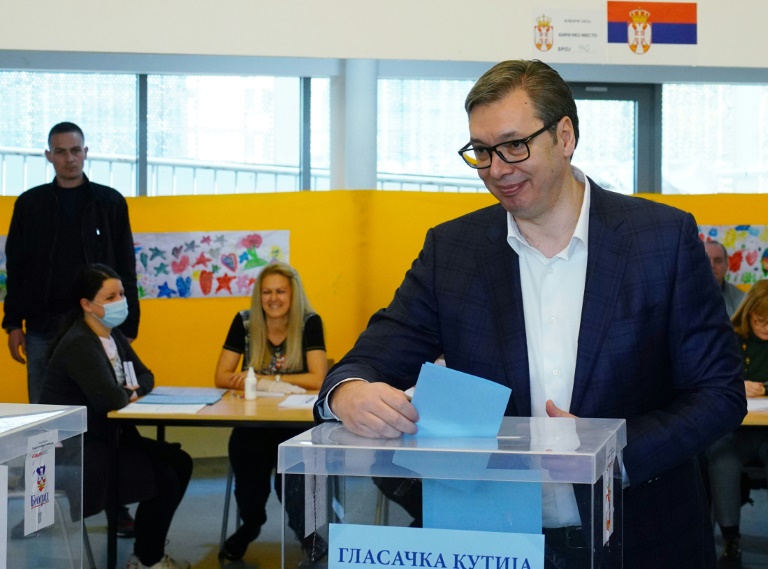
Serbians went to the polls on Sunday in elections that will likely see populist President Aleksandar Vucic extend his rule in the Balkan country, as he vows to provide stability amid war raging in Ukraine.

The country of around seven million will elect the president, deputies for the 250-seat parliament and cast votes in several municipal contests. 

The latest opinion polls see Vucic’s centre-right Serbian Progressive Party maintaining its control over the parliament, while the president is poised to win a second term.

“Personally, I see a stable progress and I voted in accordance with this opinion,” Milovan Krstic, a 52-year-old government employee, told AFP after casting his vote in Belgrade.

Russia’s invasion of Ukraine has cast a long shadow over a contest that observers had earlier predicted would focus on environmental issues, corruption and rights.

Vucic has deftly used the return of war in Europe along with the coronavirus pandemic to his advantage, promising voters continued stability amid uncertain headwinds.   

“We expect a huge victory. That’s what we worked for in the past four or five years, and we believe that we will continue with the great efforts and the development of this country,” the president said after casting his ballot early Sunday.

Serbia’s leading opposition candidate Zdravko Ponos said he hoped the contest would offer a path to institute “serious change” in the country. 

“I hope for a bright future. Elections are the right way to change the situation. I hope the citizens of Serbia will take the chance today,” said Ponos.

– Decade in power –

Only a few months ago, the opposition seemed to have gained momentum. 

In January, Vucic axed a controversial lithium mine project following mass protests that saw tens of thousands take to the streets. 

The move was a rare defeat for Vucic who has rotated through a range of positions, including prime minister, president and deputy premier along with a stint as the defence chief during a decade in power. 

The polls predict that he will win again on Sunday even as the opposition hopes a high turnout could force a run-off. 

Analysts, however, say the opposition has little chance of dethroning Vucic or eating away at his coalition in the parliament, which holds a lion’s share of the seats.

The president has also carefully managed the country’s response to the war in Ukraine by officially condemning Russia at the United Nations, but stopping short of sanctioning Moscow at home, where many Serbs hold a favourable view of the Kremlin. 

The opposition in turn has largely refrained from attacking Vucic’s position on the conflict, fearing any call for harsher measures against Russia would backfire at the ballot box. 

Vucic also headed into elections with a plethora of other advantages. 

Following a decade at the helm, he has increasingly tightened his grip over the various levers of power, including de facto control over much of the press and government services.

In the months leading up to the campaign, the president rolled out a range of financial aid offers to select groups, prompting critics to say he was trying to “buy” votes before the contest. 

Polling stations opened from 0500 GMT and close at 1800 GMT, with unofficial results due later in the evening.

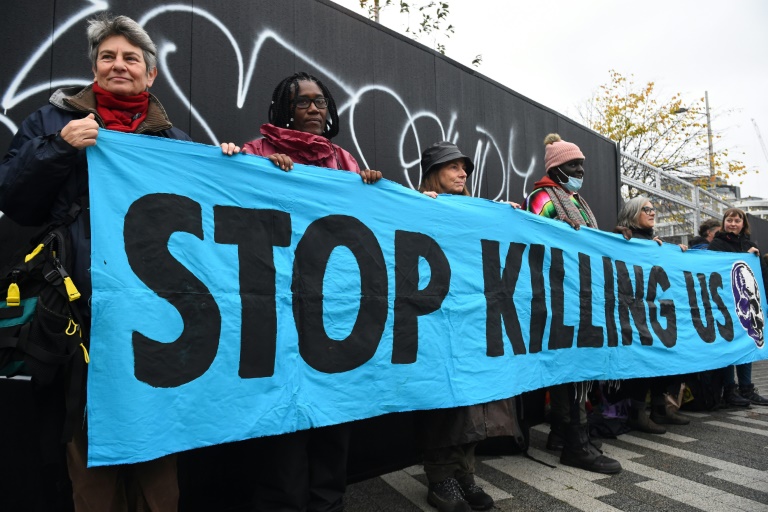
Scientists risk arrest to sound climate alarm

A loosely federated network of scientists in more than two dozen countries plan acts of civil disobedience starting this week to highlight the climate crisis, members of Scientist Rebellion told AFP.

Their non-violent actions are timed to the release Monday of a landmark report from the UN’s climate science advisory panel laying out options for slashing carbon pollution and controversial schemes for extracting CO2 from the air, they said in interviews.

Scientist Rebellion targets universities, research institutes and major scientific journals, prodding them and their staff to speak out more forcefully on what they describe as the existential threat of global warming.

“Scientists are particularly powerful messengers, and we have a responsibility to show leadership,” said Charlie Gardner, a conservation scientist at the University of Kent specialised in tropical biodiversity.

“We are failing in that responsibility. If we say it’s an emergency, we have to act like it is.”

Starting Monday, the group hopes to see “high levels of disobedience” with more than 1,000 scientists worldwide taking part in direct non-violent action against government and academic institutions.

The world has seen a crescendo of deadly extreme weather amplified by rising temperatures — heatwaves, wildfires, flooding, storms engorged by rising seas — and a torrent of recent climate science projects worse to come. 

Much of that research is distilled in periodic reports from the UN’s Intergovernmental Panel On Climate Change (IPCC). 

Scientist Rebellion was founded in 2020 by two physics PhD students at St Andrews College in Scotland, inspired in part by the more broadly based Extinction Rebellion.

The group’s first significant action with more than 100 scientists, in March 2021, targeted the British Royal Society and science publishing behemoth Springer Nature.        

“We basically pasted enlarged copies of their journal articles calling for rapid transformative change onto their offices,” said Kyle Topher, an environmental scientist from Australia and full-time activist for the group.

– ‘It is survival’ –

Last year’s COP26 climate summit in Glasgow saw a score of their members arrested. 

“As far as we know this was the first mass arrest of scientists anywhere in the world since Carl Sagan protested nuclear weapons testing in the 1980s,” said Gardner.

They also made headlines by leaking an early draft of Monday’s IPCC report, which warned that carbon dioxide emissions need to peak within three years if the world is to keep the Paris Agreement targets for global warming in reach. 

“As scientists, we tend to be risk averse — we don’t want to risk our jobs, our reputations, and our time,” said Rose Abramoff, a soil scientist at Oak Ridge National Laboratory in Knoxville, Tennessee and a Scientist Rebellion member.

“But it is no longer sufficient to do our research and expect others to read it and understand the severity and urgency of the climate crisis.”

The aim of the group is to “make this crisis impossible to ignore”, she added.

Many of its members are in the Global South, where climate change protests up to now have been more muted, even if the impacts are more keenly felt.

“I am not sure this is our last chance, but time is definitely running out,” said Jordan Cruz, an environmental engineer in Ecuador who studies the devastating impact of mining industries on human communities in the Andes.

“I am terrified,” he said by email. “But it’s the kind of fear that motivates action. It is survival.”

More information about Scientist Rebellion can be found here: https://scientistrebellion.com/take-action/

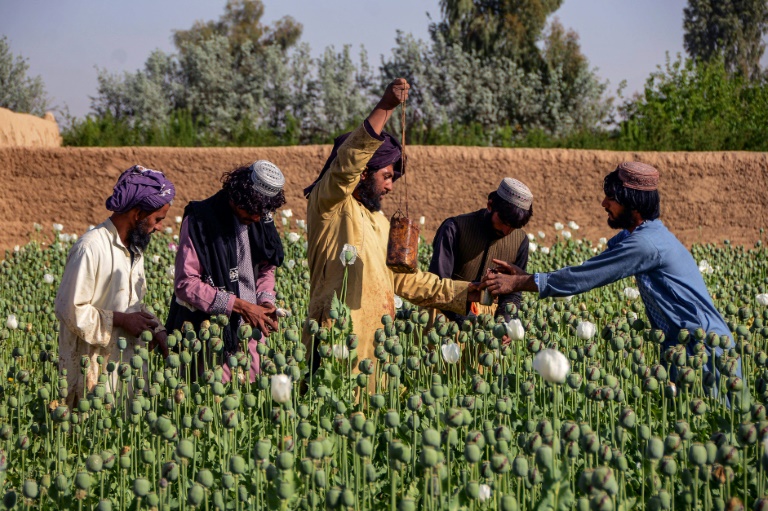
Taliban chief orders ban on poppy cultivation in Afghanistan

The Taliban’s supreme leader on Sunday ordered a ban on poppy cultivation in Afghanistan, warning that the hardline Islamist government would crack down on farmers planting the crop.

Afghanistan is the world’s biggest producer of poppies, the source of sap that is refined into heroin, and in recent years its production and exports have only boomed.

“All Afghans are informed that from now on cultivation of poppy has been strictly prohibited across the country,” said a decree issued by Supreme Leader Hibatullah Akhundzada.

The decree was read out by government spokesman Zabihullah Mujahid at a gathering of reporters, foreign diplomats and Taliban officials.

“If anyone violates the decree the crop will be destroyed immediately and the violator will be treated according to the sharia law,” it added.

It is not the first time the fundamentalist group has vowed to outlaw the trade. Production was banned in 2000, just before the group was overthrown by US-led forces in the wake of the September 11 attacks.

During their 20-year insurgency against foreign forces, the Taliban heavily taxed farmers cultivating the crop in areas under their control.

It became a key resource for the group to generate funds.

The United States and NATO forces tried to curb poppy cultivation during their two decades in Afghanistan by paying farmers to grow alternative crops such as wheat or saffron.

But their attempts were thwarted by the Taliban who controlled the main poppy-growing regions and derived hundreds of millions of dollars from the trade, experts say.

Deputy Prime Minister Abdul Salam Hanafi rejected claims the Taliban helped fuel poppy cultivation during their insurgency.

“How come it was exported all over the world when they (US-led forces) had full control over Afghanistan,” Hanafi said Sunday.

Afghan media reports say production has increased in two southern provinces, Kandahar and Helmand, since the Taliban seized power in August, although data is not available.

Afghanistan has a near monopoly on opium and heroin, accounting for 80 to 90 percent of global output, according to the United Nations Office on Drugs and Crime.

The amount of land planted with poppies hit a record high in 2017 and has averaged around 250,000 hectares in recent years, roughly four times the level of the mid-1990s, UN figures show.

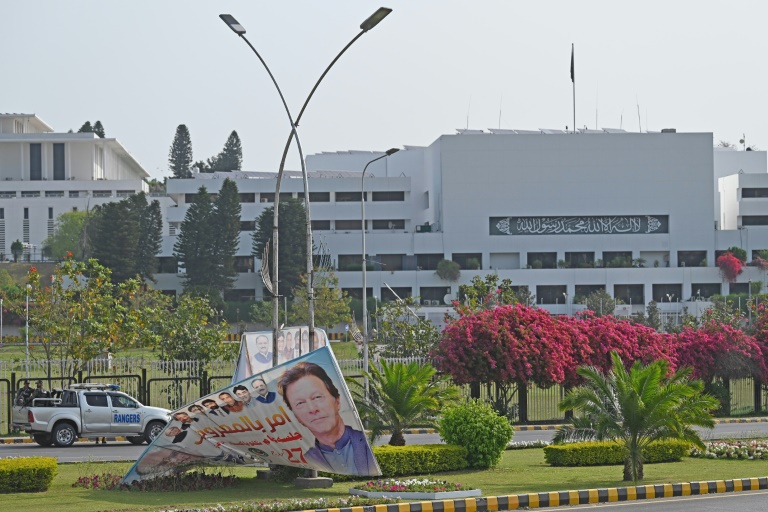
Pakistan to go to the polls after PM Khan foils sacking attempt

Pakistan will go to the polls to elect a new government within three months after Prime Minister Imran Khan foiled an attempt to boot him from office Sunday by getting the president to dissolve the national assembly.

On a day of high drama, the assembly deputy speaker refused to accept a motion of no confidence in the government, as Khan appeared on TV to say there had been “foreign interference” in Pakistan’s democratic institutions.

“I have sent advice to the president to dissolve the assemblies. We will go to the public and hold elections, and let the nation decide,” he said.

The presidency — a largely ceremonial office — acceded hours later.

No premier of Pakistan has ever completed a full term, and Khan has been facing the biggest challenge to his rule since being elected in 2018, with opponents accusing him of economic mismanagement and bungling foreign policy.

On Sunday parliament was due to debate a no-confidence motion that looked certain to succeed, but the deputy speaker — a Khan loyalist — refused to accept it, causing uproar in the chamber.

The move appeared to blindside the opposition, who had confidently predicted they had enough votes to boot Khan from office.

– ‘Spark anarchy’ –

“This day will be remembered as a black day in Pakistan’s constitutional history,” said Shehbaz Sharif, leader of the Pakistan Muslim League-N (PML-N), who had been tipped to replace Khan if the vote had succeeded.

Khan’s Pakistan Tehreek-e-Insaf party (PTI) effectively lost its majority in the 342-member assembly last week when a coalition partner said its seven lawmakers would vote with the opposition.

More than a dozen PTI members had also indicated they would cross the floor.

Khan has accused the opposition of conspiring with “foreign powers” to remove him because he will not take the West’s side on global issues against Russia and China.

Earlier this week he accused the United States of meddling in Pakistan’s affairs. 

Local media had reported that Khan received a briefing letter from Islamabad’s ambassador to Washington recording a senior US official saying they felt relations would be better if Khan left office.

In Washington last week State Department spokesman Ned Price told reporters there was “no truth” to the allegations, but Khan insisted Sunday it was “a move to change the regime”, and accused the opposition of betrayal.

“This betrayal was taking place in front of the entire nation… traitors were sitting and planning this conspiracy,” he added.

– Opposition gathers –

The opposition is headed by the PML-N and the Pakistan Peoples Party (PPP) — two usually feuding dynastic groups that dominated national politics for decades until Khan forged a coalition against them.

Khan was elected after promising to sweep away decades of entrenched corruption and cronyism, but has struggled to maintain support with inflation skyrocketing, a feeble rupee and crippling debt.

Some analysts said Khan had also lost the crucial support of the military — claims both sides deny — but it is unlikely he would have pulled off Sunday’s manoeuvre without its knowledge, if not blessing.

There have been four military coups — and at least as many unsuccessful ones — since independence in 1947, and the country has spent more than three decades under army rule.

“The best option in this situation are fresh elections to enable the new government to handle economic, political and external problems faced by the country,” said Talat Masood, a general turned political analyst.

Khan, an ex-international cricket star who in 1992 captained Pakistan to their only World Cup win, had hinted Saturday he still had a card to play.

“I have a plan for tomorrow, you should not be worried about it. I will show them and will defeat them in the assembly.”

War in Ukraine: Latest developments

Here are the latest developments in the war in Ukraine:

– Air strikes hit Odessa –

Air strikes rock Ukraine’s strategic Black Sea port Odessa Sunday morning, but the army says there were no casualties. 

“High-precision sea and air-based missiles destroyed an oil refinery and three storage facilities for fuel and lubricants near the city of Odessa,” the Russian defence ministry says.

– Russian pullback reveals horror – 

Russian troops leave scenes of devastation in the city of Bucha, just outside Kyiv, where nearly 300 people have been buried in a mass grave, mayor Anatoly Fedoruk tells AFP.

The heavily destroyed city is littered with corpses, with 20 bodies in civilian clothing strewn across a single tree-lined street. 

“All these people were shot, killed, in the back of the head,” Fedoruk says.

– Ukraine says Russia planting mines –

Ukrainian President Volodymyr Zelensky accuses Russian soldiers of planting mines and other booby traps as they withdraw from northern Ukraine.

“They are mining the whole territory. Mining houses, equipment, even the bodies of people who were killed,” he says in a video address Saturday.

– Ukraine claims control of ‘whole Kyiv region’ –

Ukraine has regained control of “the whole Kyiv region” after invading Russian forces retreated from some key towns near the Ukrainian capital, deputy defence minister Ganna Maliar says.

“Russia is prioritising a different tactic: falling back on the east and south,” according to a Ukrainian presidential adviser.

– Mariupol evacuation –

The Red Cross says its team left for the besieged southern port of Mariupol Saturday for a fresh evacuation effort. 

– Ukrainian journalist found dead –

Ukrainian photographer Maks Levin has been found dead near Kyiv after going missing more than two weeks ago, the government says.

Prosecutors say he was “unarmed” and “killed by servicemen of the Russian Armed Forces with two shots from small firearms”.

– Baltic states stop Russian gas imports –

The head of Latvia’s natural gas storage operator says the Baltic states are no longer importing Russian natural gas.

– Ukraine says Russia agrees to Kyiv proposals –

Ukraine’s top negotiator in peace talks with Russia says that Moscow had “verbally” agreed to key Ukrainian proposals, raising hopes that talks to end fighting are moving forward.

– Ukraine accuses Russia of firing on protesters –

Ukraine’s human rights ombudswoman Lyudmyla Denisova accuses Russian forces of opening fire on peaceful demonstrators, injuring four with “severe burns”, in the southern city of Enerhodar occupied by Moscow’s forces.

– Russian protesters detained –

Russian police detain 211 people at protests against Moscow’s military operation in Ukraine, according to OVD-Info, an NGO.

– Call for ICC to issue Putin arrest warrant –

Veteran war crimes prosecutor Carla Del Ponte calls for the International Criminal Court to quickly issue an arrest warrant for Russian President Vladimir Putin over actions in Ukraine.

– Pope urges ‘shared response’ on refugees –

The number of refugees fleeing Ukraine has passed 4.1 million, the United Nations says.

Pope Francis calls for a “shared response” to “the growing migration emergency”, adding that he is still considering a visit to Kyiv.

– UN official to visit Moscow, Kyiv –

A top UN official is set to fly to Moscow Sunday, and then on to Kyiv to try and secure a “humanitarian ceasefire” in Ukraine, says the body’s chief Antonio Guterres. 

Both Russia and Ukraine have agreed to meet Martin Griffiths, Under-Secretary-General for Humanitarian Affairs, Guterres says.

Close Bitnami banner
Bitnami