World

Stung by drought, Morocco's bees face disaster

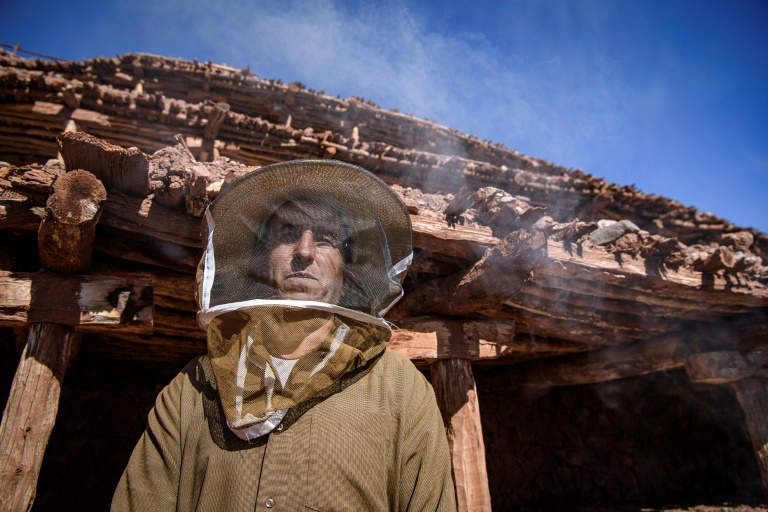
Morocco’s village of Inzerki is proud to claim it has the world’s oldest and largest collective beehive, but instead of buzzing with springtime activity, the colonies have collapsed amid crippling drought.

Beekeeper Brahim Chatoui says he has lost almost a third of his hives in just two months — and he is not alone.

“At this time of year, this area would normally be buzzing with bees,” said Chatoui, sweating under a blazing springtime sun. “Today, they’re dying at a terrifying rate.”

The North African kingdom has seen a dramatic spike in mass die-offs of the critical pollinators, a phenomenon called “colony collapse disorder”.

Worldwide, experts say such sudden mass deaths of bees are often linked to the destruction of nature and the rampant use of pesticides.

But authorities in Morocco say these collapses are caused by the worst drought to hit the country in 40 years, which has decimated the plants on which bees rely for food.

– ‘Unprecedented’ spike –

The crisis is so acute that the government released 130 million dirhams ($13 million), to support beekeepers and investigate the cause of the bee deaths.

Morocco’s National Food Safety Office, which carried out the investigation, ruled out disease as a reason.

Instead, it blamed the “unprecedented” spike in hive collapses on an intense drought driven by climate change.

Inzerki’s unique collective beehive sits on a sunny hillside in the heart of the Arganeraie Biosphere Reserve, a UNESCO-protected 2.5-million-hectare region, some 415 kilometres (260 miles) southwest of the capital Rabat.

The complex is striking: A five-storeyed structure of wooden struts and dry mud stretch along a hillside, each compartment home to a cylindrical wicker hive, covered with a mix of earth and cow dung. 

Experts say it is the oldest traditional, collective beehive in the world, dating back to 1850, but today it is under threat amid a changing climate.

“This year we hope for rain, because I have lost 40 hives so far,” Chataoui said.

Bee expert Antonin Adam, who has studied the insects in southwestern Morocco, also blamed the collapse on the drought.

But he added the problem may have been exacerbated by “the bees’ vulnerability to diseases, nomadic pastoral practices, intensive agriculture and the country’s desire to increase its honey production”.

That desire is clearly visible in agriculture ministry figures.

Honey output has risen by 69 percent in a decade, from 4.7 tonnes in 2009 to almost eight tonnes in 2019, generating revenues of over 100 million euros.

But it is not only Inzerki’s apiary that is in trouble.

Mohamed Choudani, of the UAM beekeepers union, said the crisis was hitting bee populations across the country.

Last summer, Morocco’s 36,000 beekeepers were managing some 910,000 hives, up by 60 percent since 2009, according to official figures.

But Choudani said that since last August, 100,000 colonies had been lost in the central region of Beni Mellal-Khenifra alone.

Bees and other pollinators are vital for the reproduction of more than three-quarters of food crops and flowering plants.

The UN’s Food and Agriculture Organisation (FAO) say bees play an “essential role… in keeping people and the planet healthy”, with the UN saying they “serve as sentinels for emergent environmental risks, signalling the health of local ecosystems”.

– ‘Exceptional legacy’ –

For the villagers of Inzerki, the collapse of hives is an ecological and economic disaster — but also a crisis for their unique heritage.

Chatoui, the beekeeper, said many Inzerki residents can’t afford to revive the hives they have lost.

“Some families have decided just to give up on beekeeping completely,” he said.

The hives at Inzerki are in trouble. Parts of the structure, recently listed as a national heritage site, are sagging.

Geographer Hassan Benalayat says the neglect is due to several factors on top of climate change, including the arrival of modern agriculture and a general exodus from the countryside.

Around 80 families in the village once kept bees. Today there are less than 20.

“It’s urgent to keep this exceptional legacy alive,” Benalayat said.

Chatoui and other villagers have set up an association to restore the structure, as well as planting herbs for the bees that are better able to tolerate hot and arid conditions.

“The situation is critical, but that doesn’t mean I’m giving up,” Chatoui said.

“The aim isn’t to produce honey, but to protect the hives and make sure the bees survive until better days.”
Stung by drought, Morocco's bees face disaster

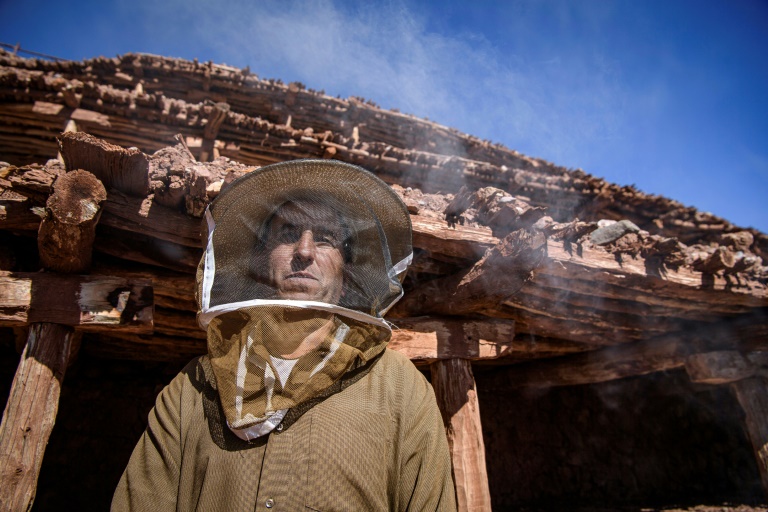
Morocco’s village of Inzerki is proud to claim it has the world’s oldest and largest collective beehive, but instead of buzzing with springtime activity, the colonies have collapsed amid crippling drought.

Beekeeper Brahim Chatoui says he has lost almost a third of his hives in just two months — and he is not alone.

“At this time of year, this area would normally be buzzing with bees,” said Chatoui, sweating under a blazing springtime sun. “Today, they’re dying at a terrifying rate.”

The North African kingdom has seen a dramatic spike in mass die-offs of the critical pollinators, a phenomenon called “colony collapse disorder”.

Worldwide, experts say such sudden mass deaths of bees are often linked to the destruction of nature and the rampant use of pesticides.

But authorities in Morocco say these collapses are caused by the worst drought to hit the country in 40 years, which has decimated the plants on which bees rely for food.

– ‘Unprecedented’ spike –

The crisis is so acute that the government released 130 million dirhams ($13 million), to support beekeepers and investigate the cause of the bee deaths.

Morocco’s National Food Safety Office, which carried out the investigation, ruled out disease as a reason.

Instead, it blamed the “unprecedented” spike in hive collapses on an intense drought driven by climate change.

Inzerki’s unique collective beehive sits on a sunny hillside in the heart of the Arganeraie Biosphere Reserve, a UNESCO-protected 2.5-million-hectare region, some 415 kilometres (260 miles) southwest of the capital Rabat.

The complex is striking: A five-storeyed structure of wooden struts and dry mud stretch along a hillside, each compartment home to a cylindrical wicker hive, covered with a mix of earth and cow dung. 

Experts say it is the oldest traditional, collective beehive in the world, dating back to 1850, but today it is under threat amid a changing climate.

“This year we hope for rain, because I have lost 40 hives so far,” Chataoui said.

Bee expert Antonin Adam, who has studied the insects in southwestern Morocco, also blamed the collapse on the drought.

But he added the problem may have been exacerbated by “the bees’ vulnerability to diseases, nomadic pastoral practices, intensive agriculture and the country’s desire to increase its honey production”.

That desire is clearly visible in agriculture ministry figures.

Honey output has risen by 69 percent in a decade, from 4.7 tonnes in 2009 to almost eight tonnes in 2019, generating revenues of over 100 million euros.

But it is not only Inzerki’s apiary that is in trouble.

Mohamed Choudani, of the UAM beekeepers union, said the crisis was hitting bee populations across the country.

Last summer, Morocco’s 36,000 beekeepers were managing some 910,000 hives, up by 60 percent since 2009, according to official figures.

But Choudani said that since last August, 100,000 colonies had been lost in the central region of Beni Mellal-Khenifra alone.

Bees and other pollinators are vital for the reproduction of more than three-quarters of food crops and flowering plants.

The UN’s Food and Agriculture Organisation (FAO) say bees play an “essential role… in keeping people and the planet healthy”, with the UN saying they “serve as sentinels for emergent environmental risks, signalling the health of local ecosystems”.

– ‘Exceptional legacy’ –

For the villagers of Inzerki, the collapse of hives is an ecological and economic disaster — but also a crisis for their unique heritage.

Chatoui, the beekeeper, said many Inzerki residents can’t afford to revive the hives they have lost.

“Some families have decided just to give up on beekeeping completely,” he said.

The hives at Inzerki are in trouble. Parts of the structure, recently listed as a national heritage site, are sagging.

Geographer Hassan Benalayat says the neglect is due to several factors on top of climate change, including the arrival of modern agriculture and a general exodus from the countryside.

Around 80 families in the village once kept bees. Today there are less than 20.

“It’s urgent to keep this exceptional legacy alive,” Benalayat said.

Chatoui and other villagers have set up an association to restore the structure, as well as planting herbs for the bees that are better able to tolerate hot and arid conditions.

“The situation is critical, but that doesn’t mean I’m giving up,” Chatoui said.

“The aim isn’t to produce honey, but to protect the hives and make sure the bees survive until better days.”
From Beirut to Baghdad: Lebanese flee crisis seeking jobs in Iraq

Iraq, once synonymous with conflict and chaos, is becoming a land of opportunity for Lebanese job-seekers fleeing a deep economic crisis back home.

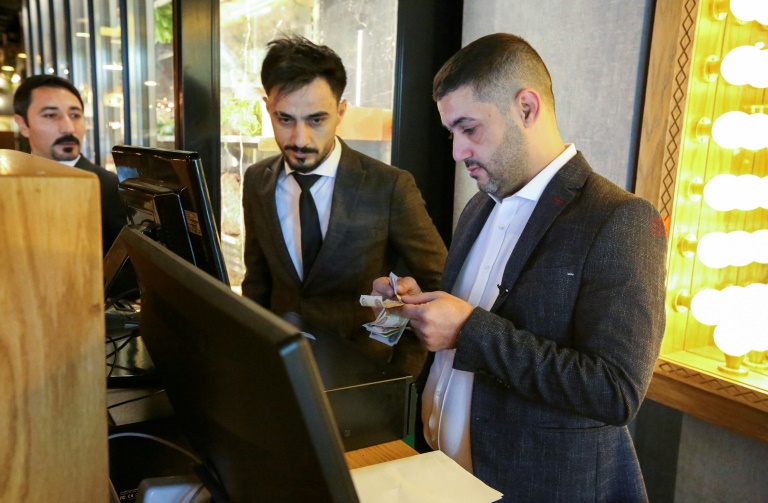
Akram Johari is one of thousands who fled Lebanon’s tumbling currency and skyrocketing poverty rates.

Last year, he packed his bags and boarded a plane from Beirut to Baghdad, using social media to search for opportunities.

“I didn’t have enough time to look for a job in the Gulf,” the 42-year-old said, explaining why he eschewed the more traditional path for those seeking economic opportunities in the region.

With its relative proximity and visas on arrival for Lebanese, the Iraqi capital seemed a good option.

“I had to take quick action, and so I came to Baghdad and began searching for work on Instagram,” Johari said, speaking in a restaurant he has run for about a month.

Lebanon is grappling with an unprecedented financial crisis that the World Bank says is of a scale usually associated with war.

Beirut’s crisis, driven by years of endemic corruption, has seen Lebanon’s currency lose more than 90 percent of its value against the dollar.

Lebanon’s 675,000-pound monthly minimum wage now fetches around $30 on the black market, and about 80 percent of the population now lives in poverty, according to the UN.

When he left Beirut, Johari was earning the equivalent of about $100 per month. In Iraq, he earns enough to support his family back home, he said.

– Thousands flock to Iraq –

More than 20,000 Lebanese citizens arrived in Iraq between June 2021 and February 2022, excluding pilgrims visiting the Shiite holy cities of Najaf and Karbala, according to the Iraqi authorities.

Lebanon’s ambassador in Baghdad, Ali Habhab, said that movement from Lebanon to Iraq “has recently multiplied”.

There are more than 900 Lebanese businesses now operating in Iraq, the majority of them in the restaurant trade, tourism and health, Habhab said. 

In particular, there have been “dozens of Lebanese doctors who offer their services” in Iraqi hospitals, he said.

Iraq’s decades of conflict — from the Iran-Iraq war of the 1980s, to the US-led invasion of 2003 and  subsequent sectarian conflict, and on to the rise of the Islamic State group in 2014 — means that Baghdad might appear to be an unlikely magnet for those seeking to build a new life.

But since the country declared victory over IS in 2017, Iraq has slowly begun to recover its stability.

Today, streets in Baghdad that once witnessed atrocities are buzzing with shops lining main thoroughfares and cafes open late into the night.

According to Iraqi economic expert Ali al-Rawi, many Lebanese companies came to Iraq because they “know the investment environment well”, while many foreign companies from other countries “fear investing” because of its violent past.

“There is a lot of space for Lebanese enterprises in the Iraqi economy,” he said.

But Iraqis themselves have seen their fair share of economic hardship.

In a country where 90 percent of revenues come from oil sales, roughly a third of the population lives in poverty, according to the World Bank. 

In 2019, nationwide protests erupted across Iraq, driven by anger over rampant corruption, the absence of basic services and unemployment — similar factors behind protests in Lebanon that erupted around the same time.

– Lebanese firms flourish –

Lebanon was once a prime destination for medical tourism, as Iraqis flocked to better equipped medical centres in Beirut and other cities.

But, as with other sectors, Lebanon’s economic crisis has hit healthcare.

The Beirut Eye & ENT Specialist Hospital was once popular with Iraqi patients, but an official at the hospital, Michael Cherfan, said that “many doctors had left Lebanon”.

The hospital responded to the crisis in the way many Lebanese have — by opening a branch in Baghdad, sparing Iraqis the trip to Beirut.

“Our doctors come on a rotating basis,” Cherfan said. “Every week, one or two doctors come and do consultations and surgeries, earn some money and then return to Lebanon, which helps offset some of their losses.”

For Johari, while the money he earns in Iraq supports his family, it comes with a bitter taste. He flies home once a month, but he misses his family.

“It saddens me a lot that I can’t watch my two-month-old daughter grow up”, he said.

Pakistan PM faces dismissal as parliament sits for no-confidence vote

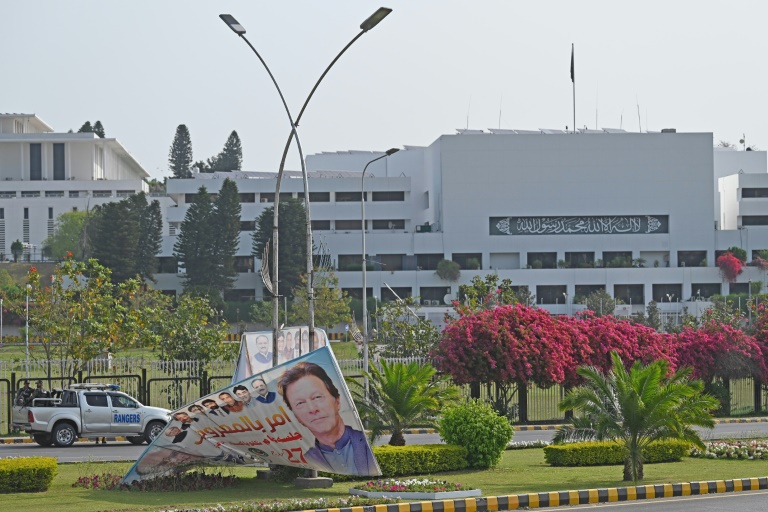
Pakistan Prime Minister Imran Khan looked likely to be booted out of office later Sunday as parliament gathered to vote on a no-confidence motion following weeks of political turmoil. 

No premier of Pakistan has ever completed a full term, and Khan faces the biggest challenge to his rule since being elected in 2018, with opponents accusing him of economic mismanagement and bungling foreign policy.

Sunday’s newspapers splashed foreboding headlines for Khan’s political fate, with the country’s biggest English-language daily The News calling it a “Final countdown”. 

“A new chapter in the history of Pakistani democracy may be written today,” wrote the influential Dawn newspaper.

Authorities have installed a ring of steel around the National Assembly in the capital, using shipping containers to block roads after Khan on Saturday called for supporters to take to the streets.

His Pakistan Tehreek-e-Insaf party (PTI) effectively lost its majority in the 342-member assembly last week when a coalition partner said its seven lawmakers would vote with the opposition.

More than a dozen PTI lawmakers have also indicated they will cross the floor.

The opposition needs 172 votes for the motion to succeed, but in the past parties have resorted to physically preventing lawmakers from taking part by blocking access to the national assembly, leading to cat-and-mouse chases and even accusations of kidnapping.

Khan has accused the opposition of conspiring with “foreign powers” to remove him because he won’t take the West’s side on global issues against Russia and China.

Earlier this week he accused the United States of meddling in Pakistan’s affairs. 

Local media had reported that Khan had received a briefing letter from Islamabad’s ambassador to Washington recording a senior US official saying they felt relations would be better if Khan left office.

In Washington last week, State Department spokesman Ned Price told reporters there was “no truth” to the allegations.

– Opposition gathers –

The opposition is headed by the Pakistan Muslim League-N (PML-N) and the Pakistan Peoples Party (PPP) — two usually feuding dynastic groups that dominated national politics for decades until Khan forged a coalition against them.

If Khan goes, the PML-N’s Shehbaz Sharif is tipped to become the next prime minister.

Sharif is the younger brother of three-time prime minister Nawaz Sharif, who was ousted in 2017 and jailed on corruption charges, but is currently in Britain after being released from prison for medical treatment.

On Saturday the government moved to have Sharif sent back to jail to await trial on money-laundering charges that have been pending since 2020, asking a Lahore court to revoke his bail. 

A decision is expected Monday.

Khan was elected after promising to sweep away decades of entrenched corruption and cronyism, but has struggled to maintain support with inflation skyrocketing, a feeble rupee and crippling debt.

Some analysts say Khan has also lost the crucial support of the military — claims both sides deny — and Pakistan’s army is key to political power.

There have been four military coups — and at least as many unsuccessful ones — since independence in 1947, and the country has spent more than three decades under army rule.

Debate on the no-confidence motion was due to start Thursday, but the deputy speaker — from Khan’s party — suspended proceedings when legislators declined to first address other items on the agenda.

Khan, a former international cricket star who in 1992 captained Pakistan to their only World Cup win, hinted Saturday he still had a card to play.

“I have a plan for tomorrow, you should not be worried about it. I will show them and will defeat them in the assembly.”

Serbians cast votes in polls overshadowed by war in Ukraine

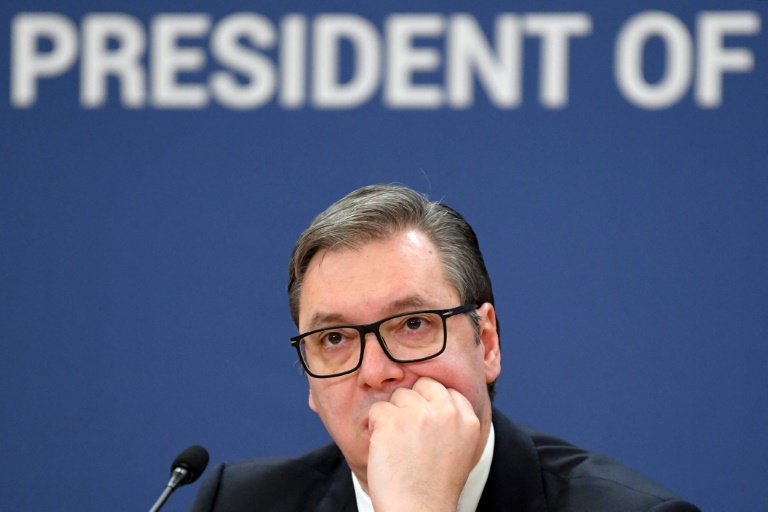
Serbians head to the polls on Sunday in elections that will likely see populist President Aleksandar Vucic extend his rule in the Balkan country, as he vows to provide stability amid war raging in Ukraine.

The country of around seven million will elect the president, deputies for the 250-seat parliament and cast votes in several municipal contests. 

According to the latest opinion polls, Vucic’s centre-right Serbian Progressive Party is expected to maintain its control over the parliament, while the president is in pole position for a second term.

Russia’s invasion of Ukraine has cast a long shadow over a contest that observers had earlier predicted would focus on environmental issues, corruption and rights.

Vucic has deftly used the return of war in Europe along with the coronavirus pandemic to his advantage, promising voters continued stability amid uncertain headwinds.   

“These crises have shaken much stronger economies than ours, but we are completely stable. We are successfully facing the challenges,” the president wrote recently in a widely published op-ed, vowing to raise wages and pensions if elected again.

Only a few months ago, the opposition seemed to have momentum. 

In January, Vucic axed a controversial lithium mine project following mass protests that saw tens of thousands take to the streets in protest. 

The move was a rare defeat for Vucic who has rotated through a range of positions including prime minister, president and deputy premier along with a stint as the defence chief during a decade in power. 

The latest polls predict that he will win again on Sunday, even as the opposition hopes a high turnout on election day could force a run-off. 

Analysts, however, say the opposition has little chance of dethroning Vucic or eating away at his coalition in the parliament, which possesses a lion’s share of the legislator’s seats.

The president has also carefully managed the country’s response to the war in Ukraine by officially condemning Russia at the United Nations but stopping short of sanctioning Moscow at home, where many Serbs hold a favourable view of the Kremlin. 

The opposition in turn has largely refrained from attacking Vucic’s position on the war, fearing any call for harsher measures against Russia would backfire at the ballot box. 

Vucic will also head into elections with a plethora of other advantages. 

Following a decade at the helm, Vucic has increasingly tightened his grip over the various levers of power, including de-facto control over much of the press and government services.

In the months leading up to the campaign, the president rolled out a range of financial aid offers to select groups, prompting his critics to say he was trying to “buy” votes before the contest. 

Polling stations are open from 0500 GMT to 1800 GMT on Sunday, with unofficial results due later in the evening.

bur-mat-ev-ds/yad

Hungary vote goes to wire as PM Orban seeks fourth term

Nationalist Hungarian Prime Minister Viktor Orban faces a tough challenge with a united opposition in an unpredictable general election Sunday, after a campaign dominated by Russia’s invasion of neighbouring Ukraine.

The six main opposition parties are for the first time fielding a joint list, determined to roll back the “illiberal” revolution Orban’s Fidesz party has pursued during its 12 consecutive years in office.

That has involved repeated confrontations with EU institutions, including over the neutering of the press and judiciary, and measures targeting the LGBT community.

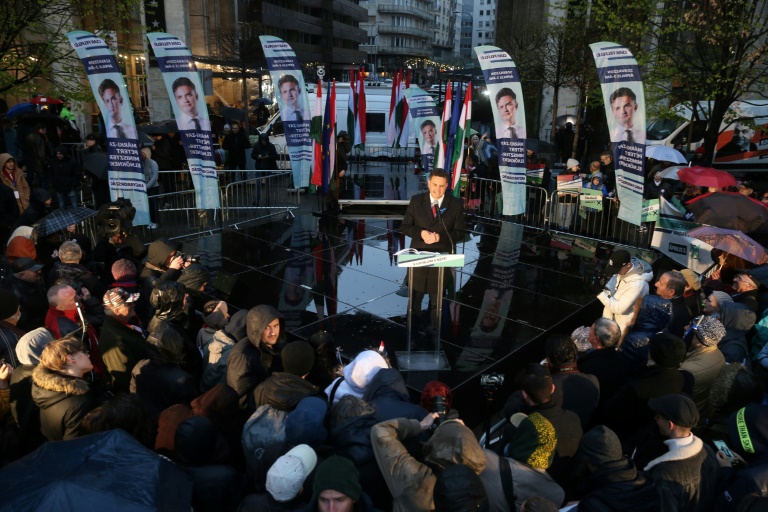
On Saturday, opposition supporters braved rain and chilly temperatures in Budapest to hear the opposition alliance’s candidate for prime minister, Peter Marki-Zay.

While admitting the election was “an uphill battle” given what he called “12 years of brainwashing” under Fidesz, he insisted the opposition alliance stood “at the gates of victory”.

Polls open at 6 am local time (0400 GMT) and will close at 7 pm.

However, government spokesman Zoltan Kovacs says a definitive picture of the results will likely only emerge between 11 pm and midnight.

Turnout is expected to be high, surpassing 70 percent.

– ‘Anything can happen’ –

The capital is seen as favourable territory for the opposition.

“Twelve years is too long for any leader, it’s madness!” 62-year-old technician and Budapest resident Laszlo Takacs told AFP.

However, it’s in around 30 less-urban swing seats out of the 106 directly elected constituencies that the election will be decided.

Marki-Zay has been crisscrossing these areas in recent weeks to reach voters directly and try to break through government “propaganda”.

At his rally on Saturday, he cut an approachable figure, wading into the crowd to take selfies with supporters.

By contrast, Orban has been “hidden”, with no open events save a final rally on Friday, says Andras Pulai of the opposition-leaning Publicus polling institute.

Instead, Orban preferred “closed events where he talked to his most loyal supporters and could not be approached by journalists”.

Publicus’ last pre-election poll, published on Saturday, put Fidesz and the opposition neck-and-neck, while other pollsters have given Fidesz a narrow lead.

However, given the advantage Fidesz enjoys under the electoral system, “the opposition needs to have a three-to-four point lead to win a majority” in the 199-seat chamber, Pulai points out.

He cautions that the votes of Hungarians abroad constitute another unknown factor making the vote “too close to call”.

“Anything can happen,” he says.

At his rally on Friday, Orban urged a strong turnout, reminding his audience of his shock defeat in 2002 after his first term as prime minister.

That came despite a lead in the pre-election polls.

– ‘War changed everything’ –

As Orban told his supporters on Friday, “the war (in Ukraine) changed everything” for the campaign.

In the wake of the Russian invasion, Orban went along with EU support for Kyiv despite his longstanding closeness to Russian President Vladimir Putin.

However, domestically Orban has struck a neutral and even at times anti-Ukrainian tone, and has refused to let weapons for Ukraine cross Hungarian territory.

He has presented himself as the protector of peace and stability as opposed to a “warmongering” opposition whom he alleges would immediately boycott vital Russian energy imports and drag Hungary into the conflict.

For his part, Marki-Zay has tried to frame the vote as “a clear choice: Putin or Europe?”

In a sign of the attention the vote is receiving abroad, former US president Donald Trump felt moved to endorse Orban earlier this year while Trump’s 2016 opponent Hilary Clinton has urged Hungarians to vote to “fight autocracy”.

– ‘Vicious’ referendum  –

As well electing their MPs on Sunday, Hungarians will vote in a referendum posing four questions designed to elicit support for a law banning the portrayal of LGBT people to under-18s.

“Mothers are women, fathers are men, our children must be left alone, our families must be protected,” Orban said at Friday’s rally, where he also railed against “gender madness” in the West.

Human rights activists have called on voters to put a cross in both the “yes” and “no” boxes in order to reduce the number of valid ballots and thereby invalidate the referendum. 

The Hatter Society, an LGBT rights organisation, branded the referendum “vicious” and an attempt to exploit “hatred of a vulnerable minority”.

Clock ticking on Swiss watches' raw materials from Russia

Diamonds shine brightly at this year’s Geneva watch fair but the sanctions slapped on Russia could soon force the Swiss watch industry to produce more subdued designs.

Russia is a major supplier of diamonds, gold and other precious metals to the luxury watchmakers exhibiting at Watches and Wonders, one of the world’s top salons for the prestige industry.

The Russian group Alrosa — the world’s largest diamond mining company — was hit by US sanctions within hours of the Kremlin-ordered invasion of Ukraine on February 24.

According to US Treasury figures, it accounts for 90 percent of Russia’s diamond mining capacity, and 28 percent globally.

And while trade between Switzerland and Russia is modest, gold is the chief import, ahead of precious metals such as platinum followed by diamonds not mounted or set, according to the Swiss customs office.

Compared to other sectors of the Swiss economy, “watchmaking was a branch that was less affected than others by supply problems in 2021”, Jean-Daniel Pasche, president of the Federation of the Swiss Watch Industry, told AFP.

But that may no longer be the case, he acknowledged, adding that it was hard to assess the repercussions for the watch industry at this stage.

“There are obviously reserves. Afterwards, we will have to see, depending on how long the conflict lasts,” Pasche said.

– Recycled gold and palladium –

The Swiss luxury giant Richemont owns the Cartier and Van Cleef & Arpels jewellery firms, plus eight prestigious watch brands, including Piaget and IWC.

The group took the lead on Wednesday, saying all its brands have stopped sourcing diamonds from Russia.

The move will create a lot of work on the supply chain to find responsibly-sourced, quality diamonds from elsewhere, Richemont chief executive Jerome Lambert told a press conference.

Gold supply is of less concern. For a decade or so, Richemont has been sourcing recycled gold for watchmaking, bought from industry and the electronics sector.

For palladium, used for instance for wedding and engagement rings, the group decided “ahead of the sanctions” to switch to suppliers specialising in recycled palladium, Lambert said.

– Draining the stocks –

At Patek Philippe, one of the most prestigious Swiss brands, the firm’s president is counting on his stockpile to ride out the storm.

“Luckily I produce in small quantities,” said Thierry Stern, who represents the fourth generation of his family at the company helm.

“So I don’t feel any difference yet,” he told AFP. For 2022, Patek Philippe plans to manufacture 66,000 timepieces.

“And if I can’t find certain stones, I can always do engraving,” said the head of the  brand, which relies on a wide range of disciplines including ceramics, marquetry and enamel.

H. Moser, a niche brand producing 2,000 watches a year for wealthy collectors, struck much the same tone.

“Purchases are made in advance. For example, for the casings that I want to make in 2023, I have already bought all the gold I need,” said boss Edouard Meylan.

“But maybe in six months’ time some of our suppliers will call to push back the deadlines because they haven’t received the materials,” he admitted.

Concerns over raw materials “will drive up prices, of course”, said Jon Cox, an industry analyst with the Kepler Cheuvreux financial services company.

However, compared to other sectors, luxury firms have more leeway to pass on costs to customers, he added.

At the Watches and Wonders salon in Geneva, where 38 brands are exhibiting until Tuesday, the displays are brimming with diamonds, reflecting the “generally upbeat mood” of the industry this year after a prosperous 2021.

However, given the war and its repercussions, “I imagine product development will move to more subdued luxury goods”, Cox said.

Clock ticking on Swiss watches' raw materials from Russia

Diamonds shine brightly at this year’s Geneva watch fair but the sanctions slapped on Russia could soon force the Swiss watch industry to produce more subdued designs.

Russia is a major supplier of diamonds, gold and other precious metals to the luxury watchmakers exhibiting at Watches and Wonders, one of the world’s top salons for the prestige industry.

The Russian group Alrosa — the world’s largest diamond mining company — was hit by US sanctions within hours of the Kremlin-ordered invasion of Ukraine on February 24.

According to US Treasury figures, it accounts for 90 percent of Russia’s diamond mining capacity, and 28 percent globally.

And while trade between Switzerland and Russia is modest, gold is the chief import, ahead of precious metals such as platinum followed by diamonds not mounted or set, according to the Swiss customs office.

Compared to other sectors of the Swiss economy, “watchmaking was a branch that was less affected than others by supply problems in 2021”, Jean-Daniel Pasche, president of the Federation of the Swiss Watch Industry, told AFP.

But that may no longer be the case, he acknowledged, adding that it was hard to assess the repercussions for the watch industry at this stage.

“There are obviously reserves. Afterwards, we will have to see, depending on how long the conflict lasts,” Pasche said.

– Recycled gold and palladium –

The Swiss luxury giant Richemont owns the Cartier and Van Cleef & Arpels jewellery firms, plus eight prestigious watch brands, including Piaget and IWC.

The group took the lead on Wednesday, saying all its brands have stopped sourcing diamonds from Russia.

The move will create a lot of work on the supply chain to find responsibly-sourced, quality diamonds from elsewhere, Richemont chief executive Jerome Lambert told a press conference.

Gold supply is of less concern. For a decade or so, Richemont has been sourcing recycled gold for watchmaking, bought from industry and the electronics sector.

For palladium, used for instance for wedding and engagement rings, the group decided “ahead of the sanctions” to switch to suppliers specialising in recycled palladium, Lambert said.

– Draining the stocks –

At Patek Philippe, one of the most prestigious Swiss brands, the firm’s president is counting on his stockpile to ride out the storm.

“Luckily I produce in small quantities,” said Thierry Stern, who represents the fourth generation of his family at the company helm.

“So I don’t feel any difference yet,” he told AFP. For 2022, Patek Philippe plans to manufacture 66,000 timepieces.

“And if I can’t find certain stones, I can always do engraving,” said the head of the  brand, which relies on a wide range of disciplines including ceramics, marquetry and enamel.

H. Moser, a niche brand producing 2,000 watches a year for wealthy collectors, struck much the same tone.

“Purchases are made in advance. For example, for the casings that I want to make in 2023, I have already bought all the gold I need,” said boss Edouard Meylan.

“But maybe in six months’ time some of our suppliers will call to push back the deadlines because they haven’t received the materials,” he admitted.

Concerns over raw materials “will drive up prices, of course”, said Jon Cox, an industry analyst with the Kepler Cheuvreux financial services company.

However, compared to other sectors, luxury firms have more leeway to pass on costs to customers, he added.

At the Watches and Wonders salon in Geneva, where 38 brands are exhibiting until Tuesday, the displays are brimming with diamonds, reflecting the “generally upbeat mood” of the industry this year after a prosperous 2021.

However, given the war and its repercussions, “I imagine product development will move to more subdued luxury goods”, Cox said.

China reports 13,000 Covid cases, most since end of Wuhan's first wave

China reported 13,000 Covid cases on Sunday, the most since the peak of the first pandemic wave over two years ago, with Shanghai now the epicentre of the country’s worst outbreak. 

The highly transmissible Omicron variant has spread to more than a dozen provinces, rattling China’s “zero-Covid” strategy which had until March successfully kept the daily caseload down to double or triple digits.

But the current outbreak is also testing the patience of the Chinese towards tough restrictions, as Beijing imposes targeted lockdowns, mass tests and travel curbs at a time when much of the world has re-opened.

Tens of millions of Chinese residents have once more endured some form of lockdown over the last month, disrupting work and damaging the economy. 

The country recorded 13,146 cases on Sunday, the National Health Commission said in a statement, with “no new deaths” reported.

It is China’s highest infection toll since the middle of February 2020. 

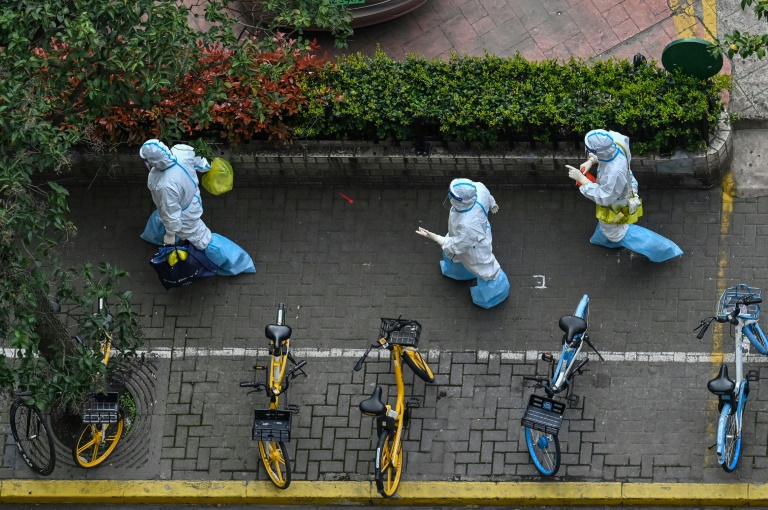
The streets of Shanghai were quiet Sunday as a citywide lockdown dragged on, with nearly 70 percent of the national infection caseload discovered from mass testing its 25 million residents.

But city authorities have conceded they are struggling to contain the outbreak, with thousands now in state quarantine and the capacity of health workers stretched. 

Vice Premier Sun Chunlan urged “resolute and swift moves to stem the spread of the virus” after a visit to Shanghai, official news agency Xinhua reported Sunday. 

Anger is rising among residents over lockdowns that were initially planned to last just for four days, but now appear likely to drag on for several more days as fresh rounds of mass testing are carried out.

Parents have expressed fears of separation from their children in the event of a positive test, while residents have griped about a lack of fresh food and the ability to walk dogs outside.

China, the country where the coronavirus was first detected in 2019, is among the last remaining places following a zero-Covid approach to the pandemic.

The outbreak has taken on an increasingly serious economic dimension, trimming analysts’ growth projections as factories close and millions of consumers are ordered indoors.

Shanghai’s restrictions threaten to snarl supply chains, with shipping giant Maersk saying some depots in the city remained closed and trucking services would likely be hit further due to the lockdown.

The World Health Organization’s emergencies director Michael Ryan last week said it was important for all countries, including China, to have a plan to wind down pandemic restrictions.

But he said China’s vast population provides a unique challenge to its health system and authorities will have to “define a strategy that allows them to exit (the pandemic) safely”.

Crisis-hit Sri Lanka blocks social media to contain protests

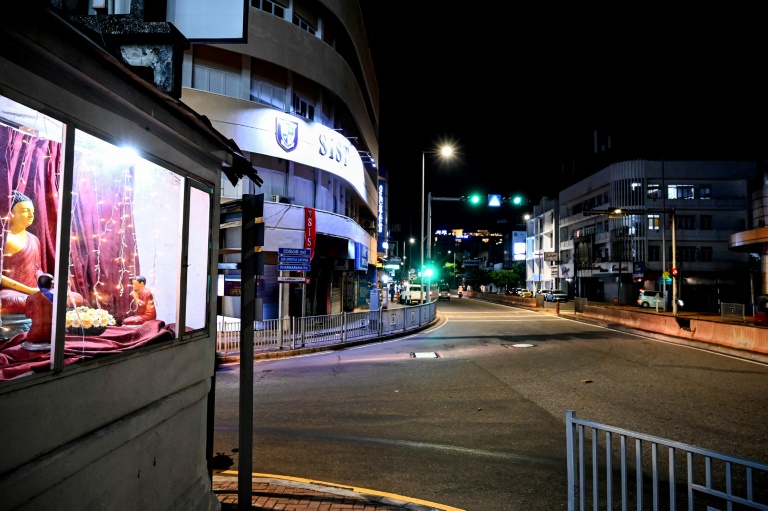
Sri Lanka blocked access to social media platforms on Sunday after authorities imposed a weekend nationwide curfew to contain protests over a worsening economic crisis.

The South Asian nation is facing severe shortages of food, fuel and other essentials, along with sharp price rises and crippling power cuts, in its most painful downturn since independence from Britain in 1948.

President Gotabaya Rajapaksa imposed a state of emergency on Friday, the day after a crowd attempted to storm his home in the capital Colombo, and a nationwide curfew is in effect until Monday morning.

Facebook, YouTube, Twitter, Instagram and WhatsApp were among the platforms shut down by internet service providers on the orders of defence authorities, the pro-government Ada Derana news channel said.

“On the request of the defence ministry, service providers advised to temporarily restrict social media platforms,” the broadcaster said, quoting Sri Lanka’s media regulator.

Anonymous activists had called for mass protests on Sunday on social media before the order went into effect. 

Hundreds of people defied the curfew on Saturday night and staged small demonstrations in various Colombo neighbourhoods, but dispersed peacefully, police and residents said.

The anti-government hashtags “#GoHomeRajapaksas” and “#GotaGoHome” have been trending locally for days on Twitter and Facebook after severe shortages of essentials, sharp price rises and crippling power cuts.

Police said one social media activist was arrested on Friday for allegedly posting material that could cause public unrest.

Western ambassadors in Colombo have expressed concern over the use of emergency laws to stifle democratic dissent and said they were closely monitoring developments.

Armed troops have been deployed around the country to maintain order.

– Foreign exchange shortage –

A critical lack of foreign currency has left Sri Lanka struggling to service its ballooning $51 billion public debt, with the pandemic torpedoing vital revenue from tourism and remittances.

The crisis has also left the import-dependent country unable to pay for sorely needed goods.

Diesel shortages have sparked outrage across Sri Lanka in recent days, causing protests at empty pumps, and electricity utilities have imposed 13-hour blackouts to conserve fuel.

Many economists also say the crisis has been exacerbated by government mismanagement, years of accumulated borrowing, and ill-advised tax cuts.

Sri Lanka is in negotiations for an International Monetary Fund bailout and ratings agencies have cast doubt over the government’s ability to service its spiralling $51 billion in public debt.

Close Bitnami banner
Bitnami