World

War in Ukraine: Latest developments

Here are the latest developments in the war in Ukraine:

– Russian pullback reveals horror – 

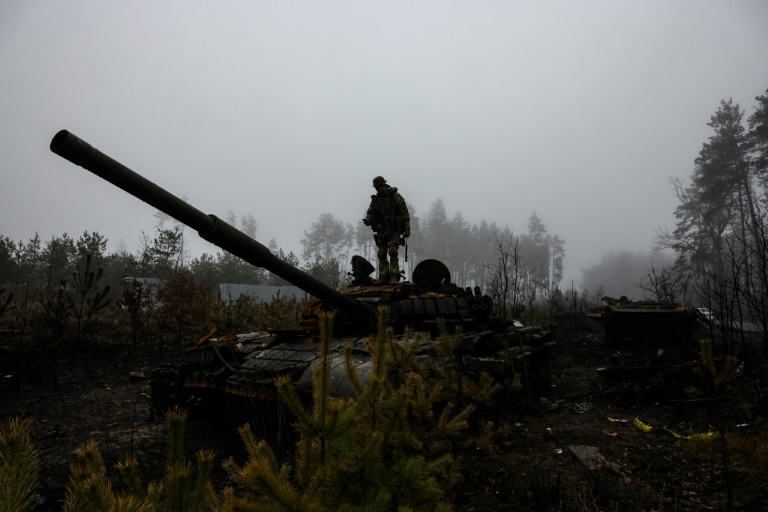
Russian troops leave scenes of devastation in the city of Bucha, just outside Kyiv, where nearly 300 people have been buried in a mass grave, mayor Anatoly Fedoruk tells AFP.

The heavily destroyed city is littered with corpses, with 20 bodies dressed in civilian clothing strewn across a single tree-lined street. 

Some lie with sightless eyes staring at Ukraine’s overcast sky, some lie face down on the tarmac. One has his hands tied behind his back with a white cloth, his Ukrainian passport left open beside his corpse. 

“All these people were shot, killed, in the back of the head,” Fedoruk says.

– Ukraine claims control of ‘whole Kyiv region’ –

Ukraine has regained control of “the whole Kyiv region” after invading Russian forces retreated from some key towns near the Ukrainian capital, deputy defence minister Ganna Maliar says.

As it withdraws from northern areas, “Russia is prioritising a different tactic: falling back on the east and south,” according to Ukrainian presidential adviser Mykhaylo Podolyak.

– Mariupol evacuation –

The Red Cross heads to the besieged southern port of Mariupol for a fresh evacuation effort after it was forced to turn back Friday. 

“They are spending the night en route to Mariupol and are yet to reach the city,” a spokesperson says.

Some residents managed to flee the region Friday by taking a convoy of buses and private cars to Ukrainian-controlled Zaporizhzhia.

– Ukrainian journalist found dead –

Ukrainian photographer Maks Levin has been found dead near Kyiv after going missing more than two weeks ago, the government says.

“According to preliminary information, unarmed was killed by servicemen of the Russian Armed Forces with two shots from small firearms,” Ukraine’s General Prosecutor’s Office says on Telegram.

– Baltic states stop Russian gas imports –

The head of Latvia’s natural gas storage operator says the Baltic states are no longer importing Russian natural gas.

– Ukraine says Russia agrees to Kyiv proposals –

Ukraine’s top negotiator in peace talks with Russia says that Moscow had “verbally” agreed to key Ukrainian proposals, raising hopes that talks to end fighting are moving forward.

– Ukraine accuses Russia of firing on protesters –

Ukraine’s human rights ombudsman Lyudmyla Denisova accuses Russian forces of opening fire on peaceful demonstrators, injuring four with “severe burns”, in the southern city of Enerhodar occupied by Moscow’s forces.

– Russian protesters detained –

Russian police detain 211 people in various cities around the country at protests against Moscow’s military operation in Ukraine, according to OVD-Info, an NGO.

In the Swiss capital Bern, thousands of people brave a surprise spring snowstorm to protest the war.

– Call for ICC to issue Putin arrest warrant –

Veteran war crimes prosecutor Carla Del Ponte calls for the International Criminal Court to quickly issue an arrest warrant for Russian President Vladimir Putin over actions in Ukraine.

– Pope urges ‘shared response’ on refugees –

The number of refugees fleeing Ukraine has passed 4.1 million, the United Nations says.

Pope Francis calls for “a broad-based and shared response” to “the growing migration emergency”, saying “some countries cannot respond to the entire problem, while others remain indifferent onlookers”.

He adds that he is still considering a visit to Kyiv.

– UN official to visit Moscow, Kyiv –

A top UN official is set to fly to Moscow Sunday, and then on to Kyiv to try and secure a “humanitarian ceasefire” in Ukraine, says the body’s chief Antonio Guterres. 

Both Russia and Ukraine have agreed to meet Martin Griffiths, Under-Secretary-General for Humanitarian Affairs, Guterres says.

dbur-amj-har/to/dhc

North Korea accuses South of 'reckless' remarks

North Korea blasted the South Korean defence minister on Sunday for “reckless” remarks about Seoul’s ability to strike Pyongyang, warning of retaliation after conducting a record number of weapons tests this year.

South Korean defence minister Suh Wook had said Friday that his army had missiles with “the ability to accurately and quickly hit any target in North Korea”.

The comments drew condemnation from Kim Yo Jong, the sister of North Korean leader Kim Jong Un and a key policy adviser. 

“His reckless and intemperate rhetoric about the ‘preemptive strike’ has further worsened the inter-Korean relations and the military tension on the Korean Peninsula,” she said according to official North Korean news agency KCNA. 

“South Korea may face a serious threat owing to the reckless remarks made by its Defence Minister… South Korea should discipline itself if it wants to stave off disaster,” Kim added.

In a separate statement on Sunday, Pak Jong Chon, secretary of North Korea’s ruling party central committee, also warned the South off any military action against Pyongyang. 

“Our army will mercilessly direct all its military force into destroying major targets in Seoul,” he said. Pak did not specify which targets.

North Korea has resumed its sanctions-breaking weapons tests with an unprecedented blitz this year, last month firing its first intercontinental ballistic missile at full range since 2017.

Long-range and nuclear tests were paused when Kim and then US president Donald Trump engaged in a high-profile bout of diplomacy that subsequently collapsed in 2019. Talks have since stalled.

North Korea will this month mark the 110th anniversary of the birth of founder Kim Il Sung — the grandfather of current leader Kim, who likes to mark key domestic anniversaries with military parades or launches.

Tensions between both sides are also set to ramp up as South Korea’s president-elect Yoon Suk-yeol takes office next month.

During Yoon’s campaign period, he had threatened a pre-emptive strike on the North “if necessary”, and vowed to “teach some manners” to Kim.

Hong Kong-based chef gets first Michelin star for Venezuela

Arepas, tacos and an old family recipe of chimichurri: Ricardo Chaneton’s symphony of flavours familiar to Latin Americans has earned his Hong Kong restaurant a coveted Michelin star — the first awarded to a Venezuelan chef.

For Chaneton, who for so long was known for French cuisine, getting the star two years after his restaurant Mono’s opening is a source of great pride — as well as a “very nice weight” of responsibility. 

“On that side of the world, everyone is watching us. The fact of being the first Venezuelan to have a Michelin star makes people put their eyes on you,” the 34-year-old chef told AFP.

“But I tell them not to worry because we are representing our continent and our countries in the best way we can.” 

Located in Hong Kong’s upscale Central district, Mono has already received region-wide approval — in 2021, it was among Asia’s 50 Best Restaurants, the first such appearance for a Latin American joint. 

It was initially billed as “contemporary French” because of Chaneton’s experience in Mirazur, the famed French Riviera restaurant voted the world’s best in 2019. 

But a month into Mono’s opening, diners were already calling his restaurant Latin American, he said.

“That is what we wanted. That French element will always be there, but I was born in Venezuela, Colombian grandmother, Argentine grandfather, and that’s how I put in my own flavour,” the Caracas native said. 

Different accents of spoken Spanish can be heard from Chaneton’s open kitchen — his staff hail from Venezuela, Mexico, Guatemala and Brazil — and their dishes are a testament to the region’s diverse tastes.

– Hong Kong’s dining woes –

On Chaneton’s menu is a French Racan pigeon fused with chimichurri and jicama — a root vegetable common in South American cuisine — and a wild Brittany turbot fillet that gets its vivid yellow colour thanks to annatto oil, popular in Latin and Asian dishes.

The sides are also reminiscent of street food familiar to Venezuelans or Mexicans — like fresh corn hallaquitas, which are like Venezuelan tamales, or arepas filled with lobster and slow-cooked beef. 

“We do not want to make a 100 percent traditional cuisine, but it is based on our perception and our interpretation of nostalgia and taste memories,” the chef said.

Despite getting the star, Mono’s experience has been anti-climatic given Hong Kong’s coronavirus restrictions on indoor dining during an Omicron-fuelled wave. 

Chaneton said he received news of the award on a January morning — the same day Hong Kong’s government told restaurants to stop indoor dining after 6 pm. 

“We had that bittersweet experience all in the same day,” Chaneton told AFP. “I can’t wait to provide Michelin star service at night.” 

With cases ebbing, the government has announced that nighttime dining will resume April 21. 

He has no regrets over his circuitous path to his Michelin star, beginning in a Caracas pizza joint to mastering French cuisine under the leadership of legend Mauro Colagreco. 

After working as the executive chef in Hong Kong’s Petrus at the Shangri-La Hotel before striking out on his own, Chaneton said he is grateful for how “fate has played” with his culinary journey.  

“I think the most beautiful thing about Mono is that it is a window in Asia to the refined Latin American gastronomy,” he said. 

“If I had won that star doing French cuisine, it would not have had the same weight.”

Torrential rains kill 14 in Brazil

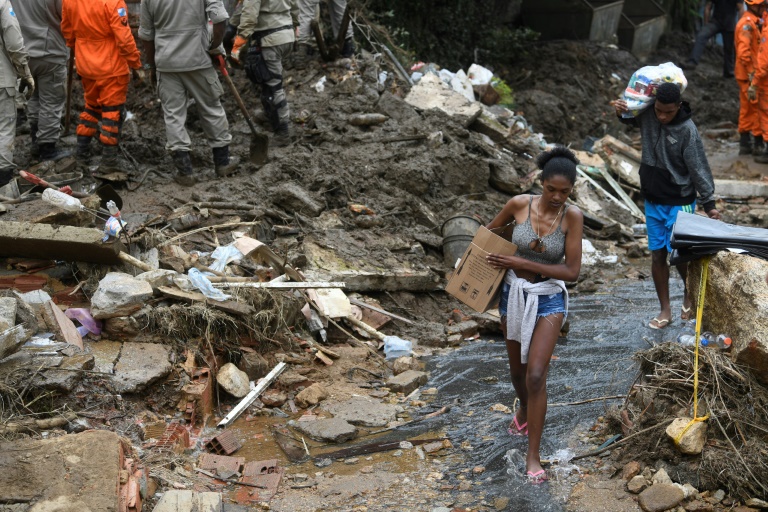
Torrential downpours triggered flash floods and landslides across Brazil’s Rio de Janeiro state, killing at least 14 people including eight children, and leaving five missing, authorities said Saturday.

Two days of heavy rain have battered a broad swathe of the southeastern state’s Atlantic coast, the latest in a series of deadly storms in Brazil that experts say are being aggravated by climate change. 

More rain is forecast for the region in the coming days.

The victims included a mother and six of her children, who were buried when a landslide swept away their home, officials said.

President Jair Bolsonaro said on Facebook the federal government had sent military aircraft to help the rescue effort and dispatched national disaster response secretary Alexandre Lucas to the state of 17.5 million people.

The new incidents come six weeks after flash floods and landslides killed 233 people in the scenic city of Petropolis, the Brazilian empire’s 19th-century summer capital, also in Rio state.

This time, the areas hit hardest included the tourist town of Paraty, a seaside colonial city known for its picturesque cobblestone streets and colorful houses.

Officials there said a landslide in the Ponta Negra neighborhood had killed a mother and six of her children, ages two, five, eight, 10, 15 and 17.

A seventh child was rescued alive and taken to the hospital, where he was in stable condition, they said.

Another four people were injured.

Six more victims, including at least two children, were killed in the city of Angra dos Reis, where officials declared a “maximum alert” and state of emergency after landslides devastated the Monsuaba neighborhood.

Several people were rescued alive, while another five remain missing, they said.

Mayor Fernando Jordao said emergency workers were installing floodlights to continue the search-and-rescue operation through the night if necessary.

“Residents have been working side-by-side with us on the search,” he told a press conference.

“We’ll continue working hard.”

In Mesquita, 40 kilometers (25 miles) northwest of Rio de Janeiro city, a 38-year-old man was electrocuted trying to help another person escape the flooding, officials and media reports said.

– Record rains –

The storms turned streets into rivers Friday night in several cities including Rio, the state capital, sweeping up cars and triggering landslides — a frequent tragedy in the rainy season, especially in poor hillside communities.

TV channel Globo News carried images of a family evacuating two young children through the floodwaters in a styrofoam cooler in the Rio suburb of Belford Roxo, while residents posted videos on social media of small alligators swimming through flooded streets.

A hospital in the suburb of Nova Iguacu was badly flooded, turning the corridors of its intensive care unit into streams.

Officials in Angra said the city had received up to 800 millimeters (31 inches) of rain in 48 hours in some areas, “levels never before registered in the municipality.”

Experts say rainy season downpours in Brazil are being augmented by La Nina — the cyclical cooling of the Pacific Ocean — and by climate change.

Because a hotter atmosphere holds more water, global warming increases the risk and intensity of flooding from extreme rainfall.

In December, storms killed 24 people in the northeastern state of Bahia, and in January, floods and landslides claimed at least 28 lives in southeastern Brazil, mostly in Sao Paulo state.

Tesla delivers over 1 million electric cars over past year

US electric car manufacturer Tesla shipped a record number of more than one million cars over the past year, according to figures published Saturday. 

The company delivered 1.06 million cars from April 2021 to March 2022, including more than 310,000 cars in the first quarter of this year alone, which is 67 percent higher than over the same period last year.

Still, the figure fell short of analysts’ expectations of 317,000 cars, according to data compiled by FactSet.

Deliveries are considered similar to sales figures published by other manufacturers.

Growth, however, slowed sharply in recent months for the Austin, Texas-based company, with deliveries rising a minuscule 0.4 percent since the fourth quarter of last year.

The number of vehicles produced is also slightly down against the previous quarter (-0.1 percent).

“This was an exceptionally difficult quarter due to supply chain interruptions & China zero Covid policy,” Tesla CEO Elon Musk said on Twitter, referring to China’s strict health restrictions. “Outstanding work by Tesla team & key suppliers saved the day.”

However, Tesla is still faring better than its competitors, with the entire automobile industry affected by supply chains snarls.

Toyota saw its sales in North America fall 23.5 percent in volume in the first quarter of 2022, compared to the same period last year, and 26.3 percent in value.

General Motors earned a profit of $1.7 billion for the quarter ending December 31, down 38.7 percent from the final three months of 2020 as revenues dropped 10.5 percent to $33.6 billion.

War in Ukraine: Latest developments

Here are the latest developments in the war in Ukraine:

– Ukraine claims control of ‘whole Kyiv region’ –

Ukraine has regained control of “the whole Kyiv region” after invading Russian forces retreated from some key towns near the Ukrainian capital, deputy defence minister Ganna Maliar says.

As it withdraws from northern areas, “Russia is prioritising a different tactic: falling back on the east and south,” according to Ukrainian presidential adviser Mykhaylo Podolyak.

– ‘Mass grave’ –

Nearly 300 people have been buried in a mass grave in Bucha, a commuter town outside Kyiv, its mayor Anatoly Fedoruk says.

The heavily destroyed town’s streets are littered with corpses, he tells AFP, with at least 20 bodies found lying in a single street Saturday.

– Mariupol evacuation –

The Red Cross heads to the the besieged southern port of Mariupol for a fresh evacuation effort after it was forced to turn back Friday. 

“They are spending the night en route to Mariupol and are yet to reach the city,” a spokesperson says.

Some residents managed to flee the region Friday by taking a convoy of buses and private cars to Ukrainian-controlled Zaporizhzhia.

– Ukrainian journalist found dead –

Ukrainian photographer Maks Levin has been found dead near Kyiv after going missing more than two weeks ago, the government says.

“According to preliminary information, unarmed Maxim Levin was killed by servicemen of the Russian Armed Forces with two shots from small fire arms,” prosecutors say on Telegram.

– Ukraine accuses Russia of firing on protesters –

Ukraine’s human rights ombudsman Lyudmyla Denisova accuses Russian forces of opening fire on peaceful demonstrators, injuring four with “severe burns”, in the southern city of Enerhodar occupied by Moscow’s forces.

– Russian protesters detained –

Russian police detain 211 people Saturday at protests in various cities around the country against Moscow’s military operation in Ukraine, according to OVD-Info, an NGO.

In the Swiss capital Bern, thousands of people brave a surprise spring snowstorm to protest against the war.

– Call for ICC to issue Putin arrest warrant –

Veteran war crimes prosecutor Carla Del Ponte calls for the International Criminal Court to quickly issue an arrest warrant for Russian President Vladimir Putin over actions in Ukraine.

– Pope urges ‘shared response’ on refugees –

The number of refugees fleeing Ukraine has passed 4.1 million, the United Nations says.

Pope Francis calls for “a broad-based and shared response” to “the growing migration emergency”, saying “some countries cannot respond to the entire problem, while others remain indifferent onlookers”.

He adds that he is still considering a visit to Kyiv.

– UN official to visit Moscow, Kyiv –

A top UN official is set to fly to Moscow Sunday, and then on to Kyiv to try and secure a “humanitarian ceasefire” in Ukraine, says the body’s chief Antonio Guterres. 

Both Russia and Ukraine have agreed to meet Martin Griffiths, Under-Secretary-General for Humanitarian Affairs, Guterres says.

War-torn Yemen holds breath as breakthrough truce begins

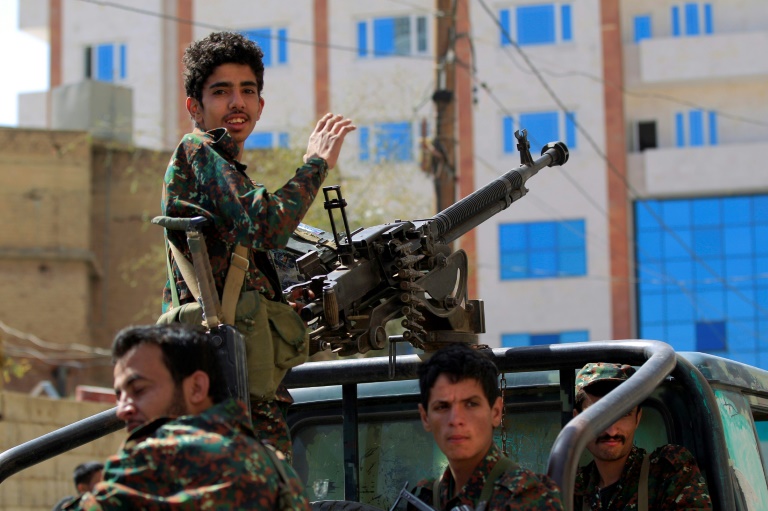
Yemen’s warring parties laid down their weapons for the first nationwide truce since 2016 on Saturday, with all eyes on whether the UN-brokered ceasefire will hold.

The Iran-backed Huthi rebels and Saudi-led coalition have both agreed to observe the two-month truce, which took effect at 1600 GMT on the first day of Ramadan, the Muslim holy fasting month.

“The two-month truce started at 7:00 pm (1600 GMT) tonight. As of tonight, all offensive ground, aerial and naval military operations should cease,” UN special envoy Hans Grundberg said in a statement.

Huthi military spokesman Yahya Saree confirmed “our commitment to a comprehensive cessation of military operations as long as the other party adheres to this”, in a statement released by the rebels.

Yemen’s intractable war has killed hundreds of thousands directly or indirectly and displaced millions, triggering the world’s worst humanitarian crisis, according to the United Nations.

Previous ceasefires have been ineffective. A national truce ahead of peace talks in April 2016 was violated almost immediately, as were other ceasefires that year.

A 2018 agreement to cease hostilities around rebel-held Hodeida port, a lifeline for the Arab world’s poorest country, was also largely ignored.

Both the Huthis and Saudi Arabia have welcomed the latest initiative, which follows a surge in attacks but also increasing diplomacy including ongoing talks — snubbed by the rebels — in Riyadh.

“This time I am optimistic. This truce is unlike all the previous ones,” Asmaa Zayed, a college student who also works as a cashier in Hodeida, told AFP.

“The fact it comes with Ramadan gives us a lot of hope. This war started when I was 15 years old and turned all my dreams into nightmares.”  

– ‘Suffered immensely’ –

Under the agreement, all ground, air and sea military operations in Yemen and across its borders are to stop.

Eighteen fuel ships will be allowed into Hodeida and two commercial flights a week can resume in and out of Sanaa, which is also in rebel hands — both key demands of the insurgents before they consider peace talks.

The two sides have also agreed to meet to open roads in Taez and other governorates, Grundberg said. The truce could be renewed with both parties’ consent.

“The success of this initiative will depend on the warring parties’ continued commitment to implementing the truce agreement with its accompanying humanitarian measures,” said the Swedish diplomat.

“I also hope the goodwill that we saw from all sides in public will translate into long-term de-escalation of inflammatory media rhetoric and hate speech.”

The US special envoy for Yemen, Tim Lenderking, said in a tweet: “Seven years of war have inflicted a lot of pain. We urge the parties to adhere to the terms and pave the way towards a sustainable ceasefire and inclusive political peace process.”

With fighting in Yemen at a stalemate, the Huthis launched a series of drone-and-missile attacks on Saudi Arabia and coalition partner the United Arab Emirates this year, often targeting oil facilities.

The coalition has responded with air strikes.

Last week, on the seventh anniversary of the Saudi-led military coalition’s intervention, and a day after an attack on an oil plant within sight of the Formula One Grand Prix in the Saudi city of Jeddah, the Huthis announced a three-day unilateral ceasefire.

The coalition then announced its own truce from Wednesday, ahead of discussions with international partners in Riyadh. The rebels declined to attend the talks in an “enemy” country.

– ‘Reeks of death’ –

Saudi Arabia expressed its “support” for the UN ceasefire, which was also welcomed by US President Joe Biden, UN chief Antonio Guterres, the European Union and the leaders of Britain, France and Iraq.

The major question now is whether the truce will be observed.

The Norwegian Refugee Council hoped it would be “the start of a new chapter”, while Save the Children said it offered a “much-needed respite from all the violence”.

The war in Yemen started when the Huthis took control of Sanaa in 2014, prompting the Saudi-led intervention in March of the following year in support of the ousted government.

It plunged what was already the Arab world’s poorest country into years of crisis, with failing infrastructure and services and 80 percent of the 30 million population dependent on aid.

“Everything around us reeks of death and war,” said Zayed, the student in Hodeida. “I think I will go into a depression if this truce ends or fails.”

Torrential rains in Brazil kill eight, 13 missing

Torrential rains triggered flash floods and landslides across Brazil’s Rio de Janeiro state, killing at least eight people including six children and leaving 13 missing, authorities said Saturday.

Two days of heavy rain have battered a broad swathe of the southeastern state’s Atlantic coast, the latest in a series of deadly storms in Brazil that experts say are being aggravated by climate change.

The new incidents come six weeks after flash floods and landslides killed 233 people in the scenic city of Petropolis, the Brazilian empire’s 19th-century summer capital, also in Rio state.

This time, the areas hit hardest included the tourist town of Paraty, a seaside colonial city known for its picturesque cobblestone streets and colorful houses.

Officials there said a landslide in the Ponta Negra neighborhood had killed a mother and five of her children, ages two, five, eight, 10 and 15.

A sixth child was rescued alive and taken to the hospital, they said.

In all, seven houses were swept away in landslides in the city, and another four people injured. Seventy-one families were forced from their homes, officials said.

Two more victims were killed in the cities of Mesquita and Angra dos Reis, where another 13 people remain missing, said Congressman Marcelo Freixo, who represents the state of 17.5 million people.

In Angra, the victim was a four-year-old girl buried in a landslide, while in Mesquita, 40 kilometers (25 miles) northwest of Rio de Janeiro city, a 38-year-old man was electrocuted trying to help another person escape the flooding, media reports said.

– Record rains –

The storms turned streets into rivers in several cities Friday night, sweeping up cars and triggering landslides — a frequent tragedy in the rainy season, especially in poor hillside communities.

Officials in Angra said the city had received 655 millimeters (26 inches) of rain in 48 hours, “levels never before registered in the municipality.”

“The entire emergency response team and professionals from the city government are in the streets helping the population,” the city said.

The federal government said it had sent military aircraft to help the rescue effort, and dispatched national disaster response secretary Alexandre Lucas to the state.

Experts say rainy season downpours in Brazil are being augmented by La Nina — the cyclical cooling of the Pacific Ocean — and by the impact of climate change.

Because a hotter atmosphere holds more water, global warming increases the risk and intensity of flooding from extreme rainfall.

In January, torrential rain triggered floods and landslides that killed at least 28 people in southeastern Brazil, mostly in Sao Paulo state.

There were also heavy rains in the northeastern state of Bahia, where 24 people died in December.

Afghans mark Ramadan — first since Taliban seized power

Afghans across the country broke their dawn-to-dusk Ramadan fast on Saturday as Afghanistan marked the Muslim holy month — the first since the Taliban seized power last year.

About 300 men, dressed in traditional Afghan shalwar kameez, gathered before sunset at the Wazir Akbar Khan mosque in the capital to offer evening prayers on the first day of Ramadan.

“This Ramadan is different than under the previous regime,” worshipper Khairullah, who goes by one name as many Afghans do, told AFP.

“Now we are performing our Islamic duty together… in an Islamic land under an Islamic regime.”

The Wazir Abkar Khan mosque is one of Kabul’s famous places of worship, and was targeted by a bomb attack in June 2020 that killed its imam and some worshippers.

The mosque is situated in central Kabul at the main entrance to the former diplomatic hub known as the Green Zone that housed several foreign embassies including Washington’s mission.

After breaking their fast, the men sat in rows in the mosque’s compound where volunteers served them food.

In the southern province of Kandahar, the de facto power centre of the Taliban, several of the fundamentalist movement’s fighters broke their fast at checkpoints and mosques.

Afghans are marking Ramadan at a time when the country is plunged into a deep humanitarian crisis.

The United Nations says more than half of the country’s 38 million people are facing hunger as the winter drags on.

The crisis deepened after donors cut off aid when the Taliban seized power last August.

The international community has so far not recognised the Taliban government.

“The people expected good times under the Islamic emirate but unfortunately that did not happen,” said Shahbuddin, a resident of Kabul, referring to the Taliban regime.

“The world must recognise the Taliban government, otherwise we will see a humanitarian catastrophe.”

Other nations insist the hardline Islamists respect women’s rights to education and work in order to receive aid.

The Taliban have cracked down on women’s freedoms, including banning them from many government jobs and shutting secondary girls schools.

Meanwhile for Shahbuddin, the rising costs for food have become unbearable.

“For the first time I’m seeing that food prices have risen so much in Ramadan,” he said.

“People were expecting that in an Islamic country prices would drop during Ramadan, but that has not happened.”

Torrential rains in Brazil kill eight, 13 missing

Torrential rains triggered flash floods and landslides across Brazil’s Rio de Janeiro state, killing at least eight people including six children and leaving 13 missing, authorities said Saturday.

The storms battered a broad swathe of the southeastern state’s Atlantic coast and caused multiple landslides, including one in the colonial tourist town of Paraty that killed a mother and five of her children, officials there said.

Two more victims were killed in the cities of Mesquita and Angra dos Reis, where another 13 people remain missing, said Congressman Marcelo Freixo, who represents the state.

In Angra, the victim was a four-year-old girl buried in a landslide, while in Mesquita, 40 kilometers (25 miles) northwest of Rio de Janeiro city, a 38-year-old man was electrocuted trying to help another person escape the flooding, media reports said.

Rio state has been battered by two days of heavy rain, including fierce storms Friday night that turned streets into rivers in several cities, sweeping up cars in their path and triggering landslides — a frequent tragedy in the rainy season, especially in poor hillside communities.

Officials in Angra said the city had received 655 millimeters (26 inches) of rain in 48 hours, “levels never before registered in the municipality.”

The storms come six weeks after flash floods and landslides killed 233 people in Petropolis, also in Rio de Janeiro state.

Brazil has been swept by a series of deadly storms in recent months that experts say are being aggravated by climate change.

Close Bitnami banner
Bitnami