World

Macron calls for 'mobilisation' at election rally as French polls tighten

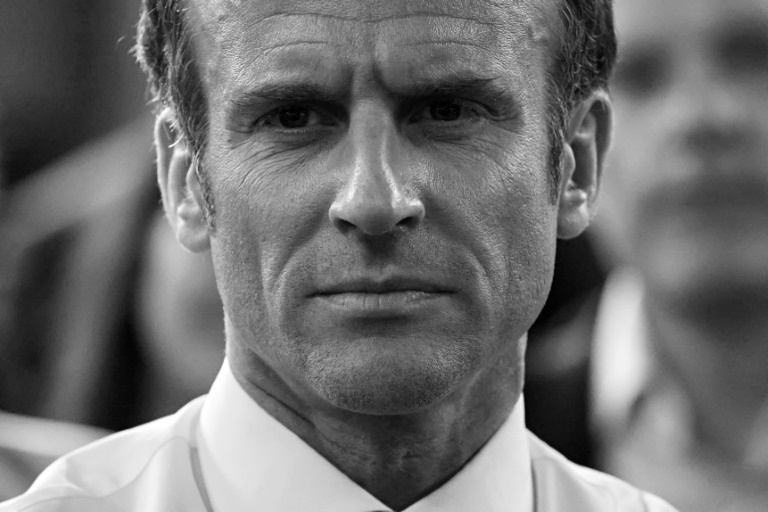
French President Emmanuel Macron called on tens of thousands of cheering but increasingly nervous supporters to help him win a second term as he held his first election campaign rally just a week from the start of voting. 

According to polls, far-right rival Marine Le Pen is gathering momentum and threatening what once seemed an almost unassailable position of strength for Macron, a pro-business centrist elected in 2017. 

“The mobilisation is now, the battle is now!” Macron concluded a two-and-a-half hour speech at a stadium west of the capital. “It’s a battle between progress and turning back, a battle between patriotism and Europe, and nationalism.” 

The 44-year-old drew an estimated 30,000 people for a gathering styled on sports events that saw Macron enter the room to pumping music and fireworks before taking to a stage set up like a boxing ring in the middle of the floor. 

The centrist only declared his intention to run again at the last possible moment last month and has been distracted by the war in Ukraine. 

Le Pen meanwhile has been working on a low-key grassroots campaign focused on concerns about rising prices that have dented household incomes.

“Despite the crises, we never gave up. Despite the crises we honoured our promises,” Macron said during the first part of a speech that defended his achievements.

He listed them as lowering unemployment to “its lowest level in 15 years”, cutting taxes to boost incomes, along with investments in public services.

To shouts of “Macron, President!” he also detailed his programme for a second term that would include benefits reform and a rise in the retirement age to 65.

– Slow campaign –

Among those present, most expressed confidence that Macron would prevail despite the final-week dynamic that appears to be favouring Le Pen.

Two new polls published Saturday suggested Macron and Le Pen would finish top in the first round on April 10, with Macron triumphing in the run-off on April 24 by 53-47 percent.

“Of course Marine Le Pen can win,” Macron’s former prime minister Edouard Philippe warned in an interview with the Le Parisien daily posted online Thursday.

The increasingly thin margin of victory projected for Macron has led many supporters to call on him to throw himself more into campaigning, with aides promising stops around the country next week. 

“His campaign has been a bit weak. It started a bit late,” said Paul Reynaud, who was wearing a Macron t-shirt with his slogan “With You” written on it at Saturday’s event.

“He’s played the president a bit too much and not enough the candidate,” added the 23-year-old, who is interning at a management consultancy. 

He mentioned his employer with am embarrassed smile, acknowledging the problems caused by management consultants for the president over the last fortnight.

Macron’s opponents have been attacking him relentlessly on the basis of record spending on consultants such as McKinsey during his five-year term, which was revealed in an investigation by the Senate last month.

“We need a lot more enthusiasm among grassroots supporters,” Jean-David Levy, a 58-year-old teacher, told AFP before Macron took his position on stage. “We need to feel a sense of excitement.”

– Le Pen optimism –

Le Pen, who lost to Macron in the 2017 polls run-off, has sought to moderate her image in the last half decade in a process helped by the emergence of Eric Zemmour as a fellow candidate in the far-right.

While Zemmour risks taking votes from Le Pen in the first round, his more radical stances in immigration and Islam have helped her project a more mainstream image.

“We feel it on the ground, there is a great dynamic, a hope that is emerging as the campaign nears it end,” she said on a visit to eastern France Friday.

The first round risks being a disaster for The Republicans — the traditional right-wing party that was the political home of ex-presidents such as Nicolas Sarkozy and Jacques Chirac.

Their candidate Valerie Pecresse is projected by most polls to be vying with Zemmour for fourth place after failing to find momentum in the campaign.

Her big chance to ignite her bid will be at a rally Sunday in southern Paris. 

The Socialist candidate, Paris mayor Anne Hidalgo, is struggling to reach beyond low single figures while the Greens hopeful Yannick Jadot has failed to put the environment at the centre stage of the campaign.

The left’s main hope is the far-left candidate Jean-Luc Melenchon who most polls project coming in third place but believes he has a chance of making a run-off.

burs-adp/ach 
Crisis-hit Sri Lanka declares 36-hour nationwide lockdown

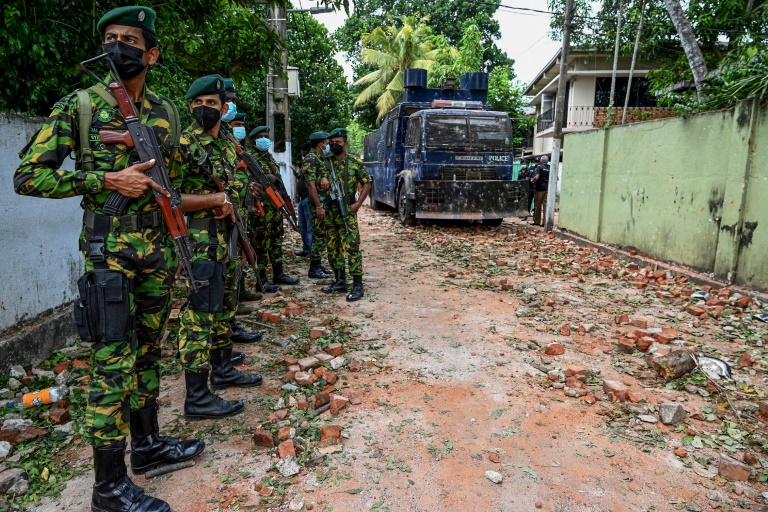
Sri Lanka declared a 36-hour nationwide curfew Saturday and deployed troops backed with sweeping new powers under a state of emergency to quell protests against President Gotabaya Rajapaksa, his relatives and even his most trusted shaman.

The lockdown that went into effect at dusk Saturday will be lifted Monday morning, police said — a period that covers planned mass anti-government protests against worsening shortages of fuel, food and medicines.

Hundreds of people defied the curfew and gathered at several suburban towns, police and residents said.

Noisy demonstrations in the towns of Maharagama, Homagama and Yakkala ended peacefully, but two hours after the curfew began.

“There were policemen, but they did not try to disrupt,” a resident in Yakkala told AFP by telephone. There were similar reports from the other towns. 

Rajapaksa invoked a state of emergency following a violent attempt to storm his house, saying it was for the “protection of public order”.

The ire of a mob in the near-bankrupt country was directed Saturday at a woman identified as a soothsayer frequently consulted by Rajapaksa in the northern town of Anuradhapura.

Rights activist and former opposition legislator Hirunika Premachandra led dozens of women to storm seer Gnana Akka’s shrine and residence, but armed police stopped them.

“Why are police protecting a shaman?” she asked a senior officer who physically blocked her march, as seen on a Facebook live video, verified by AFP as authentic. 

“Thief, thief, Gota thief,” the crowds chanted after armed security personnel stopped them. 

“Think of the country and let us pass,” another woman activist pleaded.   

“#GoHomeRajapaksas” and “#GotaGoHome” have been trending for days on Twitter and Facebook in the island nation, which is battling severe shortages of essentials, sharp price rises and crippling power cuts in its most painful downturn since independence from Britain in 1948.

The coronavirus pandemic has torpedoed tourism and remittances, both vital to the economy, and authorities have imposed a broad import ban in an attempt to save foreign currency.

Many economists also say the crisis has been exacerbated by government mismanagement, years of accumulated borrowing, and ill-advised tax cuts.

The curfew and state of emergency in the country of 22 million came as social media posts called for protests on Sunday. 

“Do not be deterred by tear gas, very soon they will run out of dollars to re-stock,” said one post encouraging people to demonstrate even if police attempt to break up gatherings.

In normal times, Sri Lanka’s military can only play a supporting role to police, but the state of emergency gives them authority to act alone, including to detain civilians.

US ambassador Julie Chung urged restraint, warning: “Sri Lankans have a right to protest peacefully — essential for democratic expression.”

“I am watching the situation closely, and hope the coming days bring restraint from all sides, as well as much needed economic stability and relief for those suffering,” she tweeted.

Former colonial power Britain’s envoy expressed similar concerns, while the European Union mission said it “strongly urges Sri Lankan authorities to safeguard democratic rights of all citizens, including right to free assembly and dissent, which has to be peaceful”.

– ‘Lunatic, go home’ –

Travel trade specialists say the state of emergency could be a new blow to hopes of a tourism revival, as insurance rates usually rise when a country declares a security emergency.

“There are reports of sporadic attacks on the homes of government politicians,” a security official told AFP, adding that a ruling party legislator was hit with eggs at a public event Friday in the central district of Badulla.

In the nearby hill resort of Nuwara Eliya, protesters shouted anti-Rajapaksa slogans and blocked Prime Minister Mahinda Rajapaksa’s wife Shiranthi from opening an annual flower exhibition.

Thursday night’s unrest outside the president’s private home saw hundreds of people demand he step down.

Protesters chanted “lunatic, lunatic, go home”, before police fired tear gas and used water cannon.

The crowd turned violent, setting ablaze two military buses, a police jeep and other vehicles, and threw bricks at officers.

Police arrested 53 protesters, before 21 of them were released on bail Friday night, court officials said. Others were still being detained but had yet to be charged.

War-torn Yemen holds breath as breakthrough truce begins

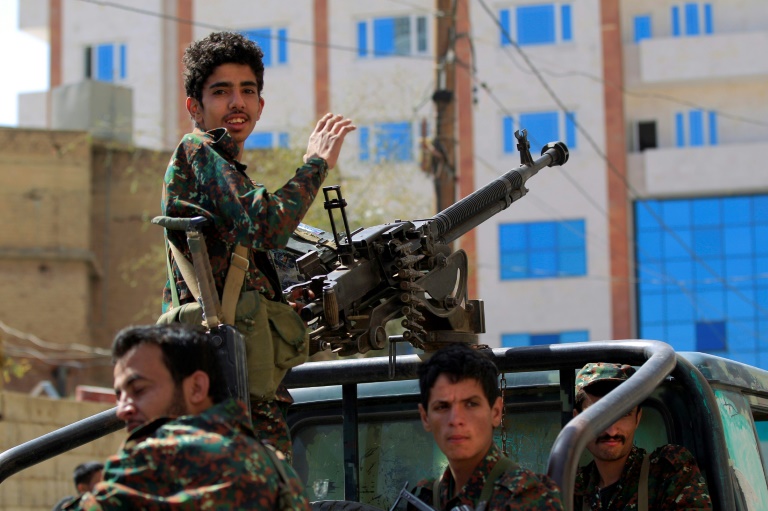
Yemen’s warring parties laid down their weapons for the first nationwide truce since 2016 on Saturday, with all eyes on whether the UN-brokered ceasefire will hold.

The Iran-backed Huthi rebels and Saudi-led coalition have both agreed to observe the two-month truce, which took effect at 1600 GMT on the first day of the Muslim holy fasting month of Ramadan.

“The two-month truce started at 7:00 pm (1600 GMT) tonight. As of tonight, all offensive ground, aerial and naval military operations should cease,” UN special envoy Hans Grundberg said in a statement.

Yemen’s intractable war has killed hundreds of thousands directly or indirectly and displaced millions, triggering the world’s worst humanitarian crisis, according to the United Nations.

Previous ceasefires have been ineffective. A national truce ahead of peace talks in April 2016 was violated almost immediately, as were other ceasefires that year.

A 2018 agreement to cease hostilities around rebel-held Hodeida port, a lifeline for the Arab world’s poorest country, was also largely ignored.

Both the Huthis and Saudi Arabia have welcomed the latest initiative, which follows a surge in attacks but also increasing diplomacy including ongoing talks — snubbed by the rebels — in Riyadh.

“This time I am optimistic. This truce is unlike all the previous ones,” Asmaa Zayed, a college student who also works as a cashier in Hodeida, told AFP.

“The fact it comes with Ramadan gives us a lot of hope. This war started when I was 15 years old and turned all my dreams into nightmares.”

– ‘Suffered immensely’ –

Under the agreement, all ground, air and sea military operations in Yemen and across its borders are to stop.

Eighteen fuel ships will be allowed into Hodeida port and two commercial flights a week can resume in and out of Sanaa, also in rebel hands — both key demands of the insurgents before they consider peace talks.

The two sides have also agreed to meet to open roads in Taez and other governorates, Grundberg said, adding the truce could be renewed with their consent.

“The success of this initiative will depend on the warring parties’ continued commitment to implementing the truce agreement with its accompanying humanitarian measures,” said the Swedish diplomat.

“I also hope the goodwill that we saw from all sides in public will translate into long-term de-escalation of inflammatory media rhetoric and hate speech.”

With fighting in Yemen at a stalemate, the Huthis launched a series of drone-and-missile attacks on Saudi Arabia and coalition partner the United Arab Emirates this year, often targeting oil facilities.

The coalition has responded with air strikes.

Last week, on the seventh anniversary of the Saudi-led military coalition’s intervention, and a day after an attack on an oil plant within sight of the Formula One Grand Prix in the Saudi city of Jeddah, the Huthis announced a three-day unilateral ceasefire.

The coalition then announced its own truce from Wednesday, ahead of discussions with international partners in Riyadh. The rebels declined to attend the talks in an “enemy” country.

– ‘Reeks of death’ –

Saudi Arabia expressed its “support” for the UN ceasefire, which was also welcomed by US President Joe Biden, UN chief Antonio Guterres, the European Union and the leaders of Britain, France and Iraq.

The major question now is whether the truce will be observed.

The Norwegian Refugee Council hoped it would be “the start of a new chapter”, while Save the Children said it offered a “much-needed respite from all the violence”.

The war in Yemen started when the Huthis took control of Sanaa in 2014, prompting the Saudi-led intervention in March of the following year in support of the ousted government.

It plunged what was already the Arab world’s poorest country into years of crisis, with failing infrastructure and services and 80 percent of the 30 million population dependent on aid.

“Everything around us reeks of death and war,” said Zayed, the student in Hodeida. “I think I will go into a depression if this truce ends or fails.”

War in Ukraine: Latest developments

Here are the latest developments in the war in Ukraine:

– Kyiv says Russians retreating from north –

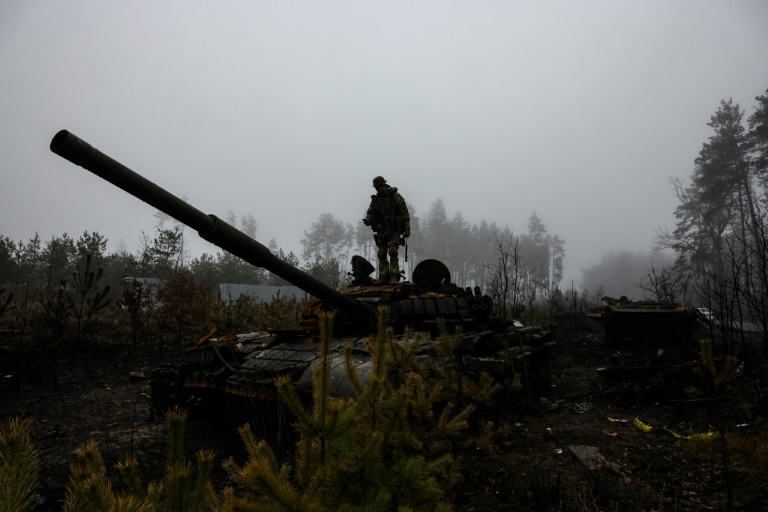
Ukraine says Russian forces are making a “rapid retreat” from northern areas around the capital Kyiv and the city of Chernigiv.

“Russia is prioritising a different tactic: falling back on the east and south,” Ukrainian presidential adviser Mykhaylo Podolyak says on social media.

The bodies of at least 20 men in civilian clothes have been found lying in a single street after Ukrainian forces retook the town of Bucha near Kyiv from Russian troops, according to AFP journalists.

– Mariupol evacuation –

The Red Cross prepares for a fresh evacuation effort from the besieged southern port of Mariupol after it was forced to turn back Friday when “arrangements and conditions made it impossible to proceed”. 

Some residents managed to flee the region Friday by taking a convoy of buses and private cars to Ukrainian-controlled Zaporizhzhia.

Ukrainian President Volodymyr Zelensky says over 3,000 people have been rescued from Mariupol, though it is not immediately clear if he is referring to the bus passengers.

– Ukrainian journalist found dead –

Ukrainian photographer Maks Levin has been found dead near Kyiv after going missing more than two weeks ago, the government says.

“According to preliminary information, unarmed Maxim Levin was killed by servicemen of the Russian Armed Forces with two shots from small fire arms,” prosecutors say on Telegram.

– Call for ICC to issue Putin arrest warrant –

Veteran war crimes prosecutor Carla Del Ponte calls for the International Criminal Court to quickly issue an arrest warrant for Russian President Vladimir Putin over actions in Ukraine.

– Pope urges ‘shared response’ on refugees –

The number of refugees fleeing Ukraine has passed 4.1 million, the United Nations says.

Pope Francis calls for “a broad-based and shared response” to “the growing migration emergency”, saying “some countries cannot respond to the entire problem, while others remain indifferent onlookers.”

He adds that he is still considering a visit to Kyiv.

– Russian protesters detained –

Russian police detain 176 people Saturday at protests in various cities around the country against Moscow’s military operation in Ukraine, according to OVD-Info, an NGO.

– US commits $300 mn in ‘assistance’ –

The US Defence Department announces it is allotting $300 million in “security assistance” for Ukraine to bolster its defence capabilities, adding to the $1.6 billion Washington has already committed since Russia’s invasion. 

– Ukraine accused of Russia attack –

Ukrainian helicopters have carried out a strike on a fuel storage facility in Russia’s western town of Belgorod, according to the local governor, Vyacheslav Gladkov.

Kyiv would not be drawn on whether it was behind the attack, with Foreign Minister Dmytro Kuleba saying he did “not possess all the military information”.

– Peace talks resume –

Peace talks between Ukrainian and Russian officials resume via video conference, but Moscow warns that the helicopter attack will hamper negotiations.

– UN official to visit Moscow, Kyiv –

A top UN official is set to fly to Moscow Sunday, and then on to Kyiv to try and secure a “humanitarian ceasefire” in Ukraine, says the body’s chief Antonio Guterres. 

Both Russia and Ukraine have agreed to meet Martin Griffiths, Under-Secretary-General for Humanitarian Affairs, Guterres says.

– China warned –

The EU’s top officials have warned China’s leaders at a summit not to help Russia wage war on Ukraine or sidestep Western sanctions, European Commission head Ursula von der Leyen says. 

Thousands march in Switzerland against Ukraine war

Thousands of people braved a surprise spring snowstorm in the Swiss capital Bern on Saturday to demand an end to Russia’s devastating war in Ukraine.

In a sea of blue and yellow of the Ukrainian flag, with a rainbow-coloured sprinkling of PEACE banners, around 10,000 demonstrators marched through the city, according to organisers. 

“We are all Ukrainian civilians,” read one banner, held by a woman bundled up in a winter coat and wool hat marching towards the Federal Palace, which houses the Swiss government and Parliament.

“I am Russian, I am against war. Putin is Murderer,” one cardboard sign read, while another stated: “I’m Russian, I stand with Ukraine.”

Benoit Gaillard, a representative of the USS union which co-organised the march, told AFP that the fact that “10,000 people braved the cold” showed that “this war has left no one indifferent”.

Just over five weeks into the invasion, thousands have been killed and millions displaced as parts of Ukraine have been reduced to rubble.

“We need everyone to be in solidarity with us,” said Hanna Perekhoda, a Ukrainian student at Lausanne university and member of the Swiss-Ukraine support committee.

“Ukraine is protecting Europe, protecting democracy and the world against the authoritarian dictatorship of Vladimir Putin,” she told AFP.

– Tighten sanctions –

The demonstration was aimed at pushing Switzerland to actively engage in efforts to secure a ceasefire and a full withdrawal of Russian forces, organisers said.

The demonstrators were also demanding more support for Ukrainian refugees, and for further sanctions on Russia, including reducing dependence on Russian oil and gas.

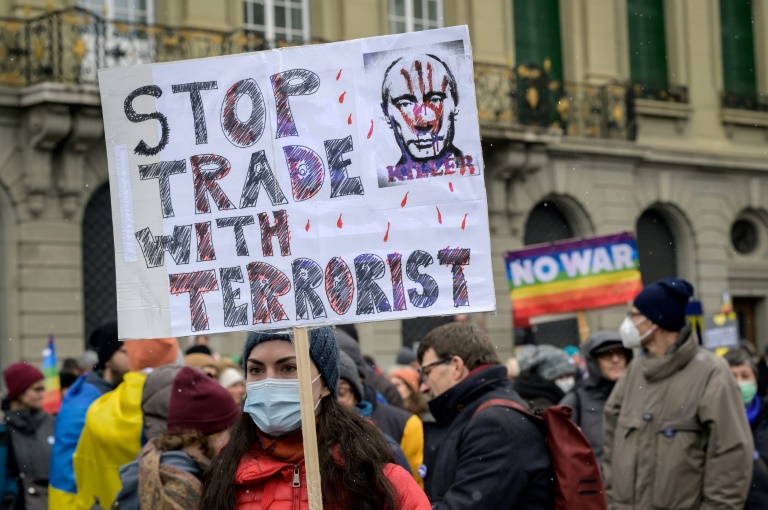
“Peace now, No gas, No war,” one large banner read, while a woman held up a sign with a picture of Putin with a red handprint across his face demanding “Stop trade with terrorist”.

Switzerland is not in the EU and has a long-standing tradition of neutrality on matters of war. It has nevertheless been aligning itself with the waves of EU sanctions imposed following Russia’s February 24 invasion of Ukraine.

Switzerland said last month it had frozen the equivalent of 5.75 billion Swiss francs ($6.2 billion) in Russian assets since the invasion began.

But Kyiv has been pressing Switzerland, a favoured destination for wealthy Russians and their assets, to do more.

“Russian oligarchs have their money here in Switzerland, in Swiss banks, so Switzerland is a key place to stop this war,” Perekhoda said.

“The Swiss government must take this responsibility and freeze all the assets of Russian oligarchs who finance this bloody war.”

Brazil drops Covid test for vaccinated travelers

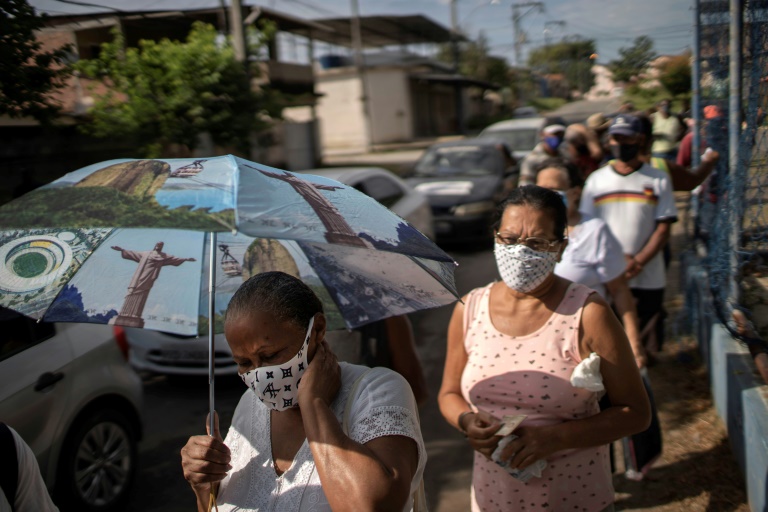
Brazil loosened its pandemic restrictions for international travelers Saturday, ending its Covid-19 test requirement for vaccinated passengers and scrapping a lengthy health questionnaire.

Travelers will now only be required to present proof of vaccination on arrival in the country, according to new regulations published late Friday in the government gazette, following a recommendation to the same effect from federal health regulator Anvisa last week.

Proof of vaccination is not required for Brazilians or foreigners with residency in Brazil. Unvaccinated travelers will have to present a negative Covid-19 test dated no more than one day before departure.

But under the new regulation they will no longer have to quarantine for 14 days.

The country also dropped Anvisa’s pandemic health questionnaire for travelers, which had been required since December 2020.

Brazil has been among the countries hit hardest by Covid-19, which has claimed more than 660,000 lives in the country — second only to the United States.

But the number of infections and deaths has fallen dramatically as the South American country has ramped up immunization, with nearly 75 percent of its 212 million people now fully vaccinated.

Brazil’s average daily Covid-19 death toll has fallen to around 200, from more than 3,000 at the height of the crisis a year ago.

Pakistan PM calls for street protests ahead of no-confidence vote

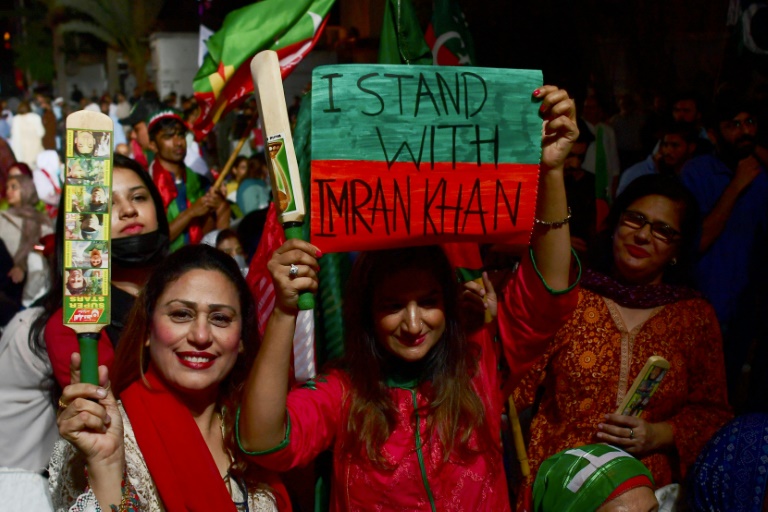
Pakistan Prime Minister Imran Khan called on his supporters to take to the streets Sunday ahead of a parliamentary no-confidence vote that could see him thrown out of office. 

No Pakistan premier has ever completed a full term, and Khan is facing the biggest challenge to his rule since being elected in 2018, with opponents accusing him of economic mismanagement and foreign-policy bungling.

Parliament is due to debate the motion Sunday — with a vote possibly the same day — but Khan’s Pakistan Tehreek-e-Insaf party (PTI) effectively lost its majority in the 342-member assembly last week when a coalition partner said its seven lawmakers would vote with the opposition.

More than a dozen PTI lawmakers have also indicated they will cross the floor, although party leaders are trying to get the courts to prevent them from voting.

On Saturday Khan called on supporters to take to the streets to peacefully protest against what he said was a “conspiracy” hatched outside Pakistan to unseat him.

“I want you all to protest for an independent and free Pakistan,” he said during a public question and answer phone-in broadcast by state media.

Earlier this week he accused the United States of meddling in Pakistan’s affairs, with local media reporting he had received a briefing letter from Islamabad’s ambassador to Washington recording a senior US official telling him they felt relations would be better if Khan left office.

In Washington, State Department spokesman Ned Price told reporters there was “no truth” to the allegations.

Khan has accused the opposition of conspiring with Washington to remove him because he won’t take the West’s side on global issues against Russia and China.

He called his opponents “robbers, cowards, deceivers”.

The opposition is headed by the Pakistan Muslim League-N (PML-N) and the Pakistan Peoples Party (PPP) — two usually feuding dynastic groups that dominated national politics for decades until Khan forged a coalition against them.

– Army key to power –

If Khan goes, the PML-N’s Shehbaz Sharif is tipped to become the next prime minister — but on Saturday the government moved to have him sent back to jail to await trial on money-laundering charges that have been pending since 2020.

The government asked a Lahore court to revoke his bail, with a decision expected Monday.

Sharif is the younger brother of three-time prime minister Nawaz Sharif, who was ousted and jailed on corruption charges in 2017 and is currently in Britain after being released from prison two years later for medical treatment.

Khan was elected after promising to sweep away decades of entrenched corruption and cronyism, but has struggled to maintain support with inflation skyrocketing, a feeble rupee and crippling debt.

Some analysts say Khan has also lost the crucial support of the military — claims both sides deny — and Pakistan’s army is key to political power.

There have been four military coups — and at least as many unsuccessful ones — since independence in 1947, and the country has spent more than three decades under army rule.

Debate on the no-confidence motion was due to start Thursday, but the deputy speaker — from Khan’s party — suspended proceedings when legislators declined to first address other items on the agenda.

Khan, a former international cricket star who in 1992 captained Pakistan to their only World Cup win, hinted he still had a card to play.

“I have a plan for tomorrow, you should not be worried about it. I will show them and will defeat them in the assembly.”

In the past, parties have resorted to physically preventing lawmakers from voting on key legislation by blocking access to the national assembly, leading to cat-and-mouse chases and even accusations of kidnapping.

New Spain opposition chief vows moderation, dialogue

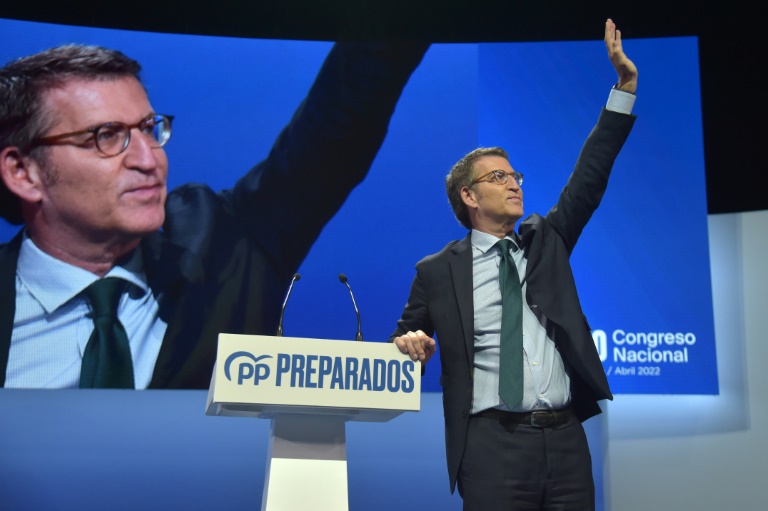
Spain’s new opposition leader Alberto Nunez Feijoo pledged to turn the page on confrontational politics and foster inclusive dialogue Saturday in his first speech after being overwhelmingly elected head of the Popular Party.

A calm, experienced moderate with a pragmatic outlook, he said he would fight to return the right-wing party to power and warned he would not be a pushover.

“Moderation is not about being lukewarm and dialogue is not submission,” he said after being elected leader with 98.3 percent of the votes at a two-day party congress in Seville. 

After 13 years governing Galicia in northwestern Spain with an impressive track record of four absolute majorities, the party is hoping the 60-year-old will be able to translate his regional success to a national level.

“Enough of the heated debates and confronting each other, enough of creating problems, there are already so many… Let’s end these futile debates and face the real problems,” Feijoo told delegates. 

“I’m not here to insult (Socialist Prime Minister Pedro Sanchez) but to beat him.”

European Commission Vice President Margaritis Schinas, a guest at the congress, said he had full confidence in Feijoo. 

“Alberto knows the path to victory very well because if there’s one thing he knows about, it’s winning elections,” he said in fluent Spanish. 

The Spanish premier congratulated Feijoo on his appointment, tweeting: “In these complex times, working with unity and responsibility for the common good must be a priority for everyone.”

– Moving past a crisis –

The Galician leader was the only candidate running to take over from Pablo Casado, who was edged out following a bitter internal dispute with one of the party’s rising stars. 

When Casado took over as PP chief in July 2018, he was a young hardliner who promised to breathe new life into a party snarled in corruption and bleeding votes.

But barely four years later, he was left fighting for his political life after a very public confrontation with Isabel Diaz Ayuso, whose success as Madrid regional leader threw his own lacklustre leadership into sharp relief.

In a parting address on Friday, Casado said he was stepping back from politics and giving up his parliamentary seat.

Former PP prime ministers Jose María Aznar (1996-2004) and Mariano Rajoy (2011-2018) urged the party to rally around Feijoo.

“His success will mean success for all of us and for Spain,” said Aznar, speaking by video link because he has Covid-19. 

Feijoo is the only one of Spain’s regional leaders to govern with an absolute majority in a region where the Socialists pose no threat and the far-right Vox has made no headway despite growing popularity across Spain.

– Feijoo to face Socialists and Vox –

But at a national level the situation is the opposite and Feijoo will have to contend with a Socialist-led government, its hard-left partner Podemos and Vox in the ascendency. 

During his long political career, Feijoo has steered clear of scandal, despite the emergence of photos from the mid-90s showing his friendship with a cigarette smuggler later jailed for drug trafficking. 

While admitting they were friends at the time, Feijoo said he had no idea about the illegal activities. 

General elections are due by the end of 2023 but Sanchez’s left-wing coalition  already looks worn out by the pandemic, soaring inflation and social unrest over spiralling prices as well as the global uncertainty caused by the war in Ukraine. 

The far-right has also been a headache for the PP, which has watched how Vox has, within eight years, managed to obtain 52 of the 350 seats in Spain’s parliament while its own showing has fallen from 186 to 88.

Even if the PP does succeed in next year’s election, recent polls suggest it could need the support of Vox to govern. 

Alarm bells sounded last month when the PP made a coalition deal with Vox, letting the far-right faction into a regional government for the first time, raising fears it could be a blueprint for future power-sharing, both regionally and nationally. 

War-torn Yemen holds breath for breakthrough truce

Yemen’s warring parties are set to lay down their weapons for the first nationwide truce since 2016 on Saturday, with all eyes on whether the UN-brokered ceasefire will hold.

The Iran-backed Huthi rebels and Saudi-led coalition have both agreed to observe the two-month truce, which is to take effect at 1600 GMT on the first day of the Muslim holy fasting month of Ramadan.

Yemen’s intractable war has killed hundreds of thousands directly or indirectly and displaced millions, triggering the world’s worst humanitarian crisis, according to the United Nations.

Previous ceasefires have been ineffective. A national truce ahead of peace talks in April 2016 was violated almost immediately, as were other ceasefires that year.

A 2018 agreement to cease hostilities around rebel-held Hodeida port, a lifeline for the Arab world’s poorest country, was also largely ignored.

Both the Huthis and Saudi Arabia have welcomed the latest initiative, which follows a surge in attacks but also increasing diplomacy including ongoing talks — snubbed by the rebels — in Riyadh.

“This time I am optimistic. This truce is unlike all the previous ones,” Asmaa Zayed, a college student who also works as a cashier in Hodeida, told AFP.

“The fact it comes with Ramadan gives us a lot of hope. This war started when I was 15 years old and turned all my dreams into nightmares.”

– ‘Suffered immensely’ –

Under the agreement, all ground, air and sea military operations in Yemen and across its borders would stop, UN special envoy for Yemen Hans Grundberg said in his announcement.

Fuel ships would be allowed into Hodeida port and commercial flights could resume to certain regional destinations from the airport in the Huthi-held capital Sanaa — both key demands of the insurgents before they consider peace talks.

The two sides have also agreed to meet to open roads in Taez and other governorates, Grundberg said, adding the truce could be renewed with their consent.

“All Yemeni women, men and children that have suffered immensely through over seven years of war expect nothing less than an end to this war,” said the Swedish diplomat.

With fighting in Yemen at a stalemate, the Huthis launched a series of drone-and-missile attacks on Saudi Arabia and coalition partner the United Arab Emirates this year, often targeting oil facilities.

The coalition has responded with air strikes.

Last week, on the seventh anniversary of the Saudi-led military coalition’s intervention, and a day after an attack on an oil plant within sight of the Formula One Grand Prix in the Saudi city of Jeddah, the Huthis announced a three-day unilateral ceasefire.

The coalition then announced its own truce from Wednesday, ahead of discussions with international partners in Riyadh. The rebels declined to attend the talks in an “enemy” country.

– ‘Reeks of death’ –

Saudi Arabia on Saturday expressed its “support” for the UN ceasefire, which was also welcomed by US President Joe Biden and UN Secretary-General Antonio Guterres.

“These are important steps, but they are not enough,” Biden said. “The ceasefire must be adhered to, and as I have said before, it is imperative that we end this war.”

British Prime Minister Boris Johnson has welcomed the deal, calling it “a window of opportunity to finally secure peace and end the humanitarian suffering”.

On Saturday, France foreign ministry said the truce was a “major step forward”, and offered “full support” for UN efforts towards a permanent ceasefire.

The major question now is whether the truce will be observed.

The Norwegian Refugee Council called it “an essential development for millions of Yemenis” and “the start of a new chapter”, while Save the Children said they hoped it would offer a “much-needed respite from all the violence”.

The war in Yemen started when the Huthis took control of Sanaa in 2014, prompting the Saudi-led intervention in March of the following year in support of the ousted government.

It plunged what was already the Arab world’s poorest country into years of crisis, with failing infrastructure and services and 80 percent of the 30 million population dependent on aid.

“Everything around us reeks of death and war,” said Zayed, the student in Hodeida. “I think I will go into a depression if this truce ends or fails.”

War in Ukraine: Latest developments

Here are the latest developments in the war in Ukraine:

– Kyiv says Russians retreating from north –

Ukraine says Russian forces are making a “rapid retreat” from northern areas around the capital Kyiv and the city of Chernigiv.

“Russia is prioritising a different tactic: falling back on the east and south,” Ukrainian presidential adviser Mykhaylo Podolyak says on social media.

– Mariupol evacuation –

The Red Cross prepares for a fresh evacuation effort from the besieged southern port of Mariupol after it was forced to turn back Friday after “arrangements and conditions made it impossible to proceed”. 

Some residents managed to flee the region Friday by taking a convoy of buses and private cars to Ukrainian-controlled Zaporizhzhia.

Ukrainian President Volodymyr Zelensky says over 3,000 people have been rescued from Mariupol, though it is not immediately clear if he is referring to the bus passengers.

– Ukrainian journalist found dead –

Ukrainian photographer and documentary maker Maks Levin has been found dead near Kyiv after going missing more than two weeks ago, presidential aide Andriy Yermak says.

The Institute of Mass Information, a non-governmental organisation, cites preliminary findings from the prosecutor’s office saying he was killed by “two shots” from the Russian military.

– Call for ICC to issue Putin arrest warrant –

Veteran war crimes prosecutor Carla Del Ponte calls for the International Criminal Court to quickly issue an arrest warrant for Russian President Vladimir Putin over actions in Ukraine.

– Pope urges ‘shared response’ on refugees –

The number of refugees fleeing Ukraine has passed 4.1 million, the United Nations says.

Pope Francis calls for “a broad-based and shared response” to “the growing migration emergency”.

“Some countries cannot respond to the entire problem, while others remain indifferent onlookers,” he says in Malta.

– US commits $300 mn in ‘assistance’ –

The US Defence Department announces it is allotting $300 million in “security assistance” for Ukraine to bolster its defence capabilities, adding to the $1.6 billion Washington has already committed since Russia’s invasion. 

– Ukraine accused of Russia attack –

Ukrainian helicopters have carried out a strike on a fuel storage facility in Russia’s western town of Belgorod, according to the local governor, Vyacheslav Gladkov.

Kyiv would not be drawn on whether it was behind the attack, with Foreign Minister Dmytro Kuleba saying he did “not possess all the military information”.

– Peace talks resume –

Peace talks between Ukrainian and Russian officials resume via video conference, but Moscow warns that the helicopter attack will hamper negotiations.

– UN official to visit Moscow, Kyiv –

A top UN official is set to fly to Moscow Sunday, and then on to Kyiv to try and secure a “humanitarian ceasefire” in Ukraine, says the body’s chief Antonio Guterres. 

Both Russia and Ukraine have agreed to meet Martin Griffiths, Under-Secretary-General for Humanitarian Affairs, Guterres says.

– China warned –

The EU’s top officials have warned China’s leaders at a summit not to help Russia wage war on Ukraine or sidestep Western sanctions, European Commission head Ursula von der Leyen says. 

– Chernobyl radiation –

Russian soldiers were likely exposed to radiation while they were occupying the area around the Chernobyl nuclear power station, Ukraine’s nuclear agency Energoatom says.

– Landmarks damaged –

The UN’s cultural agency UNESCO says it has confirmed that at least 53 Ukrainian historical sites, religious buildings and museums have sustained damage during Russia’s invasion.

Close Bitnami banner
Bitnami