World

Shanghai parents fear separation from kids after positive Covid test

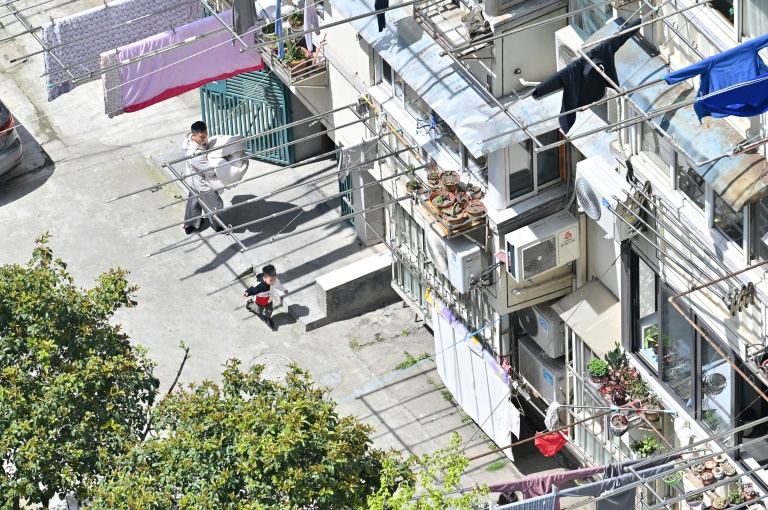
Nearly all of Shanghai’s 25 million residents were under stay-at-home orders on Saturday, as parents raised fears of being separated from their children in the event of a positive Covid-19 test.

The city, which is the epicentre of China’s most severe Covid outbreak since the first months of the pandemic, has faced weeks of phased lockdowns.

Authorities had vowed not to shut down the whole city, China’s finance hub, but have conceded to rare failures in their attempts to control the outbreak.

On Saturday, Shanghai had over 6,300 local cases — more than two-thirds of the nationwide caseload, which is relatively low by global standards but troubling to a country that recorded double-digit daily cases for much of the last two years.

Over 14 million residents were tested on Friday, state media reported.

But the testing regime has seeded anxiety among parents about being separated from their children.

“My daughter is not yet four-months-old but if she tests positive then she’ll be quarantined by herself,” a resident in the populous Puxi area, west of the Huangpu river, told AFP.

“This is totally impossible to understand. No matter the circumstances, a newborn should never be separated from their parents,” the 33-year-old, who gave his surname as Law, said.

Shanghai will offer “timely support to juveniles” left unattended due to reasons such as their parents being infected with Covid, Zeng Qun, deputy head of the Shanghai Civil Affairs Bureau, said according to state media outlet Xinhua. 

Those left at home will be allotted a “temporary guardian” or transferred to institutions “for juvenile protection for special care”, the report said.

– Anger and fear rising –

Anger is rising among Shanghai residents over lockdowns that were initially billed for four days to mass-test the city, but now appear likely to drag into late next week or longer.

An initial four-day shutdown of Pudong, the eastern half of the financial hub, was meant to lapse on Friday. 

But most of its residents are still confined, as complex quarantine rules mean any block with a virus case will have to be locked down for up to two weeks.  

Residents in the city’s western half — Puxi — were ordered to stay home from Friday, meaning almost all of Shanghai’s population is currently quarantined.

“I’m worried both parts of the city will end up remaining closed for a while,” a Puxi resident surnamed Wang told AFP.

Fear is rising in Shanghai, with residents complaining of a lack of fresh food while the city’s health resources are stretched.

There are over 1,500 people in a city exhibition hall that has been converted into a quarantine centre.

An unverified audio clip circulating on social media Saturday purportedly showed a health official telling a resident that state quarantines were full.

While China has managed to quash most of its domestic virus clusters, the highly infectious Omicron variant has piled pressure on the country’s zero-Covid strategy.

Shanghai’s restrictions threaten to snarl supply chains, with shipping giant Maersk saying Friday that some depots in the city remain closed and trucking services will likely be hit further due to the lockdown.

Organisers of mega motor show Auto China 2022 said Saturday that the event in Beijing this month would be postponed over the “widespread and frequent occurrence” of Covid outbreaks in many parts of China.
Iraq oil exports $11.07 bn in March, highest for 50 years

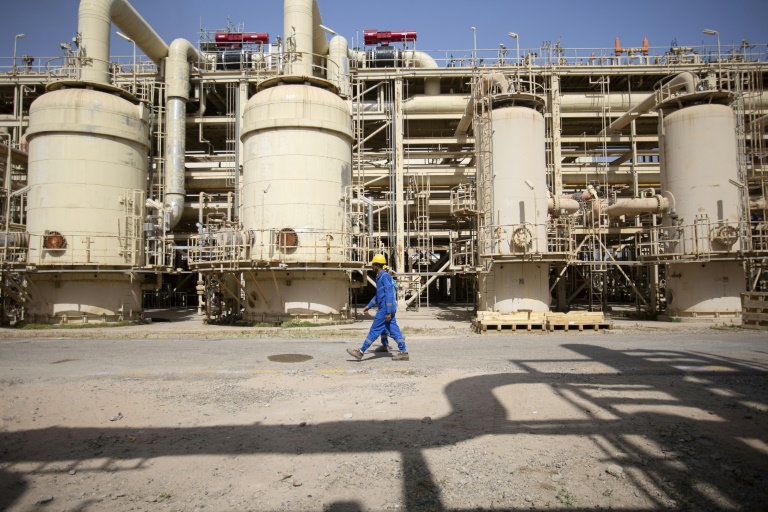
Iraq exported $11.07 billion of oil last month, the highest level for half a century, as crude prices soared amid shortfall fears following Russia’s invasion of Ukraine, the oil ministry said.

The second largest producer in the Organization of the Petroleum Exporting Countries (OPEC), Iraq exported “100,563,999 barrels for revenues of $11.07 billion, the highest revenue since 1972”, the ministry said.

The figures published late Friday are preliminary data but final data “generally does not vary” much, a ministry official said, speaking on condition of anonymity.

In February, oil revenues reached an eight-year high of $8.5 billion dollars, with daily exports of 3.3 million barrels of oil.

Oil exports account for more than 90 percent of Iraq’s income.

Crude prices spiked over fears of a major supply shortfall after Moscow invaded Ukraine on February 24. Russia is the world’s second biggest exporter of oil after Saudi Arabia.

On Thursday, the OPEC group of oil producing countries and its Russia-led allies agreed on another modest oil output increase, ignoring Western pressure to significantly boost production as the Ukraine conflict has rocked prices.

The 13 members of the Saudi-led OPEC and 10 countries spearheaded by Russia — a group known as OPEC+ — backed an increase of 432,000 barrels per day in May, marginally higher than in previous months.

– ‘Two-edged sword’ –

The United States has urged OPEC+ to boost production as high energy prices have contributed to soaring inflation across the world, which has threatened to severely derail the recovery from the Covid pandemic.

While OPEC refused to budge, Washington said it would tap its strategic stockpile by a record amount in a bid to cool soaring prices.

The international benchmark contract, Brent North Sea crude, flirted with a record high in early March as it soared to almost $140 per barrel, but has retreated since then.

On Friday, oil was around $100 a barrel.

Oil revenues are critical for Iraq’s government, with the country mired in a financial crisis and needing funds to rebuild infrastructure after decades of devastating war.

Iraq, with a population of some 41 million people, is also grappling with a major energy crisis and suffers regular power cuts.

Despite its immense oil and gas reserves, Iraq remains dependent on imports to meet its energy needs.

Neighbouring Iran currently provides a third of Iraq’s gas and electricity needs, but supplies are regularly cut or reduced, aggravating daily load shedding.

“Overall, a windfall in oil revenues is positive for Iraq,” said Yesar al-Maleki, an analyst at Middle East Economic Survey.

“But is a two-edged sword, since it may dampen government efforts to implement economic reforms needed to diversify it’s sources of income beyond oil.”

Many ordinary Iraqis are frustrated that they see little impact of the higher oil revenues trickle down to them, in a country where nearly a third live below the poverty line, according to the UN.

“With the new parliament bringing a more populist flavour of MPs, it is expected that this windfall will lead to greater calls by politicians and the public alike to increase public sector wages and employment,” Maleki added.

Crisis-hit Sri Lanka declares 36-hour nationwide lockdown

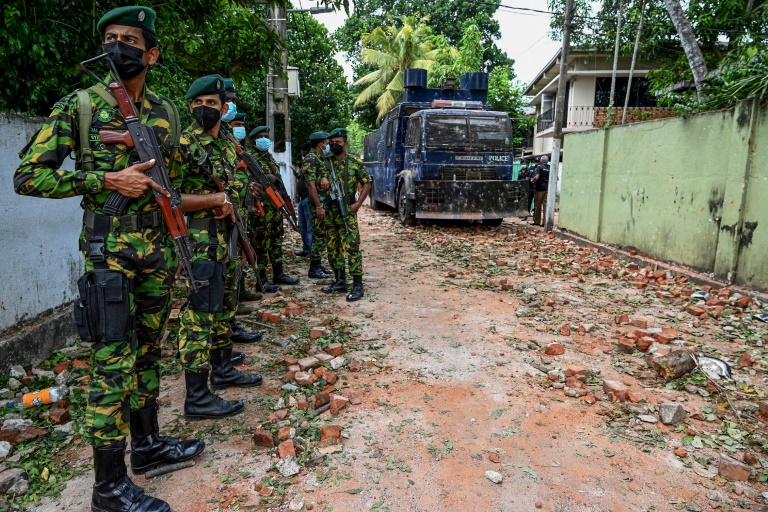
Sri Lanka declared a 36-hour nationwide curfew Saturday and deployed troops backed with sweeping new powers under a state of emergency to quell protests against the president, his relatives and even his most trusted shaman.

The lockdown will go into effect at dusk Saturday and be lifted on Monday morning, police said — a period that covers planned mass anti-government protests against worsening shortages of fuel, food and medicines.

The order came a day after President Gotabaya Rajapaksa invoked a state of emergency following a violent attempt to storm his house, saying it was for the “protection of public order”.

The ire of a mob in the near-bankrupt country was directed on Saturday at a woman identified as a soothsayer frequently consulted by Rajapaksa in the northern town of Anuradhapura.

Rights activist and former opposition legislator Hirunika Premachandra led dozens of women to storm seer Gnana Akka’s shrine and residence, but armed police stopped them.

“Why are police protecting a shaman?” she asked a senior officer who physically blocked her march, as seen on a Facebook live video, verified by AFP as authentic. 

“Thief, thief, Gota thief,” the crowds chanted after armed security personnel stopped them. 

“Think of the country and let us pass,” another woman activist pleaded.   

“#GoHomeRajapaksas” and “#GotaGoHome” have been trending for days on Twitter and Facebook in the country, which is battling severe shortages of essentials, sharp price rises and crippling power cuts in its most painful downturn since independence from Britain in 1948.

The coronavirus pandemic has torpedoed tourism and remittances, both vital to the economy, and authorities have imposed a broad import ban in an attempt to save foreign currency.

Many economists also say the crisis has been exacerbated by government mismanagement, years of accumulated borrowing, and ill-advised tax cuts.

The curfew and state of emergency in the country of 22 million came as social media posts called for protests on Sunday. 

“Do not be deterred by tear gas, very soon they will run out of dollars to re-stock,” said one post encouraging people to demonstrate even if police attempt to break up gatherings.

In normal times, Sri Lanka’s military can only play a supporting role to police, but the state of emergency gives them authority to act alone, including to detain civilians.

US ambassador Julie Chung warned: “Sri Lankans have a right to protest peacefully — essential for democratic expression.”

“I am watching the situation closely, and hope the coming days bring restraint from all sides, as well as much needed economic stability and relief for those suffering,” she tweeted.

Former colonial power Britain’s envoy expressed similar concerns, while the European Union mission said it “strongly urges Sri Lankan authorities to safeguard democratic rights of all citizens, including right to free assembly and dissent, which has to be peaceful”.

– ‘Lunatic, go home’ –

Travel trade specialists say the state of emergency could be a new blow to hopes of a tourism revival as insurance rates usually rise when a country declares a security emergency.

“There are reports of sporadic attacks on the homes of government politicians,” a security official told AFP, adding that a ruling party legislator was hit with eggs at a public event in the central district of Badulla on Friday.

In the nearby hill resort of Nuwara Eliya, protesters shouted anti-Rajapaksa slogans and blocked Prime Minister Mahinda Rajapaksa’s wife Shiranthi from opening an annual flower exhibition.

Thursday night’s unrest outside the president’s private home saw hundreds of people demand he step down.

Protesters chanted “lunatic, lunatic, go home”, before police fired tear gas and used water cannon.

The crowd turned violent, setting ablaze two military buses, a police jeep and other vehicles, and threw bricks at officers.

Police arrested 53 protesters, before 21 of them were released on bail Friday night, court officials said. Others were still being detained but had yet to be charged.

Shanghai parents fear separation from kids after positive Covid test

Nearly all of Shanghai’s 25 million residents were under stay-at-home orders on Saturday, as parents raised fears of being separated from their children in the event of a positive Covid-19 test.

The city, which is the epicentre of China’s most severe Covid outbreak since the first months of the pandemic, has faced weeks of phased lockdowns.

Authorities had vowed not to shut down the whole city, China’s finance hub, but have conceded to rare failures in their attempts to control the outbreak.

On Saturday, Shanghai had over 6,300 local cases — more than two-thirds of the nationwide caseload, which is relatively low by global standards but troubling to a country that recorded double-digit daily cases for much of the last two years.

Over 14 million residents were tested on Friday, state media reported.

But the testing regime has seeded anxiety among parents about being separated from their children.

“My daughter is not yet four-months-old but if she tests positive then she’ll be quarantined by herself,” a resident in the populous Puxi area, west of the Huangpu river, told AFP.

“This is totally impossible to understand. No matter the circumstances, a newborn should never be separated from their parents,” the 33-year-old, who gave his surname as Law, said.

Shanghai will offer “timely support to juveniles” left unattended due to reasons such as their parents being infected with Covid, Zeng Qun, deputy head of the Shanghai Civil Affairs Bureau, said according to state media outlet Xinhua. 

Those left at home will be allotted a “temporary guardian” or transferred to institutions “for juvenile protection for special care”, the report said.

Anger is rising among Shanghai residents over lockdowns that were initially billed for four days to mass-test the city, but now appear likely to drag into late next week or longer.

An initial four-day shutdown of Pudong, the eastern half of the financial hub, was meant to lapse on Friday. 

But most of its residents are still confined, as complex quarantine rules mean any block with a virus case will have to be locked down for up to two weeks.  

Residents in the city’s western half — Puxi — were ordered to stay home from Friday, meaning almost all of Shanghai’s population is currently quarantined.

“I’m worried both parts of the city will end up remaining closed for a while,” a Puxi resident surnamed Wang told AFP.

Fear is rising in Shanghai, with residents complaining of a lack of fresh food while the city’s health resources are stretched.

There are over 1,500 people in a city exhibition hall that has been converted into a quarantine centre.

An unverified audio clip circulating on social media Saturday purportedly showed a health official telling a resident that state quarantines were full.

While China has managed to quash most of its domestic virus clusters, the highly infectious Omicron variant has piled pressure on the country’s zero-Covid strategy.

After crisis, Spain's right-wing PP appoints new leader

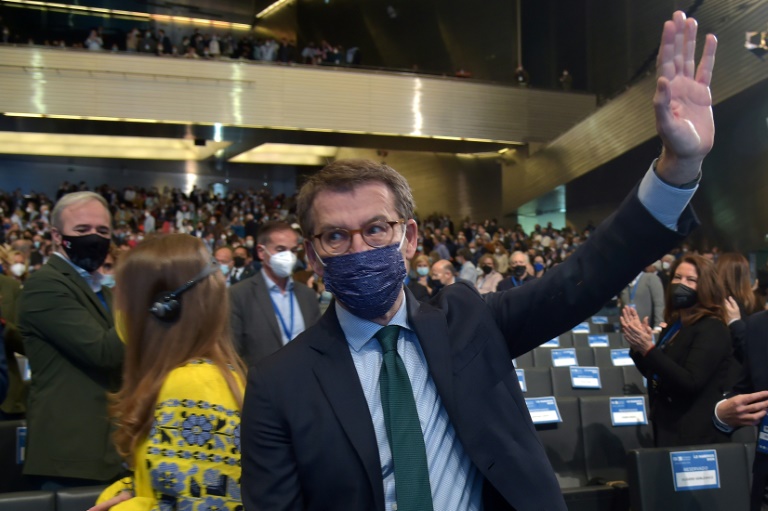
Spain’s opposition Popular Party (PP) on Saturday overwhelmingly voted for Alberto Nunez Feijoo as leader in the hope the calm, experienced moderate with a pragmatic outlook will return the right-wing faction to power.

After 13 years governing Galicia in northwestern Spain with an impressive track record of four absolute majorities, the party is hoping the 60-year-old will be able to translate his regional success to a national level.

In a vote on Saturday morning, he was elected with 98.3 percent of the ballots at a two-day party conference in the southern city of Seville.

“I have come here to win and to rule,” he told delegates on Friday at a two-day party conference in the southern city of Seville. 

“I am not running just to lead a party, but to serve Spain… Because Spain needs us more than ever. I will work tirelessly to pave a path that most Spaniards can walk along,” he later tweeted. 

The Galician leader was the only candidate running to take over from Pablo Casado, who was edged out following a bitter internal dispute with one of the party’s rising stars. 

When Casado took over as PP chief in July 2018, he was a young hardliner who promised to breathe new life into a party snarled in corruption and bleeding votes.

But barely four years later, he was left fighting for his political life after a very public confrontation with Isabel Diaz Ayuso, whose success as Madrid regional leader threw his own lacklustre leadership into sharp relief.

In a parting address on Friday, Casado told delegates he was also giving up his seat in parliament and all “positions of responsibility” in the PP, with party barons thanking him for his time as leader.

Two former PP prime ministers, Jose María Aznar (1996-2004) and Mariano Rajoy (2011-2018), urged the party to rally around Feijoo.

“We must be totally committed to his success, because it will mean success for all of us and for Spain,” said Aznar, speaking by video link because he has Covid-19. 

– Feijoo v. Vox and the Socialists –

Feijoo is the only one of Spain’s regional leaders to govern with an absolute majority in a region where the Socialists pose no threat and the far-right Vox has made no headway despite growing popularity across Spain.

But at a national level, the situation is the opposite, and Feijoo will have to contend with a Socialist-led government, its hard-left partner Podemos and Vox in the ascendency. 

During his long political career, Feijoo has steered clear of scandal, despite the emergence of photos from the mid-90s showing his friendship with a cigarette smuggler later jailed for drug trafficking. 

While admitting they were friends at the time, Feijoo said he had no idea about the illegal activities. 

During a national tour to present his candidacy, Feijoo made a few slips, including a reference to the government as “autistic” for which he later apologised to those with the condition. 

General elections are due by the end of 2023 but Pedro Sanchez’s left-wing coalition is already worn out by the pandemic, soaring inflation and social unrest over spiralling prices as well as the global uncertainty caused by the war in Ukraine. 

The far-right has also been a headache for the PP, which has watched how Vox has, within eight years, managed to obtain 52 of the 350 seats in Spain’s parliament as its own showing has fallen from 186 to 88.

Feijoo’s job is now “to attract the centrist voters” that brought the PP’s Aznar and Rajoy to power, said Ernesto Pascual, a political scientist at Barcelona’s Autonomous University.

Even if the PP does succeed in next year’s election, recent polls suggest it could need the support of Vox to govern. 

Alarm bells sounded last month when the PP made a coalition deal with Vox, letting the far-right faction into a regional government for the first time, raising fears it could be a blueprint for future power-sharing, both regionally and nationally. 

Russia pulls back from north as Red Cross pushes Mariupol rescue

Ukraine on Saturday said Russian forces were making a “rapid retreat” from northern areas around the capital Kyiv and the city of Chernigiv as the Red Cross prepared for a fresh evacuation effort from the besieged southern port of Mariupol.

Ukraine said Russian forces were concentrating in the east and south, a day after thousands of people from Mariupol and surrounding Russian-held areas escaped in a convoy of buses and private cars.

“Russia is prioritising a different tactic: falling back on the east and south,” Ukrainian presidential adviser Mykhaylo Podolyak said on social media.

He said that while Russian forces appeared to be pulling back from Kyiv and Chernigiv, their aim was to “control a vast stretch of occupied territory and set up there in a powerful way”.

Podolyak said Russian forces would “dig in there, set up air defence, drastically reduce losses and dictate terms.

Moscow’s aim was to “drastically reduce losses & dictate terms”, he said on Twitter on Saturday.

“Without heavy weapons we won’t be able to drive (Russia) out”.

– ‘Our city doesn’t exist anymore’ –

Mariupol has been an important Ukrainian hold-out, suffering weeks of Russian shelling, with at least 5,000 residents killed, local officials said.

The estimated 160,000 who remain face shortages of food, water and electricity.

“We have managed to rescue 6,266 people, including 3,071 people from Mariupol,” Zelensky said in a video address earlier on Saturday.

Dozens of buses carrying Mariupol residents who had escaped the devastated city arrived Friday in Zaporizhzhia, 200 kilometres (120 miles) to the northwest, according to an AFP reporter on the scene.

The buses carried people who had been able to flee Mariupol to Russian-occupied Berdiansk.

“We were crying when we reached this area. We were crying when we saw soldiers at the checkpoint with Ukrainian crests on their arms,” said Olena, who carried her young daughter in her arms. 

“My house was destroyed. I saw it in photos. Our city doesn’t exist anymore.”

The International Committee of the Red Cross (ICRC) said its team headed to Mariupol to try and conduct an evacuation was forced to turn back Friday after “arrangements and conditions made it impossible to proceed”.

The ICRC said it would try again on Saturday.

– New US aid –

Peace talks between Kyiv and Moscow resumed via video on Friday, but the Kremlin warned that what it described as a helicopter attack on a fuel depot inside Russia would hamper negotiations.

“This is not something that can be perceived as creating comfortable conditions for the continuation of negotiations,” Kremlin spokesman Dmitry Peskov told reporters.

The air strike hit energy giant Rosneft’s fuel storage facility in Belgorod, 40 kilometres from the Ukraine border.

But Kyiv would not be drawn on whether it was behind the attack, with Zelensky telling US network Fox News: “I’m sorry, I do not discuss any of my orders as commander in chief.”

He said Russia was consolidating and preparing “powerful strikes” in the east and south, joining Western assessments that Moscow’s troops were regrouping, not withdrawing.

Ukraine also warned that Russian forces who left the Chernobyl nuclear plant — site of the world’s worst nuclear accident, in 1986 — after weeks of occupation may have been exposed to radiation.

“Russia behaved irresponsibly in Chernobyl” by digging trenches in contaminated areas and keeping plant personnel from performing their duties, said Foreign Minister Dmytro Kuleba. 

Zelensky meanwhile repeated his plea for the West to provide greater military support.

“Just give us missiles. Give us airplanes,” he told Fox. “You cannot give us F-18 or F-19 or whatever you have? Give us the old Soviet planes. That’s all… Give me something to defend my country with.”

The Pentagon later said it was allotting $300 million in “security assistance” to bolster Ukraine’s defence capabilities, adding to the $1.6 billion Washington has committed since Russia invaded in late February.

– ‘Where roses used to bloom’ –

A ferocious Ukrainian fightback and Russia’s logistics and tactical problems have hampered Russian efforts and there is growing concern inside the country as military losses mount.

Russia on Friday launched its annual military draft but vowed that conscripts would not be sent to fight in Ukraine.

Referring to the draft, Zelensky urged Russian families not to send their children to war.

“Don’t let them join the army. It’s not their war. We don’t need any more deaths,” he said.

Civilians have trickled out of devastated areas after arduous and daring escapes.

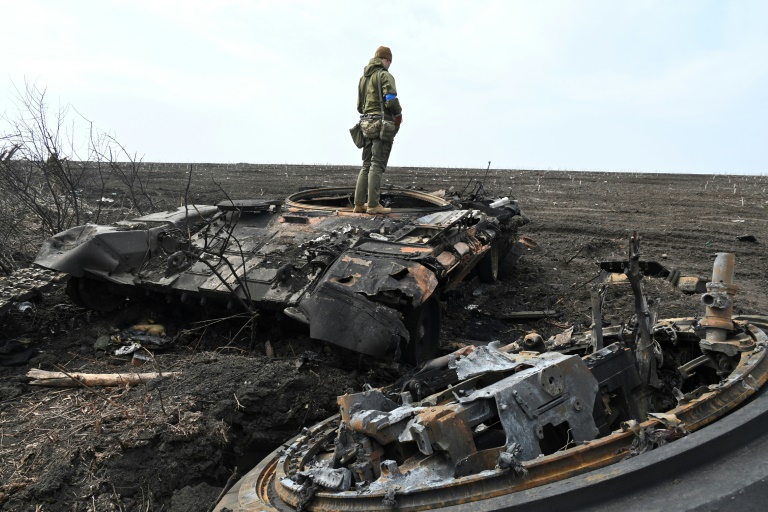
Three-year-old Karolina Tkachenko and her family walked an hour through a field strewn with burnt-out Russian armoured vehicles to flee their village outside Kyiv.

“The shops are closed, there’s no delivery of supplies. The bridge is also blown up, we can’t go for groceries through there,” said Karolina’s mother Karina Tkachenko. 

In Mariupol, Viktoria Dubovytskaya, who had sheltered in the theatre where 300 people are feared to have been killed in Russian bombardments, said she only grasped the extent of the destruction as she fled.

Bodies lay in the rubble and small wooden crosses were planted in the ground, she told AFP.

“When people find their loved ones, they just bury them wherever they can. Sometimes where roses used to bloom,” she said.

burs-dt/bp

India, Australia ink interim trade deal

India and Australia signed an interim free trade deal on Saturday that cuts tariffs on billions of dollars of commerce as the two Quad partners bolster their economic ties.

Both signatories are members of the Quad alliance with the United States and Japan, which is seen as a counterweight to an increasingly assertive China.

But while they both border the Indian Ocean, Canberra says India was only Australia’s seventh-largest trading partner in 2020, and accounted for just over four percent of its exports last year. 

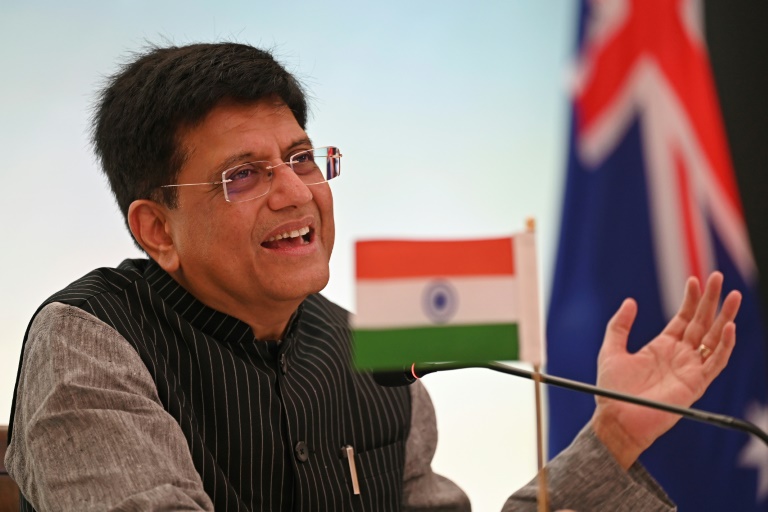
The Economic Cooperation and Trade Agreement was signed simultaneously in New Delhi and Canberra by India’s commerce minister Piyush Goyal and his Australian counterpart Dan Tehan in a joint ceremony.

India and Australia are “natural partners, connected by shared values of democracy, rule of law and transparency”, Goyal said. 

“Our relationship rests on the pillars of trust and reliability aptly reflected in our deepening geo-strategic engagement through the QUAD and the supply chain resilience initiative.”

Two-way trade reached around $27.5 billion last year according to New Delhi, with resource-rich Australia exporting coal and other commodities, along with sheep meat, and India largely supplying finished goods and services.

At the same time Canberra’s relations with its biggest trading partner China are at their lowest point in a generation, with many Australian goods hit with punitive sanctions and ministerial relations frozen.

Beijing has been angered at Australia’s willingness to legislate against overseas influence operations, to bar Huawei from 5G contracts and to call for an independent investigation into the origins of the coronavirus pandemic.

India and China have also seen a sharp deterioration in ties after a high-altitude clash in 2020 left 20 Indian soldiers and at least four Chinese soldiers dead.

The agreement “delivers a clear message that democracies are working together and ensuring the security and resilience of our supply chains”, Australian Prime Minister Scott Morrison said at Saturday’s signing.

India’s Prime Minister Narendra Modi added it would “contribute to increasing supply chain resilience and to the stability of the Indo-Pacific region”.

Negotiations on a comprehensive deal between India and Australia were launched more than a decade ago but stalled in 2015.

A full trade pact is now being negotiated and Morrison, who called Modi a “dear and trusted friend”, said he hoped it would be signed by the end of the year.

Saturday’s agreement cuts tariffs on more than 85 percent of Australian exports to India. 

In an accompanying statement, Morrison highlighted several products hit hard by the Chinese trade dispute — including coal, wine and rock lobsters — which will benefit under the Indian deal, calling it “a big door into the world’s fastest-growing major economy”.

His conservative government is trailing in the polls ahead of an election in May, and the tensions with China are a key issue.

Macron holds first rally as France election race tightens

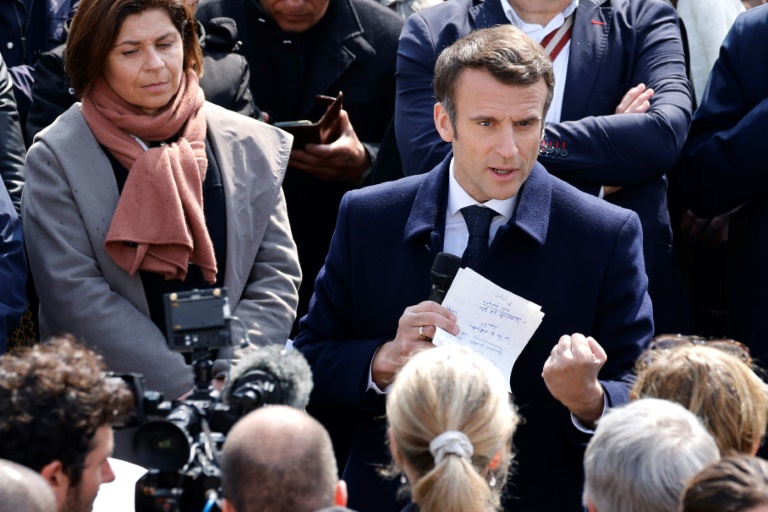
President Emmanuel Macron on Saturday holds his first rally of the French election campaign, with far-right rival Marine Le Pen eating into what once seemed his unassailable lead barely a week ahead of the ballot.

The centrist Macron threw his hat into the election ring at the last moment and has been distracted by the war in Ukraine, conducting diplomacy from the Elysee while Le Pen paces the country to discuss basic issues, including purchasing power. 

With the first round of elections on April 10 — followed by a run-off on April 24 — polls have shown Le Pen comfortably in second place in the initial stage and narrowing the gap on Macron for round two.

Macron’s 1230 GMT rally before an expected crowd of 35,000 at the indoor La Defense Arena stadium — a vast venue that usually hosts top-level rugby and rock concerts — represents a pivotal chance for the president to regain momentum.

He will make his appearance more “physical” than traditional rallies, according to his campaign team, requiring an “energetic presence” on stage.

He will address his supporters for an hour or more, it said.

The latest Elabe poll published Saturday showed Le Pen garnering 47 percent of the vote in a second-round run-off against Macron, who was projected to win 53 percent.

Allowing for a margin of error in the poll, this could put Le Pen in the zone to snatch victory.

“Of course Marine Le Pen can win,” Macron’s former prime minister Edouard Philippe warned in an interview with the Le Parisien daily posted online Thursday.

Philippe, who is backing Macron, added that “if she wins, believe me, things will be seriously different for the country… Her programme is dangerous.”

– ‘Possible to defeat Macron’ –

Le Pen, who lost to Macron in the 2017 polls run-off, has sought to moderate her image in the last half decade in a process helped by the emergence of Eric Zemmour as a fellow candidate in the far-right.

While Zemmour risks taking votes from Le Pen in the first round, his more radical stances in immigration and Islam have helped her project a more mainstream image.

“We feel it on the ground, there is a great dynamic, a hope that is emerging as the campaign nears it end,” she said on a visit to eastern France Friday.

“What people said was the automatic re-election of Emmanuel Macron turned out to be fake news. It is perfectly possible to defeat Emmanuel Macron and radically change the politics of this country,” she added.

– Sarkozy snub? –

But the first round risks being a disaster for The Republicans — the traditional right-wing party that was the political home of ex-presidents such as Nicolas Sarkozy and Jacques Chirac.

Their candidate Valerie Pecresse is projected by most polls to be vying with Zemmour for fourth place after failing to find momentum in the campaign.

Her big chance to ignite her bid will be at a rally Sunday in southern Paris. But the Le Parisien daily reported that Sarkozy — whose support is still coveted by the right despite criminal convictions — would be staying away in a major snub to her campaign.

The Socialist candidate, Paris mayor Anne Hidalgo, is struggling to reach beyond low single figures while the Greens hopeful Yannick Jadot has failed to put the environment at the centre stage of the campaign.

The left’s main hope is the far-left candidate Jean-Luc Melenchon who most polls project coming in third place but believes he has a chance of making a run-off.

Melenchon, an explosive orator, will address an open air meeting in Place du Capitole in centre of the southern French city of Toulouse on Sunday.

burs-jh/yad

No stairs for Francis, pope boards plane via lift to Malta

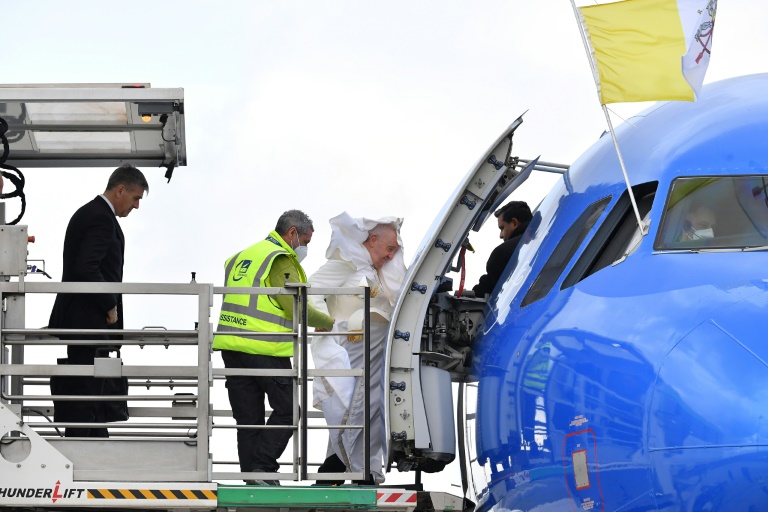
Pope Francis skipped the stairs in boarding the papal plane for a two-day trip to Malta on Saturday, instead using a boarding lift for reduced mobility passengers.

The 85-year-old departed from Rome’s Fiumicino Airport at 8:40 local time (0640 GMT) en route to Malta, where he will meet Prime Minister Robert Abela and dignitaries in the morning before conducting a prayer meeting at a national shrine.

Although Francis usually takes the stairs, this time he boarded with the help of a Thunderlift, which lifts passengers vertically to the height of the plane’s door. 

Last month, the pontiff cancelled a trip to Florence because of acute knee pain. 

Francis suffers from sciatica — which he has dubbed “a troublesome guest” — a chronic nerve condition that causes back, hip and leg pain and has occasionally forced him to cancel official events.

In January, knee pain prevented him from personally greeting the faithful following his weekly general audience.

The condition, he said, was temporary and joked: “I hear it happens to old people, I don’t know why it happens to me”.

Francis underwent surgery for an inflamed large colon last year.

Artists hail revolutionary Joni Mitchell at pre-Grammy gala

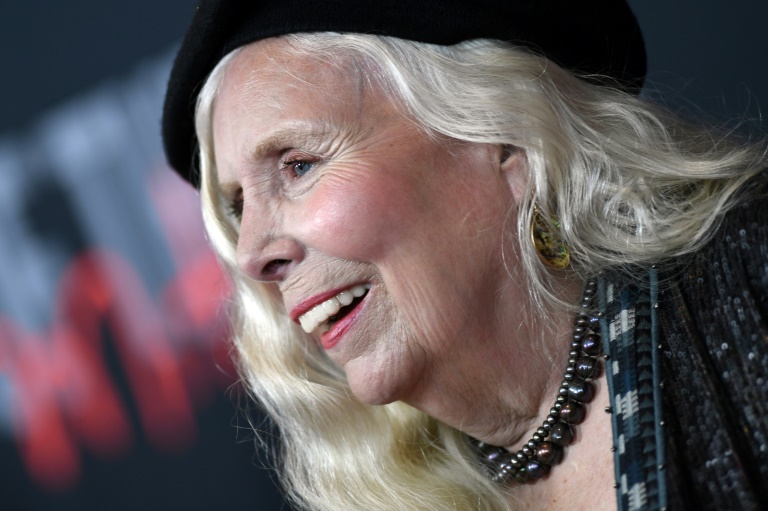
Music’s legends and hitmakers turned out Friday to honor Joni Mitchell — the Canadian-born folk icon behind classics including “A Case Of You” — at a charity gala ahead of the Grammys that featured moving tributes and glassy eyes.

The 78-year-old Mitchell donned a sequined kimono-style robe, bejeweled black beret and bright red nails at the MusiCares show where artists including Herbie Hancock, Cyndi Lauper, Angelique Kidjo and Stephen Stills, along with this year’s leading Grammy nominee Jon Batiste, paid homage to her vast oeuvre.

“It’s been quite a year,” the artist known for her distinct contralto and open-tuned guitar told journalists on the red carpet. 

In December she was among the inductees at the Kennedy Center Honors gala, one of America’s most prestigious arts awards.

The evening marked a rare public appearance for the trailblazing Mitchell, who in 2015 suffered a brain aneurysm that left her temporarily unable to speak, the aftermath of which has involved extensive physical therapy.

But on Friday she was glowing, telling reporters she’s been having artistic “ideas” even as she continues to focus on improving her health.

The influential artist who inspired everyone from Neil Diamond to Prince is perhaps best known for the intensely personal 1971 album “Blue,” a deep dive into emotional heartache.

Last summer “Blue” charted number one on iTunes as it hit its fiftieth anniversary — outperforming even pop sensation Olivia Rodrigo’s “Sour.”

Voicing her own astonishment over the milestone, Mitchell explained her album’s enduring popularity and recent resurgence: “Maybe people want to get a little bit deeper.”

And asked by reporters how she was feeling health-wise, she said “pretty good,” adding she’d been “making improvements.”

– ‘Touches the world’ –

Jazz great Hancock — who in 2007 released a tribute album to Mitchell entitled “River: The Joni Letters” — hailed his longtime friend’s artistic “courage.”

“She bares her soul, but she does it in such a poetic way,” Hancock told AFP on the red carpet, in the hours before he delivered a performance of Mitchell’s song “Hejira” onstage.

He credited Mitchell, who is widely considered among the 20th century’s greatest songwriters — with teaching him “how to listen to lyrics.”

“Some people — and I’m one of ’em — when we listen to music, we hear the harmonies and the musical textures, and the lyrics sound like gibberish,” he continued.

Yet Mitchell’s “poetry” still strikes him, Hancock said: “Nobody writes lyrics like Joni.”

“She’s given all of us the courage to tell the truth,” said performer Billy Porter, who paid tribute to Mitchell singing her beloved “Both Sides Now” onstage. “To use our art to grow; to use our art to heal.”

“To set some other people free — she’s powerful that way.”

The star-studded gala is an annual tradition from MusiCares, the charitable wing of the Recording Academy that raises money to help musicians in need prior to the Grammy Awards.

This year’s celebration also featured an affecting remote performance of “A Case Of You” from Graham Nash, of the folk supergroup Crosby, Stills, Nash and Young, a band Mitchell both deeply influenced and shared a rich working relationship with.

She also dated both David Crosby and Nash, and mined the latter break-up for inspiration on a number of the songs comprising the seminal “Blue,” including the touching “A Case of You.” 

Neil Young appeared in a video message sending Mitchell “lots of love,” while Stephen Stills attended the ceremony in Las Vegas and praised Mitchell as “one of the great artists of this world.”

“Back when we were kids we had a good time trying to figure out the tunings that she used. Crosby happened to be the most adept at it,” he told AFP. Crosby produced her debut album, “Song to a Seagull.”

Stills played guitar as Brandi Carlile belted out a rollicking rendition of “Woodstock” on an evening flush with performances, that left many in the room, especially Mitchell, with tears welling.

“I could retire now, and just let other people do it,” she joked when she accepted her award. “Everybody was splendid.”

“Did you enjoy it?” she asked the audience to rounds of applause, before joining the night’s performers to sing “The Circle Game” and “Big Yellow Taxi.”

Stills summed up the mood: “God bless you Joni Mitchell, for being in our lives.”

Close Bitnami banner
Bitnami