World

Apocalyptic price of Ukraine's victory in Irpin

The last survivors in the ruins of Irpin have just one word to describe the Russians who have retreated after one of the pivotal battles of the war in Ukraine.

“Fascists!” rages Bogdan, 58, as he and his friends walk a dog through a deserted town centre that is free of shelling for the first time in a month.

His friends nod in agreement.

“Every 20 to 30 seconds we heard mortar shots. And so all day long. Just destruction,” the tent construction worker told AFP journalists who reached Irpin on Friday.

It used to be a smart commuter town in the pine forests on Kyiv’s northwestern edge.

But Irpin held off the full force of Russia’s invasion, becoming the closest Moscow’s forces got to the centre of the capital some 20 kilometres (12 miles) away.

The town whose once leafy parks were left strewn with bodies is now back under Ukrainian control, as Russian troops hastily pull back from outside Kyiv. 

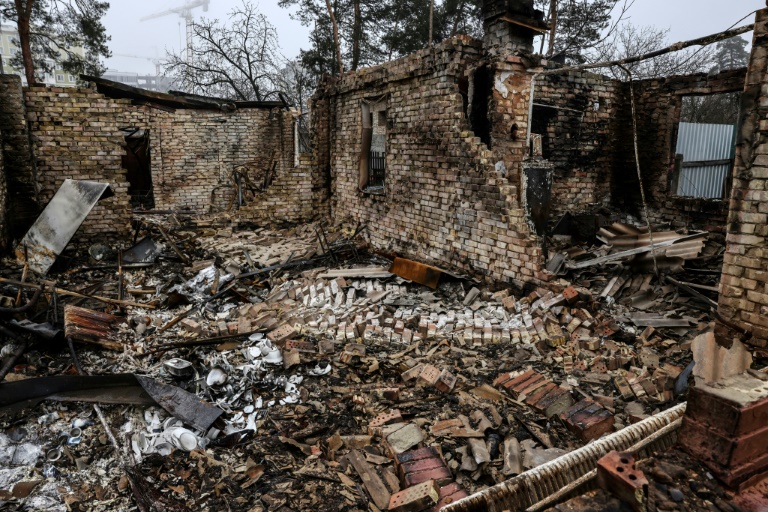
Victory came at a terrible price that has left it looking more like Aleppo or Grozny than an affluent satellite town in Ukraine. 

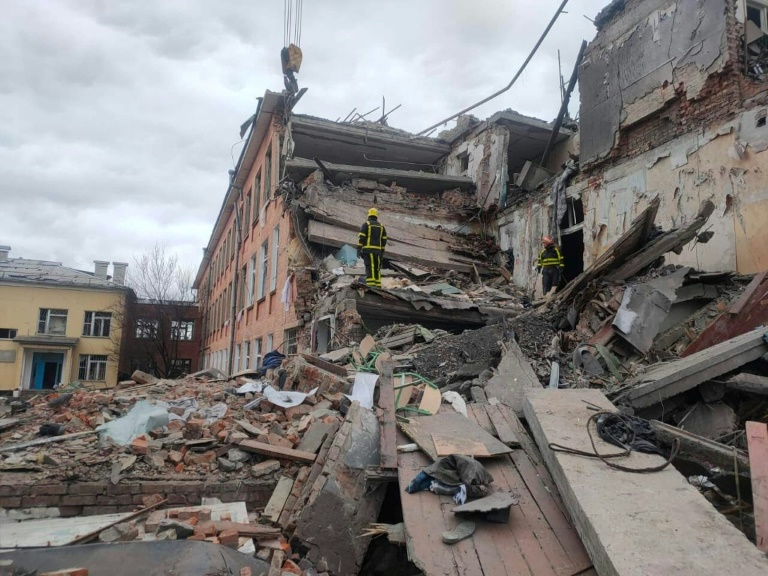
Barely a building has escaped the fighting unscathed. Shelling has blasted huge chunks out of modern, pastel-coloured apartment blocks.

The foggy streets are eerily empty, littered with cars with bullet-scarred windscreens, and echoing with the sound of stray dogs.

“It’s the apocalypse,” says a Ukrainian soldier who hitches a ride across the empty town.

– ‘I love Irpin’ –

Irpin embodied the horrors of war in the early days of the invasion that Russian President Vladimir Putin said he launched to “demilitarise and denazify” Ukraine.

Images of a family wiped out by a shell as they tried to flee, and of thousands of people sheltering under a destroyed bridge, were seen around the world.

For the past three weeks it has been closed off to the media since the death of a US journalist, with Ukrainian authorities saying it was too dangerous to enter.

Now, near a sign in the town centre that says “I love Irpin” with a red heart, the handful of the town’s residents who stayed tell how they survived more than a month of relentless shelling.

“We hid in the basement. They fired Grad rockets, mortars and tank shells,” says Bogdan, asking to be identified only by his first name.

“My wife and I came under mortar fire twice. But that’s okay, we are alive and well.”

Wandering through a street blocked by a burned-out cement mixer, resident Viktor Kucheruk begs for cigarettes.

“As soon as we hear a shot, we immediately scatter to our burrows,” the 51-year-old says.

“The lamps in the chandeliers.. fell down from the explosions. We sat at home in the corner during the shelling, where the walls are the thickest.”

A new housing development with a large sign saying “Irpin, Rich Town” is pockmarked by shelling, with two apartments totally destroyed.

Playgrounds with abandoned children’s scooters lie covered in rubble.

Rescue workers are still retrieving the dead from Irpin and placing them in body bags, before taking them to the blown-up bridge that links the town with Kyiv.

The bridge is covered with dozens of burned, bullet-ridden and abandoned cars, which rescue workers are now trying to clear.

– Russian tank graveyard –

Ukrainian forces have “liberated” a string of Russian-occupied towns and villages near the capital in recent days after Russia said it would scale back attacks on Kyiv.

Russia’s pullback now appears to be gathering pace, even as Ukraine’s President Volodymyr Zelensky said Moscow was consolidating for an assault in the country’s east and south.

AFP journalists counted at least 13 destroyed Russian armoured vehicles around the village of Dmytrivka, five kilometres (three miles) southwest of Irpin.

At least three charred corpses of Russian soldiers could be seen in the burned-out wreckage of a single wiped-out convoy of eight tanks and armoured personnel carriers.

A severed lower leg lay next to one vehicle.

Russian military uniforms and personal belongings lay scattered on the ground, including a red-leather bound Russian translation of Gibbon’s “Decline and Fall of the Roman Empire”.

Villager Oksana Furman, 47, shows where Moscow’s military might had left a shell hole in her kitchen during the tank battle two days ago.

A Russian tank had also reversed into her garden wall, causing it to collapse.

“There was a crazy rumble, the noise of the vehicles, everything was shaking. And then it was shell after shell,” said Furman, who hid in a neighbour’s basement.

Back in Irpin, where authorities say at least 200 civilians were killed, residents are keeping Ukraine’s success in this battle in perspective.

“We recaptured Irpin, we recaptured a lot of things, but the war is not over,” says Bogdan.
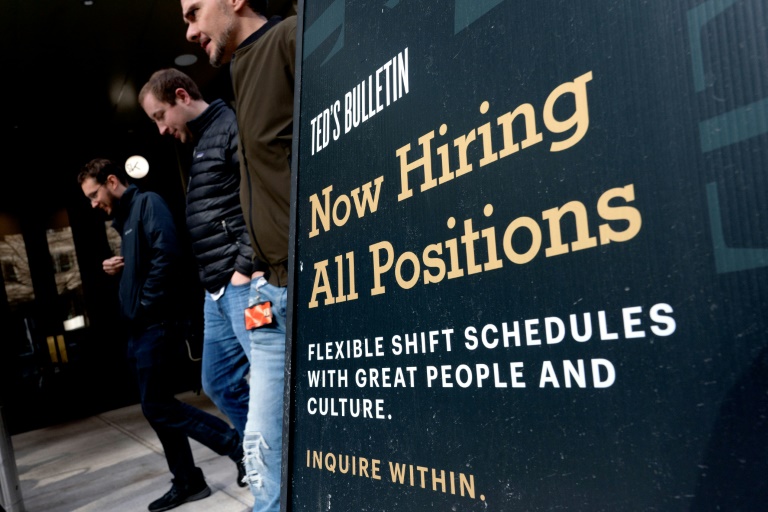
Stocks edge higher on solid US jobs data, oil prices retreat

Wall Street stocks finished modestly higher Friday as solid US jobs data boosted expectations for more Federal Reserve interest rate hikes, while oil prices retreated after US allies agreed to tap their emergency stockpiles.

The government jobs report for March showed US employers adding 431,000 positions and the unemployment rate falling to 3.6 percent, a hair above where it was before the pandemic. 

The data showed progress in the US economic recovery, but also raised expectations of an aggressive Federal Reserve interest rate hike to tame runaway inflation.

“Given the strength of the labor market and inflation well above target, the probability that the Fed raises rates by 50 (basis points) at its next meeting in May — which is our baseline — is rising,” Daniel Vernazza of UniCredit Bank said in a note.

However, the Institute for Supply Management reported the US manufacturing sector’s expansion slowed last month amid a spike in energy prices following Russia’s invasion of Ukraine.

After a choppy session, all three major US indices finished modestly higher with the S&P 500 up 0.3 percent, lifting the index narrowly into positive territory for the week.

European equities also climbed, despite data showing eurozone inflation surged by a record 7.5 percent last month.

Analysts said soaring inflation will pressure the European Central Bank, which has thus far been reluctant to follow the Federal Reserve’s lead and lift interest rates.

“With euro-zone inflation rising even further above the ECB’s forecast, and likely to remain very high for the rest of the year, we think it won’t be long before the Bank starts raising interest rates,” said Jack Allen-Reynolds at Capital Economics.

Oil prices, meanwhile, retreated, with the US benchmark WTI contract dipping under $100 a barrel.

In a bid to ease oil prices, the 31-nation International Energy Agency agreed to tap emergency oil reserves again at an emergency ministerial meeting following a pledge to release over 60 million barrels.

The IEA, whose members include the United States, European countries, Japan and other nations allied to Washington, said it would make the new amount public early next week.

The move came a day after Biden announced a record release of oil onto the market — one million barrels of US government oil every day for six months in a bid to ease prices.

Biden described the move as a “wartime” measure that will defuse Russia’s leverage as an energy power.

Washington has pressed the OPEC+ group of oil producing countries, led by Saudi Arabia and Russia, to boost its output but the group on Thursday agreed on another modest increase instead.

The war has driven oil prices to near record heights over concerns about supplies as Russia is the world’s second biggest exporter of crude after Saudi Arabia.

– Key figures around 2100 GMT –

New York – Dow: UP 0.4 percent at 34,818.27 (close)

New York – S&P 500: UP 0.3 percent at 4,545.86 (close)

New York – Nasdaq: UP 0.3 percent at 14,261.50 (close)

London – FTSE 100: UP 0.3 percent at 7,537.90 (close)

Frankfurt – DAX: UP 0.2 percent at 14,446.48 (close)

Paris – CAC 40: UP 0.4 percent at 6,684.31 (close)

EURO STOXX 50: UP 0.4 percent at 3,918.68 (close)

Tokyo – Nikkei 225: DOWN 0.6 percent at 27,665.98 (close)

Hong Kong – Hang Seng Index: UP 0.2 percent at 22,039.55 (close)

Shanghai – Composite: UP 0.9 percent at 3,282.72 (close)

Brent North Sea crude: DOWN 0.3 percent at $104.39 per barrel

West Texas Intermediate: DOWN 1.0 percent at $99.27 per barrel

Euro/dollar: DOWN at $1.1049 from $1.1067 late Thursday

Pound/dollar: DOWN at $1.3118 from $1.3138

Euro/pound: FLAT at 84.24 pence 

Dollar/yen: UP at 122.49 yen from 121.70 yen

Amazon workers in New York vote to unionize in US first

Amazon workers in New York voted Friday to launch the first US union at the e-commerce giant, an underdog upset against a company that has steadfastly opposed organized labor in its massive workforce. 

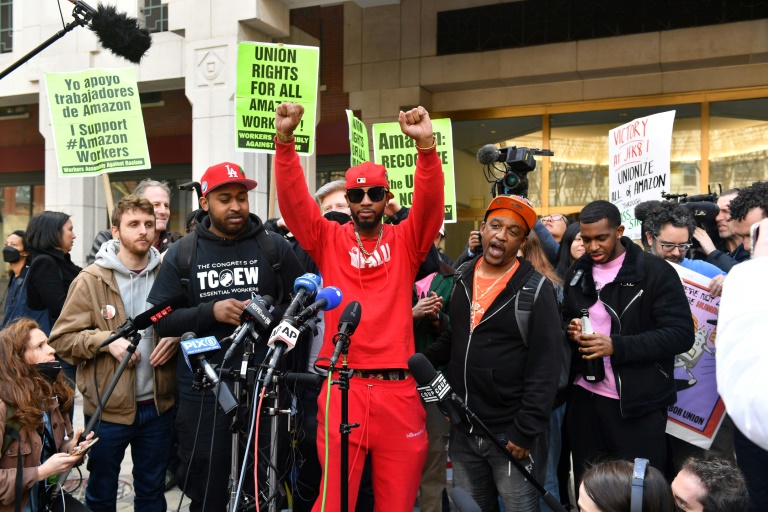
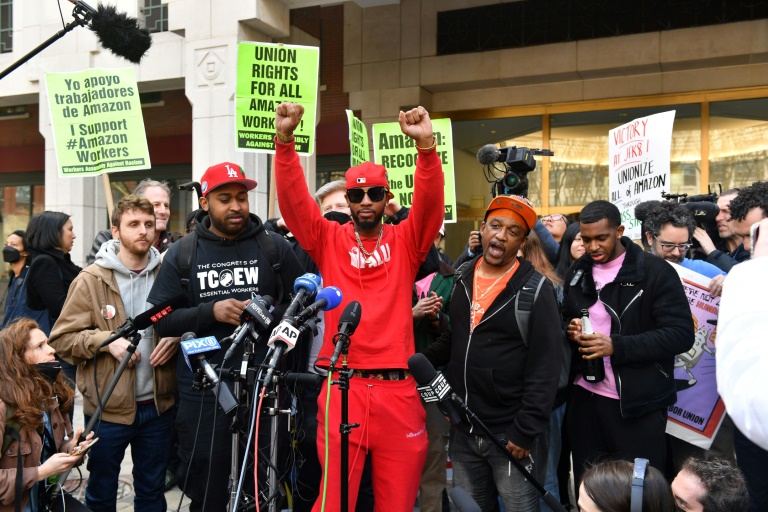
Dozens of supporters greeted the result with cheers and applause, while union organizer Christian Smalls popped a champagne cork in front of bank of TV cameras and photographers.

“We want to thank (Amazon founder) Jeff Bezos for going to space because while he was up there we were signing people up,” Smalls joked after workers at the Staten Island JFK8 warehouse backed the union 2,654 to 2,131 votes. 

Analysts said the Amazon outcome — likened to a David vs Goliath upset and winning plaudits from President Joe Biden — could spur other unionization effort at America’s second larget private employer. 

Amazon noted “disappointment” over the results, and said it was evaluating its options, including “filing objections based on the inappropriate and undue influence” of the National Labor Relations Board, which oversaw the vote.

At stake was Amazon’s ability to remain union-free in its home market, a status it has guarded fiercely since the company was set up in the 1990s by Bezos, who has since started a space tourism venture.

During a contentious campaign, Amazon argued that forming a union would mar the company’s direct relationship with workers and represent a jump into the unknown, with no guarantee employees will wind up with better wages or job security.

But union leaders, composed of current and former Staten Island employees, spoke constantly with employees, pitching the ability of a union to improve working conditions and ensure more employee-friendly work schedules without risk of being fired.

Smalls, 33, launched the drive soon after being fired from the Amazon site in Staten Island in March 2020 after organizing a protest for personal protective equipment amid the surge of the first major Covid-19 outbreak in New York.

“It’s a truly historic day, it really is,” said Eric Milner, who represented the union organizers during the process. “I think it’s going to start a chain reaction — warehouse to warehouse.”

Also cheering was Biden, a self-professed “union guy.” 

“The president was glad to see workers ensure their voices are heard with respect to important workplace decisions,” Press Secretary Jen Psaki said.

– Chain reaction? –

The union victory in New York came as a second election remained up in the air in the southern state of Alabama.

The vote is a redo of a 2021 ballot thrown out by federal officials, with 993 workers casting ballots against the labor group, compared with 875 employees in favor. 

But there were 416 “challenged” ballots, according to the National Labor Relations Board, meaning the number of votes still to be settled is big enough to potentially decide the final result.

The Alabama campaign had garnered support from the Retail, Wholesale and Department Store Union, a national union, and enjoyed visits by high-profile politicians such as progressive Senator Bernie Saunders. 

By contrast, the New York campaign, while based in a part of the United States historically favorable to unions, was a grass roots effort with a hardscrabble budget. 

Ruth Milkman, a sociologist of labor movements at City University of New York, said she was “stunned but delighted” by the outcome, which will “inspire” other campaigns.”

Despite recent unionization victories at Starbucks, the general picture for organized labor in the United States is mixed, with overall unionization levels falling steadily.

“It seems that most of the attention has been focused on Alabama and people kind of dismissed this one because it wasn’t an established union,” Milkman said. “And yet it turned out to be the success story.”

Neil Saunders, an analyst at GlobalData Retail, agreed that the New York victory will embolden others to unionize.

“It becomes much more difficult for Amazon to operate if they have to deal with a union,” said Saunders. “They’re not going to necessarily have to spend a lot more. It’s just that they don’t like the interference of unions.”

In the immediate near-term, Staten Island organizers were already mobilizing for their next battle: the LDJ5 sorting center across the street from the JFK8 warehouse, with a vote will be held there at the end of the month.

Also ahead, Smalls and other labor leaders will begin to focus on establishing a contract with Amazon, an objective that is expected to be challenging.

“There is still a lot of hard work ahead,” said Milkman. “Many times people win election and never get a contract.” 

Achieving a contract “will require a continued, if not expanded, campaign,” said Larry Mishel, a fellow at the Economic Policy Institute, a labor-backed think tank.

Smoke signals: US House votes to decriminalize cannabis

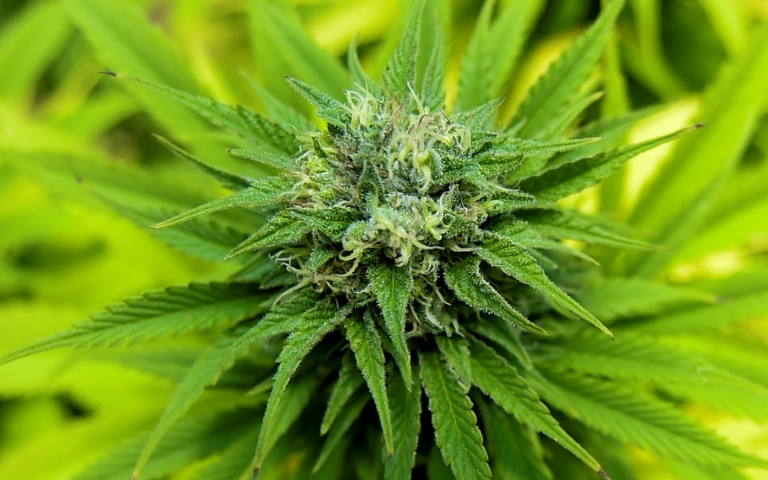
US lawmakers backed the decriminalization of marijuana nationwide in a vote Friday that will eliminate punishments for providing or possessing the drug if is signed into law by President Joe Biden.

The Democrats’ Marijuana Opportunity Reinvestment and Expungement (MORE) Act would remove its categorization as a dangerous “schedule 1” controlled substance alongside much harder narcotics that attract severe sentences, like heroin and LSD.

The bill cleared the House by 220 votes to 204, with three Republicans crossing the aisle, but analysts are skeptical about its prospects in the Senate, where Democrats would need 10 opposition lawmakers to overcome a 60-vote hurdle.

The US government is out of line with three-quarters of states that have legalized marijuana for medical use and a third of states, like California and Washington, that have freed it for recreational use, too.

“If states are the laboratories of democracy, it is long past time for the federal government to recognize that this experiment in legalization has been a resounding success,” said House Judiciary Committee Chairman Jerry Nadler, one of the bill’s sponsors.

Cannabis is one of the fastest-growing industries in the United States, with sales hitting $25 billion in 2021, according to influential cannabis website Leafly, and projected to reach $40.5 billion by 2025.

A report released in February by the Seattle-based company said the legalized cannabis industry provides work for more than 400,000 Americans and created some 280 new jobs a day last year.

California, the first state to legalize medical marijuana in 1996, made $1 billion in tax revenue in the first two years after expanding to full recreational use in 2018.

But marijuana remains illegal under federal law, posing significant hurdles for businesses that find themselves barred from accessing financial services and unable to secure loans or open bank accounts.

– ‘Shattered neighborhoods’ –

The MORE Act would provide loans to help small businesses “owned and controlled by socially and economically disadvantaged individuals,” the bill reads.

Many people arrested for marijuana use would see their records expunged, and those jailed on federal cannabis charges would have their sentences reviewed.

A federal tax would begin at five percent, with proceeds funding substance abuse treatment and legal counseling for the overwhelmingly Black communities harmed by the war on drugs.

“For over 50 years, the failed war on drugs has deepened racial injustice, shattered neighborhoods, and decimated communities,” said Aamra Ahmad, senior policy counsel at the American Civil Liberties Union.

The reform is hugely popular among Americans. A Pew Research poll found last year that 91 percent of adults think marijuana should be legal, either medically, recreationally or both.

But Republicans argue that decriminalization will increase use and create another layer of bureaucracy in the Treasury Department.

A similar bill passed the House in 2020 in a vote divided largely along party lines — but went nowhere in the then-Republican majority Senate.

Campaigners for legal reform applauded the vote, noting that Black people are almost four times as likely to be arrested for marijuana possession as whites, even though usage statistics are similar.

“Now is the time for the Senate to act on sensible reform legislation so that we can finally end the failure of prohibition and foster a well regulated marketplace for cannabis,” added Aaron Smith, the CEO of the country’s largest marijuana trade association, the National Cannabis Industry Association.

US labor market nears full recovery after strong March hiring

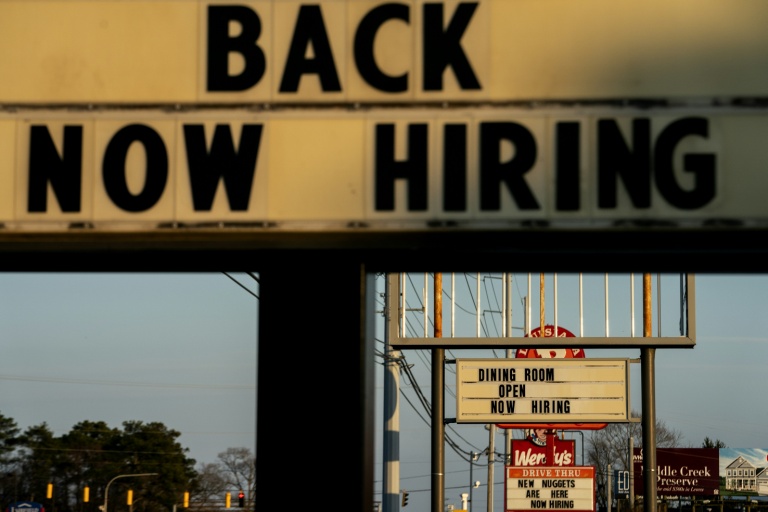
The US labor market has almost recovered from the mass joblessness caused by the pandemic, adding hundreds of thousands of positions last month and sending the unemployment rate nearly to where it was before Covid-19 broke out nationwide.

The Labor Department reported Friday that the unemployment rate fell more than analysts had predicted in March to 3.6 percent, a hair above its February 2020 level of 3.5 percent, while the economy added 431,000 jobs in the month.

Though the hiring total was slightly below analysts’ forecasts, it was nonetheless a strong figure that underscored how far the economy has come since the pandemic started two years ago.

The economy has “gone from being on the mend to being on the move,” President Joe Biden said Friday at the White House, as his administration grapples with low approval ratings driven in part by inflation, which has hit record levels during his presidency.

The economy has also added millions of jobs since Biden took office last year, but analysts said they doubted that the robust pace of hiring could be maintained.

“Today’s job report is great news as it means the economy has almost fully recovered from the blow caused by the pandemic,” Mark Zandi of Moody’s Analytics wrote on Twitter. 

“But it is somewhat disquieting in that the job market must cool off quickly, or inflation, our number one economic problem, will soon be a much bigger one.”

The data was released as the Federal Reserve undergoes a delicate process of fighting price increases by raising interest rates from the zero level they held them at when the pandemic was at its worst, while simultaneously trying not to harm the recovery.

Ian Shepherdson of Pantheon Macroeconomics said the report contains signs that wage growth — a driver of the price increases — is moderating while workforce participation is increasing, trends that could convince the Fed to be less aggressive in tightening policy.

“Rates still need to rise substantially, but the Fed won’t need to go overboard this year if the labor market is normalizing,” he said.

– Back to normal –

The latest report showed key markers of labor market health had made a full recovery after the catastrophe brought on by the pandemic, which cost more than 20 million people their jobs and sent the unemployment rate up to 14.7 percent in April 2020.

Last month, the number of unemployed people fell to six million, just above its 5.7 million level before the pandemic, while the number of people whose employment ended involuntarily or who completed a temporary job came in at 1.4 million, close to where it was in February 2020.

The Labor Department also revised upwards the healthy jobs gains reported in January and February, saying they were a combined 95,000 higher than first reported.

A wide range of industries hired last month, including leisure and hospitality, the sector encompassing the bars and restaurants hit hardest by the pandemic’s layoffs. 

That industry added 112,000 positions, while professional and business services firms gained 102,000 jobs in March, retailers added 49,000 positions and manufacturing employment rose by 38,000.

The labor force participation rate, indicating the share of people employed or looking for work, ticked up slightly to 62.4 percent, a post-pandemic high but still a percentage point below February 2020.

– Tightening to come –

Nonetheless, there was still ground to be recovered. The total number of employed people was still 1.6 million short of its pre-pandemic level, the data said, while employment in leisure and hospitality is 1.5 million jobs lower than before the pandemic.

The recovery was also not being felt equally, with unemployment for white workers hitting 3.2 percent in March, but coming in at 6.2 percent for Black Americans and 4.2 percent for Hispanic workers, though the rates for each group decreased from the month prior.

Economists viewed the data as reinforcing the Fed’s commitment to forcefully raising interest rates, perhaps by half a percentage point at its meeting next month, which would be double the increase it announced when it began hiking in March.

“The US economy has recovered the majority of the jobs lost during the pandemic and now the focus remains on how bad inflation will get, but… the Fed can go forward with aggressive tightening,” Edward Moya of OANDA said.

No longer a last resort: Pulling CO2 from the air

To save the world from the worst ravages of climate change, slashing carbon pollution is no longer enough — CO2 will also need to be sucked out of the atmosphere and buried, a landmark UN report is expected to say on Monday.

If humanity had started to curb greenhouse gas emissions 20 years ago, an annual decrease of two percent out to 2030 would have put us on the right path. Challenging, but doable.

Instead, the emissions climbed another 20 percent to more than 40 billion tonnes of CO2 in 2021. 

This means an abrupt drop in emissions of six or seven percent a year is needed to avoid breaching the Paris climate treaty’s goal of capping global warming at “well below” two degrees Celsius compared to pre-industrial levels.

Staying under the safer aspirational threshold of 1.5C would mean an even steeper decline. 

To put that in perspective, the painful 2020 shutdown of the global economy due to Covid saw “only” a 5.6 percent decrease in CO2 emissions.

Hence the need for carbon dioxide removal (CDR), or “negative emissions”, likely to figure prominently in the UN Intergovernmental Panel on Climate Change (IPCC) report. 

Even under the most aggressive carbon-cutting scenarios, several billion tonnes of CO2 will need to be extracted each year from the atmosphere by 2050, and an accumulated total of hundreds of billions of tonnes by 2100.

As of today, however, CO2 removal is nowhere near these levels. The largest direct air capture facility in the world removes in a year what humanity emits in three or four seconds.

There are at least a dozen CDR techniques on the table, with different potentials and costs. 

– Using bioenergy –

Most of the hundreds of models laying out a game plan for a liveable future reserve an important role for a negative emissions solution called BECCS, or bioenergy with carbon capture and storage.

In a nutshell, this is the recipe: grow trees, burn them for energy, and bury the CO2 underground, in an abandoned mineshaft, for example.

But what works on paper (or in so-called integrated assessment models), has not materialised in reality. 

One of the few commercial-scale BECCS facilities in the world, in Britain, was dropped last year from the S&P Clean Energy Index because it failed to meet sustainability criteria.

“I don’t see a BECCS boom,” said Oliver Geden, a senior fellow at the German Institute for International and Security Affairs and an expert on CDR. 

– Planting trees –

Restoring forests and planting trees that absorb and stock CO2 as they grow also figure prominently in development scenarios achieving net-zero emissions, whether in 2050 or later.

Many businesses, including fossil fuel companies, rely heavily on carbon offset schemes based on afforestation to compensate for continuing carbon pollution.

But the amount of land needed to put a serious dent in CO2 levels through tree planting — up to twice the size of India — could clash with other priorities, such as growing food and biofuel crops.

Biodiversity could suffer as well, especially in savannahs converted to monoculture tree farms.

Newly planted forests could also fall victim to wildfires made more frequent and intense by rising temperatures, resulting in the release of all their stored CO2.

– ‘DACCS’ –

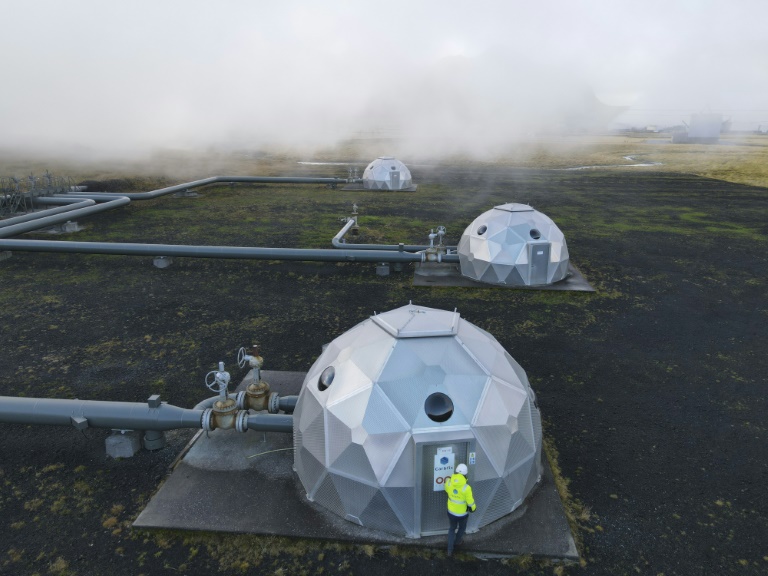
One of the youngest CDR technologies is also one of the hottest: direct air carbon capture and storage. 

With variations, DACCS is a chemical process that extracts carbon dioxide directly from the atmosphere, converting it into solid form or locking it away underground. 

Because CO2 in the air is so sparse — a few hundred parts per million — it is a very energy-intensive and expensive process. 

DACCS has benefited from a wave of corporate backing. 

Last year, Tesla CEO Elon Musk launched the $100-million X-Prize for an innovative CO2 removal technology, and Breakthrough Energy founder Bill Gates unveiled a corporate partnership to turbocharge its development.

How quickly it can scale up, and at what cost, remain open questions.

– Enhanced weathering –

Enhanced weathering involves mining and crushing rocks rich in minerals that naturally absorb CO2, and then spreading them over land or sea. 

It aims to vastly accelerate a process that normally unfolds on geological timescales of tens of thousands of years.

Silicate rocks with minerals rich in calcium and magnesium but lacking metal ions such as nickel and chromium are the best raw material for the job.

But, again, it’s unclear if enhanced weathering can be scaled up enough, and at what cost.

– Ocean-based methods –

Oceans already take up more than 30 percent of humanity’s carbon emissions, and scientists are experimenting with ways to boost that capacity.

One approach is to enhance marine alkalinity, either by directly adding natural or synthetic alkaline minerals, or the electrochemical processing of seawater.

Another approach, known as ocean fertilisation, increases the density of tiny phytoplankton that produce and sequester organic carbon through photosynthesis, like plants on land. Adding nitrogen or iron stimulate phytoplankton growth.

The main concerns here include unintended consequences on ecosystems.

Sri Lanka declares emergency as street protests spread

Sri Lanka’s president declared a state of emergency Friday giving sweeping powers to security forces a day after hundreds tried to storm his house in anger over an unprecedented economic crisis.

President Gotabaya Rajapaksa invoked the tough laws allowing the military to arrest and detain suspects for long periods without trial as demonstrations calling for his ouster spread across the South Asian nation.

The emergency was declared for “protection of public order and the maintenance of supplies and services essential to the life of the community,” he said in a proclamation.  

The nation of 22 million is facing severe shortages of essentials, sharp price rises and crippling power cuts in its most painful downturn since independence from Britain in 1948.

Police reimposed a nighttime curfew Friday in the Western Province, which includes the capital Colombo, expanding the no-go zone from the previous night.

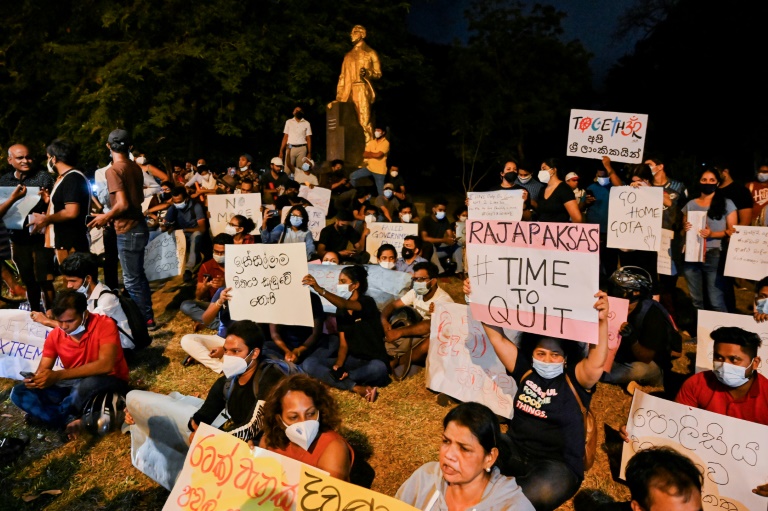
Earlier in the evening, dozens of rights activists carried handwritten placards and oil lamps in the capital while demonstrating at a busy intersection.

“Time to quit Rajapaksas,” said one placard. “No more corruption, go home Gota,” said another — referring to the president.

In the highland town of Nuwara Eliya, activists blocked the opening of a flower exhibition by Prime Minister Mahinda Rajapaksa’s wife, Shiranthi, police said.

The southern towns of Galle, Matara and Moratuwa also saw anti-government protests, and similar demonstrations were reported in the northern and central regions. All held up traffic on main roads.

– ‘Lunatic, go home’-

Thursday night’s unrest outside the president’s private home saw hundreds of people demand he step down.

People chanted “lunatic, lunatic, go home”, before police fired tear gas and used water cannon.

The crowd turned violent, setting ablaze two military buses, a police jeep, two patrol motorcycles and a three-wheeler. They also threw bricks at officers.

At least two protesters were wounded. Police said 53 protesters were arrested, but local media organisations said five news photographers were also detained and tortured at a local police station, a charge the government said it will investigate.

The police and military presence was beefed up Friday.

– ‘Terrorists’ –

Two government ministers said a major intelligence failure had placed the lives of the president and his wife in danger on Thursday.

“Both the president and his wife were at their home when the protests were going on,” Health Minister Keheliya Rambukwella told reporters in Colombo, discounting earlier claims that they were away at the time.

“We had information of a demonstration, but nothing suggesting that it could turn violent. This is a major intelligence failure.”

Transport Minister Dilum Amunugama said “terrorists” were behind the unrest.

Rajapaksa’s office said Friday that the protesters wanted to create an “Arab Spring” — a reference to anti-government protests in response to corruption and economic stagnation that gripped the Middle East more than a decade ago.

One of the president’s brothers, Mahinda, serves as prime minister while the youngest, Basil, is finance minister. His eldest brother and nephew also hold cabinet positions.

Sri Lanka’s predicament has been compounded by the Covid-19 pandemic, which torpedoed tourism and remittances.

Many economists also say the crisis has been exacerbated by government mismanagement and years of accumulated borrowing.

– Record inflation –

The latest official data released Friday showed inflation in Colombo hit 18.7 percent in March, the sixth consecutive monthly record. Food prices soared a record 30.1 percent.

Colombo imposed a broad ban on imports in March 2020 in a bid to save foreign currency needed to repay nearly $7.0 billion this year to service its $51 billion debt.

Diesel shortages since Thursday have sparked outrage across Sri Lanka in recent days, causing protests at empty pumps.

The state electricity monopoly said it was enforcing a daily 13-hour power cut from Thursday — the longest ever — because it did not have diesel for generators.

Several state-run hospitals, facing shortages of life-saving medicines, have stopped routine surgeries.

The government has said it is seeking a bailout from the International Monetary Fund while asking for more loans from India and China.

Over 50 landmark Ukraine sites damaged in Russian invasion: UN

The UN’s cultural agency on Friday said it had confirmed that at least 53 Ukrainian historical sites, religious buildings and museums had sustained damage during Russia’s invasion of the country.

“This is the latest list but it is not exhaustive as our experts are continuing to verify a number of reports,” filed by the Ukrainian authorities, a UNESCO spokesman told AFP as the body published a list of the 53 damaged sites in the north and east of the country. 

The spokesman said UNESCO used satellite images and witness reports from the scene to verify the information provided by the Ukrainian authorities.

The sites UNESCO says have been damaged include over a dozen in the eastern Kharkiv region that has been intensely hit by Russian fire, ranging from churches to more modern heritage sites.

Five are in the capital Kyiv while another five are in the Chernihiv region of northern Ukraine which is home to a cluster of historic sites.

UNESCO said overall 29 religious sites, 16 historic buildings four museums and four monuments are confirmed to have been damaged in Ukraine.

The list does not include information from the besieged city of Mariupol or the city of Kherson which was captured by Russia.

None of those confirmed damaged are on the list of UNESCO World Heritage sites in Ukraine, such as the Saint-Sophia Cathedral and monastic buildings of the Kyiv-Pechersk Lavra in Kyiv.

However the historic centre of Chernihiv is on the Tentative List, meaning that Ukraine wants it considered for World Heritage status.

In a letter sent on March 17, a copy of which was obtained by AFP, UNESCO Director General Audrey Azoulay reminded Russian Foreign Minister Sergei Lavrov’s of Russia’s obligations to protect cultural heritage during conflict under an international convention. 

“Any violation of these norms will see the perpetrators brought to international responsibility,” she said, adding that UNESCO would be watching closely the state of cultural heritage in Ukraine.

Ukraine’s culture ministry on Friday weighed in on the same subject, saying it has recorded 135 instances of Russian troops committing crimes against Ukraine’s cultural heritage since the war started, the Interfax-Ukraine news agency reported.

The agency said the crimes included destroying a local history museum in the Kyiv region, bombing of a drama theatre in Mariupol, a southern port city besieged by Moscow for nearly a month, and damaging a Holocaust memorial in Kharkiv in eastern Ukraine.

Amazon workers in New York vote to unionize in US first

Amazon workers in New York voted Friday to launch the first US union at the e-commerce giant, a milestone for a company that has steadfastly opposed organized labor in its massive workforce.

Dozens of supporters cheered and clapped as the result was announced, with union organizer Christian Smalls popping a champagne cork in front of bank of TV cameras and photographers.

“We want to thank (Amazon founder) Jeff Bezos for going to space because while he was up there we were signing people up,” Smalls joked after workers at the Staten Island JFK8 warehouse backed the union 2,654 to 2,131 votes.

Amazon noted “disappointment” over the outcome, and said it was evaluating its options, including “filing objections based on the inappropriate and undue influence” of the National Labor Relations Board, which oversaw the vote.

At stake was Amazon’s ability to remain union-free in its home market, a status it has guarded fiercely since the company was set up in the 1990s by Bezos, who has since started a space tourism venture.

During the contentious campaign, the company discouraged workers from supporting unions at mandatory meetings, and through signs and other literature at the work site.

Amazon has argued that forming a union will mar the company’s direct relationship with workers and represent a jump into the unknown, with no guarantee employees will wind up with better wages or job security.

“It’s a truly historic day, it really is,” said Eric Milner, who represented the union organizers during the process. “I think it’s going to start a chain reaction — warehouse to warehouse.”

Official results were expected in the coming weeks in a union vote for an Amazon warehouse in the southern state of Alabama, but incomplete results showed organizers were not on pace to capture enough votes.

Staten Island organizers were already mobilizing for their next battle: the LDJ5 sorting center across the street from the JFK8 warehouse, with a vote will be held there at the end of the month.

– Union revival? –

The overall picture for organized labor in the United States is no better than mixed in an economy that has seen unions’ share of the American workforce steadily diminish in recent decades. 

The number of US workers who are members of a union has fallen from about 20 percent in 1983 to about 10 percent in 2021, according to the Bureau of Labor Statistics.

At Amazon, workers at a Bessemer, Alabama warehouse last year overwhelmingly voted against a unionization push supported by the Retail, Wholesale and Department Store Union.

But US worker rights agency National Labor Relations Board later called for a redo of the vote, citing what it called interference by Amazon.

In the Alabama re-vote 993 workers cast ballots against the labor group, compared with 875 employees in favor. 

But there were 416 “challenged” ballots, a “determinative” amount, according to the National Labor Relations Board, meaning the number of ballots still to be settled is big enough to potentially decide the final result.

For the Staten Island vote, a total of 8,325 workers at the JFK8 warehouse were eligible — although some no longer work at Amazon — for the vote held March 25-30. Ballots were cast by 4,852 employees.

At a news conference Thursday, union officials noted that their initial campaign last year — which received lots of media coverage and even an official endorsement by President Joe Biden — helped spur similar moves around the country.

At Starbucks, a movement to shift labor dynamics began with two cafes in upstate New York voting in December to unionize. Since then, more than 150 restaurants are at various stages of union campaigns.

The Starbucks campaign was led mostly by younger and college-educated workers who are broadly reflective of the current wave of newer labor supporters.

Union campaigns have also had recent success at museums, NGOs, media companies and universities.

But beyond those sectors, labor unions have struggled to gain a foothold, particularly in southern and some western states, whose percentage of unionized workers are less than one-third or one-fourth of those in California and New York.

Amazon workers in New York vote to unionize in US first

Amazon workers in New York voted Friday to launch the first US union at the e-commerce giant, a milestone for a company that has steadfastly opposed organized labor in its massive workforce.

Dozens of supporters cheered and clapped as the result was announced, with union organizer Christian Smalls popping a champagne cork in front of bank of TV cameras and photographers.

“We want to thank (Amazon founder) Jeff Bezos for going to space because while he was up there we were signing people up,” Smalls joked after workers at the Staten Island JFK8 warehouse backed the union 2,654 to 2,131 votes.

Amazon noted “disappointment” over the outcome, and said it was evaluating its options, including “filing objections based on the inappropriate and undue influence” of the National Labor Relations Board, which oversaw the vote.

At stake was Amazon’s ability to remain union-free in its home market, a status it has guarded fiercely since the company was set up in the 1990s by Bezos, who has since started a space tourism venture.

During the contentious campaign, the company discouraged workers from supporting unions at mandatory meetings, and through signs and other literature at the work site.

Amazon has argued that forming a union will mar the company’s direct relationship with workers and represent a jump into the unknown, with no guarantee employees will wind up with better wages or job security.

“It’s a truly historic day, it really is,” said Eric Milner, who represented the union organizers during the process. “I think it’s going to start a chain reaction — warehouse to warehouse.”

Official results were expected in the coming weeks in a union vote for an Amazon warehouse in the southern state of Alabama, but incomplete results showed organizers were not on pace to capture enough votes.

Staten Island organizers were already mobilizing for their next battle: the LDJ5 sorting center across the street from the JFK8 warehouse, with a vote will be held there at the end of the month.

– Union revival? –

The overall picture for organized labor in the United States is no better than mixed in an economy that has seen unions’ share of the American workforce steadily diminish in recent decades. 

The number of US workers who are members of a union has fallen from about 20 percent in 1983 to about 10 percent in 2021, according to the Bureau of Labor Statistics.

At Amazon, workers at a Bessemer, Alabama warehouse last year overwhelmingly voted against a unionization push supported by the Retail, Wholesale and Department Store Union.

But US worker rights agency National Labor Relations Board later called for a redo of the vote, citing what it called interference by Amazon.

In the Alabama re-vote 993 workers cast ballots against the labor group, compared with 875 employees in favor. 

But there were 416 “challenged” ballots, a “determinative” amount, according to the National Labor Relations Board, meaning the number of ballots still to be settled is big enough to potentially decide the final result.

For the Staten Island vote, a total of 8,325 workers at the JFK8 warehouse were eligible — although some no longer work at Amazon — for the vote held March 25-30. Ballots were cast by 4,852 employees.

At a news conference Thursday, union officials noted that their initial campaign last year — which received lots of media coverage and even an official endorsement by President Joe Biden — helped spur similar moves around the country.

At Starbucks, a movement to shift labor dynamics began with two cafes in upstate New York voting in December to unionize. Since then, more than 150 restaurants are at various stages of union campaigns.

The Starbucks campaign was led mostly by younger and college-educated workers who are broadly reflective of the current wave of newer labor supporters.

Union campaigns have also had recent success at museums, NGOs, media companies and universities.

But beyond those sectors, labor unions have struggled to gain a foothold, particularly in southern and some western states, whose percentage of unionized workers are less than one-third or one-fourth of those in California and New York.

Close Bitnami banner
Bitnami