World

Ukraine eyes Romanian port for key farm exports

Faced with a Russian blockade of its own ports, Ukraine is seeking to export the farm goods that many countries depend on via the Romanian Black Sea port of Constanta.

The solution is crucial both to Ukraine’s economy and to entire populations that rely heavily on its wheat and sunflower oil.

Bucharest has confirmed that discussions are underway with Kyiv, pointing out that Constanta already handles some imports to Ukraine and exports from it.

Before the war, Ukraine accounted for 12 percent of global wheat exports, 15 percent of maize and 50 percent of world sunflower oil.

“We and our partners are looking for alternative logistical routes to export our goods via European ports, including Constanta,” Ukrainian Agricultre Minister Mykola Solsky said recently.

– Ukraine ports blockaded –

The presence of Russian battleships and mines in Ukrainian waters renders commercial shipping there nearly impossible.

Since the start of the war, Russian forces have been blocking access to the southeastern Ukrainian ports of Berdiansk and Mariupol on the Sea of Azov, which opens into the Black Sea.

In the southwest, the crucial Black Sea port of Odessa lies perilously close to the frontline at Mykolaiv.

Odessa handles 90 million tonnes of shipments a year — 60 percent of the country’s total port traffic — and is in the Krelmin’s sights.

The Marine Traffic website, which tracks the position of all seagoing vessels, clearly shows the de facto blockade of these waters. 

Commercial ships have been absent from the zone since missile attacks on vessels sent their insurance premiums rocketing.

According to the agriculture ministry, Ukraine is currently losing $1.5 billion (1.4 billion euros) a month because of the stranglehold on port exports.

Meanwhile countries that depend on Ukrainian farm exports, particularly on the southern coasts of the Mediterranean, are seeing a food crisis start to develop.

Kyiv says it has sufficient stocks to meet Ukraine’s own food needs for the next two years. But it is equally keen to ensure exports continue as normal.

“Ukraine wants to show it is defending its export markets as well as its territory and is conscious of its importance as a supplier of both foodstuffs and industrial goods,” said Paul Tourret, head of France’s Isemar Institute, which specialises in the maritime economy.

– Alternative options – 

Kyiv is seeking to increase grain exports to Poland, Romanian and Slovakia by rail and, to a lesser extent, by lorry.

The Romanian and Ukrainian rail companies are discussing ways of cooperating, the Bucharest government said.

The goal is to export 600,000 tonnes per month, which nonetheless remains “marginal” compared to the export capacity of Ukraine’s sea ports, said Agritel analyst Gautier Le Molgat.

Tourret said Constanta represents the best option. Romania is a member of NATO, meaning its waters are protected. And as the EU’s second largest wheat exporter after France, it has the necessary infrastructure.

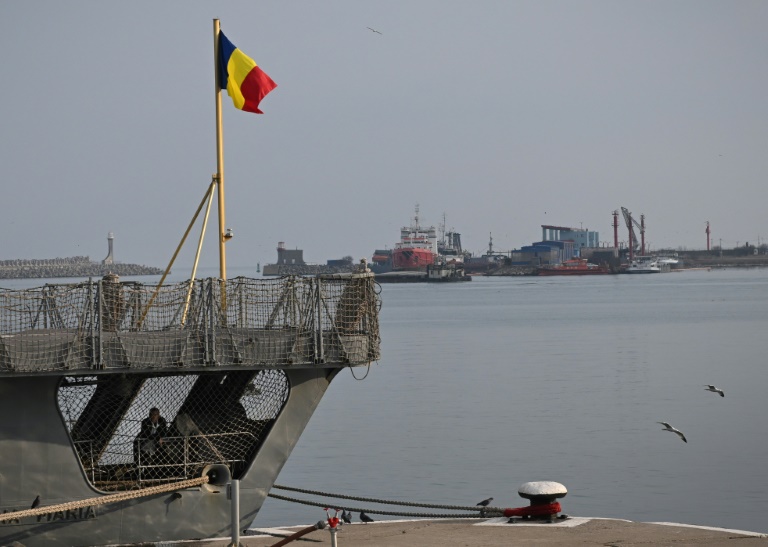
Constanta is the largest port on the Black Sea. It handled more than 67 million tonnes of exports in 2021, including more than 25 million tonnes of grains. It has a total capacity of 100 million tonnes.

The port is in a position to accept Ukrainian stocks because by this time of year, Romanian grain shipments have already left for their destinations.

However, if the blockade of Ukraine’s own ports were to last until the forthcoming harvests, Constanta’s storage capacity could be stretched to the limit.

“Romania also has something to gain from this … a moral benefit,” Romanian Defence Minister Vasile Dincu said recently.

The speaker of the Romanian parliament and the transport ministry announced earlier this week that new investments were planned for Constanta port.

– Getting to Constanta –

The crucial element is getting merchandise out of Ukraine and into Constanta.

There are several potential routes, Tourret said.

The most dangerous option is to transport goods by lorry from Odessa, along the Black Sea coast as far as the Danube river port of Galati and then by boat to the canal which links the river to Constanta. That takes one or two days.

A second possibility is to transport goods via Moldova, avoiding the border region of Transdniestr, which seceded in 1990 and hosts a Russian military base. 

Avoiding this region under de facto Russian control can involve a detour of several hundred kilometres, depending on the starting point.

The third choice is the longest but currently the least hazardous. It entails crossing Ukraine’s western border, the area least affected by the war, straight into northern Romania.

This route is currently used, in the other direction, to supply Ukraine with essential goods.
US labor market nears full recovery after strong March hiring

The US labor market has almost recovered from the mass joblessness caused by the pandemic, adding hundreds of thousands of positions last month and sending the unemployment rate nearly to where it was before Covid-19 broke out nationwide.

The Labor Department reported Friday that the unemployment rate fell more than analysts had predicted in March to 3.6 percent, a hair above its February 2020 level of 3.5 percent, while the economy added 431,000 jobs in the month.

Though the hiring total was slightly below analysts’ forecasts, it was nonetheless a strong figure that underscored how far the economy has come since the pandemic started two years ago.

The economy has “gone from being on the mend to being on the move,” President Joe Biden said at the White House, as his administration grapples with low approval ratings driven in part by inflation that has hit record levels under his presidency.

The economy has also added millions of jobs since Biden took office last year, but analysts said they doubted that the robust pace of hiring could be maintained.

“Today’s job report is great news as it means the economy has almost fully recovered from the blow caused by the pandemic,” Mark Zandi of Moody’s Analytics wrote on Twitter. 

“But it is somewhat disquieting in that the job market must cool off quickly, or inflation, our number one economic problem, will soon be a much bigger one.”

The data was released as the Federal Reserve undergoes the delicate process of fighting the price increases by raising interest rates from the zero level they held them at when the pandemic was at its worst, while simultaneously trying not to harm the recovery.

Ian Shepherdson of Pantheon Macroeconomics said the report contains signs that wage growth — a driver of the price increases — is moderating, while workforce participation is increasing, trends that could convince the Fed to be less aggressive in tightening policy.

“Rates still need to rise substantially, but the Fed won’t need to go overboard this year if the labor market is normalizing,” he said.

– Back to normal –

The latest report showed key markers of labor market health had made a full recovery after the catastrophe brought on by the pandemic, which cost more than 20 million people their jobs and sent the unemployment rate up to 14.7 percent in April 2020.

Last month, the number of unemployed people fell to six million, just above its 5.7 million level before the pandemic, while the number of people whose employment ended involuntarily or who completed a temporary job came in at 1.4 million, close to where it was in February 2020.

The Labor Department also revised upwards the healthy jobs gains reported in January and February, saying they were a combined 95,000 higher than first reported.

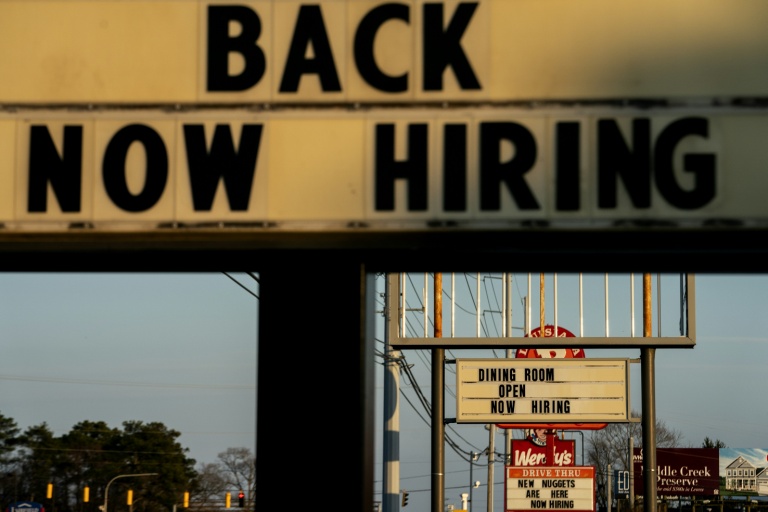
A wide range of industries hired last month, including leisure and hospitality, the sector encompassing the bars and restaurants hit hardest by the pandemic’s layoffs. 

That industry added 112,000 positions, while professional and business services firms gained 102,000 jobs in March, retailers added 49,000 positions and manufacturing employment rose by 38,000.

The labor force participation rate, indicating the share of people employed or looking for work, ticked up slightly to 62.4 percent, a post-pandemic high but still a percentage point below February 2020.

– Tightening to come –

Nonetheless, there was still ground to be recovered. The number of employed people was still 1.6 million short of its pre-pandemic level, the data said, while employment in leisure and hospitality is 1.5 million jobs lower than before the pandemic.

The recovery was also not being felt equally, with unemployment for white workers hitting 3.2 percent in March, but coming in at 6.2 percent for Black Americans and 4.2 percent for Hispanic workers, though the rates for each group decreased from the month prior.

Economists viewed the data as reinforcing the Fed’s committment to raise interest rates by half a percentage point at its meeting next month, double the increase it announced when it began hiking in March.

“Looking ahead, we expect job creation will settle into a slower but still healthy pace later this year as the economy feels the pinch from soaring inflation and tighter financial conditions,” Kathy Bostjancic of Oxford Economics said.

Smoke signals: US House to vote for cannabis decriminalization

US lawmakers were expected to vote Friday to decriminalize marijuana nationwide, eliminating punishments for providing or possessing the drug in a major step towards bringing federal laws in line with the states.

The Marijuana Opportunity Reinvestment and Expungement (MORE) Act would remove its categorization alongside heroin and cocaine as a dangerous controlled narcotic under federal laws mandating tough sentences.

The administration in Washington is out of line with three-quarters of states that have legalized marijuana for medical use and a third, like Colorado and Washington, that have freed it for recreational use, too.

“If states are the laboratories of democracy, it is long past time for the federal government to recognize that this experiment in legalization has been a resounding success,” House Judiciary Committee Chairman Jerry Nadler, one of the bill’s sponsors, said.

Analysts expect the bill to clear the House, but are more skeptical about its prospects in the Senate, where Democrats would need 10 Republicans to overcome a 60-vote hurdle.

Cannabis is one of the fastest-growing industries in the United States, with sales hitting $25 billion in 2021, according to influential cannabis website Leafly, and projected to reach $40.5 billion by 2025.

A report released in February by the Seattle-based company said the legalized cannabis industry provides work for more than 400,000 Americans and created some 280 new jobs a day last year.

California, the first state to legalize medical marijuana in 1996, made $1 billion in tax revenue in the first two years after expanding to full recreational use in 2018.

But it remains illegal under federal law, posing significant hurdles for businesses that find themselves barred from accessing financial services and unable to secure loans or open bank accounts.

– Huge popular support –

The MORE Act would provide loans to help small businesses “owned and controlled by socially and economically disadvantaged individuals,” the bill reads.

Many people arrested for marijuana use would see their records expunged, and those jailed on federal cannabis charges would have their sentences reviewed. 

A federal tax would begin at five percent, with proceeds funding substance abuse treatment and legal counseling for the overwhelmingly Black communities harmed by the war on drugs.

The reform is hugely popular among Americans. A Pew Research poll found last year that 91 percent of adults think marijuana should be legal, either medically, recreationally or both.

But Republicans argue that decriminalization will increase use and create another layer of bureaucracy in the Treasury Department.

A similar bill passed the House in 2020 in a vote divided largely along party lines — but went nowhere in the then-Republican majority Senate.

“There is a high probability that Republicans will control the House next year. This debate will be a chance to see how many support legalization even if they object to the MORE Act,” Cowen analyst Jaret Seiberg said in a note last week reported by Bloomberg. 

“This would be especially relevant if the House goes Republican but Democrats manage to keep control of the Senate. It would mean there would be a path for cannabis legislation next year.”

There are signs of increasing sympathy for liberalization even in the Senate, however, which unanimously passed a bill last week that would expand research of marijuana.

“Current rules and regulations make it hard for researchers to study how marijuana and marijuana-derived medications can best be used to treat various conditions,” said it Democratic co-sponsor Dianne Feinstein. 

First aid convoy in three months to enter Ethiopia's Tigray soon: UN

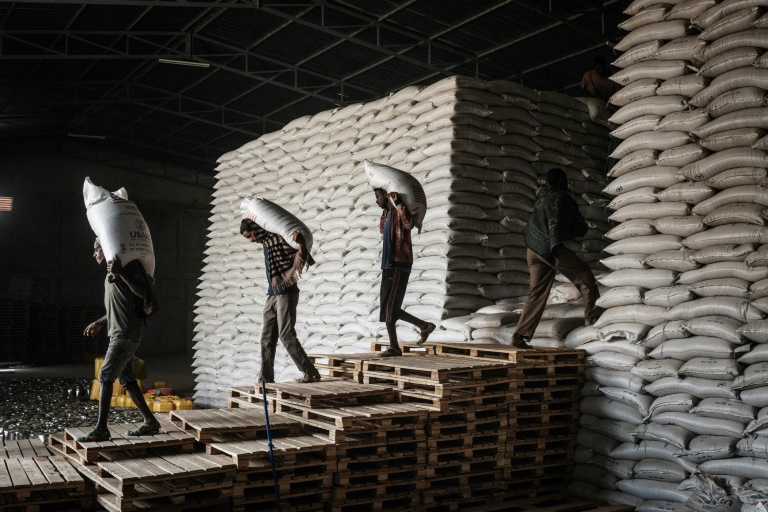
The first international aid convoy in three months is on its way to Ethiopia’s war-stricken Tigray region, the UN said on Friday, one week after the government and Tigrayan rebels agreed to a conditional truce.

The arrival of aid in Tigray, where hundreds of thousands of people face starvation, could help shore up the shaky ceasefire between Prime Minister Abiy Ahmed’s government and the Tigray People’s Liberation Front (TPLF).

Abiy’s government last week declared an indefinite humanitarian truce in the 17-month conflict, with the TPLF agreeing to a “cessation of hostilities” if aid arrives in Tigray.

“WFP-led convoys to Tigray are back on the road & making steady progress!” the UN’s World Food Programme (WFP) said on Twitter.

“Just arrived in Erepti (in the neighbouring Afar region) & will soon cross into Tigray, bringing in over 500 mt (tonnes) of urgently needed WFP/partner food & nutrition supplies for communities on edge of starvation.”

The TPLF said the 20 aid trucks were now in territory under its control in Afar and on their way to Tigray’s capital Mekele.

“This is one good step in the right direction; the bottom line, though, isn’t about how many trucks are allowed but whether there is a system in place to ensure unfettered humanitarian access for the needy!” TPLF spokesman Getachew Reda said on Twitter.

He told AFP in Nairobi that it was likely that the aid convoy would take “a few hours” to reach Mekele as the trucks may have to refuel.

– ‘Extreme lack of food’ –

The development comes just days after both sides accused each other of blocking an aid convoy headed for Tigray, which has not seen any humanitarian supplies arrive by road since December 15.

The government had announced on Thursday that 21 vehicles carrying relief supplies had started moving through Afar towards Tigray.

“The government of Ethiopia reaffirms its commitment to work closely with stakeholders to ensure the full delivery of humanitarian assistance to those in need,” it said.   

A humanitarian source said the convoy had been blocked on Thursday evening by regional forces in Afar but was able to resume its journey on Friday. 

Nearly 40 percent of Tigray’s six million inhabitants face “an extreme lack of food”, the UN said in January, with fuel shortages forcing aid workers to deliver medicines and other crucial supplies sometimes by foot.

Since mid-February, humanitarian operations in the northern region have been virtually halted due to local shortages of fuel, food and cash, according to the UN.

Tigray has also been subject to what the UN says is a de-facto blockade. 

The United States has accused Abiy’s government of preventing aid from reaching those in need, while the authorities in turn have blamed the rebels for the obstruction.

Both sides have issued demands in connection with the truce.

The government has called on the rebels to “desist from all acts of further aggression and withdraw from areas they have occupied in” the neighbouring regions of Afar and Amhara.

The rebels have in turn urged the Ethiopian authorities “to go beyond empty promises and take concrete steps to facilitate unfettered humanitarian access” to Tigray.

The government previously declared a “unilateral ceasefire” in Tigray in June last year, after the TPLF mounted a shock comeback and retook the region from federal forces before expanding into Amhara and Afar. 

The fighting intensified in the second half of 2021 before reaching a stalemate. The rebels at one point claimed to be within 200 kilometres (125 miles) of the capital Addis Ababa. 

According to the UN, the war has displaced more than two million people, driven hundreds of thousands to the brink of famine and left more than nine million in need of food aid.

The conflict erupted in November 2020 when Abiy sent troops into Tigray to topple the TPLF, the region’s former ruling party, saying the move came in response to rebel attacks on army camps. 

Thousands of people have died as fighting has dragged on, while accounts have emerged of massacres and mass rapes, with both sides accused of human rights violations.

EU warns China against backing Russia's Ukraine war

Top EU officials warned China’s leader Xi Jinping at a virtual summit Friday that any attempt to aid Russia’s war in Ukraine could hurt business ties between the two economic superpowers. 

The EU and US worry that Beijing’s failure to condemn the invasion means it could be willing to help the Kremlin sidestep the impact of sanctions or even supply hardware to aid the war effort.

“No European citizen would understand any support to Russia’s ability to wage war. Moreover, it would lead to a major reputational damage for China here in Europe,” European Commission chief Ursula von der Leyen said. 

“The business sector is watching very closely the events and evaluating how countries are positioning themselves. This is a question of trust, of reliability and of course of decisions on long-term investments.”

Von der Leyen insisted that “China has an influence on Russia and therefore we expect China to take its responsibility to end this war and that Russia comes back to a peaceful negotiations solution”.

The talks with President Xi — initially intended to focus on issues like trade and climate change — were overshadowed by Western fears of Chinese support for Moscow in its attack on Ukraine.

Chinese state media reported that Xi told the EU the two sides should “play a constructive role on China-EU relations and major issues concerning global peace and development, as well as provide some stabilising factors to a turbulent world”.

“We hope that the EU can form its own perception of China, pursue its own independent policy towards China,” Xi was reported to have said. 

A Chinese foreign ministry official said after a first round of talks involving premier Li Keqiang that the two sides “agreed to work together to maintain peace, stability and prosperity in the world”.

– Frozen trade pact –

The EU’s relations with its largest trading partner had already been battered by tensions ahead of Moscow’s assault on Ukraine and the annual summit was skipped last year as ties frayed.

The exchange of tit-for-tat sanctions over the plight of China’s Uyghur minority, followed by Beijing’s trade coercion of EU-member Lithuania over Taiwan, soured the mood.

The downgrade in relations came surprisingly quickly after the EU and China secured the investment deal in late 2020 long sought by Germany.

Human rights concerns, and US pressure on the EU, sapped momentum, sowing distrust and sinking diplomatic ties.

– ‘No limits’ –

The tensions over Russia’s war on Ukraine now threaten to hit relations harder — even if the EU for now is shying off threatening sanctions on Beijing if its helps the Kremlin.

In a meeting with Russian counterpart Sergei Lavrov, Chinese Foreign Minister Wang Yi on Wednesday said that “China-Russia cooperation has no limits”, repeating a line used by Presidents Vladimir Putin and Xi.

European Council boss Charles Michel, who was also on the virtual summit, warned that the talks were not “business as usual”.

“Any attempts to circumvent sanctions or provide aid to Russia would prolong the war. This would lead to more loss of life and greater economic impact,” he said.

“This is not in anyone’s long-term interest. We will also remain vigilant on any attempts to aid Russia financially or militarily.”

But experts say the EU remains reluctant to go too far in pressuring Beijing as it fears hitting its mammoth trade ties at a time when soaring energy prices and inflation are already causing major economic pain.

“The idea of detaching China from Russia is a pipe dream,” said Sylvie Bermann, a former French ambassador to both Moscow and Beijing.

EU warns China against backing Russia's Ukraine war

Top EU officials warned China’s leader Xi Jinping at a virtual summit Friday that any attempt to aid Russia’s war in Ukraine could hurt business ties between the two economic superpowers. 

The EU and US worry that Beijing’s failure to condemn the invasion means it could be willing to help the Kremlin sidestep the impact of sanctions or even supply hardware to aid the war effort.

“No European citizen would understand any support to Russia’s ability to wage war. Moreover, it would lead to a major reputational damage for China here in Europe,” European Commission chief Ursula von der Leyen said. 

“The business sector is watching very closely the events and evaluating how countries are positioning themselves. This is a question of trust, of reliability and of course of decisions on long-term investments.”

Von der Leyen insisted that “China has an influence on Russia and therefore we expect China to take its responsibility to end this war and that Russia comes back to a peaceful negotiations solution”.

The talks with President Xi — initially intended to focus on issues like trade and climate change — were overshadowed by Western fears of Chinese support for Moscow in its attack on Ukraine.

Chinese state media reported that Xi told the EU the two sides should “play a constructive role on China-EU relations and major issues concerning global peace and development, as well as provide some stabilising factors to a turbulent world”.

“We hope that the EU can form its own perception of China, pursue its own independent policy towards China,” Xi was reported to have said. 

A Chinese foreign ministry official said after a first round of talks involving premier Li Keqiang that the two sides “agreed to work together to maintain peace, stability and prosperity in the world”.

– Frozen trade pact –

The EU’s relations with its largest trading partner had already been battered by tensions ahead of Moscow’s assault on Ukraine and the annual summit was skipped last year as ties frayed.

The exchange of tit-for-tat sanctions over the plight of China’s Uyghur minority, followed by Beijing’s trade coercion of EU-member Lithuania over Taiwan, soured the mood.

The downgrade in relations came surprisingly quickly after the EU and China secured the investment deal in late 2020 long sought by Germany.

Human rights concerns, and US pressure on the EU, sapped momentum, sowing distrust and sinking diplomatic ties.

– ‘No limits’ –

The tensions over Russia’s war on Ukraine now threaten to hit relations harder — even if the EU for now is shying off threatening sanctions on Beijing if its helps the Kremlin.

In a meeting with Russian counterpart Sergei Lavrov, Chinese Foreign Minister Wang Yi on Wednesday said that “China-Russia cooperation has no limits”, repeating a line used by Presidents Vladimir Putin and Xi.

European Council boss Charles Michel, who was also on the virtual summit, warned that the talks were not “business as usual”.

“Any attempts to circumvent sanctions or provide aid to Russia would prolong the war. This would lead to more loss of life and greater economic impact,” he said.

“This is not in anyone’s long-term interest. We will also remain vigilant on any attempts to aid Russia financially or militarily.”

But experts say the EU remains reluctant to go too far in pressuring Beijing as it fears hitting its mammoth trade ties at a time when soaring energy prices and inflation are already causing major economic pain.

“The idea of detaching China from Russia is a pipe dream,” said Sylvie Bermann, a former French ambassador to both Moscow and Beijing.

War in Ukraine: Latest developments

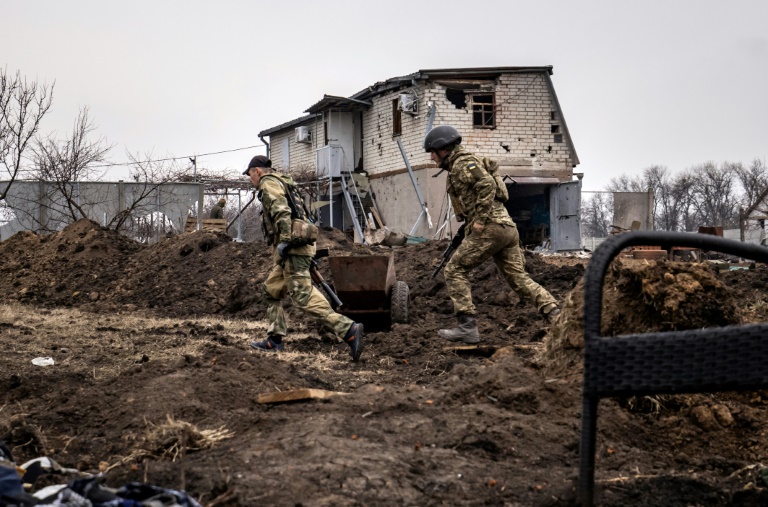
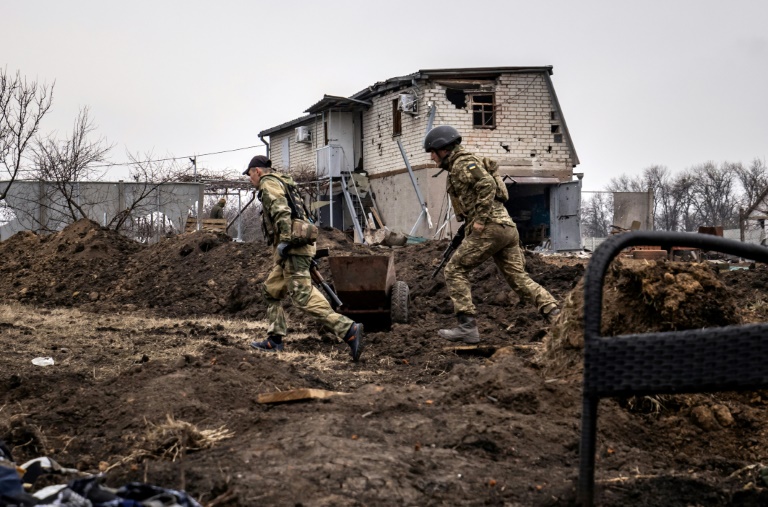
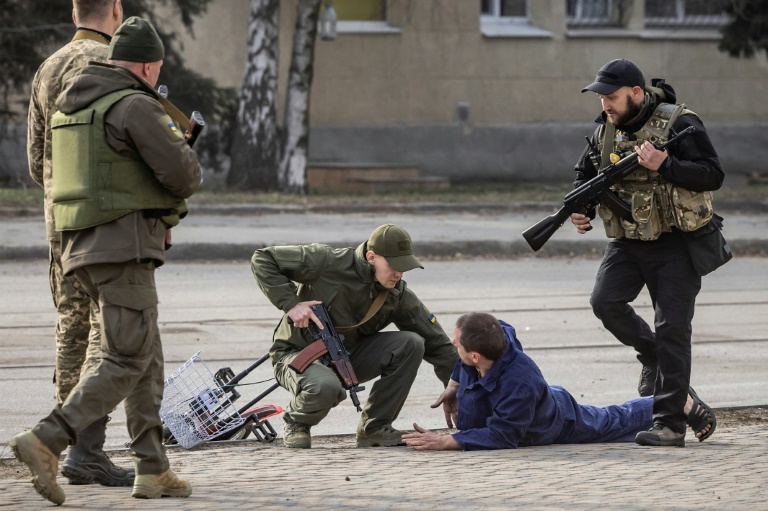
Here are the latest developments in the war in Ukraine:

– Russian fuel depot attacked –

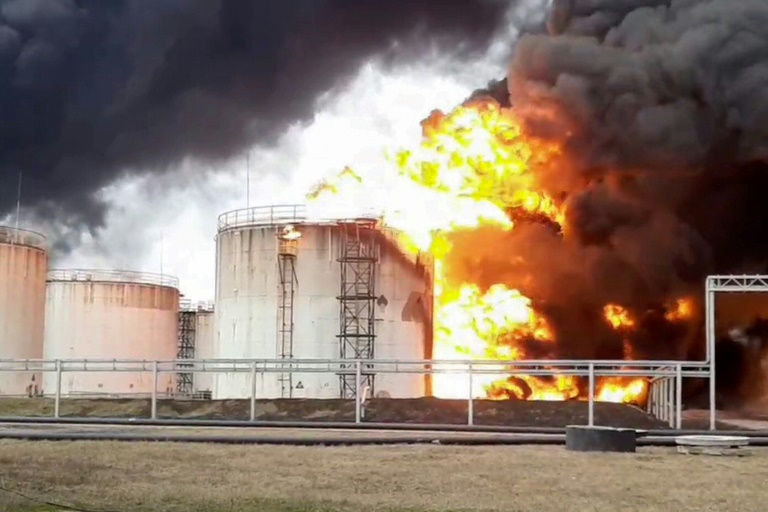
Ukrainian helicopters have carried out a strike on a fuel storage facility in Russia’s western town of Belgorod, some 40 kilometres (25 miles) from the border, according to the local governor. 

“There was a fire at the petrol depot because of an air strike carried out by two Ukrainian army helicopters, which entered Russian territory at a low altitude,” Vyacheslav Gladkov says on Telegram.

– Mariupol evacuation doubts –

The Red Cross says it is “not yet clear” that the evacuation of civilians from the besieged Ukrainian city of Mariupol will go ahead as planned.

“We remain hopeful, we are in action moving towards Mariupol… but it’s not yet clear that this will happen today,” spokesman Ewan Watson says as an ICRC team of three cars and nine staff heads towards the city.

– China warned –

The EU’s top officials have warned China’s leaders at a summit not to help Russia wage war on Ukraine or sidestep Western sanctions, European Commission head Ursula von der Leyen says. 

“It would lead to a major reputational damage for China here in Europe,” Von der Leyen said after video talks with Chinese President Xi Jinping. 

– Depardieu offered explanation –

The Kremlin is offering to “explain” Moscow’s actions in Ukraine to French actor Gerard Depardieu after he denounced Russian President Vladimir Putin’s “crazy, unacceptable excesses” and slammed the war.

Depardieu, a friend of Putin, took Russian nationality in 2013 to protest against a proposed tax hike on the rich in his homeland.

– ‘Russia preparing powerful strikes’ –

Ukraine’s President Volodymyr Zelensky says Russia is preparing “powerful strikes” in the country’s east and south, including the besieged city of Mariupol.

NATO also says it is not seeing a pull-back of Russian forces in Ukraine and expects “additional offensive actions”.

– EU official visiting Kyiv –

European Parliament President Roberta Metsola says she is on her way to Ukraine, making her the first EU leader to visit the war-torn country.

The Maltese MEP, who was elected in January, tweets “On my way to Kyiv” alongside a Ukrainian flag, but gives no further details.

– Lavrov lauds India –

Russia’s foreign minister Sergei Lavrov praises India’s refusal to condemn the Ukraine invasion, stressing their “friendship” and saying Moscow and New Delhi will find ways to circumvent “illegal” Western sanctions and continue to trade.

– Russia leaving Chernobyl –

Russian forces have begun to pull out of the defunct Chernobyl nuclear power site and move towards Belarus, but took an unspecified number of captive Ukrainian servicemen with them, officials in Kyiv say.  

– Putin may be ‘isolated’-

US President Joe Biden says Russian counterpart Vladimir Putin may be “isolated” and could have placed some of his advisors under “house arrest”.

– New gas war front –

Putin says “unfriendly” countries, including all EU members, must set up ruble accounts to pay for gas deliveries from April, or “existing contracts would be stopped”. 

– Football fundraisers –

Ukraine football champions Dynamo Kyiv say they are planning a series of friendlies, including against PSG and Barcelona, to raise money for their war-scarred nation.

Ukraine’s championship has not been resumed after the winter break due to the Russian invasion of the country which began on February 24.

Pope apologises to Canada's Indigenous for abuse at church-run schools

Pope Francis apologised Friday to Indigenous people for abuse committed at church-run residential schools in Canada, and said he hoped to visit the country in July.

“I ask for God’s forgiveness for the deplorable conduct of these members of the Catholic Church,” he said, telling Indigenous delegations at the Vatican it caused him “pain and shame”.

Numerous investigations into the former residential schools are underway across Canada after the discovery of mass unmarked graves, with more than 4,000 children believed to be missing, according to authorities.

Francis said he heard “stories of suffering, deprivation, discriminatory treatment and various forms of abuse” during meetings this week with survivors from the First Nations, Metis and Inuit groups.

“I join the Canadian bishops in asking you for forgiveness,” he said.

The 85-year old said “I hope” to travel to Canada for the country’s St Anne’s Feast Day on July 26.

– ‘Words necessary’ –

“The pope’s words were necessary and I deeply appreciate them,” Cassidy Caron, president of the Metis National Council, told journalists after the meeting.

“I now look forward to his coming to Canada where he can deliver this heartfelt apology directly to our survivors and their families,” she said.

Francis heard first-hand this week of centuries of abuse committed at the schools, and the delegations had pressed him for an apology for a scandal that rocked the Catholic Church.

Some 150,000 First Nations, Metis and Inuit children were enrolled from the late 1800s to the 1990s in 139 residential schools across Canada, as part of a government policy of forced assimilation.

They spent months or years isolated from their families, language and culture, and many were physically and sexually abused by headmasters and teachers.

Francis slammed Friday the “ideological colonisation” of which “so many children have been victims”.

“Your identity and culture have been wounded, many families have been separated,” he said.

He described as “chilling” the “unresolved traumas that have become intergenerational traumas”.

Thousands are believed to have died of disease, malnutrition or neglect. More than 1,300 unmarked graves have been discovered since May 2021 at the schools.

A truth and reconciliation commission concluded in 2015 the failed government policy amounted to “cultural genocide.”

In January, Canada announced a $31.5 billion agreement to reform its discriminatory child welfare system and compensate Indigenous families who suffered because of it.

First aid convoy in three months to enter Ethiopia's Tigray soon: UN

The first international aid convoy in three months will soon enter Ethiopia’s war-stricken Tigray region, the UN said on Friday, one week after the government and Tigrayan rebels agreed to a conditional truce.

The arrival of aid in Tigray, where hundreds of thousands of people face starvation, could help shore up the shaky ceasefire between Prime Minister Abiy Ahmed’s government and the Tigray People’s Liberation Front (TPLF).

Abiy’s government last week declared an indefinite humanitarian truce in the 17-month conflict, with the TPLF agreeing to a “cessation of hostilities” if aid arrives in Tigray.

“WFP-led convoys to Tigray are back on the road & making steady progress!” the UN’s World Food Programme (WFP) said on Twitter.

“Just arrived in Erepti (in the neighbouring Afar region) & will soon cross into Tigray, bringing in over 500 mt (tonnes) of urgently needed WFP/partner food & nutrition supplies for communities on edge of starvation.”

The TPLF said the 20 aid trucks were now in territory under its control in Afar and on their way to Tigray’s capital, Mekele.

“This is one good step in the right direction; the bottom line, though, isn’t about how many trucks are allowed but whether there is a system in place to ensure unfettered humanitarian access for the needy!” TPLF spokesman Getachew Reda said on Twitter.

He told AFP in Nairobi that it was likely that the aid convoy would take “a few hours” to reach Mekele as the trucks may have to refuel.

– ‘Extreme lack of food’ –

The development comes just days after both sides accused each other of blocking an aid convoy headed for Tigray, which has not seen any humanitarian supplies arrive by road since December 15.

Nearly 40 percent of Tigray’s population face “an extreme lack of food,” the UN said in January, with fuel shortages forcing aid workers to deliver medicines and other crucial supplies sometimes by foot.

Since mid-February, humanitarian operations in Tigray, where more than 400,000 people have been displaced by the conflict, have been virtually halted due to local shortages of fuel, food and cash, according to the United Nations. 

Tigray has also been subject to what the UN says is a de-facto blockade. 

The United States has accused Abiy’s government of preventing aid from reaching those in need, while the authorities in turn have blamed the rebels for the obstruction.

Both sides have issued demands in connection with the truce.

The government has called on the rebels to “desist from all acts of further aggression and withdraw from areas they have occupied in” Afar and Amhara regions.

The rebels have in turn urged the Ethiopian authorities “to go beyond empty promises and take concrete steps to facilitate unfettered humanitarian access to Tigray.”

The conflict erupted in November 2020 when Abiy sent troops into Tigray to topple the TPLF, the region’s former ruling party, saying the move came in response to rebel attacks on army camps. 

Thousands of people have died as fighting has dragged on, while accounts have emerged of massacres and mass rapes, with both sides accused of human rights violations.

Ukraine air strike hits fuel depot in Russia: governor

A Russian governor on Friday accused Ukrainian helicopters of bombing a fuel storage depot in western Russia, sparking a huge fire, in Kyiv’s first reported air strike on Russian soil.

The Kremlin said the reported Ukrainian air strike on Belgorod, a town around 40 kilometres (25 miles) from Russia’s border with Ukraine, would hinder future peace talks.

“Of course, this is not something that can be perceived as creating comfortable conditions for the continuation of negotiations,” Kremlin spokesman Dmitry Peskov told reporters.

Also on Friday, Russian and Ukrainian negotiators resumed peace talks via video conference, following face-to-face talks in Istanbul earlier this week. 

Both Ukraine’s foreign and defence ministries said they could neither confirm nor deny that Kyiv was behind the attack.

“I am a civilian,” Ukrainian Foreign Minister Dmytro Kuleba told reporters in Warsaw.

Defence ministry spokesman Oleksandr Motuzyanyk said Ukraine should not “take responsibility for all miscalculations, all disasters and all events taking place on Russian soil”. 

The incident marked the first time Russia has reported a Ukrainian air strike on its territory since the conflict began.

Russia’s announcement came on the 37th day of Russia’s military campaign in Ukraine, with thousands killed and more than 10 million displaced in the worst refugee crisis in Europe since World War II.

– Petrol panic buying –

Moscow has repeatedly said it has destroyed Ukraine’s airforce.

“There was a fire at the petrol depot because of an air strike carried out by two Ukrainian army helicopters, which entered Russian territory at a low altitude,” Belgorod region governor Vyacheslav Gladkov wrote on messaging app Telegram.

Two employees at the storage facility were injured in the fire, he said.

Some 170 firefighters battled to put out the enormous blaze, which started around 6:00 am (0300 GMT), the emergencies ministry said.

A massive fire was raging, with black and white smoke billowing overhead, a video released by the ministry showed.

Russian energy giant Rosneft, which owns the facility, said it had evacuated staff.

Long lines of cars formed at filling stations, but the governor urged residents to refrain from panic buying, saying there was enough petrol.

“There aren’t any problems with fuel in the region and there won’t be any,” Gladkov said.

Russian President Vladimir Putin has been notified of the strike, Peskov told reporters.

He insisted that it was “an absolute fact” that Russia had air supremacy in the conflict.

Earlier this week, explosions could be heard from an arms depot in Belgorod, but the authorities did not provide any clear explanation for the blasts.

Belgorod lies around 80 kilometres from the Ukrainian city of Kharkiv, which has been pummelled by Russian forces since Moscow sent troops to Ukraine on February 24.

Separately, the Russian defence ministry said that Moscow had destroyed six military facilities in Ukraine, including five depots containing ammunition, rockets and artillery weapons.

Close Bitnami banner
Bitnami