World

Falkland islanders, UK veterans look back and to the future

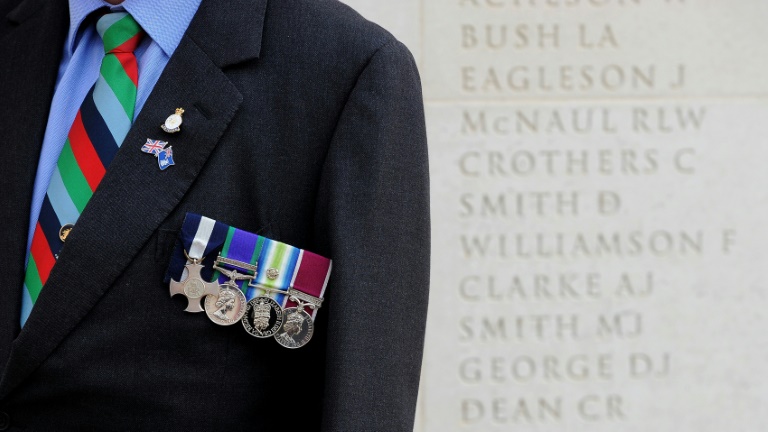
Tom Herring knows exactly what he was doing on April 2, 1982. He was 31, a member of the 3rd Battalion The Parachute Regiment, and on weekend leave before Easter.

Then Argentinian troops invaded the Falkland Islands and he was called back to barracks. “Four days later we were boarding a ship in Southampton,” he said.

Forty years on, the memories for military veterans are strong, as too is the conviction that the islands — nearly 13,000 kilometres (8,000 miles) from London — are British.

“Our job was to protect our citizens and we felt very good about that because we wanted to make sure they were OK,” the former sergeant told reporters in London.

“It was British sovereign territory,” he said at the National Army Museum, where a new exhibition has opened about the conflict and its impact on the islands.

In Britain and the Falklands, the anniversary of the start of the conflict is muted. Islanders in particular see Argentina’s invasion as nothing to celebrate.

But a year-long series of events are taking place to mark the 40th anniversary, including on June 14 to mark Liberation Day — a public holiday on the islands.

– Public consciousness –

In Britain in 1982, few people knew much about the Falklands. 

“They thought it was near us, in Scotland,” said Herring, who is chairman of the South Atlantic Medal Association, a group for British veterans.

At the time, prime minister Margaret Thatcher was driving through unpopular economic reforms. Unemployment was sky-high and her position was under threat.

But her high-risk deployment of nearly 30,000 troops — and their swift victory — hoisted the remote archipelago of 770 islands to public consciousness.

The task force returned from the South Atlantic to a sea of Union Jacks, giving a declining Britain a patriotic boost — and ensuring Thatcher a landslide re-election in 1983.

But veterans charity Help for Heroes said last week the conflict risks becoming a “forgotten war”, and many younger people were “clueless” about its details.

Not for Herring, who also served three tours of Northern Ireland.

He visited the islands in 2012, meeting an Argentinian officer with whom he is still in contact.

“He still believes in the islands being part of their country. We believe it’s British,” he said, but added: “We don’t argue about that.

“We talk about military esprit de corps. There are friendly relationships. It’s only the governments that seem to be at loggerheads.”

– Grateful –

The islanders too have moved on, thankful for their past liberation but with an eye on a more prosperous future.

Just 3,200 people live on the Falklands, most of them in the capital, Stanley. But with an average age of 38, many were not even born when the conflict began.

“Us islanders born in the aftermath of the conflict are all grateful to the veterans,” said Tamsin McLeod, a Falkland islander now at university in Britain.

“I can’t say that enough,” she added.

The operation claimed the lives of 255 British servicemen and three female civilians, along with 649 Argentinians.

The self-governing authorities in the Falklands are keen to push how much the islands have been transformed since the war.

They point to how it is financially self-sufficient, relying on the UK only for defence, and how it is now a hub for scientific research and biodiversity.

The thousands of landmines that were laid during the war, making swathes of the islands no-go areas, were finally cleared in late 2020.

Its main industries are fishing, agriculture and tourism, including to see its population of more than one million breeding penguins, whales and dolphins.

– Democratic rights –

UK government support for the Falklands under Thatcher’s successors has been unwavering, despite Argentina’s steadfast territorial claims.

“We will continue to defend the Falkland Islanders’ democratic rights and celebrate the modern, diverse community they have built,” said Amanda Milling, minister for UK overseas territories.

“This is an important reminder that all peoples have the right to determine their own future.”

Leona Roberts, a member of the Falklands legislative assembly, is thankful to the veterans and to Thatcher for her “incredibly decisive” action.

“We’ve seen how far we’ve come 40 years since,” said Roberts, who aged 10 in 1982 cowered from the sound of gunfire under a kitchen table and an overturned sofa.

“We built the country from nothing. It (the conflict) allowed us to move on.”
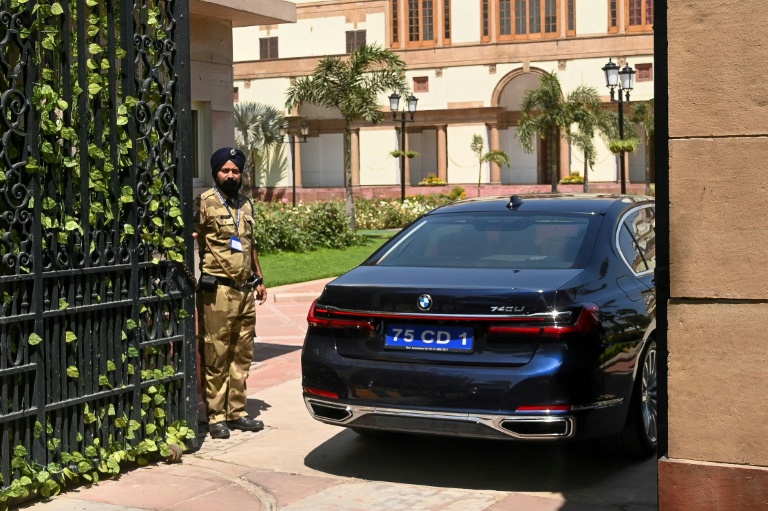
Russia's Lavrov praises India's stance on Ukraine

Russia’s foreign minister on Friday praised India’s refusal to condemn the Ukraine invasion, saying Moscow and Delhi would find ways to circumvent “illegal” Western sanctions and continue to trade.

India has abstained from multiple United Nations resolutions censuring Moscow, calling only for an end to violence, and has increased its oil purchases from Russia, its biggest supplier of arms.

“These days our Western colleagues would like to reduce any meaningful international issue to the crisis in Ukraine… (We) appreciate that India is taking this situation in the entirety of facts, not just in a one-sided way,” Sergei Lavrov said in New Delhi.

“Friendship is the key word to describe the history of our relations, and our relations were very sustainable during many difficult times in the past,” Lavrov said, speaking in English.

His counterpart S. Jaishankar reiterated “the importance of cessation of violence and ending hostilities” and said “disputes should be resolved through dialogue and diplomacy”.

Western financial sanctions have reportedly made it difficult for India to pay Russia for imports including arms, oil, rough diamonds and fertilisers.

Russia has written to India’s defence ministry requesting clearance of back payments worth $1.3 billion, according to the Economic Times newspaper.

India and Russia are working on a rupee-ruble mechanism to facilitate trade and get around Western sanctions on Russian banks, according to media reports.

Lavrov told reporters he was confident the two countries would find a solution.

“Many years ago we started moving in our relations with India, with China, with many other countries from using dollars and euros to more and more use of national currencies. Under these circumstances this trend I believe will be intensified,” he said.

“We will be ready to supply to India any goods which India wants to buy… and I have no doubt that a way will be found to bypass the artificial impediments which illegal unilateral sanctions by the West create.”

– China-India clash –

India however is in a tricky spot since the Ukraine crisis has pushed Russia closer to China.

Lavrov arrived in Delhi on Thursday from China, where he had hailed Beijing as part of a new “multipolar, just, democratic world order”.

Moscow has declared a “no-limits partnership” with China, which has also refused to condemn Russia’s invasion.

India shares Western alarm over China’s growing assertiveness in the Indo-Pacific region, and is a member of the so-called Quad alliance with the United States, Japan and Australia.

Twenty Indian and four Chinese troops were killed in a brawl on their disputed Himalayan border in 2020, sparking a sharp deterioration in their already frosty ties.

Senior US official Daleep Singh, Washington’s chief sanctions strategist, was quoted by local media as saying India could not rely on Russia if there was another clash with China.

“Russia is going to be the junior partner in this relationship with China. And the more leverage that China gains over Russia, the less favourable that is for India,” Singh said in a parallel visit to Delhi on Thursday.

“I don’t think anyone would believe that if China once again breached the Line of (Actual) Control, that Russia would come running to India’s defence,” he added, referring to the India-China border.

Singh said the United States was ready to help India diversify its energy and defence supplies but warned of “consequences” for countries that circumvent sanctions on Russia.

“We are very keen for all countries, especially our allies and partners, not to create mechanisms that prop up the ruble and that attempt to undermine the dollar-based financial system,” he said.

Lavrov was due to meet Prime Minister Narendra Modi later on Friday, saying he would pass on Russian President Vladimir Putin’s “best regards”.

EU pushes China to rethink Russia ties over Ukraine

The EU sought Friday to convince China’s leaders at a virtual summit not to back Russia in its war on Ukraine as the conflict threatened to hit vital trade ties between the economic superpowers.

EU chiefs Charles Michel and Ursula von der Leyen held talks first with Chinese Premier Li Keqiang ahead of a video conference with President Xi Jinping. 

The discussions — initially intended to focus on issues like trade and climate change — have been overshadowed by Western fears of Chinese support for Moscow in its attack on Ukraine. 

The EU and US worry that Beijing’s failure to condemn the invasion means it could be willing to help the Kremlin sidestep the impact of sanctions or even supply hardware to aid the war effort.

“The international community notably China and the EU have a mutual responsibility to use their joint influence and diplomacy to bring an end to Russia’s war in Ukraine and the associated humanitarian crisis,” Michel wrote on Twitter after the first round of the talks.

Wang Lutong, head of European Affairs at China’s foreign ministry, said the two sides had “agreed to work together to maintain peace, stability and prosperity in the world.”

“On Ukraine, Premier Li Keqiang said that China opposes both a hot war and a cold war; it opposes division of blocs and taking sides,” he wrote on Twitter. 

The official also said there was an agreement “to conduct dialogue on energy security and food security, so as to jointly maintain the stability of the world economy.”

– Frozen trade pact –

The EU’s ties with its largest trading partner had already been battered by a stream of tensions ahead of Moscow’s assault on Ukraine. 

The annual summit was skipped last year as ties frayed and the ratification of a major investment pact was put on ice.

The talks are usually an effort to deepen trade ties. But the exchange of tit-for-tat sanctions over the plight of China’s Uyghur minority, followed by Beijing’s trade coercion of EU-member Lithuania over Taiwan, soured the mood.

The downgrade in relations came surprisingly quickly after the EU and China secured the investment deal in late 2020 long sought by Germany.

Human rights concerns, and US pressure on the EU, sapped momentum, sowing distrust and sinking diplomatic ties.

– ‘No limits’ –

The tensions over Russia’s war on Ukraine now threaten to hit relations harder — even if the EU for now is shying off threatening sanctions on Beijing if its helps the Kremlin.

In a meeting with Russian counterpart Sergei Lavrov, Chinese Foreign Minister Wang Yi on Wednesday said that “China-Russia cooperation has no limits”, repeating a line used by Presidents Vladimir Putin and Xi.

The friendship between Russia and China “is clearly directed towards creating a new world order in which authoritarian great power politics would dominate over the international rule of law,” said German MEP Reinhard Buetikofer, a frequent critic of Beijing.

An EU official involved in preparing the summit stressed the importance of China’s stance on Russia over all else.

“It has very concrete significance whether China uses or does not use its influence to have ceasefire established, humanitarian corridors established, that it doesn’t help or helps to circumvent sanctions,” the official said. 

A second official from the bloc insisted that China “has to realise that, while it thinks that (the Russian invasion of Ukraine) has nothing to do with EU-China relations, actually it does”.

But Sylvie Bermann, a former French ambassador to both Moscow and Beijing, cautioned: “The idea of detaching China from Russia is a pipe dream.”

First audio recorded on Mars reveals two speeds of sound

The first audio recordings on Mars reveal a quiet planet with occasional gusts of wind where two different speeds of sound would have a strange delayed effect on hearing, scientists said Friday.

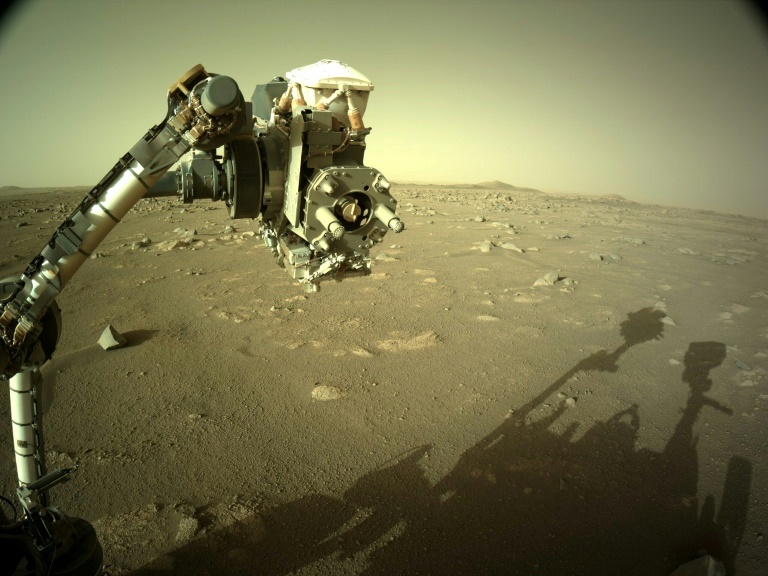
After NASA’s Perseverance rover landed on Mars in February last year, its two microphones started recording, allowing scientists to hear what it is like on the Red Planet for the first time.

In a study published in the Nature journal on Friday, the scientists gave their first analysis of the five hours of sound picked up by Perseverance’s microphones.

The audio revealed previously unknown turbulence on Mars, said Sylvestre Maurice, the study’s main author and scientific co-director of the shoebox-sized SuperCam mounted on the rover’s mast which has the main microphone.

The international team listened to flights by the tiny Ingenuity helicopter, a sister craft to Perseverance, and heard the rover’s laser zap rocks to study their chemical composition — which made a “clack clack” sound, Maurice told AFP.

“We had a very localised sound source, between two and five metres (six to 16 metres) from its target, and we knew exactly when it was going to fire,” he said.

The study confirmed for the first time that the speed of sound is slower on Mars, travelling at 240 metres per second, compared to Earth’s 340 metres per second.

This had been expected because Mars’ atmosphere is 95 percent carbon dioxide — compared to Earth’s 0.04 percent — and is about 100 times thinner, making sound 20 decibels weaker, the study said.

– ‘I panicked’ –

But the scientists were surprised when the sound made by the laser took 250 metres a second — 10 metres faster than expected.

“I panicked a little,” Maurice said. “I told myself that one of the two measurements was wrong because on Earth you only have one speed of sound.”

They had discovered there are two speeds of sound on the surface of Mars — one for high-pitched sounds like the zap of the laser, and another for lower frequencies like the whir of the helicopter rotor.

This means that human ears would hear high-pitched sounds slightly earlier.

“On Earth, the sounds from an orchestra reach you at the same speed, whether they are low or high. But imagine on Mars, if you are a little far from the stage, there will be a big delay,” Maurice said.

“All of these factors would make it difficult for two people to have a conversation only five metres (16 feet) apart”, the French CNRS research institute said in a statement.

– ‘Scientific gamble’ pays off –

It was otherwise so quiet on Mars that the scientists repeatedly feared something was wrong, the CNRS said, possibly provoking memories of two failed previous attempts in 1999 and 2008 to record sound there.

“There are few natural sound sources with the exception of the wind,” the scientists said in a statement linked to the study. 

The microphones did pick up numerous “screech” and “clank” sounds as the rover’s metal wheels interacted with rocks, the study said.

The recording could also warn about problems with the rover — like how drivers sense something’s wrong when their car starts making strange noises.

Maurice said he felt the “scientific gamble” of taking microphones to Mars was a success. 

Thierry Fouchet of the Paris Observatory, who was also involved in the research, said that listening to turbulence, such as vertical winds known as convection plumes, will “allow us to refine our numerical models for predicting climate and weather”.

Future missions to Venus or Saturn’s moon Titan could also now come equipped with microphones.

And Perseverance is far from done eavesdropping. While its core mission lasts just over two years, it could remain operational well beyond that — the Curiosity rover is still kicking nine years into a planned two-year stint.

Stocks rise, oil steady before US jobs data, IEA meet

The world’s major stock markets mostly rose and oil prices steadied Friday as investors awaited US jobs data for an update on the world’s biggest economy, faced with soaring global inflation. 

Also Friday, the International Energy Agency was holding an emergency meeting on possible new measures to calm oil prices fuelled by the reopening of economies post pandemic lockdowns and following the invasion of Ukraine by major crude producer Russia.

Fallout from the war sent consumer prices in the eurozone surging by a record 7.5 percent, EU statistics agency Eurostat said heading into the weekend.

“Investor concerns have persisted about the continuing conflict in Ukraine and its inflationary effect on prices and, of course, the  Federal Reserve’s response,” noted Stephen Innes of SPI Asset Management.

“Fed rate hike expectations should react asymmetrically to any surprises in Friday’s US employment report for March.” 

The Fed has joined other central banks in hiking interest rates to combat decades-high inflation that is curbing economic growth.

Stock markets were slightly upbeat Friday after their worst quarter since the early days of the pandemic.

Traders are struggling to ascertain the outlook for the next three months, largely owing to uncertainty over energy prices.

The second quarter of 2022 “is going to start as messily as the first quarter has finished, with markets buffeted by a multitude of strong winds from various directions, with the outcome no clearer for the future than ever”, said Jeffrey Halley, analyst at OANDA, a foreign exchange firm.

The upcoming earnings season will be closely watched to see what impact higher inflation and the war has had on firms’ bottom line and their forecasts for the year ahead.

On Thursday, US President Joe Biden announced a record release of oil onto the market — one million barrels of US government oil every day for six months.

Biden described the move as a “wartime” measure that will defuse Russia’s leverage as an energy power.

However, while the move to ease a global supply crisis was welcomed, commentators warned it would only be a stopgap and could not be a long-term solution.

“It is worth keeping in mind that 180 million barrels is approximately nine days of US demand,” said Innes.

“And while one million barrels per day is better than nothing and can help balance the four million a day lost from Russia for about six months, what happens after?”

US oil prices briefly dropped under $100 on Friday.

– Key figures around 1100 GMT –

London – FTSE 100: UP 0.1 percent at 7,526.49 points

Frankfurt – DAX: UP 0.3 percent at 14,459.17

Paris – CAC 40: UP 0.5 percent at 6,692.75

EURO STOXX 50: UP 0.6 percent at 3,925.83

Tokyo – Nikkei 225: DOWN 0.6 percent at 27,665.98 (close)

Hong Kong – Hang Seng Index: UP 0.2 percent at 22,039.55 (close)

Shanghai – Composite: UP 0.9 percent at 3,282.72 (close)

New York – Dow: DOWN 1.6 percent at 34,678.35 (close)

Brent North Sea crude: UP 0.3 percent at $104.97 per barrel

West Texas Intermediate: DOWN 0.1 percent at $100.20 per barrel

Euro/dollar: DOWN at $1.1063 from $1.1067 late Thursday

Pound/dollar: UP at $1.3144 from $1.3143

Euro/pound: DOWN at 84.15 pence from 84.20 pence

Dollar/yen: UP at 122.39 yen from 121.69 yen

Ukraine war pushes eurozone inflation to new record

Spiralling energy bills and disruptions caused by the war in Ukraine caused consumer prices in the eurozone to surge by a new record of 7.5 percent, EU statistics agency Eurostat said Friday.

Last month’s rise marked a further acceleration in inflation from February, which at 5.9 percent year-on-year was already a eurozone record, it said.

The surge has been fuelled by a 44.7-percent hike in energy prices over the year as Europe found itself caught in an oil and gas crunch due to tensions with Russia over its invasion of Ukraine.

European Central Bank (ECB) president Christine Lagarde warned Wednesday that a prolonged Ukraine conflict will keep energy prices and the cost of living spiralling, blighting a post-Covid recovery.

Similar leaps in inflation have been seen in the United States where the Federal Reserve is committed to a long series of interest hikes to cool the economy and stem the price hikes.

But the ECB is reluctant for now to take similar measures, convinced that the rise in the cost of living is linked to the war as well as lingering disruptions to the global supply chains brought on by the coronavirus pandemic.

But given inflation’s relentless pace, analysts said Lagarde would soon have no choice but to rethink her policy.

“With euro-zone inflation rising even further above the ECB’s forecast, and likely to remain very high for the rest of the year, we think it won’t be long before the Bank starts raising interest rates,” said Jack Allen-Reynolds at Capital Economics.

– ‘No painless options’ –

Of particular concern for policy makers is core inflation, which strips out volatile components such as energy and food. It soared to 3.0 percent in March, Eurostat said.

This is a full percentage point on top of the ECB’s target of two percent and will give armour to critics that argue for interest hikes to face down inflation.

“The inflation data speak for themselves,” said Joachim Nagel, the central bank governor from Germany, Europe’s biggest economy that traditionally wants stronger medicine against higher prices.

“Monetary policy should not pass up the opportunity for timely countermeasures,” he said.

But economists warn that raising interest rates would put the brakes on the post pandemic recovery, with officials already warning that current forecasts for growth in Europe are certain to take a hit due to the war.

“The question is whether the worst is behind us now and that seems doubtful,” said Bert Colijn of ING bank.

“The ECB is running out of painless options to battle current economic problems, so we expect it to tread carefully,” he added.

Sri Lanka steps up security as anger over economic crisis boils over

Sri Lanka was under heavy security on Friday after hundreds of protesters tried to storm the president’s home in a night of violence and anger at the unprecedented economic crisis.

The South Asian nation is grappling with severe shortages of essentials, sharp price rises and crippling power cuts in its most painful downturn since independence in 1948. Many fear it will default on its foreign debts.

Thursday night’s unrest outside Gotabaya Rajapaksa’s private home in the capital saw hundreds of men and women, rallied by unidentified social media activists, demand he step down.

“Gota, go home,” shouted a young woman as she marched to the president’s home before clashes erupted with heavily armed police commandos and troops.

“We want our country back,” shouted another woman, while others chanted “lunatic, lunatic, go home.”

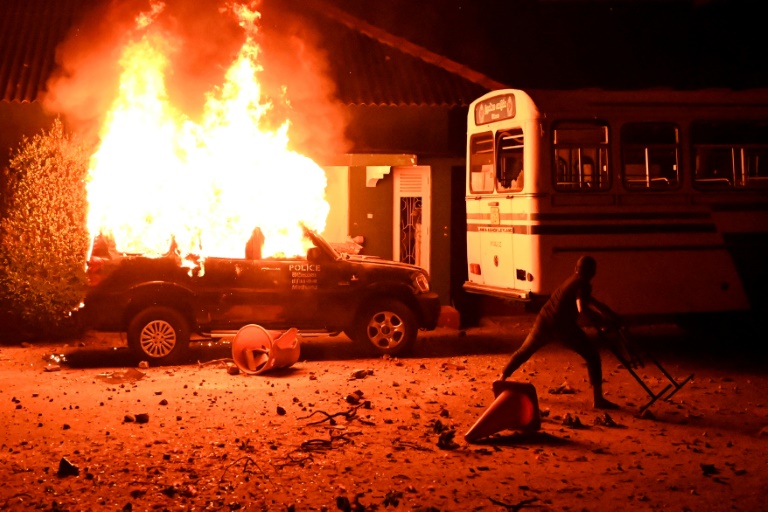
As police fired tear gas and water cannon, the crowd turned violent, setting ablaze two military buses, a police jeep, two patrol motorcycles and a three-wheeler. They also threw bricks at officers.

At least two protesters were wounded in police firing but it was not clear whether officers used live ammunition or rubber bullets. Four people were injured when a security vehicle ran over them.

Police said 53 protesters were arrested, but local media organisations said five news photographers were also detained and tortured at a local police station, a charge the government said it will investigate.

Elsewhere, another group of protesters barricaded a main road into Colombo with burning tyres.

An overnight curfew was lifted early Friday morning, but the police and military presence was beefed up around the city, with the burnt-out wreckage of a bus still blocking the road to Rajapaksa’s house.

Officials said security had been stepped up across the country as there were calls for nationwide protests later Friday. Social media posts called on people to demonstrate peacefully outside their homes.

– ‘Terrorists’ –

Two government ministers said a major intelligence failure had placed the lives of the president and his wife in danger.

“Both the president and his wife were at their home when the protests were going on,” Health Minister Keheliya Rambukwella told reporters in Colombo, discounting earlier claims that they were away at the time.

“We had information of a demonstration, but nothing suggesting that it could turn violent. This is a major intelligence failure.”

Transport Minister Dilum Amunugama said “terrorists” were behind the unrest.

Rajapaksa’s office said Friday that the protesters wanted to create an “Arab Spring” — a reference to anti-government protests in response to corruption and economic stagnation that gripped the Middle East over a decade ago.

“The Thursday night protest was led by extremist forces calling for an Arab Spring to create instability in our country,” the president’s office said in a brief statement. 

Videos shared on social media verified as genuine by AFP showed men and women shouting anti-Rajapaksa slogans and demanding that all members of the powerful Rajapaksa family step down.

There were claims on social media that another powerful member of the ruling family was prevented from attending a flower show in the central hills on Friday after spectators began booing.

The president’s elder brother Mahinda serves as prime minister while the youngest, Basil, is finance minister. His eldest brother and nephew also hold cabinet positions.

Sri Lanka’s predicament has been compounded by the Covid-19 pandemic, which torpedoed tourism and remittances.

Many economists also say the crisis has been exacerbated by government mismanagement and years of accumulated borrowing.

– Record inflation –

The latest official data released Friday showed inflation in Colombo hit 18.7 percent in March, the sixth consecutive monthly record. Food prices soared a record 30.1 percent.

Colombo imposed a broad ban on imports in March 2020 in a bid to save foreign currency needed to repay nearly $7.0 billion this year to service its $51 billion debt.

Diesel shortages have sparked outrage across Sri Lanka in recent days, with protests kicking off in a number of towns but not aimed at any top leader.

Since Thursday diesel has been unavailable at stations across the island, according to officials and media reports. 

The state electricity monopoly said it was enforcing a daily 13-hour power cut from Thursday — the longest ever — because it did not have diesel for generators.

Several state-run hospitals have stopped carrying out surgeries as they have run out of essential medicines.

The government has said it is seeking a bailout from the International Monetary Fund while asking for more loans from India and China.

IMF spokesman Gerry Rice told reporters in Washington on Thursday that talks should begin “in the coming days”, with Sri Lanka’s finance minister expected in the US capital.

Metaverse builders grapple with sex harassment conundrum

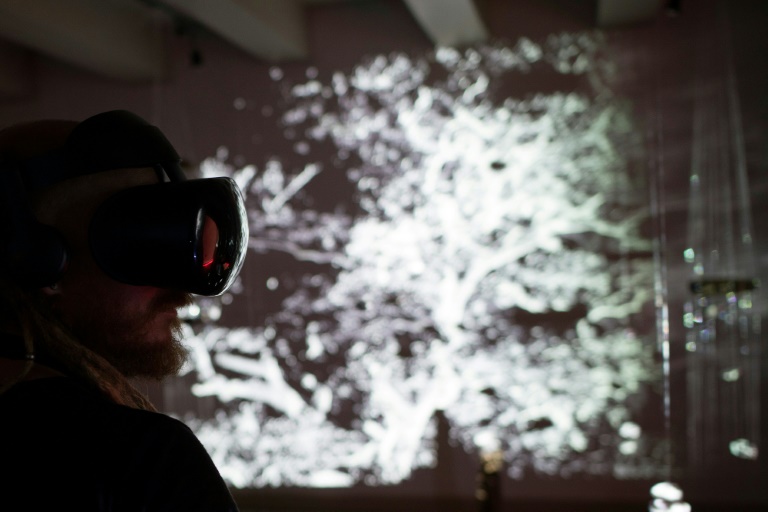
Nina Jane Patel felt confined and under threat as the male avatars closed in, intimidating her with verbal abuse, touching her avatar against her will and photographing the incident.

The abuse took place in a virtual world but it felt real to her, and this kind of story is causing severe headaches for architects of the metaverse — the 3D, immersive version of the internet being developed by the likes of Microsoft and Meta.

“I entered the shared space and almost immediately three or four male avatars came very close to me, so there was a sense of entrapment,” Patel told AFP.

“Their voices started verbally and sexually harassing me, with sexual innuendos,” said the London-based entrepreneur.

“They touched and they groped my avatar without my consent. And while they were doing that, another avatar was taking selfie photos.”

Patel, whose company is developing child-friendly metaverse experiences, says it was “nothing short of sexual assault”.  

Her story and others like it have prompted soul-searching over the nature of harassment in the virtual world, and a search for an answer to the question: can an avatar suffer sexual assault?

– Tricking the brain –

“VR (virtual reality) relies on, essentially, tricking your brain into perceiving the virtual world around it as real,” says Katherine Cross, a PhD student at the University of Washington who has worked on online harassment.

“When it comes to harassment in virtual reality — for instance, a sexual assault — it can mean that in the first instant your body treats it as real before your conscious mind can catch up and affirm this is not physically occurring.”

Her research suggests that despite the virtual space, such victimisation causes real-world harm.

Underlining this point, Patel explained that her ordeal did briefly continue outside of the constructed online space.

She said she eventually took off her VR headset after failing to get her attackers to stop but she could still hear them through the speakers in her living room.

The male avatars were taunting her, saying “don’t pretend you didn’t like it” and “that’s why you came here”. 

The ordeal took place last November in the “Horizon Venues” virtual world being built by Meta, the parent company of Facebook.

The space hosts virtual events like concerts, conferences and basketball games. 

The legal implications are still unclear, although Cross suggests that sexual harassment laws in some countries could be extended to cover this type of act.  

– Protective bubbles –

Meta and Microsoft — the two Silicon Valley giants that have committed to the metaverse — have tried to quell the controversy by developing tools that keep unknown avatars away.

Microsoft has also removed dating spaces from its Altspace VR metaverse. 

“I think the harassment issue is one that will actually get resolved because people will self-select which platform they use,” says Louis Rosenberg, an engineer who developed the first augmented reality system in 1992 for the US Air Force research labs.

The entrepreneur, who has since founded a company specialising in artificial intelligence, told AFP he was more concerned about the way companies will monetise the virtual space.

He says a model based on advertising is likely to lead to companies capturing all kinds of personal data, from users’ eye movements and heart rate, to their real-time interactions.

“We need to change the business model,” he says, suggesting that safety would be better protected if funding came from subscriptions.

However, tech companies have made themselves fantastically wealthy through a business model based on targeted advertising refined by vast streams of data.

And the industry is already looking to get ahead of the curve by setting its own standards.

The Oasis Consortium, a think tank with ties to several tech companies and advertisers, has developed some safety standards it believes are good for the metaverse era.

“When platforms identify content that poses a real-world risk, it’s essential to notify law enforcement,” says one of its standards.

But that leaves the main question unresolved: how do platforms define “real-world risk”?

Shanghai residents frustrated by food shortages, prolonged lockdowns

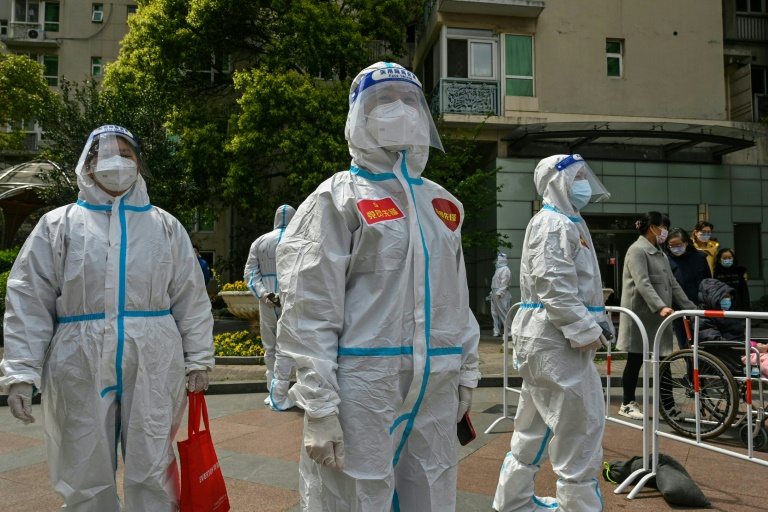
Shanghai residents voiced frustration Friday at a week of snap Covid lockdowns, complaining online about food shortages and bewildering stay-at-home orders.

After initially vowing they would avoid a city-wide lockdown, officials changed tack this week and announced a phased shutdown which divided China’s financial centre in two so authorities can test its 25 million residents.

A four-day lockdown of the Pudong area began on Monday, followed by stay-at-home orders for the densely populated Puxi zone that were meant to start on Friday.

But people in many Puxi neighbourhoods were suddenly ordered inside early on Thursday, while much of Pudong remained closed on Friday, angering residents on both sides.

“This is de facto city-wide lockdown,” one Weibo user said. “Many Pudong streets and compounds are still in lockdown, few are lifted.”

Authorities late Thursday published a complex “grid management” plan for reopening that would keep all residential compounds closed where a positive test is found. 

The restrictions have led to panic-buying and a dire shortage of delivery drivers to get food to the millions now trapped at home.

Residents of some buildings have skirted restrictions by taking deliveries attached to ropes lowered to the ground, according to AFP reporters.

“It’s complicated to buy food online, because the number of delivery people is limited,” said Sun Jian, 29, a resident in Puxi.

She added that the lockdown had been “badly managed” as people were forced to queue together for Covid tests, adding to the risk of transmission.

“What everyone is most afraid of now is not getting sick, but being sent to isolation rooms in makeshift facilities, where the conditions are very bad,” she told AFP.

A Pudong resident surnamed Dong said his wife and three-year-old son were taken to centralised quarantine after testing positive, but have no access to hot water.

“No one tells us when the quarantine will be lifted,” he told AFP.

“I’m quite anxious.”

– ‘Dynamic zero’ policy –

China reported nearly 104,000 domestic Covid infections in March, with 90 percent of the recent cases found in Shanghai or northeastern Jilin province, health officials said Friday.

National Health Commission spokesman Mi Feng told a press briefing it remains necessary to “unswervingly” adhere to the “dynamic zero” policy of stamping out clusters as they emerge.

But other experts cautioned this may take time given the infectiousness of the Omicron variant and number of asymptomatic cases.

As patience starts to fray in Shanghai among a public who until now have broadly acquiesced to virus controls, top city official Ma Chunlei on Thursday made a rare admission of failure, saying the city was “insufficiently prepared” for the outbreak.

Shanghai is recording several thousand cases a day, making it the heart of China’s worst Covid-19 outbreak since the country’s first brush with the virus in Wuhan was controlled in early 2020.

More than 7,300 virus cases were recorded nationwide on Friday. While tiny compared with many countries, the case numbers are alarming to China’s leadership, who have tethered the nation to a “zero-Covid” approach.

burs-bys/apj/axn

Eyes of football world on Doha for World Cup draw

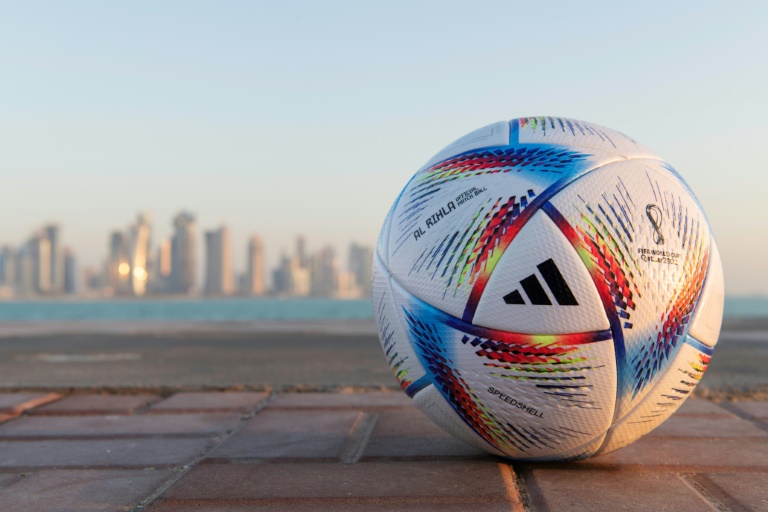
The draw for this year’s World Cup takes place in the shadow of Doha’s skyscrapers later Friday, with the focus on the actual football after a build-up dominated by the off-field issues surrounding the awarding of the tournament.

A star-studded draw ceremony, starting from 1600 GMT, will include former World Cup winners Cafu and Lothar Matthaeus as assistants, as holders France and their rivals discover who they will face in the group stage.

It is the most controversial World Cup in history, with Qatar dogged ever since it was named host in 2010 by accusations of vote-buying –- which were hotly denied –- and questions over the country’s suitability.

From human rights concerns to the ongoing war in Ukraine, it has been impossible to keep the spotlight solely on the sport, but FIFA president Gianni Infantino has repeated, as he did on Thursday, that it “will be a fantastic and unique World Cup”.

“We never will have another World Cup where eight stadiums are all within 50 kilometres, fans can watch several games in a day and there is no travel for teams,” he insisted ahead of the first World Cup to be played in the months of November and December.

The move away from the usual June and July slot was enforced by the summer heat in the region at that time of year.

– Germany not among top seeds –

With the competition approaching, excitement has built around the draw.

As well as France, Pot One will be comprised of all the top seven qualified nations in the FIFA rankings as well as debutants Qatar, at 51st one of the lowest-ranked teams at the World Cup but with privileged status as hosts.

Brazil, Belgium, Lionel Messi’s Argentina, England, Spain and Cristiano Ronaldo’s Portugal are the other top seeds, with the latter benefiting from European champions Italy’s absence.

“We’ve definitely got respectability and I think we will be a team other teams wouldn’t look forward to playing,” said England manager Gareth Southgate of his side, who were semi-finalists four years ago in Russia.

Germany are the biggest name in Pot Two, which also contains the Netherlands and Croatia, runners-up in 2018

African champions Senegal, Japan and Robert Lewandowski’s Poland are among the names in the third pot, and Canada will be in the fourth pot in their first appearance since 1986.

– Three places still to be decided –

However, three qualifying spots have still to be decided in the last 32-team World Cup before it expands to 48 teams in 2026.

Russia’s invasion of Ukraine led to Ukraine’s qualifying play-off semi-final against Scotland being postponed until June, with the winner of that match facing Wales for a place in Qatar.

There are also two intercontinental play-offs to come in Qatar in June, with either Australia or the United Arab Emirates facing Peru for one berth and Costa Rica playing New Zealand for the other.

Teams from the same continent will be kept apart except for those from Europe. Five groups will feature two European sides.

Qatar, a tiny Gulf state of under three million people, stunned the world when it was awarded the hosting rights.

Seven of its eight venues have been newly built, while Doha also opened a new metro system in preparation for an influx of fans from around the world. However the city remains a building site in many places.

Over 800,000 tickets have already been snapped up, and by the time the matches get underway construction should be finished on the promenade on Doha’s Corniche.

– ‘Unacceptable consequences’ –

Concerns remain over the treatment of gay and transgender supporters coming to a country where homosexuality is illegal, as well as over the working conditions of hundreds of thousands of migrant labourers in the country, including those who built stadiums.

At Thursday’s FIFA Congress in Doha, Lise Klaveness, head of the Norwegian Football Federation, spoke out to say that the 2018 and 2022 World Cups had been awarded “in unacceptable ways with unacceptable consequences”.

“Human rights, equality, democracy, the core interests of football were not in the starting XI until many years later,” she said.

Her comments followed an open letter from global players’ union FIFPro this week, which said: “Remember, we owe the migrant workers. It was they who toiled in scorching heat to build the infrastructure and stadiums.”

The chief executive of Qatar’s World Cup Supreme Committee, Hassan al-Thawadi, insisted the first World Cup in the Middle East would leave “truly transformational social, human, economic and environmental legacies”.

Close Bitnami banner
Bitnami