World

How commercial satellites are shaping the Ukraine conflict

From a huge Russian military convoy snaking its way to Kyiv to missile strikes and refugee crossings, commercial satellite imagery of the Ukraine conflict is helping lift the fog of war, illuminating for the public what was previously the domain of spy agencies.

Technologies that can pierce cloud cover and work at night are also coming to the fore, as a growing army of open-source intelligence analysts offer near real time assessments of battleground developments.

“Governments are no longer the only place to go for high precision satellite data,” Craig Nazareth, a former US intelligence officer turned scholar at the University of Arizona, told AFP.

Thanks to the explosive growth of the private satellite industry, the volume of imagery is greater and turnaround time faster compared to prior conflicts, such as Russia’s 2014 annexation of Crimea.

While most Western governments have their own sophisticated satellite assets, their classified nature means the images can’t be shared.

And with public trust in the US and British governments shaken after the 2003 Iraq war, third-party imagery has helped plug credibility gaps.

“They’re saying ‘Look, it’s not us, this is actually happening, we’re not making this up,” Nazareth said.

Beyond helping shape narratives, the images are directly aiding Ukrainian forces in their war efforts. 

“Capella Space is working directly with the US and Ukrainian governments as well as other commercial entities to provide timely data and assistance around the ongoing conflict,” Payam Banazadeh, the company’s CEO confirmed in a statement to AFP.

– Radar imagery –

It was images taken by the San Francisco startup that led a group of independent researchers to realize the invasion was underway, before Vladimir Putin announced his “special military operations” in the early morning of February 24.

Hours before that speech, Jeffrey Lewis of the Middlebury Institute in California tweeted that Google Maps showed a “traffic jam” on the road from Belgorod, Russia to the Ukrainian border.

It was the precise spot Capella Space previously saw a convoy of military vehicles, and the congestion likely reflected Russian civilians getting stuck at roadblocks while military vehicles passed.

“Someone’s on the move,” he correctly hypothesized.

While most satellite imaging requires daylight and clear skies to capture images, Capella Space works with synthetic aperture radar (SAR) — in which sensors shoot down energy, then record the amount that reflects back to them.

SAR “penetrates clouds and smoke, even in very large storm events or fires, so we can reliably capture clear and precise images of the Earth under almost any conditions,” said Dan Getman, the company’s vice president of product.

Another company whose pictures have been used heavily by news media is BlackSky, which released what it believes was among the first engagements of the war — an attack on the Luhansk Thermal Power Station a little after 4:00 pm local time on February 23.

“We have a constellation of small satellites that can see dawn to dusk, not just at certain times of the day” the company’s CEO Brian O’Toole told AFP. 

In traditional polar orbits, which fly north-south, a satellite could take only two snaps of a particular spot per day — but BlackSky flies its hardware counter-clockwise to the planet’s rotation, allowing them to revisit areas more often.

Clients receive the images within 90 minutes, and are helped in interpreting them by AI-enabled software.

– Future ethical concerns? –

Perhaps the most grabbing image of the conflict so far has been a picture of the 40 mile (64 km) long Russian convoy, captured by Maxar, “the granddaddy of the industry,” according to Chris Quilty, of Quilty Analytics.

He explained that unlike traditional satellites that only point downwards, Maxar’s satellites have gyroscopes that allow them to swivel and target with more precision.

The US government, through the National Reconnaissance Office, is one of Maxar’s main clients, dictating “shutter time,” which helps explain why the company and others are spending so much time over Ukraine right now.

But the selective release of what the satellites are seeing could eventually lead to ethical concerns.

Maxar and others “are inevitably capturing imagery of Ukrainian troop movements and defensive positions and that information is not being released to the public,” said Quilty.

Looking ahead to future conflicts, “There is absolutely an ability to color the narrative depending upon what imagery is made available,” he said.
Ukraine crisis deepens as Russians attack nuclear plant

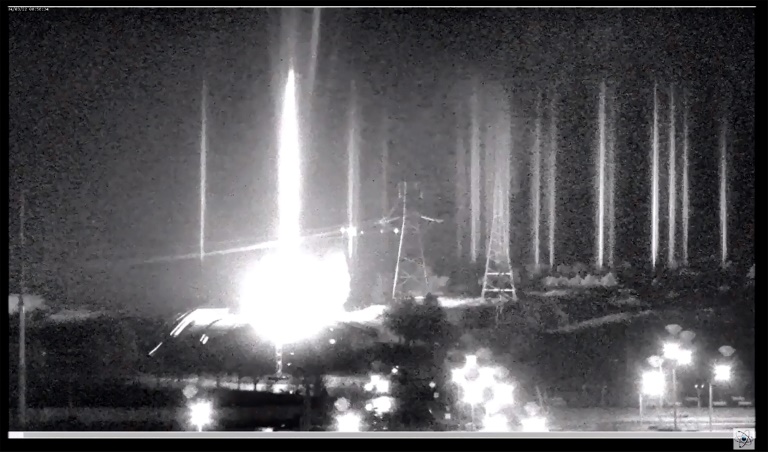
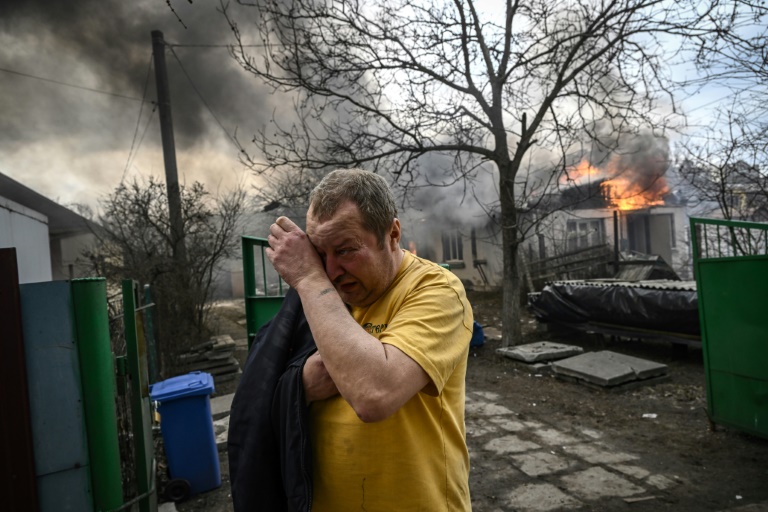
Ukraine accused the Kremlin of “nuclear terror” and the West expressed fury on Friday after Europe’s largest atomic power plant was attacked and seized by invading Russian forces, who continued to shell major cities.

The fighting and a fire at the plant at Zaporizhzhia triggered an emergency meeting of the UN Security Council, and came as President Vladimir Putin intensified a crackdown on opposition in Russia to his nine-day-old war.

The six reactors at Zaporizhzhia, which can power enough energy for four million homes, were apparently undamaged by the fire in a training facility. Monitors reported no spike in radiation. 

But the attack killed three Ukrainian soldiers, according to Kyiv’s nuclear operator Energoatom, and was slammed by Western capitals, NATO and environmental groups as utterly irresponsible.

“We survived a night that could have stopped the story, the history of Ukraine, the history of Europe,” Ukrainian President Volodymr Zelensky said.

An explosion at Zaporizhzhia would have equalled “six Chernobyls”, he said, referring to the plant in Ukraine that was the site of the world’s worst nuclear disaster in 1986.

“Russian tank commanders knew what they were firing at,” Zelensky alleged, adding: “The terrorist state now resorted to nuclear terror.”

– Russia blames Ukraine –

Russian defence ministry spokesman Igor Konashenkov claimed the attack on Zaporizhzhia was staged by “Ukrainian sabotage groups, with the participation of foreign mercenaries”.

“This shows the Kyiv regime’s criminal plan,” he alleged, adding that the plant had been secured by Russian troops and was functioning normally.

After phoning Zelensky during the night, British Prime Minister Boris Johnson accused Putin of “reckless actions” that could “threaten the safety of all of Europe”. 

At the urging of Johnson and Western allies, the UN Security Council was convening after the attack, although Russia’s veto on the world body would stymie any concerted condemnation.

“We are faced together with what is President Putin’s war of choice, unprovoked, unjustified, and a war that is having horrific, horrific consequences,” US Secretary of State Antony Blinken said in Brussels. 

“We’re committed to doing everything we can to make it stop.”

But Putin has been unrepentant as Russia has become an economic, sporting and cultural pariah.

The Kremlin said that Putin, in a call Friday with one of his few remaining allies President Alexander Lukashenko of Belarus, restated his view that “the tasks set for the (Ukraine) operations are going according to plan and will be fulfilled in their entirety”.

Kremlin spokesman Dmitry Peskov called on Russians “to unite around our president”, after thousands braved mass arrests at anti-war demonstrations this week.

Authorities have imposed a news blackout and two liberal media groups have halted operations. On Friday, Facebook and multiple media websites including the BBC were partially inaccessible in Russia.

And Russian lawmakers approved legislation to impose fines and jail terms of up to 15 years for anyone publishing “fake news” about the army.

Western social media companies “carry hatred and lies” against Russia, parliament chairman Vyacheslav Volodin said.

But some Russians appear keen to bypass their state-controlled media.

The BBC says the audience of its Russian-language news website has more than tripled this week, to a record 10.7 million people, and the UK broadcaster vowed to keep the service running.

– ‘Like Aleppo’ –

Russia has intensified strikes across Ukraine with fresh reports of civilian casualties and devastating damage, particularly in southern areas near Kherson, the first city to fall to Moscow’s troops.

In a second round of talks held Thursday, Moscow agreed to a Ukrainian request for humanitarian corridors to allow terrified residents to flee.

But there was no clarity on how the corridors would work, and no sign of any move towards a ceasefire.

Ahead of a third round of talks this weekend, Zelensky urged the West to step up military assistance and to “give me planes”. He also called for direct talks with Putin. 

NATO, fearful of provoking its own war with nuclear-armed Russia, again ruled out enforcing a no-fly zone over Ukraine. And the Kremlin rejected direct talks, insisting any contacts should come via negotiators.

Ukrainian leaders warn that Russia — given signs that its offensive on the capital Kyiv has stalled — is bent on reprising the horrific tactics that it used to level the Syrian city of Aleppo in 2016. 

The port city of Mariupol, east of Kherson, is cut off without water or electricity in the depths of winter. 

Mariupol’s deputy mayor Sergei Orlov told BBC radio that its humanitarian situation was “terrible”, after 40 hours of continuous shelling including on schools and hospitals.

“Today Putin style of war is like Aleppo. So Mariupol goes to Aleppo,” Orlov said in English. 

“I believe that he wants to destroy Ukraine as a nation, and Mariupol is on this way.” 

In the northern city of Chernihiv, 47 people died Thursday when Russian forces bombed residential areas, including schools and a high-rise apartment block, according to a new toll given by local officials.

According to the UN, at least 331 civilians have died since Russia invaded in the night of February 24, purportedly to erase a Western-leaning, “Nazi” threat on its borders.

Ukraine says it has killed thousands of Russian troops. Moscow on Wednesday said it had lost 498 soldiers.

– ‘Whole world against you’ –

Ukraine authorities say residential parts of the eastern city of Kharkiv have also come under indiscriminate shelling, which UN prosecutors at The Hague are investigating as a possible war crime.

Ukraine’s Foreign Minister Dmytro Kuleba demanded a special tribunal, alleging there were “numerous cases of, unfortunately, when Russian soldiers rape women in the Ukrainian cities”.

In Geneva, the UN Human Rights Council overwhelmingly voted to create a top-level investigation into violations committed in the invasion.

“The message to Putin has been clear: you’re isolated on a global level and the whole world is against you,” Ukrainian ambassador Yevheniia Filipenko said after the vote.

The UN says more than 1.2 million refugees have flooded from Ukraine into neighbouring countries.

Both the EU and the United States said they would approve temporary protection for all refugees fleeing the war.

It is also driving some Russians to flee the country, fearful it is their last chance to escape the economic pain from ever-tougher Western sanctions, or the Kremlin crackdown on domestic dissent.

On one of the few remaining routes from Russia to the EU, trains from Saint Petersburg to Finland have been packed with Russians.

“I know some people who are quite desperate at the moment to go abroad,” said Elena, a 37-year-old Russian living in Finland who did not want to give her full name.

A lot of people “don’t feel safe, they know that the economic situation will be very hard from now on, and also many people from a moral perspective can’t bear staying”, she told AFP in Helsinki.

It is not just people fleeing.

Six lions and six tigers evacuated from a shelter near Kyiv arrived at a zoo in Poland, following a two-day odyssey skirting battle frontlines and coming face to face with Russian tanks.

burs-jit/pvh

Beijing Winter Paralympics open after athlete ban controversy

Athletes paraded through Beijing’s national stadium as the Winter Paralympics opened Friday after a storm of controversy surrounding the banning of Russian and Belarusian athletes due to Moscow’s invasion of Ukraine.

The lead-up to the Games was marred by high tension in the athletes’ village, threats of competition boycotts and an eleventh-hour reversal by organisers of a previous decision to let Russian athletes and those from ally Belarus compete as neutrals.

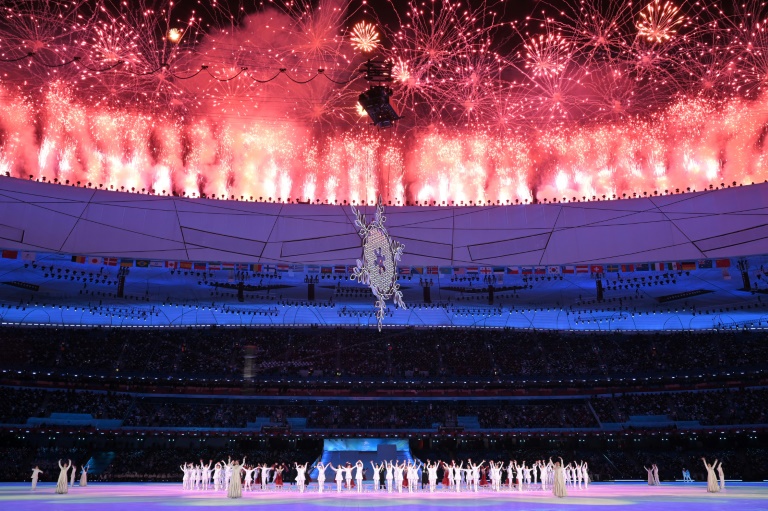
But on Friday, focus returned to the competition as Chinese President Xi Jinping officially declared the Games open and a fireworks display erupted over the capital’s “Bird’s Nest” stadium.

Hundreds of athletes from dozens of countries waved flags in a procession through the venue, which had only carefully-chosen domestic spectators on hand due to Covid rules.

The sound and light show spectacular capped off a week of high drama and wrangling among officials on the sidelines. 

The International Olympic Committee (IOC) had urged sporting federations across the world to exclude athletes from Russia and Belarus after Moscow’s incursion into neighbouring Ukraine prompted widespread condemnation.

On Wednesday, Paralympic organisers said the “harshest punishment” they could administer was to force athletes from those countries to compete as neutrals.

But that decision was reversed less than 24 hours later after multiple teams and athletes threatened not to compete if Russia and Belarus were represented.

This was “jeopardising the viability” of the Games, organisers said as they announced the ban, citing safety concerns and a volatile mood in the athletes’ village.

International Paralympic Committee president Andrew Parsons made a forceful speech at Friday night’s opening, in which he called for the Games to promote peace and sporting excellence.

“The 21st century is a time for dialogue and diplomacy, not war and hate,” he said, adding the Olympic truce for peace must not be violated.

“Here in Beijing, Paralympic athletes from 46 different nations will compete with each other, not against each other.

“Through sport, they will showcase the best of humanity and highlight the values that should underpin a peaceful and inclusive world.”

He bellowed “peace” into the microphone at the end of his impassioned speech, before President Xi formally declared the event open.

– Cheers for Ukraine –

After a harrowing journey to Beijing — narrowly escaping bombings in their war-torn homeland — Ukraine team members cut solemn figures as they entered the stadium behind biathlete and cross-country skier Maksym Yarovyi, carrying his country’s flag. 

Parsons gave the team a standing ovation as they passed his seat.

Earlier in the staging area, Ukrainian athletes unveiled banners that said “stop war,” and repeatedly chanted “peace for Ukraine”. Some shed tears as they received hugs from competitors from other nations.

The Ukraine delegation said it had been overwhelmed with solidarity in Beijing, and the team’s top official declared earlier this week it was a “miracle” they made it to the competition.

Chinese athletes received loud cheers from the crowd and their own standing ovation, including from President Xi, as they entered the stadium waving flags.

After the parade, world record triple jumper and four-time gold medallist Li Duan -– who is visually impaired — placed a flaming Paralympic torch onto the snowflake-shaped cauldron to light it.

Experts say China’s second stint hosting a Paralympics will continue to help improve accessibility and reduce stigma and discrimination for the 85 million Chinese people living with disabilities.

– Sporting Saturday –

Coming just six months after the pandemic-delayed Paralympic Games closed in Tokyo, Beijing has become the first city to host the Winter and Summer Olympic series in a pared-down event held in a tightly closed pandemic bubble.

Sporting action begins Saturday, as more than 650 athletes compete in 78 events across six sports –- ice hockey, snowboarding, biathlon, cross-country skiing, alpine skiing and wheelchair curling.

While Olympic athletes last month faced treacherous blizzards and some competitions were forced to postpone, temperatures on the slopes at Zhangjiakou and Yanqing have warmed up in recent days, causing snow to melt.

China has consistently topped the medal tally at the Summer Paralympics. 

But its first medal for the Winter Paralympics only came in 2018 — a gold in wheelchair curling — and it is hoping its largest-ever team of 96 athletes will get more podium finishes this year.

Stocks sink, gas and oil prices soar over escalation fears in Ukraine

Global stock markets fell across the board Friday and energy prices soared as investors feared the risk of an escalation after Russia attacked the largest nuclear power plant in Ukraine.

Europe’s main stock markets plunged more than three percent for much of the day after Asian indices closed sharply lower.

Wall Street followed suit, with the Dow dropping by more than one percent in early trading.

The euro sank close to a two-year low under $1.10 as the Ukraine conflict clouds the eurozone’s economic recovery from the coronavirus pandemic.

The greenback benefited also from its status as a haven investment.

“European markets are closing in on bear market territory in heavy selling at the end of the week as investors grow increasingly fearful of recessionary and escalation risks,” OANDA analyst Craig Erlam said.

Susannah Streeter, senior investment and markets analyst at Hargreaves Lansdown, said earlier “investors have been rattled by the turn of the fighting in Ukraine, after a nuclear plant was attacked which has heightened worries about the potential escalation of the crisis.” 

Oil prices shot up again around five percent on fears of supply disruptions to Russian crude but were still below the almost $120 per barrel reached Thursday.

– ‘Economic clinch point’ –

Hopes for an Iran nuclear deal that would allow Tehran to restart crude exports to the world market capped crude’s gains, analysts said. 

European and UK gas prices surged to record peaks Friday on supply disruption fears as a result of key supplier Russia’s ongoing attack on Ukraine.

Europe’s reference Dutch TTF gas price struck 213.895 euros per megawatt hour in afternoon deals, while UK gas prices hit 508.80 pence per therm.

Ukrainian President Volodymyr Zelensky has meanwhile demanded still tougher sanctions against his Moscow foes after Russian forces attacked and seized the Zaporizhzhia nuclear power plant, but Kyiv said no radiation leak was detected.

Western countries have hit Russia’s economy hard including by closing airspace, freezing assets and excluding seven banks from the SWIFT interbank messaging network.

The impact is already impeding Moscow’s ability to shore up the beleaguered ruble and purchase imports.

Russia’s invasion of its neighbour Ukraine has sent global stock markets slumping over the week, during which time commodities including wheat, metals and particularly oil have soared.

That has fuelled concerns that the global economic recovery from Covid-19 will be derailed, especially with surging prices adding to worries about decades-high inflation.

To combat rocketing costs, Federal Reserve boss Jerome Powell this week said he intends to raise US interest rates this month, though he tempered expectations of a half-point rise.

“The economic clinch point of this war is commodity prices,” said City Index analyst Fiona Cincotta.

“Higher energy prices, slowing growth, and surging inflation are not a good outlook.”

In New York, the Dow, S&P and the Nasdaq all fell after opening as worries about the worsening picture of the Russia-Ukraine conflict overshadowed a strong US jobs report.

US employers added 678,000 workers to their payrolls in February, driving the unemployment rate down to 3.8 percent in a monthly report that was better than expected.

– Key figures around 14:45 GMT –  

London – FTSE 100: DOWN 2.7 percent at 7,044.13 points

Frankfurt – DAX: DOWN 3.2 percent at 13,265.48 

Paris – CAC 40: DOWN  3.4 percent at 6,159.85  

EURO STOXX 50: DOWN 3.3 percent at 3,617.10 

New York – Dow: DOWN 1.1 percent at 33,414.84

Tokyo – Nikkei 225: DOWN 2.2 percent at 25,985.47 (close)

Hong Kong – Hang Seng Index: DOWN 2.5 percent at 21,905.29 (close)

Shanghai – Composite: DOWN 1.0 percent at 3,447.65 (close)

Euro/dollar: DOWN at $1.0918 from $1.1069 late Thursday

Pound/dollar: DOWN at $1.3226 from $1.3350

Euro/pound: DOWN at 82.50 pence from 82.89 pence

Dollar/yen: DOWN at 115.27 yen from 115.45 yen

Brent North Sea crude: UP 4.1 percent at $114.97 per barrel

West Texas Intermediate: UP 5.1 percent at $113.12 per barrel

burs-lc/kjm

Cultural iron curtain falls for Russian musicians

Even during the darkest days of the Cold War in the 20th century, Russian opera and ballet stars still came regularly to the West for performances. 

But this time, things are different: a cultural boycott far more stringent is falling into place. 

In barely a week, some of the world’s leading dancers, opera singers and conductors have been stripped of their jobs in the West, their shows cancelled and careers curtailed, in the wake of Russian President Vladimir Putin’s invasion of Ukraine.

“Even at the height of the Cold War, cultural exchanges between Russian, American and European artists continued. There were of course always tensions, but it was possible,” said Peter Gelb, director of the Metropolitan Opera House in New York.

“What’s happening today is different, it goes beyond the Cold War, it’s a real war,” he told AFP.

Gelb, who had been in Moscow to discuss a joint production with the Bolshoi just days before the invasion, knows what he is talking about.

As a young talent agent representing the legendary Russian-American pianist Vladimir Horowitz, Gelb organised his client’s return to Soviet Russia as the country opened up in the 1980s.

Gelb also filmed the concert of Russian cellist Mstislav Rostropovich during his return in the same period. 

– Soft power –

Ballet was a particular source of “soft power” for the Soviet Union and tours to the West began in the 1950s — though always under tight surveillance by both their hosts and their KGB minders. 

Some of those trips have gone down in history: the Bolshoi’s visit to London in 1956, or the first tour by the Kirov (later renamed the Mariinsky) to Paris in 1961, during which the legendary dancer Rudolph Nureyev defected. 

The West sent its emissaries in the other direction: the American Ballet Theater performed for the first time in Moscow in 1960, followed two years later by the New York City Ballet, in the midst of the Cuban missile crisis.

After the collapse of the USSR, exchanges intensified, with star Russian dancers invited everywhere and even becoming lead members of companies in the West, such Svetlana Zakharova, the “tsarina” of dance, who had principal dancer roles at both the Bolshoi and Scala in Milan.

Once unimaginable, an American, David Hallberg, became a principal dancer of the Bolshoi in 2011.

Suddenly, it has become unimaginable once again. 

“In the current context of brutality against innocent citizens, there is no possibility of making exchanges like those during the Cold War,” said Gelb. 

The Met has ceased its collaboration with the Bolshoi, and will boycott all pro-Putin artists, a decision also taken by the Paris Opera and many other venues around Europe. 

The Bolshoi’s trip to London this summer has been cancelled. 

Russian choreographer Alexei Ratmansky, a former head of the Bolshoi who grew up in Kyiv, abandoned a new ballet he was putting together in Moscow and rushed back to his home in New York. 

Laurent Hilaire, the French head of the Moscow Stanislavski Ballet, quit his post of five years. 

– Stars cancelled –

The wrath fell especially on two superstars seen as close to Putin.

Conductor Valery Gergiev, considered among the greatest of his generation, was stripped of his role as head of the Munich Philharmonic, and declared persona non grata in many theatres and by his own agent. 

And the soprano Anna Netrebko, international queen of opera, is cancelling her performances at the Met.

Laurent Bayle, former director general of the Philharmonie de Paris, said it leaves little for these artists to do outside Russia, especially since China remains almost entirely closed off due to the Covid-19 pandemic.

“They will remain in their own country,” he told AFP. “Three-quarters of their activity has been called into question.”

If the current war ends in a long-term occupation of Ukraine, “it is certain that no one will risk inviting Russian artists,” he added.

Exceptions will clearly be made for those who have themselves been victims of Putin’s regime or openly denounce it.

But state-backed institutions like the Bolshoi and Mariinsky are unlikely to get a pass.

“They have public funding and in the eyes of the world, talking about the Bolshoi and talking about the Russian state is the same thing,” said Bayle.

Microsoft 'suspends' new sales of products, services in Russia

Microsoft is halting new sales of its products and services in Russia, the tech giant announced Friday, in the latest fallout over Moscow’s invasion of Ukraine.

Western governments, sporting organizations and big companies have cut Russia off or dealt it punishing sanctions over the internationally condemned attack on its neighbor. 

The US-based company behind software that runs on over one billion devices, said it would “suspend all new sales of Microsoft products and services” in Russia, but declined to elaborate on how the policy would be applied.

“Like the rest of the world, we are horrified, angered and saddened by the images and news coming from the war in Ukraine and condemn this unjustified, unprovoked and unlawful invasion by Russia,” Microsoft president Brad Smith said in a blog post.

Apple has already moved to halt sales of its products in Russia, while US-based social media platforms like Facebook and Twitter have taken steps against the spread of Russian state-linked media in response to the invasion.

Microsoft said it has also taken action over harmful cyberattacks against the Ukrainian state.

“Since the war began, we have acted against Russian positioning, destructive or disruptive measures against more than 20 Ukrainian government, IT and financial sector organizations,” Smith’s blog said.

– Condemnation of invasion –

“We have also acted against cyberattacks targeting several additional civilian sites,” he added. 

Ukraine’s government has been seeking help from all quarters and has taken to Twitter to individually name companies that it wants to cut off business with Russia.

“You are definitely aware of what is happening in Ukraine right now… If you support human values, you should (leave) the Russian market!” Ukraine vice prime minister Mykhailo Fedorov tweeted to Microsoft-owned Xbox and Sony’s PlayStation.

The news comes after Intel and Airbnb announced they were pausing business in Russia and Belarus on Thursday, joining the tech freeze-out of Moscow.

Airbnb’s co-founder and CEO Brian Chesky, who has added a Ukrainian flag to his Twitter profile, tweeted that the company “is suspending all operations in Russia and Belarus,” without giving further details.

The vacation rentals platform also announced on Monday that it would offer free short-term stays for up to 100,000 people fleeing fighting in Ukraine.

Chipmaker Intel said it “condemns the invasion of Ukraine by Russia and we have suspended all shipments to customers in both Russia and Belarus.” 

Companies have also taken action regarding ad revenue and monetization, with Google announcing Thursday it had suspended advertising in Russia.

“In light of the extraordinary circumstances, we’re pausing Google ads in Russia. The situation is evolving quickly, and we will continue to share updates when appropriate,” Google said in a statement.

The Silicon Valley giant had already barred Russian state-linked media like RT and Sputnik from YouTube in Europe, while also restricting the outlets’ content on Google News.

Failure to launch: War scuppers Russia-West space collaboration

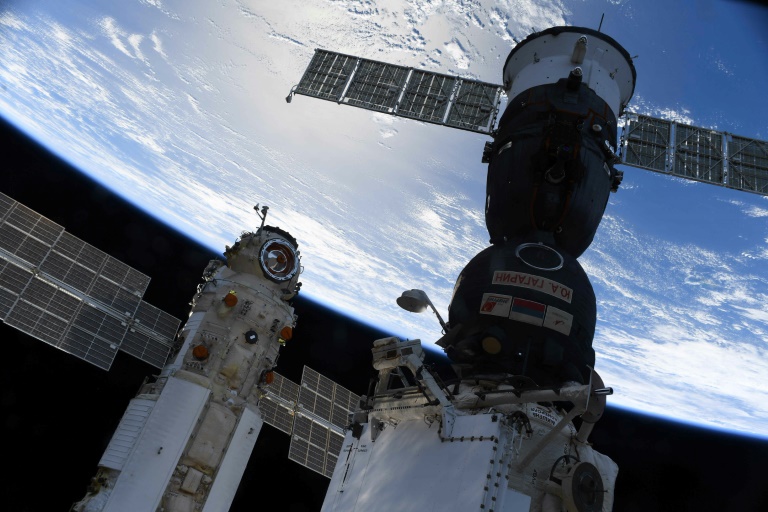
Russia’s invasion of Ukraine has had repercussions not just around the world but beyond it, bringing to a grinding halt joint space projects between Moscow and the West that began in the aftermath of the Cold War.

When the head of Russian space agency Roscosmos Dmitry Rogozin announced on Thursday that Russia would stop supplying the United States with rocket engines, his message was blunt: “Let them fly to space on their broomsticks.”

He also said Roscosmos would dramatically “adjust” its programme to prioritise making military satellites, adding that all future spacecraft will be “dual purpose” — with one of those purposes in the Russian defence ministry’s interest.

In response to the sweeping sanctions imposed on Russia by most of the Western world, Roscosmos also told the German Aerospace Center that it will no longer take part in “joint space experiments” on the International Space Station. 

Roscosmos had earlier suspended launches from Europe’s spaceport in French Guiana’s Kourou, which use Russian Soyuz rockets, withdrawing around a hundred of its workers.

Another victim is the Rosalind Franklin rover, whose launch under the joint Russian-European ExoMars mission had already been postponed from 2020 due to the pandemic. 

The rover, which is designed to drill into Mars to search for signs of life, is now “very unlikely” to launch this year, the European Space Agency said.

The ESA’s rover was to be launched from the Baikonur Cosmodrome in Kazakhstan by a Russian rocket, then taken down to the Martian soil by Russia’s Kazachok lander.

– ‘Heartbreaking for science’ –

Getting the Rosalind Franklin, named after an English chemist and DNA pioneer, into space without Russian help would require huge revisions — and the window to launch only comes around every two years.

“It is heartbreaking for science and scientists who have built up links over the years and invested years of work,” said Isabelle Sourbes-Verger, a specialist in space policy at the French National Centre for Scientific Research.

ExoMars had symbolised the culmination of a partnership between Europe and Russia that began in 1996, she told AFP.

“After the collapse of the Eastern Bloc and the break-up of the USSR, Europe and the US naturally sought to make room for the Russians” in their space plans, an analyst in the European space sector said on condition of anonymity.

No side wanted the knowledge and expertise of such a great space power to go to waste.

Its experience with the Mir space station significantly contributed to the development of the ISS, the greatest space collaboration between the West and Russia, where astronauts and cosmonauts have long lived and worked side-by-side.

The idea was that civilian space cooperation would be a “way of bringing nations together”, the analyst said.

On a commercial level, Russia has “done everything to facilitate access to space”, including offering its Soyuz rockets to the international market, the analyst added.

Europe was “particularly proud” to have reached a deal that has seen its Arianespace work with Roscosmos since 2011 to launch Soyuz rockets from Kourou and Baikonur, the analyst said.

However, relations became strained over the years, particularly since Russia’s annexation of Crimea from Ukraine in 2014.

Then came the war.

– ISS still afloat –

Just how much the war and sanctions will affect space cooperation between Russia and the West remains to be seen.

The ESA’s director general tweeted last week that “notwithstanding the current conflict, civil space cooperation remains a bridge”.

Russia’s declaration that it has ended joint space experiments with Germany on the ISS has put German astronaut Matthias Maurer — who is currently onboard the station — in a tight spot.

NASA said this week it is exploring ways to keep the ISS in orbit with Russian help, after Roscosmos chief Rogozin raised the prospect of pulling out in response to US sanctions.

But Kathy Lueders, who heads NASA’s human spaceflight programme, said Monday that operations on the ISS were proceeding “nominally” and “we’re not getting any indications at a working level that our counterparts are not committed”.

She said it would be “very difficult for us to be operating on our own”, adding that “it would be a sad day for international operations if we can’t continue to peacefully operate in space.”

Scientific discovery about space is also expected to be a victim of the war.

As of Friday, more than 7,400 Russian scientists and academics had signed an open letter lambasting the invasion, saying that “many years spent strengthening Russia’s reputation as a leading centre” of science in the world “have been completely scuppered”.

Hundreds of NGOs call for import ban on Russian oil, gas

Hundreds of civil society groups and NGOs Friday called on governments worldwide to “reject and ban any import of fossil fuels from Russia” in order to cut off the main source of revenue for Vladimir Putin’s invasion of Ukraine.

It is “clear that this war machine has been funded, fed and fuelled by the coal, oil and gas industries that are driving both the invasion threatening Ukraine and the climate crisis threatening humanity’s future,” they said in an open letter.

“Putin’s income streams must be dried out as soon as possible,” said the letter, signed by the World Council of Churches, 350.org, Greenpeace and CAN International, an umbrella organisation of more than 1,500 climate NGOs.

Approximately 40 percent of Russia’s federal budget comes from oil and gas revenues, which also make up about three-fifths of Russian exports.

“Putin has deliberately weaponized fossil gas to increase his existing energy dominance over the European Union and to threaten European nations that would come to Ukraine’s aid,” the letter said. “This needs to stop!”

Some 40 percent of Europe’s natural gas needs are supplied by Russia, with Germany, Hungary and Slovakia especially dependent.

“We call on you to urgently work with your European colleagues on ending this fossil fuel addiction once and for all,” said the letter, addressing other importers of Russian oil and gas, such as the United States, Canada, China, India and Japan.

The signatories also included Ukrainian officials and numerous civil society organisations.

Roman Shakhmatenko, Ukraine’s deputy environment minister, called on the world to “stop being indifferent”.

Countries should not simply replace Russian-produced fossil fuels with coal, oil and gas from other countries in order to avoid the worst ravages of global warming, the NGOs warned.

A landmark UN report on climate impacts released this week reports a measurable increase in deadly storms, heatwaves, droughts and rainfall events all made worse by rising temperatures, with projections of far worse to come.

On the last day of the 195-nation closed-door conference leading up to the report’s release, Ukraine’s head of delegation made a similar plea.

“We will not surrender in Ukraine, and we hope the world will not surrender in building a climate resilient future,” Svitlana Krakovska told the closing plenary in English, according to multiple sources.

“Human-induced climate change and the war on Ukraine have the same roots — fossil fuels — and our dependence on them.” 

Brazil exits recession, but faces tough year

Brazil exited recession in the fourth quarter, the government said Friday, though weak growth and high inflation still dog Latin America’s biggest economy as President Jair Bolsonaro gears up to seek re-election in October.

Gross domestic product (GDP) grew 0.5 percent for the period from October through December, reversing its 0.3-percent and 0.1-percent contractions in the previous two quarters, said the national statistics institute, IBGE.

That brought GDP growth for 2021 to 4.6 percent on the year, erasing the economy’s painful contraction in pandemic-battered 2020, which was revised to 3.9 percent.

But the economy remains a headache for far-right leader Bolsonaro, with growth still weak and inflation hitting Brazilian households hard.

Uncertainty fueled by Bolsonaro’s expected election showdown with leftist ex-president Luiz Inacio Lula da Silva and international turmoil around Russia’s invasion of Ukraine will likely weigh heavily on the Brazilian economy this year, analysts say.

“2022 is a difficult year due to both internal and external factors,” said economist Gilberto Braga of business school IBMEC in Rio de Janeiro.

“Uncertainties around the country’s political future are making things unpredictable and will delay strategic decisions on the economy… And external issues will weigh down global GDP, and Brazil’s along with it,” he told AFP.

“The current scenario is ‘stagflation.'”

– ‘Weak momentum’ –

The rebound was driven by Brazil’s key agricultural sector, which grew 5.8 percent quarter-on-quarter — though it contracted 0.2 percent on the year, hit by the country’s worst drought in nearly a century.

The services sector grew 0.5 percent quarter-on-quarter and 4.7 percent year-on-year, while industry contracted 1.2 percent for the quarter but grew 4.5 percent for the year.

The return to growth “was mainly a result of turnaround in the agricultural sector, which is unlikely to be sustained,” William Jackson, chief emerging markets economist at consulting firm Capital Economics, said in a note.

“In the meantime, high-frequency indicators for the services and industrial sectors point to weak momentum in the first quarter of 2022.”

His team maintained a forecast of GDP growth of 0.8 percent for 2022, “making Brazil the worst performer in the region this year.”

Economists polled by Brazil’s central bank currently forecast GDP growth of 0.3 percent for 2022.

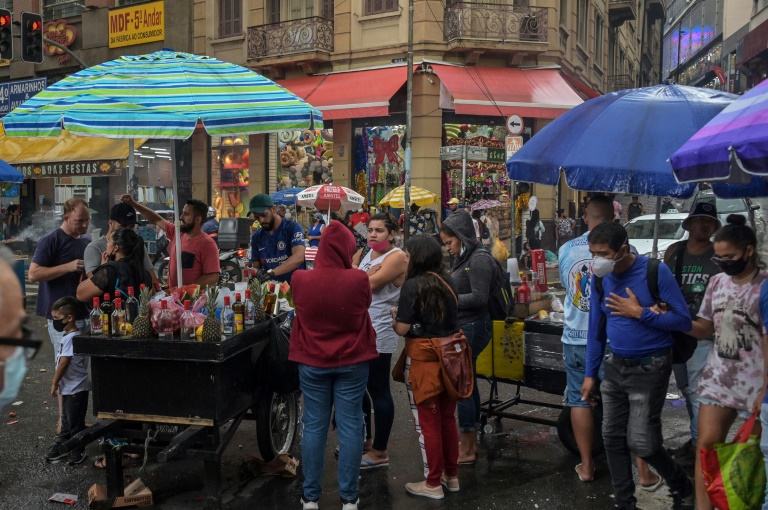
Brazil’s annual inflation rate came in at 10.06 percent last year, crashing through the central bank’s target of 3.5 percent.

The central bank has responded with one of the most aggressive tightening cycles in the world, rapidly raising the key interest rate to 10.75 percent from an all-time low of two percent in March 2021.

The hawkish monetary policy is in turn weighing down growth, sapping the economy’s recovery from Covid-19.

Brazil has been among the countries hit hardest by the pandemic, with more than 650,000 deaths — second only to the United States.

Even with 72 percent of Brazil’s 213 million people now fully vaccinated against Covid-19, high inflation and weak growth have combined to keep the economic recovery tepid.

With prices soaring and wages stagnant, the average Brazilian’s purchasing power fell by seven percent last year.

At least 56 dead, 194 injured in suicide attack on Pakistan Shiite mosque

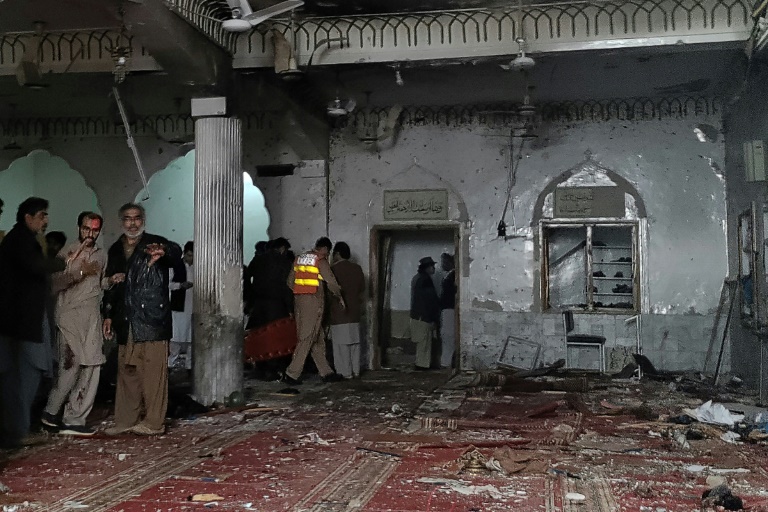
At least 56 people were killed and 194 wounded Friday by a suicide bomb at a Shiite mosque in the northwestern Pakistan city of Peshawar, the deadliest attack in the country since 2018.

The blast tore through the Kocha Risaldar area of the city moments before Friday prayers were to start, shattering the interior and showering the streets with broken glass.

It came on the first day of a cricket Test match in Rawalpindi — around 190 kilometres (120 miles) to the east — between Pakistan and Australia, who have not toured the country in nearly a quarter of a century because of security concerns.

Muhammad Asim Khan, a spokesman for Peshawar’s Lady Reading Hospital, said the death toll had climbed to 56, the deadliest since a July 2018 blast — claimed by the local chapter of the Islamic State group — killed 149 people at an election rally.

He said 50 of the 194 wounded were in “critical condition”.

Muhammad Ali Saif, a spokesman for the Khyber Pakhtunkhwa provincial government, told AFP the blast was a “suicide attack” and numerous witnesses recounted the moment of detonation.

Ali Asghar saw a man enter the mosque before Friday prayers and open “fire with a pistol”, picking out the worshippers “one-by-one”. 

He “then blew himself up”, Asghar said.

“I saw a man firing at two policemen before he entered the mosque. Seconds later I heard a big bang,” said another witness, Zahid Khan.

The head of Peshawar’s bomb disposal unit, Rab Nawaz Khan, told AFP the attacker detonated five to eight kilograms (two to four pounds) of “highly explosive TNT” packed with ball bearings to amplify the damage.

An AFP reporter saw body parts strewn at the blast site, where desperate family members were held back by police. 

– Police officers shot –

Peshawar police chief Muhammad Ijaz Khan told AFP two attackers were involved.

He said two police officers were shot at the entrance of the mosque.

“One policeman died on the spot while the other was critically injured,” he said.

Muhammad Asim Khan, a spokesman for Peshawar’s Lady Reading Hospital, said “we have declared an emergency at the hospitals and more injured are being brought”.

A spokesman for Prime Minister Imran Khan’s office said he “strongly condemned” the attack.

No group immediately claimed responsibility for the bombing.

Peshawar — just 50 kilometres from the porous border with Afghanistan — was a frequent target of militants in the early 2010s but security has greatly improved in recent years.

Sunni majority Pakistan has recently been battling a resurgence of its domestic chapter of the Taliban, Tehreek-e-Taliban Pakistan (TTP).

A one-month truce last year failed to hold and there are fears the TTP — which has targeted Shia Muslims in the past — has been emboldened by the success of the Afghan Taliban.

Shiites in the region have also been targeted by the regional iteration of the Islamic State group, Islamic State Khorasan (ISK).

At least 31 people were killed in a suicide blast at a crowded market in Peshawar in 2018.

At least 88 people died and hundreds more were wounded a year earlier when a suicide bomber blew himself up among a crowd of devotees at a revered Sufi shrine in southern Sindh province.

Close Bitnami banner
Bitnami