World

Ukraine: a nuclear-powered nation under fire

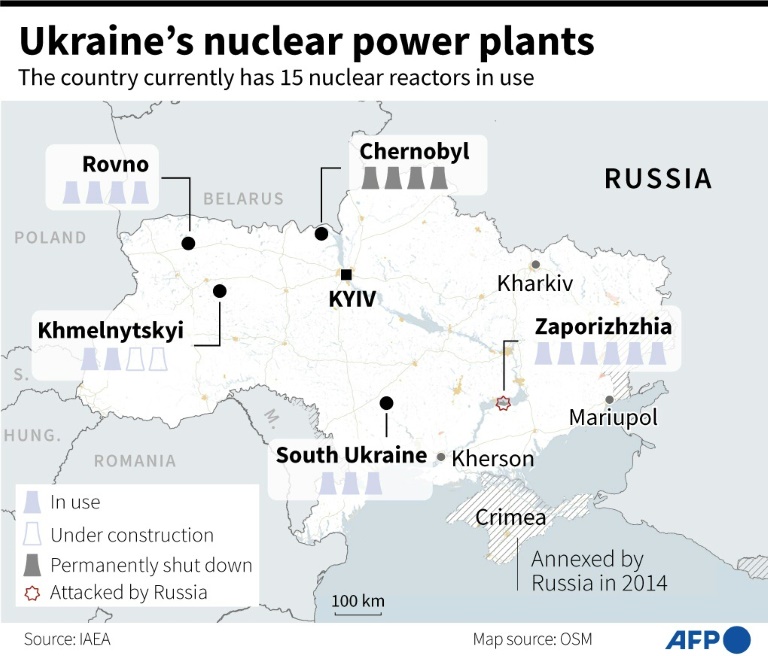
The Russian shelling of Zaporizhzhia nuclear power plant in Ukraine — the largest in Europe — has sparked international outrage and fears over the country’s 15 operational reactors.

The Zaporizhzhia reactors, apparently undamaged by the attack, were taken over by invading Russian forces that have also stationed themselves at Chernobyl, the site of the worst civilian nuclear disaster in history.

Experts have condemned the attack, while stressing that Ukraine’s modern reactors are built to withstand most human-caused and natural impacts.  

Here’s what we know about nuclear power in Ukraine:

– Nuclear-powered nation – 

Ukraine is the seventh-largest producer of nuclear electricity in the world, according to International Atomic Energy Agency (IAEA) figures for 2020. 

The country, which relies on nuclear energy for more than half of its power supply, has made significant improvements in nuclear safety over the years, experts say. 

Zaporizhzhia has six of the country’s 15 reactors and can create enough energy for four million homes.

The plant is “relatively modern”, said Mark Wenman of Imperial College London, noting its reactor components are housed inside a heavily reinforced containment building that can “withstand extreme external events, both natural and man-made, such as an aircraft crash or explosions”.  

“The design is a lot different to the Chernobyl reactor, which did not have a containment building, and hence there is no real risk, in my opinion, at the plant now [that] the reactors have been safely shut down,” he told the Science Media Centre. 

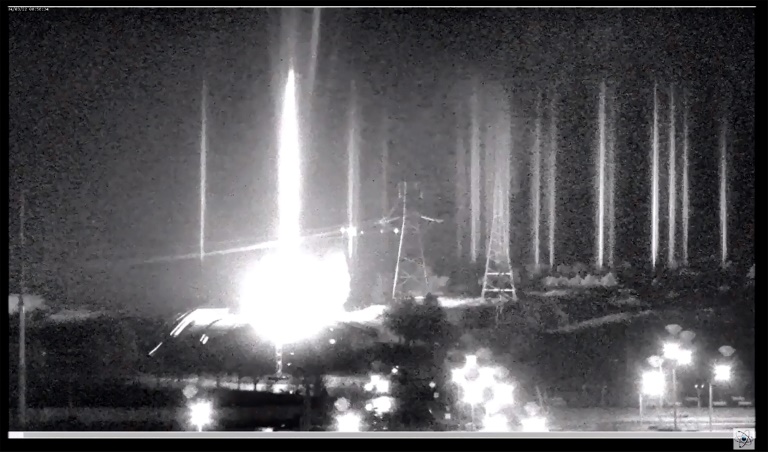
The battle at the site caused a fire at an adjacent training facility, IAEA chief Rafael Grossi said early Friday. 

He said only one of the six reactors was operating at about 60 percent, another had been undergoing maintenance, two were in “safety-controlled shutdown” and the last two “were already being held in reserve and are operating in low-power mode”.

Ukrainian monitors say there has been no spike in radiation.

– Conflict fears –

Earlier this week Greenpeace warned that the Russian invasion risks a “nightmare scenario” at one of the country’s nuclear sites, potentially involving an explosion that caused cooling systems to fail and large amounts of radioactivity to be spread on the wind. 

This, the charity said in an analysis focusing on Zaporizhzhia, could render large parts of Europe and Russia “uninhabitable for at least many decades”.    

The main risk now is a loss of the power supply as the plant needs water and electricity to operate the safety systems and cool the reactor core, according to Karine Herviou, Deputy Director General of the French Institute for Radiation Protection and Nuclear Safety. 

But the site has emergency generators, which normally have fuel to operate for seven to 10 days, as well as water reserves. 

The other risk is direct aggression.

Herviou said the containment buildings offer protection to a point “but it all depends on what we are talking about”. 

An attack that hit another part of the plant could affect safety systems, she added.

– Chernobyl –

Ukraine, which has significant uranium reserves, began developing nuclear power in the 1970s — when it was still a part of the USSR — with the construction of Chernobyl. 

The 1986 Chernobyl disaster left hundreds dead and spread radioactive contamination west across Europe.

Damaged Reactor No. 4 was initially covered by a temporary sarcophagus, then by a containment arch completed in 2017. 

Russia seized the site on February 24.

The Ukrainian authorities have recently noted an increase in radiation at Chernobyl, but the IAEA has said the levels measured pose no danger to the public. 

Experts have speculated that military activity around the site may have kicked up contaminated dust.  

Ukraine’s current stock of reactors are Soviet or Russian-designed VVERs, which are pressurised water reactors. 

“Ukraine receives most of its nuclear services and nuclear fuel from Russia,” says the World Nuclear Association, although it has noted that the country had already begun “reducing this dependence”.

The nuclear operator Energoatom has recently turned to the US firm Westinghouse to build new reactors. 
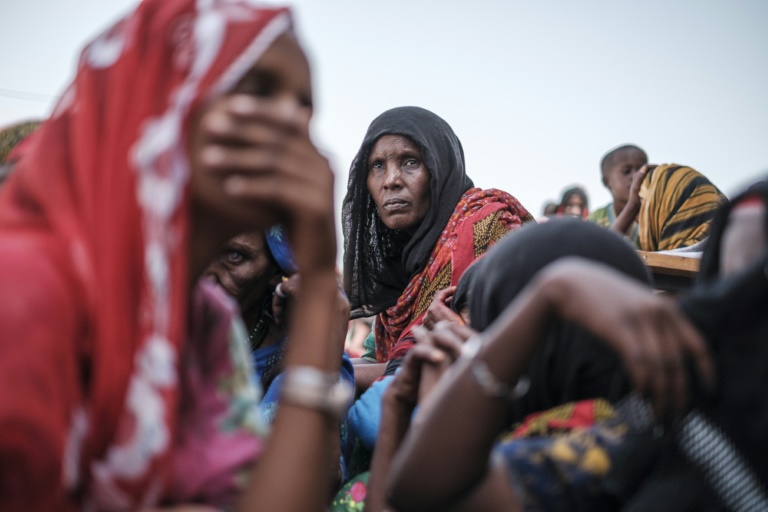
UN plan to help 1.6 million displaced by Ethiopia war

The United Nations appealed Friday for $205 million to deliver life-saving assistance to more than 1.6 million people who have fled the fighting in northern Ethiopia.

UNHCR, the UN Refugee Agency, said $117 million was needed to support Ethiopian and Eritrean refugees in the Afar, Amhara, and Tigray regions.

A further $72 million is required to help Ethiopian refugees in Sudan, while $16 million would be earmarked for contingency measures in other neighbouring countries.

Ethiopia’s war broke out in November 2020 when Prime Minister Abiy Ahmed sent troops into Tigray to topple the Tigray People’s Liberation Front, a move he said came in response to the rebel group’s attacks on army camps. 

The war has spread to neighbouring regions, killed thousands and, according to the UN and the United States, driven hundreds of thousands to the brink of starvation.

“Sixteen months of conflict in northern Ethiopia has created a humanitarian crisis,” UNHCR spokeswoman Shabia Mantoo told reporters in Geneva.

“Civilians, including refugees and internally displaced people have been displaced, amid widespread reports of gender-based violence, human rights abuses, loss of shelter and access to basic services, and critical levels of food insecurity.

“More than two million Ethiopians have fled in search of safety within the country, and almost 60,000 across the border into Sudan.

“Several camps and settlements hosting Eritrean refugees have been attacked or destroyed, further displacing tens of thousands within Ethiopia.”

UNHCR welcomed the Ethiopian government’s speed in identifying new sites to settle displaced refugees, and said it was aiming to get 20,000 refugee children back into school.

In eastern Sudan, the agency aims to build more durable shelters and improve the provision of health care and education.

Russia isolated as UN council votes to probe rights abuses in Ukraine

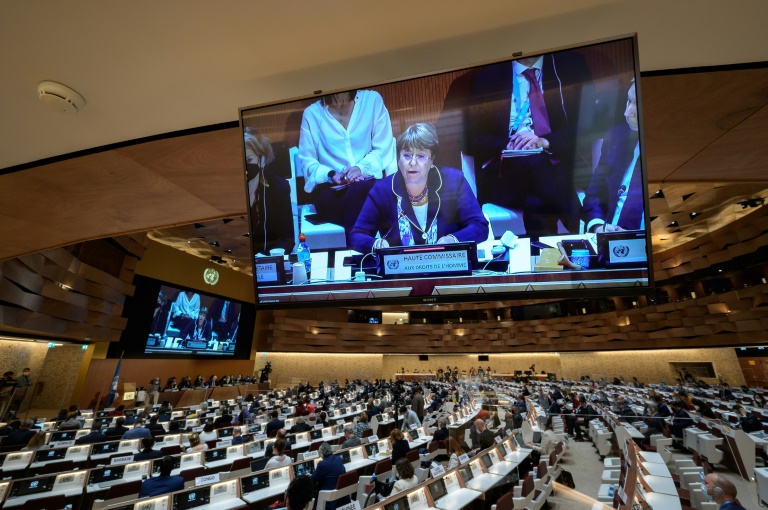
Russia appeared more isolated than ever following a historic vote at the UN Human Rights Council on Friday to launch an investigation into violations committed in Moscow’s Ukraine war.

“The message to (Russian President Vladimir) Putin has been clear: You’re isolated on a global level and the whole world is against you,” Ukrainian ambassador Yevheniia Filipenko told reporters after the overwhelming vote.

Thirty-two of the council’s 47 members voted to establish the highest-level probe possible, in a bid to hold perpetrators responsible.

Only Russia itself and Eritrea voted against, while 13 countries abstained, including Moscow’s traditional backers China, Venezuela and Cuba.

The heavy blow to Russia came after the UN General Assembly in New York on Wednesday issued its own powerful rebuke, with a 141-5 vote to deplore Moscow’s invasion and demand an immediate withdrawal.

The council in Geneva also condemned “in the strongest possible terms the human rights violations and abuses and violations of international humanitarian law resulting from the Russian Federation’s aggression against Ukraine”.

The text, presented by Kyiv, called for the “swift and verifiable withdrawal of Russian Federation troops and Russian-backed armed groups from the entire territory of Ukraine”.

Most importantly, Friday’s vote opens the way to create an independent international commission of inquiry — the highest level probe that can be ordered by the council — “to investigate all alleged violations and abuses… in the context of the Russian Federation’s aggression against Ukraine.”

– Hold perpetrators ‘accountable’ –

It calls for the appointment of three investigators to “establish the facts, circumstances, and root causes of any such violations and abuses,” and to gather evidence “with a view to ensuring that those responsible are held accountable.”

The International Criminal Court in The Hague has already begun investigating possible war crimes in Ukraine, where hundreds of civilians have been killed and more than 1.2 million have fled the country since Russia launched its invasion just over a week ago.

“I thank all those who voted for the right cause,” Filipenko said, calling for the investigation to start “as soon as possible, given the urgency of the situation”.

“This will be an important body to complement the work of the ICC,” she said.

Flanked by a large number of her counterparts from  around the world, Filipenko celebrated that “the whole world is standing by Ukraine.”

And she stressed that “those from Russia directing and committing violations against my people should be paying attention.”

“The evidence is going to be collected. You’re going to be identified and you’re going to be held to account.”

– ‘Russia stands alone’ –

Many of Ukraine’s supporters also stressed the importance of Friday’s rights council decision.

“The vote was a powerful condemnation of Russia’s actions, supported from council members from every geographic region of the world,” US ambassador Sheba Crocker said.

“Members of the international community stand with Ukraine, and it is clear that Russia stands alone.”

Before the vote, Russia’s representative Evgeny Ustinov had flatly rejected the resolution, insisting its “purpose is to deflect attention” from Kyiv’s alleged crimes.

He said the co-sponsors of the resolution, 68 countries at the last count, “will use any means to blame Russia”.

During the preceding debate, Russia received cautious support from a handful of countries, like Belarus, Eritrea, Venezuela, Cuba and China, whose representative decried the “politicisation of human rights”.

But most countries spoke out forcefully in support of Ukraine.

Friday’s decision was considered an extremely strong one by the rights council, which has never before passed a resolution directly targeting Russia. 

Nonetheless, rights groups had suggested the text should have gone further, and called for the investigation to extend to widespread abuses inside Russia itself. 

A number had also called for the text to include a request for the General Assembly to consider revoking Russia’s membership of the Human Rights Council, with some countries also seeming to back the idea.

Asked about it, Filipenko stressed to reporters that “nothing is off the table”.

More than 1.2 million refugees flee Ukraine

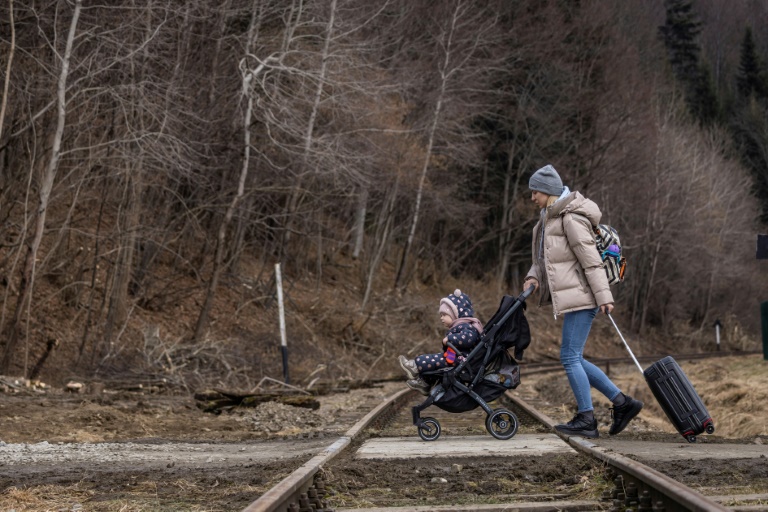
More than 1.2 million people have fled Ukraine into neighbouring countries since Russia launched its full-scale invasion on February 24, United Nations figures showed Friday.

The UN children’s agency UNICEF estimates that around half a million of them are youngsters.

The UN Refugee Agency (UNHCR) has projected that more than four million Ukrainian refugees may eventually need protection and assistance.

“The rate of this exodus is quite phenomenal,” said UNCHR communications chief Joung-ah Ghedini-Williams.

“We know that there are many more on the move. Also there are possibly equal numbers inside the country that are internally displaced.”

The UN’s International Organization for Migration (IOM) said people from roughly 138 countries had left, recording 78,800 from third countries crossing Ukraine’s borders, including migrant workers and students.

More than 37 million people lived under the Kyiv government’s control before last week’s invasion.

Here is a breakdown of where the 1,209,976 refugees tallied so far by UNHCR have headed:

– Poland –

Just over half of those who have fled Ukraine have crossed west into Poland, with UNHCR giving a figure of 649,903 people.

“We’re looking at 24- to 36-hour wait times along the border. We’re supporting operations in nine different reception centres,” said IOM spokesman Paul Dillon.

Before the current crisis, Poland was already home to around 1.5 million Ukrainians.

– Hungary –

Around 12 percent of those fleeing Ukraine are now in Hungary — 144,738 people.

The country counts five border crossings with Ukraine, and several border towns such as Zahony have turned public buildings into reception centres, with ordinary people donating food and clothes, the interior ministry said.

– Moldova –

UNHCR said 103,254 people who fled Ukraine are now in Moldova. Ghedini-Williams, speaking from the non-EU country, told reporters in Geneva that some are continuing on to Romania or Hungary to link up with family.

“What I saw yesterday, even between the border of Moldova and Romania, was quite staggering,” she said.

“The queue of cars was as far as I could see… it was extremely clear, the level of fear and trauma.

“What we’re seeing is the devastating toll that over a week of just unabated tragedy is having on people.”

– Slovakia –

The UNHCR said 90,329 people had fled across Ukraine’s shortest border to Slovakia, making up eight percent of the total number.

– Romania –

The UN Refugee Agency said nearly five percent of those who had fled Ukraine, 57,192 people, were now in Romania.

Most are passing through Siret in the north of the country, where a camp has been set up, along with a second near Sighetu Marmatiei.

“Our team in Romania is in discussions with Airbnb to lock down accommodation for about 100,000 migrants in Poland, Slovakia, Hungary and Romania,” said Dillon.

“We’re mobilising to deliver food aid and other assistance, non-food items, along the borders of Poland and Romania today.”

– Russia –

The UNHCR said 53,300 people had fled across Ukraine’s longest border since the invasion began.

– Belarus –

Some 384 people had crossed north from Ukraine into Belarus, the UNHCR said.

– Onward movement –

The refugee agency said nine percent of those who had fled Ukraine into neighbouring countries, 110,876 people, had already moved on towards other European states.

– Internally displaced –

Karolina Lindholm Billing, the UNHCR representative to Ukraine, estimated Tuesday that a million people had been internally displaced by the invasion.

She cautioned that the agency still did not have reliable figures. 

Russian invasion drives families into central Ukraine

Viktor and Natalya’s apartment building was among the first to be hit by artillery in the city of Volnovakha, eastern Ukraine, on the first day of Russia’s invasion.

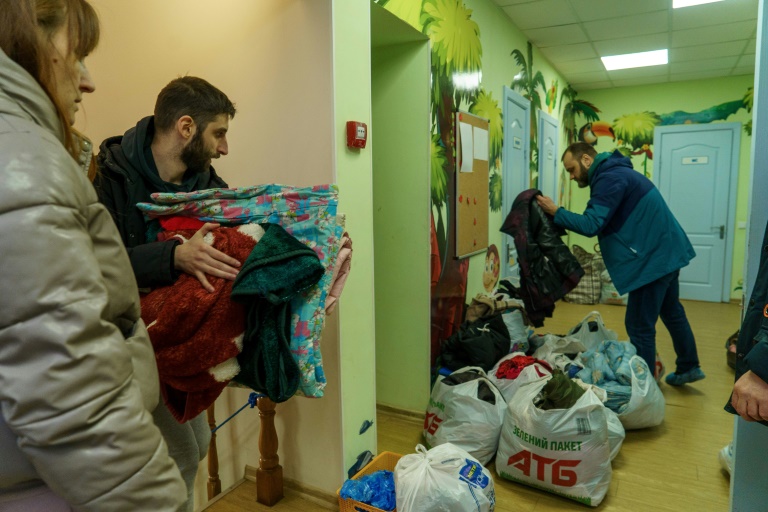
After fleeing to Dnipro, a city on the river of the same name that divides east and central Ukraine, the family have taken refuge in a children’s day care centre called the Banana Club. 

They sleep under a canopy of whale and teddy bear cartoons in a single room with their three children, aged between 14 and two years old, and three other family members.

Dnipro has become a relative safe haven, currently experiencing less intense bombardment than other cities. 

But air raid sirens sound several times a day and Russian troops have advanced towards the nearby city of Zaporizhzhia, where they attacked and took over Europe’s largest atomic power plant just 80 kilometres (50 miles) to the south.

Across the city, nurseries, shops and hotels are taking in people fleeing heavy fighting in eastern Ukraine. 

Viktor says Volnovakha, near Ukraine’s former front line with Russian-backed separatists, has been completely destroyed. 

The family spent three days sheltering in a basement alongside 30 neighbours with no heat or electricity before they could escape. 

“The attacks went on all night and all day. We told the children it was thunder,” said Viktor, who owned a gardening business before they fled. 

– ‘Never go back’ –

“We can never go back to Volnovakha. Everything has been ruined and nothing is there anymore.”

The family want to leave Ukraine and head west to one of its European neighbours, but under mobilisation rules — as Viktor is of fighting age — he cannot leave the country. 

Natalya does not want to be separated. The family say they will stay at the Banana Club for now.

No figures are available for the number of people internally displaced by eight days of fighting, but more than 1.2 million Ukrainians have fled the country, according to the UN.

Vesta Burkina, 31, who is volunteering to help coordinate the arrival of displaced people said there are currently two families and one lone woman staying at the Banana Club. 

However, on Friday she is expecting the arrival of a further 20 people from Kharkiv, Ukraine’s second largest city, which has been under heavy assault for days.

“Many will only stay one or two days, but just don’t have the money to move on to western Ukraine,” she said.

Russian forces crossed the Ukrainian border in several places last week. In the north and the east, they have met tougher than expected Ukrainian resistance.

But in the south, crossing from the Russian-occupied Crimea region, armoured columns have made greater progress, advancing as far as Zaporizhzhia and its nuclear power plant.

More than 400 Nigerians who fled Ukraine return home

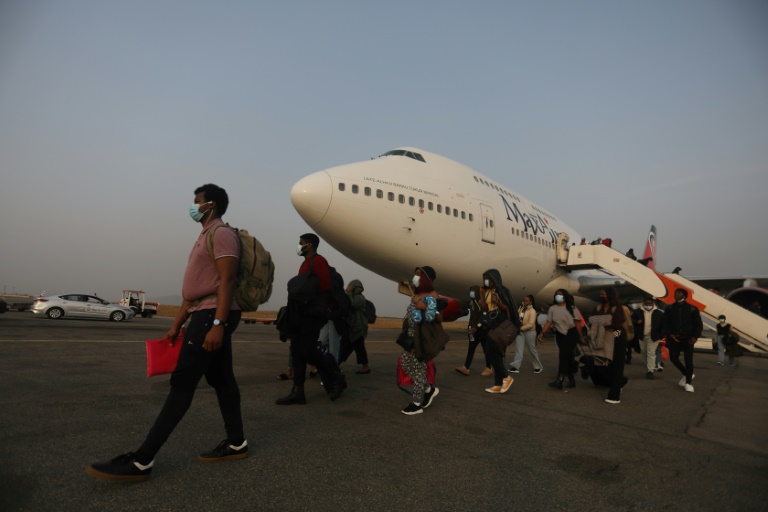
A first batch of more than 400 Nigerians who fled Ukraine following the Russian invasion were flown home on Friday.

The group, most of whom were students, arrived shortly after 0630 GMT on a chartered flight from Romania’s capital Bucharest, one of the hubs from where African governments are scrambling to extract stranded citizens.

Nigerian foreign ministry official Gabriel Aduda tweeted pictures of the group inside an aircraft late on Thursday, saying “415 Nigerians mostly students fleeing the Ukraine-Russian war from Bucharest.”

After landing in the capital Abuja, many looked tired but relieved that their ordeal was over. 

“I’m very happy to be back home, thank you, Nigeria!” one young woman said as she walked off the tarmac and into the terminal.

As they filled out government forms, many still wearing their winter clothes, one student recounted his traumatic experience.

“There were a lot of heavy artillery, missiles, bombs and all that,” said Oyewo Elisha, 22, who was studying in Kharkiv. 

“My school, everywhere… it’s really bad. We couldn’t stay there.”

Haroun Rukayat, 20, said she had to wait 14 hours in the cold before she was able to cross into Romania.

“I’m one of the lucky ones… some people are still stuck in different cities, especially in Sumy where the war is really going on,” she said. 

“I am thankful that I was able to get out.”

Minister of Foreign Affairs Geoffrey Onyeama said there were about 5,600 Nigerian students in Ukraine and an estimated 8,000 Nigerian citizens in the country before the war.

On Monday he said an estimated 1,000 citizens were ready for pickup from Romania, 200 others in Slovakia, and 250 both in Hungary and Poland. 

A million refugees have fled Ukraine so far, the UN said Thursday, warning that unless the onslaught ended immediately, millions more were likely to flee.

Ghana on Tuesday became the first African country to return its citizens, flying home 17 out of 500 stranded students.

Outrage as Russian forces attack Ukrainian nuclear plant

Ukraine accused the Kremlin of “nuclear terror” and the West expressed horror on Friday, after Europe’s largest atomic power plant was attacked and taken over by invading Russian forces.

Blasts lit up the night sky as the plant at Zaporizhzhia came under shell fire, while Russian troops advanced in southern Ukraine and bombarded several cities elsewhere.

Ukrainian firefighters said they were prevented from accessing the site initially, before they were able to douse a blaze at a training facility on the site. 

The six reactors at Zaporizhzhia, which can power enough energy for four million homes, were apparently undamaged and international monitors reported no spike in radiation. 

The attack killed three Ukrainian soldiers, according to Kyiv’s nuclear operator Energoatom, and was slammed in Washington, London and other Western capitals as utterly irresponsible.

“We survived a night that could have stopped the story, the history of Ukraine, the history of Europe,” Ukrainian President Volodymr Zelensky said.

An explosion at Zaporizhzhia would have equalled “six Chernobyls”, he said, referring to the plant in Ukraine that was the site of the world’s worst nuclear disaster in 1986.

“Russian tank commanders knew what they were firing at,” Zelensky alleged, adding: “The terrorist state now resorted to nuclear terror.”

– Russia blames Ukraine –

For its part, Moscow said the attack on Zaporizhzhia was staged by “Ukrainian sabotage groups with the participation of foreign mercenaries”.

“The goal of the provocation at the nuclear station was to try to accuse Russia of creating a radioactive flashpoint,” Russian defence ministry spokesman Igor Konashenkov claimed.

“This shows the Kyiv regime’s criminal plan,” he said, adding that the plant had been secured by Russian troops and was functioning normally.

After phoning Zelensky during the night, British Prime Minister Boris Johnson demanded an urgent meeting of the UN Security Council.

He accused Russian President Vladimir Putin of “reckless actions” that “could now directly threaten the safety of all of Europe”, and pressed anew for a ceasefire.

Putin, however, has been unrepentant about an offensive that has cast Russia into the economic, sporting and cultural equivalent of exile to Siberia.

He said Thursday that the invasion was going “strictly according to schedule, according to plan” in its aim of driving out the “neo-Nazis” in Kyiv led by Zelensky — who is Jewish.

Addressing security chiefs in televised comments, Putin added that he would never abandon his conviction “that Russians and Ukrainians are one people”. 

French President Emmanuel Macron, after speaking to Putin on Thursday, believes “the worst is to come”, an aide said.

– ‘Like Aleppo’ –

Russia has intensified strikes across the country during the nine days of conflict, with fresh reports of civilian casualties and devastating damage, particularly in southern areas near Kherson, the first city to fall to Moscow’s troops.

In a second round of talks held Thursday, Moscow agreed to a Ukrainian request for humanitarian corridors to allow terrified residents to flee.

But there was no clarity on how the corridors would work, and no sign of any move towards a ceasefire.

Zelensky called for direct talks with Putin. But he also urged the West to step up military assistance and “give me planes”. 

Ukrainian leaders warn that Russia, with its invasion bogged down north of Kyiv, is bent on reprising the horrific tactics that it used to level the Syrian city of Aleppo in 2016. 

The port city of Mariupol, east of Kherson, is cut off without water or electricity in the depths of winter. 

Mariupol’s deputy mayor Sergei Orlov told BBC radio that its humanitarian situation was “terrible”, after 40 hours of continuous shelling including on schools and hospitals.

“Today Putin style of war is like Aleppo. So Mariupol goes to Aleppo,” Orlov said in English. “I believe that he wants to destroy Ukraine as a nation, and Mariupol is on this way.” 

In the northern city of Chernihiv, 33 people died Thursday when Russian forces hit residential areas, including schools and a high-rise apartment block, according to local officials.

– Facebook, BBC blocked –

Authorities say residential parts in the eastern city of Kharkiv have also come under indiscriminate shelling, which UN prosecutors at The Hague are investigating as a possible war crime.

The UN Human Rights Council on Friday overwhelmingly voted to create a top-level investigation into violations committed in the invasion.

The conflict has already produced more than one million refugees who have flooded into neighbouring countries in Europe.

Both the EU and the United States said they would approve temporary protection for all refugees fleeing the war.

It is also driving some Russians to flee the country, fearful that now is their last chance to escape the economic pain from ever-tougher Western sanctions, or a Kremlin crackdown on domestic opposition.

On one of the few remaining routes from Russia to the EU, trains from Saint Petersburg to Finland have been packed with Russians.

“I know some people who are quite desperate at the moment to go abroad,” said Elena, a 37-year-old Russian living in Finland who did not want to give her full name.

A lot of people “don’t feel safe, they know that the economic situation will be very hard from now on, and also many people from a moral perspective can’t bear staying”, she told AFP in Helsinki.

It is not just people fleeing.

Six lions and six tigers evacuated from near Kyiv arrived at a zoo in Poland, following a two-day odyssey skirting battle frontlines and coming face to face with Russian tanks.

Putin’s invasion has also pushed some eastern European countries to lean even harder West, with both Georgia and Moldova applying for EU membership.

In Russia, authorities have imposed a news blackout and two liberal media groups said they were halting operations, in another death-knell for independent reporting under Putin’s regime.

On Friday, Facebook and multiple media websites including the BBC were partially inaccessible in Russia.

And Russian lawmakers approved legislation to impose fines and jail terms of up to 15 years for anyone publishing “fake news” about the army.

Western social media companies “carry hatred and lies” against Russia, parliament chairman Vyacheslav Volodin said.

But some Russians appear keen to bypass their state-controlled media.

The BBC says the audience of its Russian-language news website has more than tripled this week, to a record 10.7 million people, and the UK broadcaster vowed to keep the site up.

burs-jit/ach 

At least 30 dead in suicide attack on Pakistan shiite mosque

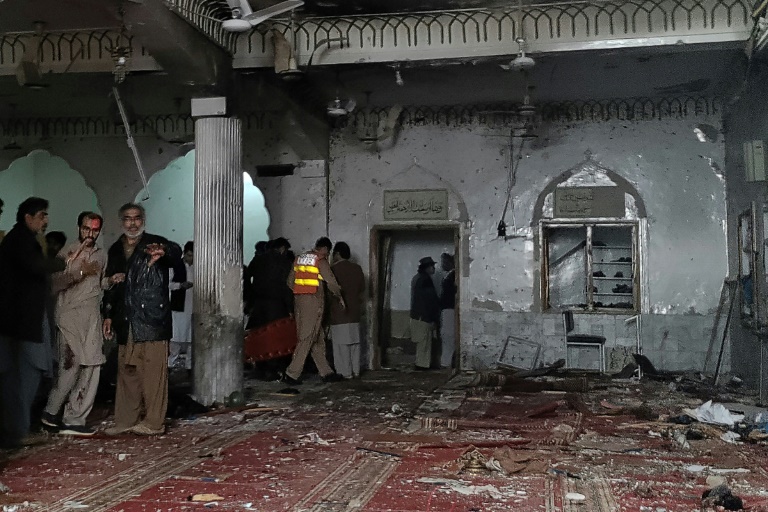
At least 30 people were killed and 80 wounded in a suicide attack at a Shiite mosque on Friday in the northwestern Pakistani city of Peshawar, where rescuers frantically ferried the dead and wounded from the scene. 

One witness saw the attacker enter the mosque before Friday prayers and open “fire with a pistol”, picking out the worshippers “one-by-one”. 

He “then blew himself up”, Ali Asghar said.

The attack comes on the first day of a cricket Test match in Rawalpindi — around 190 kilometres (120 miles) to the east — between Pakistan and Australia, who haven’t toured the country in nearly a quarter of a century because of security concerns.

Muhammad Ali Saif, a spokesman for the Khyber Pakhtunkhwa provincial government, told AFP “more than 30” were killed and some 80 others wounded in the blast near Peshawar’s Kocha Risaldar, a similar distance west of the capital Islamabad. 

“It was a suicide attack,” he said.

An AFP reporter saw body parts strewn at the site, where desperate family members were held back by police. The explosion blew out the windows of nearby buildings.

“I saw a man firing at two policemen before he entered the mosque. Seconds later I heard a big bang,” said witness Zahid Khan.

– Police officers shot –

Peshawar police chief Muhammad Ijaz Khan told AFP the death toll could be higher than 30 and that two attackers were involved.

He said two police officers were shot at the entrance of the mosque.

“One policeman died on the spot while the other was critically injured,” he said.

Muhammad Asim Khan, a spokesman for Peshawar’s Lady Reading Hospital said “we have declared an emergency at the hospitals and more injured are being brought”.

A spokesman for Prime Minister Imran Khan’s office said he “strongly condemned” the attack.

No group immediately claimed responsibility for the apparent suicide bombing.

Peshawar — just 50 kilometres from the porous border with Afghanistan — was a frequent target of militants in the early 2010s but security has greatly improved in recent years.

Sunni majority Pakistan has recently been battling a resurgence of its domestic chapter of the Taliban, Tehreek-e-Taliban Pakistan (TTP).

A one-month truce last year failed to hold and there are fears the TTP — which has targeted Shia Muslims in the past — has been emboldened by the success of the Afghan Taliban.

Shiites in the region have also been targeted by the regional iteration of the Islamic State group, Islamic State Khorasan (ISK).

At least 31 people were killed in a suicide blast at a crowded market in Peshawar in 2018.

At least 88 people died and hundreds more were wounded a year earlier when a suicide bomber blew himself up among a crowd of devotees at a revered Sufi shrine in southern Sindh province.

More than 400 Nigerians who fled Ukraine return home

A first batch of more than 400 Nigerians who fled Ukraine following the Russian invasion were flown home on Friday.

The group, most of whom were students, arrived shortly after 0630 GMT on a chartered flight from Romania’s capital Bucharest, one of the hubs from where African governments are scrambling to extract stranded citizens.

Nigerian foreign ministry official Gabriel Aduda tweeted pictures of the group inside an aircraft late on Thursday, saying “415 Nigerians mostly students fleeing the Ukraine-Russian war from Bucharest.”

Many looked tired but relieved that their journey was over. 

“I’m very happy to be back home, thank you, Nigeria!” one young woman said as she walked off the tarmac and into the terminal in Abuja.

Minister of Foreign Affairs Geoffrey Onyeama said there were about 5,600 Nigerian students in Ukraine and an estimated 8,000 Nigerian citizens in the country before the war.

On Monday he said an estimated 1,000 citizens were ready for pickup from Romania, 200 others in Slovakia, and 250 both in Hungary and Poland. 

A million refugees have fled Ukraine so far, the UN said Thursday, warning that unless the onslaught ended immediately, millions more were likely to flee.

Ghana on Tuesday became the first African country to return its citizens, flying home 17 out of 500 stranded students.

Russia backs jail time for 'fake' army news, restricts media

Russian lawmakers approved legislation Friday to impose fines and harsh jail terms for publishing “fake news” about the army — the latest move to silence dissent one week after Moscow launched the invasion of Ukraine.

The bill sets out jail terms of varying lengths and fines against people who publish “knowingly false information” about the military.

“If the fakes led to serious consequences, (the legislation) threatens imprisonment of up to 15 years,” Russia’s lower house of parliament said.

Amendments were also passed to fine or jail anybody calling for sanctions against Russia.

Opening the parliament’s session, chairman Vyacheslav Volodin railed against foreign social media, after Facebook was briefly inaccessible in Russia on Friday.

“All these IT companies beginning with Instagram, and ending with the others, are based in the United States of America. It is clear they are used as weapons. They carry hatred and lies. We need to oppose this,” he said. 

The past year has seen an unprecedented crackdown on independent and critical voices in Russia that has intensified since the invasion.

Russia’s media watchdog said Friday it had restricted access to the BBC and other independent media websites, further tightening controls over the internet.

– Foreign media restricted –

Access to the BBC, the independent news website Meduza, German broadcaster Deutsche Welle, and the Russian-language website of the US-funded Radio Free Europe/Radio Liberty, Svoboda, were “limited” by Roskomnadzor following a request from prosecutors.

Roskomnadzor said in each case, the request was filed on February 24, the day Russian President Vladimir Putin launched his attack on Ukraine.

Valery Fadeyev, the head of the Kremlin’s human rights council accused Western media of being behind “a huge flow of false information that comes from Ukraine” and said  the council had set up a project to stop it.

In another attack on critical voices, Russian police on Friday were carrying out searches at the office of the country’s most prominent rights group, Memorial, which was ordered to close late last year, sparking international outcry.

Russia’s invasion has already claimed hundreds of lives, displaced more than a million people and spurred allegations of war crimes.

Western-led sanctions levelled against Russia in retaliation have sent the ruble into free-fall forcing the central bank to impose a 30-percent tax on sales of hard currency after a run on lenders.

– State-media narratives –

Moscow has few economic tools with which to respond but the duma on Friday adopted a bill that would freeze any assets inside Russia of foreigners “violating rights of Russians”.

Russian media have been instructed to publish only information provided by official sources, which describe the invasion as a military operation. 

State-controlled broadcasters have meanwhile reinforced government narratives about nationalism in Ukraine and Moscow’s claim that Ukrainian soldiers are using civilians as human shields.

For the moment, it appears the invasion has marked the beginning of the end for what remains of Russia’s independent media.

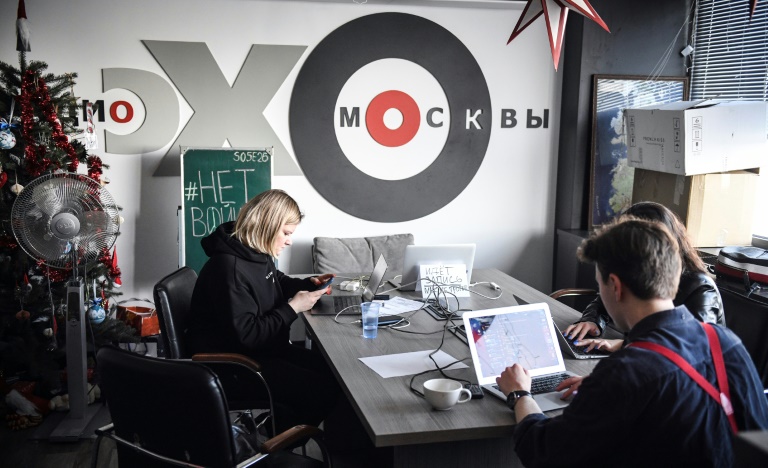
Ekho Mosvky — a liberal-leaning radio station majority-owned by Russia’s energy giant Gazprom — said Thursday it would shut down after being taken off air over its  Ukraine war coverage.

Authorities had on Monday blocked the Ekho website and took the station off air as punishment for spreading “deliberately false information” about the conflict.

Another independent outlet, Znak, said Friday it was ceasing work “due to the large number of restrictions that have recently appeared for the work of the media in Russia”.

The BBC said this week that the audience of its Russian language news website had “more than tripled…with a record reach of 10.7 million people in the last week”.

In a Friday response to the blocking, a BBC spokesperson said the company will “continue our efforts to make BBC News available in Russia, and across the rest of the world” despite the restrictions. 

Close Bitnami banner
Bitnami