World

Support for Macron shown rising amid Ukraine war crisis

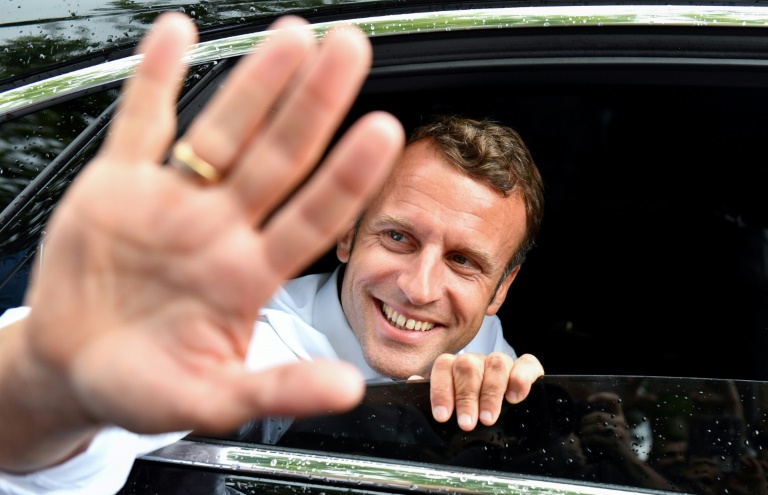
A new poll Friday showed a surge in support for French President Emmanuel Macron ahead of presidential elections next month, a day after he confirmed he was running for a second term.

The survey measuring voting intentions from the BVA polling group found he had gained a massive five points in the last fortnight ahead of the first round of voting on April 10, with voters seemingly impressed by his handling of the Ukraine war crisis. 

It suggested Macron would finish first with 29 percent in the first round and would then triumph in a second run-off vote irrespective of his opponent, with far-right candidate Marine Le Pen seen as his closest challenger.

“Emmanuel Macron is benefiting from his triple status as head of state, protector of the people and their values, (and) head of the army and national diplomacy,” BVA said in a statement.

Macron confirmed his plans to seek a second term on Thurday evening in a low-key letter addressed to voters, saying he was seeking their “trust” for another five years “to defend our values that are threatened by the disruptions of the world.” 

He acknowledged that the election campaign would be overshadowed by Russia’s war on its neighbour, which has seen him take a prominent role in Western efforts to find a diplomatic solution.

“Of course, I will not be able to campaign as I would have liked because of the context,” he said.

Some of his opponents welcomed the declaration, less than 24 hours before a deadline to do so, while others scoffed at it.

“The democratic debate, of one programme versus another that I have been calling for for months, can finally take place,” Socialist Party candidate Anne Hidalgo said. 

“We might have expected a letter of apology beforehand,” Manuel Bompard, the campaign manager of hard-left candidate Jean-Luc Melenchon, said.

Far-right candidate Eric Zemmour accused him of serving “a term for nothing”, adding that “our country has become unlivable and you have become the cause.”

– Domestic issues –

A host of recent polling figures have shown a rise in Macron’s personal ratings over the last fortnight and a slim majority of French people approve of his handling of the Ukraine crisis.

A poll on Thursday by the Kantar group showed the proportion of voters expressing confidence in him had risen five points to 45 percent, its highest level since August 2017.

The war has also served to weaken some of his opponents such as Le Pen, Zemmour and Melenchon who have all either defended Russian leader Vladimir Putin in the past or promoted their proximity with him.

Antoine Bristielle, a public opinion expert at the Jean-Jaures Foundation, a Paris think-tank, said the Ukraine crisis meant the campaign was focused on “international issues which are an area of strength for Emmanuel Macron.

“It’s better for him than social issues or questions around household income,” he said.

But many observers are now beginning to fear that the war will eclipse discussion of domestic issues which voters are known to be concerned about, such as crime, unemployment or immigration.

Little is known about the 44-year-old head of state’s programme for the next five years, but he promised more tax cuts in his declaration letter, changes to the education system and a further strengthening of the European Union.

“The main risk for Macron is being re-elected relatively easily but without a proper campaign,” Bristielle said. 

“If the debate is not settled in the ballot box, then it gets settled on the streets.”

After his election in 2017, Macron claimed he had a strong mandate to push through major tax and labour market reforms, but opponents openly questioned his legitimacy because of low turn-out and his slim victory margin in the first round.

After a year and half of relatively minor protests, Macron faced a national revolt by so-called “Yellow Vest” protesters in late 2018 who occupied roundabouts across the country and organised often violent demonstrations in the capital and other cities. 

Some pollsters predict that abstention rates, which hit a record in 2017, could be even higher in this year’s vote on April 10 and 24.
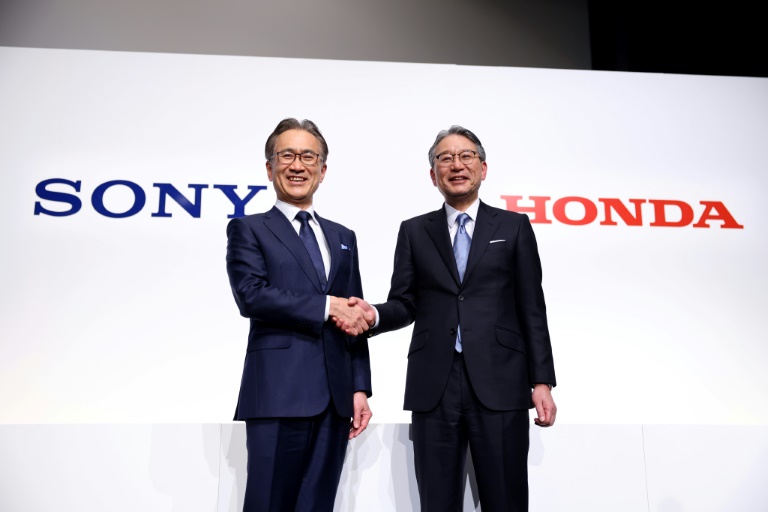
Sony and Honda plan joint electric vehicle firm

Sony is teaming up with automaker Honda to start a new company that will develop and sell electric vehicles, as the Japanese tech and electronics giant leaps into the rapidly growing sector.

Major global carmakers are increasingly prioritising electric and hybrid vehicles as concern about climate change grows.

Sony Group said Friday the two Japanese names hope to establish their firm by the end of this year with sales of their first electric model expected to begin in 2025.

The announcement comes on the heels of Sony’s January unveiling of a new prototype, its Vision-S electric vehicle, and the announcement of a new subsidiary Sony Mobility to explore entering the EV market.

“Although Sony and Honda are companies that share many historical and cultural similarities, our areas of technological expertise are very different,” Sony Group president Kenichiro Yoshida said in a statement.

“I believe this alliance which brings together the strengths of our two companies offers great possibilities for the future of mobility.”

At a joint press conference, Honda CEO Toshihiro Mibe said discussions on the collaboration had picked up speed when Honda and Sony staff “felt big possibilities, like a chemical reaction” at a joint mobility workshop held last year.

Honda will be responsible for manufacturing the pair’s first vehicle, but both companies will work together on design, tech and sales.

Mio Kato, an analyst at Lightstream Research who publishes on Smartkarma, said Sony would be able to make use of its technology from image sensors to next-gen display as well as AI in the new vehicles.

“(The alliance) helps Sony maintain its asset-light model and is also positive for Honda, but we do feel that it makes Honda look a little lost in the changing world,” he said in a note.

At present, around 10 percent of European car sales are EVs, and the US figure is just two percent.

But demand is growing, and other major automakers including Honda’s Japanese rivals are investing money and resources into electric vehicles.

Earlier this year, the Nissan auto alliance promised to offer 35 new electric models by 2030 as it announced a total investment of $25 billion in the sector.

Toyota, the world’s top-selling carmaker, has also recently hiked its 2030 electric vehicle sales goal by 75 percent in a more ambitious plan for the sector.

And last week, German auto giant Volkswagen said it was drawing up plans to list its luxury brand Porsche as it looks to raise the funds for its move to electric vehicles.

Yoshida emphasised on Friday that the new partnership was “not exclusive”.

“We want to expand it, because we want to contribute to and lead the evolution of mobility,” he said.

Outrage as Russian forces attack Ukrainian nuclear plant

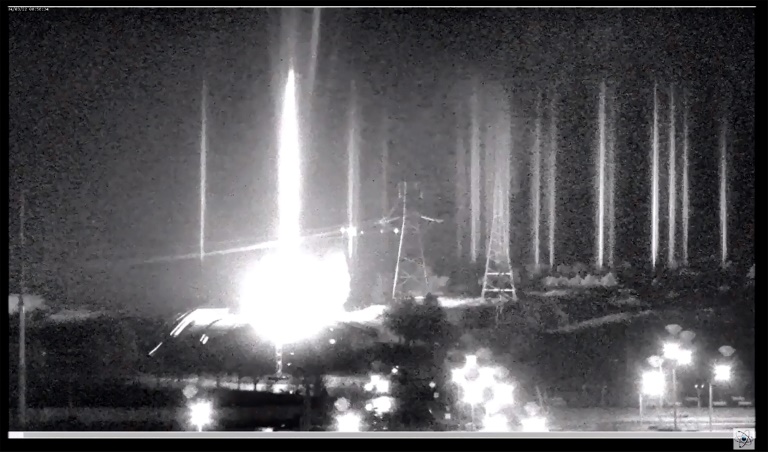
Ukraine accused the Kremlin of “nuclear terror” on Friday, after Europe’s largest atomic power plant was attacked and taken over by invading forces, sparking Western horror at the threat of Russia’s war contaminating all of Europe.

Blasts lit up the night sky as the plant at Zaporizhzhia came under shell fire, while Russian forces advanced in southern Ukraine and continued their sometimes indiscriminate bombardment of several cities elsewhere.

Ukrainian firefighters said they were prevented from accessing the site initially, before the attack was paused and they were able to douse a blaze at a training facility on the site. 

The six reactors at Zaporizhzhia, which can power enough energy for four million homes, were apparently undamaged and international monitors reported no spike in radiation. 

But the attack was slammed in Washington, London and other Western capitals as utterly irresponsible.

“We survived a night that could have stopped the story, the history of Ukraine, the history of Europe,” Ukrainian President Volodymr Zelensky said.

An explosion at Zaporizhzhia would have equalled “six Chernobyls”, he said, referring to the plant in Ukraine that was the site of the world’s worst nuclear disaster in 1986.

“Russian tank commanders knew what they were firing at,” Zelensky alleged, adding: “The terrorist state now resorted to nuclear terror.”

After phoning Zelensky during the night, British Prime Minister Boris Johnson demanded an urgent meeting of the UN Security Council.

He accused Russian President Vladimir Putin of “reckless actions” that “could now directly threaten the safety of all of Europe”, and pressed anew for a ceasefire.

Putin, however, has been unrepentant about an offensive that has cast Russia into the economic, sporting and cultural equivalent of exile to Siberia.

He said Thursday that the invasion was going “strictly according to schedule, according to plan” in its aims of driving out the “neo-Nazis” in Kyiv led by Zelensky — who is Jewish.

Addressing security chiefs in televised comments, Putin added that he would never abandon his conviction “that Russians and Ukrainians are one people”. 

French President Emmanuel Macron, after speaking to Putin on Thursday, believes “the worst is to come”, an aide said.

– ‘Like Aleppo’ –

Russia has intensified strikes across the country during the nine days of conflict, with fresh reports of civilian casualties and devastating damage, particularly in southern areas near Kherson, the first city to fall to Moscow’s troops.

In a second round of talks held Thursday, Moscow agreed to a Ukrainian request for humanitarian corridors to allow terrified residents to flee, but there was no clarity on how they would work, and no sign of any move towards a ceasefire.

Zelensky called for direct talks with Putin, saying they were “the only way to stop this war”. But he also urged the West to step up military assistance and “give me planes”. 

Ukrainian leaders warn that Russia, with its offensive stalling north of Kyiv, is bent on reprising the horrific tactics that used to level the Syrian city of Aleppo in 2016. 

The port city of Mariupol, east of Kherson, is cut off without water or electricity in the depths of winter. 

Mariupol’s deputy mayor Sergei Orlov told BBC radio his city’s humanitarian situation was “terrible”, after 40 hours of continuous shelling including on schools and hospitals.

“Today Putin style of war is like Aleppo. So Mariupol goes to Aleppo,” Orlov said in English. “I believe that he wants to destroy Ukraine as a nation, and Mariupol is on this way.” 

In the northern city of Chernihiv, 33 people died Thursday when Russian forces hit residential areas, including schools and a high-rise apartment block, according to local officials.

Authorities say residential parts in the eastern city of Kharkiv have also come under indiscriminate shelling, which UN prosecutors are investigating as a possible war crime.

Many Ukrainians were digging in, with volunteers in the southern industrial hub of Dnipro filling sandbags and collecting bottles for Molotov cocktails.

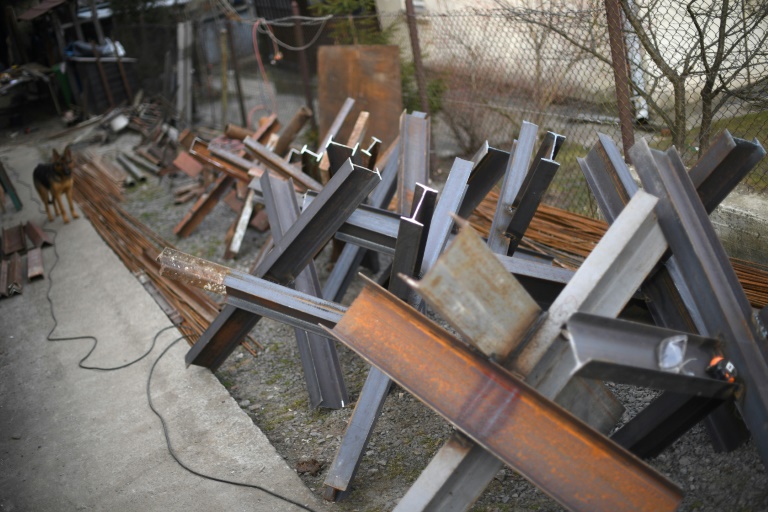
In the western city of Lviv, others organised food and supplies to send to cities under attack and produced home-made anti-tank obstacles after watching YouTube tutorials.

– Facebook, BBC blocked –

The conflict has already produced more than one million refugees who have flooded into neighbouring countries to be welcomed by volunteers giving them water, food and medical treatment.

Both the EU and the United States said they would approve temporary protection for all refugees fleeing the war.

It is also driving some Russians to flee west.

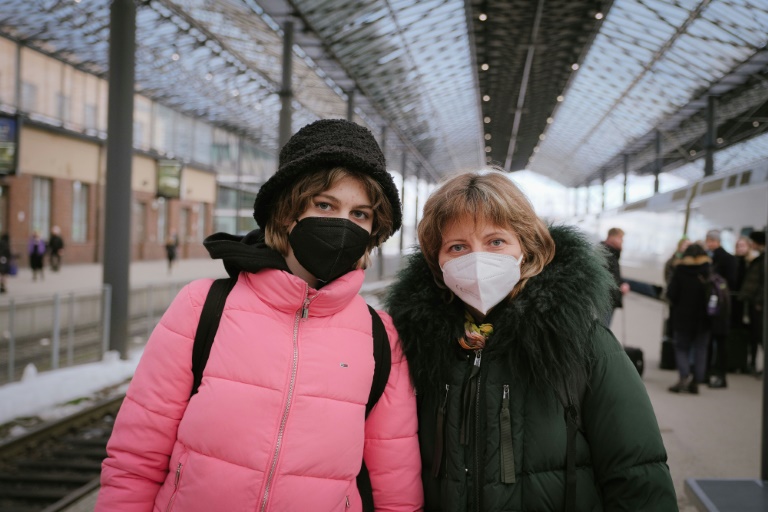
On one of the few remaining routes from Russia to the EU, trains from Saint Petersburg to Finland have been packed with Russians fearful that now is their last chance to escape ever-tougher Western sanctions or a Kremlin crackdown on domestic opposition.

“I know some people who are quite desperate at the moment to go abroad,” said Elena, a 37-year-old Russian living in Finland who did not want to give her full name.

A lot of people “don’t feel safe, they know that the economic situation will be very hard from now on, and also many people from a moral perspective can’t bear staying”, she told AFP in Helsinki.

The fear of igniting all-out war with nuclear-armed Russia has put some limits on Western support for Ukraine, though a steady supply of weaponry and intelligence continues.

The main lever used to pressure Russia globally has been sanctions, which have sent the ruble into free-fall and forced the central bank to impose a 30-percent tax on sales of hard currency after a run on lenders.

Putin’s invasion has also pushed some eastern European countries to lean even harder West, with both Georgia and Moldova applying for EU membership on Thursday.

In Russia, authorities have imposed a news blackout and two liberal media groups said they were halting operations, in another death-knell for independent reporting under Putin’s regime.

On Friday, Facebook and multiple media websites including the BBC were partially inaccessible in Russia, as authorities crack down on voices criticising the war.

Intel and Airbnb were among the latest Western companies to announce they were pausing business in Russia and Belarus.

burs-jit/dc/bp

US should diplomatically recognise 'free' Taiwan: Pompeo

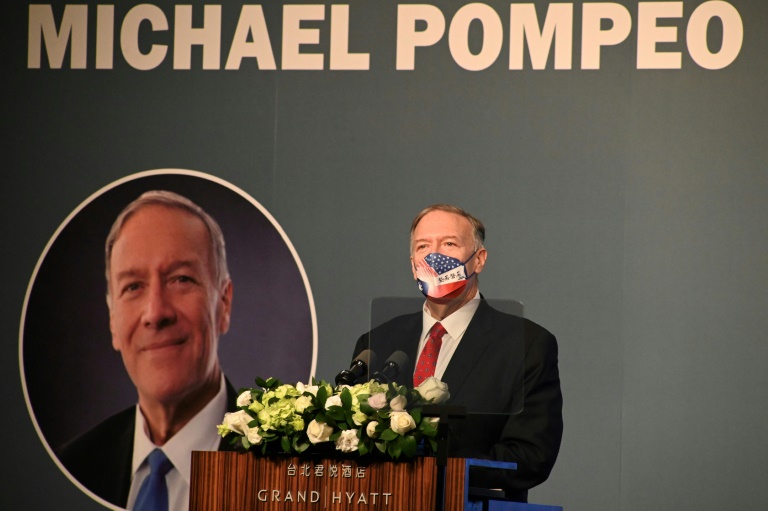
The United States should diplomatically recognise Taiwan as “a free and sovereign country”, former US Secretary of State Mike Pompeo said Friday while visiting the island. 

Pompeo, one of former president Donald Trump’s most hawkish advisers on China, arrived Wednesday for a visit at a time of rising tensions between Washington and Beijing over both the self-ruled island and the crisis sparked by Russia’s invasion of Ukraine.

Democratic Taiwan has watched the Ukraine situation closely, as it lives under constant threat by Beijing, which claims sovereignty over the island and vows to seize it one day — by force if necessary.

Pompeo told reporters that a Chinese invasion would depend on “the willingness of the Western world to demonstrate that the costs for (Chinese leader) Xi Jinping engaging in that kind of activity are just too high”.

During an earlier speech to a think tank, he said that while Washington should continue to engage with Beijing as a sovereign government, offering Taipei diplomatic recognition “can no longer be ignored, avoided or treated as secondary”.

“It is my view that the United States government should immediately take necessary and long-overdue steps to do the right and obvious thing, that is to offer the Republic of China (Taiwan) America’s diplomatic recognition as a free and sovereign country.”

The Republic of China is Taiwan’s official name. 

Washington has remained Taipei’s most important ally and leading arms supplier despite switching diplomatic recognition to Beijing in 1979. 

But Pompeo said the move “isn’t about Taiwan’s future independence, it’s about recognition of an unmistakable, already existing reality”. 

– China’s ‘red line’ –

Beijing considers a formal declaration of independence as something that would cross its “red line” and has warned that such a step could trigger war. 

Taiwan’s current leader, Tsai Ing-wen, who has won elections twice, hails from a party that historically favours independence.

But her stance is deliberately nuanced. 

She says there is no need to declare independence, as Taiwan is already a sovereign nation called the Republic of China (Taiwan).

Pompeo’s speech advocated the same position.

“As many of your past and present leaders have made clear, there’s no need for Taiwan to declare independence, because it’s already an independent nation. Its name is the Republic of China (Taiwan),” he said. 

“The people and government of the United States should simply accept this fundamentally decent, morally right thing. This is easy. The Taiwanese people deserve the world’s respect for continuing down this free, democratic and sovereign path.”  

Beijing on Friday lashed out at Pompeo over his remarks, calling him “a former politician whose credibility has gone bankrupt”.

“This kind of person’s wild ravings and nonsense will never prevail,” Chinese foreign ministry spokesman Wang Wenbin told reporters at a regular briefing.

In Taiwan, Pompeo is one of the best-known US politicians, in part because of his decision to lift restrictions on official contacts with Taipei on his way out of office.

President Tsai met Pompeo on Thursday, conferring on him an honorary medal and praising him for facilitating “multiple breakthroughs” in Taiwan-US relations.

President Joe Biden has continued most of the Trump-era policies towards Taiwan. 

China has ramped up pressure on Taiwan since the 2016 election of Tsai

China’s sabre-rattling has increased considerably over the past year, with warplanes breaching Taiwan’s air defence zone on a near-daily basis.

Russians pack trains into Finland as sanctions bite

It’s one of the few remaining routes from Russia to the EU: trains to Finland are packed with Russians fearful that now is their last chance to escape the impact of Western sanctions.

After two years of pandemic, the 6:40 am from St Petersburg was full of largely Russian passengers as it pulled into Helsinki station on Thursday.

“We decided with our families to go back as soon as possible, because it’s unclear what the situation will be in a week,” Muscovite Polina Poliakova told AFP as she wheeled her suitcase along platform 9.

Travelling “is hard now because everything is getting cancelled,” added Beata Iukhtanova, her friend who studies with her in Paris, where the pair were headed.

The Allegro express train linking St Petersburg to the Finnish capital is currently the only open rail route between Russia and the EU.

It is therefore one of the few remaining ways out of the country since the widespread airspace closures in response to Russia’s invasion of Ukraine a week ago.

“The trains coming from St Petersburg to Helsinki are now full for the next few days,” said Topi Simola, senior vice president of Finnish railway operator VR.

He said that passenger numbers jumped on Saturday, two days after Moscow began its assault on Ukraine.

Since then, people’s motives for travelling on the 3.5 hour twice-a-day service appear to have changed, Simola said.

“We can see from the luggage they carry that people are moving to somewhere else, they are basically moving for good.”

– ‘We are lucky’ –

The Allegro train to Helsinki is, however, only open to a select few. 

Russia stipulates that passengers must be Russian or Finnish citizens, a visa is required, and passengers must prove they have an EU-recognised Covid vaccination, not the Sputnik dose which is most commonly given in Russia.

Most passengers are therefore Russians who live or work in Europe, such as 14-year-old Maria and her mother Svetlana, who took a last-minute train to Finland after the cancellation of their flight on Sunday back to Austria, where they live.

“Everyone was like, ‘I don’t know what to do’,” Maria told AFP. “First we thought we should travel through Turkey, but it’s way more expensive than Finland, so we are lucky.”

VR, which operates the service in partnership with the Russian railways, is looking to have the service opened to EU passport holders, and to increase capacity.

“We know that there are tens of thousands of EU citizens still in Russia and we assume that many of them would like to come back home,” Simola said.

– ‘Desperate’ to leave –

Since the start of the invasion large numbers of Russians are reported to be looking to leave the country, worried that the borders will close imminently and about the impact of Western sanctions.

“Many people are in a panic,” said Daria, arriving back in Helsinki a week or two earlier than planned, to resume her studies.

“I know some people who are quite desperate at the moment to go abroad,” said Elena, a Russian who lives and works in Finland and who did not want to use her full name.

Elena was visiting her native Moscow when the Ukraine assault began last Thursday, and changed her flight to return to Finland on the same day, becoming one of the last to travel before flights to the EU were frozen.

A lot of people “don’t feel safe, they know that the economic situation will be very hard from now on, and also many people from a moral perspective can’t bear staying,” the 37-year-old told AFP.

While trains out of Russia have been sold out, the return service from Helsinki to St Petersburg has only been 30 percent full, Simola told AFP.

“I’m not planning to go back to Russia anytime soon, that’s for sure,” Elena said.

But she added that despite the difficulties there, “it’s impossible to compare it to the horrors happening in Ukraine at the moment.”

Intel, Airbnb join US tech freeze-out of Russia and Belarus

Intel and Airbnb announced they were pausing business in Russia and Belarus on Thursday, joining a US tech freeze-out of Moscow over its invasion of Ukraine.

The United States and European allies have imposed tough sanctions on Russia over the attack, with major corporations across a range of industries following suit by freezing business in the country.

Apple has halted all product sales in Russia and limited the use of Apple Pay, while Facebook, YouTube and Microsoft have moved to curb the reach of Russian state-linked news outlets. 

“Intel condemns the invasion of Ukraine by Russia and we have suspended all shipments to customers in both Russia and Belarus,” the chipmaker said in a statement. 

“Our thoughts are with everyone who has been impacted by this war.” 

Airbnb’s co-founder and CEO Brian Chesky, who has added a Ukrainian flag to his Twitter profile, tweeted that the company “is suspending all operations in Russia and Belarus,” without giving further details.

The vacation-rentals platform also announced on Monday that it would offer free short-term stays for up to 100,000 people fleeing fighting in Ukraine.

Since the beginning of the Russian offensive, one million refugees have left the Eastern European country, the United Nations said Thursday. 

Airbnb’s offer echoes aid extended by the firm last August to people escaping Afghanistan after the Taliban took power.

The California-based company has also faced scrutiny over its presence in China in recent weeks.

Research released this month showed Airbnb had hundreds of listings in Xinjiang and Tibet, two regions where China stands accused of widespread human rights abuses.

Airbnb told AFP at the time that it operates “where the US government allows us to” and has a “rigorous process… to help ensure we follow applicable rules.”

Lviv locals making 'Czech hedgehogs' to scupper Russian tanks

A group of men in the western Ukraine city of Lviv are helping the war effort against Russian invaders by producing home-made anti-tank obstacles, from tutorials found in the internet.

“On the first day (of the invasion), my brother came to me and said: ‘Listen, we need anti-tank obstacles’,” explained Tarass Filipchak, a 30-something local with a long red beard, looking half hipster and half lumberjack.

He was building a house in Lviv, the biggest city in western Ukraine, and found that some of the building materials would come in handy to produce the “Czech hedgehog” anti-tank obstacles, which were used in several countries during World War II.

Filipchak posted messages on Facebook or Instagram and then “friends, acquaintances, even people we don’t know” came to bring them what they needed or to lend a hand, he told AFP.

In his alleyway, a dozen of the anti-tank structures, each weighing around 100 kilograms, are waiting to be picked up by Ukrainian soldiers.

They will then send them all over Ukraine. Some have already been despatched to the capital Kyiv and the central Poltava region.

Filipchak has not been keeping an exact count, but estimates his little gang has made more than 60 “hedgehogs” since Russia attacked Ukraine on February 24. 

There are now a total of 20 people on the project, including 10 regulars.

“We couldn’t imagine that we would ever do this. We are peaceful people, humanists,” he said.

As a furniture maker, Filipchak has experience in working with metal, but nothing like this.

“We went on Wikipedia, looked at where they came from, who had invented them and we started to do the same,” he said.

The structures are angled metal bars. A vehicle attempting to drive over it will likely become stuck and possibly damaged.

At the end of Filipchak’s driveway, a few men are busy welding the massive metal pieces together. 

In the garage, which is cluttered with all kinds of objects, another man is shaping smaller obstacles by welding together tiny pieces of metal.

“Look at that, 1914!” laughs Vitali Bodnar, cigarette in mouth and welding helmet raised. That’s the year of manufacture of the metal obstacles they are recreating.

“They come from Austria,” he continued. From Gyor to be precise, a town that is now part of Hungary.

The computer developer considers the work his contribution to the war effort.

“We want to be a totally independent country, or in the European Union. No one wants to see this country become part of Russia,” Bodnar said.

He says he cannot imagine his country being defeated by Russian troops.

After the war is over, Bodnar wants to see his country’s borders open, to travel more freely. Then the computer developer laughs loudly: “Maybe I’ll open my own garage!”

Sony and Honda plan electric vehicle joint firm

Sony is teaming up with automaker Honda to start a new company that will develop and sell electric vehicles, the electronics giant said Friday, its latest step into the rapidly growing sector.

Major global carmakers are increasingly prioritising electric and hybrid vehicles as concern about climate change grows. 

Sony’s news comes on the heels of a January unveiling of a new prototype, its Vision-S electric vehicle, and the announcement that its new subsidiary Sony Mobility will explore jumping into the sector.

Sony Group said in a statement Friday that the two Japanese names hope to establish their firm by the end of this year, calling it “a strategic alliance”.

“This alliance aims… to realize a new generation of mobility and services that are closely aligned with users and the environment,” Sony said in a statement.

Sales of their first electric model are expected to begin in 2025, with Honda responsible for its manufacturing but both companies working on design, tech and sales.

“Although Sony and Honda are companies that share many historical and cultural similarities, our areas of technological expertise are very different,” Sony Group president Kenichiro Yoshida said.

“I believe this alliance which brings together the strengths of our two companies offers great possibilities for the future of mobility.”

At present, around 10 percent of European car sales are EVs, and the US figure is just two percent.

But demand is growing, and other major automakers including Honda’s Japanese rivals are investing money and resources into electric vehicles.

Earlier this year, the Nissan auto alliance promised to offer 35 new electric models by 2030 as it announced a total investment of $25 billion in the sector.

Toyota, the world’s top-selling carmaker, has also recently hiked its 2030 electric vehicle sales goal by 75 percent in a more ambitious plan for the sector.

Russians pack trains into Finland as sanctions bite

It’s one of the few remaining routes from Russia to the EU: trains to Finland are packed with Russians fearful that now is their last chance to escape the impact of Western sanctions.

After two years of pandemic, the 6:40 am from St Petersburg was full of largely Russian passengers as it pulled into Helsinki station on Thursday.

“We decided with our families to go back as soon as possible, because it’s unclear what the situation will be in a week,” Muscovite Polina Poliakova told AFP as she wheeled her suitcase along platform 9.

Travelling “is hard now because everything is getting cancelled,” added Beata Iukhtanova, her friend who studies with her in Paris, where the pair were headed.

The Allegro express train linking St Petersburg to the Finnish capital is currently the only open rail route between Russia and the EU.

It is therefore one of the few remaining ways out of the country since the widespread airspace closures in response to Russia’s invasion of Ukraine a week ago.

“The trains coming from St Petersburg to Helsinki are now full for the next few days,” said Topi Simola, senior vice president of Finnish railway operator VR.

He said that passenger numbers jumped on Saturday, two days after Moscow began its assault on Ukraine.

Since then, people’s motives for travelling on the 3.5 hour twice-a-day service appear to have changed, Simola said.

“We can see from the luggage they carry that people are moving to somewhere else, they are basically moving for good.”

– ‘We are lucky’ –

The Allegro train to Helsinki is, however, only open to a select few. 

Russia stipulates that passengers must be Russian or Finnish citizens, a visa is required, and passengers must prove they have an EU-recognised Covid vaccination, not the Sputnik dose which is most commonly given in Russia.

Most passengers are therefore Russians who live or work in Europe, such as 14-year-old Maria and her mother Svetlana, who took a last-minute train to Finland after the cancellation of their flight on Sunday back to Austria, where they live.

“Everyone was like, ‘I don’t know what to do’,” Maria told AFP. “First we thought we should travel through Turkey, but it’s way more expensive than Finland, so we are lucky.”

VR, which operates the service in partnership with the Russian railways, is looking to have the service opened to EU passport holders, and to increase capacity.

“We know that there are tens of thousands of EU citizens still in Russia and we assume that many of them would like to come back home,” Simola said.

– ‘Desperate’ to leave –

Since the start of the invasion large numbers of Russians are reported to be looking to leave the country, worried that the borders will close imminently and about the impact of Western sanctions.

“Many people are in a panic,” said Daria, arriving back in Helsinki a week or two earlier than planned, to resume her studies.

“I know some people who are quite desperate at the moment to go abroad,” said Elena, a Russian who lives and works in Finland and who did not want to use her full name.

Elena was visiting her native Moscow when the Ukraine assault began last Thursday, and changed her flight to return to Finland on the same day, becoming one of the last to travel before flights to the EU were frozen.

A lot of people “don’t feel safe, they know that the economic situation will be very hard from now on, and also many people from a moral perspective can’t bear staying,” the 37-year-old told AFP.

While trains out of Russia have been sold out, the return service from Helsinki to St Petersburg has only been 30 percent full, Simola told AFP.

“I’m not planning to go back to Russia anytime soon, that’s for sure,” Elena said.

But she added that despite the difficulties there, “it’s impossible to compare it to the horrors happening in Ukraine at the moment.”

Lions, tigers evacuated from Ukraine to Poland

Six lions and six tigers evacuated from near Kyiv arrived at a zoo in Poland on Thursday following a two-day odyssey skirting battle frontlines and coming face to face with Russian tanks, a zoo spokesman said.

A Ukrainian truck drove the animals, along with two wild cats and a wild dog, nearly 1,000 kilometres (600 miles) to the Polish border while avoiding the Zhytomyr region, which the invading Russian forces have bombarded, spokeswoman Malgorzata Chodyla told AFP.

At one point, the truck had to stop overnight opposite Russian tanks. 

The driver rested under his vehicle while the owner of the Ukrainian shelter fed the animals because the transport crew did not know how to, the spokeswoman said.

At the border, the animals were transferred to a Polish truck while the Ukrainian driver returned home to his children.

For now, the animals will be cared for at the Poznan zoo.

Zoo director Ewa Zgrabczynska, who helped arrange the evacuation, said she is already in contact with several western organisations that want to take in the animals.

She also launched a fundraising drive as the city of Poznan, which runs the zoo, lacks a budget for the evacuated animals. 

Close Bitnami banner
Bitnami