World

European equities fall, as oil flirts with $120

European stocks slid and oil flirted with $120 per barrel Thursday as conflict raged in Ukraine.

The euro sank to the lowest level against the pound since mid-2016, as the Ukraine conflict triggers concerns over the eurozone’s economic recovery from the pandemic.

In commodities trading, Brent North Sea crude reached $119.84 per barrel, the highest level since early 2012.

WTI touched $116.57, last seen in 2008.

“Supply side pressures remain high, as the conflict in Ukraine triggers new sanctions on Russia, which could soon extend to gas and oil exports and exacerbate the tightness felt in global markets,” noted ActivTrades senior analyst Ricardo Evangelista.

“US inventories continue to decline and the OPEC+ cartel is sticking to its pre-established output levels, despite the growing demand.”

Surging oil prices are playing a major role in sending global inflation to the highest levels in decades, forcing central banks to hike interest rates.

Federal Reserve chief Jerome Powell on Wednesday said he was in favour of a moderate pace of rate increases, with a 25-basis-point lift this month.

He warned that the “near-term effects on the US economy of the invasion of Ukraine, the ongoing war, the sanctions, and of events to come, remain highly uncertain”.

The comments soothed concerns that officials could announce an aggressive 50-basis-point lift. 

The issue of Fed tightening has cast a pall over stock markets for months, bringing a near two-year rally to an abrupt end, and that has now been compounded by the Ukraine crisis.

Analysts warned of market volatility for some time as fighting in Ukraine weighed further on the ruble and is sending other commodities produced by Russia, including aluminium, to record highs.

Bloomberg’s gauge of raw materials is closing in on the biggest weekly gain since at least 1960, the financial data provider said Thursday. 

Widespread international sanctions against Russia threaten to put its economy on its knees, while Moody’s and Fitch have slashed the country’s credit rating to junk.

It comes as Russian companies are removed from international stock markets.

Elsewhere, the European single currency on Thursday slid to 82.76 pence per euro, the lowest level since Britain voted in favour of Brexit.

The eurozone remains vulnerable to energy markets volatility because of its dependency on Russian oil and gas supplies.

“The euro area is very exposed to the events in Ukraine, particularly on the energy side given how reliant it is on Russia,” Craig Erlam, analyst at OANDA trading group, told AFP.

– Key figures around 1100 GMT –  

Brent North Sea crude: UP 1.6 percent at $114.77 per barrel

West Texas Intermediate: UP 3.0 percent at $113.93 per barrel

London – FTSE 100: DOWN 0.7 percent at 7,380.87 points

Frankfurt – DAX: DOWN 1.0 percent at 13,857.64

Paris – CAC 40: DOWN 0.4 percent at 6,472.64

EURO STOXX 50: DOWN 0.7 percent at 3,793.14

Tokyo – Nikkei 225: UP 0.7 percent at 26,577.27 (close)

Hong Kong – Hang Seng Index: UP 0.6 percent at 22,467.34 (close)

Shanghai – Composite: DOWN 0.1 percent at 3,481.11 (close)

New York – Dow: UP 1.8 percent at 33,891.35 (close)

Euro/dollar: DOWN at $1.1088 from $1.1126 late Wednesday

Pound/dollar: DOWN at $1.3386 from $1.3405

Euro/pound: DOWN at 82.84 pence from 82.95 pence

Dollar/yen: UP at 115.72 yen from 115.51 yen

burs-bcp/rfj/kjm
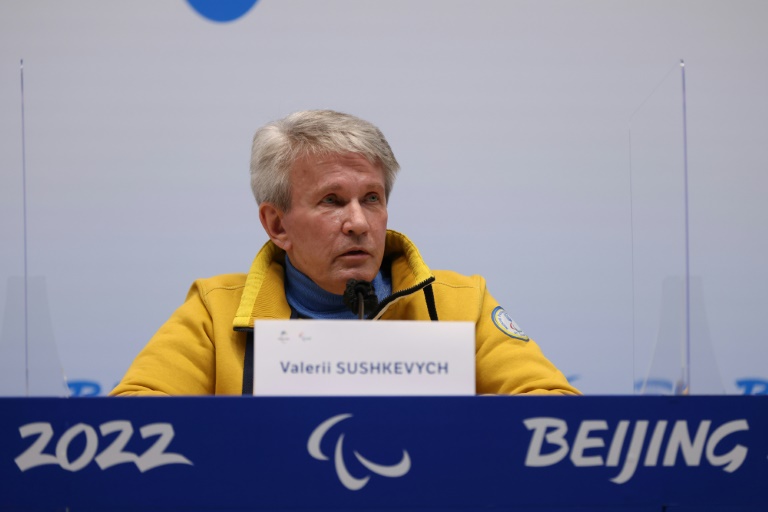
Ukrainian team hails 'miracle' arrival for Beijing Paralympics

The arrival of Ukrainian athletes at Beijing’s Winter Paralympics is a “miracle”, the team’s top official said Thursday, with some narrowly escaping bombs as they left during the Russian invasion.

Ukraine Paralympic committee president Valeriy Sushkevych said his team had been overwhelmed with solidarity since arriving in the Chinese capital a day prior and that the athletes had been determined to compete.

“I can say that this is a miracle that we managed to be here at the Paralympic Games,” he told reporters.

“The easiest way for us would have been to not go to the Paralympics..  But we couldn’t give up and not come.”

On Thursday, a week after Moscow sent its troops across the border into neighbouring Ukraine, the International Paralympic Committee banned Russian athletes from competing in the Games, reversing an earlier decision.

The IPC said many countries had expressed their support for Ukraine and threatened to boycott the event if Russia was allowed to compete

Sushkevych noted that his team’s presence in Beijing would lift the spirits of those living in terror at home.

“A superpower wants to destroy my country. And our presence here at the Paralympic Games, it’s not just a presence. It’s a sign that Ukraine was, is, and will remain a country,” he said.

“For us, it is a matter of principle to be here, it’s a symbol to show that Ukraine is alive.”

The logistical nightmare of leaving the country meant he had slept on the floor of a bus for several days.

“Many of our team members had difficulties escaping the bombs,” he said.

The Eastern European country has punched above its weight in previous Paralympic winter events, with frequent podium finishes in the biathlon and ski competitions.

The delegation took home 22 medals in 2018 — including seven golds — the sixth-highest global tally. 

As biathlon events kick off Saturday, team members are now focused on the job at hand — preparing for competition.

“There are two frontlines right now. One is in Ukraine for our soldiers. And one is here in Beijing,” Sushkevych said.

Biathletes hit the slopes for skiing and shooting training in Zhangjiakou on Thursday.

While their fellow citizens took up arms to defend themselves, the biathletes shot targets on mats in the snow — one using a hot pink gun with painted flowers.

For some of the team, the emotional rollercoaster and disrupted focus will be a case of deja vu. 

During Russia’s hosting of the Winter Paralympics in 2014, Ukrainian athletes had to grapple with Moscow’s takeover of the Crimean peninsula.

Russian, Belarusian athletes banned from Winter Paralympics

Russian and Belarusian athletes were on Thursday banned from the Beijing Winter Paralympics over the war in Ukraine, with organisers bowing to international pressure and threats of a boycott.

The International Paralympic Committee (IPC) had just a day earlier said athletes from the two countries would be allowed to compete as “neutrals” in the Games, which start on Friday.

It said that was the “harshest punishment” the IPC could dish out under its rules.

But organisers reversed that decision less than 24 hours later, meaning 83 athletes from Russia and Belarus, which hosted troops for Moscow’s attack, will now be packing their bags and heading home.

“In order to preserve the integrity of these Games and the safety of all participants, we have decided to refuse the athlete entries from RPC and NPC Belarus,” the IPC said in a statement.

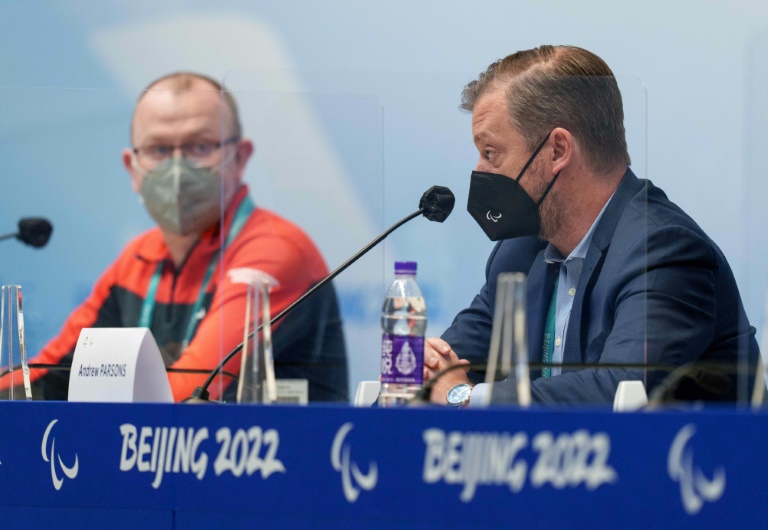
“To the para-athletes from the impacted countries, we are very sorry that you are affected by the decisions your governments took last week in breaching the Olympic Truce,” IPC President Andrew Parsons told reporters.

“You are victims of your governments’ actions.”

The International Olympic Committee (IOC) earlier this week urged sporting federations across the world to exclude athletes from the two countries.

Multiple Paralympics committees around the world, teams and athletes had threatened not to compete if the Russian and Belarusian athletes were present, which was “jeopardising the viability” of the Games, organisers said.

“Ensuring the safety and security of athletes is of paramount importance to us and the situation in the athlete villages is escalating and has now become untenable,” the IPC said in a statement.

– ‘Miracle’-

Ukraine Paralympic Committee President Valeriy Sushkevych said his team — who arrived in Beijing Wednesday — had been overwhelmed with solidarity.

He said many team members had difficulties escaping bombings on their journey out of the country.

“This is a miracle that we managed to be here at the Paralympic Games,” he told reporters in Beijing.

“We came with a primary objective. We are here to defend our country with the whole sport community,” he said.

IPC President Parsons said he expects Belarus and Russia to take legal action against the ban.

“I hope and pray that we can get back to a situation when the talk and focus is fully on the power of sport to transform the lives of persons with disabilities, and the best of humanity,” he added.

The previous decision to allow Russian and Belarusian athletes to compete had drawn a swift and international backlash on Wednesday.

Germany’s top Paralympic official had criticised the decision as lacking courage and had told AFP it was “a dark day for the Paralympic movement”.

– Emotional rollercoaster –

Athletes from Ukraine arrived safely in Beijing as the UN said the number of refugees fleeing to neighbouring countries had topped a million.

Biathlon team members were preparing for competition — hitting the slopes for skiing and shooting training in Zhangjiakou on Thursday.

The small Eastern European country has punched above its weight in previous Paralympic winter events, with frequent podium finishes in the biathlon and ski competitions.

The delegation took home 22 medals in 2018 — including seven golds — gaining the sixth spot on the world tally. 

For some of the team, the emotional rollercoaster and disrupted focus will be a case of deja vu. 

During Russia’s hosting of the Winter Paralympics in 2014, Ukrainian athletes had to grapple with Moscow’s takeover of the Crimea peninsula.

Ukraine pounded and exodus mounts as Russia seizes key city

Russian troops seized Kherson, the first major Ukrainian city to fall in a war that has drawn global outrage and driven one million civilians from their homes, ahead of ceasefire talks Thursday.

With the diplomatic and economic costs mounting for Russian President Vladimir Putin, Ukrainian leader Volodymyr Zelensky extolled his own people’s “heroic” resistance.

He said that around 9,000 Russian soldiers had been killed since the invasion began eight days ago. Announcing its own toll for the first time, Moscow said it had lost 498 troops.

“We are a nation that broke the enemy’s plans in a week,” President Zelensky said in a video posted on the Telegram messaging service.

“Plans written for years: sneaky, full of hatred for our country, our people.”

However, after a three-day siege that left Kherson short of food and medicine, Ukrainian officials conceded the loss of the Black Sea city of 290,000 people.

While a huge military column is stalled north of Ukraine’s capital Kyiv, Russian troops have been advancing on the southern front, and are besieging the important port city of Mariupol east of Kherson. 

The Russians “just wanted to destroy us all”, Mariupol’s mayor Vadym Boychenko said, accusing their forces of shooting at residential buildings. 

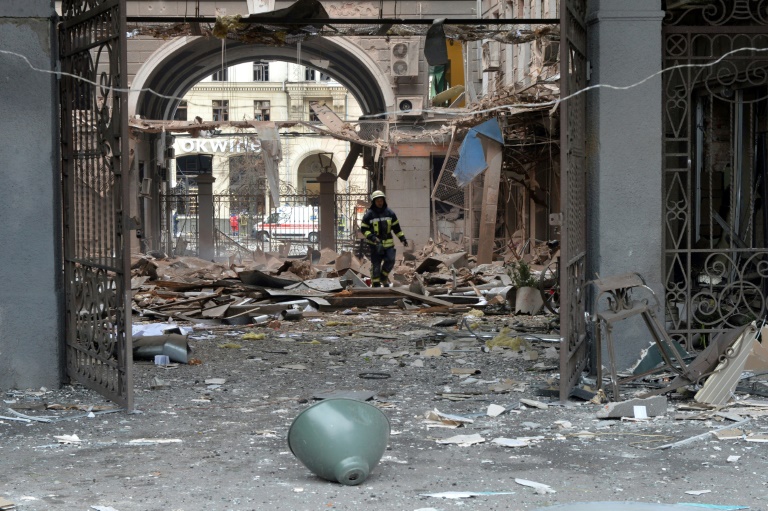
Ukraine’s military authorities said residential and other areas in the eastern city of Kharkiv had been “pounded all night” by indiscriminate shelling, which UN prosecutors are investigating as a possible war crime.

Oleg Rubak’s wife Katia, 29, was crushed in the rubble of their family home in Zhytomyr, 150 kilometres (93 miles) west of Kyiv, by a Russian missile strike.

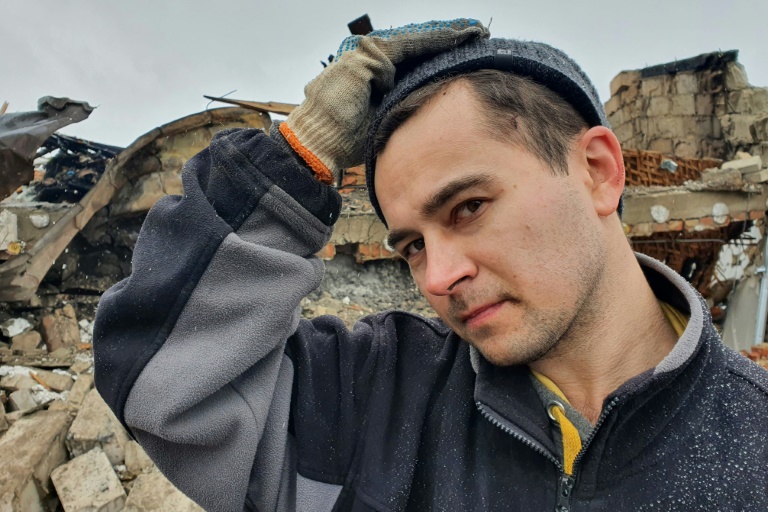
“One minute I saw her going into the bedroom, a minute later there was nothing,” Rubak, 32, told AFP, standing by the ruins in jogging bottoms and a fleece.

“I hope she’s in heaven and all is perfect for her.”

He sobbed, apologised, and continued: “I want the whole world to hear my story.”

– Junk status –

The UN says the war has displaced more than one million people, after Putin launched his offensive in a bid to demilitarise Ukraine and depose Zelensky’s Western-leading government.

But the Russian president now finds himself an international pariah, his country the subject of swingeing sanctions that sent the ruble into further freefall on currency markets Thursday.

Russia’s central bank — whose foreign reserves have been frozen in the West — imposed a 30-percent tax on all sales of hard currency, following a run on lenders by ordinary Russians.

The unfolding financial costs were underlined as ratings agencies Fitch and Moody’s slashed Russia’s sovereign debt to “junk” status. 

Its sporting isolation worsened as the International Paralympic Committee staged an abrupt U-turn and banned Russian and Belarusian athletes from competing in the Beijing Winter Games.

The UN General Assembly voted 141-5 to demand that Russia “immediately” withdraw from Ukraine. Only four countries supported Russia — Belarus, Eritrea, North Korea and Syria — while China abstained.

Russian Foreign Minister Sergei Lavrov accused Western politicians of considering nuclear war, saying it was in their heads “that the idea of a nuclear war is spinning constantly, and not in the heads of Russians”.

The invasion has triggered a dramatic realignment of security policy in Europe, with NATO reinforcing its eastern flank and Germany planning a big increase in military spending. 

The German government is planning to deliver another 2,700 anti-air missiles to Ukraine, a source said.

US Secretary of State Antony Blinken warned the human costs were already “staggering”, accusing Russia of attacking places that “aren’t military targets”.

“Hundreds if not thousands of civilians have been killed or wounded,” said Blinken, who will travel to eastern Europe next week to shore up support for Ukraine — and for efforts to secure a ceasefire.

Kyiv is sending a delegation to Thursday’s ceasefire talks, at an undisclosed location on the Belarus-Poland border but has warned it will not accept “ultimatums”.

A first round of talks on Monday, also in Belarus, yielded no breakthrough.

– Leaving everything behind –

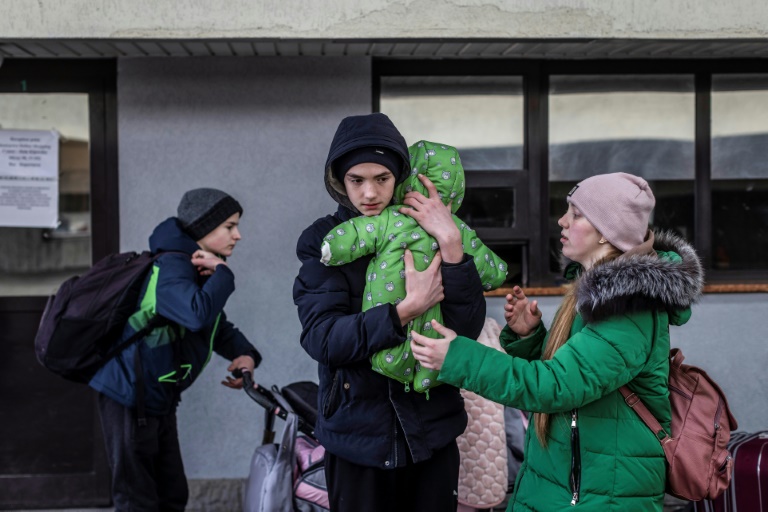
Many Ukrainians have now fled across the border into neighbouring Poland, Slovakia, Hungary, Romania and Moldova, according to the UN refugee agency’s rapidly rising tally.

“We left everything there as they came and ruined our lives,” refugee Svitlana Mostepanenko told AFP in Prague. 

“They’re bombing even civilian houses where there are kids, small kids, children, they die now.”

Nathalia Lypka, a professor of German from the eastern Ukrainian city of Zaporizhzhia, fled to Berlin with her 21-year-old daughter.

“My husband and son stayed… My husband already served in the army, and he had to return to duty,” she said, before boarding a train for Stuttgart where friends are waiting to take them in.

“We thank Europe for its support.”

Putin’s long-telegraphed invasion has frequently appeared hamstrung by poor logistics, tactical blunders and fierce resistance from Ukraine’s underpowered and outgunned military — and from ever-swelling ranks of volunteer fighters.

Scores of images have emerged of burned-out Russian tanks, the charred remains of transporters and of unarmed Ukrainians confronting bewildered occupying forces.

US officials say the massive column of Russian military vehicles amassed north of Kyiv has “stalled” due to fuel and food shortages. 

Russian authorities have imposed a media blackout on what the Kremlin euphemistically calls a “special military operation”.

The Ekho Moskvy radio station — a symbol of new-found media freedom in post-Soviet Russia — said it would shut down after being taken off air over its coverage of the invasion.

But Russians have still turned out for large anti-war protests across the country, in a direct challenge to Putin’s 20-year rule.

Thousands of anti-war demonstrators have been detained, including several dozen in rallies in Moscow and Saint Petersburg on Wednesday.

“I couldn’t stay at home. This war has to be stopped,” student Anton Kislov, 21, told AFP.

burs-jit/jm

Marilyn Manson accuses Rachel Evan Wood of conspiracy after rape claim

Marilyn Manson on Wednesday filed court proceedings against his ex-fiancee US actress Rachel Even Wood — who has accused the goth rocker of raping her — for engaging in conspiracy, fraud and defamation to destroy his career, according to the complaint.

The complaint accuses Wood and her “romantic partner” actor Illma Gore of fabricating malicious claims against Manson, including fraudulently impersonating an FBI agent to pressure “prospective accusers to emerge simultaneously with allegations of rape and abuse.” 

Wood’s accusation became public in January, when she said Manson raped her on camera during the filming of a music video for his 2007 hit single “Heart-Shaped Glasses.” 

The allegations — denied by Manson — were made in HBO documentary “Phoenix Rising,” due to be released later this month. 

“We had discussed a simulated sex scene. But once the cameras were rolling, he started penetrating me for real,” she said.

“I had never agreed to that.”

The former child actress began dating Manson — whose real name is Brian Warner — in 2006 when she was 18 and he was 37.

The complaint, filed before the Los Angeles Superior Court, says Wood and Gore provided accusers with “checklists and scripts” and made “false statements to prospective accusers” as part of a scheme that “could benefit them both.”

Manson has asked for a jury trial to stop the allegations and to assess and award damages incurred by the singer. 

Terming the actions “invasive, harassing, defamatory, and otherwise injurious,” Manson’s lawyers said in the complaint that Gore “hacked” his computers, phone, email and social media accounts. 

Known for his controversial image and stage name evoking killer Charles Manson, the rocker has been accused by multiple women of sexual assault, including “Game of Thrones” actress Esme Bianco.

Los Angeles police last year confirmed they were investigating domestic violence allegations against the singer. 

Manson posted the court documents on Twitter, saying: “There will come a time when I can share more about the events of the past year. Until then, I’m going to let the facts speak for themselves.” 

“Phoenix Rising” documents efforts by Wood and other sexual assault survivors to extend the statute of limitations for sex crimes, allowing women more time to seek justice following abuse.

Over one million refugees on the move from Ukraine

More than one million people have fled Ukraine into neighbouring countries since Russia launched its full-scale invasion just a week ago.

“In just seven days, one million people have fled Ukraine, uprooted by this senseless war,” UN refugee chief Filippo Grandi said in a statement Thursday.

“Unless there is an immediate end to the conflict, millions more are likely to be forced to flee Ukraine.”

The UN Refugee Agency (UNHCR) has projected that more than four million Ukrainian refugees may eventually need protection and assistance, while the European Union’s crisis management commissioner has said the figure could reach seven million.

More than 37 million people lived under the Kyiv government’s control before last week’s invasion.

Here is a breakdown of where the 1,038,583 refugees tallied so far by UNHCR have headed to:

– Poland –

Just over half of those who have fled Ukraine have crossed west into Poland.

The UNHCR said that 547,982 people had done so. Most arrivals are women and children from all parts of Ukraine.

Polish border officials meanwhile put the number higher, saying Thursday morning that 575,100 people had crossed from Ukraine since the Russian assault began on February 24.

They said 95,000 people entered from Ukraine on Wednesday, after 98,000 crossed over on Tuesday. 

And the influx continued Thursday, with 27,100 crossing into Poland by 0600 GMT.  

Before the current crisis, Poland was already home to around 1.5 million Ukrainians.

– Hungary –

Some 133,009 people have so far crossed from Ukraine into Hungary, or nearly 13 percent  of the total, the agency said.

The country counts five border crossings with Ukraine, and several border towns such as Zahony have turned public buildings into reception centres, with ordinary people donating food and clothes, the interior ministry said.

Thousands of refugees have arrived in Budapest. An AFP photographer saw dozens of refugees disembarking from trains arriving every 30 minutes in the Hungarian capital from the Ukrainian border on Tuesday.

– Moldova –

UNHCR said 97,827 people who fled Ukraine were now in Moldova, marking a jump of nearly 20,000 since the last count on Wednesday.

– Slovakia –

The UNHCR said 72,200 had fled across Ukraine’s shortest border to Slovakia, making up seven percent of the total number.

– Romania –

The UN Refugee Agency said nearly five percent of those who had fled Ukraine, 51,261 people, were now in Romania.

Some refugees reported they had headed to Romania to avoid massive jams at the Polish border.

Most are passing through Siret in the north of the country, where a camp has been set up, along with a second near Sighetu Marmatiei, where volunteers were handing out hot tea, coffee and pizza, as well as flowers and little charms to mark the start of spring, celebrated on Tuesday across the country.

Officials said tens of thousands of refugees who entered Romania have now moved on elsewhere.

– Russia –

The UNHCR said 47,800 people had fled across Ukraine’s longest border since the invasion began — nearly five percent of the total number.

– Belarus –

Some 357 people had crossed north from Ukraine into Belarus, the UNHCR said.

– Onward movement –

The refugee agency said 8.5 percent of those who had fled Ukraine into neighbouring countries, 88,147 people, had already moved on towards other European states.

Czech Prime Minister Petr Fiala said Wednesday his country had welcomed around 20,000 Ukrainian refugees since the conflict started.

– Internally displaced –

Karolina Lindholm Billing, the UNHCR representative to Ukraine, estimated Tuesday that a million people had been internally displaced by the invasion.

She cautioned that the agency still did not have reliable figures. 

nl-burs/apo/bp

Russian missiles tear civilian lives apart

Oleg Rubak wept for love of his wife Katia, crushed in the rubble of his family home, and for hatred of Vladimir Putin, whom he blames for the missile strike that killed her.

The 32-year-old engineer was playing with his baby daughter in the living room of the couple’s brick-and-timber house in Zhytomyr, 150 kilometres (93 miles) west of Kyiv.

On Tuesday night at around 10:00 pm in the Ukrainian crossroads town, home to a military garrison, a first missile struck near the family home.

A second crashed down behind the building, tearing a five-metre-deep crater, now full of dirty water and the smashed remnants of Rubak’s house.

“Her name was Katia. She was 29 years old. One minute I saw her going into the bedroom, a minute later there was nothing,” Rubak told AFP, standing by the ruins in jogging bottoms and a fleece.

“I hope she’s in heaven and all is perfect for her.”

He sobbed, apologised, and continued: “I want the whole world to hear my story.”

He points out a pile of rubble among the others.

“That’s where I was with our one-and-a-half-year-old daughter. But you can see, it’s no longer a house, it’s not even a room, it’s… maybe it’s hell,” he said.

When the second blast struck, Rubak was thrown under debris as a terrifying sound followed by the icy winter night ripped into his home.

Reaching out with his fingertips he found his mobile phone, turned on the torch, and found his daughter.

– Maybe it’s hell? –

“She wasn’t moving, and my whole world fell in, but I took her hand and she started to cry. It was the most beautiful sound I’d heard in my life,” he said.

Katia, however, was still under bricks and ceiling beams. Oleg desperately dug her out with his bare hands, he said, showing the red welts and scars.

He found her corpse, as he had feared. The first explosion had left her with no chance. “Katia was a housewife. She loved two things, me and our daughter.”  

Rubak’s father, battling his own grief, tries to comfort him, urging him to wrap up against the bitter cold, but the angry son stood straight once again, trying to focus.

“I have to stay strong. I’m not cold. I just want the whole world to know what happened,” he said, turning his fury on Putin, Russia’s president.

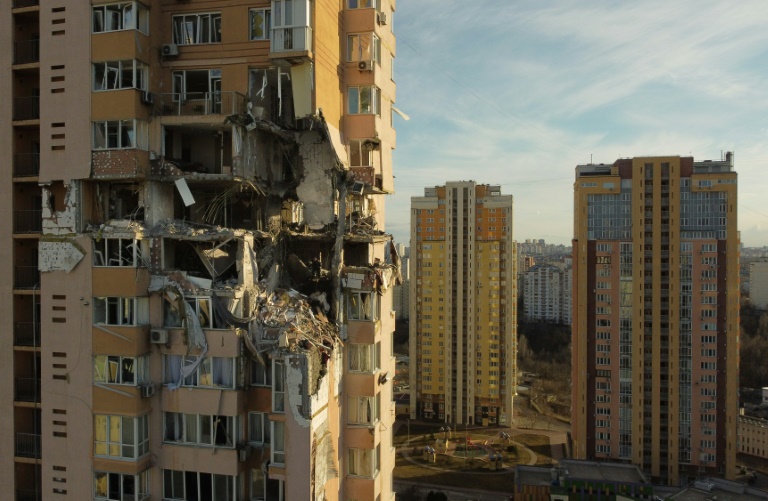
Moscow’s week-old invasion of Ukraine has been marked by missile bombardments that ended up hitting civilian homes and infrastructure — and ending civilian lives. 

“I want him dead,” Oleg said of Putin. “Let him roast in hell for all eternity.”

According to Zhytomyr officials, Tuesday night’s bombings killed at least three people and wounded 20 more, including several young children.

In the city centre on Wednesday, dozens of residents were cleaning up the remains of a wrecked market, just opposite the city’s large military academy. 

Among them, 28-year-old Katarina Chternova, does not hide her fear, but local solidarity reassures her. 

“We are all together, we help each other,” she told AFP. “Because this is our land, and we want to save it… we don’t give up”. 

Rubak, on the other hand, is more pessimistic in the face of the Russian advance. In Zhytomyr, he says, “many people would like to leave, but today, no one knows where to go”.

'Welcome to Berlin': Ukrainian refugees pour into Germany

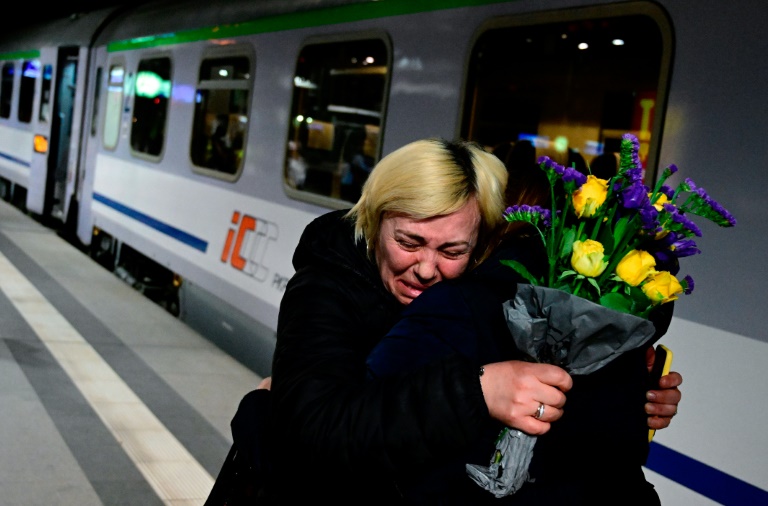
The loudspeaker announcement is nearly drowned out by the hubbub of passengers spilling out of the train from Warsaw, but it’s a message many of them have been longing to hear: “Dear passengers from Ukraine, welcome to Berlin!”

Just over a week after Russia launched an attack on Ukraine, the trickle of war refugees arriving in Germany has swelled into a steady stream.

“The situation has changed dramatically,” said Katja Kipping, senator for social affairs in the city state of Berlin.

On Tuesday evening alone, 1,300 refugees  arrived in the German capital by train.

Mayor Franziska Giffey expects Berlin, less than 100 kilometres from Ukraine’s western neighbour Poland, to take in at least 20,000 Ukrainians in the weeks ahead, and his city is urgently preparing emergency accommodation.

Germany’s interior ministry has officially registered more than 5,000 Ukrainian refugees so far. But given the absence of border checks between Poland and Germany the real number is likely higher.

At Berlin’s central train station, Ukrainian women and children make up the bulk of those arriving from Poland, having left behind husbands, fathers and sons to join the fight against the advance of Russian troops.

Among the newcomers is Nathalia Lypka, a German professor from the eastern Ukrainian city of Zaporizhzhia who fled with her 21-year-old daughter.

– ‘Scared’ –

“We met up in Lviv,” she told AFP, resting on a wooden bench set up by volunteers in a corner of the vast railway station, one of Europe’s busiest.  

“My daughter was in Kyiv, it was terrible, she was scared and had to take shelter in the metro station” to protect herself from the shelling, she says.

“My husband and son stayed… My husband already served in the army and he had to return to duty,” she adds.

Lypka and her daughter plan to board a train for Stuttgart next, where friends are waiting to take them in.

“We thank Europe for its support,” she adds.

– Free tickets –

Although the Ukrainian influx pales in comparison with the hundreds of thousands of Syrians and Iraqis who fled their conflict-torn countries for Germany in 2015-2016, the scenes of refugees being greeted by volunteer welcome committees are remarkably similar.

At the Berlin station, volunteers clad in yellow high-visibility jackets hand out bananas, bread rolls and water bottles to new arrivals.

Some carry stickers on their chests that say they speak Russian or Ukrainian. Others help bewildered newcomers plan onward journeys, making use of rail operator Deutsche Bahn’s offer of free travel for Ukrainians.  

Nearby, volunteers folding blankets and clothes briefly pause to accept a German woman’s donation of anti-coronavirus face masks.

Elsewhere in the station, the Red Cross is on hand to administer first aid to the refugees, or arrange hospital transport for those requiring more serious care.

“A lot of people arrive here exhausted, they have headaches” and other pains, said Nicolas Schoenemann, who oversees a team of five Red Cross workers.

Among those coming from Ukraine are also a significant number of people originally from Africa.

Before Russia’s invasion, Ukraine was home to some 16,000 African students, according to Liubov Abravitova, the Ukrainian ambassador to South Africa.

Cameroonian Aurelien Kaze was studying economics in Ukraine’s second city Kharkiv, which has been hit by Russian shelling.

“We heard the bombardments, there was panic everywhere,” he says, waiting to board a train bound for Brussels where he has relatives.

The 25-year-old considers himself lucky to have had a smooth border crossing between Ukraine and Poland, following reports of racist behaviour by border guards against Africans.

Kaze said it appears to have gone “a little easier” for him than for some others. “They checked my papers,” he recalls, and he was waved through.

On Taiwan visit Pompeo says island must not suffer Ukraine's fate

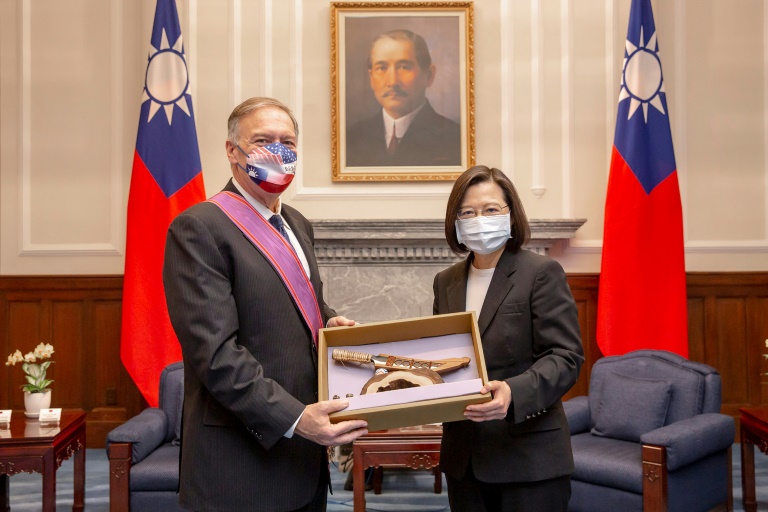
Taiwan must not be allowed to go the same way as Ukraine, former US Secretary of State Mike Pompeo said Thursday during a meeting with the island’s president. 

“If any of us were mistaken or complacent about the risk to that freedom, I think we need only watch what’s taking place in Europe today to see that this continues to demand deep concerted focus leadership from those of us who cherish freedom,” Pompeo said in a meeting with President Tsai Ing-wen. 

“I think these days call for the simple reminder that it is not provocative to say that one demands freedom,” he added warning that “those who desire to destroy freedom, to change human lives” will see silence as “their opportunity”.

Pompeo, one of former president Donald Trump’s most hawkish advisors on China, arrived in Taipei on Wednesday for a visit at a time of rising tensions between Washington and Beijing over the self-ruled island as well as the crisis sparked by Russia’s invasion of Ukraine. 

His visit comes a day after a separate trip by a delegation of former US security officials aimed at assuring regional allies that Washington “stands firm behind its commitments”.

Democratic Taiwan has watched the Ukraine situation closely, as it lives under constant threat of a Chinese invasion, with Beijing claiming sovereignty over the island and vowing to seize it one day — by force if necessary. 

Pompeo announced in January last year as the outgoing state secretary that Washington was ending restrictions on official contacts with Taipei island in a move that angered Beijing. 

Tsai praised Pompeo for facilitating “multiple breakthroughs” in Taiwan-US relations after conferring him an honorary medal to recognise his contributions. 

China has ramped up pressure on Taiwan since the 2016 election of Tsai, who rejects its stance that the island is part of Chinese territory. 

Its sabre-rattling has increased considerably over the past year, with warplanes breaching Taiwan’s air defence zone on a near-daily basis. 

Just weeks before Moscow’s invasion of Ukraine, China and Russia signed a joint statement agreeing to a host of foreign policy goals, including Taiwan being “an inalienable part” of the mainland.

Australia orders 200,000 to flee floods, city of Sydney spared

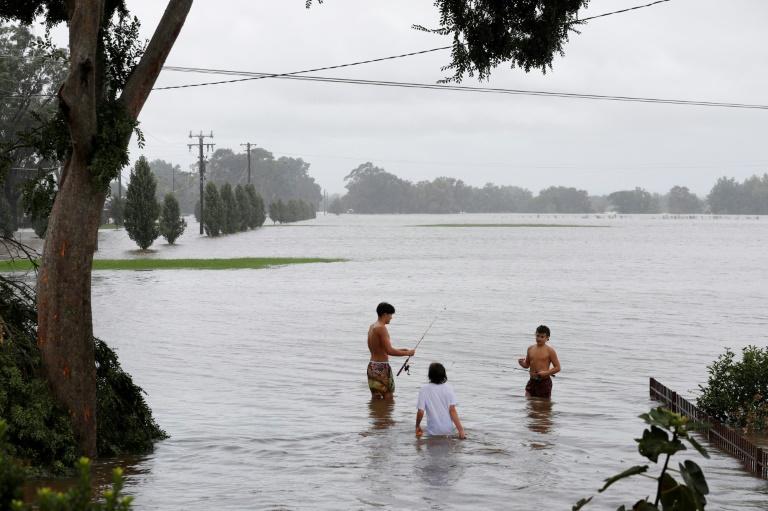
Australia’s emergency services Thursday ordered 200,000 people to flee from the path of a wild storm that has killed 13 people in a week of record-setting east coast floods, but the city of Sydney escaped the worst of the deluge.

Authorities issued severe rain and wind warnings for a 400-kilometre (250-mile) stretch of the coast as water levels rose rapidly — including in suburbs around Sydney, Australia’s largest city and home to five million people.

The unpredictable storm front has crawled southwards along the east coast from Queensland to New South Wales, creating havoc as rivers and reservoirs broke their banks with water swamping homes up to their roofs.

A low-pressure system sat off the coast hundreds of kilometres north of Sydney, dumping the heaviest rain in that area and sparing the city from a feared downpour, said meteorologist Ben Domensino of Weatherzone.

“Sydney escaped the heaviest falls today,” he told AFP, predicting that the storm would weaken by Friday.

The Warragamba Dam in southwestern Sydney, which supplies 80 percent of the city’s water, has been spilling over since the early hours of Wednesday.

The forecast of peak overflow at the dam was downgraded by nearly half on Thursday because rainfall in the dam’s catchment areas was less than had been predicted.

– ‘Unpredictable’ –

Major floods are still under way in some areas west of Sydney along the Hawkesbury and Nepean rivers — which snakes across the city’s suburbs — said a spokeswoman for the New South Wales bureau of meteorology.

“That’s a system that is very big and it will take a while for it to ease off,” she warned.

In the historic town of Windsor — where many of Australia’s oldest surviving European buildings are — Paul Caleo joined other locals watching the Hawkesbury River rise above the local bridge, cutting off access to homes and farms. 

Across the submerged bridge, an almost 120-year-old home stood alone on high ground surrounded by floodwaters.

“The river by its very nature is unpredictable,” Caleo said. 

Along Sydney’s historic harbour, Taronga Zoo prepared for an influx of injured wildlife from torrential rainfall and flooding.

The first fear was for young wildlife, small animals –- including echidnas and bandicoots -– and birds unable to escape surging floodwaters. 

Heavy downpours can make birds’ feathers so waterlogged they are unable to fly, a spokeswoman told AFP. 

As the floodwaters recede, concern will turn to the animals living in fresh water, including platypuses.

New South Wales’ emergency services said more than 70 evacuation orders were still in force across the state. 

“Many people are waking up today to see much of our state underwater,” New South Wales Premier Dominic Perrottet said earlier in the day.

“If you are subject to one of those evacuation orders, please get out,” he told a news conference, explaining that the evacuation orders affected 200,000 people.

– ‘We will be with you’ –

Scientists say climate change is making Australia’s floods, bushfires, cyclones and droughts more frequent and more intense.

“Australia is at the forefront of severe climate change,” said environmental expert Hilary Bambrick of the Queensland University of Technology.

“Temperatures are rising faster in Australia than the global average, and higher temperatures mean the atmosphere holds more moisture, meaning rainfall events are becoming more extreme.”

Across New South Wales, flood levels have climbed to the highest level in decades during the flooding disaster.

In towns such as Lismore in the state’s northeast, which is now cleaning up as flood waters retreat, people had clambered onto their rooftops, sometimes waiting many hours to be rescued from rising waters.

New South Wales said it was sending an extra 400 personnel to that region to help people on the “very, very long road” to cleaning up and recovering.

“Many people today in the Northern Rivers and over the last 24 hours have returned home, and they have returned home to devastating scenes,” state premier Perrottet said. “My message is we will be with you.”

Close Bitnami banner
Bitnami